The Wicked, Wicked Ladies in the Haunted House

The Wicked, Wicked Ladies in the Haunted House by Mary Chase, 1968.

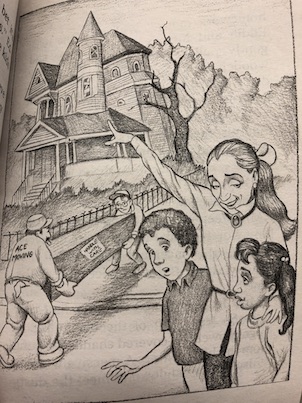
Nine-year-old Maureen Swanson has a bad reputation in her neighborhood, mostly deserved.  The other kids don’t like her because she tells lies and picks fights with them.  Maureen is fascinated by an old, abandoned house in her neighborhood where the wealthy Messerman family used to live.  Sometimes she likes to pretend that she lives there herself. 

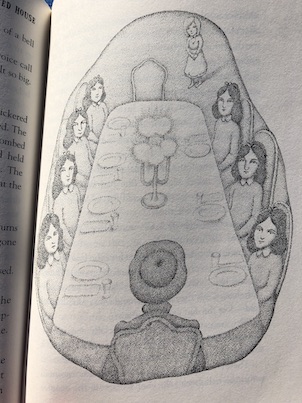
One day, while trying to avoid punishment for her latest antics, she finds her way inside the Messerman estate.  There, she meets a little man who turns out to be a leprechaun.  He tells her that she should leave immediately and not come back, but instead, she ends up exploring inside the house.  To her amazement, she finds paintings of the seven Messerman sisters, who disappeared from the house long ago, and the ladies in the paintings move when she turns her back on them.

When Maureen tries to tell others about it, no one believes it.  When she leaves the house, Maureen takes with her a strange bracelet that she finds on the ground, the same one that she had seen on one of the ladies in the paintings, a gold chain with pigeon feathers.  Later that evening, the same lady from the painting shows up at Maureen’s house, asking for her bracelet back.  The rumors Maureen has heard about the Messerman house being haunted are more true than she knows, and the wicked Messerman girls will stop at nothing to get what they want.
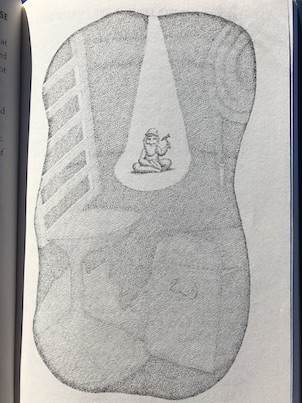
Years ago, the leprechaun came to the Messerman house along with a maid who was from Ireland.  Mrs. Messerman was a very kind woman, and Nora, the maid, was his friend, so he decided to stay.  However, the Messerman girls were always selfish and wicked.  One day, the eldest of the girls stole the leprechaun’s magic bag of tricks and turned herself and her sisters into birds so that they could always go where they wanted and do what they wanted without anyone stopping them.  Mr. and Mrs. Messerman were broken-hearted when their girls disappeared.  Years later, after their parents were dead, they finally returned.  They were not sad at all, but continued their selfish and wicked ways.  Because of the magic, they never age and can turn into birds whenever they like. 
Maureen is afraid to admit that she has the bracelet because she knows that her parents will punish her for trespassing on the Messerman property.  The next day, the women trick her into entering the estate again, only this time, Maureen enters the estate as it was in the past, when the girls were young.  Mr. and Mrs. Messerman are very kind to Maureen and offer to look after her until they can find where she lives.  Mrs. Messerman seems to know that her daughters are mean but doesn’t seem to know what to do about it.  She asks Maureen to help them if she ever has the chance.  It’s a touching moment for Maureen, who suddenly realizes that no one has ever asked her for help before.

Maureen, frightened by the girls, finally gives back the bracelet, and they all fly off again, leaving her alone in the past. How is Maureen going to get home?

This book also goes by the title The Wicked Pigeon Ladies in the Garden. It is available to borrow and read for free online through Internet Archive.

My Reaction and Spoilers
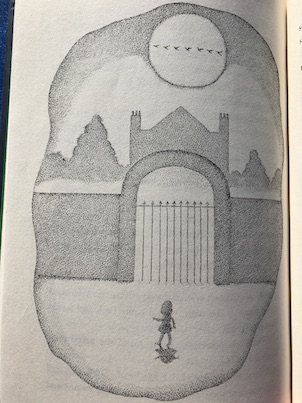
This is partly a story about personal transformation. Maureen has definitely been the resident mean girl, but she gains a new perspective on her own life and behavior when confronted with the frightening wickedness of the Messerman girls.

The leprechaun tells Maureen that the only way to get out of the pretend past created by the Messerman girls is to think about what is going on in the real world.  When Maureen thinks of her mother, she hears her mother calling her and returns to her own time.  The leprechaun catches the birds in a net and almost drowns them in a pond, but Maureen stops him, telling him that Mrs. Messerman had asked her to help them.  The leprechaun releases the birds and tells Maureen that they will continue to be, literally, flighty birdbrains, but that their mother’s love will always be with them.  Maureen, having seen how cold and cruel the sisters were, never appreciating their mother’s love, learns to appreciate her own family more and to behave better. At the end of the story, she acknowledges that she heard her mother calling her and that call, the product of her own mother’s love and concern for her, was what helped her to return home. Maureen ends up better off than the wicked and flighty Messermans because she not only has a home where people care for her but she has learned to appreciate that home and those people and will now treat them better.

One of the things that I appreciated most about this book was the unusual way the leprechaun was used in the story. The story starts out seeming like it will be about ghosts in a haunted house, but that’s not quite what’s happening. Also, when leprechauns appear in stories, they usually have a pot of gold or play tricks on people, but the leprechaun’s role in this story isn’t quite the same.

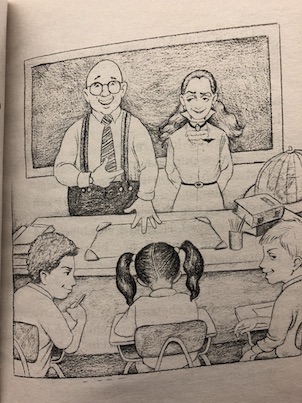
Vampires Don’t Wear Polka Dots

The Adventures of the Bailey School Kids

#1 Vampires Don’t Wear Polka Dots by Debbie Dadey and Marcia Thornton Jones, 1990.

The kids in the third grade class at Bailey Elementary School have been pretty hard on their teachers. Their last teacher resigned when she suffered a nervous breakdown due to their misbehavior and pranks. Now, the kids have a new teacher, Mrs. Jeepers.

Mrs. Jeepers has just moved to their city from Transylvania, and everyone in class agrees that she’s not a normal teacher. She seems to have a hypnotic power over people, and her mysterious green brooch seems to glow and have magic powers. Not only that, but she has moved into a creepy old house in the neighborhood with a long box that could contain a coffin. Could Mrs. Jeepers be a vampire? No one knows, but none of the kids want to risk making her angry, except maybe Eddie, the class trouble-maker.

Mrs. Jeepers lays down the class rules on the first day. The rules are basically that the students should treat her and each other nicely, talk only when appropriate, and walk instead of run. Eddie asks her what happens if they break the rules, and Mrs. Jeepers only replies, “I hope you never have to find out.” Most of the other students are nervous about creepy Mrs. Jeepers and do their best not to make her angry, but Eddie is annoyed by how good the others are being and tries to various antics to get Mrs. Jeepers angry and make the other kids goof off, like normal. Sometimes, Mrs. Jeepers stops these antics, apparently with the power of her mysterious brooch.

Mrs. Jeepers is strangely evasive about her past, although she mentions that her husband is dead. He is the one who gave her the bat charm bracelet that she wears. Eddie and Melody try sneaking into Mrs. Jeepers’ house one night to see if they can get a look at the long box that might be a coffin, but they are unable to actually open the box, which seems to be locked from the inside.

The question of whether Mrs. Jeepers is really a vampire is never settled. Unlike most mythological vampires, she seems to have no problem going outside during the daytime. When the kids test garlic on her, it makes her sneeze. She does seem to have a strange power to make the children behave themselves, but that is partly because they are afraid of making her angry. At the end, Eddie finally causes Mrs. Jeepers to lose her temper. She takes him out of the classroom for a moment to talk to him, and when they return, Eddie seems to have been badly frightened by something. He never tells the others exactly what Mrs. Jeepers said or did, but he says that she is not normal and that he’ll never do anything to make her angry again.

When the book ends, it says that the children got through the rest of the school year with Mrs. Jeepers without getting her angry or seeing her brooch glow again, making me think that the book wasn’t always intended to be part of a series. However, for the rest of the series, the kids are still in the third grade with Mrs. Jeepers as their teacher.

The fact that the kids can never really prove that Mrs. Jeepers is a vampire, although they continue to believe it throughout the series, sets up the pattern for the books that follow it. Throughout the series, the kids encounter other people (including some relatives of Mrs. Jeepers) who seem strange and may be creatures from mythology or folklore or other supernatural beings, but the books always leave some room for debate. Mrs. Jeepers is the only one of these strange people to remain with the kids throughout the entire series. Other characters come and go, although there are a few recurring characters.

I always like it when children’s books reference other children’s books. In the beginning of the book, after their first teacher leaves, the kids worry about who their new teacher will be, and they make a reference to Miss Viola Swamp from the Miss Nelson books.

The book is available to borrow for free online through Internet Archive.

The Halloween Tree

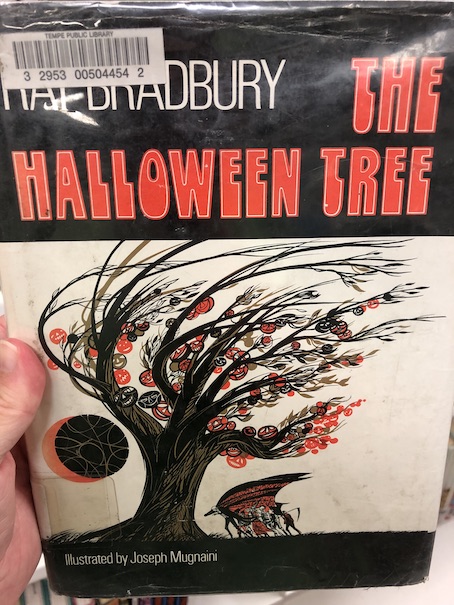
The Halloween Tree by Ray Bradbury, 1972.

A group of neighborhood boys want to go trick-or-treating on Halloween night, but they’re upset because it looks like a friend of their, Joe Pipkin, won’t be coming with them.  When they get to Pipkin’s house, he seems ill and is clutching his side.  His friends worry that he’s sick, but he valiantly reassures them that he’ll be fine.  He sends them on, telling them that he’ll catch up with them and that his costume will be great.  Specifically, he tells them to “head for the House” which is “the place of the Haunts.”

The house that Pipkin is talking about is the creepiest house in town.  It’s large, so large that it’s hard to tell how many rooms it has.  The boys knock on the creepy-looking door knocker on the front door, and a man answers the door.  When the boys say, “trick or treat,” the man says, “No treats.  Only—trick!”  Then, he slams the door without giving them anything.

Not knowing what else to do, the boys walk around the side of the house and see a large tree, filled with jack o’lanterns.  This is the Halloween Tree.  The strange man they saw before rises up from a pile of leaves and scares the boys, giving them the “trick” that he promised them earlier.  He finally introduces himself as Carapace Clavicle Moundshroud.  He begins talking to them about the history of Halloween and asks them if they understand the real meanings behind the costumes they have chosen.  The boys admit that they really don’t know the meanings behind their costumes, and Moundshroud points off into the distance, calling it, “The Undiscovered Country.”  He says that out there likes the past and the history of Halloween and that the boys will learn the answers if they’re willing to go there.  The boys are interested, but they say that they can’t go anywhere without Pipkin, who promised that he would come.

Pipkin suddenly appears in the distance, by a dark ravine, holding a lit pumpkin.  He says that he doesn’t feel well, but he knew that he had to come.  Pipkin trips and falls, and the light in his pumpkin goes out.  From a distance, the others hear him calling for help.  Moundshroud says that something bad has happened.  Pipkin has been taken away to The Undiscovered Country by Death.  Moundshroud says that Pipkin may not be taken permanently but perhaps held for ransom and that, if they follow Pipkin to The Undiscovered Country, they might be able to get his soul back and save his life.

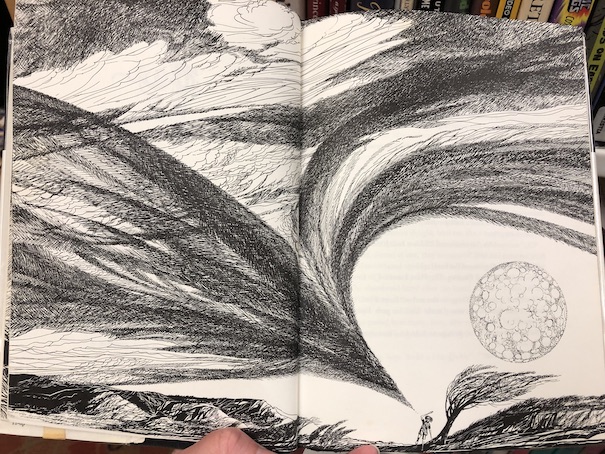
Moundshroud has the boys build a kite that somewhat resembles a pterodactyl, and they use it to travel into the far distant past.  The first place they arrive is Ancient Egypt, where the boys learn about mummies and how the Ancient Egyptians viewed the dead.  They see Pipkin as a mummy, being laid to rest in a sarcophagus, surrounded by hieroglyphs, telling the story of his life.  (Or, as Moundshroud says, “Or whoever Pipkin was this time around, this year, four thousand years ago,” hinting that Pipkin has been reincarnated before and what they are seeing during their journey are his past lives and deaths.)  Pipkin calls out to his friends for help.  Moundshroud tells the boys that they can’t save Pipkin now, but they’ll have a chance later.

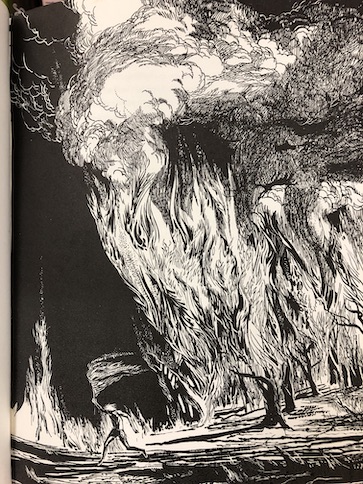
They continue their journey through time and around the world, seeing glimpses of Halloweens past in Ancient Rome and the British Isles, where they learn about druids, Samhain, and witches.  Moundshroud describes how the Romans supplanted druidic practices with their own polytheistic religion until that was eventually replaced by Christianity.  All along, they can still hear Pipkin calling to them, and he seems to be carried off by a witch.  As they pursue him, Moundshroud teaches them the difference between fictional witches and real-life witches, which he characterizes as being more like wise women, who don’t really do magic.

From there, they go to Notre Dame to learn about gargoyles.  They continue to see Pipkin in different forms, even as a gargoyle on the cathedral.  Pipkin tells them that he’s not dead, but that he knows that part of him is in a hospital back home.

In Mexico, the boys experience Dia de los Muertos and learn about skeletons and a different kind of mummy from the ones they saw in Egypt.  They find Pipkin, held prisoner in the catacombs by the mummies, and Moundshroud tells the boys that the only way to save him is to make a bargain, both with him and with the dead: each boy must give one year from the end of their lives so that Pipkin may live.  It is a serious decision, for as Moundshroud says, they won’t miss that year now, being only about 11 or 12 years old, but none of them knows how long they will actually live.  Some of them who were destined to die at 55 would now only make it to 54, and as they reach the end of their lives, the year will seem that much more important to them.  Even those who live longer will still want every day they can possibly have.  However, each decides that he is willing to make the sacrifice because, without that sacrifice, Pipkin has no chance, and they can’t just let him die.

They make the bargain and are soon returned home.  When they go to Pipkin’s house to check on him, they are told that Pip is in the hospital because he had his appendix taken out, just in time to save his life.  At the end of the story, Tom (who is the leader of the boys through most of the story), wonders silently who Moundshroud really was, and he hears in his mind, “I think you know, boy, I think you know.”  Tom asks him if they will meet again, and Moundshroud says that he will come for Tom many years from now, confirming that Moundshroud was Death all along, which was why they had to make the bargain with him.

I saw the animated movie version of this story long before I read the book, and it really gave me the creeps!  Moundshroud is creepy because he is kind of two-faced.  On the one hand, he seems somewhat helpful in helping the boys to find Pipkin and teaching them about the history of Halloween, but on the other, he does not admit to the children that he is Death until the very end, that he is the very thing that they need to save Pipkin from, and that they can only do it by offering a sacrifice of years from their own lives. Although it does occur to me that Moundshroud may not be quite as two-faced as he seems because Pip’s illness and potential death may not have been planned by him but simply the fated situation for Pip, and Moundshroud might have just taken it upon himself to provide a way for Pip’s friends to save him in the least painful way. By not telling them that a sacrifice of part of their lives would be necessary until the very end, after they had come to a better understanding of life and death in the history of Halloween, he may have made the choice easier for them to make. Also, he never says exactly how much time they bought for Pip with their sacrifice. The implication is that Pip is now free from his early appointed death date and will now live a full life, similar to what his friends will have. The exchange does not seem to be an even one, a year for a year, with the children needing to decide how many years they will donate to Pip. Although the kids still don’t know at the end how many years each of them will live, it seems that none of the rest of them is in danger of dying in childhood, and they will all live for many more years.

I wouldn’t recommend this book for young children (it still gives me the creeps, and I’m in my 30s), but it is interesting how they take a journey through the origins of Halloween. The book and the movie were somewhat different, partly because there were more kids in the group in the book and partly because the group of kids in the movie also had a girl in a witch costume. In the book, the kid in the witch costume was also a boy.

Both the book and the animated movie are available online through Internet Archive.

Who Knew There’d Be Ghosts?

Who Knew There’d Be Ghosts? By Bill Britain, 1985.

Tommy Donahue and his friends, Wendy “Books” Scofield (the smartest kid in their class as well as being pretty tough) and Harry “the Blimp” Troy (known for being the tallest and biggest kid in their class), prefer playing around the abandoned Parnell house instead of at the park because they like to play games of pretend, based on adventure stories that Tommy has read.  It’s hard to play games of pretend in such a public place as the park because other people either laugh or think that they’re just getting in the way.  Almost nobody goes near the old Parnell house because people think that it’s haunted.  They’re right; it is haunted.

Some people in their town have been trying to arrange for the Parnell house to be turned into a museum because the Parnells were the founding family of their town, but the movement hasn’t been able to raise the money needed to renovate the place.  Now, Tommy’s father, a lawyer, has been recruited to arrange for the house to be purchased by a private citizen who says that he wants to renovate the house and use it as his own residence.  However, Tommy and his friends overhear the buyer, Avery Katkus, and a confederate talking as they look over the house.  Mr. Katkus isn’t interested in the house at all; he wants something valuable that is hidden inside.  When they hear the two men plotting to sneak into the house at night to do some searching for this mysterious something, the kids decide that they will come back at night and watch for them to find out what they’re looking for.  The kids don’t want anything bad to happen to the house because they’ll lose their private playground.

Tommy is the first to go and check out the Parnell house at night, and that’s when he meets the ghosts, Horace and Essie Parnell.  At first, Horace tries to scare Tommy away, but when Tommy explains that he only came to keep watch, Horace asks him what he means by that.  Tommy explains to him about Mr. Katkus, and Horace says that he could use Tommy’s help.  Years ago, Horace’s father made a dying wish that all members of their family should be buried in the family cemetery on the property of the house.  Most of the members of the family are buried there, but Horace, who was killed during the Revolutionary War, and Essie, who accidentally fell overboard from a riverboat and was permanently lost in the Mississippi River, were only two Parnells who were not buried on the property, so their spirits are now bound to the house.  Naturally, Horace and Essie are concerned with the future of the house.

Tommy tries to tell his friends about the ghosts, but they don’t believe him until they see the ghosts for themselves.  When the three kids return to the house the next night, Horace saves them from being attacked by Mr. Katkus’s hired confederate.  Now convinced of the ghosts’ existence, Harry and Books are eager to help save the house, and the key in doing so is discovering what kind of hidden treasure the house holds.

The book is available to borrow for free online through Internet Archive.

The Secret of Terror Castle

The Three Investigators

TITerrorCastle#1 The Secret of Terror Castle by Robert Arthur, 1964, 1992.
In the first book in the series, Jupiter, Pete, and Bob form the Three Investigators, an organization dedicated to solving all kinds of mysteries.  It was particularly Jupiter’s idea. They have been friends for a long time, and they used to have a club dedicated to solving puzzles. Now, they’ve decided that they want to solve more complicated problems and mysteries. Jupiter has won the use of a Rolls Royce and chauffeur for a month by entering a contest at an auto rental agency, so he thinks that it would be a good time to get started because they will have transportation to anywhere in the city.

Jupiter also has an idea for their first case, something that will help them get publicity for their new investigative organization. There is a rumor that a director, Reginald Clarke, is looking for a genuine haunted house to be the setting of his next movie. Jupiter manages, through some clever trickery, to get an interview with Reginald Clarke and persuades him to introduce this account of their first case if he and the other investigators can find a genuine haunted house right in town. Clarke takes them up on it, not because he thinks they will succeed, but because he sees it as the only way to get Jupiter to stop doing an unflattering impersonation of him.

Jupiter, however, is confident that they will be successful because he already knows the perfect place to investigate. Terror Castle is a large mansion that was built years ago by an old actor who was in silent films. All of his movies were scary ones, and since his death under mysterious circumstances, no one has succeeded in staying in the castle very long. Strange apparitions have been seen there, and anyone who tries to spend the night there is overcome by inexplicable terror. As far as Jupiter is concerned, all they have to do is prove that the castle is really haunted, and that means that the Three Investigators must visit it themselves.

In the original books, the director that Jupiter tries to find a real haunted location for was Alfred Hitchcock.  Alfred Hitchcock introduced the early books in the series and played minor roles in some of them, and The Three Investigators capitalized on his reputation.  When the series was re-released, however, Alfred Hitchcock was replaced by a fictional director, and his role in later books was taken by a fictional mystery author named Hector Sebastian.  In the re-released version of the first book, Reginald Clarke refers the boys to Hector Sebastian at the end of the story so they can help a friend of his to find his missing parrot, which leads directly into the subject of the next book.

The haunting in this story (as with others in the series) has a reasonable explanation, not a supernatural one.  In fact, one of the things that I always found memorable about this book was the explanation of how the inexplicable feelings of terror people experienced were created using sound waves which could be felt but which were beyond the normal range of human hearing.  I’m not sure whether the book was completely correct about the science behind this technique, but I have heard about sounds being used to create odd or even harmful effects on human beings in real life.  As for the reasons behind the haunting, they concern the original owner of the castle and the life he lived.

This is one of the books in the series which was made into a movie, The Three Investigators and the Secret of Terror Castle, but the movie was very different from the original book.  In the movie, the owner of the castle was an inventor, not an actor.  Part of the plot also concerned Jupiter’s deceased parents and a mystery that they had been investigating.  Jupiter’s parents were not part of the original book at all.  A villain who appears in some of the other books in the series also makes an appearance in the movie, although he had nothing to do with this particular story in the original series.  Overall, I don’t recommend the movie for fans of the original series.  The changes don’t seem to be for the better, and I think people who remember how the original story was and liked it would be disappointed in the movie.

There are multiple copies of this book available to borrow for free online through Internet Archive, both the original version with Alfred Hitchcock and the updated one.

The Little Witch’s Halloween Book

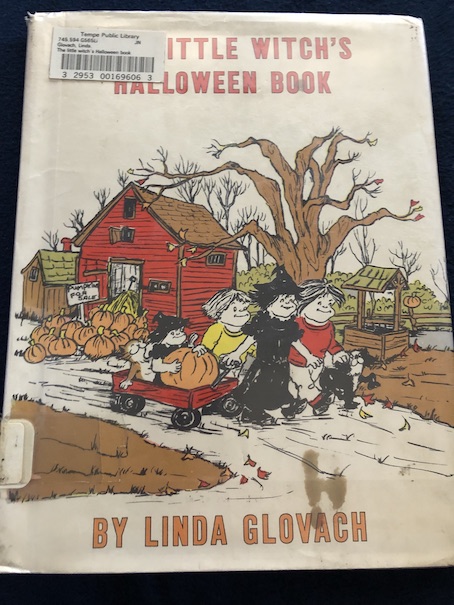
The Little Witch’s Halloween Book by Linda Glovach, 1975.

This book is part of the Little Witch series of craft and hobby books.  This one is all about Halloween activities and suggestions for Halloween parties. The book is divided into sections for cards and decorations, parties and celebrations, and trick or treat.  The Little Witch’s Code in the beginning has rules for Halloween safety such as having an adult inspect Halloween treats before the child eats them and going trick-or-treating in a group instead of alone. It also advises collecting for charities while trick-or-treating and not playing tricks on people.

The section about cards has Halloween card designs in different shapes. The party section also has a pumpkin card design to use as an invitation, but really, any of the cards could be invitations or party decorations.

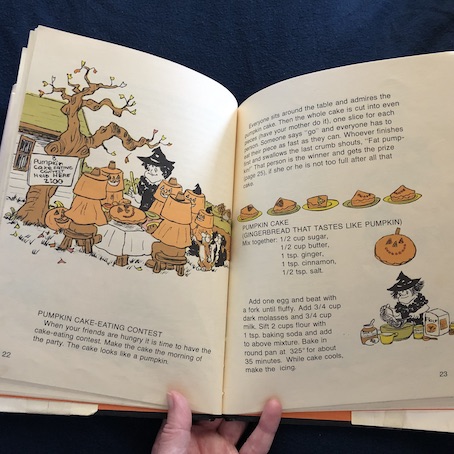
The party section has instructions for games and decorations. One of the games is a pumpkin cake eating contest and a recipe for a pumpkin cake, which oddly does not include any pumpkin, only the spices that are typically included in pumpkin pie. It’s more like a spice cake or gingerbread, and it’s decorated to look like a jack o’lantern face.

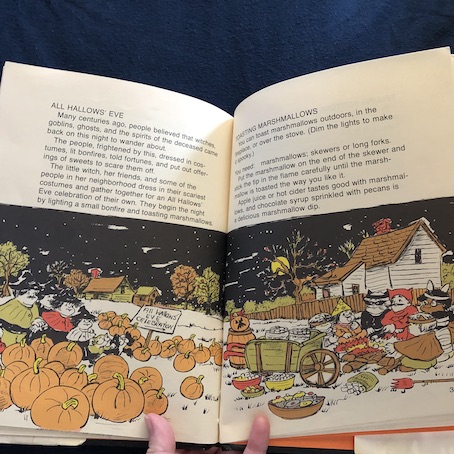
Other games and party treats include traditional ones, like dunking for apples and toasting marshmallows, but there are also some original games, like the Wicked Witch’s Candy House. That game involves party guests taking candy from a tray on top of a cardboard playhouse made from a large cardboard box while the “witch” inside tries to guess who they are. There is also a cute fortune-telling game.

The section about trick-or-treating has more recipes and instructions for making a treat bag and making jack o’lanterns out of oranges.

The book is available to borrow and read for free online through Internet Archive.

The Little Witch’s Black Magic Cookbook

The Little Witch’s Black Magic Cookbook by Linda Glovach, 1972.

This book is part of the Little Witch series of craft and hobby books. This one is a cookbook with recipes that are simple enough for children to make (with some adult assistance). A note in the introduction says that this cookbook is good for boys as well as “little witches.” The Little Witch’s Code in the beginning has tips for understanding recipes, preparing to cook, and cleaning up after cooking.

At first, I thought that all of the recipes would be the types of food served at Halloween parties, but they aren’t. There is a special section about Halloween recipes, but there are also recipes for other occasions and some simple snacks and lunches.

Most of the recipes are really simple, like Pickled Peanut Butter Burgers, which are basically peanut butter sandwiches on hamburger buns with pickles. When I was a kid, I used to roll my eyes at people who thought things like that would be exciting or challenging for children. It probably depends on the age of the child, but I also wouldn’t have been impressed by the recipe for Cinnamon Toast. I used to make that by myself when I was little before turning on Saturday morning cartoons. My feeling is that kids who are old enough to read this book by themselves are probably old enough to know how to make these particular recipes by themselves. I guess everyone has to start somewhere, though.

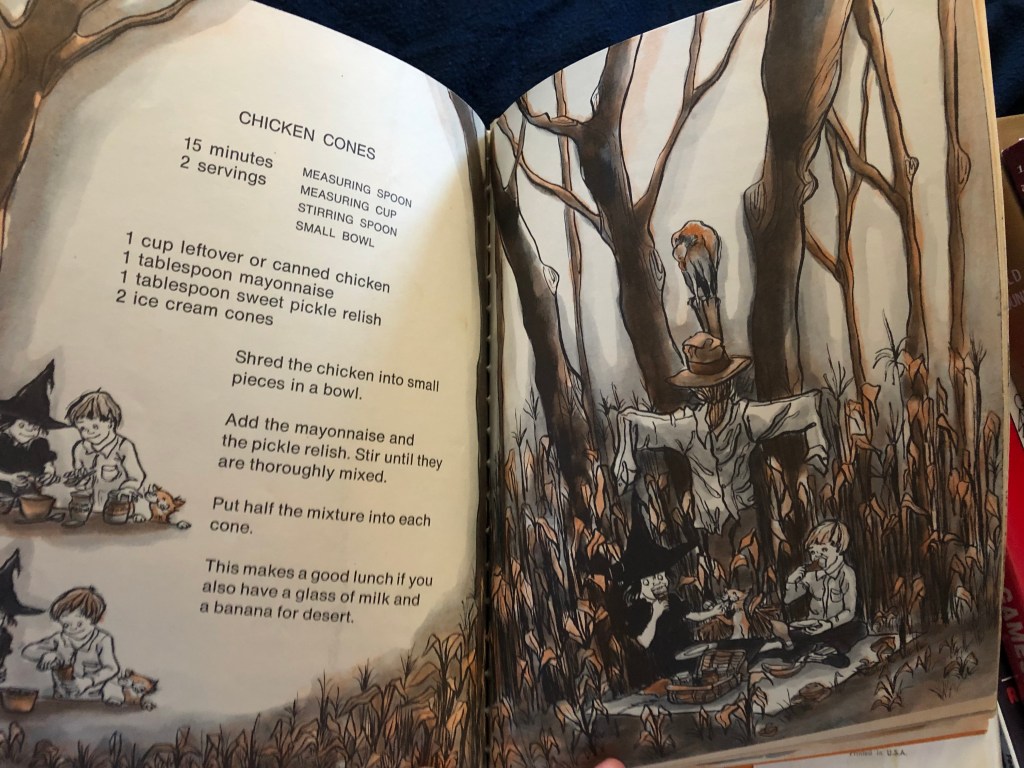
I was more interested by the Halloween recipes and the Chicken Cones, which are listed in the lunch section. The Chicken Cones reminded me of the Tuna Cones recipe that I saw in a Klutz cookbook for children. The only difference is that this recipe uses a simple chicken salad in an ice cream cone instead of tuna salad.

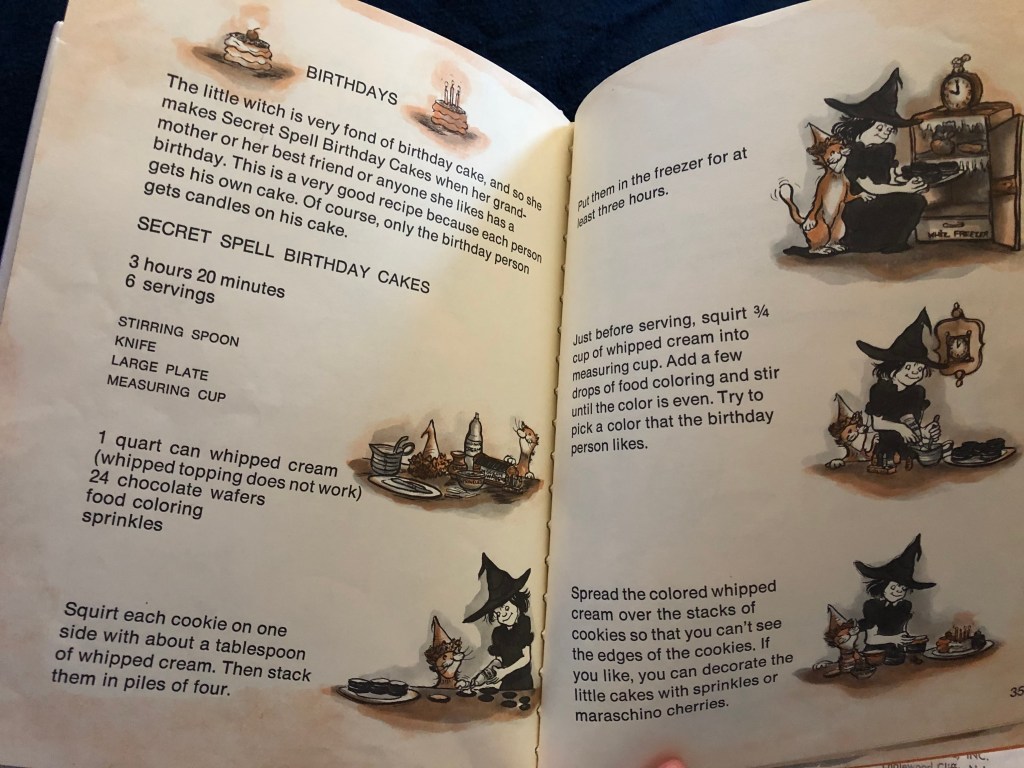
In the section about birthdays, there is only one recipe for little birthday “cakes.” The “cakes” are actually chocolate wafer cookies, stacked with whipped cream, put in the freezer, and covered with more whipped cream. This is basically an old-fashioned icebox cake, a popular dessert from decades past. It’s not really a cake, but it does sound like a fun birthday treat!

The Little Witch’s Black Magic Book of Games

The Little Witch’s Black Magic Book of Games by Linda Glovach, 1974.

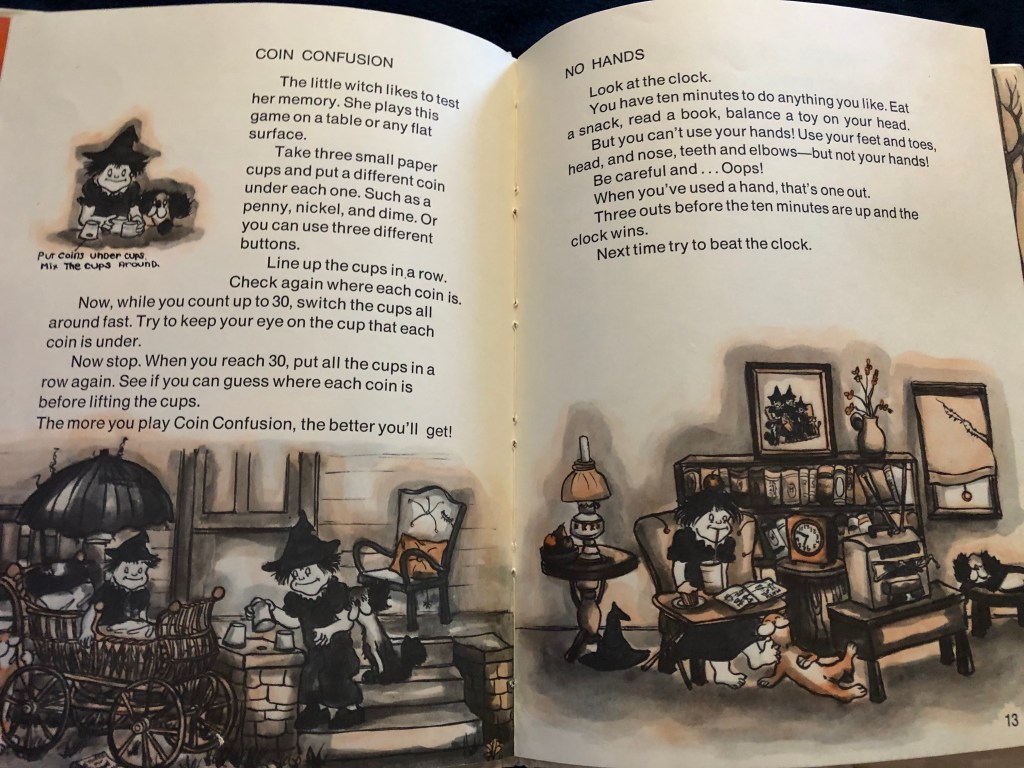
This book is part of the Little Witch series of craft and hobby books.  This one is all about games, but not board games. The games are more like party games or games that young children can play on playgrounds or while hanging out with friends.  The Little Witch’s Code in the beginning has rules for playing fairly and keeping a good attitude while playing.

The games in the book are grouped first by the number of players, with some games that players can play alone and others for two or three players and some for larger groups.  There are also some special games to play on holidays.

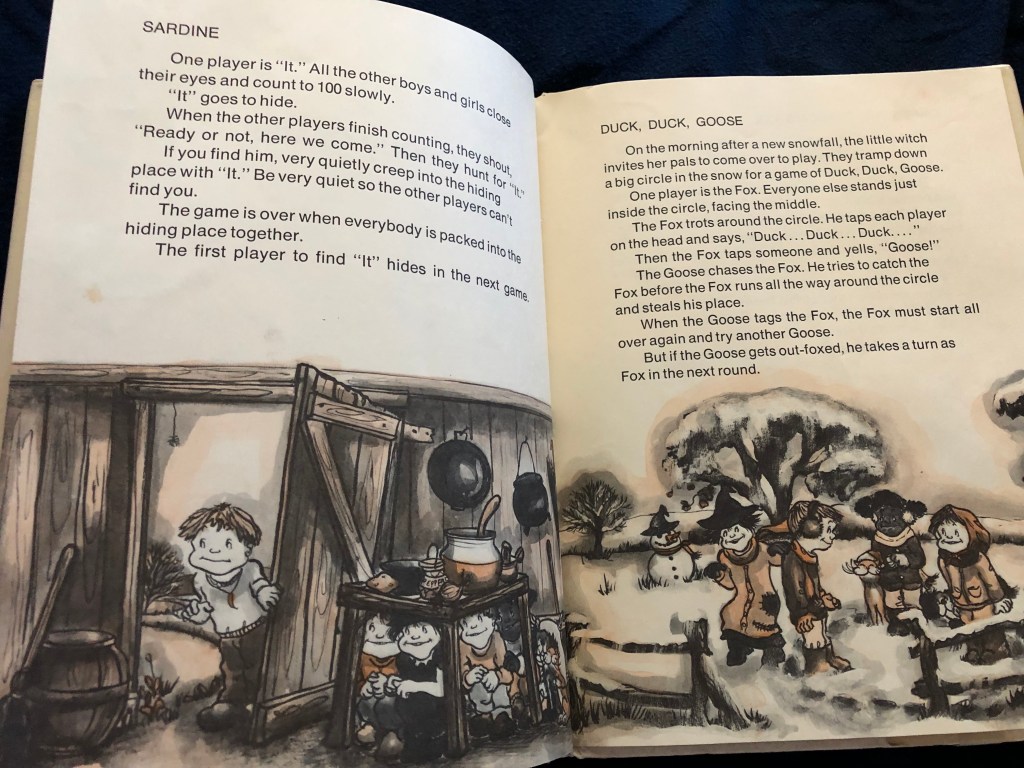
Most of the games are very simple and good for young children.  Some of them are classics, like Sardine; Stay Serious; Duck, Duck, Goose; and Rock, Scissors, Paper. These are games that most American children play when they’re in school or in other youth groups like after-school programs/daycare, scouting groups, church groups, or summer camps. In other words, kids naturally learn those games from other kids anywhere kids meet. Some of these games exist in different variations around the world, although the book doesn’t go into that. It just explains how to play them.

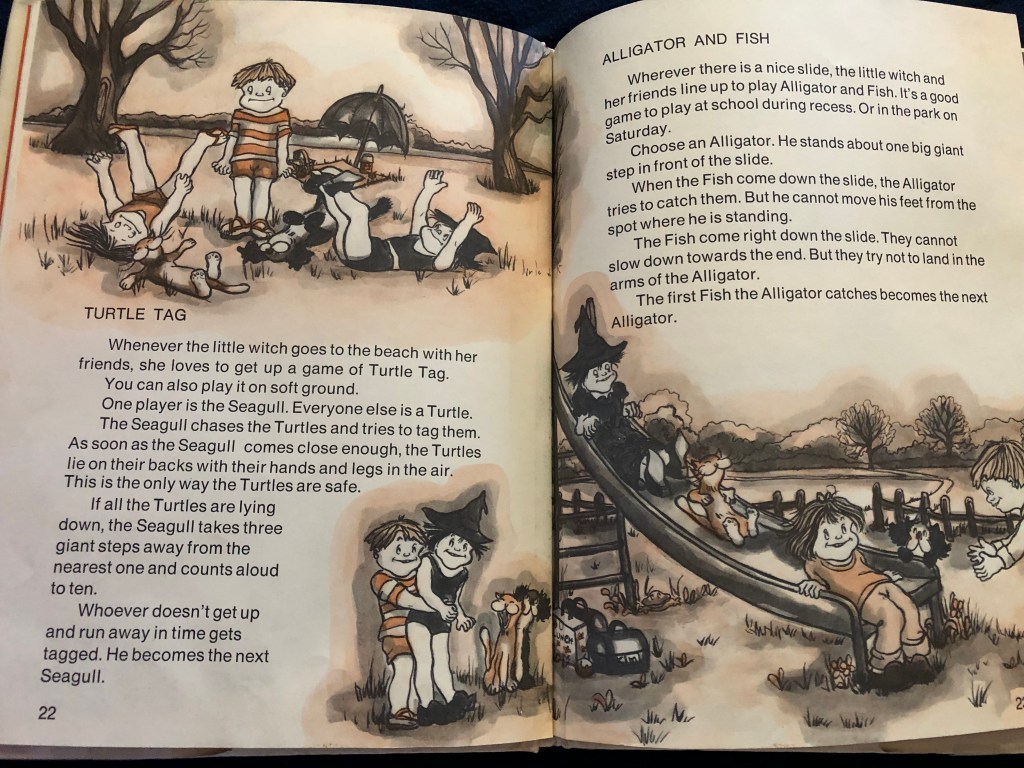
There are other games in the book that I don’t remember playing or hearing about as a kid. I don’t think that I’ve heard of Turtle Tag or Alligator and Fish before. I looked them up, and other people on the Internet know about Turtle Tag or variations of it, but I couldn’t find other mentions of Alligator and Fish. I think they might have started as regional games that I didn’t know about as a kid because people didn’t play them where I grew up.

The section that I particularly liked was the section of holiday games. I like the idea of theme parties, and the story-telling game that the book recommended for Halloween could fit with other theme parties as well.

Frankenstein and the Whiz Kid

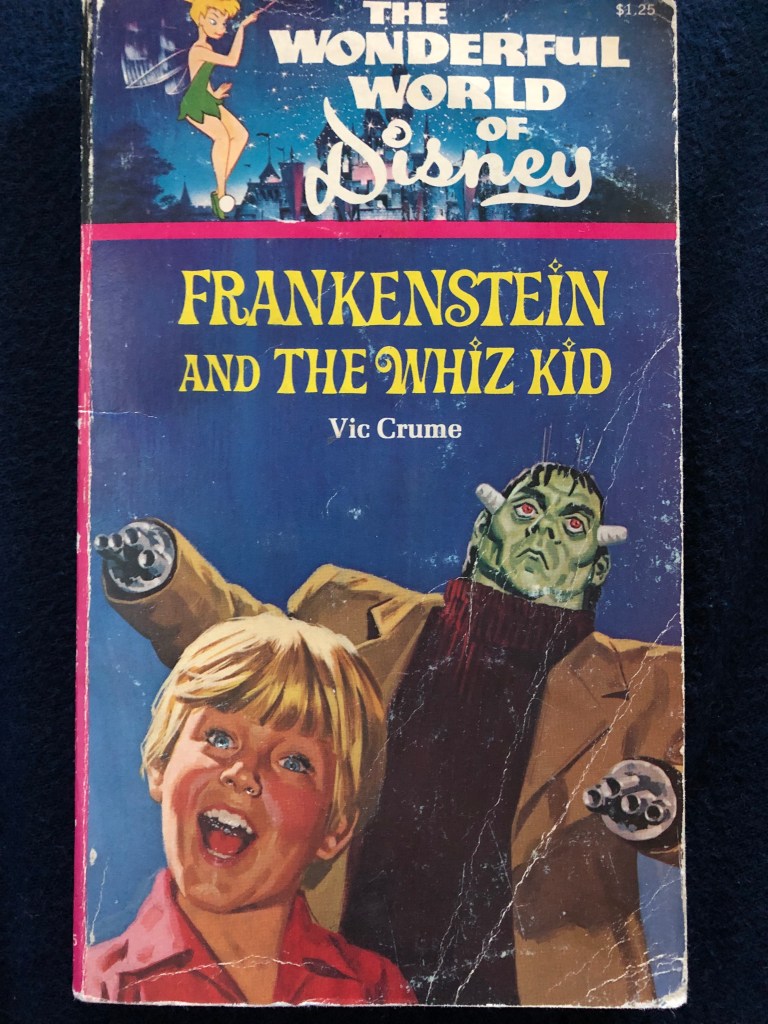
Frankenstein and the Whiz Kid by Vic Crume, 1975.

This book is a novelization of a made-for-tv Disney movie called The Whiz Kid and the Carnival Caper (some editions of this book also use that title).  There was also an earlier movie with the same characters called The Whiz Kid and the Mystery at Riverton.  I haven’t been able to find either of these movies for sale or on YouTube.  Both of the movies are based on a character created for a series of books by Clifford B. Hicks.

The “Whiz Kid” is Alvin Fernald, a boy who is always creating amazing inventions.  He has quite a reputation in his town.  Sometimes, people also call him “The Magnificent Brain.”

One day, his sister, Daphne (called “Daffy”), borrows one of Alvin’s rockets, showing a friend how they work.  However, the rocket ends up falling down a storm drain, and Daffy climbs in to retrieve it.  Alvin comes along as Daffy has trouble getting out and gives her directions to the storm drain’s opening.  Daffy follows the directions and gets out, but while she’s still walking around in the storm drain, she sees a mysterious man with a gun.  Fortunately, he doesn’t spot her, but she wonders what he was doing in the storm drain with a gun.

The place where the storm drain comes out is near a carnival that has come to town.  Alvin, Daffy, and Alvin’s friend Shoie want to go to the carnival, but they need some money.  To get some, Alvin brings out one of his earlier invention, a car-washing machine.  The others are dubious about that invention because it has caused problems before, but Alvin says that he’s fixed it.

Their first prospect for a car wash is the person who has moved into a spooky old house in their neighborhood.  It turns out to be a beautiful young woman named Cathy Martin.  Alvin is eager to impress her, but unfortunately, his invention goes haywire and ends up making a mess that the kids have to clean up (as well as making apologies to other people affected by the chaos).  However, Cathy agrees to go to the carnival with Alvin.

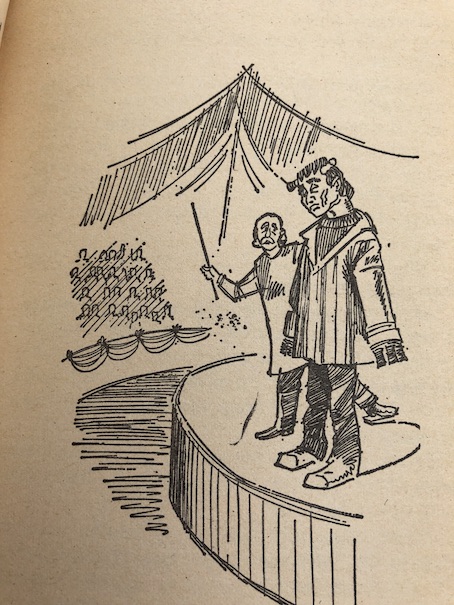
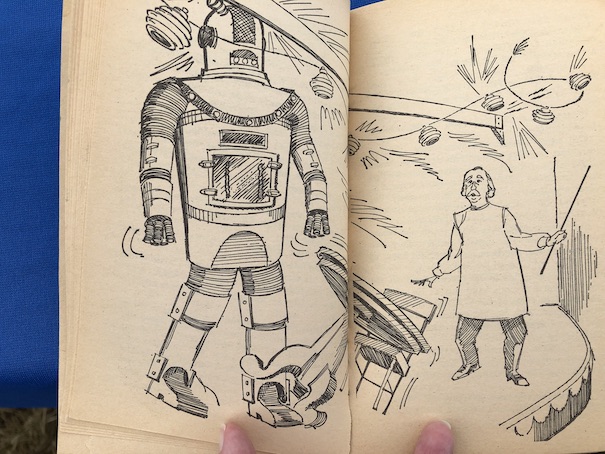
The carnival turns out to be an opportunity for another of Alvin’s inventions when the automaton that they’re using as Frankenstein’s monster in a carnival show breaks down.  Alvin also has a robot that he has built, and he offers the use of it to the man who works on the carnival’s automaton, so the show won’t have to close down.  The man accepts Alvin’s offer, and Daffy volunteers to help with the robot’s costume.

Cathy meets them at the carnival, and to Alvin’s annoyance, suggests that the four of them have fun together, instead of just her and Alvin.  The four of them do have fun, but they stumble onto something strange about Cathy.  They spot a man who Alvin and Shoie met at Cathy’s house.  Cathy said that he was her younger brother, on leave from his base, and that he had to be heading back there soon.  But, Alvin and Shoie wonder what he’s doing at the carnival if he’s supposed to be back and his base.  Then, Daffy recognizes him as the man she saw in the storm drain with a gun!  Who is he really?

The kids decide to spy on Cathy’s house, and they learn that the man, called Ernie, and the magician from the carnival, Moroni, are planning a bank robbery and that Cathy is in on their plans.  It’s a terrible disappointment to Alvin because he liked Cathy, but he thinks that they have a duty to tell Police Chief Moody about their plans.

Chief Moody is somewhat skeptical about what the kids overheard, but he and he deputy stakeout the bank.  When nothing happens, he thinks that the kids raised a false alarm, but it turns out that the robbers’ plan is more complicated than they know.

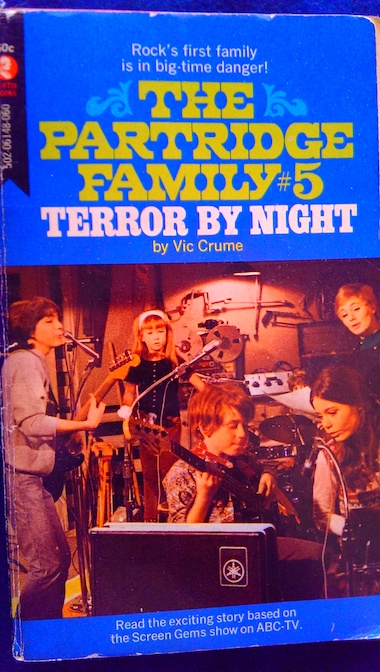
Terror By Night

PFTerrorNight

Terror By Night by Vic Crume, 1971.

This book is part of the Partridge Family book series, based on the The Partridge Family tv show.

Shirley has been thinking that she and her children could use a vacation, and her family band’s manager, Reuben Kinkaid, suggests a place where they could have a little vacation and do some rehearsing.  Reuben arranges for the family to rent a large house with several acres of land attached in a small New England town not far from Salem, Massachusetts.  That should have been their first clue.  That, and the fact that the town’s name is Haunt Port.

At first, the Partridges are just thinking about how they can rehearse without disturbing anyone on such a big place, and Danny and Chris want to try camping out.  However, when they arrive in town, they learn that the name of the house they’ve rented is Witch’s Hollow and that it’s close to a place called Hangman’s Hill.  Soon after the family arrives at the house, Keith and Laurie also find a dummy hanging from a tree with a note that says, “Welcome! The Hangman.”  It’s pretty disturbing, but Keith and Laurie decide to hide the dummy and not scare the others.  They don’t know who is behind this awful joke, but they don’t want to give that person the satisfaction of seeing them react to it.

However, the disturbing things don’t end there.  The family’s dog, Simone disappears.  Also, people in town seem to have a strange attitude toward the house’s cook/housekeeper, Mrs. Judbury, and her daughter, Prudence.  Prudence is sullen and anti-social with a habit of catching toads for fun.  Keith has to admit that he can see how Prudence might have gotten a reputation for being a witch, but there’s more behind the strange happenings at Witch’s Hollow than that.

Simone eventually returns, although it’s clear that she’s frightened and hasn’t been fed well, and Mrs. Judbury tells the family the story of her family’s history in Haunt Port.  One of Mrs. Judbury’s husband’s ancestors was one of the accusers at the Salem witchcraft trials, but later, when people began to realize that they had executed innocent people, some of the accusers themselves found public opinion turning against them.  This ancestor decided to leave Salem and go to Judbury Port (the old name for Haunt Port) because he had family there, but he and his wife were never really accepted there, either.  This man later hanged himself in despair (at the place called Hangman’s Hill), and his wife later died alone, also shunned by the town.  Although some of the townspeople might feel bad about how things ended up with the Judburys, the old uneasy feelings about the family have remained, and Prudence’s stand-offish attitude, combined with her mother’s apparent psychic premonitions, has fueled some of the old stories.

At one point, Keith tells Prudence that he knows why she acts the way she does, because it’s much easier for her to keep her distance from people and behave strangely than it is for her to try to learn to get along with them and make friends.  Prudence isn’t responsible for what the townspeople did in the past, but she isn’t helping things in the present.  Jane Parsons, whose family owns the local store, also helps in a way because she and Prudence are cousins, and Prudence joins her in welcoming a cousin of their and his friend when they visit town.  As Prudence becomes friendlier, she and her mother become allies in trying to figure out the mysteries of Witch’s Hollow, which turn out to have less to do with past wrongs than current crimes.

The book is available to borrow for free online through Internet Archive.