A Sweet Girl Graduate

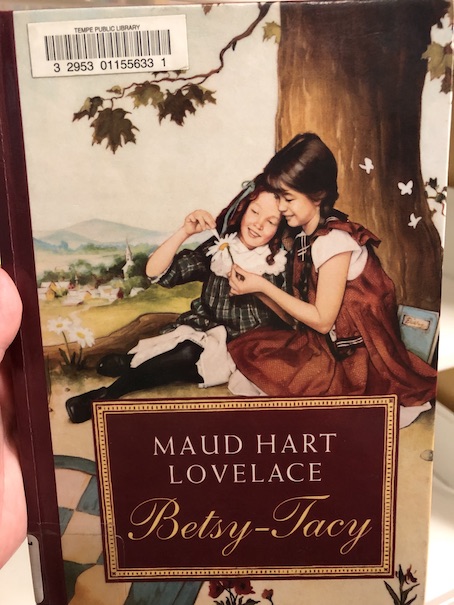
Don’t let the cover of this book fool you! Yes, it’s a 19th century novel for young girls, and there’s a strong morality aspect to the story, which is common for Victorian novels, but the story is not nearly so sweet and flowery as the cover indicates. This book is Dark Academia over 100 years before the term “Dark Academia” was coined and the genre/aesthetic became what it is today.

The story begins on an autumn evening. Priscilla (often called Prissie as a nickname) lives in a small country cottage with her aunt and her younger sisters, and she is packing to go to a college for young ladies. Her aunt isn’t sure about this recent trend of girls getting an education, but she is still proud of her niece. They discuss some last-minute advice for Priscilla, and although her aunt doesn’t have much money, she promises her a little extra as an allowance while she’s away. Priscilla says that she’ll write to her aunt, although probably not very often because she will be busy studying.

Priscilla’s three younger sisters will be remaining at the cottage with their aunt while she is away. Aunt Rachel, called Aunt Raby, is very strict, and the girls aren’t allowed to have much fun, so Priscilla’s sisters will miss her while she is away. Priscilla says that she will be at college for three years, and that she will visit when she can, at least once a year. Then, when she graduates, she will look for a good job so she can make a home for herself and her sisters together.

The younger sisters don’t entirely know it yet, but the stakes are high in the success of Priscilla’s education. Their father died when Priscilla was only 12, and their mother died when she was 14, which is when they moved in with their aunt. That was four years ago because Priscilla is now 18. There was a bank failure before their parents’ death which wiped out their savings, so the sisters have been entirely dependent on their aunt and her farm for support. The aunt works hard and has provided for their basic needs, although the family has no luxuries, and there was never really any expectation that the girls would have any education at all. However, Priscilla loves to read and has a talent for learning, so she has been teaching her younger sisters as best she can. The local minister, noticing Priscilla’s talent for learning and feeling fatherly toward her, has given her some extra tutoring in the classics, and he is pleased at how well she has managed the material.

The problem is that the girls’ aunt is now ill. She will not die from her illness immediately, but there is no cure for what she has (which is never explicitly named), and she and Priscilla know that she will die from it eventually. Over a period of two or three years, she will gradually become weaker, and she is already showing signs of that weakness. The aunt’s farm is legally entailed for another relative, so Priscilla and her sisters will not inherit anything from her and will have to find some way of making their own living after their aunt is gone. Priscilla goes to the minister and explains the situation, saying that she will have to stop her lessons and begin seriously learning skills that will help her find a job and support her sisters. She regards learning as a luxury that she will now have to go without.

Her first thought is that she should improve her sewing and become a dressmaker, but the minister can see that she doesn’t have much talent in that direction. He tells her that, besides being a pleasure, learning can also be a means of making a living. He thinks that Priscilla has the talent to become a teacher because of her learning ability and her skill in teaching her sisters. However, to become a teacher, Priscilla will need to attend college and graduate. At first, Priscilla doesn’t see how she can afford college, but her aunt sells her watch and the little jewelry she has, and the minister helps her take out a loan to pay for her education. He also helps Priscilla to study to pass the entrance examinations at St. Benet’s College for Women. Priscilla will need to do well in college for her sake and for the sake of her sisters’ future. People are depending on her, and she doesn’t want their help and sacrifices for her to have this chance in life go unrewarded.

The rest of the book is about Priscilla’s first year at college. During that time, she suffers from homesickness and social awkwardness because she has not been schooled in the intricacies of social manners and social classes. She confronts prejudice from the other students because she is poor, and they pressure her to act like they do and spend money as recklessly as they do. Priscilla has to learn to resist these pressures and temptations. It isn’t too difficult for her because she finds many of the girls at college to be shallow and not serious about her studies, and she doesn’t really admire them. However, she is soon befriended by a girl named Maggie, who is outwardly charming but inwardly miserable and complex.

Maggie’s friendship is often toxic to other girls, and Priscilla can see that she isn’t always honest and that she is not as devoted to other people as they are to her. She uses people for attention and affection, but Priscilla becomes fascinated with Maggie because she comes to realize that Maggie has layers and some of them are genuinely noble. For reasons that Priscilla doesn’t fully understand, Maggie is deeply troubled by the death of another student who once lived in the room that Priscilla now has at their boarding house. It seems like everyone at the boarding house is haunted by memories of Annabel Lee, and Maggie was once Annabel’s best friend. Maggie is moody and fickle in her temperament, and she hasn’t been truly close to many people since Annabel died, although she can charm people into do giving her attention and doing things she wants them to do. Priscilla has to be careful not to let Maggie manipulate her into getting into trouble, but she also benefits from Maggie’s friendship and has a way of bringing out Maggie’s better side.

During the course of the story, Priscilla has to face girls who don’t really want her at the college and who try to sabotage her socially and pressure her to leave. She also has to remind herself of her goals and the reasons why she came to college. When Priscilla is accused of a theft, both she and Maggie receive help from some mutual friends to realize the truth of what happened and the identity of the real thief, and Maggie is forced to confront a painful incident from her past that is still haunting her and which is the major reason why she acts the way she does.

There’s a lot more to unpack here, and I want to cover the story in more detail. If you’d like to stop here and read it for yourself, you can skip the rest of this.

The book is now public domain. It is available to borrow and read for free online through Project Gutenberg and Internet Archive (multiple copies, including an audio version). Later versions of this book were published under the title Priscilla’s Promise.

When Priscilla gets to college, she settles into her boarding house, which called Heath Hall and is run by Miss Heath. It isn’t until she gets to the boarding house that Priscilla realizes just how nervous and homesick she is. Because of her nervousness and the strangeness of living in a new place, she doesn’t present herself very well to the other students at first.

When she clumsily drops a coin, another student, Maggie, picks it up for her, and this is their first introduction. Maggie can tell right away that Priscilla is nervous and frightened, and her immediately impulse is to take Priscilla under her wing. Nancy, Maggie’s best friend, cautions her about how she treats new students. There are other students Maggie has been friends with when they first arrive, but she treats them like novelties. She acts like a friend and mentor for a couple of weeks, winning the girls’ confidence and making it seem like the start of a lifelong friends, and then tires of them and simply drops them. Nancy doesn’t think it’s right for Maggie to do this to the new girls, although Maggie brushes off her concerns. Nancy likes Maggie because she can be very sweet and fun, but she also recognizes that Maggie can be trouble, and she is sure that Maggie is going to recklessly cause some problems before she is finished with her education.

Maggie and Nancy notice that there is someone moving into the bedroom next to Maggie’s in the boarding house, and Maggie is upset because that room belonged to Annabel Lee. Annabel Lee was another student at the boarding house who was very popular with the other girls, but she tragically died of an illness. Nancy is practical and says that they couldn’t very well expect that room to be simply left vacant now that Annabel is no longer there. It’s just natural that the boarding house would rent it out to someone else eventually. Maggie is more emotional and says that they ought to have left it as a shrine to Annabel and that she is sure that she will hate the person who lives there. Nancy sighs, and when Maggie goes into her room, Nancy decides to introduce herself to the person who now occupies Annabel’s room, who turns out to be Priscilla.

Priscilla is unaware of who Annabel was, and she is still struggling with her nervousness and homesickness. Because Priscilla is trying to cover up for how nervous and awkward she feels, her manner just strikes Nancy as being cold and awkward, which makes Nancy feel awkward while talking to her. Nancy briefly introduces herself but doesn’t stay to chat long, although Priscilla secretly wishes that she had.

Priscilla continues to make mistakes through her first evening at the school. When she goes down to dinner, she enters the dining hall through the door that is normally reserved for the dons (teachers), and she sits at a table where the higher level students normally sit instead of with the other freshmen. Other students in the dining hall start talking about the nerve of some freshmen, getting above themselves, but Priscilla nervously isn’t sure what they’re talking about. Fortunately, Maggie decides to step in and help Priscilla.

Maggie sits next to Priscilla and gently explains to her what she did wrong. Miss Heath gave Priscilla a list of rules when she moved into her new room, and there was nothing about any of this in those rules. Maggie explains that there are certain, unspoken rules and customs among the students. Even though the students are supposed to be modern, liberal, and democratic by the standards of their day as part of this new generation of women seeking a higher education, Maggie admits that, deep down, they are still very conservative. She says this classist side of themselves shows itself whenever someone breaks their unspoken rules and social customs or steps out of their proper place. Priscilla thinks that the students at this school are cruel if they expect someone new to know rules that aren’t written or spoken about and that she is starting to wish she hadn’t come. Maggie hurriedly soothes her, saying that they’re not really that bad, and she invites Priscilla to her room to talk later so she can explain some things to Priscilla that she will need to know.

Nancy also steps in and tells Priscilla that most of the students take their tea up to their rooms after the meal, asking her if she would like to do the same. Priscilla, still nervous, decides that she will skip the tea tonight. Nancy says that, since this is the first night, she will want to spend the rest of the evening unpacking and that other girls in the boarding house will come to call on her. Priscilla asks her why they’re going to do that. Having lived on a farm, in a family that wasn’t very socially active, Priscilla knows less about social manners than she does about anything else. She isn’t accustomed to informal visits from people. Visits for her are usually more formal occasions, and she particularly has no idea what she’s going to say to these strangers who will be coming to call on her. Nancy, seeing that Priscilla is nervous and doesn’t know how to cope with the social aspects of the school and life in the boarding house, tells her that these are simply informal visits so the other students can introduce themselves to the new person in the boarding house. Nancy offers that, if Priscilla would like, she can spend the evening with Priscilla and help facilitate these introductions. Priscilla nervously murmurs that she would like that.

The boarding house is more luxurious to Priscilla than anywhere that she has previous lived, but it also feels cold and un-homelike to her. The other girls are bright and chatty, and Priscilla finds them a little overwhelming. When the other girls come to visit Priscilla, they also comment about Annabel, who used to live there, and how the room looks more bare without her and her things. It seems like the other girls are there mostly to see the room and remember Annabel than to see Priscilla, and Priscilla is too shy to know what to say to any of them. One of the girls kindly says that the place will seem better once Priscilla has really moved in and has a chance to add her own decorations. Another girl says it will never be the same as when Annabel was there, but the kind girl suggests some shops where Priscilla can find some room decorations and offers to go shopping with her.

Then Nancy arrives and intervenes, seeing how overwhelmed Priscilla is and encouraging the other girls to leave. Nancy offers to help Priscilla unpack and goes to borrow some matches from Maggie because Priscilla doesn’t have any to light a fire. Priscilla accepts the matches but tersely declines the offer of help unpacking because she doesn’t want Nancy to see how meager her possessions are. Nancy awkwardly says that she will wait in Maggie’s room and that Priscilla can join them for cocoa later. It’s a custom of the boarding house for the girls to have cocoa in the evening, and they often invite friends in the boarding house to their rooms to share cocoa and chat before bed. Maggie later calls Priscilla to join them for cocoa but refuses to enter Priscilla’s room herself, still too affected by the memory of Annabel.

Priscilla goes to Maggie’s room, and the girls have cocoa together. Nancy isn’t there because she has gone back to her room to do some work, and Priscilla finds Maggie charming. Maggie has a way of putting people at ease, and Priscilla finds herself telling Maggie about herself and her reasons for wanting an education. Before she leaves, Priscilla asks Maggie about Annabel because of what the other students have been saying about her. To Priscilla’s shock and surprise, Maggie immediately becomes distressed and refuses to talk about Annabel, bursting into tears. Fortunately, Nancy arrives and reassures Priscilla that Maggie will be all right. As Nancy walks Priscilla back to her room, Priscilla asks her about Annabel. Nancy doesn’t really want to talk about Annabel, either, but she tells Priscilla that Annabel was a very popular girl at school who is now dead, and she says that it’s better if Priscilla doesn’t talk about her now.

All the same, the other students at the boarding house won’t stop talking about Annabel Lee. Although Priscilla doesn’t really believe in ghosts, it feels to her like Annabel still haunts the boarding house and her room in particular. Everyone seems to have memories of her, and Priscilla’s presence and her occupation of Annabel’s old room brings them out. Priscilla is often left with the awkward feeling that she has somehow usurped Annabel’s place, or at least, that other students feel like she has. She wishes that she had been given some other room in the boarding house. Even Annabel Lee’s name reminds her of the song by Poe, which is familiar to Priscilla and which is about a love that survives beyond death. (I think the author picked that name on purpose because of the song.)

Before that first evening is over, Priscilla realizes that she has misplaced her purse somewhere. This is serious because it has her key in it and the little money she has. She goes looking for it, and she overhears Maggie and Nancy talking about her. Maggie assures Nancy that Priscilla will not replace Nancy in her affections. Maggie calls Priscilla “queer” (in the sense of “strange”) and admits that she is nice to younger girls at college because she craves their affection. Maggie says that it gives her “kind of an aesthetic pleasure to be good to people.” She knows that she has an ability to inspire affection in other people, and she absolutely craves seeing the look of grateful affection she gets from the younger girls she helps at school. Nancy asks her if she ever returns the love that she receives from other people, and Maggie says that she does sometimes. She says that she is very fond of Nancy and kisses her.

(Note: This conversation isn’t necessarily proof that this is a lesbian relationship, which would have been not only shocking but actually illegal in England during the time period of this story. The book was published in 1891, and later in the 1890s, Oscar Wilde was tried and convicted for homosexual acts, although part of his conviction was also that he committed acts with underage boys, which would still get him a conviction by modern standards.

Certainly, lesbians did exist during this period of history, and it’s possible the author might know more about it than she could explicitly state and may be basing the characters’ feelings off of people she knew or met herself. However, modern readers might want to hold off firmly deciding what the real relationship between Maggie and Nancy is because there are other factors that are revealed later in the story. In particular, Maggie is a complicated character, who cultivates relationships for attention and to fill some dark emotional needs, and these relationships are not honest because there is not necessarily any real affection or romantic interest behind them. Maggie does have a male admirer, who we hear more about later, and we also eventually learn why her relationship with him is complicated.)

Priscilla, who is a sincere girl of strong morals and deep affection, is shocked at the way that Maggie and Nancy talk to each other and about her, and she quickly returns to her room without finding her lost purse. She is angry about what she’s heard because, although both Maggie and Nancy have been friendly to her and helpful that evening, Priscilla can see that neither of them really likes her or cares about her. Maggie was just pretending to be nice just to get attention, and Nancy is jealous of her for the attention that Maggie has given her. Although these types of feelings are completely alien to an inexperienced and unsophisticated girl like Priscilla, she has just had her first taste of toxic friendship, and she is about to learn more.

When Priscilla is unpacked, and her meager personal belongings begin to fill her room, she starts to feel a little more at home, and she even begins to enjoy some of the newness of the college experience. She has more freedom at college than she ever has before, although she realizes that there is still a routine to college life, and conscientious girls follow the routine and both the written and unwritten rules of college society.

The book explains that life at college is somewhat like life at school, but much less restrictive because the students are considered young ladies rather than little girls. The freshmen are about 18 years old and are expected to graduate at about age 21, so all of the students are expected to behave as young adults. They are not closely monitored, and no one hands out punishments to students for neglecting their studies or misbehaving in minor ways. (What happens when students misbehave in major ways is addressed later in the book.) Basically, as long as the students are not breaking any laws or explicit rules and are not causing anyone serious harm or seriously disrupting the life of the college, there is little intervention. The students are expected to manage their time at college and organize their social lives and relationships with others by themselves. They are also not restricted to the college or boarding house. They may leave the college at any time for shopping or social engagements, although it is considered polite to let Miss Heath know where they are going and when they will be back, and they must be back before lights out. Priscilla has never been to school before, and she finds the unwritten social rules and the personal machinations of the other girls the most difficult part of her education.

Every morning, the girls in Heath Hall get up and start the day with prayers in the chapel. Nobody makes them go to chapel, but they generally do anyway because it’s expected, and participation in the routine activities helps them get along better. Then, they go to breakfast, where they select the foods they want to eat because the meal is served in the style of an informal buffet. Then, the students look at the notice boards. There is one notice board for announcing the lectures for the day and another for student clubs and social activities. The students use these announcements to plan their day. The mornings are always for educational lectures. Sometimes, there are more lectures in the afternoon, but there are also sports, gymnastics, and social activities. Nobody checks attendance at any of the lectures or activities, and if someone chooses not to attend something, nobody checks up on them. They can have lunch whenever they like, between noon and two o’clock in the afternoon, and the students typically have their afternoon tea in their own rooms, sometimes privately and sometimes with guests. Students study privately in their rooms whenever they like, and there are club activities between tea time and dinner, for those who wish to participate.

Priscilla has difficulties with the other students because she refuses to participate in the social activities of the college or go shopping with the other girls when they invite her. She even turns down invitations from other girls to have cocoa with them in the evening and chat, like she did with Maggie that first night at the boarding house. Having learned more about what Maggie and Nancy are really like, she becomes cold and distant with them, discouraging their friendship, but she also turns down possible friendships with the other students.

One day, two of the students criticize her for being unfriendly and not participating in the social life of the college. Everyone has noticed that Priscilla hasn’t even put up pictures or decorative knickknacks in her room or even purchased comfortable easy chairs for visiting, like the other girls have. Nancy tries to defuse the building arguments and criticism by saying that they mustn’t criticize the “busy bees”, the serious, studious students at the college because they are the foundation the college was built on. However, the other girls complain that college is also for fun and socializing, and if Priscilla is smart, she’ll stop fighting it and start participating with the other students.

The other students are about to walk out on Priscilla during this argument, but Priscilla stops them and shows them what she really has in her room. She shows them her empty trunk and explains that she has no pictures or knickknacks to put up in her room. She also shows them the contents of her purse (which she did find after she lost it) and how little money she actually has. She hasn’t gone shopping with the other girls or bought things for her room because she simply can’t afford them. She is from a poor family, and she is serious about her studies because she has to be, and her future depends on it. She acts the way she does because this is the life she lives, and this is what is right for her and her situation. The other girls just don’t understand because most of the girls at college are from wealthier families, and they’re not in her position. Priscilla has realized that she’s different from the other girls, but she doesn’t admire the other girls because she has already seen that there are problems with their behavior and priorities. She openly lets them know that she isn’t intimidated by them and will not be pressured into acting like they do because she simply can’t. It wouldn’t help her with her life or goals. The other girls are embarrassed and a little ashamed of themselves for not realizing her situation and for their shallowness and frivolous privilege. They leave Priscilla without saying anything else.

Nancy reports this conversation to Maggie and says that she admires Priscilla for her bravery in standing up to the other girls. Nancy never liked those particular girls because they are shallow, but she never had the nerve that Priscilla had to tell them off in that matter-of-fact way. Maggie asks Nancy if she’s going to worship Priscilla now, and Nancy says no but that she still admires Priscilla’s bravery. Maggie says that she doesn’t want to hear more about it because she doesn’t like hearing things about “good” people and their virtues, something which bothers Nancy. Nancy tells her to stop pretending that she doesn’t like goodness and morality, but Maggie says she really doesn’t. Hearing about Priscilla especially bothers Maggie because, although Priscilla initially opened up to her, she has not shown that grateful admiration toward her since that first evening, when she overheard Maggie talking to Nancy.

Maggie also has an unhealthy attachment to the memory of Annabel, and it still seriously bothers her that Priscilla has Annabel’s old room. Maggie can’t bring herself to look into Priscilla’s room or be reminded about Annabel, for reasons readers still don’t fully understand. Everyone liked Annabel at school, and people are still haunted by her memory, but for some reason, it’s worse with Maggie than with anyone else. She privately thinks that she cannot really feel love since she lost Annabel. It seems like Maggie had a similar sort of unhealthy attachment to Annabel as Nancy now has to Maggie.

This is where we begin to learn what is really going on with Maggie and what makes her tick. Maggie is not a happy person on the inside. In fact, she thinks of herself as the most miserable student at the college. Inwardly, she doesn’t think of herself as being either a good or lovable person, in spite of her outward charm and ability to inspire people to love her. She doesn’t really love herself. That’s why she always craves expressions of love and devotion from others but doesn’t seem able to really form relationships with others and maintain them.

However, there is one thing that really makes Maggie come alive. She loves the intellectual life of college. She forgets her misery when she loses herself in reading and translating classical works. Even her joy of classical studies can’t entirely distract her from her worrying love life. It’s a somewhat open secret that Maggie has a male admirer who writes to her sometimes, and this is a source of jealousy for the other students, especially Nancy and Rosalind (another younger girl that Maggie has been cultivating as an admirer), who both view this young man as a rival for Maggie’s attention and affection.

Although Priscilla recognizes that Maggie is a false person who is mainly nice to other people for some selfish fulfillment, she can’t help but be fascinated by her charm and intelligence. Maggie tries harder to get Priscilla’s attention because she still craves attention and affection, and she views Priscilla’s reluctance to give her what she wants sort of like her playing hard-to-get. Priscilla’s attempts to ignore her just make her want to try harder to win the prize she craves.

Miss Heath, who doesn’t seem to understand some of the unhealthy admiration other students have for Maggie, encourages Priscilla to not burn out on her studies and to give herself time to make friends like Maggie and to enjoy the social aspects of school life. She says that she has seen other serious students take on too much, burn themselves out, and fail to finish their education before. Priscilla, who has never been to school before, takes Miss Heath’s advice seriously.

Maggie discovers that Priscilla loves flowers, and she uses them to appeal to Priscilla’s love of beauty. She uses aesthetics and intellectual discussion to appeal to Priscilla’s love of study and the pleasures of learning. Gradually, Priscilla finds herself become more of a friend to Maggie. She confronts Maggie about what she heard Maggie and Nancy say to each other on their first night in the boarding house, but Maggie brushes away Priscilla’s concerns. She claims that she only said those things to punish Priscilla for being naughty by eavesdropping. Soon, Maggie and Priscilla are doing many things together, from going to church services together to having cocoa in Maggie’s room in the evening and talking about their studies. It seems harmless enough, and some people are a little relieved because Maggie had given up doing many things that she used to do with Annabel, when she was alive, because they reminded her too much of Annabel. It seems like Priscilla has somehow inspired Maggie to do things that had become emotionally painful to her, and some people think it’s nice that Maggie has found a new best friend and is moving on.

However, as I said, not everyone understands Maggie’s toxic friendships, the unhealthy attachment some of the other students have had to both her and the deceased Annabel, and her manipulation of other people. The ones who do understand these things are some combination of jealous and troubled, and Priscilla, who is still relatively naive, hasn’t grasped the precariousness of her social situation. She has to learn to walk a delicate line between staying true to herself and her goals and between staying on good terms with her new friends. It’s fine for her to like other people, like Maggie, but not to be led astray by them. She has also attracted attention from some other students who resent her and feel threatened by her.

The two girls Priscilla told off earlier about their wanting her to participate in frivolous social activities and spending money are bitter about their embarrassment and how Priscilla made them them look shallow by demonstrating her poverty and virtue. They’ve been going around the school, telling everyone the story of what Priscilla said, but casting Priscilla in a bad light. They try to make Priscilla seem like a self-righteous prig who is trying to shame them for participating in normal social activities. Their fear is that, if other girls at college like Priscilla and decide to imitate her, austerity will become the fashion of the day. They think that they will either not be allowed to participate in their social activities and forced to keep their noses to the grindstone from now on or will be shamed for having nice things in their rooms while Priscilla doesn’t. They don’t want to be pressured to give up these things or forced to study as seriously as Priscilla does, so they do their best to ruin Priscilla’s social reputation, discourage other girls from being her friend, and try to get other students to gang up on her.

Their efforts are partly foiled because Maggie is popular, and Priscilla has become Maggie’s special friend. Nancy is also Priscilla’s supporter because she was present during their confrontation with Priscilla and stands up for her against the other students. Although Maggie and Nancy seem to have a toxic friendship with each other, and Maggie develops a series of toxic friendships with other students, Maggie and Nancy become Priscilla’s protection against even more toxic students. Miss Heath and the teachers at the college also appreciate Priscilla and her work at the college. However, unbeknownst to Priscilla, the more shallow girls still resent her and are plotting against her.

Rosalind knows of the unhealthy attachment other girls at college have to Maggie because she also shares it. Rosalind is one of the younger girls Maggie has cultivated as an admirer but has largely neglected since she became tired of her and more interested in Priscilla. Maggie and Annabel were once the college’s power couple/friendship duo, although Annabel was the more popular of the two. Other girls even save pictures and autographs of Maggie and Annabel as souvenirs, like they’re celebrities, and Rosalind herself has a picture of Maggie that she sometimes kisses.

Since Annabel’s death from a sudden illness, Maggie has been the undisputed social queen, although Maggie’s thrill at the attention she receives is somewhat dampened by her sense of loss because she was truly attached to Annabel herself. She craves attention and admiration and can’t help but pursue it, but she doesn’t feel like she really deserves it. Not all of the other students really admire Maggie. Some of them see her for the manipulative girl she really is, and they get sick of hearing the others rave about her or talk about poor, tragic Annabel.

However, Rosalind’s resentment of Maggie’s indifference to her after manipulating her affections has made her admiration of her turn to hate. She tells another girl that she’s thinking that she should tell Miss Heath about the unhealthy attachment other girls have to Maggie and get her to put a stop to this Maggie admiration cult. (I would have been in favor of this, but sadly, that’s not what Rosalind does.) Then, Rosalind and the girls who resent Priscilla get the idea of ruining Maggie’s friendship with Priscilla and bringing them both down this way.

Rosalind tries to find ways to embarrass Priscilla socially and drive a wedge between Priscilla and Maggie. One day, she convinces Priscilla to go into town with her to pay her dressmaker, insisting that the dressmaker needs her money for her sick mother and that she wants company on the errand. Nancy tries to discourage Priscilla from going because the weather is bad and Priscilla has a cough, but Priscilla says that Rosalind talked her into coming. Since she promised, she has to go. Rosalind makes Priscilla wait in the cold and drizzle while she goes inside to pay the dressmaker and then takes Priscilla on another errand to see a friend before they go back to the college.

When they get inside this friend’s house, Priscilla realizes that Rosalind has tricked her into attending a party instead of just paying a short visit to a friend. Priscilla is under-dressed for this party and damp from her time outside, which is embarrassing. To make matters worse, Rosalind simply abandons her in a corner. Priscilla can’t bring herself to leave the party without Rosalind because she would be in trouble for returning to the college without her when everyone knows that they left together, and she can’t bring herself to search the party for Rosalind and demand that they leave because she feels out of place in her shabby clothes. She hears the fancy, catty women at the party gossiping about other women and the frumpy “girl graduates” of the college. Fortunately, the hostess of the party realizes that Rosalind has been treating Priscilla shabbily and makes her comfortable with some tea.

Then, Geoffrey Hammond, the young man who has been writing to Maggie, recognizes Priscilla and comes to talk to her. Priscilla explains her predicament and how Rosalind tricked her. Not only has Rosalind deprived her of study time by getting her to come to town on her errand and to this party, but if they don’t leave the party soon, they won’t get back in time for dinner, which would break one of the written rules of the college. Taking pity on her, Hammond goes to find Rosalind and talk to her. When he returns, he says that Rosalind has told him that she already told the principal of their college that they would be late for dinner, so they are excused. Priscilla is angry that Rosalind did this without talking to her, and she starts to create a fuss, but Hammond quiets her down, realizing that she is making a scene. He knows that she was nastily tricked, but he says, since they can’t get back to the college in time for dinner now, it would be more socially graceful for her to enjoy this party as best she can and then have words with Rosalind when they get back to college.

The two of them spend the rest of the party discussing The Illiad and The Odyssey. Priscilla shines in intellectual discussions about the classics, so Rosalind is a little jealous when she sees how well Priscilla is doing. She tries to ruin the moment by pretending that Maggie gave Priscilla a letter to give to Hammond and that Priscilla has either lost it or is withholding it. However, Hammond knows that Priscilla didn’t even know she was coming to this party and doesn’t fall for Rosalind’s story, disapproving of her. On the way back to the college after the party, Priscilla lets Rosalind know exactly what she thinks of her mean trick.

Later, at a cocoa party at the college, Rosalind tells the other students about the party, emphasizing Priscilla’s awkwardness and disdain of the fun. Then, she accuses Priscilla of flirting with Geoffrey Hammond. Everyone knows that Geoffrey Hammond is Maggie’s young man. The other girls don’t think Maggie treats him well, and some of them think they would be better for him, but they know that he’s devoted to Maggie. Rosalind is trying to make Priscilla look like a boyfriend-stealer.

Meanwhile, one of the girls at the college, Polly, has gotten badly into debt. Although most of the girls at the college are pretty well-off, compared to Priscilla, even girls from wealthy families can get into trouble with money, if they’re not careful. Polly admits that her father told her not to spend above her allowance, but she is accustomed to spending freely. Now, she owes a considerable amount of money, and the only way she can think of to raise what she needs without telling her father what she has done is to sell some of the lovely things she’s bought to furnish and decorate her room and some of her fancy clothes. Her friends at the college, who all admire her nice things, are all eager to buy things from her. Their only concern is to remind her not to sell anything that would belong to the college, only her own belongings.

All of the girls at college, except for Priscilla, are invited to attend the auction. They exclude Priscilla because they know she doesn’t have money and they think “Miss Propriety” would snub the event and perhaps tell the principals about it. Really, the other students don’t think the principals of the college would approve of this auction, so they’re careful to keep the event secret from them. Originally, Maggie wasn’t planning to attend the auction, although she was invited, because she doesn’t know Polly and doesn’t care for this kind of auction. Then, Rosalind badgers her into going, saying that she has become too proper, self-righteous, and basically, no fun anymore. Maggie cares about her social reputation, so she decides to go to the auction, and to Priscilla’s surprise, she drags Priscilla with her. This turns out to be a bad thing for Rosalind because now Maggie is angry with her and determined to teach her a lesson.

Maggie doesn’t really want anything at the auction and resents being pushed into going, but because she is one of the richest girls at the college, she can afford to bid much higher for anything there than the other girls. She knows the things that Rosalind wants to buy for herself, so she purposely bids on the items that Rosalind wants. It’s bad enough when Maggie wins the bid for a sealskin jacket that Rosalind really wanted by bidding higher than Rosalind ever could, but it’s worse when Maggie intentionally ups the bid for some coral jewelry and then lets Rosalind win it at a price that’s higher than Rosalind can actually afford. Now, Rosalind owes money to Polly. Even worse, when Rosalind writes to her mother to ask for more money, her mother tells her to return the jewelry she bought and to send the money she’s already spent back to her. It was really more money than her mother could afford to give her, and she only lent it to Rosalind because Rosalind said that she could get a bargain on a sealskin coat, which is a valuable garment. The jewelry is more extravagance than Rosalind’s family can afford.

All of the girls who attended the auction get into trouble for being there because the activity wasn’t sanctioned by the college, and the heads of the boarding houses find out about it. That means that Priscilla is in trouble for attending, too, even though she didn’t buy anything. Nancy asks Maggie why she went when she knew it would probably be trouble, and Maggie says that Rosalind brings out her worst side.

Maggie hates herself partly because she knows that she has a good side and a bad side to her nature, and she finds it hard to manage or cover up her bad side. Sometimes, she just gets moody and temperamental. She doesn’t want to pretend to be good all the time, even though she knows she’s supposed to restrain her worst impulses to get along in society. That’s why she finds virtuous people so trying. She has a hard time struggling with her inner nature and doesn’t like herself. She can’t understand people who aren’t the same, who seem to find it easier and more pleasant to be good all the time and who aren’t subject to the same dark moods and temptations that she has. Even so, Maggie still considers good and proper Priscilla her friend because Priscilla is sincere in her friendship for Maggie and brings out more of her better side, and Nancy, who respects virtue, still loves Maggie, even knowing her complicated nature and how she feels about herself. So, while Maggie’s friendships with Nancy and Priscilla seemed toxic at first, when she was looking at it from the perspective of how she uses them to bolster her self-esteem, we start to see that there are positive sides to these relationships. Both Priscilla and Nancy care about Maggie, even when she struggles to care about herself or them, and they encourage Maggie to be a better version of herself.

The episode of the auction, while getting the girls into trouble is actually a turning point in Maggie’s character development. Polly, Maggie, Priscilla, and other girls from the auction are called before Miss Eccleston, the head of Polly’s boarding house, Katharine Hall, to explain themselves and the auction. Polly explains how she got into debt and couldn’t bring herself to ask her father for more money. Miss Eccleston lectures Polly about the need to manage her money better and avoid spending more than she can afford. Then, she questions Maggie about why she was at the auction because, as one of the senior students, she should know better. Maggie takes responsibility for her presence at the auction and also Priscilla’s, saying that Priscilla is only a new student at college and that she insisted that Priscilla come with her. Miss Eccleston asks Maggie what she bought at the auction and if she paid a fair price. Maggie admits that what she paid for the jacket was less than its true value. Maggie accepts responsibility for her actions and tries to shield Priscilla as much as possible from the fallout of the situation, not wanting her impulsive decisions to negatively affect her.

Miss Heath and Miss Eccleston lecture the girls about the importance of moral principles at the college, but Maggie stands up for herself and the other girls. She honestly admits that she is not proud of herself and her role in the situation. However, she points out that, although Polly’s debt was shameful and her abuse of the allowance from her father, her dishonesty about her spending to her father, and the secret auction were all improper, none of the students have actually broken any explicit rules of the college. Miss Heath and Miss Eccleston are concerned with disruptions to the the boarding houses and how the students’ behavior reflections on the college. Maggie’s argument is based on the fact that none of the students are children, and how they conduct their personal affairs isn’t the business of the college, even if they haven’t conducted themselves well here. Arguing with the heads of their boarding houses goes against their authority and is disrespectful, but Miss Heath and Miss Eccleston say that they understand Maggie’s point and will take it into consideration when they decide how they will proceed and what they will say to the college authorities.

The students themselves appreciate Maggie speaking up on their behalf, but they’re also divided in how they feel about the auction and even about Maggie’s defense of what they’ve done. Some of the students, who never took the auction seriously, think that Miss Heath and Miss Eccleston were making too much of the situation and that Maggie was right to tell them so. However, the more serious girls have realized that what they did was improper, and even though Maggie was trying to defend them from consequences, her defiance and disrespect of authority in the situation has broken one of the unspoken social rules of the college.

The social order that keeps everyone at college more or less in harmony has been shaken by the incident and by the students’ mixed feelings about the situation, and they’re not sure how to make it right. Some students think that the residents of Heath Hall should stand behind Miss Heath and Maggie and their position that, while the auction was inappropriate, the students have learned their lesson from the experience and should be treated leniently. Others think that it was all beyond the bounds of proper behavior, and they no longer wish to associate with Maggie because of her defiant attitude. The students who never attended the auction are irritated by the students who did because they think they are bringing scandal on the college, and by extension, on them. They don’t want to risk their families criticizing them or removing them from the school because they find out what happened and are scandalized by it. The students who weren’t at the auction didn’t do anything wrong, and they look down on the other girls for causing trouble. Everyone is unhappy that the harmony of the school has been shattered, and students are pressuring each other to take sides in the controversy.

Rosalind is even more vindictive toward Priscilla after the auction incident and tries again to blacken her name around the college. She tells the other students that Priscilla was the one who told the faculty about the auction and got them in trouble, even though Priscilla was there with them and is now in trouble, too. She also repeats the story of Priscilla flirting with Geoffrey Hammond at the party. Maggie knows that Priscilla said that Hammond was nice to her at the party, so she tries to ignore what Rosalind says, and Nancy makes it clear that she doesn’t want to hear Rosalind’s sour gossip.

The fallout of the auction incident causes some students to change their minds about their relationships with each other and some to change their behavior. Rosalind tries to ingratiate herself to Geoffrey Hammond because she likes him and tries to blacken Maggie’s name to him to ruin their relationship. Maggie’s affection for Priscilla sours when Priscilla insists on speaking privately with Geoffrey Hammond and that she doesn’t want Maggie to hear what she has to say. Maggie thinks that maybe Priscilla has designs on Geoffrey Hammond, but that isn’t the case. Really, Priscilla wants to have a frank talk with Hammond about both Rosalind and Maggie.

Priscilla likes Maggie, but having gotten to know her, she has a realistic sense of what Maggie is really like now, both her good side and bad side. She recognizes that Maggie is a flawed person, and this is what she doesn’t want Maggie to hear her say to Hammond. She tells Hammond that she finds Maggie fascinating because she has never before seen such a flawed person who also has such a sense of nobility. She doesn’t want Maggie to hear her speaking of her flaws, but like Nancy, Priscilla knows that Maggie has them and yet has likeable and honorable qualities, like the way she admitted her faults at the same time as she defended her fellow students to the heads of their boarding houses. Hammond understands what Priscilla means because he feels the same way about Maggie. Both of them also understand that Rosalind is dishonest, and Hammond believes Priscilla when she says that Rosalind is saying untrue things about Maggie to ruin her reputation.

Maggie’s behavior toward Priscilla becomes colder because of the suspicions that she harbors about what Priscilla said to Hammond. She continues to act as a friend, but she’s not as warm as she was becoming with Priscilla before. Hammond sees what’s happening between the girls, and he is critical with Maggie about the sealskin coat that she bought too cheaply from Polly. Maggie didn’t really want the coat originally, and she’s a little ashamed of having it, so she returns it to Polly. Polly says that she can’t afford to repay Maggie for it now because she really needs the money, but Maggie tells her not to worry about it. If she likes, she can consider the money a loan and repay her during the next school term, which pleases Polly. This is part of Maggie’s nobler side.

When Priscilla goes home for Christmas break and sees her aunt and sisters, they welcome her. Priscilla is astonished when she sees how rough and cramped the little cottage seems to her now that she has become accustomed to the beauty and comfort of the boarding house at college. When she notices how her aunt has become more sick, she feels guilty for her feelings. Her little sisters are upset about her returning to college, and one of them accuses her of forgetting about them and having fun in college rather than making any money. It’s true that Priscilla has been studying and not earning money yet, and she feels guilty that she hasn’t thought much about her aunt or sisters while she was away.

She confides all of this to the minister, and he says that he understands. He thought that she might have feelings like this because of all of the changes she’s been experiencing in her life and her new glimpse of the wider world and the possibilities of life that lay ahead of her. He says that what she is feeling is natural and that she’s over-analyzing it. Priscilla is just currently preoccupied by all the new experiences that she’s been having. She’s been adjusting to all the changes she’s experiencing, and her view of the world is wider now than the narrower one she had when she just lived on the farm.

Priscilla also tells him a little about her friendship with Maggie and how much influence Maggie can have over her, that sometimes she feels like she would do anything for her. The minister reminds her that she would also do anything for her aunt and sisters. This new relationship, like the new experiences she’s been having in college, is fascinating to her for its newness, but he doesn’t think that it has replaced her older and deeper affections. She may have temporarily found herself overwhelmed and preoccupied with everything that’s new to her, but what is deep and most important to her is what will last.

Priscilla worries whether it’s right for her to be away at college with her aunt so sick, but the minister insists that she go back to college and her studies because it’s still important to her future, and her aunt wants her to continue. Her aunt confirms this. She understands that Priscilla is bookish person, like her father. While she appreciates her niece’s care and devotion, she knows that her niece has a future ahead of her, and she wants her to build her future.

In spite of the now-strained friendship between Maggie and Priscilla and Rosalind’s resentment against them both, Priscilla must return to the college and finish her studies. Priscilla tells Maggie that she needs to give up the classical Greek studies that they both love and focus on modern languages instead. It pains her, but Priscilla knows that she has almost enough education for a teaching position, and she must focus on the most practical studies for getting a job as soon as possible for her sisters’ sake. For the first time, Priscilla fully explains to Maggie the true circumstances of her family. This revelation and their shared love of classical studies brings out Maggie’s better nature once again, and she is inspired to find a way to help Priscilla and her family.

However, Rosalind still has not returned the coral jewelry to Polly, has not paid Polly the money she still owes her, and has neither returned the money she borrowed from her mother nor obtained any more money from her. Rosalind is determined to keep the coral jewelry even though her mother has urged her to return it and get her money back, but she still can’t fully pay Polly for it. Polly has now gotten more money from her father during the Christmas break and wants her jewelry back, so she would be happy to buy it back from Rosalind for what Rosalind paid for it. It’s Rosalind’s pride and resentment that keeps her from returning the jewelry. When she has an opportunity to steal the money she needs to pay Polly what she owes from Maggie and frame Priscilla for it, she takes it, thinking that she can solve her money troubles and get revenge on the girls she hates.

Because Priscilla isn’t popular at college, many of the other students are inclined to believe the suspicions about Priscilla being a thief when the theft is discovered. Maggie initially worries that Priscilla might be the thief because she knows that Priscilla was in her room earlier and that Priscilla’s family badly needs money, but after observing Priscilla’s reactions and thinking it over, she regrets her suspicions. Nancy staunchly insists that she’s on Priscilla’s side. Even so, Priscilla is so embarrassed by the accusations that she wants to leave college, but Hammond persuades her to stay. He says that, if she leaves now, not only would she be depriving herself of her education, but running away would seem to confirm everyone’s suspicions. Hammond knows more about Priscilla than he has admitted because the minister who has been helping her is his uncle, and Maggie has told him things about Priscilla’s situation.

Maggie does some soul-searching and must confront her remaining feelings about Annabel’s death and about Geoffrey Hammond to resolve her feelings about Priscilla and herself. The truth is that Geoffrey Hammond was once a childhood friend of Annabel’s. Although Maggie is in love with him and everyone at college thinks of him as being her young man, she hasn’t felt free to express that love because, in her mind, she still thinks of him as being Annabel’s young man. Maggie is an orphan and an only child who is not close to her guardian, and before she met Annabel, she felt like she hadn’t truly known what love was. She just never had anyone to be close to before Annabel. Now that Annabel is gone, Maggie feels like she can’t truly love anyone else and has felt like it would be especially wrong to love Hammond, even though he expressed his love for Maggie before Annabel’s death. Maggie revealed to Annabel that Hammond had proposed to her shortly before Annabel’s death from typhus, and Maggie has felt guilty about it ever since, thinking that the shock of this revelation contributed to Annabel’s sudden death. This is a major root of Maggie’s self-loathing and rejection of budding relationships and real love. Maggie feels like she can’t accept Hammond and his love any more than she could originally accept Priscilla moving into Annabel’s old room. She almost wants to leave college herself because of it.

However, Maggie now can’t stand the idea of Priscilla giving up her classics studies, where she is sure she could shine as a scholar, and she tries to enlist Miss Heath in persuading Priscilla to continue. Meanwhile, Priscilla is not interested in Hammond for herself and tries to enlist Miss Heath in persuading Maggie to accept his marriage proposal because Hammond understands Maggie better than she thinks and genuinely loves her for it. Miss Heath says that she can’t make up the girls’ minds for them any more than the girls can make up each other’s minds. She knows that Priscilla has good reasons for focusing on practical subjects, and she doesn’t want to interfere with that, but she decides that she should talk to Maggie about Annabel. Fortunately, some of the other girls at the college are starting to suspect the truth about the theft of Maggie’s money, and an invitation to another party at the same house where Rosalind tried to embarrass Priscilla before reveals the truth to Maggie. Miss Heath’s final revelation about Annabel straightens out many things.

One of the reasons why I wanted to cover this book was because it’s an early example of Dark Academia from over 100 years before this genre/aesthetic gained a name and became popular in the 2020s. Although people think of Dark Academia as a modern genre/aesthetic, it was built on Victorian aesthetics and very old concepts that have previously appeared in literature:

  • The value of education (with the apparent conflict between learning for pleasure and learning for a profession and students who attend college for purposes other than education, like social activities)
  • Class differences among the students (a major reason for the differences in the students’ purposes for attending college and what’s behind many of the unspoken social rules of college life)
  • The nature of the friendships and relationships among the students.

Modern Dark Academia novels have all of these, but Mrs. L. T. Meade did it about 100 years earlier. Some aspects of human nature and education just haven’t changed much.

L. T. Meade was the pen name of Elizabeth Thomasina Meade Smith. She was born in Ireland and was the daughter of a Protestant minister. Later in life, she moved to London. She started writing at age 17, and she wrote more than 280 books in different genres. She was also a feminist and the founder and editor of Atalanta, a popular late Victorian literary magazine for girls. Although her writing was extensive, Meade is best known for her books for girls, especially school stories. Her school stories continued to influence school stories for girls after her death.

Modern readers of Dark Academia will appreciate all the literary references in A Sweet Girl Graduate, from classics like The Iliad and The Odyssey to Edgar Allan Poe and his poem Annabel Lee. Priscilla quotes the poem in the story, and I’m sure that the poem inspired the author to write about the memories of the dead student, which is why she gave the character that name.

In a modern Dark Academia book, a girl like Priscilla might be led astray by a girl like Maggie. However, in this book, Priscilla is not tainted by Maggie’s toxic friendship because she realizes that Maggie has toxic qualities, and she is determined to resist them. Early into her time at college, she makes it clear to the other girls that she won’t be pressured by them into changing herself, and that attitude is part of what keeps Priscilla from being too manipulated by Maggie. She does find Maggie’s charm harder to resist than the catty peer pressure of the other girls at college because it has more pleasant and helpful aspects. However, Priscilla has some very definite limits, and her knowledge that she has to be responsible and take her future seriously for her sisters’ sake as well as her own keeps her from doing anything too irresponsible.

Because Priscilla makes it clear that she won’t change herself to fit in for the sake of friendship or social cred, Maggie actually finds herself changing more to fit in with Priscilla. It isn’t harmful for Maggie to change because she is already unhappy with herself and truly needs to change the way she acts and the way she looks at life and love. She craves Priscilla’s attention and affection because it is harder to get than most people’s and also because, deep down, Maggie still craves a replacement for the love and support she had from her deceased best friend, Annabel, and someone who can help her redeem herself from the guilt she has felt ever since Annabel died.

Toward the end of the story, we learn that Maggie hates herself and cannot truly bring herself to feel affection for other people because she blames herself for Annabel’s death. Annabel died of a sudden but natural illness, but the day she fell ill was the day when Maggie told her that Hammond proposed marriage to her. Since Hammond was Annabel’s childhood friend, Maggie worried that maybe Annabel harbored feelings for him and that the shock of hearing that he really loved Maggie might have been too much for her in her weakened condition. So, although Maggie still craves love and affection, she has purposely shut herself off from returning affection to anyone, especially Hammond, since Annabel’s death.

By being her sincere self, Priscilla brings out Maggie’s better nature, reminds her that she has lovable qualities in spite of her imperfections, and shows her that not all relationships end in death or tragedy. Although Maggie starts out by being a toxic friend, Priscilla is the antidote to the toxicity, turning this story into one of redemption rather than corruption. Miss Heath completes Maggie’s self redemption and reconciliation with Annabel’s death by telling her that she spoke to Annabel shortly before she died. At that time, Maggie herself was sick, although she didn’t get as sick as Annabel did. Annabel told Miss Heath to tell Maggie that she was happy for her and Hammond. If Miss Heath had told Maggie what Annabel said immediately, it would have spared Maggie and the people around her a lot of pain. She just didn’t pass on the message because Maggie was sick at the time and because she didn’t fully understand what Annabel was talking about until Priscilla explained Maggie’s feelings to her.

When Maggie finds out that Rosalind was the thief, she confronts her and makes her apologize to Priscilla and leave the college. Maggie admits to Miss Heath that it was a bit high-handed of her to impose these consequences on Rosalind. Maggie may have overstepped her authority by sending her away from the college, but Miss Heath says that she approves of the way she handled the situation. If Rosalind had remained at the college instead of leaving quietly, Miss Heath would have had to take the matter to the college authorities, who would have publicly expelled Rosalind for her theft. A public expulsion would not only have embarrassed Rosalind and her family and brought legal consequences on Rosalind, but it would have also publicly embarrassed the college. It’s better for everyone if they can manage the situation quietly. Priscilla tells Rosalind that she forgives her before she leaves, and at the same time, because Victorian novels tend to deliver moral messages in strong terms, Priscilla also gives Rosalind a guilt trip about how “you have sunk so low, you have done such a dreadful thing, the kind of thing that the angels in heaven would grieve over” and reminds her of how her mother is going to feel when she finds out why Rosalind had to leave college. Rosalind says that she regrets not being Priscilla’s friend instead of her rival. She would be in a much better situation in the end if she had let Priscilla influence her for the better rather than becoming her worst to try to get the better of Priscilla.

I was left partly thinking that Maggie never really apologizes to Rosalind for the way she treated her. Maggie does feel guilty about what she did at the auction, driving up the prices so Rosalind would end up owing money. If she hadn’t done that, Rosalind might not have been motivated to steal the money. However, even before that, Maggie toying with Rosalind’s feelings, leading her on to get her attached to her and then dropping her, was messing with Rosalind’s mind. This was the sort of situation that Nancy feared and tried to warn Maggie about because Nancy understands even better than Maggie how strongly Maggie influences other people’s feelings. Maggie assumes that her temporary pets among the students will get over it when she leads them on, gets them somewhat emotionally dependent on he,r and then drops them, but some, like Rosalind, are damaged by the experience.

Nancy has a strong moral center, so even though there are times when she is too attached to Maggie and jealous about Maggie’s attention, she would never stoop to Rosalind’s kind of petty revenge. At first, Nancy’s relationship with Maggie seems more devoted than is healthy, but Nancy’s moral center is what keeps her from being corrupted by Maggie’s toxic friendship in the way that Priscilla’s knowledge of herself and her goals and situation save her from corrupting influences. Nancy loves Maggie, but even though she loves her, she’s not blind to Maggie’s flaws and not afraid to tell her when she thinks that she’s done something wrong or is taking a bad outlook. Victorian novels emphasize morality, and Nancy is one of the moral voices in the story. She sometimes acts as Maggie’s conscience and tries to help Maggie understand other people’s feelings, although Priscilla is the one who truly motivates Maggie to make changes to her life for the better. Nancy’s moral outlook and admiration for virtue also leave her open to admire other people besides Maggie, like Priscilla, and her admiration of Priscilla’s virtues is what soothes Nancy’s jealousy for her and makes her look at Priscilla as another friend instead of a rival.

The boarding house has a cozy, old-fashioned atmosphere, with fireplaces and stoves, tea and cocoa in the evening, and some charming room decorations. I thought it was interesting that the students all have beds that are meant to look like sofas, basically day beds. Priscilla is right that even the basic rooms are fairly luxurious. There are electric lights at the school, although the students also use fireplaces and candles.

However, Priscilla’s room also has that “haunted” quality because of the memories of the popular student who used to live there and died tragically young. When Priscilla first moves in, other students, especially Maggie, find it upsetting, and Priscilla gets the creeps because of the way the other students talk about Annabel and Annabel’s room. That haunted quality wears off as Priscilla makes the room more her own and asserts her own identity over it and her situation. Annabel’s haunting presence in the story ends when Maggie realizes that she did not contribute to Annabel’s death and that Annabel was her faithful friend to the end. She finally becomes reconciled to Annabel’s death and ready to move on with her life and accept the love of other people, including her new friends and the man she really loves and who has loved her all along. The story starts out Dark Academia but ends with Light Academia because the characters have learned important things about each other and themselves and are headed in better directions in life.

For part of the story, I had wondered if Maggie was going to go down the dark path in the story and if Geoffrey Hammond would turn his attentions to the equally intellectual but more virtuous Priscilla. However, I was relieved in the end that Maggie resolved her inner turmoil and that Hammond stayed faithful to her. Priscilla never tried to steal her friend’s boyfriend and was only concerned for their mutual welfare and happiness as her friends. I liked the happy ending and how the story ended with more cozy feelings than angst and regrets.

I don’t really think so. I can’t completely swear to it, but based on the time period, the habits of people at the time, and the ending of the story, I don’t really think that the author was trying to imply that. If they were lesbians or bisexual, there is nothing that states it explicitly, although modern readers could read that into the situation. I can’t 100% declare it’s impossible, but the original Victorian readers of this book probably wouldn’t have drawn that conclusion themselves because they were probably not inclined to think that way about people in general since that sort of thing would be a taboo subject that young Victorian women reading this story might not have fully understood.

The characters’ interactions can be open to that interpretation by modern readers, but there are factors of the time period and the characters themselves to take into account. It’s important to acknowledge that the ways people spoke to each other and interacted were different during this time period. For modern people, kisses between teenagers or adults who are not related to each other are almost always romantic, but this book shows that this is not necessarily the case. Many people kiss each other in platonic ways during the course of this book. It seems to be a general way for women in particular to greet each other or express affection. Many friends kiss each other, and there are even times when Miss Heath will give students a kiss, which college staff and faculty would never do in the 21st century because for fear of giving people the wrong impression. We don’t regard that kind of exchange as appropriate or professional in modern times.

Various characters are enamored of Maggie because Maggie is a charismatic character who knows how to attract attention and get people to admire her. However, in the end, Maggie accepts Hammond’s offer of marriage and admits that she really loved him all along. We don’t know whether Nancy, Priscilla or Rosalind end up with boyfriends/husbands or not. The story ends with Priscilla determined to finish her studies and support her sisters, and Rosalind leaves college in disgrace because of her theft.

What might look like romantic crushes between females in this book ultimately turn out to be extreme girl crushes or cult of personality/toxic friendships. It seems to me that Maggie’s charisma helped her build a kind of cult of personality among her fellow students, where she was almost hero-worshipped or treated as a kind of school celebrity. Some of her friends are jealous of rivals for her attention and possessive of Maggie, which could indicate something deeper, but it’s not definite. Many of the girls are inwardly insecure at this time of their lives and separated from family and other friends while they’re at college, and a major part of Maggie’s appeal is her ability to put people at their ease, soothe ruffled nerves, and get people to depend on her for a boost of self-confidence, affection, and reassurance. Maggie fulfills people’s emotional needs, when she isn’t too preoccupied with her own emotional turmoil, so the attachment the other students experience to Maggie may be a reflection of their need for that type of emotional support rather than romance.

I’m pretty sure this is the explanation for Rosalind because Rosalind is not particularly happy and confident by herself. She attaches herself to Maggie because she craves her support and possibly envies her for the money and social status. Rosalind gets in over her head at the auction because she’s trying to buy status symbols. She tries to embarrass Priscilla and blacken her reputation to make herself look better by comparison, but it ultimately fails because she goes too far and commits an actual crime. Even before then, not everyone liked her underhanded behavior and toxic gossip. I’m pretty sure that Rosalind was after Maggie’s friendship and was upset at being snubbed by her because she felt dependent on Maggie for her own popularity and insecure emotions.

Only three people in the story seem to see Maggie for what she is, both her good and bad sides, and love her for it. Those people are Nancy, Priscilla, and Hammond. Hammond’s interest is definitely romantic love. Priscilla is fascinated by Maggie’s complex and contradictory character, and she wants to see Maggie happy. Nancy might come the closest to romantic love, but even that’s not definite. It could still be devoted (and occasionally excessive) friendship. Like Priscilla, she seems to appreciate Maggie’s complex character, although she also tries to do a little damage control when she sees that Maggie is likely to leave some emotional messes behind her because of the way she handles her relationships.

If this book were made into a movie today (entirely possible because it’s public domain), it wouldn’t surprise me if at least some of the characters were interpreted as lesbians or bisexual. Personally, I just think that the author was trying to make more of a statement about charismatic personalities and emotional manipulation.
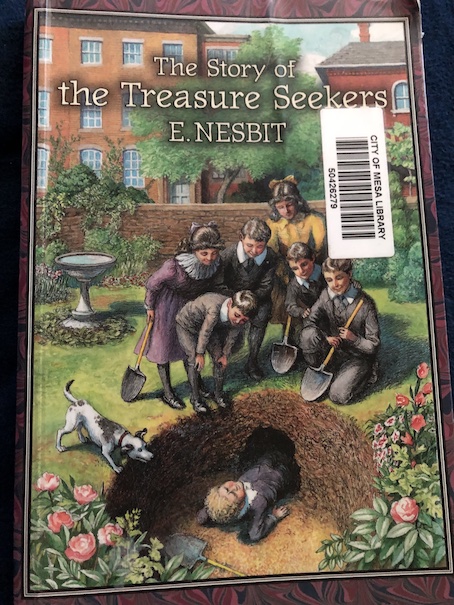
The Story of the Treasure Seekers

The story of the treasure seekers book cover

The Story of the Treasure Seekers by E. Nesbit, 1899.

This story (the first in a series) is told by one of the six Bastable children: Dora, Oswald (who won the Latin prize at his school), Dicky, the twins Alice and Noel, and Horace Octavius (called H.O. for short). The narrator initially refuses to identify which of the Bastable children he is, saying that he might admit it at the end, but his constant self-praise (which begins immediately) and the way he refers to his siblings kind of gives it away. At various points in the story, he forgets that he’s trying to be mysterious about his identity and just refers to himself in the first person, although he goes back to the third person when he remembers. The children live with their father, but their mother is dead. The narrator says, “and if you think we don’t care because I don’t tell you much about her you only show that you do not understand people at all.” The story isn’t about missing their mother, but about their search for treasure. (“It was Oswald who first thought of looking for treasure. Oswald often thinks of very interesting things.”)

The Bastables are in need of money. After their mother died, their father was ill for a time. Then, his business partner went to Spain, and his business hasn’t been very good since. The children can tell that their father is economizing on household goods. He’s sold some things from the house, there doesn’t seem to be money to have broken things fixed or replaced, and he’s let the gardener and other servants go. He’s not even sending the children to school right now because he can’t afford the school fees, and people have been coming to the house about unpaid bills. Oswald thinks that the best thing to do is to look for treasure to restore their family’s fortunes.

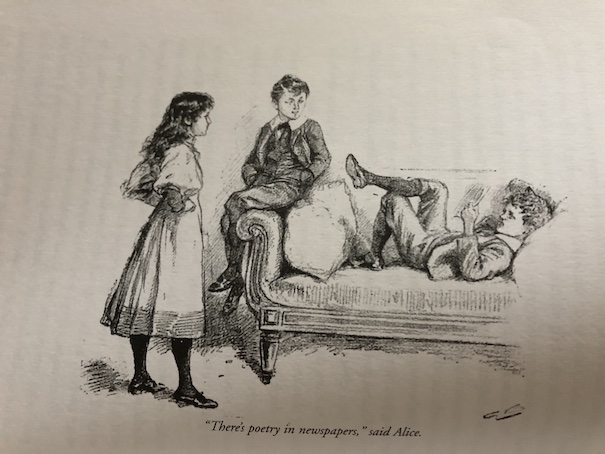
The children all think of ways that they can look for treasure. Oswald wants to become a highwayman and hold people up, but Dora, as the eldest, rejects that idea as wrong. His next suggestion is that they rescue a rich old gentleman and get a reward, but that’s a long shot. Alice thinks they should try using a divining rod. H.O. is in favor of the idea of being bandits. Noel likes books, and he wants to either write poetry and publish it or possibly marry a princess. Dicky is more practical with things like math and money, and he tells the others about an advertisement in the newspaper about a way to earn money in your spare time. Since the children aren’t going to school and have plenty of time, he thinks they should try it. He also has another idea, but he refuses to explain to the others exactly what the scheme is. Dora, as the eldest, decides that they should just try digging for treasure, not even bothering with a divining rod, because it seems like people always find treasure by digging. Since that’s the most straight-forward method any of them have thought of yet, they decide to go with that.

They recruit Albert, the boy from next door, to help with the digging. They don’t always get along with Albert because Albert doesn’t like reading and isn’t good at games of pretend. (The children seem to know that this treasure hunt is a game, although they’re still half-way hopeful that they’ll actually find something.) Still, they manage to persuade Albert, and the children begin digging a tunnel. It’s Albert’s turn to dig when the tunnel collapses, half-burying the unlucky Albert, who screams and keeps on screaming while Dicky runs to get Albert’s uncle. Albert’s father is dead, so he lives with his mother and his uncle, who used to be a sailor and now writes books. The children all like Albert’s uncle because they like his books, and he seems to know a lot. Albert’s uncle matter-of-factly digs Albert out of the hole and asks the children how he came to be buried. The Bastable children explain about their search for treasure. Albert’s uncle says that he doubts they’ll find any treasure in the area, but as he unearths Albert, he seems to find a couple of coins, which he gives to the children to divide among themselves and Albert. (It’s hinted that Albert’s uncle is just giving the children pocket money that he pretends to find.) It’s an uneven amount, so they agree that Albert can have the larger share because he got buried.

The Bastable children could have used their new pocket money as stake money for the venture Dicky saw in the newspaper, but there are some other things they want to buy, so they spend it all and have to try something else. One of the children (they disagree later about who it was) brings up the subject of detectives, like Sherlock Holmes. They think that detectives must earn a lot of money, so some of them think they ought to try being detectives. Alice says that she doesn’t want anything to do with murders because that would be dangerous, and even if they did kill someone, she would feel bad if she had to be the one to get them hanged for it. After all, surely nobody would want to kill someone more than once anyway, so there’s probably little risk that they’d do it again. (Oh, boy. Alice has apparently never heard of serial killers. Jack the Ripper had already committed his murders by the time this book was written and published.) The others tell her that detectives probably don’t get to choose which crimes they investigate. They just have to look into any mysterious situations they encounter and see what they turn out to be. That reminds Alice that she did see something mysterious herself. She got up during the night because she suddenly remembered that she’d forgotten to feed her pet rabbits, and she saw a light in a nearby house, where the entire family is supposedly away at the seaside. The children think that some criminals may be hiding in the empty house and decide to investigate. It turns out that there is an innocent explanation. Oswald accidentally falls and gets knocked unconscious during the investigation, so Albert’s uncle is again recruited to carry him home, and the uncle lectures them about spying on people.

Since another money-making scheme has failed, they decide to move on to the next idea, publishing Noel’s poetry. He doesn’t have enough poems for a book, but they remember that they’ve seen poetry published in a newspaper, so they decide to talk to the newspaper editor. Oswald and Noel go to see the editor together. Along the way, they meet a woman who also writes poetry. She reads Noel’s poems and says that she likes them, giving the boys a little stake money to get Noel’s literary career started. At first, Oswald refuses the money because he remembers that he’s not supposed to accept gifts from strangers, but the woman insists that the gift is that from a fellow writer, not a stranger, and she gives them her card. The children’s father later says that she’s famous for her poetry, although the boys had never heard of her before.

When they see the newspaper editor, he seems amused by Noel’s poetry (which includes an elegy to a dead beetle) and very interested in how and why he came to write poetry. He invites the boys to join him for tea, and they explain about how they’re trying to restore their family’s fortunes. The editor says that he’s willing to buy Noel’s poems and publish them, and he asks what Noel thinks would be a fair price. Noel isn’t sure because he originally just wrote the poems because he likes poetry, not to sell. The editor offers him a guinea, which is more money than they’ve ever had before, and the boys are impressed and accept it. The editor says that his paper doesn’t normally publish poetry, but he can arrange for it to be published in a different paper. They later see a story in a magazine about them, written by the editor, with all of Noel’s poems with it. Oswald isn’t happy at how the story describes them, but Noel is pleased that he’s been published.

The book continues from the summer through the fall, and the children continue trying various money-making schemes, with varying degrees of disaster and success. Noel finds a princess to marry, but they only get a few chocolates out of that adventure. While Dora is away, visiting her godmother, the other children turn bandits on Guy Fawkes Day. The only person they can find to kidnap and ransom as bandits is Albert, who doesn’t like this game at all. (The children again seem to realize that this is only a game, but at the same time, they hope for a little money out of it.) They write the ransom note for Albert using H.O.’s blood because this adventure was his idea (although they also have to use red ink to finish it because they don’t get enough blood from H.O.’s finger). Albert’s uncle, who enjoys a good game of pretend, comes to ransom Albert, although he can’t pay the enormous sum mentioned in the ransom note. He tells the children that he knows it’s all a game, and he thinks a little more pretend play would do Albert good (Albert doesn’t have much imagination), and the rough play is also punishment for Albert sneaking out of the house while he should have been inside, nursing his cold. However, the uncle says they should have realized how scary that ransom note could have been for Albert’s mother if he hadn’t seen Albert with the children and knew where he was and what was really happening. The children apologize and admit that they don’t think much about people’s mothers since they lost their own. (Although the book is mostly funny, there are sentimental bits, too.)

Albert’s uncle suggests a more harmless money-making scheme to the children – starting a newspaper, and they let Albert join them. Their newspaper contains a couple of serial stories (that don’t entirely make sense, and some of the children can’t think what to contribute to them), some poetry by Noel, some “Curious Facts” (that aren’t entirely factual but are very curious), and an editorial piece on the subject of education by Alice, who says that if she had a school, nobody would learn anything they didn’t want to learn, but there would be cats, and the students would sometimes dress up like cats and practice purring. The newspaper turns out to be not very lucrative, and the children run out of things to write about, so they give that up and return to more hair-brained schemes.

Oswald tries to rescue an elderly gentleman so that the wealthy old gentleman will richly reward him, just like in books, but not finding any danger to save him from, he sets their dog on him, so he can easily save him. The gentleman, a local lord and politician, figures out pretty quickly that this was a scheme and that the dog belongs to the children, and he demands an explanation. The children explain to him about trying to restore their family’s fortunes by doing the things that seem to work for people in books, only nothing they’ve tried works like it does it books. The old gentlemen gives the a lecture about honesty and honor and consideration for other people, and the children make their apologies to him.

From there, they try the part-time job advertised in the newspaper, which turns out to be getting people to place orders for wine by giving them free samples. The children try a little of the wine themselves, but they don’t like it, so they add a bunch of sugar to try to improve the taste. You can imagine how well a group of children trying to give various strangers free wine goes. Eventually, someone confiscates the bottle and tells their father what they’ve been up to.

Although they promise their father that they won’t attempt to go into business again without talking to him about it, they start thinking that they could make a lot of money if they invented a wonderful medicine that would cure something. After arguing about what they’re going to cure, they decide they’re going to cure the common cold. The only way they can think of inventing the medicine is for one of them to get a cold and then for all the others to try various things to cure it. Noel is the one who catches cold, and the others try to cure him. When they can’t cure Noel’s cold, they worry that he’s going to die from it, but fortunately, he does recover.

However, there are times when the children do things that are helpful, typically by accident. The best thing they do is to be extra friendly to a man who comes to see their father. The children come to the conclusion that he’s a poor man and that their father is being kind to him, but they’re not satisfied with the level of hospitality that their father offers. The children decide to invite him to their kind of dinner, and the fun they have together encourages him to give their father the help he needs. The children come to the conclusion that, sometimes, life can be like books.

The book is now public domain, so it is available to read online through Project Gutenberg (also in audio format) and Internet Archive (multiple copies, including audiobooks). There is also a LibriVox Audiobook on YouTube. It’s the first in a series of books about the same children. The story has also been made into movies multiple times. The original book contains some inappropriate racial stereotypes and language, which I discuss below. However, recent reprintings of the book have changed some of the inappropriate language, so the book would probably be okay for modern children, if you pick a book with a recent printing date.

My Reaction

I really enjoyed this story, even though there are some problematic racial issues, which I’m also going to describe and discuss. The descriptions of the children’s schemes and escapades are very funny, and I laughed out loud at some parts. The story reminds me of some of the MacDonald Hall books where the boys do some bizarre fund-raising efforts or try to get publicity for their school. The children’s efforts to find or earn money in this book are based on books that were popular with children in the late Victorian era and money-making schemes that existed at that time. Not all of them would be as familiar to modern children as they would have been to children of the late Victorian era, but I think modern children could understand most of them, with the possible exception of the man who I think was supposed to be a money lender.

If this book was set in modern times, in the early 21st century, I think that their bizarre money-making schemes would be a little more like those in the MacDonald Hall books, although I can think of a few more. Alice’s description of the ideal school, with cats who teach students how to purr, makes me think that, if she were a modern girl, she would want to start a cat cafe out of their house using a bunch of stray cats (or maybe some borrowed from neighbors without permission), which would also be hilarious. I would like to see a book with someone doing something like that because the opportunities for things to go wrong would be both boundless and guaranteed to happen. (Corralling the cats, possibly abducting cats from neighbors, messing up the tea and food, health violations, lack of business license, cats biting and clawing people and messing up the house and trying desperately to escape, etc.)

One thing that I like about the Bastable Children series in general is that there are many references to books that children from the late Victorian era would have known and enjoyed. This book references things that I think came from the Arabian Nights, and the children refer directly to Sherlock Holmes, The Jungle Books, and The Children of the New Forest, which was a 19th century historical novel.

Reality vs Pretend

Much of the book is about the difference between reality and pretend, and the Bastable children often end up about halfway between the two with most of their schemes. They draw much of their inspiration from books they’ve read, and they seem to be aware that much of what they do is a game of pretend, although they also seem to halfway hope that their schemes will work out for them the way they would if they were children from the books they’ve read.

The children’s innocence and naivete about the way the world works is a major reason why they don’t understand how things work differently between the real world and the world in stories. It’s also the reason why they only seem to halfway grasp their father’s money troubles and the reasons for them. Adults often find the innocence of children to be charming, and the adults in the story are often charmed by the children for that reason. It works in their favor in the end because they receive kindness from adults for being charming, innocent children, who know how to have fun. However, the adults in the story also understand the children’s family situation, seemingly even better than they do, and they frequently humor them and help them out of pity. It’s both funny and also a little sad and touching at times for adults reading this book. It’s funny because you can see what the children are really doing and follow their logic as they map out their plans, while at the same time spotting how it’s all going to go wrong before the children see it themselves. It’s also a little sad and worrying because you can also see how little the children are being supervised and how much they turn to the kindly uncle who lives next door for help when they’re in real trouble because their mother is dead and their father is wrapped up in his own troubles.

The subject of the children’s deceased mother comes up periodically throughout the book, as the children think about how things have changed for the family since she died. Dora admits to Oswald that, before their mother died, she asked Dora to look after the younger children. That’s why Dora has been trying to be responsible and to stop the other children from doing things she knows are wrong (like turning into bandits to rob people for money). The other children often get irritated with her for stopping them from doing things they want to do, and they frequently do the wrong thing anyway, even if they have to go behind her back to do it. Oswald develops some sympathy for Dora when he realizes that she’s been trying to do a difficult job that she doesn’t really know how to do, and he talks to some of the other children about going easy on her.

Racial Issues and Gender Stereotypes

This book has been reprinted many times since its original publication, and modern editions have been edited to remove inappropriate racial language. The original book has multiple places where there are racial issues and gender stereotypes, although they mostly come from two very specific sources. The gender stereotypes, which are found in other books in this series as well, come from our narrator, Oswald. Oswald has noticed that his sisters and other girls have different standards from him and his brothers, and it sometimes irritates him. Like other boys in vintage children’s books, he also has a tendency to try to show that boys are better than girls, sometimes saying things like, “Girls think too much of themselves if you let them do everything the same as men.” I partly think that the author, who was a woman, put things like that in her stories to show how boys of her time behaved, but maybe also to poke fun at men who felt threatened by women doing things that were considered for men only, like they’re little boys, feeling threatened by sisters who can do what they do.

Much of the racial issues in the story come from the children’s playacting, which is again based on the books they’ve read. They frequently refer to “Red Indians”, by which they mean Native Americans. Based on what they’ve read from books, American Indians are fascinating and exciting but also savage, and they love all of that. Actually, now that I think of it, that stereotype isn’t a bad description of the Bastable children themselves. They are somewhat savage or semi-feral in their behavior at times, although they would probably hate being called that. They’re certainly not tame children. I don’t entirely blame the children in the story for having misconceptions about other people because children can get misconceptions from things they read, see, or are told by adults. I don’t entirely blame the author for depicting the kind of misconceptions children have, either, especially because the Bastable children’s misconceptions make up a large part of the story and its humor. What is more concerning to me is the original sources of these misconceptions, the things that children get from people who should know better, who might even actually know better but who spread misconceptions anyway for their own purposes.

Whether the author of this book could be considered a source of misconceptions, or at least for perpetuating them, is a matter for debate. The references to other pieces of real literature and how the children use them for inspiration for what they do point to earlier books that sparked these misconceptions and racial stereotypes. I’ve always thought that the things children read early in life set them up for many of their attitudes as adults, and that’s why I think it’s unfair to expose children to literature that creates these misconceptions without an accompanying explanation about why certain attitudes are wrong or harmful and how spreading them causes problems. As adults, we often forgive children for things they do and think because we know they’re young and still learning, but children don’t stay little forever, and they need to know what is expected of them as they grow older. When they’re no longer little kids, people expect them to have a certain level of understanding about the world, the people in it, and how to treat others and speak respectfully about them. If they don’t demonstrate that kind of understanding by a certain age, many people will not take it that they’re still in the learning phase but will think that they’re being deliberately insulting or trying to provoke others when they speak inappropriately. In many cases, those people will be correct because there are people of all ages who like to push other people’s buttons to get a reaction, but I think it’s doing a great disservice to set children up for that type of conflict by trying to keep them “innocent” for too long. I’ve seen that even kids who know that there are certain words they shouldn’t use don’t always seem to understand why they’re not supposed to use them, and that half knowledge is part of the reason why they sometimes throw around nasty terms like they don’t know what they mean. The truth is, some of them really don’t. Kids like that don’t sound charmingly innocent in the 21st century. They sound dumb and clueless because they are these things. The things they don’t know are painfully obvious, and people, even possibly other kids their own age, will definitely notice and openly comment on it. The reason why they’re so clueless is that the adults in their lives who knew enough to tell them, at some point, that these were bad or shocking words to use around other people apparently didn’t explain to them why or make it clear what the social consequences for using these words would be. What I’m trying to say is not that reading this book or others of this vintage is bad, but if you’re going to share books like this with kids, with the original wording, you can’t do it properly without talking to the kids and being very direct about certain subjects. If you’re not, it could lead to problems, and it will be no favor to the child to set them up for that. The things people don’t know will almost certainly hurt them eventually and probably damage their relationships with others along the way.

The Bastable children don’t end up with damaged relationships or social consequences for the things they do because they are still young enough to be considered charmingly innocent and naive in their antics, although at least some of them would be considered old enough to know better about some things by their age. The children don’t even seem to understand the difference between Native American Indians and Indians from India until it is explained to them toward the book, when their “Indian uncle” comes to see them. The Indian uncle is the source of another racial issue in the language he uses. He’s one of the adults who says things he shouldn’t, and I need to talk about what he says and why he says it.

Readers should be aware that the original printing of this book contains the n-word. There is one use of the n-word by an adult character, toward the end of the book. It happens just once in the story, although it threw me when I reached that point because there wasn’t really anything leading up to it, so its use seemed rather sudden. It’s a shame because, up to that point, I was prepared to make some allowances for what the children say about “Red Indians” as part of their innocent ignorance, but as I said, we make allowances for the things children do that we don’t for people who are old enough to know better. The “Indian uncle” just throws out the n-word in a casual expression he uses, like “If Oswald isn’t a man, then I’m a monkey’s uncle,” except he uses the n-word instead of “monkey’s uncle.” A more recent edition of the book I’ve seen replaces the n-word with the word “fool.” I could forgive the children some of the racial stereotypes they use in some of their games because the entire premise of the story is that the Bastable children are naive and somewhat clueless, getting most of their sense of how the world works from storybooks instead of guiding adults, but things that adults say and do are different. To say that this was simply part of the way people talked during this period of history would be taking the easy way out and providing an apparent excuse for the behavior. Everyone has reasons for the things we say and do, and I’m not letting either the author or this “Indian uncle” off the hook that easily without prodding deeper into both of their motives.

The n-word isn’t something that appears in many of the children’s books I’ve read, even the vintage and antique books, because it’s a crude term. Technically, the n-word isn’t even really a word by itself but a slang corruption of a word, and it’s been considered a crudity and an insult since much earlier in the 19th century. By the early 20th century, its use was associated primarily with uneducated and unrefined “poor white trash” in the United States, and whatever their personal racial attitudes, people who wanted to be seen as educated would avoid its use. Those who did use it tended to use it in a derogatory and hostile way. Even in children’s books as old as this one, the use of crude racial terms (when they appear) are often used to establish the personality and background of the character who uses them. They appear as hints of crudeness, lack of good upbringing and moral character, and even violence and criminal tendencies (see books in the Rover Boys series for examples). Even when other characters use racial stereotypes in these stories, the use of the n-word in particular tends to signal something crude and nasty in the user’s character, something that goes beyond the other characters’ level of acceptability, especially when it comes from a character who is portrayed as being old enough and educated enough to know better. A contrast would be the Little House on the Prairie series, where characters sometimes use crude racial terms without being the villains of the story. However, the characters in the Little House on the Prairie books can still fall under the description of uneducated and unrefined. They are a poor farming family who lives much of their lives in the backwoods and on relatively isolated farms. When they associate with other people, it is most often people who are very similar to themselves, so they’re rarely in a position to get feedback from a wider society. The while the Ingalls family does try to better themselves and seek out educational opportunities later in the series, characters in those books could be considered “innocent” about certain things in much the same sense as the Bastable children are. That is, none of them know any better. The term “innocent” implies a lack of knowledge and experience as well as a lack of guilt. The Bastable children are, once again, proof that what you don’t know is obvious to others who do know, and it can hurt your image.

With that in mind, when I have seen the n-word or similar words in print, my main approach is to use it as a clue about the personality of the character who says it or about the author who wrote the dialog or both. One of the difficulties that I encountered with this particular book, compared to others, is that the author sets up the “Indian uncle” who uses the n-word to be one of the “good” characters, a rich and kindly relative who saves them all from poverty. He would seem to be in the position of someone who should know better than to use the n-word, but he does so anyway, in a casual and thoughtless way. That makes this book different from other books, where the n-word is used by characters who are definitely villains and whose use of crude language is portrayed as part of their rough and ill-mannered character. The uncle’s age and position in society wouldn’t seem to put him in the position of an ignorant innocent, and yet, he’s not portrayed as a rough villain. However, there is something else at play in this situation that I think explains who this “Indian uncle” really is and what his deal is, and that’s Victorian British colonialism.

In this series of books, adults are not always referred to by name but by their relationship to the children or the role they play in the children’s lives. In this case, the “Indian uncle” (who is never called anything else by the children, not even by his personal name) is not an “Indian” of any kind. This is just another of the children’s misconceptions because of what their father told them about him. He is apparently really an uncle of the children, and he has recently returned to England from India, but he is white and British, like the rest of their family. This is revealed in hints that go over the children’s heads at first, but which are explained more toward the end of the book.

First, the children listen in on some of the things their father and uncle say to each other when they’re having dinner, and they hear them talking about “native races” and “imperial something-or-other.” The children don’t understand what they’re talking about. Because of the books that they’ve been reading, they’re still under the impression that “Indian” means that this uncle of theirs is a Native American, but adults will put together the bits and pieces and realize that, since this story is late Victorian, the uncle has just come from India, which is under British imperial rule, and like an imperialist, he’s probably not saying many complimentary things about the “native races” there. 19th century British racial concepts were shaped by their colonization and quest for empire and were frequently expressed in a pseudo-scientific form of social Darwinism, that some races of people on Earth had evolved to be more successful than others, with the British at the top of the heap because they had successfully conquered other people and took over their land for their own use. (By this definition, I note that highwaymen and robbers should also be considered vastly superior to the people they rob because they successfully took something away from someone else. I’m sure that the Victorians would be insulted by that comparison, but I think it accurately shows the problems with this type of thinking.)

Second, when the uncle’s house is described, it’s full of taxidermy animals, most of which he killed himself (this is discussed further in the second book in the series) during his travels. That’s when it is revealed that the uncle has actually come from India and is not Native American at all, as the children had supposed. He is a wealthy man who has traveled as an adventurer, which is exciting for the children to hear about, but this is also another clue to the uncle’s personality. I noticed that the author made it a point to say that the uncle’s study was very different from the children’s father’s study because it didn’t have books in it but had those taxidermy animals. I took this as an indication that the uncle is not as much of a man of learning or business as the children’s father. He doesn’t use his study for reading and studying anything. He has money, but I’m guessing that he didn’t get it from having a profession. The children mention that their father went to Balliol College, and they meet a friend of his from his student days. Their father spends most of his time working, even though his business is suffering, and his old friend is also a family man with job (he is described as a sub-editor in the next book in the series). However, the “Indian uncle” is not described as having any profession. We don’t know if he ever attended college, but if he did, it probably wasn’t to be educated for a career. He is a man of leisure or relative leisure, who has apparently spent a good part of his life traveling around the world, shooting things and having them stuffed, and has little interest in books and studying. He’s had the money to live this kind of life, so he does it, fully confident in his superiority and ability to go where he wants and do what he likes. What I’m thinking is that this man is probably their father’s elder brother, who probably inherited money and indulged himself, while his brother studied and worked. Travel can broaden a person’s perspective, but the uncle seems to have traveled for self-indulgent adventure and excitement rather than learning about the world and the people in it. He’s got enough money that he probably doesn’t have to learn anything he doesn’t want to, and as the man who pays the bills and hires people to do things for him, he’s probably not held accountable for much. He can say and do what he likes, so he does that, without giving it a second thought, and maybe not even a first one. This isn’t explained in the course of the book, and I can’t point to much more than I already have to support it, but I think this man is meant to represent a type of wealthy British imperial adventurer.

Ultimately, what I’m saying is that the children think their uncle is a great man because he brings the family to live with him in his big house and helps their father with his business (probably by providing financial backing), so the family’s circumstances improve. He can invest money in their father’s business (the nature of which isn’t specified), and he showers the children with presents, which they love. However, as an adult, I’m noting his apparent relative lack of interest in books, intellectualism, and refinement of manners. I’m sure that the children will find him exciting to be around, but he doesn’t strike me as a learned man, a well-read one, or even a very well-behaved one. He has a lot of money, which can be used to fund the children’s education, but I don’t really trust his guidance or ability to be a role model. I also wonder if the children, who are being given an education and were definitely raised to love books, will continue to see their uncle in a romanticized way as they grow older. Few people can spend their lives traveling around, shooting things, and hiring “native races” to carry their baggage along the way. If that’s most of the uncle’s experience of life, it’s not really going to prepare the children for the future. At the time E. Nesbit wrote this book, she couldn’t have known that, about 15 year later, Europe would erupt into World War I, and boys who were children around this time, like Oswald, Dicky, Noel, and H.O., may very well have ended up being soldiers and had many of their illusions about life shattered. (I have more to say about that when I cover the next book, The Wouldbegoods.) People talk about past people being a product of their times, and in this case, the uncle and his racial attitudes are both a product of this time of imperial Britain and his own wealth, and nobody outside that bubble would see either the way he does.

That brings up the question of what the author, E. Nesbit, really thinks about these things. Does she also share the uncle’s view’s of British imperialism and other races, or is she just portraying the uncle as a type of person she observed around her in society? It’s not entirely clear because everything in the story is presented from young Oswald’s point-of-view, and he is uncritical of these things and seems to have little idea of the larger picture of things. But, there are things in The Wouldbegoods that I think help clarify some aspects of that, some possibly intentionally and others possibly not.

That was a long rant/explanation, but I thought it was important to delve into the issues a little deeper. The tl;dr of it is that, while people were the products of their times, they were also the ones who made their times what they were for their own purposes, even if they didn’t think as deeply about it at the time as we do today, and what we observe about them and their behavior are clues to their personality, life circumstances, and motivations. Overall, I found the racial issues with this story to be aggravating distractions from what is otherwise a fun and funny story, and their removal from modern printings actually improves the story by removing these distractions from the plot. The modern printings are fine for kids to read.

The Movie Version

I watched the 1996 version of the movie, which emphasized the more serious portions of the book and included the character of a female doctor, who helped the family in place of the uncle from India. It wasn’t bad, but it wasn’t as funny as the original book. I’m not sure about other movie versions.

The Rover Boys in the Jungle

The Rover Boys

The Rover Boys in the Jungle by Arthur M. Winfield (aka Edward Stratemeyer), 1899.

My Foreword

I wasn’t particularly eager for this book after the first one in the series. I didn’t think the Rover Boys was as much fun as later Stratemeyer Syndicate books and there are some instances of racial language that are uncomfortable to explain. However, this is the book where the boys actually go to Africa in search of their missing father, and it resolves one of the major problems that the first book in the series set up, and I wanted to see it end.

As the book says at the beginning, the boys’ father went to Africa before the beginning of the series to look for gold mines and hasn’t been heard from since. The boys don’t know if their father is alive or dead, and meanwhile, the boys’ enemies from the first book in the series are still hanging around. The Baxters were put in prison for attempting to kidnap Dora at the direction of Josiah Crabtree in the book immediately before this one, but Dan Baxter escapes early in this book, and Crabtree is still around somewhere. The introduction and first chapter to the book brings readers up to date on developments from the previous books, sort of like the introductions to episodes of movie serials that didn’t exist at the time these books were written. Books in this series really need to be read in order, and if you skip any, like I did, you really need the introduction to bring you up-to-date.

The Story

There is a new boy at school, Hans Mueller, who is from Germany. This book was written before World War I, so there is nothing critical or derogatory about Germans, but the boys decide to tease Hans a little by playing up myths of the Wild West to scare him. They tell him that the school will be teaching them how to fight Indians (Native Americans) and that he’ll have to learn how to scalp people. Hans doesn’t know what they’re talking about at first, and when they explain it to him, he’s alarmed. (Good, Hans. That’s a sign of sanity.) Hans says that the only time he’s seen American Indians was at a traveling Wild West show that came to Germany, and he thought they looked scary. The other boys have a laugh about spooking poor Hans and drop the matter.

I mentioned in my last Rover Boys review that early Stratemeyer Syndicate books had archaic racial language and sometimes questionable racial attitudes that was later rewritten when various series were reissued. This early series hasn’t been revised. This first scene with Hans isn’t really so much a slur against Native Americans as prank with the boys playing up Wild West stories, but the book is just starting out.

Hans becomes the boys’ friend, but they prank Hans again later, scaring him with Tom wearing a Native American costume as he threatens to scalp him to continue their earlier joke, and they use the term “red man.” (We haven’t even gotten to Africa yet, so I was cringing at this point at what might be in store.) When Hans realizes that it was all just a prank, he tries to get the better of Tom by taking away the gun that Tom was using as a prop to scare him, and Tom tells him that the gun is too old to fire and isn’t dangerous. He just found it in the barn, and it’s all rusty. Tom tells Hans to pull the trigger and see that it won’t fire, which is the dumbest thing that anybody can do with a random old gun they just found somewhere. The gun explodes in Hans’s hands, knocking both Hans and Tom unconscious and scraping them with shrapnel. The other boys are scared, but they finally manage to bring them both around. Tom is horrified when he realizes what happened, saying that he’s been playing with that gun for awhile and pulled the trigger a dozen times himself, which is why he thought that the gun was unloaded and harmless (meaning he did the dumbest thing that anybody can do with a random old gun they just found somewhere repeatedly because, up to this point, dumb luck was on his side). He is shocked to realize that he’s lucky that he hasn’t shot somebody before and that he and Hans weren’t killed by the exploding gun. He apologizes to Hans and promises that this is the end of the pranks. Tom was always the lead prankster in earlier books, but he grows up a little here, realizing that reckless pranks have consequences.

At school, the boys participate in a kite flying contest, and Sam is almost pulled over the edge of a cliff by his kite. (Seriously.) Dora tells Dick that her mother had a dream that Crabtree tried to shoot him in a forest. (Prophetic?) The boys also have a run-in with Dan Baxter, who is still lurking around and swearing revenge.

Then, the boys turn their attention to a thief at school. Sam witnesses someone, who is probably the thief, sneaking around at night. Unfortunately, he didn’t see the person’s face, only describing this person as tall. Captain Putnam comes to believe that Alexander “Aleck” Pop, a black man who works for the school, is the thief because he receives an anonymous note that says he’s guilty. Sam doesn’t trust the anonymous note and tells the Captain so, saying that he can’t believe anyone as good-hearted as Aleck is would be a thief. However, the Captain insists that Aleck’s belongings be searched, and some of the objects that have been stolen turn up among his stuff. It’s a pretty obvious frame, and Alexander protests that he’s innocent, but Captain Putnam doesn’t believe him. There’s some ugly racial language used during this part. The word “coon” is used twice, and when the students at the school discuss the situation, one says the n-word. Fortunately, our Rover boy heroes aren’t the ones using that language, and Tom even tells the boy who used the n-word that he’s just resentful against Aleck for catching him doing something he shouldn’t have done earlier. The boy who used the n-word, Jim Caven, is portrayed as mean and unreasonable, and he gets into a fight with Tom in which he almost hurts him very badly. I was uncomfortable with the language in this scene, although I was somewhat reassured to see that it was used to characterize the ones using the worst of it as being the bad characters. My reassurance wasn’t complete because that’s not the only questionable racial language in the book.

Captain Putnam sends someone to escort Aleck to the authorities. He says that he supposes that the boys think he’s being too harsh with him, but he’s also suspicious of Aleck because he knows that members of his family have been in trouble with the law, too. The boys say it isn’t fair to blame him for things his relatives did and that they still don’t think he’s guilty. However, Aleck escapes before they reach the authorities, and they hear rumors that he went to New York City and boarded a ship to go overseas somewhere. The boys are sad, thinking that maybe they’ll never see him again. (You know they will.)

It’s not much of a surprise when the Rover boys later learn that Jim Caven has sold some things that match the description of other objects that have been stolen. Apparently, he’s been the thief all along and deliberately framed Aleck to get revenge on him. (I partly expected that the thief might be Dan Baxter, considering that he’s escaped from jail and is hanging around somewhere, probably needing money.) When the other boys confront Jim Caven, he flees into the woods. The other boys explain the situation to Captain Putnam, and he searches Jim Caven’s belongings, finding the rest of the stolen items. (You know, they could have just conducted a general search of the school and everyone’s belongings before this. This is a military academy, so a surprise dorm inspection wouldn’t be out of character, and it would have settled the matter much earlier.) Aleck’s name is cleared, but since he’s fled, they don’t know how to find him and tell him. Captain Putnam is sorry that he didn’t believe Aleck before.

However, they don’t have much time to consider it because the boys are soon summoned home by their uncle because he’s had news of their father. A ship captain has written Uncle Randolph a letter saying that his crew rescued a man who was floating on a raft off the Congo River. The man died soon after they brought him aboard their ship. They don’t know who the man was, but he was carrying a letter from the Rover boys’ father saying that he found a gold mine in Africa but was taken captive by King Susko of the Bumwo tribe (not a real African tribe, I can’t find anything about it) in order to prevent him from telling the secret of the mine to outsiders. Specifically, the tribe is afraid that the English and French colonizers will come to loot the mine and kill them. (Actually, a depressingly reasonable fear.) Anderson Rover explains in the letter that they don’t understand Americans. (That wouldn’t help, Anderson. Your boys attend a school run by a man who served with General Custer, and if this tribe knew what happened to Native Americans when gold was discovered on their land, they wouldn’t be reassured at all.) Anderson Rover is in fear of his life and asks his brother Randolph to come and rescue him if he can, but the letter is dated a year ago, so his family still doesn’t know if he’s alive now or not.

Uncle Randolph tells the boys that he wants to go to Africa to find his brother and asks Dick to come with him, as the oldest of his nephews. Dick, of course, agrees to go, but Tom and Sam refuse to be left behind. They decide that all of them will go.

On the ship to Africa, they meet an English adventurer named Mortimer Blaze, who is going to Africa for big game hunting. Tom asks him what will happen if the big game decides to hunt him instead, and he just says that it will be a “pitched battle.” (Doesn’t sound appealing to me.) When they talk about the people in Africa, they use the word “native” a lot and not in a flattering way. The general attitude seems to be that the “native” Africans are not very civilized (I was expecting they would say that because of the time period of this book), and Mortimer Blaze tells stories about tribes of people who are either very tall or very short. (I think he’s really referring to people from folktales, which I covered in the Encyclopedia of Legendary Creatures.) At one point, the characters say that the warm climate is the reason why Africa hasn’t made more progress toward civilization, that the warmth makes people want to be lazy. The adults in the story shock the boys by saying that not only is there no Christianity but that people there don’t really believe anything in particular, putting them even behind people Christians would consider heathens. They also make a shocking comment at one point about unwanted children being fed to crocodiles. They conclude that “civilization” can’t come soon enough to Africa, even if it has to be forced in with weapons. (Wow. I knew there was bound to be a lot of generic “native” and “savage” talk when I started this book because of the time period, but these matter-of-fact slights and accusations sound like they came straight out of Mrs. Mortimer’s books about Countries of the World Described, which heaps criticism and accusations of violence and immorality on pretty much all of the people of the world. Mrs. Mortimer’s books are much older than any Stratemeyer Syndicate books, and I wonder if Edward Stratemeyer read them in his youth. It wouldn’t surprise me because the attitudes match, and here he is, passing it all on to the next generation of kids in the form of an exciting adventure story.)

In a stroke of good luck, they end up rescuing Aleck, who was stranded at sea from the ship he boarded during his earlier escape. Aleck is glad to see the boys again, and they tell him that his name has been cleared and the real thief was caught. Aleck is glad to hear that, but he’s worried when he finds out that the ship that picked him up is headed for Africa. Aleck reflects that he always heard that his ancestors came from the Congo region of Africa, but he doesn’t really want to go there because he’s used to life in America and wouldn’t know what to do in Africa. (The Rover boys and Aleck go on for awhile about how great the United States is, and I know they were trying to sound patriotic, but the way they said it felt oddly like a sales pitch to me. I felt like saying, “You don’t need to sell me on the place. I already live here.”) The boys explain how they’re going there in search of their father. Aleck decides that he’d rather join their expedition than stay on the ship, and he offers his services as a valet. Uncle Randolph and the boys are glad to accept his help, and Uncle Randolph says it might be useful to have a black man with them who they know and trust in case they need someone to blend in with the native population and spy for them.

In a surprising twist, the boys also run into Dan Baxter on their arrival in Africa. When they ask him what he’s doing there, he says that he got drunk and was Shanghaied onto a ship, forced to work as a sailor. He was treated cruelly on the ship and ran away as soon as he had the chance. Now, he’s alone and has no money and no way home. The Rover boys feel sorry for him and give him money for him to buy his passage back to the United States. Dan Baxter asks to join their expedition, too, and they consider it as a sign that Dan is starting to reform because of his expedition. However, Dan is still a bully and an opportunist, and when he gets a counter-offer from someone else who is willing to hire him to make trouble for the Rovers, he accepts that instead, still holding a grudge against the Rovers because his father always told him that Anderson Rover stole a mine from him years ago that would have made them rich.

When I reviewed the first book in this series, I complained about the various unresolved story lines and miscellaneous villains still running around at the end of the story, still left to work on their individual plots against the Rover boys and their friends. In this book, every unresolved story line and villain from the first book collides with each other in Africa. Not only is Dan Baxter in Africa coincidentally at the same time as the Rovers, but Josiah Crabtree is also in Africa, for completely unrelated reasons from either the Rovers or Dan Baxter. He does attempt to kill Dick, but Dick survives. He is even rescued from a lion by one of his brothers.

So, is there true resolution with the main villains of the story, Dan Baxter and Josiah Crabtree? Not really. I looked up summaries of other books in the series, and even after they get some comeuppance, they continue to come back in sequels.

What is resolved by the end of the story is that the Rovers find their father alive. They rescue him from the village where he was being held captive, taking some of the women and children from the village with them as hostages to keep the village warriors from attacking them. They say privately that they wouldn’t have really hurt the women and children, but they tell the men that they’ll kill them if they don’t let the rescue party go. (This was another shocking part for me because I wouldn’t have thought of any of the usual Stratemeyer Syndicate heroes doing this. Somehow, I can’t picture the Hardy boys going this far, taking women and children hostage and threatening to kill them.) Once the rescue party is sure that they’re safe, they release their hostages and head for home. Anderson Rover says that he did find a gold mine, and someday, he’ll come back and loot it, er, mine it, but right now, all he wants to do is go home with his boys. It would be heartwarming if I didn’t know that he’s going to come back someday for gold on land that belongs to someone else who would never willingly sell it to him, and his boys are talking revenge on the king of the tribe that held their father captive.

This book is in the public domain and is easily available online in various formats through Project Gutenberg and Internet Archive (which has an audiobook).

My Reaction

I already gave much of my reaction to this book during the description of the plot because much of my reaction had to do with the racial language of the book. I knew there were going to be problematic portions before I even started, but frankly, there were too many of them for me to go into detail on all of them. What I described gives the broad strokes. I won’t say the book is deliberately trying to be insulting to black people. Aleck is portrayed as a good character who was wronged by a white boy by being framed for theft. However, there is a kind of casual racism in the story, like the casual references to how “uncivilized” Africa is and the characters’ off-hand supposition that it’s probably due to the climate there. I wouldn’t say that the characters or author hate black people (except maybe the non-Christian ones who feed children to crocodiles, which sounds like things Mrs. Mortimer accused various people of doing in the worst parts of Countries of the World Described), but I would say that there is a kind of condescension and dismissiveness that everyone, characters and author, seems to take for granted.

I can’t recall any of the characters using the phrase, “you know how they are”, but that’s the vibe I was getting. I got the feeling like the characters were saying things to each other and the author was saying things to his child readers with that sort of knowing tone, like “we all know these things.” No. “We” don’t. I know that Stratemeyer probably got a lot of this from a combination of old minstrel shows and Mrs. Mortimer or something very similar because I’ve seen Mrs. Mortimer‘s books, and I know how she talks. I also know why she says the things she does, and I’m not putting up with her attitude, even when it’s coming from someone else. Maybe the Rovers boys as characters and their child audiences would have read her books or similar ones before and nodded along with what Stratemeyer says because it confirms “information” they’ve seen before, but I’ve had more than my fill of wild accusations and crazy conspiracy theories, and I have no more patience left for any of it.

Mrs. Mortimer portrayed her book series as a factual introduction to world geography and the habits of people in different countries, but the truth behind her criticism, condescension, outspoken rudeness, and many of the wild accusations she makes about badly-brought-up children, dead bodies floating in rivers or just left in the street (depending on nationality), or the “antics” of “savages” around the world is her religious agenda (and, I think, probably some personal emotional and self-esteem issues, but that’s just a guess). She used missionaries with their own agendas as references for anecdotes in her books and tried to make people of various religions around the world sound evil and crazy on purpose to emphasize why “the Protestant” is the best religion (her words – she was specifically Evangelical and downright pushy about it). I would say that she also never hated black people … except maybe non-Christian ones, who as I recall, she claimed didn’t know what religion they were and were given to “antics”, dancing around and yelling or something. She wasn’t too clear on that point, probably because she didn’t know what she was talking about herself. On the other hand, she seemed inclined to be sympathetic to black people in the US who were victims of ill treatment, probably because they were Christian and most likely Protestant, which would have made all the difference in the world to her. She probably would have been okay with Aleck because he’s a Christian who was born in the US and has definitely never fed a baby to a crocodile in his life. She did not approve of the the concept of slavery at all and wouldn’t have tolerated physical cruelty of anyone due to race, which is to her credit, but none of that stopped her from spreading stories and rumors of violent savagery and teaching children that anyone who believed anything other than Protestant Christianity was “ignorant”, “savage”, and “wicked”, all words she actually used in describing people from various countries around the world because that’s what she wanted young children to “know” about other people. Mrs. Mortimer’s religious prejudices probably would have gone over the heads of the children who were these books’ original readers, especially if it echoed the talk of the children’s parents, but that’s how we end up with generations of children who grow into adults with casually racist ideas, thinking nothing of it, throwing around racist language without a clue or a care for the consequences. It’s in the book because it’s what “we” all “know”, dear Mrs. Mortimer said as much before, and Stratemeyer is just saying what “we” were all thinking, right? I think that’s about how that goes.

Let me bring you into the real world. If readers want to know what was really happening in Africa during the 19th century, there are far better sources. Africa is an entire continent, and there were many complex events happening all over, particularly related to European colonization. Outside forces were claiming territory in Africa, not so much for benefiting the people there and bringing them “civilization” as accomplishing their own personal aggrandizement and enrichment. (You know, rather like a man who is already rich in his own country coming to find and claim a gold mine that’s on someone else’s land because he’s addicted to the thrill of the hunt and acquisition and uses that thrill to hide from his own personal problems that he doesn’t want to face at home, like dealing with the loss of his wife and the raising of his boisterous sons. Just saying.) There were wars, famine, and disease in various parts of Africa during this period, partly due to internal power struggles among different African groups and leaders. I don’t know if anybody ever fed anyone to a crocodile on purpose, but infanticide is part of the dark side of humanity that comes out when times are desperate and hopes of survival in general are low. It’s a symptom of a society that’s suffering, and societies have suffered in that way many times around the world. If someone is likely to die soon after birth anyway, the hopeless parents might say, why even try? I suppose some might be tempted to say that having a religion that forbids killing children would help, but it hasn’t always, and having food also helps. I don’t blame 19th century missionaries for attempting to help people, but those who came in with a sense of self-importance, deciding ahead of time what would help without understanding the situation they were walking into, often didn’t help. Missionaries sometimes ended up getting killed in the middle of the unrest and power struggles. Some were even actively deceptive, using trickery and their position to gain advantages for themselves or the governments they represented at the expense of the people they were supposedly trying to help. But, the 19th century wasn’t all war, famine, and exploitation in Africa. The missionaries who were serious about doing some good and set up practical schools did provide useful centers of learning that helped educate future leaders and professional people and gave them tools they could use to build the lives they wanted. African societies did continue to build their own nations and identities. Overall, the colonization of Africa was more of an intrusive, disruptive force, providing additional hardships and obstacles to success more than solutions to any problems that Africa had before, not the glorious “civilizing” force that prevents people from feeding children to crocodiles that the book described.

So, now that I’ve talked about the historical and cultural influences behind the more uncomfortable parts of this book, I think it’s pretty obvious why early Stratemeyer Syndicate books had to be rewritten and revised in the mid-20th century. I knew this book was going to be cringe-worthy in places, but I have to admit that I was surprised at just how bad certain parts got. I hadn’t even considered that the word “coon” might appear. I never heard that word growing up and didn’t even know what it meant until I was in college, so I was pretty taken aback that a just-for-fun book for kids would use it, even one from the late 19th century. I suppose having grown up with the tamer, revised versions of books from the Stratemeyer Syndicate, I underestimated what the older series were like. I can only hope that I’ve made it pretty clear for people reading this review what the problems with this series were.

I debated about whether or not to even post this review, but I’ve talked about some uncomfortable books before (and said many highly critical things in my earlier rant about Mrs. Mortimer, my favorite example of a very popular bad influence in children’s literature – if you only know about her from The Peep of Day, you haven’t seen anything yet, even though the first chapter of that book is one of the most disturbing things I’ve ever read that was intended for small children). I’ve been planning a page discussing Stratemeyer Syndicate series books because they have been an important force in American children’s literature for so long, and it seemed only right to talk about their first series. So, now I’ve talked about it, and nobody else has to suffer through this book if they don’t want to. I found the characters, language, and situation aggravating, and the rewards for perseverance were inconsequential. This is certainly not something to spring on suspecting people, especially modern children, who might try using certain words for the attention-getting shock value without really understanding what they mean. I would say that this series should be primarily for adults interested in the history of children’s literature and others who know what they’re reading, understand what’s behind it, and can draw the line between fictional book and real life.

I’m not sure if I want to read any further books in this series because the unresolved problems of the stories get on my nerves, and there will probably be further issues with racial language, and I’d just have to repeat all the same explanations I’ve already given. I’m not saying a firm “no” to the rest of this series because there are indications that some people would like to see more coverage of them, but if I do any more, it’s probably going to be awhile and will only be delivered in small doses.

I wasn’t quite expecting to have these Mrs. Mortimer flashbacks from this book, but in honor of that experience, I might as well say that even though I’m leaving the Rover boys behind for now, I’m planning to go read many other useless novels “about people who have never lived”, which Mrs. Mortimer despised, and because I have access to some of them in audio book format, I can listen to them while knitting something completely unnecessary just because I want to. (If you read my rant/review about Countries of the World Described, you know what I’m talking about.) I’m not going to do it just because it would annoy Mrs. Mortimer. It’s something that I enjoy and do routinely anyway. I would do it even if it was something I thought Mrs. Mortimer would actually like. It’s more that knowing that she would have disapproved and can’t do anything about it makes me feel like we’re even because that’s the way I feel about her books and others like them.

The Rover Boys at School

The Rover Boys

The Rover Boys at School by Arthur M. Winfield (aka Edward Stratemeyer), 1899.

The three Rover boys, Richard, Thomas, and Samuel (called Dick, Tom, and Sam), live with their aunt and uncle in the country, but they learn that they are going to be sent to boarding school. The boys have been restless on the farm because they used to live in the city.

The boys’ father, Anderson Rover, is a mineral expert and made his fortune in mining. The family had lived in New York, so the boys are accustomed to city life. The boys’ mother died of a fever when they were young. After his wife’s death, the boys’ father traveled restlessly because of his grief, leaving the boys at boarding school in New York. Then, he had the notion to go to Africa and left the boys with their Uncle Randolph. The boys and their uncle haven’t heard from him since, and they worry that something has happened to him.

When the boys first arrived at the farm, they enjoyed the outdoor life of the country, but there isn’t much variety to the activities, and the boys start getting to trouble when they get bored. Their Uncle Randolph spends all of his time in studying scientific farming, and he can’t understand why the boys can’t take an interest in the subject or at least give him some peace and quiet for his work. The boys aren’t too impressed because, so far, their uncle doesn’t seem too successful at it. Richard (Dick) is the oldest of the three boys and is often quiet and studious, so he gets along better with Uncle Randolph than the others. He is 16 at the beginning of the series. Thomas (Tom) is fun-loving, likes to play pranks, and is 15 years old. His pranks are part of the reason why the boys are driving their uncle and aunt and their cook crazy. Samuel (Sam) is 14 years old and athletic.

Uncle Randolph doesn’t know much about kids or young people, so boarding school seems like the ideal solution. The boys’ aunt and uncle think that the boys need some discipline. They do, but the boys are also looking forward to seeing something of the world and having some adventures, so the prospect of going to boarding school sounds exciting to them. They’ve been to boarding school before, but they think it would be exciting to go to a military academy.

Before the boys leave the farm, Dick is attacked by a tramp, who steals his watch and pocketbook (wallet). The boys chase him and get the wallet back, but Tom almost drowns and Sam is almost swept over a waterfall while they try to pursue the tramp, who escapes in a boat with the watch. The boys are sad about the loss of the watch, which belonged to their father.

Tom gets a letter from his friend, Larry Colby, to say that he’s going to be attending the Putnam Hall Military Academy soon, and Larry’s father has recommended the school to the boys’ uncle. Uncle Randolph says that he’s decided to take the suggestion. The boys think it sounds exciting, and they’re glad that they’ll be going to school with someone they know. Uncle Randolph says that the headmaster of the school, Captain Victor Putnam, is a former military man who has a reputation for being kind to his students but strict on discipline, so it sounds like what the boys need.

Later in the story, they explain that Captain Putnam is a graduate of West Point and that he used to serve under Major General Custer, helping to put down Indian uprisings (Native American) until he was injured in a fall from his horse. For this book’s original audience of boys living in the late 19th century, this probably would have sounded exciting and noble, but not to people from the early 21st century. However Captain Putnam would have looked at it, quelling Native American uprisings would be essentially admitting to being part of their oppression because they weren’t uprising for nothing, and that fall from his horse is probably the only reason why he would even still be alive at the time of this story, given what eventually happened to Major General Custer. Because Custer had been a Civil War hero, people were shocked and saddened by his sudden and violent death. As with many people who die young, they romanticized his past and exaggerated his story, turning him into a legend for young people to live up to. Eventually, the romanticism wore off, and the reality stayed (he was the bottom of his class at West Point, not a student parents would really want their kids to emulate, and there were darker sides to his life and personality than most people in the 1800s would have known and which wouldn’t be appropriate talk for children), which is why his modern legacy isn’t as great as people a hundred years or more ago would have thought. Captain Putnam doesn’t look as exciting and heroic as advertised by association, but it’s enough to know that the Rover boys would have thought that it sounded impressive because of what their elders would have told them and so would their earliest readers, for similar reasons.

Before the boys leave for school on the train, Tom plays one last trick on the unpleasant station master by throwing a firecracker into some trash that the station master was burning, setting the mood for the boys’ eventual arrival at school.

After the train ride, the boy have to continue part way by boat. On the boat, they meet three pretty girls (how fortuitous) and a bully who also goes to their new school, Dan Baxter. The bully is harassing the girls by continuing to try to talk to them when they want him to leave them alone. Dan doesn’t say anything shocking to the girls, it’s more that he’s off-putting because he’s rather pushy and full of himself and can’t read a room to see that he’s making the girls uncomfortable because of the way he talks. It’s awkward. The Rover boys step in and try to get Dan to leave the girls alone, making an enemy of Dan. The girls (Dora Stanhope and her two cousins, Grace and Nellie Laning, who belong to prosperous farming families in the area) are grateful for the intervention and think that the Rover boys are better behaved than Dan is. The boys talk to the girls about their new school and learn that they don’t live far from the school, although they don’t mix with the students there much because the students at Putnam Hall don’t leave the campus very often. The boys hope that they’ll have the chance to see the girls again while they’re at Putnam Hall. (You know they will.)

Tom’s Putnam Hall experience starts off with a bang … literally. As the boys arrive at the school, Tom decides to give the other students a “salute” by scaring them with another of his firecrackers. That’s when Tom gets his first taste of military discipline from the Head Assistant Josiah Crabtree, the second in command at the school and the strictest disciplinarian in the place. Most of the school would have given the prank a pass, especially from a new boy, but Josiah Crabtree takes exception to Tom’s attitude and doesn’t accept his excuse that he doesn’t need to answer to Crabtree because he has only just arrived at the school, isn’t an official student yet, and shouldn’t be subject to the school’s rules. (Tom may have thought that military school would be exciting, but it’s pretty clear that he doesn’t have the first clue what military discipline is about.) Crabtree marches Tom off and locks him in the guard room to wait for Captain Putnam to return to the school and administer his discipline. This is actually in Tom’s favor because Captain Putnam understands that his students are still boys, and therefore, he isn’t as strict with them as he would be full adult soldiers.

Josiah Crabtree’s ultra-strictness has caused him to be not well-liked by other students at the school. When he and Tom discuss Tom’s prank while waiting for Captain Putnam, Tom continues to argue the point that he is not yet a student at the school and that Crabtree has no right to lock him up like he has. Tom tells him that he wants to be released to stay at the hotel in town so he can contact his guardian because he may not wish to join this school after all, threatening to tell his uncle of his mistreatment. Crabtree is correct that setting off a fire cracker to scare people isn’t the best way to start off on the right foot with the faculty (I wouldn’t have liked it if someone did it to me, and this is a school where people learn to fire real guns, so you can’t have people who treat firearms and explosives like toys), but Tom’s point that immediate imprisonment before he’s even really joined the school and been notified of the school’s rules is a valid criticism, and he is not so committed to the school at this point that he can’t leave if he wants to. If Tom makes false imprisonment a public issue, it would damage the reputation of the school. That threat is worrying to Crabtree, who knows that he has already rubbed others the wrong way and made a few enemies of his own.

Tom runs away from Crabtree and hides in the forest outside the school. He plans to walk into town, but along the way, he spots a campfire. He listens in on the conversation of the men sitting by the campfire. He discovers that one of them is the tramp who stole their father’s watch before, and he listens to the men discussing some clandestine “mining deal.” When they catch Tom spying on them, Tom confronts the man called Buddy about stealing his father’s watch. Buddy and his friend deny it, and Tom fights with them before running away and getting help at the Laning farm, where he meets Grace and Nellie again and the family gives him a room for the night. When he explains his story to the family, he learns that Josiah Crabtree has been courting Dora Stanhope’s widowed mother because she owns a sizeable farm and has money from her first marriage.

In the morning, Tom returns to the school and makes his case to Captain Putnam, arguing as he did the night before that he had not yet officially joined the school before Josiah Crabtree imprisoned him and confiscated and searched his luggage. Captain Putnam makes it clear to Tom that certain things, like fire crackers, are forbidden at the school, and he will have to accept that if he’s serious about being a student there. Tom asks what the point is of him joining the school if he’s going to have marks against him before he’s even had a chance to properly start, and Captain Putnam says that if Tom still wants to join, he’s willing to let bygones be bygones and let him start school with a clean slate. Captain Putnam sees Tom as intelligent and spirited even though he’s undisciplined, and is willing to give him a chance. Tom accepts and joins the school, although Crabtree is still annoyed at Tom getting away with his prank and running away the previous night. When Tom rejoins his brothers, he tells them about seeing the thief who stole the watch, and they discuss how awful it would be for Dora if the martinet Crabtree became her stepfather.

Because The Rover Boys is an early Stratemeyer Syndicate series, there is more adventure and the general friendships and rivalries of life at a boarding school than there is mystery. The boys and their friends get used to the routines, rules, and drills of military school, getting into fights with the bullies, playing sports, and pulling stunts with their friends. However, there are villains in the story with secrets for the boys to learn. Josiah Crabtree hasn’t been honest with Dora Stanhope’s mother, trying to use pressure to get her to marry him so he can use her money and property for his purposes … including money and property entailed for Dora under her late father’s will. Crabtree claims to have money of his own, bur shows no evidence of it. Although, who has been giving the bully, Dan Baxter, large sums of money and for what purpose? What about the watch thief and his friend? Why do they keep hanging around?

By the end of the book … not too much is resolved, compelling readers to continue on to the next book in the series to find out what happens.

This book and others in the series are now public domain and are easily available online in various formats through Project Gutenberg and Internet Archive (including audiobook).

My Reaction

I never read any of this series of books when I was a kid, but having grown up with other Stratemeyer Syndicate books, like Nancy Drew, Hardy Boys, and the Bobbsey Twins, I was curious about this first series produced by the Syndicate. I picked several of the books to get a feel for the series, and I had several reactions. First, the Rover Boys, like other early Stratemeyer Syndicate series, is almost but not quite a mystery series. It has some elements of suspense, but the little mysteries and secrets of the villains in the story come secondary to physical adventures and the drama of boarding school life for much of the book. In fact, the action kind of breaks for stories about football and baseball games the boys play at school, which don’t really have anything to do with the villains’ plots and are just part of school life. Although, the bully Dan Baxter loses favor with other boys at school when they discover that he actually placed a bet against the school’s own football team before a game, which seems pretty disloyal. I also suspected at first that at least some of the villains’ threads would be connected, but really, they have very little to do with each other, which was disappointing.

Stratemeyer Syndicate books have a pattern of ending chapters on cliffhangers in order to keep kids reading to find out what happens, which begins to show in this book, and often, the mystery/suspense elements in early stories help to set up these cliffhangers while the plot is more about the characters’ lives. Personally, I prefer stories that are more definitely mysteries, where the characters are making active efforts to solve problems and discover the villains’ secrets instead of just randomly stumbling on information. This particular story kind of annoyed me because the entire book ends on a cliffhanger. In fact, the only problem/mystery that gets resolved in the story is that Dick eventually gets his watch back. The other villains are still hanging around. At the end of the book, Crabtree is still hanging around, in spite of multiple interventions, trying to get Dora’ mother to marry him and turn over Dora’s inheritance from her father. The bully, Dan Baxter, left the school, but is apparently hanging around with Crabtree. It also turns out that Baxter’s father is secretly an old enemy of the Rover boys’ father and thinks that Anderson Rover cheated him out a mine years ago and still has the paperwork to prove it, possibly carrying it with him to Africa, for some reason. The Rover boys’ father is also still presumably lost somewhere in Africa, doing who-knows-what there. All of these problems are left hanging, apparently to be resolved in later books with other problems probably being added along the way. The only thing that I felt really certain about at the end of the book is that Dick is probably going to marry Dora in the future because he is already trying to be her protector, and his brothers will probably marry her convenient cousins, Grace and Nellie, in some order.

Second, I was bracing myself throughout the story to watch for its use of racial language. One thing to watch with old Stratemeyer Syndicate books is racist language and attitudes. In the 1950s and 1960s, with the beginning of the Civil Rights Movement, the Syndicate revised and updated its different series. They changed and removed outdated language, including racial terms, and also updated references to culture and technology. The version of this particular book that I used for my review is the old public domain version. I already talked about Captain Putnam’s service with Major General Custer and how people at the time would have felt about that compared to modern people, but there is also a black man called Alexander who works at Putnam Hall. He doesn’t have a very big role in the story, but I wanted to talk about him because of the way the book describes him. The book describes him using the words “colored” and “Negro”, which are outdated now although acceptable for the time period (that’s why they’re part of the names of the National Association for the Advancement of Colored People (NAACP), which was founded in 1909, and the United Negro College Fund, founded in 1944). However, during the Civil Rights Movement, people wanted to distance themselves from terms that were used during periods of high discrimination, so they began shifting to the use of “African American” as the specific term and “black” as the generic. This is the sort of language update that the Stratemeyer Syndicate books received in later reprintings.

Later in the book, one of the boys’ friends jokingly imitates a “Negro minstrel” in an old minstrel show (an entertainment people of this time would have been familiar with which included caricatured characters of black people), saying “That’s the conundrum, Brudder Bones. I’se gib it up, sah!” (“Brudder Bones” was a stock character in one of those shows, although I don’t know much about it because I’ve never seen a real minstrel show. I think there was a similar reference to the name “Bones” as a minstrel show character in the book Cheaper by the Dozen as well.) This is another cultural element that would be removed from later Stratemeyer Syndicate books and that also appeared in other older children’s books that were written prior to the Civil Rights Movement, including at least one of the Little House on the Prairie books. These references get a bad reaction in modern times because this type of caricature is a mean style of humor that probably wouldn’t have lasted very long against anybody who had the authority to complain about it at the height of its popularity. To put it another way, it’s the kind of humor where someone is definitely being laughed “at”, not “with,” and some even included songs with descriptions of horrifically violent things happening to black people masked as comedy. If you’ve never seen this kind of reference to minstrel shows before, you are not missing anything for having grown up without it. There’s nothing inherently funny in the friend’s little joke, and it wouldn’t mean anything to anybody who didn’t know what the reference referred to. It seems to be one of those things that only becomes amusing when someone recognizes the source of the reference, and as I said, I’m not even sure exactly who “Bones” was supposed to be, other than some kind of stock character. I vaguely know what the reference is from, but not enough to connect with it in the way the original audience might have, and anyone younger than I am probably wouldn’t recognize even that much. I don’t want to put undue emphasis on this line in the book because it was only one line, and the Rover boys weren’t really into it either because they were worried about a problem they had at the time that wasn’t really funny, but I thought that I should explain the background of this comment and point it out as another reason why the Stratemeyer Syndicate books needed revising.

When referring to their father, who is still missing in Africa, the boys also worry that maybe he was killed or taken prisoner by “savage” tribes. “Tribes” in many children’s books of this period are described as “savage.” The exact location their father was trying to reach is not specified, just somewhere in Africa where there is a jungle, although a later book in the series has more about it.

Some general old slang in this book really dates it, like the use of the word “fellows” instead of “guys” and the word “peach” for “tattle” or “tell on” someone. Even later Stratemeyer Syndicate series, like the Hardy Boys, use language that would sound dated to modern people, like the word “chums” for “friends.” These old slang terms were also changed and removed from later reprintings.

There were also some features of this story that took me by surprise. Pranks and stunts are regular features of boarding school stories, but I was surprised at some of the roughness of the boys at the school as well as some of the punishments. At one point, the boys realize that Crabtree has pushed Dora’s mother to marry him, and they’re on their way to town to get married immediately. The Rover boys tell their friends and get them to swarm the carriage, pretending that it’s part of a game they’re playing, trying to delay or disrupt their trip to town and their wedding plans. The boys cause an accident with the carriage that causes Mrs. Stanhope to get a broken arm and a cracked rib. They’re lucky nobody broke their neck. It’s a pretty violent way to interfere, even though they’re trying to save Mrs. Stanhope and Dora from Crabtree’s machinations.

One thing I did enjoy was the description of the game of Hare and Hounds (also called Paper Chase) that came right before the carriage scene. I’d never heard of the game before, but apparently, it’s been a popular game in British schools for centuries. Probably, the reason I’ve never seen it played is because the playgrounds and yards of the schools I attended wouldn’t have been large enough to make a really good game. One person plays the role of the “hare” and is given a head start, leaving a trail of bits of paper behind him as he goes. The other players are the “hounds”, and they try to find the hare by following the trail of paper bits, like they were hounds following a scent. The object of the game is for them to catch the hare before he reaches a designated finishing point. At a school where you can see pretty much the entire playground and everyone on it at once, there wouldn’t be any point in following a trail or any real challenge to the game, but it sounds like an interesting game to play if you can find a large enough space for it.

Betsy-Tacy

Betsy-Tacy by Maud Hart Lovelace, 1940.

This is the first book in a series about two best friends growing up in Minnesota around the turn of the 20th century. The stories in this book and the rest of the series are based on the author’s own childhood experiences with her best friend.

At the beginning of the book, Betsy meets her best friend, Tacy (short for Anastacia), for the first time after Tacy’s family moves into a house nearby when the girls are both about five years old.  Tacy is very shy and doesn’t want to talk to Betsy at first.  It isn’t until Betsy’s fifth birthday party, a short time later, that the girls really get to know each other and become friends.  After that, they are inseparable, almost to the point where people begin to think of them as one person, Betsy-Tacy. 

Each of the chapters in the book is a short story.  Some of them are about everyday things, like how Betsy would make up stories about her and her friend, how the girls would play dress up and paper dolls, or how they would have a “store” and sell bottles of colored sand to their friends.  Some of the stories are touching, as the girls help each other through some of the most important times of their young lives.  Betsy, the more out-going one, helps shy Tacy through the trauma of their first day of school.  Tacy, who has many brothers and sisters, reassures Betsy that everything will be alright when Betsy’s younger sister is born.  Both girls struggle to come to terms with the death of Tacy’s baby sister. 

At the end of the story, the girls make a new friend when a family moves into the chocolate-colored house with the stained glass window that the girls had always admired.

In the 60th anniversary edition of the book, there are pictures of the author and her best friend, Bick, who is the model for Tacy in the stories, and pictures of the author’s family.  There is also a description of the author’s early life and how the stories were based off her recollections of her own childhood.

This book is available to borrow for free online through Internet Archive.