Mystery Up the Winding Stair

Harry Hunter and his mother have been living with his grandfather in his big mansion while his father is in Japan doing work for the government. His family has owned the mansion for a long time, and it has a small museum in it containing Native American artifacts and things relating to pioneer life, including a small log cabin built in a large room up a winding staircase.

When Harry’s mother goes on a trip to see his father, Harry and his grandfather invite Harry’s cousins to visit them: Ned and his sister Lou, and Carol, whose family has only recently moved to the area.  When the children try to decide what they would like to do together, Carol suggests a treasure hunt.  Their grandfather sends them on a treasure hunt to find something that he hid himself a long time ago: a set of silver spoons made by Paul Revere and a diamond. The explanation is that the grandfather is rather absent-minded and has forgotten where he hid the treasure, although he knows that it’s somewhere in the house.

A storm leaves them all snowbound in the mansion, but they are not alone. There are mysterious footsteps, someone using a secret staircase to the attic, and signs that the bed in the cabin has been slept in. The children begin to realize that someone else is in the house with them, and this person wants the treasure for himself!

This book is out of print, but you can borrow and read it online for free through Internet Archive.  Internet Archive requires you to sign up for an account to borrow books, but the account is free, and you read the books directly in your browser.  There are no overdue fees because the books simply disappear from your virtual loan list when your time is up.  You are allowed to re-borrow books as long as copies are available (not being “borrowed” by other people).

The house the mansion in the book was based on was the old summer home of Governor Washington Hunt, located in Lockport, New York. (I learned about the house from an article about the story behind the book and an event related to the book that was held at the library in Lockport, but the site that had the article doesn’t have it up anymore. I think I saved a copy somewhere, but I’m having trouble finding it right now.)  It was called Wyndham Lawn and later became a children’s home. It’s now a private school called the Henrietta G. Lewis Campus School.  When the author, Helen Fuller Orton, was young, some of her relatives rented Wyndham Lawn from its owner, and she lived with them for a time.  In the article, the author noted that the house had been changed somewhat since the time when she lived there in the 1880s in order to accommodate the needs of the children’s home.

When I first read this book, I thought that the part about the grandfather simply forgetting where he hid an important treasure was a little cheesy, but the treasure hunt in a mansion with its own museum is fun. It’s a little spooky when the kids realize that there’s an intruder in the house with them while they’re snowbound, although it’s pretty obvious to readers of the story who the intruder was. The house really makes the story because it is a fantastic setting! It’s a very cozy mystery for winter.

I enjoyed the story and learning about the history of the real house. I also considered what Harry’s father is doing in Japan because this book was published just after WWII. I don’t think they ever explain why Harry’s father is in Japan on government work, but I’m sure he’s involved with the occupation and reconstruction of Japan after the war. It’s a subtle reference to current events at the time this story was written that’s not part of the main story but is used as part of the reason why the main story is happening.

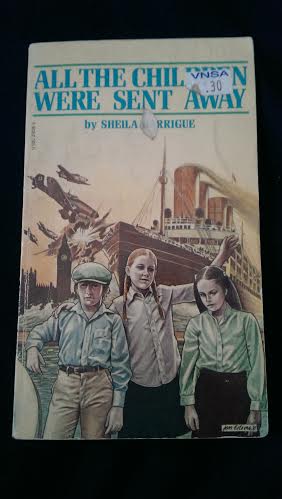
All The Children Were Sent Away

It’s 1940, and Sara Warren’s parents are sending her to stay with her uncle in Canada until the war is over.  With the increasing bombings of England, her parents have decided that it’s just too dangerous for Sara to stay, and her uncle has written, asking them to send her.  Many other British families are sending their children away to escape the bombings, and Sara travels to Canada on a ship with other British child evacuees.  All of them are worried about the families they’ve left behind and what it’s going to be like, living in another country.  They also worry about whether or not they’re ever coming back.

Sara’s escort for the trip is Lady Drume.  She is a bossy, over-bearing woman with very definite ideas about how children should be raised.  She doesn’t like Sara to talk to the sailors on the ship because they can be “impertinent,” and she doesn’t want her to play with the other children because they’re “guttersnipes!”  She even refuses to attend the lifeboat meeting or let Sara go without her!  To Sara’s mind, Lady Drume is as bad as any Nazi.

Sarah still manages to make friends with some Cockney children, Ernie and Maggie, seeing them whenever she can get away from Lady Drume, and an old sailor called Sparky makes sure that she understands safety on board the ship and attends the lifeboat drills.

But, when Lady Drume forces Sara to cut her hair after she’s been waiting so long for it to grow out, Sara decides that’s the last straw!  With the help of her friends, Sara hides from Lady Drume on the ship.  In the process, she learns something about Lady Drume which changes some things for the better, although it takes an outbreak of measles for Lady Drume to really understand and appreciate Sara.

This book is available to borrow and read for free online through Internet Archive.

Part of trouble with Lady Drume and her behavior is that she’s actually very afraid.  She doesn’t like to talk about lifeboats or life jackets because the war and the possibility of sinking frighten her.  She deals with problems by being brusque and trying to ignore frightening things, charging on ahead with whatever seems like a practical course of action to her.  It’s not even just the war but the changing world around her that frightens Lady Drume, a woman who’s used to knowing who’s who and what’s what and getting things done the way she likes them.  But, the rigors of their journey and their mutual vulnerability when they’re sick help lower Lady Drume’s barriers.  Lady Drume isn’t a bad person, and in the end, she arranges a special surprise for Sara to make her exile from England more bearable.

The end of the story is a brief section explaining Sara’s return to England, having been away for a few years, and her feelings at seeing how England and her parents have changed during that time.

There is a sequel to this book that shows what happened during Sara’s time in Canada called The Eternal Spring of Mr. Ito.  It focuses on suspicion of Japanese people following the bombing of Pearl Harbor.  There were Japanese internment camps in Canada as well as the United States during World War II.

Sheila Garrigue’s books about child evacuees from England were partly based on her own experiences as a child evacuee during World War II, as explained in her obituary after her death in 2001.

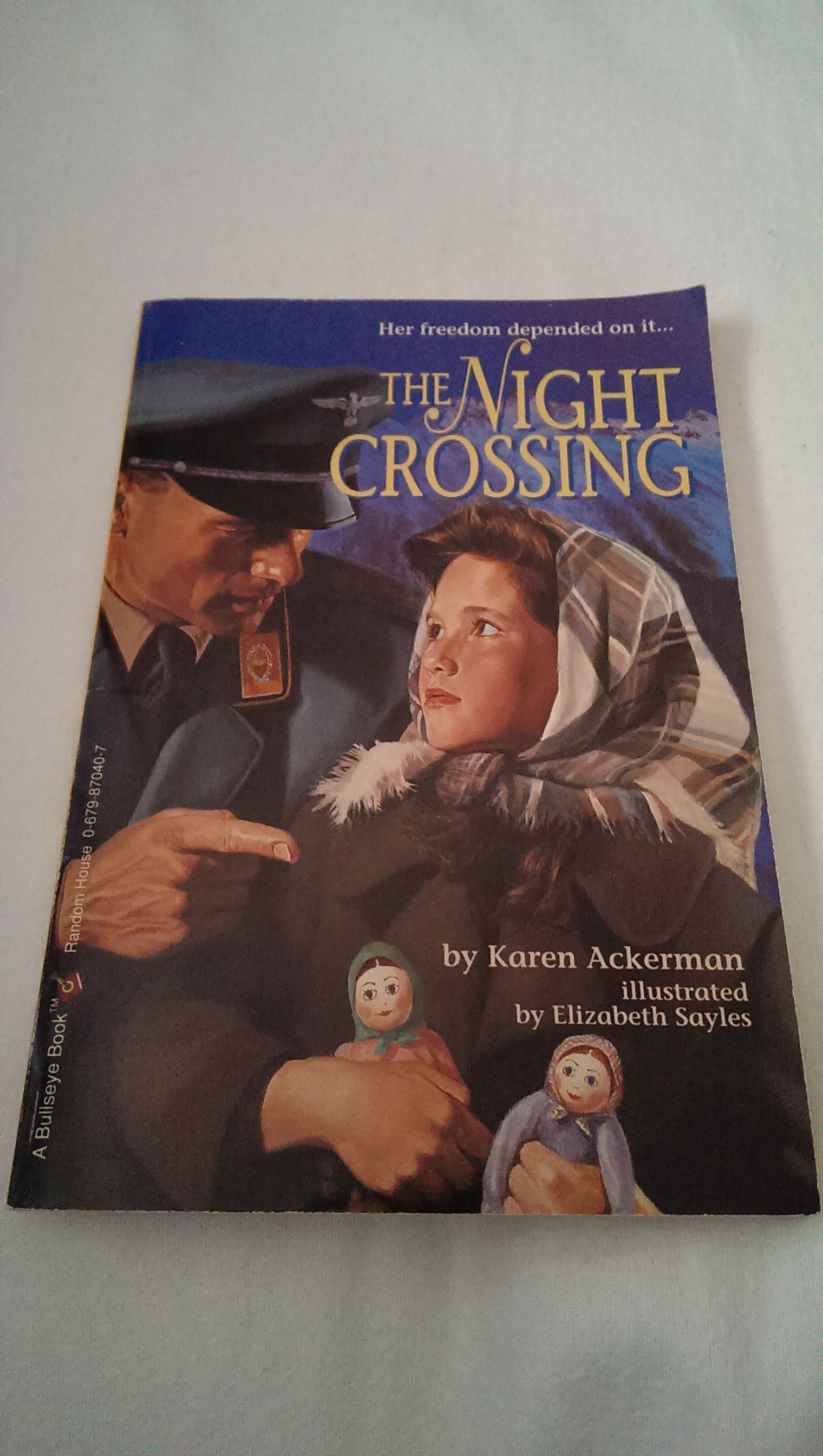
The Night Crossing

NightCrossingThe Night Crossing by Karen Ackerman, 1994.

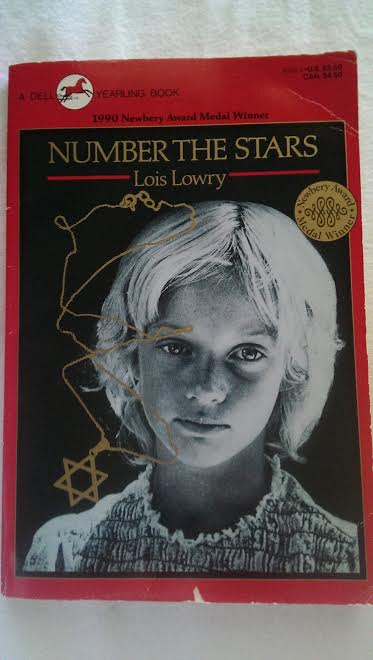
It’s 1938 in Austria, and Clara’s parents have decided that their family needs to leave before things get worse.  Already, Jewish families like theirs are being rounded up by the Nazis, and Clara and her sister Marta were chased through the streets by other children, shouting insults.

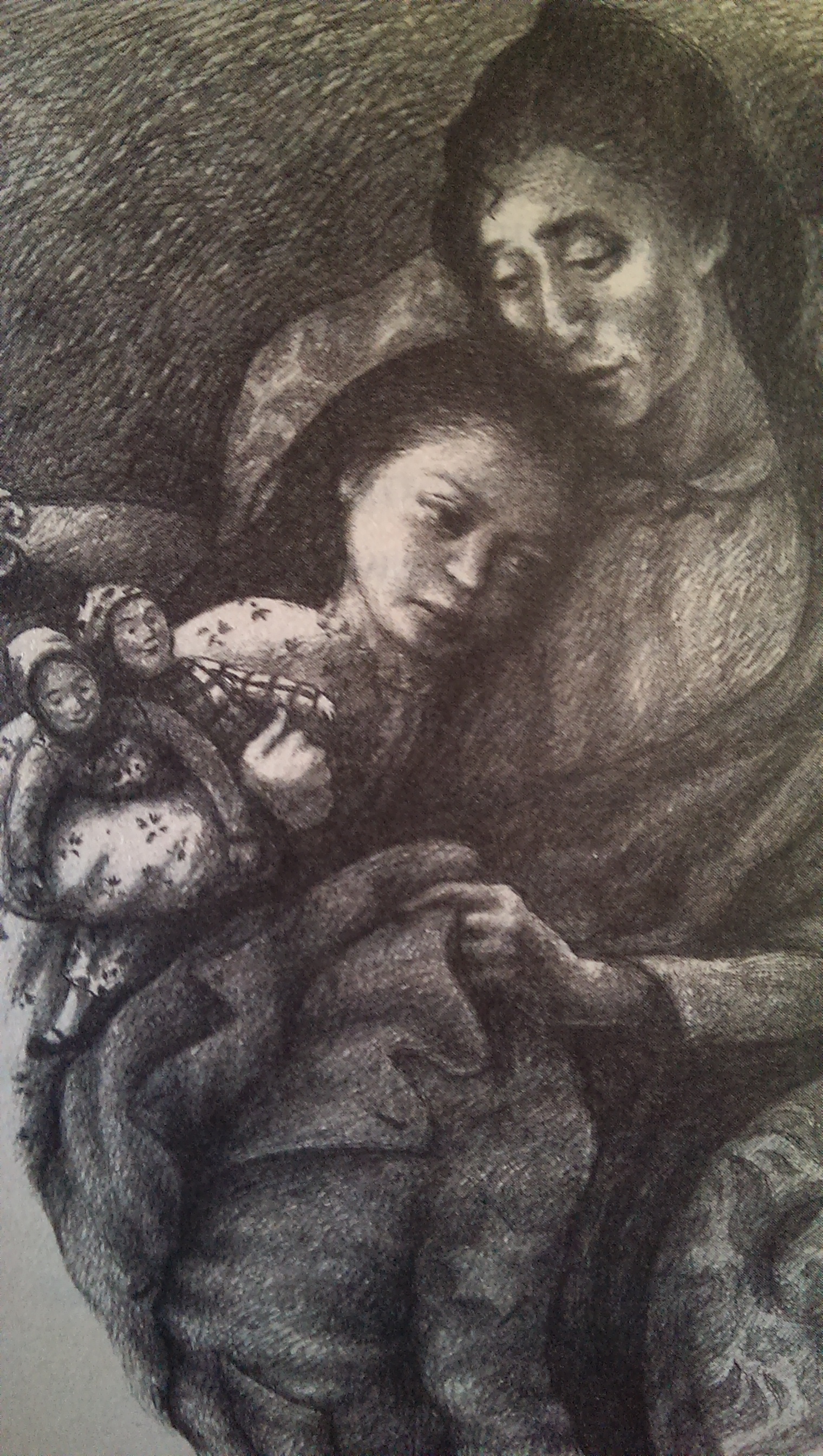
Their family has been through things like this before.  Clara’s grandmother tells her about when she had to flee Russia as a little girl to escape the pogroms.  She brought her dolls Gittel and Lotte with her as her family hiked through the Carpathian Mountains.  Now, Clara will carry them with her as their family leaves Austria for Switzerland.

It’s a hard journey with lots of walking and little food.  The family can carry very little with them, and some of what they have they are forced to trade for food, a place to rest, and for not being turned over to the Nazis.  Finally, at the border crossing, Clara’s parents are afraid that they will have to get rid of the candlesticks that have been in their family for generations because they might be discovered by the border guards.  Then, Clara comes up with a plan to hide them in her dolls.  Will it work?

NightCrossingPicThis is a pretty short chapter book.  Although the subject matter is serious, and parts might be frightening to young children (the part where Clara and Marta are chased and perhaps some of the parts where the family is hiding), there are only vague references to more dark subjects like concentration camps (people who already know what they are and what happened there would understand, but children who haven’t heard about them wouldn’t get the full picture from the brief mentions).  The book would be a good, short introduction to the topic of the Holocaust by putting it in terms of the way it changed the lives of ordinary people who had to flee from it.  Actually, it wouldn’t be a bad way to start a discussion of the Syrian refugees in Europe by putting it into the context of ordinary people fleeing the violence of war.

This book is currently available online through Internet Archive.

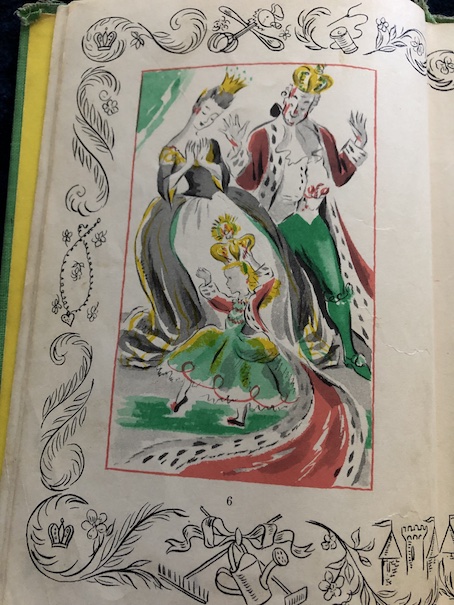
The Plain Princess

The Plain Princess by Phyllis McGinley, 1945.

I would dearly love to see this book in print again!  It’s a charming modern fairy tale about a young princess who learns what beauty and happiness really mean.

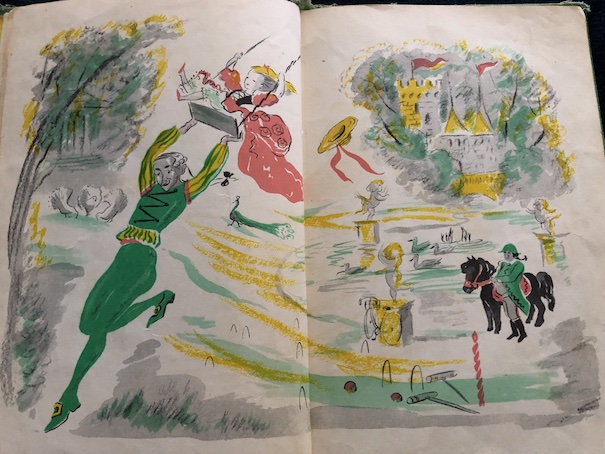
Esmeralda is the only child of the king and queen, and she has just about everything that a girl could want. The author paints a pretty picture of Esmeralda’s charmed life at the castle and all of the beautiful things she has.

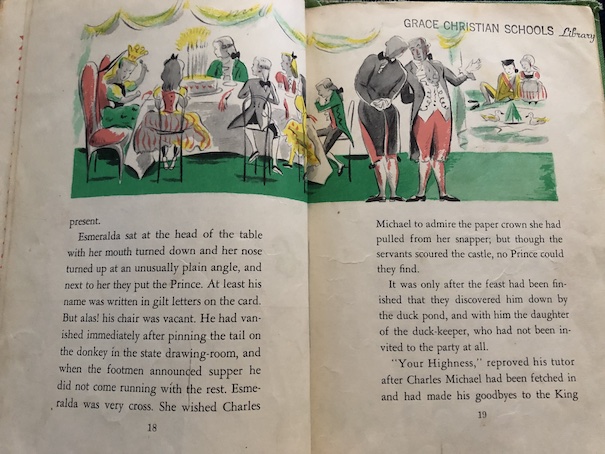
However, Esmeralda has one serious problem: she is plain. In her kingdom, in order for a girl to be considered beautiful, her nose must turn down, her mouth must turn up, and her eyes must have a twinkle in them. Esmeralda’s appearance is exactly the opposite. It is a serious problem because her plainness causes people to lose respect for her, and the prince that she is betrothed to refuses to take much of an interest in her.

Although her parents consult the finest physicians and wizards available, none of them can provide any solutions for Esmeralda’s condition. It is only after the king places an advertisement in the newspaper that a widow, Dame Goodwit, with five daughters of her own comes to the castle and offers a solution. However, she insists that Esmeralda must come and live with her family for nine months. At first, Esmeralda is distressed at leaving her home and living in much simpler circumstances that she is accustomed to, but the reasons soon become as plain as the princess herself.

As Esmeralda interacts with and becomes friends with Dame Goodwit’s daughters, Annabelle, Christabelle, Dulcibelle, Floribelle, and Echo, she comes to see herself and her old life at the castle differently.  At Dame Goodwit’s, she is expected to take care of herself and her belongings by herself, for the first time in her life.  She is given chores to do and becomes responsible for herself in ways that she never was before.  She also comes to see that, even though Dame Goodwit’s daughters are not princesses, in many ways, they are more knowledgeable and accomplished than she is, able to do many things that Esmeralda has never even tried before.  Little by little, Esmeralda learns and tries new things, even coming to enjoy her time with the family and becoming especially fond of little Echo, the youngest girl.  Her new experiences change her, her behavior, her attitudes, and eventually, even the way she looks.

The book is available to borrow and read for free online through Internet Archive.

My Reaction

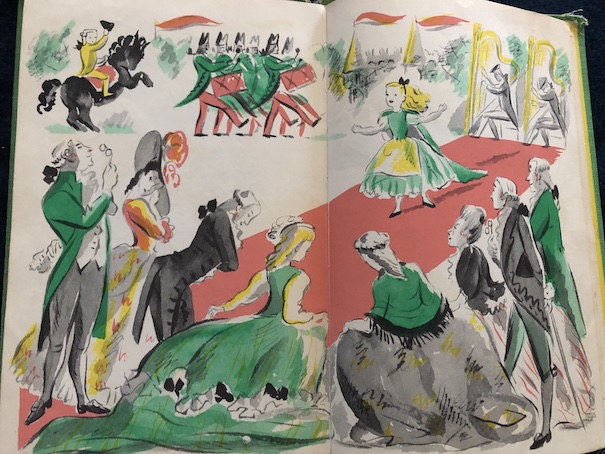
In spite of the fairy tale atmosphere, there isn’t really any magic in the story, as the widow herself points out. The real magic of the story is in the lessons that Esmeralda learns: that beauty and change come from within and that the way we see ourselves and those around us is important. For those who might be concerned at the emphasis on “beauty” and “plainness”, it soon becomes apparent that the outward signs of beauty really stand for positive character traits: humility, pride in one’s own talents and accomplishments, and unselfish caring for other people. The book also has some very pretty illustrations, some of which are wide scenes taking up two pages. It’s a beautiful book and a beautiful story for any young girl.

I don’t think that the book was ever made into a movie, but there are multiple versions that are stage plays (the link is to a video clip from a stage version of the story), including some that are musical.  I have seen a script for one of them that has added religious themes that weren’t in the original book, but the site has since been removed.  I’m sure that the script still exists, I’m just not sure where to find it now.  Some of the narrator’s and characters’ dialog was taken directly from the original book, but the religious parts were added.  As I recall, it implied that the princess’s personality changes came through the grace of God or developed as her religious side also developed, but I can’t remember now exactly how they said it.  I think it may have included some Biblical quotes related to the personality traits the princess acquires.  At one point, it was the only script that I could find available for free online.  There are other play versions that are available for purchase elsewhere, such as Dramatic Publishing and Steele Spring Stage Rights.