Lisa and Lottie

LisaLottieLisa and Lottie by Erich Kastner, 1969.

First, a note about the copyright: the date I give is for the edition I own, which is an English translation of the original German book.  The original copyright date for the story is 1949.  This is the story that was the basis for Disney’s The Parent Trap, both the version with Hayley Mills (1961) and the later Lindsey Lohan version (1998).  Neither movie completely follows the original story (although some of the dialog in the Hayley Mills version is almost word-for-word from the English version of the original story) because the settings are shifted to new locations, but both of them capture the concept of twins who were separated as infants by their divorced parents only to meet again years later by accident.  As in the book, each of the twins has been living a different kind of life with one of their parents, but they decide to switch places so that each of them can meet the parent they’ve never known.

Lottie Horn is a very serious little girl.  She can’t help it because she lives with her single mother, who spends much of her time working, and she relies on Lottie to take care of a number of household chores.  But, her mother feels badly that Lottie has been growing up so quiet and serious, so to help her relax and make more friends her own age, she decides to send Lottie to summer camp at Bohrlaken on Lake Bohren.

Shy Lottie thinks that her summer is going to be horrible when she meets up with boisterous Lisa Palfy, a girl who strangely looks exactly like her.  Lisa is shocked at the sight of this girl who looks so much like her, and after some teasing, joking, and staring from all the other girls, she loses her temper and kicks Lottie in the shin.  The camp leaders decide to give the two girls beds next to each other, saying that they’ll just have to get used to each other.  Lottie thinks that it’s going to be awful, but when Lisa sees how unhappy Lottie is, she apologizes and starts being nicer to her.

LisaLottiePic1

The two girls discuss their lives and their strange resemblance with each other, and some unsettling details are revealed.  First, they learn that they not only share a resemblance but the same birthday.  They also realize that they were both born in the same city, although Lottie now lives in Munich and Lisa lives in Vienna.  This strange coincidence is troubling enough, but then each girl reveals that she lives with only one parent: Lottie lives with her mother, and Lisa lives with her father.  Lottie has no memory of her father and no knowledge of what happened to him, where he might be, or even if he’s still alive.  Lisa also has no memory of her mother, but she did once see a picture of her, a picture which her father hid somewhere after he found her looking at it.  The girls start getting suspicious, so Lottie shows Lisa a picture of her mother, and Lisa confirms that it’s an identical copy of the picture of her mother she saw before.  Lisa and Lottie realize that they are long-lost sisters.
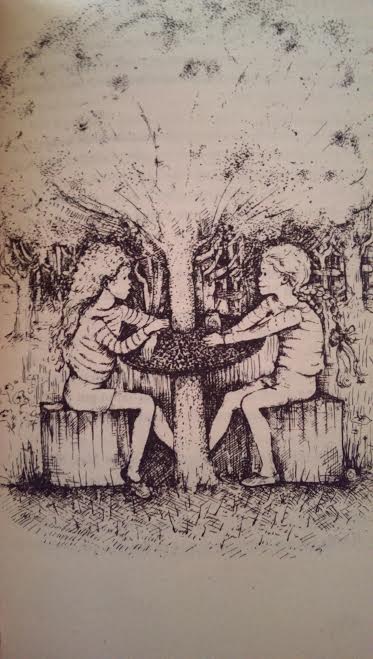
LisaLottiePic2Through the rest of the summer, the girls discuss their lives and parents in great detail and continue speculating about the reasons for their parents’ separation and why they were never told about each other’s existence.  They are somewhat angry at their parents for not telling them the truth, but they each also want to know more about the parent that they have never really known and perhaps to learn the truth behind their parents’ separation. They begin hatching a plot to switch places so that Lottie can go to Vienna to meet their father and Lisa can go to Munich to be with their mother.  They get little notebooks and fill them with as many details of their lives as they can think of so that each girl can seem to behave like the other, although they know it won’t be easy because they’ve lived very different lives.  They don’t like the same foods, and Lottie knows how to cook, but Lisa doesn’t.

Still, the girls proceed with their plan.  When it is time to leave camp, the girls dress as each other.  Lisa puts her hair in braids as Lottie always does.  Lottie lets her curls hang loose, like Lisa usually does.  Then, each of them boards the train for the other’s city at the station.
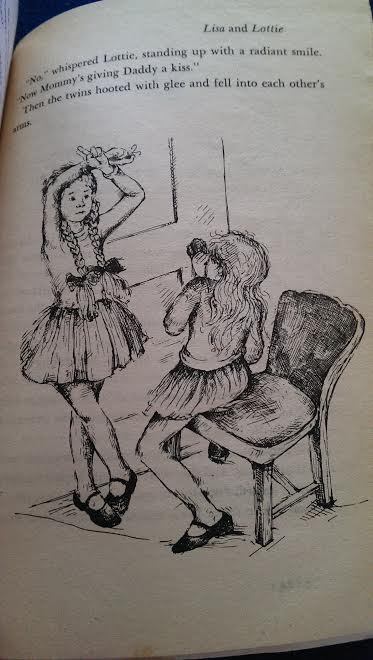
LisaLottiePic3Lisa is overjoyed to finally meet her mother in Munich.  But, her mother has to work very hard as a photographic editor for a newspaper, and they don’t have much money.  Lisa isn’t as good at cooking or taking care of household chores as Lottie is, so she finds it difficult to help, although she learns quickly.

In Vienna, Lottie meets her handsome but somewhat reclusive father.  Her father is an opera conductor, but he’s also a composer who needs to spend much of his time alone in order to compose his music, which was the primary reason for the divorce.  He always wanted to devote his life to the arts, and he felt that marriage and family life got in the way, although he dearly loves his remaining daughter and dotes on her.

But, life in Vienna isn’t that great for either Lottie/Lisa or her father.  Rosa, the housekeeper who often looks after “Lisa” and takes care of their apartment only pretends to like her when her father is around and steals from the household funds.  Also, in spite of finally having plenty of time along for composing music (which is successful), her father is lonely and unhappy.  Although he doesn’t want to admit it at first, he misses the comforts of family life and the company of his wife.

Each girl, because of her different personality, manages to make changes in the life of the other and in their parents which are for the better, but the charade cannot continue forever.  Lottie finds out that their father is considering marriage to a woman who doesn’t like her.  Then, Lottie falls seriously ill.  More than ever, she needs her mother . . . and her twin.

The book is currently available online through Internet Archive (they have multiple copies).

My Reaction and Spoilers:

LisaLottiePic4The book is much less of a comedy than either of the two Disney movies, although there are some funny parts, like when Lottie (as Lisa) takes over the household accounts to stop Rosa’s stealing and ends up turning her into a much better housekeeper with her practicality.  Surprisingly, Rosa actually starts respecting her more and even liking her better because of it.

Much of the focus of the book is how divorce affects children as well as parents, although there is room for debate on how each side views the issue, and some modern families may disagree with some of the points characters in the story make.  The point of view of the story shifts between each of the girls and also between their parents and other characters to show different reactions to the situation.

The children are understandably upset at the entire issue and believe what their parents did was wrong.  The girls admit that they do not think of either of their parents as evil or cruel, but they view the separation and lies that were forced on them without their consent as cruel.  Lottie even has a nightmare which is a twisted version of Hansel and Gretel in which her father threatens to cut both her and her sister in half because it would only be fair for each parent to get half of each child.  At camp, the girls see one of their friends crying, having just found out that her parents are going to get a divorce.  Other girls at the camp call her parents mean for making the decision while she was away at camp and just springing it on her with no warning at all.  For the children in the story, the worst part about parents divorcing is when they give little or no thought to how the children will feel or be affected by the decision and don’t even talk about the situation with them.

Some of that sentiment is echoed by adults in the story, although the adults are a little more ambivalent on the issue, knowing that different people and different circumstances must be judged on an individual basis.  The adults try to do what they think is best for the children, but they make mistakes, partly because they are too absorbed in their own concerns to understand the entire situation, and they come to realize it.  The overall sentiment of the book seems to be that, while marriages are made up of only two people, families are made up of more, including the children.  When a couple divorces, it not only affects the marriage, but the whole family as well, and parents need to remember that.

Like the movies, the book also ends happily, and the father finds a way (with the help of Lottie) to balance his work life with his family life.
Silver Days

silverdaysSilver Days by Sonia Levitin, 1989.

This is the second book in the Journey to America Saga.

Escaping from World War II Europe was only the first step for the Platt family. Now that they are reunited in the United States, survival is still a struggle. They have very little money, and Lisa’s father struggles to find work and a permanent place for his family to live. Along the way, they encounter people who are prejudiced against them, some because they are Jewish and some because they are German, and are forced to confront certain prejudices that they hadn’t realized that they held as they settle into their new country and learn to live alongside people from different backgrounds who live very different lives.

Lisa describes her family’s day to day struggles and adventures with understanding. In Germany, her father had his own business, selling coats, but he has to struggle to get into the clothing business in America. Her mother, who had once had her own servants in Germany, is forced to take a job as a maid to help make ends meet. Besides the basic problems of learning a new language, dealing with a lack of money, and trying to find work, she also describes the parts of American culture that take her family by surprise. There are religious issues because most of the people around them are Christian, and Lisa’s mother is upset when her youngest daughter, Annie, ends up getting a role in her school’s Easter play. Her mother also isn’t sure what to make of the Japanese family who lives next door when Annie makes friends with their daughter.

Meanwhile, the war that they had feared is becoming a reality. People in the U.S. are starting to support the war effort, collecting materials that the army can use, starting Victory Gardens to help support themselves during food rationing, joining the army, and volunteering as nurses. The Platts also experience survivor’s guilt as they hear reports of friends and family who weren’t lucky enough to escape the Holocaust.

The Platt family is realistic, and they have their arguments as the stresses of all these changes take their toll on them. But, they are a loving family and continue to support each other through everything. The title of the book comes from a song, “Golden Days”, about looking back on happy times. When Lisa’s little sister Annie asks her if these are their “golden days”, Lisa tells her that she doesn’t think so, but she thinks that they might be silver ones, days leading up to happier times ahead.

In some ways, the children of the family have an easier time dealing with all the changes than their parents. In the beginning, they are aware that they don’t quite fit in, although they desperately want to. However, they do manage to make new friends, and Lisa and her older sister, Ruth, even find their first loves. While the world around them is changing, the three sisters also change, growing up, finding new interests, and learning more about themselves and the kind of lives they want to live in their new home.

The book is currently available online through Internet Archive.

Journey to America

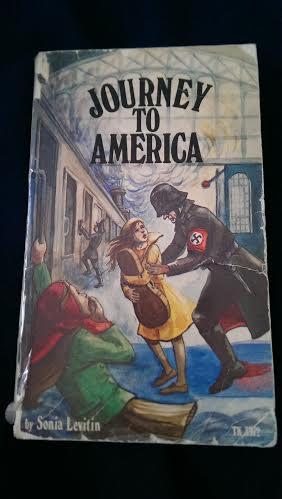
journeytoamericaJourney to America by Sonia Levitin, 1970.

This is the first book in the Journey to America Saga.  Like her heroine, Lisa, Sonia Levitin also fled Germany with her family during World War II, and her stories are semi-autobiographical.

Twelve-year-old Lisa Platt lives with her family in Berlin in 1938.  But, with the rise of the Nazis, events have taken a frightening turn for Jewish families like theirs.  There has already been violence toward Jewish people, and travel is restricted.  Lisa’s father fears for their family, and their mother believes that war is about to break out.  Reluctantly, her parents have decided that the only thing to do is to leave Germany and try to start over somewhere else.

Because of the travel restrictions, Lisa’s father has to leave secretly, pretending that he is only going on vacation.  In reality, he and Lisa’s uncle will go to America and try to get established before sending for the rest of the family.  But, it isn’t safe for Lisa, her mother, and her two sisters to stay in Germany, waiting for word from them.  Instead, they pretend that they are joining Lisa’s father for a holiday in Switzerland.  They can only take a little luggage with them, as if they were really just going on vacation, and very little money.

journeytoamericapicBut, getting on the train out of Germany is only the first step of their long journey.  Lisa and her mother and sisters live as refugees in Switzerland, waiting for her father to help arrange for their passage to America.  Often, they have too little to eat because they don’t have much money.  There are some people who help them, and they make some new friends, but the long wait is difficult.  Meanwhile, they must face the frightening events taking shape around them, around the people they left behind, and their own uncertain future.

There is something in the stories that I’d like to describe a little more because I didn’t quite understand it when I first read this book as a kid, but I can explain it better now.  At one point in the story, Lisa’s grandmother suggests that her mother send the girls to England because other families are doing it and it would ensure that the children get safely out of the country.  Later, in Switzerland, Lisa gets a letter from her friend Rosemarie that says she and her sister are now in England without their parents because their father didn’t didn’t feel like he could leave Germany.  What they’re describing is the Kindertransport, a rescue effort started by Jewish, Quaker, and British government leaders to transport unaccompanied Jewish minors, from babies to age 17, from Germany and German-controlled countries to England for safety after the events of Kristallnacht made it clear that Jews were in serious danger in Germany.  When the children reached England, they were placed in foster homes, schools, and anywhere else willing to take them, similar to the way children evacuated from London to avoid the bombings later would be placed in foster homes or on farms.  Grandmother Platt points out that this could have been an option for her grandchildren when she discusses the possibilities with their mother, but since, neither the mother or father of the family wanted to stay in Germany, the family decided that they should all leave together.  The Kindertransport program ended when war actually broke out, but by then, about 10,000 children had been brought to England.  Although parents who sent their children to England on the Kindertransport hoped to reunite with them in England, most of the Kindertransport children who went to England never saw their parents again because their family members who stayed behind in Germany were killed in the Holocaust.  I had lessons about the Holocaust in school in Arizona, but they never mentioned the Kindertransport because it wasn’t something that really affected the area where we lived.  I did see a Holocaust survivor who came to speak at my high school in the early 2000s.  There were Holocaust survivors living in my area of Arizona then, and there still are as of this writing because I heard that they were among the first to be vaccinated during the coronavirus pandemic in early 2021.  This video from the BBC Newsnight and this video from the University and College Union explain more about it and have interviews with people who were brought to England on the Kindertransport as children.  Rosemarie and her sister would probably be very much like the people in those interviews years later.

Although there are sad parts of the book, there are lighter moments, too, and the characters are realistic and engaging.  There is only one illustration in my copy of the book, a drawing of Lisa and her sisters getting their pictures taken for their passports.  Other editions of the book have different illustrations.

The book is currently available online through Internet Archive (multiple copies, in different editions).

Number the Stars

numberstarsNumber the Stars by Lois Lowry, 1989.
Annemarie Johansen is ten years old and living in Copenhagen in 1943.  Denmark is now occupied by the Nazis, and she and her little sister Kirsti have become accustomed to the sight of German soldiers in the streets and the food rationing and curfews that have come with the war.  But, there are still worse changes to come in their lives. Jewish people like Annemarie’s best friend, Ellen Rosen, are in danger.  The Germans have been closing businesses owned by Jews, and worse still, some Jewish families simply . . . disappear.

Annemarie comes to understand the disturbing truth behind many of the things that have been happening around her, including the sudden death of her older, grown-up sister, Lise.  Although she had earlier been told that Lise had been killed in an accident, what happened to Lise was no accident.  Lise and her fiance, Peter, were both part of an underground Resistance movement, working against the Nazis.  Peter is still part of the Resistance, and he calls upon Annemarie’s family to help him save not only Ellen’s life but the lives of other Jews who are in danger.

When the Johansens learn that the Nazis are looking for Jews from the register at the Rosens’ synagogue, Annemarie’s family takes in Ellen and pretends that she is their third daughter, Lise, while Peter helps to hide her parents make preparations to get them out of the country.  They journey to the seaside, where Annemarie’s Uncle Henrik prepares to help take the Rosens and others to safety on his fishing boat.  At first, Annemarie is angry that the adults are telling her things that she knows aren’t true and keeping secrets from her about their plans, but they tell her that it is for her own good not to know too much because they don’t want her to be too frightened with the details.  She soon comes to see their point because, as they set their plan into motion, Annemarie must perform an act of bravery for it to be successful.

Besides being an historical novel, this is partly a coming-of-age story as Annemarie goes from being an innocent young girl to being more fully aware of the problems and dangers surrounding her, her family, and her friends.  The title of the book comes from a Biblical quotation about how God “numbers the stars” and Annemarie’s thoughts as she considers her situation and the danger everyone is in.  Ellen’s mother said that she doesn’t like the sea because it is too big and too cold, and on a starry night in the middle of their peril, it strikes Annemarie that night sky and the whole world is like that, too: too big and too cold.  Annemarie thinks that sky is full of more stars than anyone can count, and the world situation and its complexities seem too great for Annemarie to fully grasp.  The immensity and  dangerous nature of it all frighten her.

Annemarie’s older sister, the grown-up child in their family, understood the complexities and dangers of the world and risked her life to fight for their country’s freedom, ultimately losing her life in the process.  Annemarie’s younger sister is still largely unaware of the risks her family is taking to save their friends, still thinking in her innocence that the explosions from the destruction of the Danish naval fleet when the Nazis invaded were “fireworks” for her birthday.  At the beginning of the story, Annemarie is between her two sisters: more aware of what is going on than Kirsti is but not aware of what her older sister did or knew.  By the end of the story, Annemarie has moved to a more grown-up understanding but uses her innocent, little-girl appearance to fool the Nazis into thinking that she is just an ignorant child so they will be less suspicious of her.

Although this story is fiction, similar incidents happened in real life when people took great risks to help Jewish people escape from the Nazis. In the back of the book, there is an Afterword that explains more about the historical events behind the story.

This book was a 1990 Newbery Award winner.  It is currently available online through Internet Archive.

Mystery Up the Winding Stair

Harry Hunter and his mother have been living with his grandfather in his big mansion while his father is in Japan doing work for the government. His family has owned the mansion for a long time, and it has a small museum in it containing Native American artifacts and things relating to pioneer life, including a small log cabin built in a large room up a winding staircase.

When Harry’s mother goes on a trip to see his father, Harry and his grandfather invite Harry’s cousins to visit them: Ned and his sister Lou, and Carol, whose family has only recently moved to the area.  When the children try to decide what they would like to do together, Carol suggests a treasure hunt.  Their grandfather sends them on a treasure hunt to find something that he hid himself a long time ago: a set of silver spoons made by Paul Revere and a diamond. The explanation is that the grandfather is rather absent-minded and has forgotten where he hid the treasure, although he knows that it’s somewhere in the house.

A storm leaves them all snowbound in the mansion, but they are not alone. There are mysterious footsteps, someone using a secret staircase to the attic, and signs that the bed in the cabin has been slept in. The children begin to realize that someone else is in the house with them, and this person wants the treasure for himself!

This book is out of print, but you can borrow and read it online for free through Internet Archive.  Internet Archive requires you to sign up for an account to borrow books, but the account is free, and you read the books directly in your browser.  There are no overdue fees because the books simply disappear from your virtual loan list when your time is up.  You are allowed to re-borrow books as long as copies are available (not being “borrowed” by other people).

The house the mansion in the book was based on was the old summer home of Governor Washington Hunt, located in Lockport, New York. (I learned about the house from an article about the story behind the book and an event related to the book that was held at the library in Lockport, but the site that had the article doesn’t have it up anymore. I think I saved a copy somewhere, but I’m having trouble finding it right now.)  It was called Wyndham Lawn and later became a children’s home. It’s now a private school called the Henrietta G. Lewis Campus School.  When the author, Helen Fuller Orton, was young, some of her relatives rented Wyndham Lawn from its owner, and she lived with them for a time.  In the article, the author noted that the house had been changed somewhat since the time when she lived there in the 1880s in order to accommodate the needs of the children’s home.

When I first read this book, I thought that the part about the grandfather simply forgetting where he hid an important treasure was a little cheesy, but the treasure hunt in a mansion with its own museum is fun. It’s a little spooky when the kids realize that there’s an intruder in the house with them while they’re snowbound, although it’s pretty obvious to readers of the story who the intruder was. The house really makes the story because it is a fantastic setting! It’s a very cozy mystery for winter.

I enjoyed the story and learning about the history of the real house. I also considered what Harry’s father is doing in Japan because this book was published just after WWII. I don’t think they ever explain why Harry’s father is in Japan on government work, but I’m sure he’s involved with the occupation and reconstruction of Japan after the war. It’s a subtle reference to current events at the time this story was written that’s not part of the main story but is used as part of the reason why the main story is happening.

All The Children Were Sent Away

It’s 1940, and Sara Warren’s parents are sending her to stay with her uncle in Canada until the war is over.  With the increasing bombings of England, her parents have decided that it’s just too dangerous for Sara to stay, and her uncle has written, asking them to send her.  Many other British families are sending their children away to escape the bombings, and Sara travels to Canada on a ship with other British child evacuees.  All of them are worried about the families they’ve left behind and what it’s going to be like, living in another country.  They also worry about whether or not they’re ever coming back.

Sara’s escort for the trip is Lady Drume.  She is a bossy, over-bearing woman with very definite ideas about how children should be raised.  She doesn’t like Sara to talk to the sailors on the ship because they can be “impertinent,” and she doesn’t want her to play with the other children because they’re “guttersnipes!”  She even refuses to attend the lifeboat meeting or let Sara go without her!  To Sara’s mind, Lady Drume is as bad as any Nazi.

Sarah still manages to make friends with some Cockney children, Ernie and Maggie, seeing them whenever she can get away from Lady Drume, and an old sailor called Sparky makes sure that she understands safety on board the ship and attends the lifeboat drills.

But, when Lady Drume forces Sara to cut her hair after she’s been waiting so long for it to grow out, Sara decides that’s the last straw!  With the help of her friends, Sara hides from Lady Drume on the ship.  In the process, she learns something about Lady Drume which changes some things for the better, although it takes an outbreak of measles for Lady Drume to really understand and appreciate Sara.

This book is available to borrow and read for free online through Internet Archive.

Part of trouble with Lady Drume and her behavior is that she’s actually very afraid.  She doesn’t like to talk about lifeboats or life jackets because the war and the possibility of sinking frighten her.  She deals with problems by being brusque and trying to ignore frightening things, charging on ahead with whatever seems like a practical course of action to her.  It’s not even just the war but the changing world around her that frightens Lady Drume, a woman who’s used to knowing who’s who and what’s what and getting things done the way she likes them.  But, the rigors of their journey and their mutual vulnerability when they’re sick help lower Lady Drume’s barriers.  Lady Drume isn’t a bad person, and in the end, she arranges a special surprise for Sara to make her exile from England more bearable.

The end of the story is a brief section explaining Sara’s return to England, having been away for a few years, and her feelings at seeing how England and her parents have changed during that time.

There is a sequel to this book that shows what happened during Sara’s time in Canada called The Eternal Spring of Mr. Ito.  It focuses on suspicion of Japanese people following the bombing of Pearl Harbor.  There were Japanese internment camps in Canada as well as the United States during World War II.

Sheila Garrigue’s books about child evacuees from England were partly based on her own experiences as a child evacuee during World War II, as explained in her obituary after her death in 2001.

The Night Crossing

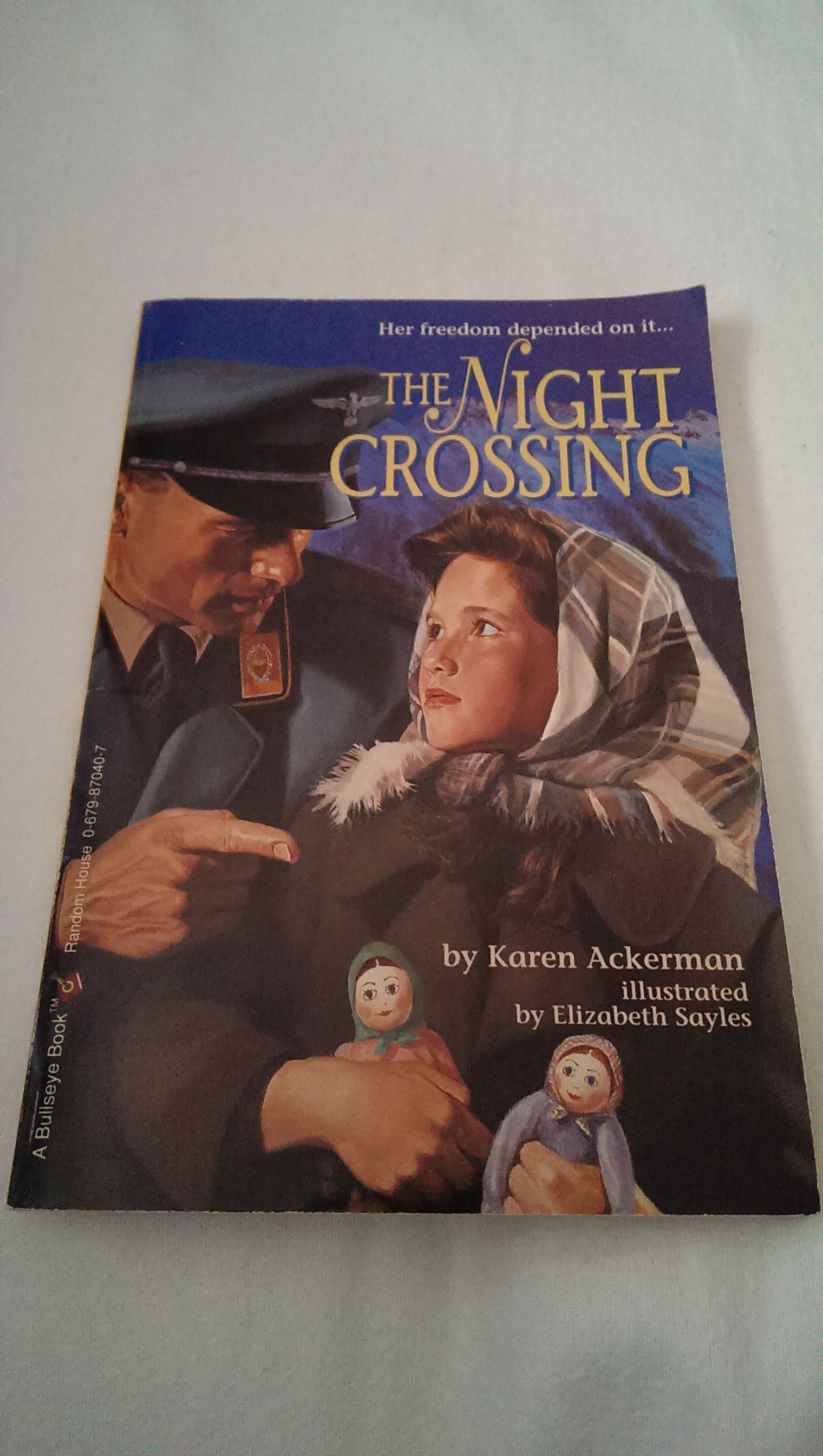
NightCrossingThe Night Crossing by Karen Ackerman, 1994.
It’s 1938 in Austria, and Clara’s parents have decided that their family needs to leave before things get worse.  Already, Jewish families like theirs are being rounded up by the Nazis, and Clara and her sister Marta were chased through the streets by other children, shouting insults.

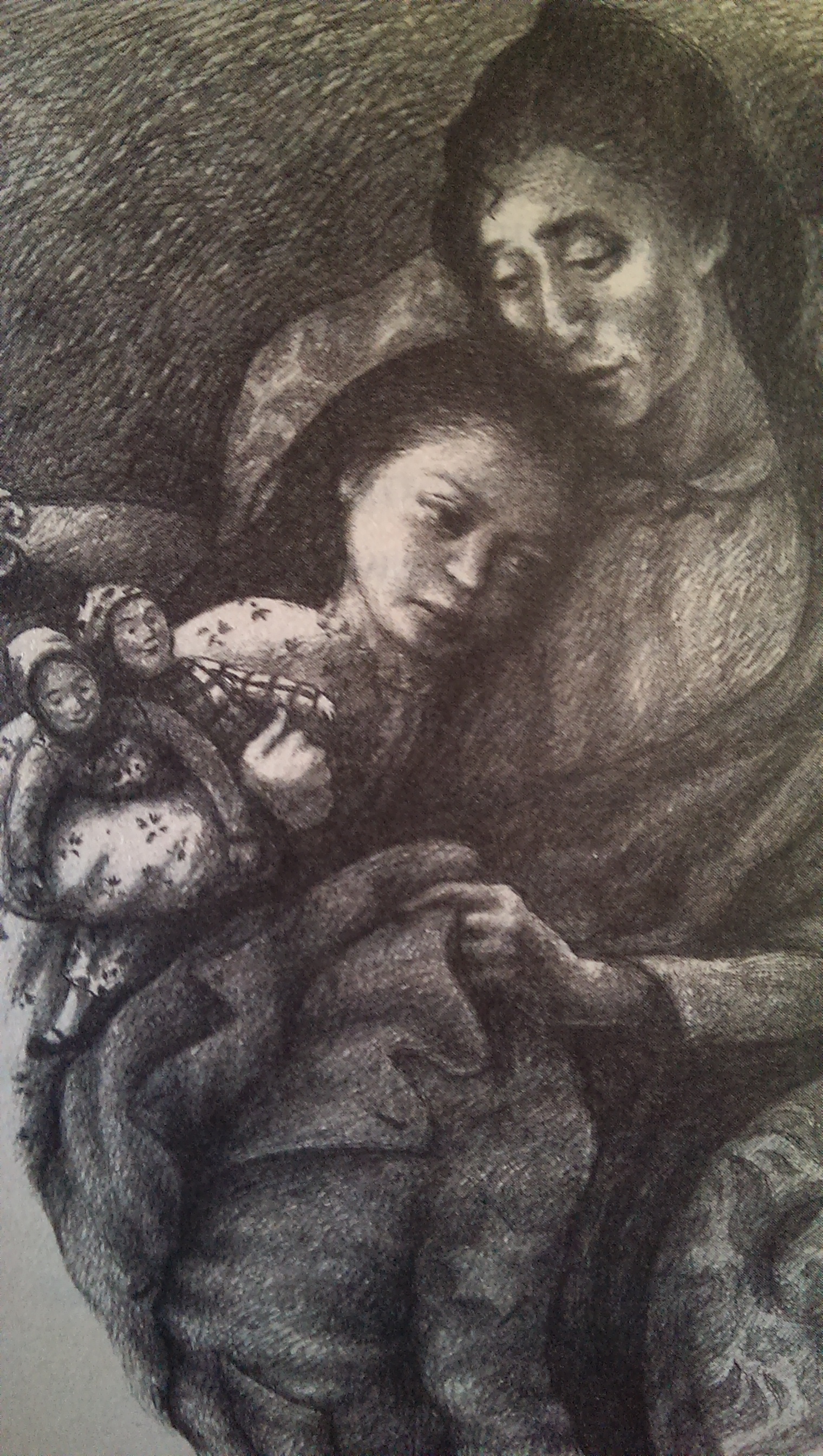
Their family has been through things like this before.  Clara’s grandmother tells her about when she had to flee Russia as a little girl to escape the pogroms.  She brought her dolls Gittel and Lotte with her as her family hiked through the Carpathian Mountains.  Now, Clara will carry them with her as their family leaves Austria for Switzerland.

It’s a hard journey with lots of walking and little food.  The family can carry very little with them, and some of what they have they are forced to trade for food, a place to rest, and for not being turned over to the Nazis.  Finally, at the border crossing, Clara’s parents are afraid that they will have to get rid of the candlesticks that have been in their family for generations because they might be discovered by the border guards.  Then, Clara comes up with a plan to hide them in her dolls.  Will it work?

NightCrossingPicThis is a pretty short chapter book.  Although the subject matter is serious, and parts might be frightening to young children (the part where Clara and Marta are chased and perhaps some of the parts where the family is hiding), there are only vague references to more dark subjects like concentration camps (people who already know what they are and what happened there would understand, but children who haven’t heard about them wouldn’t get the full picture from the brief mentions).  The book would be a good, short introduction to the topic of the Holocaust by putting it in terms of the way it changed the lives of ordinary people who had to flee from it.  Actually, it wouldn’t be a bad way to start a discussion of the Syrian refugees in Europe by putting it into the context of ordinary people fleeing the violence of war.
This book is currently available online through Internet Archive.

The Plain Princess

The Plain Princess by Phyllis McGinley, 1945.

I would dearly love to see this book in print again!  It’s a charming modern fairy tale about a young princess who learns what beauty and happiness really mean.

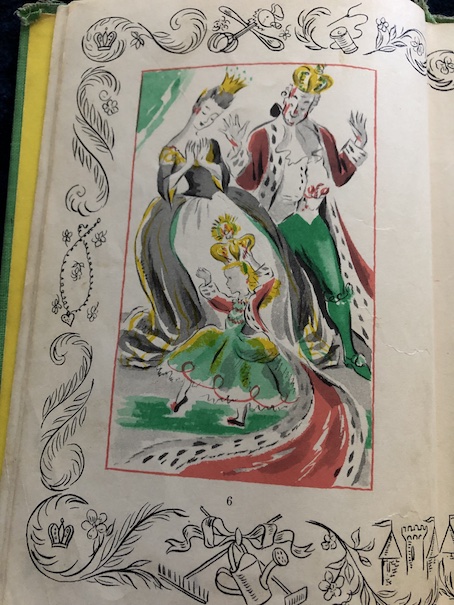
Esmeralda is the only child of the king and queen, and she has just about everything that a girl could want. The author paints a pretty picture of Esmeralda’s charmed life at the castle and all of the beautiful things she has.

However, Esmeralda has one serious problem: she is plain. In her kingdom, in order for a girl to be considered beautiful, her nose must turn down, her mouth must turn up, and her eyes must have a twinkle in them. Esmeralda’s appearance is exactly the opposite. It is a serious problem because her plainness causes people to lose respect for her, and the prince that she is betrothed to refuses to take much of an interest in her.

Although her parents consult the finest physicians and wizards available, none of them can provide any solutions for Esmeralda’s condition. It is only after the king places an advertisement in the newspaper that a widow, Dame Goodwit, with five daughters of her own comes to the castle and offers a solution. However, she insists that Esmeralda must come and live with her family for nine months. At first, Esmeralda is distressed at leaving her home and living in much simpler circumstances that she is accustomed to, but the reasons soon become as plain as the princess herself.

As Esmeralda interacts with and becomes friends with Dame Goodwit’s daughters, Annabelle, Christabelle, Dulcibelle, Floribelle, and Echo, she comes to see herself and her old life at the castle differently.  At Dame Goodwit’s, she is expected to take care of herself and her belongings by herself, for the first time in her life.  She is given chores to do and becomes responsible for herself in ways that she never was before.  She also comes to see that, even though Dame Goodwit’s daughters are not princesses, in many ways, they are more knowledgeable and accomplished than she is, able to do many things that Esmeralda has never even tried before.  Little by little, Esmeralda learns and tries new things, even coming to enjoy her time with the family and becoming especially fond of little Echo, the youngest girl.  Her new experiences change her, her behavior, her attitudes, and eventually, even the way she looks.

The book is available to borrow and read for free online through Internet Archive.

My Reaction

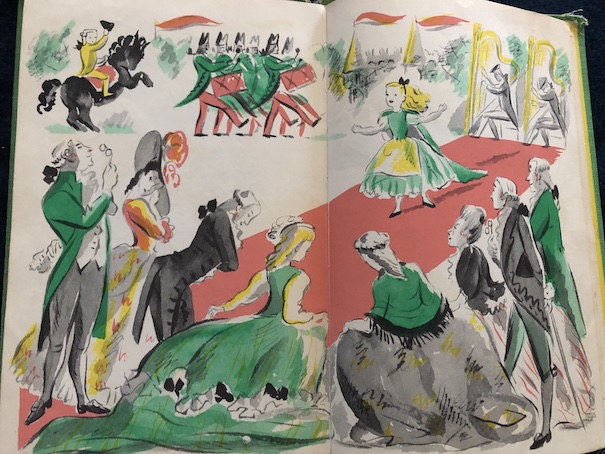
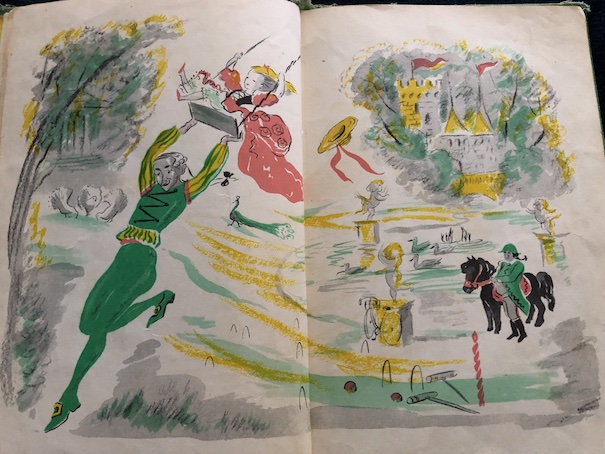
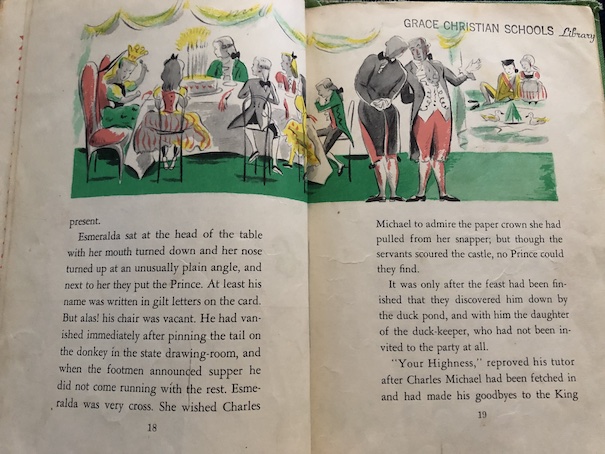
In spite of the fairy tale atmosphere, there isn’t really any magic in the story, as the widow herself points out. The real magic of the story is in the lessons that Esmeralda learns: that beauty and change come from within and that the way we see ourselves and those around us is important. For those who might be concerned at the emphasis on “beauty” and “plainness”, it soon becomes apparent that the outward signs of beauty really stand for positive character traits: humility, pride in one’s own talents and accomplishments, and unselfish caring for other people. The book also has some very pretty illustrations, some of which are wide scenes taking up two pages. It’s a beautiful book and a beautiful story for any young girl.

I don’t think that the book was ever made into a movie, but there are multiple versions that are stage plays (the link is to a video clip from a stage version of the story), including some that are musical.  I have seen a script for one of them that has added religious themes that weren’t in the original book, but the site has since been removed.  I’m sure that the script still exists, I’m just not sure where to find it now.  Some of the narrator’s and characters’ dialog was taken directly from the original book, but the religious parts were added.  As I recall, it implied that the princess’s personality changes came through the grace of God or developed as her religious side also developed, but I can’t remember now exactly how they said it.  I think it may have included some Biblical quotes related to the personality traits the princess acquires.  At one point, it was the only script that I could find available for free online.  There are other play versions that are available for purchase elsewhere, such as Dramatic Publishing and Steele Spring Stage Rights.