Madeline and the Bad Hat

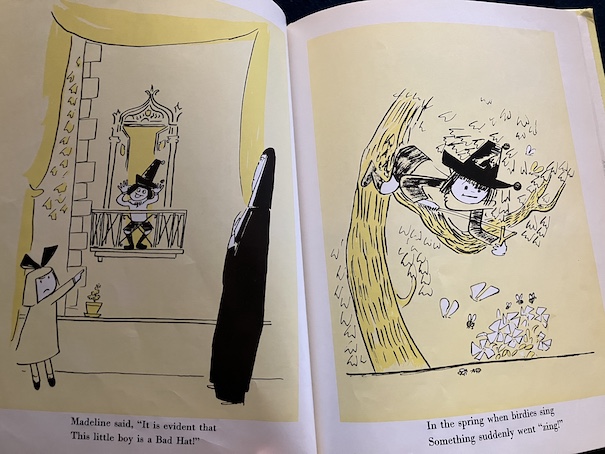
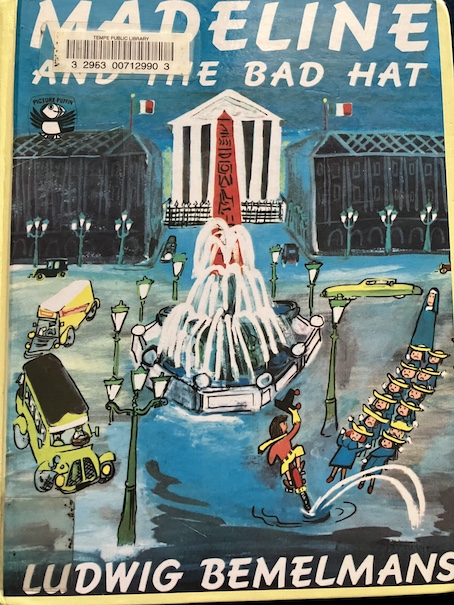
Madeline is a little girl at a small boarding school in Paris. The Spanish ambassador moves into the house next door, and the girls at the boarding school get to know his son. However, his son, Pepito, is a wild boy who Madeline starts calling the “Bad Hat.” He teases the girls, scares them by playing ghost, and worst of all, is cruel to animals.

However, Pepito is actually lonely, and he wants the girls’ attention. He tries to win them over by being polite and doing things to impress them. Unfortunately, his idea of what impresses people can be horrific, like building a guillotine for the chickens the cook will prepare and playing practical jokes.

One day, he goes way too far and tries to release a cat into a pack of dogs! The cat tries to evade the dogs by getting on top of Pepito’s head, so the girls and Miss Clavel have to rescue both the cat and Pepito himself from the dogs!

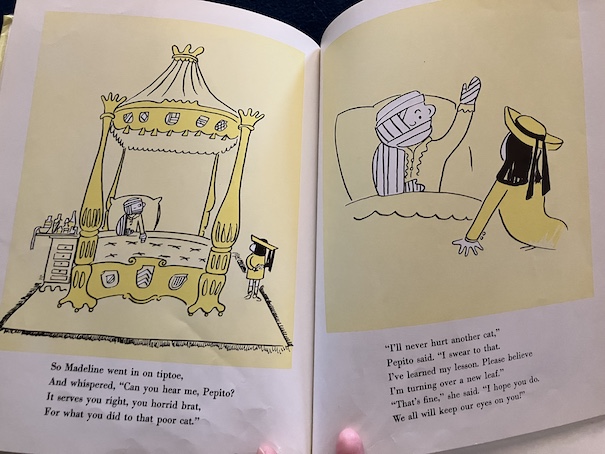
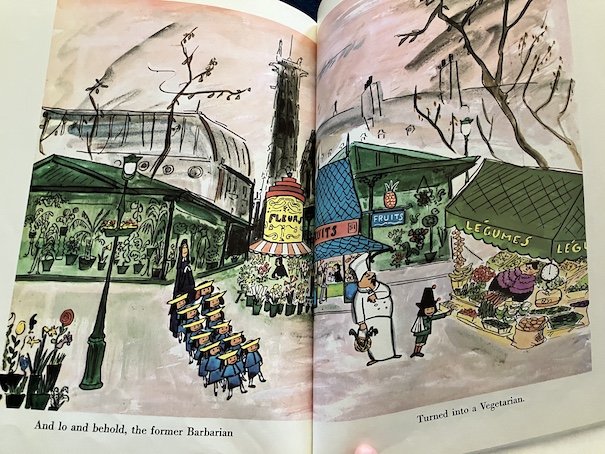
Because Pepito has now gotten hurt himself by one of his pranks, he swears to Madeline that he’s learned his lesson, and he won’t do anything to hurt another animal. He even decides to become a vegetarian!

The book is available to borrow and read for free online through Internet Archive (multiple copies).

I didn’t remember much about this book from when I was a kid. I vaguely remembered that Pepito was a troublemaker who played pranks and teased the girls, but I didn’t remember that he was cruel to animals. Actually, I was kind of horrified by the guillotine for distressed chickens and the cat that he attempted to feed to the dogs.

Pepito only learns his lesson when he gets hurt himself and discovers what it’s like to be on the receiving end of pain. I didn’t mind him showing off a bit or playing pranks like dressing up like a ghost. The cruelty to animals part, though, I found distressing, even as an adult. I don’t think I’d read this book again because of that.

Madeline’s Rescue

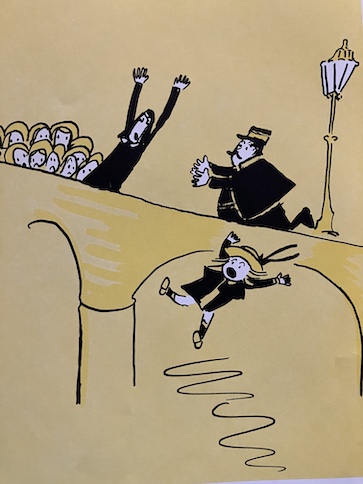
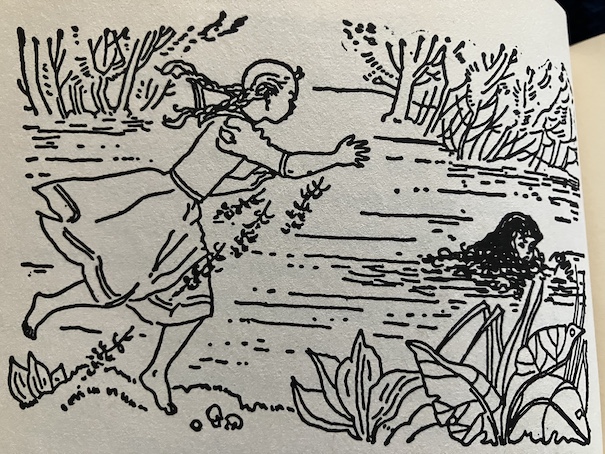
The Madeline stories are considered children’s classics, and this is one of the best-known books in the series. It starts out much like the first book in the series, introducing the old house in Paris where Madeline and her classmates stay for boarding school and describing how brave Madeline is. However, at the part that explains that Madeline knows how to frighten their teacher, Miss Clavel, Madeline falls from a bridge over the river while she’s trying to walk on the edge.

Fortunately, Madeline is saved from drowning by a dog that jumps into the water to save her. Miss Clavel and the other girls take Madeline and the dog back to the school, dry them off and put them to bed. The girls keep the dog and name her Genevieve. Genevieve is a smart dog, and soon, she’s a very pampered and happy pet.

However, when the trustees of the school come for an inspection, they raise a fuss about the girls keeping a dog in the school and turn Genevieve out! The girls are very upset, so they immediately go out and search for Genevieve.

Fortunately, Genevieve returns, and there is a surprise for the girls that finally settles all the arguments they’ve been having about whose bed the dog will sleep in that night!

The book is available to borrow and read for free online through Internet Archive (multiple copies).

As with the other books in the Madeline series, the beginning of the story echoes the first Madeline book, but this one expands on Madeline’s habit of walking on the edge of the bridge and frightening Miss Clavel, showing that Miss Clavel has reason to worry about Madeline’s stunts.

I remember reading this book when I was a kid and being really worried about what would happen to the dog, Genevieve! I always loved dogs, and I was worried about her when the trustees turned her out of the school. After Genevieve returns to the school, there’s no follow-up on how the trustees react and whether or not they approve of her and her puppies staying at the school, but it seems like everything will be okay. With plenty of puppies for the girls at the school, they no longer fight about who gets to sleep with Genevieve or give her attention. Staying at a boarding school where every girl gets a puppy of her own to look after would be a dream for many girls!

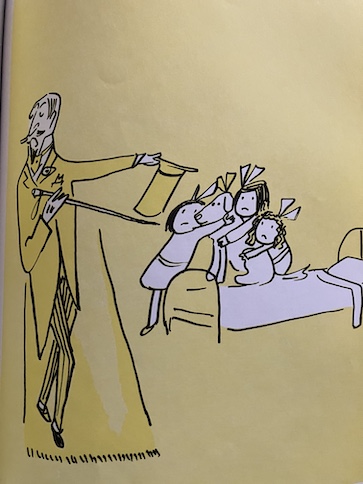
Something I noticed in this book is that the style of the pictures varies between cartoon style in black and yellow and a more impressionistic style with full color. This is also true in other Madeline books. The more colorful pictures tend to show more emotional or dramatic moments.

Mystery of the Strange Traveler

This book was originally published under the title The Island of Dark Woods.

Laurie Kane and her older sister, Celia, are traveling by train without their parents to visit their Aunt Serena in New York. Aunt Serena has invited the girls to come stay with her while their parents are traveling in Asia for one of their father’s newspaper assignments. In her letter to the family, Aunt Serena hints at exciting things that are happening. She used to be a schoolteacher, but she says that she’s starting a new business, and the girls can help her with it, although she won’t say what it is until they arrive. Also, Aunt Serena has recently moved to a new house. When their father sees where she’s living now, he’s intrigued because it’s the location of their “ancestral mystery.” He would tell the girls the story himself, but Aunt Serena says in her letter that she would like to be the one to tell them about it. There father says that Aunt Serena loves being tantalizing and mysterious. Laurie, who loves mystery stories, wonders about it all the way to New York.

Aunt Serena lives in a wooded area on Staten Island, near Clove Lakes Park. She has a small red brick house with another outbuilding on her property that she says used to be an old cobbler’s shop. Her new business idea is to turn it into a small bookshop. Laurie loves it immediately because she loves books. She wants to be an author herself, and Aunt Serena says that she might even get a chance to meet her favorite author, Katherine Parsons, because she lives in the area. Celia is the practical one, and she asks Aunt Serena all the practical questions about how she plans to get people to come to her little shop when there are no other stores around them to draw customers in. Aunt Serena says that she’s not expecting her shop to turn into a big business. It’s more of a small hobby business to bring in a little extra money and also be a fun activity.

Laurie and Celia begin unpacking some of the books that Aunt Serena will sell in her small shop, and Laurie is pleased to see a collection of books by Katherine Parsons. On the back of one of the books, there’s a picture of the author and a short biography. Laurie is pleased to note that Katherine Parsons is left-handed, like herself. There are times when Laurie has difficult with things because she’s left-handed, and she feels a kinship toward the author because she shares that trait.

Meanwhile, Celia has noticed that there is a boy next door, moving the lawn. Laurie is more interested in books than boys, so she doesn’t find this exciting news. Celia tries to get the boy’s attention, but he seems to be ignoring her. When he does seem to notice the girls, he turns away quickly, like he wants to avoid them. Celia points out to Laurie how the house where the boy is looks very different from the rest of the houses around it – big, old-fashioned, dark, and creepy. Laurie comments that it looks haunted, and their Aunt Serena surprises them by saying it is.

The boy, Norman, lives with his grandfather, Mr. Bennett, in the old house. Mr. Bennett is a difficult man, and Aunt Serena admits that she got on his bad side when she first moved to the area by asking him if she could buy his house. Aunt Serena admits that she didn’t actually want to buy Mr. Bennett’s house; she was only using her inquiry as an excuse to talk to him and maybe get a look inside the house. However, Mr. Bennett took offense at the inquiry.

There is another boy in the neighborhood called Russ Sperry, and he’s friendlier. His mother sends him to bring a cake to Aunt Serena, and Aunt Serena says that she hopes he will be friends with the girls and show them around. Russ stays awhile to have some cake and chat, and he mentions that Norman Bennett’s father is in South America because he has a job there, which is why he’s staying with his grandfather. Aunt Serena says that Norman’s mother is dead and that his father rarely comes home. She doesn’t approve of the lonely way Norman’s grandfather seems to be raising him because it seems like Norman doesn’t have any friends. Laurie thinks that Norman’s loneliness is at least partly his own fault because he seems to avoid contact with people when she and Celia try to approach him. Celia decides that Russ is cute, but Laurie finds herself intrigued by Norman, not because she wants to flirt with him but because there’s an element of mystery about him.

The girls try to ask Aunt Serena more about what she means when she says that the Bennett house is haunted, but she says that she would rather talk about that later. She gets the girls busy unpacking their belongings, arranging things in her shop, and talking to Russ about the area. Russ helps to explain the geography of Staten Island, and Aunt Serena tells the girls more about the history of the area. Aunt Serena mentions that there are dances in the park on Wednesday nights, which sounds exciting to Celia. When Laurie spots Norman passing by, wearing riding clothes, Russ explains that there are a couple of stables in the area, where people can rent horses. There are plenty of things for the girls to do in the area, and Aunt Serena begins planning an opening party for her bookshop, with Katherine Parsons there as a special guest to sign her books.

Laurie is excited about the party and the opportunity to meet Katherine Parsons, but she continues to think about the mystery of why Norman seems so unfriendly. Soon, other strange things start happening. One night, she sees a light in Aunt Serena’s bookshop, as if someone were sneaking around in there. However, when Laurie goes to wake Aunt Serena to show her, the light is gone, and the next day, there aren’t any obvious signs that anything in the shop was disturbed.

When Laurie has a chance encounter with Mr. Bennett, where she asks him if he’s ever seen the ghost that haunts his house, he says, no he hasn’t seen it. The ghost is supposedly a phantom stagecoach, but Mr. Bennett doesn’t believe it exists. Once Laurie knows that there’s supposed to be a phantom stagecoach, she tries to press Aunt Serena for more details, but Aunt Serena refuses to tell them the rest of the story until she can tell them on a gray, stormy day, when the atmosphere is right.

When a stormy day comes and Aunt Serena agrees to tell the story, she allows Celia and Laurie to invite Russ and Norman over to hear it, too. Norman comes to hear the story without his grandfather’s permission because he’s always known there was some story about the house, but his grandfather hasn’t wanted to talk to him about it. When Aunt Serena tells the ghost story, the connections between the Kane family and the Bennett family become clear.

About 100 years before, there was a stagecoach route that ran through this area. One stormy day, a stagecoach was passing through the area, and one of the passengers, a woman with an infant daughter, was seriously ill and had become delirious. The stagecoach driver sought help at the Bennett house. The Bennetts brought the sick woman inside the house, along with the infant daughter. The stagecoach driver sent a doctor to tend to the woman, but she died in the Bennett house. They had no idea who the woman was and were unable to trace her origins or family. If the woman had a husband or the infant girl had a living father, the man never showed up to inquire after his wife or to claim the baby. All the Bennetts had do go on were the meager possessions the woman was carrying with her, and the little girl herself, whose last name was unknown but the mother had called “Serena.”

At this point, Serena explains that this Serena was the ancestor of the Kane family, the great-grandmother of Celia and Laurie. Since nobody was able to discover where she and her mother came from or locate any relative, the Bennetts adopted the first Serena and raised her until she grew up, got married, and moved away from the island. However, local people still tell stories about the terrible day when the first Serena and her ill mother were brought to the area, claiming to have seen a ghostly stagecoach pull up to the Bennett house and a ghostly woman get out.

Laurie is intrigued by the mystery surrounding her family’s origins. Aunt Serena shows them some of the belongings that the first Serena’s mother had when she died, which have been passed down as heirlooms. There was a doll with doll clothes, a woman’s dress with bonnet and gloves, a sewing kit, a fan, an old novel the woman must have been reading at the time, and a purse containing a very old coin. The old coin is another oddity about this strange situation because it dates from before the Revolutionary War and would have been long obsolete by the time the woman died during the 19th century. Is it still possible to solve a mystery that’s about 100 years old? Will Laurie and her family ever learn who their ancestors really were? Why does Mr. Bennett not want them to visit his house or talk about the old mystery or the ghost story? Does he know more about them than he wants to admit?

The book is available to borrow and read for free online through Internet Archive.

The mystery in the story unfolds slowly, which might make people who are used to faster-paced modern stories a little impatient. Aunt Serena takes quite a while from the time when she first mentions that the house next door is haunted until she actually explains what the ghost is supposed to be and what the mystery surrounding their family is. However, Aunt Serena values atmosphere, so the story could appeal to people who don’t mind a slower-paced mystery as long as it has a good atmosphere.

When the mystery does begin, some parts are resolved quickly and others are more of a puzzle. The idea of an orphan with an unknown identity and a hidden past is always intriguing. The light in the bookshop at night, on the other hand, turns out to be less of a mystery, and Mr. Bennett’s reluctance to discuss the ghost story and the old mystery turns out to be nothing sinister. Mr. Bennett doesn’t really have any hidden knowledge about the orphaned child or her dead mother. It’s just that he’s a very reclusive person who craves peace and quiet so he can work on his private projects. He also has some resentment toward the Kane family because, while they used to be very close, Laurie’s grandfather was the one who inspired Mr. Bennett’s son to take a job in another country, which is why Mr. Bennett and Norman rarely see him. By the end of the story, though, things get patched up between them.

Every time the matter of the mysterious orphan and the question of whether or not the house is haunted by her mother is raised, Mr. Bennett has had to deal with a bunch of people and reporters stopping by his house, harassing him with questions and asking for tours of the place, and he’s sick of it. He doesn’t want Aunt Serena or the kids raising the issue again because he doesn’t want to deal with everybody’s questions anymore, and he has no more information to give anyone. As far as he’s concerned, the mystery is unsolvable because he thinks whatever trail there might have been has long since grown cold, and if it were ever possible to learn the dead woman’s identity or the real origins of the child, someone else would have figured it out a long time ago. However, Laurie tells Mr. Bennett that she thinks that there’s still a chance to figure it out, and that plays into one of the major themes of the story.

The atmosphere of the story is pleasant, with Aunt Serena’s cheery little house decorated with bowls of wildflowers and her little bookshop. Aunt Serena greatly believes in establishing atmosphere, creating scene, and setting a mood. On the stormy day when Aunt Serena finally tells the girls the local ghost story, she makes it a point to set the atmosphere for the story by making popcorn and lighting candles.

Like other books by Phyllis Whitney, this story is set in a real location and uses some of the history of that location. The original title of this book came from the original Native American name for Staten Island, Monocknong, which the fictional author in the story, Katherine Parsons says means “The Island of Dark Woods.” Mr. Bennett disagrees, though, saying that it actually might mean, “The Place of the Bad Woods,” and they debate about different possible translations and meanings of the phrase. The history of the Staten Island plays directly into the story because it turns out that Laurie’s ancestors were involved with the historical events of the area, particularly Santa Ana’s stay on Staten Island after the Battle of the Alamo in Texas that was part of the Texas Revolution against Mexico.

A couple of other points I’d like to make regarding history are about race in the story. Toward the end of the book, Mr. Bennett hires “a young colored woman” as a housekeeper. “Colored” is a dated term in the 21st century, but this book was written in the 1950s, when that was considered one of the more polite ways to refer to black people. The popular terms we use now (“black” as the informal generic term and “African American” as the formal term specific to black people of African descent who live in the United States) came into use after the Civil Rights Movement as people tried to distance themselves from older terms as a way to shed the emotional baggage associated with them. The housekeeper, Anna, becomes friendly with Laurie, and she offers her a new perspective and some helpful advice about a different approach to tracing her family’s roots. Anna enters the story late, so she doesn’t appear much, but she is helpful, and I didn’t notice anything particularly stereotypical about her, although I suppose the idea of a black person in domestic service might be kind of cliche.

The other thing I wanted to mention is that American Indians are referred to multiple times in the story when the characters discuss the island’s history. The characters always refer to them as just “Indians” instead of “American Indians” or “Native Americans”, which is typical of the 1950s. At one point, Celia and Laurie are discussing their role in the island’s history. Celia talks about how she was glad that she wasn’t around then because there were massacres and “the Dutch kept buying the island from the Indians and the Indians kept taking it back.” However, Laurie says that was “because the white men cheated them.” I appreciated that Laurie acknowledged that, and I think that this exchange not only highlights some of the stereotypical views people had in the 1950s about Native Americans and history, but also differences between the ways Celia and Laurie look at other people. I have more to say about that below, but Celia tends to cling toward accepted views and the general social rules of society while Laurie has a talent for empathy and looking at situations from another person’s perspective. I’ve noticed that the author, Phyllis Whitney, has used this technique in other books of hers to subtly challenge stereotypes, pointing out that different groups of people have their own perspective and their own side of the story.

This book is fun for book lovers. Laurie’s favorite author, Katherine Parsons, is fictional, but the story captures the spirit of book lovers. It turns out that Norman is a book lover, too, and Laurie is able to draw him out and bond with him over their shared love of books. Aunt Serena also praises Laurie for her ability feel empathy for other people, a quality that she believes comes partly from Laurie being a book lover. After all, readers are accustomed to the idea of seeing circumstances through the eyes of someone else and experiencing their thought processes when they read a story. Aunt Serena believes that one of the benefits of reading it that it helps to cultivate a person’s skills in using empathy to understand other people and that readers carry that technique over into the real world.

I will say, though, that Laurie’s story took an unexpected turn. Laurie is a book lover, but through her association with Katherine Parsons, she unexpectedly realizes that, while she’s always dreamed of writing stories and being published, she doesn’t actually like the writing process. She enjoys the stories other people have written, and she has a knack for understanding characters, whether real or on the page, but she’s surprised to realize that the routine of writing doesn’t appeal to her. She feels a little sad at the realization because it means giving up an old dream but also a little relief because her life is now open to more possibilities that she might like better.

I also enjoyed the relationship between the two sisters in the story. They get on each other’s nerves and fight with each other sometimes, but they also care about each other and make up with each other after fighting. Celia, as the older sister, is more interested in boys than Laurie is, and she has all kinds of social rules about how to talk to boys and how to get their attention. Laurie knows that Celia and her friends talk about these things a lot, but Laurie doesn’t really understand all of their little rules and thinks a lot of them sound silly, like the idea that girls can’t invite boys to things but have to wait for the boys to ask them or that they should pretend like they’re not too interested in a boy so the boy will approach them first. This book was written in the 1950s, so a lot of Celia’s social expectations about how girls and boys should act around each other sound dated, but I enjoyed Laurie questioning Celia’s rules.

Laurie thinks it more important to know about what specific people like and how to appeal to them as individuals than to adhere to more general social rules. This is especially apparent when the girls try to get Mr. Bennett to let them in his house and talk to him. When the sisters compete to ingratiate themselves to Mr. Bennett so they can get access to the house and talk to him about the mystery, their different approaches play on their concepts of social rules and human empathy. Celia tries a very conventional approach, trying to appeal to Mr. Bennett in a general way, but Laurie decides that “Mr. Bennett was too much of an individual to be governed by rules that worked for most people” and tailors her approach to him as an eccentric individual.

Celia’s idea is to make some homemade cupcakes and take them to Mr. Bennett as a gift because she believes in the old axiom that the way to a man’s heart is through his stomach. As Laurie suspects, though, this approach falls flat because Mr. Bennett isn’t interested in baked goods. Laurie has a better idea of what Mr. Bennett really likes because she has talked to Norman about him, and she decides that the way to get his attention is to demonstrate a shared interest in something he likes. Knowing that he likes nature more than anything else, she starts putting together a collection of interesting leaves and asks Mr. Bennett if he can help identify them. Mr. Bennett isn’t really impressed by her collection because she didn’t mount the collection properly, most of her collection is very common leaves that he thinks she should be able to identify if she knew anything about trees, and she also included a sample of poison ivy, which she should have known better than to touch. However, he is sufficiently amused by her efforts and her mistake to talk to her for a few minutes.

One of the major themes of the story is that “No man is an island”, meaning that people do need other people. Aunt Serena is concerned that Mr. Bennett’s obsession with solitude is hurting his grandson because he’s making it difficult for Norman to make friends. Mr. Bennett has forbidden Norman to bring any other kids to the house because he doesn’t want to deal with the noise and disturbance. Because she’s been a teacher, Aunt Serena knows that Norman needs more opportunities to socialize with his peers. Mr. Bennett doesn’t even seem to pay much attention to Norman himself because he’s too absorbed in his own work.

What Laurie points out to Mr. Bennett when Mr. Bennett tries to tell the kids that the old mystery is unsolvable is that a group of people working together can accomplish more than any one person, working alone. They don’t have many clues to the past, but just because they don’t all make sense to any one of them doesn’t mean that parts of them wouldn’t make sense to different people. By pooling their knowledge and consulting other people, they could still put together the pieces of the past.

Along the way, Laurie also makes Mr. Bennett realize that there are many things he doesn’t know about Norman. Even though he and Norman have been living alone together for a long time, Mr. Bennett hasn’t paid much attention to Norman or things Norman has been doing. Norman has felt lonely and neglected, although he hasn’t wanted to admit how much. When Mr. Bennett realizes that Norman is an artist and has been developing his skills to an impressive degree without him even seeing any of Norman’s projects, he realizes that he has been too absorbed in his own concerns and starts to make an effort to learn more about what’s happening in the lives of the people around him. This is a similar situation to a grandmother in another of the author’s books, Mystery of the Angry Idol.
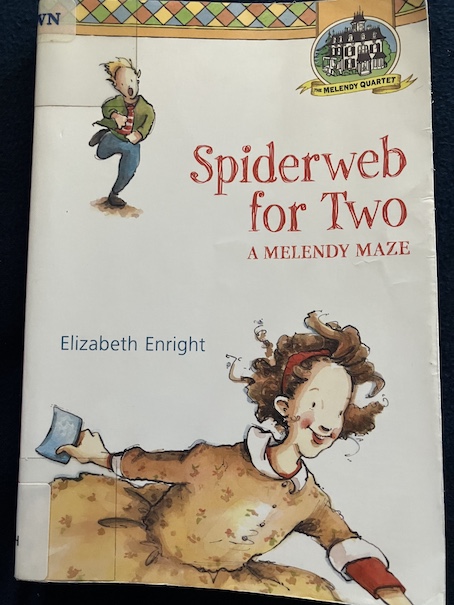
Spiderweb for Two

Randy Melendy is feeling morose because the three older Melendy siblings (Mona, Rush, and their adopted brother Mark) have all gone away to school. Rather than attending the local school as they used to, Rush and Mark have gone away to boarding school for the first time this year, and Mona is attending a school in New York City, where they used to live. Since Mona has started acting professionally on the radio, she’s been commuting back and forth from the family’s house in the country to her acting job in the city. This year, her father decided that, rather than continuing to commute back and forth, it would be best for her to remain in the city and go to school there, staying with a family friend, the wealthy Mrs. Oliphant, who is fond of the children. That leaves only Randy and her younger brother, Oliver, at the big Melendy house in the country, known as the Four-Story Mistake.

Since Randy is accustomed to having her very active siblings around her, always doing something interesting, Randy thinks that life is going to be boring and lonely from now on. She recognizes that the older siblings going away to school is just the first step in growing up and moving away from the family. She knows the next likely steps for them are college and marriage, and they will likely never really live all together again, at least not all the time. The housekeeper, Cuffy, tries to reassure Randy that she still has Oliver for company, but Randy isn’t reassured. Oliver is a few years younger than she is, and she doesn’t think they have much in common or much that they would like to do together. However, the two of them are about to be involved in a special shared adventure.

Cuffy sends Randy and Oliver to get the mail, and they are surprised to find an envelope addressed to the both of them in handwriting they don’t recognize. Inside the envelope is a poem that seems to be some kind of puzzle or riddle – the first clue to a treasure hunt! The mysterious letter writer tells them to keep it a secret, and the clue seems to point to a place where the shadow of a tree falls.

It takes Randy and Oliver a little time to decide which tree is supposed to cast the shadow, and their treasure-hunting is delayed by rain. However, when they dig in the correct spot, they find a tin box. Inside the box, there is a little golden walnut box with another clue. This time, the clue indicates that the next clue is being held by someone who loves them, although they don’t know it. It takes some effort for Randy and Oliver to solve this one. At first, they think it’s probably Cuffy or Willy, and searching their pockets or getting them to reveal what’s in their pockets without the kids explaining why they need to know is tricky. Eventually, it turns out that the next clue is hidden on the collar of Isaac the dog.

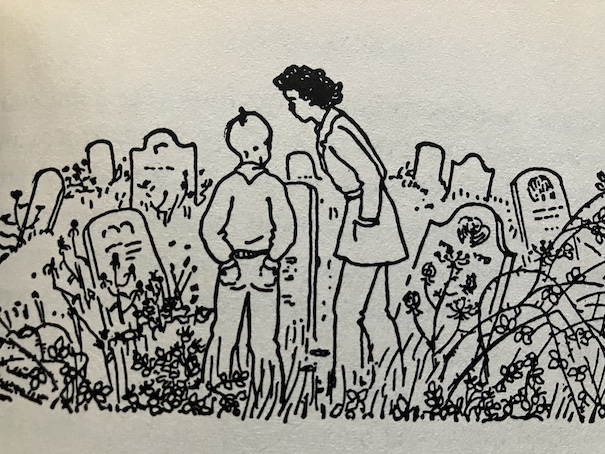
The treasure hunt continues in this way for the whole rest of the school year. The clues are written as poems on blue paper and send them various places around their own house, the houses of people they know, and various other landmarks, including a grave yard! Randy and Oliver figure out that this treasure hunt must be something their older siblings have created to keep them busy and entertained during their absence. The treasure hunt breaks off periodically when their siblings are home from school for Christmas before resuming after Christmas with another letter.

In between solving the riddles of the treasure hunt, Randy and Oliver do get to spend some time with their siblings. Over Christmas, the family decides to go caroling and visiting friends. For Easter, the girls make Easter bonnets, and Rush makes a special one for their horse. Randy and Oliver never discuss the treasure hunt with their siblings, though, because secrecy is part of the game.

Sometimes, Randy and Oliver get into trouble following clues, and sometimes, they accidentally make the hunt tougher than it has to be because they misinterpret where they’re supposed to go next. Eventually, the hunt leads them to a special surprise from an old family friend, and everyone shares in the surprise!

I liked the treasure hunt in this book because I always like books with treasure hunts that have riddles to solve and clues to follow. I’ve read other reviews of this book online, and other people remember this book fondly for the treasure hunt, although it does have a different feel from the other books in the Melendy Quartet, for several reasons. It’s partly because only two of the Melendy siblings are present for most of the story, although the others do appear sometimes and make their presence felt, even when they’re away. Readers will probably figure out before Randy and Oliver that their absent siblings have set up this treasure hunt for them to keep them busy and give them something to think about so they won’t be too lonely without the others.

This is also the only book in the series that doesn’t make references to WWII because it’s the only book in the series written after the war ends. The war wasn’t a main part of the plot of the other books, but it was always present in the other stories, with the children taking part in activities to help the war effort. The war also affected the attitudes of the children, making them want to do their parts for their family as well as their country. This book never mentions it once, and the focus is on how the children are growing up.

Randy knows that seeing her siblings go away to school is just the first step to them all growing up and moving away. When the older siblings come home for Christmas, they’re already showing signs that they’ve been doing more growing up during the few months they’ve been away from home. When Mona comes home for Christmas, she has a new haircut and is wearing lipstick, and Rush’s voice is starting to change. Eventually, Randy and Oliver will do these things, too, but for now, they’re the ones left behind as kids at home. Through their shared adventures with each other without their siblings, they grow closer to each other than they were before. Oliver was too young to join Randy and the older siblings on some of their previous adventures, but he is growing up, too, and he’s now able to join Randy in shared activities. During the course of their treasure hunt, they have adventures in the countryside, like the siblings did in other books.

Like other books in this series, there are also stories within stories. Sometimes, the main story departs from Randy and Oliver when other people tell them stories about exciting or interesting episodes from their own lives. This books has stories about how Cuffy saved a boy from drowning when she was young, their father’s search for a lost dog, and Mrs. Bishop remembering when she first noticed the patterns of snowflakes.

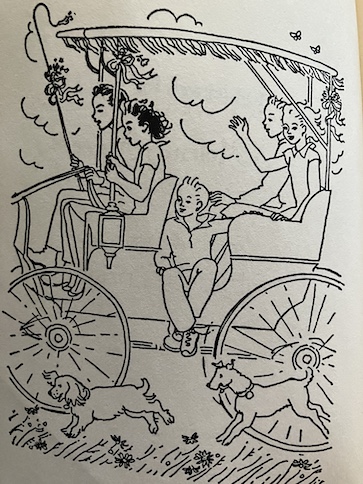
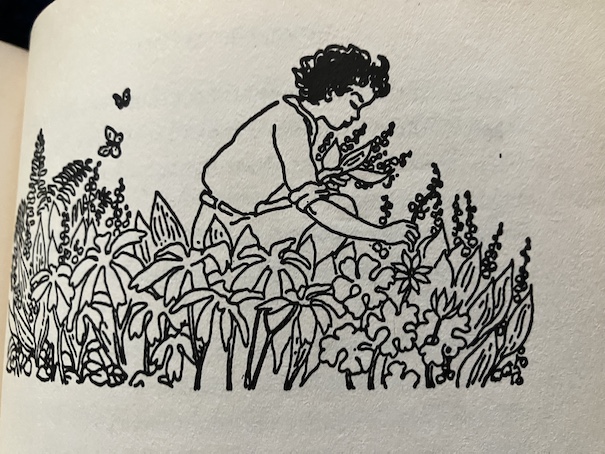
There’s only one full page picture in the book. The other illustrations are smaller ink drawings at the beginnings of chapters.

Danny Dunn and the Homework Machine

Danny Dunn

At the beginning of the book, Danny develops a device that allows him to do his homework and his friend Joe’s homework at the same time by using a system of pulleys and a board that holds two pens at once. (This seems like an unnecessarily complicated device, since he and his friend could accomplish the same thing just by sitting next to each other and talking over their answers as they both write them down at the same time, although Danny says that he plans to build a second pen board so Joe can work on their English homework at the same time as Danny does their math homework.) Danny thinks that it would save even more time if he could find a way to build a robot that will just do the homework for them, but Joe warns him to be careful because things often go wrong with his inventions.

Joe leaves to get more materials for their homework device, and suddenly, Danny is surprised by a tapping at the window, and he sees a girl’s face looking in at him. It’s surprising because Danny is on the second floor of his house. At first, he thinks that this girl who seems to be hovering in the air must be from outer space or something, but it turns out that she’s just an ordinary girl on a ladder.

The girl tells Danny that her name is Irene Miller and that her family just moved in next door. Her father, Dr. Miller, is an astronomer who will be working at Midston University. The reason why Irene is up on a ladder is that she’s built a weather balloon, and now, it’s stuck on the roof of Danny’s house. Unfortunately, she’s just discovered that her ladder isn’t quite long enough to reach the roof. Danny, who loves science, is intrigued by Irene’s weather balloon, and he helps Irene retrieve it by climbing out an attic window and onto the roof.

Danny shows Irene his device for doing homework, but Irene says it doesn’t seem quite honest because it’s basically like copying from someone else. Danny defends his idea, saying it’s not really cheating if the second person actually does know how to do the homework and would give the right answers anyway. He just sees it as a time-saving device. He also says that Professor Bullfinch, an inventor and physicist at the university, says that homework isn’t relevant to the learning kids do in the classroom. Danny’s father is dead, and his mother is Professor Bullfinch’s housekeeper, so Danny and his mother live with him.

Danny is surprised at how much Irene knows about science because he didn’t think girls would be into science. Irene says that there have always been female scientists, like Marie Curie, and she also wants to study physics. Although Danny has learned a lot from Professor Bullfinch, he’s a little intimidated that there are things that Irene knows that he doesn’t.

When Joe returns, he isn’t enthusiastic that Danny has made friends with a girl. When Joe is derisive about women and girls, Danny even defends Irene and how much she knows. Irene confesses to Danny that getting her weather balloon stuck on the roof wasn’t an accident. Her mother had already talked to Danny’s mother, so she knew Danny was interested in science. She purposely got the balloon stuck on the roof to get his attention and give them a reason for meeting. Joe uses that as part of his assertion that women are trouble.
Irene joins Danny and Joe’s class at school, and she starts making some other friends there. There is one boy in class, Eddie, who seems to have a crush on Irene. She’s a little flattered that he thinks she’s pretty, but she begins to feel uncomfortable with his attention because he keeps staring at her. Danny explains to Irene that people call Eddie “Snitcher” because he’s always telling on somebody for things they do, seemingly out of spite.

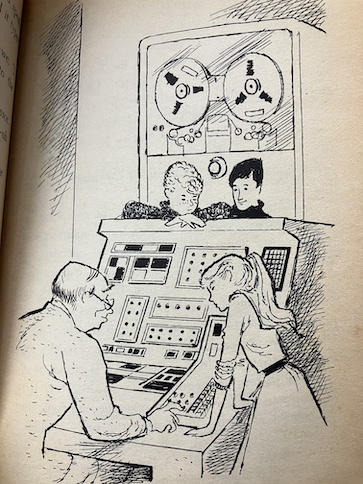
When Danny invites Irene to come to his house for cookies after school, Professor Bullfinch surprises them by telling them that he’s going on a business trip, and while he’s gone, he’s going to let Danny take care of his new computer. The computer is called Miniac, which is short for “miniature automatic computer.” It’s much smaller than most computers of its time. During the 1950s, computers could take up an entire room. The Miniac is about the side of a large sideboard.

Joe asks Professor Bullfinch how the Minaic works, and he explains that they can ask it questions through a microphone. The computer prints out answers with an electric typewriter. Irene asks if they can ask it a question to see how it works, and she asks the Miniac a question from their homework. Joe is amazed at how quickly the computer answers the question, and Professor Bullfinch explain a little more about how computer work, with a memory unit that stores information. He says that facts are stored on magnetic tape. (This was true at the time this book was written, although 21st century computers are constructed differently, in ways that allow them to be made much smaller than 1950s computers. What he says next about the nature of computer intelligence is still true, although I’m going to have some things to say about AI in my reaction section.)

Irene marvels at how the computer seems almost like something from science fiction (for her time) and how amazing it is to have a device that can give you the answers to everything. Professor Bullfinch explains to her that’s not quite true, and that there’s something more amazing: the human mind.

It is only a kind of supertool. Everything in this machine is inside the human head, in the much smaller space of the human brain. Just think of it — all the hundreds of thousands of switches, core memory planes, miles of wire, tubes — all that’s in that big case and in this console — are all huge and awkward compared to the delicate, tiny cells of the human brain which is capable of doing as much as, or more than, the best of these machines. It’s the human brain which can produce a mechanical brain like this one. … The computer can reason … It can do sums and give information and draw logical conclusions, but it can’t create anything. It could give you all the words that rhyme with moon, for instance, but it couldn’t put them together into a poem. … It’s a wonderful, complex tool, but it has no mind. It doesn’t know it exists.”

Danny’s assignment while the professor is away is to feed data to the computer. The professor has laid out the information and code tables that Danny will need, although the professor says that Danny can add some extra information if he comes across something new and interesting in Scientific American or one of the other science magazines he reads. Irene asks if she can help with this task because she finds it interesting, and the professor gives her permission. Before he leaves, he warns Danny not to get too carry away with his enthusiasm. He knows that Danny likes to experiment, and sometimes, he gets carried away when he has an idea, without stopping to think first. The computer is a tool, not a toy, and the professor wants him to treat it as such.

However, a few days after Professor Bullfinch leaves, Irene has a question about their homework that Danny and Joe can’t answer because they also don’t really understand the subject. Then, Danny gets the idea of asking the computer about it. Inspired by how easily the computer answers the question, Danny suggests to the others that they use the professor’s computer as a “homework machine.” After all, it can answer questions and supply them with information, and Danny thinks he could even program it to write short compositions. Irene is a bit dubious about it, but Danny amends his idea to say that the computer would “help” them with their homework.

The book is available to borrow and read for free online through Internet Archive (multiple copies).

One of the interesting things about reading a vintage book like this that focuses on the technology of its time is seeing how things have changed and how people’s perceptions of technology have changed. The kids in this book are amazed by the professor’s computer, which is cutting edge for their time, although 21st century children grow up accustomed to computers in their homes that they are allowed to use. Modern children do use computers as toys, playing computer games, and they are also tools for doing homework.

However, even though things have greatly changed in the decades since this book was written, some of the issues surrounding the ethical use of technology are still concerns in the modern world. This story brings up the issue of how much a reliance on technology to do homework borders on cheating and keeps students from gaining the skills they’re supposed to use. This has become a major issue in modern education in the 2020s, with the rise of AI technology. In the story, Professor Bullfinch says that a computer cannot write poetry, which might get a smirk from modern readers because AI has achieved compositional writing skills. What I’d like to point out, though, is that there are still limits on that. As of this writing, the ideal way to use AI in writing is as a starting point for writing and research but not as a replacement for human writers or the human mind to edit and control the content of the writing. AI also uses human writing as the basis for its compositions, not writing everything from scratch:

“… an AI writing tool will gather information based on what other people have said in response to a similar prompt. The bot will search the internet for information about what you’ve asked it to write, then compile that information into a response. While this used to come back as clunky and robotic, the algorithms and programming for AI writers have become much more advanced and can write human-like responses. … AI writers are, so far, limited in their abilities to create emotional and engaging content. Humans, by nature, are storytellers. We have been since the beginning. Robots, however, are not. They are limited by what they’re programmed to do, and AI bots are programmed to gather information and make an educated guess about what you want to hear.”

(AI Writing: What Is It And How Does It Work?, July 2023)

Computers, even those in the 21st century, which are both smaller and more efficient than the ones from the 1950s, still rely on input from human sources to do anything. AI work is not original, it only builds on what humans have given it to use. In spite of the word “intelligence” in the name “artificial intelligence”, it still “has no mind“, as Professor Bullfinch put it. It’s literally artificially intelligent. It knows nothing independently of human beings, and one of the current problems with AI is that, although it can write convincingly and sound almost human, it not only does so only because it’s basing its writing on human writing that has been supplied to it but also, it has no idea whether or not anything it says is true or not. As the Microsoft article points out, it’s only using predictive technology to guess at what you want to hear and just tell you what you want to hear. It still takes a human being to reason out how much sense AI writing actually makes or whether or not it’s accurate.

One of the current problems with AI in the 2020s is AI hallucinations. Sometimes, AI seems to make things up that aren’t true at all because the way it processes information sometimes produces errors, and by itself, AI has no way of knowing when this has occurred. It has no understanding of the subject its writing about. It’s only attempting to predict and supply what it thinks the human who supplied the prompt wants it to supply.

“AI hallucination is a phenomenon wherein a large language model (LLM)—often a generative AI chatbot or computer vision tool—perceives patterns or objects that are nonexistent or imperceptible to human observers, creating outputs that are nonsensical or altogether inaccurate.

Generally, if a user makes a request of a generative AI tool, they desire an output that appropriately addresses the prompt (that is, a correct answer to a question). However, sometimes AI algorithms produce outputs that are not based on training data, are incorrectly decoded by the transformer or do not follow any identifiable pattern. In other words, it “hallucinates” the response.”

There are currently problems with students relying too much on AI to do both their thinking and writing for them, and even professionals who rely too much on AI tools to get through their work faster sometimes fail to notice when the AI writing says things that don’t make sense or are just blatantly untrue. The AI doesn’t know what’s true or not, it’s just telling you what it thinks you want to hear, based on information given to it, put together, and rearranged in its logic programming. Because it doesn’t actually understand the information fed into it, it has no idea when it gets the story wrong. Computers are faster at processing data than a human, but actual understanding of information is still entirely a human quality. A computer cannot understand anything on behalf of a human mind because it “has no mind” of its own to do the understanding.

There have been cases where professional lawyers who have relied on AI writing instead of doing their writing themselves have been sanctioned when AI hallucinations included information that was not only inaccurate but actually fictitious, citing court cases that never actually existed. The lawyers who received disciplinary action about this did not proofread the writing produced by AI, just trusting it to do all of their writing and thinking for them. Yet, the errors jumped out immediately when actual humans read the writing.

The more complex the writing is, the more the limitations of AI become apparent. AI can sound convincing in a short article (especially if you’re not doing any fact checking to see whether it’s talking about something real or not), but it isn’t always consistent or coherent in longer writing. The drama department of one of the local colleges where I lived put on a performance of a play written entirely by AI as a kind of thought experiment, and the results were hilarious. It was a mystery play, and the script was confusingly written. The AI had trouble keeping track of which characters were currently on stage and which were not, so actors who were not actually present in particular scenes had dialogue. At one point, when the detective was questioning everybody, he even talked to the person who was murdered, and the corpse responded. The play didn’t make sense because the AI doing the writing didn’t really understand the story it was telling. It just told a story in the pattern that was requested of it. It was, technically, a complete play, and if you gave it a cursory glance, it would have looked like a fully written play. It’s just that it had absent people and dead people talking. Perhaps at some point in the future, AI can do its own proofreading and learn to catch these types of problems, but for it to do so with the accuracy of an actual human, it would have to have a human level of understanding about the world and the subject matter it writes about. That is, it would have to have real intelligence, not just artificial intelligence.

This video from Wired on YouTube features AI and machine learning professor Graham Morehead from Gonzaga University, answering common questions about the nature of AI. In the video, he explains some of the differences between how AI “thinks” and how a human brain thinks, which help explain why AI can do some things that a human being would find pretty stupid. AI often thinks in terms of two-dimensional images as opposed to the three-dimensional world we live in as humans, and it doesn’t always understand the consequences of actions because, to AI, everything comes down to simple numbers and data as opposed to a physical world where actions have context and consequences.

Overall, I think this story did a good job of evaluating the differences between the human brain and the electronic brain at a point in history where the technology was relatively new and evolving. It also did a surprisingly good job of anticipating some of the developments and problems associated with the use of artificial intelligence, although the form it takes in this story isn’t quite what we’ve seen in the 21st century, and the kids in this story encounter an issue that modern students attempting to use AI to do their homework aren’t likely to encounter.

At the end of this story (spoilers), Danny and his friends come to realize, to their surprise, that they’ve actually been doing more homework than their classmates in order to make their wonderful homework machine function. They had to teach the machine the subjects they’re studying in order to have it do the assignments because the machine doesn’t innately understand the subject matter. The kids have to supply the knowledge base for the machine learning to function, and that ultimately takes more work and study for them than simply understanding the subjects in their own minds and just doing the assignments themselves. Danny’s mother and his teacher allow the kids to continue using the machine once Danny’s mother explains to the teacher how the process works so the kids can experience how a seeming shortcut can actually take more effort.

This is a little different from the 21st century AI tools, where someone else has already done the basic programming work, and students don’t have to actually understand the subjects themselves to use the AI tools. Of course, if the student doesn’t understand the subject matter of the assignment, there’s less chance that they’ll even notice when the AI produces an AI hallucination and says something that isn’t true or doesn’t make sense. There is an incident in the book where the computer messes up and outputs something that makes no sense, and the kids have to figure out why it did that.

The kids also consider the issue of whether or not using the machine to do their homework is cheating or not. Irene has serious reservations about it at first, and their teacher and some classmates think it gives them an unfair advantage when they find out. Danny, on the other hand, defends it, thinking of the computer as just a time-saving tool, like a typewriter, although the computer is doing more for them than a typewriter does. Danny is only focused on the idea of saving time so he can do things other than homework because he’s confident in his own ability to understand the academic subjects and thinks that practicing his skills or proving his knowledge through homework is a waste of his time.

The only reason why the teacher agrees to let them continue using the computer is that Danny’s mother figures out before he does how much extra work he and his friends are doing to teach the computer how to do their homework. This becomes obvious after the teacher gives them a special assignment, beyond what was covered in class, so Danny and his friends have to work extra hard and spend far more time to understand the material themselves and then teach the computer to understand it well enough to do the work. The first assignments weren’t so hard for Danny and his friends to teach the computer how to complete because the kids are at the top of their class, and they do know the material. However, the more difficult the assignments get, and the less familiar they are with the subject matter, the harder it gets to program the computer to handle the assignments. This exposes the flaws in their system and highlights the need for them to understand the material themselves rather than depend on the computer to do their work for them or even necessarily do it more efficiently. The great use of computers is to do tasks more efficiently, but that depends on the task and whether or not the computer has accurate instructions and an efficient knowledge base to draw on to do it. Building the programming and the knowledge base takes the work of a human mind that knows what it’s doing and is willing to put in the effort to do it correctly and to troubleshoot errors.

In this book, we get a glimpse of school in the 1950s. Something that stood out to me was when the teacher mentions that the class sizes have grown considerably in recent years, meaning that she has less time to work with individual students than she used to. This was a real problem in the 1950s, due to the effects of the Baby Boom. This generation of children was much larger than previous generations, so there were shortages of teachers and class space, and teachers and students did complain that students got less individual attention. (This documentary on YouTube shows some of the overcrowding.)

The focus on science and technology in the Danny Dunn stories is also important to the 1950s because that was the beginning of the era of the Cold War technology race, exemplified by the Space Race. The capitalistic United States and its allies competed against the USSR and its allies for world supremacy following WWII, and one of the ways they did that was by trying to develop superior technology and technological skills. This need to compete in the areas of science and technology led to changes in the US public education system, emphasizing the skills that we would call “STEM” skills today (science, technology, engineering, and mathematics). Echoes of those changes still influence the way we think about education in the 21st century.

This technological and scientific focus also influenced children’s entertainment, as adults tried to encourage children to take an interest in science and technology. The Danny Dunn series is one example of this, showing children who are interested in science and new inventions and portraying them as fun and exciting. Another example was the educational tv show Watch Mr. Wizard, which was being broadcast at the time the Danny Dunn books were written and published. Watch Mr. Wizard featured the title character performing experiments in his laboratory and demonstrating scientific concepts to child visitors. It was very popular, and in the 1950s, there were science clubs for children based around this show. This show also helped inspired new generations of shows with a similar premise, such as Bill Nye, the Science Guy, which was popular when I was a kid.

The Little Fir Tree

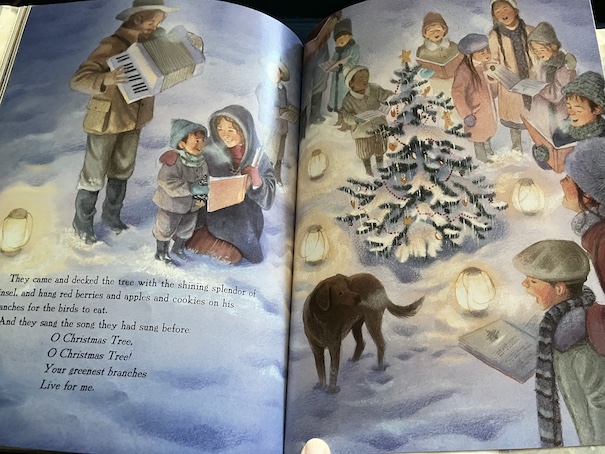
A little fir tree feels lonely among the large trees in the forest, but something happens that changes his life forever – he is chosen to be a living Christmas tree for a little boy!

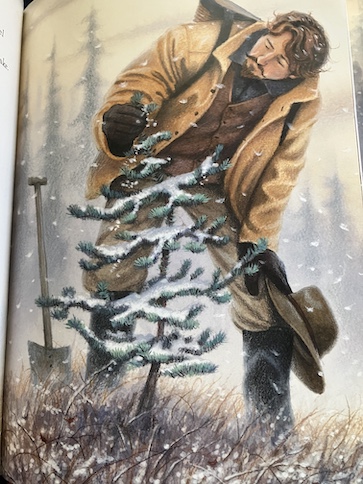
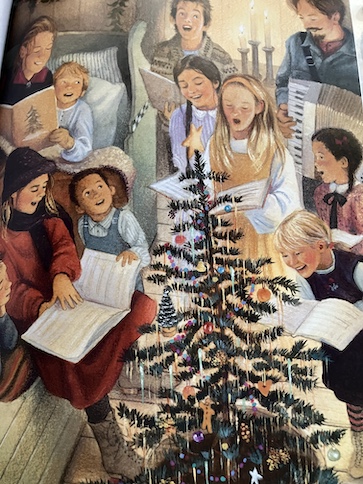
One winter, the boy’s father carefully digs up the tree and brings it home to his young son, who cannot walk because of a lame leg. The boy has been wanting to see the trees in the forest, but since he can’t go to the forest himself, his father has brought a free to him. The little fir tree loves being decorated, and the next evening, guests come and gather around him, singing Christmas carols.

In the springtime, the boy’s father takes the tree back to the forest, where he found it, and he plants the tree again so it will continue to grow. However, the following winter, the boy’s father returns to dig up the tree again and take it back to the boy for Christmas.

The little fir tree loves this ritual of visiting the boy and his family and being their Christmas tree every winter, but the next winter after that, the man doesn’t come to dig him up. The little tree is disappointed and lonely, but he is in for a surprise. This winter, the boy and his family come to see him in the forest!

The book is available to borrow and read for free online through Internet Archive, although that copy has different illustrations.

I mainly know Margaret Wise Brown for Goodnight Moon and The Runaway Bunny, but I found this Christmas story charming. I don’t like Christmas stories from the point of view of trees that are cut down, like the Hans Christian Andersen story, The Fir-Tree, which has a really depressing ending. I like it that this family in this book keeps the tree alive, returning it to the forest every year to continue growing. Things change for both the boy and the tree over the years, as they both continue to grow, but they change for the better, and they continue to be fond of each other and a source of inspiration for each other.

When I was a kid, our elementary school had a large tree on a hill on the kindergarten playground, and the story behind it was that it was once a living Christmas tree from the very first kindergarten class at the school. That tree is still there and alive today, about 50 years after it was first planted there and more than 30 years after I used to play under it. I like to imagine that it will be true of the little fir tree, too, that it will continue growing over the years.

Earlier versions of this book had different illustrations, but personally, I love the illustrations in this printing because they’re detailed and realistic. The version on Internet Archive has illustrations by Barbara Cooney, who is known for Roxaboxen and Miss Rumphius. Cooney’s illustrations are also good, but not as realistic as Larmarche’s, and they’re in a limited color range.

One other difference between versions of the book is that the earlier version also included the musical notes for the carols that the children sing and additional songs that aren’t included in the later version of the book. I enjoy books that include actual music and lyrics, like books that include recipes, because they are fun extras and add an extra dimension to the story by providing an accompanying activity. Although I like the more detailed and realistic illustrations of newer edition of this book, I do prefer the actual music and wider range of songs from the older version.

The Silver Nutmeg

It’s late summer, and it’s very hot. The well is dry, so Anna Lavinia has to go to the spring whenever they need water, and the paw-paws are falling off the trees even though they’re not ripe yet. Anna Lavinia is spending most of her time outside, singing songs from her favorite book Songs from Nowhere, because her mother is making the green paw-paws into preserves, and it’s a smelly process. Nothing seems like it’s going right, and even Anna Lavinia’s animal friends are grumpy because of the heat.

Anna Lavinia looks at Dew Pond Hill through the hole that her father recently made in the garden wall. He made it because he’s been thinking that Anna Lavinia has been too cooped up, and he wants to “broaden the horizon for her” and give her a new “point of view” in a very literal sense. Anna Lavinia thinks that she already has many points of views on many issues, but she does like the new vista that her father has opened up for her.

Things seem to improve on this very hot day when Uncle Jeffrey comes to visit. Uncle Jeffrey deals in spices, and he brings herbs and spices with him to replenish the family’s supply. Uncle Jeffrey also likes to collect samples of flowers and leaves, which he keeps pressed in a book with labels of their names (if he knows them) and the places where he found them. This time, Anna Lavinia notices a special purple flower in his book that she has never noticed before. There are no notes about it in the book, but she is sure that it is something special.

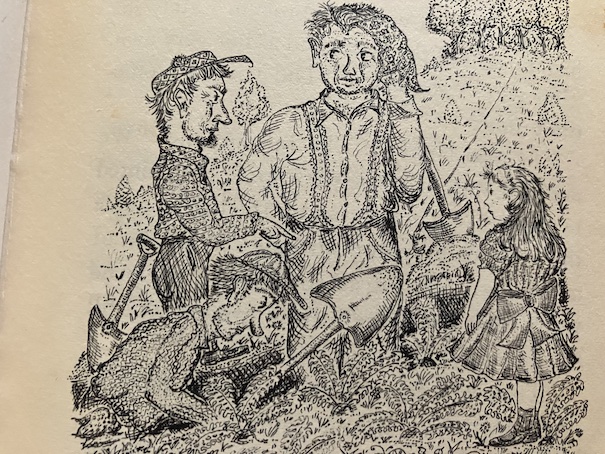
Then, she notices three men digging for something by the dew pond on the hill and decides to go see what they’re doing. Uncle Jeffrey warns her against going to the dew pond because he says that dew ponds are always bewitched. However, her mother thinks that’s nonsense and sees nothing wrong with Anna Lavinia going to look at the dew pond. When Anna Lavinia talks to the diggers, they joke with her at first that they’re digging a hole to go to exotic places on the other side of the world, but then, they admit that it’s just a ditch for water. They want to drain the dew pond! Anna Lavinia is upset about that, and they explain that they need the water to grow their parsnips. They say that this won’t be the end of the dew pond because they plan to fill in the ditch, and the pond will eventually fill up again. However, they really need the water now.

Anna Lavinia goes to look at the dew pond and enjoy it while she can, thinking how awful it is that it’s going to be drained just when her father created a new view of it for her. While she thinks about it, she tosses a few acorns in the water. Then, suddenly, one of them jumps back out of the water at her! Strangely, the acorn also seems completely dry. Curious, Anna Lavinia tosses in another acorn. This time, when it flies back at her, it has a note pinned to it that says, “Please don’t throw acorns at me.” When Anna Lavinia looks into the water, she doesn’t see her own face reflected back at her. Instead, she sees a blond boy in a green sweater. She looks around, but she doesn’t see anyone else by the dew pond but herself. When she calls out to the boy to ask where he is, he says that he’s on the other side of the pond – the underside!

The boy says his name is Tobias, and he’s playing with a boat on the pond. Anna Lavinia asks if he can come up to her through the pond, and he says he could but he promised his mother that he wouldn’t. However, she can come through the pond to him, if she likes. He says that, for her to get through, the water must be completely still, no ripples, and that she must jump in as hard as she can. Anna Lavinia asks what will happen if she doesn’t do it right, and Toby tells her that she’d probably just get all wet and get a scolding from her mother. Anna Lavinia debates about it because Toby is upside down compared to her, and she’s not sure how gravity will work on the underside of the pond. Toby says that the right side up depends on your point of view and there is no gravity where he is. He shows her a net in a tree where she can jump and teases her about being afraid. Deciding that it’s a small risk, Anna Lavinia jumps in along with her pet lizard, which she calls a thobby.

It works just like Toby said it would, and Anna Lavinia lands safely in the net. Once in Toby’s land, she experiences a strange sensation that they call “the tingle.” (It’s not a dirty thing, although I did raise an eyebrow at first.) This sensation is a kind of force that Toby says flows through the ground in his land, and it’s what keeps objects from just floating around all the time in the absence of gravity. If you lift an object off the ground, it will float around in the air because there is no gravity, but once it’s in contact with the ground or in contact with another object that’s in contact with the ground, it will stay where it is, held in place by this force, until someone or something else causes it to move. Toby describes it as being like a kind of magnetism.

With Toby’s help, Anna Lavinia experiments with this lack of gravity. Toby explains that people can’t fly in his land, although birds can fly through the air with their wings. People do lose contact with the ground if they skip or jump, but it’s usually not a big deal because they can sort of maneuver themselves in the air until they can get back down to the ground or grab hold of something that’s grounded. It’s impossible to fall.

All of Toby’s world is the underside of our world, and the ground they’re walking on is the inside of the ball that is the Earth. Because it’s the inside of the Earth, it’s dimmer than the outside world. The light that comes through comes through bodies of quiet water, like the dew pond. Toby says that, while people from this inside world can go to the surface area through any still pond, they typically don’t. For one thing, they find it difficult to deal with the gravity of the outside world, and it will turn them bandy-legged if they stay too long. For another, people who left used to be banished by their own people if they returned, so those who have gone to the outside world have often stayed. Toby’s Aunt Cornelia still misses the man she had planned to marry. After the two of them quarreled about his desire to see the world, he vanished, and Aunt Cornelia thinks that he probably went to the outside world, never to return. Things have changed now so that people who left are now allowed to return, so Aunt Cornelia hopes maybe her sweetheart will come back, but Toby doesn’t think there’s much hope of that.

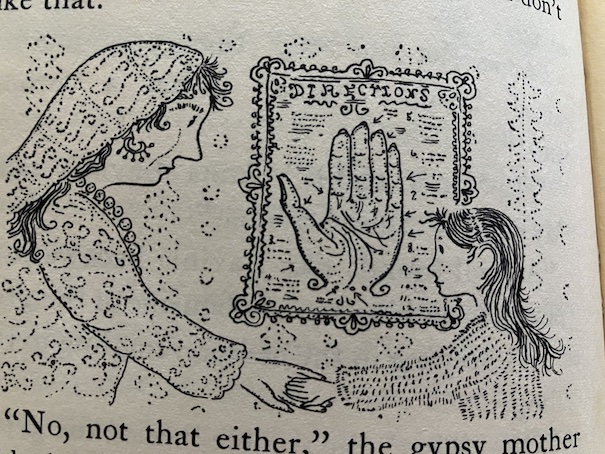
When the children hear a baby crying, Anna Lavinia insists on finding the baby and seeing why nobody seems to be tending to him. It turns out that the donkey pulling a gypsy wagon has pulled the wagon over a cliff, which isn’t as dire as it sounds, since nothing in this land can fall. However, the wagon is now stuck sideways on the side of a cliff, and things from the wagon have been tossed around and are hanging in mid-air, including the baby in his basket. Toby and Anna Lavinia rescue the baby, and his grateful mother offers them a reward for their help. She gives Toby a tambourine, and she tells Anna Lavinia’s fortune. The fortune comes out strangely backward because Anna Lavinia is from the outside world, but from what they gypsy sees, it looks like Anna Lavinia is going to do something to make an old man happy.

Anna Lavinia has a lovely visit with Toby and Aunt Cornelia, but then, she suddenly remembers that the men are going to drain the dew pond today! By the time she and Toby return to the dew pond, it’s dry! With the pond dry on her side, Anna Lavinia can’t get home … unless still waters run deep.

This book is the sequel to an earlier book called Beyond the Pawpaw Trees, which first introduced the character of Anna Lavinia.

The book is sweet and would probably appeal to fans of Cottagecore. The characters sing songs and recite rhymes throughout the story, which might appeal to young children. I was a little divided over whether I liked having the story interrupted by the songs and rhymes, but the songs and rhymes really are a part of the story and add to its charm. It’s a little like Alice’s Adventures in Wonderland, where a girl goes to a magical land, where things don’t work as they do in the ordinary world.

In Alice’s Adventures in Wonderland, there’s a lot of random nonsense, and that’s fun, but I liked that this particular story uses a kind of pseudo-scientific focus on magnetism and gravity. Neither the magnetism nor gravity works the way it does in the real world, and it adds a kind of science-fiction twist to the fantasy world in the story. Even with this almost science-fiction twist, we still have that old-fashioned, cottagecore style fantasy atmosphere that’s charming and whimsical rather than technical. I haven’t read the first book in this series, but I understand that it uses similar concepts. Nothing really stressful happens in the story, and it would make a nice bedtime story.

My one complaint is that there are some stereotypical gypsies and comments about gypsies in the book. They are always referred to as “gypsies” and not Romany or any other name, and for some reason, they make a point at the beginning of the story that gypsies always go barefoot. I’m not sure what the point to that was except to establish that gypsies have eccentric habits. It’s not unusual for children’s books from the mid-20th century to have stereotypical gypsies as characters, although it might rub people from the 21st century the wrong way.

We Help Mommy

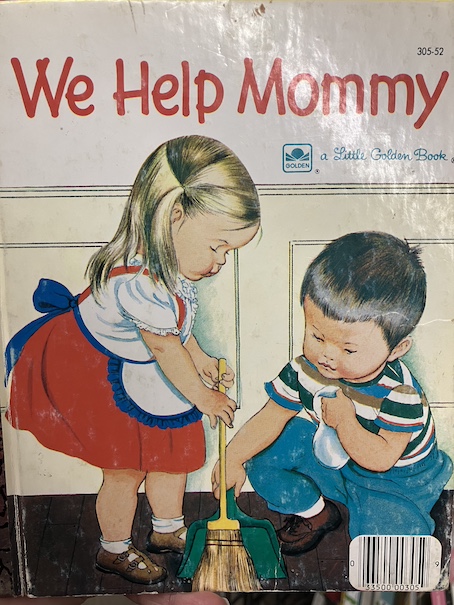
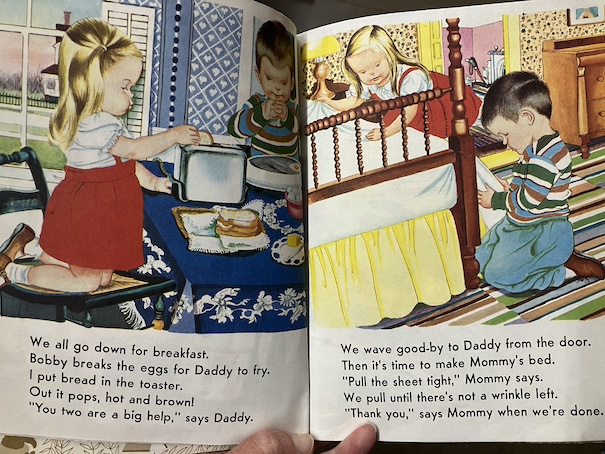
In this classic Little Golden Book, two small children help their mother with various household chores throughout the day. There is a note in the beginning of the book that says that the children in the story are based on the author’s own children, Martha and Bobby, but the children shown in the pictures are based on two other children, who were asked to pose by the illustrator.

When the two little children in the story get up in the morning, the first thing they do is change from their pajamas into their clothes for the day. Sometimes, they need a little help from their mother because they’re still little. Then, they go downstairs and start making breakfast.

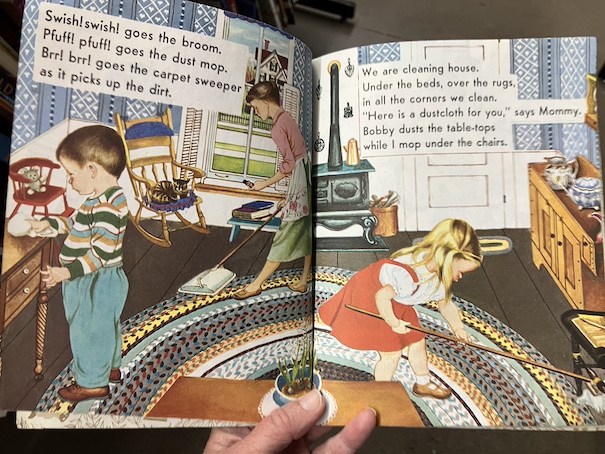
After their father leaves for work, they help make their parents’ bed. Then, they dust furniture and sweep the floors and put their clothes in the washing machine. Martha hangs her doll’s clothes up on a small clothesline, while her mother hangs up the family’s clothes on the high one. The children go to play with some friends next door.

Sometimes, the children go to the supermarket with their mother to buy groceries. When they get home, they put the groceries away and make lunch.

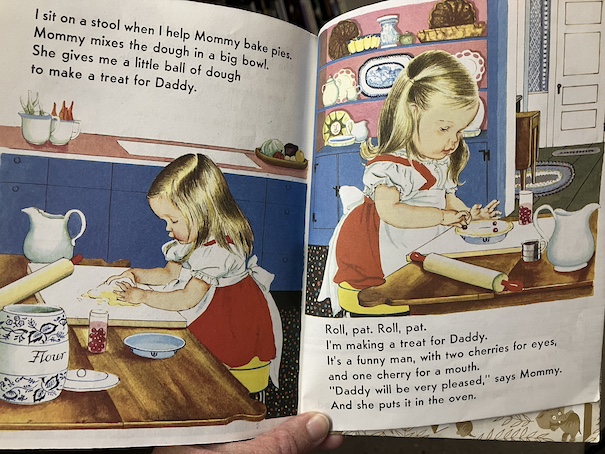
After lunch, they wash their dishes, and Martha makes a special little pie for their father for dessert.

At the end of the day, the children put away their toys. Their father comes to tuck them in when it’s time for bed, and he thanks Martha for the pie and both of the children for helping their parents.

The book is available to borrow and read for free online through Internet Archive.

I remember reading this book with my mother when I was a little kid in the 1980s. It’s just a cute, simple book for young children about helping their mother with daily chores. We still sometimes quote the line from this book, “Napkins for us all” when we set the table because, for some reason, that stuck in all of our minds and just got repeated for years.

At the time, I was too little to think about what year the story is from, and there was nothing in the book that was too seriously out of line with my experiences as a little kid. You can tell by the pictures that it’s from an earlier decade because of the family’s clothes and hair styles (particularly the parents), and the carpet sweeper the mother uses is older than I am. However, I have to admit that my parents still had one of those types of carpet sweepers in the 1980s, so I knew what it was when I saw it in the picture. They hang their clothes up to dry instead of using a clothes drier, but even that isn’t too far out of line because, even today, some people prefer to dry their clothes on a clothesline. In fact, there are 21st century people who consider it more environmentally friendly. The style of the clothesline they use is very mid-20th century, but my grandmother had one like that in the 1980s, too, so I had seen it before. Some of the things I was familiar with as a young child were hold-overs from previous decades, just like this book. Modern children might not be as familiar with some of these things, but this book is such a simple story about small children helping with daily chores that I think even 21st century children would understand it, even if it looks a little old-fashioned in some respects.

When I was a kid, I missed the part at the very beginning of the book about the children in the story being based on the author’s children, but I found it interesting when I looked at the book again as an adult. There is another Little Golden Book called We Help Daddy, which we also had when we were little kids. The two books read a little like companion books and were illustrated by the same illustrator, although We Help Daddy was written by a different author and features a different brother and sister. In We Help Mommy, the children mostly help their mother with chores around the house and buying and preparing food. In We Help Daddy, two kids help their father with yard chores, which somewhat shows how people in the mid-20th century typically expected domestic chores to be divided: the mother doing work inside the house and related to cooking, while the father mostly tends to chores outside the house. I don’t think this is a problem because, when the two books are taken together, both parents are still helping out and spending time with the children, but I thought it was interesting to notice that dynamic as an adult.

One of the things the mother and children buy at the grocery store in this book is a picture book. I didn’t understand that part as a little kid, but as an adult who studies and collects children’s books, I know that this is a reference to Little Golden Books because they were often sold at grocery stores, making them accessible to many families as inexpensive books for young children, sold where families would normally shop anyway. In fact, if you look closely at the cover of the Little Golden Book that the boy is taking out of the shopping cart, you can tell that it’s specifically Kittens: Three Complete Stories.

Harry the Dirty Dog

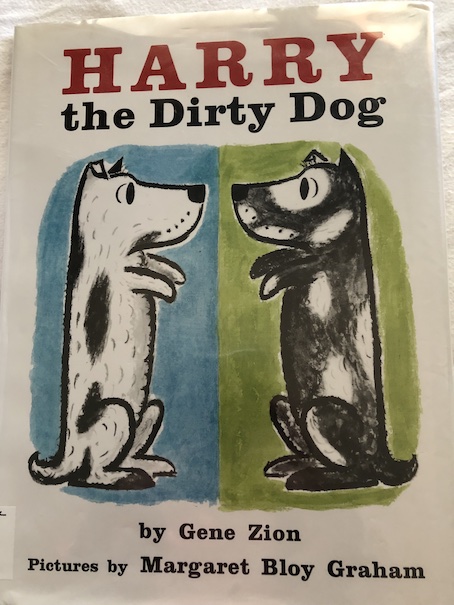
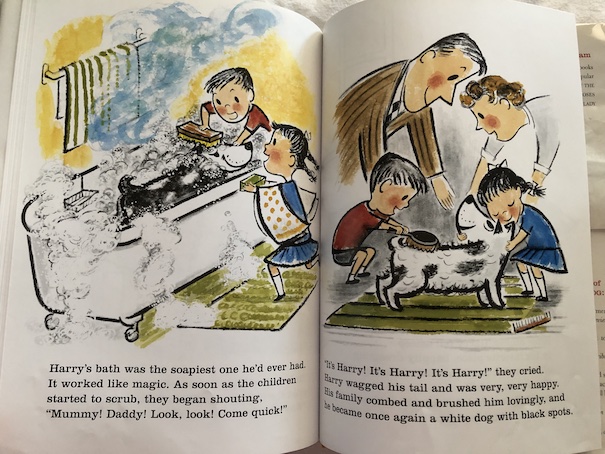
Harry the Dirty Dog by Gene Zion, pictures by Margaret Bloy Graham, 1956.

Harry, like other dogs, hates baths! One day, when he finds out that his family is about to give him a bath, he decides to steal the scrub brush! He buries the scrubbing brush in the yard and runs off into the city to have some fun and get good and dirty!

Normally, Harry is a white dog with black spots, but after a day playing with other dogs and running through construction areas in town, he’s so dirty that he looks like a black dog with white spots.

Eventually, he gets tired and hungry and misses his family, so he goes home. However, he has trouble getting his family to recognize him because he’s so dirty. Even when he does his usual tricks for them, they still don’t think he looks like their Harry.

At first, Harry fears that he’s lost his family because they don’t know who he is. Then, he realizes that what he really needs is the scrub brush and a good bath! He digs up the scrub brush again and manages to persuade his family to give him a bath.

Once he’s clean, his family recognizes him. Harry sees the benefits of getting a bath, but he still doesn’t really like them, and he still enjoys the thought of getting nice and dirty again.

The book is available to borrow and read for free online through Internet Archive (multiple copies).

Dogs in real life often don’t like baths, and this whimsical picture book is about a dog discovering the benefits of a bath. When I was a little kid and I first saw this book, I was really worried that Harry would lose his family because they didn’t recognize him, but really, the family would have to be pretty dense for thinking that this dog, which looks like the same breed/mix as theirs and acts like theirs and does all the tricks their dog does but is just covered in dirt, must be a completely different dog. The story is just meant to be humorous, and it’s questionable in the end whether any lessons are learned. Yes, Harry now sees that getting a bath and being clean help his family to recognize him, but he still dreams about getting dirty, and he’s hiding the scrub brush under his bed. My dog also hates baths and fears the groomer, but I have assured her that I would still know her anywhere!

Cinderella

Cinderella translated and illustrated by Marcia Brown, 1954.

This is a retelling of the classic Cinderella story, translated from the French Perrault version by Marcia Brown, the author and illustrator of many other classic fairy tales and folktales for children.

As in the classic story, Cinderella is a girl with a cruel stepmother and a pair of spoiled stepsisters, who force her to do all of the work of the house and make her wear rags. Her father never stands up for her because he is too attached to his second wife to oppose her.

When it is announced that the king’s son is holding a ball and that the stepsisters are invited, they hurry to get ready, and they make Cinderella help them. Of course, nobody thinks that Cinderella should go to the ball, and the stepsisters laugh and tease her about it.

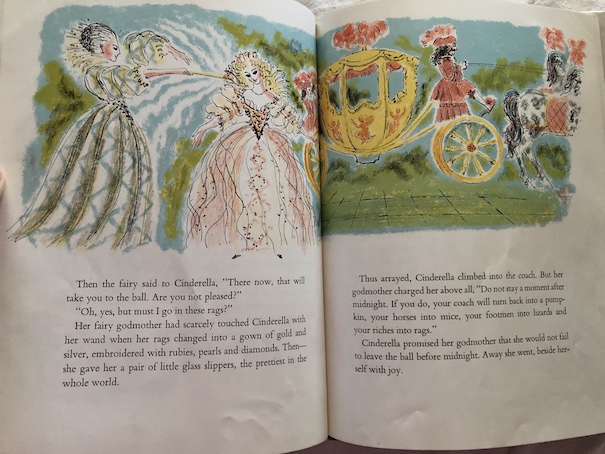
When they head off to the ball, Cinderella watches them go and cries. Then, her fairy godmother appears and tells her that she is going to help her. The fairy godmother turns a pumpkin into a fine coach, mice into horses, and a rat into a coachman. She gives Cinderella a beautiful dress to wear and a lovely pair of glass slippers. However, she warns Cinderella not to stay at the ball past midnight, when her magic spells will end, and everything will become what it was before.

At the ball, Cinderella charms the prince and has a wonderful time. She is even nice to her stepsisters when she encounters them. They don’t recognize her in her new finery. Everyone keeps wondering who the girl who appears to be a beautiful princess could be. Shortly before midnight, she leaves the ball abruptly and returns home before her stepsisters do. She tells her godmother everything that happened and that the prince invited her to a ball to be held on the next night.

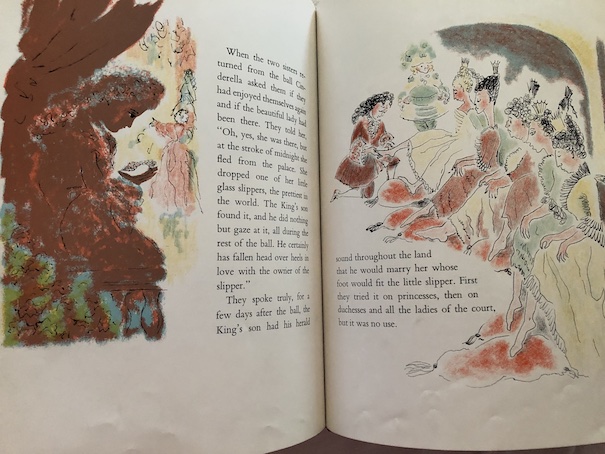
The next ball is also wonderful, but Cinderella loses track of the time and runs away suddenly when the clock begins to strike midnight. In her haste to get away, she accidentally leaves one of her glass slippers behind. The prince finds it and decides to use it to find this beautiful, mysterious girl he has already come to love.

Many young ladies try on the shoe, including Cinderella’s stepsisters, hoping that it will fit them. However, it will only fit Cinderella, and only Cinderella has the other slipper in the pair.

This is a Caldecott Medal Book. It’s available to borrow and read for free online through Internet Archive.

My Reaction

The story follows the classic Perrault version of the Cinderella story. There are many variations of this fairy tale, but this one is often the best-known. In some versions of the story, Cinderella’s father is also dead, which is why she is left at the mercy of her stepmother and stepsisters, but in this one, he is still alive and is just unconcerned about Cinderella’s treatment. He is never shown in any of the pictures and plays no role in the story.

I enjoyed the illustrations in this book. They’re an unusual style. Objects and people in the pictures are only party defined by pen lines. Many of their edges are more softly defined by color.