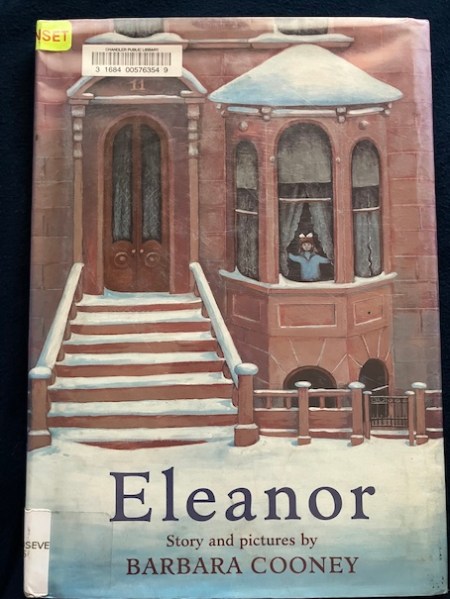
An Ellis Island Christmas

A six-year-old girl, Krysia Petrowski, knows that her family is preparing to leave Poland for the United States. Her father went ahead to America to establish a home for the rest of the family, and she knows that she, her mother, and her brothers will soon follow him. She doesn’t want to leave her home and her best friend, but her mother explains that life will be better in America because there is more food and there are no soldiers in the streets.

When the family begins packing to leave for America, they cannot bring everything with them because they have a long walk to get to the ship that will take them to America, and they can only bring what they can carry with them. The girl can only bring one of her two dolls with her, and she is sad at having to leave one behind.

When they board the ship, the conditions are cramped and cold. The food isn’t good, either. The voyage is rough and stormy, and many people are seasick. The one bright point is that Krysia meets another girl she knows from school, Zanya, so she knows that she won’t be going to America alone and friendless. Krysia and Zanya play together on the ship when the weather is better.

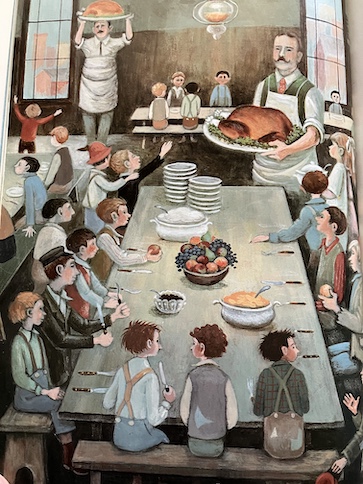
Finally, they reach Ellis Island on the day before Christmas. Everyone lines up, and the family has to show their papers to the immigration officials. Doctors look at them to make sure they are healthy enough to go ashore and into the city. Fortunately, they pass the health tests, although Krysia sees another woman who is told that she will have to go into the hospital or back to Poland because she is ill. The family converts their money to American money and buys some food. A man has to explain to them how to eat a banana because they’ve never seen one before.

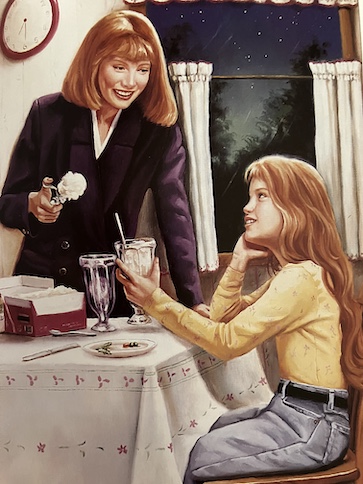
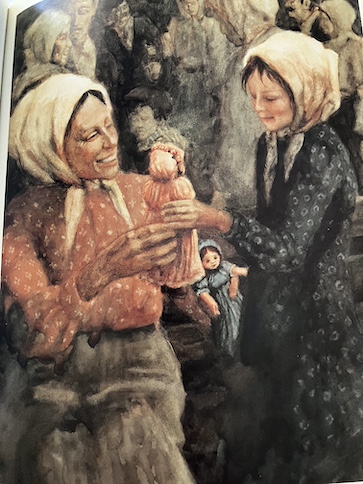
Because it’s Christmas Eve, there is a big Christmas tree, covered with lights and toys. There is also a man dressed like Santa Claus, although Krysia thinks of him by the Polish name, Saint Mikolaj. They don’t receive any new presents, but Krysia’s mother does have a surprise for her. The best part is when Krysia’s father comes for them and takes them to their new home.

The book ends with a section explaining the history behind the story.

The book is available to borrow and read for free online through Internet Archive (multiple copies).

The focus of this story is all on the feelings and experiences of the immigrant family, especially little Krysia. Krysia’s impressions of the journey and the arrival at Ellis Island are all a child’s impressions, and she often needs explanations of what’s happening and what’s going to happen next, which is helpful to child readers.

The historical context for the story is provided in the section of historical information at the end and in some hints during the course of the story. The section of historical information in the back of the book discusses the peak years of US immigration, from 1892 to 1924. They don’t say exactly what year this story takes place, but it mentions 48 stars on the American flag. That means that this is the early 20th century, after Arizona and New Mexico were admitted as states in 1912. During that time, 70% of US immigrants came through the immigration center on Ellis Island, just off the coast of New York City. Of those who arrived at Ellis Island, about a third stayed in New York, and the others spread out across the US. The family in the story seems to be going to stay in New York, but because the focus of the story is mainly on the journey, there are still few details provided about this family’s background and circumstances. The section of historical information also explains a little more about the traveling conditions of immigrants around that time and what typically happened at Ellis Island, so readers can understand how the experiences of the characters in the story fit into the experiences of other, real-life immigrants. (For more details, I recommend reading If Your Name Was Changed at Ellis Island and Immigrant Kids, nonfiction books which echo many of the details included in this book.)

There is some discussion in the section of historical information about the reasons why immigrants left their homes, and we told in the beginning of the story that there are shortages of food in Poland and soldiers everywhere, but there is more that I’d like to say about this. Because I like to add context to historical stories, I’d like to talk what was happening in early 20th century Poland and what’s behind the circumstances the characters describe. During the 19th century, parts of Poland were under the control of three different European empires: Russia, Prussia (a German state), and the Austro-Hungarian Empire (while later dissolved into Austria and Hungary). The oppressive control of these imperial powers accounts for the soldiers the family describes on the streets. There were Poles who resisted the control of these forces and wanted to reunify their country, so the soldiers were to keep the population under control and put down resistance. Around the turn of the 20th century, Polish territories were also suffering from unemployment and land shortages, which explains the food shortages the family experiences. Because of these conditions, there was massive immigration from Poland to the United States during the late 19th century and early 20th century. The Petrowski family in the story would have been on the tail end of this wave of immigration because circumstances changed for Poland after World War I (1914 to 1918), when Poland became an independent country again. Some Polish immigrants to the United States intended to stay only for a relatively short time, hoping to save up money and return to their homeland with the money to purchase land or improve their family’s circumstances, but many of these people remained in the United States anyway.

Because the main character, Krysia, is only six years old, she likely wouldn’t understand the full background of her family’s circumstances and the political causes of the hardships in her country, but I like to explain these things for the benefit of readers. I think it’s also interesting that this story is a Christmas story. We are never told what the religion of the characters is, although it seems that they are Christian because they care that it’s Christmas. Many people from Poland were Catholic, so it’s possible that this family was Catholic, too, but it’s never clarified.

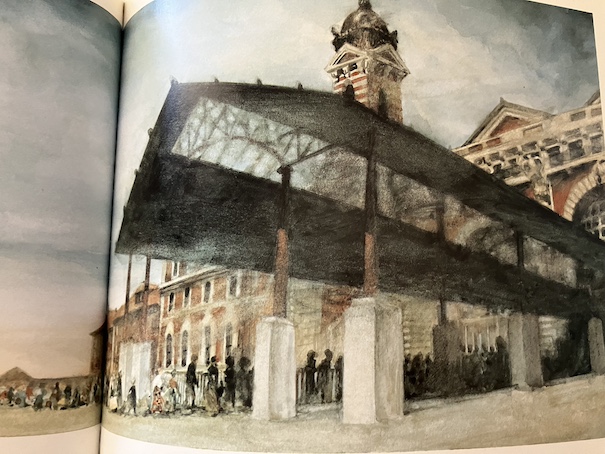
If you read the short biographies of the author and illustrator of the story, the author reveals that the inspiration for the story was the story of her own family’s journey from Poland. The illustrator says that he went on a tour of Ellis Island to prepare for producing the illustrations, and he tried to capture the “awe and anticipation” of the immigrants and the high vaulted ceilings and views of the New York skyline through the windows. I’ve also been to Ellis Island, and the illustrations in the book brought back memories of my trip there. I thought that the illustrator did a good job of capturing how big, impressive, and bewildering the Ellis Island compound would be to a young child.

When Jessie Came Across the Sea

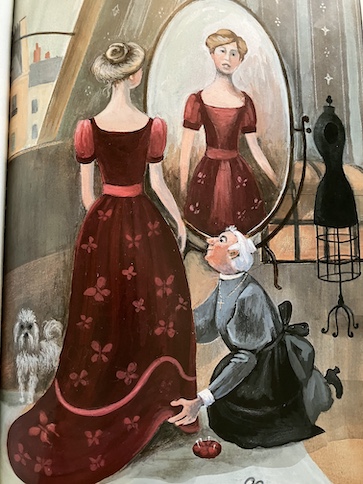
Jessie and her grandmother live in a small, thatched cottage in a small village. The little village is poor, and so are Jessie and her grandmother. Jessie’s parents died when she was a baby. Jessie’s grandmother raised her, and she insists that Jessie have lessons with the village rabbi, like the boys in the village. Jessie can read and write, and she also tries to teach her grandmother. Her grandmother makes a little money by sewing lace, and she teaches Jessie how to sew. Although they don’t have much, they are basically content with their lives.

Then, one evening, the rabbi makes an important announcement. His brother, who was living in America, has died. Before his death, he sent a ticket for a ship traveling to America to the rabbi, asking him to join him in America. Now that his brother is dead, there is no need for the rabbi to go to America, and he would rather stay in the village with his congregation. However, he thinks that someone else should use the ticket his brother sent.

Various villagers ask rabbi if they can use the ticket, offering reasons why each of them would be the best person to go. They brag up their best qualities, boasting about how strong, smart, and brave they are. The rabbi knows that they’re boasting, so he just tells them that he will pray about it and let them know his decision tomorrow.

The next day, he goes to see Jessie and her grandmother and tells them that Jessie should be the one to go to America. His reasoning is that his brother’s widow owns a dress shop in New York City. Jessie can work there, and she would be a comfort to a lonely widow. Jessie doesn’t really want to leave her grandmother, and her grandmother fears to send her, but her grandmother can see the rabbi’s logic. She knows that this is an important opportunity for Jessie.

So, Jessie leaves her village and sets sail on a crowded ship for America. On the ship, Jessie is scared, lonely, and seasick. As Jessie spends time with the other passengers, she makes a few friends, and she sews a few small items for them. A boy named Lou, who is a shoemaker’s son, makes a pair of small shoes for a baby, and he and Jessie also become friends.

Finally, their ship arrives at New York. Everyone crowds around the rails of the ship to see the Statue of Liberty and their first glimpse of America. The ship docks at Ellis Island, and the passengers disembark to be inspected and questioned by immigration officials.

The rabbi’s brother’s widow comes to meet Jessie. She is a friendly woman, and she asks Jessie to call her Cousin Kay. Cousin Kay shows Jessie around the city. It’s a crowded, confusing place with fascinating sights, although the streets aren’t paved with gold, as Jessie has heard. Cousin Kay runs the dress shop out of her home, and she pays Jessie to sew for her. Jessie likes watching the busy street outside while she sews, and she saves the money she earns in a jar.

When Jessie puts some lace on a plain white dress, turning it into a lovely bridal gown, the shop becomes popular with young women who are getting married and looking for similar gowns.

Cousin Kay also insists that Jessie go to school and learn English. It isn’t easy, but Jessie learns. She likes walking around the city and going to the local library. Gradually, Jessie begins feeling more at home in New York, and she builds a new life for herself there. One day, she runs into Lou again in the park, and they begin meeting there regularly. Lou proposes to Jessie, and Jessie uses the money she has saved to buy a ticket so her grandmother can come to America for their wedding.

The book is available to borrow and read for free online through Internet Archive.

I remember reading this book when I was young! I was really older than the target audience when it was first published, but I enjoyed the story. It’s one of those books that I think takes on more significance when you’re older and understand more of the history behind the story. We don’t know exactly where Jessie is from because the book never says, but her journey resembles the kind of journey that many people made during this same period of history. We don’t know the year, either, but it appears to be set in the late 19th century or early 20th century.

Although coming to a strange country, alone and unable to speak the language, is a scary experience, Jessie is fortunate because there is a friendly and caring person waiting there for her, and she has a job lined up that suits her skills. In real life, not everyone was so fortunate, and it was more of a struggle for them to get established in their new home. Jessie still has to struggle with homesickness and missing her grandmother, but her life changes for the better because she took the chance to go to a new country and start a new life. Readers can emphasize with Jessie’s fears and uncertainty as she starts out on her journey and celebrate with her when things work out for the best.

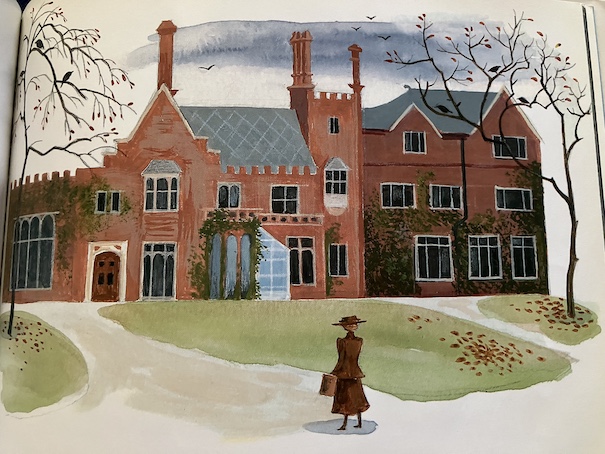
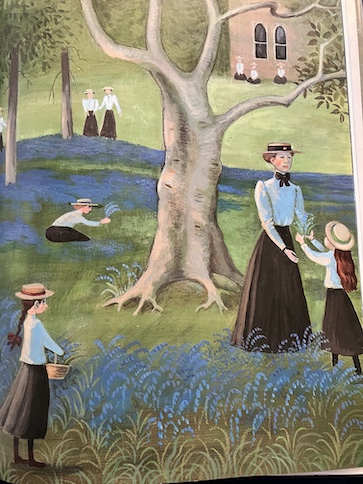
The pictures in the book are beautiful! Readers really get the sense that they’re seeing another time, with Jessie’s tiny village, the crowded ship in the rain, and busy New York City, more than 100 years ago. Even when the environment and circumstances are harsh, the pictures are charming.

There is a note in the beginning of the book for parents and teachers about how they can use this book to spark discussion with children. They can use the opportunity to invite children to learn how their own families arrived in America, because this book was originally intended for an audience of young American readers, and most people who live in the United States (with the exception of Native Americans) are descended from people who came from somewhere else. It’s an opportunity for children to learn their family’s history and to see how it compares with that of other people, whose families also made a decision to come here and start over, going through their own struggles along the way. There is also some general advice about sharing books with children, and making a point of surrounding children with books and reading aloud to them.

The Log Cabin Quilt

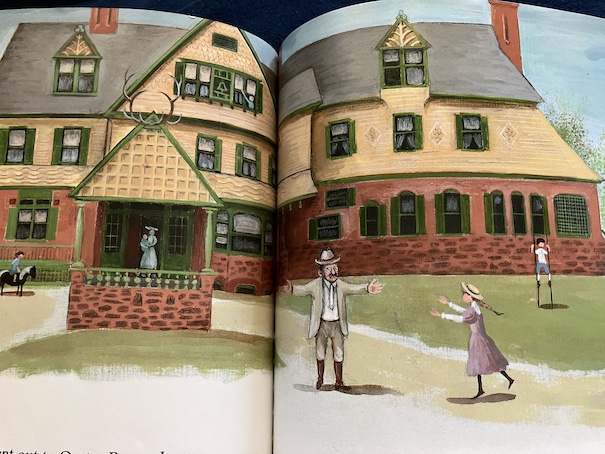
Elvirey’s granny loves quilting, and she always saves scraps of cloth from old clothes in a flour sack for her quilts. After Elvirey’s mother dies, her father moves the family to Michigan, traveling by covered wagon. When Elvirey tries to pack some of her mother’s things to bring with them, her father insists that they leave them behind, saying that they don’t have room for them. However, Granny insists on bringing her sack of quilting scraps, saying that she will sit on them in the wagon.

When the family finally reaches their destination, it’s just a clearing in a wooded area. They camp near a spring, and Elvirey’s father and brother begin building a cabin for the family. Elvirey and her sister add the chinking to the log walls of the cabin, packing the gaps with a mixture of mud and grass to keep out the wind.

However, the cabin still doesn’t feel like home to Elvirey. They don’t have her mother’s books, and there aren’t any flowers growing nearby to decorate the house like her mother would.

Then, one cold day, Elvirey’s father goes out hunting. He says that he will back before dark, but he doesn’t return. The night is very cold, and Elvirey and her family suddenly realize that it’s more than unusually cold in the cabin. The chinking they put in the walls of the cabin has frozen and fallen out, and the cold is getting in. Worse still, it’s starting to snow.

They’re worried about what happened to their father, and they’re worried about what they will do with the cold getting into the cabin. Then, suddenly, Elvirey has an inspiration. There is something they can use to fill the cracks in the cabin walls: Granny’s quilting scraps. With scraps from everyone’s clothes suddenly decorating the walls of the cabin, the cabin begins to look like it has turned into a quilt itself. When Elvirey’s father returns, he tells her that her mother would be proud of her, and for the first time, the cabin starts to feel like home to Elvirey.

The book is available to borrow and read for free online through Internet Archive.

There’s a pun in this story that people who don’t know the names of quilting patterns might miss. There are many patterns that the squares of a quilt can have, and Log Cabin is a traditional quilting pattern. When Elvirey and her siblings stuff the quilting scraps into the walls of their cabin, their Granny laughs about them creating a “log cabin quilt”, and it’s not just that she’s amused that they’ve made their cabin walls look like a quilt with all the scraps; it’s a pun on the name of the quilting pattern.

Although the story is about a family of pioneers, the focus of the story isn’t really their journey by covered wagon or the building of their cabin. It’s about loss and change and about what makes a new place feel like home. At first, Elvirey doesn’t feel like their cabin is their home because they no longer have the familiar things that belonged to her mother, and she can’t do some of the things that her mother used to do, like decorating the home with flowers. Even the quilt scraps and their associated memories don’t quite make her feel like home, although they do add a needed touch of color and hominess to the cabin. What finally makes Elvirey feel like home is when her father mentions her mother. Since her mother died, her father hasn’t smiled and hasn’t talked about her mother at all. When he sees what they did with the quilt scraps, he does both, and that makes Elvirey finally feel like they’re home. She really needed that sense of her mother’s presence or her memory to really get a feeling of home.

Elvirey is an unusual name, but I think it’s a nickname or variation of Elvira. Elvira is an unusual name in modern times, and in the United States in modern times, it usually reminds people of Elvira, Mistress of the Dark, a character portrayed by Cassandra Peterson and known for hosting horror movies since the 1980s. That reference has no relation to the story. Elvira/Elvirey is just an interesting and unusual name.

The Mysterious Horseman

This book is part of a loose series of books by Kate Waters, showing child reenactors at living history museums, having adventures in the roles of the characters they play. While most of the books are set in Colonial times at Plymouth and Colonial Williamsburg, the setting for this story is the Connor Prairie living history museum in Indiana, which shows life in a small town in the 19th century.

The story centers around a boy named Andrew McClure. He is the only one of his siblings left still living with their parents. His older sister is now married, and his baby brother died of an illness during the last year. His family is still grieving for his little brother. Andrew’s best friend is a boy named Thomas Curtis, who lives nearby, and Andrew works part time at a local inn to earn some money.

One day, while Andrew is doing some sweeping at the inn, he overhears some men talking in the taproom. He doesn’t hear their entire conversation, but he hears them talking about a mysterious rider without a head who chased a schoolmaster. Andrew is startled, and he wonders if that has something to do with the new schoolmaster who is supposed to arrive in town.

When Andrew is done with his work, he goes to the schoolhouse, and he finds his friend Thomas and Thomas’s sister, helping the new schoolmaster to clean the schoolhouse and prepare it for lessons to start. Andrew wants to talk to Thomas about what he overheard at the inn, but the schoolmaster only wants to talk to the boys about lessons.

Later, Andrew does have a chance to talk to Thomas, and both of the boys are spooked by the idea of a headless rider. They even think that they hear the rider on the road! The frightened boys go see Thomas’s father, the blacksmith, and tell him about the rider. Fortunately, the blacksmith knows what the men were talking about, and he can settle the boys’ fears.

The book is available to borrow and read for free online through Internet Archive.

I didn’t know about this book until I was looking up Kate Waters’s books for my younger cousins. I was surprised because Kate Waters’s living history museum books are mostly set on the East Coast or focus on the Colonial era. This 19th century book set in Indiana somewhat departs from the theme and has a different feel from the other Kate Waters books, but I enjoyed it. I’ve been to Connor Prairie because I have relatives in the area, and I enjoyed my visit. It’s been years since I’ve been there, so I didn’t immediately recognize the setting. When I read the explanation in the back of the book, I was fascinated to realize that I had visited that location before.

Andrew has a fascination for life on the frontier because he often watches people pass through his town on their way further west, and he daydreams about going west himself. His family is also still coming to terms with the death of his little brother, so the subject of death is still on Andrew’s mind. The deaths of children due to illness were sadly common in the 19th century and on the frontier, and the mourning in Andrew’s family adds to the melancholy and spooky atmosphere of the story.

Most adults and older children will probably recognize what the men at the inn where actually talking about when they were discussing the headless rider who chased the schoolmaster. When the boys talk to Thomas’s father, he immediately recognizes the story as the plot of The Legend of Sleepy Hollow by Washington Irving, originally published in 1820, about 16 years before the story in this book is suppose to take place. The men at the inn were just discussing the plot of the story, not something that they saw on the road themselves.

Thank You, Mr. Falker

When little Trisha turns five years old, her grandfather introduces to her to reading in the same way he has done for other children in the family, with a taste of honey on a book, to remind her that knowledge is sweet. Trisha already loves books because her mother reads to her every night, and other members of the family also read to her. She’s looking forward to learning to read herself.

However, when she starts going to school, she finds that she has trouble learning to read. She likes drawing, and other kids at school admire her drawings, but for some reason, she struggles at deciphering the letters that other kids seem to learn so easily. When she looks at writing on a page, everything looks like wiggling shapes, and she has trouble figuring out what sounds they’re supposed to make. Other children move forward with their reading lessons, but Trisha struggles and starts to feel dumb.

Trisha asks her grandmother if she thinks she’s different from the other kids, and her grandmother says that everyone is different and that’s “the miracle of life.” Trisha asks if she thinks she’s smart, and her grandmother says she is. That makes her feel a little better, but why can’t she read like the other kids?

Trisha continues to struggle in school, even after the family moves from Michigan to California. She is in third grade at that point, and other children insult her and tease her when she struggles, and Trisha feels dumber than ever. She spends more time drawing and daydreaming, and she starts hating school, sometimes pretending that she’s sick so she won’t have to go.

Things only start to improve for her in fifth grade, when she gets a new teacher, Mr. Falker. Mr. Falker doesn’t cater to the teacher’s pets like other teachers do, and he notices Trisha’s artistic talent and praises her for it. He also stops the other kids from teasing Trisha in class when she struggles, although one boy, Eric, continues to bully Trisha terribly and get other kids to gang up on her when the teacher isn’t looking until Mr. Falker finally catches him.

Mr. Falker works with Trisha to improve her reading and reassures her that she is not stupid. He realizes that the reason she has struggled with reading is that Trisha doesn’t see letters the way other kids do, and he points out that she’s actually been clever in the way she’s managed to hide just how much she’s been struggling all this time.

Mr. Falker introduces Trisha to Miss Plessy, a reading teacher, and the two of them work with her to develop techniques that improve her reading skills. Gradually, Trisha begins to make real progress, and she begins to feel the sweetness of knowledge that her grandfather talked about.

The book is available to borrow and read for free online through Internet Archive.

The end of the book explains that the story is autobiographical. Patricia Polacco was the Trisha in the story, and she did have trouble learning to read until the read Mr. Falker realized how she was struggling and helped her. At the end of the story, the author says that she met Mr. Falker again years later and thanked him, telling him that she can become a children’s author.

There is a difference between real life and the story, though. In the book, Trisha is in the fifth grade when she gets help with her reading, but in real life, Patricia Polacco was apparently 14 years old and in junior high school. The book doesn’t say exactly what the cause of Trisha’s learning difficulties is, but she is apparently dyslexic, based on the description and because Patricia Polacco was dyslexic in real life.

I enjoyed seeing this part of the author’s childhood, although I found the part with the school bullies stressful. I do think it was important to include that part, though, because that can be part of the experience of children who struggle in school. Although Eric is an obvious bully in the story, the other kids also make Trisha miserable with their teasing and insults. It occurred to me that they may not all think of themselves as bullies, but at the same time, a person doesn’t have to think of themselves a bully in order to be one. Bullying is a behavior, and it exists independently of self-identity. Part of me wondered, if the girl and the teacher in the story are both real, were the bullies also real, and if so, did any of them ever read this story and recognize themselves? Maybe some did, and maybe they didn’t. Maybe not all of them would even care, if they had.

Regardless, I do think stories like this can be useful as a preemptive measure against bullying by showing kids how their behavior can affect other people and what may be going on in the life of a person they’re teasing or bullying. While I’m sure that everyone thinks of themselves as being the heroes of their own story, I think people sometimes need a reminder that, at the very same time, they are also supporting characters in everyone else’s story, for good or bad. In a way, we’re all self-casting in every story we’re in by the ways we choose to act as we go through life’s story in general.

The bully antagonists aren’t really the main focus of the story, though. They act as further obstacles to the problem that Trisha is trying to solve, but ultimately, the story is really one of gratitude toward the teacher. Part of what the teacher does for Trisha is to shut down the bullies so Trisha can focus on what she needs to learn and he can focus on helping her. Even more importantly, Mr. Falker helps Trisha to see that she is smart and capable. It takes a little more work for her to make progress than others because she has a condition to overcome, but with a little help, she can do it. It really opens up a whole new world for her, and she finally gets to taste that sweetness that comes with knowledge.

I’ve heard of the tradition of giving children a taste of honey before they begin their lessons. When I was a student, I thought I remembered a teacher mentioning this tradition to us as a Greek tradition. It might be, although when I tried to look it up, I couldn’t find anything about Greece. I found references to it as a Jewish tradition, which would make sense for Patricia Polacco’s family.

Patricia Polacco’s real-life grandmother also appears in the story, the same grandmother who appears in another of Polacco’s books, Thunder Cake. Her grandfather wasn’t present in that story, but he is in this one. Both of the grandparents are mentioned as dying before the story ends.

The Mystery on Stage

The Boxcar Children

Boxcar Children Mystery on Stage play announcement

Jessie decides that she wants to try out for a part in a local stage play of The Wizard of Oz. She wants to try for the role of Dorothy, but many other girls also want that part. A spoiled rich girl named Melody is sure that she will get the part because she’s had professional training, and her mother is very pushy. Another girl, Sarah, ends up getting the role by giving an excellent, heart-felt performance. However, Jessie gets the role of the Cowardly Lion, and Melody is offered the role of the Scarecrow. Melody is very upset about not getting the role of Dorothy, but she takes the role of the Scarecrow anyway. The other Alden kids also help out with the play in various ways, like building scenery and making costumes.

Boxcar Children Mystery on Stage threatening message

Soon, strange things start happening at the theater. Someone calls the play’s director and threatens that something bad will happen if he directs the play. Then, someone crosses Sarah’s name off a casting list and writes a note saying not to go on with the program. Props are stolen, a costume is destroyed, and lettering on a poster is changed. So many things are going wrong, people are starting to wonder if this play is going to happen after all.

Who could be responsible? Was Melody so upset about not getting the lead that she or her mother have decided to sabotage the whole play? Could the grumpy actor playing the Wizard have a reason to want to shut down the play? What secrets is Sarah hiding? Why does she seem to disappear suddenly at times? Or could more than one person be responsible for what’s happening? And why does the actor playing the Tin Man never want to remove his helmet?

Boxcar Children Mystery on Stage fallen light

I thought the mystery was pretty good, and the author did a good job of making a number of people look guilty. I had the feeling from the beginning that Sarah didn’t have her parents’ permission to be in the play, and that’s why she seems to run off or disappear suddenly, because they wouldn’t approve of what she’s doing. I was partly right, but it’s more complicated than that, and it’s important to the mystery.

I laughed out low at one point when the Aldens were talking about the grumpy and fussy actor who is playing the wizard, saying how he seems good at his part, but “it’s too bad about his personality.” It sounds like a serious slam, and honestly, there are some times when I’ve had similar thoughts about some people. In a way, though, that’s a sort of secondary theme to the story. There are some people involved with the production of the play who are really difficult to work with. They’re very good at what they do, like how Melody has had acting and singing lessons and does well on stage, but at the same time, they’re also disagreeable, self-centered, or pains to work with.

Boxcar Children Mystery on Stage Dorothy holding bouquet

Another theme of the story is the idea that things that seem like a disappointment can work out for the best. Jessie is a little disappointed at first that she didn’t get the role of Dorothy, but she turns out to like being the Cowardly Lion, and she realizes that she’s actually having more fun with that role than she would have with the role of Dorothy. Melody almost refuses to take the part of the Scarecrow because it isn’t the starring role of the play, but she does anyway. She likes it better than she thought she would, although she still wishes that she had a part where she could wear a pretty dress, like Dorothy.

The Deserted Library Mystery

The Boxcar Children

Mr. Alden tells his grandchildren that a friend of his in a nearby small town, Pete, is concerned about their local library. The town is really too small to support a library, and when the last librarian left, they weren’t able to replace her. The library has fallen into disrepair and is in danger of being torn down. However, the building is old and has historical significance. It might be preserved as a historical landmark, but it needs some cleaning and organizing. Mr. Alden asks his grandchildren if they would be interested in the project, and they say they would. Pete spends part of the year living at his restaurant in town, so the Aldens can use his house while they’re working on the library project.

When they get to Pete’s house, they have to do a cleaning job there because Pete hasn’t been there in a while, and the place seems a bit spooky to them. The library seems a little spooky to them, too, when they begin looking around, but they soon begin finding some significant treasures. The children find a sword hilt from the Civil War along with a letter about the sword being awarded to a soldier by General Lee, but for some reason, the blade of the sword is missing! They children know that, if they can find the sword blade, it would be of great historical significance.

Then, strange things start happening in the library. Food that they bring for lunch disappears, and the kids start feeling like they aren’t along in the building. They search the library and find a 10-year-old boy named Miguel Morales. Miguel explains that his mother is dead and that he heard his father’s fishing boat sank. If his father is dead, he has nowhere to go and is afraid of being put in an orphanage or children’s home. The Boxcar Children sympathize with Miguel because they were once in a similar position, but they also tell Miguel that the situation might not be as bad as he thinks. They don’t know for certain whether Miguel’s father is dead or not. He can’t hide in the library forever, so they invite Miguel to stay with them and help with the library project while they check and see for certain what really happened to Miguel’s father. Henry contacts his grandfather to ask for his help and to see if he can learn anything about Miguel’s father. Mr. Alden agrees to help Miguel and is thrilled to hear about the Civil War sword.

Finding Miguel seems to clear up the mystery of who has been in the library, but the children soon begin to realize that there is a second intruder. The kids find a gray work glove in the library that doesn’t belong to any of them, and Jessie hears someone humming when no one is supposed to be there. Then, someone tries to trap them in Pete’s house by putting a big branch in front of the door, and when they get out and return to the library, they find the place trashed! Someone has thrown all the books around and torn them and turned the furniture over. Later, someone sneaks into Pete’s house at night, while the children are there but asleep, to search the place. Henry is pretty sure that the mysterious intruder is searching for the Civil War sword, the most valuable thing they’ve found so far.

I like the location and set-up of the story. An abandoned library makes a nice, spooky place to have mysterious things happening and people lurking around. Although this book was written by a ghost writer after Gertrude Chandler Warner’s death, it has a lot of the flavor of the original books in the series – opportunities for the Alden children to show off their self-sufficiency and community-oriented volunteer work, another child who is on his own and needs some help, and a mystery that is more adventure in some ways than mystery.

I liked the idea that the kids think they’ve solved the mystery of who’s been lurking around the library when they find Miguel, only to realize that there’s someone else snooping around. It was a little disappointing that we seem to know what the mysterious lurker is looking immediately for because there’s only valuable item associated with the library, and there’s no twist to it. We also don’t really get to to know the culprit as a character outside of his lurking. This isn’t the case that there are multiple people to suspect. By the time we learn the culprit’s identity, we already know him as the culprit. I would have preferred more mystery with a choice of known suspects, but something that does complicate the mystery is also that the antique sword is broken, so the kids have to find the other part of it.

The side plot with the question of whether or not Miguel’s father is alive adds some suspense. Although the Boxcar Children are optimistic that Miguel’s father survived his boat sinking, and Mr. Alden says that he will take care of Miguel, Miguel privately thinks to himself that, if it turns out that his father isn’t among the survivors, he will run away again. Readers are left in suspense because we are told that there were survivors from the boat, but we aren’t told whether Miguel’s father is one of them until the end.

Meg Mackintosh and The Mystery in the Locked Library

Meg Mackintosh Mysteries

Meg, her brother Peter, and their grandfather are visiting their grandfather’s cousin, Alice, who was introduced in the first book of the series as the one who created the treasure hunt to find his missing Babe Ruth baseball when they were young. Grown up Alice is now a librarian, and she has created another treasure hunt for them.

One morning, she leaves them a note saying that she has a dentist appointment, but she wants them to go to the library and find something valuable that she’s hidden there before the library opens at noon. Readers follow along with the clues that Alice has left for them to solve and the pictures in the book, seeing if they can solve each part of the mystery along with Meg. In keeping with the library and book theme of the story, the clues are based around books, particularly Sherlock Holmes books.

When Meg and her family arrive at the library and begin following the clues, they discover that there are other people in the library, even though the library isn’t officially open yet. Caroline is the assistant librarian, and Gerry also works there. Then, a man named Horace Plotnik shows up, saying that he’s an antiques expert and that Alice asked him to come to appraise something.

They discover that Alice didn’t make it to her dentist appointment because someone locked her in the library’s book repair room. It turns out that the valuable item that Alice hid was a first edition of The Adventures of Sherlock Holmes by Sir Arthur Conan Doyle that recently came to the library in a donation of books, but when Meg and Peter finish the treasure hunt and go to the place where Alice did the book, it’s gone! Was it stolen by the person who locked Alice in the book repair room, and if so, who was it?

The Book is available to borrow and read for free online through Internet Archive (multiple copies).

I always enjoy treasure hunt stories, and like other Meg Mackintosh mysteries, this story gives readers the opportunity to figure out the clues and puzzles along with Meg. The information readers need is in the pictures of the story. When I was a kid, I particularly liked puzzles based around solving a secret code, and there is a secret code puzzle in this book that readers can solve themselves.

This treasure hunt is fun because it’s based around library and book themes, particularly focusing on Sherlock Holmes. The idea of hunting for a lost copy of a first edition Sherlock Holmes book was timely for when the book was originally written because, as the story indicates at the end, the book was written around the 100th anniversary of the character of Sherlock Holmes!

Meg Mackintosh and The Mystery at the Soccer Match

Meg Mackintosh Mysteries

Meg and her brother Peter play on opposing soccer teams, the Hawks and the Panthers. Peter is brags about how good he is at being a goalie, and Meg hopes that, in this game, she can score a few points off him. There are prizes for this soccer team, and the winning team will get to keep a medal that Coach Lee won playing international soccer until next year’s game. Everybody admires the medal, which is displayed on the awards table.

Meg’s teammate, Alex, is less thrilled about the game. He has an injured leg and can’t play, and his mother is busy campaigning against awarding prizes for children’s soccer. She thinks that giving prizes isn’t fair and hurts the feelings of kids who don’t get prizes.

It’s true that there is some pressure from the parents for their children to play harder to win prizes than the kids really want. Peter accidentally collides with one of his teammates, Heather, and they both end up with scrapes and are temporarily removed from the game for first aid. Heather’s father pressures her to get back in the game as soon as possible and win, but Heather privately admits to Peter that she doesn’t really feel like playing anymore. She only does it because she knows her dad would feel bad if her team doesn’t win.

It starts to rain during the game, and the adults and kids cover the awards table with a blanket. When they remove the blanket later, the gold medal is gone! Who could have taken it? Meg invites Alex to join her detective club and help investigate the mystery while she plays soccer!

The book is available to borrow and read for free online through Internet Archive.

Meg inviting Alex to help her investigate the case and consider motives makes this book a little different from other books in the series, where Meg usually does that herself. The mystery is good because there are several suspects to consider, each of whom was seen near the table and left signs of their presence there. Did Heather’s dad take the medal because he once almost won a similar soccer medal and was jealous that Coach Lee won the prize he didn’t? He certainly seems very prize-oriented. Did Alex’s mother take it because she disapproves of sports prizes and wanted to make a statement about it? Could one of the children have taken it, either because they wanted to claim the prize they didn’t think they could win honestly or because they wanted to impress one of their parents?

As with other books in the series, readers are given the chance to review the evidence Meg and her friends have collected and see if they can spot the clues along with them in pictures taken at the scene. There was a clue that I thought was pretty obvious in one of the pictures but which Meg and the other kids didn’t spot at first. They only notice it when another clue makes them take a second look at one of the pictures. I think many young readers might also spot the clue I did, although if they do, it might make them feel clever for noticing something before Meg and her friends do.

When I first noticed that clue, I was inclined to think the solution to this mystery was too obvious, but there is another twist to the story that makes it more interesting. The medal was actually stolen twice. After the original thief put it back, someone else took it again, so there are two thefts to figure out instead of one.

The Mystery of the Lost Village

The Boxcar Children

Grandfather Alden is going on a fishing trip with a friend, and he arranges for his grandchildren to stay with a family on a Navajo reservation. They’ve never been to a reservation before, and there will be hiking and a powwow. The kids are all eager to go!

The family the Aldens are staying with is the Lightfeathers, and they have two children about the same age as the Aldens, Joe and Amy. The Lightfeathers tell the Aldens interesting things about Navajo history, culture, and crafts. What grabs their attention the most is a story about an ancient village nearby that was abandoned due to drought. The stories that have been passed down through the generations tell them roughly where the village was supposed to be, but the remains of the lost village have never been found.

Joe, Amy, and the Aldens ask if they could try digging for the lost village. Mrs. Lightfeather once studied archaeology, and they ask her if she can help them. Mrs. Lightfeather says that, although the village may be gone, traces of it should be left. The children begin laying out an orderly dig and start their search. They find some arrowheads and pottery, but when they show Mrs. Lightfeather what they’ve found, she says that they can’t continue their dig for much longer. The adults have just heard that a developer is taking over the land to build vacation homes. The children are dismayed when they find out that the developer is going to clear all of the trees. Of course, if the children can find signs of the lost village, the site would become an archaeological site, and the developer would have to stop. They only have two weeks to find some evidence of the lost village before the development starts!

There are some suspicious people hanging around. Michael Runningdeer, who works for the real estate developer, has been checking the boundaries of the reservation to check where they can develop. While they’re working on their dig, the kids meet a woman called Rita Neville, who says that she’s working on a documentary. Ted Clark is a genealogist who says that he has come to the reservation to trace his family’s roots, but Amy thinks it’s strange that he doesn’t seem to know things that someone with Navajo roots would usually know.

As the children work on their dig, they start finding more things, but someone also starts filling in places where they’ve been digging. In other places, someone has been digging where they haven’t dug yet. Then, someone steals an impressive bowl that Violet found. Is someone trying to prevent them from making a discovery that would stop the development, or is this a case of greed for Native American artifacts?

I liked this mystery as a kid, but I have a bone to pick with this story now. Perhaps the rules have changed since the book was written, but I know from living in Arizona that it’s routine to call in professional archaeologists to survey sites before digging and development take place. Because this area was inhabited by different groups over the centuries, archaeological finds can be just about anywhere.
I was attending ASU when they build the bio-sciences building, and people were allowed to watch the archaeologists survey the site. They did find an old Native American burial ground on the site. It didn’t stop the development completely, but they did record and catalog all of their finds before reburying them in the same locations where they were found. The logic of that is that Arizona is a very dry climate, and it preserves things buried in the ground very well. Putting a building over the site will prevent the site from being disturbed again for a long time. In the future, there may be better archaeological tools and scientific techniques that can be used to reevaluate the site and the things in it, and by then, the building may no longer be there.

What I’m saying is that there are rules and practices regarding archaeology and development in this region. Because this book was written about 30 years ago, when I was a kid, I’m not sure how different the rules were then, but I’m sure that archaeological surveys of this type were conducted back then, too. One of my old college teachers was an archaeologist, and he told us about digs he participated in around one of the reservations years before. I’d be surprised that development so close to a reservation, as in this story, would be allowed to go ahead without an archaeological survey from one of the universities or other archaeological organizations in the state. I just think that there should have been professionals working in the area before the kids started their dig.
I liked the pieces of information that the Lightfeathers explain to the Aldens about Navajo history and culture. My favorite piece of trivia was the explanation about how, rather than putting clay cooking pots directly over the fire, historical Navajos would heat a stone in a fire and then put the stone into a pot of water to heat the water for cooking. I think it’s a creative solution to cooking in a vessel that can’t be used directly over fire.

Jessie is allowed to participate in a dance at the powwow as a guest of a Navajo family, and Amy helps her put together regalia for the dance. (See Jingle Dancer for an example of this in a different tribe.) I sometimes find it a little cringey now when characters in stories too easily participate in Native American events and are quickly called honorary members of the tribe, but in this case, the Aldens do help make an important discovery.