The Mystery of the Cupboard

The Mystery of the Cupboard by Lynne Reid Banks, 1993.

This is the fourth book in the Indian in the Cupboard series. It’s also the longest book in the series and the one that reveals the most about the history of the magical key and cupboard and how their secrets tie into the secrets in Omri’s own family. It was my favorite book in the series when I was a kid!

Omri’s parents have surprised him by telling him that they’re planning on moving to a new house again. Omri wasn’t exactly happy with their last move, and his room and other parts of their new house were damaged after his last adventure with time travel, when his friend Patrick brought back a tornado with him. However, now that the house has been repaired and he’s settled in, Omri doesn’t like the idea of having to pack up and leave and get used to a new place again. His parents want to move to the country, but it’s not even the area where Patrick now lives. Instead, they’re planning to move to a house that his mother has just inherited.

The house Omri’s mother has inherited belonged to an older cousin of hers she never actually knew. He didn’t leave his house specifically to her; it’s just that he died and left no will, and Omri’s mother happens to be the nearest living relative his lawyers could find. When they finally see the house and find out how much land is attached to it, it turns out to be much better than Omri expected.

There are just two things that concern Omri. The first is the package that he asked his father to store at a bank for him – the magical cupboard and key. Although Omri asked his father to put them in a bank deposit box to keep them safe and prevent himself from being tempted to use them again because it’s too dangerous, he doesn’t like the idea of them being too far away from where he’s living. His father promises to have them transferred to a bank near their new home. The second thing that worries him is that his cat mysteriously disappears soon after they move into the new house. (The cat is okay, she just sneaked away to have kittens.) His parents say that she’s just roaming her new territory and might be a little angry for being moved from her old home and that she’ll come back to Omri once she’s settled in, he still worries about her.

One night, he think he hears his cat crying and goes looking for her. He doesn’t see her, but he stumbles on something that was hidden in some old thatch that fell of the roof of the house. It turns out to be a metal box and a notebook belonging to someone named Jessica Charlotte Driscoll, written in 1950. Omri doesn’t know who she is, but the notebook is a story of her life, in which she describes incredible things happening to her which her family doesn’t believe. Omri wonders if she could be a relative of his, and the name Charlotte reminds him of his grandmother, Lottie. He never knew his grandmother and his mother doesn’t even remember her mother because she died in a bombing during WWII, when she was very young. The woman who wrote the notebook couldn’t have actually been his grandmother because she would have been dead for several years by 1950, but perhaps it was a family name.

Omri questions his mother about the cousin who owned the house and her family’s history. Jessica Charlotte turns out to be the sister of Omri’s great-grandmother, his mother’s great-aunt. Great Aunt Jessica Charlotte was the younger sister of his mother’s grandmother. After her mother was killed in the war, Omri’s mother was raised by her grandmother. Omri’s mother had asked her about her younger sister when she was a girl, but her grandmother didn’t like to talk about her. Apparently, Jessica Charlotte had been an actress with a somewhat scandalous past. However, the cousin who used to own this house was Jessica Charlotte’s son, Frederick. Frederick never married, and although Omri’s mother thought that Jessica Charlotte had lived abroad somewhere, it’s possible that she lived at this house for a time.

Much of the story is told through entries in Jessica Charlotte’s notebook. When Omri begins to read the notebook, written toward the end of Jessica Charlotte’s life, he learns, to his shock, that Jessica Charlotte was the original owner of the magic cupboard and that she had her own Little People who visited her from other times and were her friends. After Omri reads that, he questions Gillon, the brother who gave him the cupboard, and he admits that he didn’t really find it in an alley, like he said. He actually found it in the basement of their old house with a bunch of other junk. He just didn’t have the money to buy Omri a birthday present at the time, and Omri had kind of a fascination for secret drawers and boxes, so Gillon thought that he might have some fun with the old cupboard, and he made up the story about mysteriously finding it to make it more interesting. (I suspect that the author was just retconning this part to make it agree with the idea that the cupboard was passed down through Omri’s family, but I like the way this comes out, so I’m okay with that.)

The notebook further explains that Jessica Charlotte had been envious of her older sister because she was prettier, luckier, and often seemed favored by everyone. However, in mocking the young men who came to court her older sister, Jessica Charlotte discovered that she had a talent for mimicry, which led her to become an actress, although her family thought that it was a disreputable profession and disapproved. Jessica Charlotte also discovered that she was psychic and sometimes had visions of the future. She eventually left home and became an actress. Her sister, Maria, still visited her secretly sometimes, against their parents’ wishes.

After awhile, Jessica Charlotte became pregnant with Frederick, which was when she first came to the old house where Omri’s family now lives. She didn’t have any money and couldn’t work while pregnant, and because she was unmarried, she would have been considered shameful if people knew. At that time, the house was a farmhouse belonging to a relative of Frederick’s father. By that point, Jessica Charlotte realized that her boyfriend wasn’t a good person and wasn’t going to be a good father to their son, but he did arrange for this relative of his to help her through her pregnancy. Frederick was born in the house, and because he was illegitimate and sensed his mother’s complicated feelings about him and the circumstances of his birth, he and his mother were never as close as they really should have been.

Meanwhile, Maria got married and had a daughter, Lottie, who was Omri’s grandmother, the one who was killed in the war. Jessica Charlotte says that she did something that wronged Maria and Lottie, and Omri stops reading the diary for a time, but he decides that he really has to continue and know the full story.

Over the years, Jessica Charlotte lived a hard life, supporting Frederick through a mixture of acting and other odd jobs, including fortune telling because of her psychic abilities (although she never used her gift to see into the future for herself or anyone close to her because she was afraid she might see something bad happen to them and be unable to stop it). Meanwhile, Maria was living a very comfortable life with her husband and daughter. Even after their parents died, Maria still had Jessica Charlotte visit secretly because of her tainted reputation, and she never wanted to meet Frederick or talk about him because his birth was the cause of her sister’s scandal. Still, Jessica Charlotte continued to see her sister and became fond of Lottie.

However, Maria was basically a pampered snob who didn’t understand her sister’s life and hardships and also had a streak of self-centeredness. One day, when Lottie was a young child, Maria said that when Lottie was older, she didn’t want her to see so much of her aunt, implying that Jessica Charlotte would be a bad influence on her. Jessica Charlotte was deeply offended by that, but she was also fearful about losing the last family members who were still speaking to her. She had lost so many of her other relationships that she still felt the need to be close to Maria and Lottie as much as she could and visit their pampered and comfortable little world, enjoying occasional tastes of their happier and more comfortable lives.

Yet, Jessica Charlotte’s jealousy for Maria’s pampered life and anger at her callousness continued to eat at her. One day, when Maria was showing her all of her nice jewelry, Jessica Charlotte got the urge to steal a beautiful pair of earrings. First, Maria was being, at the very least, thoughtless and callous for showing off all of her nice jewelry to her much poorer sister, who could never have things like that herself. Maria not only had no concept about what her sister’s life was like outside of her occasional visits, but she purposely never asked her about how she was doing, how her son was doing, or even where they were living, how they were getting by, if they needed anything, or if she could help them in any way. She didn’t know because she didn’t want to know any of these things, and the fact that she didn’t want to know any of that indicates that she knew enough to understand that their circumstances weren’t pleasant. To show off all of her pretty things like that just seems like rubbing it in. Second, Jessica Charlotte had been in need for so long that she saw all of the pretty jewels as symbols of Maria’s comfortable life, something she hungered for herself. The pair of earrings weren’t something that Jessica Charlotte wanted just for the sake of having them but because of what they represented to her, the life that she couldn’t share in and which she knew that Maria would soon shut her out of when she declared that her visits with her young niece would have to stop soon.

Jessica Charlotte planned out the theft in advance, making a duplicate key for her sister’s jewelry box and thinking that her sister would just assume that she’d mislaid that one pair of earrings somewhere. Unfortunately, when Maria noticed that the earrings were gone, she thought Lottie had done something with them, and when she kept insisting that Lottie tell her where they were, Lottie got upset and ran out of the house into the street. Matt, Maria’s husband and Lottie’s father, chased after her and was hit by a cab and killed. Jessica Charlotte felt terrible when she heard the news because she hadn’t meant for anyone to get hurt, but there was nothing she could do to take it all back.

Omri knows how Maria and Lottie’s lives went after that point because of what his mother told him about their family history. After Matt died, Maria and Lottie didn’t have very much money to live on, just a little pension, and then their house was burgled, and many of Maria’s nice things were stolen, including the rest of her jewelry, so she couldn’t sell them for extra money. Maria had to move to smaller, cheaper lodgings and get a job for the first time in her life in order to support herself and her daughter, living a life closer to what her sister had been doing. When Lottie was grown and married, she and her husband helped to support her mother, but after they were killed in WWII, Maria took in Lottie’s daughter (Omri’s mother) and had to keep working in order to raise her. Although they were now living in more equal circumstances, the two sisters did not become close again because of Jessica Charlotte’s guilt about what she’d done. Jessica Charlotte ended up buying the old house in the country where her son had been born and told her sister that she was going to live abroad, never telling her exactly where. She had not expected to see Maria again anyway since Maria was planning to cut her out of her daughter’s life before Jessica Charlotte stole the earrings, and after Matt died, Jessica Charlotte couldn’t bring herself to face Maria. Jessica Charlotte lived in the country house until her death in 1950.

When Jessica Charlotte became too weak to write any longer, shortly before her death, she had Frederick finish the story in the notebook. Aside from the difficult feelings between Frederick and his mother because of the circumstances of his birth and the rough and poor childhood he endured, Frederick also says that the two of them don’t really get along because they are very different types of people. When he was grown, Frederick went into business as a metal smith, eventually owning his own factory that made toy soldiers and other metal toys. During WWII, the government had him convert his toy factory to manufacture munitions. He wasn’t happy about it, but it did make him fairly well-off. After the war, Frederick had hoped to go back to making metal toys, but plastic was coming into vogue as the material of choice for toys, and Frederick couldn’t stand the stuff. He thought that the newer plastic toys were cheap and shoddy compared to his detailed works of art in metal. (It was kind of true.) There were basically two choices before Frederick: convert to making the cheap plastic toys he hated or switch to making different types of metal products. He switched to making metal boxes and cabinets.

Frederick never really believed in his mother’s supposed psychic powers, but when he was upset about plastic ruining his metal toy business, he admits that he let his mother talk him into participating in a silly ritual. He was so angry and upset that his emotions were ruining his health, so his mother told him to build something to put his feelings into and shut them away. Frederick built Omri’s magical metal cupboard. When he was finished making it, his mother had him visualize cleansing himself of all of his anger and hatred of plastic and shutting that feeling away in the cupboard. To his surprise, his mother shut and locked the cupboard with a different key from the one that he’d made to put in the cupboard’s lock (her key to her sister’s jewelry box). He thought that this ritual was kind of crazy at first, but he did feel better after he did it. He felt weak for a time, but then he recovered. He still didn’t like plastic, but not to the point where it harmed his health anymore.

Jessica Charlotte had said her son had also inherited her psychic “gift”, even though he didn’t believe in it. Apparently, his strong feelings about plastic produced a kind of magic spell or curse that affected the key and the cupboard and created the effect of bringing plastic toys to life. Jessica Charlotte discovered this herself because her son had given her a set of plastic figures in order to demonstrate to her how these little figures were inferior to his metal ones. Jessica Charlotte put them in the cupboard and brought them to life, and these little friends of hers brought her some happiness in her final days. Frederick thought that her mother was imagining that she was talking to fairies or something and never found out about his mother’s little friends or the magic of the cupboard.

When Jessica Charlotte realized that she was dying, she used the cupboard to send her little friends back to their own time periods, except for one little maid named Jenny, who refused to go back because she’d had a terrible life in her own time. Instead of making her go back, Jessica Charlotte confided in one of the workmen fixing the thatch on her roof and gave Jenny to him. This man, Tom, was lonely because his wife left him for someone else, so Jenny was good company for him for many years, until one day, she simply turned back to plastic suddenly. When Omri finds Tom as an old man and introduces himself as Jessica Charlotte’s distant nephew, Tom explains all of this to him, saying that all he can think of is that Jenny’s physical body must have died in her own time after having been in an apparent coma for years. He buried her little plastic figure respectfully. Tom is also the one who sent the cupboard and key to Maria after Jessica Charlotte died along with a note dictated to him by Jessica Charlotte, hinting at the nature of the cupboard and key and tacitly admitting to the theft of the earrings, so Maria knew the truth of the theft before her own death.

Omri comes to realize that the metal box that Jessica Charlotte left behind, and which was sealed with wax, must contain her collection of little figures. When his friend, Patrick, comes to visit him at his new house, Omri explains the whole situation to him, and Patrick suggests that Omri’s magic key will probably open this metal box, too. Of course, he also points out that if Omri opens the box with that special key, it will bring the figures inside to life, just as it has with the cupboard and Omri’s old trunk. Omri sees Jessica Charlotte’s old figurines as a way of finishing her story and feels compelled to bring them back to life one last time, although he knows that bringing figures to life always comes with complications, and he will have no way of knowing who or what the figures are until the box is open.

When Omri gets the chance to talk to Jessica Charlotte’s little friends, he not only learns more about his great-great-aunt’s past and the history of the cupboard but also sees an opportunity to change the past of his mother and great-grandmother by preventing the robbery that made them poor. But, if he meddles in the past, what will that mean for his future?

The book is available to borrow and read for free online through Internet Archive (multiple copies).

My Reaction:

This is my favorite book in the Indian in the Cupboard series. I suspect that the author of the series didn’t originally have an explanation for why the cupboard and key were magic, but that’s just a guess on my part. The explanation behind the magic in this book makes sense, and those parts that didn’t quite mesh with the earlier books (like Omri’s brother’s original explanation of finding the cupboard in an alley) were briefly explained. Sometimes, when book or movie series try to explain something magical or a mysterious secret they’ve left hanging, it turns into a let-down because the explanation feels rushed or implausible or fits clumsily into the earlier parts of the story, but this one was pretty smooth, intriguing, and also opened up some new story possibilities.

In previous books, Omri and Patrick both did impulsive things with the cupboard that put their small friends, themselves, and other people in danger, but in this book, both of the boys seem to have matured. Although Patrick thinks of Jessica Charlotte as a bad person and a thief for stealing her sister’s earrings, Omri tries to explain to him that she was a much more complex and conflicted person than that. Yes, Jessica Charlotte was a thief, but her motives were beyond mere greed, and it wasn’t long before she regretted what she’d done and the lasting hurt that she’d caused her family. In considering Jessica Charlotte’s theft and the theft that the burglar who was one of Jessica Charlotte’s little friends later committed against Maria, partly out of personal greed and partly as retribution against Maria on Jessica Charlotte’s behalf, Omri and his mother both come to terms with their family’s history. Patrick, who in previous books had been the more impulsive one when he and Omri interacted with the little people from the past, acts as a restraining influence in this book when Omri is tempted to change his family’s past for the better by preventing the thefts that left his great-grandmother without money. Patrick is the one who makes it clear to Omri that, just as Jessica Charlotte’s theft of a single pair of earrings radically changed the lives of her sister and niece, if Omri tries to stop those events from happening, he might change his family’s past so much that he might accidentally prevent himself or even his own mother from being born in the first place. After Omri tells the thief to give back the jewel box he stole, Omri worries that he’s gone too far, but it turns out that one request was actually fated to happen, just as it turns out that Jessica Charlotte later realized that she had met Omri briefly in what she thought was a dream when he brought her plastic figure to life. Not all of Omri’s “meddling” with the past was really meddling but was actually part of what was fated to happen and has already had an effect on the past even before he knew it.

At the end of this book, something that Omri has alternately dreaded and wanted to happen: his father discovers the secret of the cupboard and meets Omri’s small friends. In books, there is usually this assumption that if parents ever find out about their children’s magical adventures, they will end because the parents will put a stop to them or somehow, the magic will be ruined. However, in this case, the magic is not ruined, and there is one more book in this series where both Omri and his father take part in the magic.

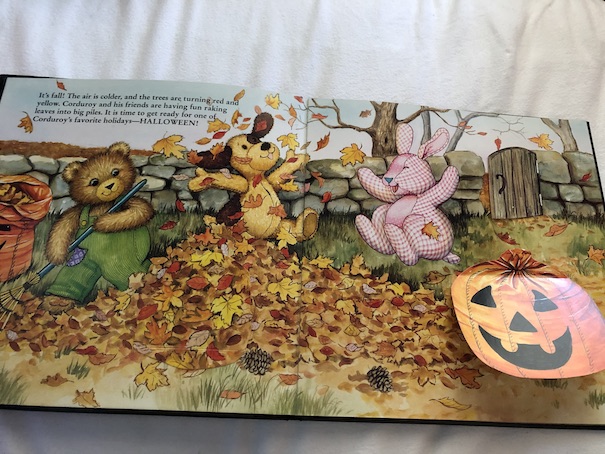
Corduroy’s Halloween

Corduroy’s Halloween, based on the character created by Don Freeman, pictures by Lisa McCue, 1995.

I’ve seen this book as both a regular picture book and a lift-the-flap book. The basic story is the same either way, and the illustrations are similar in either copy. I just happen to have the lift-the-flap copy. This is one of the Corduroy books where Corduroy lives on his own with his stuffed animal friends and no humans are present in the story.

Corduroy and his friends are excited because Halloween is coming! There are many things to do, like raking leaves, choosing pumpkins for jack o’lanterns, and entering a window-painting contest.

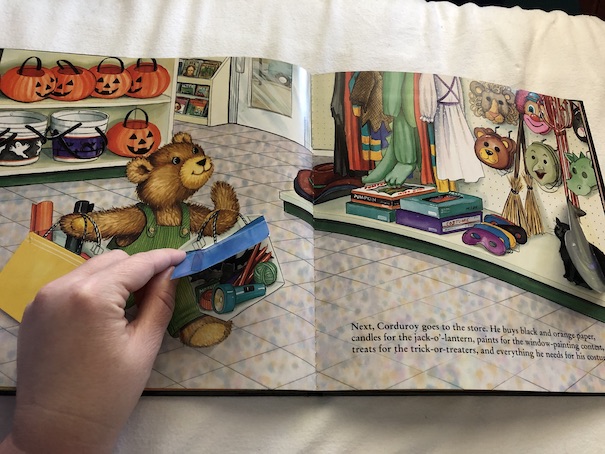
Corduroy shops for the supplies that he will need for his Halloween party.

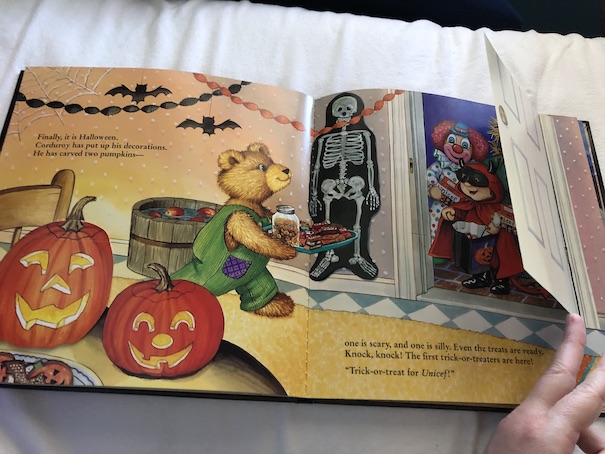
By Halloween night, all of the decorations are up, and Corduroy gets his first trick-or-treaters, including some trick-or-treating for UNICEF.

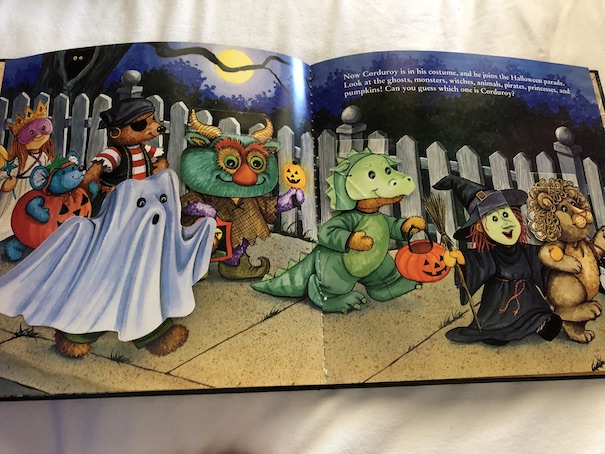
Corduroy and his friends also take part in the Halloween costume parade. In the lift-the-flap copy, you can lift up character’s masks and see their faces. I think that makes this a good book for helping to explain to young children that people in scary costumes are just ordinary people beneath the masks.

Then, they return to Corduroy’s house to have their party and bob for apples. Happy Halloween!

My Sister the Witch

My Sister the Witch by Ellen Conford, 1995.

Norman Newman is convinced that his sister, Elaine, is a witch. When he goes to her room one evening to call her to dinner, he catches her all dressed in black and chanting strange words.

Norman likes to read horror and mystery books, and he uses some of the techniques that he has learned from reading his favorite mystery stories to investigate his sister. Some of these techniques don’t work as well for Norman as they do for the characters in his books, partly because he doesn’t really know how they work (like which end of a glass you’re supposed to put against a door when you’re trying to listen in on someone) and partly because the characters and situations in books are fictional and some of the things they do don’t work that well in real life.

Early in the story, Norman uses one of his scary stories for a book report for school, and his teacher tells him that she wants him to start to read other types of books. She makes him write an extra book report, telling him that he has a week to read something outside of his usual genre and report on it. That incident and some other pieces of bad luck cause Norman to think that maybe Elaine really is a witch and that she put a curse on him, just like a witch in the book he just read.

Norman’s friend, Milo, thinks that Norman’s imagination is just running away with him. It’s happened before because of the scary stories he reads. Once, he thought that their teacher might be an alien.

When Norman has a brief streak of good luck, he starts to think that whatever curse Elaine put on him may be over, but then, he gets sick to his stomach. He goes to the library to get a book for his new book report, and he also gets a non-fiction book about witches. Then, he overhears Elaine talking to her friend, Deirdre, about something being powerful and scaring Deirdre’s sister. The two of them begin chanting together. Norman decides that he was right about Elaine being a witch and that Deirdre must be a witch, too.

After some research, Norman and Milo learn that, to get rid of the effects of a magic spell, they need to learn the words to the spell and say it backwards. Norman doesn’t remember the whole spell from when he heard Elaine say it, so Milo says that he’ll just have to look for a copy of the spell in her room. The book they consult also says that a spell can be neutralized if the person it was cast on duplicates it, which means gathering all the materials used in the spell, but Norman doesn’t know where he would find things like newts’ eyes and frogs’ toes. Either way, it looks like Norman’s going to need a copy of Elaine’s spell. However, even when he gets it and tries to break the curse, things still go wrong. What can Norman do to get rid of this bad luck spell?

I particularly liked the character of Milo in the story. Milo uses a wheelchair because he was hit by a car when he was young and can’t walk. Norman notes that, although Milo can’t use his legs, he gets around very well in his wheelchair and that he has very strong arms. Milo is also more level-headed than Norman, pointing out to him how he has allowed his imagination to run away with him in the past.

The book is available to borrow and read for free online through Internet Archive.

Spoilers and Other Thoughts

I thought that the secret behind Elaine’s spell was pretty obvious from the beginning because the book repeatedly says that Elaine wants to be an actress. It reminded me of other stories I’ve seen where someone’s playacting was mistaken for some real life danger. Overall, I enjoyed the book, even though I figured out what was going on pretty quickly. Kids might be in suspense for longer.

By the end, Norman still hasn’t learned his lesson because the next scary story he reads leaves him looking at his dog suspiciously. There is at least one sequel to this story called Norman Newman and the Werewolf of Walnut Street.

The Klutz Book of Card Games

The Klutz Book of Card Games for Sharks & Others by the Editors of Klutz Press, 1990.

This book is part of the classic children’s hobby and activity series from Klutz Press. Originally, this book came with a deck of cards, which was attached to the book at the hole in the upper left corner.

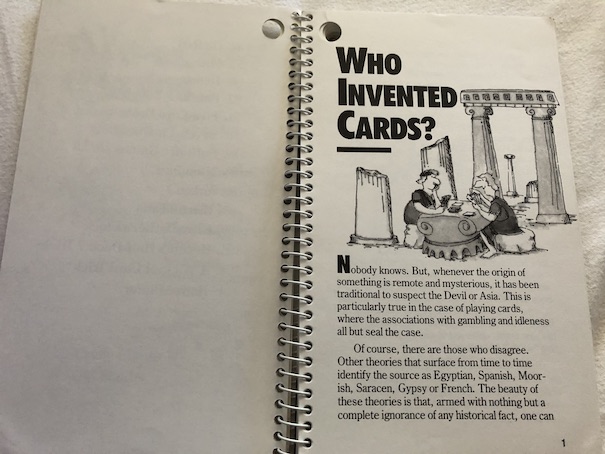
The book begins with a brief history of playing cards. The exact origins of playing cards are unknown, but the book describes some notable events in card game history, including the fact that people throughout history have often disapproved of playing cards, identifying them as signs of sloth or believing them to be associated with the devil (probably for their connection with gambling, although the book doesn’t get that specific). The book says that the modern form of the standard 52-card deck with 4 suits of 13 cards solidified around the late 1400s in Europe.

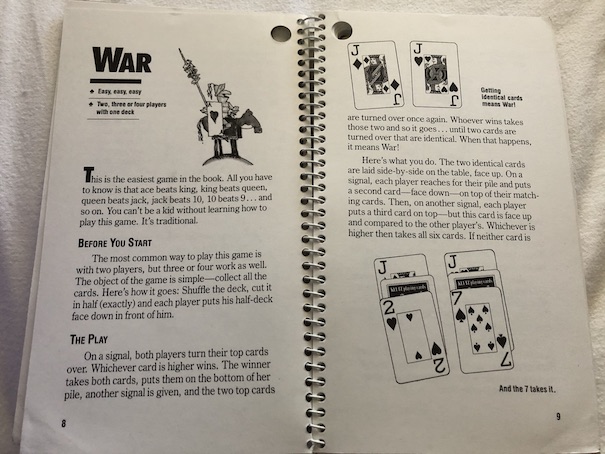
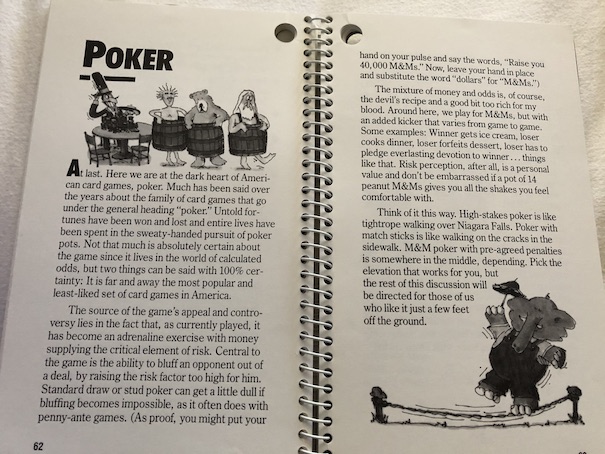
The book then gives instructions for playing various card games, including various types of solitaire and two-player games as well as games for larger groups. The book has the rules for different versions of Poker and Rummy and some childhood classics like War, I Doubt It, Crazy Eights, and Old Maid. For games that involve gambling concepts, like Poker or Michigan, they recommend using M&Ms.

Besides giving the rules for the games, each section also includes a few words about the history of games or some interesting thoughts or facts about them or tips for playing. Many of the thoughts (and some of the history facts) about games are joking, like the tip for Egyptian War, “This game is traditionally played on lunch or picnic tables, when you’re supposed to be taking your tray back.”

At the end of the book, there are instructions for two magic tricks with cards and for building a house of cards.

The book is available to borrow and free for free online through Internet Archive.

Stop the Watch

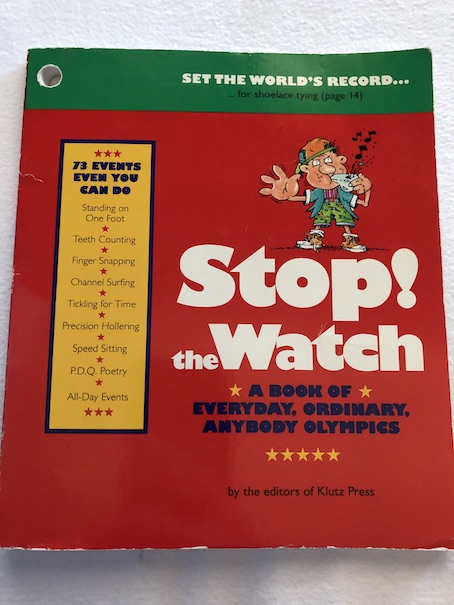
Stop! the Watch by the Editors of Klutz Press, 1993.

This book is part of the classic children’s hobby and activity series from Klutz Press. Originally, this book came with a working stopwatch in bright colors, which was attached to the book at the hole in the upper left corner. Unfortunately, I broke my stopwatch years ago, but I liked the book, and I got a new stopwatch to use with it.

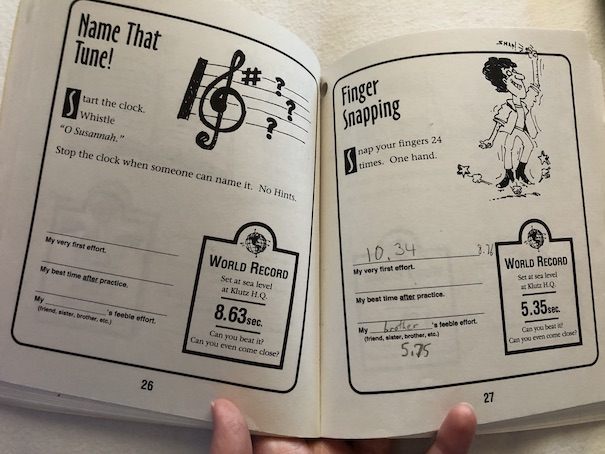
The book begins with instructions for using the stopwatch and then offers various timed activities and goals for kids to reach while using the stopwatch. Most of the activities involved kids performing various simple stunts and trying to do them as fast as possible, like counting to 126 by 7s, writing a verse from The Song of Hiawatha, tying shoelaces, singing “Happy Birthday” to Rumpelstiltskin, walking up a flight of stairs with a book balanced on the head, and drawing a picture of a gorilla. There are places in the book to record your efforts and your own time records and the records of your friends. (You can see in my copy where I made notes.)

There are also activities that participants are supposed to perform for a very specific amount of time, trying to keep as close to the allotted time as possible without actually watching the watch. For example, one of the events is hollering the word “Eeeeellllllskin” for exactly 17 seconds.

There are also some events that are meant to be completed by two people acting as a team, like leapfrogging, carrying your partner ten steps, singing “Jingle Bells” while alternating words between partners, and throwing something weird back and forth.

The original edition of this book included time records set by the author and others at Klutz HQ. Readers could compete against these records and try to beat them, and later editions of the book were printed with new records set by readers who reported their results.

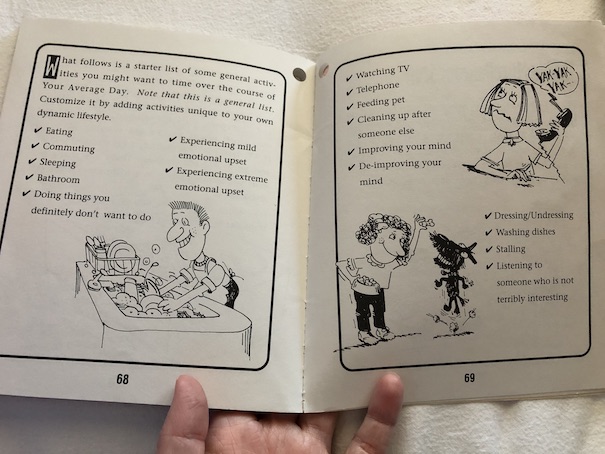
In the back of the book, there is a section explaining how to time daily events and predict about how much time you will spend doing those things throughout your life, like how much time you spend in the bathroom. Some of these things can be enlightening, like how much time you spend watching tv (Is it too much?), being emotionally upset (Have you been stressing too much?), or stalling when you’re supposed to be doing something else. There are also some educational ways of using time. The book explains how to tell how fast the car you’re traveling in is driving without looking at the spedometer by timing the distance between mile markers. It also explains how to tell how high you’ve tossed a ball by timing how long it takes to hit the ground.

The book is available to borrow and read online through Internet Archive.

Amber Brown Goes Fourth

Amber Brown Goes Fourth by Paula Danziger, 1995.

Amber Brown Goes Fourth leaning against a tree

Big changes are happening in the life of Amber Brown. She’s back from her trip to England, during which she got chicken pox, and she’s about to start fourth grade. However, her best friend, Justin, has moved away, so she’s going to have to face the start of the new school year without him. Amber worries about whether she’ll be able to find a new best friend. Meanwhile, she’s also still adjusting to her parents’ divorce and her father’s move to Paris, France, and her mother has recently started dating a man named Max. Amber’s mother wants Amber to meet Max, but Amber doesn’t feel ready for that and is still quietly hoping that maybe her father will come back and her parents will reconcile.

Amber’s friend problems seem be solved when Brandi sits next to her in their new class. Brandi has changed since the last school year and is no longer best friends with snobby Hannah. Being friends with Brandi also forces Amber to make some changes. Brandi is quick to tell her on the first day that she isn’t Justin and that Amber can’t expect her to do the things that Justin would have done. Brandi is less excited about being friends with Amber than Amber is about making friends with her.

Amber worries that she doesn’t know how to make friends and especially that she doesn’t know how to make a best friend. She and Justin got to know each other when they were little kids, and Amber didn’t even have to try to make him her friend. However, that turns out to be the key to making friends with Brandi – not trying so hard and letting their friendship develop naturally.

When Amber and Brandi both have to go to the school’s afterschool program because their mothers work, they get to know each other better. Brandi hasn’t actually lived in Amber’s town for very long, having moved there to only about a year before, and when she moved, she also left behind her best friend and had trouble making a new one. When Brandi joined Amber’s class the year before, almost everyone already had a best friend and didn’t seem interested in making time for a new one, which is why she tried being friends with nasty Hannah. However, Hannah turns out to be mean to everyone, even the person trying to be her best friend, which is why Brandi stopped trying to be Hannah’s friend. Brandi has actually wanted to be friends with Amber for some time, but Amber was always too occupied with Justin, and after Justin left, Brandi was afraid that Amber was just looking for a Justin replacement and wouldn’t like her for who she really is. Amber tells her that she really does like her for being Brandi.

Amber comes to realize that it’s actually a good thing that Brandi isn’t exactly like Justin. She still keeps in touch with Justin by mail, but it’s also fun doing things with Brandi that she would never have done with Justin. Brandi teaches Amber to blow bubble gum bubbles with her nose. Because Brandi is a girl, Amber and Brandi can also do girl things together, like braiding each other’s hair. Brandi also likes to read more than Justin does, and the girls start talking about books with each other. Amber learns that not all changes are bad or difficult and that letting new people into her life brings interesting variety.

By the end of the book, she also comes to understand more about why her mother values her new relationship with Max. Justin’s mother was Amber’s mother’s best friend, and when Justin’s family moved away, Amber’s mother lost her best friend, too. That, combined with her loneliness since her divorce, led Amber’s mother to seek out new relationships, which is how she met Max and became fond of him. Max is apparently a nice man, and he even goes to the trouble of seeking out a particular mermaid toy for Amber because Amber’s mother told him that Amber really wanted one. At the end of the book, Amber still isn’t sure that she’s ready to meet Max because she feels like she needs some time to adjust to the other changes in her life first, but she begins to feel a little more open to the idea of change and letting new people into her life.

The book is very realistic about the gradual changes that Amber goes through as she starts fourth grade and learns how to make a new friend. Not everything in her life is completely resolved, like her feelings about her parents’ divorce and her mother’s new boyfriend, but Amber is making progress and growing up a little.

The book is available to borrow and read online through Internet Archive.

Who Ran My Underwear Up the Flagpole

School Daze

It’s still just a few weeks into the first new school year at Plumstead Middle School, and Eddie still feels a little out of place. He still feels like he’s a grade school kid at heart and doesn’t fit in with the big kids at middle school. The most grown-up impulse that he has is to frequently stare and smile at Sunny Wyler, and she doesn’t even like him to do that.

Then, something horribly embarrassing happens. Mr. Hollis, the social studies teacher is so late that the entire class gives up on him arriving and decides to go to the locker rooms to change early for gym. Mr. Hollis storms into the boys’ locker room a minute later and barks orders at the boys to return to his class immediately. Eddie, scared to death of his angry teacher, follows this order to the letter – forgetting that he isn’t wearing any pants and is just sitting there in his underwear. Eddie is the only person who doesn’t get any punishment from Mr. Hollis, who is sympathetic to his plight, but that’s not enough to make up for everyone seeing Eddie in his underwear.

Eddie’s underwear has cartoon characters on it, which is just another thing that makes him feel like a baby in middle school. He enlists the help of his best friend, Pickles, to help him burn his old cartoon character underwear, planning to buy some new ones with money he was saving to buy comic books. Then, Pickles suggests to him that he do something else to see how grown-up he is: try out for the school’s football team.

Unbeknownst to the boys, Salem and Sunny are both trying out for the school’s cheerleading squad. Salem isn’t at all the cheerleading type, but that’s the very reason why she wants to join the cheerleading squad. She wants to be an author, and she’s trying to understand different types of people so she can create more realistic characters. Therefore, she sometimes does things that would otherwise be out of character for her just for the experience or to get inside the head of different types of people. However, Salem realizes that she isn’t a very good cheerleader, so she invites Sunny over to consult her on what to do.

In spite of her grumpy, prickly personality, Sunny is actually a very good cheerleader, but she can’t help Salem to improve enough to make the squad. The girls do see Eddie at the football try-outs, though. Eddie’s uniform is really too big for him, his helmet gets turned around, and he ends up with a nosebleed. The coach complains about everything that’s going on with the team and how little time he has to train them and says that what he needs is a manager, so Salem volunteers for the position. Salem is very good at organizing things. With Pickles as part of the school’s small marching band, the entire group of friends is now involved in the school’s football games.

The four kids still have lunch with the school principal once a week, having developed a friendship with him during their rocky first days of school. They tell the principal about their football involvement, and Sunny brings up the subject of Eddie’s Superman underwear that everyone in the class saw him wearing. Eddie denies having any Superman underwear (which is now true), and Pickles backs him up, saying that one pair was just an old pair that he had to wear that day because the others were in the wash. The principal tries to hint to Sunny that she should stop teasing Eddie, but she takes it too far, and Eddie ends up smashing a Devil Dog snack cake (link repaired Nov. 2023) into Sunny’s face. The principal is actually impressed that timid Eddie had to the nerve to do it, and oddly, Sunny doesn’t even seem upset afterward.

Thus begins Eddie’s first steps at learning to be more grown-up. However, it’s not going to be easy for him. His current reputation is going to be hard to live down. The other guys on the football team are all bigger than he is, and he’s been bullied by the big kids since school started. At one practice meet, his pants fall down because his uniform is too loose, and a big kid hoists him in the air to show everyone that he’s not wearing Superman underwear.

But, what Pickles had told Eddie when they were burning Eddie’s old underwear was correct: Eddie might be a kid, but so are all the other sixth graders at their school. Eddie isn’t the only boy on the football team who is new and small. He’s not the only one who is sometimes timid and awkward, either. As team manager, Salem soon begins helping the new football players tie the drawstrings of their pants more tightly because other players are worried about losing their pants like Eddie did. She also begins soothing their various injuries, fears, and ruffled feelings. Around their coach, the boys have to act tough and not cry, even when they’re scared or hurt, but since their team manager is an understanding girl, the boys can sometimes let down their guard and be more human with her. Salem gets a lot of insight into the emotions of football players, and in return, she helps the young players to understand and manage their emotions, too. Eddie resists most of Salem’s help because he’s trying to prove that he’s tough and grown-up, but without her support, many of the other boys would have quit the team.

As the season progresses, Eddie gets the chance to a football hero, the very first player to score a touchdown at their brand-new school, and Sunny realizes that she’d rather be a mascot than a cheerleader because she’s too grouchy to be a cheerleader and nobody tells a Fighting Hamster to keep smiling. However, even Eddie’s football victory doesn’t end the teasing, and somebody runs a pair of Superman underpants up the flagpole to mock him. In a desperate attempt to cheer him up, Salem promises to arrange the thing she knows that Eddie wants the most – a chance to kiss Sunny. Will it work?

The book is available to borrow and read for free online through Internet Archive.

The kids do some growing-up in this book, but not unreasonably so for eleven-year-olds. The party where Salem tries to arrange for Sunny and Eddie to kiss is suitably awkward. As the kids talk about the idea of kissing, they tease each other. I didn’t like the part where Salem called Sunny a baby for not wanting to kiss Eddie. It’s not that I don’t think that’s realistic for some eleven-year-olds, but I believe more in the modern idea of giving consent and respecting someone’s “no” when it comes to anything romantic. That didn’t occur to me when I first read this book as a kid, but that’s what real maturity does for you. The word “sex” does appear in the story when Salem challenges Sunny’s maturity, saying that she probably still giggles when someone says that word, to which Sunny quickly replies, “Don’t you?”

“‘No,’ said Salem, ‘as a matter of fact, I don’t. What’s there to giggle about? It’s nature. It’s as natural as trees and cows. Do you giggle when somebody says trees or cows?’
‘If the tree tries to kiss the cow,’ said Sunny, ‘sure, absolutely.'”

As part of their maturity talk, Salem points out that women do mature faster than men, and that’s why some young women marry older men. Well, that’s one explanation for that, although, as an adult, I can think of at least two more.

To her credit, Sunny thinks of a way to deliver a kiss to Eddie without exactly kissing him. She does it in a joking way as part of a game of Truth or Dare.

As a side plot, the kids were also trying to decide whether or not they want to go to the Halloween Dance at school. On Halloween, they all meet in their costumes, and Eddie is over his Superman underwear embarrassment enough to wear a Superman costume. At first, the kids think that maybe they’ll go to the dance, but on the way, they can’t resist stopping to trick-or-treat and end up changing their minds. They’re not really ready to be completely grown-up yet, any more than they’re interested in romance in any serious sense. What’s more, they’re all fine with that.

This is the book where Pickles makes himself a new skateboard out of an old surfboard that’s big enough to carry not only him but all of his friends, too. He calls it the Picklebus.

Report to the Principal’s Office

School Daze

This is the first book in a series about a group of unlikely friends in middle school.

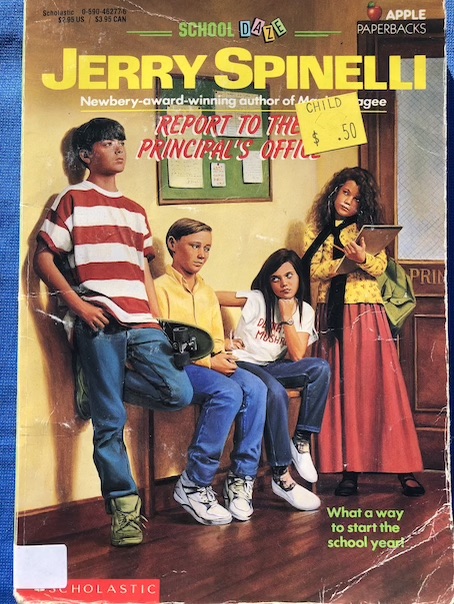
The start of the new school year is a disaster for Sunny Wyler. Her best friend, Hillary, lives directly across the street from her house, and they’ve been close for their entire lives, always attending the same school. However, because of the construction of a new middle school in their town and changing school zone lines, which happen to be drawn directly down the middle of their street, Sunny and Hillary will now be sent to different schools for middle school. (During my childhood, parents could sometimes ask for a boundary exception for kids from the local school district so they could attend a different school with their friends, but that doesn’t appear to be an option here.) Hillary tries to be optimistic, pointing out that the new middle school that Sunny will be attending is much nicer than the old middle school that she will have to attend, but Sunny doesn’t care about that. She just wants to go to school with her best friend.

Sunny thinks that she’s come up with a plan to reunite with Hillary. She’s decided to make herself so obnoxious at her new school that they will kick her out, and her parents will have no choice but to send her to Hillary’s school. She’s decided to wear an old t-shirt that says “Death to Mushrooms” every day, never washing it, so she’ll smell bad. She’ll refuse to wash her hair, so it will be dirty and greasy. Above all, she’ll have the worst attitude, never smile, and never talk, never even answering if her teacher asks her questions in class.

Eddie Mott first encounters Sunny Wyler on the bus to school. She sits next to him, and he can tell right away that she has problems and a bad attitude, and that’s the last thing he wants for the beginning of his new school year. Eddie is trying to adopt a more grown-up image in his middle school years, and he desperately wants to fit in with the other kids. He’s trying to wear the right clothes, be friendly with other kids, and above all, avoid problems. None of that has prepared him for Sunny.

There is one person, though, who has done his best to prepare for all the kids who will be coming to the new middle school, the school’s principal, Mr. Brimlow. Over the summer, he studied the details of the incoming students, and he can recognize them on sight as soon as they arrive. When the school bus driver tells him that there’s a kid on the bus who refuses to get off, he recognizes the kid immediately as Eddie. Between dealing with Sunny’s aggressive unfriendliness and being roughed up by older kids on the bus, Eddie can’t bring himself to come to the school. The bus driver, impatient to get to his other job, actually drives off with the principal, Eddie, and Salem, a girl with literary ambitions who wanted to study the situation for story fodder, still on board.

Things are generally going wrong all over Plumstead Middle School as everyone, including the teachers, try to figure out their way around, but Mr. Brimlow is calm and good-natured, and getting back to school with Eddie and Salem after their bus adventure breaks the ice between them. When Mr. Brimlow gets back to his office, he finds Dennis “Pickles” Johnson waiting for him. Dennis, who gained his nickname from the time he decorated his family’s Christmas tree with actual pickles and the incident made the local paper, is an amateur inventor who made his own oversized skateboard that looks like a pickle. The reason why he was sent to the principal’s office is that his skateboard won’t fit in his locker, and he can’t have it in class. When Pickles asks the principal what could happen if he were allowed to ride his skateboard around the school, the principal asks to try the skateboard himself. He’s unable to stop himself and ends up rolling into a nearby classroom and crashing into the geography teacher’s desk, proving to Pickles (and everybody else) what could happen if Pickles is allowed to use his skateboard in the school hallways. Mr. Brimlow forbids Pickles to bring the skateboard to school again but also thanks him for the fun ride and invites him to lunch.

Far from being upset by the strange beginning to the school year, Mr. Brimlow is actually grateful for the eccentric students and their shenanigans because he really likes to get to know his students, and he particularly learns a lot about Eddie, Salem, Pickles, and Sunny on their first day. It hasn’t escaped his notice that Sunny is being purposely sour to other people, and it isn’t really a surprise when one of her teachers sends her to the principal’s office after she deliberately answers all of her math problems wrong, misspells everything in a writing assignment, writes all of her assignments in extra tiny writing to make them difficult to read, and then pretends to flick boogers at Eddie.

When she’s sent to the principal’s office, Sunny thinks that her plan of being obnoxious has already worked and that she’ll soon be sent home or to Hillary’s school, but the principal ends up inviting her to lunch along with Pickles, Eddie, and Salem. The principal actually enjoys the experience, and rather than punishing any of the students for their various shenanigans from the morning, he decides to give each of them special jobs to help them settle into life at their new school. Since Eddie was a flag raiser at his old school, Mr. Brimlow gives him that job at Plumstead Middle School, assigning Pickles to help him. He puts Sunny in charge of taking care of an escaped hamster that the kids found, and noting Salem’s interest in people’s personalities and organizational skills, puts Salem in charge of all of the other students as they are given the collective job of coming up with a mascot for the school.

Through these activities, the four kids become friends with each other and also start to become a real part of their new school. Instead of being kicked out, Sunny is the one who comes up with the winning idea for the school’s new mascot, the Hamsters, becoming attached to the hamster that she has to care for and upset during a time when she thinks that he’s dead. (Fortunately, the hamster is fine in the end.) Eddie thinks of himself as a wimp for being pushed around by the older kids, but Pickles becomes his friend and sticks up for him, and Salem writes a story about him to show him why he’s actually a hero in his own small way.

It’s a good story about a group of unlikely friends with likable, eccentric characters. In the end, the principal’s tactic of helping the students to adjust to middle school by getting them more involved works well, and even Sunny realizes that she can be happy in her new school with her new friends while still being friends with Hillary from across the street.

The book is available to borrow and read for free online through Internet Archive.

Owl Babies

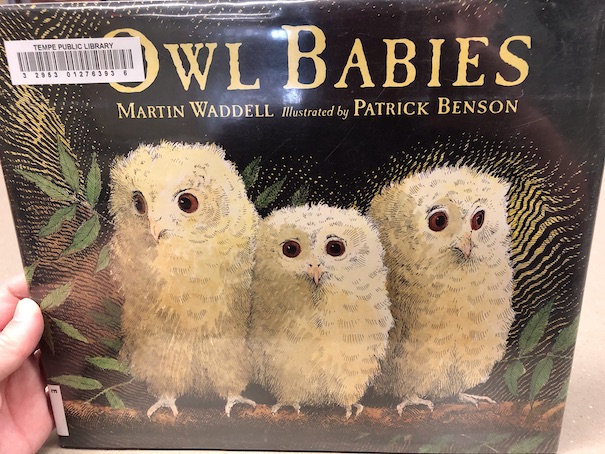
Owl Babies by Martin Waddell, illustrated by Patrick Benson, 1992.

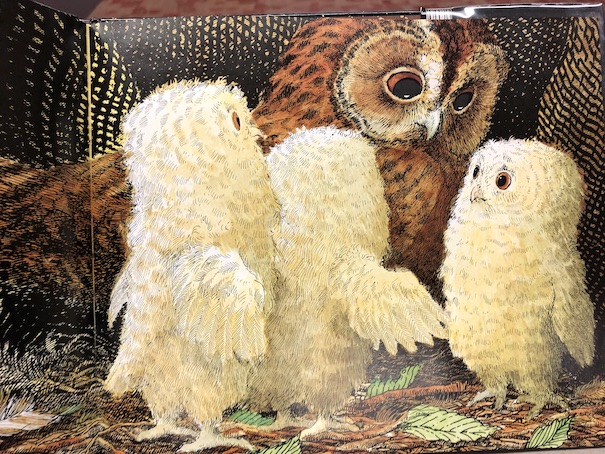
Sarah, Percy, and Bill are three owl babies who live in a tree with their mother. One night, they wake up and can’t find their mother. They think it over, and they decide that she has probably gone out to get food for them.

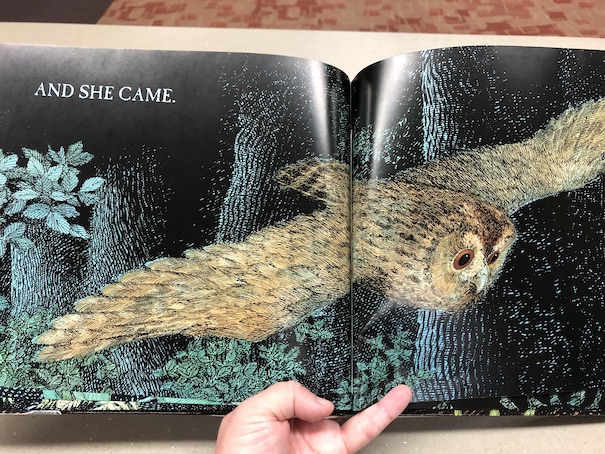
They wait for her and try to be brave, but they get worried that she isn’t coming back. Then, suddenly, their mother does come home!

The little owls are happy to see their mother, and their mother reminds them, “You knew I’d come back.”

It’s common for children to worry when their parents go away without them, wondering if they will ever come back. The story reminds young children that, even when mommy has to go away for a while, she will still come back home.

The book is available to borrow for free online through Internet Archive.

Dragons, Dragons, and Other Creatures that Never Were

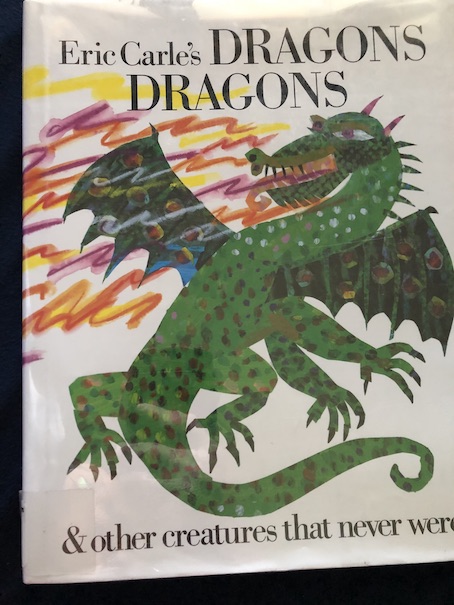
Dragons, Dragons, and Other Creatures that Never Were by Eric Carle, 1991.

This is a collection of poems and quotations about various mythical creatures from around the world. The poems and quotes come from various sources. Some are by famous authors and some are nursery rhymes and pieces of folklore. The quote about the leviathan is from The Book of Job.

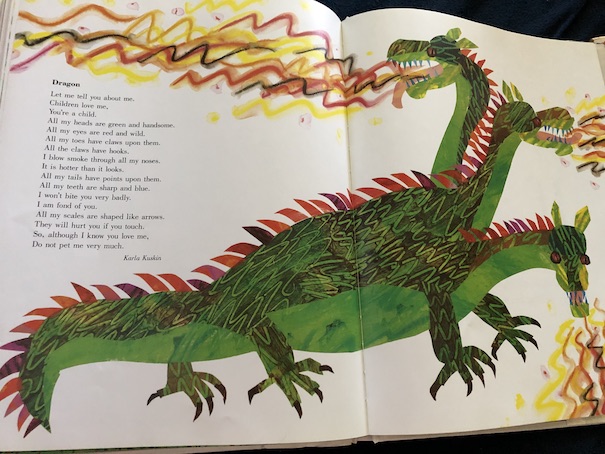
The illustrations are what really make the book interesting. They are bright and colorful, and the middle section of the book folds out to reveal a particularly long picture of a Chinese dragon.

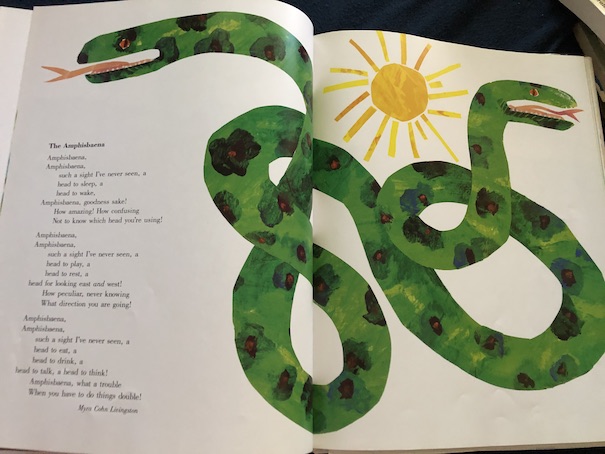
Although there are common mythological creatures, like dragons, unicorns, yetis, the phoenix, there are also less common ones that some children may not have even heard of, like the giant bird called the roc, the two-headed amphisbaena, the kappa, and the bunyip.

Most of the descriptions of the creatures are in the poems themselves and in the accompanying pictures, but there is a glossary in the back that explains more about what each creature is and where it is from.

The book is available to borrow and read online for free through Internet Archive (multiple copies).