The King’s Fool

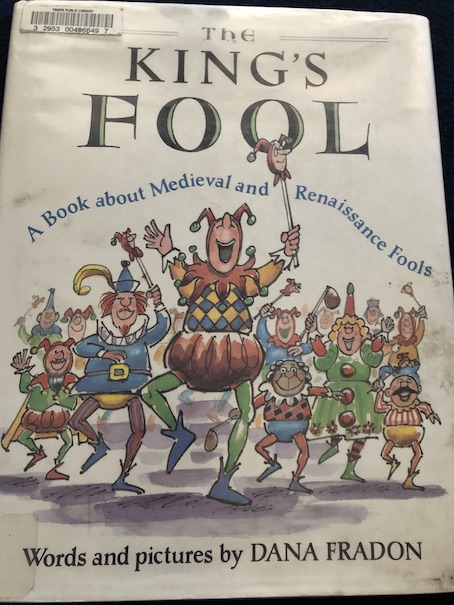
The King’s Fool by Dana Fradon, 1993.

I love nonfiction books about unusual and very specific topics! This is a non-fiction book about fools and jesters throughout history. The book begins in a museum, where a class of schoolchildren are being shown a collection of jester statues. One of the statues, Frambert, comes to life and tells the children about his life and the lives other other jesters.

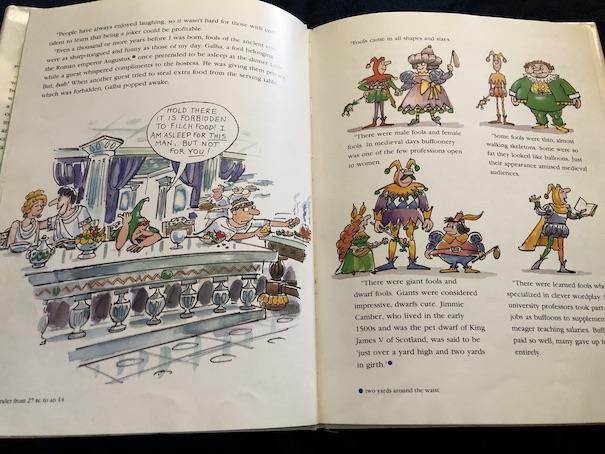
Fools and jesters were the comedians of the past. It was a job for women as well as men. There were different types of professional fools. Some of them were people with unusual appearances, such as dwarfs or people who were unusually tall. Sometimes, university professors took part-time jobs as jesters to supplement their income (teaching has always been a notoriously under-paid profession), using their public speaking skills and knowledge to make intellectual jokes or jokes based on wordplay. Some of them were very successful and made so much money as entertainers that they gave up their teaching jobs. (So, if you’ve discovered that you make more money producing humorous YouTube videos about history than you would as a history teacher or at least find it a useful supplement to your teaching salary, understand that this is just the modern equivalent.)
Among the individual jesters described in the book was Mathurine, a French jester from the 1600s. She liked to dress like an Amazonian warrior from Greek legends as part of her act.
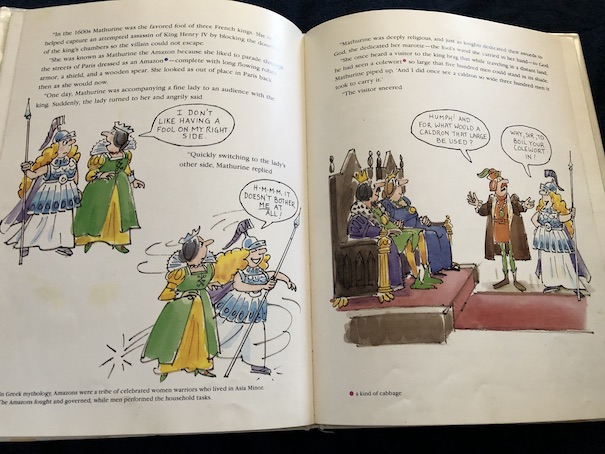
Frambert is a fictional jester, but he describes how he became a jester to demonstrate what a jester’s life was like. According to his fictional biography, his talent for mimicry and making jokes was noticed when he was young, and he was selected for training as a professional fool. When he was 19 years old, he officially became a jester. His children also became jesters after him. Because he was well-loved by his king, he was given a generous pension: a village of his own to govern, which sometimes did happen to favorite jesters.

The book is available to borrow and read for free online through Internet Archive.
Games

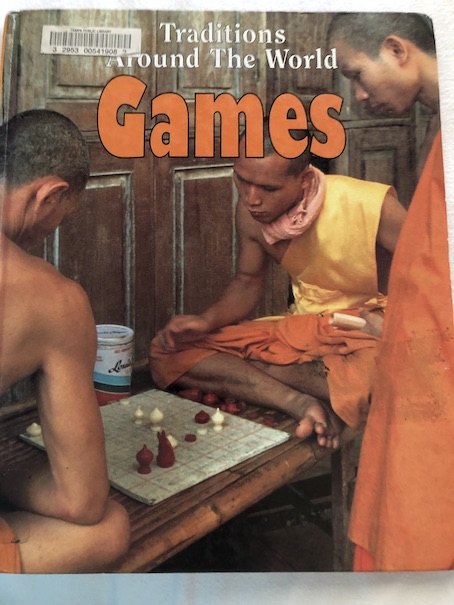
Games by Godfrey Hall, 1995.

This book is part of the Traditions Around the World series, which explains different aspects of culture around the world. Each book in the series focuses on a different cultural topic and then explains traditions regarding that topic in different countries. This one is all about games of various kinds.

The games are organized into sections by continent, and the book covers a variety of board games, party games, and sports. Not all of the games are explained in detail. Many of them have brief descriptions, explaining what types of games they are and when they are usually played, and there are some with complete instructions.

I was originally interested in the histories of the some of the games, but the book doesn’t always explain the history of games or tell how old they are. There is some of that type of information, but some of it is a little vague, just mentioning that these are games are played or have been played in certain countries. Of course, when dealing with such a broad topic in a short book, it can be difficult to go into detail on everything, and when it comes to cultural topics, like games, their origins aren’t always known or obvious. Many games have their origins in many different countries. Sometimes, it’s because they are based on such universal concepts that many different societies naturally come up with their own variations (like games involving tossing a ball or hiding and seeking). Other times, it’s because the games have been played in many different countries over the centuries, and everywhere they’ve been played, rules have been altered or pieces and boards redesigned to take their modern form, like Checkers and Chess. Sometimes, this has happened so many times, it can be difficult to say exactly how the very oldest forms were played like with Backgammon. This book mention that people in China play Backgammon, but it’s actually a game played all over the world, related to ancient board games from Ancient Rome, Egypt, and the Middle East. The book doesn’t really go into its history.

I think that the two strength of this book are the variety of games it covers and the pictures it shows of real people playing different games. The book discusses ancient board games like Go (China and Japan), unusual sports like hurling (from Ireland), and children’s playground games, like How Deep Is the Water? (from Germany) as well as some common games that are played around the world, like jacks (an ancient game that has been played in many variations, called variously knucklebones, jackstones, etc.). Some games and game concepts are universal, but there are some unique gems that are particular to certain areas. Seeing the pictures makes the games come alive and also makes the descriptions easier to understand. That is one of the things that I really like about children’s books, and I wish more adult books would make better use of pictures. They really are worth a thousand words.

Games People Play: China

Games People Play: China by Kim Dramer, 1997.

This book is part of a series about games played around the world. The series also covers sports and other, related activities. This book is specifically about the traditional games and sports of China.

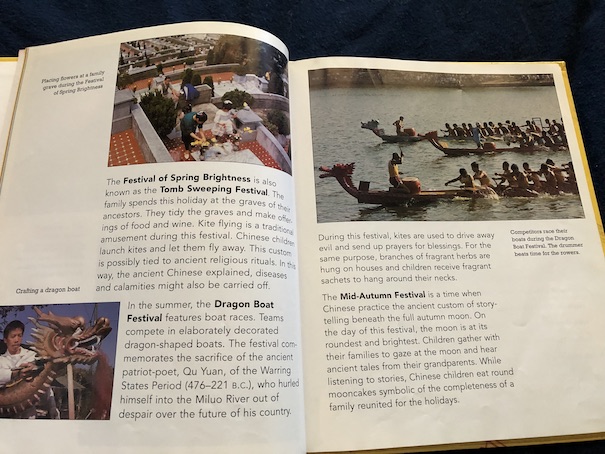
China’s history goes back thousands of years, and so does the history of games and toys enjoyed there by generations of children. The book begins with a brief history of China. This book was written in the 1990s, and it contains a brief description of China’s one-child policy, which controlled the sizes of Chinese families and impacted the way in which children were raised. It also explains some important Chinese festivals, such as the Lunar New Year, Lantern Festival, and Dragon Boat Festival. It explains the origins of these festivals and how people celebrate, including the roles of children in the celebrations.

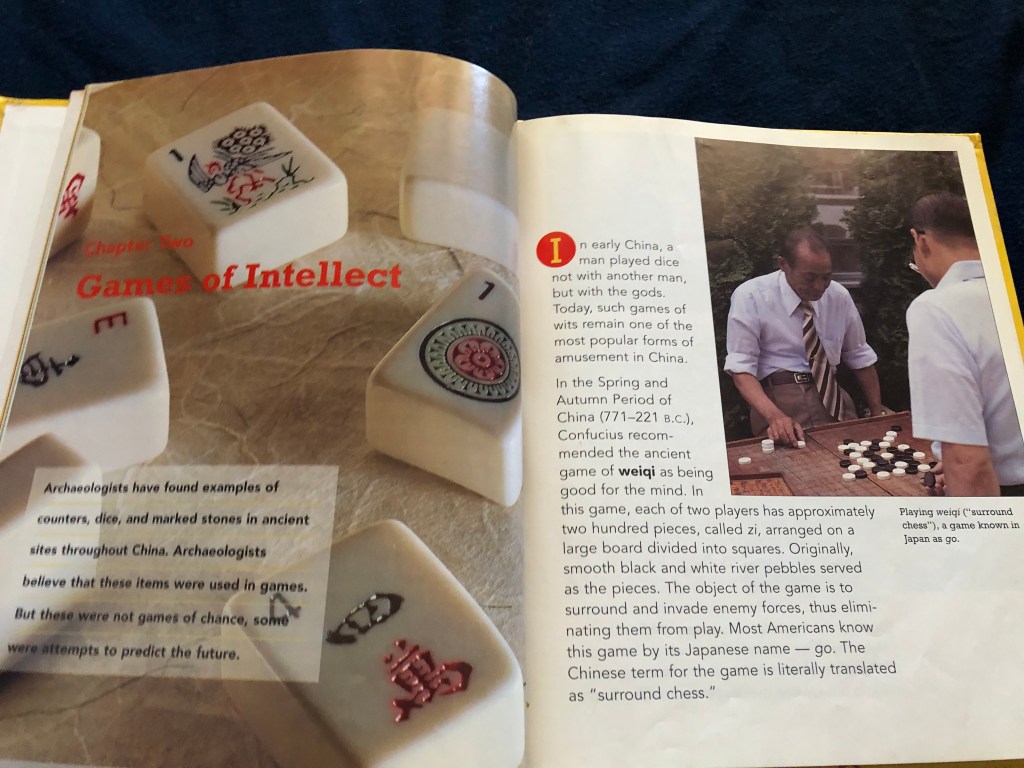
I most enjoyed the sections about board games. Some of the oldest board games in the world come from China. Some of these games are also played in Japan under different names. For example, the game Weiqi is known as Go in Japan, and this is the name that is also most familiar to Americans. Chinese Chess uses different pieces from the international form of chess. The book mentions Chinese Checkers also, but it doesn’t explain that it was not actually invented in China, even though it is played there today. (The “Chinese” in the title was a marketing gimmick in the United States, to make the game seem more exotic. It’s actually a German variation of the American game Halma, which was based on an older English game called Hoppers.) Majiang (called Mah-Jongg in the United States) is another well-known Chinese game. Sometimes, in the United States, people play it as a solitaire game on their computes, but the real-life board game is a multiplayer game with several variations.

When I was in school, I had a teacher who was fond of tangrams, which is a kind of puzzle game that involves using a set of basic shapes to produce different forms or pictures of objects. The book demonstrates how to make a tangram set and how to use it.

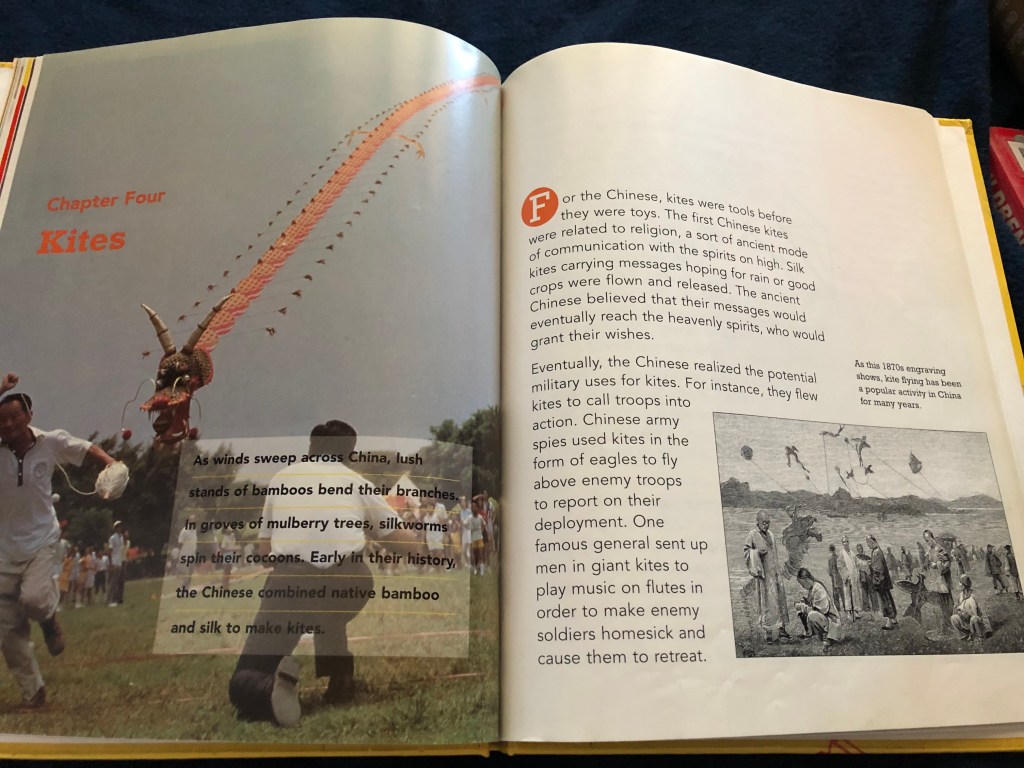
The earliest kites made in China were made for serious, religious purposes, sending prayers, signs, or messages to the heavens. Later, the Chinese also used them to give military signals. Later, paper kites became a popular form of amusement and folk art. They can be made in many different forms. Some of them even make musical sounds, caused by the wind passing over holes placed in the bamboo frame of the kite.

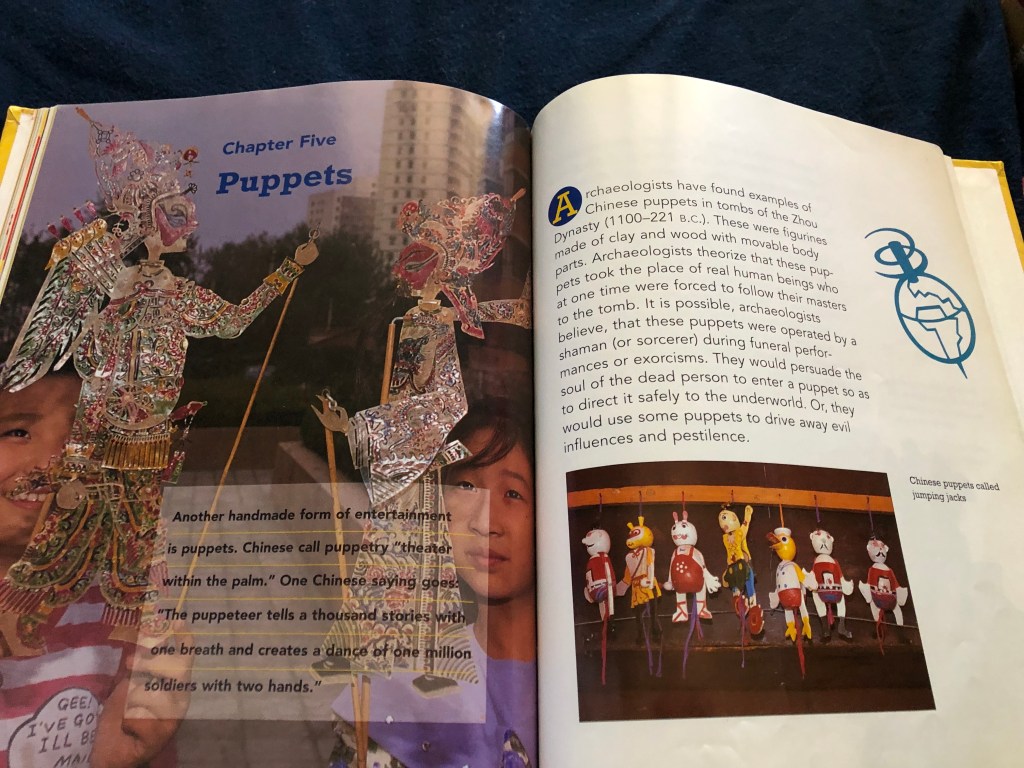
The Chinese also use puppets in different styles. The history of puppet theater also goes back thousands of years, and puppets made for puppet theaters can be very elaborate. Sometimes, plays are performed with shadow puppets controlled by sticks and sometimes with marionettes or hand puppets. The appearance of a puppet and provide clues to the puppet’s character. For example, puppets with red faces represent brave characters while ones with white faces may be cunning and treacherous and ones with black faces are loyal.

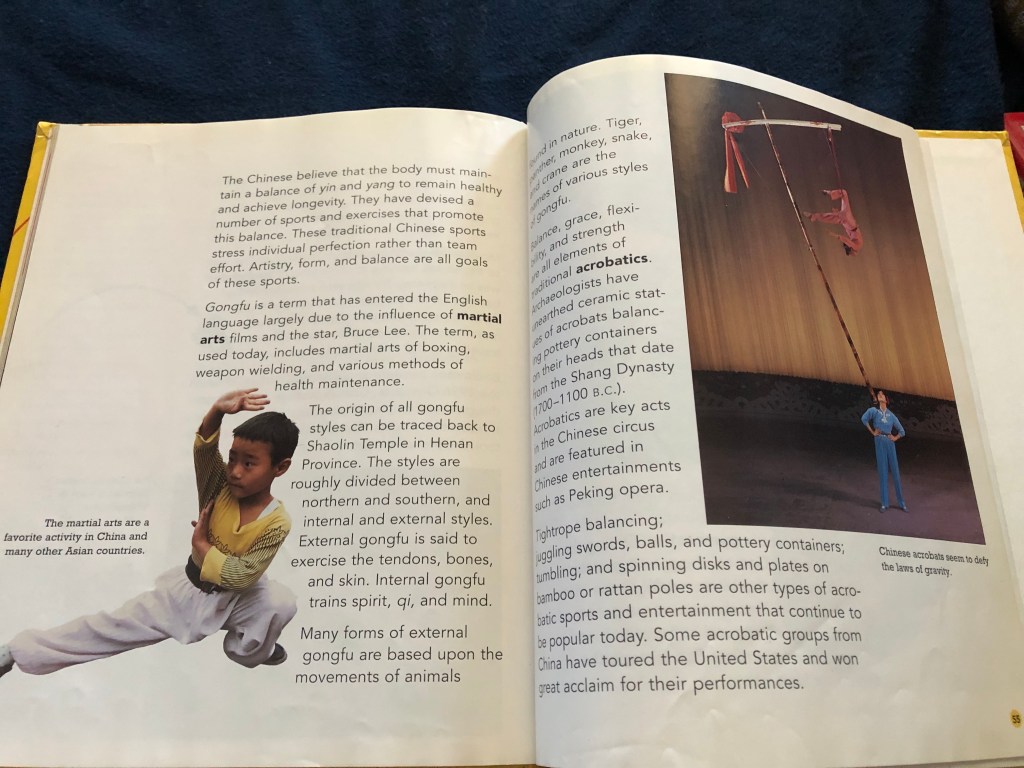
Popular sports in China include soccer (called “football” everywhere but in North America) and badminton. China is also famous for its martial arts and some spectacular forms of acrobatics.

From Junk to Jewelry

From Junk to Jewelry by Beth, Leah, and and Mary Johnson, 1991.

I bought this book at a school book fair when I was a kid, and we used some of the projects in the book for Brownies and birthday parties. They are pretty easy craft activities that use basic materials that people have around their houses. As the title indicates, the focus is on reusing things that might otherwise be thrown away to make something new. It uses the term “recycling” rather than “upcycling” (which I don’t remember hearing in the 1990s – “recycle” or “reuse” were more common terms), but that’s the basic idea. Some projects require some additional materials beyond the “junk”, like earring, pin, or barrette backings, but the main decorative part of the jewelry pieces are made from recycled materials. The projects in the book are divided into different levels of difficulty: beginning, intermediate, and advanced.

The two beginning projects are a beaded necklace with beads made from rolled paper (mine is shown in the picture) and pins or barrettes made from papier-mache colored with paint or marker.

The intermediate section has instructions for basic friendship bracelets and sgraffito earrings. “Sgraffito” is an artistic technique that involves scratching the top layer of a project to show the colors of a lower layer. Now, you can buy ready-made kits with special scratchable paper or cards that shows rainbow colors underneath, but I don’t recall ever seeing these kits when I was a kid in the 1990s. This project produces a similar look, but you have to apply the colors yourself using crayons. You start with a piece of heavy paper, tagboard, or an old file folder, you color rainbow stripes with crayon, pressing hard as you color. Then, you color over the rainbow colors with black crayon until the rainbow underneath doesn’t show. Then, you cut out the shapes of the earrings and scratch a design on the surface, scratching away the black surface so that the colors show underneath. Then, you glue the colored paper shapes to pieces cut from a plastic milk carton for stability and attach earring wires.

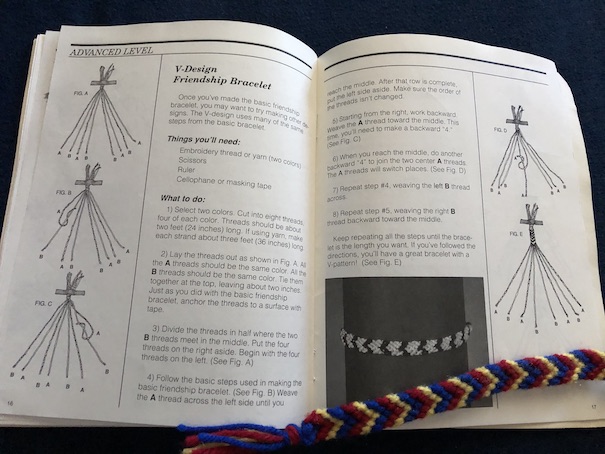
The advanced section has instructions for two more types of friendship bracelets (the v-design, which I’ve made many times myself with yarn, and the bridge design) and making origami earrings using either origami paper or colorful wrapping paper and earring backings.

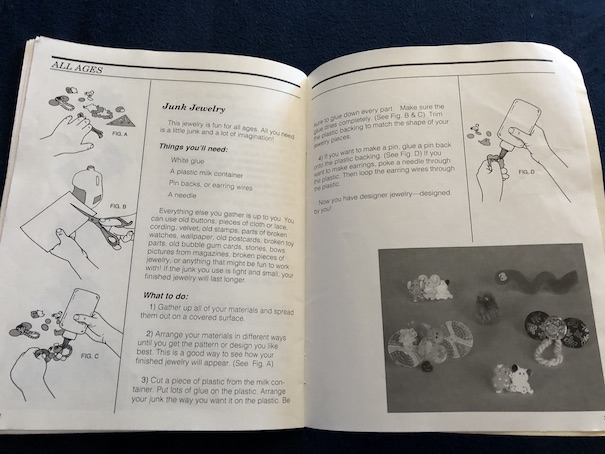
The end of the book has a collection of tips for making junk jewelry of various kinds for kids of all ages. It describes various types of “junk” you can collect around the house, like old buttons, pieces of broken toys or broken jewelry, pictures cut from magazines, and bits of cloth, lace, cord, or bows. When you’ve assembled your “junk”, you consider how you can arrange it decoratively, and then glue the pieces to a piece of plastic cut from a milk jug. Then, you can attach pin backings or earring backings so you can wear it.

Environmentalism and the concept of recycling were gaining increasing importance through the 1990s and were heavily promoted in schools when I was a kid. Although not every project in this book uses entirely recycled materials, these were common sorts of projects we would do in scouts and craft classes, and they can be a lot of fun even for kids today. When I was a Brownie, we spent a weekend at a Girl Scout camp with girls from other troops, and one of our activities was creating and trading “swaps” – decorative pins we made ourselves from bits and pieces of things like this. Each troop had its own swap design, and we would trade our swaps with each other and wear them around as signs of our new friendships. I can’t remember what my troop’s swaps looked like anymore because I traded away all of the ones I’d made myself, but I still have the swaps that I got in return. No two look alike. There were pins made from old puzzle pieces, popsicle sticks with stuff glued to them, macrame rope made to look like little faces, plain safety pins with colorful beads added, etc. These are good projects to encourage creativity. If the kids are bored this summer, try some of these projects or come up with some creative twists of your own!

Stellaluna

Stellaluna by Janell Cannon, 1993.

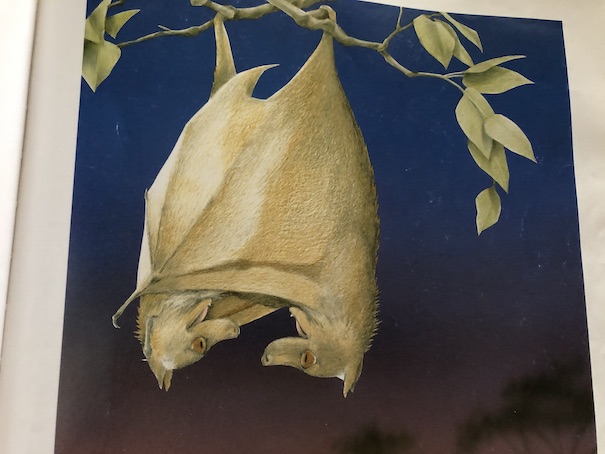
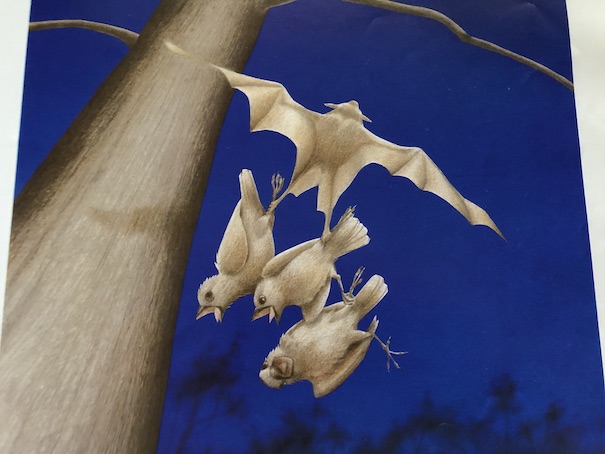
Stellaluna is a baby fruit bat. Every night, her mother carries her along while she goes looking for food.

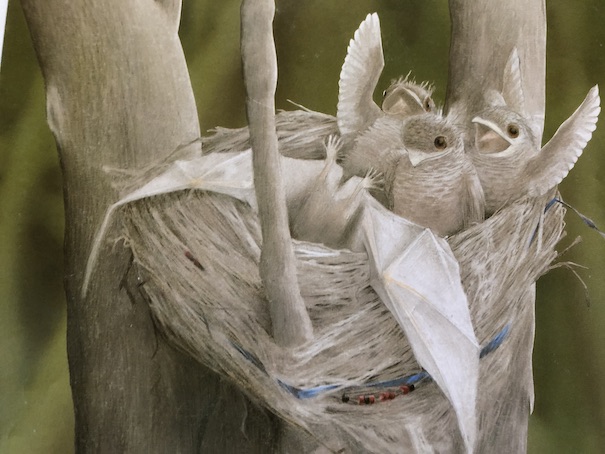
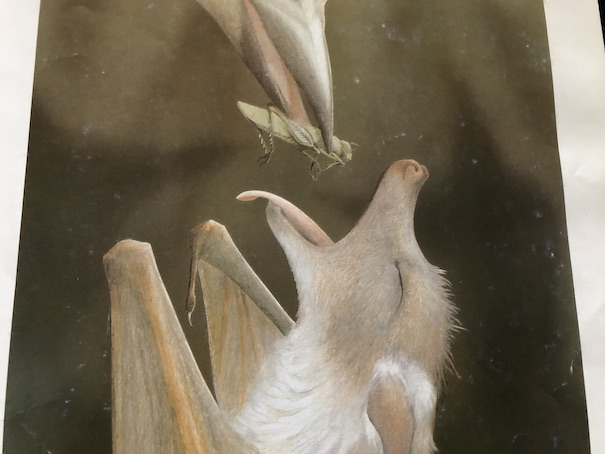
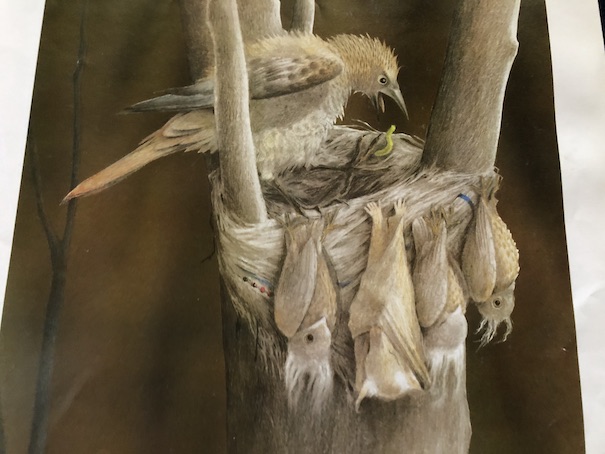
One night, they are attacked by an owl, and Stellaluna falls into the trees below. First, she is caught by some tree branches, and then, she falls into a bird’s nest. Stellaluna doesn’t really like the bugs that the mother bird brings her babies to eat, but she eats them anyway because she gets hungry.

Gradually, Stellaluna adopts the habits of the birds, staying awake during the day and sleeping at night. She tries to sleep upside down, hanging from the nest, but the mother bird stops her because the baby birds try to imitate her, and she’s afraid that they’re going to break their necks. The mother bird continues to care for Stellaluna, but insists that she obey the rules of their nest, which means that Stellaluna has to act like a bird.

Eventually, both Stellaluna and the little birds learn how to fly. However, Stellaluna has trouble landing on branches like the birds do. One day, she flies farther than the birds do and doesn’t return to the nest at night. She falls asleep in a tree, hanging by her thumbs because the mother bird told her not to hang by her feet, and she is found by another bat.

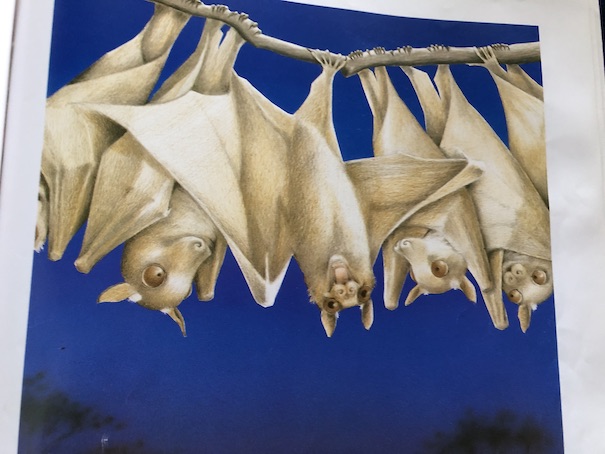
The other bat explains to Stellaluna that she is a bat, not a bird, and tells her that hanging by her feet is normal bat behavior. Soon, other bats come to look at Stellaluna, and Stellaluna’s mother recognizes her as her child.

Stellaluna is overjoyed to learn that her mother escaped from the owl, and her mother is glad to finally have her child back. Her mother begins teaching her what it means to be a bat, how to eat fruit instead of bugs, and how to see in the dark.

Stellaluna returns to the birds to introduce them to her bat family. The birds try to go on a night flight with Stellaluna, but they can’t because they can’t see at night like Stellaluna. Stellaluna helps them find a safe branch, and they talk about all the ways they are alike but yet very different. They decide that they will remain friends even though they have to live different types of lives.

This is a nice story about how people can love each other even though they are very different. The mother bird cares for Stellaluna like she is one of her children, even though Stellaluna is not a bird and has strange habits. Her insistence that Stellaluna act like a bird is because it is necessary for her to do so in order to live in the birds’ nest, and the birds are not able to live like bats and teach her how to be a bat. Eventually, Stellaluna has to return to the bats and live like the bat she is, but she still loves the birds who raised her and were like her brothers and sisters. It’s a little like human foster families. A foster family isn’t quite like a person’s birth family, and foster children have to adapt to new ways of doing things, but foster families can offer the affection of a birth family and help the children grow and reach the places where they really need to be in life.

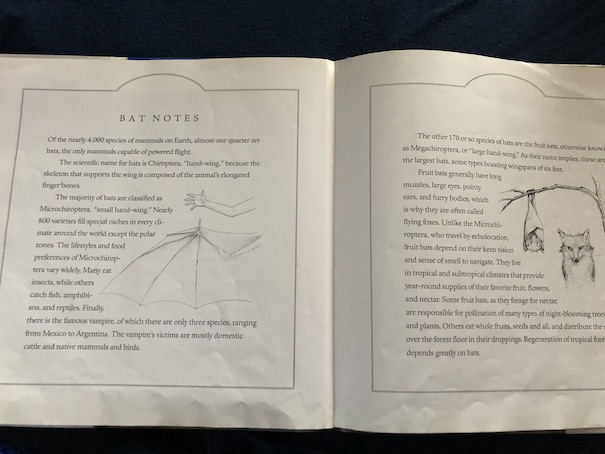
The book ends with a section of non-fiction information about bats.

The book is available to borrow for free online through Internet Archive (multiple copies). It is a Reading Rainbow book.

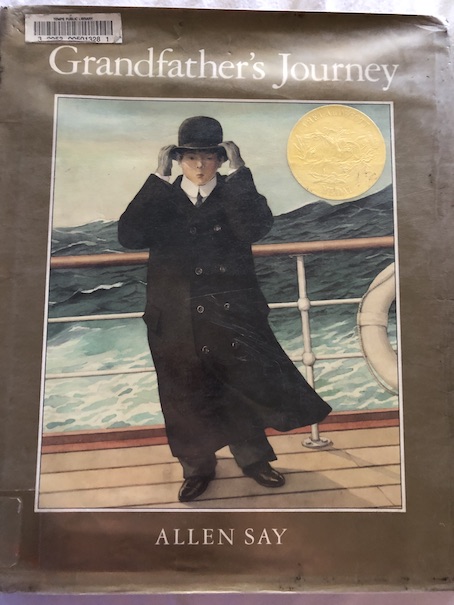
Grandfather’s Journey

Grandfather’s Journey by Allen Say, 1993.

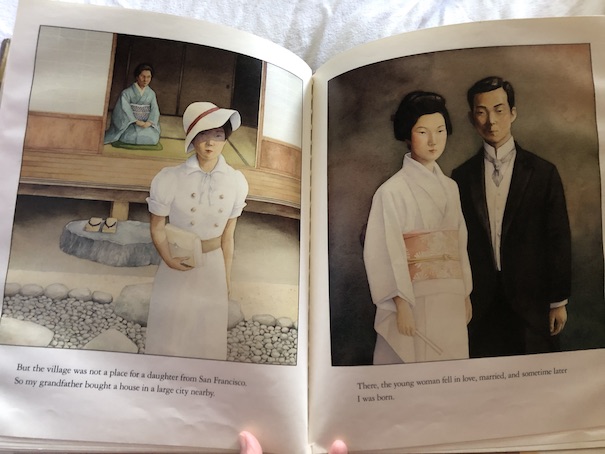
A man describes how his grandfather traveled by ship from his home in Japan to the United States. The time period isn’t specified, but from the context of the story, the grandfather’s original journey would have taken place either at the end of the 19th century or at the beginning of the 20th century.

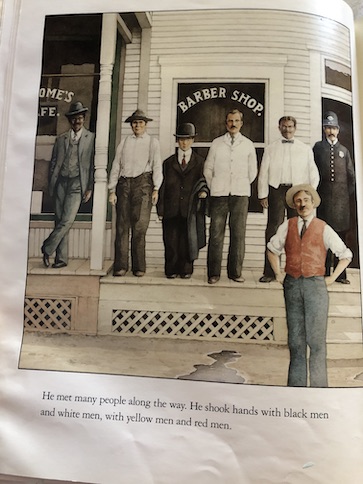
As a young man, the future grandfather travels all over the United States, seeing the sights and meeting all kinds of interesting people. It’s a bit of an adjustment for him, wearing Western style clothing and getting used to life in a new country, but he enjoys the adventure of it. He decides to settle in California, the part of the United States that he likes the best. He briefly returns to Japan to persuade his girlfriend to marry him and return to the United States with him.

The grandfather and his wife have a daughter in the United States, and they enjoy living there, but as the daughter grows older, the grandfather realizes that he misses Japan and wants to return home. He and his wife move back to Japan with their daughter.

The daughter has to learn to adjust to life in Japan after having lived all of her life so far in America. The family moves to the city because life there is more what their daughter was accustomed to than life in the countryside, where they were originally from.

Later, the daughter grows up, gets married, and has a son, who is the author of the book. The grandson describes being young during World War II and the devastation in Japan during the war. (This is part of what dates the earlier part of the story.)

Toward the end of his life, the grandfather finds himself growing nostalgic about his time as a young man in the United States and wishes that he could return to California one more time. Unfortunately, the grandfather dies before making the trip. Instead, his grandson goes to the United States to see the places that his grandfather told him about.

Like his grandfather, the grandson stays in the United States for a time and has a daughter of his own. He comes to understand how his grandfather felt, missing Japan when he is in the United States and missing the United States when he is in Japan. The world is vast and full of fascinating places to explore, but there is always something to miss and feel nostalgic about, no matter where you are. The grandson continues to travel back and forth between the United States and Japan, enjoying both of them.

The book is a Caldecott Medal winner. It is available to borrow for free online through Internet Archive.

Patrick

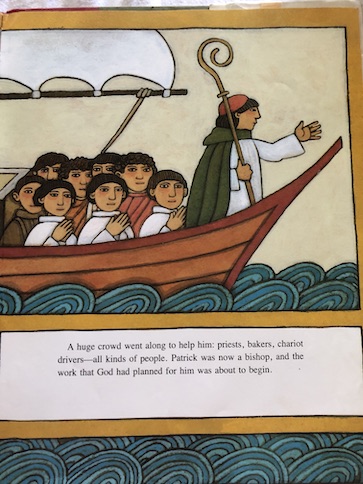
Patrick: Patron Saint of Ireland by Tomie dePaola, 1992.

This picture book is about the life and legends of St. Patrick, who is the patron saint of Ireland and the reason for St. Patrick’s Day, which is mainly celebrated in modern times by wearing the color green, and often, a shamrock or shamrock symbol. Some places also hold parades and other special celebrations.

The historical St. Patrick was born in Britain during the time when it was ruled by the Roman Empire. When he was young, he was abducted and sold into slavery in Ireland.

In Ireland, Patrick was forced to work as a shepherd for the man who bought him. Roman Britain was Christian, but Ireland was still pagan at this time. Patrick found it a strange and lonely place, and he prayed that he would be able to go back home.

Later, Patrick got his chance to return home aboard a ship that was carrying hunting hounds to be sold in France. Patrick tried to buy passage on the board, but the captain was reluctant to take him at first because he thought that Patrick was probably an escaping slave, and he didn’t want to get in trouble for taking him. However, the dogs on ship kept howling when Patrick was sent off, and the captain noticed that when Patrick was on the ship, the dogs were quiet, so he changed his mind.

When they reached France, the area where they landed was deserted because there had been a war. The men and dogs were hungry and couldn’t find anyone to help them. The captain said to Patrick that if his God was so powerful, why didn’t he pray and get God to help them? Patrick did, confident that God would help, and a herd of pigs appeared, providing them with food.

Patrick eventually returned home to Britain and rejoined his family, but he had dreams about Ireland in which a man called Victoricus appeared with letters from the Irish people, asking Patrick to return. Patrick felt that he was called to bring knowledge of God and Christianity to Ireland. He decided to become a missionary.

Patrick studied and worked his way up to become a bishop, and when he returned to Ireland, he brought others with him to help in his work. Upon his return to Ireland, he became friends with an Irish chieftain named Dichu, who also became a Christian. He gave Patrick a barn, which Patrick turned into the first church in Ireland.

Patrick and his followers suffered opposition in Ireland. At one point, a king tried to kill Patrick and ended up killing his chariot driver and friend, Odran, instead. In spite of that, Patrick persevered.

Patrick died on March 17, 461. After his death, he was declared a saint, the patron saint of Ireland, and the date of his death became his saint’s day. Many legends grew up around him, and the book explains the most popular stories.

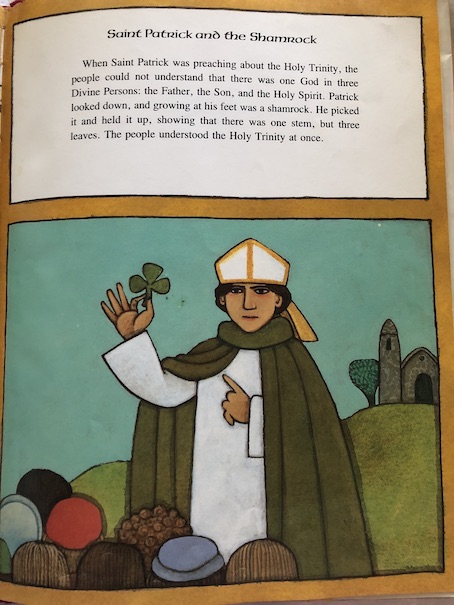
Among the most popular stories about St. Patrick are that he drove all of the snakes out of Ireland, frightening them away by beating on a drum. Another story says that he used the shamrock to explain the concept of the Holy Trinity, which is why the shamrock is an important symbol of Ireland and St. Patrick’s Day.

The book is available to borrow for free online through Internet Archive.

The Mystery of the Backdoor Bundle

Three Cousins Detective Club

#28 The Mystery of the Backdoor Bundle by Elspeth Campbell Murphy, 2000.

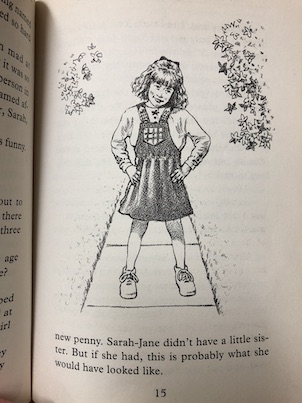
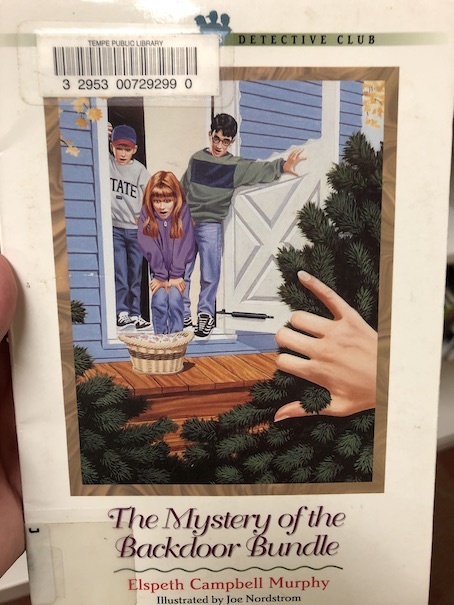
Sarah-Jane’s mother owns a decorating business, but recently she and her business partner have started repairing dolls because he has discovered that he has a talent for it. One day, while the Sarah-Jane and her cousins, Timothy and Titus, are sitting in the kitchen, someone knocks on the door and leaves a basket with a doll inside it. There is a note with the doll that says, “Please help me!”

When the kids show it to Sarah-Jane’s mother and her business partner, the partner says that the doll is an antique. The question is why anyone would simply abandon the doll with a note asking for help. The only clues they have are some footprints, a button, and a scrap of paper outside with logo of a blue kangaroo.

The doll is hiding a secret, and it’s up to the cousins to learn what it is and to help someone who cannot ask for help directly. This person has done something that they can’t admit to doing, but they’re trying to do the right thing and need some help to make it right.

The theme of the story is Psalm 147:3, “[The Lord] heals the brokenhearted and binds up their wounds.”

The Mystery of the Dancing Angels

Three Cousins Detective Club

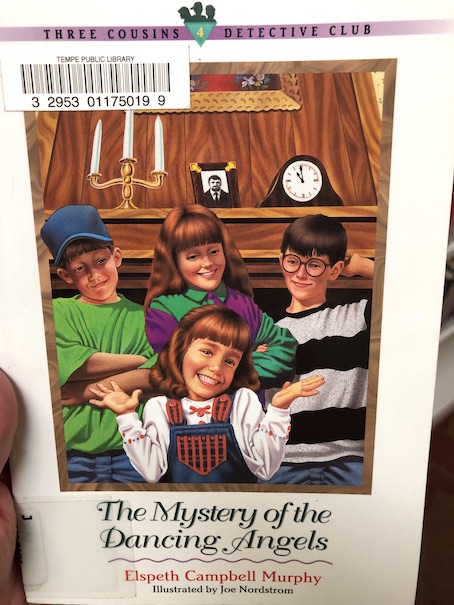
#4 The Mystery of the Dancing Angels by Elspeth Campbell Murphy, 1995.

Sarah-Jane, Timothy, and Titus are visiting their grandparents over the summer when their grandmother’s cousin comes over to discuss some information she has found about their family’s genealogy. The kids’ great-great-great-grandfather was a woodcarver, and he did some work in a large house that is now being restored. There is a story that an expensive ruby necklace that belonged to the former owners of the house may be still hidden somewhere on the property.

The prospect of exploring the old house and maybe finding the missing necklace sounds exciting, but the kids also must spend their time looking after their distant cousin, Patience, who is only four years old and has a tendency of getting into trouble.

When little Patience disappears inside the house, the kids are worried, but she soon returns with the answer to a riddle that has been passed down in their family for generations. Dealing with little kids requires patience, but Patience herself notices details in the woodwork in the house that the adults and older children haven’t noticed.

The theme of the story is patience.

The book is available to borrow for free online through Internet Archive.

The Mystery of the Silent Nightingale

Three Cousins Detective Club

#2 The Mystery of the Silent Nightingale by Elspeth Campbell Murphy, 1994.

Sarah-Jane’s baby-sitter and friend, Kelly, is graduating from high school. Soon, she will be going away to college. Sarah-Jane is sad that she is leaving, but she is happy her family was able to find her a nice graduation present.

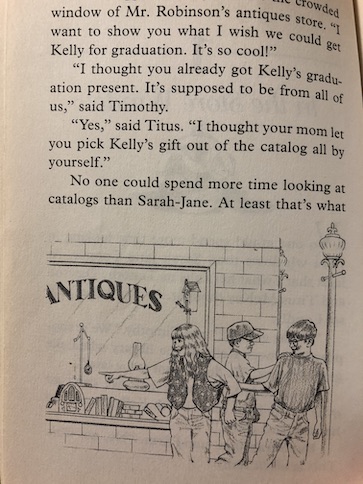
After they pick out their present, Sarah-Jane sees a locket with a nightingale on it in a store window. The nightingale is a Christian symbol for joy, and Sarah-Jane thinks that it would have made a nice present for Kelly if they didn’t already have one.

To everyone’s surprise, someone else buys the locket and leaves it at Kelly’s house. Sarah-Jane feels a little strange that someone else took the idea that she’d had for Kelly’s present. However, it is even more mysterious that there is no note or card with it to say who it is from. Kelly asks the cousins to help her find out who gave her the locket so that she can thank them. As it turns out, the present isn’t just an ordinary graduation present. It’s actually a thank you from someone who has been grateful to Kelly for a long time for a kindness she wasn’t even aware that she had done. Sarah-Jane even had a hand in it herself although she also wasn’t aware of it. Sometimes, it’s the smallest good deeds that can make the biggest difference in someone’s life.

The theme of the story is joy.

The book is available to borrow for free online through Internet Archive.

Themes and Spoilers:

The person who left the present for Kelly is Janice, who works for Kelly’s father. The kids had wondered why she seemed to recognize them when they stopped by Kelly’s father’s office early to show him Kelly’s graduation gown. It turns out that Janice has been grateful to Kelly for years for something kind that Kelly did for her when the cousins were very young. Kelly always used to read to the cousins when they were small, particularly Sarah-Jane. She took Sarah-Jane and the others to the library the day that Sarah-Jane got her first library card. That same day, Janice was also at the library.
Janice had never learned to read and was unable to finish her education. For a long time, she was ashamed to admit to anyone that she couldn’t read. Then, she heard about classes at the library for adults who had never learned to read and decided to go there. When she got to the library, she didn’t know where the classes were being held. She couldn’t read the signs, and she was too embarrassed to ask the librarian. There were some people she knew in the library, and she was so afraid of any of them finding out why she was there that she almost left. Then, Janice saw Kelly with Sarah-Jane and the boys. She saw how happy Sarah-Jane was to get her new library card, and she decided that she really wanted to learn to read, too. Janice knew that Kelly wouldn’t look down on her like some adults would, so she asked Kelly to help her find the class. Kelly helped her, even though she forgot about it later, and Janice was grateful to her for keeping her from backing out.

After Janice learned to read, she was able to finish her education. When she realized that the girl who had helped her years ago was her boss’s daughter, she wanted to give her a present. She wanted it kept secret at first because she was still embarrassed that it took her so long to learn to read. She was worried about what her boss would think of her. However, Kelly’s father doesn’t hold it against her, and Janice’s strict supervisor, Dorothy, even asks her to help tutor her grandson, who has been having learning difficulties.