Historic Communities
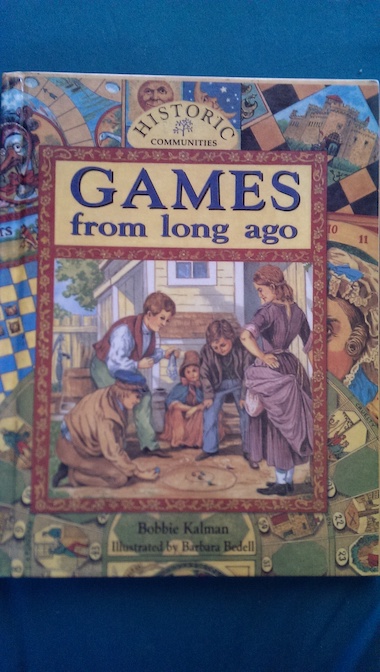
Games From Long Ago by Bobbie Kalman, 1995.
 This book is about games people would play in 19th century America. There is a variety of different types of games, although the main focus is on parlor games. Many of them have been passed on for generations by word of mouth and are still played today, such as Charades and Blind Man’s Buff, although the book discusses games that are no longer common.
One important concept in 19th century games was the “forfeit”, where losing players would have to perform a kind of silly stunt. The other players might hold onto an object belonging to the losing player, holding it as hostage until they performed the stunt. Forfeits were a common part of parlor games.
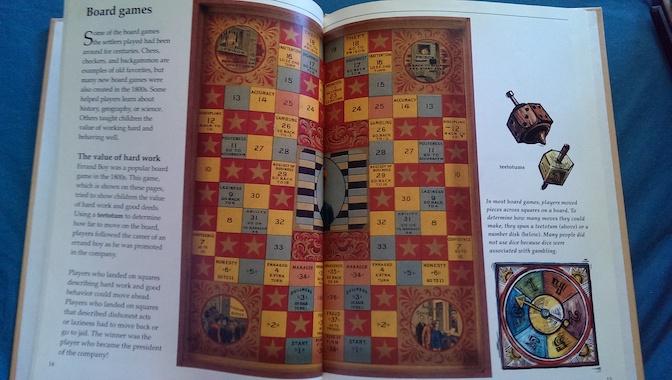
The book also talks about popular tabletop games such as dominoes, cards, tiddlywinks, and pick-up sticks. Because dice were often associated with gambling, movements in board games were often determined by spinners or special numbered spinning tops called “teetotums,” which look something like dreidels but with more sides. Board games for children were often educational, teaching them about subjects like history or geography or moral lessons, rewarding “good” decisions and penalizing “bad” ones (although, since movements in these games were determined by spinners, the players were at the mercy of the random chance as to which of these choices their playing pieces landed on, not making actual good and bad decisions by themselves).
There are also examples of games played at work parties, parties or “bees” organized around farm tasks such as barn-building or harvests. These parties might include a hay maze (like a corn maze, but with hay sheaves), a game of Gossip (an early version of Telephone, played exactly the same way), or Bobbing for Apples.

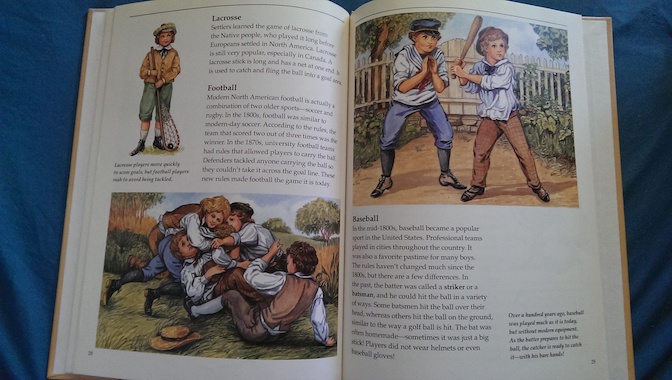
There is a short section about games for specific holidays, although there are only three given. Two of them are for Christmas (one of those is a basic version of Pinata called Bag and Stick), and one for Valentine’s Day. There are also sections about outdoor games and sports.
The book is currently available online through Internet Archive.
 The Twin in the Tavern by Barbara Brooks Wallace, 1993.
 A Ghost in the House by Betty Ren Wright, 1991.
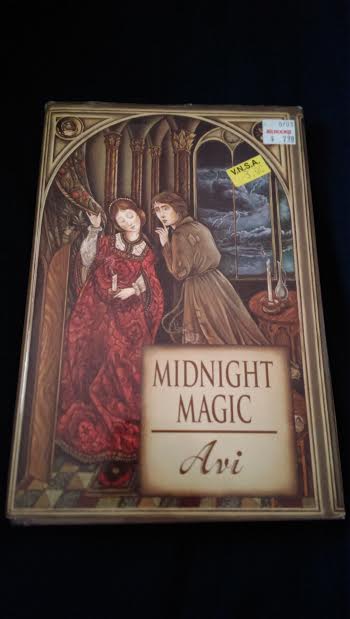 Midnight Magic by Avi, 1999.
 Felicity’s grandfather is a wealthy man who owns the Kings Cross Plantation. Every summer, Felicity and her family go to visit him there, and Felicity loves it. Her grandfather teaches her a lot of things, like which plants can be used for food and medicine, and takes her for horse rides around his estate.
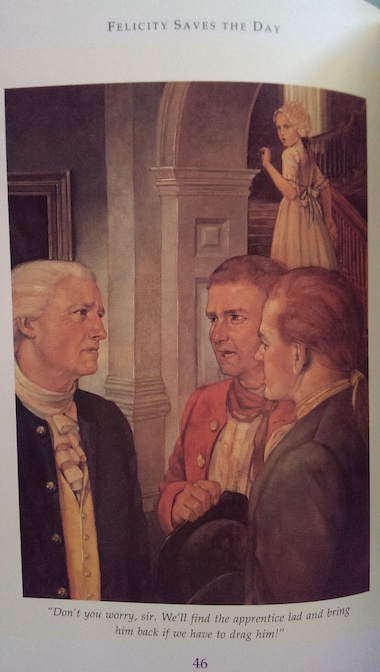 Ben tells Felicity that he ran away from his apprenticeship to join the revolutionary army. He wants badly to fight for the colonies’ freedom from England, but he had a bad fall while traveling and hurt his leg. Felicity tries to convince Ben to let her get help for him and to return to her father to finish his apprenticeship, but Ben doesn’t want Felicity’s grandfather to find out that he’s there or why he ran away because he knows that he disapproves of the revolutionaries. Because Ben kept her secret when she used to sneak out to see Penny, Felicity reluctantly agrees to keep Ben’s presence a secret for awhile, sneaking him some food and supplies. She tells Ben that, while she thinks that standing up for what he believes is good, he’s going about it in the wrong way because breaking his apprenticeship was dishonest.


 This is the second book in the
 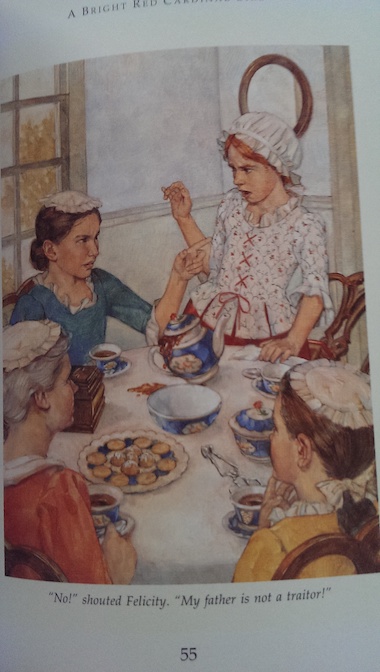 Then, Felicity’s father declares that because of the tax on tea, he will no longer carry it in his shop. It leaves Felicity feeling conflicted about Miss Manderly’s lessons, which include the proper way to serve tea. She has started enjoying the lessons and doesn’t want to lose Elizabeth’s friendship, but she wants to support her father, too. Then, Annabelle criticizes Felicity for what her father said at one of the lessons, prompting Felicity to storm out angrily. She is doubly angry and hurt that Elizabeth didn’t try to defend her, making her doubt Elizabeth’s friendship.


 This is the first book in the
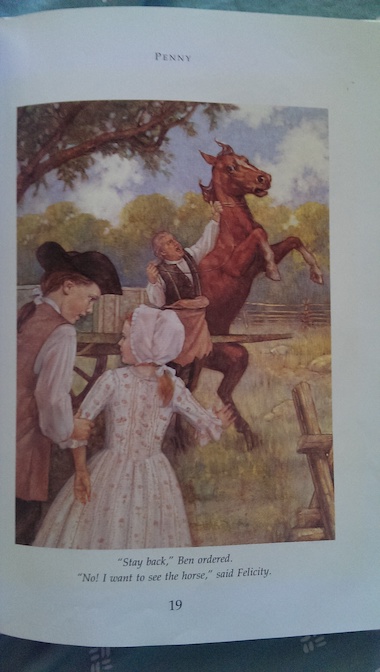
  Every morning for about a month, Felicity sneaks out of the house early, dressed in a pair of breeches that she borrowed from Ben without his permission. She goes to visit Penny and gradually gains her trust. When Penny finally allows her to ride her, Felicity thinks that she has won ownership of her, but Jiggy Nye accuses her of theft and takes back the horse. He denies that he ever promised to give her to anyone who could ride her, although Felicity’s younger siblings agree that they heard him say so.

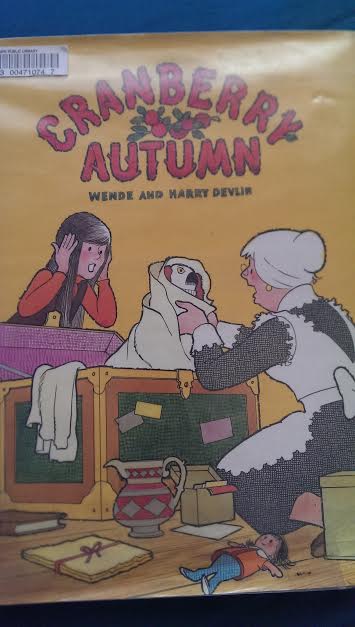 Cranberry Autumn by Wende and Harry Devlin, 1993.
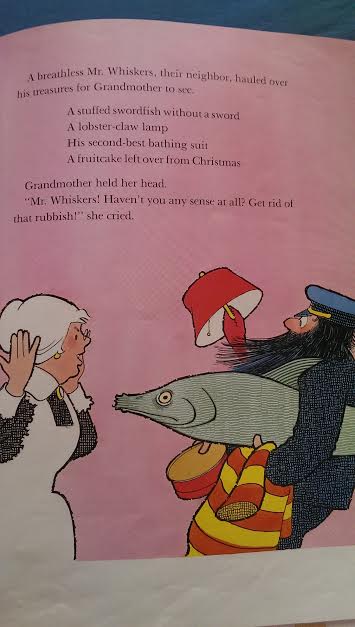 School is about to start, and Maggie and her grandmother realize that they’re short of money. Maggie needs new school clothes, and her grandmother needs a new coat. They know that some of their neighbors could also use some more money, so Grandmother suggests that they hold a sale. Some of them have some antiques and other interesting old items that they could sell.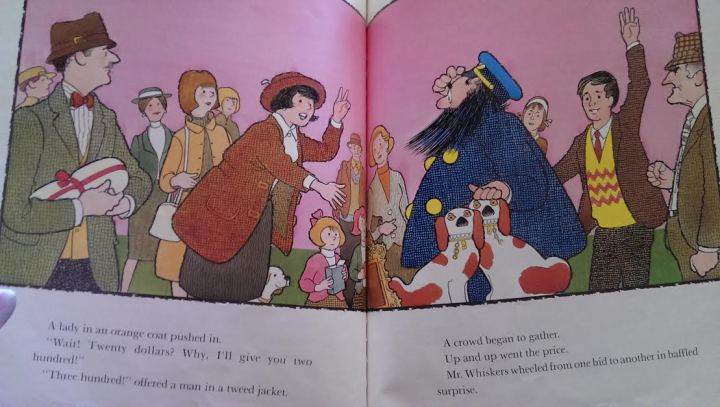

 The Best School Year Every by Barbara Robinson, 1994.
 Jestress's Forgotten Books and Stories