Inside the Secret Garden

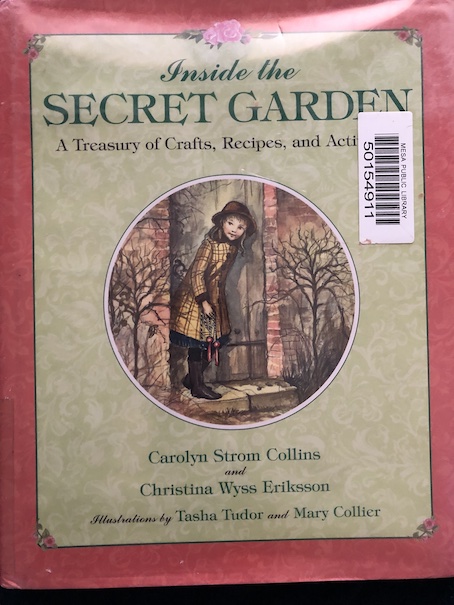
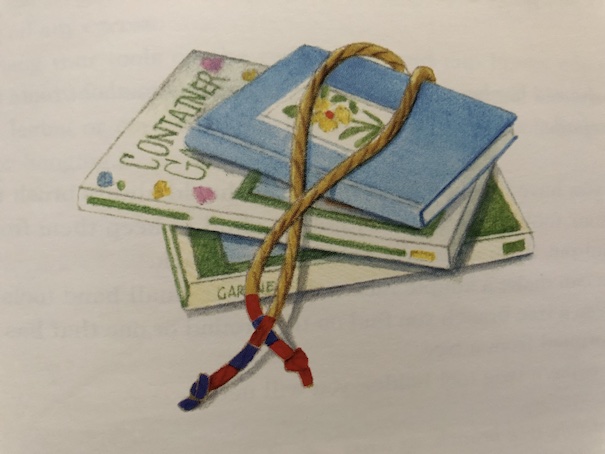
Inside the Secret Garden by Carolyn Strom Collins and Christina Wyss Eriksson with illustrations by Tasha Tudor and Mary Collier, 2001.

This is a how-to book with activities, crafts, and recipes that fit the themes in the classic children’s book The Secret Garden by Frances Hodgson Burnett. The book has some of the classic illustrations from The Secret Garden by Tasha Tudor, and there are also illustrations by Mary Collier.

The book begins with an explanation of the story of The Secret Garden and the life of Frances Hodgson Burnett. In the description of the author’s life, the book discusses some of the places where she lived and people she knew who provided inspiration for aspects of the story of The Secret Garden. There is also a timeline of world events during the author’s lifetime.

The second chapter describes the setting of the story with descriptions of Misselthwaite Manor and its gardens. It explains how a large manor house like Misselthwaite would function and the types of staff and servants it would have. It also explains the types of gardens and plants that would have been grown in the kitchen gardens of English manors and cottages.

The third chapter in the book has recipes and menus based on the foods the characters eat during the story. Food is important in The Secret Garden because Mary and Colin didn’t have appetites when they were unhealthy, but after their time working in the garden and getting fresh air and exercise, their appetites improved. The recipes in the book are based on things the characters eat during the story.

  • A pot of tea
  • Porridge (oatmeal)
  • Treacle (They use molasses with corn syrup and honey to make it.)
  • Orange marmalade
  • Homemade bread
  • Snow-white eggs (soft boiled)
  • Raspberry jam
  • Clotted cream
  • Muffins
  • Ham
  • Oatcakes
  • Doughcakes
  • Apple Crumble
  • Crumpets
  • Robin cake
  • Roasted eggs (The instructions call for cooking them in an outdoor stone oven, like they did in the book, but it also discusses how to make an indoor version.)
  • Roasted potatoes (The instructions call for cooking them in an outdoor stone oven, but it also discusses how to make an indoor version in a standard oven.)
  • Currant buns

A book of activities based on The Secret Garden wouldn’t be complete without gardening activities! The fourth chapter has suggestions for creating your own garden. The gardening tips and suggestions are based on the plants the characters used in The Secret Garden. I’m not sure all of them would grow well in every climate, and planting seasons can vary by region.

  • Planting a spring bulb garden
  • Planting a rose in a flowerpot
  • Making an indoor “secret garden” with potted plants in a tray or pa

The fifth chapter has a selection of crafts and activities related gardening. They include things you can make to use in your garden and things you can make our of plants from the garden, including:

  • A twig tool holder
  • Plant labels (little signs for labeling plants in your garden)
  • Moss-covered flower urns
  • Key wind chimes
  • A planter in a watering can
  • A twig trellis
  • Pressed flowers and a pressed flower scrapbook
  • A bouquet of roses
  • A topiary flower arrangement
  • A miniature arrangement
  • A bird feeder
  • A bird bath
  • Nest-building station

It also explains how to make your own skipping rope, like the one Mary had in the book, and there is a section of traditional jump rope rhymes.

The book is available to borrow and read for free online through Internet Archive.
My Reaction

I liked the chapters about the history of The Secret Garden and the life of Frances Hodgson Burnett. I thought it was interesting to see some of what inspired her to write the story. I particularly like the chapter that describes how a manor like Misselthwaite would be run because I like seeing the historical background to stories.

I don’t think that the gardening tips are really universal. I grew up in Arizona, and I know from personal experience that plants and gardening techniques that would work well in cooler and wetter climates don’t work as well in a hot, dry desert climate. However, some of the garden-related crafts looked intriguing. I particularly like the idea of the wind chime that uses old keys as the chimes. I’ve seen antique stores and places that sell crafting supplies that also sell old keys, so know it’s possible to get them.

I like the selection of recipes the book provides, and I think most of them would be pretty easy to make. The most difficult ones are probably roasted eggs and roasted potatoes because they require an outdoor oven, like the kind the characters in The Secret Garden used. The book briefly describes how to make the kind of outdoor stone oven they mean, but I don’t think that kind of oven can be built just anywhere. It’s more for camping and the countryside, where you can safely have fire pits away from buildings. Fortunately, the book also includes instructions for making those dishes inside, in a standard kitchen.

The FunCraft Book of Spycraft

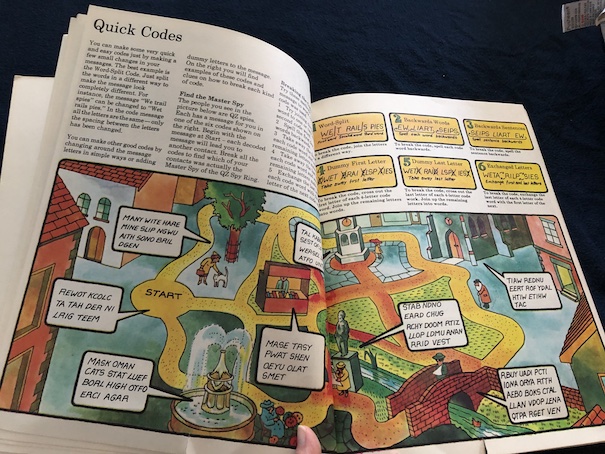
The FunCraft Book of Spycraft by Falcon Travis and Judy Hindley, 1975, 1976.

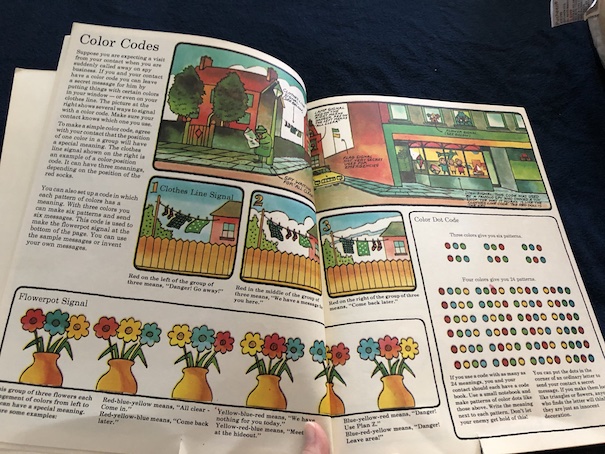
This book is a part of a series of craft and hobby books that was first printed in Britain. It’s meant for kids who like to play at being spies, and it teaches kids how to use secret codes make disguises, and other tips and tricks for being a spy.

Much of the book focuses on different types of secret codes and techniques for sending secret messages. In fact, I would say that there is more about secret codes and messages than there is about anything else, but what they have to say is interesting. Most of the codes in the book are fairly easy, which is good for kids who are just beginning. The book explains popular codes like the pig-pen code and gives instructions for making simple code machines, like the popular code wheels for alphabet shifts. However, I enjoyed the variety and creativity of other codes and methods of sending secret messages, like the code based on music notes and the suggestion of using clocks or watches to represent semaphore figures.

The book not only explains some well-known and standard codes and signals, like semaphore and Morse code, but also explains how to adapt these codes in new ways. Morse code messages could be shown in a sequence of knots on a rope or in the placement of objects in a picture.

Some methods of sending secret messages don’t rely on codes so much as pre-arranged signals, like the placements of certain objects or arrangements of certain colors. These objects or color patterns might look completely ordinary to most people, but they can have special meanings to those who understand what each signal stands for.

The book also covers other topics related to spies, like how spy rings are organized, where messages can be concealed, types of equipment spies use, how to make maps, how to spot and interpret clues, and how to set traps.

There are also disguise tips. The book points out various ways that people can make themselves look different, like changing the way they comb their hair, changing their hair color, or trying to make themselves look older or fatter. One piece of advice about changing your skin tone by rubbing talcum powder on it to make it look lighter or cocoa powder on it to look darker sounds messy, and I’m not sure I’d recommend it, but the other parts seem okay. There are instructions for making a false beard, nose, and glasses and a bald-headed wig. None of these would really be convincing disguises, but they could be entertaining for kids to try to make and might be useful for Halloween costumes.

There is also a spy-themed board game in the book where one player controls a pair of spies and the other controls a pair of spycatchers. The player controlling the spies has to evade the spycatchers in order to win.

Overall, I think that the book is pretty entertaining, and kids who are really into spies and spy games would find it fun. With all of the different codes, disguise ideas, and the board game, there are plenty of fun activities to try!

The book is available to borrow and read for free online through Internet Archive (under an alternate title – The Knowhow Book of Spycraft).

The Klutz Book of Knots

The Klutz Book of Knots by John Cassidy, 1985.

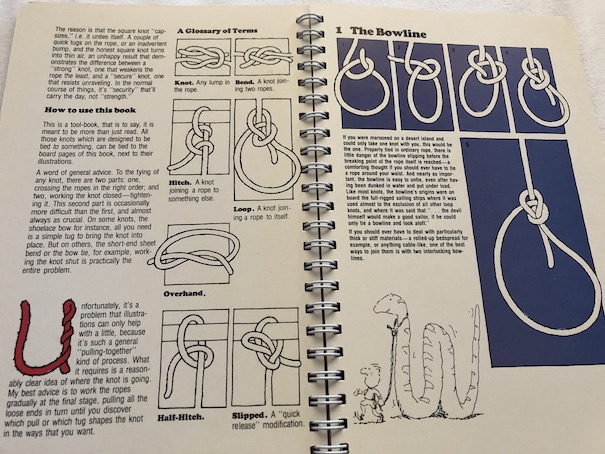
This book is part of the classic children’s hobby and activity series from Klutz Press, and it explains how to tie various useful knots. Originally, this book came with a two cords that could be used to practice the knots, one red and one blue, which were attached to the book through the holes in the front cover. The book begins with an introduction, explaining different categories of knots and how to use them: loops (knots for tying a rope to itself), bends (knots for tying one rope to another), and hitches (knots for tying a rope to something else).

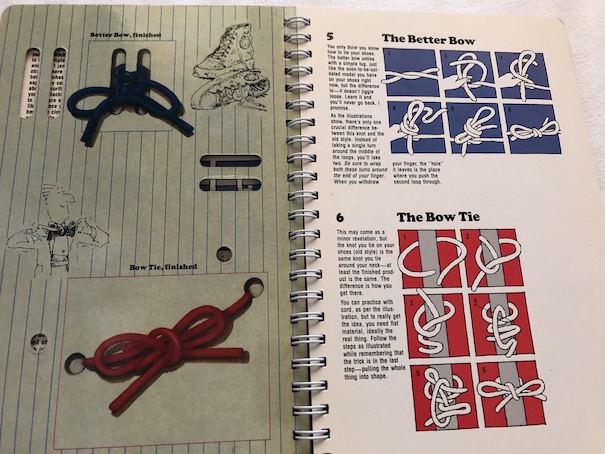
One of the best features of this book is that there are holes, slits, and notches in the thick board pages of the book, so the knots can be practiced directly in the book.

The knots have a variety of uses, and the book even explains how to tie better, longer-holding bows in shoelaces and how to tie the type of bow used for a bow tie.

The book ends with instructions for a magic rope trick.

The book is available to borrow and read online through Internet Archive.

Stop the Watch

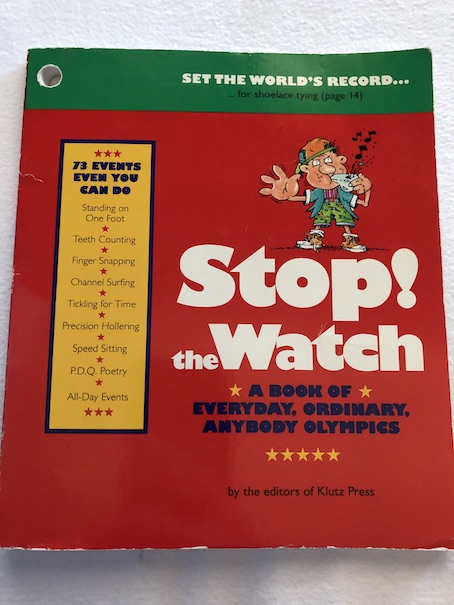
Stop! the Watch by the Editors of Klutz Press, 1993.

This book is part of the classic children’s hobby and activity series from Klutz Press. Originally, this book came with a working stopwatch in bright colors, which was attached to the book at the hole in the upper left corner. Unfortunately, I broke my stopwatch years ago, but I liked the book, and I got a new stopwatch to use with it.

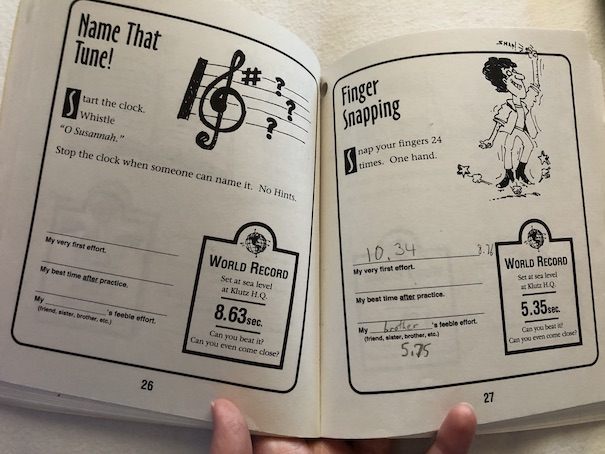
The book begins with instructions for using the stopwatch and then offers various timed activities and goals for kids to reach while using the stopwatch. Most of the activities involved kids performing various simple stunts and trying to do them as fast as possible, like counting to 126 by 7s, writing a verse from The Song of Hiawatha, tying shoelaces, singing “Happy Birthday” to Rumpelstiltskin, walking up a flight of stairs with a book balanced on the head, and drawing a picture of a gorilla. There are places in the book to record your efforts and your own time records and the records of your friends. (You can see in my copy where I made notes.)

There are also activities that participants are supposed to perform for a very specific amount of time, trying to keep as close to the allotted time as possible without actually watching the watch. For example, one of the events is hollering the word “Eeeeellllllskin” for exactly 17 seconds.

There are also some events that are meant to be completed by two people acting as a team, like leapfrogging, carrying your partner ten steps, singing “Jingle Bells” while alternating words between partners, and throwing something weird back and forth.

The original edition of this book included time records set by the author and others at Klutz HQ. Readers could compete against these records and try to beat them, and later editions of the book were printed with new records set by readers who reported their results.

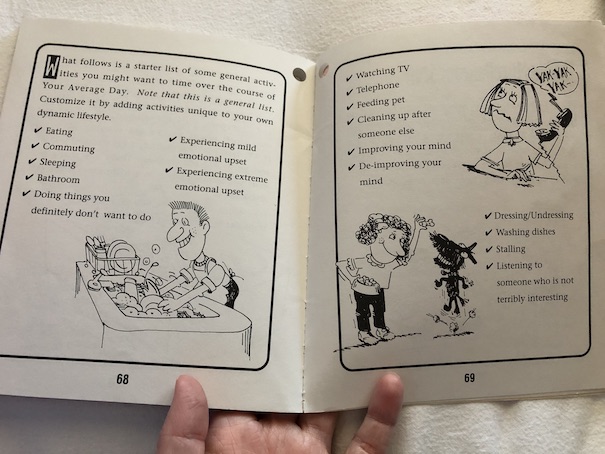
In the back of the book, there is a section explaining how to time daily events and predict about how much time you will spend doing those things throughout your life, like how much time you spend in the bathroom. Some of these things can be enlightening, like how much time you spend watching tv (Is it too much?), being emotionally upset (Have you been stressing too much?), or stalling when you’re supposed to be doing something else. There are also some educational ways of using time. The book explains how to tell how fast the car you’re traveling in is driving without looking at the spedometer by timing the distance between mile markers. It also explains how to tell how high you’ve tossed a ball by timing how long it takes to hit the ground.

The book is available to borrow and read online through Internet Archive.

The American Girl’s Handy Book

The American Girl’s Handy Book by Lina Beard and Adelia B. Beard, 1887.

This is a Victorian activity book for girls, focusing particularly on outdoor seasonal activities and celebrations. Earlier, I covered The Girl’s Own Book, which is a similar type of Victorian activity book for girls, but there are important differences between the two. For one thing, they were published over 50 years apart, which means that the girls who read this book when it was new would likely be the granddaughters of girls who had grown up with The Girl’s Own Book. For another thing, this book is organized by the seasons and has a more outdoor focus. There is a reason for the somewhat different focus of this book, but I need to explain a little about the authors.

The book is now public domain and available to read for free online through Project Gutenberg and Internet Archive.

Historical Background

Lina Beard (“Lina” was short for Mary Caroline) and Adelia Beard were sisters. Their brother, Daniel Beard, was the author of The American Boy’s Handy Book, published a few years before The American Girl’s Handy Book. Like their brother did in his book, Lina and Adelia set out to make a book of activities specifically for an audience of American children, taking into account the sort of environment that the children would live in and the language they would use. In the preface to the book, they say that they had the idea to write a book of activities for girls after the publication of their brother’s book, thinking about times when they have heard girls wish for an activity book of their own whenever a new one for boys appeared. (There were previous activity/how-to books for girls, like The Girl’s Own Book, but their comments indicate that there were more books of this type for boys than for girls.)

Both Lina and Adelia would later be founding members of the Camp Fire Girls, the first major scouting organization for girls in America, during the 1910s, while Daniel Carter Beard was one of the founders of the Boy Scouts of America. (Camp Fire Girls was founded before the founding of the Girl Scouts. Today, it is now a co-ed scouting organization simply called Camp Fire.) Their family believed in appreciating nature and the benefits of exercise and outdoor life, and these concepts are reflected in the activities in of the Handy Books.

However, even though they valued exercise and healthy outdoor activities for girls and the subtitle specifically mentions “outdoor fun”, this book has plenty of indoor activities for girls as well. This is probably partly because they would have appealed to girls of the period and their parents, but it’s also because the book takes the realities of weather into account. An ideal time for forming walking clubs and enjoying the beauties of nature would have been in the spring, but not so much in the heat of summer, when making fans and playing relatively sedentary games would have helped keep them cool, and not in the winter, when things were covered in snow and girls would have to take their exercise indoors and work on indoor crafts and needlework. Overall, the The American Boy’s Handy Book has more outdoor activities than The American Girl’s Handy Book, but the Beard sisters also wrote other activity books, some of which have even more of an outdoor or camping focus.

Contents of the Book

The activities in this book are organized by season, and I liked the organization much better than the organization in The Girl’s Own Book. The organization by season is the same as in The American Boy’s Handy Book. Within each section, there are more specialized sections, focusing on particular pastimes and holidays in each season.

Spring

The holidays that appear in this section are April Fool’s Day, Easter, and May Day. May Day isn’t a major holiday in modern times, but schools in the 19th century commonly had May Day celebrations.

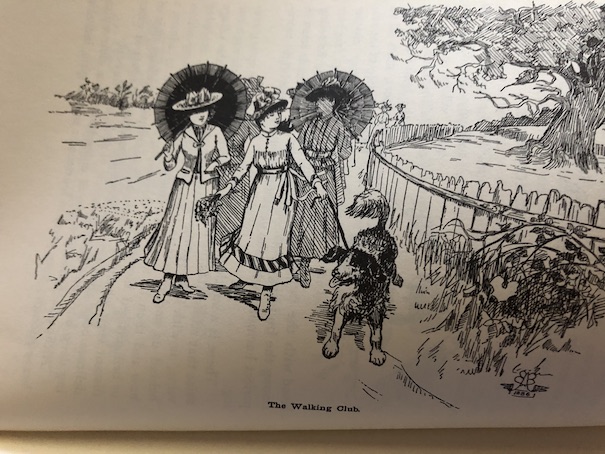
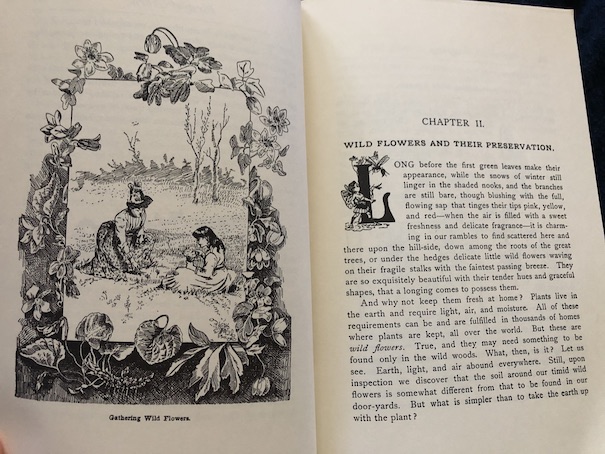
The recommended outdoor activities for spring are lawn tennis (this section includes instructions for making your own lawn tennis net), forming a walking club, and picking and preserving wildflowers. The wildflowers section is the longest section in this part of the book, and it has a surprising array of methods for preserving wildflowers, including crystallizing them.

Summer

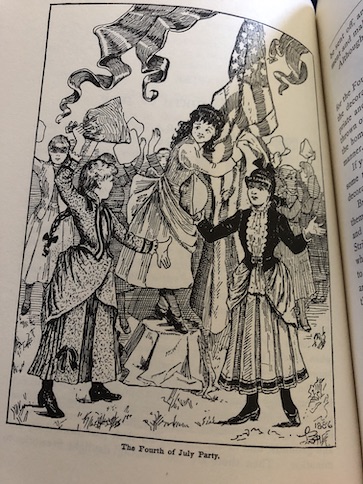
The holidays in this section are Midsummer Eve and the Fourth of July. Midsummer Eve isn’t a common holiday for modern girls to celebrate, but the Midsummer activities of the 19th century involve fortune telling.

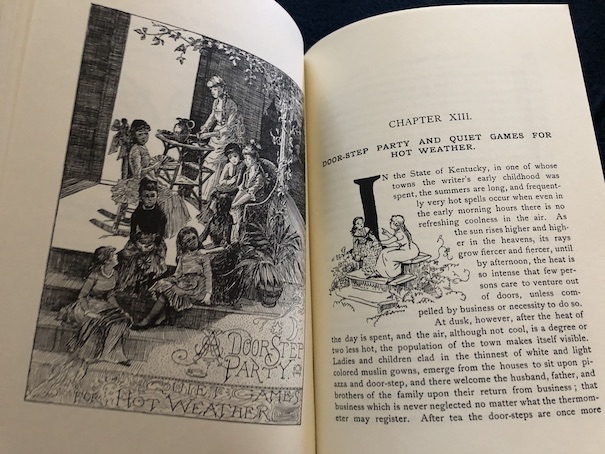
Summer provides many opportunities for outdoor activities. There are tips for holding various types of picnics and decorating a seaside cottage, and there are suggestions for using plants in art and making dolls out of corn husks and flowers. However, summer is also very hot, and in the days before air conditioning, people would have also wanted ways to relax and keep themselves as cool as possible in the heat. The summer section of the book has instructions for making fans and hammocks and playing relatively quiet games.

Autumn

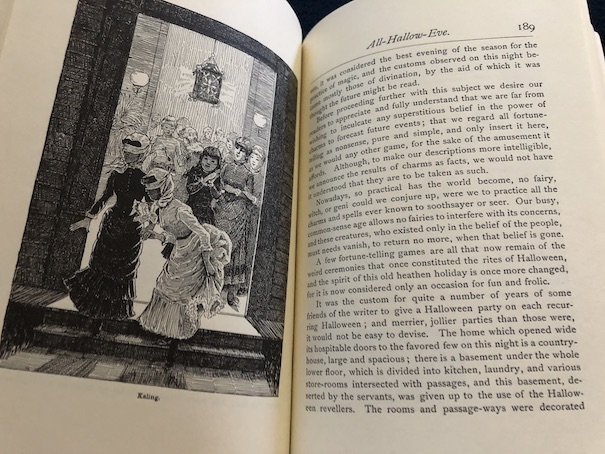
This section begins with suggestions for celebrating Halloween and ends with Thanksgiving. The Victorian era was the beginning of Halloween parties as we know them today. There would have been games for children and romantic divination games for young adults, particularly young women and girls.

The Thanksgiving section offers tips for putting on a kind of Thanksgiving play, but it’s not historically accurate by any means, and the American Indians aren’t portrayed well. The whole thing is more like a series of joke skits.

The nature themes in the Autumn section focus on nutting parties and making decorations from autumn foliage. A nutting party is a sort of walking party and picnic, where the girls enjoy the beauties of nature, gather chestnuts, and roast and eat the nuts afterward.

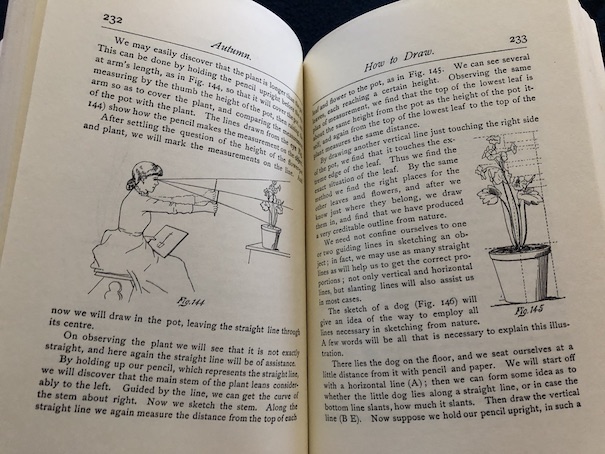
Most of the autumn activities focus on various types of art, including drawing, painting in oil and water colors, making picture frames, making clay and wax models, making plaster casts, and painting china.

I was fascinated by the arts and crafts information because I always enjoyed arts and crafts, but I’d like to draw your attention to one activity that doesn’t quite fit with the others in this section: making a tin-can telephone. This fascinates me because telephones were a relatively new invention at the time this book was written, but the tin can variety apparently weren’t far behind.

Winter

This section begins with Christmas activities and games and tips for making homemade presents. The other holiday celebrations included are New Year’s Eve, a special Leap Day party (for years with Leap Days), and Valentine’s Day.

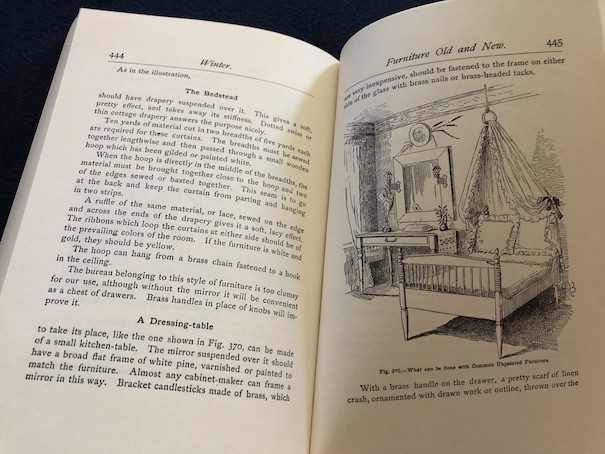
Most of the activities in this section are indoor activities, like studying heraldry and making your own coat of arms with suggested symbols, doing needlework, making book covers and scrap books, and making things from stuff that otherwise would be thrown away. (They didn’t have the term upcycling back then, but that’s basically what this activity was about.) There are a couple of sections about decorating a room, decorating windows and mantle pieces and making and decorating furniture.

There is also a section with recipes for different types of candy.

For exercise, there is a section about doing indoor exercises. There is also a section about creating booths for a fair, which surprised me because I wouldn’t have thought of that as a winter activity. Then again, people can begin planning early for later events.

Josephine’s Toy Shop

JosephineToyShop

Josephine’s Toy Shop illustrated by Roger Nannini, 1991.

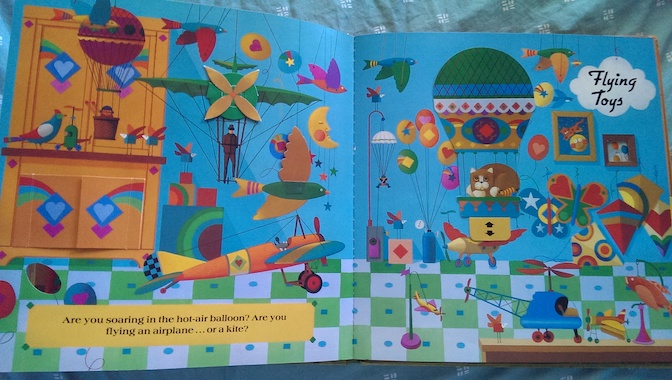
Josephine the Cat lives in a toy shop that bears her name.  The toy shop is full of all kinds of wonderful toys, but Josephine’s favorite toy is Toy Mouse.  There is also a real mouse in the shop, and Josephine is looking for it.

JosephineToyShopFlying

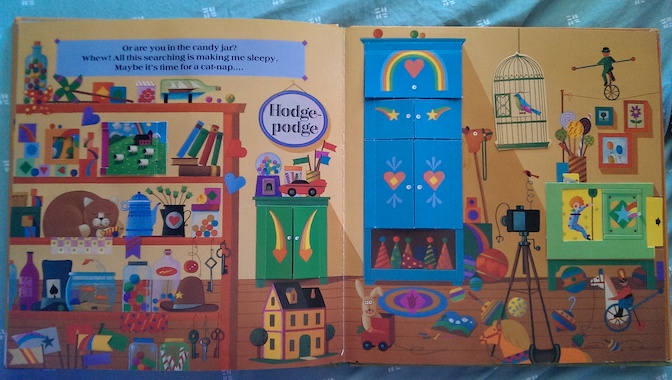
Readers follow Josephine and Toy Mouse through the shop, spotting them and the real mouse, hiding in the busy, colorful pictures.  This is also a lift-the-flap book so kids can look behind doors and pull tabs to move objects.

JosephineToyShopNap

In the back of the book, there is a fold-out model of the toy shop that readers can put together with the front of the book forming the front of the shop.

JosephineToyShopBack