 Our Teacher Is Missing by Mary Frances Shura, 1992.
Eliza is a quiet girl, and she likes to be that way. Too many of her teachers try to make her be more “outgoing” or “lively.” Mostly, Eliza wishes that they would just leave her alone. That’s why she likes her new teacher, Miss Dixon. Miss Dixon is quiet and soft-spoken, like Eliza. Ben, the class bully, calls Miss Dixon “Mouse,” but in spite of that, Miss Dixon has no trouble controlling her class.
Then, one day, Miss Dixon doesn’t show up to class. The kids wait around for her, goofing off, but Eliza is really worried. She knows that it’s not like Miss Dixon to simply not show up. Soon, other kids also start becoming concerned, and other faculty members realize that Miss Dixon is missing. The principal arranges for a substitute teacher while they are looking for Miss Dixon, and the children continue wondering what could have happened to her. The students consider every possibility behind their teacher’s disappearance, from secret mafia connections and entry into the Witness Protection Program to alien abduction.
But, for Eliza, all these wild speculations, stupid jokes about their “Mouse” teacher being eaten by a cat, and the adults’ constant reassurances that they’re sure that there is a reasonable explanation and that no one should be “unduly concerned” are just not enough. Whatever happened to Miss Dixon, Eliza is sure that she would have come to school or at least called if she could. Eliza thinks that something terrible must have happened and that Miss Dixon needs help fast. If the adults won’t do anything about Miss Dixon’s disappearance, then she will!
This book is currently available to borrow and read for free online through Internet Archive.
My Reaction and Spoilers:
I love this book because I identified with the main character from the time I first read it as a child. One of the themes of this book is about people’s perceptions of different personality types. Eliza’s teachers and even her parents underestimate her because of her quiet nature. Eliza is an introvert, and she is under constant pressure from most adults to be more of an extrovert. Eliza resents their attempts to reshape her into a more outgoing, forceful person, not recognizing that her real strengths are her intelligence, perceptiveness, and quiet determination to do the right thing. Being a loud person isn’t the same as being a competent person, although some people have that perception. However, the people around her come to understand her better in the end. Eliza also finds some unexpected sympathy from friends who understand her impatience with the shallow immaturity of other kids and who also are content to not be completely understood by other people as long as they have the freedom to quietly be themselves.
Eliza succeeds in this mystery where the adults fail because she is perceptive and has insights into her teacher’s personality that other lack. Although Eliza’s friends Robin, Stephen, and Chris are worried about getting into trouble by playing detective, when they see how determined Eliza is, they agree to help. Soon, they realize that Eliza is right to be worried. Miss Dixon intended to be home over the weekend, but something happened to keep her from coming home. The more the children talk about what they really know about their teacher, the more they begin to put the clues together. Finally, they realize where Miss Dixon was right before she vanished, but the situation is serious. Miss Dixon is being held captive because she accidentally stumbled upon criminal activity. When one of their classmates is also in danger, Eliza shows everyone that even a quiet person can have the bravery and determination to do what needs to be done.
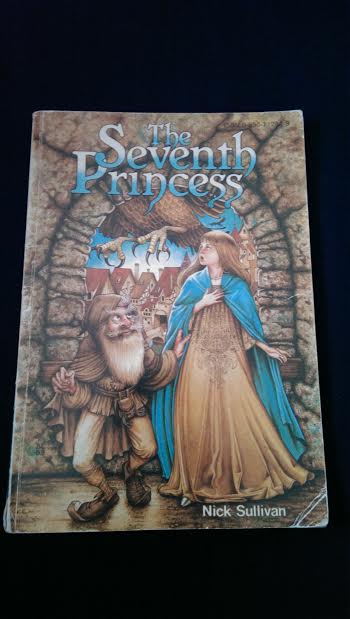
 Twenty and Ten by Claire Bishop, 1952.
 The two groups of children soon make friends, and one of the Jewish children, Arthur, shares something special with his new friend, Henry: a small piece of chocolate. With the rationing, none of them have seen chocolate in a long time. Henry decides to share a little with Janet because he likes her, and they decide to hide the rest and save it for later. When Denise spies them with the chocolate and wants to have a little herself, she steals the piece of chocolate from where Henry has hidden it. The others chase after her to get the chocolate back, and they end up accidentally discovering a cave that none of them knew was there.
 Never Hit a Ghost with a Baseball Bat by Eth Clifford, 1993.
 The girls explore the trolleys parked in the museum and admire the manikins dressed in old-fashioned clothing that are part of the displays in each trolley car, but more strange things happen. A teddy bear seems to speak to them, even though it isn’t the kind with a string and a talk-box. The manikins start to seem creepier. Mary-Rose and Jo-Beth are only armed with a baseball bat from one of the displays and the old teddy bear (which terrifies Jo-Beth). But, Mary Rose is determined to find the ghost, even if it’s the last thing she does!
 The Dastardly Murder of Dirty Pete by Eth Clifford, 1981.
 Harry Onetree and the girls find a ghost town with a hotel, an opera house, and several other buildings. Although Harry only means to look around for a little while, he forgets to set his parking brake (something else Mary Rose warns him about, which he ignores), and their car rolls backward into a ditch. Since it’s getting dark, they’re stranded in the ghost town for the night. But, they’re not alone there.
 Scared Silly by Eth Clifford, 1988.
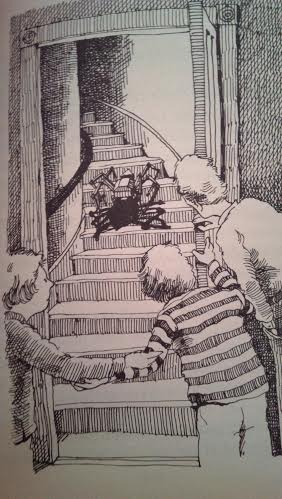 While the Onetree family is visiting the museum, a pair of shoes that once belonged to a Chinese emperor disappears. Like the two Onetree sisters, Gus considers himself the sensible brother and doesn’t take Razendale, the dreamier sibling, very seriously. He thinks Razendale ran off with the shoes as a prank. But, Erik, who seems more sensible than either of his uncles, says that they can’t just accuse him without proof. Gus provides them with an invention that could settle the whole matter, but that depends on whether or not they can trust Gus.
 Triple Trouble in Hollywood by Michael J. Pellowski, 1989.
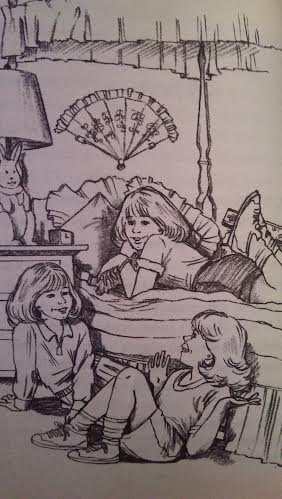 Sandi doesn’t want to do it because it would be dishonest, but Randi and Mandy talk her into it. It’s partly to help Mandy, partly to get back at Tara for her rotten attitude, and partly for the chance to meet the heartthrob Judd Morrison who will also be in the commercial. Of course, as is always the case when the girls switch places, nothing goes as planned. But, to the girls’ surprise, their younger brother Teddy helps to make things better in the end.
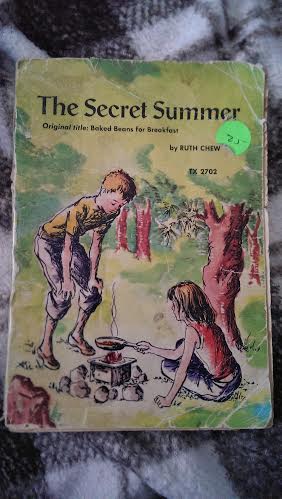 The Secret Summer by Ruth Chew, 1970.
 Jestress's Forgotten Books and Stories