Famous American Negroes by Langston Hughes, 1954.
I sought out an electronic copy of this book because I don’t own a physical one, and after I found out that it existed, I knew that I had to cover it at some point! The book is part of a series of biographies for children that I covered earlier, but what caught my attention was the author of the book, Langston Hughes, the famous poet of the Harlem Renaissance of the 1920s and 1930s. I mostly knew Langston Hughes for his poetry, and I wasn’t aware that he had written any children’s books until I found out that he had written several biography books for this series. When I found out that he specifically wrote books about African Americans and other notable black people from history, it occurred to me that he might have even written biographies of people he knew personally because of the circles he traveled in.
This book focuses on prominent African Americans through history. It contains a series of short biographies and profiles, beginning in the Colonial times and continuing into the mid-20th century, when the book was written. Some were contemporaries of Langston Hughes, but since the biographies are brief and focus only on providing an overview of the subjects’ lives, there is no indication whether Hughes ever met any of them himself. I was a little disappointed about that because I would have enjoyed hearing a personal perspective, but the personalities covered are still fascinating. I also enjoyed how some of the earliest biographies in the book relate to some of the later ones because of the influence some of the earlier people had on the lives of others.
If you’re wondering why he uses the term “Negro” instead of “African American”, it’s because that term was one of the more polite and acceptable terms during his youth and around the time when he wrote this book. (That’s why the UNCF, or United Negro College Fund uses it as well. It was one of the polite terms in use at the time of its founding.) It sounds a bit out of date to people of the 21st century because, around the time of the Civil Rights Movement, which began around the time this book was written, people began advocating for a shift in the words used to describe black people. They wanted to distance themselves from old attitudes about race by using newer terms that didn’t have as much emotional baggage attached to them. This is when terms like “colored” and “Negro” feel out of use and were replaced by “African American” as the correct, formal term to specifically describe an American with African ancestry and “black” (considered somewhat impolite a century earlier, as I understand it, see the Rainbow and Lucky series for an example – I discussed it in the historical description of the 1830s) as the generic term to describe a person with dark skin and African ancestry, regardless of their nationality.
Because this book was written in the mid-1950s, some of the information included is long out of date. People who were alive when Langston Hughes wrote the book are obviously not alive now, almost 70 years later. There are more recent books that cover the same topic and include information about late 20th century and early 21st century musicians Langston Hughes wouldn’t have known about. However, this vintage book is still interesting because of its famous author and because it was written at a turning point in American history, when society was changing and racial issues were being challenged.
The book is available to borrow and read for free online through Internet Archive.
The biographies included in the book are:
Introduction
The book begins with a brief history of black people in America. Langston Hughes points out that histories of African Americans often begin with slavery, but there were people of African ancestry who came to the Americas before that, not as slaves. Some traveled with explorers from Europe as members of their crews and expeditions.
After the slave trade began, slavery affected the lives of black people throughout the American Colonies and, later, the United States. Some slaves managed to find ways to take their fate into their own hands by running away, and of those, some helped others to escape to freedom. Some slaves were able to hire themselves out for wages on the side and saved up enough money to purchase themselves and gain freedom in that way. Some slaves were even freed by the the people who owned them, although others simply lived and died in slavery.
After the end of the Civil War and the end of slavery, former slaves were free to pursue their own destiny, but they were in a precarious position because they had no resources from which to start building their independent lives. Slaves had work experience, but much of their experience was in unskilled labor, which brought low wages. Most slaves had no education. (In many places, it was illegal to teach slaves to read. There were a few exceptions, and some people skirted the law, but this was a major problem for many formerslaves once they were granted their freedom, lacking an essential skill.) They had no money or land of their own. Getting established in their new lives meant building something from nothing or almost nothing, and it was a long, uphill struggle.
Even generations later, racial discrimination added obstacles to the lives of African Americans. The biographies in this book are about people who triumphed over the obstacles in their lives to leave a lasting mark on society.
Phillis Wheatley (c. 1753-1784) – Whose Poetry George Washington Praised
Phillis Wheatley was brought to the American colonies from Senegal as a slave when she was only a small child (approximately age 6 or 7 because she was still losing baby teeth when she arrived). Phillis was not her original name, but it is unknown what her original name was, exactly when she was born, how she became a slave, or what happened to her parents. She was purchased by a tailor named John Wheatley in Boston to be a servant for his family, and the Wheatley family gave her the name Phillis. When she first arrived in Boston, Phillis could not speak England and no one could speak Senegalese, so it was some time before anybody could truly communicate with her, which is part of why we know so little about her earliest years.
Fortunately, the Wheatley family was kind and even nurturing toward Phillis. Even though they purchased her to work for them, they cared about educating her. They taught her read and write, even though it was discouraged to teach slaves those skills and even illegal in some areas. When Phillis learned English and was able to read and write, it soon became apparent that she had a talent for poetry. The Wheatleys supported her poetry, and the granted Phillis her freedom in 1772. By the time she was about 21 years old, her poetry had been printed all over the colonies and in England. Although her poetry was successful, Phillis’s life took an unfortunate turn when she married a ne’er-do-well, and she died in poverty.
Richard Allen (c. 1760-1831)- Founder of the African Methodist Episcopal Church
Sometimes, slave owners used Christianity as an excuse for slavery, claiming that they were saving the souls of heathens. However, even though they converted slaves from Africa to Christianity, they didn’t provide much opportunity for their slaves to have religious worship. Richard Allen was born into a slave family in Philadelphia, and he was a child when he was sold to a farmer in Delaware. When he grew up, he became a Methodist preacher, and his owner let him perform religious services for the other slaves. He also became a wagon driver during the Revolutionary War and earned enough money to buy his freedom.
Once he was free, he returned to Philadelphia as a preacher. There was no Methodist congregation that was only for black people at that time, so he sometimes preached for a mixed congregation. However, some of the white members of the congregation protested to his presence as a black preacher, and some also objected to the presence of the other black parishioners as well. When Allen and a couple of friends were interrupted while praying one Sunday and told to leave the church, Allen realized that the only way any of them would be able to worship in peace would be to form their own group. The society he and his friends formed was the Free African Society, and that group went on to found the Bethel Methodist Episcopal Church. They were among those who helped to tend the sick and bury the dead during the yellow fever epidemic that struck the city in the 1790s.
Ira Aldridge (1807-1867) – A Star Who Never Came Home
Ira Aldridge was the son of a Presbyterian minister in New York. Aldridge started acting at a young age and became part of a black theater troupe, performing in a theater close to the African Free School he attended and the famous Fraunces’ Tavern (mentioned earlier in Phoebe the Spy, this book says that it was owned by a black family but other accounts say that the Fraunces family was mixed race – it has never been firmly established which is more accurate). His father wanted him to further his education, so he sent him to the University of Glasgow in Scotland, which accepted black students. It is unknown whether Ira Aldridge ever completed his degree there, but from there, he went to London to continue his acting career and won acclaim for his portrayal of Othello at the Royalty Theater. Ira Aldridge toured Europe and gathered a prominent following, even winning awards from some of the royal families of Europe. The reason why he never returned home was that he remained in Europe for the rest of his life, still touring as a successful actor up until his death at age 60.
Frederick Douglass (c. 1817-1895) – Fighter for Freedom
Frederick Douglass was born into slavery, originally with the last name of Bailey. In most cases, we know very little about the early lives of individual slaves because few slaves could read and write and their owners didn’t think it was important to even record their birth dates. Frederick Douglass is an exception because he learned to read and write and later wrote his famous autobiography. (The autobiography is now public domain, and you can read it for free online in many places, including Documenting the American South, Project Gutenberg, and Internet Archive (multiple copies). The reading level isn’t difficult, although parts are emotionally wrenching.) His autobiography contains many details of his early life (although even he never knew his own birth date, which is why we can only estimate). The description that follows is a brief summary of both the chapter in this book and the contents of his autobiography:
Frederick’s mother was a slave, but his father was a white man (or in some sources I’ve seen, possibly mixed race). (The book doesn’t identify his father, and his identity has never been definitely established, although there are theories. According to the Library of Congress, Frederick’s “Mother is a slave, Harriet Bailey, and father is a white man, rumored to be his master, Aaron Anthony.”) Because his mother had to work in the fields all the time, he rarely saw her when he was a child. (This book doesn’t mention it, but Frederick’s mother died while he was still young.) He was raised by his grandmother during his earliest years and later by a woman who abused and neglected her young charges. Then, young Frederick was sent to live with and work for another part of the family who owned him in Baltimore. At first, the mother of family was nice to Frederick and gave him his first reading lessons, but her husband put a stop to that, telling his wife in Frederick’s presence that if a slave learns to read and write, they’ll probably run away. Frederick managed to continue his reading lessons in secret with the help of some of the white children in the neighborhood. His new skills did help him to learn more about human rights and what freedom meant, and he also learned about the existence of abolitionists. Newspapers in Baltimore called abolitionists anarchists and accused them of being in the service of the devil, but young Frederick began to see them as possible allies.
As a teenager, Frederick was sent to live with a different branch of the same family in a smaller town. This family became suspicious of him when they found out that he could read and write and that he had joined a Sunday school that was run by a free black man. They decided to send Frederick to a man named Covey who was a “Negro breaker“, which was someone who would “tame” slaves by “breaking” them physically, mentally, and spiritually. In his autobiography, Frederick states that Covey did break him and very nearly killed him, but after a particularly vicious beating at Covey’s hands, Frederick realized both that he couldn’t take anymore and that he wasn’t going to take any more. He fought back. That’s when he began planning to run away. Somehow, plans of his escape leaked out, and he was sent away to work in the shipyards in Baltimore. There, he disguised himself as a sailor, borrowed some papers belonging to a sailor, and sneaked onto a train headed for New York.
When he arrived in New York, he was free, but he wasn’t quite sure where to go or what to at first. He had no place to stay and didn’t know anybody he could trust. Fortunately, a real sailor gave him a place to stay and helped him to connect with a society that helped escaped slaves. He found a job on the wharves and gave himself the name surname Douglass.
What truly makes Frederick Douglass famous is not just that he escaped from slavery, but once he did so, he wanted to help others gain their freedom. He became an abolitionist and gave public talks about slavery alongside many other famous abolitionists. When he met with violence, he moved his family to Canada, but he returned when the Civil War broke out to meet with President Lincoln. His sons became Union soldiers, and after the war, Frederick Douglass held various government offices, including US Marshall, Recorder of Deeds for the District of Columbia, and US Minister to the Republic of Haiti.
Harriet Tubman (c. 1823-1913) – The Moses of Her People
Like Frederick Douglass, Harriet Tubman was born as a slave in Maryland, but unlike Frederick Douglass, she had no early education. From an early age, she had a willful and rebellious personality, which was part of the reason why she was assigned to work in the fields instead of the house. One day, another young slave had gone to a local store without permission, and the overseer decided to whip him. He told Harriet help him to tie up the young slave first. When she refused to do it, the young slave ran away. I’m not completely clear on whether what happened next was deliberately aimed at Harriet or whether she was just in the way when the overseer tried to vent his wrath, but what is known is that the overseer picked up an iron weight and threw it. The weight struck Harriet in the head, cracking her skull. Harriet almost died of the injury and spent days lying unconscious. She eventually recovered, but she never recovered completely. Throughout the whole rest of her life, she bore a scar from the injury and would suffer from periodic seizures and sudden loss of consciousness. Her owner thought that the head injury had left her with diminished intelligence, which wasn’t true, but Harriet realized that it was useful to let him think that.
A few years later, her owner died, and she found out that she and two of her brothers were going to be sold to someone else. At first, they planned to run away together, but her brothers backed out of the plan, and Harriet left by herself. She managed to make her way to Philadelphia, found a job there, and established a new life. However, she didn’t stay in Philadelphia. She returned many times to help other people escape as one of the “conductors” on the Underground Railroad. Her own parents were among the people she rescued, and she never lost any of her “passengers” (partly because if anybody started to panic or turn back, she’d threaten to shoot them, but it worked without her actually shooting anyone). When the Civil War began, she became a Union nurse. She lived a long life, and although her exact age was unknown, she was probably somewhere in her 90s when she passed away.
Booker T. Washington (c. 1858 -1915) – Founder of Tuskegee
Booker T. Washington was also born as a slave to a black mother and a white father. (His mother was a cook called Jane. The identity of his father is still unknown, although the popular belief was that his father was a plantation owner. His mother later married a man named Washington Ferguson, who became Booker’s stepfather.) During the Civil War, Booker’s stepfather was with the Union army, and after the war ended, he rejoined the family and took them to Malden, West Virginia, where he worked in the salt mines. Although Booker was still a child, he also had to work, tending a salt furnace, because his family was poor and needed the money. Both he and his mother wanted to learn to read, but they had to struggle to learn by themselves at first because there was no school for them. When a black man who was able to read moved to the community, the others in town paid him to open a school to teach them. Booker began to take lessons after work, and the school was where he gave himself his last name. In his early life, he had only been known by one name – Booker, but when all the students at the school introduced themselves, he realized that most had two names. Wanting a second name for himself, he called himself Booker Washington.
Wanting a better life than working in the salt mines, Booker decided to pursue an education. He had heard that there was a school in Virginia he could attend called Hampton and decided to go there. It was a difficult journey, and he had to work along the way for money, but he finally made it. When he arrived at Hampton, he was dirty, looked somewhat disreputable, and didn’t have much money, so the head teacher initially had some doubts about admitting him, but he was willing to work at the school as a janitor to pay for his education, so she accepted him. Booker made the most of the opportunity and eventually graduated with honors in 1875. After he graduated, he returned to Malden, West Virginia, as a teacher. Since the previous teacher had left, Booker T. Washington was the only teacher in town. He encouraged his students, including his own brother, to go on to Hampton for higher education, like he had. The founder of Hampton was so impressed with Booker’s students that he offered Booker a job as a teacher at Hampton and house father for a dormitory of Native American students. Booker accepted the job and did well. Then, he received a new offer to establish a school in Tuskegee, Alabama.
Establishing a school for black children in Tuskegee was no easy task. Between limited funds, poor facilities, and threats of violence from the Ku Klux Klan, it was an uphill struggle all the way. However, Booker persevered, and his school became the Tuskegee Institute. One of the innovations that of the Tuskegee Institute that I particularly found interesting was that they had a “movable school”, meaning that they carried books and teachers to rural areas where people could not come to school, bringing school to them. It’s not quite the same as the bookmobiles I grew up with because these were more mobile schools than mobile libraries, but it seems like a kind of precursor. The Tuskegee Institute eventually became Tuskegee University, which still exists.
Daniel Hale Williams (1858-1931) – Great Physician
Daniel Hale Williams‘ early life was more peaceful than many black people of his time because his family was free, not slaves. His earliest years were spent in Pennsylvania, but after his father died, his mother moved the family to Wisconsin. Williams loved to read and received an education in his youth. At first, he thought that he might like to be a lawyer, but he soon learned that he didn’t like the constant arguing in presenting law cases. Instead, he developed an interest in medicine. He found a job working for the Surgeon General of the State and attended Northwestern University in Illinois. After obtaining his medical degree, he became a surgeon in Chicago. He helped other young black people who wanted to study medicine and were having difficulty finding training schools that would accept them and hospitals that would accept them as interns. Dr. Williams became famous for a successful operation on a man who had been stabbed in the heart, the first successful operation of its kind.
Henry Ossawa Tanner (1859-1937) – Who Painting Hangs in the Luxembourg
Henry Ossawa Tanner was the son of a bishop of the African Methodist Episcopal Church and was raised in Pennsylvania. When he was still a child, he saw a man painting a picture in a park, and it inspired him to become an artist himself. His father thought that his artistic ambitions were impractical, but Tanner began experimenting with different types of media, including paint and clay, and he attended the Pennsylvania Academy of Fine Arts. He began selling his paintings professionally while he was still a student. After he graduated, he found a job teaching art at Clark University. He continued to paint and opened a photography studio on the side. A generous churchman gave Tanner some money so he could study art in Europe, so Tanner lived and painted in Paris for several years. He found the artistic life of the city inspiring, and he did a series of paintings with religious themes. In particular, he is known for his painting of The Resurrection of Lazarus, which he painted in 1896. The French government purchased this painting to hang in the Luxembourg, a famous art gallery. Tanner did return to the United States for a time, but finding life in Europe easier because Europe did not practice racial segregation like the United States did at that time, he decided to return to Paris, where he lived the rest of his life.
George Washington Carver (c. 1864-1943) – Agricultural Chemist
George Washington Carver was born a slave, and his father died in an accident while he was still an infant (or shortly before his birth, according to other sources – since he was a slave and slave birthdays were not recorded, that might explain the differing accounts). In fact, while he was still an infant, he and his mother were abducted from the farm where they lived in Missouri by Night Riders, a gang of criminals who kidnapped slaves to sell to different owners in other states. The fate of his mother is unknown (according to the book, although other sources say that she and George’s sister, who was also abducted, were sold to someone in Kentucky), but little George was found because he was ill with whooping cough, so the Night Riders simply abandoned him by the road. George was returned to the people who owned him and his mother, the Carvers, who had offered a reward for his return. The Carvers had no other slaves beyond George and his family. George also had an older brother who managed to avoid being captured by the Night Riders and remained with the Carvers. The Carvers ended up raising George and his brother like adopted children after the loss of their parents and the end of slavery.
During his childhood, George liked to play in the woods and fields near the Carvers’ farm, and he developed a fascination for plants. He often brought samples of different plants to Mrs. Carver to ask her what they were. The Carvers didn’t have much education, but they told him what they knew and gave him his first lessons in reading. Later, George attended a school for black children in another town, Neosha, living with a black woman named Mariah Watkins. From there, he became an itinerant worker, finding jobs and continuing his education wherever he could. Eventually, he attended Iowa State College, studying agriculture. He graduated at the top of his class and wrote a thesis called “Plants as Modified by Man.” He stayed on at the college to get his Masters degree, working as an assistant botany instructor. After he got his MA, Booker T. Washington invited him to teach at Tuskegee as the head of the agriculture department. Carver’s work at Tuskegee made him famous. He ran experiments to determine new uses for agricultural products, devoting the rest of his life to agricultural research.
Robert S. Abbott (1870-1940) – A Crusading Journalist
Robert Sengstacke Abbott was the son of a minister in Georgia. He loved books since childhood and found a job as an apprentice printer after graduating from Hampton. Because his opportunities for advancement were limited in the South, he moved to Chicago, but he still met with discrimination and found it difficult to get work in the printing industry. Discouraged, he studied and practiced law for a time, but he missed his printing work. Instead, he decided to buy his own printing press and start his own newspaper. He knew that African Americans and their concerns weren’t being represented in existing newspapers, so he wanted to become their voice. The newspaper he started was called the Chicago Defender, which became a national newspaper (and which still exists in an online format), although some Southern communities outright banned the newspaper and even made it a crime for a black person to simply possess a copy under the claim that it would incite black people to riot.
Paul Laurence Dunbar (1872-1906) – The Robert Burns of Negro Poetry
Paul Laurence Dunbar‘s father escape from slavery in his youth, returning to fight on the side of the Union during the Civil War. Paul was born after the war, and his father died when he was only twelve years old. His mother didn’t have much education, but she wanted him to be educated and worked hard to make it possible. Paul enjoyed writing poems since he was a child, and when he was in high school, he became the editor of the school paper. One of his English teachers was so impressed by his poetry that she arranged for him to write a poem and read it before a meeting of the Western Association of Writers. When Paul had enough poems to make a book, he had them published with the help of a publisher who loaned him money to cover the publishing costs. He sold enough copies of the book to cover the loan and make a nice profit.
After a stint working for Frederick Douglass at the World’s Columbian Exposition in Chicago, Paul wrote a second book of poetry that made him nationally famous. He received many orders for copies of the book, and he was invited to give public readings of his poems. He even went to London to give readings during Queen Victoria’s Diamond Jubilee. When he returned to the US, he got a job at the Library of Congress and got married, but unfortunately, his life was cut short by tuberculosis.
W. C. Handy (1873-(later D. 1958)) – Father of the Blues
W. C. Handy is mentioned in a later book by Langston Hughes in the same biography series, Famous Negro Music Makers, but his biography doesn’t appear in that book although he made his living in music.
William Christopher Handy was born in Alabama. When he started school, his favorite subject was music. His teacher was a graduate of Fisk University (an African American college with a strong musical tradition, which is also described in Famous Negro Music Makers), and he introduced his students to a variety of musical styles. Handy’s father was a Methodist minister, and he didn’t believe in music outside of church and school. Musicians had a bad reputation, so he didn’t support his son’s musical interests and wouldn’t let him have an instrument of his own. Handy often improvised instruments, and he was inspired by traveling musicians who came to town. In spite of his father’s opposition, Handy joined up with musical groups.
Handy’s father wanted him to follow in his footsteps and be a minister, but Handy told his father that he’d rather be a teacher. When he found out how bad teachers’ salaries were, he found a job in a foundry instead. In his free time, he continued to play music in his church and started an orchestra and brass band. When he lost his job at the foundry due to an economic depression, he formed a quartet with some other young men, and they headed off to the World’s Fair in Chicago. They sang for their food and transportation along the way, only to learn that the World’s Fair was postponed. Instead, they decided to go to St. Louis, but still unable to find singing jobs, the group broke up.
Handy was too proud to go home to his father and admit defeat, so he continued to travel around and pick up whatever odd jobs he could find. Eventually, he joined up with a minstrel group, and he began to make a career in music. He traveled all over the country, giving performances, but when he became a father, he decided that it was time to settle somewhere to give his child a stable life. He took a job teaching music and English in Alabama, but he didn’t like the job because he wasn’t allowed to teach popular music, only hymns and classics. He returned to playing minstrel shows and became the bandmaster for a Knights of Pythias band in Mississippi. He composed music, writing The Memphis Blues and The St. Louis Blues. These songs were big hits, and The St. Louis Blues made Handy a great deal of money. Handy became a music publisher on Broadway, and his company was the largest African American owned publishing company in the US.
Charles C. Spaulding (1874-1952) – Executive of World’s Largest Negro Business
In the years immediately following the end of the Civil War and the Emancipation of the slaves, things were very difficult for black people. The newly-freed slaves had no money or assets to help them establish their new lives or even to take care of their sick or bury their dead. To help each other, they banded together and formed benevolent societies and fraternal organizations to share the resources they had and support each other. Some organizations of this type already existed, but Emancipation led to the expansion of such groups and the formation of new ones.
Charles C. Spaulding was the first manager and later president of the North Carolina Mutual Life Insurance Company. He had grown up poor and only had an eighth grade education. He worked at various jobs until he was approached by the owner of a series of barber shops who was interested in starting an insurance company. Spaulding’s uncle was also interested in the venture, and they hired Spaulding to be the manager of this small company. At first, Spaulding didn’t know much about insurance, and he had to wear a lot of hats in the business, starting out as bookkeeper and janitor of the business as well as its manager. In fact, he was originally the only employee of the company. The very first customer of the insurance company died only a few days into his policy, putting the company into debt immediately, but the owners of the company dutifully paid what they owed to the man’s widow, giving the company a reputation for reliability and earning them more customers. As the business grew, the company also supported public projects of interest to the African Americans in their community, such as the formation of a new library and a new hospital. Spaulding inherited the company after his uncle’s death, and he continued supporting civic projects.
A. Philip Randolph (1889-(Later D. 1979)) – Distinguished Labor Leader
Asa Philip Randolph was born in Florida. His father was a Methodist preacher, and he grew up reading his father’s books of sermons and Shakespeare. After he graduated from high school, he decided to go to New York to look for work. He worked at various jobs, and he became interested in improving working conditions for black people. Randolph gave public talks on the subject in Harlem and helped to start a magazine called The Messenger to advocate for the rights of African Americans. He began to travel to other cities to give talks and fiery speeches, and at one point, he was called “the most dangerous Negro in America” because some people feared what he might stir up in discontented African Americans faced with discrimination and bad working conditions.
Randolph was invited to speak to the Pullman Porters Athletic Association about the importance of trade unions because the porters had unsuccessfully tried to unionize before. Their working conditions were harsh, their pay was low, and the porters hadn’t made any real progress toward improvement. Randolph hadn’t worked as a porter, but he was interested in unions and labor organizations. The porters in New York asked him to help them organize, and they formed the Brotherhood of Sleeping Car Porters in 1925. Some porters were reluctant to join at first because they were afraid of being fired, but Randolph continued to travel and speak about the importance of unions, recruiting new members. The Great Depression was hard on the porters, but the union managed to negotiate for better working conditions and pay.
Ralph Bunche (1903- (later D. 1971)) – Statesman and Political Scientist
This particular biography begins with a brief history of Israel and Palestine and the conflict between the two because of the aftermath of WWII, a conflict that has continued into the 21st century.
Ralph Bunche was the son of a barber in Detroit, Michigan. While he was still young, his parents suffered health problems and were advised to go to a drier climate, so the entire family moved to New Mexico. Ralph enjoyed living in the Southwest, but unfortunately, his parents died, leaving him and his sister with their grandmother. Ralph’s grandmother insisted on him continuing his education, and he also worked part time. After he graduated from high school, his grandmother insisted that he go on to college. He got a scholarship for the University of California, and from there, he got another scholarship to attend Harvard. At Harvard, Ralph studied political science, and after he graduated, he accepted a job from Howard University in Washington DC which wanted to set up a political science department of its own. Washington DC was more segregated than other places Ralph had lived, and he turned his attention to seriously studying racial relations. In 1936, he became one of the co-directors of the Institute of Race Relations at Swarthmore College.
During WWII, Dr. Bunche could not serve in the armed forces because he was deaf in one ear. However, he served the Office of Strategic Services, researching cultural and political attitudes in Africa where the US had strategic interests and wanted to establish military bases. Because he performed this job well, he was chosen to be the Associate Chief of the Division of Dependent Territories in the State Department, making him the first black person to be in charge of a State Department office. After the war, he became one of the consultants in the drafting of the charter of the United Nations, which is how he became involved with the conflict in Israel. Dr. Bunche attended session of the UN, and in 1947, he became part of a UN Special Committee sent to Palestine to negotiate peace. It was a dangerous mission, and other members of the committee were actually assassinated. While the situation in Israel and Palestine has yet to be completely resolved, Dr. Bunche made more progress than the rest of the committee in the 1940s, getting the two sides to agree to an armistice. At the end of the tense negotiations, he had the respect of both sides, and his work earned him a Nobel Peace Prize is 1950.
Marian Anderson (1897-(Later D. 1993)) – Famous Concert Singer
Marian Anderson was a famous singer who became the first black person to sing for the Metropolitan Opera Company the year after this book was written. A later book by Langston Hughes in the same biography series, Famous Negro Music Makers, describes this achievement and other details of her life and work.
Jackie Robinson (1919-(Later D. 1972)) – First Negro in Big League Baseball
Jackie Robinson was the youngest of a family of five children. His father died when he was still an infant, and his mother moved the family from Georgia to California to live with her half brother and find non-segregated schools for the children. Jackie was young during the Great Depression, and times were hard for his family. He sometimes had little to eat. However, he excelled at athletics in school, which helped him to get into Pasadena Junior College and the University of California. He played football for UCLA, but he left college in his final year to find a job and help his family financially. He got a job as an athletic director for a Civilian Conservation Corp camp. When the US joined WWII, Jackie Robinson joined the army, but he was honorably discharged before the end of the war due to an old football injury that began troubling him again. After that, he took a job as an athletic director at a small college, and then, he joined a baseball team called the Kansas City Monarchs.
During the 1940s, black people were barred from joining major league teams, so at first, Jackie Robinson didn’t take it seriously when he was approached by a scout for the Brooklyn Dodgers. However, WWII had brought about changes in racial attitudes and new opportunities for black people. After a stint with the Montreal Royals, Jackie Robinson did join the Dodgers and became famous as a baseball player.



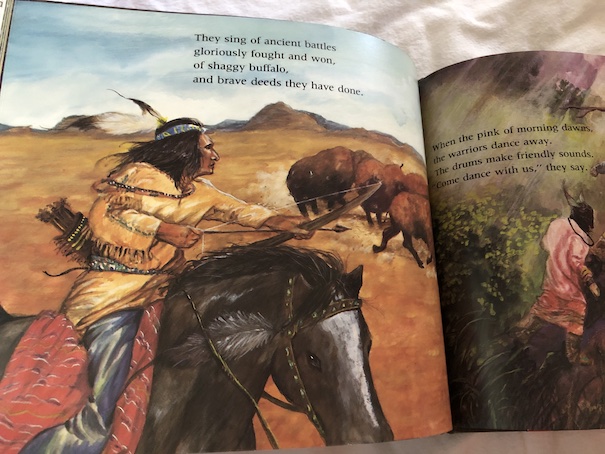
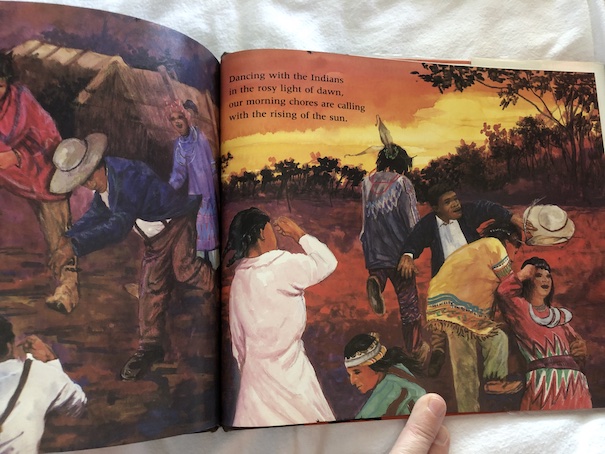
 The House of Dies Drear by Virginia Hamilton, 1968.


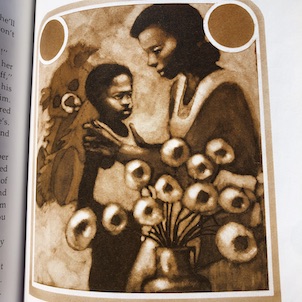


 Steal Away by Jennifer Armstrong, 1992.
 Jestress's Forgotten Books and Stories