The UFO Mystery

This book is part of the Sherlock Street Detectives series.

Halloween is approaching, and the Sherlock Street Detectives are talking about their costumes. David is going to be a bear, and he made his costume out of an old rug. Pedro is going to be a clown. Walter and Ann, who are twins, refuse to tell anyone what their costumes are because they want it to be a surprise.

Then, David says that he has to go home because it’s dinnertime, and after dinner, he’s going to look for a comet with his telescope. Pedro says that he’s never used a telescope before and asks if he can look, too. David says he can, and Pedro says that he will come back to his house when it’s dark.

When David and Pedro meet to use the telescope, David shows Pedro how to use a star map to find the constellations. While Pedro is looking through the telescope, he thinks that he sees a UFO! At first, David doesn’t believe him. It’s too early to see the comet, so he thinks maybe Pedro saw a meteor. Pedro insists that it was a UFO, and David points out that UFO stands for Unidentified Flying Object. That means that anything that “unidentified” can be a UFO. Pedro can’t identify exactly what it was he saw, but that only means that he didn’t recognize the object. It doesn’t have to be an alien spacecraft, just some normal thing he didn’t recognize, like a meteor, a comet, or even just a firefly.

Since David’s dad works for NASA, Pedro says that they should ask him if it could have been a comet other than the one they were expecting to see. However, David’s dad confirms that there should only have been one comet that night and that the comet should have been in a different part of the sky. The boys talk about getting Walter and Ann to help them investigate, but then, they see some strange creatures in the bushes!

What did Pedro really see through the telescope, and could those weird creatures really be aliens?

The book is available to borrow and read for free online through Internet Archive.

This is fun mystery picture book! Figuring out what/who the aliens are is the easiest part of the mystery, since this is before Halloween and the twins were being mysterious about what their costumes are, although it might seem harder to young children. The answer to what Pedro thought he saw through the telescope is revealed first, although I wasn’t entirely sure what to think of it myself. At first, I thought that the “aliens” might have been throwing around some glowing toy or something, but they would have to have thrown it really high to get it in front of the telescope because the boys were using the telescope on the roof. There’s a perfectly logical explanation behind the phenomenon, and David figures it out by noting where the object was and it was moving. David’s father confirms David’s guess with a call to NASA.

One of the nice things about this simple mystery story is that it introduces some real concepts for stargazers and amateur astronomers. There is a vocabulary list and glossary in the back of the book.

This series also offers good representations for racial diversity. Racial issues don’t enter into the story. The kids are just a bunch of kids who happen to live in the same neighborhood and are friends and like to solve mysteries, but they are a mixed racial group, and that’s nice to see. David is black, Pedro is Hispanic, and the twins are white. The children’s races are not referred to in the text of the story, but they are shown in the pictures.

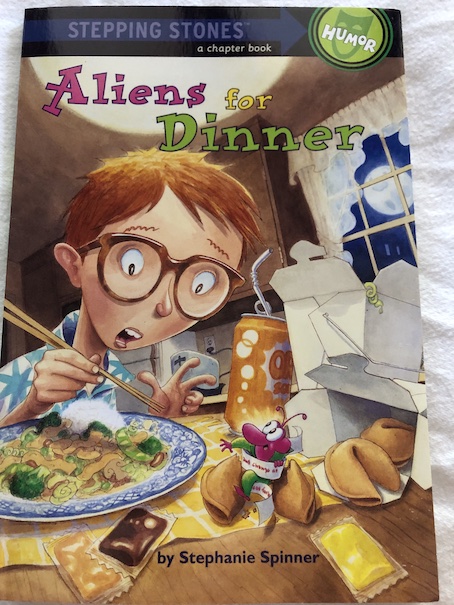
Aliens for Dinner

This book is part of the Aliens for Breakfast Trilogy, a short, easy chapter book series for elementary school children.

Richard Bickerstaff is unhappy because his mother has started dating a man named Bob Baxter. Richard thinks that Bob is weird, and he has an annoying habit of repeating himself. Then, one evening, when Bob is having dinner with Richard and his mother, Richard’s small alien friend, Aric, arrives with their Chinese food, hidden in a large fortune cookie. Aric is a commander of the Interspace Brigade, and they operate on a shoestring budget, so they often transport Aric in some form of food to save money.

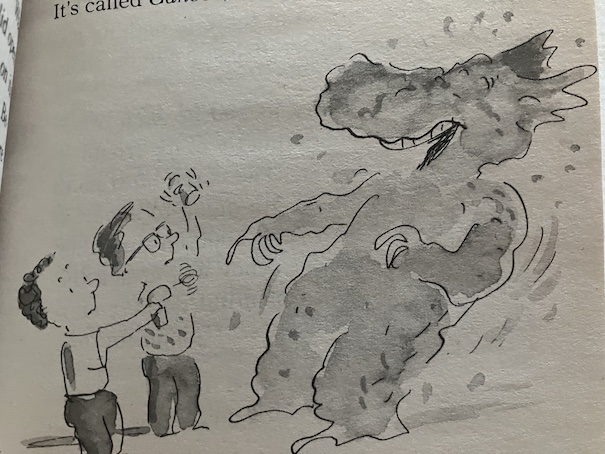
Richard manages to slip away from his mother and Bob and takes Aric to his room, where Aric tells him about his latest mission. Earth is in danger from aliens from a planet called Dwilb. Dwilbs have a bizarre love of pollution, and pollution problems have gotten bad enough on Earth to attract their interest. The Dwilbs want to make Earth even more polluted so they can turn it into a pollution-themed amusement park for themselves called Toxic Waste Funland. Aric says that they’re so confident in their plan that they’re already running advertisements. Aric will need Richard’s help to stop them!

Richard asks Aric questions about what the Dwilbs are like. Aric says that they look like humans, but they have an odd habit of saying everything twice, and the repetition seems to have a hypnotic effect. Richard thinks that sounds familiar, and he remembers why when his mother and Bob come to say goodnight to him. Bob repeats himself! Richard starts to think that his mom might be dating an alien!

Meanwhile, the Dwilbs have caused a major oil spill nearby as part of their plan to pollute the planet further. Local people have been trying to help with the cleanup, but it seems like it’s just getting worse. Richard goes to take a look and sees Dwilbs splashing about in the oil, having fun! They love the oil spill, the exhaust from cars, and everything that’s dirty.

Richard asks Aric what they can do to stop the Dwilbs, but as often happens when Aric travels in the bizarre ways that Interspace Brigade sends him, has trouble remembering the Dwilbs’ weak point. While Aric struggles to remember, the Dwilbs start influencing the kids at Richard’s school, getting them hooked on a treat they call Sludgies. Under their influence, the kids start littering and stop caring about the environmental efforts their teacher is trying to talk to them about. Even Richard’s friend, Henry, is under their power and in no state of mind to help Richard.

Fortunately, there is a secret weapon right there at Richard’s school: the school principal and his ability to bore everyone almost to death. In the case of the Dwilbs, boredom is a serious threat!

The books in the Aliens for Breakfast Trilogy are humorous sci-fi stories, and the solutions to defeating the aliens always have some comic twist. The solution in this case is getting the school’s principal to speak to them and bore them out of their minds. Richard has to arrange for his principal to speak at a place where he knows all the aliens will hear him.

Richard has run into situations in previous books where strange people he knows turn out to be sinister aliens in disguise, and in this case, he thinks that Bob is one of the Dwilbs. However, there is a twist to this story. Bob isn’t one of the aliens. He’s a little odd, but he’s a human. His quirks just happen to resemble the Dwilbs. He has a habit of repeating himself, but he’s not at all bored by the way the principal speaks or the way Richard speaks when he imitates his principal. Bob is often a little boring himself. By the end of the book, Richard feels better about Bob when he discovers that Bob likes comic books as much as he does. The two of them start bonding by sharing comics. Bob has a collection of older comics that Richard has been wanting to read, and he lets Richard borrow them.

I like the references in the story to real franchises that fans of science fiction and comic books would know. Richard has a collection of X-Men comics.

The book was published in the 1990s, when I was still in school. I remember my teachers talking to us about environmental issues back them, especially about pollution and the importance of recycling. They often urged us to get involved and do our part to recycle and not litter. The environmental messages in this story, especially the ones Richard hears at school, bring back memories for me.

Aliens for Lunch

Aliens for Lunch cover

This book is part of the Aliens for Breakfast Trilogy, a short, easy chapter book series for elementary school children.

It’s spring break, and Richard and his friend Henry are bored. It seems like all of their friends have all gone somewhere for vacation, but they’re stuck at home. Richard’s mother leaves the boys home alone, telling them that there’s food for lunch in the refrigerator and a new sample of popcorn that arrived in the mail. The last time that a sample of a new kind of food arrived in the mail, Richard’s alien friend, Aric was hiding inside, and the same is true this time, too! Aric is back, and he needs Richard’s help!

Aric tells Richard and Henry that a valuable shipment of XTC-1000 was hijacked by aliens called the Graxians. XTC-1000 is the secret substance that makes all desserts taste wonderful. (I always thought that was sugar, but okay.) Aric’s planet ships XTC-1000 to other planets, and each shipment is supposed to last for thousands of years, but the Graxians are greedy, and they used up their supply too quickly, which is why they hijacked a shipment bound for another planet. It’s a real problem because, if that other planet’s desserts suddenly turn bland because they’ve run out of XTC-1000, they’re bound to start raiding desserts from other planets, like Earth.

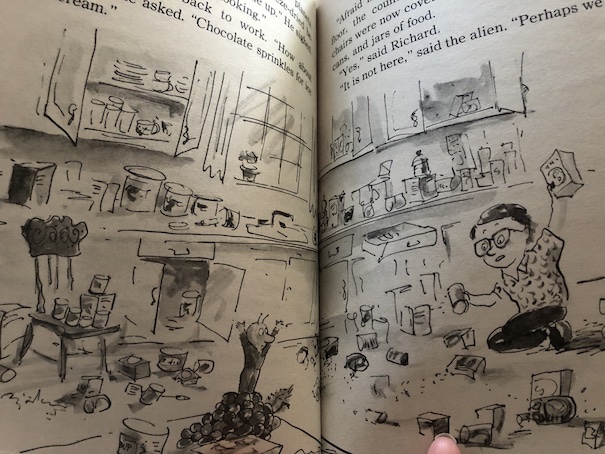
Aric’s Interspace Brigade was supposed to send weapons to help Aric and Richard face off against the Graxians, but as always, they’re on a strict budget, and the weapons they sent somehow failed to arrive. Richard and Henry do the best they can to improvise weapons with things they find in Richard’s kitchen, but they’re not very terrifying. The Graxians take Aric, Richard, and Henry prisoner after they board the ship. Can the boys manage to free Aric and discover what they need to subdue the Graxians?

I don’t think I read this book as a kid, although I remember reading the first book in the series. The Aliens for Breakfast Trilogy is a short series of funny science fiction stories as Richard and his alien friend do battle against the villains of the galaxy with food! I like the fact that even the aliens they fight find their efforts laughable when they try to use things that just don’t make sense, like when they try to use the kitchen gadgets as weapons. I also enjoyed the pun that the secret substance that makes desserts good is “XTC”-1000. (No, I don’t think they mean the illegal drug.) There is also a running gag that Aric’s space organization is always operating on a shoestring budget, which is why they often have to improvise weapons and modes of travel. The stakes are high but laughable at the time time, and somehow, they always manage to save the day! There is an extra joke at the end of this book where Aric gives both of the boys jackets from his space organization, telling them that girls find them irresistible. When the boys try wearing them for the first time, they come to the conclusion that neither one of them is ready to be irresistible.

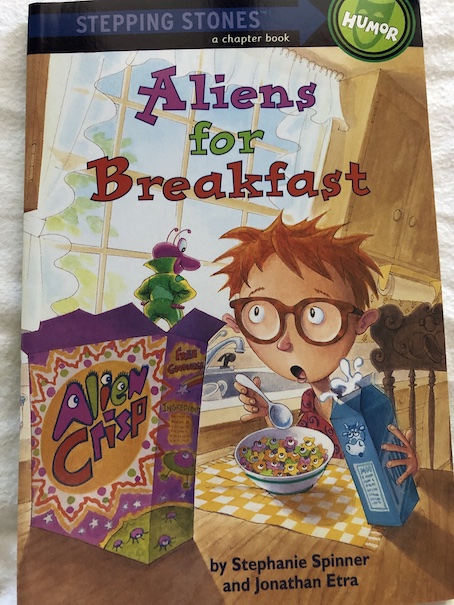
Aliens for Breakfast

This is the first book in the Aliens for Breakfast Trilogy, a short, easy chapter book series for elementary school children.

There’s a new student in Richard Bickerstaff’s class at school called Dorf. In spite of his strange name, Dorf is a good-looking blond boy with an irresistible smile. Everyone in class admires him and imitates him. Even Richard finds himself admiring Dorf’s clothes and wishing that he could wear the same thing, even his stupid bowling shirt. Then, when Richard sits down to breakfast one morning before school, he learns something startling about Dorf that changes everything.

Richard’s mother gives him a sample of Alien Crisp that came in the mail. She thinks that Richard will love it because of his love of science fiction, but right away, he can tell that this is no ordinary cereal. When he pours milk on the cereal, it comes to life! Actually, he has revived a small alien called Aric, who was sent to Earth from another planet in freeze-dried form in the cereal. Aric is a Commander of the Interspace Brigade, and he’s here to stop an alien invasion on Earth. His target is Dorf.

Dorf is no ordinary boy. He’s an alien in disguise and a dangerous one. His type of alien multiplies, and if that happens, Earth is doomed! There’s only one thing that can stop Dorf … and Aric has forgotten what it is. Being freeze-dried for the trip to Earth has scrambled his memory, but he knows that the weapon they need is an ordinary type of food from Earth.

While Aric struggles to remember what that secret weapon is, Dorf’s hold over Richard’s friends and teachers becomes stronger. Everyone is charmed by Dorft, and everyone wants to do whatever Dorf does. Only Richard resists, and that identifies him to Dorf as an enemy.

Dorf uses his powers to make Richard start dissolving. If Aric doesn’t remember that secret weapon soon, both Richard and Earth are history!

I remember reading this when I was in elementary school, although I forgot most of the story. I remembered the alien arriving in the cereal box, like those little toys we used to get in cereal as kids. I also remembered that he was under threat somehow and that Aric told him that he hoped he didn’t have big plans for the weekend, with the implication that, if they don’t do something, he won’t make it to the weekend.

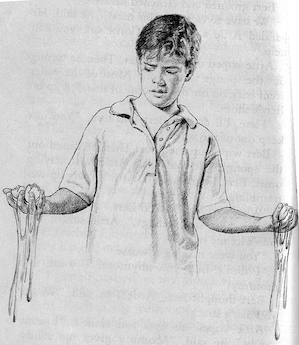
There’s a lot of humor in the story. I was alarmed at how Richard’s fingertips start bleeding when the dissolving begins. That part sounds a little scary. He bleeds rather than starting to fade out, and I had forgotten about that part in the story. However, there is humor in the story that helps to soften it, and the solution is a simple one that works right away.

The story has some references to real life science fiction, like Yoda from Star Wars and the starship Enterprise from Star Trek.

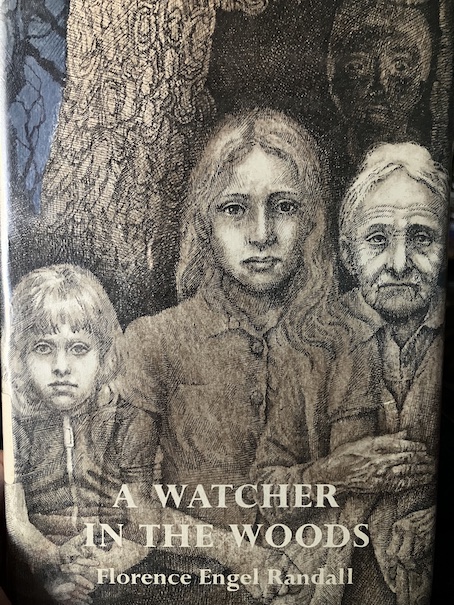
A Watcher in the Woods

The Carstairs family is moving from Ohio to a small town in Massachusetts because Professor Carstairs will be taking a new job as head of the English department at the local college. Fifteen-year-old Jan knows that she will find the move harder than her parents or her younger sister. Her father will be busy with his work, and her mother will make friends with the wives of other faculty at the college. Jan knows that her little sister, Ellie, is still very young and in elementary school, and she won’t find changing schools as difficult as she will. Jan isn’t looking forward to trying to fit in at the local high school.

The family’s first difficulty in moving is finding a house in this new town that they like. Because it’s a small town, their options are limited, and it seems like there’s something wrong with each of the houses they see. Then, their realtor suggests that they view the old Aylwood place outside of town. Living there would mean a longer distance to drive to the college and the girls’ schools, but it’s a nice, big house with some land attached to it. The land includes woods and a pond. Elderly Mrs. Aylwood can’t afford to maintain the place anymore, but she has been reluctant to sell the house. She is very attached to it and she wants to make sure that, if she sells, that she will sell it to the right kind of people, who will take care of the land and woods.

From the first time that Jan and her family visit the house, it gives Jan a strange feeling. She has the oddest feeling that someone (or something) is watching them from the woods, and it frightens her. However, when she tries to explain her uneasy feelings to her mother, her mother thinks that it’s her imagination. Jan can’t deny that the house and wood give her the feeling of a fairy tale and that Mrs. Aylwood reminds her of a fairy tale witch.

For some reason, Mrs. Aylwood becomes more welcoming to the Carstairs family after she sees Jan, and she begins asking Jan some rather odd questions about herself. Mrs. Aylwood admits that Jan reminds her of her own daughter, Karen, who she lost 50 years ago when she was only 15 years old. Jan begins to understand that Mrs. Aylwood’s attachment to the house is because it’s a link to her daughter’s memory, but she soon begins to realize that there’s more to it than that. Mrs. Aylwood asks Jan what kind of person she is and makes a cryptic comment about how Jan is a human but there are other things besides humans.

Jan’s uneasy feeling of being watched continues, and mirrors in the house are inexplicably broken in an x-shaped pattern. When she befriends a neighbor, Mark, and talks to him and his mother about the house, she learns that Karen did not die but that she disappeared 50 years ago. She apparently went out for a walk to the pond in the woods one summer morning and simply vanished with no explanation. Searches for her never lead anywhere. Most of the local people believe that Karen ran away from home, although it would have been out of character for her to do that. Jan begins to wonder if the watcher she senses in the woods could be Karen, somehow hiding out or having returned after all these years, although Mark says that doesn’t make sense. Then, remembering Mrs. Aylwood’s comment about things that aren’t human, Jan wonders if the watcher could be Karen’s ghost. What if she died all those years ago, and her spirit haunts the woods?

It seems like someone or something is communicating with Ellie. Ellie seems to hear something speaking or humming when Jan can’t. Something even suggests to Ellie that she name her new puppy Nerak, which Jan realizes is “Karen” spelled backwards. Is Karen trying to communicate with them, or is it something else?

The book is available to borrow and read for free online through Internet Archive. This book has been made into movie versions twice, but the Disney movie from 1980 is more faithful to the original story. I’ll explain why below, but it involves spoilers.

When talking about my opinion of this book, I really need to include some spoilers. This is a very unusual book because it isn’t obvious until about halfway through what kind of story it really is. From the beginning, it’s set up like a ghost story, with Karen’s mysterious disappearance, the sense of something watching the house and family from the woods, and something trying to communicate through Ellie. It’s very suspenseful and mysterious, but this is not actually a ghost story. It’s really science fiction.

Karen isn’t dead, but she has been trapped in an alternate dimension since she disappeared 50 years ago. A being from that other dimension has also been trapped in our world since then. This other being is the mysterious watcher in the woods. Jan correctly senses that this other being is also female and a child, although beings of its kind live extraordinarily long lives because time works differently in their dimension. What has been 50 years for everyone else has only seemed like a day to her. She wants to return home, but she has had to wait for conditions to be right. She also wants to help Karen, and she has been struggling to communicate with Mrs. Aylwood and Jan and her sister so she can tell them what they need to do.

In the Disney movie, there are a couple of major changes from the original book. The first is that the location is changed from the US to England, although Jan and her family are Americans. It also features a kind of initiation ritual that Jan was undergoing just as her switch with the creature from the other dimension happened, adding an element that seems supernatural, although it is still science fiction. At the very end of the Disney movie, Jan brings Karen back from the other dimension, but in the book (Spoiler!) Mrs. Aylwood goes to join Karen in the other dimension instead.

In the book, Jan’s mother worries about what life would be like for Karen if she returns, aged 50 years in what must have seemed like only a day, having lost most of her life, or what it would be like if she has not changed at all but her mother has aged 50 years, and the world has been through so many major changes since she left. It isn’t clear whether or not Karen has aged in the other dimension, but Jan’s mother’s point is that the world she came from has definitely changed. Karen can’t go back to her old life, and there is some sadness about that and about what Mrs. Aylwood has been going through since Karen disappeared. However, Mrs. Aylwood decides to join Karen in this other world, where she’s been. We don’t really know what Karen’s condition is in the other dimension because we don’t see her. She may have aged very fast there, although I think they imply that she has not aged at all because time works differently in the other dimension. Since time works differently there, it seems like they either won’t age further there or will do so much more slowly than they would on Earth.

Between the two movie versions, the Disney movie version of this book from 1980 is more faithful to the original story because it maintains the concept that this is a science fiction story and that the watcher in the woods is a being from another dimension. The movie version from 2017 turns the story into a ghost story with no science fiction elements. In the ghost story version, Karen is also still alive and hasn’t aged after being gone for many years, but the watcher in the woods is a ghost who is holding her captive. It’s a spookier version, but I think the logic of the original book, with its science fiction theme, makes more sense. 

The premise of the ghost story didn’t make as much sense to me because the ghost’s motives seem confused. First, the ghost takes Karen captive because she was staging a stunt for some friends where she appeared to be mocking the way he died. Then, he seemed to want to keep a girl for company, which is weird because it doesn’t seem like he interacts with Karen while he has her. He tries to make a bargain where he would be willing to release Karen in exchange for Ellie, but in the end, it turns out that human company isn’t really what he wants. (Spoiler!) He wants a ritual for his death that he was deprived from having when he was killed. The story just seemed to be all over the place with the ghost’s motives and desires. Is he out to punish Karen for her disrespect, lonely without human company, or just trying to get attention from the living to fulfill his final wishes? Even he doesn’t seem clear about that, which is why I prefer the sci-fi version. 

I also thought that the premise of the sci-fi story was more original, and I enjoyed the twist of a story that seems like a ghost story but really isn’t. If any sufficiently advanced technology might look like magic to someone who had never seen it before, as Arthur C. Clarke said, it makes sense that any being who was sufficiently different from the human experience might appear to be some kind of supernatural creature to human beings who didn’t know what they were perceiving.

The Disney version from 1980 actually has multiple endings because the first endings they filmed didn’t quite work and didn’t get a good reaction from audiences. If you’re curious about what the three endings are like, Jess Lambert explains them in her YouTube review of the movie.

The Power Twins

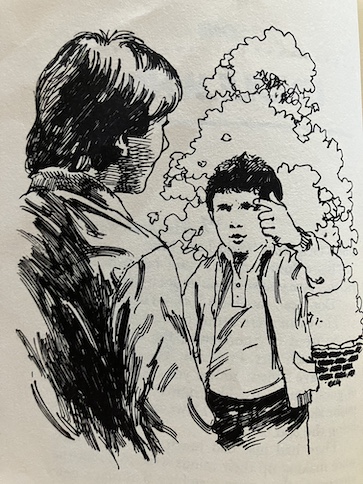
Fritz (real name Richard) and Helen Price are twins, and their mother runs a seaside guesthouse. Their younger cousin Jonathan, called Tubs (a nickname that annoys him), comes to visit during the summer, although the twins find him annoying. It isn’t really Tubs’s fault; it’s just that he’s three years younger than they are, and they find him childish. Then, one day, Tubs tells them that Uncle Grigorian is coming to visit.

Fritz and Helen say that they’ve never heard of Uncle Grigorian before, and they ask their mother about him. She says that Uncle Grigorian hasn’t come to see them since the twins’ father died in a car crash, and Uncle Grigorian came to the funeral. The twins’ father originally came from Poland as “more or less an orphan”, and his family was split apart during “the war.” Even he wasn’t sure exactly how many brothers he had, and he never heard from the rest of his family after he arrived in Britain.

(The implication is that he was probably one of the children brought to Britain by the Kindertransport, which transported refugee children from Nazi Germany and Germany-occupied territories, including Poland, to Britain between 1938 and 1940 and placed them with foster families or in temporary homes. The Kindertransport prioritized particularly vulnerable children, especially Jewish children whose parents were already in concentration camps or who were homeless, living in poverty, or were already orphans. The hope was that many of these children would be reunited with their parents after the war, but many of them never saw their families again and continued living with their foster families because their parents were likely killed during the Holocaust. The father in this story was likely very young at this time or even an infant and so didn’t understand his family’s full situation, didn’t have many memories of them, and never learned their ultimate fate. None of this is stated explicitly in the story, but it fits with the father’s apparent age, the time period, and Poland during “the war.”)

Uncle Grigorian was living in Germany at the time the father died about 10 years earlier, but he said that he happened to be on a business trip in England at the time the father died and saw the notice in the newspaper, so he came to pay his respects and check on the family. Now, Uncle Grigorian has bought a farm in Wales, and since he will be living in Britain, he would like to spend more time with the children and get to know them better. Although Tubs is related to the twins on their mother’s side rather than their fathers and isn’t a blood relation to Uncle Grigorian, Uncle Grigorian invites all three children to visit him on his farm. The children’s mother admits that the guesthouse is very busy at this time of year, and a family has shown up with more children than they originally said they would bring, so it would be helpful if the children went on a visit, and the children are excited about seeing the farm.

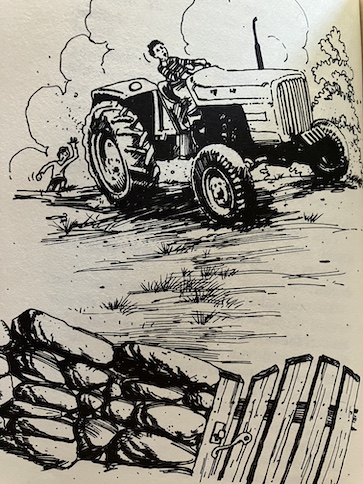
At first, this seems like just a fun farm visit. Uncle Grigorian is indulgent with the children, letting them eat as many chocolate cookies as they want, teaching the boys how to drive a tractor, and letting Helen play with the lambs. A man named Mr. Rhys manages the farm, and Mrs. Rhys is his cook and housekeeper, making them all a big, traditional, full English breakfast. Things get complicated when Tubs asks Uncle Grigorian what he does while Mr. Rhys manages the farm.

Uncle Grigorian shows the children his office in the farmhouse. At first, it just seems like an ordinary office. Then, Uncle Grigorian opens the filing cabinet, which contains dials and switches instead of files. The room changes so the ceiling and walls become transparent, and the children have a view of Earth from space. Tubs says that it looks like they’re on the moon. Fritz thinks that it’s just a trick with projectors, but Uncle Grigorian says that Tubs is actually correct, and they are on the moon. At first, Fritz doesn’t believe him, so Uncle Grigorian changes their location again, taking them to Trafalgar Square in London. Since they’re on Earth now, he invites Fritz to step outside and check their location. He does, and to his astonishment, they really are in Trafalgar Square. He buys a newspaper, and it has the current date on it.

Uncle Grigorian explains to the astonished children that the office actually contains his spaceship, which is about the same size as the room itself. He can travel through space easily, but traveling around Earth is more tricky because he can’t risk colliding with other objects. He has to know the exact coordinates for where to land, so it’s best for him to go to rooms that he has already rented as office space, where he will know the exact coordinates and knows that the room will be the right size for the spaceship.

At this point, Fritz begins to suspect that Uncle Grigorian, whose oddly-positioned thumbs were already a source of curiosity for them, might not actually be human. Tubs had earlier joked about those thumbs meaning that he’s from outer space, and once again, Tubs is more right than anyone else suspected. Uncle Grigorian admits to the children that they’re not actually related at all. Uncle Grigorian is a kind of sociologist from a planet called Klipst, and he’s also a kind of secret agent for the Galactic Empire. He studies societies on different planets and keeps an eye on planets that are just starting to discover space travel. He latched onto the children’s family as a cover for his identity and activities, specifically because their father had been a war orphan who didn’t know much about his family or what happened to them. Most people would be suspicious about an unknown relative suddenly turning up, but with their family, it would be entirely plausible for them to have an uncle they knew nothing about. He says that Earth is getting close to discovering hyperdrive travel, and when it does, the Galactic Empire will need to decide whether or not to admit Earth to the community of planets.

The reason why Uncle Grigorian is telling them all of this is that he needs the children’s help. There is a dispute that needs to be settled between planets, and he asks the children to be arbiters in the dispute. The planets involved specifically want the arbiters to come from outside the Empire, and they don’t want politicians, who would probably be motivated by biases and self-interest. They have decided that they want child arbiters to hear the dispute because children have a great sense of fairness, and adults are often hardened to the unfairness of life in general. Children would be completely unbiased in this situation and not have a jaded point of view. Uncle Grigorian tells the children that it’s up to them whether they would be willing to accept this mission or not. Tubs is eager to accept and go to outer space, but the twins are more hesitant. They’re not sure if they know enough or would be able to be arbiters in an intergalactic dispute. Uncle Grigorian tells them that, if they accept the mission, he will give them something that will change that, and they decide to accept.

Uncle Grigorian says that he will give them “the Powers”, which is a special mental weapon that’s only been recently developed. It works a little different for everyone, but it enhances people’s mental abilities. Anything that a person has as talent will be enhanced so they become a natural expert in it. To gain these powers, the children have to sleep for the night in Uncle Grigorian’s spaceship while wearing special earpieces.

In the morning, he checks on them and asks them if they notice anything different about themselves. Helen can tell right away that Fritz isn’t telling the truth when he says no because she has acquired the ability to read people’s emotions and body-language like an expert. Uncle Grigorian calls her a Reader because of her ability to read people. Further, Helen can tell that the reason why he denied noticing anything was because he wanted to hear what the others would say first. Fritz admits that this is true. He says that what he has noticed is that he went to sleep trying to figure out how the ship can travel such long distances so quickly, and when he woke up, the answers just came to him. Uncle Grigorian calls him a Synthesist, someone who can put together pieces of information quickly, seeing how things relate to each other and how they work.

At first, Tubs can’t figure out if anything about him has changed or not, but Uncle Grigorian tries giving him a small, round, fuzzy creature called a Petball. (Sort of like one of the Tribbles from Star Trek.) Tubs loves it immediately. It also seems to like him, and Tubs gives it the name Glob. Uncle Gregorian says that his attachment to the creature is a sign that he’s a Maverick. Petballs are strange creatures, and they don’t like everyone, but they do like Mavericks. Maverick Powers are difficult to understand because people who have them have an odd way of saying or doing unusual things that turn out to be the right decision or reaching conclusions that turn out to be unexpectedly correct. It’s hard to say exactly when or how Tubs will use his Power, other than getting along well with Glob, but Uncle Gregorian says that it will be there at the right time for him to use it.

Tubs’s Power begins to show after they arrive at Palassan, the capital of the Galactic Empire. A strange girl comes up to them soon after their arrival and tries to offer a flower to Helen. Without him being able to explain exactly why, Tubs automatically reaches out and knocks the flower to the ground. When it hits the ground, it breaks, and they realize that is it really an electronic device that was supposed to transmit a subliminal message to Helen. Someone is already trying to influence the children as arbiters in the dispute. Soon after that, Fritz begins to notice how closely they’re being guarded, but are the guards there for their safety or because they’re now prisoners?

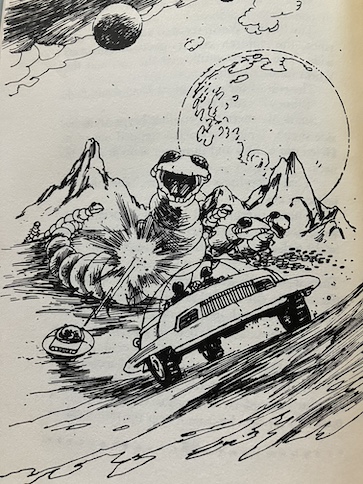
When the kids begin hearing about the dispute, they are told that a new planet has been discovered in a place where there has not been any planet before. It is not near any star, and there doesn’t seem to be any explanation of how it got there. An expedition to the planet discovered that what looks like “clouds” is actually some kind of vegetation that emits light, and there are worm-like creatures living on the surface. The problem is that these large Worms spin a substance called Unilon, which is very valuable. Since the Worm World was discovered, people have flocked to the planet to harvest it for selling. Some of them have captured Worms and forced them to spin continually until they die. The League of Life says that it is concerned about the welfare of these creatures, and the Unilon Harvesters Association says that it’s concerned about jobs. With her Power, Helen can tell that neither side in this dispute is telling the truth. Fritz does some research and uncovers some ulterior motives and hidden sides to both sides of the dispute. He decides that finding a solution means going to the Worm World itself, but learning the secrets of the mysterious world will put them all in danger.

The book is available to borrow and read for free online through Internet Archive.

I thought that the premise of this story was interesting, a mysterious “uncle” who is actually an alien in disguise who gives the kids a mission in space and special powers. The secret of the Worm World is also intriguing. It turns out (spoiler) that the world itself is alive, and they have to find a way to communicate with it. It’s a plot that sounds a little like some of the early Star Trek episodes or maybe inspired by them.

Most of the emphasis of the story is on the twins, even though there are three kids involved. Tubs helps in the story, but I was expecting that he would be more central to the solution of the problem or that the solution would be more of a cooperative effort than it was. I was a little disappointed at how quickly the story ended.

One thing I’d like to point out that, even with their enhanced “Powers”, the kids aren’t perfect at them. Fritz puts information together pretty easily, but he still has to do research and observe things directly to get the information he needs. Even when he has it, he doesn’t necessarily understand its full significance right away. His comment about how it looks like they’re being held prisoner rather than being simply guarded for their protection turns out to be more accurate than I thought it might be at first, but he doesn’t seem to have fully realized the reason why or who they can’t trust. Even Helen, with her ability to read people’s emotions and body-language doesn’t realize at first that their guard isn’t trustworthy. She could tell that he was uneasy, but she attributed his uneasiness to the wrong reason.

Actually, I think the part about Helen not being perfect at reading people is a good callback to the argument between the children about Tubs’ nickname at the beginning of the story. Helen argues that Tubs shouldn’t mind his nickname because Fritz never complains about his, but Helen hasn’t accurately read even her own twin’s feelings about his nickname. The truth is that Fritz doesn’t like his nickname any more than Tubs likes his, but the book says that he’s old enough to have figured out that, if he makes a fuss about not liking it, people will use it even more. I know that people can be like that, but being even older than Fritz is, I’m old to have figured out that this rule only holds true as long as the people involved decide it does. This isn’t something everyone does naturally or all the time; it’s a thing that some people do habitually because they’re pushy and like provoking reactions from people. When they get a negative reaction from someone, they just push harder to get more reactions rather than realize that they’re getting on that person’s nerves and cutting it out. What I’m saying is that Fritz seems to have correctly realized that Helen is that type of pushy person, which is why he doesn’t complain to her about how much he hates his nickname, while Helen has totally missed both Fritz’s real feelings and the fact that he’s figured her out. We’re supposed to accept that Helen already had a natural ability to read people even before getting her enhanced “Powers”, but the whole nickname incident had me rolling my eyes about Helen’s ability to read even her own family members and wishing that she would get a clue.

I expected that the characters would eventually revisit this situation with Tubs’ nickname before the end of the book and that Tubs would do something to help the situation that would earn his cousins’ respect. However, neither of those things happened. Fritz is the one who mainly solves the problem, and he does so rather quickly toward the end of the book. I was surprised at how quickly the book ended. Because the kids all keep their powers and Tubs is able to keep Glob at the end of the story, I wondered if maybe the book was originally intended to be the first in a series, with further adventures and more character development in later books, but if that was the case, I can’t seem to find anything about it.

I found the issue of language in the story interesting. People in the Galactic Empire speak a common language that Uncle Gregorian describes as being sort of like Esperanto, no matter what planet they come from. The treatment that gave the children their powers also gave them the ability to speak and understand this language, even when they’re not fully aware that they’re doing it. I liked the idea of a common language that’s a kind of conglomerate of other languages with Esperanto as the inspiration. Because the characters aren’t fully aware of that they’re hearing or speaking this language, we don’t have any hints of what it would be like, but I just thought the concept was interesting.

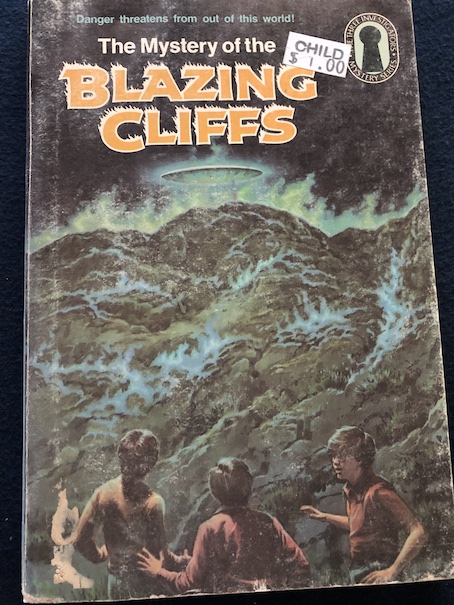
The Mystery of the Blazing Cliffs

The Three Investigators

Jupiter Jones and his friends are helping out at his uncle’s salvage yard when they have a strange encounter with a disagreeable customer and his wife. Mr. Barron is a very demanding customer who throws a fit whenever something goes wrong, blaming other people when he’s at least somewhat at fault for what happens. He gets upset when one of the employees of the salvage yard tells him that they need to move his car because they’re expecting a delivery truck, and his car is in the way where he parked it. Mr. Barron gets angry because he parked his car “perfectly”, and he calls them incompetent for making him move.

The only reason why Mr. Jones puts up with Mr. Barron is that he’s buying a large amount of stuff, and it’s stuff that few other people would want, like a buckboard wagon, an old stove and stovepipes, and a broken butter churn. The weird thing is that Mr. Barron doesn’t seem interested in these things as antique collectibles or unique pieces of vintage decor, which would be what most people would use such things for. (I’m thinking of those restaurants where they have miscellaneous farm implements, wagon wheels, and antique/vintage items on the walls, and I think that’s what they’re thinking about, too.) Mr. Barron actually seems to want to fix them up and use them for their intended purposes.

Mrs. Barron glosses over her husband’s rudeness and talks about her belief in aliens as described by a popular book called They Walk Among Us. This book describes “the time for deliverance”, when our planet will be in danger from some kind of disaster, and aliens from the planet Omega will arrive to rescue people from the human race so our species won’t be lost. Mr. Jones thinks that the Barrons are crazy, but his own wife interrupts the conversation before Mr. Jones can say something that will ruin the sale.

Jupiter is intrigued by these weird people, and he persuades his uncle to let him and his friends go along on the trip to deliver all of the things they bought to their ranch up north. Jupiter’s friends are a little reluctant to see the Barrons again, but Jupiter points out that going on the delivery trip will allow them to also go on a buying trip at the same time, something that his uncle has promised them they can do. Jupiter has been wanting to take charge of a buying trip, but he also wants to learn more about the Barrons.

Before they leave, the boys do some research on Mr. Barron and learn that he came from a wealthy business family in the Midwest. However, he has been in and out of trouble with every business he’s ever run. He did pretty well at first after he inherited his family’s business, which made tractors, but then, workers went on strike for better pay and working conditions. Mr. Barron was forced to give them what they wanted, but he was so angry about the strike and being forced to make concessions that he sold that business and bought a different one. In his next business, he had problems complying with government anti-pollution regulations, so he sold that business and bought another one. In his third business, he was sued for discriminatory hiring processes, so he once again sold out and tried another business.

Since then, he has had a string of different businesses, and each and every time, he ran into some kind of problem with government regulations or labor disputes. Every time he has any kind of problem in business, he immediately quits that type of business entirely rather than sticking to it and working things out. He just can’t accept imperfection in any form, and he defines imperfection as anybody or anything that goes against what he, personally, wants to do, regardless of circumstances. He denies that he could be imperfect himself, that he needs to adjust to new or changing situations, or that he needs to improve in any way, blaming everyone else for all of his problems. Finally, unable to find any business where everything goes absolutely perfectly all the time, where there are no rules or standards to follow other than his own and nobody to check that he’s following them, and where he never gets any form of negative feedback, Mr. Barron decided to sell off his remaining business interests and buy a ranch in California, which is where he is now. He’s planning to use the ranch to experiment with new crops and self-sufficient living.

When the boys arrive at the ranch with one of Mr. Jones’s delivery drivers, Konrad, they realize that the ranch is a kind of commune. The people who work for Mr. Barron and live at the ranch show them around and explain how the ranch has its own power supply and water supply. Elsie, who is the cook at the ranch, tells them that Mr. Barron seems to be preparing for some kind of “revolution”, when there will be some kind of catastrophe and society falls apart. (Remember, for Mr. Barron, society and all other humans besides Mr. Barron are idiots and incompetents, so of course, everything is falling apart.) Most of the people at the ranch don’t really believe that’s going to happen. They’re there mainly because Mr. Barron hired them to work there. However, it seems like the Barrons are deep into this notion of a coming disaster.

Konrad thinks that this ranch is very weird, and he wants to leave, but the boys persuade him that they should accept Mrs. Barron’s invitation to stay for dinner. Konrad chooses to eat with the staff rather than face Mr. Barron again. During dinner, the boys are treated to Mr. Barron’s negative attitude about everything, from his disappointment in his adopted sons (and, by extension, in young people in general) to “the evils of plastic in almost any form”, from synthetic leather to polyester clothing. By contrast, Mrs. Barron is very fond of her adopted sons, one of whom is part of a rock band and the other of whom is a poet who supports himself by making wooden clogs. Mrs. Barron says that the rock drummer son will be coming to the ranch in August for the Blue Light Mission convention, a meeting of other people who also believe in aliens who will save humanity. The author of They Walk Among Us will also be there as a guest speaker. 

Although Mr. Barron seems to have at least some belief in the idea that society is falling apart because of “anarchists and criminals who want to take over”, his criticism of people in general also extends to his wife and the other people who attend these alien conventions and believe in They Walk Among Us. Even though he’s hosting this convention for his wife’s sake, he thinks that the convention attendees are a bunch of kooks and crazies who would victimize his wife if he didn’t keep an eye on her. Basically, both of the Barrons are conspiracy theorists, but they’re not following quite the same conspiracy theories. Mrs. Barron is the more positive and hopeful of the two of them, believing that things will somehow turn out okay when the aliens show up, cheerfully ignoring her husband’s negativity, and continuing to talk about how much she’s looking forward the convention and meeting other, like-minded people. By contrast, Mr. Barron thinks society is just going to fall apart, and it will be everyone for themselves, and that’s about it.

The Three Investigators’ involvement with the Barrons would have ended after their delivery errand and dinner, but when they try to leave the ranch, they are stopped by army officers. The officers tell them that the roads are closed because of orders from Washington. The boys and Konrad are forced to return to the ranch, and Mr. Barron is angry about the roads being closed. The army officers tell Mr. Barron that they are just following orders. They further say that something has happened in Texas, and because of that, there is no electrical power, and the telephones, televisions, and radios aren’t working. Elsie has a battery-operated radio, and she turns it on to find out what’s happening. They hear a speech, apparently from the US President, about unidentified aircraft being seen around Texas, New Mexico, and California and possible landings in those states.

Naturally, when confronted with this serious situation, Mr. Barron is ready to take charge and deal with it in his usual way – by immediately finding someone to blame, dishing out criticism, and calling other people stupid and incompetent. He complains that the President gave a stupid speech that doesn’t provide any useful information and that he can’t understand how this guy ever got elected in the first place. Then, he goes off on a rant against communists and anarchists. (Seriously, that’s how both this book and his thought processes go. In a way, he’s very 2020s, a man decades ahead of his time.) Elsie points out that the people at the ranch are safe, no matter what’s happening, because the ranch is designed to be self-sufficient. Mr. Barron may be an angry mess of paranoia and negativity, but he is thorough and has been planning ahead for disaster this entire time.

The military officers say that the roads are being blocked off to the public so they can be used for military vehicles. Mr. Barron becomes convinced that either some disaster has happened or that the politicians believe that one is imminent. He also thinks that the politicians blocked off the road to the ranch so they can come and shelter at his amazing, self-sufficient ranch themselves. (Once again, everyone else, from the government to the general public, is incompetent, and only Mr. Barron does things right. He further assumes that the rest of the world must somehow secretly know this, quietly envies him, and plots to take advantage of him.) There’s no sign of anyone else arriving, at least not yet, but Mr. Barron, who has a deep disdain for fools of all kinds, doesn’t like the idea of welcoming a bunch of political fools. However, he does show sympathy to the boys and Konrad because he can recognize that nothing that’s happening is their fault. He tells them that they’re welcome to stay at the ranch until this situation, whatever it is, is cleared up.

The Three Investigators decide that they need to find out what’s really happening in the cities outside of this ranch and verify what they’ve been told about the situation because everything was fine when they left home. Since they can’t leave by the road, they do a little scouting around the area to see if there’s a route they can use to walk to another town. Since it’s getting dark, they decide that it would be too dangerous to try hiking and climbing in the area at night. They plan to wait until morning to actually leave, but while they’re looking around, they witness something very strange. They see what looks like blue fire on the cliffs near the ranch and some kind of silver, oval-shaped object in the sky! Have they really witnessed a flying saucer? Is what Mrs. Barron believes about aliens coming to Earth true?

The book is available to borrow and read for free online through Internet Archive (multiple copies).

I love this Three Investigators mystery because the premise was so unusual! Three Investigators mysteries are often what I call Pseudo-Ghost Stories, like the mysteries in Scooby-Doo because any supernatural inevitably turns out to be faked in some way for some ulterior motive. This also applies to science-fiction other-worldly phenomena, like aliens. The great thing about this book is that the phenomena is so over-the-top that it’s difficult to think of a plausible way that it could be faked or a reasonable reason why someone would even do it. In this case, we know immediately that the boys see what looks like blue flames and a flying saucer, and there are either military personnel or people pretending to be military personnel blocking the roads out of the ranch. This is a plot that would seem to involve some impressive special effects and a significant cast of conspirators, and the purpose behind it doesn’t seem obvious.

Pretty early in the story, I had a couple of theories about who could profit from faking a UFO, but I had doubts about it because of the relatively small audience involved and because it seemed like there would be much easier methods of them accomplishing their goals. It is a pretty over-the-top plot, although it’s partially explained because Mr. Barron is a rather over-the-top figure to target. It is his paranoia and reluctance to call in authorities and outside help with anything that sets him up for this. Mr. Barron’s attitude that anything that contradicts him or his view of anything is inherently wrong cuts him off from the kind of reality checks he needs, even though he understands that his own wife can use some reality checks outside of her group of fellow alien enthusiasts. 

I knew that, for anybody to get the idea of doing this type of hoax and to plant the evidence to create the illusion of alien landings, one or more of the conspirators would have to be directly involved with the ranch. One of them is obvious, when you think about it, because it’s one of the people who directly supplies some of that evidence. Part of the mystery is about who else is involved. I could see multiple ways that could have gone, and I considered different possible masterminds for the scheme and different motives behind it. Most of what I considered turned out to be wrong, although my theory that Mrs. Barron could have engineered the whole thing with the help of her adopted sons and some friends from the alien conventions with the goal of demonstrating to Mr. Barron just how vulnerable his own paranoia and obsession with his personal conspiracy theories has made him would have been fun. Mrs. Barron may be gullible when it comes to her favorite alien conspiracy theory book, but I would have enjoyed a little role reversal, where she turns out to be more clued about human nature than Mr. Barron, who is so self-obsessed and ultra-skeptical about other people, refusing to receive information, advice, or criticism from anyone else, that he routinely fools himself without outside help. 

Alternatively, I though that the Barrons’ sons could have teamed up to pull this off to make both of the Barrons see the folly of their ways. In a way, I think that Mrs. Barron’s belief in the aliens is partly as a remedy to her husband’s relentless negativity. She believes him that disaster is impending because she actually thinks a lot of her husband and trusts his opinion on the way society is going, but being a more hopeful and trusting person, she has latched onto the idea of rescuing aliens because her husband doesn’t believe in fellow humans. Of course, Mr. Barron disdains that theory because he can tell that it comes from fellow human beings, who are all varying degrees of stupid, incompetent, and scheming, but Mrs. Barron clings to it as a hopeful thing that binds her to like-minded people because she needs that sense of hope and connection. At least, that’s how I read the situation. Mrs. Barron believes everything, even things she shouldn’t, and Mr. Barron refuses to believe anything, even things he should. There is a happy medium between believing everything other people say and allowing them to lead you around by the nose and being so paranoid that everyone is either wrong or out to trick you that you refuse to engage with the real world and turn aside legitimate sources of help and outside information. Neither of the Barrons represent that happy medium, and I would have liked the conspiracy to bring that to light. In a way, it does, but that’s not really the main focus. It’s more about taking advantage of the Barrons and their eccentricities.

I also considered the idea that the entire plot could have been a publicity stunt by the author of Mrs. Barron’s favorite book and the convention organizers. I even thought that Mrs. Barron might have been in on it as a true believer, trying to get her husband and others to believe. However, that’s not the case. The book and the convention just supply the inspiration for the conspiracy.

In a way, this story reminds me a little of the Sherlock Holmes story The Red-Headed League, where there’s a seemingly outlandish scheme to cover an ordinary theft. There is a twist to this one because nobody but Mr. Barron knows exactly where the thing they’re trying to steal is. In the end, only Jupiter reasons it out because he has really come to understand the way Mr. Barron’s mind works.

The mystery is intriguing because there are so many possibilities to consider. In a way, I preferred all the possibilities to the eventual resolution of the mystery, but the solution does make sense. It’s still an over-the-top plot that involves a significant number of people, equipment, and special effects, but it does appeal to my inner Scooby-Doo fan, who enjoys a good, complicated scheme and a villain behind the mask.
The Case of the Close Encounter

The Bobbsey Twins

#5 The Case of the Close Encounter by Laura Lee Hope (Stratemeyer Syndicate), 1988.

Before I begin, I’d like to acknowledge Sean Hagins, for supplying me with photos of this book! Usually, I take pictures of books myself, but I just couldn’t find a physical copy of this one. Sean is a big fan of the Bobbsey Twins, particularly the New Bobbsey Twins mysteries, and you can see some of his video reviews as well as videos about his photography work on his YouTube channel, SJHFoto. Thanks, Sean!

When Nan gets sick, her twin brother Bert, agrees to take over her babysitting job, looking after a 5-year-old boy named Artie. Artie has a reputation for being a troublemaker, but since he’s had experience looking after the younger set of twins in the Bobbsey family, Bert figures that he can handle Artie. Of course, Artie turns out to be a handful. Artie tries to paint his cat’s whiskers and juggle eggs, and he generally makes a mess. Then, he suddenly declares that they’re playing hide-and-seek and runs outside. When Bert goes out to look for him, he sees a bright light from the sky, and when he looks up, he sees what looks like a flying saucer!

Artie doesn’t see the flying saucer and thinks that Bert is making it up. Everyone is in bed when Bert gets home, so he phones the police and reports the UFO. He tells the rest of his family about it the next morning. He speaks to the police and a reporter from the newspaper where his mother works, but they all say the same thing: without more witnesses to the event or more information, there’s not much they can do. Since nobody seems to believe him, Bert decides that they only thing to do is to investigate the phenomenon himself.

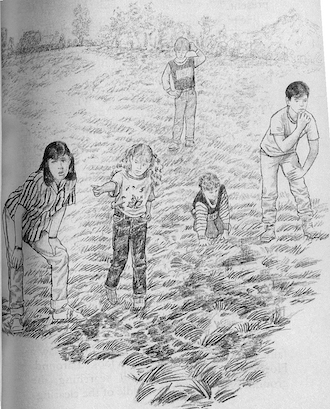
Bert and his siblings go to the area where Bert saw the UFO to look for clues about what it could have been. Artie tags along, although he’s more of a distraction than a help to them. In a clearing, they find large patches of grass that have been flattened and burnt. They look almost like footprints made by some kind of fiery dinosaur. The kids aren’t sure what to think of them. Then, while walking along the road, they’re almost hit by an angry man on a motor scooter. When they get back to Artie’s house, Artie’s father identifies the man as Felix Usher, who is renting a cottage nearby. There are stories that the house he’s renting used to be used by smugglers and gangsters and that they might have left some kind of treasure behind, but Artie’s father doesn’t really believe that.

On the way home, the Bobbsey twins stop off at a diner called the Flying Saucer Diner. While they’re talking with the owner, they learn that he bought the place from Mr. Stockton, the same man who used to own the house that Felix Usher is renting. When Mr. Stockton owned it, he called it the Cup ‘n’ Saucer Diner, which is the name on an old coffee cup that Artie found in the field with the burn marks. The kids wonder if there could be some kind of connection between the diner and the UFO Bert saw. Then, they find a tape cassette on Bert’s bike seat with a threatening voice on it, telling him that he saw nothing and he should say nothing, or else!

It seems like someone wants Bert to forget what he saw and stop trying to figure out what it was, but that’s just more confirmation that Bert really saw something and that what he saw was significant. What did Bert really see in the sky? Was it really a flying saucer, and were the burn marks really caused by aliens? Or is something else happening in their town?

The book is available to borrow and read for free online through Internet Archive.

My Reaction

I liked the premise of this mystery immediately! Unlike many mysteries, it isn’t immediately obvious that a crime has been committed. It falls more under the category of what I call Strange Happenings, where the characters know that something weird is going on, but they’re not entirely sure what it is or why it’s happening.

If I read this one as a kid, I didn’t remember the story, but I had a theory from the beginning about what Bert could have seen because I’ve seen the episode from the old Hardy Boys/Nancy Drew tv series The Creatures that Came on Sunday (older than this book) and an episode of Psych (newer than this book) with a similar premise, that someone had seen an alien spaceship or UFO. I guessed right on the type of flying object Bert saw, but I wasn’t sure what made the burn marks on the ground or how the situation could be related to the old house that might have treasure in it. There is also a woman who comes to see Bert and interview him about what he saw for a book she’s writing, but Bert has the feeling that she isn’t really an author, and she dodges questions that he asks her about her other research into UFOs and the encounters other people have had. There is some doubt from the beginning whether or not Bert’s UFO was an alien spaceship, but the book provides enough doubt and suspects to keep the story interesting as readers speculate about who is playing what roles in the mystery.

This book is from the late 1980s, and there are a couple of dated references to technology and pop culture, although it’s not too bad. It’s enough nostalgia that people who were kids in the 1980s would identify with it, but not too distracting for modern kids to enjoy the story. The kids use a very basic modem to connect to their local newspaper’s archives to do some research. It’s not how the modern World Wide Web works, but Internet use wasn’t popular yet at this time. This is still the early days of civilians having remote access to archives and databases through their computers. There wasn’t much to see, and there weren’t as many people who had the ability to see it yet. There is one instance of someone who seems to be talking to themselves in the story, and then, the kids realize that this person is actually using a radio. The modern equivalent is realizing that someone is actually talking on their cell phone, but cell phones were a relatively new invention around this time. They were expensive, brick-like, and heavy, and very few people had them. A radio or walkie-talkie would have been a more practical choice for this time period. There is also a point where the neighborhood bully and his friend tease Bert about seeing a UFO, and they make some references to popular sci-fi movies, like ET and Planet of the Apes.

Aliens Don’t Wear Braces

The Adventures of the Bailey School Kids

#7 Aliens Don’t Wear Braces by Debbie Dadey and Marcia Thornton Jones, 1993.

One day, while Mrs. Jeepers’ class is getting ready to take a science test, they hear a strange sound, and the lights mysteriously flicker.  Eddie tries to ask Howie what’s going on, but Mrs. Jeepers sends him to the principal’s office for talking during a test. 

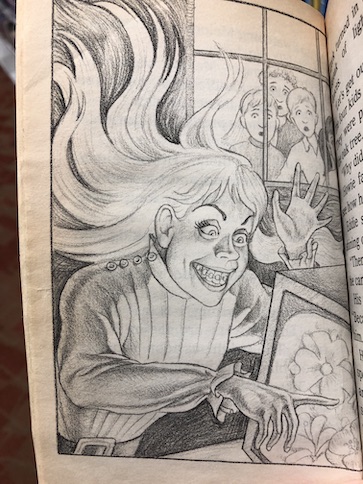
In the office, things are chaotic because the art teacher, Mr. Gibson, is missing, and the second grade teacher is there with her students, asking where the art teacher is.  Eddie meets a strange, pale woman with long, white hair and braces on her teeth.  She says that her name is Mrs. Zork and that she is there to apply for a teaching job.  The principal asks her if she can teach art, and she says that art is her specialty, so the principal hires her as an emergency replacement for the art teacher.  The principal is relieved that a substitute was so handy, but Eddie thinks that it’s a creepy coincidence.

When Mrs. Jeepers takes her class to the art teacher, she is also surprised that Mr. Gibson is gone and questions Mrs. Zork about it.  Mrs. Jeepers says that she saw Mr. Gibson only that morning, and Mrs. Zork tells her that he “had to leave . . . unexpectedly.”  Mrs. Jeepers tells her class to behave for the substitute, but she also seems somewhat suspicious of Mrs. Zork.

Mrs. Zork ignores Mr. Gibson’s previous lesson about totem poles and starts teaching the children pottery.  She seems confused by ordinary expressions, like “you’re all thumbs” and “This place is a zoo.”  When Mrs. Zork escorts Liza to the nurse for a nose bleed, the kids make other discoveries.  A jar of green paint has suddenly turned white, and Mrs. Zork has an old newspaper clipping about a UFO and a star map with a course plotted on it.  Howie, whose father works for the Federal Aeronautics Technology Station, suspects that Mrs. Zork might be an alien.
The kids spy on Mrs. Zork while they’re at recess.  They see her watching a cartoon show on tv, and suddenly, all of the color drains out of it.  It could have been because there was something wrong with the tv, but the kids notice that Mrs. Zork’s braces flash pink afterward, and her hair starts to look more blonde and her cheeks more pink.  Worse still, after Mrs. Zork admires Mrs. Jeepers’ green brooch, suddenly the brooch (as well as Mrs. Jeepers’ hair and eyes) loses some of its color and no longer works in its usual magical way.  Eddie sees it as an opportunity to goof off, and Mrs. Jeepers seems alarmed and leaves the room abruptly.

The children are worried about Mrs. Jeepers, and they can’t help but notice how the art room is looking increasingly drained of color while their new art teacher is getting more and more colorful.  It becomes more and more obvious to Howie that Mrs. Zork is stealing colors from Earth!

This is one of the books where the kids get the most proof of their suspicions, actually seeing Mrs. Zork’s spaceship in her garage.  Even so, Howie’s father doesn’t believe him when he tries to explain the situation to him.  Mrs. Zork tries to convince the children that the spaceship is actually her pottery kiln.  The kids know that somehow, they have to get their colors back to help Mrs. Jeepers and get rid of Mrs. Zork!  Mrs. Jeepers may be creepy, but at least she doesn’t steal colors or give them eternal math problems, like Principal Davis.

The book is available online to borrow for free through Internet Archive.

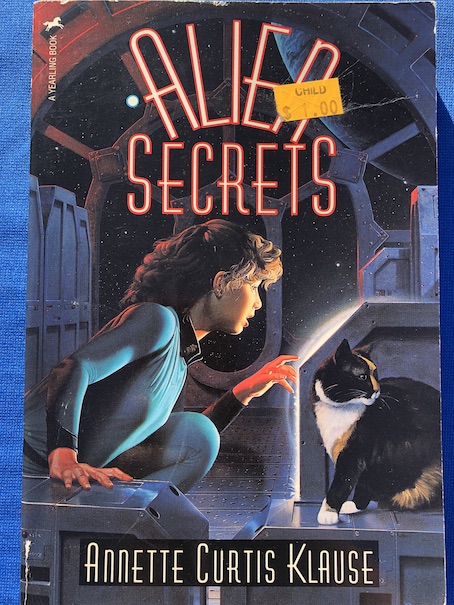
Alien Secrets

Alien Secrets by Annette Klause, 1993.

Robin Goodfellow, nicknamed Puck (her parents were fond of Shakespeare), is a human girl from Earth in the future.  When the story begins, she has been kicked out of boarding school on Earth and is traveling by space ship to join her parents, who are scientists who have been working on another planet.  They left Robin with her grandmother on Earth, who enrolled her in an English boarding school in order to give her some discipline and some friends her own age, but she was expelled for failing her classes (not to mention throwing a fit and burning her books when she discovered that she had failed).  Puck dreads what her parents will say when she arrives on the planet where they are now living because they had always hoped that Puck would also become a scientist and work with them, but this journey will change Puck’s life.

Before the ship she will be traveling on leaves Earth, Robin witnesses a man attacking someone else, possibly killing him.  Robin does not report the attack because she doesn’t know whether or not the other person was killed, and she doesn’t think that anyone will believe her anyway.  She witnessed this attack while sneaking around a place where she wasn’t supposed to be, and she is being sent to her parents in disgrace after being expelled, so she doesn’t sound like a very credible witness.  However, the man in the fight, Mizzer Cubuk (“Mizzer” is how they say “Mister” in the book), turns out to be traveling on the same ship as Puck.  All Puck can think of to do is to try to avoid him on the ship and hope that he didn’t get a very good look at her after she ran away from his fight.

To Puck’s surprise, the captain of the ship she is traveling on, Captain Cat Biko, asks her if she could make friends with an alien who is also traveling on the ship.  The alien is one of the Shoowa, who were enslaved by another group of aliens called the Grakk.  Now, he is free and finally traveling home to Aurora, the same planet where Puck is going.  The captain feels sorry for him and thinks that he might appreciate a friend and that he might find a human child less intimidating than an adult.

Later, Puck and other passengers are woken out of their sleep by the sounds of wailing and moaning.  One of the women on board, Leesa, says that she saw something that looked like a ghost that walked straight through her. Other people, who didn’t see or hear it, assume that it was nightmares or imagination, but Puck knows that it wasn’t.  One of the crew members, Michael, tells Puck that there have been rumors that the ship is haunted and that other people have seen and heard strange things.

Strange things are happening on the ship, and some of the passengers seem to be hiding something. Who can Puck trust, and who isn’t who they seem to be?

The alien who is traveling on board the ship understands Puck’s feeling of failure.  The alien, called Hush, says that he carries shame because he lost something important, something that his people were counting on him to take home to their planet.  Puck and Hush discuss how people from Earth had fought the Grakk and sought to learn about Grakk technology from Shoowa slaves who were freed after the war.  Even the ship they are now traveling on was once a Grakk ship.  The Earth people kept delaying sending the slaves home because they wanted to pump them for more information and because they were trying to decide if they could really trust them more than the Grakk.  After negotiating with the Earth people about returning home, the Earth people agreed, with some provisions.  They arranged for some of the Shoowa to stay on the Grakk home planet, still working with humans.  Some of them would travel on ships with Earth people, and some others could go home to their own planet.  Hush is the first one to head home, and he was entrusted carrying home an important symbol of his people that his family had protected for generations: a statue that represents a child because children are the future and a source of freedom, according to an ancient Shoowa prophecy. Unfortunately, the statue was stolen from Hush before he could return it to its rightful home. He reported the theft to the Earth security personnel at the station, but they didn’t take him seriously. They thought that he probably just lost it by accident.

The haunting is real in this book.  On a tour of the ship, Puck learns that the ship’s navigator has also seen the ghost aliens.  One of the characteristics of a ship’s navigator is the ability to see hyperspace, something that not everyone has the ability to do, although even scientists in Puck’s future time don’t seem to know why some people can do that and others can’t.  Slowly, it becomes evident that people who are able to see hyperspace are also able to see the ghosts.

On the journey to Aurora, Puck also learns that she is one of the rare people who are able to see hyperspace, giving her a possible future in navigating a space ship, something that she would really enjoy learning.  When she arrives at Aurora and is greeted by her parents, who have missed her while they were apart, Puck also comes to realize that her parents will always love her, even in spite of failing her classes. Even Hush’s people tell him that, although they are happy to have the statue back, his safe arrival was always the most important thing, and they wanted him to come home, whether he successfully brought the statue or not. Both Hush and Puck come to realize that their families will always love and value them even with their imperfections and failings.  With parents who love her and a new vision of the future ahead of her, Puck is ready to make a new life on Aurora.

The book is available to borrow and read for free online through Internet Archive.