Mystery on Skull Island

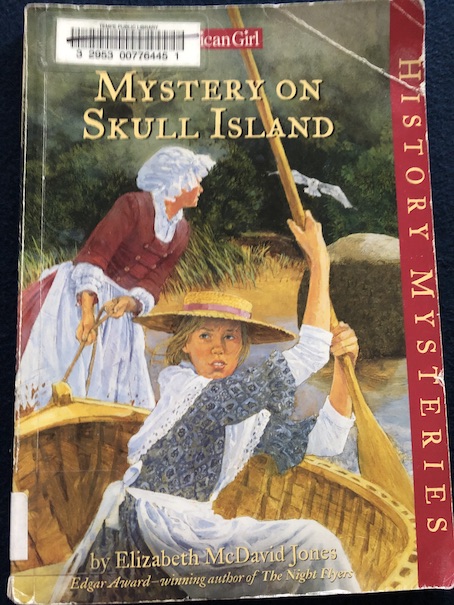
Mystery on Skull Island by Elizabeth McDavid Jones, 2001.

This book is part of the American Girl History Mysteries series.

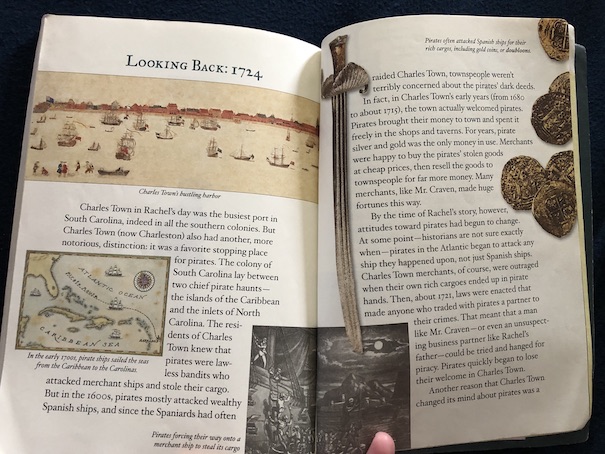
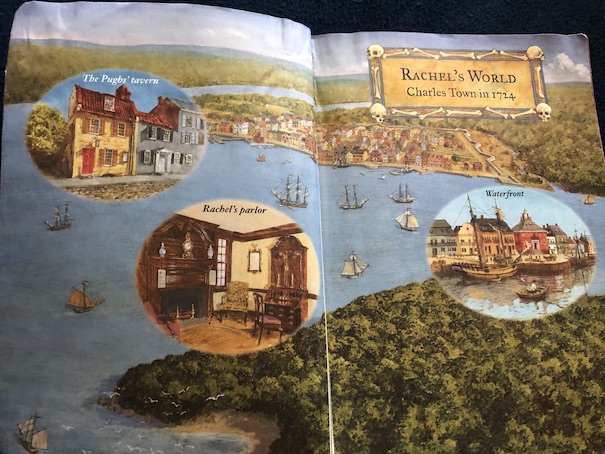
It’s 1724, and twelve-year-old Rachel Howell is traveling to where her father lives in Charles Town, South Carolina. Rachel has been living with her grandparents in New York since her mother died seven years earlier. Her father also used to live in New York, but after his wife’s death, he decided to move to South Carolina, hoping to start a new life. Now, her father has established himself in South Carolina and wants Rachel to come and live with him. Rachel has wanted to live with her father for some time, but she’s nervous because she doesn’t know what life in South Carolina will be like.

Rachel’s new life has a terrifying beginning when the ship that is taking her to Charles Town is attacked by pirates. The pirates force the passengers on board to hand over jewelry and other expensive items. They even take Rachel’s pendant, which belonged to her deceased mother. Fortunately, the pirates don’t hurt or kill anyone and let the ship go once they’ve taken everything of interest to them.

When Rachel arrives in Charles Town, she and her father have difficulty recognizing each other at first, but they are happy to finally be together. Rachel’s father is appalled when he hears about the pirates stealing Rachel’s mother’s necklace, but he is relieved that Rachel is all right. He explains that piracy has been a serious problem to shipping in the area. The local government has tried to combat the problem with harsh punishments, hanging many offenders. However, the pirates have money, and so local businesses still tolerate their presence.

The talk of pirates is shocking, but Rachel is soon in for another shock when her father tells her that he has become engaged and that Rachel will soon have a new mother. Rachel had been looking forward to having some time alone with her father to get to know him again, so she is not pleased at the news, but the engagement is the main reason why her father has sent for her. He wants Rachel to have a mother to care for her and for them to live as a complete family again. He tells Rachel that his fiance, Miranda LeBoyer, is from Philadelphia. She will be arriving in Charles Town soon with her aunt.

Rachel’s father is often busy with his work in the shipping industry, but he grants Rachel more freedom than she had with her grandparents, so she is able to explore her new town and make some new friends. The first friends she makes are the Pugh family, especially the daughter, Sally, who is about Rachel’s age. The Pughs own a local tavern, and Rachel often goes to visit them, sometimes helping with chores and learning to cook. She tells Sally about her worries about her new stepmother, but Sally says that she might not be so bad.

Like her life in South Carolina, Rachel’s first encounter with the woman her father plans to marry takes a disturbing turn. First, Miranda seems to disapprove of Sally and her brother, and Rachel fears that she will interfere with their friendship. Then, her father’s new business partner, Mr. Craven, stops by, and Rachel notices that Miranda seems to both recognize and dislike Mr. Craven. She overhears a conversation between the two of them in which Miranda calls Mr. Craven a “scoundrel” and refers to some kind of illegal dealings in his past. Yet, when Rachel’s father tries to ask Miranda what they’re talking about, Miranda lies and says that they’re discussing the weather and hurricanes that occur in Charles Town. Rachel worries about why Miranda would lie to her father and what kind of dishonest business Mr. Craven might be doing. What are the secrets that people in this town are hiding, and is Miranda really what she seems to be? With the help of her new friends, will Rachel find out the truth before it’s too late?

There is a section in the back of the book with historical information about piracy and life in South Carolina during the 18th century.

The book is available to borrow and read for free online through Internet Archive.

On The Mayflower

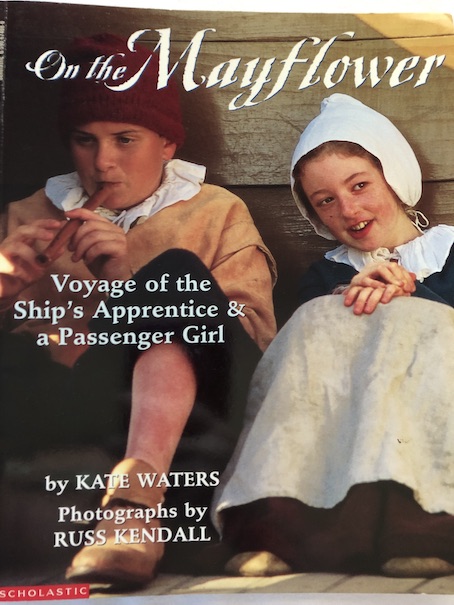
On the Mayflower by Kate Waters, 1996.

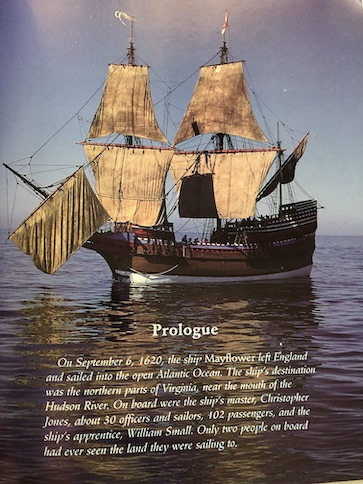
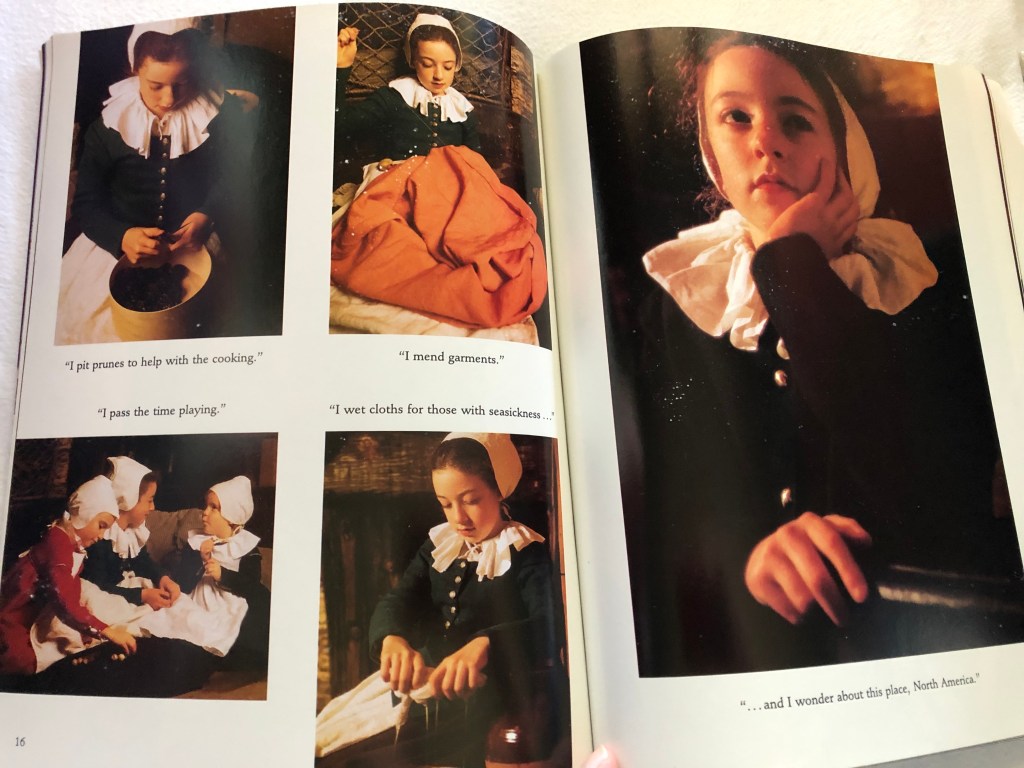
This book is part of a series by same author about children growing up in Colonial America. Each of the books is the series has photographs of historical reenactors portraying real people from Colonial history. This book focuses on two children who are traveling on the Mayflower in 1620, heading to what would become the Plymouth colony. One of the children is a girl who is a passenger on the ship, and the other is a boy who is part of the crew, a ship’s apprentice. In the section of historical information in the back of the book, the author explains that the girl was based on a real girl who was a passenger on the Mayflower, although the boy was not based on a specific apprentice; he is just meant to show what a ship’s apprentice would have been like at that time and to help explain the duties of the various crew members as he assists them.

The ship’s apprentice is called William Small. He is specifically apprenticed to the ship’s master, Christopher Jones (historical character). As an apprentice, he is learning basic navigation skills and assists the regular crew members with various tasks, including serving food.

The girl is named Ellen Moore. She and the other passengers are traveling in cramped quarters, and people are often seasick or trying to find ways to keep themselves occupied during the long journey. Ellen is traveling with younger siblings, and she plays with them in between performing routine chores, like sewing and preparing food.

During the voyage, there is a terrible storm, and the passengers are all confined below deck without light because lanterns and candles would pose too much risk of fire while the ship is rocked during the storm. William has to help the ship’s carpenter to repair leaks. Before the storm is fully over, Mrs. Hopkins, one of the passengers, gives birth to a baby she names Oceanus (historical person, the real Oceanus made it through the voyage although he sadly died young, possibly about age six, but the date of his death is uncertain).

The book ends with their arrival in the Americas. Because the storm blew them off course, the Mayflower did not arrive at its intended destination in Virginia but further north at Cape Cod in what is now Massachusetts. Because winter was setting in, the passengers decided not to risk further travel and established their colony there, 65 days after their ship first left England.

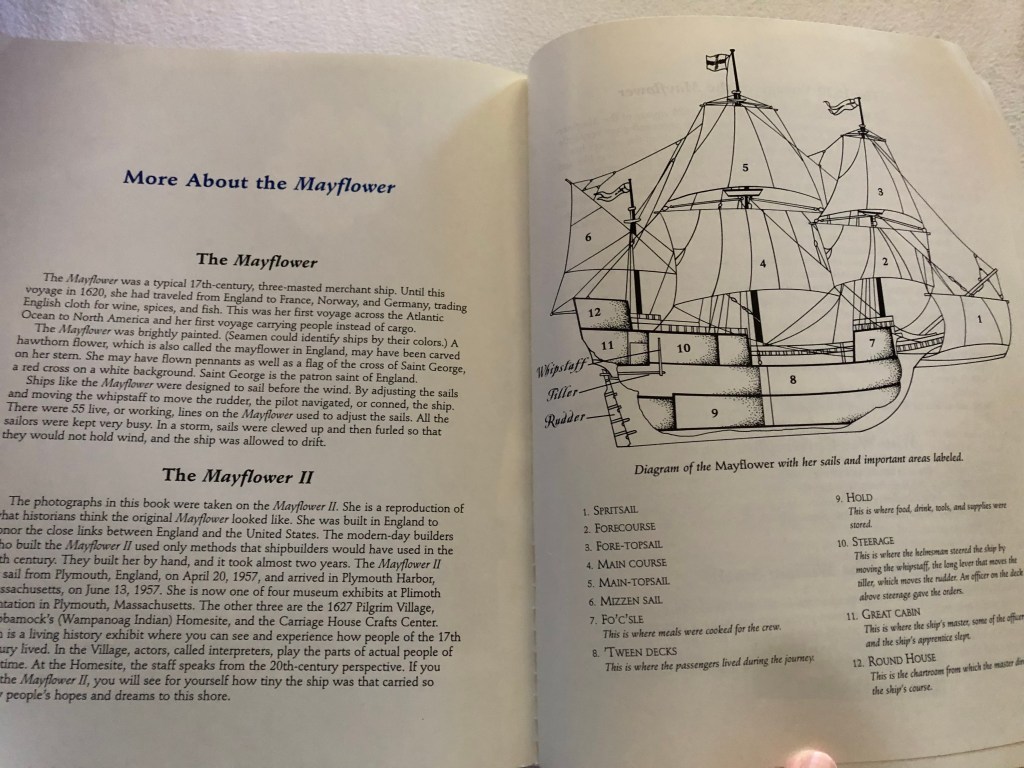
In the back of the book, the section with historical information explains more about both the characters in the story and the reenactors. The historical Ellen Moore and her siblings were traveling to the colony without their parents, under the guardianship of the other families, acting as young servants in their employment. The book mentions that the Moore children were without their parents because of a family tragedy but is not specific about what it was. I looked it up, and the story is both sad and bizarre. I can see why the author didn’t want to explain it in a children’s book. Apparently, the children’s parents had an arranged marriage and were not happy being married to each other. The children’s mother had a long love affair with another man, and also apparently, all of the children were the biological children of her lover. The mother’s husband began to notice that the children physically resembled his wife’s lover. The couple bitterly divorced, and after the husband was granted custody of the children (which, apparently, weren’t his anyway), he decided to send them away to the Americas with the departing pilgrims, paying for them to be taken on the voyage, never seeing them again. Sadly, Ellen probably did not survive the first winter at the Plymouth colony because she disappears from the historical record during that time. Out of the four Moore children traveling on the Mayflower, only one survived to adulthood, Ellen’s young brother Richard. Richard married twice in his life and had seven children of his own. He became a sailor and ship’s captain and eventually died an elderly man in Salem, Massachusetts, during the 1690s, not long after the Salem witch trials. None of this information about Richard is mentioned in the book, but I thought it was interesting background information. In the book, there is also additional information about the ship, The Mayflower, and the reproduction ship used in the pictures, The Mayflower II.

The book is available to borrow for free online through Internet Archive.

The Colonial Cookbook

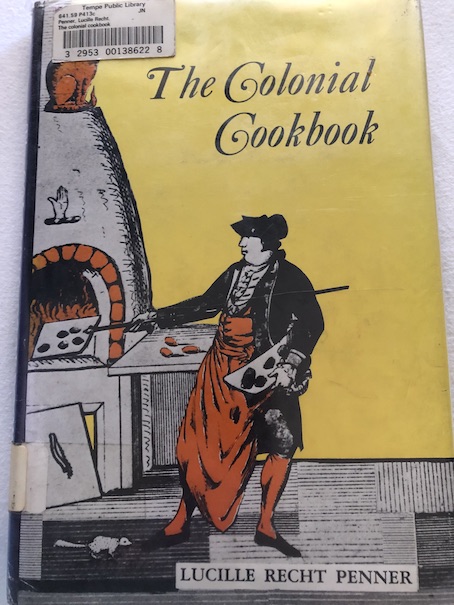
The Colonial Cookbook by Lucille Recht Penner, 1976.

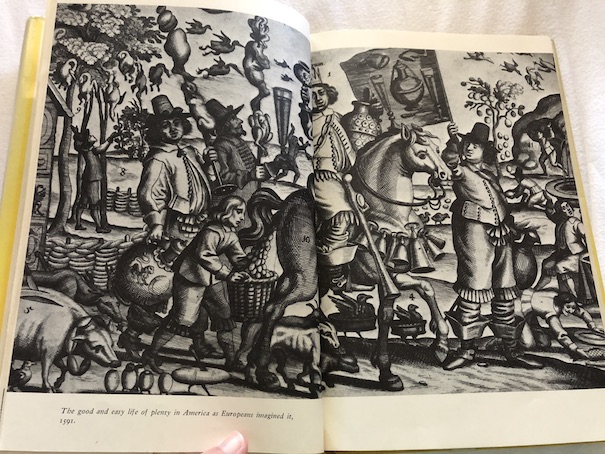
This cookbook explains the history of food, cooking, and dining habits in Colonial America and provides recipes that readers can make themselves.

The first part of the book provides most of the historical background, although each section of recipes also has some additional information. The earliest European colonists in North America had to struggle to feed themselves. In many ways, they were unprepared for their lives as colonists, and not all of them had planned to stay as long as they did. The ones who hadn’t planned to stay long had heard stories about gold and silver in the New World, and they had hoped to stay only long enough to seek their fortunes and return home rich. The realities of life in North America did not meet their expectations and survival turned out to be harder than they thought.

The colonists ended up relying on Native Americans (called “Indians” in this book) to help them survive. As they used up the stores of salted beef and hard biscuits that they had brought with them, they began trading for food with the Native American tribes. From the Native Americans, they also learned farming, finishing, hunting, and foraging techniques that they used to help themselves survive. There were many edible plants and animals at hand, but the early colonists were unaccustomed to which plants in the Americas were edible and how to find them and where to find and trap animals. One of the chores colonial children were given was to gather wild plants for the family to eat, like nuts, mushrooms, dandelion greens, wild leeks and onions, and wild fruit, like plums, cherries, melons, and berries.

Gradually, as the colonies grew, the colonists established farms and farm fields. They needed more land for farming to support their population than modern farms would use to support the same number of people because farming has become more efficient since the colonial era. Later, new colonists came and brought livestock with them. Men and boys usually took responsibility for the livestock on family farms. After animals were butchered, the women and girls would clean and prepare them for eating. Food required much more work to prepare because the colonists had to do all the preparation themselves. Families would not only butcher their own animals but make their own cheese. The book provided details about the processes and tools that colonists used for making their food.

The more specific eating habits of colonists changed over time and varied depending on where the colonists lived in North America and where they had originally come from. For early colonists, meals were eaten off of trenchers made from pieces of stale bread, and the day began with a breakfast of mush or pudding with cider or beer to drink. Later, foods became more varied. People in New England often ate fruit pies for breakfast, and people in the Middle Colonies liked scrapple (a cornmeal mush with pork scraps) and oly koeks (a kind of holeless donut containing bits of fruit). (Neither scrapple nor oly koeks appear as recipes in this book, but there are recipes online.) Southern plantation owners had elaborate breakfasts with many different kinds of food, including ham, eggs, pastries, and more, but poor people typically had mush and scraps of leftovers.

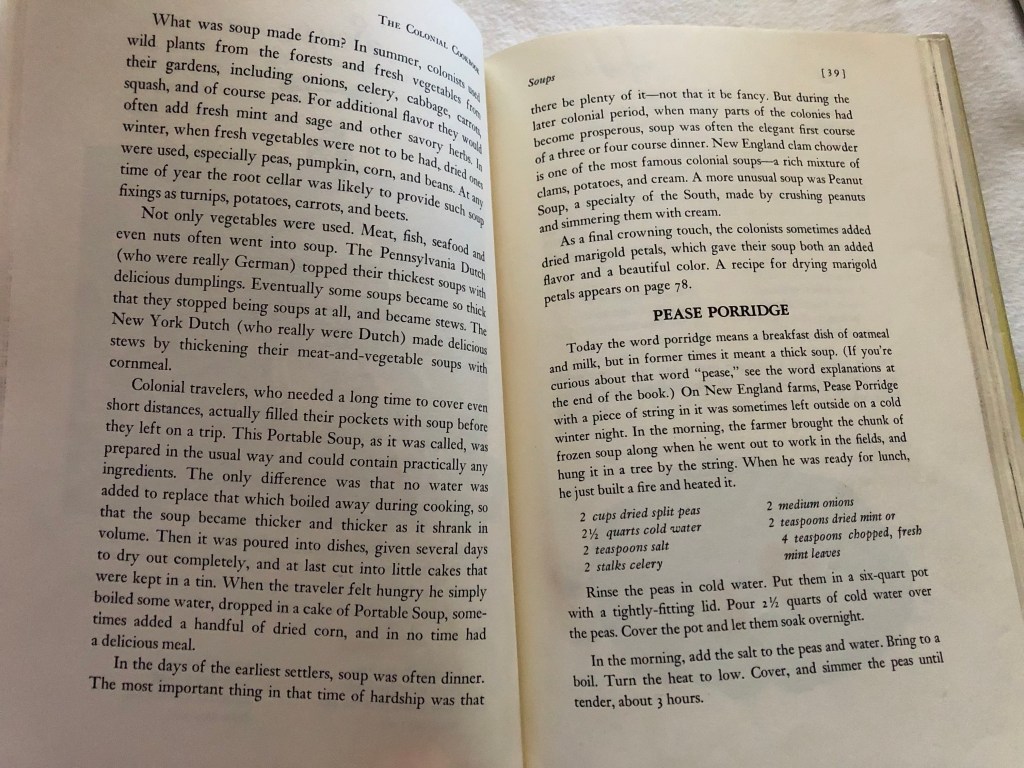
The book provides a variety of recipes, organized by type. Most of the recipes in the book do not look too difficult, although some call for more unusual ingredients, like rosewater. You can still find it, although I’ve usually seen it at specialty cooking stores or import stores. The categories are soups, meat, poultry, seafood, vegetables, puddings, breads, sweets, drinks, and sauces and relishes. Not all of the recipes look like things that would interest modern children. I don’t imagine that many children would be excited at the idea of making Scalloped Oysters, for example. (Seafood was an important food source for early colonists.) Even though children might recognize Pease Porridge from the rhyme, I’m not sure that a thick pea soup would be something that they would be excited to eat, either. Hasty pudding is mentioned in the song Yankee Doodle, but the recipe itself is a little bland. The book does mention that you can flavor it with maple syrup, and there are other cornbread pudding recipes that contain spices and sweeteners in the book.

However, there are some recipes that I think would be interesting to try. The book explains that pumpkins were a staple food for the early colonists, as shown by the old rhyme from the Plymouth:

We have pumpkin at morning
And pumpkin at noon
If it was not for pumpkin
We would be undoon.

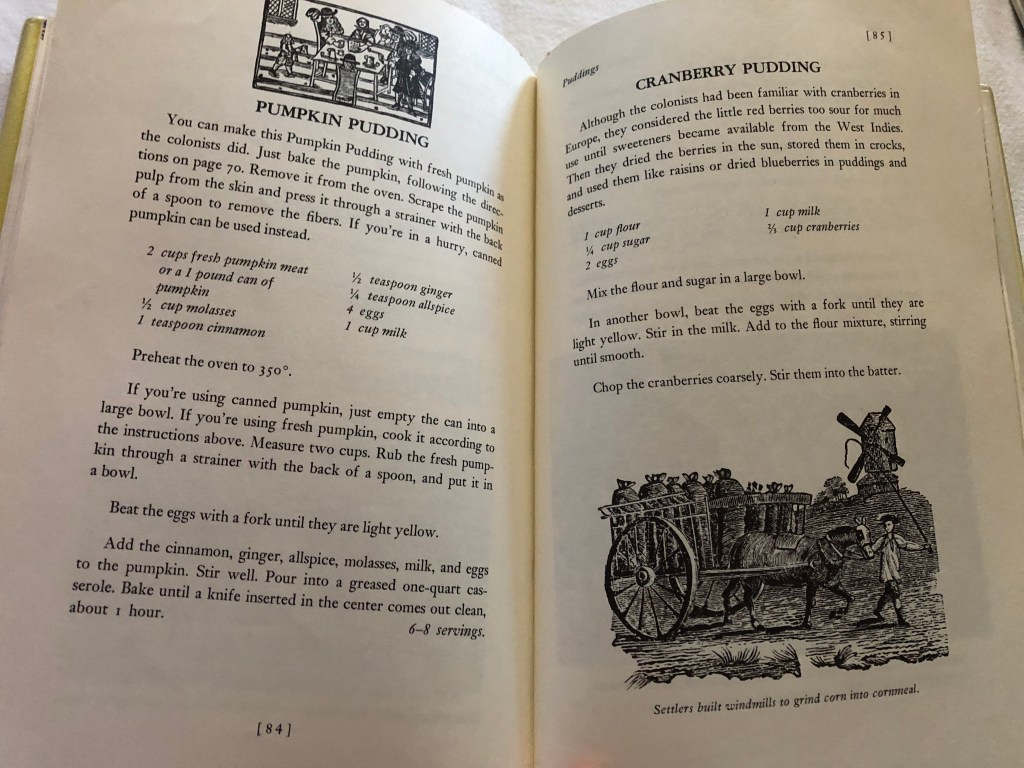
The book explains the different ways that colonists would prepare pumpkin. You can bake it and eat it in pieces with syrup, molasses, honey, or cream. The book explains how to cook it, and it also provides a recipe for Pumpkin Pudding, which can be made with either fresh pumpkin or canned pumpkin. I haven’t made it yet myself, but from the recipe, it reminds me of a pumpkin pie without the crust:

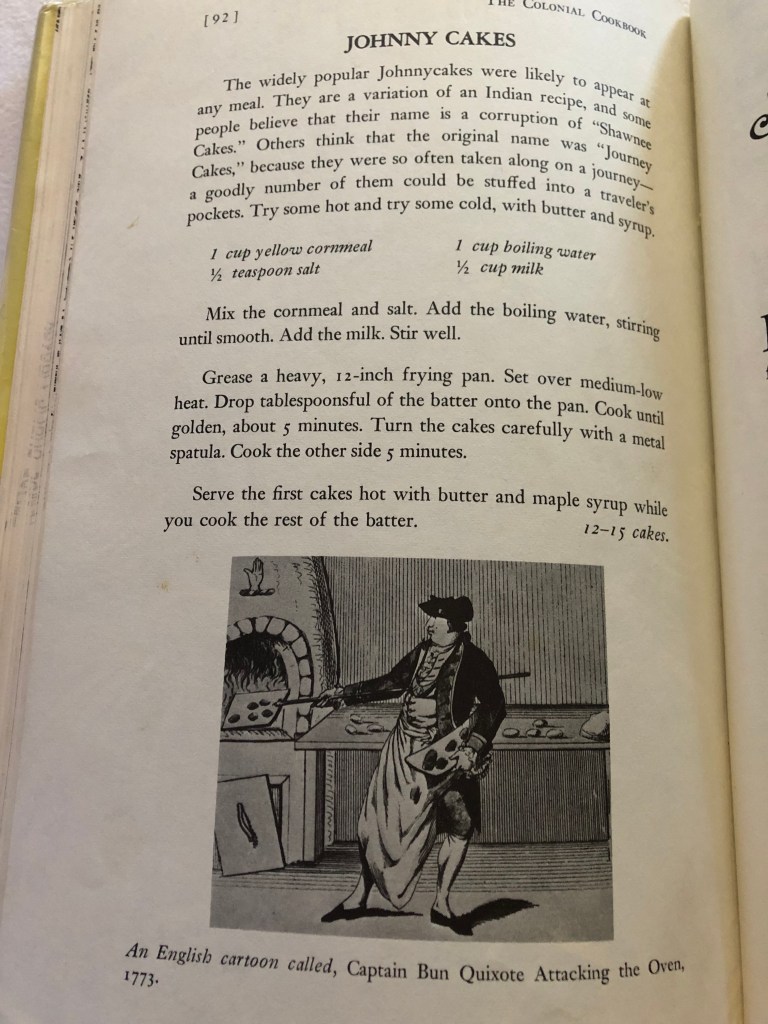
Johnny Cakes are a little like pancakes but made with cornmeal. The basic recipe is a little plain, but they can be served with butter and maple syrup.

This book was published in 1976, which was the United States’ Bicentennial celebration. Unfortunately, I haven’t been able to find an online edition yet.

Felicity’s Craft Book

American Girls

Felicity’s Craft Book by Rebecca Sample Bernstein and Jodi Evert, 1994.

This is a companion book to the Felicity, An American Girl series.  It explains about the types of crafts that people would do in Colonial America and gives instructions for projects that readers can make at home.

In the beginning of the book, there is a brief history of crafting in America.  It explains that, in the earliest days of the American colonies, people had to get most of their goods from Europe because they had to spend their time and energy on building homes and establishing farms in order to survive.  However, as the colonies became more established, people were more able to make goods for themselves, both in their own homes and as professional craftspeople.  By the time that Felicity lived, during the late 1700s, there were many skilled craftspeople, and those craftspeople also trained new people in their professions in apprenticeships.

Before presenting craft projects that readers can make, the book also offers a few tips for safety and neatness while making things. The crafts are also divided into sections relating to topics like writing, sewing, games and toys, and scented objects that you can make with plants.

The projects explained in this book include:

A quill pen and two types of ink – The book gives instructions for making ink from different types of berries (such as raspberries, strawberries, and blackberries, which make red or purple ink) and walnut shells (which makes a brown ink).

A wax seal – To be used with sealing wax or wax from a candle. These were used to seal letters before the invention of envelopes with glue. (I know that there are people and companies that still make these because I have one myself and the sealing wax to use with it.)

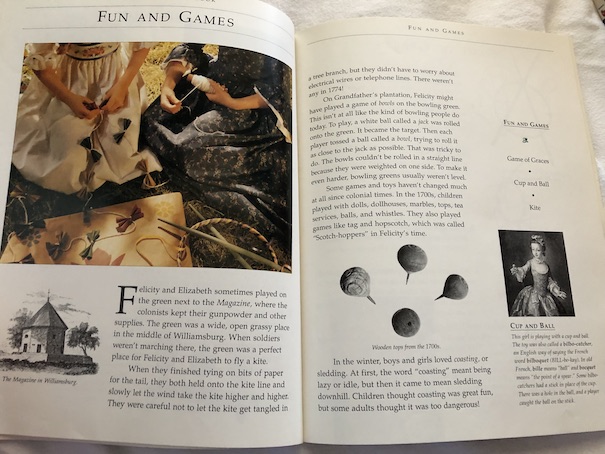
Game of Graces – A hoop with a pair of sticks that were used for a tossing game.

Cup and Ball Game – A common toy in which a cup is attached to the end of a short stick and a ball is tied to it.  Players have to move the toy around and make the ball swing into the cup.

Kites – Made with lightweight paper.

Folding Fan – Made with poster board and ribbon.

Fancy Straw Hat – Explains how to decorate a hat with flowers and ribbon.

Fruit Pyramid – Used as a table centerpiece.

Cross-Stitch Sampler – A basic sampler using only the cross-stitch. (Colonial girls would create more elaborate samplers to show off the range of stitches they could make.)

Sachet – A small bag of potpourri (sweet-smelling dried plants).  Colonists would put sachets into trunks and wardrobes where they were storing their clothes to make them smell nice.  (Some people still do this in modern times.)  In a later part of the book, they also give instructions for making potpourri with herbs and flower petals.

Friendship Pincushion – An embroidered pincushion.

Tussie-Mussie – A small bouquet, like the kind that bridesmaids and flower girls might carry.  (The book says that people in Colonial times might carry one or maybe a pomander ball if they went to visit a sick person because they had an idea that breathing bad air would spread sickness and they were trying to freshen the air with fresh scents.  That’s not quite how sickness is spread, but they were partly correct about sicknesses being airborn.)

Pomander Ball – An orange scented and decorated with spices and cloves.  Besides freshening the air, they can also make nice decorations.

In the sections about different types of projects, there is additional historical information about life and crafts in Colonial America. Because, in the books, Felicity’s grandfather owns a plantation and one of the books takes place there, the craft book also has a section about plantations that includes a brief description of plantation life and slavery, noting that the lifestyle and pastimes that plantation owners enjoyed would not have been possible without their slaves to take care of the plantation chores for them.

The book is currently available online through Internet Archive.

The Light in the Forest

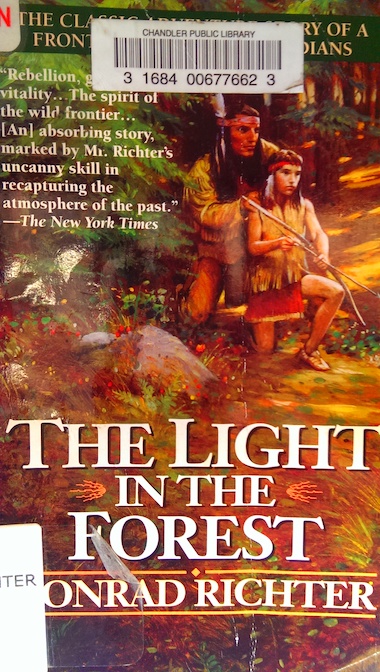
LightInTheForestThe Light in the Forest by Conrad Richter, 1953.

Although this book was adapted into a live-action Disney movie in 1958, this is not a story that I would recommend for young children because of the level of violence.  I think I was in elementary school, about 10 or 11 years old, when I read it as a kid, but I wouldn’t recommend it for anyone that young anymore.  This book is bound to be controversial, but read to the end, where I discuss my reaction to it.

This story takes place in 18th century Colonial America, specifically in Pennsylvania.  Eleven years before the story begins, four-year-old John Butler was abducted by Lenape Indians and adopted by a member of the tribe as a replacement for a Lenape boy who had died.  His new “father” names him True Son and treats him as his son.  John/True Son comes to feel that his Lenape father is his true father, although he is aware that he had another father before.  Years later, in 1764, fifteen-year-old John/True Son remembers very little about his life among white people and now considers himself Lenape.  The Lenape recognize him as a full member of the tribe as well, but a recent treaty requires them to return all white people they have taken captive, including True Son.

The tribe reluctantly hands True Son over to white soldiers to be returned to his birth family, although True Son resists, even attempting to kill himself at one point to prevent it.  However, the suicide attempt is thwarted, and True Son is brought to Fort Pitt, where he is reunited with his birth father, Harry Butler.

Harry Butler takes John/True Son home to the rest of the family, but True Son refuses to acknowledge them as his family.  He pretends like he can’t understand English anymore and continues dressing like a Lenape.  The one member of the family he bonds with is his younger brother, Gordie, whom he had never met before.  Gordie is young and has no particular prejudice against Native Americans.  He finds the things that True Son does fascinating.  (The Disney film cut out the character of Gordie in favor of giving John/True Son a love interest, but I think that is a mistake because I think that the relationship between John and Gordie and how John/True Son views young children is central to the true theme of the story.  Read on.)

The family member that True Son really hates is his Uncle Wilse, who is known to have participated in a massacre against Native Americans.  Wilse thinks that John/True Son has been brain-washed by the Lenape and doesn’t really trust him.  When Wilse tells True Son that the Lenape have taken the scalps of children as well as adults, True Son denies it. The two of them argue, and Wilse slaps him.

True Son pines for his Lenape family, and when he learns that a couple of Lenape have been asking about him in the area, he manages to meet with them in secret.  One of them turns out to be Half Arrow, True Son’s cousin among the Lenape.  When Half Arrow tells him that friends of Wilse have killed a friend of theirs named Little Crane, the boys attack Wilse and scalp him in revenge.  (Not killing him, just scalping him.  It’s disgusting, but possible.  In the Disney movie, this scene is changed to a fist fight.)

True Son returns to the Lenape tribe with Half Arrow, and the tribe furthers their revenge for Little Crane’s death with a raid on a white village.  However, John/True Son is horrified when he sees the scalps of children as well as adults after the raid, proving that members of his tribe have killed innocent children and that Wilse was correct about that much.

When his tribe attempts to get True Son, posing as an ordinary white boy, to lure an unsuspecting group of white settlers into another attack, John/True Son must decide who he really is and what he really stands for.

The book is available to borrow and read for free online through Internet Archive (multiple copies).

My Reaction and Spoilers

In the end, John/True Son decides to alert the settlers to the imminent attack and warn them away because he sees children among them (in particular, a little boy who reminds him of Gordie, which is why that character is so important to the story) and can’t stand to see them killed.  His decision results in his banishment from the Lenape tribe.  At first, they were going to kill him for his disloyalty, but his adoptive father convinces them to spare his life, although he warns True Son that if members of the tribe see him again, they will consider him an enemy, so he can never become a part of their society again.  From this point on, John/True Son is on his own, and his fate lies in his hands alone.

Modern readers may be repulsed at the discussion of scalping (I know I was), and I’ve also heard arguments about whether the practice was more a Native American thing or one more often practiced by white people against Native Americans. Both sides do this in the story, but there are debates about where exactly the practice started.  My thought is that some things are just so disgusting that I can resent anyone who does them, regardless of who started it, but that’s neither here nor there.  Before anyone goes too far in that direction, I’d like to point out that we shouldn’t make the same mistake that most of the characters in the book do: overlooking the more immediate issue, which is True Son himself.

Throughout the story, John/True Son is a victim in more ways than one.  Because of his abduction at a young age, he is not only stuck in a personal identity crisis and a clash of cultures but has become a pawn in a power struggle between two societies that have each committed atrocities against the other.  In the beginning, he understands the most that the Lenape have been victimized by white people.  He comes to despise the white culture into which he was born and empathizes with the Lenapes’ attempts to strike back at the white people. Some of this might be a kind of Stockholm Syndrome (a term I didn’t know when I first read this book), but he is correct that men like his Uncle Wilse have committed great atrocities, and he wants no part of them.  However, against his wishes, he is thrust back into the culture he came from and into the middle of the conflict as a bargaining chip in a treaty.

After his time among his white family, he begins to see the conflict from both sides and to realize that not all white people are guilty of atrocities and deserve to be punished.  At the same time, True Son is forced to acknowledge that people close to him on both sides of the conflict have each done terrible things.  In the end, his sympathy is particularly for the innocent children who, like he was as a young child, have been brought into this cycle of hate, revenge, and killing without even their knowledge, having done nothing to deserve it.

We’re not quite sure what John/True Son’s life is going to be after the end of the story.  He has been rejected by the society he knows best, where he once thought he belonged, but whether his birth family and society will accept him back after what he’s done (the scalping of his uncle) is uncertain.  There is one thing that we do know: True Son has become his own man.  In a moment where he could simply have done what others asked, what they expected him to do, he made a difficult decision to stand up for what he really believed in, the protection of the innocent, regardless of their race, knowing even as he did so that there would be dire consequences for him personally.

We hope that John Butler/True Son manages to find some acceptance somewhere (probably among white society, which is hinted at the end of the book, but also probably on the fringe of it) and settle down to a more peaceful life, but we know that because of his troubled past, it isn’t going to be easy.  I would say that the overall message of the story is for people to consider the children and the generations to come and the impact that their decisions and their quarrels will have on their future and the kind of world the young people will grow up in.  John/True Son understands more about the horrors of fighting than either of the two sides involved, and he wants better for the younger children he finds at his mercy.

When you read other reviews of this book, you’ll see that there is some lingering resentment from people who were forced to read it in school.  It is a popular book for teachers to assign students to read around the middle school level (around age 12 to 14, roughly), and I have to admit that I often resented being forced to read depressing books in school myself.  This isn’t a happy story, but it is memorable and thought-provoking, and now that I’m an adult, what I remember best about the story is how John/True son feels about younger children and how he accepts the role of protecting them.

This story is based somewhat on real-life stories of abducted children from the same time period who also found themselves pawns in the struggles around them and felt conflicted when they once again came into contact with their birth families.  There are other books written on this topic, and the author of this one also wrote a book about a girl captive called A Country of Strangers.
Pocahontas

Pocahontas

Pocahontas by Jan Gleiter and Kathleen Thompson, 1985.

The story about the life of the young Native American woman known as Pocahontas (“Pocahontas” was really a nickname, which the book mentions, although it doesn’t say that her original name was Matoaka) has been told many times in many forms, but this particular book is somewhat sentimental for me because it was the first one I ever read about her when I was a kid. It’s part of a series about famous and legendary figures in history and myth. Pocahontas was a real, historical person, but aspects of her life have taken on the characteristics of legend (as well as providing material for a Disney movie, although the Disney movie takes liberties with the real life of Matoaka/Pocahontas and the movie was not based on this particular rendition of her story).

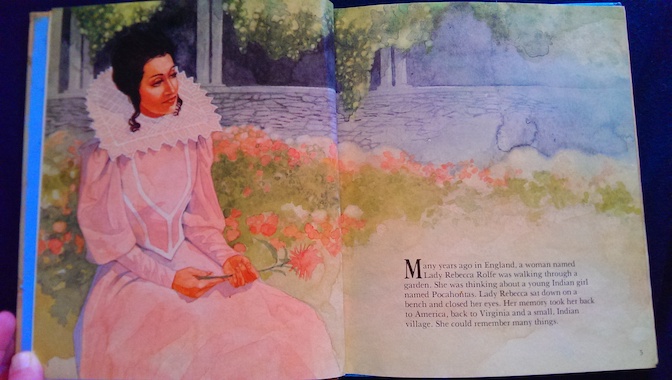
When this particular book begins, Pocahontas is a grown, married woman going by the name of Lady Rebecca Rolfe. While living in England, she reflects back on her life and youth, remembering when she first met Europeans.

PocahontasEngland

When she was ten years old, she heard her father, Powhatan (who was the chief of their tribe) and other men talking about the white men. Although Pocahontas hears that the white people had betrayed her people’s trust and even killed some of them, she is curious to get a look at them.

PocahontasSettlerChildren

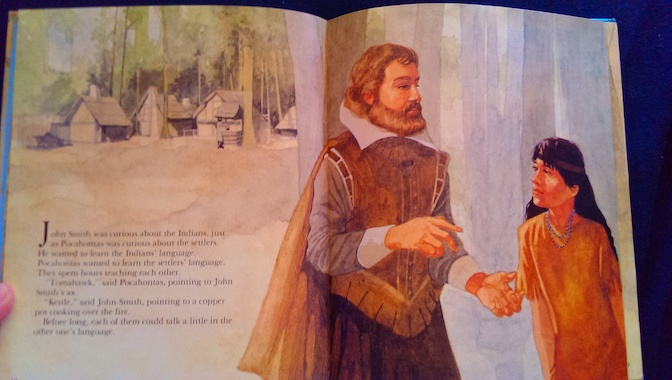
She ends up meeting with a group of boys from Jamestown and playing with them. She begins making friends with people in Jamestown and visiting them from time to time. A man named John Smith becomes curious about the girl and her people and gets Pocahontas to teach him some of her language.  (The book is more accurate than the Disney version here, showing that there is a significant age difference between Pocahontas and John Smith, with Pocahontas being a child at their first meeting.)

PocahontasJohnSmith

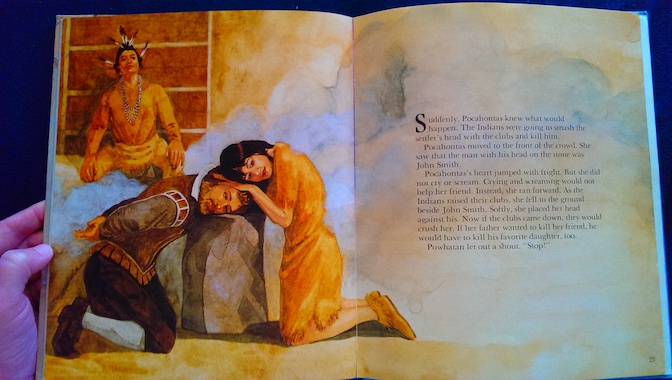
Then, one day, there is a feast in Pocahontas’s village, and some of the men of the tribe bring a white man who was caught trespassing in their territory. Pocahontas recognizes the white man as John Smith and, upon realizing that he is about to be executed, intervenes to save his life. (This is one of the most famous parts of the story of Pocahontas’s life, although the exact circumstances surrounding the real-life incident are a little confusing and may have actually been part of a more complex ritual that John Smith didn’t fully understand at the time, not an actual attempt at execution, if the event actually happened at all. This book offers a simplified version of the incident, supposing that John Smith’s life was in real danger, as he described it in his account of what happened.)

PocahontasExecutionAttempt

In the end, the settlers at Jamestown kidnap Pocahontas in the hope that Powhatan would end hostilities with them, using her as a bargaining chip.  (The book says that her father wasn’t too worried because he knew that the settlers were her friends and would treat her well, but I find this part of the book pretty worrying myself, reading it as an adult.  I’m pretty sure that is not how a parent would react to a missing child in real life.  I guess that the book is trying to keep the tone light for children, but it just sounds weird.) Pocahontas remains among the settlers, living according to their lifestyle and taking the name Rebecca. Eventually, she meets a man named John Rolfe and marries him. The two of them have a son together. With her new family, she travels to England and tries to help the people there to understand her people.  (The book says this in a very optimistic way, calling her visit a “success”, although in real life, this visit was largely a propaganda move on the part of the Virginia Company of London. On the other hand, she was, evidently, very well-received in England, if something of a social curiosity.)

PocahontasWedding

The story in the book ends here, with her still in England, thinking back on her life and her reasons for being there. Part of me wishes that it had explained a little more about Pocahontas’s earlier life and some other facts behind her story. Sadly, part of the reason why they might have been reluctant to tell the rest of the story to children was that the real Pocahontas didn’t live very long after the point where the story ends.  As she was preparing to return to Virginia from England, she became very ill and died.  Her exact age at the time of her death is unknown, but she was probably about 21 years old.  Her son, Thomas Rolfe, was very young at the time she died, but they do still have living descendants today.

Overall, I’d say that this is one of those stories that becomes more interesting when you’re older and realize the full depth of it.  This picture book is a very simplified version of the story, meant for kids, but when I was young, it did inspire me to learn more about Pocahontas.  There any many missing details of Matoaka/Pocahontas/Rebecca Rolfe’s life because of the limited records of it, but what is known is fascinating.  It’s sad because she died so young, but that the story of her life lived on in so many imaginations after her death is profound.  Different people, both when she was alive and after her death, tried to use her for their own purposes, but her legend still continues, out-living them all.  I’ve never seen the Disney Pocahontas movies, and I don’t really want to.  I already know how the story ends.

The book is currently available online through Internet Archive.

Changes for Felicity

American Girls

FelicityChanges

Changes for Felicity by Valerie Tripp, 1992.

FelicityChangesPennyThis is part of the Felicity, An American Girl series.

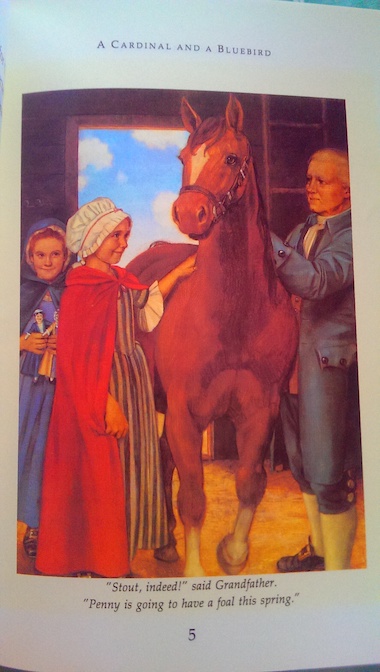
Everything is changing for Felicity. To begin with, her horse, Penny, is expecting a foal. Penny has been happy and healthy since she came to live with the Merrimans, but Felicity worries about what will happen when Jiggy Nye, her abusive former owner, gets out of prison. He has been in jail for not paying his debts. Felicity learns that he was once a respected member of the community and an expert with animals, but he became an alcoholic after his wife’s death. However, Felicity can’t bring herself to feel sorry for Nye after the way he’s behaved, even when she learns that he is sick. Felicity’s friend, Elizabeth, convinces her that they should send him some medicine and other supplies in prison, partly to have pity on him and partly so that he will feel grateful to Felicity when he gets out and not make trouble for her.

FelicityChangesGrandfatherSickUnfortunately, Elizabeth’s father also soon ends up in prison. Tensions between Patriots and Loyalists are high. The former governor has fled Williamsburg, and Patriots are arresting Loyalists. That Mr. Cole is a Loyalist has been well-known for some time. Felicity fears for Elizabeth and wonders what will happen to their friendship.

Then, Felicity’s grandfather also becomes ill. He soon dies of his illness, devastating her family, but before his death, he takes steps to make things better for Elizabeth’s family, Jiggy Nye, and his own family, especially Felicity. In return for Felicity’s charitable gift and her grandfather’s honorable payment for the horse, Jiggy Nye also helps Felicity and Penny when they need him the most, redeeming himself in everyone’s eyes.

FelicityChangesMotherWith the war everyone has dreaded finally becoming reality, there are still more changes yet to come. Elizabeth’s father must leave Williamsburg, Felicity’s father decides how he will support the war effort, and Felicity begins to play more of a role in the running of her father’s shop, as she had wished to do before.
In the midst of Felicity’s grief over her grandfather’s death and worries about the coming changes in all of their lives, her mother has some poignant thoughts about the nature of death and change. While Felicity wishes that it were summer again, back when her grandfather was alive and they were all happy, her mother says that not all changes are bad ones. As she points out to Felicity, even though it might be tempting for her to wish that she were a child again herself, when both of her parents were still alive, to go back to that time would mean giving up her life with her husband and her children. She loves her children and enjoys seeing them grow up and change.  The ability to witness those happy changes is worth dealing with the less happy changes in life as well.  Death, like change, is just another part of life, and Felicity’s mother points out that love still connects us to those we’ve lost.  Like everyone else, the only way Felicity can move in her life is forward, and that’s a good thing. Felicity still has growing up to do and happier changes yet to come.

In the back of the book, there is a section of historical information about the Revolutionary War.

The book is currently available online through Internet Archive.

Felicity’s Surprise

American Girls

FelicityChristmas

Felicity’s Surprise by Valerie Tripp, 1991.

FelicityChristmasBenProtestThis is part of the Felicity, An American Girl series.

Christmas is coming, and Felicity is excited. She and Miss Manderly’s other students, Elizabeth Cole and her older sister, Annabelle, have all been invited to the Christmas party at the Governor’s palace! Miss Manderly is a friend of the dancing master who has been giving the governor’s children dancing lessons, so she was able to get invitations for her students. There will be a special dance lesson for all the children who come. With food, music, and dancing at the party, Felicity and Elizabeth are looking forward to dressing up like grown-up ladies going to a ball.

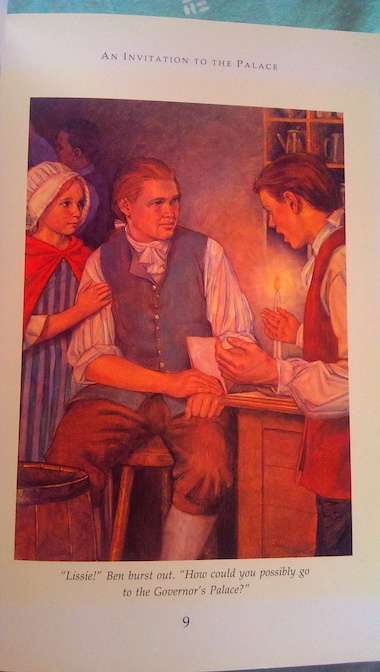
However, Ben, her father’s apprentice is against the idea of Felicity going because the Governor sides with the King and the Loyalists against the Patriots. He can’t understand why Felicity would want to attend a party with people who have treated the colonists so badly and have even boycotted her father’s store because he refuses to sell the taxed tea. However, Felicity’s father understands that the invitation was meant kindly and that it would be a special event for Felicity, so he tells her that she can go if she likes. Christmas should be a time for peace and enjoyment.

FelicityChristmasMotherIllAt Miss Manderly’s the girls start having dancing lessons, and Felicity wishes for a new gown, like the one on the elegant doll at the milliner’s shop. Since Felicity is usually not very interested in clothes, her mother decides to grant her wish.

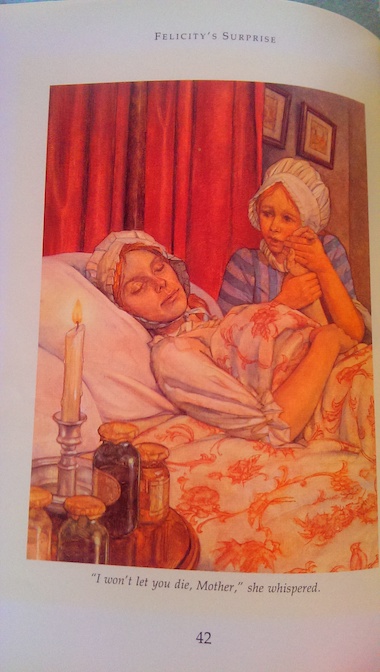
When Felicity’s mother falls ill, not only do Felicity’s Christmas dreams seem dashed, but she worries about whether her mother will recover from her illness. Everything that Felicity was concerned about before, the dress, the dancing, the party, all suddenly seems unimportant and silly in the face of something more serious. However, miracles come to those who work for them, and Felicity receives some unexpected help from friends.

There is a section in the back with historical information about how Christmas was celebrated in Colonial America.

The book is currently available online through Internet Archive.

Happy Birthday, Felicity!

American Girls

FelicityBirthday

Happy Birthday, Felicity! by Valerie Tripp, 1992.

FelicityBirthdayGuitarThis is part of the Felicity, An American Girl series.

It’s Felicity’s birthday, and her grandfather has given her a very special present: a guitar that once belonged to her grandmother, who is now dead. Felicity’s grandfather has heard Felicity singing and thinks that she shares her grandmother’s gift for music. He also thinks that Felicity is old enough to take proper care of the instrument, stressing the need for her to be responsible with it. Her mother tells her that she should keep the guitar safely in the parlor since she isn’t quite old enough for proper music lessons, like the ones Miss Manderly is giving Elizabeth’s older sister, Annabelle. Annabelle has been getting on Elizabeth and Felicity’s nerves by bragging about how they are still to young to even hold her guitar, although Annabelle really has no musical talent and struggles in her lessons.

Although Felicity knows that she should leave the guitar at home, she can’t resist taking it to Miss Manderly’s so that Miss Manderly can tune it for her and so that she can show it off to Elizabeth and Annabelle. Miss Manderly does tune the guitar for her and compliments her on owning such a fine instrument.

FelicityBirthdayGunpowderHowever, on the way home, something frightening happens. Felicity sees Elizabeth’s father, a known Loyalist, talking to a British soldier. She ducks into a bush so they won’t see her, and she hears them talking about the governor removing the gunpowder from the Williamsburg arsenal so the colonists can’t use it in the rebellion that has been threatening to come for some time.

Felicity hurries home to tell her family what she has heard, but when her mother and grandfather see that she has taken the guitar out of the house and gotten it wet and dirty while she was hiding, they refuse to listen to her. Her grandfather, also a Loyalist, particularly thinks that she’s making up stories to cover her irresponsibility about the guitar.

But, Felicity knows what she heard, and the situation is serious. What can she do to prove it to everyone?

In the back of the book, there is a section with historical information about how children were raised in Colonial America.  Another good book on the same topic is Going to School in 1776.

The book is currently available online through Internet Archive.

Giving Thanks

GivingThanks

Giving Thanks by Kate Waters, 2001.

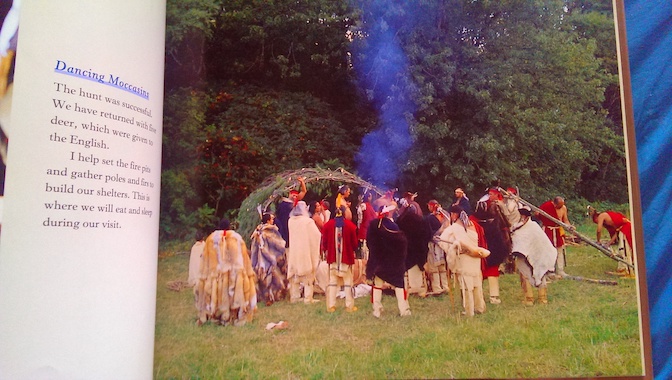
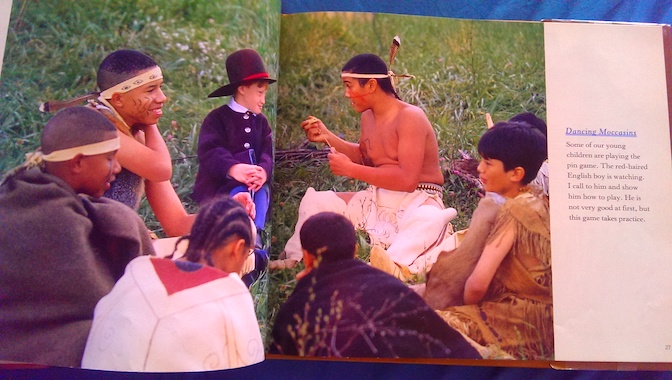
This book describes the feast of 1621 that we think of as “the first Thanksgiving” from the point of view of two boys: Resolved White (a six-year-old English colonist) and Dancing Moccasins (a fourteen-year-old Wampanoag).  The book explains that the reality of this feast is somewhat different from the way many people think of it.  For one thing, the exact date is unknown, and it wasn’t really a single meal but a kind of harvest celebration that took place over several days.  The events of that celebration were re-created using reenactors from the Plimoth Plantation living history museum.

In the beginning of the book, Dancing Moccasins explains that his family has been harvesting their crops and preparing to move to the place where they live in the winter. Wampanoag lived in different places depending on the time of year, moving between them when the seasons changed.  At their winter home, they would continue hunting and fishing, returning to the place where they planted their crops at the end of winter.

GivingThanksBeginning

Similarly, Resolved’s family has finished harvesting their crops and have stored up food for the winter.  Now that most of the hard work is over, they have time to relax and celebrate.  The community is planning a feast.  Resolved and his friend, Bartle, follow some of the men, who are going out hunting and target-shooting.

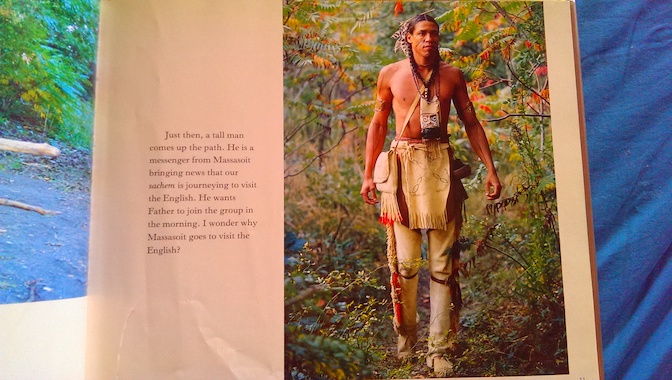
The colonists meet up with some of the Wampanoag, which is how Dancing Moccasins and Resolved first see each other.  Dancing Moccasins returns home and tells his father what he has seen.  Then, a messenger arrives from their chief, Massasoit, saying that he will be visiting the colonists soon, and Dancing Moccasins’s father is invited to come.

GivingThanksMessenger

Just as Dancing Moccasins is wondering about the purpose of this visit, Resolved is wondering the same thing because word has reached the colonists that they will soon be visited by the chief and representatives of the tribe.  (The book explains in the back that the exact reasons for the Wampanoag visit to the colonists are unknown today, only that it happened at the same time that the colonists were planning their harvest feast.) The two boys meet again when Dancing Moccasins accompanies his father on the visit to the colonists’ village.

GivingThanksGovernorDinner

When the Wampanoag arrive at the village, they are treated as honored guests, and some of the Wampanoag go deer-hunting to provide a present for their hosts.  The chief dines with the governor of the colonists.  The Wampanoag build shelters for themselves, where they will stay during their visit.

GivingThanksShelters

Eventually, Dancing Moccassins invites Resolved to play a game with him and some other Wampanoag boys when he sees him watching them.  Some of the Wampanoag men also join in the games that the English men play, like competing to see who can throw a log the farthest.

GivingThanksGames

At the end of the day, Dancing Moccassins and Resolved each eat with their own families, but there is plenty for everyone.

There is a section in the back with historical information about the harvest feast, traditions about giving thanks among both the colonists and the Wampanoag, and how Thanksgiving eventually became a national holiday in the United States.  There is also information about food and clothing in the time of the story and a recipe for samp (a kind of corn pottage eaten by the Wampanoag and later adopted by the English colonists).  The book also has some information about the Plimoth Plantation living history museum and the reeanctors.  It is part of a series of books by the same author about the lives of children in Colonial America.

The book is available to borrow and read for free online through Internet Archive.