Kirsten, An American Girl

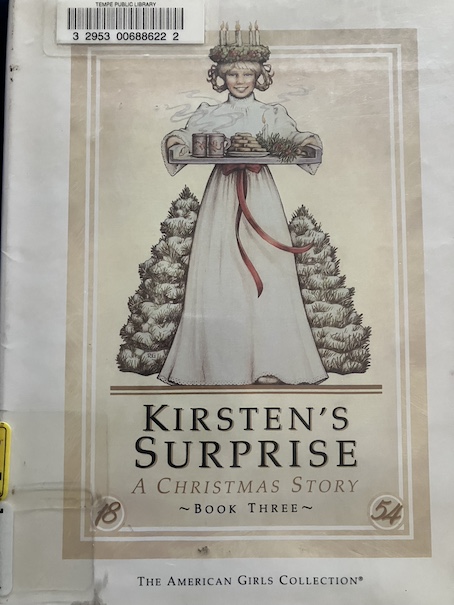
Changes for Kirsten by Janet Beeler Shaw, 1988.

It’s winter, and Kirsten’s brother, Lars, is going to set animal traps in the woods with his friend, John Stewart, who lives nearby. Kirsten is friends with John’s sister, Mary. Trapping animals for their pelts is one of the ways that the boys make some extra money. The local men are all away, working at a logging camp for the winter. Kirsten isn’t really interested in trapping animals so much as she just wants to get out of her family’s little cabin because she’s been cooped up due to the winter weather, so she persuades the boys to let her come along on their trapping expedition.
As they go through the woods, Kirsten spots an animal snare that someone else set out, and John explains that there’s an old trapper called Old Jack who lives by himself in the woods. He has no family and often prefers to be by himself and avoids meeting many people, although he sometimes helps locals with their own traps. The snare is probably one of his traps. When they find a trap that has a baby raccoon caught by the tail, the boys say that it’s too small for them to kill it for its pelt, and Kirsten feels sorry for it. She persuades them to let her take it home and nurse it back to health, like she did with an injured bird, before releasing it into the wild again.

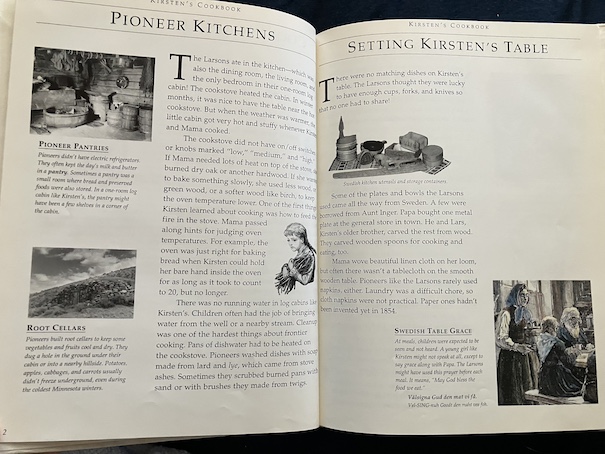
Kirsten is supposed to leave the little raccoon in the barn because, as her family tries to explain to her, wild animals are wild and uncontrollable. However, Kirsten feels sorry for the little thing because the barn is cold, so she brings it into the cabin. It turns out to be a terrible idea. The raccoon gets loose and knocks over an oil lamp that sets the cabin on fire! Kirsten makes her her little brother and sister get out safely, and when she realizes that the fire is spreading too fast for her to stop it, she manages to save the painted trunk with some of her family’s most important belongings. Unfortunately, the cabin is completely destroyed.
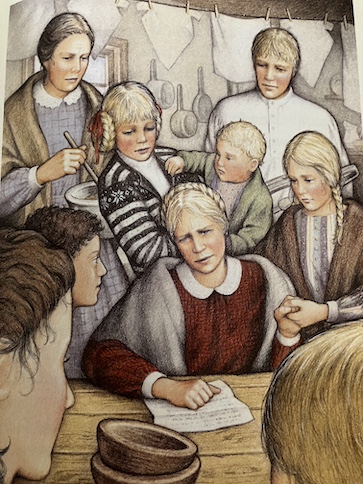
Kirsten’s aunt takes in Kirsten, her mother, and her siblings. It’s a little crowded in her house, but at least, they have a place to go. Everyone is understandably upset, although they are not too hard on Kirsten for causing the disaster. However, her mother says that they had been hoping that maybe they could buy a little land with the money Kirsten’s father is making at the logging camp, but she doesn’t see how they can now. They’re going to have to build a new cabin and replace some of essentials that they lost in the fire.
Then, John and Mary Stewart tell the Larsons that their family will be moving to Oregon because their father has found a new job managing a logging camp there. Kirsten is sorry to see the Stewarts leave because they’ve been good friends, but Aunt Inger points out that the Larsons’ problems will be solved if they can manage to buy the Stewarts’ house. The Stewarts’ house is much bigger than the little cabin where the Larsons lived, and the Stewarts will have to sell their home before they can move anyway. The problem is that the Larsons just don’t have the money to afford the Stewarts’ house.
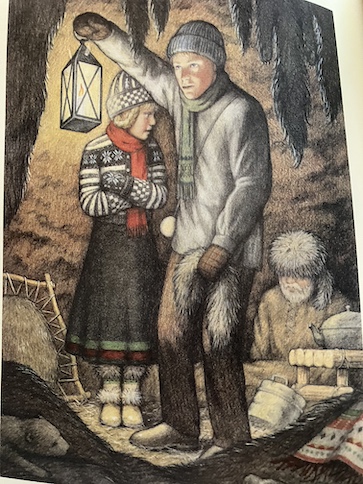
All Lars can think to do is try to make more money through trapping. Kirsten goes along to help him, and one evening, they stay out much later than they mean to and get lost in the dark woods. When the spot some human tracks in the snow, they think that they are probably the tracks of Old Jack, the trapper hermit. Kirsten thinks that Old Jack sounds frightening, but with no one else to turn to for help and shelter, they decide to follow the tracks to where Old Jack lives. When they find Old Jack’s home in a cave that he has turned into a rough house, they make an important discovery that changes everything for the Larsons.
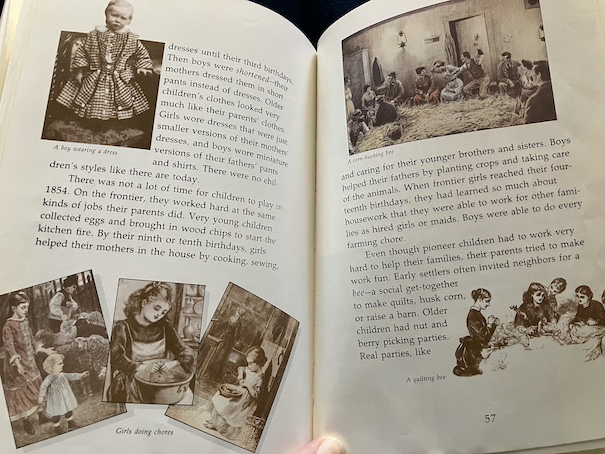
The book ends with a section of historical information that explains how new settlers moving westward turned frontier areas like the area where Kirsten’s family lived into more settled towns. The farms where people lived became less isolated, and railroads connected cities and rural areas across the country. The first transcontinental railroad in the United States was completed by the time Kirsten would have turned 24 years old, changing the ways that people and goods traveled.
The book is available to borrow and read for free online through Internet Archive (multiple copies).

My Reaction and Spoilers
This was one of the books that I remember I didn’t like in the Kirsten series when I was a kid because it’s just so painful when the family’s cabin burns. Reading the book again, I appreciated how the family wasn’t overly hard on Kirsten about bringing the raccoon into the cabin that caused the fire. I couldn’t really blame the others if they were upset with Kirsten because it’s a major disaster that destroys their home and leaves them in a very precarious position. However, even though they’re understandably upset at the situation, it is nice that they don’t lay a guilt trip on Kirsten about it because that would have made it a much sadder story.

It also helps that the situation works out for the best in the end. When they hear that the Stewarts are moving, they do want the Stewarts’ house, but they just don’t think they will be able to afford it. What changes for the Larsons is that they receive an unusual sort of inheritance from Old Jack. When Kirsten and Lars are lost in the woods and seek shelter from Old Jack, they discover that Old Jack has died. There doesn’t appear to be any foul play. Old Jack was an elderly man, and he seems to have died from natural causes in his house. It’s a grim discovery, but while Kirsten and Lars shelter in his house with the body overnight, they also realize that Old Jack has a hoard of fine animal pelts. Since Old Jack has no family and no one to inherit his property, there is no dispute that the Larsons can claim his pelts because they found his body and plan to arrange for his burial. With the money that Old Jack’s pelts bring, they are able to afford the Stewarts’ house, which is much better than their old cabin. The Stewarts also leave them some furniture and household supplies.
I do like it that the story worked out for the best, although I wasn’t fond of the theme of trapping animals for pelts. I remember that this was an aspect of other books that I read as a kid, like Where the Red Fern Grows, but I never liked hearing or reading about it. I understand hunting for food, and I know the family in the story traps animals for fur because they badly need money, but it’s not a subject that I enjoy hearing about. The metal traps the boys use for trapping animals are considered inhumane in modern times, and their use is now banned or restricted in many countries and states.

















 Jestress's Forgotten Books and Stories