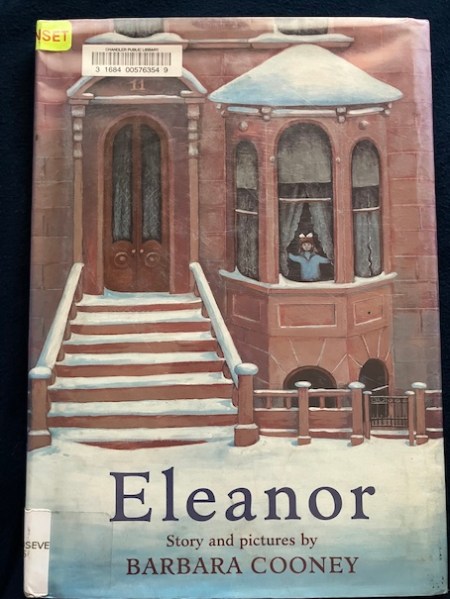
Eleanor

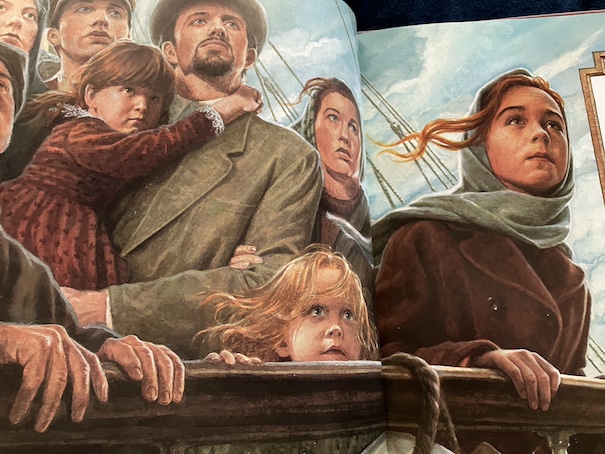
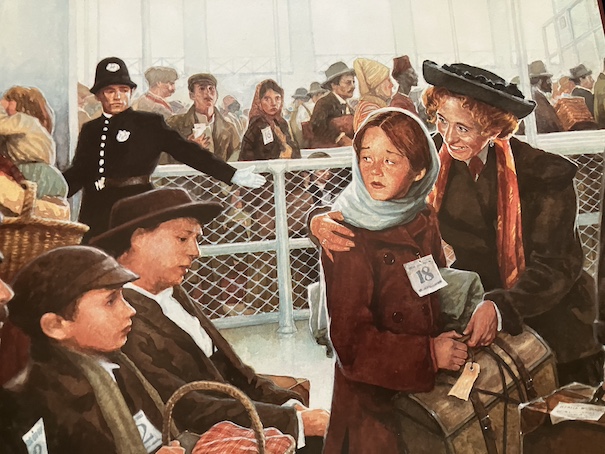
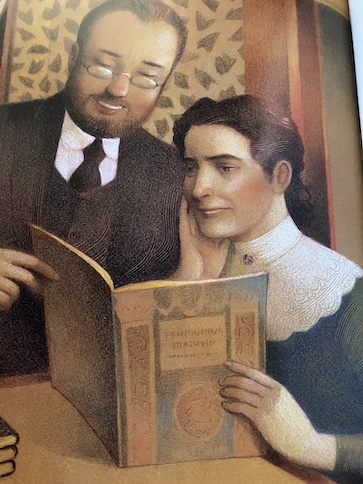
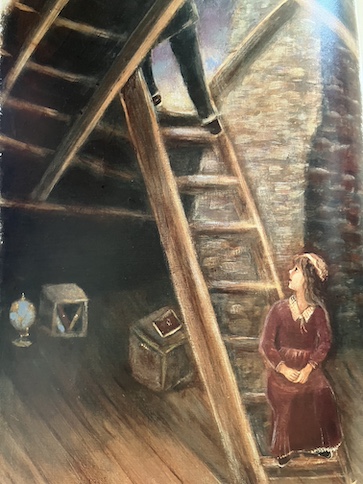
This picture book tells the story of Eleanor Roosevelt’s early life. Eleanor Roosevelt (full name Anna Eleanor Roosevelt) was the niece of Theodore Roosevelt (called Uncle Ted in the book), and later, in life, the wife of Franklin Delano Roosevelt (a distant cousin) and First Lady of the United States. This book is about her childhood, so it doesn’t explain about her husband or marriage until the Afterword at the end.
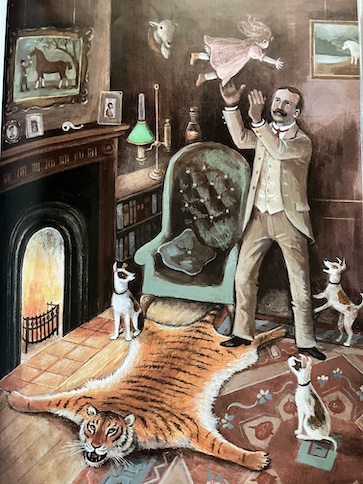
Eleanor’s home life wasn’t particularly happy. She was a disappointment to her mother in a number of ways. Her mother had hoped for a boy, and she didn’t think Eleanor was a pretty baby. Her mother often called her “Granny” as a nickname because she was such a serious child and seemed rather old-fashioned looking, and she reminded her mother of an old woman. When Eleanor’s younger brothers were born, Eleanor often felt left out when her mother spent time with them.

Eleanor’s father loved her and enjoyed playing with her and spending time with her, but she didn’t get to see him often as she was growing up. Her father, Theodore Roosevelt’s brother, Elliot Roosevelt, was a traveler and socialite and later became estranged from his family. Still, although he wasn’t a particularly reliable person and wasn’t present much, Eleanor was very attached to him and sometimes felt like he was the only one who really loved her.
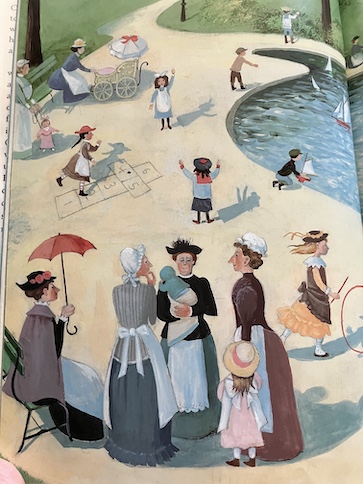
Much of Eleanor’s early life was spent with her nanny, who spoke to her in French, so she mastered the language at an early age. Eleanor was very shy, so she didn’t spend much time with other children. She did spend some time with relatives, too. Sometimes, she helped them with charitable projects, giving her a sense of caring for the less fortunate.

When Eleanor was eight years old, her mother died of diphtheria, and she and her little brothers went to live with her grandmother and the aunts and uncles who also lived with her. Her father had been living apart from the family at this time, but he returned after his wife’s death. After that, he would visit Eleanor sometimes and take her for outings. However, he was sometimes neglectful. The book explains that he died in a fall when Eleanor was nine years old.
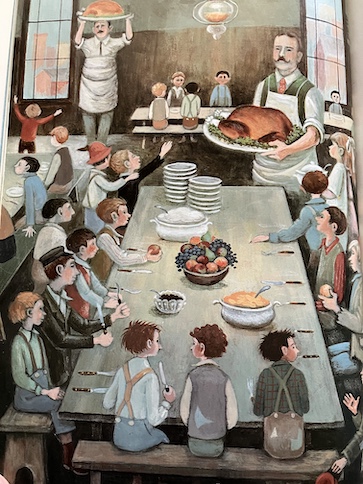
Life with her grandmother was difficult for Eleanor because her grandmother made her wear old-fashioned clothes, she had a strict governess, and her aunts and uncles seldom paid attention to her because they were busy with their own work and projects. Other children didn’t think much of Eleanor because she was shy and wore old clothes. Sometimes, her cousin Corinny would join her for dinner, but Corinny never liked it because the house was so grim and silent.

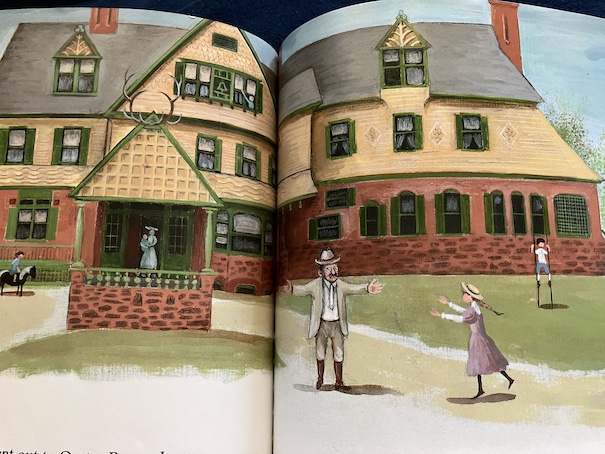
Eleanor was happier when they would go to her grandmother’s summer house, Oak Terrace. At the summer house, she could play games, daydream, read, and catch tadpoles with her little brother Brudie. Sometimes, she would go out in the rowboat with one of her aunts. There were also times when she visited her Uncle Ted and his family. Sometimes, she would play with her cousin Alice Roosevelt because they were the same age, but Alice teased her dreadfully, and Eleanor often found her a little intimidating. Her relatives encouraged her to be brave and to do things that she found scary, but she often found it difficult to keep up with them and some of their daring stunts.
Eleanor was often considered the “ugly duckling” of the family, but things changed for her when her grandmother decided to send her to boarding school in England. She attended a school called Allenswood, and the headmistress, Mademoiselle Souvestre, became a mentor to her.
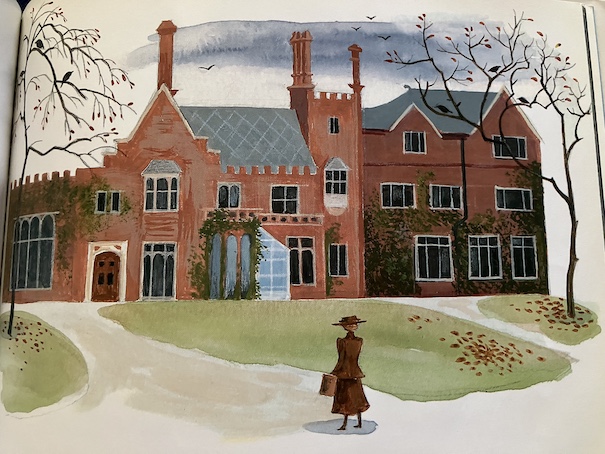
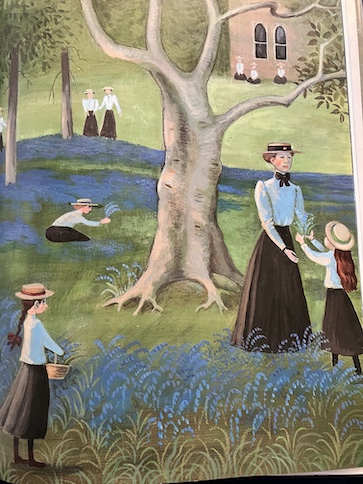
Thanks to the lessons in French from her former nanny, Eleanor excelled at boarding school. Because the school had a rule that the girls should only speak French at dinner, Eleanor was the only girl at first who felt comfortable talking, a rare change for her. Eleanor made friends with the other girls at school and was happy there. Mademoiselle Souvestre encouraged Eleanor’s sense of independence, opened her eyes to the world around her, took her along on trips to Europe, and advised her to get clothes made in Paris, ridding her of the clothes her grandmother made her wear. By the time she returned home from boarding school, Eleanor was happier and more confident than she had been before, and she credited Mademoiselle Souvestre for her influence.

The book is available to borrow and read for free online through Internet Archive.
I enjoyed this book for its focus on Eleanor Roosevelt’s childhood. Many books about famous people focus on what they did when the became famous, but I enjoyed seeing her as a shy, awkward child, when it didn’t seem obvious that she would one day be famous. By seeing how she grew up, I feel like I’ve come to understand more about her.

Eleanor Roosevelt came from a wealthy family, but her early life wasn’t very happy. She was deeply affected by her mother’s sense of disappointment in her for not being prettier and by her parents’ troubles and their separation from each other. She was orphaned at a young age, and one of her younger brothers also died not long after their mother. She often felt like she didn’t fit in with her family, and they didn’t seem to understand or appreciate her.

The book explains a little about her father’s estrangement from the family, but it doesn’t go into all the details or some of the dark reasons why. The truth was that he was an alcoholic. His alcoholism was the beginning of his strained family relationships, but then, he had an affair with a servant girl who worked for his wife and fathered a child by her. When that happened, Theodore Roosevelt had him forcibly removed from his family’s home and did his best to keep him away from his children as much as possible, even after his wife’s death. When the book says that Eleanor’s father died in a fall, that was a soft way of explaining it. The truth is that he committed suicide because he was drinking even more heavily after his wife and one of his sons died, and he was depressed about the rest of the family keeping him away from his remaining children.

I thought it was interesting that Eleanor really blossomed at boarding school. She had always been a shy girl, but she was very studious and spoke French, skills which suited boarding school life well. Boarding school encouraged her to spend more time around other girls her age and took her away from her family’s influence, giving her the opportunity to find herself and bond with other people. In particular, the headmistress of the school became her mentor and encouraged her to look at the world in new ways and to become the best version of herself.

What To Do About Alice?

Theodore Roosevelt had done many things in his life, from herding cattle to hunting grizzly bears, but one thing he could never seem to do was manage his daughter, Alice. From early childhood, Alice was a lively girl, always having things she wanted to do and places to go. She called it, “eating up the world.”

Alice’s mother died when she was a baby, only two days after she was born. The loss was very difficult for her father, and people felt sorry for Alice. However, since Alice had no memories of her mother, she didn’t feel the loss so much, and she didn’t want people to pity her. Eventually, her father remarried, and Alice had half-siblings. Because of her father’s political career, the family traveled between New York and Washington, DC. Alice enjoyed this lifestyle and the experiences she had in different places where they lived.

For the most part, Alice’s childhood busy and full of fascinating experiences, but she did have problems as well. She went through a period where she had to wear braces on her legs because they weren’t growing properly. (The book doesn’t explain why she had this condition, partly because the exact cause is unknown. The common belief was that she might have had a mild form of polio, but that isn’t definite.) The braces worked, and eventually, she no longer had to wear them. Her father encouraged her to engage in physical activities and learn to ride a bicycle because he didn’t want her previous condition to make her overly cautious.

It turned out that there was little need to worry about that. Alice was a wild child! She would run off to explore the cities where she lived, and she once joined an all-boys club, sneaking them in disguised as girls! Concerned that Alice was getting too wild and becoming a bit of a “tomboy” (a girl who acts like a boy and likes things boys like – I don’t think this term is used as much anymore because the modern view is more that people shouldn’t allow themselves to confine their interests based on gender stereotypes).

Theodore Roosevelt considered sending Alice to boarding school to give her some discipline and teach her more ladylike habits, but the idea upset Alice so much that he eventually decided to let her continue her education at home. Alice used the books in her father’s library to study seriously. She read books by famous authors and studied subjects like Greek, geology, and astronomy, discussing them with her father.

When Alice was seventeen years old, Theodore Roosevelt was elected President of the United States. Alice and her half-siblings thrilled people with their wild behavior and exotic pets. (The book mentions Alice’s pet snake, Emily Spinach.) However, Alice also developed a serious interest in politics. She became a goodwill ambassador and took part in public projects, like the Buffalo Exposition. Her antics often became the subject of newspaper reports and society gossip. It earned her some criticism, but because she was such a personable young woman, she was also a social success. She gained the nickname of “Princess Alice.”

Eventually, Alice married a congressman named Nicholas Longworth. She continued to act as an advisor to her father and take part in diplomatic events. The entire time, she was known as an irrepressible personality!

I enjoyed the book for its fun look at a colorful character from American history, although it was on the cartoonish side. In multiple pictures, she is shown holding a giant spoon. It confused me a little at first, and then, I realized that it was a reference to her saying about “eating up the world.”

The Roosevelts were a colorful family in general. Teddy Roosevelt encouraged his children (and nieces and nephews, as explained in the book about Alice’s cousin, Eleanor) to be brave and daring, and Alice and her half-siblings were known for their wild stunts and the small zoo of bizarre animals that members of the family kept as pets. The book shows Alice and her half-siblings sliding down the stairs in the White House on serving trays, something that they did in real life, although it doesn’t explain in the text that’s what they were doing.

Alice was both a scandalous figure and an admired person in her time, and I thought the book did a good job showing that. She was an eccentric person who often trampled on social conventions, but she was also a highly social person and pleasant to be around, so she tended to shine in social and diplomatic situations.

Her life wasn’t always as happy and cheerful as the story shows. She had tensions with both her father and stepmother while she was growing up, and her marriage wasn’t especially happy. There were times when she opposed her husband politically, and she is also known to have had affairs with other men. Her daughter was probably the result of one of these affairs. Of course, these darker subjects aren’t exactly suitable for a children’s picture book. The book gives enough of an indication of tensions within her family by showing her father’s reactions to her various antics and the way she threw fits to convince her father not to send her to a traditional school. Overall, the book is a fun introduction to the life of a fascinating but complex person.

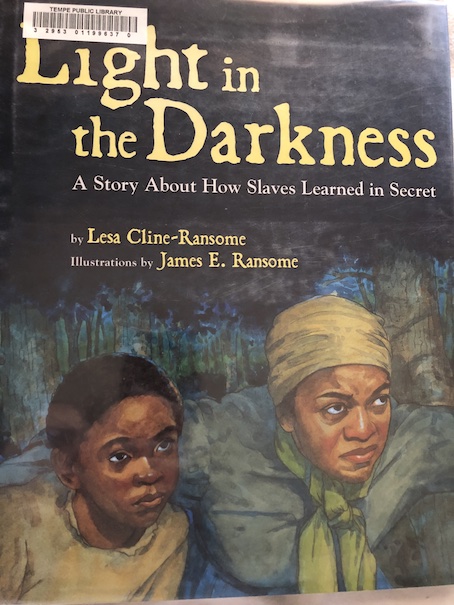
Light in the Darkness

As the subtitle of the book says, this is “A Story About How Slaves Learned in Secret.” During the history of slavery in the United States, slaves were often forbidden to learn to read, and there were punishments for people who taught slaves to read. These anti-literacy laws were the norm for most people prior to the Civil War. However, there were some slaves who managed to acquire some basic reading and writing skills in secret, in spite of the anti-literacy laws, and that is what this story is about.

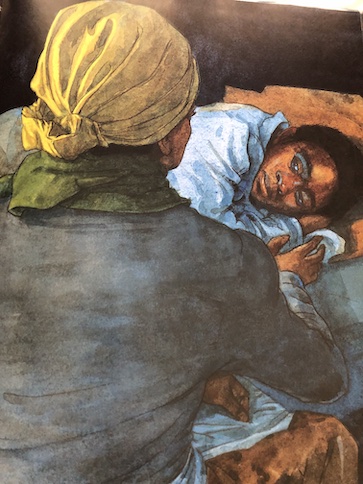
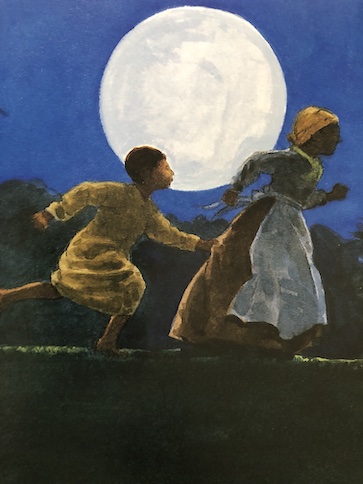
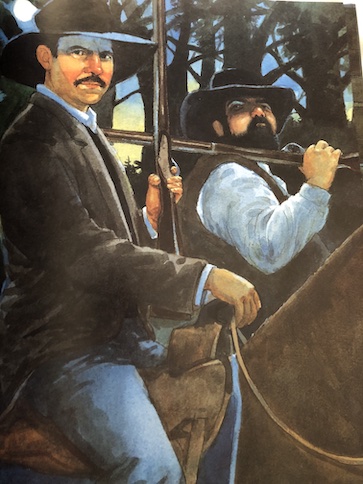
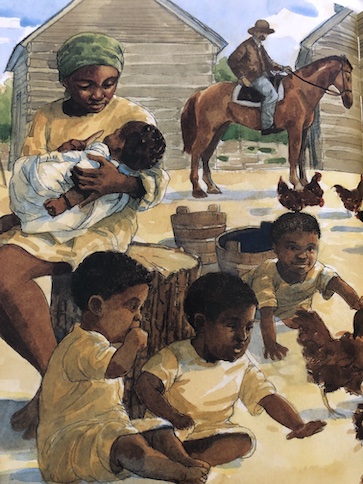
The story is told from the point of view of a young slave, Rosa. Rosa’s mother wakes her in the middle of the night, and they sneak out to go to the secret reading and writing lessons. They have to be careful because there are patrollers out, looking for runaways and slaves who are doing what they’re doing.

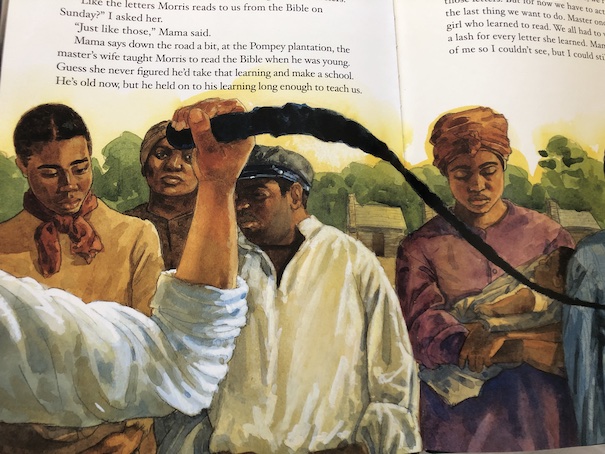
The risks are serious because slaves are whipped for learning how to read. Rosa and the other slaves were once forced to watch a girl being given a lash for each letter she learned. The slaves who go to this secret school know that the same thing will happen to them if the patrollers catch them and turn them in to their master.

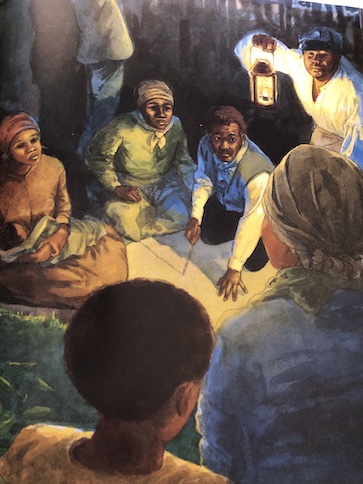
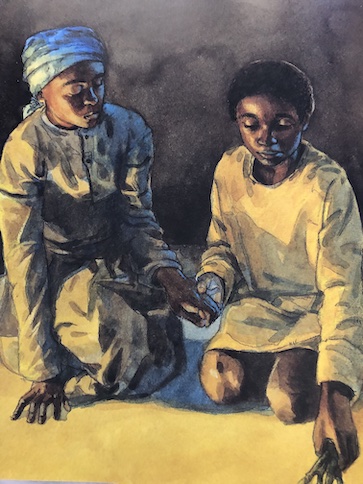
The man teaching the secret school, Morris, was taught to read Bible stories by his master’s wife when he was young, although nobody expected him to teach other slaves. Morris’s “school” is an improvised pit hut, a pit dug in the ground and covered over with branches. He uses sticks to show his students the shapes of the letters by the light of a lantern.

During the day, the slaves who go to this secret school have to proceed with their usual chores and pretend like they don’t know anything about reading and writing at all. By night, they help each other learn their letters. It’s a slow process, and sometimes, they can’t hold the school because they know that patrollers are traveling the area, and it’s too dangerous. However, they keep coming back when they can because this is important to them. They are doing something that their masters don’t think they’re bright enough to do, and they know that this secret knowledge will be an important tool in their eventual quest for freedom.

I thought that this was a good book, focusing on a particular area of history that isn’t always explored in detail in other sources. I’ve read other books that refer to slaves, both real and fictional, as having found ways to read in secret, but this book focuses solely on that process, how they managed it, how they organized others to participate, what the risks were, and what it meant to them. There is an Author’s Note in the back of the book, which explains that the author was doing research for a book about Frederick Douglass when she found a reference to “pit schools”, like the one in the story, where slaves would meet in secret for lessons from each other. I had never heard about pit schools before, and I found the concept fascinating.

The subject of education and literature is a particular sore point for me when it comes to the Confederacy, and I’m sure I’ve mentioned it before. Slavery apologists sometimes talked about how slave owners treated slaves like “family” and taught them to read and gave them Bible lessons, etc. These claims have been made since the 19th century, and you can see it in plantation or “anti-Tom” literature, including some 19th century and early 20th century books for children. (I discussed this earlier in my list of Books from the 1850s, the decade when Uncle Tom’s Cabin was published. “Anti-Tom” literature was a direct response to that book.) However, such lessons were actually forbidden by law in most slave-owning areas. There were exceptions to this rule, like Phillis Wheatley in the 18th century and Frederick Douglass in the 19th century, but the reason why these people became famous was because they were the relatively rare exceptions. Only a small percentage of slaves ever achieved any level of literacy, and of those who did, few received any help from their masters or their masters’ family because the practice was discouraged more than encouraged, with laws and punishments in place against it. In real life, Frederick Douglass received some basic lessons in reading and letter recognition from the wife of one of his masters, but that ended when his master found out about it and made his wife stop.

I never believe those stories about slaves and masters being just one big, happy family or the assertion that it was common for masters to benevolently educate their slaves to better their lives because I already know that was not at all the case for the vast majority, by design, with intention, and enforced by law. The “history” books produced by the United Daughters of the Confederacy particularly try to create this impression of slavery as a benevolent institution, but actual benevolent institutions do not have laws that specifically restrict both the personal development and freedom of movement of the people they serve with harsh physical punishments for violations. I resent the mere existence of these history books and the organization that produced them because I resent anyone who lies to me (whether directly or indirectly or even by omission or implication) about anything important, and it is personally insulting to me that they would think I would ever be dumb enough buy that bunk. I’m sure they didn’t mean it as a personal insult to me because they’ve been doing it since long before I was born. I’m sure they have no idea who I am and couldn’t care less about me as a person, but at the same time, the fact that they did it at all carries an implied insult to anyone who may potentially believe them or is pressured to read and believe them. They must either think very little of other people’s intelligence or simply never think about other people outside of their own family lineage at all except as resources to be used or manipulated for social aggrandizement. I don’t blame people for merely having ancestors who owned slaves, but when someone works hard to make me believe that slavery wasn’t bad, that their ancestors weren’t bad for doing things they admittedly did, that I don’t really know the things I actually do know about that, and that I should not only be respectful but reverent toward these people and their institutions, I blame them a lot, specifically for that. When I was young and found out about censorship, propaganda, and book burnings, I daydreamed about writing something that would personally offend this type of person as much as they offended me, and it seems like the best way to do that is just by telling the truth about history.

Although some people like to think of people in the past, especially their own ancestors and family, as being above average, most people are average, by definition. It’s not that it never happened, because I know that it did in rare cases, but most people are simply not rare exceptions. If they were, the average would have looked very different indeed, and those anti-literacy laws would not have existed in the first place, but that’s just not the reality. The reality is that those laws did exist, and most people both followed and enforced them because they both agreed with them and feared the consequences of disobedience. Most people, by definition, are basically average, and this is just what the basic average was. The average slave-holder was harsh, punitive, anti-education, and far more interested in what they could get out of their slaves than in the slaves themselves because that was the entire reason for having them in the first place.

Plantations were not non-profit organizations, and they were not run like non-profits as tools for the welfare and social betterment of clients. Non-profits serve others. Slave owners forced other people to serve them, and that’s seriously all there is to it. Slave owners were takers, not givers, although I’m sure that they engaged in occasional public philanthropy for the social cred because one of their primary goals was climbing that all-important social ladder and maintaining their place on it. Plantations were family businesses for the wealth and social betterment of the families who owned them, designed to maximize profits, and the profits were meant entirely for the owners and no one else.

In the story, Morris becomes a teacher for the other slaves because he is the rare exception among them, having had lessons from his master’s wife when he was young. Most were not given any lessons at all, and both the slaves and their potential teachers could face serious consequences if they were caught. Everyone knows that, if Morris is caught teaching the others, he will be punished much worse than the rest of them. They’re all taking a serious risk, but Morris is in the most danger if they are discovered.

An Ellis Island Christmas

A six-year-old girl, Krysia Petrowski, knows that her family is preparing to leave Poland for the United States. Her father went ahead to America to establish a home for the rest of the family, and she knows that she, her mother, and her brothers will soon follow him. She doesn’t want to leave her home and her best friend, but her mother explains that life will be better in America because there is more food and there are no soldiers in the streets.

When the family begins packing to leave for America, they cannot bring everything with them because they have a long walk to get to the ship that will take them to America, and they can only bring what they can carry with them. The girl can only bring one of her two dolls with her, and she is sad at having to leave one behind.

When they board the ship, the conditions are cramped and cold. The food isn’t good, either. The voyage is rough and stormy, and many people are seasick. The one bright point is that Krysia meets another girl she knows from school, Zanya, so she knows that she won’t be going to America alone and friendless. Krysia and Zanya play together on the ship when the weather is better.

Finally, they reach Ellis Island on the day before Christmas. Everyone lines up, and the family has to show their papers to the immigration officials. Doctors look at them to make sure they are healthy enough to go ashore and into the city. Fortunately, they pass the health tests, although Krysia sees another woman who is told that she will have to go into the hospital or back to Poland because she is ill. The family converts their money to American money and buys some food. A man has to explain to them how to eat a banana because they’ve never seen one before.

Because it’s Christmas Eve, there is a big Christmas tree, covered with lights and toys. There is also a man dressed like Santa Claus, although Krysia thinks of him by the Polish name, Saint Mikolaj. They don’t receive any new presents, but Krysia’s mother does have a surprise for her. The best part is when Krysia’s father comes for them and takes them to their new home.

The book ends with a section explaining the history behind the story.

The book is available to borrow and read for free online through Internet Archive (multiple copies).

The focus of this story is all on the feelings and experiences of the immigrant family, especially little Krysia. Krysia’s impressions of the journey and the arrival at Ellis Island are all a child’s impressions, and she often needs explanations of what’s happening and what’s going to happen next, which is helpful to child readers.

The historical context for the story is provided in the section of historical information at the end and in some hints during the course of the story. The section of historical information in the back of the book discusses the peak years of US immigration, from 1892 to 1924. They don’t say exactly what year this story takes place, but it mentions 48 stars on the American flag. That means that this is the early 20th century, after Arizona and New Mexico were admitted as states in 1912. During that time, 70% of US immigrants came through the immigration center on Ellis Island, just off the coast of New York City. Of those who arrived at Ellis Island, about a third stayed in New York, and the others spread out across the US. The family in the story seems to be going to stay in New York, but because the focus of the story is mainly on the journey, there are still few details provided about this family’s background and circumstances. The section of historical information also explains a little more about the traveling conditions of immigrants around that time and what typically happened at Ellis Island, so readers can understand how the experiences of the characters in the story fit into the experiences of other, real-life immigrants. (For more details, I recommend reading If Your Name Was Changed at Ellis Island and Immigrant Kids, nonfiction books which echo many of the details included in this book.)

There is some discussion in the section of historical information about the reasons why immigrants left their homes, and we told in the beginning of the story that there are shortages of food in Poland and soldiers everywhere, but there is more that I’d like to say about this. Because I like to add context to historical stories, I’d like to talk what was happening in early 20th century Poland and what’s behind the circumstances the characters describe. During the 19th century, parts of Poland were under the control of three different European empires: Russia, Prussia (a German state), and the Austro-Hungarian Empire (while later dissolved into Austria and Hungary). The oppressive control of these imperial powers accounts for the soldiers the family describes on the streets. There were Poles who resisted the control of these forces and wanted to reunify their country, so the soldiers were to keep the population under control and put down resistance. Around the turn of the 20th century, Polish territories were also suffering from unemployment and land shortages, which explains the food shortages the family experiences. Because of these conditions, there was massive immigration from Poland to the United States during the late 19th century and early 20th century. The Petrowski family in the story would have been on the tail end of this wave of immigration because circumstances changed for Poland after World War I (1914 to 1918), when Poland became an independent country again. Some Polish immigrants to the United States intended to stay only for a relatively short time, hoping to save up money and return to their homeland with the money to purchase land or improve their family’s circumstances, but many of these people remained in the United States anyway.

Because the main character, Krysia, is only six years old, she likely wouldn’t understand the full background of her family’s circumstances and the political causes of the hardships in her country, but I like to explain these things for the benefit of readers. I think it’s also interesting that this story is a Christmas story. We are never told what the religion of the characters is, although it seems that they are Christian because they care that it’s Christmas. Many people from Poland were Catholic, so it’s possible that this family was Catholic, too, but it’s never clarified.

If you read the short biographies of the author and illustrator of the story, the author reveals that the inspiration for the story was the story of her own family’s journey from Poland. The illustrator says that he went on a tour of Ellis Island to prepare for producing the illustrations, and he tried to capture the “awe and anticipation” of the immigrants and the high vaulted ceilings and views of the New York skyline through the windows. I’ve also been to Ellis Island, and the illustrations in the book brought back memories of my trip there. I thought that the illustrator did a good job of capturing how big, impressive, and bewildering the Ellis Island compound would be to a young child.

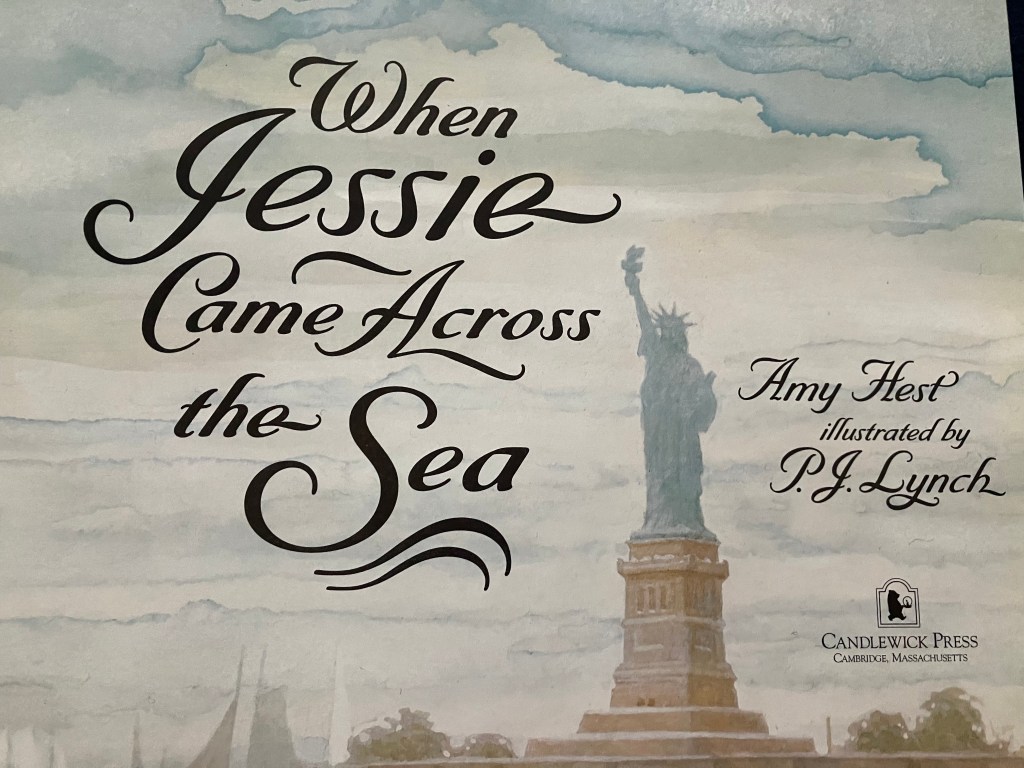
When Jessie Came Across the Sea

Jessie and her grandmother live in a small, thatched cottage in a small village. The little village is poor, and so are Jessie and her grandmother. Jessie’s parents died when she was a baby. Jessie’s grandmother raised her, and she insists that Jessie have lessons with the village rabbi, like the boys in the village. Jessie can read and write, and she also tries to teach her grandmother. Her grandmother makes a little money by sewing lace, and she teaches Jessie how to sew. Although they don’t have much, they are basically content with their lives.

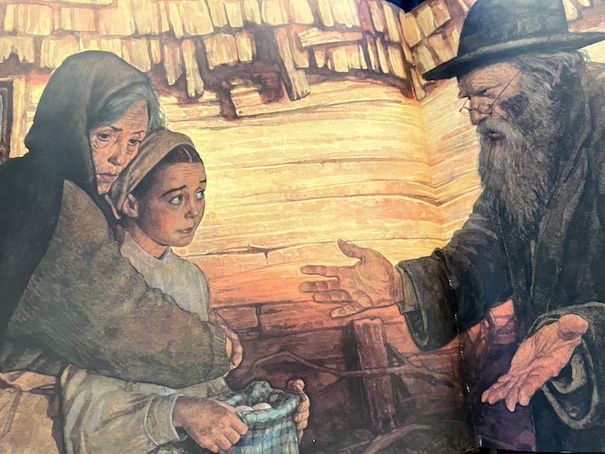
Then, one evening, the rabbi makes an important announcement. His brother, who was living in America, has died. Before his death, he sent a ticket for a ship traveling to America to the rabbi, asking him to join him in America. Now that his brother is dead, there is no need for the rabbi to go to America, and he would rather stay in the village with his congregation. However, he thinks that someone else should use the ticket his brother sent.

Various villagers ask rabbi if they can use the ticket, offering reasons why each of them would be the best person to go. They brag up their best qualities, boasting about how strong, smart, and brave they are. The rabbi knows that they’re boasting, so he just tells them that he will pray about it and let them know his decision tomorrow.

The next day, he goes to see Jessie and her grandmother and tells them that Jessie should be the one to go to America. His reasoning is that his brother’s widow owns a dress shop in New York City. Jessie can work there, and she would be a comfort to a lonely widow. Jessie doesn’t really want to leave her grandmother, and her grandmother fears to send her, but her grandmother can see the rabbi’s logic. She knows that this is an important opportunity for Jessie.

So, Jessie leaves her village and sets sail on a crowded ship for America. On the ship, Jessie is scared, lonely, and seasick. As Jessie spends time with the other passengers, she makes a few friends, and she sews a few small items for them. A boy named Lou, who is a shoemaker’s son, makes a pair of small shoes for a baby, and he and Jessie also become friends.

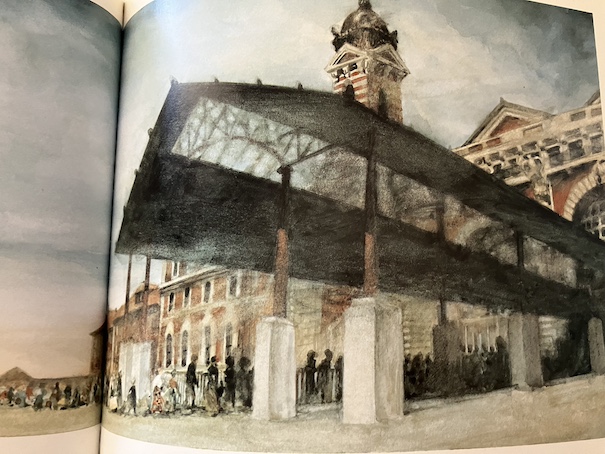
Finally, their ship arrives at New York. Everyone crowds around the rails of the ship to see the Statue of Liberty and their first glimpse of America. The ship docks at Ellis Island, and the passengers disembark to be inspected and questioned by immigration officials.

The rabbi’s brother’s widow comes to meet Jessie. She is a friendly woman, and she asks Jessie to call her Cousin Kay. Cousin Kay shows Jessie around the city. It’s a crowded, confusing place with fascinating sights, although the streets aren’t paved with gold, as Jessie has heard. Cousin Kay runs the dress shop out of her home, and she pays Jessie to sew for her. Jessie likes watching the busy street outside while she sews, and she saves the money she earns in a jar.

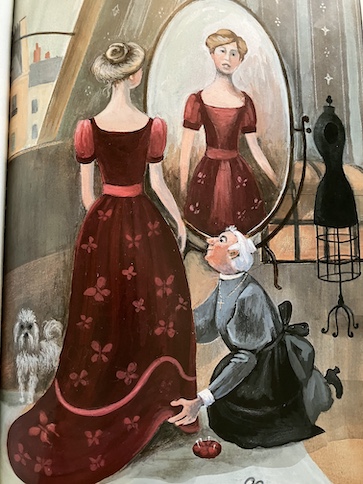
When Jessie puts some lace on a plain white dress, turning it into a lovely bridal gown, the shop becomes popular with young women who are getting married and looking for similar gowns.

Cousin Kay also insists that Jessie go to school and learn English. It isn’t easy, but Jessie learns. She likes walking around the city and going to the local library. Gradually, Jessie begins feeling more at home in New York, and she builds a new life for herself there. One day, she runs into Lou again in the park, and they begin meeting there regularly. Lou proposes to Jessie, and Jessie uses the money she has saved to buy a ticket so her grandmother can come to America for their wedding.

The book is available to borrow and read for free online through Internet Archive.
I remember reading this book when I was young! I was really older than the target audience when it was first published, but I enjoyed the story. It’s one of those books that I think takes on more significance when you’re older and understand more of the history behind the story. We don’t know exactly where Jessie is from because the book never says, but her journey resembles the kind of journey that many people made during this same period of history. We don’t know the year, either, but it appears to be set in the late 19th century or early 20th century.

Although coming to a strange country, alone and unable to speak the language, is a scary experience, Jessie is fortunate because there is a friendly and caring person waiting there for her, and she has a job lined up that suits her skills. In real life, not everyone was so fortunate, and it was more of a struggle for them to get established in their new home. Jessie still has to struggle with homesickness and missing her grandmother, but her life changes for the better because she took the chance to go to a new country and start a new life. Readers can emphasize with Jessie’s fears and uncertainty as she starts out on her journey and celebrate with her when things work out for the best.

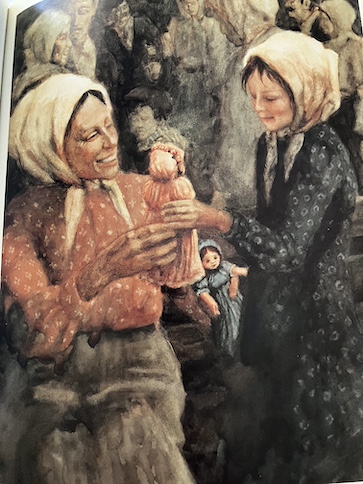
The pictures in the book are beautiful! Readers really get the sense that they’re seeing another time, with Jessie’s tiny village, the crowded ship in the rain, and busy New York City, more than 100 years ago. Even when the environment and circumstances are harsh, the pictures are charming.

There is a note in the beginning of the book for parents and teachers about how they can use this book to spark discussion with children. They can use the opportunity to invite children to learn how their own families arrived in America, because this book was originally intended for an audience of young American readers, and most people who live in the United States (with the exception of Native Americans) are descended from people who came from somewhere else. It’s an opportunity for children to learn their family’s history and to see how it compares with that of other people, whose families also made a decision to come here and start over, going through their own struggles along the way. There is also some general advice about sharing books with children, and making a point of surrounding children with books and reading aloud to them.

Look Up!

This picture book is about the life of Henrietta Leavitt, a “Pioneering Woman Astronomer” during the late 19th century and early 20th century.

The story says that Henrietta had a fascination with the night sky from a young age, often wondering just how high the sky was. When she got older, she formally studied astronomy, although most of the other students were men, and it was an uncommon profession for women.

After she graduated, she found a job with an observatory, although she rarely worked on the telescope. She was part of a team of other women who acted as human “computers”, doing basic calculations by hand and compiling information for others to use. Women like Henrietta were not expected to use this information themselves or draw conclusions from their own calculations, but Henrietta had her natural sense of curiosity and confidence in her ability to use her own mind.

She continued studying in her spare time, and while examining photographs of stars and doing her calculations, she began to notice some patterns that made her wonder about the explanations behind them. She studied an effect where stars seemed to become brighter and then dimmer, a kind of “blinking” effect.

She not only discovered that the existence of some of these stars had not been recorded yet, but she also found herself wondering about the pattern of this twinkling effect. Some stars appeared brighter and seemed to “blink” more slowly between bright and dim than other stars that weren’t as bright. By examining the relative brightness of the stars and the patterns of blink rate, she realized that it was possible to calculate the true brightness of the stars and use that to figure out how far away each star is from Earth. When she presented her findings to the head astronomer at the observatory, he was impressed. By using the chart Henrietta compiled, it was possible to calculate the distances of stars even beyond our galaxy. People of Henrietta’s time initially thought our galaxy might be the entire universe, but Henrietta’s finding shows that it was not and also that our galaxy is much larger than people thought.

The book ends with sections of historical information about Henrietta Leavitt and her discoveries and other female astronomers. There is also a glossary, some quotes about stars, and a list of websites for readers to visit.

I enjoy books about historical figures, especially lesser-known ones, and overall, I liked this picture book. The pictures are soft and lovely.

The only criticisms I have are that the book is a little slow and repetitious in places, and the subject matter is a little complex for a young audience. Some repetition is expected in picture books for young children, but how appealing that can be depends on what is being repeated. Henrietta’s work involves a lot of looking at pictures and figures and studying, so the text gives the feeling of long hours studying and “looking,” and many of the pictures are of her looking at books and examining photographs of stars through a magnifying lens. I found the story and pictures charming and in keeping with the Academic aesthetics, but I’m just not sure how much it would appeal to young children.

The story explains some of the concepts that Henrietta Leavitt developed and discovered, and it does so in fairly simple language. However, I still have the feeling that it would mean a little more to a little older child, who already knows something about astronomy, or to an adult like myself, who just enjoys the charming format of the story.

Part of me thinks that this story could have been made into a little longer book, perhaps a beginning chapter book, which would have allowed for a little more complexity. One of the issues with making the story of Henrietta Leavitt into a longer book is that, as the section of historical information says, “not a great deal is known about her life.” There just might not be enough known details about Henrietta’s life to put together a longer book.

Still, I really did enjoy the book, and I liked the presentation of 19th century astronomers and astronomical concepts. I especially enjoyed the way the story portrayed the concept of “human computers.” This type of profession no longer exists because we have electronic computers and computer programs that perform mathematical calculations faster than human beings can, but before that technology existed, humans had to do it themselves. “Human computers” had to work in groups to get through massive amounts of data and calculations, and it was long and tedious work, but their work was largely hidden from the public eye. As the story says, they were expected to do mathematical calculations and compile data, but they were compiling it for someone else’s use. Someone else would use their data to draw conclusions, and that person usually got the credit for whatever they discovered, ignoring all the people who did the grunt work that made it possible. Since women like Henrietta were more likely to be among the “human computers”, working in the background, they often didn’t get much credit for their work. The male astronomers were more likely to be the ones analyzing data and taking credit for the conclusions they drew, although they didn’t do the background calculations themselves. What made Henrietta different was that she stepped beyond the role of simply compiling information but also took on the role of studying patterns and drawing conclusions from the data she was compiling. She did all of it, from compiling data and making calculations to interpreting the data and laying out conclusions and discoveries from it.

Women once worked in similar positions as “human computers” at NASA. The 2016 movie Hidden Figures was about women working as “human computers” at NASA in the 1960s.

Maria’s Comet

This picture book is a fictional story about a real person, Maria Mitchell. (She pronounced her first name “ma-RYE-ah”, not “ma-REE-ah”.) Maria Mitchell was born into a Quaker family on Nantucket Island, Massachusetts in 1818, and she became the first female astronomer in the United States. She is known for discovering a comet only viewable through a telescope in 1847, and she also became the first astronomy professor at Vassar College. She is the namesake of the Maria Mitchell Association, a science center on Nantucket. She was also an abolitionist, although this topic is not touched on in the book. Maria’s father taught her about astronomy when she was young and encouraged her interests and career at a time when not many women were encouraged to pursue careers or higher education.

Maria’s papa is an astronomer. At night, he goes up on the roof their house to use his telescope, and he explains how the telescope works, gathering and focusing light to make distant objects look larger and closer than they would with just a person’s eyes. He especially likes to look for comets. In their time, they’re not entirely sure what comets are made of, and that’s part of what makes studying them interesting. Maria imagines what it would be like to travel across the sky with a comet, encountering the different planets.

Most of Maria’s life centers around their house and family in Nantucket. There are nine children in the family, so Maria helps with chores and tells her siblings bedtime stories. Sometimes, she and her brother Andrew go into the attic and use an old atlas to pretend that they’re explorers. When they read books, Maria likes books about astronomers, but Andrew likes books about sailors. He wants to be a sailor himself.

When Andrew gets older, he runs away from his family to go to sea on a whaling boat. The entire family is sad that he is gone, and Maria soothes her siblings by telling them stories about all of the amazing places their brother will go. That night, after supper, Maria asks her father if she can come with him to look through his telescope or “sweep the sky” as she thinks of it. For a moment, Maria thinks they will say no, but they agree. Maria wants to be an explorer of the sky, like her brother wanted to explore the seas.

Maria’s father points out Polaris, the North Star, to Maria and says that sailors use it to navigate. Maria wonders if Andrew might be looking at the same star right now. Then, she sees a comet streak across the sky.

There’s an Author’s Note in the back of the book that explains about the real life of Maria Mitchell. It has some comments about what people of her time knew and didn’t now about the planets. When she was young, people only knew about seven planets in the solar system. Neptune was discovered during her lifetime (although not by her), and Pluto wasn’t discovered until 1930, after she had died. There is also a section about the astronomy terms used in the story and famous astronomers.

I enjoy books about historical people, although the author admits in the Author’s Note that this particular story about Maria Mitchell is fiction. I have mixed feelings about that. I don’t like to fictionalize real people, and I’m not entirely sure whether there’s any truth to the story about Maria’s relationship with her brother and how she felt when he left to become a sailor. On the other hand, I did appreciate how the book showed Maria becoming interested in astronomy by watching her father and joining him in his studies of the sky, which is apparently true. Overall, I did enjoy the story.

The pictures in the book are wonderful. They capture the coziness of an old-fashioned 19th-century home and also the wonderment of looking to the skies and imagining exploring the big, wide world and the stars beyond it.

Hanukkah at Valley Forge

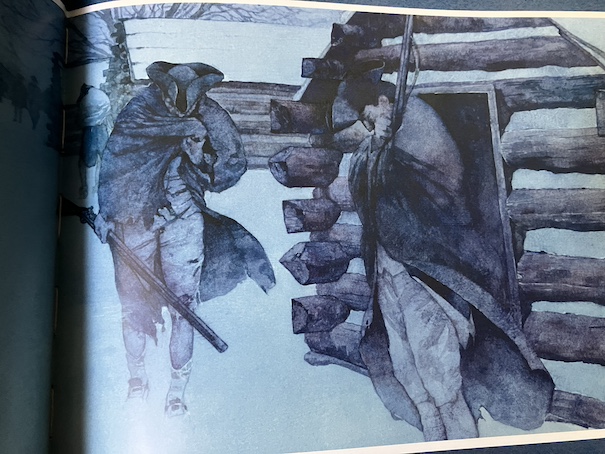
It’s a cruel winter at Valley Forge, during the American Revolution, and George Washington is worried about the welfare and morale of his soldiers.

As Washington walks through the camp, he sees a young soldier lighting a candle and reciting something softly to himself.

Curious about what he’s doing, Washington stops to talk to him, casually remarking on how cold the night is. The young soldier says that he saw colder nights when he was young in Poland, and he is lighting candles for Hanukkah. Washington asks him what that means, and the soldier explains the meaning of the holiday.
The soldier recounts the story of how Israel was conquered by the Ancient Greeks, who forced Jewish people to worship Greek gods and tried to replace Jewish customs with Greek ones. Washington also says that he understands what it’s like to feel like you’re under the thumb of a king who lives far away and the desire for liberty. The Jewish soldier says his family left Poland for similar reasons, because they were not being allowed to practice their beliefs there.

Returning to the story of the ancient Israelites, the soldier explains that a priest named Mattathias refused the Greeks’ orders to bow to idols, and he fought back against the Greeks. Mattathias and his five sons, who were called the Maccabees, led a rebellion against the Greeks. They were a small group, and the odds were against them, but they were determined to continue the fight against their oppressors. Washington says that he understands the feeling because his army is in a similar position.

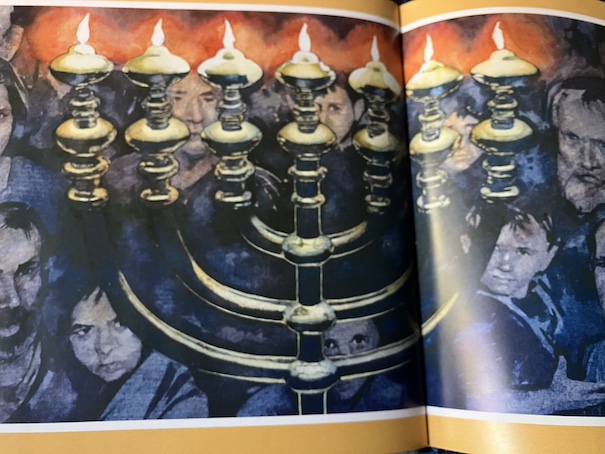
Continuing the story, the soldier recounts how Mattathias’s son, Judah, inspired their troops by reminding them that God was on their side, leading them to victory. When they finally managed to overthrow their Greek rulers, they took back their Temple and lit the Temple menorah. The menorah was supposed to be kept lit constantly, and they were worried because there was very little oil left. They only had enough to keep it burning for one day, and they weren’t sure when they could get more oil. However, they lit the menorah anyway, trusting that God would somehow provide them with more soon. It took them eight days to find more oil for the menorah, but to their surprise, the menorah continued to stay lit all the time they were searching, lasting eight times longer than they thought it would with the amount of oil they had. Hanukkah became the commemoration of this miracle.

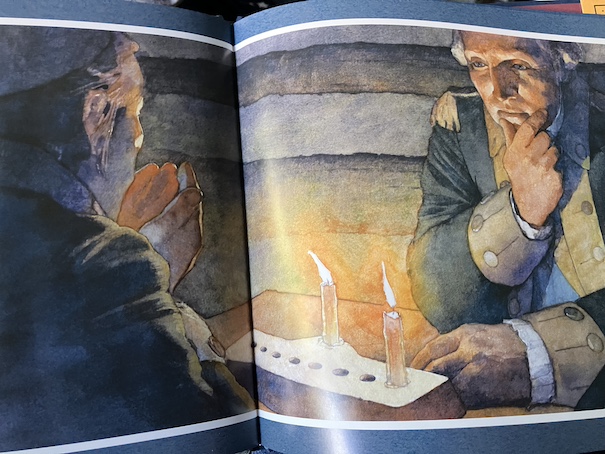
George Washington contemplates the story that the soldier told him, and he finds it inspiring. It reminds him that, even though their current situation in Valley Forge may seem bleak, there have been others before them who have also faced steep odds in their struggles and who still managed to succeed. He begins to think that, if they persevere, they may also be gifted with a miracle of their own.

There is an author’s note at the end of the book that explains the inspiration behind the story. As the characters in the story do, the author draws parallels between the American Revolutionary War and the historical battle that began the tradition of Hanukkah. The author learned that George Washington may have learn about Hanukkah during the Revolutionary War, although there are no entries in his diary to confirm it, so he used excerpts from George Washington’s other writings to explain his sentiments. The author also offers commentary on bullies and the importance of standing up to oppressors, both in the context of war and in daily life.

This book won the Sydney Taylor award from the Association of Jewish Libraries.

I love books that include little-known or lesser-known events. Whether this one happened or happened in the way the author tells it is difficult to verify, and it seems likely that it’s more of a folk tale than an historical account. George Washington was a real, historical person, but so many legends have grown up around his life that it’s sometimes difficult to tell whether certain stories about him actually happened. As the author says, Washington’s own diary doesn’t offer any verification about this particular incident. Other reviewers of this book, including J. L. Bell, who specializes in Revolutionary War history in the Boston area, have attempted to trace the origins of this particular story about Washington learning about Hanukkah during the Revolutionary War. In his blog, J. L. Bell explains the known sources for this story, which vary in their description of exactly when the encounter between Washington and the Jewish soldier took place and what the soldier’s name was. The soldiers who have been credited with having this encounter with George Washington were real people, but there’s nothing that definitively proves that the discussion about Hanukkah actually happened with any of them. The story is probably more folklore than history, and Bell believes that it started to circulate during the 20th century, when there were more immigrants arriving from Poland with stories and experiences like the one the Polish soldier in the story tells about not being allowed to practice their religion openly. Even so, the parallels the story draws between the ancient rebellion of the Maccabees and the American Revolution are fascinating.

There are certain feelings that are universal among humans, and the author’s point that nobody likes being oppressed by a bully, whether that bully is another person or a government or an army, is true. No matter what you’re up against in life, perseverance in the face of hardship is important, and miracles can come to those who continue to stand up for themselves and what they believe in. It is also true that people who come from different sets of circumstances can help to inspire each other by sharing common feelings about their struggles.

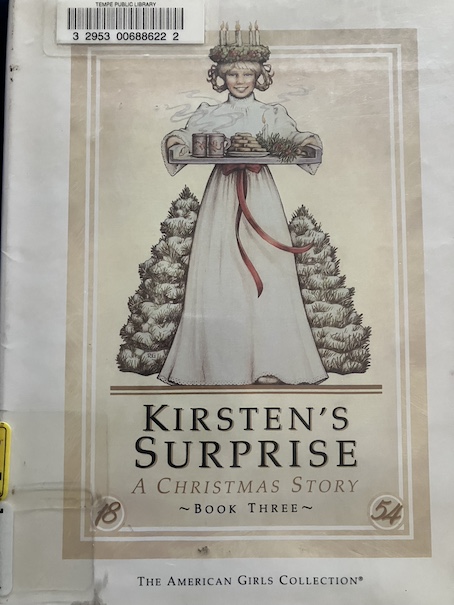
Kirsten’s Surprise

Kirsten, An American Girl

It’s winter, and Kirsten’s family is just starting to prepare for Christmas. Kirsten’s mother has her help make their Christmas bread. So many things have changed for their family since they came to America and moved to the frontier in Minnesota, Kirsten asks her mother if they will be celebrating Christmas just like they used to when they lived in Sweden. The family doesn’t have much money and can’t afford extra treats, but her mother says they will do the best they can.

When they arrived last summer, the family didn’t even have enough money to pay for a wagon to carry their belongings to their new house, so they had to leave them in storage in Riverton, including Kirsten’s doll, Sari. Since then, Kirsten has been using a stuffed sock as a doll. Kirsten’s mother tells her that her father has arranged for their trunks to be sent to Maryville, which is closer, but still 10 miles away. Kirsten is eager to retrieve them, but her mother says that will have to wait because there are too many other things they need to do now to get ready for winter. Kirsten worries that they won’t be able to get their trunks before the snows come. If the roads are blocked by snow, they won’t have their trunks until spring! The more Kirsten thinks about the trunks, the more she wishes that they had the things in them, the things that would remind her of her home in Sweden and make their cabin feel more like home.

One day, while she is playing with her cousins, Lisbeth and Anna, Kirsten mentions St. Lucia, and she is surprised when her cousins don’t know what she is talking about. In Sweden, families traditionally celebrate St. Lucia’s Day before Christmas. However, Lisbeth and Anna were too young when they left Sweden, years before Kirsten left with her family, so they don’t remember that tradition, and since they came to America, they only remember celebrating Christmas in December. They ask Kirsten what happens on St. Lucia’s Day. Kirsten explains that it’s the shortest and darkest day of the year. One girl in the family dresses up as the Lucia queen, wearing a white dress and a wreath of candles on her head, and she wakes her family, bringing them a special breakfast with coffee and Lucia buns. Anna is enchanted by this description, and the girl talk about surprising their families with their own St. Lucia’s Day celebration.

Then, Kirsten remembers that the long, white nightgown she used for her St. Lucia’s Day dress last year is in one of her family’s trunks, and St. Lucia’s Day (December 13th) is only five days away. The other girls are about to give up on the idea of celebrating St. Lucia’s Day, but Kirsten thinks maybe they should ask Miss Winston if she knows what to do. Miss Winston is their schoolteacher, and she’s still living with Lisbeth and Anna’s families. Miss Winston has mentioned that she misses the Christmas parties her family and friends had back East, so the girls think that she might enjoy helping them plan a special surprise.

Miss Winston is happy to give the girls some candles and help them make St. Lucia crowns, but Kirsten’s father is still too busy to get the family’s trunks. He gets so annoyed with Kirsten asking about them that he tells her not to ask about them again. Lisbeth says that, if their plan won’t work out for this year, they can do it next year, but Kirsten feels badly for getting their hopes up. Her own hopes are also set on having a St. Lucia Day, but she doesn’t know what to do without the dress in the trunk.

Then, one day, she finally hears her father say that he will have time to go for the trunks, and he thinks he had better do it soon because there will be more snow coming. Kirsten is excited and asks if she can go along with him to get them. At first, he doesn’t want to take Kirsten because there won’t be much room in the sleigh for her, and he thinks it would be better for her to go to school with the other children, but she persuades him to let her come.

The journey to Maryville is fun, riding through the snow and singing a Christmas carol. Kirsten even gets a piece of candy at the general store. When they retrieve the trunks, Kirsten wants to open them right away, but her father says they need to leave because it’s already snowing harder, and they need to get home.

The weather gets worse on their way home, and Kirsten wonders if they should turn back, but her father thinks they can make it home. As it gets worse yet, Kirsten’s father gets out of the sleigh to lead the horse through the snow, and he accidentally twists his knee. With her father injured, Kirsten gets out the sleigh to lead the horse. The situation is dangerous, but fortunately, Kirsten realizes where they are, and she knows that there is a cave nearby where they can take shelter.

When Kirsten and her father arrive home, they are greeted by their worried family, and it’s St. Lucia Day. With some help from Miss Winston and her cousins, Kirsten is able to give her whole family their St. Lucia Day surprise, but it has even greater meaning because of everything they’ve been through.

There is a section of historical information in the back of the book about how Christmas was celebrated on the American frontier in the mid-19th century and how it was different from the Christmases families like Kirsten would have experienced in Sweden.

The book is available to borrow and read for free online through Internet Archive.

This was my favorite of the Kirsten books! Although there is some danger to Kirsten and her father when they get caught in the snowstorm after retrieving the trunks, everything turns out fine, and Kirsten saves her father because she insisted on going with him on the trip. This book is also fun because it introduces readers to the concept of St. Lucia’s Day. I think the first book I read as a kid that explained about St. Lucia’s Day was the nonfiction book Christmas Around the World, but I liked seeing this frontier family celebrate their St. Lucia tradition.

thought that Kirsten’s parents impatience with her “pestering” them about retrieving the family’s belongings was realistic, just like parents in real life might act when a child repeatedly asks for something they can’t give them right away. However, at the same time, Kirsten’s mother seems to understand that Kirsten is asking for the trunks for deeper emotional reasons. Not only does Kirsten badly miss her doll, which has been stored in one of the family’s trunks since the beginning of the series, but the other things in the trunk are both useful for the winter season and have connections to the people the family left behind in Sweden. With Christmas coming, Kirsten and other members in the family are missing those connections and the feeling of home. Kirsten’s mother points out that people are more important than belongings, but she also agrees with Kirsten that some belongings represent ties to other people.

Kirsten also misses the tradition of St. Lucia’s Day because that tradition usually marks the beginning of the Christmas season for the family. When Kirsten surprises her family by dressing in her St. Lucia costume, it’s a happy surprise for everyone and really makes everyone feel like Christmas. However, Kirsten also feels the significance of the holiday more than she ever did before because, having been welcomed home by the lights of their house and her waiting and worried family, she better appreciates the tradition of St. Lucia welcoming others with light and food.

As with other historical American Girls books, I also enjoyed the detailed colored pencil drawings of the characters and scenes!

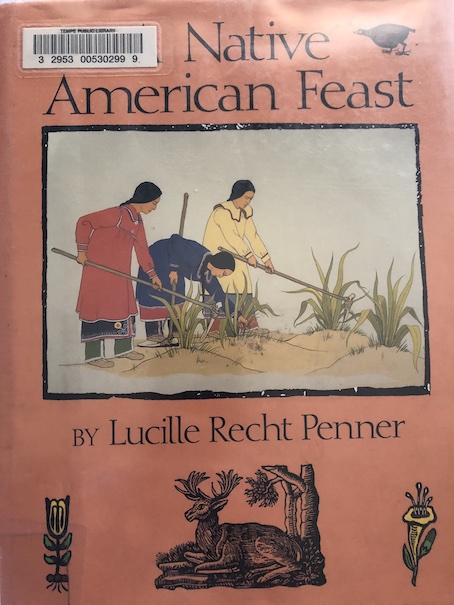
A Native American Feast

This nonfiction children’s book explains the traditional foods of different Native American tribes and how they were prepared. (Throughout the book, they are referred to both as “Native Americans” and “Indians”, but mostly, the book uses the term “Native Americans.” The focus is on Native American tribes in the area that is now the United States, but the book includes information about various tribes across the United States.)

It starts with an Introduction that explains how European settlers came to North America and how the first settlers almost starved to death because they weren’t prepared for the conditions they found and didn’t understand the plants and foods of the Americas. In those early years of the colonies, the colonists relied heavily on help from nearby Native American tribes in learning techniques for hunting and growing food in North America. These colonists had to adopt some of the Native American foods and techniques of getting food in order to survive. Not only did European colonists adopt some foods used by Native Americans, but Native Americans also adopted foods that were introduced to them from Europeans, including some plants and grains, like apples and wheat, and some domesticated animals, like sheep. The focus of this book is on Native Americans and their cooking and eating habits, both pre-colonization and post-colonization. For more information about what the colonists were cooking and eating, see The Colonial Cookbook.

The book explains how we know what we know about Native American foods and cooking. Some information was recorded by early European colonists in America and European scientists who were interested in plants of the Americas, and archaeology provides information in the form of animal bones, clamshells, and pollen from plants that Native Americans cultivated, going back hundreds and even thousands of years. Native American eating habits shifted throughout their history, although they shifted very abruptly with the European colonization of North America.

The book is available to borrow and read for free online through Internet Archive.

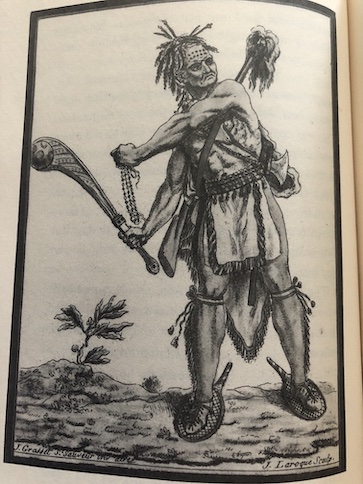
Every chapter, including the Introduction, contains recipes that readers can make at home. Some of them are easier than others. Some recipes include pieces of Native American folklore about them or the foods in the recipes. Many of the illustrations are 19th century drawings.

Rather than organizing the book based on tribe or geographic region, the chapters of the book are based around particular types of food or cooking and eating concepts:

This section introduces how historians know about the history of food among Native American tribes and how their diets changed after the arrival of Europeans.

Recipes in this section are:

  • Hickory Nut Soup
  • Green Succotash
  • Pueblo Peach Crisp

This section includes information about the earliest known hunting and cooking habits of Native Americans. It includes a description of the “land bridge” theory of how the ancestors of Native Americans arrived in the Americas from Asia. As of the early 21st century, we still don’t have a definitive answer for precisely how ancient people first arrived in the Americas, more recent theories include the possibility of these ancient people being seafaring rather than finding a land crossing, although the land crossing theory is also still possible.

Then, it explains about the arrival of the European colonists. It doesn’t sugar coat that the arrival of the colonists and their westward expansion led to the extinction and endangerment of native animal species because these newcomers hunted them without restraint. The introduction of unfamiliar diseases, like measles and smallpox, to the Native Americans took many lives, sometimes even killing whole tribes. These drastic changes greatly impacted the lives and lifestyles of Native Americans, although some traditional habits survived, including the preparation of traditional types of foods.

There are no recipes in this chapter.

This chapter explains about hunting and gathering and the development of agriculture among ancient Native American tribes. The “mystery” is about the development of corn as we know it. It was never really a wild plant. The evidence suggests that ancient Native Americans deliberately created it by cross-pollinating different wild grass plants, but it isn’t really known which ones. Most of this chapter explains how widespread corn was as a food and the uses and folklore that different tribes had for it.

Recipes in this section are:

  • Roasted Corn on the Cob
  • Blue Pinole – a blue cornmeal-based drink with sugar and cinnamon, from the Southwest
  • Thumbprint Bread (Kolatquvil)
  • Hopi Blue Marbles – boiled balls of blue cornmeal dough, a traditional breakfast food
  • Wagmiza Wasna – a mixture of cornmeal and dried berries

This section is about foods that Native Americans introduced to the rest of the world, like pumpkins, peanuts, chili peppers, sunflower seeds, maple sugar, and different varieties of beans, including kidney beans and lima beans.

Recipes in this section are:

  • Cherokee Bean Balls
  • Apache Pumpkin with Sunflower Seeds
  • Popped Wild Rice
  • Zuni Green Chili Stew

This chapter is about Native American hunting techniques and the animals they hunted.

Recipes in this section are:

  • Broiled Buffalo Steaks
  • Venison and Hominy Stew

This chapter is about Native Americans who lived in areas where food was scarce and ways of foraging for food during times of famine. It also explains special feast days.

Recipes in this section are:

  • Mouse Cache Soup – made with beef broth and seeds: sunflower seeds, sesame seeds, buckwheat groats, and millet
  • Iroquois Strawberry Drink
  • Mushrooms Cooked in Oil

This chapter explains the seasonings that Native Americans added to food and cooking techniques that added nutrients.

Recipes in this section are:

  • Fried Squash Blossoms
  • Pemmican Cakes – the origins of beef jerky
  • Maple Sugar Drink
  • Wild Grape Dumplings
  • Inuit Ice Cream – a berry dessert originally made with seal oil but made with egg whites here
  • Wojapi – a Sioux fruit pudding

This chapter is about how plants and animals were processed to make them ready for cooking, such as how corn and acorns were ground into flour and how animals were butchered. When they had to boil water, they often used vessels that would have been damaged if they were put directly over fire, so they would heat stones and put them into the water instead.

Recipes in this section are:

  • Broiled Salmon Steaks with Juniper Berries
  • Broiled Rabbit with Corn Dumplings
  • Baked Beans with Maple Sugar

Native Americans didn’t have cooking pots and pans made out of metal or glass until after the European colonists arrived. Before that, their cooking vessels were made of wood, stone, pottery, or tightly-woven baskets. This chapter explains the different types of cooking vessels they had, including the shells of pumpkins and gourds.

Recipes in this section are:

  • Pumpkin Shell Soup

This short chapter is about eating manners, superstitions, and taboos among different tribes. There are no recipes.

This section explains how Native Americans would give thanks to their Creator or Great Spirit or Nature or to animals and plants themselves for the foods that helped keep them alive. There are no recipes in this chapter.