 Mystery of the Silent Friends by Robin Gottlieb, 1964.
Nina Martin loves her father’s antique store. Although selling antiques is how her family makes their living, there are some that Nina finds it difficult to let go of when someone wants to buy them. Nina especially doesn’t want her father to sell the two automatons that she calls Henri and Henriette. The automatons are beautiful mechanical dolls that each do something special. Nina calls the boy doll “Henri” because he writes the name “Henri Bourdon” on a piece of paper. (Her father points out that it might be the name of the maker, not the doll itself.) The girl doll, Henriette, is a little more complicated and draws a series of different pictures. Most of the pictures seem to be of a little Swiss village, although one of them is oddly of a monkey that looks like the “speak no evil” monkey in the saying “hear no evil, see no evil, speak no evil.”
 For a time, it seems like there’s no risk of the automatons being sold because no one seems particularly interested in buying them. Then, suddenly, two different men come to the shop and ask to buy the dolls. Weirdly, each of them tells the same story to Nina’s father: that their name is George Ballantine the Third, that their family once owned the automatons, that the dolls are actually part of a set of three, that they own the third doll (a girl doll that plays the spinet), and that they want to purchase the other two in order to reunite the set. Nina’s father is bewildered by these two men with identical stories and identical names and refuses to sell the automatons because of his daughter’s attachment to them and because he doesn’t know which of the two men to believe and doesn’t trust either of them.
Nina comes to think of the two men as “Red Ballantine” and “Brown Ballantine” because of their different hair colors. Brown Ballantine seems to be the more credible of the two. He invites Mr. Martin and Nina to his home in order to show them the third automaton and, hopefully, persuade Mr. Martin to sell him the other two. They visit Brown Ballantine’s apartment in an old brownstone, and he shows them the beautiful, spinet-playing doll as well as the rest of his collection of mechanical toys. However, Mr. Martin still refuses to make the sale.

Nina tells her friend, Muffin, about the two mysterious Ballantines. The two girls are curious about which of the men is the genuine George Ballantine the Third and decide to investigate. When “Red Ballantine” comes to the shop again, trying to persuade Mr. Martin to sell the automatons, the girls ask if he would consider showing them the automaton he owns as a test. At first, the red-haired man is hesitant, but then he agrees that they can come and see his doll. Mr. Martin is embarrassed at the girls’ forwardness in asking, but he admits that he is also curious about the two Ballantines.
 At first, they all expect that Red Ballantine won’t be able to show them the third doll and will give up trying to buy the other two, but to their astonishment, he takes them to the same apartment where Brown Ballantine said that he lived and shows them the exact same doll they saw before. Instead of clearing things up, the identities of the two men seem to get all the more confusing. However, Muffin notices something strange about the tune that the doll plays on the spinet that gives them a clue as to why the three dolls are so important. Later, someone breaks into the antique store and uncovers a hidden secret about Henri as well.
Together, the three automatons are hiding a secret, and only by considering the message that each of them offers can the girls discover what it is.
The book is currently available online through Internet Archive. There is also a sequel to this book called Secret of the Unicorn, which involves a secret message hidden in a tapestry.
My Reaction
Although I was pretty sure which of the two Ballantines was the genuine one, I was never completely sure until almost the end. In a way, I was a little disappointed by the dolls’ final secret because I though it was something that was especially old, from when the dolls were first created, but the secret messages were actually a more recent addition to the dolls’ repertoire by an eccentric man with a treasure to hide and a taste for practical jokes and riddles. Muffin is a habitual practical joker, and that partly figures into the solution of the mystery.
I thought it was kind of interesting, too, that Mr. Martin has the habit of walking around with a cigarette in his mouth that he never lights, like Inspector Cramer in the Nero Wolfe mysteries.
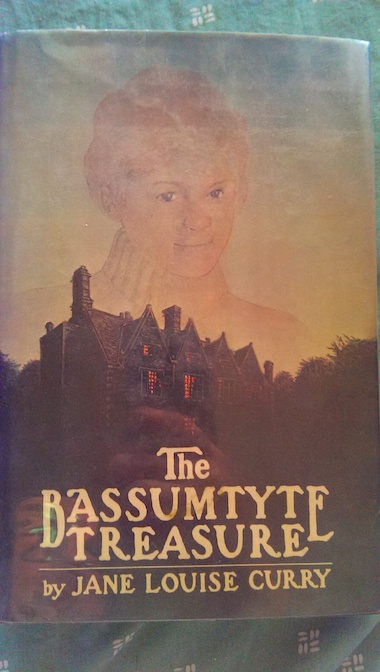 The Bassumtyte Treasure by Jane Louise Curry, 1978.
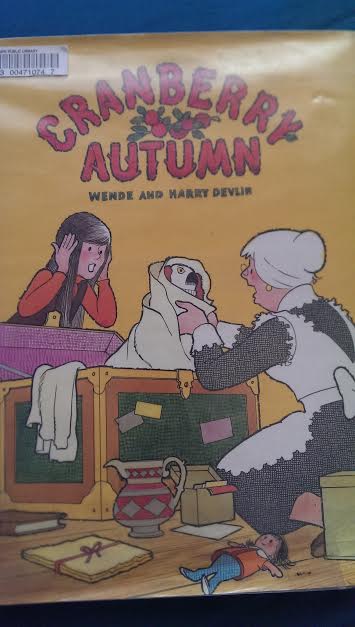 Cranberry Autumn by Wende and Harry Devlin, 1993.
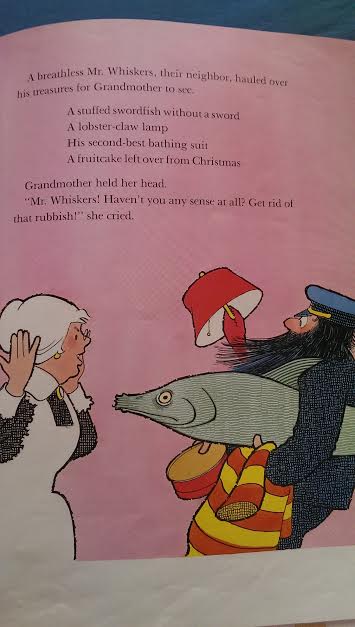 School is about to start, and Maggie and her grandmother realize that they’re short of money. Maggie needs new school clothes, and her grandmother needs a new coat. They know that some of their neighbors could also use some more money, so Grandmother suggests that they hold a sale. Some of them have some antiques and other interesting old items that they could sell.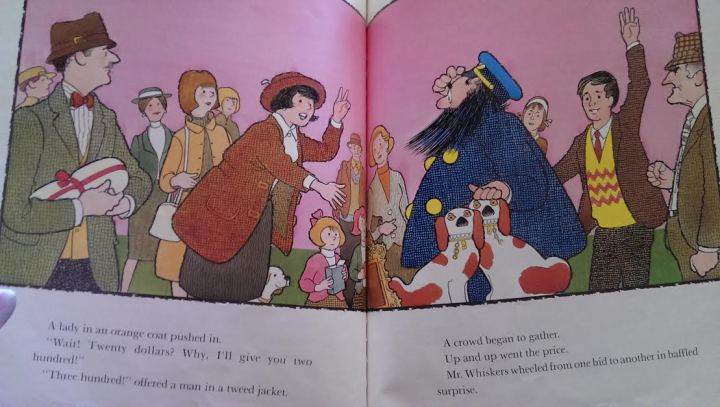

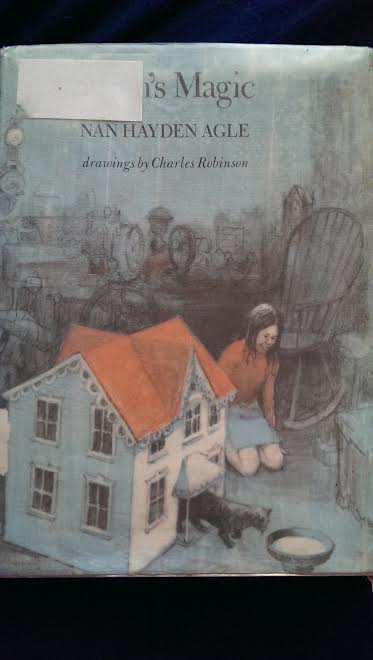 Susan’s Magic by Nan Hayden Agle, 1973.
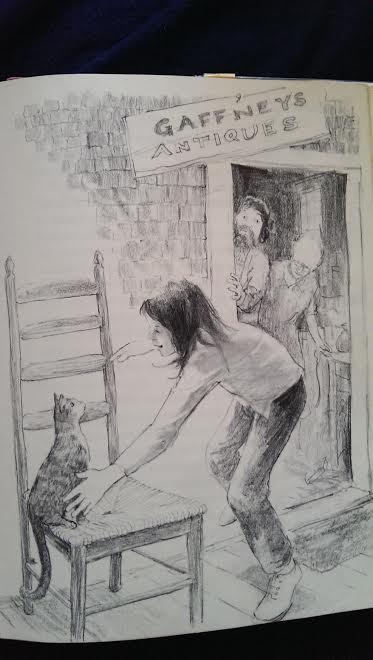 One of the things at the sale which especially captures Susan’s attention is a small stuffed toy elephant. The elephant is very worn, and Susan feels sorry for him, wanting to take him home and take care of him. However, her money is gone, and she still has no present for her mother. Then Mrs. Gaffney spots her looking sad and offers to lend her the 25 cents she would need to buy the elephant. Although Susan has reservations about accepting such a loan, she does anyway, telling Mrs. Gaffney that she’ll pay her back.
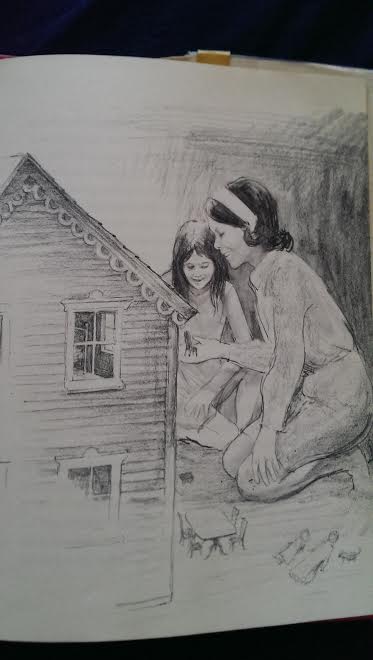 In spite of the talk about magic and witches, this is not a fantasy story at all. Susan’s concept of magic has more to do with a way of living, dealing with change, and solving life’s problems. For the first part of the book, Susan’s “magic” focuses on getting what she wants for herself and getting things to work out the way she wants them to. But, as the book goes on, Susan matures in the way she deals with the complications in her life.
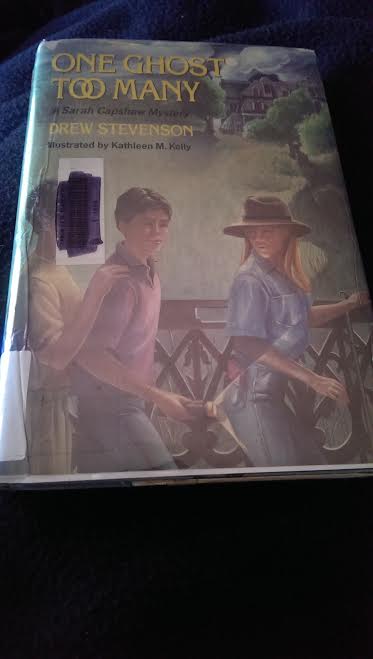 One Ghost Too Many by Drew Stevenson, 1991.
 Sarah persuades Clark and his friend “Frog” Fenniman to join her investigation of the house, but besides the resident ghost, they will also have to deal with a local group interested in psychic phenomena and a mysterious stranger who is paying the local bully to spy on the house.
 Jestress's Forgotten Books and Stories