Miss Rumphius

MissRumphius

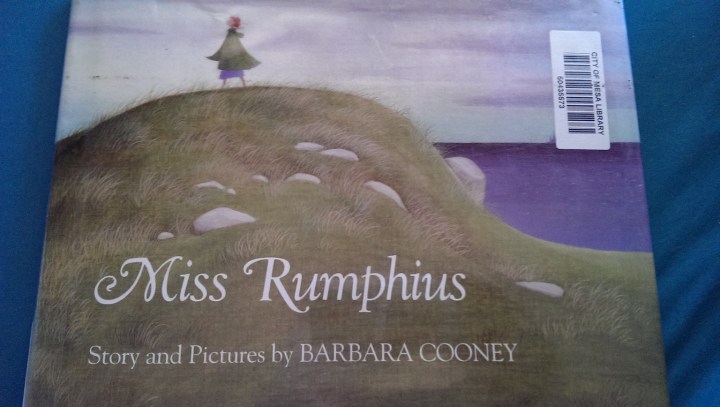
Miss Rumphius by Barbara Cooney, 1982.

From the time she was young, Alice Rumphius wanted to travel and see the world.  She planned to return home to live by the sea when her travels were over.  However, her grandfather, an artist, gives her one more mission in life: to make the world more beautiful.  Although Alice isn’t quite sure how she will accomplish that, she agrees.

RumphiusPainting

When she grows up, she lives out her dream of traveling, seeing all the places that she read about while she working in a library.  However, she ends up hurting her back while getting off of a camel she was riding, so she decides that it’s time to retire and find a home by the sea, as she planned.

RumphiusCamel

As she recovers from her injury, she thinks about her mission to make the world more beautiful.  At first, she still doesn’t know how to accomplish that, but some flower seeds she planted and her particular love of lupines give her the inspiration for her final legacy of beauty.

RumphiusLupines

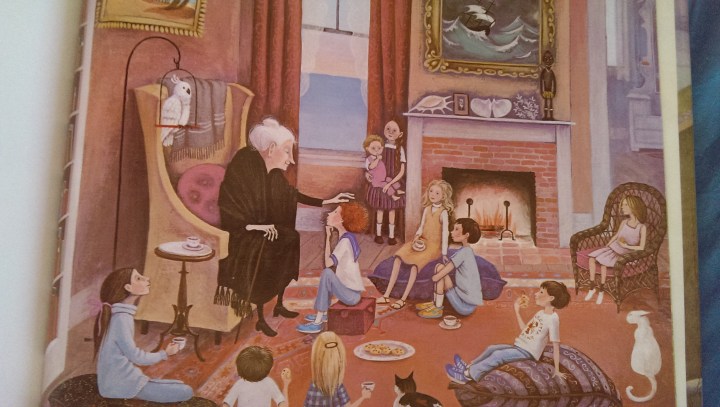
Her gift of spreading seeds of beautiful flowers gives her a reputation as an eccentric, the Lupine Lady, but it also inspires a new generation to undertake their own missions to see the world and to create beauty in their own way.

RumphiusChildren2

One of the things that fascinates me about Miss Rumphius and her story is that she leads a very non-traditional life.  She has very definite goals from childhood and sticks to them throughout her life, but they are not quite the common goals of most people, like marriage and career.  She remains unmarried throughout her life (the book never says anything about whether she had any romances in her life because that wasn’t one of her main life goals and therefore not really important to the story), and her only listed career was that of working in a library, which allowed her to have some money and to read about the places where she wanted to travel.  In the end, she is not wealthy and has no husband or children of her own, but she is happy because she has achieved the things that always meant the most to her.  She has had rich life experiences, she has made the world a little better for her presence, and she encourages her nieces and nephews to see the world, to enjoy their experiences, and to leave their own mark of beauty.

Apparently, parts of the story are based on the author’s own life and on the life of Hilda Hamelin, the original Lupine Lady.  The book is currently available online through Internet Archive.

Kat and the Missing Notebooks

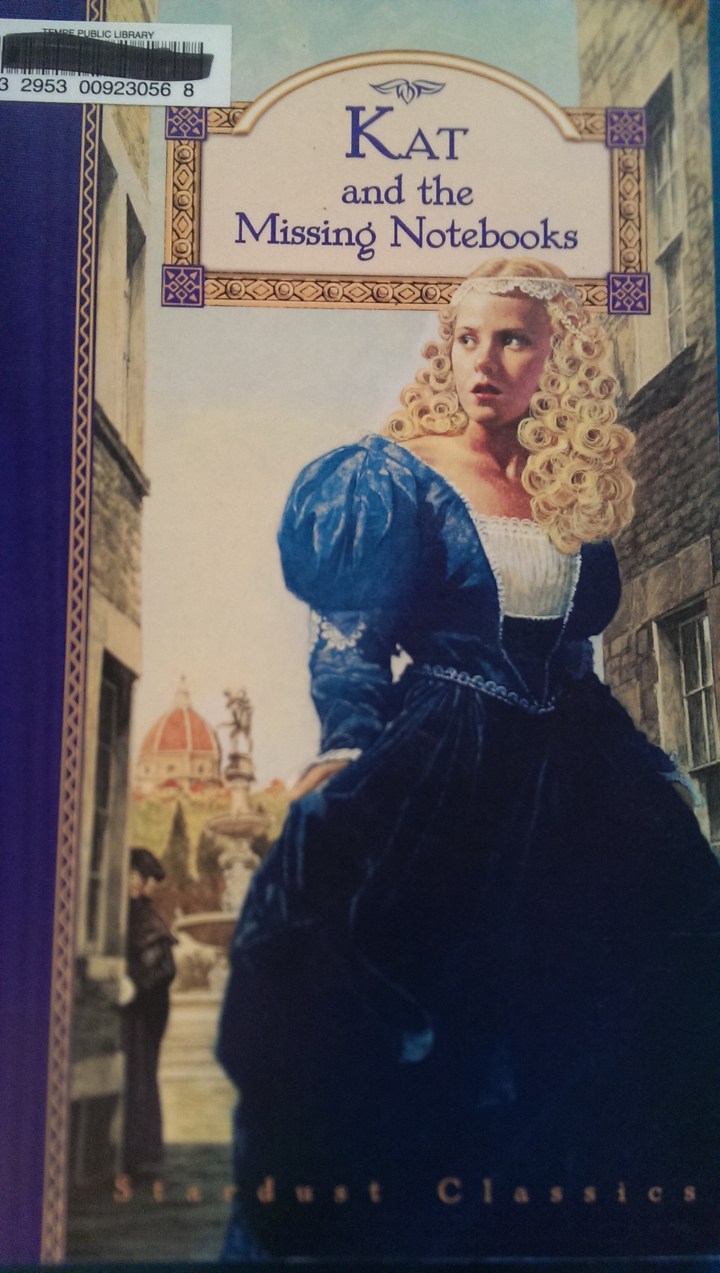
KatMissingNotebooks

Kat and the Missing Notebooks by Emma Bradford, 1999.

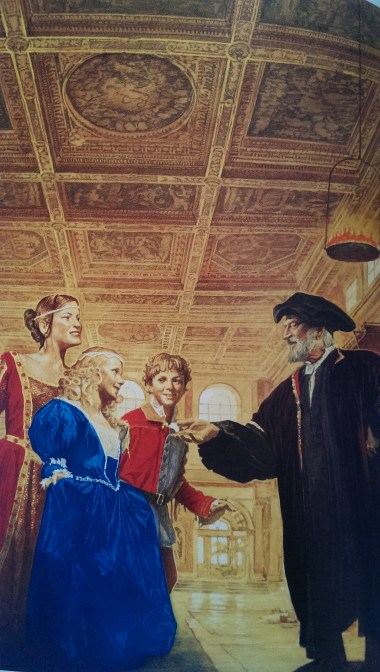
KatMissingNotebooksDaVinciThis book is part of the Stardust Classics series.

This time, Kat and her aunt, Jessie, find themselves in Florence during the Renaissance. They appear shortly before someone attempts to steal some very important papers belonging to the Florentine City Council from Signor Millori. Kat and Pietro, Signor Millori’s son, both run after the thief, and Kat helps to get the papers back. To thank Kat for her help, Signor Millori invites her and Jessie to stay with him and his family in their palazzo during their stay in Florence.

Signor Millori is a wealthy banker, and the palazzo is a grand place. Kat and Pietro become friends, and he confides in her how much he loves art. Pietro’s father wants him to become a banker, but Pietro’s dream is to study painting with Leonardo da Vinci. In fact, he takes Kat and her aunt to see Leonardo painting a mural at the Palazzo del Vecchio.

Leonardo notices Kat’s aunt and thinks that she has an interesting face. When he asks her to come to his studio to pose for some sketches, she eagerly accepts. Kat hopes that she can use the opportunity to show Leonardo Pietro’s artistic talent and convince him to take Pietro on as a student. However, although Leonardo likes the sketch of Pietro’s that he sees, he says that he has enough apprentices at the moment. Pietro cannot resist the opportunity to study Leonardo’s work, however, and borrows a couple of his notebooks to study.

KatMissingNotebooksFlightBesides being a great artist, Leonardo da Vinci is also a scientist, and along with his notes on art, there are sketches and plans for possible inventions in the notebooks. Kat and Pietro go to return the notebooks the next day, but before they can get to Leonardo’s studio, the same thief who tried to steal Signor Millori’s papers steals the notebooks.

Florence has been at war with Pisa for some time, and the Florentine City Council has consulted with Leonardo da Vinci to see if he can come up with some inventions that would give them the upper hand. They know that the thief must be a spy for Pisa who is trying to see what Leonardo has been working on. However, Kat knows that if they do not retrieve the notebooks, history may be changed. Soon, it becomes obvious that the spy has an accomplice who is living in the Millori’s palazzo. Can Kat and Pietro find the notebooks and stop the spies before it is too late?

Although this is a fantasy story that involves time travel, it is based on historical events, and there is a section in the back that explains more about the Italian Renaissance and Leonardo da Vinci.  At the time of the story, Italy was not a united country.  The Italian peninsula was covered with many small city-states which frequently fought each other.  In 1494, Pisa broke away from Florence, and Florence fought for several years to bring it back under their control, until they eventually succeeded in 1509.  This conflict was the basis for the story, and the artist and inventor Leonardo da Vinci was consulted by the Florentine Council during the struggle.

Also in the back of the book is an explanation of mirror writing, which Leonardo da Vinci used in his notebooks.  There are also instructions for making fresco ornaments and a recipe for Nutty Biscotti.

Mystery of the Secret Message

secretmessageMystery of the Secret Message by Elizabeth Honness, 1961.

Penny lives with her aunt and uncle because her mother is dead and her father travels on business much of the time, dealing in Asian art.  Thanks to his travels, Penny and her aunt and uncle have quite a collection of Asian art themselves.  However, Penny has just been told that her father’s airplane crashed in the Pacific Ocean.  No survivors have been found, although Penny still has hope that perhaps her father survived and might yet be found.

At the same time, Penny and her aunt and uncle are moving into a house from the apartment where they used to live. Penny is happy about the move because she knows that she won’t have to worry as much about being quiet and not disturbing the neighbors, like she had to do in their apartment. This means that Penny can bring her friends over to the house to play and have parties. Also, their new house has a very special feature: its own private elevator.

Penny loves the new house and soon begins building a tree house with the help of Pete, a boy who lives nearby.  She tells Pete about her father and her hopes that he might still be alive.

However, events take a disturbing turn when Penny receives a package from Japan containing a beautiful wall scroll. The package appears to have been sent by her father, who meant it as a present for her new room in her new house. Was the package sent before his death, or did he somehow survive the crash?

There is also something odd about Penny’s new neighbors.  Penny’s new house is actually half of a duplex, and the new neighbors, the Carruthers, have also recently moved in after renting the other half. When Penny accidentally gets stuck in the elevator and hears voices coming through the wall, she starts to suspect that her neighbors might not be what they seem to be.  They show an unusual interest in her family’s collection of Asian art, asking to see pieces and borrow pieces for an exhibition that Mr. Carruthers is holding at his gallery.  One of Penny’s friends even catches Mrs. Carruthers sneaking around, looking at things uninvited.

When Penny and her friends have a sleepover on an evening when her aunt and uncle are out, someone sneaks into the house, leaving muddy footprints on the floor.  Penny isn’t sure that her aunt and uncle will believe her because they seem to like the Carruthers, so at Pete’s suggestion, she continues to spy on them, using the elevator to listen in on their conversations through the walls.

When her uncle catches her one day, using the elevator without permission (something she is not supposed to do), she finally explains her suspicions and what’s she’s heard the Carruthers say.  Together, Penny and her uncle discover a hidden secret about the wall scroll Penny recently received, which points to a number of secrets that Penny’s father kept from her and the rest of his family for years.  A stranger from the government helps Penny to fill in some of the blanks, but he has a favor to ask in return that requires Penny to take a big risk.

My Reaction and Spoilers

Although this book is much older than I am, it was a favorite of mine when I was a kid, yet another of my used book sale treasures! I actually got rid of my first copy years ago, when I was cleaning some things out, but I missed it, so I got another one. It’s actually a collector’s item these days.

I always liked the feature of the elevator in the story and how Penny uses it to find the right spot to hear what her neighbors are saying through the wall. I love intrigue, and as a kid, I liked the idea both having a house with an elevator and of overhearing clandestine conversations that reveal sinister secrets. There are points in the story where the two-faced Carruthers think that they have the upper hand, and Penny has to be careful not to let on just how much she knows.

As I explained, the neighbors are not what they seem to be, and Penny’s father was involved in things that his family knew nothing about. Since it’s not easy to get hold of this book right now, I’ll include a couple of spoilers. Penny’s father was acting as a spy for the US government, using his profession as an art dealer to travel to locations he needed to go and to smuggle information back to the US. He is apparently dead, killed in the plane crash, although there are hints that the crash wasn’t an accident, that it may have been intended to kill him. However, before his death, he managed to smuggle his last important information to Penny in the wall scroll that he sent her. When Penny manages to convince her uncle that something isn’t right about the Carruthers, he begins making inquiries and learns the truth about Penny’s father. A government agent speaks to the family and arranges a plan to fool the Carruthers into thinking that they’ve found what they were looking for, but the plan requires Penny to spend an evening in the house alone with them.

Mystery on Taboga Island

TabogaIslandMystery on Taboga Island by Patricia Maloney Markun, 1995.

Amy is excited to be spending the summer with her aunt on Taboga Island, off the coast of Panama, near the Panama Canal.  Aunt Rhoda is a curator for an art museum, and she is writing a series of art lectures.  In particular, she has an interest in Paul Gauguin, who painted in Panama in the late 1800s.  She has invited Amy to join her for the summer not only so that she can visit another country but because of their mutual interest in art.  Amy loves drawing and painting and wants to be an artist someday.

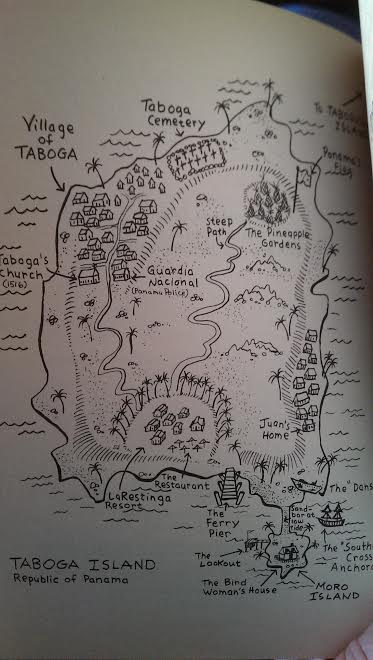
The one drawback of going is that Amy is worried that she will be lonely over the summer.  She doesn’t know whether there will be any kids her age close by or if she would be able to talk to them if there are because she doesn’t speak Spanish.  Fortunately, soon after they arrive on Taboga, Amy meets Zoe.  Zoe is from California but she comes to visit her relatives on Taboga every year.  She introduces Amy to her cousin, Juan, as well.  The three of them become friends, and Zoe and Juan even share their special, secret hiding place with Amy: a old lookout point on an old, abandoned pier left from World War II that can only be reached by walking on a narrow beam over the water.

TabogaIslandPicThey also introduce Amy to Madame Odelle, who people call The Bird Woman because of all the birds she keeps around her house.  She is a widow who lives alone and hardly ever sees people, but she invites the children in and when she learns that Amy is interested in art, she shows them a special painting that her family has had for generations.  Madame says that her grandfather bought the painting years ago from a traveling Frenchman who was in need of money.  Amy thinks that it looks like one of Paul Gauguin’s paintings, and she knows that some of his work is unaccounted for.  However, the initials on the painting are PGO.  What could the ‘O’ stand for?

Then, the painting is suddenly stolen, and there’s no shortage of suspects.  A strange woman named Phoebe Quincy has been lurking around Madame’s house and asking questions about her.  There’s also Donald S. Deffenbach, a birdwatcher who doesn’t seem to know much about birds, and Captain Billy, an Australian who owns a sailboat that he sails himself.  Dr. Denis Dobson, who is also a Gauguin expert, also happens to be staying at the resort on the island.  He is visiting places where Gauguin painted while writing a book about him.  Could he be the thief?

I like this book for the pieces of history about Panama and Paul Gauguin, which are important in solving the mystery and understanding the origin of Madame’s mysterious painting.  One of the things I remembered most about reading this book as a child, though, was when Amy and her aunt were eating at the little restaurant on the island and her aunt urged her to try a Panamanian dish so that she could get used to trying new foods when she travels.  Amy tries a tamale for breakfast and loves it, wishing that she had been brave enough to try it earlier since she and her aunt are now planning to do more of their own cooking.  I was familiar with tamales as a kid, but not for breakfast, although I like the idea.

The book is currently available online through Internet Archive.

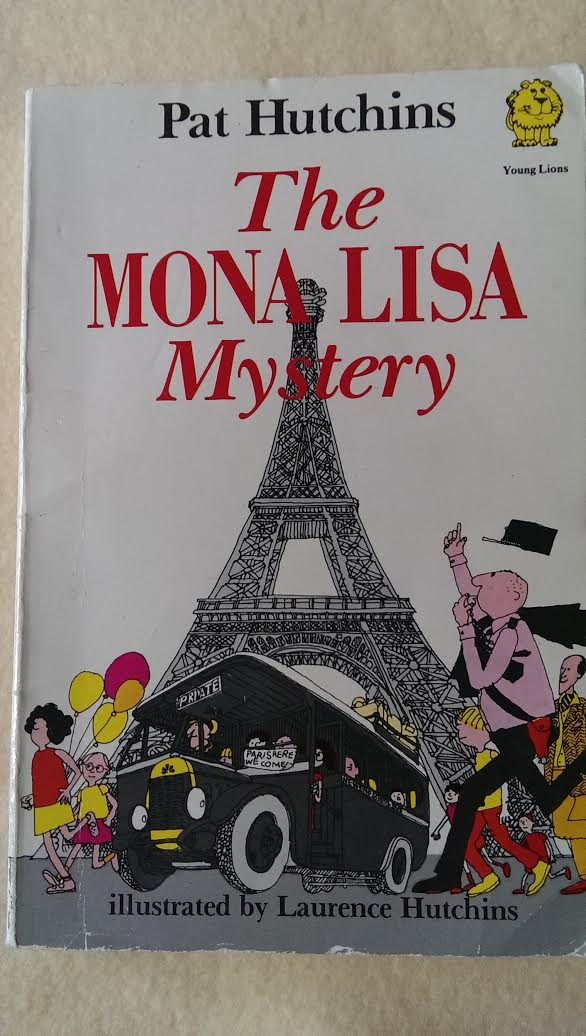
The Mona Lisa Mystery

monalisamystery

The Mona Lisa Mystery by Pat Hutchins, 1981.

Class 3 from Hampstead Primary School is taking a trip to France with their teacher, Mr. Jones. Miss Barker, their headmistress, was supposed to go with them, but she became ill, so their substitute French teacher, Miss Parker, will be going with them instead.  The kids aren’t happy about the substitution because they really like Miss Barker, and Miss Parker isn’t nearly as nice.

From the very beginning of the trip, strange things start happening. A black car follows them to the ferry and even around France. A doctor they meet on the ferry takes a room at their hotel, and unusual characters follow them everywhere they go, some of them in disguise. One of them even enters Jessica and Avril’s hotel room in the middle of the night.

At first, the children think that someone may be trying to kidnap Miss Parker since the mysterious strangers are showing unusual interest in her.  Then, the Mona Lisa is stolen while the children visit the Louvre!  The thief temporarily holds Jessica hostage before making his escape. Later, the painting shows up at their hotel, and Mr. Jones is arrested as a conspirator in the crime!

The children struggle to unravel the clues and the tangled mass of identities and prove their teacher’s innocence.  Who was really following who, who is the real conspirator, and can the children prove it and find the missing painting?

The book is available to borrow and read for free online through Internet Archive.

monalisamysterypic2

My Reaction

When I was a kid, I wished that my class could take a field trip to a foreign country! Technically, I suppose we could have since I live in a border state, but there’s nothing to see in the border towns here that would be as exciting as the Louvre. But, part of the fun of reading books like this is vicariously experiencing things you otherwise wouldn’t do.

This mystery story is the kind I think of as a fun romp – the characters are traveling around a bit and hijinks ensue as the students try to solve the mystery and save both the Mona Lisa and their teachers. One of my favorite parts as a kid was the running gag with the ketchup bottle.

Mystery at Camp Triumph

camptriumphMystery at Camp Triumph by Mary Blount Christian, 1986.

A year ago, sixteen-year-old Angie was blinded in a car accident.  It was shocking and devastating for her, especially since she was planning to become an artist.  She loved painting, and she feels like all of her dreams have died since she became blind.  Many of her friends no longer speak to her (partly because she has become angry and bitter and they don’t know how to cope with it), and she refuses to return to her old school, partly because of her fears of not being able to cope and largely because she doesn’t want to be the subject of ridicule or pity because of her new disability.  Her mother has been tutoring her at home, and her parents argue frequently about what’s best for her.

On the advice of a psychologist who has been trying to help Angie during her difficult adjustment, Angie’s parents have decided to send her to a special camp for children with disabilities called Camp Triumph.  Angie makes it plain that doesn’t want to go.  She feels that going to the camp with other disabled kids will just a painful reminder that she’s no longer “normal”, and she can’t imagine that there will be anything fun that she can do at a camp now that she can no longer see.  She knows that she’ll never be able to paint again, so she thinks arts and crafts are out, and how can she possibly ride a horse or go on nature walks?  However, her parents are firm with her, telling her that this is for the best.  There are things Angie needs to learn that they can teach her at camp.

Angie’s first days at the camp are miserable.  The other campers try to make friends with her, although she tries their patience with her bitterness and complaining that she doesn’t want to be there.  Then, someone messes with the guide ropes put up to help the blind children find their way around, sending a frightened Angie plunging into the river on her way back to her cabin.  Although she isn’t hurt, she becomes convinced that the camp is dangerous.  Everyone else thinks it was just a mean-spirited prank by one of the other campers.

Then, while visiting the doctor in town, Angie overhears a conversation between people she whose voices she doesn’t recognize, learning that what happened to her wasn’t just a prank.  Someone is deliberately committing acts of vandalism and sabotage at the camp, trying to get it shut down.  But why?   Angie flees the scene when she realizes that the people who were talking have heard her.  Unfortunately, she drops her cane as she flees.  Her cane has her name and address on it, and Angie later finds it lying on her bed in her cabin at camp.  Whoever these mysterious people are, they know who she is and can find her at any time.  Can Angie convince the other campers of what she heard and find the culprits before something worse happens?

Angie is terrified as she tries to solve the mystery, feeling helpless against her unknown enemies, who can see her while she can’t see them.  But, with the help of her new friends at camp, she comes to realize that she isn’t as helpless as she thinks she is.  Her experiences give her a new perspective on her life.  It’s true that things will never go back to being as they were.  Her life won’t be an easy one, and there are certain things that she can no longer do.  But, she comes to realize that there are still many things she can do, and there are other types of art that are still open to her.  In the end, Angie has friends she can count on, a life that’s worth living, and a better future ahead of her than she thinks.

Along with the story, the book describes some of the techniques that Angie has to learn to cope with her blindness: picturing a “clock” to remember the positions of objects around her (ex. “Your suitcase is at two o’clock.”), following the guide ropes with notches in them to know which path she’s on, listening for clues about her surroundings (she and other blind people recognize the sound of clinking from the flagpole at the center of camp and use that to orient themselves when things get confusing), putting notches in the tags of her clothes so that she knows which pieces of clothing match, using her sense of touch to make clay sculptures, etc.

Besides addressing Angie’s feelings and how she copes with them, the story also touches on how disabilities affect the people who are close to the disabled person.  At first, Angie’s parents don’t know how to help her, struggling themselves with coming to terms with what’s happened.  Her mother feels guilty because she was driving the car when they had their accident, and she wasn’t as badly hurt.  Her guilt leads her to baby Angie more than is good for her.  Angie’s father is a stern businessman with high ambitions, failing at first to understand and accept Angie’s feelings and the way her life has changed, reacting with impatience while Angie struggles.  Angie’s parents also had marital problems before the accident, which only added to the tension between them.  In the end, coming to terms with what has happened to Angie not only helps Angie to improve but helps her parents to improve their relationship with each other.

The book is currently available online through Internet Archive.
The Mystery at Fire Island

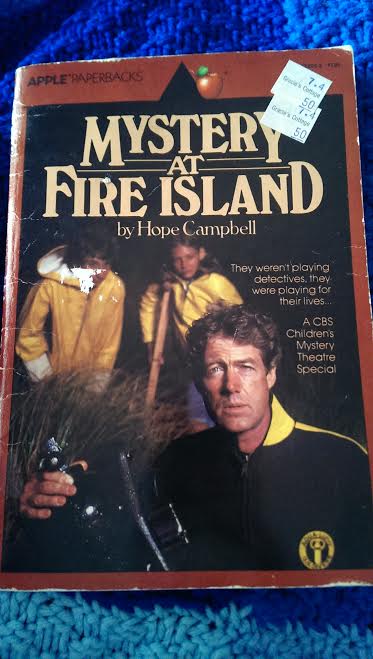
mysteryfireislandThe Mystery at Fire Island by Hope Campbell, 1978.

Darcy Littlewood, called “Dash,” is appalled when her art teacher tells her not to draw anything over the summer.  Drawing comes almost as naturally as breathing to Dash, who wants to be a cartoonist when she grows up.  She’s always doing sketches and caricatures of people she sees, especially her younger brother, JC (James Colson Littlewood, also known as “Coleslaw”).  But, her art teacher thinks that her style has grown too strong and inflexible too early in her life.  He thinks that if she takes a break from drawing for the summer, she’ll be able to come back to it with a fresh approach that will allow her to try different styles as she grows older.

To Dash, the idea of not drawing at all is intolerable, especially since she broke her leg shortly before the start of summer vacation.  She can’t go much of anywhere or do much of anything while her family is staying at their beach house on Fire Island.  Without much to do, she doesn’t know how she’d entertain herself if she couldn’t draw.

Her older sister, Candace, isn’t happy about spending the summer on Fire Island, either.  She says that there’s never anything to do there, although their mother attributes part of her boredom to the fact that she’s the only one in the family who doesn’t have an outstanding talent or a particular goal in her life.  Everyone else in the family is artistically-inclined in some way.  Mrs. Littlewood is a writer, Mr. Littlewood teaches drama, JC has acting skills and a special talent for imitating people, and Dash has her art.  Mrs. Littlewood thinks that Candy’s attitude would improve if she found something that she was especially good at and truly cared about.

While Dash is brooding about her inability to stop drawing in spite of her art teacher’s request, she makes the acquaintance of Mrs. Guizot, an eccentric older woman who spots her drawing caricatures.  It turns out that Mrs. Guizot is an art lover, and she quickly becomes a fan of Dash’s work.  But, there is something mysterious about Mrs. Guizot, or at least the man they see her talking to.

Both Dash and JC notice that the man has a peculiar way of standing and walking.  Dash draws it, and JC imitates it.  So, when they see the same man on the beach later that night, looking different without his beard and wig, but still walking and standing the same way, they wonder why the man was in disguise.  Also, he seems to be going out surfing when there aren’t any waves for surfing.  Then, they discover that he’s bringing scuba tanks with him, and they aren’t real scuba tanks.  What is the man doing?

The kids try to investigate the mysterious man with JC doing much of the leg work at first because Dash can’t get around very well.  JC is worried about what they might learn because the man might turn out to be truly sinister and violent.  He even has suspicions about Mrs. Guizot.  Later, Dash’s leg improves and she’s able to take a more active role in the investigation, but the kids pretend like she’s still laid up as a cover for their activities.  The kids’ investigation doesn’t go as planned, but they do uncover a crime and also inadvertently help their sister to find her life’s vocation.

Part of the story has to do with seeing with depth.  Part of the reason why Dash’s art teacher wants her to observe more and draw less is so that her art will contain more depth.  Dash also learns to see the depths of people, the things they keep hidden behind their facades.  Her sister, Candy, also has hidden depths which even she doesn’t appreciate yet.

The story was later made into a tv movie by the same name, and the picture on the front cover of this edition of the book is from the movie.

Mystery Aboard the Ocean Princess

MysteryOceanPrincessMystery Aboard the Ocean Princess by Robin Gottlieb, 1967.
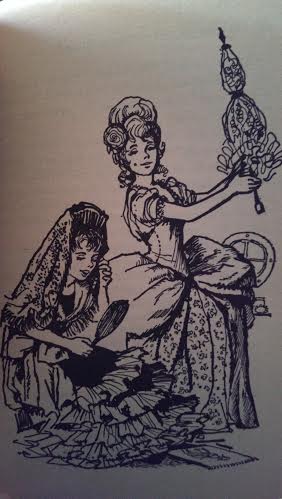
Jill Washburn is about to make her first trip to Europe on the same ship as a priceless painting!  Her Uncle Chow and Aunt Rose have invited her to accompany them on the cruise ship to Europe over the summer because her cousin Connie isn’t enthusiastic about the trip, and they thought that the girls would be good company for each other.  Lately, Connie has been trying to act ultra-sophisticated, declaring anything and everything that she doesn’t think is cool to be simply “tedious” (Connie loves big words, and “tedious” is her pet word).

Jill is fascinated by the presence of the famous painting on the ship, a painting of a young Spanish prince by Goya, “Don Manuel Osorio de Zuñiga.”  Jill loves art, and her ambition in life is to be an art teacher, like her father.  She has also read about recent art thefts in the newspaper and wonders whether Don Manuel is at risk during its journey.  She can’t help but seek out the room where the painting is kept and talk to one of the guards about security.  The guard just tells her that he appreciates her concern but that everything is under control.  But later, Jill finds the guard meeting secretly with a mysterious man by the lifeboats.

MysteryOceanPrincessPicCould the two men be plotting to steal the painting?  Jill persuades Connie to help her investigate and spy on the them, but things aren’t what they seem.

A mysterious gift left in Uncle Chow and Aunt Rose’s cabin frames Jill’s aunt and uncle for art theft.  Although Connie thinks their snooping has caused enough problems already, Jill thinks that the only way to clear their names is for her and Connie to find the real thieves.  With the ship’s costume ball coming up, Jill comes up with a daring scheme to get the thieves’ attention and hopefully get them to reveal themselves.  One thing is for sure: Connie was wrong about this trip being “tedious.”