The Hundred Penny Box by Sharon Bell Mathis, 1975.
Michael’s great-great-aunt, Aunt Dew (short for Dewbet), has moved in with him and his parents because she is one hundred years old and no longer able to live on her own. It has been a big adjustment for the entire family, but even though Michael has had to give up space in his room for her, he is glad that she has come to live with them because the old woman fascinates him. She is (apparently) extremely absent-minded, often calling Michael by his father’s name, John, although some of that seems to be deliberate because she wishes that Michael’s parents had named him after his father. Other times, she seems to forget that she’s no longer living in her old house or just starts singing an old spiritual song, forgetting what she was talking about before.
John is extremely fond of his elderly aunt because she raised him after his parents died in a boating accident, and she loves him like a son. Aunt Dew’s own sons are long grown and gone. However, Michael’s mother, Ruth, finds Aunt Dew’s presence in the house difficult. Ruth thinks that Aunt Dew doesn’t appreciate some of the nice things that she does for her, and she thinks that Aunt Dew doesn’t like her. It’s not completely true, but Aunt Dew does seem more comfortable around Michael after spending many years of her life raising boys, and Aunt Dew admits to Michael that she finds it difficult to talk to Ruth because they don’t know each other like she and John do. Aunt Dew and Ruth also have a conflict over some of Aunt Dew’s old possessions.
Aunt Dew is upset that Ruth got rid of some of her old things after she moved in with them. Michael thought it was a mean thing to do, and Aunt Dew misses these objects. When Michael argues with his mother about these objects, Ruth explains to him that she’s not trying to be mean. Ruth compares Aunt Dew to a child, like Michael, saying that she “Thinks she needs a whole lot of stuff she really doesn’t.” Ruth sees it as just clearing out things that are old and worn out and no good in order to make room for newer, nicer things, comparing it to when Michael got old enough to realize that he didn’t need his old teddy bear that was falling apart and was willing to get rid of it along with some other things in order to make room for Aunt Dew to move in. Ruth sees clearing out old things as a way to move forward in life and thinks that it’s important to help Aunt Dew adjust to her new life with the family. However, a lot of Aunt Dew’s long life and past are tied in with some of these objects, and as a one-hundred-year-old woman, Aunt Dew has more past behind her than future life to make room for. Michael helps her to hide some of them in her closet to keep them from being thrown out, but he’s particularly concerned about her hundred penny box.
When Aunt Dew’s husband was alive, he started a penny collection for her with one penny to represent every year that Aunt Dew has been alive. After his death, Aunt Dew continued to collect pennies, putting another penny into the box every year to represent her age. Michael loves the pennies in the box because, when he counts them with Aunt Dew, she will stop him at certain years and tell him stories about things that happened during those years, telling him a lot of family stories. Michael’s mother isn’t interested in taking the pennies, but she thinks that the old box they’re in is too worn out and should be replaced with something else. However, Aunt Dew sees that box as being like herself: old and worn and holding all of the years of her life. To throw it out would be almost like throwing out Aunt Dew herself. Michael’s mother doesn’t see it that way, but Michael sees the connection. To try to save the box, Michael hides it from his mother.
The conflict about Aunt Dew’s things isn’t really resolved by the end of the story because Michael’s mother still doesn’t understand how Aunt Dew feels, and we don’t know if she will come to understand or if the box will remain hidden or not. I found parts of the story frustrating because Ruth doesn’t seem to want to listen to either Aunt Dew or Michael, discounting them as the kid and the old lady. Even though Ruth is frustrated with Aunt Dew, I think that part of it is her fault for not really listening or trying to understand how she feels. This may be part of the reason why Aunt Dew feels like she can’t really talk to Ruth. To be fair, Ruth doesn’t mean to be mean, but at the same time, she kind of is because she’s too stuck on what she thinks is best and that idea that she knows better than a young boy and an old woman to consider that her ideas might not be what’s best for her family and family relationships and that she needs to give a little. My guess is that she’ll understand how Aunt Dew feels when she’s also an old woman, with more past than future ahead, but with a little imagination and empathy, I think she could see that decades sooner. I remember reading this book when I was a kid and liking it for the concept of the hundred penny box and the old woman’s stories, but I find the lack of resolution a little frustrating now. It’s one of those books that makes me want to sit the characters down and explain a few things to them, but I can’t.
Besides
the concept of the penny box, I’m also fascinated by the name Dewbet, which I’ve
never heard anywhere else besides this story.
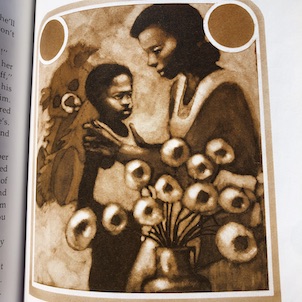
The pictures in the book are also unusual, and there’s a note in the
back of the book that explains a little about the art style. The pictures, which are in sepia tones, are
painted with water colors, and the light areas were made with water and bleach.
This is a Newbery Honor Book, and it is currently available online through Internet Archive.
There is also a short film version that is available to buy or rent from Vimeo. Teachers Pay Teachers has lesson plans for this book. If you would like to see a reading and discussion with the author of the book, there is a copy on YouTube.
This book is a companion book to the Samantha, An American Girl series, focusing on Samantha’s best friend, Nellie. Personally, I don’t like the companion books to the main American Girls books as well as the original books, but this book does follow up on the events to the main series. At the end of Samantha’s series, Samantha’s aunt and uncle took in Nellie and her sisters, Bridget and Jenny, after their parents died. Nellie and her sisters were from a poor family and had to start working from a young age before their parents died. After their parents died, their disreputable uncle abandoned them, and they were sent to an orphanage before Samantha discovered where they were. Samantha’s aunt and uncle are wealthy, and the girls’ lives have improved considerably.
Nellie’s happiness is threatened by the sudden reappearance of her Uncle Mike. Uncle Mike sees Nellie walking down the street in her nice new clothes and wants to know what rich family the girls are living with. Nellie runs away from him, but he threatens to find out where she’s living and to take her and her sisters back, saying that it’s his right as her uncle. He says that he means to put the girls to work earning money for him. Nellie is afraid that he might be able to reclaim them from Uncle Gard and Aunt Cornelia because he is a blood relative.
At first, Nellie is afraid to tell anyone that she’s seen her uncle and that he threatened to take her and her sisters back. Before her parents died, her mother made her promise to look after her younger sisters, so Nellie makes up her mind that’s what she’s going to do.
Nellie worries about the future for her and her sisters. She feels like she doesn’t fit in with the wealthy girls at Samantha’s school, who have had very different lives from hers, and the lessons they learn are the type of lessons for fine young ladies who will marry rich men and spend most of their time raising families, overseeing a house with servants, and entertaining friends and their husbands’ business associates, not preparing for practical professions outside the home. Nellie thinks that it’s important that she have some kind of job skills because the future can be very uncertain, and she wants to know that she can provide for her sisters, no matter what happens.
Samantha senses that Nellie is unhappy, and she asks her if she likes living with Uncle Gard and Aunt Cornelia. Nellie tells her that she does, but she hesitates to explain what’s really worrying her. Instead, she lets Samantha think that she just wants to feel like she’s doing something useful for the family. Before her parents died, Nellie used to get sewing lessons at a settlement house (a place where immigrant families could go to learn English, new job skills, and other skills they would need in their new lives in the United States) run by Miss Brennan. Aunt Cornelia is involved with many good causes, and she wants to visit a settlement house and get an introduction to Miss Brennan. Because Nellie knows Miss Brennan, she can help arrange that. It’s in a rough part of town, but Nellie is more accustomed to navigating rough neighborhoods than Samantha or her aunt. It also occurs to Nellie that she could ask Miss Brennan what to do about Uncle Mike.
Miss Brennan is glad to see Nellie, and she lets her show Aunt Cornelia and Samantha around the settlement house. They have many different types of classes for children as well as adults. Nellie says that she likes the practical classes that she used to have there, and even the types of dances that they do seem more practical than the more purely artistic ones that they do at the school she now attends with Samantha. Aunt Cornelia is pleased with the classes that they offer for women, and because she is interested in women’s education, decides that she wants to help out at the settlement house. However, the visit to the settlement house leaves Samantha irritated for reasons that Nellie doesn’t fully understand.
As Nellie begins spending more time with Aunt Cornelia at the settlement house, Samantha begins spending more time with Bridget and Jenny, and Nellie becomes jealous of how Samantha seems more like their older sister than she is. However, the others still don’t know about Uncle Mike’s reappearance, and Nellie is still fearful of what he might do and what will happen to her and her sisters if Uncle Mike tries to take them away. She feels like her only option is to try to prepare herself for a better job than that of factory worker.
When Nellie finally gets the courage to tell Miss Brennan about her worries, Miss Brennan tells her that she needs to discuss the situation with Uncle Gard. Uncle Gard is a good man, but he’s also a lawyer, and he will know how to legally stop Uncle Mike from trying to take custody of the girls. However, Miss Brennan adds that, whatever else happens, Nellie will still need to make some decisions about her future and what she wants to do with her life and education. The more Nellie thinks about it, the more certain she is about what she wants to do. She wants to become a teacher, like Miss Brennan.
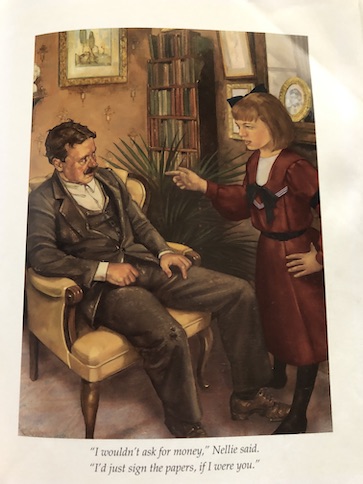
Nellie provokes more drama by applying to the boarding school in Boston where Miss Brennan said that she trained to be a teacher without talking to Aunt Cornelia, Uncle Gard, or Samantha about her decision or about her uncle. However, when the truth comes out about Uncle Mike, everyone understands that she was trying to hide and protect her sisters from him. It turns out that Uncle Gard has actually been looking for Uncle Mike because he already has the documents that he needs to legally adopt Nellie, Bridget, and Jenny, and he just needs Uncle Mike to legally release them into his custody. At first, Uncle Mike tries to extort money from Uncle Gard for the girls, but Nellie gets up the courage to tell him off, promising that if he doesn’t sign the papers and leave, she’ll tell everyone about how he stole all of their money and abandoned them to freeze the last time they were in his custody. The book ends happily, with Aunt Cornelia and Uncle Gard adopting the girls and understanding Nellie’s ambition to be a teacher. They enroll Nellie in a school in New York that teaches the skills she really wants so that she can continue living with them and not go to Boston. It also turns out that Samantha was mostly uncomfortable at the settlement house because she felt so sorry for the young children there and that spending time taking care of Bridget and Jenny was part of her way of trying to help Nellie by leaving her more free to do some of the things that she felt like she had to do. With everything out in the open, Nellie and her sisters are able to more fully become part of the family.
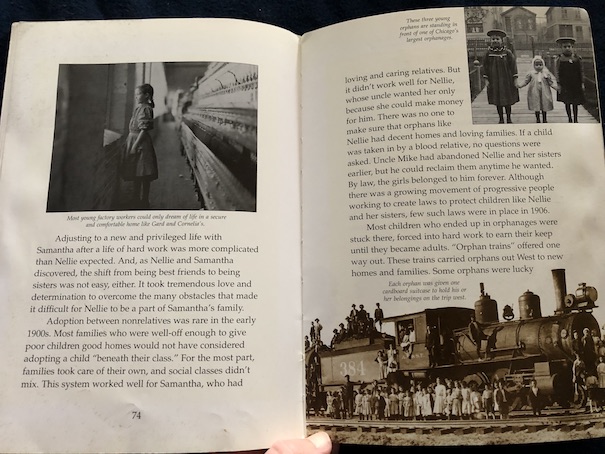
In the back of the book, there is a section with historical information about orphans and adoption in the early 1900s. There were not many laws and regulations governing care of orphans. Usually, orphans would be taken in by relatives, like Samantha was when her parents died. If a child didn’t have any relatives who were willing and able to take them, the child might be sent to an orphanage and possibly sent west on an orphan train as Nellie almost was at the end of the Samantha series. Families didn’t usually adopt children from different levels of society.
Settlement houses were important resources for poor immigrant families, and the education they received allowed immigrants to enter higher professions than servant or factory worker, which had been the primary source of income for many of them. It was common for settlement houses to help train young women to become teachers. There are still similar institutions and organizations in operation in 21st century America.
The book is available to borrow for free online through Internet Archive.
My Reaction and Further Historical Information
Part of the reason why I don’t like the companion books as much as the original American Girls series is that they tend to get more dramatic than the original books, and sometimes, I feel like the attitudes of the characters are less realistic for their time periods than they were in the original books. I think what made the original books more realistic was the restraint of the stories – they had their share of excitement and sometimes drama, but they never went overboard. The return of Nellie’s disreputable uncle struck me as both unlikely and unnecessary to Nellie’s and Samantha’s larger stories.
The historical details in this book are good. What they say about orphans of the time is basically true, although they note in the historical information section in the back of the book that Nellie’s experience of being adopted by a wealthier family was not typical of the time, and I think that’s part of what bothers me. Adoptions in general during the early 1900s were less formal than they are in modern times, and the idea of Uncle Gard hiring a private detective to find Uncle Mike and get him to sign legal documents doesn’t seem entirely realistic. I think it would have been more realistic to me the way that the last Samantha book ended, with Uncle Mike leaving and the assumption that none of the characters would see him again.
The reason why Nellie and her sisters were sent to the orphanage and why the orphanage was considering sending Nellie west on the orphan train was that no one expected that Uncle Mike would ever want to see the girls again. He’d already taken everything he could from them and left with them with no concern for what would happen to them. In the time that has passed since then, I would have expected that Uncle Mike would already have gotten into trouble that would keep him busy and out of their lives, maybe ended up in prison for being drunk and disorderly or hopping from job to job or begging for money as their little money ran out. Even if Uncle Mike had some thought of finding the girls, I don’t think it’s likely that he would have succeeded or even gotten close on his own because he is not that bright and he is not the kind of person who makes friends in places where he’s been before. I doubt that his former neighbor who took his nieces to the orphanage would have told him much if he had shown up again, looking for them. She knew that he was a drunk who abandoned the girls, and she made it clear that she didn’t like him. The people at the orphanage would have probably sent him away with no information because they would probably view the situation as closed since the girls are already placed out and Mike may not even have any proof of his identity and relationship to the girls. There is no such thing as a driver’s license during this period and many people did not even have birth certificates, so it’s possible that the people at the orphanage could simply choose to disbelieve this disreputable character and send him away. When I was watching a documentary about the orphan trains, former orphan train riders said that the orphanages that sent them west deliberately took notes from them that had their living parents’ addresses and otherwise cut off contact with living parents because they wanted the children to sever their ties to their difficult pasts and devote their attention to their new families, not maintain contact with the parents who were unable to care for them financially, so I wouldn’t expect that anyone at the orphanage in these books would go out of their way to reunite the orphaned girls with a rather shady uncle when they knew that the girls were already placed with a wealthy family and no longer their responsibility. Without help, which would be unlikely to be forthcoming, it doesn’t seem likely that Uncle Mike would be able to stumble on the girls by accident. As mentioned in Changes for Samantha, New York is a big city, people can be difficult to find if you don’t have a hint of where to look, and the wealthier part of the city where Nellie and her sisters live now is not a part of town where a guy like Uncle Mike would be likely to hang out. They could all easily live in New York City for years without meeting each other.
I feel like the situations in the story were a little contrived. By now, I would have thought that Nellie would know that Uncle Gard is a lawyer and would be the best person to ask about the laws. I don’t recall the earlier books saying what Uncle Gard did for a living, but Nellie lives with him now, and I would think that someone would have mentioned Uncle Gard’s profession by now. In the book, it oddly seems like as much of a surprise to Nellie as it is to the readers. I could believe that Nellie would go to the settlement house and do volunteer work there with Aunt Cornelia because it was already established in the previous books that Aunt Cornelia supports good causes, and although women of her level of society didn’t usually work for living, supporting good causes and charitable works would have been acceptable. Nellie’s level of knowledge seems a little odd, considering that she needed extra tutoring in basic subjects, like reading, in Samantha Learns a Lesson. In that book, Nellie never mentioned settlement house lessons, which she would have done if it hadn’t been a sudden decision to insert that this in book. Here, Nellie talks about classes that she had at the settlement house, where I would have expected to have more lessons to improve her reading, and it seems like she learned more there than she seemed to know before, even knowing a few words of foreign languages. In Samantha Learns a Lesson, one of Nellie’s skills was her ability to do math quickly handle money because she used to do the shopping for her mother, and in this book, she mentions that she helped to teach immigrants about American money, which she never mentioned before. These things are necessarily contradictory, but it all just seems a little off because they don’t quite fit into Nellie’s established character and history, and it implies that Nellie has had more education and training than she seemed to have before. It’s not necessarily impossible for a girl of Nellie’s time to know some of these things, but it’s the departure from what was already established about Nellie and her situation in life than kind of grates on me.
I think it could be reasonable for Nellie to develop the ambition to be a teacher. Even Samantha has previously some interest in that direction, having helped to tutor Nellie before. Not all women of this time went on to higher education, but those who did might attend a normal school, which is basically a college that focuses on training teachers. By contrast, the daughters of wealthy, high society families would be more likely attend a finishing school that emphasized social skills and entertaining more than academics. Both Samantha and Nellie are about twelve years old during this story and would be a little young for either of these options, but Samantha’s school seems to be more inclined toward preparing the girls for a finishing school. Given Aunt Cornelia’s interest in education and social causes and Uncle Gard’s support of it, I would expect that Samantha would be more likely to attend a women’s liberal arts college when she gets older, preparing her to marry a well-educated and culturally aware man as well as a wealthy one and probably engage in some form of social work and/or the arts in her spare time, but that’s just a guess. (I discussed some of this already in my review of Happy Birthday, Samantha. See also the book Daddy-Long-Legs for a description of what that might have been like for a girl of Samantha’s and Nellie’s time. The book was written a little later in than the time period of this book, but it’s set at about the right time for Samantha and Nellie to be old enough for college and includes characters of approximately their social backgrounds.) This book doesn’t really go into the subject, but if that’s the case, Samantha’s future might not be as different from Nellie’s as it first seems, and there might be a kind of middle path that both of them could choose. The Finch College in Manhattan, which was a fairly new preparatory school in Samantha’s and Nellie’s time, seems like it would have been a good option for both Samantha and Nellie, catering to upper-class girls while focusing on a more practical liberal arts education than the less academic finishing schools. Its founder, Jessica Finch, was a women’s rights activist and may have moved in similar circles to Aunt Cornelia. Her attempts to balance theoretical and practical knowledge sound like they would have appealed to the characters in the story. I’m not an expert on the Finch College, only having heard a little about it, but I think a school like that would present an intriguing possibility for the girls’ futures.
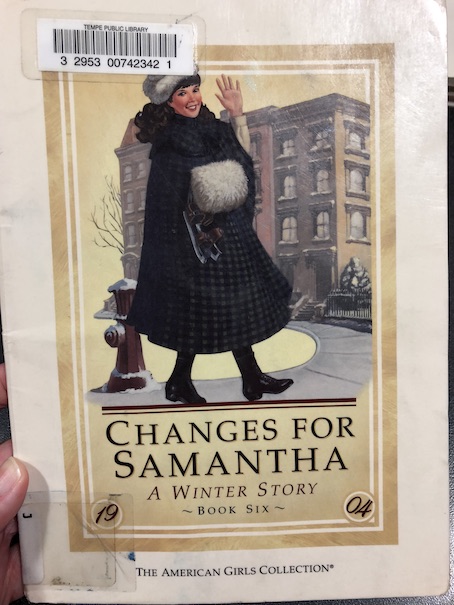
This book is part of the Samantha, An American Girl series. This is the last book in the original series of Samantha’s stories and explains the changes in the lives of Samantha and her friends, especially Nellie. When Samantha met Nellie in the first book in the series, Nellie was a poor girl working as a servant girl in a neighboring house. Later, Nellie and her family moved to Samantha’s town, Mount Bedford, and Nellie and her sisters were able to attend school for the first time.
Now, Samantha has moved to New York City to live with her Uncle Gard and his new wife, Aunt Cornelia. Samantha likes living with them, although their housekeeper, Gertrude, is strict and often makes her feel like she’s doing things wrong. Samantha’s grandmother, a widow, has remarried to her long-time friend, the Admiral. Samantha’s life has changed considerably since the first book. Since her move to New York City, Samantha hasn’t seen Nellie or her sisters, but their lives have also changed, and not for the better.
When the book begins, Samantha and Aunt Cornelia are making Valentines to give to friends and family. Samantha receives a letter from Nellie that says that her parents have died of the flu and their employer, Mrs. Van Sicklen, is sending her and her sisters to New York City to live with her Uncle Mike. Nellie says that she’ll try to visit Samantha in New York City soon. Samantha is upset to hear that Nellie’s parents are dead, but Uncle Gard and Aunt Cornelia reassure her that Nellie’s uncle will take care of her and that she’ll soon be living much closer to Samantha.
After some time goes by and Samantha doesn’t hear any more from Nellie, she begins to worry about her. Uncle Gard decides to call Mrs. Van Sicklen and find out Nellie’s new address, but she doesn’t know where Nellie’s uncle, Mike O’Malley, lives. All Mrs. Van Sicklen knows is that he lives on 17th or 18th Street, but New York City is so big, that doesn’t help much. Uncle Gard and Aunt Cornelia say that maybe Nellie has had to get a job or look after her sisters and that she’s just been too busy to visit, but Samantha is still worried that something is very wrong.
Samantha decides to start asking around 17th and 18th Streets to see if she can locate Mike O’Malley, and she finds a chestnut seller who knows Mike O’Malley. However, he warns Samatha not to get involved with him because Mike O’Malley is a “hooligan.” Samantha worries about that, but it’s just another reason for her to want to check on Nellie. When she reaches the apartment where Mike O’Malley last lived, he isn’t there anymore. His neighbor explains that Mike O’Malley was a drunk who simply abandoned his nieces in his old apartment. The neighbor took the girls in for a while, but she is a poor woman with children of her own to raise, so she had to turn Nellie and her sisters over to an orphanage, the Coldrock House for Homeless Girls.
Samantha tells her aunt and uncle what she’s learned, and they’re upset that she went to such a dangerous part of the city alone. However, Aunt Cornelia agrees to take Samantha to the orphanage to see Nellie. The directoress, Miss Frouchy, is a stern and sneaky woman, but she agrees to let Samantha see Nellie, even though it isn’t a visitors’ day. It is difficult for the girls to speak candidly with Miss Frouchy watching them and monitoring everything that Nellie says. When Aunt Cornelia asks if Nellie and her sisters need anything, Miss Frouchy interrupts and says that they don’t. However, Samantha notes how thin Nellie looks and suspects that there is more going on than Nellie is being allowed to say, and Miss Frouchy even confiscates the cookies meant for Nellie and her sisters right in front of Aunt Cornelia and Samantha.
Aunt Cornelia asks Miss Frouchy for a tour of the orphanage so that Nellie and Samantha can be alone, and so the girls are able to speak openly. Nellie confirms that things are hard at the orphanage and her sister, Bridget, isn’t strong. Miss Frouchy thinks that Bridget is lazy and doesn’t want to work, so Nellie tries to cover Bridget’s chores as best she can. Samantha says that Nellie could come and stay with her and her aunt and uncle, but Nellie says that they probably don’t need any more maids. Samantha offers to hide Nellie and her sisters, but Nellie thinks that plan is too risky. More than anything, Nellie wants to keep her sisters together. She says with a little more training, she could find a job as a maid and support them.
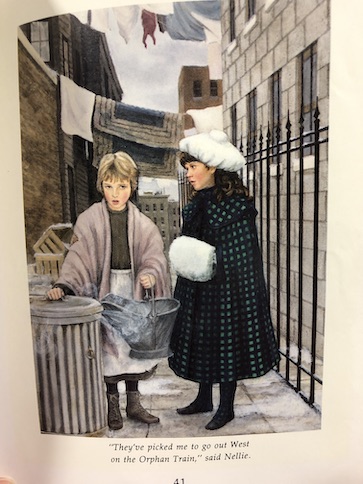
Samantha returns to the orphanage again with her aunt and uncle to visit all three girls, and she and Nellie arrange to meet secretly at the time when Nellie is supposed to take the fireplace ashes out to the alley for disposal. At their next meeting, Samantha finds out that Miss Frouchy took the gloves that they had given Nellie and even punished her for having them because she said that she must have stolen the gloves. However, there is worse to come. Soon, Nellie tells Samantha that she has been chosen to be sent out west on the Orphan Train, but because her sisters are too young to go, they’ll be left in New York alone. With the sisters about to be split up, Samantha’s plan to help the girls run away and hide is looking better.
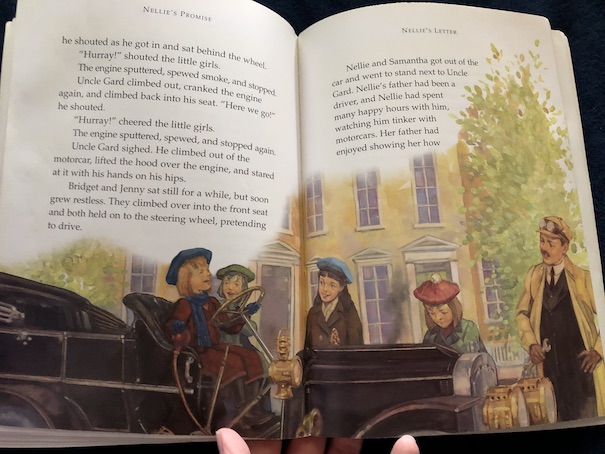
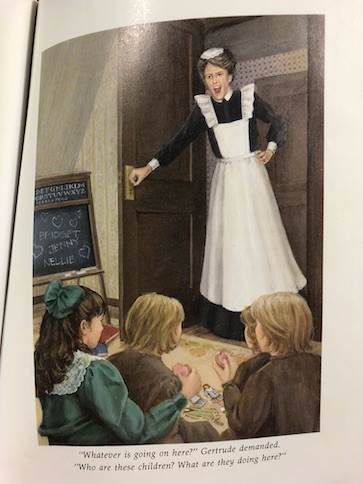
Together, Nellie and Samantha help to sneak the younger girls out of the orphanage, and Samantha hides the three of them in an upstairs room in the aunt and uncle’s house that isn’t being used. She sneaks food and toys upstairs to them, and Nellie sneaks out during the day to go looking for work. However, Gertrude soon gets suspicious about how much food Samantha seems to be eating and how she seems to be sneaking around with it. When the girls are finally caught, Samantha owes her aunt and uncle some explanations, but admitting the truth of what has happened changes things for the better for all of the girls.
In the movie version of the Samantha series, which combined all the stories from the Samantha books into one, the story ends at Christmas, but in the book, it’s Valentine’s Day. The Christmas ending is nice, but Valentine’s Day does make for a nice difference, and love is appropriate to the theme of the story. Uncle Gard and Aunt Cornelia end up adopting Nellie and her sisters, so they officially become part of Samantha’s family. Unlike other characters in the story, who see the orphans as either an inconvenience or a source of cheap labor, Uncle Gard and Aunt Cornelia genuinely love them and want to raise them.
Something that struck me about the book was that both Nellie and Samantha are orphans, but their lives were very different at the beginning of the story because Samantha is from a wealthy family with an uncle who loves her and Nellie is a poor girl with an irresponsible uncle. If Samantha had been poor, she might have been destined for an orphanage or the orphan train herself. Because she wasn’t and because her family looks after children well and is willing to share what they have with others, Samantha has a secure future, and Nellie and her sisters become part of their family.
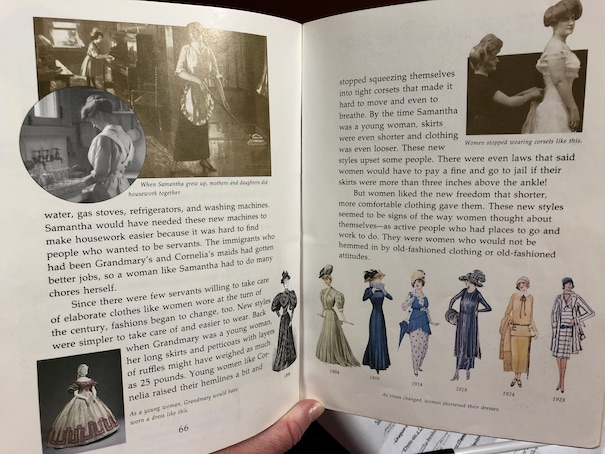
The book ends with a section of historical information about all the changes taking place in Samantha’s time, from technological changes, such as the first airplanes and new cars, to the increasing sizes of cities and new immigrants arriving in the United States.
As girls like Samantha grew up, society continued to change. In earlier books, Samantha’s grandmother talked about how young ladies aren’t supposed to work but learn how to be ladies and take care of a household. By the time Samantha was an adult, in the 1910s and 1920s, it was becoming more common for women to hold others jobs, although they would often stop working when they got married so they could focus on raising their children. The profession of social work evolved to help care for children like Nellie and her sisters. Some social workers also helped immigrants to learn English and train for new jobs when the came to the United States. The book specifically mentions Jane Addams, who founded the settlement house, Hull House.
Change is a major theme of all of the American Girl books, and a girl like Samantha would have seen some drastic changes in the ways that people lived as she got older. Over time, fewer immigrants looked for jobs as domestic servants, and newer forms of household technology, like washing machines, made it easier for housewives to do more of their domestic chores themselves. The section of historical information ends with examples of the changes in styles of women’s clothing through the 1920s, explaining how the changes in clothing styles were part of the changes in the types of lives the women wearing them were leading.
Although the book doesn’t go into these details, I would just like to point out how old Samantha would have been at various points in the 20th century. She was born in 1894, and ten years old in 1904, so that means that she would have been:
23 years old when the US entered World War I in 1917
26 years old when the 19th Amendment granted women’s suffrage in the United States in 1920
30 years old in 1924 (Jazz age and Prohibition)
35 years old when the stock market crashed in 1929, the beginning of the Great Depression
47 years old in 1941, when the attack on Pearl Harbor occurred, and the US entered World War II, and 50 years old in 1944, when the Molly, An American Girl series takes place.
In her 50s during the early days of the Cold War. She would have to live to be 95 to see the end of it.
In her 60s through her early 70s during the Civil Rights Movement.
I like to think about these things because it puts history in perspective, and it gives us some sense of what Samantha’s future life might have been like. When she was a young woman, she may have joined the women’s suffrage movement with her Aunt Cornelia. She probably knew young men her age who went to fight in World War I. (Eddie, the annoying boy who lived next door to Samantha’s grandmother, would have been old enough to fight and may have been a WWI soldier himself.) Perhaps, Samantha’s future husband was a soldier. When she was older, Samantha could have either joined the temperance movement behind Prohibition or visited a speakeasy or at least knew people who did. It’s difficult to say what happened to Samantha’s family during the Great Depression. Depending on their professions and what they may have invested their money in, they may have lost their fortunes in the stock market crash, or they may have ridden out the whole thing in relative comfort. By World War II, Samantha may have had a son who was old enough to fight. One of the things I find interesting about historical novels with children is imagining what their future lives may have been like, and Samantha was born at a time when she would have witnessed many major events throughout her future life. The book shows how women’s fashions changed as Samantha grew up, but I’m fascinated by the events in Samantha’s life that I know must be coming, just because of when she was born. By the end of her life, the world would be a very different place from what she knew when she was young.
The book is available to borrow for free online through Internet Archive.
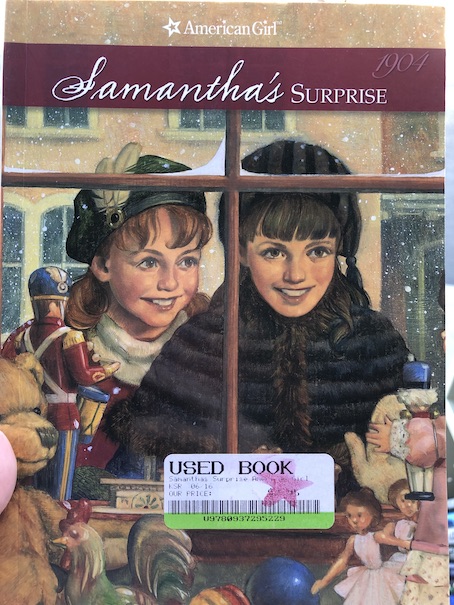
Christmas is going to be different this year for Samantha and her family. Uncle Gard is bringing his girlfriend, Cornelia, to spend the holidays with them. Christmas had started out so hopeful for Samantha, with an invitation to a friend’s Christmas party, elaborate plans for building a gingerbread house, and the secret presents that Samantha has been making for everyone. Cornelia’s visit changes Samantha’s plans.
For Samantha, Cornelia’s visit makes Christmas more difficult. At first, she says that she will help make Cornelia feel welcome and thinks to herself that she will have to get a present for Cornelia that is as elegant as she is. However, when Samantha tries to put up the usual homemade decorations that she made herself, the maid angrily takes them down, calling them “dustcatchers.” The house must be perfect for Cornelia’s visit, and Samantha is insulted that people see her decorations as an eyesore or inconvenience. The cook, who was going to help Samantha with her gingerbread house, says that there probably won’t be time for it now because her grandmother has asked her to make extra, special foods for Cornelia’s visit. Grandmary even tells Samantha that it would be better for Samantha to “stay out of the way” of their Christmas preparations.
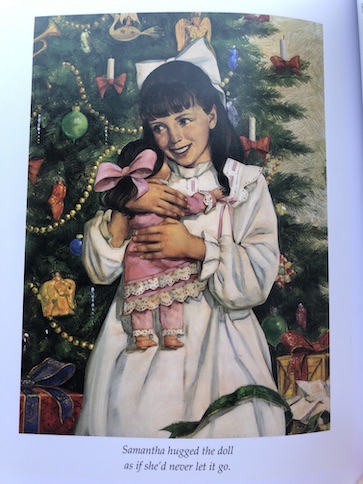
With Cornelia coming, no one seems to notice or care about Samantha. Samantha finds out that she won’t be able to attend her friend’s party because it is the night that Cornelia is arriving. It doesn’t seem likely that her grandmother will care about her secret Christmas wish for the beautiful Nutcracker doll in the toy store window. Samantha has been without a doll since she gave her own beloved doll, Lydia, to Nellie, who had never owned a doll before. Cornelia is an extra person Samantha needs to supply a present for, but she can’t summon up any enthusiasm for giving a present for someone who is making things so difficult for her.
Throughout the book, Samantha considers different presents that she could give to Cornelia, beginning with the most basic, convenient token gifts that she could give and then forget about, unlike her homemade, heart-felt gifts for everyone else. However, Samantha’s attitudes toward Cornelia change as she gets to know her better during the holidays and comes to see her as a source of fun and support.
When Cornelia actually arrives and begins participating in the usual Christmas activities, Samantha sees that she is far less fussy than the people who were preparing for her arrival. Unlike most other grown-ups, Cornelia is not too dignified to have fun while sledding or get messy while making gingerbread houses. Cornelia even suggests sledding, to Grandmary’s surprise. Cornelia always mentions how nice it would be to decorate a gingerbread house, like she did when she was a girl, Samantha says that she would like that too, but the cook is too busy to help this year. Cornelia says that is no problem because she and Samantha can make the gingerbread house themselves. Cornelia even makes sure that some of the decorations that Samantha made are prominently displayed on the Christmas tree.
By the end of the book, Samantha changes her mind about Cornelia completely. While everyone else seemed to be ignoring Samantha and going out of their way to make Cornelia feel welcome, Cornelia was paying more attention to Samantha and really thinking about what would make Samantha happy at Christmas. Cornelia is the one who correctly guesses what Samantha would really like for Christmas, and in return, Samantha decides to give her best present to Cornelia.
The story ends with Uncle Gard officially engaged to Cornelia.
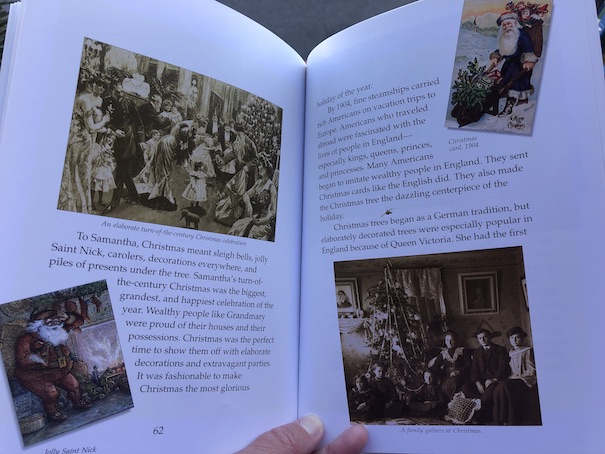
In the back of the book, there is a section with historical information about how people would celebrate Christmas during the early 1900s.
The book is currently available to borrow for free online through Internet Archive.
Once Upon a Dark November by Carol Beach York, 1989.
Katie Allen likes her part-time job helping Mrs. Herron with her housework. One of the best parts of the job is that she gets to see Mr. Herron, her English teacher, at home. Katie has a crush on Mr. Herron, although no one but her best friend knows it.
One day, while she’s at the Herrons’ house, Mrs. Herron tells her that her cousin Martin is coming for a visit. She says that Martin hasn’t been in Granville in years, although he used to live with their aunt when he was young. Their aunt is Miss Gorley, the creepy lady who lives across the street from Katie’s house. When Martin arrives, he turns out to be pretty creepy himself. He never says very much to anyone and spends a lot of his time just staring out the window. Mrs. Herron is not happy to have him there and wishes that he would leave.
One day, Martin disappears, and the next day, Miss Gorley is found murdered in her house. Did Martin return to Granville just to murder his aunt? Where is he now, and who is that mysterious person who tried to attack Katie at her house, dressed in a Frankenstein costume? Did Katie see something that she wasn’t meant to see? Katie doesn’t remember seeing anything important, but now she has to figure out what it was before it’s too late!
This book is not for young children. It would be best for kids in middle school (about 12 and up). There is murder and attempted murder, including the attempted murder of Katie, who is a child, because the murderer of Miss Gorley thinks that she knows too much. There is also some discussion of child abuse, which was part of the motive behind Miss Gorley’s murder. Katie did see some things that are important to the case, but their full importance doesn’t occur to her until the attempt on her own life. People are not quite who they seem to be, and some of Katie’s initial impressions were closer to the truth than someone wants her to know.
The book is currently available to borrow for free online through Internet Archive.
Years ago, Aunt Morbelia inherited the Fearing family estate, Harrowwood, after her cousin died. Aunt Morbelia goes to England to inspect the estate and make some decisions about its future. The estate is in disrepair, and taxes have been eating up the funds intended for its upkeep. Todd and his friend, Jeff, also go to England with Aunt Morbelia to see the family estate and famous places in London.
Some of Aunt Morbelia’s fascination with creepy stories becomes apparent as she recounts the dark history of the estate and the mysterious death of her wicked, possibly murderous, uncle. He was apparently killed by animals after his cruelty to the animals on his estate was discovered. When they spend the night at the estate, Todd and Jeff hear a frightening howl. They are only too happy to move on to London and go sightseeing.
At Harrowwood, Todd finds an old journal belonging to his aunt’s cousin, Albert, and he thinks it would be interesting to see the places that he visited when he went to London years ago. Albert was an eccentric man who died in an insane asylum because people thought he was crazy for going around town making bird sounds all the time. Still, Todd is fascinated by the strange drawings and cryptic notes in the journal. Before Todd can figure out what they mean, he and Jeff spot mysterious characters following them around, and someone leaves a threatening note at the bed and breakfast where they are staying. Todd is determined to find out who their mysterious stalkers are and put and stop to it!
The book is currently available online through Internet Archive.
My Reaction and Spoilers
The first book in this two-book series wasn’t a mystery, but this one is. (The first book in the series focused more on Todd and Aunt Morbelia getting used to each other when she moved in with Todd and his parents, and it had more discussion of Todd’s dyslexia in it than this one did.) There are things that Aunt Morbelia doesn’t know about her family and the family estate. The estate has meaning for her, but it has greater meaning for someone else, and so does the journal that Todd found. The Fearings have always been an eccentric bunch, and when they learn who has been following them around, Todd and Aunt Morbelia have some suggestions that change things for the better.
Aunt Morbelia didn’t know it, but her cousin had a son before he died, and he is bitter that Morbelia inherited the estate instead of him. He and his family have been secretly living on the estate for years, and they are afraid that Morbelia will have them thrown off. They admit that they were trying to scare Aunt Morbelia and Todd away so they could have the estate to themselves. They also want the journal that Todd found and has been carrying around the whole time. The journal contains Albert’s notes of his research on birds and bird calls. Albert believed that he had discovered the language of birds and could communicate with him. His son wants to carry on his strange work and maybe learn to communicate with other animals, too. Todd gives the journal back to them, and Aunt Morbelia assures them that she will not throw them off the estate. In fact, she suggests that they give nature lessons to tourists in order to support the upkeep of the estate. Because they demonstrated their skill with disguises and acting while following them around London, she also suggests that they put on mystery plays and host mystery weekends on the estate. They enthusiastically agree to the plan, and Aunt Morbelia and Todd talk about visiting next year to see how things are going.
Aunt Morbelia and the Screaming Skulls by Joan Carris, 1990.
Todd Fearing is worried because his Great-Aunt Morbelia is coming to live with his family. He has never met her before, but he has heard that she is rather strange, and he knows that his life will never be the same again. Aunt Morbelia is very superstitious, and she sees bad omens everywhere. When she first arrives at Todd’s house and sees that the family owns both a black dog and a black cat, she takes it as a sign that she should leave right away. It takes a lot persuading to get her to stay on a trial basis. By Joan Carris.
Having Aunt Morbelia at his house is sort of a mixed blessing. On one hand, Aunt Morbelia likes baking good things for him to eat and helps him with his homework. Todd is dyslexic and has extra assignments to help him improve his reading. Aunt Morbelia used to be a teacher, and Todd really appreciates the help she gives him. On the other hand, Todd doesn’t like scary stories, and Aunt Morbelia’s talk of ghosts and bad omens gives him nightmares. His friends like to hear her stories, particularly Rocky, a girl who typically doesn’t like feminine things. Rocky, whose real name is RosaLynn, constantly pesters him about when Aunt Morbelia will tell more stories.
Eventually, Todd gets tired of Rocky’s obsession with ghost stories and the way she encourages Aunt Morbelia to keep telling them, and he and his best friend, Jeff, decide to play a trick on her to cure her appetite for scary stuff. However, their trick backfires, and in their attempt to make it up to everyone, especially Aunt Morbelia, they end up making things worse.
Todd and Jeff succeed in scaring Rocky by dressing up as ghosts and showing up at her house in the middle of the night. They have so much fun with their trick that they decide to go to their friend Alan’s house to try it on him. Alan lives in the house right behind Todd’s, and that’s where they run into trouble. When they start their ghost act, they can’t get Alan to wake up and come to the window to see them. Jeff decides to throw a rock at Alan’s window to wake him up, but the rock breaks the window. To make matters worse, they startle Todd’s black cat, causing the cat to yowl. The boys run back to Jeff’s house, but Jeff’s father catches them. Todd has to go home and apologize to Aunt Morbelia, who was frightened very badly when the cat started howling.
The boys decide to take Aunt Morbelia on a tour of the historic places in town to make up for scaring her. Unfortunately, Jeff includes the funeral home that his father runs on the tour because it is in one of the oldest buildings in town. Although Todd tells her that she doesn’t have to go in if she doesn’t want to, Aunt Morbelia thinks that it would be rude to refuse. Unfortunately, Jeff’s father arrives with a dead body before their tour ends, and Aunt Morbelia faints when she sees it. Aunt Morbelia tells the boys that it isn’t their fault, but she says that she’s not sure she really belongs in their town. Even with all of Aunt Morbelia’s superstition craziness and spooky stories, Todd still doesn’t want her to leave. Is there still something he can do to convince her to stay?
When I first read this book, I was expecting a spooky mystery, but it’s really more about a boy adjusting to a relative coming to live with his family and dealing with his dyslexia. Although Todd initially has some reservations about Aunt Morbelia living with him and his parents and her spooky stories scare him, Todd and Aunt Morbelia gradually come to understand each other better, and Todd genuinely wants her to stay. To help Aunt Morbelia change her mind about leaving, Todd has all the people who have met Aunt Morbelia since she arrived come by the house and tell her how much they all want her to stay. After everyone has visited her, Todd himself tells her that he doesn’t want her to go. They talk about the scary stories and how Todd feels about them, and Aunt Morbelia tells Todd that if he doesn’t want to hear a scary story, he can be honest with her and tell her so. Now that the two of them understand each other better, Aunt Morbelia agrees to stay, and she accepts the invitation that one of Todd’s teachers makes to help tutor children at the learning center.
I didn’t like the part where the boys played the trick on Rocky and how awkward things were with her afterward. Jeff’s father says that part of that, with Rocky drifting away from her friendship with the boys, is because the kids are growing up. He says that, as they grow up, girls start changing before boys do and have different interests from boys and different ways of looking at things, including more tomboy girls, like Rocky. Toward the end of the story, Rocky does appear to need more friendships with other girls, and Todd decides that Jeff’s dad is probably right, that Rocky thinks and acts differently from his guy friends because she’s a girl, even if she’s usually not a particularly “girly” girl. Part of that may be true, but the boys’ trick was pretty mean. I think that the real issue is that real friends shouldn’t do that to each other, and Rocky might really be questioning what she’s looking for in a real friend. Although, to hear some of my male friends talk about their youths, boys (at least certain ones) might be more accepting and forgiving of that kind of rough humor from friends than girls would be, so perhaps boys vs. girls issues are partly at the heart of it.
I thought that the parts where Aunt Morbelia was helping Todd with his dyslexia were interesting. I don’t really have any experience with the condition myself, and I’m not quite sure what techniques teachers really use to help dyslexics. One of the tricks that Aunt Morbelia uses is to break down tasks into smaller pieces to make them more manageable. For example, Todd feels badly that he can’t keep the orders of months straight. When he tries to recite the months of the year in order, he mixes them up, which makes him feel bad because most kids his age should be able to do this easily. When I first read this, I wasn’t sure if this is a common issue among dyslexics, although I thought that I remembered reading something about dyslexics having trouble remembering the orders of certain things, like lists of instructions. I looked it up, and apparently, it is a common issue, along with memorizing things like days of the week. There are different techniques for handling it, some of which involve associating the things to be remembered with something else that sticks in the mind more easily, such as a rhyme or song. Aunt Morbelia does some association with Todd but she also breaks the months down into groups of three, representing the four seasons of the year, and giving him small bits of information to memorize. She calls the spring months, “the flower months” and the fall months “the leaf months” and so on. Todd finds that technique helpful, and Aunt Morbelia says that once Todd has mastered the seasons of the year, they will put the season of the year together so that he can recite the entire year. Todd also describes other ways that he is affected by his dyslexia and techniques that his teacher uses to help him.
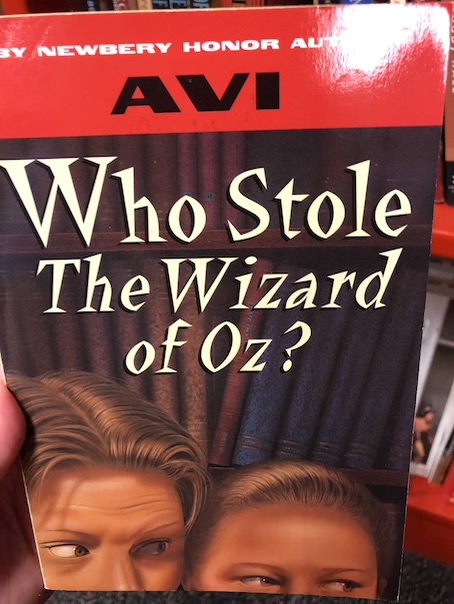
One summer, Toby and his twin sister Becky see the police go to their local library. To the children’s surprise, Mrs. Brattle, the librarian, phones their house and asks Becky to come down to the library and bring one of her parents. The children’s parents aren’t home, so Becky and Toby go. Mrs. Brattle doesn’t seem to want to say much over the phone, only that The Wizard of Oz was stolen, and they need to talk to Becky.
As Becky and Toby walk down to the library from their house, which isn’t far, Becky says that shortly before school let out for the summer, Becky’s teacher for sixth grade next fall handed out a summer reading assignment. The kids have to write two book reports over the summer, and the books can’t be mysteries, fantasies, or romantic adventures. Miss McPhearson, the sixth grade teacher, believes in only factual books. However, Becky decided that the best thing to do was to get the book reports over as soon as possible, so she went to the library. (Toby wasn’t involved because he has a different teacher.) While she was there, she decided that she’d check out The Wizard of Oz for Toby, knowing that he likes fantasy books, but she was told that it was already checked out. Mrs. Brattle told her that there would be a book sale at the library tomorrow and that she had a copy of The Wizard of Oz that Becky could buy for five cents, but since the librarian wouldn’t sell her the book that day and Becky didn’t want to make a special trip to the library the next day, she turned down the offer.
When they come to the library, the policeman accuses Becky of stealing the copy of The Wizard of Oz that the librarian showed her as well as some other children’s books. According to the librarian, the books were actually valuable collector’s copies, worth thousands of dollars. Becky asks the librarian why she offered to sell her one for nickel if they were so valuable and Mrs. Brattle says that it was a mistake. The policeman says that if Becky has the books, she can return them now, and there will be no problem, but Becky is insulted and insists that she didn’t take them. In the face of Becky’s denial, the policeman says that there isn’t much that he can do because there is only the librarian’s word that the books were valuable, and she doesn’t deny that she earlier tried to sell them for five cents each. Missing children’s books worth less than a dollar isn’t exactly a police problem. (I’d like to say here that I was very glad that the policeman took that attitude. I hate those children’s books where adults not only falsely accuse children of doing things that they didn’t do but also make petty incidents seem like major crimes. The policeman is correct that there is no proof that the books were as valuable as the librarian says and that this evaluation of their worth comes only after their sudden disappearance and after she was offering to sell them very cheaply.)
Even
though the matter seems to be dropped for the moment, it bothers Becky that the
librarian still thinks that she might have taken the books. She suggests to Toby that they could
investigate and try to find out what really happened to the books. The first thing that they decide to do is to
look for the original owner of the books.
After inspecting other children’s books at the sale and looking at the
names in the front covers, they decide that Gertrude Tobias is the most likely
former owner because many of the other books at the sale belonged to her. Unfortunately, Gertrude Tobias died a few
months ago. However, it turns out that
her niece is Miss McPhearson. Becky
hurriedly finishes her book reports so that she and her brother will have an
excuse to visit Miss McPhearson and ask her about the books.
When
they ask Miss McPhearson about her aunt, she calls her aunt a “foolish woman”
who “didn’t know any better.” However,
she refuses to explain any further what she means, and the children see her
crying before they leave.
When the children speak to Mrs. Chesterton, they get a very different picture of Miss McPhearson’s aunt. When Gertrude Tobias was a young woman, she was wealthy. She could have gotten married if she wanted to, but most of the young men didn’t like women who seemed too smart, and Miss Tobias prided herself on her intelligence and cleverness. She resented the idea that adults seemed to want women to play dumb to get a husband, so she refused to get married and spent most of her time in the company of children. Mrs. Chesterton remembers her saying, “Children like me smart. Grown-ups want me stupid.” She liked to read children’s books, and she often volunteered to read books to children at the library. The children liked her and often confided in her, just like she was their aunt. She spent a lot of her money buying children’s books for her collection. Mrs. Chesterton says that Miss Tobias and her niece never really got along well and that Miss McPhearson used to tease her aunt about her love of children’s books. However, Miss Tobias was rich, and Miss McPhearson didn’t have much money at all. Miss Tobias told her that she would leave her all of her “treasure.” When she died, it turned out that she had left her niece five children’s books – the five that are now missing. The others were willed to the library.
At first, the picture seems like it’s becoming more clear: Miss Tobias had one last joke on her niece by giving her valuable children’s books that Miss McPhearson thought were worthless simply because they were children’s books, and the person who took them recognized what they were worth as collectors’ items. However, the situation is actually more complicated than that. A series of strange break-ins have been occurring around town. Nothing else has been taken, but someone is clearly searching for something. Miss Tobias was clever, and her books have an even deeper meaning than most people have realized. To learn Miss Tobias’ secret, Toby and Becky have to learn the secrets of the books themselves.
The book is currently available online through Internet Archive.
My Reaction
I really loved the puzzle in this book! There were parts that I got before the kids did and parts that they realized before I did. It isn’t a kind of puzzle that readers call fully solve before the characters in the book because it requires knowledge of their home town to get the full answer.
As an unmarried, childless adult who also enjoys children’s books, I could kind of sympathize with Miss Tobias. Children’s books, like some adults, are often very clever but go unappreciated by people who underrate them for what they appear to be. For example, Through the Looking Glass, which was one of the books featured in the story, involves a game of chess. The author, Lewis Carroll (real name Charles Dodgson), was a mathematician. His books are full of word games and logic puzzles, and the chess game described in Through the Looking Glass is an actual chess game that can be played with real pieces on a real board with a definite ending square, where Alice the pawn becomes Alice the queen (one of the clues to solving the final mystery in this book). To many adults who only know the basic story of Alice, it might just seem like a silly, nonsense children’s story, but they miss the real, clever puzzles planted in the story, just like Miss McPhearson did with her aunt’s legacy.
In the end of the story, Miss McPhearson never learns the truth about her aunt’s legacy, just as her aunt knew she would miss it. Toby and Becky come to an understanding with the real thief about Miss Tobias’ treasure that allows the library to benefit from the legacy, which is something that Miss Tobias would have appreciated. Miss McPhearson decides to give up teaching and leaves town to find another job, working with computers, a very “adult” field indeed. It’s only a pity that she wasn’t mature enough to behave nicely with her aunt and not tease her, so that her aunt would be more generous with her. People who play childish games are sometimes surprised when they meet a better game player.
Like Miss Tobias, I have little patience for people who try too hard to be “adult” or are too concerned with whether certain things are right for adults to do, especially when they show their immature sides in other ways. In the story, Miss McPhearson makes a point of being “adult” in all situations, but she wasn’t above childishly taunting an older woman about her hobbies, still expecting that woman to leave her all of her money. It reminds me of the kids I knew in elementary school who liked to act really grown up at age ten. Kids go through a phase where they start talking about doing grown-up things like having first boyfriends and girlfriends and wearing makeup and watching adult tv shows and listening to adult music, but in between doing all of that, they still act like childish brats because what they’re doing is trying on the trappings of adulthood without the real substance. Until they get some real maturity and better behavior, they’re just kids playing dress-up. Sometimes, I think that some people never quite leave that phase, which is how I view the character of Miss McPhearson.
I think of this every time I hear some adult my age or older talking about how real adults drink alcohol or real women wear high heels and lipstick. To hear them talk, there are quite a lot of rules to being grown up that very few people I know actually follow. Alcohol is expensive, plenty of people abstain for health or religious reasons, and driving drunk certainly isn’t mature behavior. High heels damage your feet the more you wear them. I’ve forgotten how much makeup I’ve thrown away because, most days, I’m just too busy to even think about putting it on, and they eventually dry out and get gross. It would be a waste of money for me to buy more, knowing I’ll never use it all. To my way of thinking, if you really are an adult and you know who and what you are, you have nothing to prove. If you aren’t mature as a person, things like high heels and lipstick aren’t going to help you, and alcohol just lowers your inhibitions and makes the immaturity more obvious. Maturity is a way of looking at things, assessing situations, and acting accordingly. It can be difficult to define, but you know it when you see someone living it, not just looking the part. Real adults don’t need to “act” like adults at all times because they aren’t “acting”; they’re just being themselves, confident that they are mature enough to handle what life throws at them along the way.
The Mystery of the Crimson Ghost by Phyllis Whitney, 1969.
Janey
Oakes loves horses and wishes that she had one of her own. Her family lives on Staten Island in New
York, so they don’t have room to keep a horse.
The only horses that she has ridden are rented ones. However, her parents are now considering
moving to the countryside in northern New Jersey, where Janey’s Aunt Viv
lives. If they do, there will be room
for Janey to keep a horse, so she is hopeful.
Janey’s
parents take her to visit Aunt Viv during the summer, while they decide if they
want to move. Along the way, they stop
to ask directions at a half-ruined house.
The people there, Mrs. Burley and her grandson Roger, aren’t too
friendly, and when Janey thinks that she hears a horse there, they seem oddly
resentful and say that she should ask her aunt about it.
Aunt
Viv seems oddly evasive on the subject of horses when Janey asks, saying that
she doesn’t ride anymore. She does tell
Janey more about the strange, half-ruined house. It was once a hotel for people who came to
take the spring waters. However, it eventually
lost its popularity and was partly destroyed in a fire. Mrs. Burley’s husband died in the fire, but
she has remained living in the part of the house that is still standing,
raising a couple of grandsons there after the death of her younger son. Her older son is a doctor in New York City. Aunt Viv says that she used to be friends
with the younger of the two grandsons, Denis, but that ended when she did
something wrong and something bad happened which she doesn’t want to talk
about.
Aunt
Viv introduces Janey to a girl who lives nearby named Coral, in the hopes that
they will be friends. Coral isn’t
interested in horses, but when Janey questions her about the Burleys, she
confirms that they do have a horse called the Star of Sussex. She takes Janey up to the Burleys’ house
again (partly in the hopes of seeing the older Burley boy, Roger, who she has a
crush on). There, Denis and Roger each
explain to Janey that their grandmother had hoped to train Star as a racing
horse. Star is an excellent horse and
had a lot of potential for racing, but Denis allowed Aunt Viv to ride her one
day, and the horse stepped in a woodchuck hole and injured her leg. The leg has healed, and the horse is able to
gallop, but she still limps and can’t run at the same speeds she used to,
ending Mrs. Burley’s racing hopes. Since
then, Mrs. Burley has been very bitter, especially toward Aunt Viv. She behaves strangely, driving people away,
and is also angry toward Denis for allowing Aunt Viv to ride the horse in the
first place. It was just an accident,
but she blames them both. Roger realistically
thinks that they should sell Star for breeding because she has a good bloodline,
and Denis’s real interest lies with airplanes, which fascinate him in the same way
that horses fascinate Janey. Their
differing interests seem to support what Aunt Viv says about how the family
should move and that the boys would probably have a better life away from the old,
ruined hotel and Mrs. Burley’s obsession with the past.
Coral also
tells Janey about a ghost dog that supposedly appears on nights when a strange
red light appears on the Burleys’ property.
Later, Janey hears the howling at night. Aunt Viv doesn’t think it’s a
ghost. She says that people have tried
to talk to Mrs. Burley about her dog, but she denies having one and gets really
angry with people for accusing her of having one. Yet, the howling does seem to come from the
Burleys’ property, and Denis even says that he’s seen the ghost dog, that it
seems to be covered in flames. He claims
that it’s the ghost of his grandfather’s dog, who died in the fire years ago. Aunt Viv thinks that Denis is just saying
that to try to protect his grandmother and because he can’t handle what other
people have come to believe about her: that she’s losing her mind. Mrs. Burley’s behavior is undeniably odd, and
she’s prone to sudden mood swings.
People are worried that she’ll drive newcomers away from the area and drive
down property values, and they think that she might need professional help.
Janey
doesn’t think that Mrs. Burley’s mind is gone as much as people believe. When she sneaks over one day to visit Star,
Mrs. Burley is angry but notes that she has a good manner with horses. To Janey’s surprise, Mrs. Burley agrees to
let Janey ride Star. Denis almost ruins
things by making Janey believe that Mrs. Burley has changed her mind about the
invitation and also by not telling his grandmother that Janey asked to meet at
a later time. Janey isn’t sure why Denis
seems to have a grudge against her, although it might have to do with his own
guilt for allowing the horse to be ridden and injured in the first place; his
own grandmother still seems to have a grudge against him for that. Neither one of them tells Janey that Star has
a particular trick for throwing riders, even though she had specifically asked if
there was anything that she should know about the horse or if it had any
tricks. After she’s thrown by the horse,
however, Janey gets back on and proves to both the Burleys and to Star that she’s
not intimidated and not going to fall for the trick again. (The Burleys have deep, personal hurts, but I
wouldn’t call them nice people. There are
people who would probably view this is a test of Janey’s skills and her ability
to stick with a challenge, but I think that their lies and deliberate deception
when Janey was asking the right questions show only their immaturity. It may not bother some readers as much as it
did me, but I have a very low threshold of patience for such things, and the
characters lost a lot of my sympathy right there.)
Mrs.
Burley warms up to Janey after that and confides in her some of the reasons why
she has been so unfriendly, trying to drive people away, and why the horse
meant so much to her. Years ago, she and
her husband made quite a lot of money, raising racing horses. Star is from the same bloodline as their
original horses. Mr. Burley lost quite a
lot of their money on various business ventures that didn’t work out, even before
the hotel fire that killed him, but for a long time, Mrs. Burley was always
able to keep one horse from that bloodline, hoping to get at least one last racing
horse. Star is an excellent horse who
really would have made a good racing horse, but Mrs. Burley’s hopes were destroyed
when Star was injured. Mrs. Burley
thinks that she’s too old now to raise another, that she wouldn’t live to see
any of Star’s offspring become racers.
Janey still thinks that Star has the potential to be a racer, but Mrs.
Burley says that the effects of her injury won’t let her get the speed she once
had. Mrs. Burley resents outsiders hanging
around because she fears their “interference” in her life, and the injury of
Star while Aunt Viv was riding her seems to prove that her fears are justified.
Janey tries to talk to Mrs. Burley about the ghost dog, but she gets angry with Janey for believing the things that people have been saying about her. Worse still, Roger tells her that Mrs. Burley will probably sell Star soon. She needs money badly and has been refusing to let anybody help her, even her son in New York. Her pride at her independence may be her undoing. Now that Janey has ridden Star successfully, she can’t bear the thought that the horse might be sold and sent away. If only she could unravel the mysteries surrounding the Burley family, the strange red light, and the ghost dog!
My Reaction and Spoiler
Toward the end of the story, one of the characters talks to Janey about Mrs. Burley’s attitude, saying that “it’s important in life to have something to fight for. Something we care about and want. I don’t mean fight for with our fists, but something to try for, struggle for. Something we can do that uses whatever we are to win the fight.” He means that people need a purpose in life, something like a cause to believe in or a way of life to pursue that is suited to their talents. Janey says that she doesn’t like struggles, but the person points out to her that everything in life that you want involves a struggle, including the horses Janey loves. Janey has focused mostly on the struggle of getting her parents to agree to let her have a horse and Mrs. Burley to agree to let her ride Star, but even if she ended up owning a horse, including Star, there would still be the struggle of caring for the horse, devoting time to keeping the horse happy and healthy. Janey might enjoy that kind of struggle because it appeals to her talents and interests, but it would still require time and sacrifice on her part. Mrs. Burley loves horses as much as Janey does, and she loves the area where she lives to the point where she can’t image living anywhere else. All of her efforts focus on allowing her to continue living in the place she loves, although she feels like her horse dreams are lost.
Much of the emphasis of the book is placed on Mrs. Burley’s determination to maintain her independence as part of the lifestyle she loves, but I wish that there was a little more emphasis on the methods that people use to get what they want in life because that is central to the secret of the “ghost.” That the “ghost” isn’t really a ghost isn’t too much of a spoiler, but while people in the area think that Mrs. Burley is faking the ghost because she’s mentally unbalanced, the real culprit is someone who wants Mrs. Burley to leave because there’s something that he wants very badly and doesn’t think that he’ll get it otherwise. Once his scheme is exposed, the others make sure that he doesn’t get what he wants because, after what he has done, he doesn’t deserve a reward. However, I wish that they had explained a little more plainly that there were other ways of getting what he wanted besides the scheme he planned. The culprit thinks that no one was listening to him and what he wanted, but from my perspective, what he wanted was simply a matter of time, and he wasn’t willing to wait. His scheme would have ended with Mrs. Burley being declared mentally incompetent and being put away in a home, which is a cruel thing to do to someone. The other characters tell him that, but I wanted someone to explain to him that harming others for his own benefit would make him no better than someone who robs a bank because they want money. That is, crime and fraud are still wrong even if they succeed because the ends don’t justify the means. In some ways, I think that Mrs. Burley was selfish, but she still didn’t deserve to be labeled as crazy, and even if people weren’t listening to the culprit and taking him seriously as much as they should, the scheme still wasn’t his only option.
To say more would be to tell you who the culprit is, and it’s not as obvious as it might seem. It was one of my favorite suspects, but I changed my mind a few times, going back and forth between suspects up until the end. In the end, Mrs. Burley is prepared to forgive the culprit and start over again, and there are hints that he may get what he wants in the future if he behaves better. Personally, I think he probably would have gotten it eventually, anyway, so his situation is relatively unchanged, although he is now under pressure to prove his behavior to everyone.
As for Star, she does become Janey’s horse as a gift from the one person who is in a position to give the horse to her while making sure that Mrs. Burley gets the money she needs. Because of Janey’s help in revealing the culprit to Mrs. Burley and because of her devotion to the horse, Mrs. Burley is fine with the arrangement.
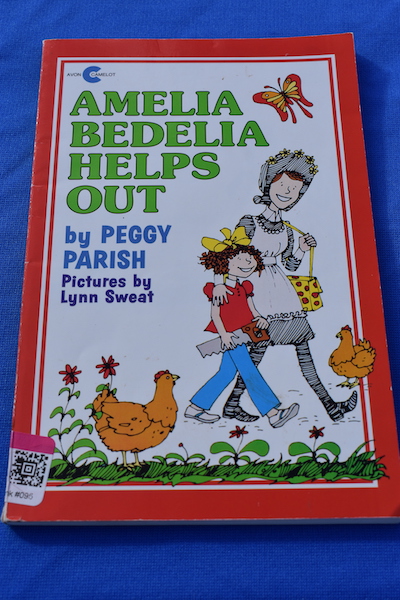
Mr. and Mrs. Rogers are loaning their maid/housekeeper, Amelia Bedelia, to a friend, Miss Emma to help her with a few things around her house. Amelia Bedelia also has her niece, Effie Lou, with her to give her a hand. Effie Lou doesn’t quite know what her aunt does for a living, but although Effie Lou’s first instincts seem to do the normal thing with the instructions that Miss Emma gives them, Amelia Bedelia quickly “corrects” her niece to do things in her quirky, literal-minded way. For example, when Miss Emma tells them to weed the garden, Effie Lou starts to pull the weeds, but Amelia Bedelia convinces her that they are supposed to add more since Miss Emma didn’t say “unweed” the garden.
From there, Amelia Bedelia interprets Miss Emma’s order to “stake” the beans in the garden as tying bits of steak to them. They also give the chickens Miss Emma’s quilting scraps instead of food scraps and sew grass seeds onto thread instead of “sowing” them into the ground.
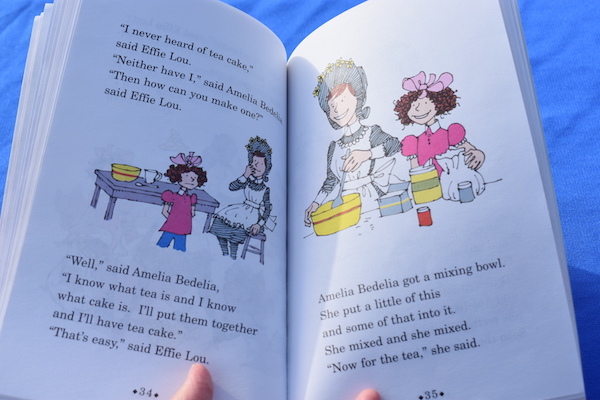
Is Amelia Bedelia a bad influence on her niece? Maybe, but once again, her baking skills come to the rescue. Miss Emma asks her to bake a “tea cake” for some guests who will be coming over.
Now, depending on where you live, “tea cake” actually can mean different things. Sometimes, it’s just a small cake that’s served with tea, and other times, it’s a special kind of cookie or biscuit (the distinction is regional). The way Amelia Bedelia interprets it is a cake that actually includes tea as an ingredient. Surprisingly, though, everyone loves it, even more than the nut cake she also baked.
The book is currently available online through Internet Archive.
















 Jestress's Forgotten Books and Stories