Jane-Emily

JaneEmily

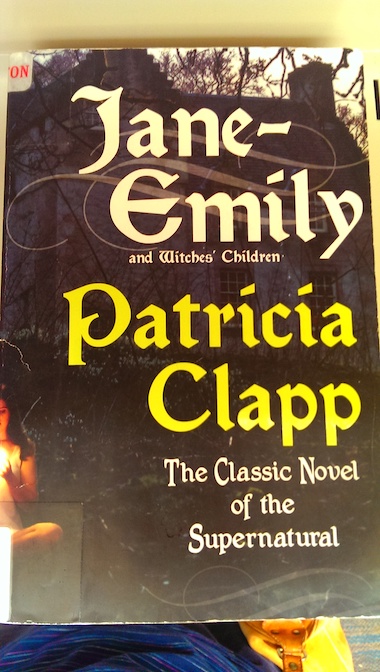
Jane-Emily by Patricia Clapp, 1969.

Louisa is a young woman around the turn of the century.  She is only 18 years old and unmarried, but she is in love with a young man named Martin.  However, her parents think that she is becoming too serious about Martin too soon, so they insist that she spend the summer taking her young niece, Jane, to visit her other grandmother.  Jane has lived with her maternal grandparents, Louisa’s parents, since the death of her parents.  Louisa loves her niece, but she resents her parents changing her summer plans in order to keep her away from her boyfriend.

However, this is not just a love story but a ghost story.  Jane’s parents were killed in a strange buggy accident, which is why she lives with her grandparents and young aunt.  Her other grandmother has lived alone since the death of her son (Jane’s father) and her husband, some years earlier.  She had another child, a daughter named Emily, but Emily died young many years ago of a sudden illness.

As Louisa soon learns, Emily was a pretty and clever but seriously disturbed child.  Her father idolized her, coming to love her even more than he loved his wife.  He thought she was absolutely the most perfect child in the world and could never forbid her anything.  He gave her everything she ever asked for and refused to allow his wife to discipline her for any reason, even when she needed it.  It would be enough to spoil any child, but Emily was extremely callous, cold, and manipulating by nature.  Her father’s catering to her only fed her selfishness and ruthlessness.

Emily was known to resort to extreme measures to get her way, and in the end, it led to her death.  She fell in love with the son of the local doctor, deciding (without his consent) that they would get married one day.  However, he didn’t really care for her at all, seeing her extreme selfishness.  In a bid to get his attention and sympathy, Emily decided to make herself ill.  One cold night, she soaked her nightgown in water and deliberately sat by an open window.  Unfortunately, it worked too well, and she became so ill that she died.

However, Emily’s selfishness and determination to get her way seem to have lasted beyond the grave, and young Jane’s presence in her old house, in the very room that used to be Emily’s, seems to have awakened Emily’s wrathful spirit.  Jane becomes fascinated with the reflecting globe in the garden, which Emily declared was hers alone and that no one else could ever look into it.  Jane claims that she can see Emily’s face in the globe, but people don’t believe her at first. Jane bears a close resemblance to Emily, although the two of them are very different in character.  Jane seems to develop an unhealthy obsession with her dead aunt, and she seems to know things that only Emily could have told her.  Emily seems to be slowly taking over Jane.

Jane’s grandmother confides that she has believed that Emily caused the sudden deaths of her husband and son because they both died under unexplained circumstances and Emily could never let go of anything or anyone she thought belonged to her.  Now that Emily seems to be showing an interest in Jane, her grandmother begins to fear for her.

Meanwhile, Louisa is falling in love with Adam, the young man Emily had planned to marry and who is now a doctor himself.  Adam also loves her, wanting her to marry him.  However, Louisa has become convinced of Emily’s evil presence and the threat that she poses to young Jane.  When Emily forces Jane to go out in a freezing rain, making her become ill in the way she did before she died, Louisa must help Jane to fight for her life.

Emily’s presence centers around the gazing globe in the garden, and the only person who can end her evil influence and save Jane is her grandmother, who finally finds the courage to stand up to her daughter and tell her that there are some things that she can’t have.

The book is currently available online through Internet Archive.

My Reaction

Parts of the story feel a bit preachy on the subject of parents who spoil their children, but Emily and her family are presented as an extreme case of that.  At times, characters wonder what Emily would have been like if her father hadn’t constantly catered to her every whim and had given her the discipline she needed.  They all agree that she would have lived a longer life, as would other members of her family.  However, Emily was already a naturally selfish person and apparently incapable of empathy.  Her father’s worship of her was seriously unhealthy and, in a way, a reflection of his own selfishness; Emily represented all the qualities that he loved in her mother but she was a creation of his (well, you know, 50%, genetically speaking), making her infinitely more perfect and more worthy of his love than his own wife.  One of the other characters comments that his wife was the real victim in the end because her husband blamed her for their daughter’s early death (which was definitely Emily’s fault alone) and subjected her to years of guilt over it, rejecting all the love they had once had for each other.

The story ends happily but on a somewhat ambiguous note because Louisa realizes that there are many things that she doesn’t understand, and although Emily seems like she’s finally gone, the memory of her will haunt them all.

Bed-Knob and Broomstick

BedKnobBroomstickBed-Knob and Broomstick by Mary Norton, 1943, 1947.

This book is actually two books in one.  The title Bed-Knob and Broomstick is the one used for editions that include both the first book, The Magic Bed-Knob, and the sequel, Bonfires and Broomsticks.  Together, these two books were the basis for the Disney movie Bedknobs and Broomsticks, although the plot of the movie is considerably different from the two books. Because the movie is based on both of the books at once and because I read the combined edition, I’ll explain the plots of both of the books in one post.

There are two major differences between the movie and books that change many other things about the plot. The first one is that there is no mention of World War II in the books, even though the books were written during that time.  Miss Price was not studying magic to help the war effort, and the children were only in the countryside for vacation, not because they were evacuated there. Also, in the books, Emelius Jones (Emelius Brown in the movie) was a man they met when they traveled through time, not a man living in London during their own time.  He was not involved in Miss Price learning magic, although the two of them do end up together in the end.

The Magic Bed-Knob

At the beginning of the first book, the three Wilson children – Carey (who is described as being “about your age”), Charles (“a little younger”), and Paul (six years old) – are spending the summer with their Aunt Beatrice in Bedfordshire. There is never any mention of the children’s father in the books. Probably, their father is dead, although he might have left the family and went to live elsewhere or may be fighting overseas, although there is no mention of that in the book, making me think that it is probably not the case. The children apparently live with only their mother in London, and because she works, she always needs to find somewhere for them to stay during the summer, when they’re out of school. (This is a major plot point in both of the books.  In the Disney movie, the three children are orphans who have no memory of their birth parents, and their guardian was killed in a bombing shortly before they were evacuated to the countryside.  You only get their full backstory if you see the anniversary edition of the movie that includes the deleted scenes.)  While the children stay with Aunt Beatrice, they enjoy playing in the countryside, and one day, they happen to meet Miss Price, who they find with an injured ankle.

Miss Price is a respectable spinster from the village who gives piano lessons and is often seen riding around on her bicycle.  When they find her hurt, Carey says that they should get a doctor for her, but Miss Price insists that she doesn’t want one. Instead, she just asks the children to help her get home. As she starts to lean on Carey and Charles, Paul picks up a broom nearby. The older children thought it was just an old garden broom, but Paul calmly says that it belongs to Miss Price because it’s what she rides around on. The others are shocked, but Paul simply says that that he’s seen her improve in her flying, so Miss Price knows that he’s seen her riding her broom more than once. Miss Price is worried that everyone in the village will know now that she’s a witch, but Paul hadn’t even told his brother and sister what he’d seen.

The children help Miss Price get home, and they allow their aunt to think that Miss Price simply fell off of her bicycle. When the children are able to speak to Miss Price privately, they ask her directly if she’s a witch, and she admits that she’s studying to be one. She says that she’s had some talent for magic since she was young, but she never really had the time to develop it. The children are convinced that, while Miss Price might be a witch, she’s not a wicked one, and she says that’s true, that she started too late in life to be that way and that wickedness doesn’t come naturally to her. However, she’s still worried that the children might tell people about her magic.

Carey is the one who suggests that Miss Price give them a magical object as part of their pledge of secrecy (unlike in the movie, where it was Charlie’s idea), with the idea that, if they ever told anyone that she’s a witch, the magic would stop. Charles suggests that Miss Price could give them a magic ring that would summon a slave to do their bidding, but she says that she couldn’t manage that and that she has a better idea. Miss Price asks the children if they have anything on them they can twist, like a ring or a bracelet. The only thing they have is a bed-knob that Paul twisted off the end of his bed (basically, because he discovered that he could).

Miss Price says that the bed-knob will do nicely, and she casts a spell on it that will allow the children to travel to the destination of their choice when they put it back on the bed and give it a twist. If they turn it in one direction, they can travel in the present time, but turning it the other way can send them to the past. Also, because Paul was the one who had the bed-knob, he’s the only one who can make it work. Miss Price isn’t troubled by Paul’s young age because she thinks that it’s best to learn magic young, although she warns the children to be careful.

Because it’s Paul’s bed-knob, Carey and Charles give him first choice of where to go, but they think the places he wants to go sound mundane. He wants to either see a museum exhibit that the others saw without him once or to go home and see their mother in London. Carey and Charles try to persuade him to go someplace more exciting, but Paul insists that he wants to go home.

The bed whisks the children home to London, but when they get there, their mother isn’t home. Apparently, their mother has gone away for the weekend herself, and the children find themselves alone on their bed, in front of their house, on a foggy night. A policeman bumps into them, and when he demands to know who they are and where the bed came from, he doesn’t think it’s funny when they say, “Bedfordshire.” He takes them to the police station to spend the rest of the night. Fortunately, they find a way to get back to the bed and use the spell to return to their aunt’s house before they’re missed in the morning. It’s not quite the adventure that the children had been hoping for when they started out, but it’s just the beginning of their amazing summer!

However, magic turns out to be more dangerous than they thought. Their next adventure takes them to an island with cannibals (yeah, one of those scenes, sigh – I think that the island of talking animals in the movie was more fun), and they narrowly escape after Miss Price has a duel of magic with a witch doctor. Their magical adventures create problems that the children can’t explain to their aunt without giving away Miss Price’s secret. Eventually, their messes and wild stories cause their aunt to send them home to their mother. Miss Price considers that magic might cause more problems than it solves and tells the children that she’s thinking of giving it up for awhile. However, Paul keeps the bed-knob in the hopes that their adventures aren’t done yet.

BedKnobBroomstickChildren

Bonfires and Broomsticks

In Bonfires and Broomsticks, two years have passed since the children’s first adventures, and Aunt Beatrice has died. Carey and Charles, worried that Paul would talk too much about their magical adventures, tried to convince Paul that it was all just a dream, although they weren’t very successful.

Then, the children see an advertisement in the newspaper that Miss Price is offering to board a couple of schoolchildren in her house for the summer for a fee. The children’s mother works, and she always has to find somewhere for the children to spend the summer, when they’re not in school. They still have the bed-knob, so they tell their mother that they want to visit Miss Price, hoping they can have more adventures with her. At first, their mother doesn’t understand why they would want to visit Miss Price so badly, but since she seems like a nice, respectable woman and an old friend of Aunt Beatrice’s, she agrees.

Miss Price is happy to have the children stay for the summer, but they are disappointed when they learn that she was really serious about giving up magic. The children discover that Miss Price bought the old bed that they had used for their previous adventures at the estate sale after their aunt’s death. She’s been sleeping on it in her own room. They want to try the bed-knob on the bed, but Miss Price takes it from them. She tries to make their summer vacation a normal vacation with normal activities, like picnics and croquet.

But, even Miss Price can’t resist the opportunity to try the bed-knob one last time. One morning, Carey and Charles discover that Paul and Miss Price have traveled somewhere on the bed without them. When the two of them confront Paul about it, he says that they only went to a nearby town, just to see if the spell on the knob still worked. Carey and Charles understand, but Carey thinks that if they got to use the bed once more, she and Charles should have one more turn. She especially wants to try going into the past, which was something they hadn’t had a chance to try last time. Miss Price is reluctant, but finally agrees after Carey pressures her about it.

The children travel to London of 1666 (ending up there accidentally, when they were aiming for the Elizabethan era), where a man named Emelius Jones has been living as a necromancer. When he was young, he studied magic under a mentor who, as he was dying, finally told him that everything he learned was fakery. It was all an act that he used to get money from gullible people, although it paid very well. The old man leaves Emelius his business, but Emelius is always nervous, worrying both because someone might discover that it’s all a fake and because others might believe that it’s real and that he should be hung as a witch. The only reason why he stays with it is because he has no other business to follow.

The children meet Emelius after ending up lost and stopping at his house for directions. The children can see how nervous and unhappy Emelius is, and they ask him about himself, discovering that his home town is actually close to where they’re staying with Miss Price. They reveal to him that they are from the future and invite him to come home with them for a visit.

Miss Price isn’t happy to see that they’ve brought someone back from the past with them, but she ends up liking Emelius. Before sending him home, they learn that Emelius’s aunt, who lived near to where Miss Price now lives, died the same day that Emelius left London in the past, which is coincidentally shortly before the great fire that destroyed a good part of the city. They know that Emelius’s London lodgings will likely be destroyed in the fire as well, but at least he can move into the house that he will inherit from his aunt.

However, after they send him back to his own time, the children and Miss Price learn that Emelius never made it to his aunt’s house because he was executed for practicing witchcraft. Unable to leave poor Emelius to such a terrible fate, they come up with a plan to rescue him.

The combined book edition is available online through Internet Archive.

My Reaction and Spoilers

Changing Emelius’s past also changes Miss Price’s future. Neither of them has ever married, and both of them have been lonely, and they come to the conclusion that the two of them were meant to be together. In deciding that they will live their lives together on Emelius’s aunt’s farm in the past, they put an end to the magical traveling bed. Only Paul can make the magic bed-knob work, and once he sends them into the past (not going with them), they can never return. But, Carey has one final vision of the two of them, being happy together, so she knows that they will be alright.

Overall, I preferred the Disney movie to the original books.  I think the war-based plot was better than the children’s random travels to cannibal-filled islands (I never liked those tropes in children’s stories anyway) and other places.  At one point in the books, Carey did speculate about the use of magic in war, but she rejected the idea because the notion of someone with the ability to conjure a dragon that could breathe mustard gas or who could turn whole armies into mice was just too horrible.  The spell that Miss Price used against the Nazis in the movie was part of their plan to rescue Emelius in the second book, but I think the movie’s ending was much more exciting.
Mystery Behind Dark Windows

MysteryDarkWindowsMystery Behind Dark Windows by Mary C. Jane, 1962.
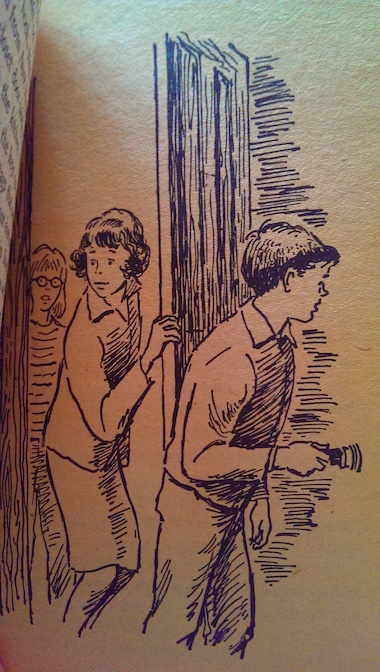
Recent years have brought misfortune to the formerly wealthy Pride family.  First, Tony and Ellie’s father was killed while on a business trip on behalf of the family’s mill.  Then, the workers in the mill went on strike, and the children’s grandfather died.  Their Aunt Rachel blames the strikers for putting stress on her father while he was still grieving for his son, thereby causing his death.  Because of that and because she doesn’t believe that she can handle the running of the mill herself, she has closed down the mill, putting all of the workers out of a job.

The townspeople of Darkwater Falls struggle to get by without the mill and are angry with the remaining members of the Pride family for the lay-offs, but Aunt Rachel thinks that their suffering is earned and so does nothing to help.  If Aunt Rachel would be willing to sell the mill to someone who would put it back into good use and employ people, the community’s problems would be solved, but Aunt Rachel can’t bring herself to do that, in spite of the offers she’s received and the urging of the family lawyer, Mr. Ralph Joslin.  She has high hopes that Tony might revive the mill one day when he’s grown up, and in the meantime, she wants to punish the strikers with unemployment and underemployment.  However, Aunt Rachel, absorbed in her personal pride and bad feelings, is ignoring some serious issues.  The taxes on the disused mill are costing the family dearly, the equipment is rusting, and Tony isn’t even sure that he wants to go into the family business.  Tony and Ellie are unhappy with their family’s situation, their aunt’s bitterness, and the way many of the townspeople now look at them, but they’re not sure what to do about it.

MysteryDarkWindowsMillSearchThen, one night, Ellie goes out to look for her aunt’s missing cat and hears someone in the old, supposedly empty mill.  When she tries to tell Tony, he doesn’t take her seriously, but Ellie knows what she heard.  Ellie later goes back to the mill to take another look at the place, and she sees Jeff, a boy from Tony’s high school, hanging around.  Later, she confides what she’s heard and seen in Hank, an old friend who lives on the other side of the river, and Violet, another girl from her class whose family has suffered since the closure of the mill.  The two of them start helping Ellie to investigate.

Some people in town have become concerned about children in the area getting into trouble, and they think that maybe some of the local youths have formed a gang.  Ellie worries about Tony, who has started sneaking out of the house at night to hang out with friends.  Is he now part of a gang?  Are he and his friends the ones who were sneaking around the old mill? Or could it be some of the disgruntled townsfolk, bitter about the mill remaining empty and not providing much-needed jobs?

While the kids have a look inside the mill, they discover that someone has been using the place as a hideout.  A fire at the mill reveals a number of secrets and sheds light on a town and a family caught in a cycle of bitter feelings and revenge.  Aunt Rachel is stunned when some of the townspeople accuse her of setting the fire herself in order to get insurance money for the mill.  The fire was clearly arson, and since Aunt Rachel has gone out of her way to make life difficult for people in town, many of them would be ready to believe just about anything of her.  It’s up to the young people to put the pieces together and reveal the true arsonist before the mill, the town, and the Pride family are completely destroyed.

Many of Aunt Rachel’s decisions are guided by a mixture of grief and anger, but she is also stubborn and prideful.  The Pride family was aptly named.  Although they have suffered misfortune, their privileged position as the (former) main employer of the community has given Aunt Rachel the sense that she and others in her family could do no wrong.  Aunt Rachel is absorbed in herself, her own feelings (which she places above others), and the past to the point where she feels justified in deliberately causing harm to her community and the people in it, failing to see the consequences of her actions, even the effects that her attitude has on the orphaned young niece and nephew in her charge.  Ellie feels like they don’t have a real family because her aunt’s bitter feelings prevent her and her brother from getting close to their aunt.  Her aunt’s actions have also made it difficult for her and Tony to get along well with other members of the community, further isolating them from comfort in their own grief.

In a way, the fire brings Aunt Rachel back to reality, forcing her to see the consequences of her actions (and inaction).  It comes as something of a shock to her that, while she felt fully justified in her bad feelings for the town, they are also fully justified in feeling badly about her.  Somehow, it never occurred to her how someone, doing the things she’s been doing and saying the things she’s been saying, would look to the people she deliberately set out to hurt.  For most of the story, the only feelings that were real to Aunt Rachel were her own.  Even when she thought about how people hated her, she didn’t think that what they thought would matter until she began to see how it was affecting Ellie and Tony as well as the other children in town.  Ellie can see that many things would have been resolved sooner if both her aunt and her brother could open up and discuss things honestly, both within the family and with other people.  Although neither of them set the fire, their secretiveness and self-absorption at first create the impression that they did.  Ellie’s eventual outburst at her aunt and the real guilty person force both of them to acknowledge the reality of their actions and motives.

I was somewhat fascinated by the motives of the arsonist, who understands the effects that Aunt Rachel’s bitterness and revenge have been having on the young people in town, even her own nephew, better than she does.  This person was wrong in the path he tried to take to fix the situation, but he does correctly see that unemployed men not only lack the money they need to properly take care of their families but may also set a bad example for boys and young men, either through the habits and attitudes that they let themselves fall into or by becoming too absorbed in their difficulties to see what’s happening to their own children.  I also agree with his assertion that those responsible for putting people out of their jobs bear some responsibility for the results of their actions, something which resonates in today’s economy, where many people are still unemployed or underemployed.  The Pride family’s previous high standing in the community was directly because of their ability to employ people and improve the lives of others.  When they began making life hard for others and refused to use their ability to help people, they lost that standing.  Aunt Rachel was just the last to realize it, which was part of the reason why she was surprised to discover just how badly the town thought of her.  She didn’t have a good reputation because she had done nothing to earn one, no matter what her family used to do.  She was no longer using their powers for good, so she turned herself into a villain.  However, it’s important to point out that the arsonist isn’t really in the right himself because, as Ellie points out, the spirit behind his actions isn’t much different from her aunt’s.

Ellie is correct in pointing out that both her aunt and the arsonist were wrong, not just because of what they did, but because of the feelings and motives behind it.  In their own way, each of them set out to deliberately hurt others because they had each been hurt.  Which of them was hurt first or hurt worse ultimately doesn’t matter.  Their mutual desire for vengeance against each other not only hurt the people around them but kept each of them from doing what they needed to do in order to heal their own wounds.  That is also a message that resonates today, in these times of political division, with two large parts of society trying to one-up each other and even actively harm one another, largely because they can’t stand the idea of someone wanting something or believing something that they don’t.  Whatever the circumstances, when people focus on winning on their own terms, no matter what the cost, everyone loses in the end.

Toward the end of the story, as Aunt Rachel and the arsonist begin making grudging apologies to one another and reluctant steps to fix things, Ellie decides that grudging and reluctant aren’t good enough and finally gets up the nerve to tell them what she really thinks, what they most need to hear:

“Just selling the mill won’t make things better . . . It’s the way [they] feel about it that’s wrong. That’s what made them act the way they did in the first place. They just wanted to get even with people, and hurt people, because they’d been hurt themselves. And they feel the same way still. You can see they do.”

How much can people help what they feel? It partly depends on what people choose to do about their feelings.  Actions guide feelings, and feelings guide actions.  Aunt Rachel and the arsonist indulged their bad feelings, nursing them, amplifying them, and making them their first priorities, the guiding force of their actions.  As long as they keep doing that, Ellie knows that the problems aren’t really over, and everyone will remain trapped in this bad cycle.  Ellie’s honest outburst finally breaks through to both of them, showing them what they really look like to others and making them reconsider their feelings and priorities.

One of my favorite characters in this story was Mr. Joslin, the lawyer.  Although he looks a little suspicious himself for a time, he is actually a good man, who looks after the family’s interests and genuinely cares about them as well as about the town.  He is the one who convinces Tony to be honest with his aunt about the friends he hangs out with and helps persuade Aunt Rachel to see things from others’ point of view.  He loves Aunt Rachel, in spite of her faults, and is honest with her about those faults, telling her what she needs to hear.  Of all the characters, with the exception of Ellie, he seems to have the most insight into other people’s feelings and situations.  He supports what Ellie says, quoting Lord Bacon, “A man who studieth revenge keeps his own wounds green, which otherwise would heal and do well.”

Kathleen: The Celtic Knot

KathleenKathleen: The Celtic Knot by Siobhan Parkinson, 2003.
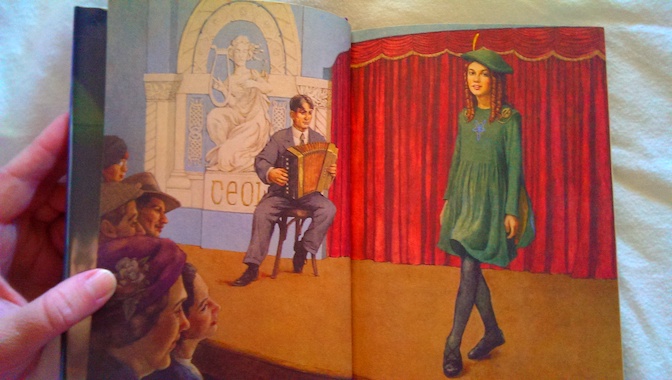
Twelve-year-old Kathleen lives with her family in Dublin, Ireland in 1937. Like the rest of the world, Ireland is suffering under the Great Depression, and Kathleen’s father has been having trouble finding work. Her mother helps to support the family by working as a midwife.

One day, when Kathleen’s mother is off delivering a baby, Kathleen accidentally burns the porridge at breakfast, making her and her sisters late for school. Although they should have been marked as being on time, they are considered one minute late because the nun’s watch was fast. Discipline is harsh at the Catholic school they attend, and after a harsh lecture to Kathleen, the headmistress, Mother Rosario, calls for a conference with her mother. Kathleen is very upset about it, but Mother Rosario softens somewhat and says that she merely wants to see that everything is alright with Kathleen’s family because a nice girl like her shouldn’t be acting up.  Kathleen still worries because she knows that the nuns look down on poor families like theirs and consider their authority higher than the parents of the children they teach.  They are often unaware of the circumstances that families live in.

However, Kathleen’s mother isn’t fazed by the nuns’ attitude and is blunt with the Mother Rosario, telling it like it is. The headmistress does show that she has some compassion and is somewhat aware of their circumstances because she says that Kathleen’s lateness was only part of the reason she wanted this meeting. She has guessed that Kathleen’s father is looking for work, and there is a position for an assistant gardener open at the school. It doesn’t pay much, and it’s not as good as her father’s old job was before the factory where he worked closed, but he agrees to take it because it’s better than nothing.

The headmistress also says that she has noticed that Kathleen is musically-talented. She likes to sing and has a good voice. Mother Rosario thinks it would be a good idea for her to take piano or dance lessons. The family doesn’t have a piano, so the headmistress suggest that Kathleen join the Irish dancing lessons because it’s a wholesome activity that reflects her heritage and that would keep her out of trouble. Kathleen’s mother isn’t big on heritage, but she agrees that dancing might be a good activity for Kathleen.

Kathleen isn’t happy about the dance lessons at first because the other girls who are involved are snobs. But, once she tries it, she realizes that she actually loves dancing. The problem is that the lessons aren’t free, like the other girls told her. At first, Kathleen feels cheated, finding out that she loves something that she can’t have after all, but her teacher says that she’s talented, so she offers Kathleen some free lessons anyway. She’s been looking for new talent so that her dancers can do well in the next dancing competition, and she doesn’t want to let a promising dancer like Kathleen slip through her fingers.

The snobby girls in class are all the more irritated when Kathleen is among those chosen to enter the next competition, but everyone also knows that there is one more obstacle for Kathleen: she doesn’t have a proper dancing costume or any money to buy one. She prays for one, even promising God that she’d become a nun if he gives her the costume she wants. Her mother has her eye on some beautiful cloth that she hopes to buy as a remnant, but the cloth gets snapped up by some of the wealthier, snobby girls, and her mother comes down with a serious illness shortly before the competition.

Kathleen begins to think that she was wicked for being so concerned about dancing and costumes when there are much more serious things in life. However, her aunt, Polly, understands how she feels and comes up with a plan to make the needed costume for Kathleen, using her favorite book, Gone With the Wind, as inspiration. Remember what Scarlett O’Hara did when she needed a new dress and couldn’t afford one?

KathleenDancing

One of the themes that runs through the story is questions and answers. Kathleen has a lot of questions about life. She knows that her mother deliveries babies for money, but she doesn’t really understand much about it, and her mother doesn’t answer the questions she asks. In fact, Kathleen notices that most of the adults she knows (with the exception of her father) brush aside her questions about the way the way the world works or the things people do because they simply don’t want to be bothered with them. They have too many concerns of their own, and they don’t really know most of the answers themselves. It kind of contrasts with the answers that Mother Rosario demands from Kathleen and immediately dismisses upon getting. Most of the time, she doesn’t really want to bother with answering questions or even dealing with the answers to questions she’s just asked. Only once does she answer a question that Kathleen had asked about St. Patrick, and Kathleen is astonished at getting an answer about something.

I have to admit that the attitudes about questions and answers from most of the adults in the story really irritated me, especially the way Mother Rosario demanded answers from Kathleen about her lateness and then dismissed everything that Kathleen said, angry that she had “answers.”  I’ve met people like that before in real life, and they’re just as illogical and crazy-making as this headmistress. I’m not talking about teachers who refuse to listen to flimsy excuses like “the dog ate my homework,” but people who get angry at others who have real explanations just because they have real explanations. People who demand to know the reasons why things happen and then immediately reject any explanation offered without a real reason for doing so are obnoxious. I’ve encountered people like that before, and it’s hard to have anything resembling a meaningful conversation with them.   They don’t want to talk to you; they just want to yell or lecture at you.  They don’t really care what the answers or explanations are for anything, and no answer would make any difference to them because what they really want is for the other person to just feel bad. It’s an unethical one-upmanship tactic, and it loses my respect the moment I hear someone use it because I recognize what they’re attempting to do. It’s so obvious, but frustrating at the same time (Kathleen in the story wonders why Mother Rosario is trying to torture her in this way) because there’s nothing you can say to stop the other person once they start (at least, I haven’t figured it out). Kathleen’s approach was probably the most effective.  She just stopped talking and prepared herself for the headmistress to hit her, which caused the headmistress to wake up a bit to the fact that the message that she was sending to Kathleen was that her only intentions were to hurt her.  Fortunately, those were not her only intentions, but I have to admit that I never really had any respect for Mother Rosario after that, in spite of what she did to help Kathleen’s family.  You can tell this is one of my pet peeves.  One-upmanship really bothers me in all of its forms, and I have even less time for that kind of nonsense than these characters do for answering a twelve-year-old’s questions.  At least you can talk to a twelve-year-old. Getting back to that, part of Kathleen’s trouble with some of her questions is that her elders often underestimate her, thinking that she’s really too young to understand anything, but the fact that she’s asking questions says that she’s really not. In fact, she might even be putting more thought into some issues than the people who have decided that some things aren’t worth thinking about in the first place.

Another theme of the story is growing up and changing goals in life. By discovering her talent as a dancer, Kathleen has found something that she would like to dedicate her life to, and if she becomes a dance teacher herself, it would give her a job to do in her future that could make her life better. Her aunt, Polly, who is twenty years old, also changes her mind about what she wants in life. As a single young woman, she likes to go out and have fun with her small earnings, hoping to meet a man as elegant as Rhett Butler.   However, when her latest young man turns out to be a cad, she accepts a proposal from the very shy but much nicer young man who she had previous thought wasn’t handsome enough. Polly’s experiences make her realize that handsomeness by itself isn’t much, and she and her new husband have plans for building a life together. At first, Kathleen is disappointed because she and Polly had talked about leading a carefree life together as single ladies when Kathleen was grown, but Polly explains to her that things will be better this way and that grown-ups have to build real lives for themselves, not live on dreams alone. Kathleen is still in the process of discovering the possibilities that life might hold for her and the talents that she can use to build her life.

I also found the parts about Irish history and politics during 1930s interesting.  One of the reasons why Kathleen’s family isn’t big on the Irish heritage movement is because her grandfather fought during World War I and wasn’t treated well as a veteran when he returned. During the meeting with Mother Rosario, Kathleen’s mother is blunt about her views on things, and Mother Rosario is surprised how much she understands of politics, showing that she looks down on poor people (possibly the source of her general rudeness and bullying tactics, even when she’s trying to be helpful – she’s decided that she’s superior and will remain so, whether she’s right or wrong), thinking that they aren’t smart enough to understand what’s going on around them.  The story makes it clear that the nuns at school are often out of touch with what ordinary families go through in their daily lives.  They underestimate what people know or read about, they have trouble understanding their daily struggles with money and how they are barely able to keep food on the table, and they seem unable to grasp what it’s like to be part of a family where any family member’s actions can affect all of the others.  For me, they were far more aggravating than the snobby little girl characters because I usually expect adults of a certain age to have grown out of some of these behaviors.

While reading the story, I was kind of comparing Kathleen’s circumstances in Ireland in the 1930s to life in America during the Great Depression, and many of their struggles were the same.  I was also kind of fascinated by Polly’s fascination with Gone With the Wind because it shows how pieces of culture and entertainment could become popular in other countries during this time.

This book is part of a series by the same publishers of the American Girls Books.  There is a section in the back of the book with historical information about the period.

KathleenHistorical

The Root Cellar

RootCellarThe Root Cellar by Janet Lunn, 1981.

Rose Larkin is an orphan, living with her grandmother, a stern businesswoman.  Her grandmother travels frequently on business, so from the time Rose came to her when she was three years old, she just took Rose with her wherever she traveled, tutoring her in school subjects in the evening after work.  Rose’s early life is largely one of travel to strange places and isolation.  When her grandmother is working, Rose is pretty much left to her own devices, often either reading alone in their hotel rooms or exploring strange cities by herself.  Not going to school, she has no friends her own age and doesn’t really know how to behave around other children or live as part of a normal family.

When her grandmother dies suddenly of a heart attack in Paris when Rose is twelve years old, her remaining relatives have to decide what to do with her.  She temporarily stays with aunts who are into fashion and high living before goes to live with another aunt and uncle and their boys on an old farm.  Aunt Nan (Rose’s father’s sister) and her husband are better suited to caring for Rose and can give her a more settled family life, but Rose’s other relatives don’t seem to think much of Aunt Nan, who is an author of children’s books.  Rose has heard that Aunt Nan has no sense and that the family has just moved to a shabby little farm house in Canada.  Rose is prepared not to be happy there, on a dumpy little farm, miles from anywhere, with a bunch of strange people.

Her new life gets off to a bad start when there is no one to meet her at the house when she arrives.  As she waits for her aunt and uncle to return, a strange old woman appears who seems to know her.  She calls herself Mrs. Morrisay and acts like she belongs to the house.  But, when Rose’s relatives arrive home, Mrs. Morrisay suddenly disappears, and none of them seem to know anything about her.  Later, Rose sees a girl making a bed upstairs, but her relatives just laugh when Rose asks them about the maid, which is who Rose thought the girl was.  There is no maid in this house, and Rose is the only girl.  To Rose’s annoyance, her relatives think she imagined the whole thing.

Actually, life in her aunt and uncle’s house in the country isn’t as bad as her other aunt has lead her to believe, but becoming part of their household isn’t easy because Rose is used to a very different kind of life.  The house is definitely old and in bad need of repair, and her relatives are noisy and disorganized, at least more so than Rose is accustomed to.  Rose isn’t used to the chaotic life of a family with a lot of children, and Aunt Nan has another on the way.  Also, tourists who are fans of Aunt Nan’s books sometimes stop by the house, and Rose doesn’t like dealing with their scrutiny and questions.  Sam, one of the older boys in the family, seems to resent Rose’s presence in the house, and Rose overhears him saying a lot of bad things about her to her aunt, calling her snobby and criticizing her appearance.  Rose takes his attitude as further evidence that she doesn’t really belong in their house and that she’ll never fit in.  If they think badly of her, why should she think any better of them?

Rose also becomes increasingly aware that there is something not quite normal about her relatives’ house, especially the old root cellar, and the people she saw on her first day in the house are part of it.  Sam thought that he might have seen a ghost in the house one day, an old woman, and Rose recognizes his description as that of the Mrs. Morrisay she saw on her first day there.  She sees Mrs. Morrisay in her bedroom later, suddenly walking through a wall.  Rose thinks Mrs. Morrisay is a ghost, but Mrs. Morrisay tells her that she’s not dead, just “shifting” through time and that she wants Rose to stay in the house and help restore it to its former glory.  Rose doesn’t know why or how she can possibly help Mrs. Morrisay.

Rose learns that her aunt’s house was once an old farm house that belonged to the Morrisay family, and there is still an old root cellar on the property, a relic from the time when people had to store certain kinds of food underground to keep them cool and prevent them from spoiling.  One day, Rose goes down into the root cellar and meets a mysterious girl dressed in old-fashioned clothes, the same girl she saw earlier, making beds.  Although Rose and the other girl don’t realize it immediately, Rose has gone back in time.  The girl was someone who lived on the farm in the past, during the 1800s.

Rose and the girl in the past, Susan Anderson, become friends, and Rose is grateful for another girl to talk to.  Susan is an orphan herself, living with the Morrisay family as a servant girl.  She and Will Morrisay, old Mrs. Morrisay’s son, are friends, and both of them are sympathetic to Rose when she tells them about her new life with her relatives and the problems she has. Rose finds herself wishing that she could stay in the past with them forever.  However, once they realize that Rose is traveling through time when she goes in the root cellar, they also discover that it isn’t reliable about exactly when Rose will reappear in the past.  Although at first there are only days between Rose’s visits from her perspective, months or years pass in her friends’ lives between her visits.  They eventually manage to solve this problem through a friendship pact where they exchange favorite objects.  It’s at a good time, too, because soon Rose’s friends need her help as much as Rose needs them.

After a terrible fight with her relatives in which her aunt slips and falls and Rose worries that her aunt and the baby might die, Rose runs away to the root cellar and goes to see her friends, discovering that in their time, Will has gone away to fight in the American Civil War alongside his favorite cousin and has not returned.  It’s been awhile since Susan has heard from him, and she fears the worst.  Rose suggests that they go to look for Will at his last known location, but it’s a difficult, perilous journey. At first, they’re not sure whether they’ll find Will alive or not.

When they finally find Will, he is a changed man from the war, and Rose and Susan have to help him to remember who he really is and where he really belongs.  In helping Will to remember where he comes from, his life before the war, and how much Susan needs him, Rose comes to realize some important things about herself and where she really belongs.

The book is available to borrow and read for free online through Internet Archive.

My Reaction and Spoilers

As difficult as the choice is, Rose realizes that she must return to her own time, face the consequences of her earlier actions, and do what she can to become a real member of her new family.  After she returns home and the root cellar is destroyed in a storm, it seems as though she might never see her friends from the past again, but friendship can transcend many boundaries, including time.

I didn’t realize this the first time I read the book, but it’s actually part of a loose trilogy.  I say loose because none of the main characters from each story appear in the others (except, perhaps, for one who is in both the second and third books), which also take place in different time periods.  What binds the stories together is the location where the stories take place and also some distant family relations, particularly focusing on the Anderson and Morrisay families.

It is something of a spoiler, but it seems that the time travel in this story may not be so much a matter of the house being special or magical, but because Susan is special.  It is revealed in one of the other books, Shadow in Hawthorn Bay, that her grandmother was psychic.  Will and Susan briefly refer to Susan’s grandmother and her stories about ghosts when talking to Rose.  Susan seems to have little control, especially later in life, over her ability to shift through time, but it may be her special attachment to the Morrisay house and her need for Rose’s friendship and help that makes Rose’s time travel possible.  It’s never explicitly stated that Susan inherited her abilities from her grandmother, but I think that it is implied during the course of the books.

Magic Elizabeth

MagicElizabeth

Magic Elizabeth by Norma Kassirer, 1966.

Young Sally’s parents are away on a business trip, so she’s been staying with Mrs. Chipley, but now Mrs. Chipley has a family emergency to tend to. Mrs. Chipley’s daughter is ill, and Mrs. Chipley needs to go and help her with her children. While Mrs. Chipley is gone, there is only one other person for Sally to stay with: her Aunt Sarah, an elderly woman who Sally doesn’t really know. Aunt Sarah moved to California when Sally was just a baby, and the only reason why she has returned is that she has decided to sell her old house.

MagicElizabethArrival

Sally is a rather shy girl. She’s uneasy around Aunt Sarah, who is obviously unaccustomed to spending time with children, and Aunt Sarah’s creepy cat, Shadow. The house is old, chilly, and filled with strange things. However, Sally is enchanted with the bedroom that Aunt Sarah gives her and the portrait of a girl and her doll that hangs on the wall. The girl looks very much like Sally herself, and Aunt Sarah tells her that the girl was also called Sally and lived in that bedroom as a child, many years ago.

MagicElizabethKitchen

Fascinated by this earlier Sally and her beautiful doll, modern Sally decides to try to find the doll. Although her aunt tells her that she shouldn’t go poking around in the attic, Sally can’t help herself. She finds a trunk with Sally’s name on it full of girls’ clothes, just the right size for modern Sally to wear. There is a doll in the trunk also, but it’s not the same doll as the one in the portrait. When Sally reads the diary in the old trunk she learns the reason why. The doll in the picture, Elizabeth, was lost many years ago, when the earlier Sally was still young. As modern Sally plays dress up with the earlier Sally’s old clothes and studies herself in the mirror, she finds herself taken back in time, seeing the house through earlier Sally’s eyes. In the past, it was a busy and happy household with parents, an elderly aunt, earlier Sally, Sally’s little brother, and Sally’s pet cats.

A short time later, Aunt Sarah wakes modern Sally on the floor of the attic, and they assume that it was all a dream, but this look into the past changes Sally’s feelings about the house and her aunt’s cat, who suddenly seems friendlier and reminds her of the mother cat she saw in the past. Aunt Sarah also seems a little less stern as they discuss earlier Sally and her lost doll. Aunt Sarah says that no one ever saw the doll again after it disappeared on Christmas Eve all those years ago.  Earlier Sally had put the doll on top of the Christmas tree, like an angel, and after the family finished singing Christmas carols, the doll was gone.  They could never figure out what happened to her.  Modern Sally thinks that sounds very sad and wants to investigate the mystery of the missing doll, although Aunt Sarah isn’t very enthusiastic. She says that if the doll could be found, it would have been found long ago, and the earlier Sally has long since grown up and no longer needs it. Although, oddly, Aunt Sarah remarks that the earlier Sally had always thought that Elizabeth was “a little bit magic.”

Modern Sally continues to look for the doll anyway and also continues having moments when she sees the past as the earlier Sally did many years ago, especially when she looks into the mirror in the attic. One day, she invites a neighbor girl named Emily over, and while the two of them are looking around the attic, Emily finds Elizabeth’s old doll bonnet. The girls are excited because they now know for certain that Elizabeth is still in the house, waiting to be found. The girls are running out of time to find her. If Aunt Sarah agrees to sell the house, it will be torn down to build apartments. But, Sally falls ill with the flu, and it isn’t until Shadow gives her an important clue that Sally realizes where Elizabeth must be.

This book is currently out of print, but it’s one that I’d dearly love to see in print once more!  It is available to borrow and read for free online through Internet Archive.

My Reaction and Spoilers

Adults reading this story will probably realize before the children do (spoiler) that Aunt Sarah herself was the earlier Sally, the one who lost her favorite doll many years ago. “Sally” is a nickname for Sarah, like “Molly” can be for Mary and “Peggy” can be for Margaret, although any of those names can also be used by itself.  (In the Middle Ages, it was common for popular names to get different variations of nicknames by changing one sound in the original name and then changing one more sound in the first nickname to get another one, and sometimes even moving on to change one more sound to get yet another nickname that was very changed from the first. Those nicknames that look significantly different from their original names are a holdover from that practice, having lasted even into modern times.  John/Jack works on the same principle.  Fun fact!)  When Aunt Sarah grew up, she stopped using her childhood nickname, but the name was passed on to modern Sally.

At first, modern Sally sees her stern aunt as being witch-like, all dressed in black and fussy, but gradually, the memories of the past, her new relationship with young Sally, and the finding of her slightly-magical doll soften her. There are hints of Aunt Sarah’s youth in the attic, although Sally at first dismisses thoughts that some of the lovely things there could have belonged to her cranky old aunt because she has trouble thinking of her aunt as once having been young, pretty, and sweet. However, part of the theme of the story is that everyone was young once. Aunt Sarah is is bent and achy from arthritis, giving her the witch-like appearance and making her short-tempered at times. She also hasn’t been around children much for years, and part of her fussiness comes from forgetting what it was like to be young herself. Modern Sally, with her resemblance to her elderly aunt, and Elizabeth the doll both work their magic on her, reminding her what it was like to be a young girl and helping to revive a more youthful spirit in her.

I was happy that (further spoiler) Aunt Sarah decides not to sell the house after all, not just because she and Sally will get to spend more time together, but because old houses like that are rare these days. I like the idea that the old family heirlooms in the house will now be preserved, like the sleigh out in the old barn and the melodeon, a type of small organ.  I liked the way the book described the melodeon making musical sounds as people walk past it because of the way the floor boards move.  I also loved the description of the gas plant that Sally sees in earlier Sally’s memories.  If you’d like to see what a gas plant looks like when it’s lit, have a look at this video on YouTube.MagicElizabethMelodeon

A Ghost in the House

GhostInTheHouseA Ghost in the House by Betty Ren Wright, 1991.
At first, Sarah Prescott enjoyed her family’s new house.  The house wasn’t really new.  Other members of Sarah’s family had lived there before, but it was the first place where Sarah hadn’t had to share a room with her younger brother.  Then, Sarah’s Great-Aunt Margaret came to live with them, and everything changed, in more ways than one.

Aunt Margaret is the one who actually owns the house where Sarah and her family are living.  She’s is elderly and sick and has been living in a nursing home.  The rent that Sarah’s parents pay her pays for her care at the nursing home.  However, Aunt Margaret has been doing a little better, and she would like to come and live with the family.  Having her move in with the family would not only be good for her but for them because Sarah’s father has been in and out of work, and Aunt Margaret wouldn’t charge them rent or at least not much if they all lived together and they helped to take care of her.  However, it would mean some sacrifice on Sarah’s part.

Aunt Margaret had once slept in the beautiful room that Sarah has been using, and Sarah must give it up for her now that she will be living with them.  It’s difficult for her to deal with, but Sarah is also restricted on when she can have friends over because Aunt Margaret needs her rest, and the family’s lack of money means that Sarah won’t be able to go to the concert that everyone at school as been talking about.  These family problems and teen angst could be bad enough, but from the moment that Aunt Margaret moves in, strange and frightening things start happening that only Sarah and her aunt ever witness.

Whenever Sarah and Aunt Margaret are alone in the house, rooms get cold, and Sarah hears weird things like footsteps walking around when no one should be there and a girl’s voice singing that particularly unnerves her aunt.  Sometimes, Aunt Margaret’s things are moved around or broken, and there is something mysterious about an old painting that has been in the house for years.  Over time, Sarah begins to notice that the painting darkens, and sometimes she can see a man in the painting who wasn’t there before.  The presence of the painting also upsets Aunt Margaret, although she refuses to say why.  Although Aunt Margaret at first suspects that Sarah is the cause of some of the weird things that are happening, Aunt Margaret is the actual cause, and she is afraid to admit the dark secret from her past that has come back to haunt her.

A long time ago, when she was young, Aunt Margaret had a best friend called Anne, whose father painted the mysterious painting.  Anne had a very unhappy home life, and when the opportunity arose for Margaret’s family to adopt her, Margaret wasn’t sure if she wanted to share her home with her friend, although she cared for her a great deal.  Because of her hesitation, her parents decided not to adopt Anne.  In her old age, she admits that she was a spoiled girl.  Unfortunately, her friend went to live with other relatives and ended up dying in a fire, so Margaret never had a chance to make things right with her.  Although Anne’s death was a freak accident, Margaret felt guilty because Anne would have lived if her family had adopted her.  Anne’s father also blamed Margaret and her family for not doing more for his daughter, although it was his drunkenness and violence that ruined his home life and led him to give up his daughter in the first place.  Before he died, he threatened revenge against the family in some way.  Now, his vengeful spirit has found a way to use the old painting to reach Margaret once again, and unless Sarah can find a way to stop him, he will make sure that Margaret joins Anne in death . . . and possibly Sarah, too.  However, there is also Anne’s spirit to consider.  In life, Anne was the only person who ever stood up to her father.  Would she be willing to do it one more time for Margaret’s sake?

Part of the story is about being willing to sacrifice for the ones you love.  Years ago, Margaret hesitated to give up some of her pampered life for her best friend, and she regretted it forever after.  Sarah also comes to see how her earlier worries about giving up her room and about sleepovers and concerts were petty when compared to helping a relative who loves her.  She also sees how it’s important to do the right thing when there’s time because sometimes there is no opportunity to do it later.

In a way, I felt like the problem was solved rather easily, but there were some pretty scary incidents in the story and a failed attempt to get rid of the painting that brought some suspense.

The book is currently available online through Internet Archive.

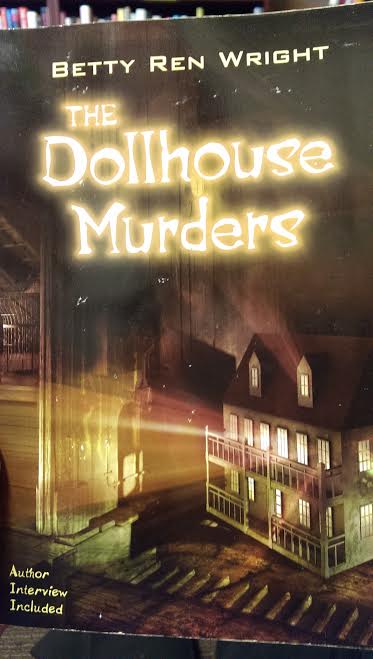
The Dollhouse Murders

dollhousemurdersThe Dollhouse Murders by Betty Ren Wright, 1983.

Amy is upset because she constantly has to look after her sister Louann, who has developmental problems. Louann is only a year younger than Amy, but her condition makes her think and act like a small child all the time. Amy loves Louann, but having her around all the time makes it difficult for her do things on her own and to make friends.  It’s frustrating because the girls’ mother doesn’t seem to understand the pressure Amy feels.

One day, she has an argument with her mother about it and runs away to her aunt’s house. Aunt Clare normally lives in Chicago, but she has returned to her home town to sort out the things in her grandparents’ old house. Sympathizing with Amy, Aunt Clare offers Amy the chance to stay with her for a couple of weeks, without Louann.

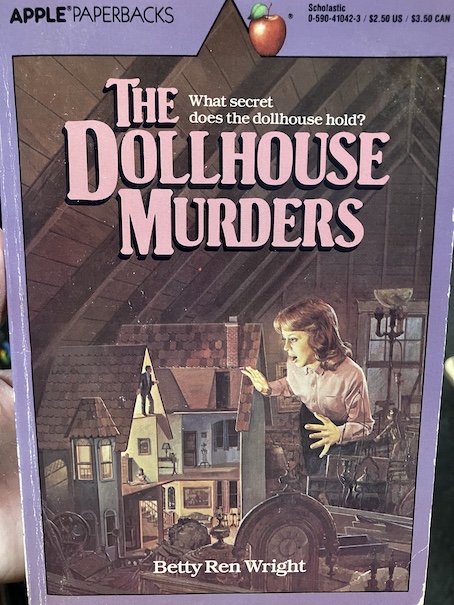
Aunt Clare and her brother, Amy’s father, used to live with their grandparents when they were young, and Aunt Clare says that she has unhappy memories of that time.  While helping her aunt go through some of the old things in the house, Amy discovers that there is a dollhouse in the attic made to look exactly like the grandparents’ house and dolls which look like the grandparents, Clare, and her brother. Amy thinks the dollhouse is wonderful, but Aunt Clare seems to find it disturbing.

When Aunt Clare refuses to talk about her deceased grandparents, Amy looks at some old newspapers at the library to learn more about them. To her shock, she learns that they were murdered in the house and that the killer was never found. Soon, strange things begin happening with the dollhouse. The dolls move around on their own, and mysterious lights and crying noises can be heard. The dolls seem to be acting out the events of the night of the murder. After all this time, the dolls seem to be trying to tell them something, if they have the courage to listen.

The book is currently available online through Internet Archive (multiple copies).

My Reaction and Spoilers

Aside from revealing the murderer’s true identity, the dolls settle other troubling matters in Amy’s family.  For years, Aunt Clare has blamed herself for the way she behaved around the time her grandparents were killed.  She was afraid that something she did might have even led to their deaths.  But, none of it was really her fault, and her grandparents want her to know that she needn’t blame herself anymore.  When Aunt Clare realizes the truth, she feels like a great weight has been lifted from her.  She begins coming to terms with her past and appears to be headed for a better future.  Amy also comes to terms with her sister’s condition and values her even more highly when Louann’s lack of fear of the dollhouse gives Amy the courage to see the dolls’ final message.  Amy’s family also makes changes to help Louann become a little more independent and to allow Amy a little more independence of her own.

There was a movie version of this book made in 1992 (Sometimes called Secrets in the Attic), but it’s difficult to find copies of it now.  Sometimes, the movie or clips of it appear on YouTube.  Apart from that, it’s very difficult to see it.

Kat the Time Explorer

KatTimeExplorer

Kat the Time Explorer by Emma Bradford, 1998.

KatTimeExplorerTrain.jpgTen-year-old Kat is going to be living with her Aunt Jessie for the next year.  Her parents are botanists, and they are spending a year in South America, studying rain forest plants.  Aunt Jessie lives in a house in the same town as Kat and her parents so, by staying with her, Kat can continue going to the same school and see her friends.

Like Kat’s parents, Aunt Jessie is also a scientist and teaches physics at the same college where her parents teach when they’re not doing research abroad.  She inherited her house from their Great-Uncle Malcolm, who was an inventor.  Malcolm never invented anything that made much money or got much attention, but Jessie has been going through his things and discovered something interesting among his unfinished projects: a time machine.  The time machine seems to be nearly complete, although Jessie isn’t quite sure how to operate it or what should power it.  There is a drawing of a strange medallion in Malcolm’s notes, and Jessie found one with the same markings among Malcolm’s belongings, but it’s unclear whether this medallion is supposed to play any role in the time machine’s function or if it’s completely unrelated.

Then, Kat discovers another medallion in Malcolm’s old room, one with identical markings but made out of a different type of metal.  There is a space on the time machine for each of the medallions to fit.  When Kat experiments with how the medallions can fit into the machine, she activates it, transporting herself and Jessie back in time to England in 1851.

They find themselves on a train with other travelers heading to The Great Exhibition in London where people from around the world will be displaying new developments in industry and technology.  No one notices Jessie and Kat’s sudden arrival because the train is packed with people and the time machine has somehow altered their clothing and other small objects in their possession to ones that are appropriate to the period.  They also seem to be able to understand people speaking other languages neither of them knew before.  The time machine itself is packed into an ordinary-looking bag.  The two of them decide that they can’t use the time machine on the train where everyone will see them, and besides, they are both curious about the time they find themselves in.  After a temporary mix-up where they are separated at the train station, they find each other again and manage to locate a woman who will rent a room to them for a couple of days.

Unfortunately, when they start unpacking in their room, they discover that their bag was accidentally switched at the station for an identical one.  They no longer have the time machine and can’t get home!  Inside the bag they have, they find articles of men’s clothing, a small spring of some kind, an incomplete sketch of some kind of invention, a ticket to the Exhibition, and a letter written to someone named Edward from his brother Sidney about the Exhibition and the invention they plan to demonstrate there.  The brothers are very concerned about the success of their demonstration and are depending on results to make some money and save their family’s estate.  With those clues, Jessie and Kat must track down these inventors and find their time machine, saving not only themselves from being stuck in the past but the future of the two brothers!

There is an educational section in the back that explains about the Victorian Era and the Great Exposition.  It also discusses Victorian manners and tea parties.  There are tips for making little sandwiches of the kind people would eat at tea parties.

This book is part of the Stardust Classics series.

Mystery of the Secret Message

secretmessageMystery of the Secret Message by Elizabeth Honness, 1961.

Penny lives with her aunt and uncle because her mother is dead and her father travels on business much of the time, dealing in Asian art.  Thanks to his travels, Penny and her aunt and uncle have quite a collection of Asian art themselves.  However, Penny has just been told that her father’s airplane crashed in the Pacific Ocean.  No survivors have been found, although Penny still has hope that perhaps her father survived and might yet be found.

At the same time, Penny and her aunt and uncle are moving into a house from the apartment where they used to live. Penny is happy about the move because she knows that she won’t have to worry as much about being quiet and not disturbing the neighbors, like she had to do in their apartment. This means that Penny can bring her friends over to the house to play and have parties. Also, their new house has a very special feature: its own private elevator.

Penny loves the new house and soon begins building a tree house with the help of Pete, a boy who lives nearby.  She tells Pete about her father and her hopes that he might still be alive.

However, events take a disturbing turn when Penny receives a package from Japan containing a beautiful wall scroll. The package appears to have been sent by her father, who meant it as a present for her new room in her new house. Was the package sent before his death, or did he somehow survive the crash?

There is also something odd about Penny’s new neighbors.  Penny’s new house is actually half of a duplex, and the new neighbors, the Carruthers, have also recently moved in after renting the other half. When Penny accidentally gets stuck in the elevator and hears voices coming through the wall, she starts to suspect that her neighbors might not be what they seem to be.  They show an unusual interest in her family’s collection of Asian art, asking to see pieces and borrow pieces for an exhibition that Mr. Carruthers is holding at his gallery.  One of Penny’s friends even catches Mrs. Carruthers sneaking around, looking at things uninvited.

When Penny and her friends have a sleepover on an evening when her aunt and uncle are out, someone sneaks into the house, leaving muddy footprints on the floor.  Penny isn’t sure that her aunt and uncle will believe her because they seem to like the Carruthers, so at Pete’s suggestion, she continues to spy on them, using the elevator to listen in on their conversations through the walls.

When her uncle catches her one day, using the elevator without permission (something she is not supposed to do), she finally explains her suspicions and what’s she’s heard the Carruthers say.  Together, Penny and her uncle discover a hidden secret about the wall scroll Penny recently received, which points to a number of secrets that Penny’s father kept from her and the rest of his family for years.  A stranger from the government helps Penny to fill in some of the blanks, but he has a favor to ask in return that requires Penny to take a big risk.

My Reaction and Spoilers

Although this book is much older than I am, it was a favorite of mine when I was a kid, yet another of my used book sale treasures! I actually got rid of my first copy years ago, when I was cleaning some things out, but I missed it, so I got another one. It’s actually a collector’s item these days.

I always liked the feature of the elevator in the story and how Penny uses it to find the right spot to hear what her neighbors are saying through the wall. I love intrigue, and as a kid, I liked the idea both having a house with an elevator and of overhearing clandestine conversations that reveal sinister secrets. There are points in the story where the two-faced Carruthers think that they have the upper hand, and Penny has to be careful not to let on just how much she knows.

As I explained, the neighbors are not what they seem to be, and Penny’s father was involved in things that his family knew nothing about. Since it’s not easy to get hold of this book right now, I’ll include a couple of spoilers. Penny’s father was acting as a spy for the US government, using his profession as an art dealer to travel to locations he needed to go and to smuggle information back to the US. He is apparently dead, killed in the plane crash, although there are hints that the crash wasn’t an accident, that it may have been intended to kill him. However, before his death, he managed to smuggle his last important information to Penny in the wall scroll that he sent her. When Penny manages to convince her uncle that something isn’t right about the Carruthers, he begins making inquiries and learns the truth about Penny’s father. A government agent speaks to the family and arranges a plan to fool the Carruthers into thinking that they’ve found what they were looking for, but the plan requires Penny to spend an evening in the house alone with them.