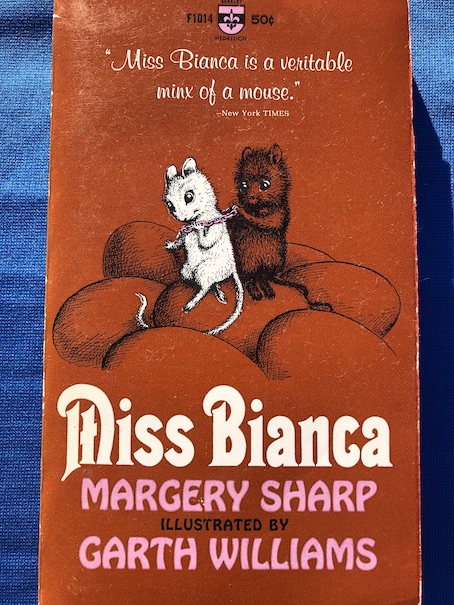
Miss Bianca by Margery Sharp, 1962.
Miss Bianca is still a hero to the Mouse Prisoners’ Aid Society after the rescue of the Norwegian poet in the last book. Bernard is a lesser hero, even though he was part of the mission, but such is the lot the organization’s Secretary. Since the success of the rescue mission, the society is keen to perform another rescue, a deviation from the society’s usual role of merely providing comfort to prisoners. The rescue mission that they have in mind this time is that of a little girl. (The first Disney The Rescuers movie also featured the rescue of a little girl, but the circumstances in the book are very different.)
Patience is an eight-year-old orphan who has been abducted and enslaved by the Grand Duchess and is being held in her Diamond Palace. The Grand Duchess is cruel, and some people think that she’s a witch. Miss Bianca appeals to the Ladies’ Guild of the society to help free Patience. The Ladies’ Guild doesn’t usually take part in the more exciting missions of the society. The mice are somewhat concerned about what they will do with the child once they have rescued her because other prisoners they’ve helped have had homes to return to, but Miss Bianca assures them that they have a home in mind for the girl, a farm family in Happy Valley who have lost a daughter and would be likely to take in another girl. The Ladies’ Guild agrees to undertake the mission. Bernard wanted to come, too, but Miss Bianca insisted that they didn’t need his help.
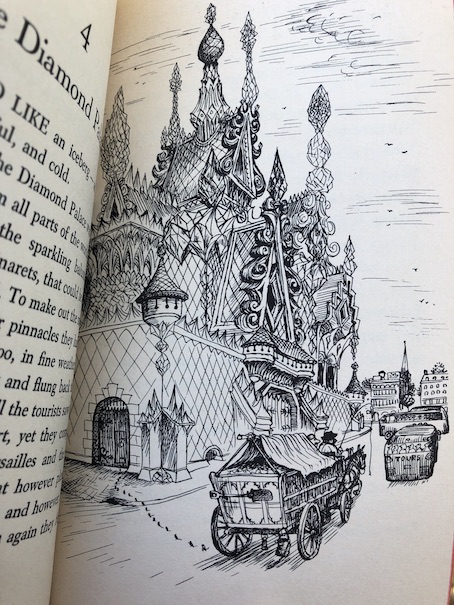
The Diamond Palace is a strange place, in many different ways. People often come to see it because it looks like it’s made out of diamonds, although it’s actually rock crystal. It’s cold all the time, but even weirder than that, there seem to be less servants in the Palace than Miss Bianca would expect, given that the Duchess is always surrounded by ladies-in-waiting, who would be expected to have maids of their own. It turns out that the “ladies-in-waiting” aren’t real people – they’re clockwork automatons!

Rather than being a witch, the Duchess is simply an odious person who has so much money that she can give full reign to a nasty personality without anyone stopping her. She’s so nasty and spoiled and used to forcing people to do what she wants that all of her previous, human ladies-in-waiting found that they just couldn’t handle her increasingly unreasonable demands, like insisting that they all stand perfectly still all day long while she sits on her throne, not even the slightest movement allowed. No human being could possibly manage that. When the human ladies-in-waiting all fainted after trying to keep perfectly still for forty-eight hours straight, the Duchess screamed that they all must have done it on purpose and dismissed them, replacing them with automatons. The mechanical people are almost perfect because they always stand perfectly still until they’re needed and never complain or have human needs, but the Duchess discovers that they’re not quite perfect because there are some chores that they can’t do and she also misses seeing people react fearfully or start crying when she bullies them. Keeping Patience as her slave gives the Duchess someone to do those chores and also someone to abuse. The Duchess has had other child slaves before, but the others have died from the abuse, ill-nourishment, and general bad treatment. (This is a darker story in a lot of ways from the Disney one.)
When Miss Bianca and the other mice meet Patience, she is also under-nourished and desperately lonely. Miss Bianca sends the others back to the society to report about the automatons and stays with Patience to keep her company, trying to decide how to deal with the strange, mechanical people. Bernard worries anxiously about Miss Bianca when the others come back without her and decides to go after her.
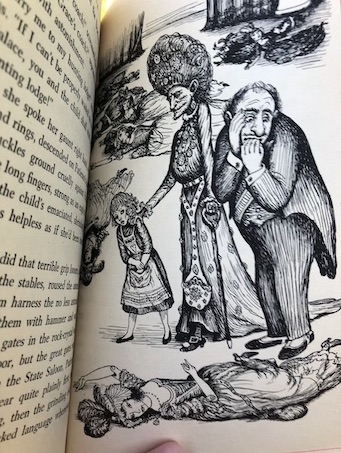
The Duchess’s other human servant, Mandrake, her Major-domo, is also little more than a slave. The Duchess has evidence of a crime that he once committed and uses it to keep his loyalty. Usually, he’s the only one who gets to go out the back door because he doesn’t trust Patience to take out the garbage without running away. However, Patience tells Miss Bianca that the clockmaker sometimes comes in that way when he comes to wind up the mechanical ladies-in-waiting. Miss Bianca hatches a plan that involves making the ladies-in-waiting break down.
However, to Miss Bianca’s surprise, the Duchess commands Mandrake and Patience to come with her to her hunting lodge when the ladies-in-waiting break down. There is no opportunity for escape. However, it turns out that the hunting lodge is actually above Happy Valley, and Bernard knows where it is.

Of course, they do get Patience safely to her new foster family. Miss Bianca actually talks to the girl’s foster mother and tells her that Patience will probably forget about her eventually, when she grows up, but the foster mother likes the lullaby that Miss Bianca sings for Patience and promises to keep it as a family tradition.
The darker aspects of the story really bothered me, and I have to admit that I didn’t like it as well as the Disney version. Mandrake actually reappears in another book in the series.
The book is currently available online through Internet Archive.
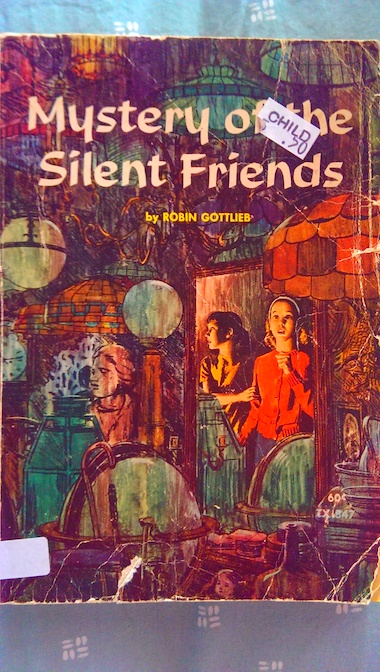 Mystery of the Silent Friends by Robin Gottlieb, 1964.
 For a time, it seems like there’s no risk of the automatons being sold because no one seems particularly interested in buying them. Then, suddenly, two different men come to the shop and ask to buy the dolls. Weirdly, each of them tells the same story to Nina’s father: that their name is George Ballantine the Third, that their family once owned the automatons, that the dolls are actually part of a set of three, that they own the third doll (a girl doll that plays the spinet), and that they want to purchase the other two in order to reunite the set. Nina’s father is bewildered by these two men with identical stories and identical names and refuses to sell the automatons because of his daughter’s attachment to them and because he doesn’t know which of the two men to believe and doesn’t trust either of them.
 At first, they all expect that Red Ballantine won’t be able to show them the third doll and will give up trying to buy the other two, but to their astonishment, he takes them to the same apartment where Brown Ballantine said that he lived and shows them the exact same doll they saw before. Instead of clearing things up, the identities of the two men seem to get all the more confusing. However, Muffin notices something strange about the tune that the doll plays on the spinet that gives them a clue as to why the three dolls are so important. Later, someone breaks into the antique store and uncovers a hidden secret about Henri as well.
 Jestress's Forgotten Books and Stories