Egg in the Hole Book

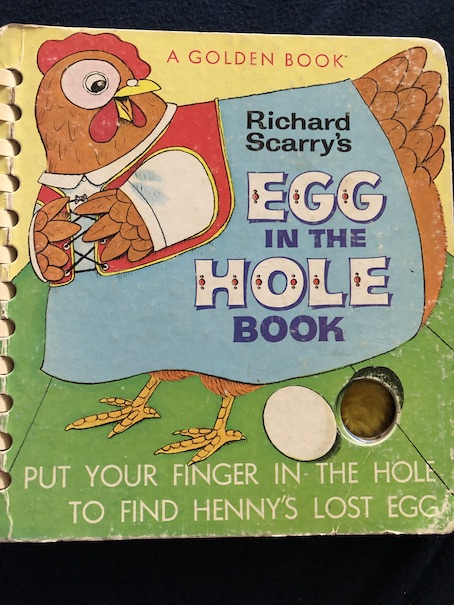
Egg in the Hole Book by Richard Scarry, 1967.

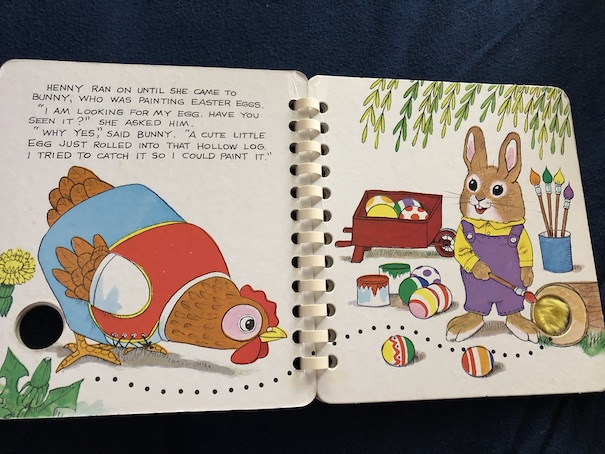
This is a board book with a very special feature: a hole that goes all the way through the pages to the back of the book. There is something yellow, soft, and fuzzy in the hole, and it becomes obvious as you read the book what it is.

Henny lays an egg in the barn’s hayloft, but she loses it when it rolls through a hole. The anxious chicken immediately chases after it.

Down below, Billy Goat tells her that the egg fell on the ice cream that he was going to eat for dessert and then rolled out the window.

From there, Henny follows the egg’s path along a rain gutter, out a down spout, through a fence, into a hollow log, and eventually, into a hole in the ground.

When Henny fears that her egg is lost in the hole, a mouse comes out to tell her that the egg broke, but it has hatched into Henny’s new baby chick! (The yellow, soft, fuzzy thing.)

My brother and I used to like this book when we were little kids. I think of it as a kind of Easter story because of the bunny painting Easter Eggs, although the book isn’t really about Easter. Baby chicks are also often associated with Easter. It’s cute how the egg’s path is marked by little dots as it rolls across the barnyard, and the gimmick with the holes in the pages is clever.

The book is available to borrow and read for free online through Internet Archive (multiple copies). Of course, you can’t quite enjoy the effect of the hole feature with the electronic copies.

Stellaluna

Stellaluna by Janell Cannon, 1993.

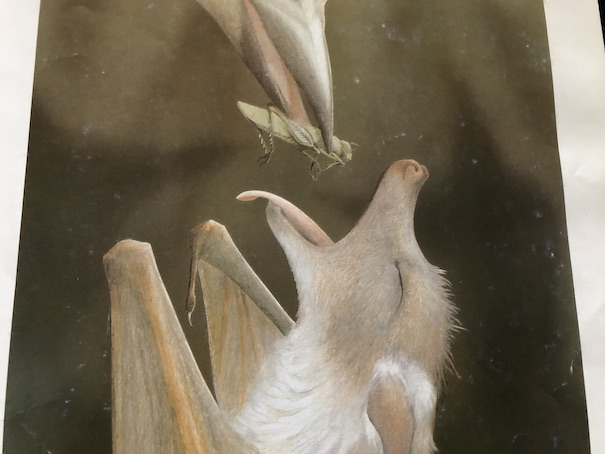
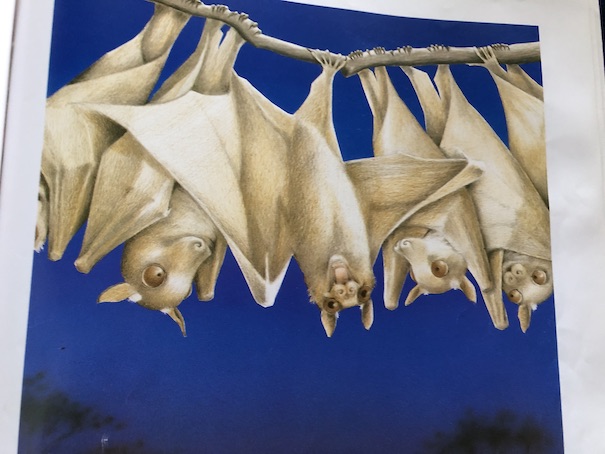
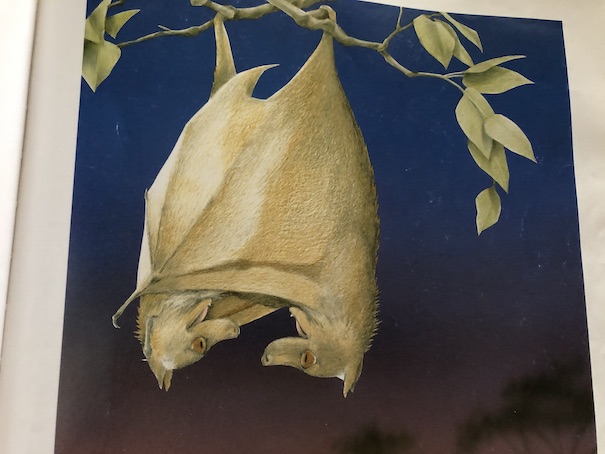
Stellaluna is a baby fruit bat. Every night, her mother carries her along while she goes looking for food.

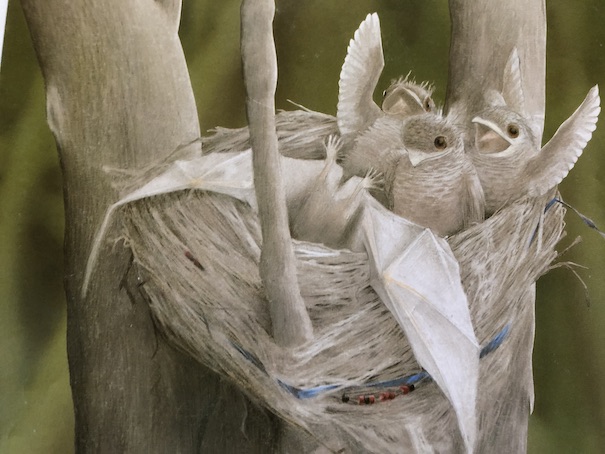
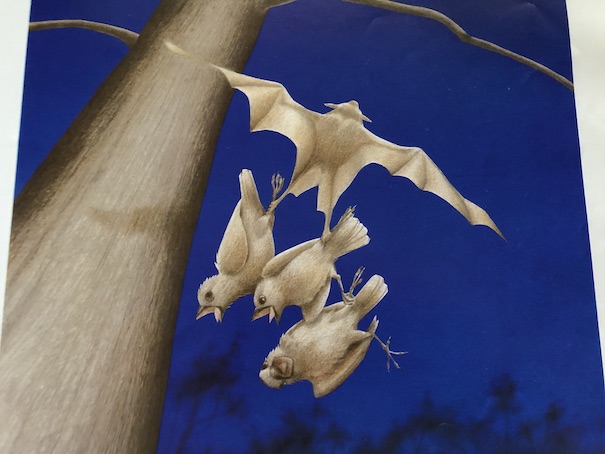
One night, they are attacked by an owl, and Stellaluna falls into the trees below. First, she is caught by some tree branches, and then, she falls into a bird’s nest. Stellaluna doesn’t really like the bugs that the mother bird brings her babies to eat, but she eats them anyway because she gets hungry.

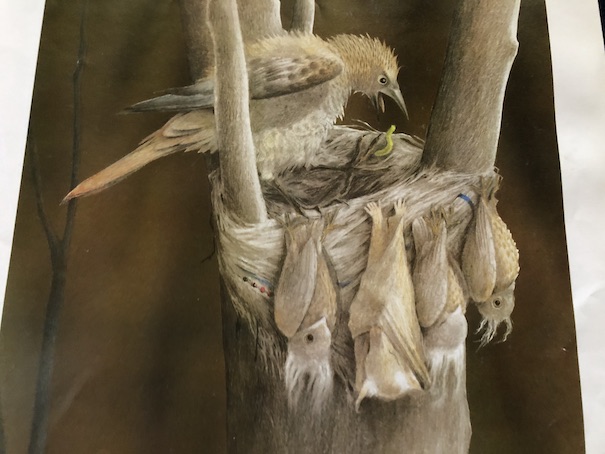
Gradually, Stellaluna adopts the habits of the birds, staying awake during the day and sleeping at night. She tries to sleep upside down, hanging from the nest, but the mother bird stops her because the baby birds try to imitate her, and she’s afraid that they’re going to break their necks. The mother bird continues to care for Stellaluna, but insists that she obey the rules of their nest, which means that Stellaluna has to act like a bird.

Eventually, both Stellaluna and the little birds learn how to fly. However, Stellaluna has trouble landing on branches like the birds do. One day, she flies farther than the birds do and doesn’t return to the nest at night. She falls asleep in a tree, hanging by her thumbs because the mother bird told her not to hang by her feet, and she is found by another bat.

The other bat explains to Stellaluna that she is a bat, not a bird, and tells her that hanging by her feet is normal bat behavior. Soon, other bats come to look at Stellaluna, and Stellaluna’s mother recognizes her as her child.

Stellaluna is overjoyed to learn that her mother escaped from the owl, and her mother is glad to finally have her child back. Her mother begins teaching her what it means to be a bat, how to eat fruit instead of bugs, and how to see in the dark.

Stellaluna returns to the birds to introduce them to her bat family. The birds try to go on a night flight with Stellaluna, but they can’t because they can’t see at night like Stellaluna. Stellaluna helps them find a safe branch, and they talk about all the ways they are alike but yet very different. They decide that they will remain friends even though they have to live different types of lives.

This is a nice story about how people can love each other even though they are very different. The mother bird cares for Stellaluna like she is one of her children, even though Stellaluna is not a bird and has strange habits. Her insistence that Stellaluna act like a bird is because it is necessary for her to do so in order to live in the birds’ nest, and the birds are not able to live like bats and teach her how to be a bat. Eventually, Stellaluna has to return to the bats and live like the bat she is, but she still loves the birds who raised her and were like her brothers and sisters. It’s a little like human foster families. A foster family isn’t quite like a person’s birth family, and foster children have to adapt to new ways of doing things, but foster families can offer the affection of a birth family and help the children grow and reach the places where they really need to be in life.

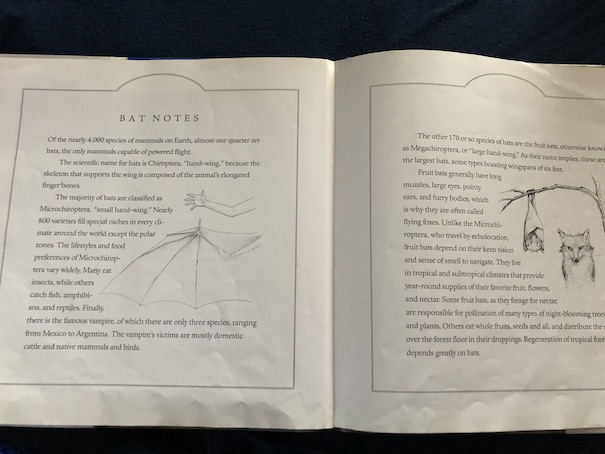
The book ends with a section of non-fiction information about bats.

The book is available to borrow for free online through Internet Archive (multiple copies). It is a Reading Rainbow book.

Cam Jansen and the Mystery of the Stolen Diamonds

Cam Jansen

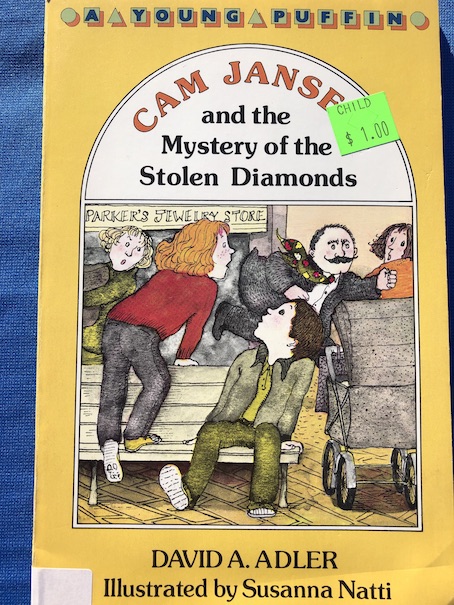
#1 Cam Jansen and the Mystery of the Stolen Diamonds by David A. Adler, 1980.

This book is the first in the Cam Jansen series, introducing readers to her amazing photographic memory. Cam’s real name is Jennifer, but when people discovered her photographic memory, they started calling her “The Camera,” which was later shortened to Cam. When Cam wants to remember something, she says “click,” which she says is the sound that her mental camera makes.

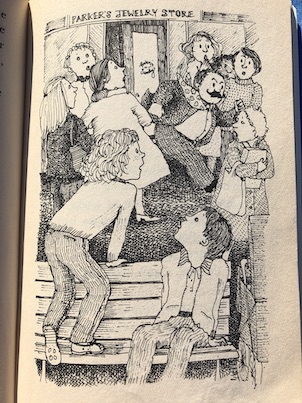
While Cam is at the mall with her friend, Eric, and his baby brother, Howie, a jewelry store is robbed.  The thief got away with some diamonds.  Although the police caught the man who ran away from the scene of the crime, the people who witnessed the crime say that he was not the thief.  As Cam goes over the pictures in her mind, she realizes that something strange is going on.

Partly, Eric and Howie give Cam the clue that she needs to solve the mystery. Cam is an only child, but as she watches Eric taking care of Howie, she realizes how much stuff a baby needs. Howie has an entire diaper bag full of supplies. However, a couple who left the jewelry store earlier appeared to have only a baby in a blanket and a rattle. Cam realizes that a couple with a real baby should have been carrying more than that.

The man and woman with the “baby” were the running man’s accomplices. It was that man who actually committed the crime.  The other man who ran was a distraction.  The couple carried a doll and pretended it was their baby.  They hid the diamonds in the baby’s rattle.  Cam realizes that they were strange because they didn’t have a diaper bag or anything else with them that parents would normally carry around for their baby, like the bag that Eric’s mother has for Howie. 

Cam and Eric follow the thieves to their hideout and then get the police, although there is a tense scene where Cam is caught by the thieves, and she must hide with Howie until the police arrive.

The book is currently available to borrow online for free through Internet Archive.

Peter’s Chair

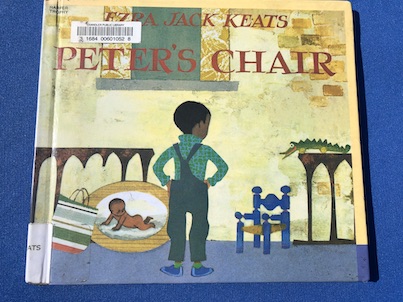
Peter’s Chair by Ezra Jack Keats, 1967.

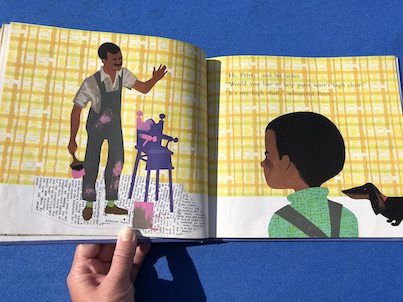
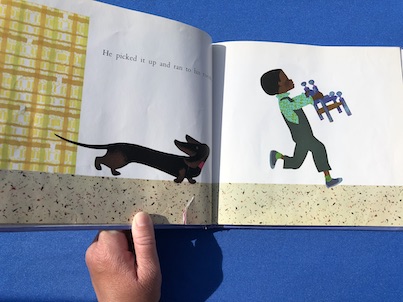
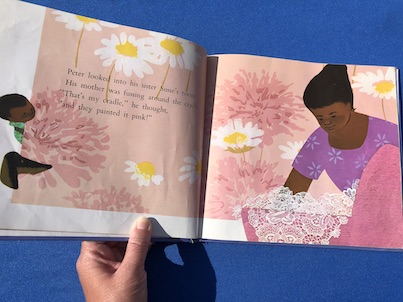
There is a new baby in Peter’s family, his little sister, Susie, and things are changing for Peter.  He is no longer the baby of the family.  He must play quietly to avoid disturbing the baby, and his father is painting all of his old, blue baby furniture pink for little Susie.

Peter feels badly, seeing the baby getting all of his old things.  Spotting his old baby chair, which hasn’t been painted yet, Peter runs off with it, taking along some of his other old things.

However, what Peter eventually realizes is that he has grown too big to fit into his old chair.  Nobody stays a baby forever, and Peter’s old baby things are of no use to him anymore.

Seeing that he is out-growing these old baby things helps Peter to be willing to let go of them and help his father repaint them for his little sister.

This is a cute story about change and growing up and the worries that children sometimes have about their siblings taking their place in the family. The art style of the book is also interesting because it includes pieces of patterned or textured paper for things like wallpaper, people’s clothing, the newspapers under the furniture being painted, and the baby’s lacy blanket. Other books by the same author also use this technique, such as Jennie’s Hat.

Murmel, Murmel, Murmel

Murmel

Murmel, Murmel, Murmel by Robert Munsch, 1982.

Robin is playing in her backyard sandbox when she hears a “Murmel, Murmel, Murmel” sound from a hole that she has never seen before. In the hole, Robin finds a baby. Since Robin herself is only five years old, she decides that she needs to find someone older to take care of the baby.

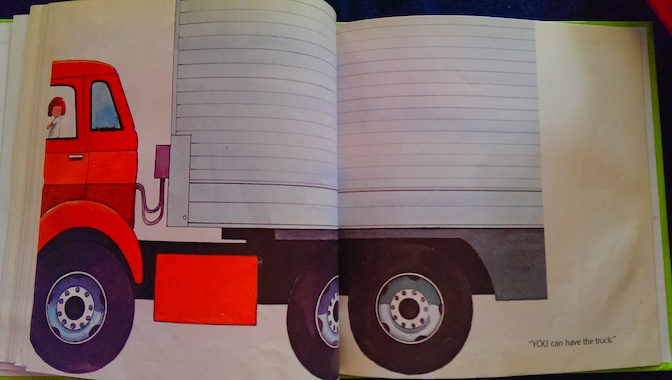
Robin asks various people, but they all have reasons why they can’t take the baby. Then, Robin encounters a truck driver who is enchanted with the baby’s “Murmel, Murmel, Murmel” and says that he wants him.

The story never explains where the baby came from, how he ended up in Robin’s sandbox, or if his parents are looking for him, but apparently, he’s happy with the truck driver. As for the truck driver’s truck, he says that Robin can keep it because he already has seventeen others. Robert Munsch books are like this. That’s basically the explanation.

The book is currently available online through Internet Archive.

MurmelTruck

The Talking Table Mystery

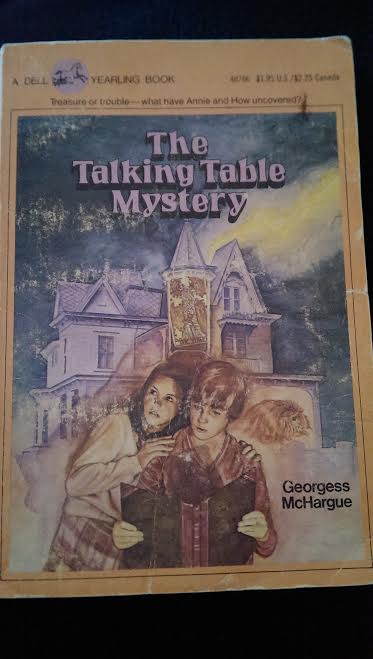
TalkingTableThe Talking Table Mystery by Georgess McHargue, 1977.

Annie Conway and her friend How are helping her great aunt to clear out her basement when they find a table that How thinks would work for his pet guinea pig’s cage. However, it’s not an ordinary table. It makes strange noises whenever they press on it, and in the box tied to the top of the table, they find a strange assortment of objects, including a little silver piccolo and some diaries.

Most of the diaries belong to Annie’s great grandfather, but there is one written by an unknown young girl. The girl apparently stayed in Annie’s great grandfather’s house years ago, and her diary refers to the girl’s mother’s strange behavior and the girl’s fears that something bad will happen. The diary itself is mysterious, but soon the kids start receiving threatening notes, telling them to hand over the diaries or something bad will happen. Who wants the diaries and why?

The book is available to borrow and read for free online through Internet Archive.

My Reaction and Spoilers

The basis for the mystery is 19th century spiritualism.  The former owner of the table was a spiritualist who used it for seances, creating rapping noises when the “spirits” were present.  Her daughter was the girl who wrote the diary.  She wasn’t happy about how she and mother kept moving around in search of new clients and how she had to help her mother by playing ghost during seances. They were staying with Annie’s great-grandfather because he was suffering from grief over the death of his young son, and the spiritualist was holding seances to try to contact his spirit.  At least, that’s what Annie’s great-grandfather thought.  The bad thing that the girl thought would happen was that she and her mother would be caught faking their seances, which turns out to be exactly what happened.  Annie’s great-grandfather was angry at being deceived and threw them out of the house, but he confiscated the rigged table and other things they used in their seances, including the girl’s beloved silver piccolo, so they wouldn’t be able to try their act on anyone else.

However, there is one more secret about Annie’s great-grandfather and the spiritualist. Annie and How eventually discover that they had a love affair during the spiritualist’s stay in the house. There is some discussion among the adults about how the spiritualist suffered more consequences and stigma for the affair than the great-grandfather did, although he was a married man when it happened.  As for what eventually happened to the girl and her mother after this incident, the clues are contained in the diary and with the people who now want them.

I thought that the use of the rigged spiritualist table in the story was fascinating. It’s basically like a piece of antique magician’s equipment that not everyone would know existed.  The story also introduces some interesting historical details about the concept of 19th century spiritualism and the types of people who followed it.  Annie’s great-grandfather was grieving for the loss of one of his young children, and like others of his time, he wanted to reach out to the spirit of the one he lost, in search of solace for the loss.  How much of the affair with the spiritualist was fueled by his grief and gratitude for someone he thought was helping him is unknown because we never hear his perspective on that, but his anger at discovering how he had been deceived shows that he did honestly believe that the seances were real and felt betrayed to realize they weren’t.  However, actions have consequences, and there were still some consequences from this incident that were never fully resolved.

The author is very knowledgeable on the subject of spiritualism, and she also wrote a nonfiction book on the subject.

Wayside School Gets a Little Stranger

WaysideStrangerWayside School Gets a Little Stranger by Louis Sachar, 1995.

Just when you didn’t think it was possible . . .

Having finally managed to remove all of the cows from Wayside School (see the last story in the previous book in the Wayside School Series), Louis declares that Wayside School is ready for the students to return.  Everyone is glad because they were all sent to far more normal schools while Wayside was closed, and they hated it.  Nothing normal ever happens at Wayside, the school that was built sideways (and has a missing floor, where all the really strange stuff happens).

But, things are about to get stranger yet.  The school hires a new school counselor (they probably needed one) named Dr. Pickell (or Dr. Pickle, if you prefer).  He takes the job when he can’t practice psychiatry anymore because of his tendency to play practical jokes on people while they’re under hypnosis.  Can he finally cure Paul of his desire to pull Leslie’s pigtails?

WaysideStrangerPic1Meanwhile, the principal declares that “door” is a very bad word and that everyone should say “goozack” instead.  Mrs. Jewls tells the children to write poems about colors, but some colors rhyme better than others.  Kathy tries to convince everyone that Santa doesn’t exist.  Miss Zarves (who also doesn’t exist), laments about how difficult teaching really is.

Then, the children learn something really surprising: Mrs. Jewls is expecting a baby!  She has to take a break from teaching, and the children have a series of substitutes who are stranger than Mrs. Jewls.  Mr. Gorf turns out to be Mrs. Gorf’s son, and he wants revenge.  Mrs. Drazil turns out to be Louis’s old teacher, the one he was always afraid of, and she wants revenge.  Mrs. Nogard is an unhappy person who wants to make other people unhappy . . . until she realizes that isn’t what she really wants.  Wayside School may be strange, but it does have happy endings!

By the way, anyone notice what the substitutes’ names spell backward?

This book is currently available online through Internet Archive.