The Wright Brothers

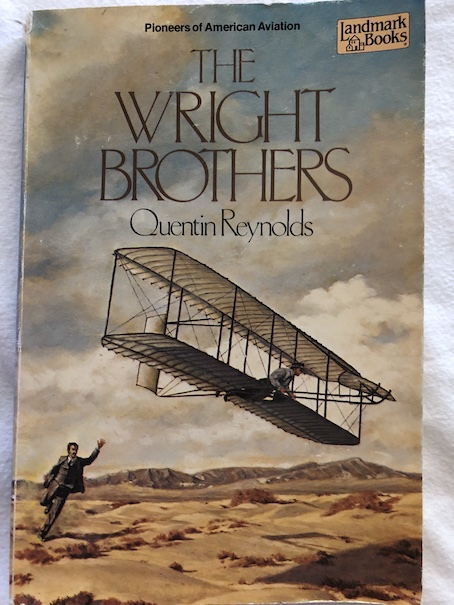
The Wright Brothers by Quentin Reynolds, 1950.

This book is part of the nonfiction history series Landmark Books, which focus on events and famous people in American history. This biography of the Wright Brothers, inventors of the airplane, is told in story format with dialog between characters. I’m not sure how accurate the dialog is, but it’s compelling way of presenting historical figures to children. I remember that I actually used this book for a report that I did about the Wright Brothers back in elementary school.

According to the story, the Wright Brothers’ mother, Susan, was responsible for inspiring their love of science and inventing things because she encouraged their curiosity and enjoyed answering their questions about how the world works, introducing them to concepts like wind resistance when explaining how birds fly and how to walk when you have to walk into the wind. Susan Wright was very good at math and had a talent for planning things out on paper that she taught to her children. She was accustomed to making her own patterns for clothes, and she showed the children how to apply similar principles to planning how to build a sled by drawing out their plan and figuring out, mathematically, the sizes of each piece of the sled. The boys learned a lot from her and applied what she taught them to their later projects, like building a wagon they could use in their first job, working for the local junk man. The boys would gather scrap materials in their wagon that the junk man would buy from them and sell to others. The junk man also gave them some supplies to work with and some tips for building their projects.

The Wright brothers enjoy flying kites with their friends, and now that they’re learning more about making things, they decide to try making their own kites. Their first attempt doesn’t work well, but by studying what went wrong, they learn how to modify different parts of the kite to get better results. Their second kite turns out better than the store-bought kites that the other boys have, and the brothers begin making and selling kites to the other boys.

When they were young, the boys were quite athletic, particularly Wilbur, who played both football and hockey. However, when he was a teenager, he was injured badly during a hockey game. A puck hit him in the face and knocked out several of his teeth. To make matters worse, the injury became infected, and the infection damaged his heart. His doctor advised him not to return to sports or athletics and not to pursue any line of work that involved hard physical work or heavy lifting to avoid further strain on his heart. It was a heavy blow, but it wad also a turn point in the brothers’ lives.

While Wilbur was resting and recovering from his injury and infection, their father gave him a drawing set and a small wood-working kit that included a book about the properties and uses of different types of wood. Wilbur had never been very interested in books before, but he discovered how useful they could be, and the boys used the new knowledge Wilbur gained in their projects. Orville made a good partner for Wilbur because he was happiest doing the actual assembly work of everything they built and had little interest in books and studying. He could handle the heavy work that Wilbur could no longer do while Wilbur studied design techniques and mapped out plans for their projects. In this way, the boys made a chair for their mother as a present. Wilbur came up with the basic concept and then discussed and worked out the plan with Orville. Orville gathered the materials and assembled the chair according to the plan, discussing the results with Wilbur. As Wilbur recovered further, he was able to get out of bed and help Orville more in their workshop in the family’s barn, but they continued to keep this partnership system that worked well for them, with Wilbur focusing on studying and planning and Orville handling the heaviest parts of the assembly.

The boys’ father was a minister, and for a time, he was the editor of a church newsletter. He gave Wilbur the job of folding the papers, with Orville helping. When they realized just how long it took to fold individual papers, they came up with the concept of building a paper-folding machine. Their machine worked incredibly well, finishing all the folding that ordinary took them a couple of days in the space of a couple of hours. Their father was amazed and realized that the boys could have a future as inventors.

In high school, Orville helped a friend of theirs, Ed Sines, with managing the school newspaper, which was printed on a very small printing press. He and Wilbur discussed making a larger press and starting their own newspaper with their friend. This was a harder job that required the boys to work with metal instead of just wood, but they accomplished it. There was one other obstacle, though. They had their own press, but before they could begin printing anything or selling advertising space in their paper, they needed to buy other supplies, like ink and paper. They realized that they and their friend would have to get other jobs to raise the money. Wilbur was the older of the two brothers by four years, and he thought he could get a job delivering groceries. However, Orville was worried that the job might be too difficult physically for his brother because it involved heavy lifting. He suggested that Wilbur get the job and then let him help with the heavier parts of the work. It turned out to be a good idea because they were able to gather pieces of news as they traveled to farms in the area and talked to people as they delivered groceries.

Their newspaper was successful, particularly after they started taking side jobs, using their printing press to print signs, flyers, and bulletins for local businesses and churches. Because it was just a small business, they underbid some of the bigger, established printers. However, the brothers soon became bored with the newspaper and printing press because what they really loved most was building things and fixing things. They sold their share in the printing business and newspaper to their friend, Ed Sines, and they decided to open a bicycle shop, where they could build and repair bicycles.

Orville had the idea of promoting their bicycle business with a bike race. His thought was that he could enter it himself and show off how their methods of cleaning and repairing bicycles improved their speed and performance. Unfortunately, the bike race didn’t turn out well. Although Orville’s bike was in excellent condition, they neglected to put new tires on it. He was just about to win when he blew a tire, and his loss of the race cost them business. People weren’t confident that they would do a good job repairing their bikes if they couldn’t properly take care of their own. However, a local businessman loved the bicycle race so much that he decided to sponsor another one, and Orville easily beat all of the other bicycles in that race. Customers’ confidence in their business was restored, and they learned that, when building or repairing any machine, they couldn’t afford to neglect any part of it or take it for granted that everything was right without checking for certain.

The Wright brothers began building their own bicycles, which they called Wright Fliers, and their mother bought an interest in the business to give them some money to get started. One of the features of their service that drew customers was their promise to repair any bike they sold for free for a full year after the purchase. When their mother died, they threw themselves even more into their business to work through their grief.

Then, Orville became ill with typhoid. It was a frightening and often deadly disease, and Wilbur and their sister Kate feared for him. The book (which was written in 1950, remember) discusses how typhoid was little understood at the time. Doctors at the time didn’t fully understand how it was transmitted. (Answer: It’s a bacterial infection spread through food or water contaminated with Salmonella Typhi. Besides vaccines, water purification methods, pasteurization of milk, and other food safety measures help prevent the spread.) They had no cure for it (which would be antibiotics later), only medicines that they could use to treat the symptoms, to try to help the sick through the worst of it. The book further notes that, by the time the book was written, most parents had their children vaccinated against typhoid and other dangerous diseases, like smallpox, but that wasn’t an option for the Wright brothers because those vaccines had not yet been developed in their time. (The book adds that, “Every single soldier in World War II was inoculated against typhoid fever, and very few of them caught the disease.” The author of this book was aware that this particular vaccine was not 100% effective and didn’t prevent 100% of cases, which is common among vaccines in general, but it was still massively effective and made a major difference in curbing the spread of the disease, even in wartime conditions, which are often unsanitary. The earliest typhoid vaccine dates back to 1896, and that was the year given for Orville’s illness, but the implication is that he caught the disease before he had access to the new vaccine. Missed it by that much.)

Orville’s illness was severe. He spent about two weeks just sleeping, and when he was awake, he was delirious because of his high fever. Wilbur and Kate looked after him with the help of a hired nurse. The doctor told them that there was little that he could do and that the fever had to “run its course.” (The book says at this point that, “You never hear a doctor say, “This disease has to run its course” today. Today doctors know how to fight many kinds of diseases, and they have medicines and drugs to kill the germs that cause the disease.” By 1950, when this book was written, the invention of antibiotics had made an enormous difference in treating infections, and the author of the book would have been aware of the difference it made in quality of life and the treatment and survival rate of diseases. However, I have to admit that it’s not true that all diseases have a cure, even in the 21st century. We have ways of treating viruses, but we still can’t really cure viruses, and most of those also have to run their course. For most of my life, people considered most viruses relatively mild compared to bacterial infections, but the coronavirus of the early 2020s challenged that assumption. It’s just interesting to me to compare these different expectations regarding illness and medicine in three different time periods: the late 1800s, the 1950s, and the 21st century.)

After about three weeks, Orville’s fever finally broke, and they knew that he was going to survive. He had lost weight, and he was very weak, and his doctor told him that he would have to rest in bed for two months. For a young man as active as Orville, that was going to be difficult, but Wilbur told him that he would read to him to keep him entertained. In particular, Wilbur had a book that he knew Orville would love: Experiments in Soaring by Otto Lilienthal. Ever since they had been making kites as boys, they had dreamed of one day building a kite big enough to allow them to fly in it, and that was basically what Lilienthal had done. Lilienthal had invented a glider. (Sadly, he was killed in a glider accident while trying to perfect his design in 1896, the same year of Orville’s illness.) Lilienthal was only one of many people who were experimenting with the concept of flight and flying machines in the late 19th century, but he had been one of the most successful with his designs up to that point. The brothers acquired other books and magazines about flight and the attempts people were making at building flying machines. Neither of the Wright brothers had actually graduated from high school, but their extensive reading and practical experimentation made up for the lack of formal education. Based on their reading, they developed a new goal: to build a glider that would fly farther than any that had so far been created.

At first, they didn’t want to tell anyone else other than their sister what they were working on because they didn’t know for sure that they would succeed, and they thought that everyone would think that they were crazy for trying to fly. A trip to the circus, where they saw an exhibit of a “horseless carriage” (an early automobile), gave them the idea that they might be able to attach an engine to some kind of glider to propel it. Their logic was that if it could work for carriages and boats, it might work for a flying machine. They imagined that an engine could propel the glider through the air as an engine could move a boat through water, and then, the flying machine would be less dependent on the wind, which could be variable.

When they had a glider design that satisfied them, they knew the only way to know for sure how well it would work would be to try it. They didn’t want to try it in Ohio, where they lived, because there were too many hills and trees that would get in the way. They wanted a flat place with few trees and where they could find a reliably steady wind. Since they had acquired their reading materials by writing to the Smithsonian Institute, they wrote to the Smithsonian Institute to ask if they had information about places with the conditions they required. The Smithsonian Institute forwarded the letter to the United States Weather Bureau, which recommended a few places, including Kitty Hawk, North Carolina. (Fun Fact: Kitty Hawk is just a little north of Roanoke Island, the site of the infamous vanished Roanoke Colony. It’s not important to the story, but I just wanted to tell you.)

As with their first kite, their first experiment with the glider was only partly successful. It glided for 100 feet before crashing. They fixed the glider and tried again, but it again ended with a crash because they couldn’t steer the glider. Just as they did with their first kite, they decided to build a new one, using what they had learned from the experiment and refining the design. They knew there were risks in their experiments because of Lilienthal’s death, but they were careful not to test their gliders at a very high altitude. They also added both vertical and horizontal rudders so they could not only steer from side to side but also move up and down, giving them greater control over the movement of the glider. What made their experiments different from others’ is that they ultimately wanted to create a “heavier than air” flying machine, propelled by an engine.

After their successful test at Kitty Hawk in 1903, in which Wilbur flew for 59 seconds, a record time, few people believe it at first. They were angry at first that their own neighbors thought that they made up the story about flying. They continued to work on their flying machine, and when they produced one that flew over a cow pasture near their town for 39 minutes, local people started believing them. Word was also spreading through the international scientific community. President Theodore Roosevelt first learned about the Wright brothers from an article in Scientific American, and he arranged for them to demonstrate their flying machine to the Secretary of War at Fort Myer, Virginia. During that demonstration, Orville flew their airplane for a whole hour, ending with a successful landing. Then, when a young soldier said that he wished he could fly, too, Orville took him for a ride with him on a second flight. The book ends with the Secretary of War hiring the Wright brothers to make bigger, more powerful airplane for the US Army, and the Wright brothers accepting an invitation to dinner from President Roosevelt.

The book is available to borrow and read for free online through Internet Archive (multiple copies).

My Reaction

I used this book for a school report about the Wright Brothers when I was a kid, and I think it holds up with time. Part of what I like about the Wright Brothers is their partnership as brothers. They had friends outside of the family, but their greatest friendship was always with each other because they had so many interests in common, even though there was an age gap of four years between them. They often felt like nobody understood them or their projects as well as they understood each other, and they could talk about things with each other that their other friends just wouldn’t understand because they weren’t into building things or studying technical methods and inventions. Not all siblings get along so well, but they really understood each other and complemented each other well. When Wilbur could no longer do some of the heavier work that he did when he was younger, Orville was happy to do the heavier physical work, which he preferred to the reading and studying that Wilbur discovered he really loved. They learned from a young age how to use their strengths to help each other and carry out their projects, and that’s real teamwork!

When I was a kid, I didn’t pay any attention to the About the Author section, but it’s interesting by itself. Quentin Reynolds was a famous war correspondent during World War II, which is part of the reason why he makes multiple references to World War II and World War II airplanes during the book. He also wrote other nonfiction books for adults and children, including four other books in the Landmark series.

Invincible Louisa

Invincible Louisa by Cornelia Meigs, 1933.

This is the story of Louisa May Alcott, the famous 19th century author who wrote Little Women and other books for children.

The book begins with Louisa May Alcott’s birth on November 29, 1832 in Pennsylvania and explains about her parents’ backgrounds. When Louisa’s mother, Abba (short for Abigail), had first become engaged to her father, Amos Bronson Alcott, people advised her not to go through with the marriage because Bronson didn’t seem like a very practical man and nobody really expected that he would amount to much. However, Abba genuinely loved him and understood him. They shared similar ideals, including Abolitionism and the practice of service and charity to others, although they didn’t agree about everything. Bronson was a scholarly man who worked as a teacher, although he struggled to get an education himself when he was young because he was born to a family of poor farmers. As a young man, he had worked as a traveling salesman and had seen much of life across the country. He was good at talking to people and was very good at speaking to children, which led him to eventually settle down to teaching.

The Alcott family was happy where Bronson Alcott was teaching in Germantown, but the death of his school’s patron was a heavy blow. Without his patron’s backing, the school didn’t last, so the Alcott family left Germantown and moved to Boston. Little Louisa enjoyed the busy city of Boston, but the book also describes a harrowing situation in which she almost drowned after falling into Frog Pond. This incident was a traumatic memory for Louisa, but it wasn’t just the trauma that left a mark on her. The person who rescued her from drowning was a black boy. (The book uses the word “Negro.”) Louisa never knew the boy’s name, but her gratitude toward her rescuer influenced her feelings toward black people for the better at a time when the country was heading toward Civil War over the issue of slavery.

The Alcott family had ties to some important people. Her father was friends with Ralph Waldo Emerson and Elizabeth Peabody, who was instrumental in the development of kindergarten education in the United States, worked at his school in Boston. Her mother’s elderly aunt, known as the formidable Aunt Hancock, had been the wife of the famous John Hancock. However, in spite of connections, Bronson met with opposition to his teaching when parents of the students learned that he was an Abolitionist. A friend of his, William Lloyd Garrison, was almost lynched by an angry mob for airing his views about ending slavery. When Bronson admitted a black boy as a student to his school, it was the last straw, and many parents withdrew their children. Louisa later remembered discovering that her parents helped to hide runaway slaves when she was young, but it isn’t clear at which of their homes they were doing this.

After his school in Boston closed, he moved the family to Concord. He didn’t have the heart to open another school, so he supported this family through farming. They were poor and lived very simply, but they enjoyed living in the countryside. However, her father did maintain some scholarly contacts and was involved with the Transcendentalist movement. In 1843, the family moved yet again to join a community of Transcendentalists, experimenting with a more isolated lifestyle. (A footnote in the book, added decades after the original writing, compares it to the communes of the 1960s and 1970s.) However, the community was not a success. When one of the leaders of the community suggested that Bronson give up his wife and daughters to live in the style of Shakers, Bronson discussed the situation with his family, and they all came to the conclusion that this community was asking too much. Giving up on his experimental lifestyle was difficult for Bronson, but Abba’s brother understood the situation and helped the family move to a new home. Eventually, the family resettled in Concord.

Compared to her sisters, Louisa was a boisterous and temperamental child. She loved running wild in the countryside, and her curiosity and impulsiveness sometimes got her into scrapes. She wasn’t as good at housework as her older sister, Anna. However, she was always imaginative. When the family returned to Concord, Louisa was able to have a room to herself for the first time, and she used her new privacy for writing stories. She created plays for her and her sisters to perform.

As she grew up, Louisa became increasingly aware of her family’s poverty and her father’s lack of understanding for the ways of the world. Her mother was frequently worn out from trying to make do and take care of the four girls in the family. She began making plans early that she would find a way to provide for her parents and her sisters when she got older.

At Concord, her family continued their friendships with Thoreau and Emerson, and Ralph Waldo Emerson allowed Louisa to read books from his library, She developed a kind of hero-worship of him as a teenager. The Alcott girls also attended a regular school for the first time. Louisa often felt awkward because she was taller than the other girls at school, but she was also very athletic. She frequently wished that she had been born a boy instead of a girl.

At age 16, Louisa began her professional life, giving lessons to Emerson’s children. She was a good teacher, although as an active person, she found quiet study and teaching for extended periods difficult. Her mind often wandered to ideas for romantic stories, and she wrote a collection of little stories for Ellen Emerson. However, the family was badly in need of money, and they had to leave Concord and return to Boston, where they would live with her mother’s brother.

In Boston, Louisa continued teaching and found work as a governess. She also picked up other odd jobs to help support her family. One of them, a job as a live-in companion for an invalid, turned out especially badly because the job had been misrepresented and turned out to be hard labor. She was paid very little for it, too. It was during this time that her father discovered the little stories that Louisa had written for Ellen Emerson. He took one of them to a publisher he knew, and the story was published. Encouraged, Louisa and her father had the rest of the stories published in a collection called Flower Fables, Louisa’s very first book.

This did not bring her instant success as a writer, though. The family’s lives were filled with ups and downs, and they moved house multiple times. Louisa left her family to pursue an independent living for a time, although she made very little money, taking teaching jobs, sewing, and anything she could find. It was during this time that Louisa’s two younger sisters became ill with scarlet fever while the family was engaging in their usual charity work. Elizabeth had it particularly badly, and her health was never good after that. Louisa rejoined the family when they once again returned to Concord, where Elizabeth passed away. Elizabeth’s death was reflected in Louisa’s semi-autobiographical Little Women with the death of Jo’s sister Beth.

The Alcotts had been such a tight-knit family that separations of the sisters were bitterly painful, but every family experiences change over time. After Elizabeth’s death, Anna became engaged to marry John Pratt. It upset Louisa because it felt like she was losing another sister. Louisa once again set out to try to make her own living, but for a long time, it seemed like nothing would go right for her. It was difficult for her to find work, and opportunities seemed to disappear when she was about to take them. At one point, she was in such despair that she even considered suicide. Fortunately, after hearing an uplifting sermon about girls who were in her position, she renewed her determination to succeed, and she received a job offer from someone she had worked for before. Meanwhile, her father was finally starting to have some success with his educational lectures, and he even became superintendent of schools in Concord.

During all of these trials and tribulations for Louisa and the Alcott family, the country was headed toward Civil War. The Alcotts were still Abolitionists, and Louisa’s father had even been involved in a riot in Boston where a mob of citizens had tried to rescue a runaway slave who was about to be returned to the slave owner. After the war started, Louisa felt the urge to do something to help the side of the Union, so she volunteered as a nurse. Conditions were rough at the hospital where she worked, and she was put to work immediately with no training. She had some talent for nursing and a good bedside manner, having nursed Elizabeth through her final illness, but nothing could have prepared her for dealing with the war wounded. It was difficult and often heart-wrenching work, and it took a toll on her own health. After only about a month of working there, she caught typhoid, and her father was summoned to come and take her home.

Louisa eventually recovered from her illness. She felt like a failure for not being able to complete the full term she had originally promised to the hospital, but her nursing experiences helped further her writing career. The letters that she had written to her family about the people she met and her experiences at the hospital were so interesting that they had them published as “Hospital Sketches”, and they were extremely popular. So many people had friends or family who had gone away to war that they were anxious to know as much as they could about what was happening to them and others like them. The success of the “Hospital Sketches” led publishers to ask Louisa for further writings.

When Louisa recovered further, she felt restless, so she accepted a position as a nurse/companion to a friend’s daughter, who was unwell but wanted to go on a trip to Europe. Traveling as a nurse/companion didn’t give Louisa all of the freedom she would have liked to see and do everything she wanted, but she did get to see many things in Europe. She was able to visit the home of the German philosopher Goethe, and she attended a public reading by Charles Dickens. During their travels, she also met the young man who would be the inspiration for Laurie in Little Women.

She started writing Little Women after she returned home from Europe, at the suggestion of her publisher, who thought that she should write books for girls. When her publisher read it, he wasn’t sure that it would be successful at first because its tone was different from the popular children’s books for girls at the time. He tested it out by giving copies to his niece and some other girls who were about the same age, and they all loved it, so he went ahead and published it. It was so successful that it provided Louisa and her parents with financial stability for the first time, and readers wanted more! Much of the story was based on Louisa’s own life with her sisters and on people they knew, but she changed some parts for the sake of the story. Since the real Louisa never married, she made up a fictional husband for her story counterpart, Jo. In the story, Jo marries a German professor, and in the sequel, she and her husband start a school for boys based on Louisa’s father’s theories about the ideal school. Many of her father’s theories about education were very progressive for the time, and since he never got the chance to try all of them, Jo and her husband did in the story.

Even though she never fully recovered her health after having typhoid, she continued to write books for children, and she visited schools to speak to children. The book explains how these other books were also inspired by aspects of Louisa’s life. She and her youngest sister, May, took another trip to Europe together. May always had a talent for art, and Louisa funded her further travels and studies in Europe. May eventually married, but sadly, she died not long after the birth of her only child, a daughter named after Louisa. In accordance with her wishes, May’s infant daughter was brought to Louisa to raise, and Louisa treated her like her own daughter, calling her Lulu as a nickname. The book ends with Louisa’s death, mentioning that she made one of Anna’s sons her heir to perpetuate her copyrights. In the back of the book, there is a chronology of events from Louisa May Alcott’s life.

The book is a Newbery Medal winner. It is available to borrow and read for free online through Internet Archive (multiple copies).

My Reaction

I bought my copy of this book at a Scholastic Book Fair back in the 1990s, but I didn’t notice until I was an adult that the book was originally published in the early 1930s. I think part of the reason why the author was interested in doing a biography of Louisa May Alcott at that particular time was that it was around the 100th anniversary of her birth. I appreciated how later reprintings of this book also tried to keep it up-to-date and relevant for modern readers, including the addition of the footnote in the book about communes of the 1960s and 1970s.

Something that shows how 19th century society was different from modern society is the qualifications required for certain types of jobs. In the past, there were relatively few professional and educations qualifications required for teachers and nurses. In the 21st century, both teachers and nurses are required to have college degrees and relevant certifications to apply for their jobs. Nobody in the 21st century gets those jobs without having the requisite professional credentials (with the exception of homeschooling families, where the teachers are the parents). It would be useless to apply for such careers without having all of the education and certification required. In the 19th century, it was sometimes more important to just find someone willing to do the job, whether they had any particular qualifications to do it or not. Where the need was sufficiently great, like in the hospitals tending to the war wounded, they would take almost anyone who showed up and was willing to take the job with the hardships and blood involved. (There is one episode where Louisa witnesses an applicant being turned down because, while this person wanted to help the war effort, they didn’t have the stomach or stamina for the demands of the job. Next to that, medical knowledge was less important.) I explained dame schools when I reviewed Going to School in 1776, and the concept still applied in the mid-19th century. Dame schools were informal schools set up by people, often women, who were simply willing to take on the job of teaching local children. They got the jobs chiefly because they were the people who were willing to do them in the area. The quality of education these informal teachers could provide varied drastically, depending on the individual teacher. Some of them were actually well-read individuals with a gift for teaching (this is what Louisa and her father were like, in spite of their relative lack of formal education), while others provided little more than day care while the children’s parents worked. In the section of this book that explains Bronson Alcott’s history, there is some discussion of how education levels and quality varied across the country in the mid-1800s.

Parts of this book and the lives of the Alcott family also offer a different perspective on what it means to be successful in life. Through most of their lives, the family has little money, and Louisa and her father often struggle to find jobs and get recognition for their work. Louisa May Alcott is famous now, but early in her life, she felt like a failure. She struggled to find and keep jobs and had health problems that interfered with her ability to find and keep work. In the end, it wasn’t having money that made her famous but her talent and perseverance. There were times when she wanted to give up, and she even felt suicidal at one point, but she kept going in spite of everything. Even her father eventually managed to carve out a career for himself that suited his real talents. Their early problems didn’t mean that they were worthless or incapable. Their talents were just unusual, and they needed time to find their proper niche in life, the right circumstances to demonstrate what they could do, and the right people to recognize and appreciate their abilities.

Famous American Negros

Famous American Negroes by Langston Hughes, 1954.

I sought out an electronic copy of this book because I don’t own a physical one, and after I found out that it existed, I knew that I had to cover it at some point! The book is part of a series of biographies for children that I covered earlier, but what caught my attention was the author of the book, Langston Hughes, the famous poet of the Harlem Renaissance of the 1920s and 1930s. I mostly knew Langston Hughes for his poetry, and I wasn’t aware that he had written any children’s books until I found out that he had written several biography books for this series. When I found out that he specifically wrote books about African Americans and other notable black people from history, it occurred to me that he might have even written biographies of people he knew personally because of the circles he traveled in.

This book focuses on prominent African Americans through history. It contains a series of short biographies and profiles, beginning in the Colonial times and continuing into the mid-20th century, when the book was written. Some were contemporaries of Langston Hughes, but since the biographies are brief and focus only on providing an overview of the subjects’ lives, there is no indication whether Hughes ever met any of them himself. I was a little disappointed about that because I would have enjoyed hearing a personal perspective, but the personalities covered are still fascinating. I also enjoyed how some of the earliest biographies in the book relate to some of the later ones because of the influence some of the earlier people had on the lives of others.

If you’re wondering why he uses the term “Negro” instead of “African American”, it’s because that term was one of the more polite and acceptable terms during his youth and around the time when he wrote this book. (That’s why the UNCF, or United Negro College Fund uses it as well. It was one of the polite terms in use at the time of its founding.) It sounds a bit out of date to people of the 21st century because, around the time of the Civil Rights Movement, which began around the time this book was written, people began advocating for a shift in the words used to describe black people. They wanted to distance themselves from old attitudes about race by using newer terms that didn’t have as much emotional baggage attached to them. This is when terms like “colored” and “Negro” feel out of use and were replaced by “African American” as the correct, formal term to specifically describe an American with African ancestry and “black” (considered somewhat impolite a century earlier, as I understand it, see the Rainbow and Lucky series for an example – I discussed it in the historical description of the 1830s) as the generic term to describe a person with dark skin and African ancestry, regardless of their nationality.

Because this book was written in the mid-1950s, some of the information included is long out of date. People who were alive when Langston Hughes wrote the book are obviously not alive now, almost 70 years later. There are more recent books that cover the same topic and include information about late 20th century and early 21st century musicians Langston Hughes wouldn’t have known about. However, this vintage book is still interesting because of its famous author and because it was written at a turning point in American history, when society was changing and racial issues were being challenged.

The book is available to borrow and read for free online through Internet Archive.

The biographies included in the book are:

Introduction

The book begins with a brief history of black people in America. Langston Hughes points out that histories of African Americans often begin with slavery, but there were people of African ancestry who came to the Americas before that, not as slaves. Some traveled with explorers from Europe as members of their crews and expeditions.

After the slave trade began, slavery affected the lives of black people throughout the American Colonies and, later, the United States. Some slaves managed to find ways to take their fate into their own hands by running away, and of those, some helped others to escape to freedom. Some slaves were able to hire themselves out for wages on the side and saved up enough money to purchase themselves and gain freedom in that way. Some slaves were even freed by the the people who owned them, although others simply lived and died in slavery.

After the end of the Civil War and the end of slavery, former slaves were free to pursue their own destiny, but they were in a precarious position because they had no resources from which to start building their independent lives. Slaves had work experience, but much of their experience was in unskilled labor, which brought low wages. Most slaves had no education. (In many places, it was illegal to teach slaves to read. There were a few exceptions, and some people skirted the law, but this was a major problem for many formerslaves once they were granted their freedom, lacking an essential skill.) They had no money or land of their own. Getting established in their new lives meant building something from nothing or almost nothing, and it was a long, uphill struggle.

Even generations later, racial discrimination added obstacles to the lives of African Americans. The biographies in this book are about people who triumphed over the obstacles in their lives to leave a lasting mark on society.

Phillis Wheatley (c. 1753-1784) – Whose Poetry George Washington Praised

Phillis Wheatley was brought to the American colonies from Senegal as a slave when she was only a small child (approximately age 6 or 7 because she was still losing baby teeth when she arrived). Phillis was not her original name, but it is unknown what her original name was, exactly when she was born, how she became a slave, or what happened to her parents. She was purchased by a tailor named John Wheatley in Boston to be a servant for his family, and the Wheatley family gave her the name Phillis. When she first arrived in Boston, Phillis could not speak England and no one could speak Senegalese, so it was some time before anybody could truly communicate with her, which is part of why we know so little about her earliest years.

Fortunately, the Wheatley family was kind and even nurturing toward Phillis. Even though they purchased her to work for them, they cared about educating her. They taught her read and write, even though it was discouraged to teach slaves those skills and even illegal in some areas. When Phillis learned English and was able to read and write, it soon became apparent that she had a talent for poetry. The Wheatleys supported her poetry, and the granted Phillis her freedom in 1772. By the time she was about 21 years old, her poetry had been printed all over the colonies and in England. Although her poetry was successful, Phillis’s life took an unfortunate turn when she married a ne’er-do-well, and she died in poverty.

Richard Allen (c. 1760-1831)- Founder of the African Methodist Episcopal Church

Sometimes, slave owners used Christianity as an excuse for slavery, claiming that they were saving the souls of heathens. However, even though they converted slaves from Africa to Christianity, they didn’t provide much opportunity for their slaves to have religious worship. Richard Allen was born into a slave family in Philadelphia, and he was a child when he was sold to a farmer in Delaware. When he grew up, he became a Methodist preacher, and his owner let him perform religious services for the other slaves. He also became a wagon driver during the Revolutionary War and earned enough money to buy his freedom.

Once he was free, he returned to Philadelphia as a preacher. There was no Methodist congregation that was only for black people at that time, so he sometimes preached for a mixed congregation. However, some of the white members of the congregation protested to his presence as a black preacher, and some also objected to the presence of the other black parishioners as well. When Allen and a couple of friends were interrupted while praying one Sunday and told to leave the church, Allen realized that the only way any of them would be able to worship in peace would be to form their own group. The society he and his friends formed was the Free African Society, and that group went on to found the Bethel Methodist Episcopal Church. They were among those who helped to tend the sick and bury the dead during the yellow fever epidemic that struck the city in the 1790s.

Ira Aldridge (1807-1867) – A Star Who Never Came Home

Ira Aldridge was the son of a Presbyterian minister in New York. Aldridge started acting at a young age and became part of a black theater troupe, performing in a theater close to the African Free School he attended and the famous Fraunces’ Tavern (mentioned earlier in Phoebe the Spy, this book says that it was owned by a black family but other accounts say that the Fraunces family was mixed race – it has never been firmly established which is more accurate). His father wanted him to further his education, so he sent him to the University of Glasgow in Scotland, which accepted black students. It is unknown whether Ira Aldridge ever completed his degree there, but from there, he went to London to continue his acting career and won acclaim for his portrayal of Othello at the Royalty Theater. Ira Aldridge toured Europe and gathered a prominent following, even winning awards from some of the royal families of Europe. The reason why he never returned home was that he remained in Europe for the rest of his life, still touring as a successful actor up until his death at age 60.

Frederick Douglass (c. 1817-1895) – Fighter for Freedom

Frederick Douglass was born into slavery, originally with the last name of Bailey. In most cases, we know very little about the early lives of individual slaves because few slaves could read and write and their owners didn’t think it was important to even record their birth dates. Frederick Douglass is an exception because he learned to read and write and later wrote his famous autobiography. (The autobiography is now public domain, and you can read it for free online in many places, including Documenting the American South, Project Gutenberg, and Internet Archive (multiple copies). The reading level isn’t difficult, although parts are emotionally wrenching.) His autobiography contains many details of his early life (although even he never knew his own birth date, which is why we can only estimate). The description that follows is a brief summary of both the chapter in this book and the contents of his autobiography:

Frederick’s mother was a slave, but his father was a white man (or in some sources I’ve seen, possibly mixed race). (The book doesn’t identify his father, and his identity has never been definitely established, although there are theories. According to the Library of Congress, Frederick’s “Mother is a slave, Harriet Bailey, and father is a white man, rumored to be his master, Aaron Anthony.”) Because his mother had to work in the fields all the time, he rarely saw her when he was a child. (This book doesn’t mention it, but Frederick’s mother died while he was still young.) He was raised by his grandmother during his earliest years and later by a woman who abused and neglected her young charges. Then, young Frederick was sent to live with and work for another part of the family who owned him in Baltimore. At first, the mother of family was nice to Frederick and gave him his first reading lessons, but her husband put a stop to that, telling his wife in Frederick’s presence that if a slave learns to read and write, they’ll probably run away. Frederick managed to continue his reading lessons in secret with the help of some of the white children in the neighborhood. His new skills did help him to learn more about human rights and what freedom meant, and he also learned about the existence of abolitionists. Newspapers in Baltimore called abolitionists anarchists and accused them of being in the service of the devil, but young Frederick began to see them as possible allies.

As a teenager, Frederick was sent to live with a different branch of the same family in a smaller town. This family became suspicious of him when they found out that he could read and write and that he had joined a Sunday school that was run by a free black man. They decided to send Frederick to a man named Covey who was a “Negro breaker“, which was someone who would “tame” slaves by “breaking” them physically, mentally, and spiritually. In his autobiography, Frederick states that Covey did break him and very nearly killed him, but after a particularly vicious beating at Covey’s hands, Frederick realized both that he couldn’t take anymore and that he wasn’t going to take any more. He fought back. That’s when he began planning to run away. Somehow, plans of his escape leaked out, and he was sent away to work in the shipyards in Baltimore. There, he disguised himself as a sailor, borrowed some papers belonging to a sailor, and sneaked onto a train headed for New York.

When he arrived in New York, he was free, but he wasn’t quite sure where to go or what to at first. He had no place to stay and didn’t know anybody he could trust. Fortunately, a real sailor gave him a place to stay and helped him to connect with a society that helped escaped slaves. He found a job on the wharves and gave himself the name surname Douglass.

What truly makes Frederick Douglass famous is not just that he escaped from slavery, but once he did so, he wanted to help others gain their freedom. He became an abolitionist and gave public talks about slavery alongside many other famous abolitionists. When he met with violence, he moved his family to Canada, but he returned when the Civil War broke out to meet with President Lincoln. His sons became Union soldiers, and after the war, Frederick Douglass held various government offices, including US Marshall, Recorder of Deeds for the District of Columbia, and US Minister to the Republic of Haiti.

Harriet Tubman (c. 1823-1913) – The Moses of Her People

Like Frederick Douglass, Harriet Tubman was born as a slave in Maryland, but unlike Frederick Douglass, she had no early education. From an early age, she had a willful and rebellious personality, which was part of the reason why she was assigned to work in the fields instead of the house. One day, another young slave had gone to a local store without permission, and the overseer decided to whip him. He told Harriet help him to tie up the young slave first. When she refused to do it, the young slave ran away. I’m not completely clear on whether what happened next was deliberately aimed at Harriet or whether she was just in the way when the overseer tried to vent his wrath, but what is known is that the overseer picked up an iron weight and threw it. The weight struck Harriet in the head, cracking her skull. Harriet almost died of the injury and spent days lying unconscious. She eventually recovered, but she never recovered completely. Throughout the whole rest of her life, she bore a scar from the injury and would suffer from periodic seizures and sudden loss of consciousness. Her owner thought that the head injury had left her with diminished intelligence, which wasn’t true, but Harriet realized that it was useful to let him think that.

A few years later, her owner died, and she found out that she and two of her brothers were going to be sold to someone else. At first, they planned to run away together, but her brothers backed out of the plan, and Harriet left by herself. She managed to make her way to Philadelphia, found a job there, and established a new life. However, she didn’t stay in Philadelphia. She returned many times to help other people escape as one of the “conductors” on the Underground Railroad. Her own parents were among the people she rescued, and she never lost any of her “passengers” (partly because if anybody started to panic or turn back, she’d threaten to shoot them, but it worked without her actually shooting anyone). When the Civil War began, she became a Union nurse. She lived a long life, and although her exact age was unknown, she was probably somewhere in her 90s when she passed away.

Booker T. Washington (c. 1858 -1915) – Founder of Tuskegee

Booker T. Washington was also born as a slave to a black mother and a white father. (His mother was a cook called Jane. The identity of his father is still unknown, although the popular belief was that his father was a plantation owner. His mother later married a man named Washington Ferguson, who became Booker’s stepfather.) During the Civil War, Booker’s stepfather was with the Union army, and after the war ended, he rejoined the family and took them to Malden, West Virginia, where he worked in the salt mines. Although Booker was still a child, he also had to work, tending a salt furnace, because his family was poor and needed the money. Both he and his mother wanted to learn to read, but they had to struggle to learn by themselves at first because there was no school for them. When a black man who was able to read moved to the community, the others in town paid him to open a school to teach them. Booker began to take lessons after work, and the school was where he gave himself his last name. In his early life, he had only been known by one name – Booker, but when all the students at the school introduced themselves, he realized that most had two names. Wanting a second name for himself, he called himself Booker Washington.

Wanting a better life than working in the salt mines, Booker decided to pursue an education. He had heard that there was a school in Virginia he could attend called Hampton and decided to go there. It was a difficult journey, and he had to work along the way for money, but he finally made it. When he arrived at Hampton, he was dirty, looked somewhat disreputable, and didn’t have much money, so the head teacher initially had some doubts about admitting him, but he was willing to work at the school as a janitor to pay for his education, so she accepted him. Booker made the most of the opportunity and eventually graduated with honors in 1875. After he graduated, he returned to Malden, West Virginia, as a teacher. Since the previous teacher had left, Booker T. Washington was the only teacher in town. He encouraged his students, including his own brother, to go on to Hampton for higher education, like he had. The founder of Hampton was so impressed with Booker’s students that he offered Booker a job as a teacher at Hampton and house father for a dormitory of Native American students. Booker accepted the job and did well. Then, he received a new offer to establish a school in Tuskegee, Alabama.

Establishing a school for black children in Tuskegee was no easy task. Between limited funds, poor facilities, and threats of violence from the Ku Klux Klan, it was an uphill struggle all the way. However, Booker persevered, and his school became the Tuskegee Institute. One of the innovations that of the Tuskegee Institute that I particularly found interesting was that they had a “movable school”, meaning that they carried books and teachers to rural areas where people could not come to school, bringing school to them. It’s not quite the same as the bookmobiles I grew up with because these were more mobile schools than mobile libraries, but it seems like a kind of precursor. The Tuskegee Institute eventually became Tuskegee University, which still exists.

Daniel Hale Williams (1858-1931) – Great Physician

Daniel Hale Williams‘ early life was more peaceful than many black people of his time because his family was free, not slaves. His earliest years were spent in Pennsylvania, but after his father died, his mother moved the family to Wisconsin. Williams loved to read and received an education in his youth. At first, he thought that he might like to be a lawyer, but he soon learned that he didn’t like the constant arguing in presenting law cases. Instead, he developed an interest in medicine. He found a job working for the Surgeon General of the State and attended Northwestern University in Illinois. After obtaining his medical degree, he became a surgeon in Chicago. He helped other young black people who wanted to study medicine and were having difficulty finding training schools that would accept them and hospitals that would accept them as interns. Dr. Williams became famous for a successful operation on a man who had been stabbed in the heart, the first successful operation of its kind.

Henry Ossawa Tanner (1859-1937) – Who Painting Hangs in the Luxembourg

Henry Ossawa Tanner was the son of a bishop of the African Methodist Episcopal Church and was raised in Pennsylvania. When he was still a child, he saw a man painting a picture in a park, and it inspired him to become an artist himself. His father thought that his artistic ambitions were impractical, but Tanner began experimenting with different types of media, including paint and clay, and he attended the Pennsylvania Academy of Fine Arts. He began selling his paintings professionally while he was still a student. After he graduated, he found a job teaching art at Clark University. He continued to paint and opened a photography studio on the side. A generous churchman gave Tanner some money so he could study art in Europe, so Tanner lived and painted in Paris for several years. He found the artistic life of the city inspiring, and he did a series of paintings with religious themes. In particular, he is known for his painting of The Resurrection of Lazarus, which he painted in 1896. The French government purchased this painting to hang in the Luxembourg, a famous art gallery. Tanner did return to the United States for a time, but finding life in Europe easier because Europe did not practice racial segregation like the United States did at that time, he decided to return to Paris, where he lived the rest of his life.

George Washington Carver (c. 1864-1943) – Agricultural Chemist

George Washington Carver was born a slave, and his father died in an accident while he was still an infant (or shortly before his birth, according to other sources – since he was a slave and slave birthdays were not recorded, that might explain the differing accounts). In fact, while he was still an infant, he and his mother were abducted from the farm where they lived in Missouri by Night Riders, a gang of criminals who kidnapped slaves to sell to different owners in other states. The fate of his mother is unknown (according to the book, although other sources say that she and George’s sister, who was also abducted, were sold to someone in Kentucky), but little George was found because he was ill with whooping cough, so the Night Riders simply abandoned him by the road. George was returned to the people who owned him and his mother, the Carvers, who had offered a reward for his return. The Carvers had no other slaves beyond George and his family. George also had an older brother who managed to avoid being captured by the Night Riders and remained with the Carvers. The Carvers ended up raising George and his brother like adopted children after the loss of their parents and the end of slavery.

During his childhood, George liked to play in the woods and fields near the Carvers’ farm, and he developed a fascination for plants. He often brought samples of different plants to Mrs. Carver to ask her what they were. The Carvers didn’t have much education, but they told him what they knew and gave him his first lessons in reading. Later, George attended a school for black children in another town, Neosha, living with a black woman named Mariah Watkins. From there, he became an itinerant worker, finding jobs and continuing his education wherever he could. Eventually, he attended Iowa State College, studying agriculture. He graduated at the top of his class and wrote a thesis called “Plants as Modified by Man.” He stayed on at the college to get his Masters degree, working as an assistant botany instructor. After he got his MA, Booker T. Washington invited him to teach at Tuskegee as the head of the agriculture department. Carver’s work at Tuskegee made him famous. He ran experiments to determine new uses for agricultural products, devoting the rest of his life to agricultural research.

Robert S. Abbott (1870-1940) – A Crusading Journalist

Robert Sengstacke Abbott was the son of a minister in Georgia. He loved books since childhood and found a job as an apprentice printer after graduating from Hampton. Because his opportunities for advancement were limited in the South, he moved to Chicago, but he still met with discrimination and found it difficult to get work in the printing industry. Discouraged, he studied and practiced law for a time, but he missed his printing work. Instead, he decided to buy his own printing press and start his own newspaper. He knew that African Americans and their concerns weren’t being represented in existing newspapers, so he wanted to become their voice. The newspaper he started was called the Chicago Defender, which became a national newspaper (and which still exists in an online format), although some Southern communities outright banned the newspaper and even made it a crime for a black person to simply possess a copy under the claim that it would incite black people to riot.

Paul Laurence Dunbar (1872-1906) – The Robert Burns of Negro Poetry

Paul Laurence Dunbar‘s father escape from slavery in his youth, returning to fight on the side of the Union during the Civil War. Paul was born after the war, and his father died when he was only twelve years old. His mother didn’t have much education, but she wanted him to be educated and worked hard to make it possible. Paul enjoyed writing poems since he was a child, and when he was in high school, he became the editor of the school paper. One of his English teachers was so impressed by his poetry that she arranged for him to write a poem and read it before a meeting of the Western Association of Writers. When Paul had enough poems to make a book, he had them published with the help of a publisher who loaned him money to cover the publishing costs. He sold enough copies of the book to cover the loan and make a nice profit.

After a stint working for Frederick Douglass at the World’s Columbian Exposition in Chicago, Paul wrote a second book of poetry that made him nationally famous. He received many orders for copies of the book, and he was invited to give public readings of his poems. He even went to London to give readings during Queen Victoria’s Diamond Jubilee. When he returned to the US, he got a job at the Library of Congress and got married, but unfortunately, his life was cut short by tuberculosis.

W. C. Handy (1873-(later D. 1958)) – Father of the Blues

W. C. Handy is mentioned in a later book by Langston Hughes in the same biography series, Famous Negro Music Makers, but his biography doesn’t appear in that book although he made his living in music.

William Christopher Handy was born in Alabama. When he started school, his favorite subject was music. His teacher was a graduate of Fisk University (an African American college with a strong musical tradition, which is also described in Famous Negro Music Makers), and he introduced his students to a variety of musical styles. Handy’s father was a Methodist minister, and he didn’t believe in music outside of church and school. Musicians had a bad reputation, so he didn’t support his son’s musical interests and wouldn’t let him have an instrument of his own. Handy often improvised instruments, and he was inspired by traveling musicians who came to town. In spite of his father’s opposition, Handy joined up with musical groups.

Handy’s father wanted him to follow in his footsteps and be a minister, but Handy told his father that he’d rather be a teacher. When he found out how bad teachers’ salaries were, he found a job in a foundry instead. In his free time, he continued to play music in his church and started an orchestra and brass band. When he lost his job at the foundry due to an economic depression, he formed a quartet with some other young men, and they headed off to the World’s Fair in Chicago. They sang for their food and transportation along the way, only to learn that the World’s Fair was postponed. Instead, they decided to go to St. Louis, but still unable to find singing jobs, the group broke up.

Handy was too proud to go home to his father and admit defeat, so he continued to travel around and pick up whatever odd jobs he could find. Eventually, he joined up with a minstrel group, and he began to make a career in music. He traveled all over the country, giving performances, but when he became a father, he decided that it was time to settle somewhere to give his child a stable life. He took a job teaching music and English in Alabama, but he didn’t like the job because he wasn’t allowed to teach popular music, only hymns and classics. He returned to playing minstrel shows and became the bandmaster for a Knights of Pythias band in Mississippi. He composed music, writing The Memphis Blues and The St. Louis Blues. These songs were big hits, and The St. Louis Blues made Handy a great deal of money. Handy became a music publisher on Broadway, and his company was the largest African American owned publishing company in the US.

Charles C. Spaulding (1874-1952) – Executive of World’s Largest Negro Business

In the years immediately following the end of the Civil War and the Emancipation of the slaves, things were very difficult for black people. The newly-freed slaves had no money or assets to help them establish their new lives or even to take care of their sick or bury their dead. To help each other, they banded together and formed benevolent societies and fraternal organizations to share the resources they had and support each other. Some organizations of this type already existed, but Emancipation led to the expansion of such groups and the formation of new ones.

Charles C. Spaulding was the first manager and later president of the North Carolina Mutual Life Insurance Company. He had grown up poor and only had an eighth grade education. He worked at various jobs until he was approached by the owner of a series of barber shops who was interested in starting an insurance company. Spaulding’s uncle was also interested in the venture, and they hired Spaulding to be the manager of this small company. At first, Spaulding didn’t know much about insurance, and he had to wear a lot of hats in the business, starting out as bookkeeper and janitor of the business as well as its manager. In fact, he was originally the only employee of the company. The very first customer of the insurance company died only a few days into his policy, putting the company into debt immediately, but the owners of the company dutifully paid what they owed to the man’s widow, giving the company a reputation for reliability and earning them more customers. As the business grew, the company also supported public projects of interest to the African Americans in their community, such as the formation of a new library and a new hospital. Spaulding inherited the company after his uncle’s death, and he continued supporting civic projects.

A. Philip Randolph (1889-(Later D. 1979)) – Distinguished Labor Leader

Asa Philip Randolph was born in Florida. His father was a Methodist preacher, and he grew up reading his father’s books of sermons and Shakespeare. After he graduated from high school, he decided to go to New York to look for work. He worked at various jobs, and he became interested in improving working conditions for black people. Randolph gave public talks on the subject in Harlem and helped to start a magazine called The Messenger to advocate for the rights of African Americans. He began to travel to other cities to give talks and fiery speeches, and at one point, he was called “the most dangerous Negro in America” because some people feared what he might stir up in discontented African Americans faced with discrimination and bad working conditions.

Randolph was invited to speak to the Pullman Porters Athletic Association about the importance of trade unions because the porters had unsuccessfully tried to unionize before. Their working conditions were harsh, their pay was low, and the porters hadn’t made any real progress toward improvement. Randolph hadn’t worked as a porter, but he was interested in unions and labor organizations. The porters in New York asked him to help them organize, and they formed the Brotherhood of Sleeping Car Porters in 1925. Some porters were reluctant to join at first because they were afraid of being fired, but Randolph continued to travel and speak about the importance of unions, recruiting new members. The Great Depression was hard on the porters, but the union managed to negotiate for better working conditions and pay.

Ralph Bunche (1903- (later D. 1971)) – Statesman and Political Scientist

This particular biography begins with a brief history of Israel and Palestine and the conflict between the two because of the aftermath of WWII, a conflict that has continued into the 21st century.

Ralph Bunche was the son of a barber in Detroit, Michigan. While he was still young, his parents suffered health problems and were advised to go to a drier climate, so the entire family moved to New Mexico. Ralph enjoyed living in the Southwest, but unfortunately, his parents died, leaving him and his sister with their grandmother. Ralph’s grandmother insisted on him continuing his education, and he also worked part time. After he graduated from high school, his grandmother insisted that he go on to college. He got a scholarship for the University of California, and from there, he got another scholarship to attend Harvard. At Harvard, Ralph studied political science, and after he graduated, he accepted a job from Howard University in Washington DC which wanted to set up a political science department of its own. Washington DC was more segregated than other places Ralph had lived, and he turned his attention to seriously studying racial relations. In 1936, he became one of the co-directors of the Institute of Race Relations at Swarthmore College.

During WWII, Dr. Bunche could not serve in the armed forces because he was deaf in one ear. However, he served the Office of Strategic Services, researching cultural and political attitudes in Africa where the US had strategic interests and wanted to establish military bases. Because he performed this job well, he was chosen to be the Associate Chief of the Division of Dependent Territories in the State Department, making him the first black person to be in charge of a State Department office. After the war, he became one of the consultants in the drafting of the charter of the United Nations, which is how he became involved with the conflict in Israel. Dr. Bunche attended session of the UN, and in 1947, he became part of a UN Special Committee sent to Palestine to negotiate peace. It was a dangerous mission, and other members of the committee were actually assassinated. While the situation in Israel and Palestine has yet to be completely resolved, Dr. Bunche made more progress than the rest of the committee in the 1940s, getting the two sides to agree to an armistice. At the end of the tense negotiations, he had the respect of both sides, and his work earned him a Nobel Peace Prize is 1950.

Marian Anderson (1897-(Later D. 1993)) – Famous Concert Singer

Marian Anderson was a famous singer who became the first black person to sing for the Metropolitan Opera Company the year after this book was written. A later book by Langston Hughes in the same biography series, Famous Negro Music Makers, describes this achievement and other details of her life and work.

Jackie Robinson (1919-(Later D. 1972)) – First Negro in Big League Baseball

Jackie Robinson was the youngest of a family of five children. His father died when he was still an infant, and his mother moved the family from Georgia to California to live with her half brother and find non-segregated schools for the children. Jackie was young during the Great Depression, and times were hard for his family. He sometimes had little to eat. However, he excelled at athletics in school, which helped him to get into Pasadena Junior College and the University of California. He played football for UCLA, but he left college in his final year to find a job and help his family financially. He got a job as an athletic director for a Civilian Conservation Corp camp. When the US joined WWII, Jackie Robinson joined the army, but he was honorably discharged before the end of the war due to an old football injury that began troubling him again. After that, he took a job as an athletic director at a small college, and then, he joined a baseball team called the Kansas City Monarchs.

During the 1940s, black people were barred from joining major league teams, so at first, Jackie Robinson didn’t take it seriously when he was approached by a scout for the Brooklyn Dodgers. However, WWII had brought about changes in racial attitudes and new opportunities for black people. After a stint with the Montreal Royals, Jackie Robinson did join the Dodgers and became famous as a baseball player.
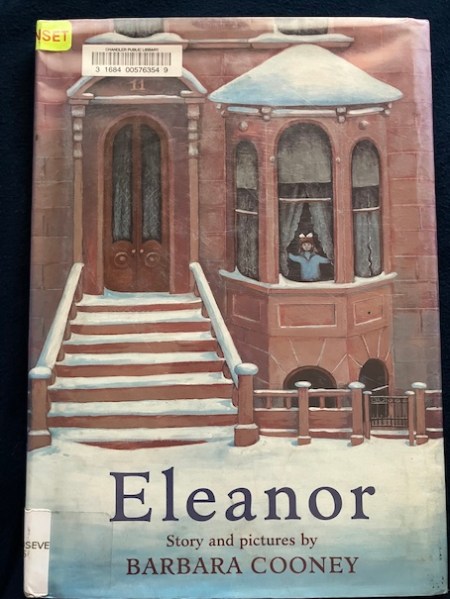
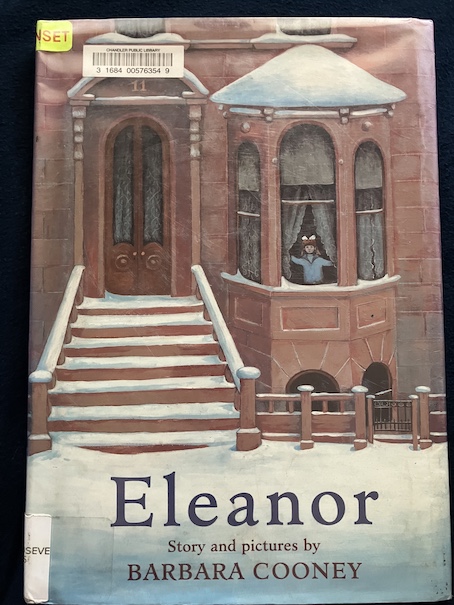
Famous Negro Music Makers

Famous Biographies for Young People

Famous Negro Music Makers by Langston Hughes, 1955.

I sought out an electronic copy of this book because I don’t own a physical one, and after I found out that it existed, I knew that I had to cover it at some point! The book is part of a series of biographies for children that I covered earlier, but what caught my attention was the author of the book, Langston Hughes, the famous poet of the Harlem Renaissance of the 1920s and 1930s. I mostly knew Langston Hughes for his poetry, and I wasn’t aware that he had written any children’s books until I found out that he had written several biography books for this children’s biography series. When I found out that he specifically wrote books about African Americans and other notable black people from history, it occurred to me that he might have even written biographies of people he knew personally because of the circles he traveled in.

This book focuses on prominent African American musicians. It contains a series of short biographies and profiles, beginning with musicians from the 19th century and continuing into the mid-20th century. Most of the musicians described in the book were contemporaries of Langston Hughes, but since the biographies are brief and focus only on providing an overview of the subjects’ lives, there is no indication whether Hughes ever met any of them himself. I was a little disappointed about that because I would have enjoyed hearing a personal perspective, but the personalities covered are still fascinating.

If you’re wondering why he uses the term “Negro” instead of “African American”, it’s because that term was one of the more polite and acceptable terms during his youth and around the time when he wrote this book. (That’s why the UNCF, or United Negro College Fund uses it as well. It was one of the polite terms in use at the time of its founding.) It sounds a bit out of date to people of the 21st century because, around the time of the Civil Rights Movement, which began around the time this book was written, people began advocating for a shift in the words used to describe black people. They wanted to distance themselves from old attitudes about race by using newer terms that didn’t have as much emotional baggage attached to them. This is when terms like “colored” and “Negro” feel out of use and were replaced by “African American” as the correct, formal term to specifically describe an American with African ancestry and “black” (considered somewhat impolite a century earlier, as I understand it, see the Rainbow and Lucky series for an example – I discussed it in the historical description of the 1830s) as the generic term to describe a person with dark skin and African ancestry, regardless of their nationality.

I enjoyed the range of different styles of music covered in the book. Recognized some of the most famous singers in the book by name alone, before I even started reading, but this book also introduced me to some musicians I hadn’t known about before. I knew about Duke Ellington, Louis Armstrong, Bessie Smith, and Marian Anderson, but I hadn’t heard of Lena Horne or Roland Hayes and some of the others. I’m sure that modern children would also be unfamiliar with some of the musicians included in the book. The biographies begin with musicians from the 19th century and end with musicians who were contemporaries of Langston Hughes in the 1950s.

Because this book was written in the mid-1950s, some of the information included is long out of date. People who were alive when Langston Hughes wrote the book are obviously not alive now, almost 70 years later. There are more recent books that cover the same topic and include information about late 20th century and early 21st century musicians Langston Hughes wouldn’t have known about. However, this vintage book is still interesting because of its famous author and because it was written at a turning point in American history, when society was changing and racial issues were being challenged.
The book is available to borrow and read for free online through Internet Archive.

The biographies included in the book are:

The Fisk Jubilee Singers, The Story of the Spirituals

This musical group began touring and singing spirituals in 1871. Some of the first members of this group had been born in slavery. After the end of the Civil War, the American Missionary Association of the Congregational Church established the Fisk School in abandoned army barracks in Nashville to teach black children at the high school level. However, it attracted a much larger student body than high school students. Many of the students had grown up in slavery and never learned to read, so that was the first skill they had to master. In addition to children of all ages, the school attracted older adults who wanted to learn enough to read Bible stories before they died. There was local opposition to a school for black people, and a lack of funding endangered the school’s existence. The school’s treasurer came up with the idea of holding musical performances to raise money. At first, the performers weren’t sure they wanted to sing their spirituals in front of white audiences, but they turned out to be very successful. They even did a European tour and sang before Queen Victoria. The Fisk School continued to grow and later became Fisk University, which still exists in Nashville and is considered one of the top historically black colleges in the US.

James A. Bland (1854-1911), Minstrel Composer

This section begins with an explanation of the creation of the banjo as an American instrument by slaves. People have negative associations with the term “minstrel show” in modern times, but the book explains that the first minstrel shows were performed by black slaves who had a talent for music. They were allowed to travel between plantations to perform their musical shows. Later, white actors and musicians adopted the style of these performances and started wearing blackface to perform their own minstrel shows.

However, James Bland fell in love with banjo music and the style of minstrel performances from a young age. Although minstrel music had a poor reputation, and his parents disapproved of his interest in this style of music, Bland earned extra money by giving street performances while he was in college. Although most theaters only wanted to book all-white minstrel groups in blackface as opposed to all-black minstrel groups, Bland managed to join an all-black group and make a name for himself as both a performer and composer.

Bert Williams (1875-1922), Artist of Comedy Song

In his youth, Bert Williams helped earn money for his family by singing in the street. Later, he formed a partnership with George Walker, and the two of them developed a musical comedy act. Bert Williams became famous for his act, but it also troubled him because he weirdly had to use blackface, even as a black person, because that’s what audiences expected, and he also had to act dumb when he was actually very smart. He wanted to move on to more serious roles as an actor, but people didn’t think he could play anything other than comedic roles. Also, in spite of his fame, he was treated as a second-class citizen everywhere outside of the theater because of Jim Crow laws. He was quoted describing the situation, “It is no disgrace to be a Negro, but it is very inconvenient.”

Bill Robinson (1878-1949), Music with His Feet

Bill Robinson was a famous tap dancer, often credited under his nickname, Bojangles. He was orphaned at a young age and partially raised by his grandmother, who was a former slave. He left school at the age of eight and got a job in a riding stable because he loved horses. He also earned extra money by dancing on street corners and ended up joining a traveling show. He became famous for his dancing and had dancing roles in movies. He is particularly remembered for his appearances in Shirley Temple movies in the 1930s.

(Note: He and Shirley Temple are regarded as the first interracial dance team in movies. While people of the time might have been scandalized by an interracial adult dancing team, it was acceptable for little Shirley Temple to dance with Bill Robinson because of her youth and innocence. Basically, because she was a young child, and he was in his 50s, it was obvious that there could be no romantic relationship between the two of them. Segregationists of the early 20th century feared interracial marriages and created laws to prevent them, which is why they feared any suggestion of romance between a black person and a white person. Shirley Temple was a safe person for Robinson to dance with because she was just a cute little girl dancing with her “Uncle Billy”, not a potential romantic partner.)

Leadbelly (1880s-1949), The Essence of Folk Song

His original name was Huddie Leadbetter, and he had a wild youth. He was a rough fighter who was even charged with murder and assault and sent to prison and escaped multiple times. (The book notes that he may not have actually killed anybody. The book explains that he was involved in brawls with other local people at Saturday night dances, where he was in demand as a musician. During one of these fights, in which a large number of people were involved, a man was killed, and Leadbelly, as he came to be called, was the one who was apprehended and charged for his death. However, in this type of free-for-all fight, it’s difficult to tell who did what, so it isn’t definite that he was responsible for the man’s death. I’m not completely sure whether the description of the fight in the book is fully accurate, though, because I saw it described differently elsewhere. It’s enough for readers to know that he had a rough youth, that he got in trouble for a fight in which someone was killed, and that he was in and out of prison for a time.) However, he had a natural talent for music and a love of folk songs that helped him to build a better life. His performances and recordings are credited for preserving songs that might otherwise have been lost to time.

Jelly Roll Morton (1885-1941), From Ragtime to Jazz

His original name was Ferdinand Joseph Le Menthe, and he grew up in a mixed race family in New Orleans. New Orleans was an exciting city with many different types of music, and Morton (as he later called himself) discovered his love of music early in life. He worked a variety of jobs in his youth, but through it all, he continued to play his music. He traveled the country, learning and playing ragtime and jazz music, eventually composing his own songs.

Roland Hayes (1887-(later D. 1977)), Famous Concert Artist

Roland Hayes was a student at Fisk University (whose origins were described in the first chapter of this book) in his youth. However, while the Fisk Jubilee Singers had popularized Negro spirituals and helped make it acceptable for theaters to book black people to sing these songs, Hayes was in love with classical music from Europe, the style of Beethoven and Brahms and classical opera, and theaters would not book a black performer to perform that style of music. Still, Hayes was determined to find a way to perform the music he loved. Strangely, motion pictures helped him to get his start. Because movies were silent then, all music had to be provided by live musicians in the theater. Hayes got his start singing behind the screens of movie theaters, where no one could tell that the performer was a black man. He also toured with the Fisk Jubilee Singers and made a name for himself in London, where he even sang before King George V.

William Grant Still (1895-(later D. 1978)), Distinguished Composer

In his day, William Grant Still was considered “the most prolific of American Negro composers.” He was raised to have a love of learning and music, although his mother and stepfather thought that music would be an unreliable career, unless he was teaching. For a while, he studied science at Wilberforce University, but he later attended Oberlin College to learn musical composition. He also worked for W. C. Handy’s music publishing company. He later moved to California and composed and arranged music for movies in Hollywood. However, his work extended beyond movies, and he is mainly remembered as a symphony composer.

Bessie Smith (1896-1937), “The Empress of the Blues”

Bessie Smith is described as being a large and tall woman with a powerful voice. She was a blues singer who mainly performed before black vaudeville audiences. The blues style of music had its roots in folk music, and it was considered lowbrow in the early 1900s. Gradually, it began to enter the wider culture and helped to form the style of popular jazz, but at the time, Bessie Smith’s style wasn’t taken seriously by Broadway. Bessie Smith was well-loved in her performances and may have gone on to be a bigger star, but unfortunately, she died from injuries in a car accident. According to the book,she might have survived, but the nearest hospital was for white people only and refused to take her. She died on the way to a hospital that would accept black people. This was just one of the harsh realities of life and death in the segregated South. However, the story about the whites-only hospital appears to have been discredited since this book was written. It seems that she did reach a hospital that accepted black people and lived to have her badly-damaged arm amputated, but she was too badly injured to survive.

Duke Ellington (1899-(later D. 1974)), Composer and Band Leader

Duke Ellington‘s birth name was Edward Kennedy Ellington. His father worked for the Navy Department of the Government, and he was born in Washington, DC. His early interests in life were art and baseball, but his mother had him take piano lessons. In high school, he and some friends started a ragtime band. The band was successful, and they moved to New York. After a few years, they began recording for Columbia Records and other recording companies. He composed music throughout his career, jazz and symphony orchestra.

Ethel Waters was born into a poor family in Pennsylvania and had a hard childhood. She started working as a hotel maid in her early teenage years, and she worked her way up through adversity in the theatrical world. She became a vaudeville singer and actress, eventually going on to make Hollywood movies.

Louis Armstrong (1900-(later D. 1971)), King of the Trumpet Players

Louis Armstrong began his musical education in a very odd way. When he was twelve years old, he was apprehend on the streets of New Orleans for firing a gun in the air on New Year’s Eve. Firing a gun in the air is a dangerous thing to do (people are sometimes killed by celebratory fire), and the authorities decided that he was he was a young hoodlum for running around, firing a gun in the streets. The sent him to the Colored Waif’s Home, which was being used as a youth reformatory as well as an orphanage. As a younger child, he had played music on street corners with some of his friends and had admired musicians who played horns, but he had never had a horn of his own. At the reform school, he was given a coronet and music lessons. Louis loved it, and he loved playing in the reform school’s band when it marched in local parades. He was disappointed when he didn’t get to keep the coronet when he left the reform school. However, his talent had become known. The owner of a local restaurant bought him a horn from a pawnshop so he could play in some of the local bands. At first, he had trouble adjusting to playing again because it had been so long since he had played regularly at the school, and his lip got sore. When that happened, he would fill in the trumpet part by singing in his gravelly voice. It was such a unique sound that word of it spread, and soon, he was getting attention from audiences and other musicians. Early on, he found it difficult to read music, so he learned to play by ear, and he had a talent for adding his own embellishments and variations to songs. He became famous for his scat singing.

Marian Anderson (early 1900s-(later D. 1993)), Metropolitan Opera Star

Marian Anderson began singing in the church choir as a child, and she was so talented that her church raised money to pay for her musical education. Later, she was also sponsored by the Philadelphia Choral Society. In 1925, she entered the New York Philharmonic Competitions and won first place. She did a singing tour of Europe, where she made a name for herself, and when she returned to the US, she became an acclaimed concert artist. In January 1955, she became the first black performer to sing for the Metropolitan Opera Company. (That was the year this book was written, and it discusses this event as a landmark for black musicians.)

Bennie Benjamin (1907-(later D. 1989)), Broadway Song Writer

I couldn’t remember having heard of Bennie Benjamin before, but I had heard of one of his songs, I Don’t Want to Set the World On Fire. It was his first big success, and he became a famous Broadway song writer. Something that made his music different from other black song writers of his day was that his music wasn’t inspired by spirituals, blues, or jazz. He was originally from the West Indies, and he moved to New York as a young man, so he was always more interested in Broadway styles of music than Southern music. At the time this book was written, he was still alive and writing songs.

Mahalia Jackson (1911-(later D. 1972)), Singer of Gospel Songs

As a child in New Orleans, Mahalia Jackson listened to Bessie Smith’s records and was inspired by her singing style. Mahalia’s specialty was gospel music. She never wanted to perform secular songs, but her music wasn’t the same as spirituals. Gospel music is different from spirituals because spirituals evolved from folk music with no known composer, and gospel music is more modern with known professional composers.

Dean Dixon (1915-(later D. 1976)), Symphony Conductor

Dean Dixon‘s mother was a music lover, and when he was a young child, she would take him to symphonies at Carnegie Hall. She had him learn to play the violin, and he played in his high school orchestra. He developed an interest in orchestration, and he formed a small chamber orchestra at the local YMCA, where he acted as the conductor. After high school, he attended the Julliard School of Music and did graduate work at Columbia University. While he was studying, he also led a mixed race symphony of children and adults in Harlem. He went on to become the first black person to conduct the New York Philharmonic Symphony.

Lena Horne (1917-(later D. 2010)), Singing Star of Hollywood

Lena Horne was an actress and singer. In 1942, she became the first black female singer to appear in a Hollywood move as a featured star in a film with white actors. At that time, typical movie roles for black people were minor comedic parts and servants. Even though black people in American society were educated and held professions like doctor or lawyer, movies typically showed them in more menial jobs, like chauffeur or maid. Lena Horne’s role in the movie Panama Hattie, in which she played a singer, helped to set a new precedent. During WWII she toured with the USO. After she became famous, she was known to turn down singing engagements in places that practiced segregation.

Famous Jazz Musicians (1800-1955), Congo Square to Carnegie Hall

This chapter explains the history and evolution of jazz music and discusses some prominent musicians from the early to mid-20th century who have not been discussed earlier in the book. Toward the end of the chapter, the author discusses a particularly interesting point that the National Association of Music Therapy was researching therapeutic uses for jazz music in the 1950s. Langston Hughes was also pleased that jazz could be used to encourage people to take an interest in other aspects of African American culture, like poetry, and how this style of music has spread all over the world.

Cleopatra: Queen of the Kings

Cleopatra: Queen of the Kings by Fiona MacDonald, illustrated by Chris Molan, 1998, 2003.

I always like books from DK Publishing because they have great illustrations, and they do a good job of helping to explain nonfiction topics, including different periods of history. However, one thing that’s important to realize is that you really have to read all of the small text that accompanies even the small pictures in order to get the full story. If you don’t, you may miss important details. Although this is a picture book, the detailed nature of the information and some of the dark subject matter make it inappropriate for young children.

This particular book is about the life of Cleopatra, the famous Egyptian queen. The queen we know as simply Cleopatra was actually Cleopatra VII. She was part of a dynasty of Egyptian rulers who were originally from Macedonia, a region of Greece. This dynasty was known as the Ptolemaic Dynasty because all of the kings in the dynasty were named Ptolemy, including Cleopatra’s father, Ptolemy XII. There were certain names that were repeated in every generation of the family and even within generations, like Ptolemy (Cleopatra’s two brothers both had this name), Cleopatra (Cleopatra also had a sister who was also named Cleopatra), and Arsinoe (Cleopatra’s younger sister). The book doesn’t fully explain why they came from Macedonia, but one of Cleopatra’s ancestors, Ptolemy I, was a Macedonian nobleman and a friend of Alexander the Great. Ptolemy I went with Alexander the Great on his military campaigns. Through his service to Alexander the Great, Ptolemy I was made the Greek governor of Egypt, ruling from the city Alexandria, which had been established by Alexander the Great. Alexandria was an important port city as well as the seat of the royal family. It was a gathering place of traders, scholars, and people from different cultures in Egypt, although average Egyptian citizens viewed it more as city of foreigners, just as the royal family itself was also foreign. That’s an abbreviated explanation of the family’s history, but it helps to understand that, while the family ruled Egypt for generations, they remained culturally Greek. The book mentions that most of the members of Cleopatra’s family only spoke Greek and that Cleopatra departed from the norm by learning to speak Egyptian.

Cleopatra was born into tumultuous times in the history of Egypt and her family. Her father was known as a cruel ruler who taxes his people heavily and sent large amounts of money to Rome, attempting to befriend Roman leaders and bribe them not to invade Egypt. In 58 BC, Alexandrian citizens had enough of Ptolemy XII and the way he catered to Rome, and they revolted, forcing Ptolemy XII to flee the city for Rome. Cleopatra was only fourteen years old at the time. Members of the family were left behind in Alexandria when Ptolemy XII fled, and Cleopatra’s oldest sister, Berenice claimed the throne in her father’s absence. The Ptolemies were always focused on maintaining their power, even in the face of competition or opposition from family members, and they were not afraid to fight or even kill each other to maintain control. Berenice may have murdered another of her sisters during her time as queen because she died under mysterious circumstances. However, when Ptolemy XII returned to Egypt a few years later, he had Berenice executed as a rival for the throne. By then, Cleopatra was the oldest surviving child of the family, with only her youngest sister and her brothers still alive.

A few years later, Ptolemy XII died, and Cleopatra acted quickly and prudently to secure both her life and her power. Her younger brother, Ptolemy XIII, had a claim to the throne, but he was still only twelve years old, and Cleopatra was eighteen. Asserting her authority over her child brother, Cleopatra took the throne as the oldest remaining offspring of Ptolemy XII and married her brother in order to turn her brother from a rival for power into a further source of her own authority. She could then rule on her brother’s behalf as his wife as well as his older sister. (Other Egyptian rulers had married close relatives for reasons like that. Tutankhamen was similarly the result of an incestuous royal relationship.) As queen, Cleopatra called herself the Sun God’s Daughter, an old royal title that tied her image to rulers of the past and the gods of Ancient Egypt.

From the beginning, being queen was a difficult task for Cleopatra. There were famines in Egypt during the beginning of her reign, and Cleopatra had to manage a response that would satisfy the citizens that she was doing her job as ruler. Family rivalries were also an ever-present danger. Cleopatra knew that she had enemies in her court, including people who favored her brother over her. As her brother got older, he became dissatisfied with the way his sister was ruling without sharing power and authority with him. For a time, Ptolemy XIII forced Cleopatra to flee Egypt and go to Syria. Cleopatra took her sister Arsinoe with her, both to protect her from their brother and to prevent her from trying to seize power herself. (In the Ptolemy dynasty, either could be a possibility. When family members weren’t in danger from each other, they could be a danger to each other.)

In the meantime, Julius Caesar came to Egypt to collect a debt that he claimed that Cleopatra’s father had owed him. He arrived during the power struggle between Cleopatra and Ptolemy XIII, and he decided that it would be for the best to try to mediate peace treaty with the two of them. He wanted to meet with both Cleopatra and Ptolemy XIII together, but Cleopatra knew that there was a risk that she might be killed if she showed up for a meeting. Yet, she did want to meet with Caesar because she recognized that he could be an important friend and source of protection for her. She ended up visiting Caesar in secret. According to legend, she had herself delivered to Caesar’s room in a rolled-up carpet. Caesar was charmed by Cleopatra and became her ally. When the news of their alliance spread, it tipped the balance of power in the royal family. Caesar learned that Ptolemy XIII’s adviser was plotting against him and had him executed. Ptolemy XIII fled with Arsinoe to join the Egyptian army and was later killed and found dead in Alexandria’s harbor. Getting rid of her brother/husband and his advisers secured Cleopatra’s position. She had one remaining brother, Ptolemy XIV, who was only eleven years old at the time, so she married him, too, further solidifying her power. As her ally (and possible lover), Caesar provided her with guards for her safety.

Cleopatra had a son named Caesarion, who was rumored to be Caesar’s son as well. However, Romans feared that Julius Caesar would proclaim Caesarion as his heir. They didn’t want him as the future ruler of Rome, citizens were appalled at the way Arsinoe was paraded through the streets as a war prize, and people generally began to fear that Caesar was becoming too powerful. In 44 BC, Caesar was assassinated by a group of senators. Cleopatra was in Rome when Caesar was killed, and she fled back to Egypt with her son. Around this time, Ptolemy XIV disappeared, and he may have been murdered by Cleopatra. With a son to inherit her throne, Cleopatra no longer needed Ptolemy XIV. However, her Roman protector was now gone, and Cleopatra still had enemies at court. Cleopatra’s remaining sibling, Arsinoe, sided with Caesar’s enemies and plotted against her sister and Caesarion.

Nobody knows exactly what Cleopatra looked like (statues and carvings of her don’t always look alike, and they may have been idealized images of her), but she took care of her appearance as part of her image as queen. Apparently, Cleopatra was more striking than beautiful, and what struck people about her the most was her intelligence and personality. Her charm was one of her most important tools in winning allies, and she used it again to win over a new ally to replace Caesar. She found a new ally in Marcus Antonius (also known as Mark Antony), one of the candidates to replace Caesar in Rome.

Mark Antony needed the control of Egypt and its resources and the support of Cleopatra for his own political purposes. To win his support for her purposes, Cleopatra began a romantic relationship with Mark Antony that eventually became a major part of the legends around Cleopatra. Although Mark Antony already had a wife in Rome, he became devoted to Cleopatra and fathered a set of twins with her and, later, a third child.

When Caesar’s nephew, Octavian, learned that Antony had divorced his wife and was conspiring against him, he declared war on Egypt to take down both Antony and Cleopatra. Cleopatra and Antony’s forces were defeated at the Battle of Actium although the two of the escaped. Feeling that the end was probably near, Cleopatra had stoneworkers hurry to complete her tomb. She began experimenting with poisons, and she and Antony swore to each other that they would die together. When Antony’s soldiers turned against him and refused to fight, Antony was disgraced and forced to flee. He ended up taking his own life by stabbing himself. Cleopatra had retreated into her own mausoleum, planning to die, but Octavian allowed her to remain there as a prisoner while she arranged Antony’s funeral. The exact cause of Cleopatra’s death has never been confirmed, but according to legend, she arranged her own death by the bite of an asp and sent a note to Octavian, asking that she be buried with Antony.

It’s a tragic end to a story that was full of treachery and family rivalries from the very beginning. Octavian refused to allow any of Cleopatra’s children to assume the throne of Egypt, ending the reign of pharaohs forever. Rome took control of Egypt, and Cleopatra’s children were sent to be raised by Antony’s first wife in Rome, Octavia (who was also Octavian’s younger sister). Caesarion tried to flee to Syria, but he was caught and executed by Octavian’s orders. No one knows what happened to Cleopatra’s other two sons because they disappear from historical records after this point, so they may have died young (or were murdered, given how things went in the powerful circles in which they lived). However, Cleopatra’s daughter survived, grew up, and eventually married the King of Mauretania, a region in North Africa. The book mentions that she had a son that she also named Ptolemy, but it doesn’t mention that this Ptolemy was the last king of Mauretania and was assassinated by Caligula. Caligula and Ptolemy were distant relatives of each other because Ptolemy of Mauretania was a grandson of Antony, and Caligula was descended from both Antony and Octavian. In many ways, it seems like this family’s greatest misfortunes were themselves and each other. Fortunately, the death of death of Ptolemy of Mauretania didn’t end the family line. It’s unknown whether or not Cleopatra has living descendants today, but Ptolemy of Mauretania did have a sister (the details of her life are unknown) and a daughter named Drusilla, who apparently grew up, married, and continued the family line. Further down the family tree, relationships and offspring become harder to trace.

Something I particularly liked about this book was the separation between the legends of Cleopatra and the her known history. As with other ancient historical figures, the history and legends go hand-in-hand, and it can become difficult to separate the two. The book is pretty open about which parts of her life are known, what can’t be firmly established, and which parts of her story come to us from legend and may or may not be reality. The final section in the book discusses the known facts and fiction about Cleopatra and possible confusions between her and other Cleopatras in her family (which may be another reason why not all of the images of Cleopatra look alike). It also explains the information about Cleopatra in Plutarch‘s biography of Mark Antony and how his stories inspired Shakespeare’s play and modern movies about Cleopatra.

The book is available to borrow and read for free online through Internet Archive.

Da Vinci

Da Vinci by Mike Venezia, 1989.

This book is part of a series of biographies of famous people from history. I’ve been familiar with the part of this series about famous artists since around the time the first ones were published. I was in elementary school school at the time, and we had the books because my mother used to teach the Art Masterpiece program at the school. She would come to class and talk about famous artists and show their paintings, and there would be an art project for the kids to do based on the style or subject matter of the artists. So, when I was young, we had books from this series (among other art books) around the house that she used for the art classes and a lot of arts and crafts materials (a tradition which exists to this day). At the moment, this is the only book from the series that I have because the book about Leonardo da Vinci was my favorite.

Leonardo da Vinci was one of the most famous artists of the Italian Renaissance, particularly known for his paintings The Last Supper and the Mona Lisa, but he was more than just a painter. The book is full of interesting facts about his life as well as his work. Aside from showing photographs of da Vinci’s work, the book also has humorous cartoons about da Vinci’s life, which is one of the things that makes this series of books fun.

Leonardo began showing an interest and talent for drawing while he was still a child. Throughout his life, he also developed and practiced many other skills, including architecture and mathematics, music, and sculpture. He was a scientist and inventor, experimenting in many different areas, from the mixing of different types of paints to weapons design. Along the way, he found creative ways to combine his various interests. He used his drawing skills to develop his scientific ideas, and he used his knowledge of science to make his art appear more realistic.

You might wonder how one person could find so much time to do so much, but part of the answer is that he didn’t finish everything he did. He is known to have left some of his work unfinished, possibly because he got distracted by other, more interesting projects and pursuits or because he just couldn’t finish them to his satisfaction. Not all of his designs for inventions really came to anything, and not all of his experiments worked out, either. Some of his paintings are now deteriorating because the experimental paints that he mixed didn’t quite work out.

However, Leonardo da Vinci was a perfectionist, and the paintings that he did complete show excellent techniques and a high degree of realism that have been an inspiration to later artists for centuries.

One final thing I’d like to add is that this book is part of the reason I thought The Da Vinci Code by Dan Brown was a dumb book. As I said, I grew up with art lessons. I read and loved this book about Leonardo da Vinci when I was a kid, and it has some very basic information about the life and work of Leonardo da Vinci that anybody who was seriously interested in him really should know. One of the cringiest parts of The Da Vinci Code for me was the part where our heroes are stupidly trying to figure out a message that is simply written backward. As this picture book about Leonard da Vinci points out, it’s common knowledge these days that da Vinci wrote notes using mirror writing. Some people, like the book suggests, think that he did that to make his notes harder for other people to read, although there’s also a theory that he did it because he was left-handed and that he decided that it was easier for a left-handed person to write that way. Left-handed people often complain about getting ink on their hands when they write left-to-right, but they don’t have that problem if they write right-to-left, so this might have been his attempt to get around the problem of ink-stained hands. Either way, if the people in The Da Vinci Code were such experts, they should have know this about da Vinci, and it should have been one of the first things they should have checked for. That’s not the only problem in The Da Vinci Code, but it’s one of the ones that rankled me the most because of how long I’ve known about this. (Also, The Da Vinci Code totally ripped off the albino assassin from Foul Play with Chevy Chase and Goldie Hawn, but that’s another issue.)

The book is available to borrow and read for free online through Internet Archive.

Famous French Painters

Famous French Painters by Roland J. McKinney, 1960.

This book is part of a series of Famous Biographies for Young People. Reading older non-fiction books can be problematic because non-fiction books are often updated with new information. In this particular book, there are people who are described as being still alive because they were at the time of the book’s publication, but they are not alive anymore. However, older non-fiction books sometimes interest me both because they are an indication of what people knew and studied at the time of publication and they sometimes cover odd topics that don’t commonly appear in new books. So far, this is the only book I own from this particular series, but the other biographies in the series

It begins with a section of black-and-white prints of famous French paintings and an introduction to the history of French painting in general. The introduction begins with a discussion of illuminated manuscripts in the 15th century and the artistic and architectural endeavors promoted by King Francis I in the 16th century. Francis I was particularly fascinated by Italian art, and he hired artists of the Italian Renaissance, including Leonardo da Vinci, to work at his court. Francis I helped to fuel an increasing interest in the arts in France called the French Renaissance. Although the French Renaissance was initially heavily influenced by the Italian Renaissance, French artists continued to develop their own styles. Popular subjects in French art were portraits, realistic landscapes, scenes from Classical mythology, and religious themes. The introduction ends with artists who painted during the late 18th century and early 19th century, explaining how their departure from neoclassical styles led to the development of new art styles.

After the introduction, there is a series of short biographies of famous French artists, beginning in the early 19th century and leading into the early 20th century. One of the first things that struck me about the list of artists included in the book is that, when their birth and death dates are included, none of the artists were born later than the 1880s, and the last two in the book have no death dates listed. Since the book was published in 1960, those last two artists were still alive at the time of publication, although they have died since then.

The artists included in the book are:

Eugene Delacroix (1798-1863) – He was a leader in the Romantic style of painting and one of the first French artists to use watercolor paints, which the French learned from English artists.

J. B. (Jean Baptiste) Camille Corot (1796-1875) – Originally, he trained in business, but he didn’t think he was suited to business and decided that his future was in art. He was particularly known for his landscapes, which were his specialty. He was also known as a charitable benefactor.

Edouard Manet (1832-1883) – Manet’s parents originally wanted him to become a lawyer, but it soon became apparent that he did not have the interest or temperament for a law career. When he first began his art studies, he quarreled with his teacher over the teacher’s strict insistence on realism in art because Manet preferred a more creative form of expression. He eventually developed a more simplified realistic style that did not focus on small details, a style that contributed to the development of impressionism.

Edgar Hilaire Germain Degas (1834-1917) – His specialty was portraits, and following the lessons that his teacher impressed on him, he emphasizes the importance of lines and drawing in his work. Much of his work was in oil paint, but he switched to pastels because he found that it was easier to work with and less of a strain on his eyes. Some of his best known works were of ballet dancers.

Paul Cezanne (1839-1906) – He initially doubted his own artistic talents, but a fellow painter, Pissarro, advised him to stop trying to imitate others and put his focus on studying nature. Cezanne’s association with Pissarro helped him to develop his own style.

Pierre Auguste Renoir (1841-1919) – Early in his life, Renoir was known for his singing ability, but his parents insisted that he learn a trade. He started learning how to decorate china, but this was the era when factories began using machines to decorate china. For a time, Renoir decorated fans and window shades, but his focus on improving his drawing abilities led him to a career in art. He became a friend of Monet, and the two would discuss art techniques with each other, although they had different styles.

Vincent van Gogh (1853-1890) – He was originally from the Netherlands but lived in France. He was a contemporary of Gauguin, and the two were even friends. Unfortunately, van Gogh was plagued by mental illness, leading to the fit where he cut off part of his ear after an argument sparked by ridicule from Gauguin. Eventually, he committed suicide. He was not a famous artist during his lifetime, partly due to his mental illness and early death, but his work became famous after his death.

Paul Gauguin (1848-1903) – Although he was originally from France, Gauguin is known for his travels to islands in the South Pacific, where he eventually died. Much of his work was inspired by his travels in the South Pacific.

Henri Matisse (1869-1954) – He was a leading figure in a group of artists known as the fauves, which mean “wild beasts.” They painted in an unorthodox way that included few details and ignored perspective.

Pablo Picasso (1881- ) – Picasso was originally from Spain, but he lived in France for most of his adult life. He began studying art at a young age and is known for his work in surrealism and cubism. He was alive at the time this book was written, but he died in 1973.

(Odd fact not included in the book – Picasso was actually born one day before the shootout at the OK Corral in Tombstone, AZ. It doesn’t mean anything and isn’t important, but I noticed the date and just thought I’d tell you.)

Georges Braque (1882- ) – Braque was a contemporary of Picasso, and the two artists were instrumental in the development of cubism, although they each did their own work. The collaboration between the two artists was interrupted by the outbreak of WWI. Braque was alive at the time this book was written, but he passed away in 1963. On the subject of limitations in art, he once said, “Progress in art does not lie in extending its limits, but in knowing them better.”

Something that struck me was how much artists who were contemporaries of each other worked together, met to discuss and analyze each other’s art, and were actual friends. I prefer collaboration to competition, and I like that many of these artists seemed to appreciate and learn from each other’s skills and techniques.

I was also surprised at the number of artists whose parents initially wanted them to become lawyers, like Manet, Degas, Cezanne, and Matisse.

The book is available to borrow and read for free online through Internet Archive.

Cheaper By the Dozen

CheaperDozen

Cheaper By the Dozen by Frank B. Gilbreth, Jr. and Ernestine Gilbreth Carey, 1948.

These are the real reminiscences of children from the Gilbreth family about their unusual childhoods during the 1910s and 1920s.  There are a couple of movies based on this book, including the 2003 movie that features the dad who is a football coach, but that story is fictional and bears almost no resemblance to the actual lives of the real Gilbreth family.  The older 1950 movie with Myrna Loy as the mother is closer.  The only parts that they have in common are that there were a dozen children in the family, and they had some unusual systems for handling their chaotic household.

The father of the Gilbreth family, Frank Gilbreth, Sr., was a motion study and efficiency expert.  He was one of the early pioneers in the field, studying the ways that people do things, whether it was routine household chores or making things in factories and trying to find ways to help them perform their tasks more efficiently.  Saving time was a passion for him, and he often used his own children and household as guinea pigs for his projects.  His wife, Lillian Gilbreth, was also a psychologist and engineer and was his partner in his work, continuing it after his death.

Part of the reason Frank Gilbreth was so interested in efficiency was that, in his early life, he worked with his hands and built a reputation as an efficient worker.  Later, he also learned that he had a heart condition that might cause him to lead a shorter life.  He had wanted a large family, and he and his wife had agreed that they wanted an even dozen of children, six boys and six girls.  He got his wish, but he was concerned about helping his children to make it as far as they could through school and giving his large household a structure that would last even after he died.

The stories in this book are mostly funny stories as his children fondly remember the things their father taught them and the usual systems in their house that were designed to keep a dozen children in order.  The stories jump around a bit in time, and it isn’t always clear exactly which children were alive at certain points in the stories.  Whenever Jane, the youngest, is mentioned, the stories take place between 1922 and 1924, and there should be eleven living children in the family at most.  Although the Gilbreths did have a total of twelve children, as they had hoped, they were all single births (no twins or other multiples), spaced out over 17 years.  Also, although this book does not mention it (the sequel, Belles on Their Toes contains a brief footnote), one of the older girls in the family (Mary) died very young of diphtheria, before her youngest sister was born, so there was no point at which all twelve children were together.  Even so, the Gilbreths always referred to their children as their “dozen,” and the stories make it sound like all twelve were together.  (This article explains a little more about Mary’s death and its effect on her family and the reasons why the books explain little about it.)

The children’s birth order isn’t specified in the stories, but for reference, these are their birth and death dates (courtesy of Wikipedia):

Anne Moller Gilbreth Barney (1905-1987)

Mary Elizabeth Gilbreth (1906–1912)

Ernestine Moller Gilbreth Carey (1908-2006)

Martha Bunker Gilbreth Tallman (1909-1968)

Frank Bunker Gilbreth Jr. (1911-2001)

William Moller Gilbreth (1912-1990)

Lillian Gilbreth Johnson (1914-2001)

Frederick Moller Gilbreth (1916-2015)

Daniel Bunker Gilbreth (1917-2006)

John Moller Gilbreth (1919-2002)

Robert Moller Gilbreth (1920-2007)

Jane Moller Gilbreth Heppes (1922-2006)

Wikipedia also claims that there was a thirteenth baby, an unnamed stillborn daughter, but this child isn’t mentioned in the books, and I don’t know for sure if that’s true.  Most of the children lived to adulthood, married, and had children of their own.

Racial Language Warning: I usually make notes about racial language in the books I review.  There are a couple of things I’d like to point out, although I also have to point out that, since this book is non-fiction, the people writing it were quoting people from memory.  Just be prepared for a few things that people said back in the 1910s/1920s that wouldn’t be acceptable in modern speech.  They aren’t central factors in the stories, but they are there.  For example, one of the children’s grandmothers used to get dramatic when threatening the children with punishment and say that she would “scalp them like Red Indians.” (I’m not completely sure if she meant that the Indians would get scalped like that or do scalping like that, but I’m guessing that she probably wasn’t being particular.)  The mother of the family also frequently used the word “Eskimo” to describe bad language or “anything that was off-color, revolting, or evil-minded.”  Most of the time in the book, she says it kind of like the way some people say, “Pardon my French” when using bad language, and her definition of bad language was pretty mild.  I’ve never heard the word “Eskimo” used in that sense anywhere else, and it makes me cringe here.  There is some pay-off to the word when a couple of pet canaries whose full names the mother had declared were “Eskimo” escaped during a boat ride, and one of the kids tries to explain to the boat captain that he’s upset about “Peter” and “Maggie” being lost but he can’t say their last names because they’re “Eskimo,” making the captain think that a couple of Alaskan natives have mysteriously disappeared over the side of his boat.  It reminded me of something similar in Fudge-A-Mania, where Fudge accidentally made people think that his lost pet bird was his crazy uncle.  When sharing this book with children, like other older books, it might be a good idea to make it clear that they shouldn’t try to imitate some of the expressions the book uses because it might cause problems and misunderstandings.  There is also a Chinese cook in one chapter who speaks a kind of pidgin English that no one should imitate, either.

Overall, these are calm, funny stories about a somewhat eccentric family that can make nice bedtime reading.  The book is currently available online through Internet Archive.

Chapters

Each of the chapters in this book talks about a different topic or period in the family’s life:

CheaperDozenShavingWhistles and Shaving Bristles

Introduces the father of the family and his experiments in motion study.  Frank Gilbreth was highly self-confident and frequently took at least some of his children (and sometimes the whole family) with him on visits to factories where he was helping to increase their efficiency.  He gave the children notebooks and pencils and had them take notes about what they saw.

To keep the household orderly and make sure that each child got ready for school on time and did their chores and homework, the parents instituted a chart that each child had to initial after completing certain routine tasks such as brushing teeth or making beds, and there was a special whistle that their father would give to get all of the children to come quickly for a meeting.  The father would sometimes take moving pictures of the children doing chores, like washing dishes, so that he could study their motions and determine if there were wasted motions that could be eliminated so that the task could be completed more efficiently.  He also used himself as a guinea pig, always trying to do daily tasks, like buttoning his coat or shaving, more quickly and efficiently.

Pierce Arrow

The family moves from their home in Providence, Rhode Island, to Montclair, New Jersey.  This chapter explains the move and also the father’s love of practical jokes.  Before taking the family to their real new house, he takes them to one that’s really old and run-down so that the new one will look that much better when they get there.  When they get their large Pierce Arrow car, big enough to carry the whole family, the father tricks each of the kids into looking for the “birdie” in the engine and then honks the horn to scare them.  He thinks it’s funny until one of the kids does the same thing to him.

CheaperDozenCarOrphans in Uniform

This chapter explains that the mother of the family was a psychologist.  While the father instituted systems and dealt out discipline, the mother was often the one who made the systems work, resolving conflicts among the children and making sure that everyone was doing what they needed to do and that they had everything they needed.  Older children also helped by looking after a designated younger sibling.

Much of the chapter explains how things often happened on family outings.  They always took roll call because there were a couple of incidents when children had been left behind by accident on earlier trips.  As a large family, they also attracted a lot of attention.  Sometimes, their father would try to get discounts on things like ticket prices and toll booths by pretending that his children were the nationality of whoever seemed to be in charge, and he was pretty good at guessing that correctly.  All of the Gilbreths were either blonde or red-haired, so Mr. Gilbreth was known to gleefully pretend that they were Irish, when in fact, their heritage was Scottish.  He always thought jokes like that were funny, but finally his wife and children put a stop to his playacting the day that the family was mistaken for an orphanage on an outing.

Visiting Mrs. Murphy

The family enjoyed going on picnics together.  While they were eating, the father would often try to squeeze in an educational lesson, pointing out things like the way ants work together, how a nearby bridge would have been constructed, or what was going on at a nearby factory.  The children learned a lot from him, especially how to notice details in the world around them, but they noted that it was their mother who often put the lessons in perspective for them by pointing out the human side of each of these things, such as describing the fat queen ant in a colony with all of her slaves (their word, I’ve usually heard them referred to as “workers”, but you get the idea) waiting on her or the workmen on a construction project in their jeans, stopping for lunch.  Their father was also pleased by the mother’s descriptions, which complemented his lessons so well.  These stories help explain how the parents worked well together as a team.

The “visiting Mrs. Murphy” was a euphemism for going to the bathroom in the woods because the family didn’t really trust public restrooms.

Mister Chairman

This chapter explains a little about Frank Gilbreth’s youth and how he got his start.  His father died when he was young, and his mother encouraged her children to get the best education they could.  However, Frank Gilbreth decided to get a job instead of going to the Massachusetts Institute of Technology like his mother planned because he was concerned about the family finances and his sisters’ education.  He became a bricklayer and drove his supervisor crazy because he always had tips for working faster and more efficiently.  Eventually, the supervisor adopted some of his suggestions, and Frank discovered his passion for motion study.  He worked his way up in construction until he became a contractor, and he was also hired to study working methods in the factories he built.  He became a wealthy man and met his wife as she passed through Boston on her way to a trip in Europe.  Lillian was from a wealthy family in California, and she had a college degree in psychology.  Although many people didn’t take female scholars seriously in those days, Frank did, and the two of them became a team, both personally and professionally.  They were both interested in the psychology of management, and they applied many of the principles from the professional world to their household and vice versa.

To help organize household tasks and make family decisions, Frank created a Family Council with himself as the Chairman and his wife as the Assistant Chairman that was similar to an employer-employee board.  For the most part, it did help to keep order in the family, but once in a while, the Chairman was overruled, including the time when the children ended up persuading their parents that they should get a family dog.

Touch System

This chapter goes into more detail about how responsibilities and chores were assigned in the family.  It also describes how the father arranged to make best use of “unavoidable delay” in the bathroom by putting Victrolas with language lessons in the children’s bathrooms, so they could learn while bathing or brushing their teeth.  He also taught them how to take baths efficiently, so that they could be in and out of the bathroom as quickly as possible.  Mr. Gilbreth took every opportunity and free moment to improve his children’s minds, including teaching them ways to perform complex math problems at the dinner table.

While working as a consultant for the Remington typewriter company, Mr. Gilbreth developed a system for teaching touch typing, and he taught it to his children.

CheaperDozenSchoolSkipping Through School

Not knowing how long he was going to live, Mr. Gilbreth was anxious to see as many of his children get through school as he could, and he had great confidence in their abilities, so he often pushed his children to skip grades in school, using persuasion and his bombastic personality to get their schools to agree.  The children’s mother, however, saw her children more as individuals who needed time to grow up emotionally and socially as well as intellectually and tempered her husband’s enthusiasm for skipping grades.

The parents also had their children attend church and Sunday School, although the father wasn’t very interested in organized religion.  Lillian volunteered for a number of church projects and committees.  Once, as a joke, a friend of hers who had eight children of her own, referred her to a birth control advocate who was looking for someone local to volunteer to promote the movement.  The friend thought that it was a great joke, and the family saw the humor and made the most of it when the advocate showed up at their house.

Kissing Kin

When the United States joined World War I, Mr. Gilbreth offered his services to the U.S. Army.  While he was working at Fort Sill, Mrs. Gilbreth took their children (they had seven at the time) to visit her relatives in California.  The Mollers were a wealthy family, and the children enjoyed being spoiled by their grandparents and their aunts and uncles after the arduous train journey there.

Chinese Cooking

At first, the children felt like they should be on their best behavior when visiting their grandparents and aunts and uncles.  However, the adults were a little worried about how subdued the children were, and constantly being on their best behavior grew more difficult for the children.  One day, when the adults made the children wear new outfits that they hated for a special party, the children finally rebelled and got them all wet by playing in the garden sprinklers.  From then on, everyone was much more relaxed and informal.

The grandparents had servants, and Billy became rather attached to their Chinese cook, Chew Wong (I’m not completely sure if “Chew” was his real name or a nickname), who was known for being somewhat temperamental.  The cook enjoyed Billy’s company also, although when Billy got troublesome, he sometimes picked him up, held him in front of the oven, and threatened to cook him.  It was an empty threat, but one day, Billy (five years old at the time) pushed the cook when he was standing in front of the oven, also joking that he was going to cook him, and the cook apparently got his hands burned.  (This incident alarmed me a bit.  It seems that the cook wasn’t badly hurt, but still, that’s the kind of problem that horseplay like that can cause, and it could have been really serious.  The cook is described as speaking a kind of heavily-accented pidgin English.)

On the way home, all of the children came down with whooping cough.  When they picked up Mr. Gilbreth, Mrs. Gilbreth told him that next time, he could take the kids to California, and she would go to war instead.

Motion Study Tonsils

The family didn’t get sick very often (and tried hard to ignore it when they did), but this chapter describes what happened when the children all came down with measles and when several of them needed to have their tonsils taken out at the same time.  Their father decided to turn the tonsil operations into a motion study experiment.

Nantucket

The family had a vacation home in Nantucket, Massachusetts that they called “The Shoe” (after the nursery rhyme about the old woman who lived in a shoe and had so many children that she didn’t know what to do).  Although the father promised the kids that there would be no lessons and studying over the summer, he still found ways to teach them things by turning the lessons into games, like when he painted Morse code messages all over The Shoe and offered prizes to the children who could solve them.

This chapter also explains about the Gilbreths’ concept of “therbligs.”  The word comes from “Gilbreth” spelled backward, and it refers to a single unit of thought or motion.  Every task a person does is composed of a certain number of therbligs.  Reducing the amount of time needed for each therblig makes a task more efficient.  They taught this concept to their children as well, putting symbols representing the different possible therbligs on the walls of The Shoe as well.

For a while, The Shoe became a point of interest on local tours.

The Rena

The Rena was a catboat that the family owned.  Their father liked to run it like he was a real ship’s captain.

CheaperDozenBabyBathHave You Seen the Latest Model?

The births of new children were a regular experience in the Gilbreth family through much of the children’s early lives.  This chapter explains how the parents approached the births.  They decided very early in their marriage that they wanted a large family, choosing the number twelve as their target on the day they were married.

Mr. Gilbreth had a lot of theories about babies which he started testing on their first child, Anne.  He refused to allow people to speak baby talk around the babies (although he caved in and did it sometimes himself) so they would learn to speak properly.  He hired a nurse who spoke German in the hopes that the baby would start learning a second language immediately, and the nurse’s horror, he once tried to see if babies have an innate ability to swim by trying Anne in the bathtub. (No, they don’t, and he was careful not to let Anne almost drown.)

Mrs. Gilbreth had her first seven children at home, finding the hospital too dull because they wouldn’t let her work on anything while she was there.  As time went on, the children in the family began to wonder more about where the babies came from, although they knew that it involved their mother spending the day in bed, the doctor coming, and sometimes hearing their mother yell (she was embarrassed that they’d noticed).  Their mother tried to explain babies to them in terms of bees and flowers, but she was too shy to give them any real, direct information about it, and their father didn’t want to discuss the subject with them at all.  This chapter also mentions that part of the family tradition was that the mother would read the book The Five Little Peppers to her children while she was recovering from a birth.  (I also reviewed this book.)

Flash Powder and Funerals

Mr. Gilbreth loved taking pictures of his children (using a frightening amount of flash powder whenever he was in charge of it) and also frequently used pictures and movies of his children as part of his projects or as promotional images.  One of the most bizarre promotions they did was when Mr. Gilbreth was hired by a company that made automatic pencils.  They took pictures and movies of the Gilbreth children burying a coffin full of regular old wooden pencils.  The kids had to bury the coffin and dig it up again multiple times while they took all the pictures and movies they wanted.  Then, when the filming was over, Mr. Gilbreth made them dig up the coffin again and use all the wooden pencils in it so that none of them would go to waste.

Sometimes, these pictures and promotions were embarrassing to the children when they were made public and classmates and teachers talked about them at school.  Some of the reporters who interviewed the family for human interest pieces made up bits of dialogue to make their stories more interesting and embarrassed the family.  (Ex. “I am far more proud of my dozen husky, red-blooded American children than I am of my two dozen honorary degrees …”)

Gilbreth and Company

This chapter explains what it was like for special visitors to come to the Gilbreth house.  Most people found it pretty strange, with so many young children and the strict household rules which the children would also try to enforce on visitors.  The chapter mentions that Mrs. Gilbreth never liked using physical punishments on the children, but Mr. Gilbreth used them regularly.  Mrs. Gilbreth kept trying to tell him that he shouldn’t spank the children on various body parts because of the harm it could do.  At one point, Mr. Gilbreth asks her, irritably, “Where did your father spank you?  Across the soles of the by jingoed feet like the heathen Chinese?”  (It was a thing, but not exclusively Chinese.)

In particular, this part of the book describes two special visitors to the Gilbreth house: the father’s older sister, the children’s Aunt Anne, who came to look after the children while the parents were out of town, and a female psychologist who was trying to analyze the children for a paper she was writing.  The children generally liked Aunt Anne, who also gave them music lessons, even though none of them had any talent for music.  However, they started playing pranks on her when she started getting too militant with them, replacing the routines that their father gave them with ones of her own.

The children were more offended by the visiting psychologist, who asked them deeply embarrassing questions (ex. “Does it hurt when your father spanks you?”) and who seemed to have an agenda to prove that, while the Gilbreth children were smart, they were socially or behaviorally abnormal for living in such a large family under unusual systems.  The children also played pranks on her, getting hold of the answers to the intelligence test that she was giving them so they could give her either abnormally correct answers or psychologically abnormal answers and purposely behaving abnormally in her presence, intentionally twitching and scratching themselves.  Eventually, the psychologist caught on to what they were doing and left in a huff.

Over the Hill

This chapter is about family entertainment.  The Gilbreths liked to go to the movies about once a week, often staying to see films twice.  (Films were silent at this point.)  The father loved the movies as much as the kids, if not more so.  The children also sometimes put on little shows or skits for their parents.  In particular, they liked to do imitations of their parents, many of which involved either taking the children places or being asked questions about what it was like to have so many children.  Mr. Gilbreth also liked to do a “Messrs. Jones and Bones” cross-talk routine like the ones from minstrel shows, where a pair of actors perform pun-based jokes, except that he would play both parts himself, putting on accents like the black-face minstrels.  (Ex. “And does you know Isabelle?” “Isabelle?” “Yeah, Isabelle necessary on a bicycle.”)  The jokes are corny puns, but it’s a little uncomfortable now that I’m old enough to know the origin of this act.  It went over my head as a kid.

CheaperDozenUnderwearFour Wheels, No Brakes

The oldest girls in the family were getting old enough to start dating in the early 1920s, around the time that flapper culture was beginning.  Their parents were fairly conservative in their habits, and the girls argued with them about being allowed to bob their hair and wear the latest fashions, like short dresses.  The parents finally broke down and allowed the girls to have their hair professionally bobbed after Anne gave herself a dreadful bob.  The father drew the line on make-up, however.

Motorcycle Mac

During the early 1920s, girls often referred to their boyfriends as “sheiks” in reference to the popular silent movie The Sheik.  The father of the family often chaperoned his daughters on dates or had one of their brothers do it, although he eased off after getting to know some of the young men better.  The younger siblings enjoyed teasing the older ones about their dates.  My favorite episode when I first read this as a kid was the time when one of Ernestine’s boyfriends climbed a tree outside of her window to spy on her, hoping to see her getting undressed, and the other siblings decided to teach him a lesson by pretending that they were going to set the tree on fire and roast him alive.  (They didn’t do it, they just threatened to.  It’s a dangerous prank, but effective.)

The Party Who Called You…

Mr. Gilbreth knew that he had a bad heart condition even before his last two children were born, and he made preparations that would help his wife to run the household efficiently after his death.  He died in his 50s while he was on his way to a series of conferences in Europe.  He had called his wife from the train station and was on the phone with her when he had his fatal heart attack.

The book ends with describing what his wife and children did after his death.  One of the things that I found most touching was the way that the children described the changes in their mother after her husband died.  They said that in their mother’s youth, she had been accustomed to other people making decisions for her, first her parents, then her husband, who guided their work and who had the idea of the large family in the first place.  In some ways, their mother had been a very nervous, anxious person, afraid of things like going out alone at night, lightning storms, and making speeches (although she did them anyway).  After her husband died, Lillian’s fears seemed to drop away because the thing that she had always feared the most, losing her husband, had happened, and she discovered that she and the children could still manage.  When Lillin’s mother suggested that she move the family out to California to be close to their relatives there, Lillian held a Family Council with the children to decide what they were going to do.  Lillian said that she planned to continue their father’s work, even going to Europe in her husband’s place to present his papers, and that would mean that the children would have to take on greater responsibilities in running the house and caring for the younger children.  The children agreed, and although money was tighter than it was before, they were able to carry on.

The Secret is Out

SecretIsOut

The Secret is Out: True Spy Stories by Teri Martini, 1990.

This is a non-fiction book about famous spies in history.  It begins with a discussion of spies in general and asks the question of whether spies are heroes or villains.  The answer depends on which side they’re on and which side you’re on.  Spies around the world and throughout history have been engaged in similar work, using similar tactics, although technology has changed the profession in modern times.  Even spies on opposite sides of a conflict use the same skills and tactics, they just employ them for the benefit of different countries or causes.

The book is currently available online through Internet Archive.

The stories contained in the book:

SecretIsOutPic1The Gentleman Spy — This is the story of Captain John Andre and General Benedict Arnold during the American Revolution.  John Andre was a British officer who was executed for his role in helping Benedict Arnold defect to the British side.

Abraham Lincoln’s Personal Spy — The famous Pinkerton detective agency, the first detective agency in the United States, played an important role in the American Civil War.

The Spy with “the Delicate Air” — Spies were not always part of an official organization.  Even a civilian could turn spy in the name of a cause she believed in as Belle Boyd did during the American Civil War.

The Black Chamber — In the early 1900s, agents of the Austro-Hungarian Empire tracked down a mysterious agent in the pay of Russia and discover that the person they were looking for was the man who had once been in charge of their own organization.

The Eye of the Morning — Mata Hari was one of the most famous spies of all time, although she wasn’t really successful.  It was more her reputation as a dancer and the manner of her death that made her famous.

SecretIsOutPic2The Phantom of the Desert — Lawrence of Arabia was actually Thomas Edward Lawrence, a British army Captain.  He helped the Arabs to fight against the Turks during WWI.

The Spy without a Country — A poor young man from Hungary with a habit of telling tall tales left home to seek his fortune and eventually ended up becoming a Member of Parliament in Britain under the name of Trebitsch Lincoln.  However, when Trebitsch Lincoln was in need of money during WWI, he decided to turn to spying.

Mincemeat Swallowed Whole — This is one of my favorite true spy stories!  During WWII, the British concocted a scheme to give false information to the Germans using a dead body that supposedly was a drowned British marine carrying important documents.

The Clenched Fist — Fritz Kolbe spied for the Allies from within Hitler’s foreign office during WWII.

The Third Man — Harold “Kim” Philby was a spy for British intelligence during the Cold War, but he was secretly working for the Soviet Union.s

The Spy Next Door — Colonel Rudolf Ivanovich Abel was a Russian spy who posed as an ordinary American, Emil Goldfuss, in New York City.  After he was captured, the Americans decided not to execute him, although that was the usual punishment for espionage.  Instead, he was held prisoner until he could be used for the famous prisoner exchange where he was traded to the Russians for the captured U-2 pilot, Francis Gary Powers.