American Girls
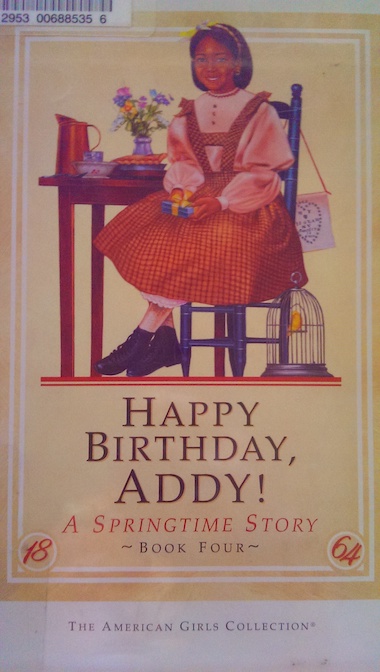
Happy Birthday, Addy! by Connie Porter, 1994.
Things are improving for Addy and her mother now that her father has finally joined them in Philadelphia. Addy’s father has found work delivering ice, so the family has been able to move to bigger rooms in a boarding house. However, making a new life for themselves in freedom still isn’t easy. Addy’s father worked as a carpenter on the plantation where they used to live, and he’d like to find steady work in carpentry, but he’s having trouble finding an employer who is willing to hire a black man.
Addy’s family might be free from slavery, but they are still not treated as equals to white people. There are places where black people can’t go and things they aren’t supposed to do, like riding on most of the city streetcars. It angers and upsets Addy, but she doesn’t know what she can do about it. She isn’t the only one who feels that way, and there’s been talk of violence in the city over it.
The boarding house where Addy’s family now lives is owned by Mr. and Mrs. Golden. Then, Mr. Golden’s elderly, blind mother moves in with them. Affectionately called M’dear, she’s a pleasant lady and tells Addy interesting stories, jokingly saying that she’s so old that she “was there the day God invented dirt.” When she asks Addy how old she is, Addy says that she’s nine but doesn’t know when her birthday is exactly. It was common for slaves not to know their birthdays because their parents couldn’t read or write and no one else thought it was important to record the dates of their births. M’dear tells her that she should claim a birthday for herself.


Addy’s parents think that choosing a birthday for herself is a good idea, and her father says that he will make ice cream for her new birthday. He has found a broken ice cream freezer that someone threw out, and he’s fixing it up for the family to use. However, Addy isn’t sure at first what day she wants to choose.
One day, M’dear is feeling poorly, and she’s out of headache medicine. Addy and Sarah offer to go get more for her. To get to the drug store, they get on board one of the streetcars that black people are allowed to ride, which can be dangerous because they have to ride on the outside. Then, the man at the drug store makes them wait until he’s served the white customers, speaking rudely to them. When they try to take the streetcar back home, there is an argument that ends with all of the black people being thrown off the streetcar. When M’dear hears about what the girls went through, she offers some wise thoughts about how people have to continue living their lives and being themselves, no matter what difficulties life throws their way.


In the end, circumstances continue to improve for Addy’s family when her father finally finds the kind of work he’s been looking for and Addy finds a special day to claim as her birthday when the end of the Civil War is finally announced.
I liked M’Dear’s message that the way people are treated doesn’t really change who they are. The black people in the story are treated badly not because of what they did so much as what other people think they are or want them to be. However, what other people think doesn’t change the nature of reality. No amount of bullying or thinking that someone else is inferior or telling them that they are inferior can actually make them be inferior. It can make things hard and unpleasant for the other person, but it will never actually change the reality of who they are, and people who think it does delude themselves. M’Dear may be blind, but she sees much more clearly that most because she understands the reality of the situation better than they do. Addy’s father has trouble finding work because he is black, but the fact that potential employers don’t like his appearance doesn’t make him any less the craftsman he is. He has all the skills he needs; he just needs someone who has the ability to notice them.
In the back of the book, there is a section with historical information about how children were raised during the Civil War with some special information about the lives of slave children. It also talks about children helped to support the war effort.


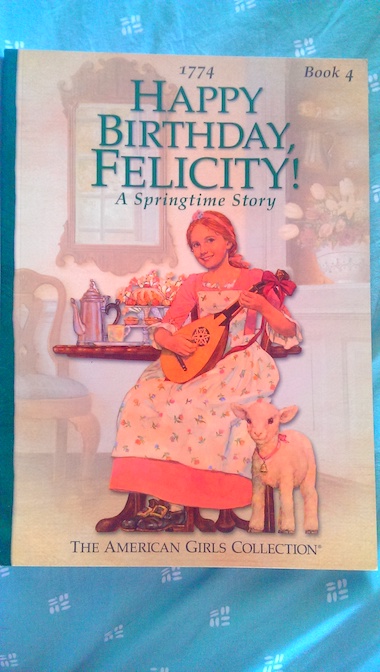
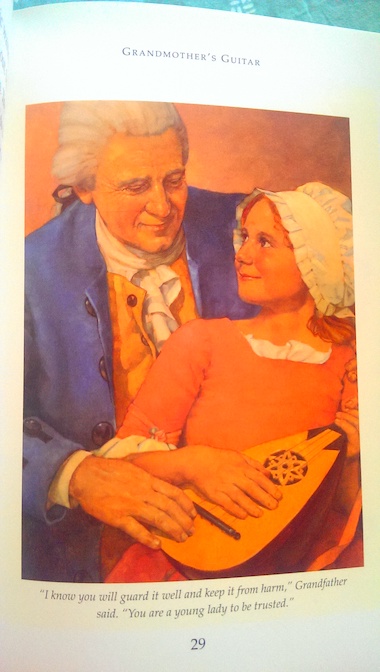 This is part of the
 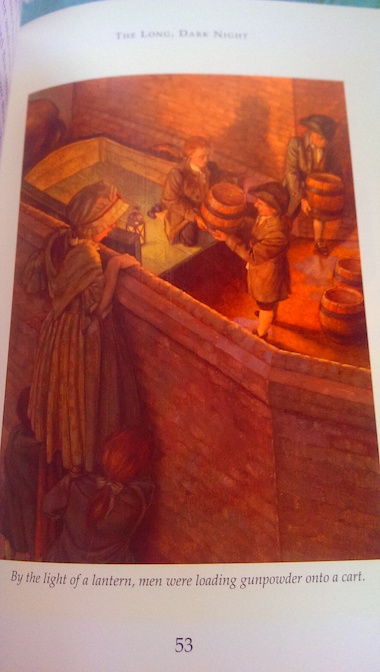 However, on the way home, something frightening happens. Felicity sees Elizabeth’s father, a known Loyalist, talking to a British soldier. She ducks into a bush so they won’t see her, and she hears them talking about the governor removing the gunpowder from the Williamsburg arsenal so the colonists can’t use it in the rebellion that has been threatening to come for some time.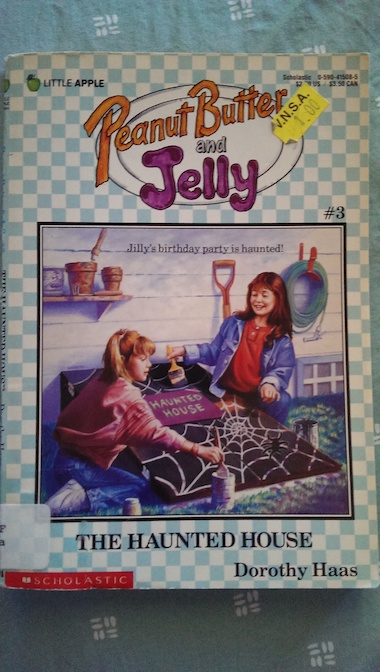
 Jilly was sick on her birthday and couldn’t have a party, so she and Peanut decide to hold an haunted house party, just for fun and invite all the kids in their class. The girls’ nemesis, Jennifer, and her friends are in another class and won’t be invited to the party, but when they hear about it, they make it a point to tell Peanut and Jilly how childish it sounds. However, no one else seems to think so, and the girls’ classmates are eager to come.






 Never Hit a Ghost with a Baseball Bat by Eth Clifford, 1993.
 The girls explore the trolleys parked in the museum and admire the manikins dressed in old-fashioned clothing that are part of the displays in each trolley car, but more strange things happen. A teddy bear seems to speak to them, even though it isn’t the kind with a string and a talk-box. The manikins start to seem creepier. Mary-Rose and Jo-Beth are only armed with a baseball bat from one of the displays and the old teddy bear (which terrifies Jo-Beth). But, Mary Rose is determined to find the ghost, even if it’s the last thing she does!
 Jestress's Forgotten Books and Stories