Magdalena

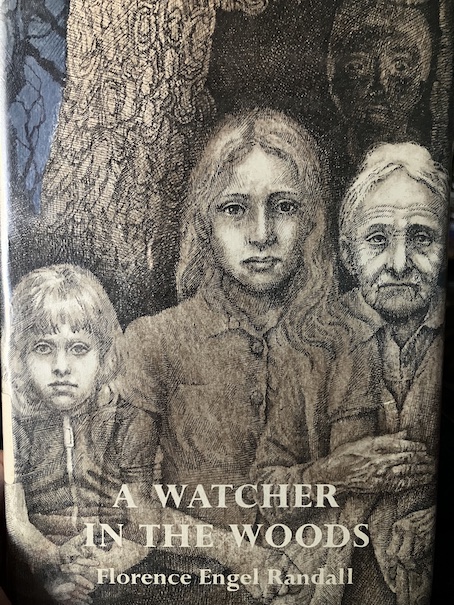
Magdalena is switching classes at school. She’s happy about it because she found her old class too chaotic. She thinks she will be happier in her new class. Her friend in her current class at school, a boy named Saul, tells her that she must be an IGC, an Intellectually Gifted Child, in order to get transferred to that class because that class only takes gifted children. However, she is told that she will also have to wait a little for them to give her a desk in the room. When months go by without her being told that there is a spot ready for her and she can make the switch, Saul thinks that they were probably lying to her about her being able to switch classes.

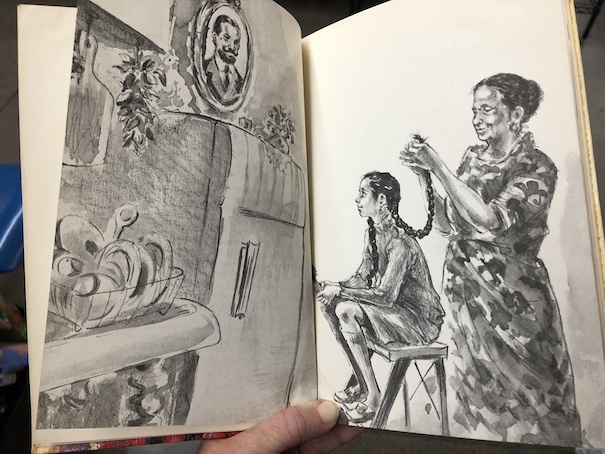
Finally, in January, she is able to switch to the new class, but right away, she runs into trouble with the class bullies. A boy named Andy and his friend start calling her “Miss Two-Ropes” because of her long braids, and the name sticks. Magdalena wishes that she didn’t have to wear her hair in braids, but her grandmother, Nani, insists on it. She loves Nani, who is from Puerto Rico and has looked after her for last two years, ever since her mother died when she was nine years old, but Nani has some old-fashioned ideas about how girls ought to be raised.

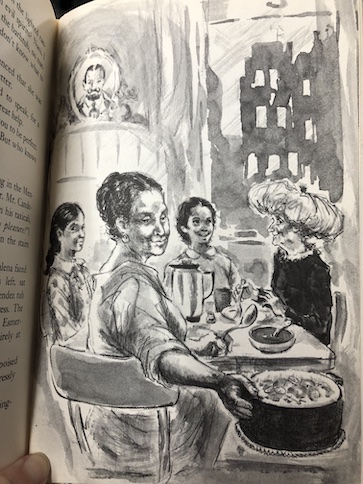
Magdalena’s father is a sailor, and he spends much of his time away at sea, so Magdalena and her grandmother are alone most of the time. Nani speaks Spanish to Magdalena at home because she thinks that’s proper for a Puerto Rican family like theirs, although Magdalena speaks English at school. She thinks that her grandmother probably knows more English than she pretends. Nani also keeps a portrait of Great-Grandfather Mendez, which she brought from Puerto Rico. Although he has been dead for years, the portrait always feels like a living person to Magdalena.

After some further teasing from the boys in her class, Magdalena decides to tell her grandmother that she doesn’t like her braids. Nani says that not unusual, that many children don’t like their braids, but they get over it. Magdalena doesn’t think she’s going to just get over it. Like a lot of kids, she would rather just look like everyone else so she won’t get teased, but Nani doesn’t approve of the short hairstyles that are popular among American girls at Magdalena’s school. She says that Magdalena’s braids are a mark of pride and a caring grandmother who brushes and braids her hair. She thinks the American girls wear their hair short because their mothers can’t be bothered to spend time on caring for long hair, and they don’t have grandmothers to nurture them. When Magdalena tells her that the boys at school are calling her names because of her braids, her grandmother decides that she should talk to the teacher about it. Magdalena thinks that having her grandmother talk to the teacher might be more embarrassing than having the boys call her names, so she persuades her grandmother to forget about it for now and let her handle it.

Then, Magdalena is called to the principal’s office at school. At first, Magdalena is upset because it sounds like she’s in trouble, and she can’t understand what she could have done to cause that. She is calmed a little when a black boy in the office, who is also waiting to talk to the principal, is nice to her. It turns out that Magdalena isn’t really in trouble. Instead, the principal wants to talk to her about one of her classmates, a girl named Daisy Gonzales, who is also transferring into her new class.

Madgalena is surprised because Daisy hasn’t struck her as a gifted child. Most of the other students call her “Spook” because she tends to lurk around the school and suddenly jump out at people to scare them, and she is known to frequently skip classes. The principal says that Daisy might be gifted, but it’s difficult to tell. The teachers think that she’s at least bright, but she’s an “under-achiever.” The principal explains that means that Daisy could do better at school than she does, but for some reason, she doesn’t seem motivated to do better. That’s why they’ve decided to transfer her to the class with the gifted students. They think that she isn’t being challenged enough in the class where she is. The teachers are also concerned that Daisy has no friends at school. They’ve noticed that the other girls at school seem to be afraid of Daisy, although they don’t seem to understand about Daisy’s “Spook” act. They do know that Daisy has behavioral problems and an unhappy home life. The reason why the principal is telling Magdalena about this is that she wants Magdalena to try to be Daisy’s friend when she transfers into her new class. The reason why she selected Magdalena to be Daisy’s new friend is because Daisy’s family is also Puerto Rican, like Magdalena’s family, so she thinks that the girls might understand each other better than their other classmates. The principal thinks that Daisy might settle down at school if she had a friend to help her feel more comfortable there. Magdalena isn’t comfortable with the idea of trying to be Spook’s friend because she also finds Daisy spooky, but the principal persuades her to try but not to let on that the principal asked her to do this.

Magdalena has no idea how to approach Daisy/Spook to be friends, since she’s not the easiest person to approach about anything. Then, Sue Ellen, the most popular girl in class tells Magdalena that she wants to be friends with her. She says that she’s been feeling empathy for her since the first day that she came to class and the boys started teasing her, and she felt it again when she got called to see the principal. She asks her what the principal wanted, and Magdalena explains that she asked her to do something, but it’s something really hard, and she isn’t supposed to talk about it. Sue Ellen offers to help her with whatever the principal’s task is. Magdalena thinks maybe making friends with Spook won’t be so bad if Sue Ellen helps, so she takes Sue Ellen into her confidence. Sue Ellen agrees with Magdalena that making friends with Spook would be hard because she’s so weird and spooky. Both girls admit that they’re a little afraid of her, but Sue Ellen agrees to try to be basically nice to Spook along with Magdalena and see what happens. Sue Ellen says that the principal ought to have more empathy for the students and see just how hard it would be to get along with someone like Spook.

Their first attempts at making friends with Spook are clumsy. Sue Ellen tries offering her advice, pointing out that she wore the wrong thing to the school assembly, but criticism and advice aren’t the best ice-breakers. Then, to Magdalena’s surprise, Spook approaches her in the school library, when she is trying to find a specific book for her grandmother. The school library doesn’t have the book she wants, but Spook says that she knows where to find it. However, she will only help Magdalena if she plays hooky and goes with her right now. Magdalena hesitates because she doesn’t really want to skip class and get in trouble, but Spook says that Magdalena will have to come with her because she’s “emotionally disturbed” and might do crazy things if she doesn’t get her way. Magdalena points out that school will end in only 20 minutes, and she asks Spook to wait for her. Spook makes her promise that she won’t change her mind and let her down in that time.

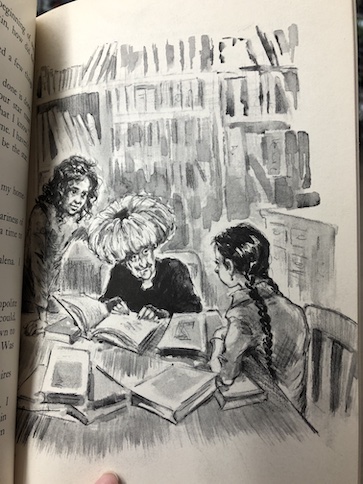
When Magdalena waits for Spook, she doesn’t show up at first, but Spook jumps out at her just when she’s giving up waiting. Spook says that she just wanted to see if Magdalena was serious about wanting to come with her. The place where Spook knows they can find the book turns out to be the Brooklyn Public Library. Along the way, Magdalena begins to learn more about Spook. The reason why she wasn’t dressed right this morning was that the sweater she was wearing was the only thing she had to wear that was clean. She skipped out during the school assembly to go home and see if her mother was back from the laundromat so she could put on something else. Also, Spook isn’t completely friendless. She is friends with a strange woman named Miss Lilley, who wears an unusual, large hat. When Daisy tells Miss Lilley that she got put into the class at school with the smart kids, Miss Lilley congratulates her and tells her that she knew she was smart. Daisy admits that she’s been trying not to let her teachers know that she’s smart because she knows that they will expect more of her and insist that she do all her homework. People don’t expect so much of kids who aren’t bright. There is method to Daisy’s madness. All of her weird and spooky acts are tools that she uses to get her, get out of things that she doesn’t want to do, cover up for problems that she has, and keep people she doesn’t like or doesn’t think would understand her at a distance.

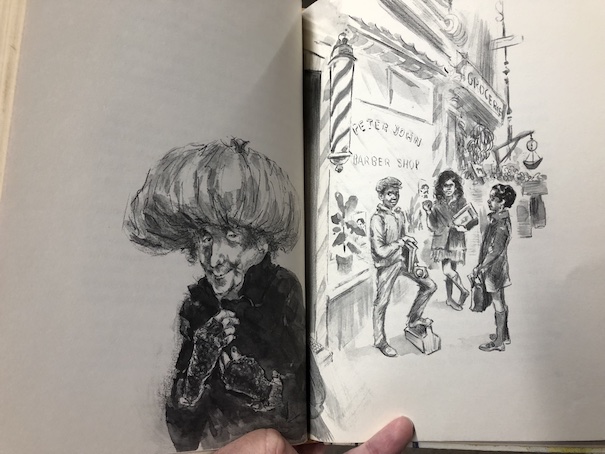
Daisy introduces Magdalena as one of the smart kids from her class, but Miss Lilley thinks that Magdalena’s manners aren’t very polite because she keeps staring. Magdalena has trouble getting over the large hat, which looks like a large pumpkin. Miss Lilley begins evaluating Magdalena’s appearance, and Magdalena comments about how she hates her braids, but her grandmother makes her wear them. Miss Lilley says that she understands that her grandmother likes the quaintness of the braids, but she knows how to deal with that. She also knows where to find a good barber. The black boy who was nice to Magdalena earlier, Samson Shivers, makes money after school by shining shoes outside the library, and when Miss Lilley asks him if he would be willing to lend them money for the haircut, he joins the others at the barber shop. Miss Lilley takes the kids to the barber shop, and Magdalena gets a haircut. Magdalena feels wonderfully free after he haircut, although she saves the braids as a souvenir and worries about what her grandmother will say when she gets home.

Nani is very upset when she sees Magdalena’s short hair and worries that Magdalena is rejecting her care for her and her Puerto Rican heritage. Magdalena says that’s not the case and explains about going to the library and meeting Miss Lilley. Magdalena’s grandmother thinks that she’s bewitched and says that she knows how to deal with that. She uses herbs on Magdalena to break the bewitchment.

Getting the haircut changes things for Magdalena. The boys stop teasing her, which is a relief. However, Sue Ellen is annoyed that Magdalena didn’t tell her that she was going to get her hair cut. Magdalena explains that it was a sudden decision and a possible bewitchment by Miss Lilley. Sue Ellen thinks that Spook is probably the one who bewitched Magdalena because she’s so spooky and that maybe Magdalena would rather be best friends with her. Magdalena says that’s not the case and that she doesn’t see why she can’t be friends with both girls. Sue Ellen still expects that Spook is going to do something to ruin the class, but Magdalena notices that Spook is becoming less spooky in their class. She stops skipping classes, does more of her homework, and cuts out some of her previous spooky behavior.

Samson, often called Sam, is a practical boy, and when Magdalena tells him how her grandmother thinks Miss Lilley is a witch and bewitched her, he says that she can’t be a witch. Sam sees her often because he shines shoes by the library, and he realizes that Miss Lilley is actually just a poor, old woman. She goes to the library all the time because she can’t afford proper heating for her apartment. She often has little to eat, and she partly survives off of candy that he gives her. Like Spook, she seems spooky because she looks odd and behaves oddly, but there are explanations for what she does that show that she’s actually unfortunate.

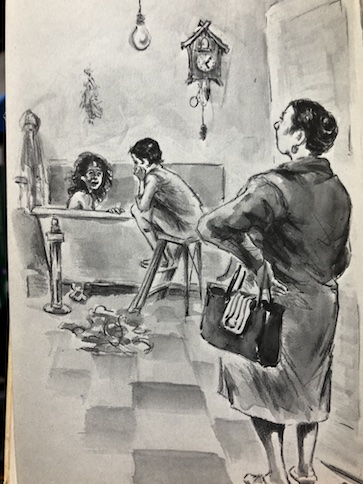
Magdalena’s grandmother meets Spook for the first time when Spook hangs out with Magdalena at her apartment after school. Nani isn’t home at the time, but the girls talk to each other about their lives and families. Magdalena gets to know more about Spook, and Spook admires the place where Magdalena lives. Spook’s family lives in a much poorer apartment, and it’s crowded with Spook’s younger siblings. Spook admires the nice bathtub that Magdalena and her grandmother have and says that she wishes they had one at her apartment. Part of the reason why she looks so strange is that she doesn’t get the opportunity to take baths often. Magdalena tells her that if she wants a bath, she can go ahead and take one. Nani arrives home before Spook is finished with her bath, but Nani stops her when she tries to get out and get her clothes. Nani can see how badly Spook needs some care, so she insists that she finish the bath, clean the tub, and let her shampoo her hair. When she’s done, Nani has Magdalena loan her some clean clothes, and the girls are amazed at the transformation.

After the bath incident, Spook avoids Magdalena for a while, and she can’t understand why, but it’s about Spook realizing what’s been lacking in her life and envying what Magdalena has: someone who really cares for her. She was so emotional when she looked at herself in the mirror that she spit at the image and then was embarrassed that she had done that. Nani surprisingly understands Spook’s behavior. She can see that Spook lacks impulse control and the ability to understand and manage her feelings. Nani comments that she’s angry with Spook’s mother because she can tell that the girl has been badly neglected. Having been a mother and grandmother herself, she knows exactly how to deal with this.

Meanwhile, Sam is correct about Miss Lilley. Miss Lilley is poor and not in very good health, but she also knows what Magdalena and Spook/Daisy need. She is eager to help the girls, but she also needs some help and attention herself. When Miss Lilley decides that it’s time to have a word with Nani about the needs of modern girls and her fears about her granddaughter becoming too American, a number of things get better.

The book is available to borrow and read for free online through Internet Archive.

The heart of this story is understanding and empathy. By the time it’s over, many of the characters come to a better understanding of each other and maybe themselves. Although Spook’s transformation is the most dramatic, the other characters are also changed after their experiences in the story.

Magdalena’s changes come with her admission to her grandmother that she really doesn’t like her braids and then with her decision to have her hair cut against her grandmothers wishes. She knew that her grandmother wouldn’t like it when she said that she didn’t want braids because her grandmother is a traditionalist, and she knew that Nani wouldn’t react well to the haircut. At first, it was easier for Magdalena to buy into the idea that Miss Lilley was a witch who bewitched her into doing it, but that’s not really the truth. It wasn’t even that Magdalena was getting her hair cut just because of the teasing. When Magdalena and Spook are talking about whether or not they truly understand the reasons why they do things, Magdalena acknowledges that she has reasons for the things she does, and the truth is that she got the haircut because she herself really hated wearing braids. If she had really loved her braids, she could have kept them in spite of the teasing, and she could have turned down the offer of a haircut, but she really wanted to change her hairstyle, and she just took advantage of the opportunity to do it.

Nani understands from the first time she meets Spook that she has not had nearly the level of care and attention that she has needed in life. Spook doesn’t even really understand all of the motivations she has for the things she does. Her behavior is odd partly because she acts on impulse, not fully thinking about the consequences or the affect her behavior has on others. She initially doesn’t have much self-awareness because she has not had caring adults in her life to teach her how to behave, how to understand her feelings, and how to control herself. Because she hasn’t really had any friends before, she hasn’t really had anyone to talk to about these things and help give her some perspective. When Spook and Magdalena talk about why she spit on the mirror, Spook says at first that she isn’t sure why she did it. As they continue to talk about reasons for doing things, though, Spook admits that she did it because, while she was stunned at how nice she looked, she quickly became upset because she didn’t think that nice look could last.

Nani is the nurturing type of person, and she quickly sees that Spook is in dire need of some nurturing and guidance. She also recognizes that Spook doesn’t have much confidence in herself. She is bright, but she has grown used to hiding it. She also thinks, because she doesn’t really understand her feelings or behavior, that is can never really control herself. She thinks that she will always be a “stinker” who does things that she shouldn’t and acts weird. Nani has a frank talk with her and tells her that she can be herself without being a “stinker”, and the first step is believing that she can. Even if she’s not in the habit of understanding and controlling herself, she can learn. People have different sides to their personalities and different ways of expressing themselves, and Spook can learn how to show the best sides of herself in the best possible ways.

Magdalena appreciates that Nani is understanding and helping Spook, but she also has a frank talk with her grandmother about why she doesn’t understand her own granddaughter as well. When Magdalena tries to tell her what she wants or doesn’t want, Nani contradicts her or ignores her feelings. Nani is understanding with Spook because she can tell that Spook is a disadvantaged child, but she doesn’t see her granddaughter the same way, so she doesn’t try to understand why Magdalena sometimes does things she doesn’t like. Nani admits that she wanted her granddaughter to be “perfect”, but maybe she doesn’t really know what “perfect” actually is. She wants the traditional ways for her granddaughter because she really thinks that’s what’s best, but even grandmother doesn’t always know what’s best.

Miss Lilley is concerned about the girls and offers them attention and support. When she goes to see Nani and open her eyes to her grandmother’s needs and the ways of modern girls, she collapses because of her bad health. Fortunately, Nani is a nurturing person, and she nurtures Miss Lilley, making sure that she gets the treatment she needs and even looking after her when she gets out of the hospital. Miss Lilley’s health improves, and the two of them become friends. Although they are both older ladies, they each admit that they have things to learn in their lives, and they can learn from each other. Nani helps her to make changes to her living arrangements so she will be healthier and more comfortable, and Miss Lilley helps her understand what modern American life has to offer for girls like Magdalena.

Samson is always a very understanding character because he is genuinely interested in people, and he meets many different types of people through his shoe-shining business. Although Sue Ellen is the first person who brings up the topic of empathy, she is really the one who understands it the least. I think her relatively narrow view of empathy is because of her relatively narrow life experiences. She feels some empathy for Magdalena because she sees Magdalena experiencing something she understands, but she doesn’t seem to know what to do when she encounters something she doesn’t understand. Admittedly, Spook’s spooky act is off-putting, partly by design and partly because Spook has issues she herself doesn’t know how to handle. However, because Sue Ellen only wants to stick to the familiar and understandable, she doesn’t notice when Spook begins to change and doesn’t see how some support from her could influence her for the better. Sue Ellen’s attempts at friendliness and helpfulness often involve offering some kind of criticism, like pointing out that Spook isn’t dressed right. Magdalena can tell that Sue Ellen is trying to be helpful, but she’s also kind of snippy and smug in the way she does it, and that gets on Magdalena’s nerves, too. Sue Ellen kind of fades out of the story toward the end, so we don’t know if she continues being friendly with Magdalena or not or if she ever recognizes Spook’s transformation.

There is also a subplot that I haven’t mentioned about the literary magazine that the girls’ class starts. Their teacher has some thought-provoking descriptions about what good writing is and does, and the girls’ choices of what to write about are based on their experiences and the changes in their lives.

The book doesn’t shy away from the harsh realities of life. Magdalena’s mother is dead, and her father is away most of the time, so she is being raised by her grandmother. Her father never even makes an appearance in the story. Miss Lilley is a poor and lonely old woman who needs help and friends. It is acknowledged that Spook is a neglected child, and she even tells Magdalena that her favorite brother died at age three because he was asthmatic, and they were living in bad conditions. We don’t know exactly how her family came to be living in such bad conditions, but Spook says that, if she wrote a story about her family, the teacher would think she had a filthy mind.

Since the story is about understanding other people, one could consider whether we might view Spook’s neglectful mother more sympathetically if we knew her past and what led her to the situation they’re now in, but we do not see Spook’s mother at any point in the story. I think it’s also important to note that understanding does not equal approval. You can know a person’s history and reasons for doing things and still not agree with them. Maybe Spook’s mother is another unfortunate soul who needs some help, but if she is, she doesn’t seem to be looking for that help. Her vulnerable children are suffering for it, and one has died. Empathy doesn’t mean saying that things are okay when they really aren’t, and this mother’s neglect of her children is not okay.

When Aunt Lena Did the Rhumba

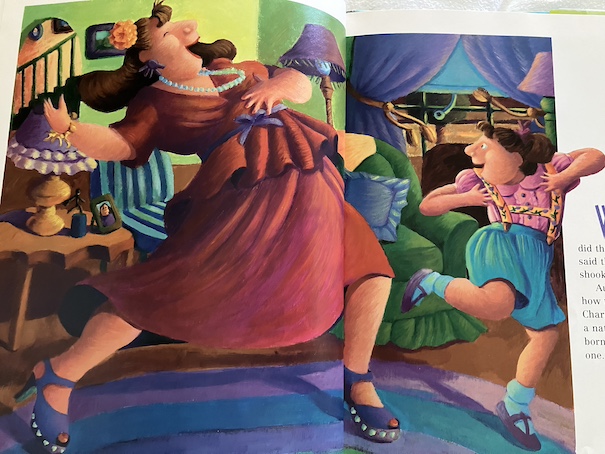
Sophie’s Aunt Lena loves music, dancing, movies, and theater, and she especially loves Broadway musicals. She goes to a musical matinee every Wednesday. After seeing a musical, she comes home, singing and dancing and acting out parts from the play she’s just seen.

One particular Wednesday, when she’s acting out a particularly dramatic dance in the kitchen, she accidentally slips and sprains her ankle. She has to stay home and rest until her ankle gets better, which means that she won’t be able to go to next Wednesday’s matinee.

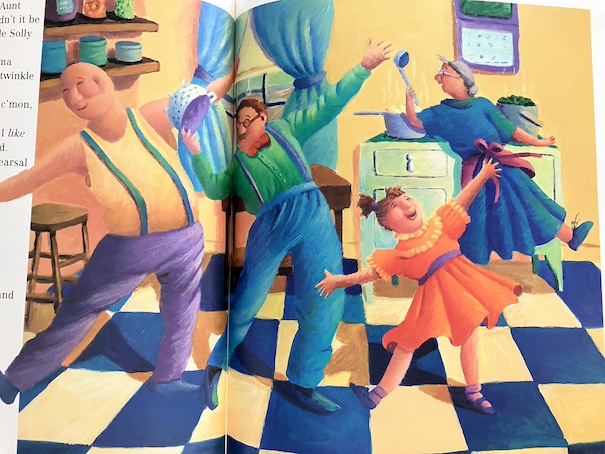
Aunt Lena is so sad about missing the musicals she loves that Sophie gets an idea to cheer her up. Sophie recruits other members of her family to put on their own musical to entertain Aunt Lena.

Not everyone is enthusiastic about the idea at first, but when Sophie gets her grandmother to help her put together a costume fit for a Broadway musical and choose some music, they begin drawing other family members in.

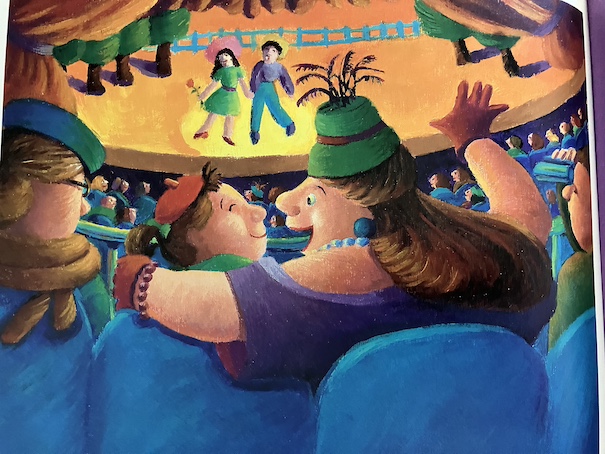
Aunt Lena loves their performance, and when she’s better, she takes Sophie to a matinee so she can see a real Broadway performance, too!

This book is available to borrow and read for free online through Internet Archive (multiple copies). It was also a Reading Rainbow book, and the episode of Reading Rainbow is also available to watch online through Internet Archive.

I didn’t see the original episode of Reading Rainbow that included this book when I was a kid because this book was published after I was too old for that. However, I always liked Reading Rainbow when I was a kid, and later, after I started this blog, I decided to go back and check out some of the books covered by Reading Rainbow after I stopped watching it. If you’re not familiar with Reading Rainbow, it was a children’s television program on public television in the US that encouraged children to read by discussing books and showing children things that were related to the books they were reading. For example, if they were reading books related to animals in an episode, the host, Levar Burton, might take a trip to a zoo and talk to zookeepers about animals in the zoo.

The themes of this particular story and the Reading Rainbow episode are music, dancing, and theater. In the episode, they show a boys’ choir and dancing class and talk about how performing helps the boys and young men develop confidence and maturity. There’s also a comedian who specializes in physical comedy, who talks about how he does his stunts, and an actress who plays one of the cats in the famous Broadway musical Cats.

I love how the aunt in the book shares her love of dancing and theater with her niece. The two of them have similar personalities and interests, so when her aunt is injured, her niece knows how to cheer her up. The ending of the story implies that the niece will now be going to performances with her aunt, or at least, will sometimes go with her. I also liked how the rest of the family participated in the girl’s plans when they saw what she wanted to do, even if they weren’t as enthusiastic about the idea themselves at first. Enthusiasm can be contagious, and I do think that adults sharing their interests with kids can spark lifelong interests in the next generation.

I also noticed that this seems to be an unconventional family, although the family’s living arrangements aren’t the focus of the story. The girl’s parents are never mentioned. She seems to live with just her grandmother, her aunt, and a couple of uncles, and there is no explanation why because it’s not directly important to the story. In any case, it seems to be a happy, close-knit family, with family members caring for each other and supporting each other’s interests.

The pictures in the book are bright and colorful, fitting with the energy, enthusiasm, and theatricality of the story.

Lowly Worm Sniffy Book

Sniffy books or scratch-and-sniff books were a new development during the 1970s, and they remained popular through the mid-1980s, along with scratch-and-sniff stickers. This particular book features characters from Richard Scarry‘s Busytown series, especially Lowly Worm. The first part of the book has Lowly and his friend Huckle Cat looking at a sniffy book and teaching readers how to use the scratch-and-sniff parts of the picture.

The rest of the book takes readers through the four seasons: spring, summer, fall, and winter. In each season, there are different objects and foods associated with the season for readers to scratch and sniff. In the spring, the characters smell violets and bananas that they eat at the circus.

During the summer, there are lemons for making lemonade and chocolate ice cream sticks that they eat at the beach.

During the fall, there are apples and pumpkin pie at Thanksgiving.

The winter parts focus on Christmas, with pine-scented Christmas trees and gingerbread pigs.

Sniffy books and stickers were common features of my early childhood in the 1980s. I think they still exist, although I don’t know if they’re as popular in the 21st century as they were back when they were relatively new developments. This particular sniffy book was a favorite of mine and my brother when we were little kids.

One of the interesting things about finding some of these older sniffy books decades later is seeing which of the scratch-and-sniff patches have held up over the years. They do wear out over the time, especially the ones that have been scratched more than others, meaning that favorite scent patches will wear out faster. Milder scents are also harder to detect years later than the ones that were always strong. In our old copy of this book, I can’t smell the lemon, chocolate ice cream, pumpkin pie, or gingerbread any more, but the violet, banana, apple, and pine are still fine. I think those scents were always the strongest.

Stories of Rainbow and Lucky: Rainbow’s Journey

Stories of Rainbow and Lucky

This is the second book in the Stories of Rainbow and Lucky series. I’ve covered the first book this series, and I have to do all five books in a row because the series is set up like a mini-series. That is, none of the books in the series can stand alone; they are all installments of one, longer story. It’s an unusual series from the mid-19th century, written on the eve of the American Civil War, by a white author with a young black hero. Rainbow is a teenage black boy who, in the previous installment of the story, is hired by a young carpenter who is just a few years older than he is to help him with a job in another town. The rest of the series follows the two young men, particularly Rainbow, through their adventures, learning life lessons, even dealing with difficult topics like racism. (Lucky is a horse, and Lucky enters the story later.) The story is unusual for this time period because it was uncommon for black people to be the heroes of books and for topics like racism to be discussed directly. It’s also important to point out that our black hero is not a slave, he is not enslaved at any point in the series, and the series has a happy ending for him. People don’t always treat him right, but he does have friends and allies, and he manages to deal with the adversity he faces and builds a future for himself. Keep in mind along the way that there are a lot of pun names in this series and that people’s names are often clues to their characters.

This book is easily available to read online in your browser through NINETEENTH-CENTURY AMERICAN CHILDREN & WHAT THEY READ, I’m going to do a detailed summary below. If you’d rather read it yourself before you read my review, you can go ahead, but some people might want to know what it’s like in more detail.

For most of the last story, the focus was on Handie, his family’s financial problems, the inheritance he receives from his uncle, and how the lawyer who is the executor of the estate arranges for Handie to use the estate to his best advantage. Because Handie is 19 years old, he is still considered a minor. (The legal age is 21 during this time period and would stay the legal age until about halfway through the 20th century.) His uncle’s will specifically stated that Handie cannot take full ownership of the farm that he left to him until he is 22 years old. Uncle that time, the lawyer, Mr. James, will manage the estate on his behalf, using the money provided with the estate to hire someone to fix up the farm to rent it out to a tenant until Handie is old enough to take it. The Level family’s money problems are because Handie’s father is not good at managing his money, and Handie’s uncle knew that if Handie’s father got his hands on his son’s estate, he would probably blow the money and end up having to sell the farm to cover his debts, leaving Handie with nothing.

In the previous book, Mr. James discusses the situation with Handie, and they work out another solution to the Levels’ debt problems. He helps Handie take steps to separate the money he earns from his father’s money, and he hires Handie as the carpenter to work on repairing the farm he inherited on behalf of his own estate. It’s a somewhat odd arrangement because Handie is effectively being hired to work for himself but will be paid by Mr. James on behalf of the estate. Under the circumstances, it’s the best system for solving the family’s money problems and setting Handie up for a better future. 

Because Handie will need a little help while he’s working on the farm, Mr. James also provides money from the estate so he can hire an assistant. Handie offers the job to 14-year-old Rainbow. Rainbow doesn’t have any carpentry experience, but he’s strong for his age and a good worker, and Handie would rather bring someone he knows with him rather than trying to find someone else when he arrives at this new town. At the end of the previous book, Handie offers Rainbow the job as a carpenter’s assistant and tells him that they will be living in the town of Southerton for about 2 or 3 months during the summer while they do the job. The job will involve hard, physical work, but Rainbow can handle it, and this job could give him some good work experience. Rainbow accepts the job offer, with his mother’s permission, and they begin preparing for the journey.

When this story begins, Handie and Rainbow are about to leave the village where they both live. It’s a summer evening with good weather, and they will be traveling by stage coach. When Handie offered Rainbow the job, he didn’t explain that the farm where they will be working actually belongs to him, but word of Handie’s inheritance has spread around town since. Rainbow is astonished at the idea of someone so young having a farm of his own, and he decides that he will ask Handie more about it later, although he knows he should be careful to be polite about asking because he doesn’t want to seem rude by prying. Although these boys are friendly with each other, having grown up in the same small town, they also have a professional relationship now, and Rainbow’s mother impressed on him that he needs to treat Handie respectfully as his employer. They are becoming young men and venturing out into the world for the first time, so they need to learn how to behave professionally with each other, as befits their new, professional relationship. Neither of the young men is experienced with traveling anywhere, and they’re both looking forward to this exciting journey.

Things seem to be going well at the start of the journey, but then, the stage coach driver, while chatting with Handie mentions that he doesn’t like the look of one of the passengers. At first, Rainbow worries that the driver is talking about him because he’s accustomed to people making comments about him, ridiculing him, or telling him that he isn’t welcome among them for being black. Even though they are from a small village, and many people there like Rainbow for his good nature and helpfulness, he’s already seen his share of discrimination. However, the driver is talking about someone else. He explains that there’s a man on the stage coach called Burkill, who is wearing a bright waistcoat. He’s met Burkill before, and he knows that the man is trouble. 

Right now, Handie and Rainbow are riding on the top of the stage with the driver, but when Burkill joined them, he made a fuss to the driver about whether or not Rainbow would be riding inside the coach, objecting to the idea of riding with a black person. The driver, Trigget, who knows Rainbow and doesn’t like Burkill anyway, told him that Rainbow has paid his fare and will ride wherever he wants to: “I don’t pay any attention to the different shades of complexion of my passengers … Rainbow is suitable company for any honest man. You can judge best whether he is suitable company for you or not, and act accordingly.” It’s a bit of a slam. He’s implying that, if Burkill can’t get along with Rainbow, he’s probably not an honest man, and the driver already has reason to think he’s not, so he’d better not make a big deal about it. The other passengers also know Burkill’s reputation, so they get the joke and laugh at Burkill. Embarrassed, Burkill just gets on the stage coach without saying anything else. All of this happens before Handie and Rainbow get on themselves, and they don’t hear any of it, so their choice to sit up with the driver was just by preference, not because they were required to sit there. Trigget just tells them about it later, as they ride along.

(Note: I’m using the term “black”, and so did Burkill when he was speaking, but the driver corrects him, using the word “colored” because “colored” is considered the more polite word at the time this story was written. I’ve explained before that “colored” and “Negro” used to be considered more polite terms prior to the Civil Rights Movement in the mid-20th century. At that point, “black” became the accepted generic word, where it had once been considered somewhat rude, and “African American” became the polite, formal term. I’ve been using “black” in the modern generic sense for the purpose of these reviews because I think the modern audience will find it easier to follow, but this series was meant to be educational for 19th century children, like the author’s other books, so there are points in the story where the characters actually discuss which racial terms are more polite. The general rule they establish is that the best thing to call someone is whatever they would like to be called, and I think it’s a pretty good, general rule. I’m just explaining because it’s a plot point, and the racial words that people use are clues to their characters. Characters who use the wrong racial words are either ignorant or antagonistic, and Burkill falls into the second category. We haven’t know him long, but we’ve already established that Burkill is disreputable and a trouble-maker, and he also uses the wrong racial words and has a racist attitude. Basically, he’s bad news all the way around, and this incident is establishing his character for readers and setting the scene for further misbehavior from him.)

The author of this series likes to include detailed information about daily life in his stories for educational purposes, which is a boon to modern people who like learning about the details of life in the past. Some of what he says might have once been common knowledge to 19th century people, but it’s really helpful for people studying history. In this case, we leave off the racial talk to talk about the trials and tribulations of travel in the mid-19th century. 

While they ride with Trigget, Trigget asks Handie about his journey to Southerton and the inheritance he’s heard about. Handie explains to him about the farm he’s inherited and his arrangements with the lawyer, so Rainbow gets the rest of that story without needing to ask. Trigget explains that the stagecoach needs to be in Southerton by 4 o’clock because there’s a train that leaves Southerton at that time. Some of his passengers will want to be on that train. However, he’s also carrying mail on the stagecoach, and it’s even more important for the mail to make it there on time than the human passengers. 

Handie asks if people shouldn’t be considered more important than letters, and Trigget explains, “the passengers go at their own risk. We get them through if we can, but if we can’t it is their misfortune. We don’t absolutely engage to get them through at such a time. But as to the mail, it is different. We contract with the government to deliver it, without fail, at four o’clock at the station, and if we don’t do it we have a heavy fine to pay.” In other words, there are laws and consequences to guarantee that the mail gets to its destination on time, but nobody’s imposing consequences for delivering people safely to their destination, so the people just have to look out for themselves. That sounds worrying, but Trigget further explains that he can’t wait for people who just have to finish the story they’re telling at a stagecoach stop. The coach has to leave each stop at a specific time to make it to its destination on time for the sake of the mail, so the passengers need to make sure that they’re ready to go, or they’ll be left behind. It’s not much different from missing a bus, a train, or a plane today.

When Trigget says that they will reach Southerton at four o’clock, he means four o’clock in the morning. They set out in the evening, and this stagecoach travels all night. As they pass through the countryside and towns along the way, they notice that lights in houses start going out around 10 o’clock, the usual time for people in the countryside to go to bed, although the author notes that lights in the towns stay on for longer because people stay up later there.

Along the way, they stop at the post offices in various small towns and villages to sort the mail. The post offices are sometimes in buildings by themselves, but in some places, they’re located inside another business, like a store or a tavern. At each stop, they have to leave behind the mail for that particular area. At one point, they change horses on the coach, and Rainbow says that he might want a job like that someday, caring for horses. Each stop only takes a few minutes, but Trigget tries to keep things moving quickly so they can be at the next stop on time. He plans for an extra hour on his journey in case anything goes wrong, and they are about to need that extra time.

After the coach is moving again, Trigget suddenly realizes that the boy who harnessed the horses has accidentally left the reins on the right sides of the horses’ mouths unbuckled on the lead horses. It’s serious mistake because, when Trigget pulls on the reins, he’s pulling the lead horses off to the left instead of evenly on both sides, causing the entire team and coach to turn. When he tries to stop the horses from moving, he loses control of them, and they’re coming to a place where a dangerous turn could wreck the coach!

In desperation, Rainbow decides to try a dangerous stunt. He climbs out over the backs of the moving horses to reach the lead horses to fix the problem with the reins. At first, the horses are nervous with Rainbow climbing on them, but Rainbow is good with horses and manages to calm them. Unfortunately, he doesn’t manage to get the reins completely fixed before disaster strikes. They hit the turn that Trigget feared, and the coach overturns!

Fortunately, Rainbow manages to escape injury. He swings down from the horse he’s riding and manages to calm the horses down. The horses are uninjured, but the coach is on its side, and the passengers are in a panic! Trigget and Handie are also unhurt, and they begin helping the other passengers out of the overturned coach and assessing them for injuries. One of the young women who was in the coach is unconscious. The other passengers fear that she may be hurt very badly and will need a doctor, but Trigget thinks that she has only fainted from the shock. The axle-tree of the coach is broken, so they can’t merely right the coach and continue traveling. Trigget asks Rainbow to take one of the horses and ride back to the last stop and get some help and a wagon to pick up the mail and baggage from the coach. Trigget’s first concern, as he said before, is to keep the mail moving. Once someone comes to take the mail bags on, he turns his attention back to his passengers.

The unconscious girl revives, and she is not badly injured. When Rainbow returns with another wagon, they load all the luggage on it, and the entire party returns to the last tavern they passed, where they stay for the rest of the night. The owner’s wife, Mrs. Norton, gives the young women a room upstairs, but she doesn’t have enough unoccupied rooms for everyone. She suggests that Rainbow stay in the barn with the man who manages the horses, and Handie says that he’ll stay there with Rainbow, too. Mrs. Norton is grateful that they’re willing to take this lesser accommodation, and she gives them both sheets and blankets to use. The man who manages the horses, Hitover, offers his bed to Handie, and he says that Rainbow can use his assistant’s bed because the assistant, Jex, is the one who is currently taking the mail to its next stop. However, the boys decide that they would prefer to sleep on the hay with their sheets and blankets. Handie shows Rainbow how to shape the hay into a more comfortable bed, rolling up some to make pillows. (I thought that part was interesting because I’ve read about people sleeping on hay in other books, but I think this is the first story I’ve read that explains how to make an improvised bed in hay.) Then, they say their prayers and go to sleep.

Rainbow has a more difficult time going to sleep than Handie does, thinking about everything that’s happened and how strange it feels to be away from home. Both of the boys are becoming young men and venturing out into the world without their families for the first time, but in some ways, Rainbow’s position feels more precarious than Handie’s because he never knows how the people he meets might react to him, just because of his race. The book says:

Besides, the going away from home of a colored boy like Rainbow is a much more momentous event for him than such a change is for a white boy. A white boy, if he is of an amiable disposition and behaves well, even if he goes among entire strangers, soon makes plenty of friends. The world is prepared every where to welcome him, and to receive him kindly. But a boy like Rainbow feels that his fate is to be every where disliked and shunned. In every strange town that he enters he expects that the boys, instead of welcoming him as a new companion and playmate, will be ready to deride him, and to point at him, and to call him opprobrious names; so that, when he goes out into the world, there is no bright side of the picture to relieve the regret which he feels at leaving his home. He expects, wherever he goes, and however bright and beautiful may be the outward aspects of the novel scenes through which he may pass, that every thing human will look dark and scowling upon him, and that all who have loved him, or will love him, or care any thing about him, are left behind.

The one point of reassurance for Rainbow is Handie. Handie is kind to him, and he’s also Rainbow’s link to what’s safe and familiar to him. When he falls asleep, Rainbow dreams that he’s riding a wild horse. 

At one point during the night, Rainbow wakes up and sees Burkill sneaking around. Burkill hides a carpet bag under some hay, not seeing that Rainbow is awake and watching. Rainbow tells himself that he’ll have to mention it to Handie, and he goes back to sleep.

The next day, Handie goes to see about breakfast, and Rainbow gives Hitover some help with the horses. While Rainbow is helping with the horses, Burkill comes to the barn again, and he starts hassling Hitover about getting him a horse and wagon so he can get to Southerton faster. Hitover says that Burkill has been giving him a lot of trouble about that since the coach party arrived after the accident, but he keeps telling Burkill that he can’t help him. They only have one wagon, and Trigget will probably need it for handling his passengers and their baggage. When Trigget returns after getting the broken stage coach to a blacksmith, he says the same thing. Burkill tries to persuade him to forget about the other passengers because he’s willing to pay more, but Trigget says that he has a duty to all the passengers. Out of curiosity, Rainbow looks under the hay and sees that the carpet bag is still hidden there.

When Rainbow next speaks to Handie, Handie tells him that everyone’s bags and trunks will have to be searched because some things have been stolen. Handie’s pretty sure that he knows who will be most reluctant to have his bags searched, but he doesn’t say so aloud. (I think we all know at this point who the thief probably is.) While the search is being conducted, Rainbow quietly tells Trigget about Burkill’s hidden carpet bag. Trigget tells him not to say anything to anyone else yet. 

Instead, while Burkill is pressing him again about getting the wagon and leaving, Trigget says that he needs to get John Easterly and Handie to come to the barn with him first to talk about some hay he wants to buy. Burkill, worried about the possible discovery of the bag, goes with them without being invited. Trigget asks Rainbow to move some of the hay with a pitchfork, and Burkill tries to distract them from looking in the spot where the bag is hidden. When Rainbow uncovers the bag, Burkill admits that the bag is his and claims that he put it there to keep it from being lost. He tries to keep everyone from examining the bag, but Trigget says that, if he doesn’t show them what he has in the bag, they’ll all assume that he has the stolen goods, and they’ll fetch an officer to search the bag. For a moment, Burkill pretends that he’s lost the key to the bag, but Trigget finds it and opens the bag. Burkill does have John Easterly’s stolen watch in his bag, and he tries to claim that he just happened to find it and didn’t know who it belonged to, but nobody believes him. They fetch an officer, and Burkill is arrested. They can’t find the money that was taken from the young women on the coach, but everyone assumes that Burkill took that, too. Since the girls lost their money, Handie offers to lend the girls some money so they can continue their journey, and they accept.

Trigget says that he’s having the coach repaired, and any of the men (except for the arrested Burkill) who wants to wait for it can go with him that night. He is arranging for the girls to continue on immediately in the wagon, but if the men don’t want to wait for the coach, he will refund part of their coach fare, and they can make their own travel arrangements. Trigget says that they can continue to Southerton on foot, if they wish, and he’ll bring their baggage later, so Handie decides that’s what he and Rainbow will do. They’re about 20 miles away from Southerton at this point, and Handie says they can walk the distance and get there by five o’clock, maybe around seven o’clock in the evening, if they stop for a couple of hours on the way. That means that they will still get there faster than if they waited for the coach to be fixed. They remove a few things from their bags that they will need until Trigget can bring them their luggage in Southerton. Then, they set off on their way.

While they walk, they pass the place where the coach was wrecked. They look around to see if maybe the girls’ wallet with their money fell out somewhere. They don’t find it, and they consider going by the blacksmith’s shop to see if it’s still in the coach. The problem is that, when they come to a crossroads, they realize that Southerton is one way, and the blacksmith’s shop is another. They have to decide if they’re willing to go out of their way to visit the blacksmith and see if the girls’ wallet is in the coach. Handie doesn’t want to delay their journey too much because he doesn’t have much money. He gave what he could spare to the girls, and a delay in the journey would cause them to have to spend more money for food or accommodation. However, he feels like they ought to try looking for the purse anyway because he wants to feel like he did all he could for the unfortunate girls.

At the blacksmith’s shop, the blacksmith gives them permission to search the coach for the wallet. It doesn’t take them long to find it. When they do, Rainbow says that they ought to check if the money is there and maybe take what they need to pay themselves back what Handie lent to the girls, but Handie doesn’t think it’s right to look in the wallet without the girls’ permission. He thinks that it would be only right to deliver it to the girls intact. In fact, after he thinks about it, he decides that he should show it to the blacksmith, since the coach was in his custody, and that he will also seal it up for security. (The narrator says at this point that he’s not sure himself whether Handie is being truly right in this level of scrupulousness or just being overly particular. Rainbow thought this was going too far, but he didn’t want to say so. The narrator invites child readers who are unsure about the right thing to do in such a circumstance to discuss it with their parents or a trustworthy adult, which sounds like the advice that teachers typically gave us in school when I was a kid and anything came up on which they didn’t want to render an opinion or didn’t think it was their place to discuss.)

Handie shows the wallet to the blacksmith, and they discuss the proper way to handle it. The blacksmith says, in a way, he wishes that Handie hadn’t found the wallet because it does create an ethical quandary about which of them is the best person to handle it, since it doesn’t really belong to any of them, and he doesn’t want there to be any question about whether he might have taken any money from it himself, since it was in his possession. Handie suggests that they wrap the wallet up in paper and seal it, and he’ll write on the outside that they found it but didn’t open it and that they all sealed it up together. Then, the blacksmith can give it to Trigget when Trigget comes for the coach, and Trigget can deliver it to the girls. The blacksmith is satisfied with this arrangement.

After they’ve resolved that matter, Handie and Rainbow talk about how Trigget was wrong that Burkill stole the money, and Handie says, “And it shows us that we ought to be pretty careful how we judge and condemn people, even when we know that their characters are bad.” (I also took the lesson from it that a person like Burkill has made the kind of reputation for himself where nobody believes him on those rare occasions when he is telling the truth, so it’s also his fault when people don’t believe him. I mean, it’s hard to convincingly argue that you haven’t stolen something when people have already caught you with a different thing you just stole, lied about, and tried to conceal in the same 24 hour period, but that’s not where the story puts its emphasis.)

They continue on with their journey, and when they come to the next tavern, Handie decides to see if they will give them dinner in exchange for work instead of money, so he can save the money they still have. The tavern owner, Mr. Dorling, is a little “slack”, as one of his neighbors puts it. He’s not very on top of things, but his daughter, Margery, minds the business, and she can think of some things for Handie to fix around the place. Margery is very pleased with their help and considers that they have paid for their dinner many times over. Handie thinks that they probably still owe some money for dinner, so he asks Margery’s father what he thinks is fair. At first, it seems like Margery’s father still insists on them paying for most of the cost of their meals, which doesn’t seem fair, but then, they realize that they’ve misunderstood what he said. Mr. Dorling means that he will give them not only the promised meals but almost enough to buy two more meals for themselves. In other words, he’s the one who owes them more money, not the other way around. In fact, they’ve done such good work that Margery proposes that Handie and Rainbow stay the rest of the afternoon. There is more work to do, they can have their evening meals at the tavern, and Margery will also arrange for a wagon to take them to Southerton so they will arrive there at about the time they had planned. Handie accepts the offer, and they continue their work.

The boy who will be taking them to Southerton in a wagon, Tolie, says that he can drive them when he’s done bringing the cows in from the pasture, and they can go sooner, if Rainbow will help him finish the task. Rainbow and Tolie go out to the pasture together, and while they’re out there, they decide that they both want some lilies from the pond. Rainbow often helped younger children from his village get pond lilies and a couple of them have asked him to send some lilies from his journey, so he’s happy to help Tolie. When they collect the lilies, Tolie says he doesn’t see how Rainbow can send lilies back to his town without them wilting on the way. Rainbow does his best to get lilies with their roots intact, and he asks Handie if he can think of a way to send them home undamaged. Handie thinks about it, and he remembers that there’s an empty paint keg in the shed that the Dorlings probably don’t want anymore. He says they can ask the Dorlings if they can have it, and then, Trigget can pick up the lilies and carry them home when he passes this way again. Margery says it’s fine for them to have the paint keg, and she’ll make sure that Trigget picks up the lilies. Trigget is happy to do Rainbow the favor of delivering the lilies because Rainbow was so helpful during and after the coach accident.

Tolie is a little later in leaving with Handie and Rainbow than they originally agreed, and Handie talks to him about the importance of punctuality, telling him a little story about some boys trying for a job and how the one who planned ahead against accidents making him late was the one who got the job. They discuss the story a little, and then, Handie asks Tolie some questions about Southerton and what he knows about the Three Pines farm. Tolie says that Southerton is a small town but pretty nice. He is familiar with the Three Pines farm because boys in the area like to go fishing in a stream nearby. The Three Pines farm used to be very nice, but it has become run down. It was originally established by a man name Captain Stanfield, an early settler in the area. There really are three pine trees on the farm. Tolie says that Captain Stanfield deliberately left the three pine trees there when he cleared the land for planting, and there’s supposed to be a story about why he did that, but Tolie doesn’t know what the full story is.

Handie’s plan, on arriving in Southerton, is to get a room for himself and Rainbow at the local tavern. He only plans to stay at the tavern for a day or two, while he and Rainbow check out the farm, see what condition the buildings are in, and arrange a place for them to sleep there while they’re repairing the farm. Handie doesn’t expect to find furniture at the farm, so they stop at a farm on the way and buy some straw that they can use to make beds at the farm, if they can’t find anything else.

This volume of the story ends at this point, mentioning that Handie and Rainbow had other adventures in Southerton before they finally settle at the farm house and make beds for themselves from the straw they bought. The story promises that it will explain what happened in the next volume. It also explains that, when Trigget comes to bring them their luggage, he also brings them the girls’ wallet they found and turns it over to Handie to return to the girls, telling him to write to them about it. When he does, the girls tell him to take the money from the purse to pay himself back what he loaned them (so he might as well have done that in the first place). They say that he can mail the wallet to them, but instead, he arranges to send them the remaining money and purchases the wallet from them, with their permission. He finds a piece of poetry in the wallet along with the money and tries to ask the girls which of them actually owned the wallet, but they refuse to say. Handie keeps the poem as a keepsake.

Meanwhile, Burkill goes to trial for his theft of the watch, and Rainbow is called as a witness in court. We do not get to see the trial in the story, but we are told that Burkill is found guilty and sent to prison, and the rest of the story has to wait for the next installment in the series.

I liked this installment of the series better than the last one because it had more action to it! The last installment established the reasons for this journey and how Handie came to hire Rainbow as his assistant, but much of it focused on the money problems in the Level family and Handie’s negotiations with the lawyer handling their affairs. In this part of the series, we see Handie and Rainbow setting off on their journey by stage coach! We get to see them riding on top of a stage coach, a daring stunt by Rainbow to try to prevent an accident, and the aftermath of the accident when he isn’t successful. Everyone gives Rainbow credit for risking his neck to try to save the situation, and nobody regards it as his fault when the accident happened anyway. He didn’t do anything to cause it, and he was brave to try to save everyone. Fortunately, there were no fatalities or serious injuries from the accident, so it’s exciting without anyone having to feel scared or too sad about the outcome. 

Then, we also have a theft among the stage coach travelers. It’s not much of a mystery who committed it because we have one very definite shady character in the group, and Rainbow sees that person doing something suspicious, which gives it all away. For a while, I was afraid that someone would blame Rainbow for the theft or that our suspicious character might try to claim that the bag he was hiding actually belonged to Rainbow. I half expected it because parts of this series focus on racial issues, so I could see why some characters might be tempted to try to use Rainbow as a scapegoat. Fortunately, that doesn’t happen. It might not have worked even if someone tried because everyone knows who owned which bags because they were loaded on the stage coach in front of everyone, and both Handie and the driver know Rainbow, but I was glad to avoid the stress of a false accusation. Instead, the other characters believe what Rainbow saw, and the real thief is caught with the stolen goods, and we are told that Rainbow is later called as a witness against him in court. There is a definite point where racism enters the story, specifically from the suspicious character, but I want to talk more about racial issues below.

Even the parts of the story that are more educational were pretty interesting. As I said, the author liked to describe parts of daily life and how things work for the education of his young readers, and this is very helpful to people in the 21st century as information about how people lived and worked in the 19th century. In this installment, we really get a look at Handie’s work skills for the first time when he does some work at a tavern to pay for their food. We see him mending a broken door, a window, and a leak in a roof, and before that, we also see him fixing the tavern owner’s tools because they haven’t been well-maintained and Handie’s tools are with the rest of his luggage, waiting to be taken to the next town. The details of Handie’s work are minor details in the narrative, but they’re interesting for people with a fascinating for DIY skills.

When you’re reading the parts about racism and the people who stand up for Rainbow or correct the way that other people talk about black people, I’d like to remind you again that this book was written in the late 1850s. This book is pre-Civil War, not just in its setting, but when it was actually created. It was written about 100 years before the Civil Rights Movement. The author of this book, Jacob Abbott, did not live to see the Civil Rights Movement and never heard the term “woke” in its 21st usage or about Black Lives Matter, with all the emotional baggage those carry.

However, like many 19th-century children’s authors, he was very concerned with children’s education. He specifically wrote children’s books for educational purposes, not just pure entertainment. In his books, he explains to children how the world works around from, from the details about travel and mail delivery to the notes about when people habitually go to bed in the countryside vs. the towns to the ways people look at black people, speak about them, and treat them. These things are all parts of the world his child audiences were growing up in, and he wrote about them both to explain what children were seeing around themselves and also to teach the children some lessons about how he and others wanted them to behave and respond to situations they might encounter. Along with the lessons about the importance of hard work, money management, and prudent living (the main focus of the first installment in this series), there are lessons about the polite ways to address black people, how to treat them, and how to respond to someone who isn’t speaking or behaving well. The language that the author uses as polite racial terms isn’t what we would expect in the 21st century, as I explained above, because he didn’t see some of the cultural shifts that inspired the change in the terms that people use. For his time, “colored” and “Negro” were among the more polite words, and the generic “black” we use today was discouraged. However, I think his attitude that it’s best to call people what they want to be called or what they call themselves is generally in keeping with modern principles.

One of the reasons why I want to emphasize that this story, and its author, are from the 1850s, pre-Civil War, is to make sure that readers keep historical events and attitudes in perspective and in their proper order. People like Jacob Abbott existed before the Civil War. He wasn’t the only one who believed in principles of treating other people, including people of different races, with politeness and consideration. There were always people like that. They may not have always said it or shown it in precisely the same way, but there were people with similar attitudes and similar principles in Abbott’s time and even before that. They were there every step of the way, and it matters that they were because none of what happened next would have happened without them, and we wouldn’t be where we are today without their influence behind us. 

When I said that his principles are generally in keeping with modern principles, I’m not saying that Abbott was a man ahead of his time. The point that I’m really trying to make was that he was very much a man of his time. The Civil War was looming, tensions about slavery and treatment of black people had been building for some time, the country was sharply fractured, it was discussed openly, hostilities had already taken place, and people could see the war coming. This was the atmosphere in which Abbott was writing for children, and that’s why I find it intriguing that he was writing about racial issues. He is writing not to prepare the children for the coming war but for the little, everyday battles of their lives, for the times when they will live and work alongside people of different races and must learn to get along together. It matters because the man who fusses about where the black boy will sit on the stage coach aren’t that much different from the 1950s/1960s issues about who would sit where on a bus. When the stage coach driver says that Rainbow has paid his fare and can sit where he wants, he’s not that much different from people who defied segregation in restaurants by saying that one paying customer’s money is just as green as another’s, and that’s the color that matters. Different day, but same issues. 

The people who stood up against segregation and racism were partly fueled by other people who came before them, people like Abbott and books and magazines with themes like the ones in this story. The children who read this story were children during the Civil War. Their children lived during the second half of the 19th century, through increasing westward expansion and industrialization. Their grandchildren lived through the Jim Crow eras and segregated schools, seeing the popularity of Birth of a Nation in 1915 and the resurgence of the Ku Klux Klan in the 1910s and 1920s. Their great-grandchildren and great-great grandchildren would have been alive around the time of the Civil Rights Movement and the end of segregation, but what may have helped determine how they felt about all of these issues and how they felt about them in their daily lives was how their families felt about these things for all the generations leading up to those points when situations came to a head and whether they passed on those principles, generation after generation. Those children who read stories like this, absorbed the lessons, and believed in the principles probably also passed on those attitudes, even if they didn’t give their kids the same books to read. 

The Rainbow and Lucky Series isn’t well-known today, but I think it’s just one of those little pieces of the bigger puzzle. It’s the little things that add up to bigger ones later on. Even if later generations of the family didn’t read the same books, they might have been told by parents and grandparents not to call people impolite names or things they don’t like to be called. They might have been taught that people who are behaving themselves and paying good money for services should receive good service in return, no matter what they look like. There were white people who were against slavery long before the Civil War, there were white people who were supportive of the Civil Rights Movement in the mid-20th century, and there are still people in the 21st century who are determined to do what they can to help people suffering from forms of discrimination. Stories come and go, but the lessons we learn along the way and see our families and friends acting out in small, daily ways can stay not just for one lifetime, but the ones that follow. Major changes don’t happen overnight, and it can take generations for them to build, but it’s all the steps and all the people along the way who get us there and keep us moving forward. What I’d like people to remember is that this children’s series is one of those steps. You may not remember every step on the staircase as you go up, but each one gets you a little further up than you were before.

Stories of Rainbow and Lucky: Handie

Stories of Rainbow and Lucky

I’ve been wanting to cover this series for some time. It’s an unusual series from the mid-19th century, written on the eve of the American Civil War, by a white author with a young black hero. Rainbow is a teenage black boy who, in this first installment of the series, is hired by a young carpenter, who is only a few years older than he is, to help him with a job in another town. The entire series is really one long story, like a mini-series, and each book is an installment in the story. 

This first book focuses mostly on the young, white carpenter Handie Level, why he needs to take this job in another town, and why he decides to hire Rainbow to come with him. The rest of the series follows the two young men, particularly Rainbow, through their adventures, learning life lessons, even dealing with difficult topics like racism. (Lucky is a horse, and Lucky enters the story later.) It’s unusual for this time period for black people to be the heroes of books and for topics like racism to be discussed directly. It’s also important to point out that our black hero is not a slave, he is not enslaved at any point in the series, and the series has a happy ending for him. People don’t always treat him right, but he does have friends and allies, and he manages to deal with the adversity he faces and builds a future for himself.

I want to explain a little more about the background of this book, but it helps to know a couple of things before you begin. First, the author was a minister who had written other books and series for children, Jacob Abbott. He had a strong interest in human nature and the details of everyday life, so his books are interesting for students of history. He explains some of the details of 19th century life that other people of his time might have taken for granted, and he also liked to explain the reasons why his characters behave as they do in the stories, exploring their personalities and motivations. Second, as part of the author’s character studies and also just for the fun of it, he made many of his character names puns that offer hints to the characters’ roles or personalities, so keep an eye out for that when new characters are introduced. Some of these pun name or nicknames are obvious, but others require a little explanation. Rainbow’s employer, Handie Level, is a level-headed carpenter who’s good with his hands, so the meaning of his name is pretty straight-forward. “Rainbow” is the nickname of our black hero, not his real name. We are never told what his real name is. He apparently has one, but even the author/narrator of the story admits that he’s not sure what it is. He is nicknamed “Rainbow” because he is “colored”, and that may require a little explanation.

During the course of the books, the author explains that “colored” was one of the more polite words used for African Americans during the mid-19th century. The author wanted to make his stories educational for children of his time, so there are points when characters discuss how to address African Americans politely, explaining which terms are acceptable and which are not acceptable. The basic rule that the author establishes of not referring to anybody by a name you think they wouldn’t want to be called still holds true today, no matter who you’re talking about. It’s important to consider other people’s feelings in how you describe them, and it’s good to teach children to notice and care about other people’s feelings. However, some of the polite racial terms the author recommends in the books sound out-of-date to people today and might leave modern readers wondering if they really are polite. The answer to the question is that they were considered polite at the time the book was written, but since then, some of the conventions regarding polite racial terms have changed.

A major shift in the terms used took place during the Civil Rights Movement, around 100 years after this series was written. People were intentionally trying to distance themselves from the emotional baggage associated with the racial terms that had been used previously, so instead of using “Negro” and “colored”, they began using “African American” as the formal term and “black” as the generic, informal term. This change in terms was meant to help create a sense of a fresh start at a time when cultural attitudes were changing. Because this book was written in the 19th century, the terms they use as the polite terms are the ones that were formerly used as the polite terms before that cultural shift. Even though most people wouldn’t speak like that anymore, you can still see the use of these terms occasionally, particularly in the names of organizations that were created prior to the shift in racial terms, like the United Negro College Fund (UNCF, founded 1944) and the National Association for the Advancement of Colored People (NAACP, founded 1909). So, yes, “Rainbow” is a pun nickname because he is “colored” in the sense of the racial term. Apparently, the author was amused that the term made it sound like he was colorful, like a rainbow, although I think he is also a colorful personality.

The way a person speaks does offer hints to their background and character. Jacob Abbott had a fascination for analyzing the details of human behavior and the ways other people react to the other people around them them. He was aware of what was considered polite in his time and how the words people use affect other people. In these stories, he deliberately offers teachable moments to show child readers the differences between people who behave politely and considerately and the people who do not. As you go through the stories, feel free to study the characters and their behavior. The author meant for people to notice who these people are and why they do the things they do.

This book is easily available to read online in your browser through NINETEENTH-CENTURY AMERICAN CHILDREN & WHAT THEY READ, I’m going to do a detailed summary below. If you’d rather read it yourself before you read my review, you can go ahead, but some people might want to know in detail what they’d be getting into. There’s nothing here that I think would be racially offensive because it’s quite a gentle, sympathetic story. However, I can immediately see a couple of reasons why this book and its series hasn’t become a better-known children’s classic. 

I wasn’t kidding when I said that the author goes into detail about some aspects of daily life and society in the 19th century. This story and its series, like others by the author, was meant to be education, so there’s a lot of teaching going on, both in the form of moral advice and general life lessons and in the specifics about how to handle money and negotiate business arrangements. It could still be interesting for someone studying daily life and social attitudes in the 19th century, but 21st century children might find it a bit dull. There’s more explanation than there is action and adventure, although I wasn’t bored while reading it, and there are a few interludes with character backstories, stories that the characters tell each other, and a strange dream Handie has. In the middle of the book, there’s kind of a touching story about a little boy and his widowed mother that I enjoyed, and it explains some of the reasons why the characters are in the situation they’re in.

Handie and Rainbow are the two main characters of the series, although most of this book focuses on Handie and his family. Their money troubles, an inheritance that Handie receives, and the arrangements that he makes on behalf of his family create the situation that causes Handie to hire Rainbow to help him with some work, which requires traveling to another town to manage his inheritance. The entire series tells the story of why they’re doing this, what happens to them on the journey to this new town, what they find there, and what it means for their futures, but it’s told in five installments. There are some spoilers at the end of this story to future stories in the series, which ruins some of the suspense, but this isn’t really meant as a suspense story. It’s a story about a couple of promising boys in the teenage years and what they do that sets them up for their future. One of them just happens to be black, and that’s something that figures more in the later stories in the series. This particular book has a few moments when the characters discuss race and the difficulties and discrimination that black people encounter in life, but it’s not a major focus. There is going to be outright racism in the stories, but this book mostly sets up the backstory of the characters and their situation.

Handie Level (his first name is short for Handerson, we are later told) is a poor boy who is reluctant to go to school because his clothes are so poor, but yet, he is eager to learn. Our narrator, an unnamed neighbor of the Level family, describes how Mr. Level has difficulty earning much money because he is not very strong and is physically deformed. He manages to earn sufficient money to keep himself, his wife, and their son in a basic way as a kind of repair man. He is very good at fixing things in his little workshop. However, he isn’t very good at managing the little money he has, and his wife isn’t very attentive about maintaining the house or the family’s clothes, making them look more poor than they actually are. It’s true that they don’t have much, but they could do better if they managed their resources better. It’s partly because they feel sorry for their poor state and not very hopeful about it improving that keeps them from striving to do better. In reality, they’re not that much worse off than their neighbors, but this feeling that they are is what keeps Handie from going to school and letting others see his poor state. Since he has not been to school so far and can’t read, Handie worries that he would be embarrassingly behind the other children if he tried to go.

One day, the kind neighbor/narrator sees Handie trying to teach himself to read. Wanting to help the boy, the kind neighbor gives him a book that will help him learn to read better than what he was trying to use. (The author of the story is probably inserting himself here as the friendly neighbor, especially because he also wrote other books about children’s education, children’s readers, and series of simple stories aimed at teaching children to read.) Handie is grateful and begins making more progress in his learning.

Handie also becomes more helpful to his parents as he grows older and takes an interest in learning to mend his own clothes. When his mother helps him to mend his clothes, he looks much better, and Handie praises his sewing ability. His mother is pleased at the praise, and we learn that her husband has been more in the habit of criticizing her efforts at everything rather than praising her. This constant criticism and lack of encouragement is another reason why she has not been trying harder to maintain the household and the appearances of her family. Handie’s praise encourages his mother, and with Handie’s help, she begins making more effort around the house and doing more mending. With his clothes looking nicer and his new ability to read, Handie feels more comfortable going to school, and he begins progressing in life.

As Handie grows up, he becomes more and more helpful to his parents, both around the house and in his father’s repair business. He begins taking jobs of his own and bringing in a little money. He helps his family improve their circumstances. Then, a new opportunity comes along. The man at the mill says that if Handie or his father can buy a horse and wagon, he would pay them good money to haul lumber for him. It’s a tempting offer, and it could be a job that Handie’s father could do that would pay him more than what he’s doing now, but Handie doesn’t know where they would get the money for the horse and wagon for either of them to use. Handie has been good about saving money from what he earns, but the amount they would need is a large sum.

When Handie finally talks to his father about the job offer, Mr. Level is upset. He has been very worried lately, and he reveals to Handie the reason why. Even though they own their house, there is a mortgage on it, and the mortgage holder (a lawyer in the village) is now insisting that the Levels pay him the full sum or the family will be turned out. Mr. Level doesn’t know where he will get the money to pay the full amount, and he doesn’t know where they can possibly live if they have to leave. Handie and his mother had no idea that Mr. Level had taken out a mortgage on the house, and they are distressed about the looming threat of eviction. The amount of money they would need to save their house is about the same as what it would take to buy a horse and wagon.

While the Levels are debating about what they can do, the story flashes back a few years to a little boy named Solomon Roundly and the reason why Mr. Level is in such financial trouble. Solomon belongs to an industrious but poor family on the other side of the village from the Level family. The family is saving up to buy their own farm when Solomon’s father suddenly dies of an illness. The neighbors do their best to comfort Mrs. Roundly and young Solomon. Among the neighbors, there is a black lady and her 12-year-old son, who sometimes looks after young Solomon and plays with him or takes him fishing. (The book uses the term “colored” to describe the black boy and his mother because that was one of the more polite terms at the time. There is a point later in the series where the narrator specifically explains this.) The narrator says that he doesn’t remember the black boy’s real name because everyone has called him Rainbow for as long as anyone can remember, and they’re not even very certain whether he ever had another name.

One day, another local boy, called Josey Cameron, is accidentally injured when he tries to throw a stone into an apple tree to knock down an apple, and the stone comes back at him and hits him just above his eye. The boy cries with fright and pain, and Mrs. Roundly takes him inside and tends to the wound. Mrs. Roundly asks young Solomon to fetch Rainbow and see if Rainbow can take the injured boy home in his cart. Rainbow agrees to take Josey home, and Mrs. Roundly tells him to be sure to drop the boy off close to his house but not right in front of it and to let him walk the rest of the way so that his mother will see that he is not hurt too badly. If Mrs. Cameron sees them drop off her son right at the door, she might panic, thinking that he couldn’t walk at all. The reason why this little incident matters is that it happens shortly before Mr. Roundly dies, and it starts off a chain of events which explains Mr. Level’s mortgage.

Mr. Cameron is so grateful for Mrs. Roundly tending to his son’s wound and arranging for his ride home that he arranges a little present for the Roundly family. He is a daguerreotypist, meaning that he makes daguerreotypes, which is an early form of photography. Basically, he has a photography studio. He has Mr. Roundly pose for a daguerreotype as a reward to his family for their help. Mrs. Roundly is happy to see the picture of her husband when they receive it, but later, after her husband’s death, she finds it a painful reminder of the loss. Young Solomon, seeing his mother crying over the daguerreotype of his father, decides that if it makes her so unhappy to see it, maybe he should get rid of it.

Solomon takes the daguerreotype and goes to see Rainbow and asks him for a ride into the village. Rainbow is happy to give him a ride, but he asks him why he wants to go there. Solomon says he’s going there “on business”, which makes Rainbow laugh because Solomon is so little. Yet, Solomon insists that’s the case and tells Rainbow he’ll see it’s true when they get there. 

On the way, Solomon insists that Rainbow tell him a story. Rainbow tells him the only one that he knows, a story about a man who killed a bear. (I find hunting stories rather gruesome, although I suppose 19th century children might have found this interlude thrilling.) Rainbow knows this story because his mother read it in an almanac once. Solomon asks Rainbow if he can read. Rainbow says he can’t read very well. His mother is too busy working to teach him, and it’s hard to learn on his own. He wishes he could go to school, but he says that the local people don’t like him to go. The other boys don’t want to sit near him, and people make trouble for him. Solomon wishes he could do something that would help, but he can’t think of anything.

In the village, Solomon asks Rainbow to take him to Mr. Cameron’s. When they get there, Solomon asks Mr. Cameron to make a daguerreotype of him, just like he did with his father and to replace his father’s daguerreotype in its case with his instead. Mr. Cameron is surprised at the request, especially since Solomon admits that his mother didn’t send him and he wants the picture for free, but he agrees to do it as a favor to the little boy. When Mr. Cameron makes the daguerreotype, Rainbow is standing behind Solomon, and he ends up in the picture as well. When Solomon sees it, he says that he didn’t mean Rainbow to be in the picture with him, but Mr. Cameron says that he doesn’t see a problem with it. In fact, he thinks that Rainbow’s presence really improves the picture and makes it “prettier.” Rainbow is surprised and flattered that Mr. Cameron, as a man of artistic sensibilities, thinks his face could make a picture more beautiful, and Solomon decides that the picture will serve his purpose as well with Rainbow in it. 

When he gets home, Solomon puts his new daguerreotype in the place where his mother kept his father’s picture, and he puts his father’s picture away for safe-keeping. In the morning, his mother asks him about the new daguerreotype, and Solomon explains what he did. He says that he did it so that his mother would think of him now, and not his father, so she would be less sad. His mother agrees that’s a good thing to do, and she says that she doesn’t mind having Rainbow in the picture, either, because Rainbow has been so kind to Solomon.

Taking her son’s words to heart, Mrs. Roundly decides that she needs to start thinking of her son more and planning for the future again. She has some money that her husband left her, so she decides to see the lawyer in the village, Mr. James, about investing it on her son’s behalf, so her son will be able to buy a farm when he is grown. Mr. James is the same lawyer who holds the mortgage on the Levels’ property, and the money that Mr. Level borrowed from Mr. James is the money that Mrs. Roundly invested with him. Mr. Level was in debt at the time, and he promised to repay the loan with interest, using his house as collateral for the loan. The money that Mr. Level must repay is being managed by Mr. James, but it’s actually for young Solomon Roundly and his mother. 

Mr. Level is not good at managing his money, he has been careless about making his payments on time, and because he didn’t tell Handie or his mother about it, there was no one else to remind him or make sure that he repaid the money he borrowed. Mr. James has already extended the loan and given Mr. Level chances to make payments, and Mr. Level hasn’t done it. Mr. James can’t in good conscience allow Mr. Level to not repay a widow and a fatherless boy the money he owes them because he knows they really need it. That’s why he’s insisting on payment now or he’ll take the house.

When we return to the present after the flashback that explains the nature of the problem, Handie decides that the only thing to do is to see Mr. James himself and try to negotiate with him on behalf of his father and family. On his way, he meets Captain Early, who offers him a ride. Handie accepts and decides to ask Captain Early for advice about debts and mortgages. Because his father doesn’t understand much about money matters, Handie also doesn’t really understand mortgages or what the family’s options are. 

Captain Early says that if the property that’s mortgaged is worth more than the current mortgage, it could be possible to take out a second mortgage from a different person and use it to pay off the first one, thus buying some time to fully repay the debt. Handie has some misgivings about this approach. Captain Early doesn’t think it would be hard to find another investor who would be willing to lend money in the hopes of earning interest on it, but Handie now knows that his father isn’t good at paying his debts or even the interest on them. Still, it’s the only sensible solution that anyone has proposed so far, so he decides to discuss the possibility with Mr. James.

When Handie goes to see Mr. James, they discuss the situation. Handie explains that he didn’t understand the state of his father’s finances before or he would have helped his father pay the debt, and Mr. James explains why he’s reluctant to allow them more time to pay. The reason why the matter is so pressing is that Mrs. Roundly and her son are living in a rented house, and the man who owns it is in need of money and wants to sell the property. If Mrs. Roundly gets her money back, she could buy the home herself, and she and her son could continue to live there. If she doesn’t, she will have to worry about where she and her son will live. To let the Levels continue living in their home while not repaying the debt would result in the Roundlys being evicted, and that would hardly be fair, since it was really their money in the beginning.

Handie agrees that it would be unjust to not repay the debt to the Roundlys and put their situation in danger, and he promises to try to work things out so he and his father can repay the money. Mr. James appreciates Handie’s practicality and understanding, and he says that it’s too bad that Handie is only 19 years old. If he was 21, he would be a legal adult, and he would be willing to invest in Handie himself to repay Handie’s father’s debt. The only reason why he can’t do it now is that, until Handie is a legal adult, his signature on any agreement wouldn’t be legally binding. Also, technically, under the law, Handie’s time and money don’t belong to him but to his father. Even if his father would allow him to have time and money to himself, everything that belongs to Handie, and even Handie himself, legally belongs to his father until he’s a legal adult. 

As for what Captain Early said about taking out another mortgage or loan, even if Handie tried to arrange such a thing, any loan made to him would really, legally, be another loan to his father. Even if Handie gave his father the money to settle his debt or any other loan, there would be no guarantee that his father would actually use the money for that purpose. Legally, he can do what he wants with any money Handie gives him, even if Handie is the one who earned it, and even if he just wastes it instead of settling his debts. The truth is that Mr. James has already approached potential investors about making another loan to Mr. Level, but nobody wants to loan him money. Mr. Level has been complaining openly to people in the village about how unfair it is that he’s going to lose his house because he hasn’t repaid his loan. By doing all that complaining, he’s publicly outed himself as a bad debtor, and while people feel sorry for him, nobody wants to trust him with their money.

The situation looks hopeless to Handie. All he can think of is that his family will have to sell their house and move somewhere else. Because they can get more money from the sale of the house than they need to cover the debt, they could use that money to move somewhere else. Mr. James says that whoever buys the house might lease it back to them so they can continue to live there. They would just be paying rent to continue living in the house rather than paying the mortgage. It’s not a great solution, but it’s the only one open to them, and they will be left with some money from it. Handie explains the plan to his parents and to Mrs. Roundly, and they all agree to it.

It will take a couple of months to settle the sale of the house, so Handie tells his father that they must try to earn as much money as they can during that time. Mr. Level says that there’s no way they can earn enough to stop the sale of the house in that time, but Handie says that it doesn’t matter. Whatever money they can earn will help in setting them up with a place to live and improving their financial situation. Thinking again about the offer of a job delivering lumber, Handie decides that, rather than trying to buy a horse and wagon, maybe he could rent one. He does so, his father begins delivering lumber, and he and his father begin saving up money and paying down the debt.

Then, Mr. James sends Handie a message to come see him. Mr. James has received word that Handie’s uncle has died and left him a small farm called Three Pines. Because his uncle left the farm to Handie and not to his father, Mr. James is to hold it in trust for him until he is 22. (This is one year past the age of adulthood, but this is what his uncle specified.) There is money to go with the property, and as the executor of the estate, Mr. James is directed to use the money to fix up the property and rent it out to a tenant on Handie’s behalf until Handie is old enough to have it. The bequest would be helpful to Handie if he could use it immediately to pay his father’s debt, but there is still the issue that Handie is underage. While Mr. James can rent out the property and use the money on Handie’s behalf, it would be against the terms of the will to use the money to pay Handie’s father’s debts. While helping his father would indirectly help Handie, that’s not quite good enough to satisfy the terms of the uncle’s will.

What Mr. James suggests is that they follow the terms of the will that require him to use the money from the estate to hire someone to fix up the property, and to that end, he will hire Handie to do the work and pay him for it. It seems odd to be hired and paid to work on a house that’s technically his, but it’s a logical solution to the problem. Because of the lawyer’s strict interpretation of the will and his role in executing it, he doesn’t think it would be appropriate to give Handie an advance on his work so he can settle the debt right away, insisting that Handie must do the work before getting any money. Handie thinks he’s being too strict, which is not really in his best interests at the moment, but he doesn’t see how he can argue. The proposition that Mr. James makes for him would still allow him to earn more money than he is currently earning.

When he tells his parents about the bequest and Mr. James’s proposition, they are happy that Handie’s uncle left him something but disappointed that Mr. James is unwilling to use the situation to help them more immediately. Handie himself thinks that Mr. James should have made a little exception to the rules to give him an advance on the money, although he has a dream that night that gives him a different perspective. In his dream, a fairy argues with a clock, telling it that it would do some good for it to go a little faster sometimes and a little slower at others, according to people’s needs. The clock says that the trouble is that, if he speeds up for one person, he might go too fast for another person’s needs, and if he slows down too much, it might cause trouble for someone who needs time to go faster. Because changing the flow of time can hurt one person at the same time as it helps another, it’s better for him to just keep the correct time. 

When he wakes up, Handie thinks about his weird dream and realizes that Mr. James is like the clock because he has to go strictly according to the rules, stable and predictable, to keep the situation steady for everyone. Sometimes, he might be tempted to do someone a favor by tilting the balance for them, but that can throw off other people who are also depending on him to follow the rules. Handie also considers the purpose behind his uncle’s will. His uncle and his father didn’t get along well, and his uncle was aware that his father was terrible at handling money. Handie himself has now become acquainted with his father’s lack of money sense and how it affects the rest of the family. He realizes that his uncle left his farm to Handie because he had heard that Handie was a practical boy and a good worker and would be more likely to take care of it. Therefore, he skipped over Handie’s father and left the farm directly to Handie, to be held in trust for him until he was a full adult to make sure that Handie’s father couldn’t use it for his own purposes or that Handie wouldn’t sacrifice something that would make a real difference to his future in his efforts to help his father. His uncle was planning for the long term, not the short term, something which Handie’s father never does but which Handie will have to learn to do if he wants a better future. Mr. James understands this thinking as well as Handie does, and that’s why he’s so adamant that they follow the terms of the will exactly.

When Handie speaks to Mr. James again, Mr. James reminds him that his father has a legal right to Handie’s time and anything that he earns through the use of his time. Time is a valuable resource, and Handie’s father owns his as a piece of property until Handie turns 21 years old. (In the book, Mr. James says, “You see the law requires that children should do something to reimburse to their parents the expense which they have caused them in bringing them up. … . They are required to remain a certain number of years to assist their fathers and mothers by working for them or with them. The time when they are finally free is when they are twenty-one years old.” This isn’t how society or the law would look at it in modern times, but I’ll have more to say about that later.) What Mr. James proposes to Handie is that he literally buy Handie’s time from his father, the remaining 2 years until Handie is 21 years old, for enough money to pay off the mortgage and give him plenty of extra money. If he does that, Handie will be working for Mr. James instead of his father for the next two years, and whatever he does or whatever he earns in that time would be for Mr. James. Handie agrees to this proposal because it would take care of his father’s money troubles. 

However, Mr. James improves the offer by saying that Handie has the ability to buy his own time, in which case he will be working for himself, owning his own time and his own earnings. He has spoken to a gentleman in the village who is willing to establish a loan for Handie, which he can use to buy his time from his father. As long as Handie stays healthy and continues working during the next two years, he will have more than enough money to repay that loan. Handie asks what happens if he gets sick or dies. Mr. James says this arrangement will require him to take out life insurance as security, to repay the loan in case something happens to him. The farm Handie has waiting for him can also be security for the loan in case Handie is sick or injured, and Mr. James will also endorse the note, meaning that he will pay the debt if Handie is unable to do it. It’s suitable for Mr. James to do that as the trustee for Handie’s inheritance and more legally-binding because Handie is still a minor.

Handie explains this new proposal to his parents, and they all agree to it. Handie’s mother is worried that this arrangement will involve Handie leaving home, and she doesn’t know what they’ll do with out him, but Handie says it’s necessary for him to go to the farm he’s inherited and begin fixing it up. It will bring in more money in the long run, and he will come home to his parents when everything is order and the farm is ready to lease to a tenant until Handie is 21. When they accept the proposal, Mr. Level is able to pay off his mortgage and save his ownership of his house, and he has enough money left over to buy his own horse and wagon to use in his new delivery job. With the family’s fortunes looking much better, Handie prepares to go to farm and begin his work there.

Hiring Rainbow

So far, the story has mostly focused on Handie and his family, and we haven’t seen much of Rainbow since he was helping young Solomon, but this is a small village, and Handie does know who Rainbow is. This is the part of the story that establishes the relationship between Handie and Rainbow and how Handie decides to hire Rainbow to help him with the work on his new farm.

As Handie prepares to go to the farm, which is near another town, Mr. James talks to him about the arrangements he’s made to provide Handie with money to pay him the wages for working for his own estate and also to allow him to buy whatever supplies and hardware he will need for repairs around the farm. Because Mr. James won’t be there to oversee things directly, he’s made arrangements to send money to Handie through another lawyer who lives near the farm. 

Handie is young, but he’s had experience as a carpenter. He can handle most of the work himself, but carpenters frequently need assistants to act as an extra pair of hands, helping them by holding boards in place or handing them tools as needed. Mr. James says that it would be appropriate for him to hire an assistant to help him, and he will provide money from the estate for that purpose. Since Handie doesn’t know anyone in this new town and wouldn’t know who to hire there, he decides that it would be better to bring an assistant with him from his village. He chooses Rainbow because, even though Rainbow is only 14 years old at this point, he’s big and strong for his age and is a good worker. He hasn’t had any training in carpentry at this point, but he doesn’t really need any experience to be an assistant. Rainbow is good at following instructions and is eager to do a good job and please people, and that’s more important.

Before he asks Rainbow if he wants the job, Handie tells Mr. James what he’s thinking to see if he thinks it’s a good idea. Mr. James says that, before he talks to Rainbow, he needs to decide how much money he would be willing to pay Rainbow out of the estate and what his accommodations would be while they’re in the other town. Handie proposes what he thinks would be a decent wage for an assistant and says that he will pay for Rainbow’s room and board. They will have to board somewhere in town until the farm is suitable for them to live in. Mr. James says that may be difficult because not every boarding house would be willing to have a “colored” tenant. Tenants in boarding houses all eat together at the same dining table, and not everyone will want to see at the same table as a black person. (This is just like Rainbow said that the other boys at school wouldn’t want to sit with him and would make trouble.) Handie is confident that he can find a place for them to board anyway, so Mr. James says that the plan sounds fine to him, as along as Rainbow agrees to it and Rainbow’s mother approves.

Handie goes to Rainbow’s house, but Rainbow’s mother says that he isn’t home because he’s working in Mrs. Roundly’s garden. Deciding that he should offer the job directly to Rainbow first before talking to his mother, Handie goes to find Rainbow.

Rainbow is working with young Solomon in the garden, and when they stop to rest, Rainbow says that he has a new story to tell, besides his usual bear one. A man read it to him recently out of a newspaper. It’s about a thief who was caught trying to steal money from a miser, and there’s an interlude in the main story where Rainbow tells this story. (Actually, it’s more like the thief was trying to get the miser’s money through extortion because he writes the miser a threatening note, demanding that he leave a sack of money in a particular place.) The miser’s sons set a trap for the thief and catch him.

As Rainbow finishes the story, Handie comes along and explains his job offer to Rainbow. It would require the two of them living in another town about 30 or 40 miles away for about 2 or 3 months. Feeling like he should tell Rainbow the hardest parts of the job, he says that the work will be physically rough, and he’s not sure exactly where they will be staying or what the “fare” (food) will be like, but he promises that, if Rainbow comes with him, he will pay him and that Rainbow will eat as well as he does himself. The physically hard parts of the job don’t sound appealing, but like most boys his age, Rainbow is adventurous, and the idea of going to another town, exact destination unknown, sounds exciting. Young Solomon thinks it sounds exciting, too, and he says he wants to go along. Solomon tries to prove to Handie how much he can lift, and Handie says that’s pretty impressive, and he would take him, if he could.

Turning serious, Handie asks Rainbow what he really thinks of the job offer. Rainbow says that he likes the idea, but he’s not sure what his mother will think and if she will be all right at home without him. Handie says that Rainbow can talk it over with his mother, and Rainbow persuades him to come along to see her and explain the job himself. At first, Handie is worried about the objections that Rainbow’s mother, Rose, might make, but actually, Rose is a sensible woman and sees that this is a good job offer for her son. She will miss him while he’s gone, but she doesn’t want him to miss out on this opportunity because of that. Since they’ve all agreed that Rainbow will have the job as Handie’s assistant, Handie and Rainbow begin their packing and preparations for the journey to Handie’s farm.

Even though Rainbow’s latest new story was one told to him by someone else, we are told at this point that Rainbow has made progress in learning to read and is now doing well enough at it to find it enjoyable rather than a chore. He is now able to read from the New Testament. His mother laments that he can’t write as well as he can read. She hasn’t been able to teach him more because she’s not that good at writing herself. Because Rainbow can’t write very well, he won’t be able to write letters to her while he’s away. Rainbow says that Handie could help him with that, and his mother tells him that, while Handie is his employer, Rainbow should call him Mr. Level. Handie is almost a grown man, and he is acting as grown man, doing professional work and being Rainbow’s employer and supervisor. (The book uses the term “master”, but they don’t mean it in the slave sense. This story was written and published before the Civil War, and slavery is legal during this period, but Rainbow is a free person, who is being employed at his own consent and paid a salary. The term “master in this case is more in the sense of a supervisor, someone who will be directing Rainbow’s work and overseeing the results.) Rose tells Rainbow that, if he has any problems on this job or if he does anything that causes a problem, he needs to be honest and tell Mr. Level (Handie) about it. If Handie knows what the problems are, he can help fix them, and hiding them would only make them worse. She has a little rhyme about it:

“Wrong declared
is half repaired;
while wrong concealed
is never healed.”

She also tells him that if anyone in this new town tries to give him a hard time or tease him because he is “colored”, he shouldn’t mind them. Rainbow says that’s very hard sometimes. Rose says that she understands but that fighting people wouldn’t do any good. He is likely to be outnumbered (that’s literally what it means to be a “minority”), so it’s better to use patience and show as little reaction as possible. They’re more likely to stop their teasing if he doesn’t give them the reaction they’re trying to provoke. Rose uses some local dogs as an example, pointing out how each of them responds to teasing. The one that just responds to teasing with a look of contempt doesn’t get teased as much. Rainbow points out that the dog who doesn’t react could probably head off further teasing if he put a scare into the teaser, but Rose says that only works if someone is big enough to put a scare to a teaser without actually hurting him and if the bully doesn’t have a bunch of confederates backing him up.

She further reminds Rainbow that the Gospel says, “that we must study to show kindness to those that do not show kindness to us.” She says that, while he’s away, she wants him to continue reading the New Testament and saying his prayers. She also makes a point that she wants him to think about the meaning of what he’s reading and have it in his mind that he will follow it in his life. She hopes that perhaps, during his time with Handie, Rainbow will improve his reading and writing ability and that Handie will help him. Before Rainbow leaves the village, he goes around to say goodbye to some friends and neighbors, and one of them gives him an inkstand and pens so he can write.

This installment of the series ends with Handie and Rainbow leaving on their journey to the new town, Southerton. We are told that, “Handie and Rainbow had a very pleasant ride, but they met with an accident on the road which led to a singular series of adventures. They, however, at last arrived at Southerton in safety, and spent two months there in a very agreeable and profitable manner.” This is kind of a spoiler for the next book in the series, which is all about their adventures on their journey. We know that they eventually arrive safely and proceed about their business, but the narrator promises to tell everything in more detail in the next volume. Actually, there are also spoilers for the rest of the series because we are also told that everything goes well with Handie’s farm, Mr. James is able to find a good tenant to rent it, and when Handie eventually returns home, he finds that his parents have been doing well and that Handie is able to repay the loan that bought his time from his father. There’s no suspense about any of that, whatever else happens in the following stories. In fact, the book says that the loan worked out so well for Handie that Rainbow thinks that he’d like to try a similar arrangement when he’s older. Handie says that, by that time, he might have the money to make him a loan himself.

I covered some of this above, but there are a few more things I’d like to talk about. Although the plot is a little slow and must of it focuses on how business deals work and the importance of hard work and prudent living, I actually thought it was an interesting book. What I found most interesting about it was the look at the daily lives and concerns of people in the mid-19th century.

I was a little surprised at the way the lawyer explained the laws concerning the ownership of Handie’s time and the laws about the obligations between children and parents. The relationships between children and parents and how they should behave toward each other, specifically what children owe to their parents are central to the story. 

The parents in the story aren’t perfect people. Handie’s parents have some obvious flaws, particularly Handie’s father. Handie and his mother would have some justification for being upset with Mr. Level for getting their family into this financial hole and then depending on Handie to work out a solution, but they’re not really angry with him. Mr. Level is within his legal rights to use his money and theirs in whatever way he wants as the head of the household and Handie’s father, even though it’s obvious that he doesn’t really know what he’s doing. Nobody questions Mr. Level’s legal authority over his family’s financial affairs, although everyone knows he isn’t good at handling money, and they haven’t been able to get him to improve before. However, Mr. James and Handie recognize that whatever solution they work out together can’t violate Mr. Level’s rights to make decisions about his family’s affairs and must respect his authority over his son. What Mr. James suggests to Handie is a way of emancipating Handie’s financial affairs from his father’s while providing Mr. Level with generous compensation, which improves the circumstances of the entire family.

The part about children legally owing their parents some form of compensation for the costs of raising them surprised me. I’ve heard of that as a social convention, but I didn’t think there were actual laws about that. I’m not completely sure whether the author was right about that part or not because I had some trouble finding a source to verify that, but if anyone else knows the answer, feel free to comment below and tell us. 

In modern times, there are laws about the care of children, and parents can be charged with neglect if they fail to provide certain necessities for their children, but I don’t think I’ve ever heard of a modern law about children giving compensation to their parents. After all, children can’t choose their parents like they can choose from among possible employers and negotiate their terms, so it’s not quite like entering into a business arrangement. I can see the logic of children helping the parents who raised them as part of family loyalty and affection, but the amount of care that family members show each other is difficult to codify because it’s hard to measure and put a price tag on human feelings. Emotional support is a natural and important part of family life, and it occurs to me that might be difficult to prove how much family members might have shown to each other. People value it, and it’s hard to say how much of that might be a service that they render to each other in a family. 

It also occurs to me that individual families in the past may not have looked at their family through a legal lens, even if they had the legal means to do so. When Handie speaks to his parents about reorganizing their family’s financial affairs and about his new position, repairing the farm he inherited on behalf of his own estate, Handie tells his parents that, when he returns home from this job, he will live with them again but that he will pay them for his room and board. His mother tells him that paying to live with them won’t be necessary because he’s their son, but Handie insists because he will be working and earning money as an independent person, no longer a dependent of his father. 

What that exchange tells me is that Handie’s mother doesn’t view him as an economic resource for their family. He’s just their son, and she loves him and would care for him, even if he couldn’t pay her for it. Their family isn’t overly concerned about money, they hardly even know how to manage the money they have, but they do understand family and human feeling. There are upsides to that because they are prepared to support each other just out of love and family loyalty, even when that would hurt their financial situation. The downside is that Handie has realized that, for their family’s future security, they’re going to have to be a little more strict about the financial aspects of the life they share together. While he is grateful for his parents’ feelings for him, he thinks that insisting on upholding his financial obligations to his parents will be more beneficial to them in the long run. 

Maybe people in real life looked at it in a similar fashion, depending on their own family’s circumstances. Maybe there were times when they didn’t care that much about keeping track of each family member’s financial contributions and insisting on exact repayment from each other because their feelings for each other were in the balance and/or because some family members might not be in a position to compensate each other financially to the same degree because of health reasons or other issues. If the law is really as Mr. James says it is, the rules about children compensating their parents might have only been invoked in situations where there was some serious dysfunction in the family, like if a child resisted working or helping out at home at all, and the parents were desperate. If the parents were satisfied with their relationships with their children, they probably wouldn’t bother to keep strict accounting of their children’s monetary value or get petty about the laws with them. At least, that’s my theory. In the case of the story, the characters are in a pretty serious financial problem, with the threat of losing their home, so they seriously need to straighten out their finances according to the law.

So far, because most of the focus of the story is on the Levels’ financial woes and how they straighten out their affairs, the story hasn’t gone into detail about race relations. However, I already know that this becomes more of a central theme in later installments of the story. At this point, we know that Rainbow couldn’t go to school like Handie did because he wasn’t welcome there. Nobody uses the term “segregation”, but that’s basically what it is. Nobody explains the laws regarding this kind of segregation, so I’m not sure if there’s an official law about that for this village or not, but there seems to be at least a social convention about that. 

Rainbow says that people have teased and taunted him about his race, although when he’s about to leave home with Handie, many of the local boys say goodbye to him in a friendly way. The book says that many of the local boys like Rainbow because he is kind, which made me wonder how many of those boys were the ones who didn’t want Rainbow in school with them. The story isn’t clear on that point, although I have heard of that concept of some white people liking black people as long as those black people “know their place.” I suspect that the situation in this town may be something like that. Maybe most of the townspeople accept Rainbow in a general way, as a neighbor and a worker and someone they might wave to or chat with, but they can get offended or even nasty if he starts getting above the station that they think he should occupy in life. We don’t have any specific names of people who have harassed Rainbow, so we don’t know if any of them are also sometimes friendly, as long as they think they have the social upper hand. It just strikes me that many of Rainbow’s relationships with the people in this village are probably conditional ones, the condition being that he doesn’t seem like he’s trying to be as good as or better than they are.

Handie and Rainbow haven’t been far from home at this point in their lives, and going to this new town will be a major adventure for them. Mr. James knows that Rainbow may have some problems from the people they meet along the way and that Handie may have trouble finding places for them to eat and sleep on their journey because Rainbow is black. However, Handie decides that he really wants Rainbow and that he’s willing to take responsibility for the both of them and deal with whatever problems they encounter. When Handie promises Rainbow that Rainbow will eat as well as he does, he’s promising that either he will make sure that people give Rainbow the services that they both need or that he will forgo those services himself. He will only stay and eat in places that accept Rainbow as well, whatever that means for them both along the way. Handie is becoming a young man, and as befits a real man, he’s taking responsibility for someone younger and is determined to look after him as both an employer and friend. There will be more to say about this as we continue through the story.
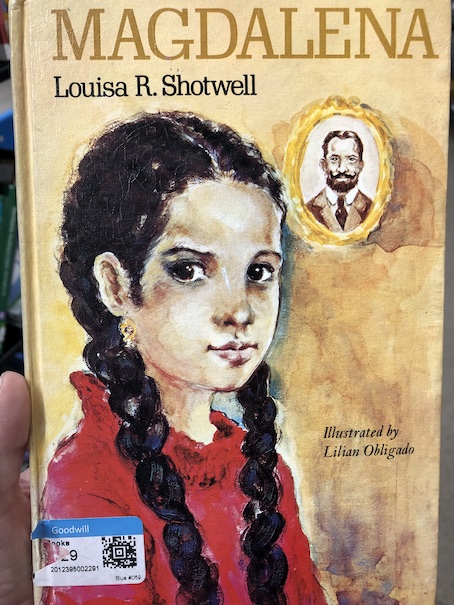
Princess Furball

There was a princess whose mother died when she was only a baby and whose father never paid much attention to her. In spite of this misfortune, she had a happy childhood because her nurse loved her and let her play with other children. She arranged lessons appropriate to a princess with skilled tutors and let the princess learn how to cook in the royal kitchen.

However, when the princess was grown, the old nurse died, and the princess was very lonely. Her father only cared about the money he could get from the princess’s marriage, and to the princess’s horror, he arranged a marriage to an ogre who promised him fifty wagons of silver in exchange for the princess.

Unable to face the prospect of such a horrible marriage, the princess requests a special gift from her father for her wedding. She asks for three dresses: one golden like the sun, one silver like the moon, and one as sparkling as a the stars. She also asks for a special fur coat made of a thousand different types of fur. At first, the princess doesn’t think the king will be able to meet her demands, but to shock, he sets his people to accomplishing the task and presents her with everything she asked for.

Deciding that there is no other option but to run away, she takes the three dresses with her along with three small golden treasures that belonged to her mother: a ring, a thimble, and a tiny spinning wheel. She also takes along her favorite soup seasonings, which she got from the castle’s cook. Then, she puts on the bulky fur coat and flees into the woods.

In the woods, she is found by the hunting party of a neighboring king. At first, they mistake her for some kind of strange animal. When they find out that she’s a person, they take her back to their castle and put her to work in the kitchen. There, they make her do all the messy cleaning jobs. Nobody knows her real name, so everyone just calls her Furball after her strange, bulky coat made of a thousand patches of fur.

The princess always wears the fur coat as a disguise, but one day, she finds out that the young king of this kingdom is having a ball. She slips away from her kitchen duties and dresses in her dress like the sun. When she is unrecognizable as the kitchen servant, she is able to meet and dance with the king. Being herself is essentially a disguise!

When she slips away from the king and returns to the kitchen, the cook has her make soup for the king, and she uses her special blend of seasonings. When no one is looking, she she also puts her golden ring into the king’s bowl. When the king finds the ring, he asks the cook about it. The cook admits that Furball made the soup, so the king questions her about the ring, but she doesn’t explain.

At the king’s next ball, the princess repeats the same performance, this time wearing the dress like the moon. This time, she slips the golden thimble into the king’s soup when she returns to the kitchen. Again, she doesn’t explain when the king questions her about the thimble.

As in many fairy tales, it’s the third time that’s the charm. When the princess shows up to a ball dressed her her dress like the stars and doesn’t have time to completely change when she gets back to the kitchen that all is revealed, and there’s a happy ending!

The book is available to borrow and read for free online through Internet Archive (multiple copies).

I remember reading this book when I was a kid in elementary school! I think I read it when I was about 7 years old, when the book was pretty new. I always liked fairy tales. There is a brief explanation at the beginning of the book that the story is a Cinderella variant. This version is very similar to the English folktale Catskin and to the tale of Many Furs or Thousand Furs by the Brothers Grimm.

Like so many little girls, I was fascinated as a kid with the concept of the dresses that resemble the sun, the moon, and the stars. The fur coat made of many animals is a little alarming to me now, but it makes a good disguise in the story. I love the illustrations that show the princess in all of her different dresses and the Furball disguise!

The story doesn’t explain why the princess put her treasures into the soup, but my guess was that she wanted an excuse to see the king again and a way to keep him intrigued about her identity and her relationship to the mysterious princess who keeps showing up to his balls. It’s only after the king decides that he really loves the mysterious princess that it’s safe to reveal her identity.

The Egyptian Cinderella

The Egyptian Cinderella by Shirley Climo, illustrated by Ruth Heller, 1989.

Rhodopis is a slave girl in Egypt. When she was young, she was abducted from her home in Greece by pirates, who sold her into slavery. Her blonde hair and green eyes make her look very different from the Egyptian servants, and none of them like her.

Most of Rhodopis’s friends are animals, and in the little free time she has, she likes to dance. The elderly man who owns her sees her dancing and has a special pair of rose-red gold shoes made for her so she can wear them while she dances. However, the Egyptian servants are all jealous of her for getting this special gift.

One day, the servants all leave her behind when they go to a special court held by the Pharaoh. While they are gone, a falcon snatches one of Rhodopis’s slippers and flies away. The falcon flies to the court and drops the slipper in the Pharaoh’s lap. The Pharaoh takes this as a sign from Horus that the girl who owns that shoe is destined to be his wife and immediately begins searching for her.

When he finds Rhodopis, the servant girls protest that she is not Egyptian and is only a slave, but the Pharaoh compares her green eyes to the color of the Nile, her light hair to papyrus, and her pink skin to a lotus flower. In his eyes, there could not be any other girl who could represent Egypt, and her slave status doesn’t matter.

The book is available to borrow and read for free online through Internet Archive (multiple copies).

My Reaction

I remember loving this book when I was a kid! I always liked fairy tales and folktales, and I think this was one that was introduced to me by our school librarian, probably around the time it first came out in 1989. For a long time, I was unaware that the same author also wrote other books based on variations of the Cinderella story: The Korean Cinderella, The Persian Cinderella, and The Irish Cinderlad. One of the fascinating things about the story of Cinderella is that variations of the story about a girl (usually, it’s a girl, although there are some variations with a boy) who is abused by her stepmother and stepsisters but who triumphs in the end when she marries a king or a prince, who identifies her as the girl he loves by a lost shoe, have appeared in cultures around the world. The classic one that most of us know is the French version by Perrault, but there are other versions of the story that are older.

There is an author’s note in the back of the book that explains that this Egyptian version of the Cinderella story is one of the oldest known Cinderella stories. The Roman historian Strabo recorded the story in the first century BC. The story is legend, but according to the author, Rhodopis was a real slave girl who married the Pharaoh Amasis in the sixth century BC (although accounts of her vary, and it can be difficult to separate history from legend).

Aliens for Lunch

Aliens for Lunch cover

This book is part of the Aliens for Breakfast Trilogy, a short, easy chapter book series for elementary school children.

It’s spring break, and Richard and his friend Henry are bored. It seems like all of their friends have all gone somewhere for vacation, but they’re stuck at home. Richard’s mother leaves the boys home alone, telling them that there’s food for lunch in the refrigerator and a new sample of popcorn that arrived in the mail. The last time that a sample of a new kind of food arrived in the mail, Richard’s alien friend, Aric was hiding inside, and the same is true this time, too! Aric is back, and he needs Richard’s help!

Aric tells Richard and Henry that a valuable shipment of XTC-1000 was hijacked by aliens called the Graxians. XTC-1000 is the secret substance that makes all desserts taste wonderful. (I always thought that was sugar, but okay.) Aric’s planet ships XTC-1000 to other planets, and each shipment is supposed to last for thousands of years, but the Graxians are greedy, and they used up their supply too quickly, which is why they hijacked a shipment bound for another planet. It’s a real problem because, if that other planet’s desserts suddenly turn bland because they’ve run out of XTC-1000, they’re bound to start raiding desserts from other planets, like Earth.

Aric’s Interspace Brigade was supposed to send weapons to help Aric and Richard face off against the Graxians, but as always, they’re on a strict budget, and the weapons they sent somehow failed to arrive. Richard and Henry do the best they can to improvise weapons with things they find in Richard’s kitchen, but they’re not very terrifying. The Graxians take Aric, Richard, and Henry prisoner after they board the ship. Can the boys manage to free Aric and discover what they need to subdue the Graxians?

I don’t think I read this book as a kid, although I remember reading the first book in the series. The Aliens for Breakfast Trilogy is a short series of funny science fiction stories as Richard and his alien friend do battle against the villains of the galaxy with food! I like the fact that even the aliens they fight find their efforts laughable when they try to use things that just don’t make sense, like when they try to use the kitchen gadgets as weapons. I also enjoyed the pun that the secret substance that makes desserts good is “XTC”-1000. (No, I don’t think they mean the illegal drug.) There is also a running gag that Aric’s space organization is always operating on a shoestring budget, which is why they often have to improvise weapons and modes of travel. The stakes are high but laughable at the time time, and somehow, they always manage to save the day! There is an extra joke at the end of this book where Aric gives both of the boys jackets from his space organization, telling them that girls find them irresistible. When the boys try wearing them for the first time, they come to the conclusion that neither one of them is ready to be irresistible.

A Watcher in the Woods

The Carstairs family is moving from Ohio to a small town in Massachusetts because Professor Carstairs will be taking a new job as head of the English department at the local college. Fifteen-year-old Jan knows that she will find the move harder than her parents or her younger sister. Her father will be busy with his work, and her mother will make friends with the wives of other faculty at the college. Jan knows that her little sister, Ellie, is still very young and in elementary school, and she won’t find changing schools as difficult as she will. Jan isn’t looking forward to trying to fit in at the local high school.

The family’s first difficulty in moving is finding a house in this new town that they like. Because it’s a small town, their options are limited, and it seems like there’s something wrong with each of the houses they see. Then, their realtor suggests that they view the old Aylwood place outside of town. Living there would mean a longer distance to drive to the college and the girls’ schools, but it’s a nice, big house with some land attached to it. The land includes woods and a pond. Elderly Mrs. Aylwood can’t afford to maintain the place anymore, but she has been reluctant to sell the house. She is very attached to it and she wants to make sure that, if she sells, that she will sell it to the right kind of people, who will take care of the land and woods.

From the first time that Jan and her family visit the house, it gives Jan a strange feeling. She has the oddest feeling that someone (or something) is watching them from the woods, and it frightens her. However, when she tries to explain her uneasy feelings to her mother, her mother thinks that it’s her imagination. Jan can’t deny that the house and wood give her the feeling of a fairy tale and that Mrs. Aylwood reminds her of a fairy tale witch.

For some reason, Mrs. Aylwood becomes more welcoming to the Carstairs family after she sees Jan, and she begins asking Jan some rather odd questions about herself. Mrs. Aylwood admits that Jan reminds her of her own daughter, Karen, who she lost 50 years ago when she was only 15 years old. Jan begins to understand that Mrs. Aylwood’s attachment to the house is because it’s a link to her daughter’s memory, but she soon begins to realize that there’s more to it than that. Mrs. Aylwood asks Jan what kind of person she is and makes a cryptic comment about how Jan is a human but there are other things besides humans.

Jan’s uneasy feeling of being watched continues, and mirrors in the house are inexplicably broken in an x-shaped pattern. When she befriends a neighbor, Mark, and talks to him and his mother about the house, she learns that Karen did not die but that she disappeared 50 years ago. She apparently went out for a walk to the pond in the woods one summer morning and simply vanished with no explanation. Searches for her never lead anywhere. Most of the local people believe that Karen ran away from home, although it would have been out of character for her to do that. Jan begins to wonder if the watcher she senses in the woods could be Karen, somehow hiding out or having returned after all these years, although Mark says that doesn’t make sense. Then, remembering Mrs. Aylwood’s comment about things that aren’t human, Jan wonders if the watcher could be Karen’s ghost. What if she died all those years ago, and her spirit haunts the woods?

It seems like someone or something is communicating with Ellie. Ellie seems to hear something speaking or humming when Jan can’t. Something even suggests to Ellie that she name her new puppy Nerak, which Jan realizes is “Karen” spelled backwards. Is Karen trying to communicate with them, or is it something else?

The book is available to borrow and read for free online through Internet Archive. This book has been made into movie versions twice, but the Disney movie from 1980 is more faithful to the original story. I’ll explain why below, but it involves spoilers.

When talking about my opinion of this book, I really need to include some spoilers. This is a very unusual book because it isn’t obvious until about halfway through what kind of story it really is. From the beginning, it’s set up like a ghost story, with Karen’s mysterious disappearance, the sense of something watching the house and family from the woods, and something trying to communicate through Ellie. It’s very suspenseful and mysterious, but this is not actually a ghost story. It’s really science fiction.

Karen isn’t dead, but she has been trapped in an alternate dimension since she disappeared 50 years ago. A being from that other dimension has also been trapped in our world since then. This other being is the mysterious watcher in the woods. Jan correctly senses that this other being is also female and a child, although beings of its kind live extraordinarily long lives because time works differently in their dimension. What has been 50 years for everyone else has only seemed like a day to her. She wants to return home, but she has had to wait for conditions to be right. She also wants to help Karen, and she has been struggling to communicate with Mrs. Aylwood and Jan and her sister so she can tell them what they need to do.

In the Disney movie, there are a couple of major changes from the original book. The first is that the location is changed from the US to England, although Jan and her family are Americans. It also features a kind of initiation ritual that Jan was undergoing just as her switch with the creature from the other dimension happened, adding an element that seems supernatural, although it is still science fiction. At the very end of the Disney movie, Jan brings Karen back from the other dimension, but in the book (Spoiler!) Mrs. Aylwood goes to join Karen in the other dimension instead.

In the book, Jan’s mother worries about what life would be like for Karen if she returns, aged 50 years in what must have seemed like only a day, having lost most of her life, or what it would be like if she has not changed at all but her mother has aged 50 years, and the world has been through so many major changes since she left. It isn’t clear whether or not Karen has aged in the other dimension, but Jan’s mother’s point is that the world she came from has definitely changed. Karen can’t go back to her old life, and there is some sadness about that and about what Mrs. Aylwood has been going through since Karen disappeared. However, Mrs. Aylwood decides to join Karen in this other world, where she’s been. We don’t really know what Karen’s condition is in the other dimension because we don’t see her. She may have aged very fast there, although I think they imply that she has not aged at all because time works differently in the other dimension. Since time works differently there, it seems like they either won’t age further there or will do so much more slowly than they would on Earth.

Between the two movie versions, the Disney movie version of this book from 1980 is more faithful to the original story because it maintains the concept that this is a science fiction story and that the watcher in the woods is a being from another dimension. The movie version from 2017 turns the story into a ghost story with no science fiction elements. In the ghost story version, Karen is also still alive and hasn’t aged after being gone for many years, but the watcher in the woods is a ghost who is holding her captive. It’s a spookier version, but I think the logic of the original book, with its science fiction theme, makes more sense. 

The premise of the ghost story didn’t make as much sense to me because the ghost’s motives seem confused. First, the ghost takes Karen captive because she was staging a stunt for some friends where she appeared to be mocking the way he died. Then, he seemed to want to keep a girl for company, which is weird because it doesn’t seem like he interacts with Karen while he has her. He tries to make a bargain where he would be willing to release Karen in exchange for Ellie, but in the end, it turns out that human company isn’t really what he wants. (Spoiler!) He wants a ritual for his death that he was deprived from having when he was killed. The story just seemed to be all over the place with the ghost’s motives and desires. Is he out to punish Karen for her disrespect, lonely without human company, or just trying to get attention from the living to fulfill his final wishes? Even he doesn’t seem clear about that, which is why I prefer the sci-fi version. 

I also thought that the premise of the sci-fi story was more original, and I enjoyed the twist of a story that seems like a ghost story but really isn’t. If any sufficiently advanced technology might look like magic to someone who had never seen it before, as Arthur C. Clarke said, it makes sense that any being who was sufficiently different from the human experience might appear to be some kind of supernatural creature to human beings who didn’t know what they were perceiving.

The Disney version from 1980 actually has multiple endings because the first endings they filmed didn’t quite work and didn’t get a good reaction from audiences. If you’re curious about what the three endings are like, Jess Lambert explains them in her YouTube review of the movie.

Double Trouble

Faith and Phillip are twins and the only members of their immediate family who are alive. Their parents and their older sister were killed in a car accident. Faith was taken in by their aunt, but their aunt didn’t think that she could manage to care for two children, so Phillip was sent to a foster home. The story is written in the form of letters to each other (this is called epistolary style) after their separation.

Separating is cruel, especially when they’re orphans, but there is something about Faith and Phillip that other people don’t know. They have psychic powers, and they have the ability to communicate their feelings to each other with their minds. They have to communicate specific information to each other in writing because their psychic abilities only communicate their general mood and circumstances, but their psychic link to each other makes them feel less alone when they’re apart. Apart from dealing with their grief over the loss of their parents and the changes to their lives, each of them is also in a troubling situation.

In her first letter to Phillip, Faith tells him about a disturbing encounter with a teacher at her new school. Faith was selling candy with another classmate, Sue Ellen, to support the school band. Sue Ellen gets the idea of going by Mr. Gessert’s apartment. Mr. Gessert is their social studies teacher and is considered one of the cool teachers in school. Faith can tell that Sue Ellen has a bit of a crush on him. He buys one of their candy bars, and Sue Ellen asks to use his bathroom. When Sue Ellen seems to be taking awhile, the teacher goes to see if everything is okay, and he catches Sue Ellen snooping around. He gets especially angry when Faith is about to touch his cane near the door. He grabs both girls by the arm and throws them out of the apartment. Although snooping in someone’s private rooms is rude, the girls are startled by how angry Mr. Gessert is. Faith asks Sue Ellen what she saw in his apartment, and Sue Ellen says that she didn’t see anything. She had just started to open the door to a room when he found her. The next day, Sue Ellen brags to other kids at school about having been in the teacher’s apartment, but Faith is still concerned about how angry Mr. Gessert was.

When Phillip replies, he says that he can understand why the teacher would be annoyed at someone snooping through his stuff, and he tells Faith about his new foster parents, the Wangsleys, Howard and Cynthia. He’s now living in Seattle, about 50 miles from where Faith is living. Phillip also got picked on at school by a bully, but a girl named Roxanne spoke up for him. He thinks Roxanne is pretty, and he describes her aura as being indigo. (The twins also have the ability to see people’s auras and use them to learn things about other people.) His new foster parents don’t take his vegetarianism seriously, trying to convince him to eat meat. They say that God put animals on Earth for people to eat and that he has to eat like they do. Their house is shabby, and Howard keeps Cynthia on a tight budget. That surprises Phillip because he thinks Howard must be making decent money at the shipyards. He wonders how Howard spends his money, if it’s not on his wife or home. He knows that Howard and Cynthia belong to some kind of religious group and that, whenever they return from one of their meetings, they act strangely, and their auras are weird. He’s still grieving their parents and sister, and with all the stresses of his new home, the only time he feels better is when he’s using astral projection, to get away from it all.

The twins learned their psychic skills from their sister Madalyn and Madalyn’s friend, Roger, who is an archaeologist. Faith doesn’t quite have Phillip’s ability with astral projection, but she can sometimes get visions of other people and what they’re doing. She uses this ability to try to learn more about Mr. Gessert, and she sees that his cane is actually a gun. She watches him loading it. Why would a teacher have a cane with a hidden gun?

Faith is still angry that her aunt didn’t take Phillip, too. She also hesitates to ask her aunt for things she needs because she doesn’t want to seem like a charity case. She has a part-time job taking care of her neighbors’ dogs while the neighbor is on vacation, and she uses the money to buy a pair of second-hand boots. When Aunt Linda finds out that Faith bought second-hand shoes, she says that Faith should have told her that she needed shoes because she doesn’t want people thinking that she isn’t taking care of her niece. Still, after she cleans them up, they don’t look bad, and she gets compliments on them at school.

The next time she sees Mr. Gessert in class, he seems normal at first. He gives the class a lesson on the Donner Party of pioneers, who were trapped by a snowstorm and resorted to cannibalism to stay alive. (This is actually described in gruesome detail in the book. Some kids like a good gross-out, but I never did.) After Mr. Gessert describes all the gory details in class, one of Faith’s other classmates comments that Mr. Gessert seems crazy. Faith knows that he was telling them the truth about what happened, but she finds it disturbing how much he seemed to enjoy recounting all the grossest parts, and other classmates agree. Phillip is concerned about Faith’s description of the teacher, so he uses astral projection to spy on him, and he agrees that Mr. Gessert gives off weird vibes.

Both Faith and Phillip connect with other kids at their schools who have an interest in psychic abilities. Faith meets a boy named Jake, who is intrigued because his father has been reading a book about remote viewing, which is what Faith does. As Phillip becomes friends with Roxanne, who is interested in the topic of astral projection. When Phillip confides in her about his astral projection abilities, she asks him to teach her how to do it.

One day, when Phillip and Roxanne are at the library, they see Mr. Gessert there. Mr. Gessert has an interest in Spanish treasure, and there is a special exhibit at the library with some very valuable pieces. Soon after that, the Spanish treasure is stolen from the library. It doesn’t take a psychic to see that Mr. Gessert, who has already been established as creepy and suspicious, might have a motive to steal it, but he’s not the only suspect. Working separately, with the help of their friends, Phillip and Faith use their special mental abilities to get to the bottom of Mr. Gessert’s secrets.

The book is available to borrow and read for free online through Internet Archive.

There are a lot of metaphysical themes to this story with the kids exploring their psychic abilities. It is revealed that their old family friend, Roger, is a kind of archaeologist/treasure hunter, but he is regarded as unorthodox by his colleagues because he uses his psychic abilities to guide his discoveries. Roger is the one who taught the twins and their older sister how to use their abilities.

In the story, the people who are open to developing their psychic/spiritual/metaphysical sides are the heroes, and they thrive when they connect to other, like-minded people and share what they know with each other, helping each other to develop. However, there are unhealthy forms of spiritual development in the story. Phillip is unnerved about the Wangsleys and their religious group from the beginning because the Wangsleys always act strangely after one of their meetings. Initially, I was concerned that this group might be doing drugs or something like that, but that’s not the case. It’s a little vague exactly what group the Wangsleys are part of, but it seems to be a very conservative Christian group with a cult-like devotion to their leader, and the the Wangsleys have an unhealthy relationship with it.

I don’t think it’s an unhealthy group for being Christian, but it seems like devotion to this particular group encourages overly harsh discipline and emotional manipulation and that Howard and Cynthia’s relationship with each other is troubled because of disagreements about their level of devotion to the group’s standards. I sometimes think that people who don’t have a religion imagine that all Christian groups are like that, but I’ve been to various Christian churches throughout my life, and most are not like this. There are some extreme groups like this, but this is definitely an extreme group. It seems to be an isolated group that isn’t part of a larger denomination. It seems to have just one charismatic leader. I think it’s implied, although not directly stated, that the reason why Howard isn’t spending more money on keeping up his house is that he’s contributing a large portion of his income to this religious group. I’m a little suspicious about the money issue and the long periods that the group’s leader seems to spend in Hawaii, ostensibly on religious business. While it isn’t stated explicitly, and I could be wrong, I think there are some implications about the Hawaii trips and the money of this group that make them seem suspicious.

Besides the metaphysical elements, there are themes of children adjusting to loss and trauma and major life changes with the deaths of the twins’ parents and their adjustments to their new homes. Initially, Faith doesn’t have a very good relationship with her aunt. She’s angry that her aunt didn’t accept her twin brother and sent him into the foster system, and she finds her aunt’s manners cold. She doesn’t trust her aunt enough to ask for the things she needs, even basic clothing, and her aunt gets upset about that. Things improve between them when they learn to communicate more openly with each other. Aunt Linda does care about Faith, but she’s also dealing with her own feelings and uncertainties about raising her niece. She has never married or had children, and while she does want Faith living with her, becoming a single parent is a major adjustment for her.

The Wangsleys are completely unsuitable as guardians for Phillip. They don’t accept his vegetarianism and complain about having to make special things for him. They keep trying to convert him, both to eating meat and to their religious group. I feel like their religious affiliation should have been disclosed from the beginning and that there should have been some discussion between them, Phillip, and Phillip’s caseworker about the differences between their lifestyle and the lifestyle that Phillip is accustomed to living, so they could all reach an understanding about what living together would mean for them before he actually went to life in their house. Phillip does describe some meetings with the Wangsleys and his caseworker during his time with the Wangsleys, where the caseworker tries to mediate circumstances between them and offer suggestions, such as ways they can deal with Phillip’s vegetarianism. Cynthia does make some efforts to accommodate Phillip’s eating habits, but they’re kind of half-hearted, and the Wangsleys absolutely cannot accept that Phillip doesn’t want to join their religious group. They heavily pressure him to convert, and when they discover Phillip’s astral projection activities, they’re convinced that he’s having visions given to him by the devil and demons. They tell Phillip’s caseworker that they want to adopt him, but Phillip finally speaks out about what life with them is really like. In the end, Roger decides that he will take Phillip, and the Wangsleys are forced to relinquish him to his caseworker.

From now on, Phillip will be living with a family friend who understands him and shares his lifestyle, and there are even hints of a possible romance between Roger and Aunt Linda. The hints of romance with Roger and Aunt Linda feel awkward, partly because the kids know that Aunt Linda is about 10 years older than Roger, a significant although not insurmountable age gap. Mostly, it just feels awkward to me because it seemed like there had been a romance relationship between Roger and the twins’ deceased elder sister. Switching attention from the niece to the aunt, even if the niece is now dead, just feels odd. Although, it’s not definite that their relationship will really be romantic. It might just end up being friendly.
The authors, Barthe DeClements and Christopher Greimes, are a mother and son team, and the inspiration for this story came from their own shared interests in psychic phenomena and “nontraditional methods of expanding awareness.”

I remember reading this book when I was a kid, and I was fascinated with the idea of communicating psychically with other people or being able to do astral projection. I don’t really believe in all of the metaphysical ideas that the book presents, but I think most children go through a phase where they’re interested in things like ESP and try to test themselves to see if they can do it. I actually had an English teacher in middle school who tested the whole class for ESP after we read some science fiction or fantasy story, just for fun. I can’t remember which story that was now, although I don’t think it was this one. I think it might have been a story about a typewriter that predicts the future, although I can’t remember the name of that one. I didn’t do very well on most of the tests, although there was one in particular where I did pretty well. After thinking it over for about 30 years, I’ve decided that it wasn’t because I had any significant psychic ability. The one test I did well involved predicting another person’s actions, and I think anybody could do that fairly well if you know something about the other person’s personality. The teacher did say that people do this activity much better if they do it with close friends, implying that friends have a special connection to each other, but I think it’s more the case that friends understand each other’s thinking better.

I can’t remember whether I read this particular book before or after I was tested for ESP, but I think it was after. I still had an interest in the subject, and I remember, one night, I tried my own experiment in astral projection. When I did it, I had a vision of space aliens. It was probably because I was dozing off in bed at night, and I was going through a sci-fi phase at the time, but I got spooked. You see, the punchline to this story is that I grew up in Arizona, and the night of my experiment happened to be the night of the Phoenix Lights. I was so creeped out the next day, when people were talking about UFOs that I stopped the astral projection experiments. Although I’m sure that it was all a coincidence, just a dream brought on by my own fascination with science fiction and space aliens, I decided that, while I was curious about how such things worked, I didn’t really want them to work for me. I might have been a cowardly child with a habit of spooking herself, but I was also a cowardly child who decided that there was no point in continuing to do things that she knew would spook her. I had my fun with that phase, and then it was time to move on to my next obsession.