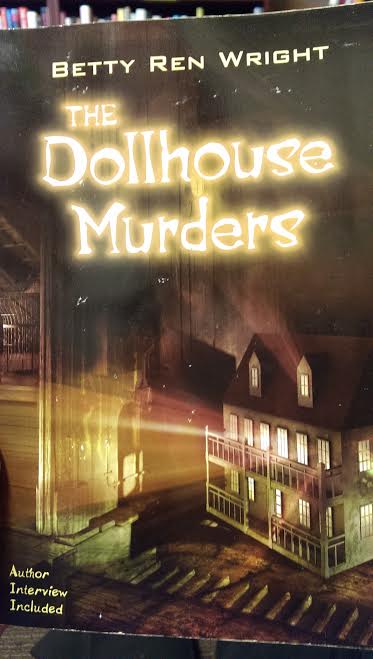
The Dollhouse Murders by Betty Ren Wright, 1983.
Amy is upset because she constantly has to look after her sister Louann, who has developmental problems. Louann is only a year younger than Amy, but her condition makes her think and act like a small child all the time. Amy loves Louann, but having her around all the time makes it difficult for her do things on her own and to make friends. It’s frustrating because the girls’ mother doesn’t seem to understand the pressure Amy feels.
One day, she has an argument with her mother about it and runs away to her aunt’s house. Aunt Clare normally lives in Chicago, but she has returned to her home town to sort out the things in her grandparents’ old house. Sympathizing with Amy, Aunt Clare offers Amy the chance to stay with her for a couple of weeks, without Louann.
Aunt Clare and her brother, Amy’s father, used to live with their grandparents when they were young, and Aunt Clare says that she has unhappy memories of that time. While helping her aunt go through some of the old things in the house, Amy discovers that there is a dollhouse in the attic made to look exactly like the grandparents’ house and dolls which look like the grandparents, Clare, and her brother. Amy thinks the dollhouse is wonderful, but Aunt Clare seems to find it disturbing.
When Aunt Clare refuses to talk about her deceased grandparents, Amy looks at some old newspapers at the library to learn more about them. To her shock, she learns that they were murdered in the house and that the killer was never found. Soon, strange things begin happening with the dollhouse. The dolls move around on their own, mysterious lights appear, and crying noises can be heard. The dolls seem to be acting out the events of the night of the murder. After all this time, the dolls seem to be trying to tell them something, if they have the courage to listen.
The book is currently available online through Internet Archive (multiple copies). There was a movie version of this book made in 1992 (Sometimes called Secrets in the Attic), but it’s difficult to find copies of it now. Sometimes, the movie or clips of it appear on YouTube. Apart from that, it’s very difficult to see it.
My Reaction and Spoilers
I remember liking this book when I was a kid, although I was often a timid kid who was easily scared by scary stories. I think it was the mystery angle, solving the old murder, that intrigued me the most, although I also enjoyed the characters in the story. I felt impatient with both Amy and her mother at times, but I liked the way the family eventually worked through their problems and came to understand each other better.
Aside from revealing the murderer’s true identity, the dolls settle other troubling matters in Amy’s family. For years, Aunt Clare has blamed herself for the way she behaved around the time her grandparents were killed. She was afraid that something she did might have even led to their deaths. But, none of it was really her fault, and her grandparents want her to know that she needn’t blame herself anymore. In some ways, I felt a little cheated by the answer to the murder mystery because the murderer is a person we never see and who has been dead for years, so there was no way readers could have known it was him, and he is never brought to justice. However, learning the identity of the murderer is important because it gives Aunt Clare some closure. When Aunt Clare realizes the truth, she feels like a great weight has been lifted from her. She begins coming to terms with her past and appears to be headed for a better future.
Amy also comes to terms with her sister’s condition and values her even more highly when Louann’s lack of fear of the dollhouse gives Amy the courage to see the dolls’ final message. Louann might have been less scared by the dolls than Amy was because Amy understands more of the situation behind the haunting, but the dolls aren’t actually malicious, and there’s no need for the girls to be afraid. Louann is a tender-hearted girl who loves the dolls and dollhouse immediately, and Amy finds that Louann’s willingness to see what the dolls have to show them gives her comfort and courage. Because Aunt Clare understand the feeling of guilt, she helps Amy to see that some of the ways that her mother behaves regarding Louann, babying her a little too much and trying to make Amy more responsible for her, also come from a feeling of guilt. There was nothing Amy’s mother could have done that would have changed Louann’s condition, but Amy’s mother feels guilty anyway. Her guilt is a problem because she’s been holding Louann back from experiences that would help her develop more and give Amy a little more freedom from having to look after Louann so much. In the end, Amy’s family does make changes to help Louann become a little more independent and to allow Amy a little more independence of her own.
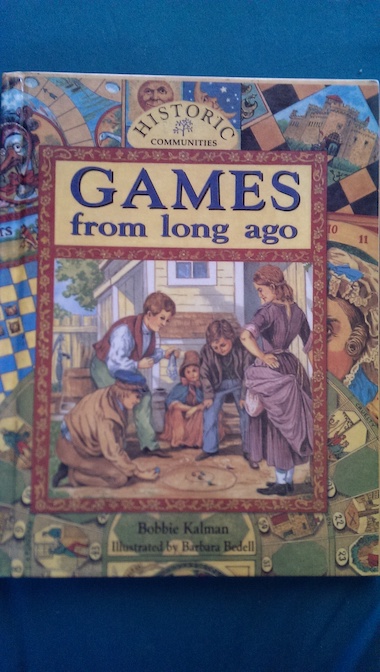
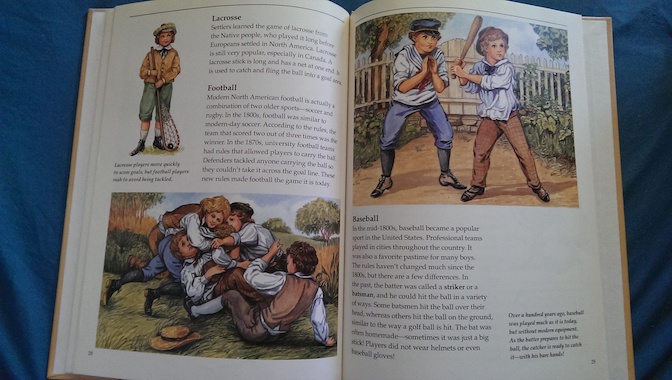
 This book is about games people would play in 19th century America. There is a variety of different types of games, although the main focus is on parlor games. Many of them have been passed on for generations by word of mouth and are still played today, such as Charades and Blind Man’s Buff, although the book discusses games that are no longer common.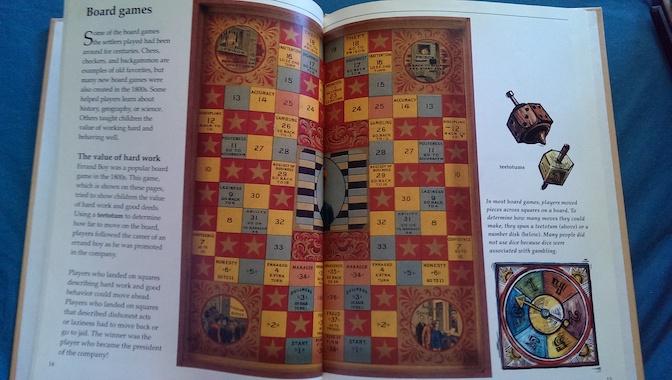




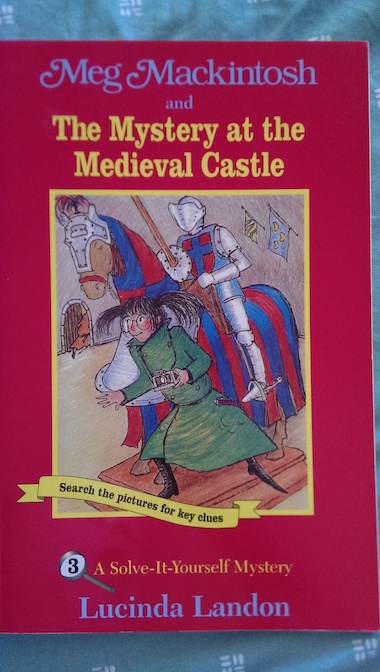


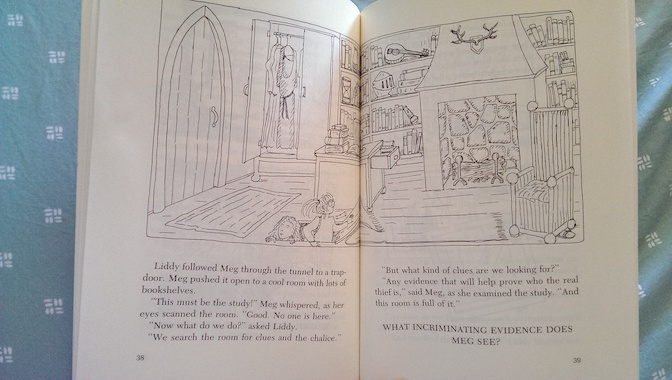
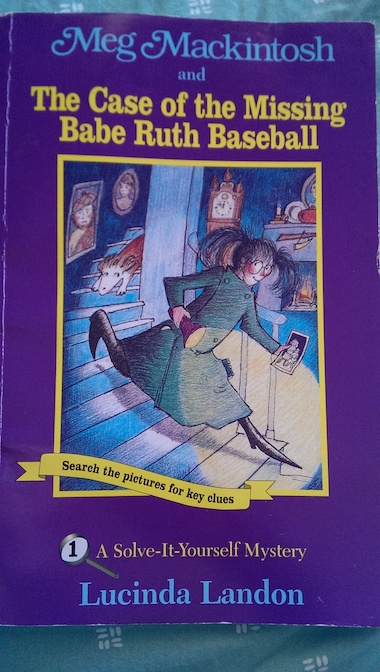
 This is the first book in the

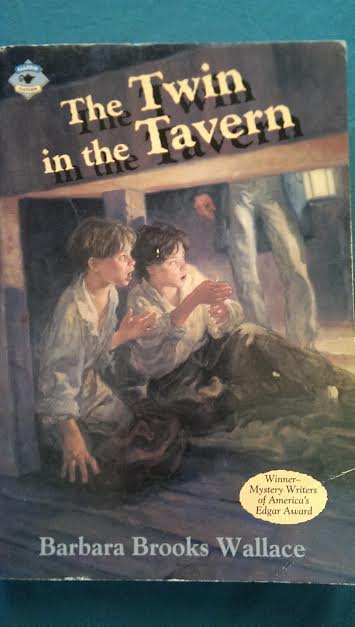 The Twin in the Tavern by Barbara Brooks Wallace, 1993.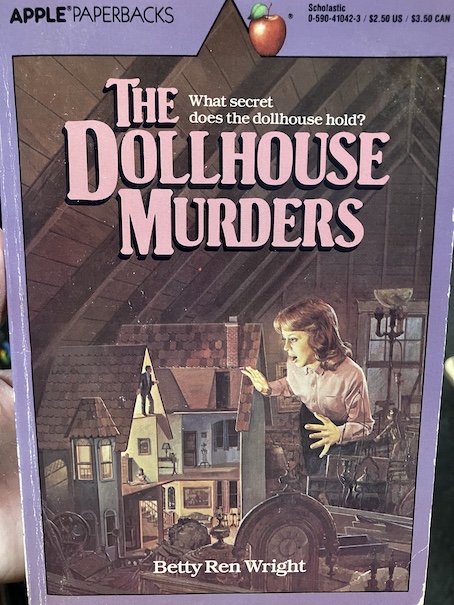
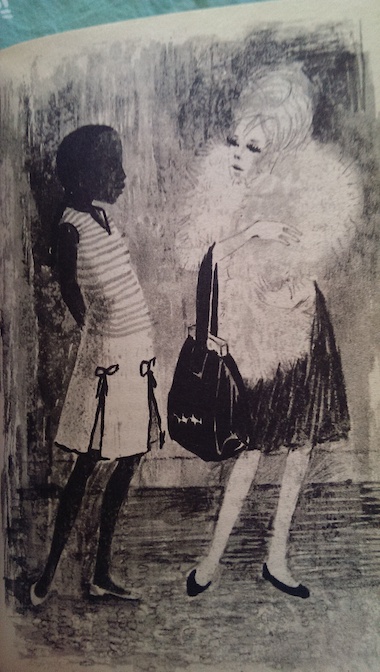 April Hall has come to live with her grandmother (the mother of her deceased father) because her actress mother is touring with a band as a singer. April’s mother isn’t a big star, although April likes to brag about her and their Hollywood life. Really, her mother is mostly a vocalist who occasionally gets parts as an extra, hoping for that big break. April is sure that when her mother gets back from her tour, she will send for her, and they will live together in Hollywood again. Although, from the way her grandmother behaves, it seems as though April may have to prepare herself for living with her for the long term. April resents her grandmother’s apparent belief that her mother has dumped her because she is unwilling or unable to take care of her.
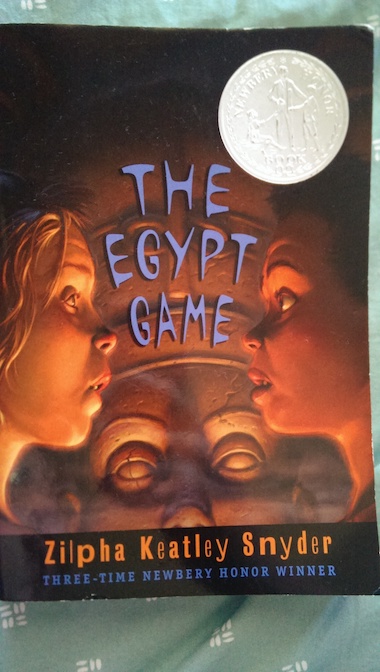
 The children are uneasy about this unexpected game player because frightening things are happening in their neighborhood. The kids wonder if the mysterious messages could be from the crazed killer who murdered the young girl. People have been looking suspiciously at the loner who owns the antique store, an older man who everyone calls the Professor. However, the kids have become too enmeshed in the Egypt game to give it up in spite of their fears.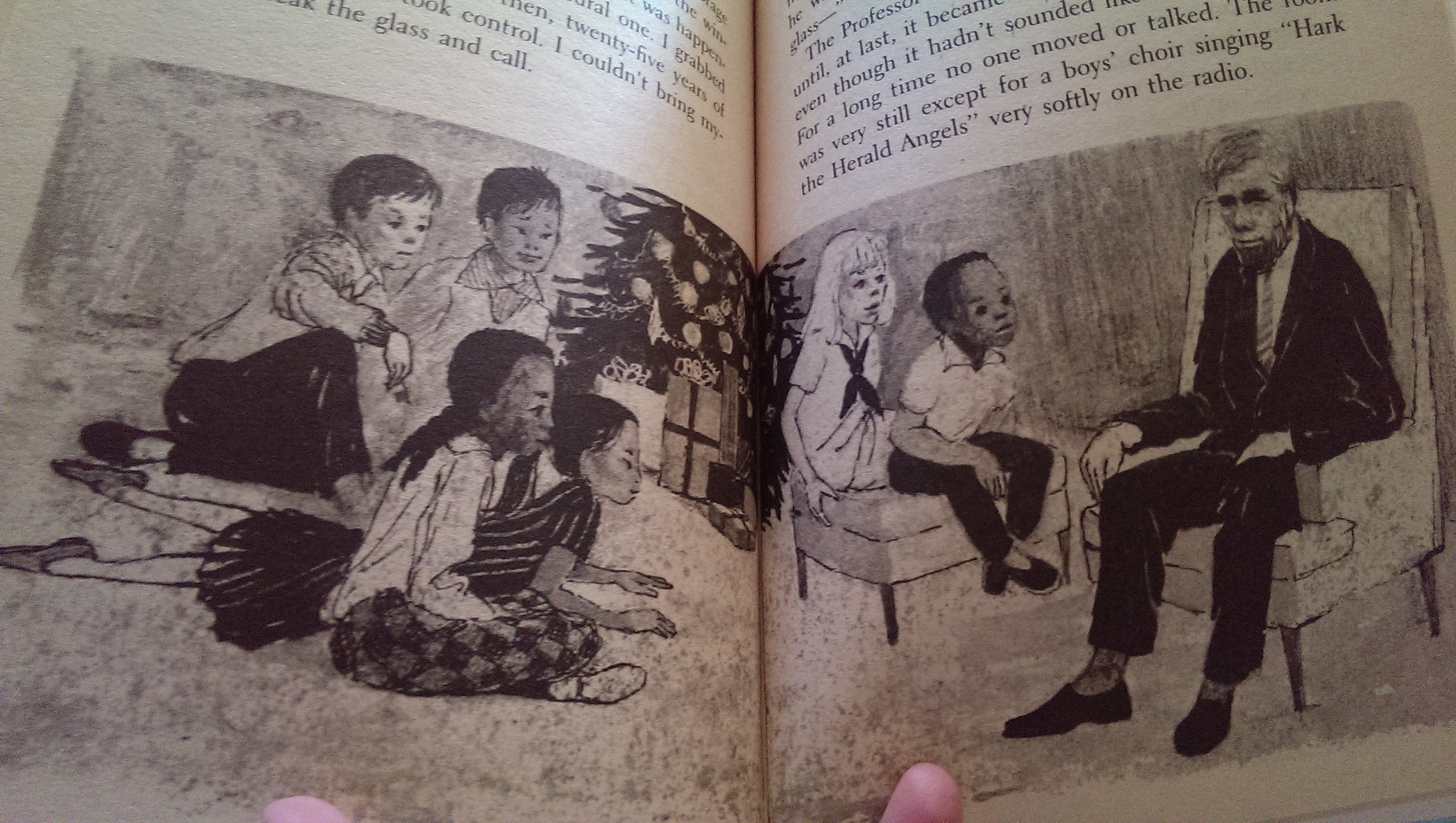

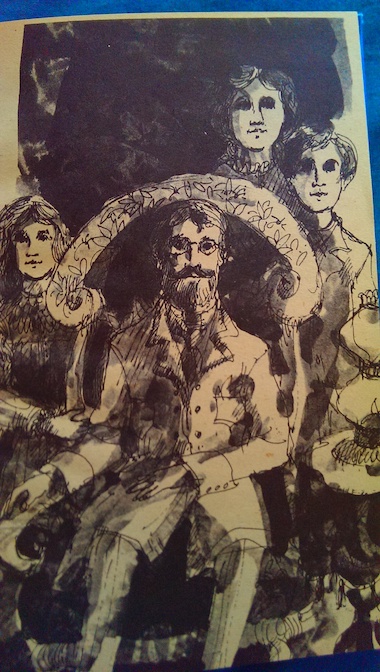 It’s 1851, and Professor Carver of Boston is living in an apartment above a candle shop with his wife and two children, his son Jamie and daughter Lorna. One day, a man named Mr. Giddings comes to see Professor Carver to request his help. For years, he has wanted to buy a particular farm with a beautiful house called Windy Hill. However, when he finally succeeded in buying the house and he and his wife went to live there, his wife became very upset. She said that she felt strange in the house and that she had seen a ghost. Now, she is too upset to return to Windy Hill. Mr. Giddings has heard that Professor Carver once helped a friend get rid of a ghost haunting his house, and he asks the professor if he would be willing to do the same for him.
 Jamie and Lorna are thrilled by the house, which is much bigger than their apartment in town. They can each have their own room, and there is an old tower in the house that was built by a former owner, who was always paranoid about Indian (Native American) attacks (something which had never actually happened). However, their new neighbors are kind of strange. Stover, the handyman, warns them that the house is haunted and also tells them about another neighbor, Miss Miggie. Miss Miggie is an old woman who wanders around, all dressed in white, and likes to spy on people. There is also a boy named Bruno, who apparently can’t walk and often begs at the side of the road with his pet goat, and his father, Tench, who is often drunk and doesn’t want people to make friends with Bruno.
 Then, strange things do start happening in the house. The quilt that Lorna has been making disappears and reappears in another room in the middle of the night. At first, the family thinks maybe she was walking in her sleep because she had done it before, when she was younger. However, there is someone who has been entering the house without the Carvers’ knowledge, and Jamie and Lorna set a trap that catches the mysterious “ghost.”
 The Best Halloween Ever by Barbara Robinson, 2004.
