 Susan’s Magic by Nan Hayden Agle, 1973.
Susan Prescott believes in magic, although her mother tries to tell her that it’s all imagination. Susan gets feelings about things and sometimes seems to have the ability to make things work the way she wants them to. That’s part of the reason why she can believe that old Mrs. Gaffney is really a witch. People say that Mrs. Gaffney used to be a fortune teller but had to stop when one of her predictions became frightening true and people got scared of her. Now, Mrs. Gaffney runs an antique shop, living in a small apartment above it. But, whether Mrs. Gaffney is really a witch or not, Susan’s life soon becomes entangled with hers through a series of unforeseen events.
Susan lives with her mother, who is a practical, down-to-earth woman, and her older brother Mike, who likes to play football. Her parents are divorced, and her father lives in another state, only visiting occasionally, often at unpredictable times. Susan’s father is known for not being very dependable, and he apparently left the family to be with another woman, although the story doesn’t provide many details. Susan misses her father and is hurt by his absence, lack of dependability, and that he is more interested in being with someone else, somewhere else, instead of with her, her mother, and her brother.
The story begins when Susan sets out one day to buy a present for her mother’s birthday, and another girl she knows from school tells her to have a look at the flea market being held that day at a church. Susan doesn’t have much money, and even most of the used items at the flea market are beyond her small savings. Then, she foolishly spends what little money she has on cupcakes and lemonade. Susan is angry with herself for her foolishness, but her mistake leads her to greater adventures.
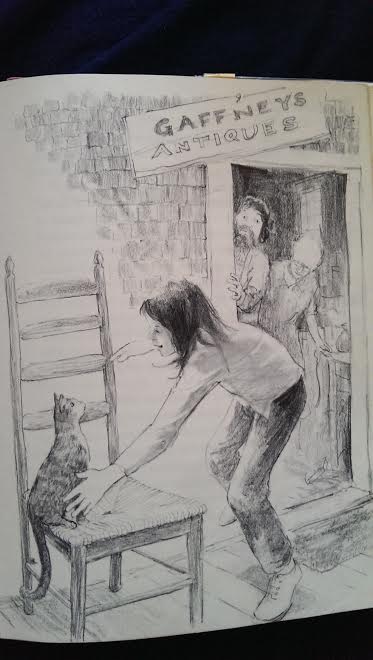 One of the things at the sale which especially captures Susan’s attention is a small stuffed toy elephant. The elephant is very worn, and Susan feels sorry for him, wanting to take him home and take care of him. However, her money is gone, and she still has no present for her mother. Then Mrs. Gaffney spots her looking sad and offers to lend her the 25 cents she would need to buy the elephant. Although Susan has reservations about accepting such a loan, she does anyway, telling Mrs. Gaffney that she’ll pay her back.
Susan brings the elephant, which she names Trunko, home, and when her mother thinks that Susan meant to give it to her for her birthday, she doesn’t correct her although she has become very attached to him herself. Her mother, sensing Susan’s attachment to the toy, says that they can share it and that Susan can sleep with it. Susan thinks this is a good arrangement until someone calls the house to say that the toy elephant was donated by mistake and that the original owner is sad and wants it back.
At first, Susan can’t bear the thought of giving up Trunko. But when she learns that the real owner is Hugo, a member of her brother’s football team, that he has had the toy ever since he was small, and that he really misses it, she realizes that she has to let him have it back. To thank Susan for giving him back Trunko (originally named Stanley), Hugo gives Susan a stray cat that had been living under his porch. Susan loves the cat immediately and names her Sereena.
However, Susan’s mother says that they can’t keep the cat because the hill nearby is a bird sanctuary. Susan tries to persuade her mother otherwise, but she says that they’ll just have to find another home for Sereena. Susan tries to get an older girl from school to look after the cat for awhile while she tries to persuade her mother to let her keep her, but the other girl refuses. Then, unexpectedly, the cat runs into Mrs. Gaffney’s shop as Susan is walking past it.
In Mrs. Gaffney’s shop, Susan accidentally breaks a teapot, increasing her debt to Mrs. Gaffney. However, Mrs. Gaffney turns out to be a cat lover and agrees to look after Sereena for Susan. This is the beginning of a new relationship between Susan and Mrs. Gaffney as Susan offers to work for her in order to pay off her debt. Mrs. Gaffney could use some help in her shop because sales haven’t been good, and she’s worried about losing it.
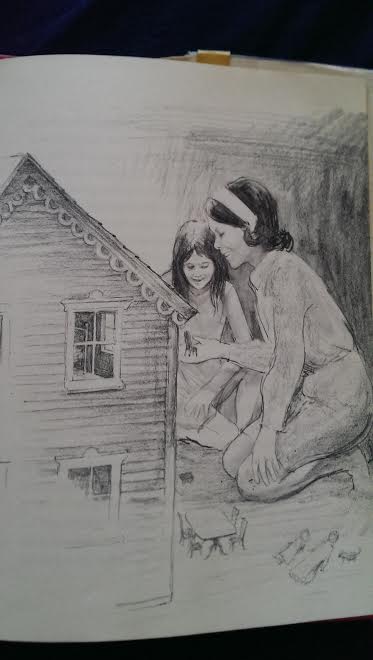
Sereena herself turns out to be good for Mrs. Gaffney’s shop, attracting customers’ attention to the items for sale. Susan feels jealous about how much Sereena likes Mrs. Gaffney and her shop, as if Sereena has abandoned her like her father and Trunko have. But, when a beautiful dollhouse in Mrs. Gaffney’s shop catches her eye and it turns out to be even more valuable than Mrs. Gaffney believed it was at first, Susan has to decide whether she is willing to give it up to help Mrs. Gaffney earn enough money to fix up her shop or if she will hold Mrs. Gaffney to her earlier promise to sell it to her for much less.
 In spite of the talk about magic and witches, this is not a fantasy story at all. Susan’s concept of magic has more to do with a way of living, dealing with change, and solving life’s problems. For the first part of the book, Susan’s “magic” focuses on getting what she wants for herself and getting things to work out the way she wants them to. But, as the book goes on, Susan matures in the way she deals with the complications in her life.
Toward the end of the book, Susan thinks about reality and fantasy: “The magic part of living was how you fit yourself around real things, she guessed. A magician was extra good at fitting. That’s why being one was important.” What Susan really wants and the kind of person she wants to be change. She comes to realize that, while she can’t get and keep everything she wants in life in the sense that it’s always with her all the time, caring about people and things is also a kind of ownership. Giving up the toy elephant and sharing the cat with Mrs. Gaffney do not mean losing them completely because she still cares about them and the people connected with them.
Susan also realizes that, even if she doesn’t get exactly what she wants in the beginning, as long as things work out for the people she cares about, she can still be happy. Although she has to make sacrifices at times for the people she cares about, she earns the love and respect of the people who mean the most to her. Susan says, “Anyway, magicians don’t lose. They win. Dad, Trunko, and Sereena are mine still in a way.” She will always be close to her mother and brother, even without her father’s presence, and Hugo, Mrs. Gaffney, and Sereena are all her friends. Susan is a winner not because she gets what she wants for herself but because she knows how to make things work out in the best possible way for everyone she cares about, and that’s a kind of magic.
The book is currently available online through Internet Archive.
In some ways, this story reminds me a little of the Miyazki movie Whisper of the Heart, which also features a young girl who likes making up stories and who is led to an antique store by a friendly cat and meets an older person who helps her to learn about the person she wants to be and the kind of life she wants to live. The two stories are not the same, though, and Whisper of the Heart was based on Japanese manga, not this book. In some ways, however, both this book and Whisper of the Heart are the kind of stories that take on a new life when you read them as an adult because, at that point, you understand some of the feelings behind them better.
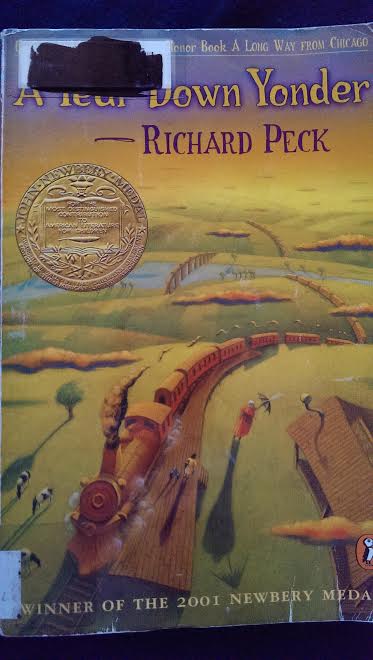 A Year Down Yonder by Richard Peck, 2000.
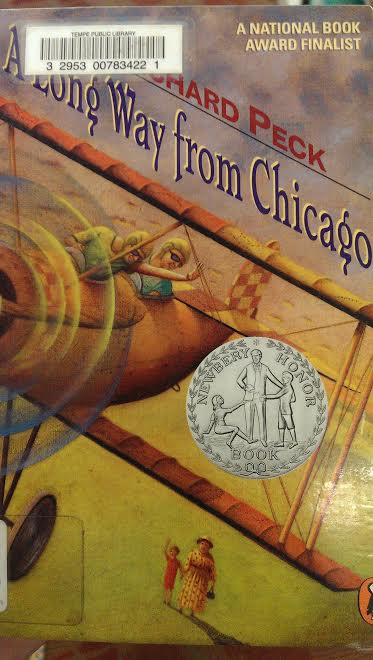 A Long Way from Chicago by Richard Peck, 1998.
 Tornado Jones by Trella Lamson Dick, 1953.






 Lisa and Lottie by Erich Kastner, 1969.
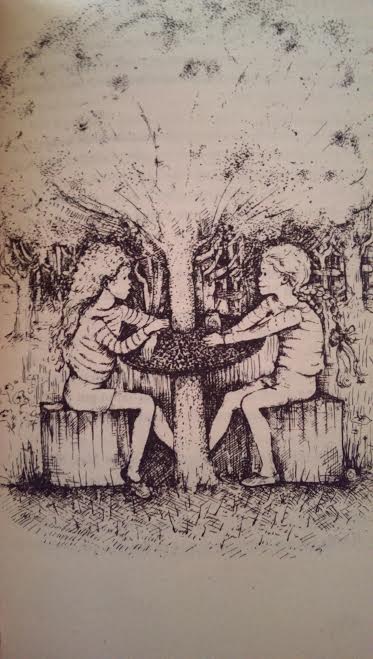 Through the rest of the summer, the girls discuss their lives and parents in great detail and continue speculating about the reasons for their parents’ separation and why they were never told about each other’s existence. They are somewhat angry at their parents for not telling them the truth, but they each also want to know more about the parent that they have never really known and perhaps to learn the truth behind their parents’ separation. They begin hatching a plot to switch places so that Lottie can go to Vienna to meet their father and Lisa can go to Munich to be with their mother. They get little notebooks and fill them with as many details of their lives as they can think of so that each girl can seem to behave like the other, although they know it won’t be easy because they’ve lived very different lives. They don’t like the same foods, and Lottie knows how to cook, but Lisa doesn’t.
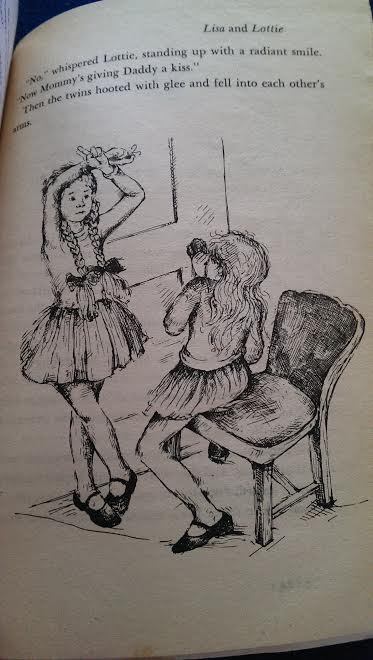 Lisa is overjoyed to finally meet her mother in Munich. But, her mother has to work very hard as a photographic editor for a newspaper, and they don’t have much money. Lisa isn’t as good at cooking or taking care of household chores as Lottie is, so she finds it difficult to help, although she learns quickly.
 The book is much less of a comedy than either of the two Disney movies, although there are some funny parts, like when Lottie (as Lisa) takes over the household accounts to stop Rosa’s stealing and ends up turning her into a much better housekeeper with her practicality. Surprisingly, Rosa actually starts respecting her more and even liking her better because of it.
 #4 Mandie and the Forbidden Attic by Lois Gladys Leppard, 1985.
 #3 Mandie and the Ghost Bandits by Lois Gladys Leppard, 1984.
