William’s House

It’s 1637 in Colonial New England, and a man named William is building a house for himself and his family. He wants a house that’s like his father’s house in England. The story describes all the steps he and his family go through to build the new house.
The descriptions include interesting historical details about homes from the Colonial era. When the family wants to put a window in their house, they don’t have any glass, so William uses a very thin piece of animal horn instead. It lets in light, but the window opening is still covered. William also uses stones and clay from a nearby creek when he builds a fireplace for the house.

William and his family also need furniture for the house. William uses boards from a wooden packing crate to make a table, and he stuffs bags with corn husks to make beds. When the house is finished, and the family is living in it, the book describes aspects of their daily lives. It describes how the family eats together.

The family has to change some of their habits and make additions to their house and the area around it because conditions are different in New England. The weather is hotter than they’re accustomed to from their lives in England, and their food spoils faster, so William digs a cellar for storing food. Before ice boxes and refrigeration, people would store their food underground in root cellars because it was cooler underground. When the thatch on their roof dries out and becomes a fire risk, William replaces the thatch with singles.

Then, when winter comes and it snows, they realize that the snow is too heavy for the roof, so William replaces the whole roof with one that has a steeper slope, so the snow will slide off. Then, he has to make the fireplace bigger because the house is so cold.

When spring comes, William’s cousin Samuel arrives from England with his wife, and he asks William about the design of his house. Originally, William wanted a house like the one he grew up in, but because he’s living in a different place and under different conditions, he’s had to make many changes to the house. Still, it’s his family’s new house, and it’s exactly what they need it to be.

The book is available to borrow and read for free online through Internet Archive.

I love stories about life in the past, and I liked all of the little details of daily life in this story. The main focus of the story is about the building of a new home, and at first, William wants a house like the one where he grew up in England. However, when the family experiences what life is like in New England, they realize that they have to make some changes to their home and the way they live. I like the way the book points out that the style of a person’s home depends on where they live and the circumstances of their life. The family doesn’t fully understand at first what their new lives will be like and what they really need, but they learn to adjust, and they make changes to their new house along the way.

When William’s cousin arrives, he doesn’t understand the design of their house at first. He hasn’t been living in New England yet, but readers know that he’s about to find out some of the reasons why people’s houses in New England are different from those in England at the same time period. At the end of the book, the characters are building a new house near William’s house, so it seems that his cousin and his wife will be living there, and they will benefit from what William has learned about building a house suitable for that environment.

The Legend of the Indian Paintbrush

This story is a retelling of a Native American legend.

In the distant past, there was a boy called Little Gopher who never seemed able to keep up with the other boys with the skills they would need to be warriors. His parents worried about his future, but he had other talents. He had a skill for making things, and the shaman of the tribe told him that his destiny would be different from the others.

One day, Little Gopher had a vision of a grandfather and a young maiden, who came to him, holding an animal skin, a brush made of animal hairs, and paints. These figures told him that these would be the tools he would use to accomplish great things for his people. He would spend his life painting the warrior’s deeds and the shaman’s visions so people would remember them. The maiden told him to find a white buckskin and paint a picture with the colors of the setting sun.

From then on, Little Gopher gathered animal skins and painted them with the scenes of great hunts, warrior’s deeds, and visions from dreams. When he found a pure white buckskin, he tried to paint it with the colors of the setting sun, but they never looked right. He kept trying and studying the sunset to figure out how to make the right colors.

One night, he heard a voice telling him to take the buckskin with him to watch the sunset and that he would find what he needed on the ground there. He did as the voice told him, and he found brushes with paint stuck into the ground. He used the brushes, and they were just the right colors. The next day, everyone saw plants growing with beautiful colors, like the colors of a sunset, where the brushes had taken root.

I remember this book from when I was a kid, and I always kind of paired it in my mind with The Legend of the Bluebonnet by the same author, Tomie DePaola because both of them are retellings of Native American folktales about the origins of particular flowers. In the back of the book, there’s an Author’s Note about the story. A friend of Tomie DePaola had recommended to him that he write this story about the state flower of Wyoming, the Indian Paintbrush, because he had already written about the state flower of Texas in The Legend of the Bluebonnet. The folk tale about the origins of the Indian Paintbrush came from a book about stories and legends about Texas Wildflowers, which was given to Tomie DePaola by another friend. Although the Indian Paintbrush is the state flower of Wyoming, it also grows in Texas.

When I was a kid, I was often too impatient or absorbed with the main story to read Author’s Notes, Forewords, Afterwords, or any explanations outside of the main story, but as an adult, I find that they really do add to the story by adding context. I appreciated this story even more after understanding its connection to the other story, The Legend of the Bluebonnet, and how the author learned this story before making his own retelling.

When Clay Sings

This children’s picture book is a salute to the ancient makers of Native American pottery, dedicated to these makers and the museums that preserve their work. It’s written as free form poetry with images of the American Southwest and designs from Native American pottery.

The story sets the scene on a desert hillside, where pieces of ancient pottery are buried. Sometimes, Indian (Native American) children dig up pieces of old pottery, and their parents remind them to be respectful of what they find because they are pieces of the past and of lives that went before. Sometimes, they’re lucky enough to find pieces that fit together or even a bowl that isn’t broken.

They reflect on the time and skill that went into making the pottery and how strong the pottery would have to be to last well beyond the lives of the people who made it. They think about the people who painted the beautiful designs on the pots and what their lives were like. Could their own children have requested favorite pictures painted on their bowls?

Some designs show animals or bugs or hunters, but others show bizarre creatures that might be monsters or spirits. Others show a medicine man trying to cure a child, ceremonies, dancers in masks and costumes, or the traditional flute player. People can reflect on the lives of those long-ago people and how they compare to the lives of people today.

There is a map in the back of the book which shows the areas of the American Southwest (Arizona, New Mexico, Utah, and Colorado) where the pottery designs the book uses originated from and the tribes that used them.

This is a Caldecott Honor Book. It is available to borrow and read for free online through Internet Archive (multiple copies).

I grew up in Arizona, and I remember our school librarian reading books by Byrd Baylor to us in elementary school during the late 1980s or early 1990s. She wanted to introduce us to this author because she wrote about the area of the United States where we lived. In fact, this book about pottery was fitting because, when they were building our school in the 1970s, they found some ancient pottery. They used to have it on display in the school library. Even to this day, it’s common for people creating buildings in this area to have the site surveyed by archaeologists. Finds are fairly common, and the usual procedure is to thoroughly document everything that gets uncovered before burying it again in the same location and constructing the building over it. One of the reason why they usually rebury finds is that, in this dry, desert climate, putting them back into the ground will actually preserve them very well. It’s possible that later generations will find them again (especially with the location documented) when the building is gone or no longer necessary, but they may have better instruments or techniques for analyzing them.

I’m a little divided on how much I like this book, though. On the one hand, I like books about folklore and traditional crafts, and this book focuses on a geographical area that’s very familiar to me. On the other hand, the free verse poetry that reflects on the feelings of people about the pottery doesn’t appeal to me quite as much as books which show the process of making it, like The Little Indian Pottery Maker. I like to see the process and learn more of the known background legends of some of the designs than just try to imagine what things might have been going through the minds of the designers. Toward the end of the book, they show the legendary humpbacked flute player, but they don’t tell you that this figure is called Kokopelli and that there are legends about him. It’s a nice book, but I just felt like there was potential to include more background information.

This book uses the word “Indian” for “Native American” or “America Indian”, which is common in older children’s books.

The Case of the Gobbling Squash

The Case of the Gobbling Squash by Elizabeth Levy, illustrated by Ellen Eagle, 1988.

This is the first book in the A Magic Mystery series, which is about a couple of kids who like magic tricks. In every book in the series, there is a section in the back with direction for performing the magic tricks in the story.

It’s Thanksgiving, and all of the kids at school are participating in a Thanksgiving Fair. Different kids are doing different things for the fair, and Kate has a booth where she is advertising her services as a detective. Unfortunately, she gets more teasing than people approaching her with mysteries to solve. Then, Max tells her that he needs her help.

Max is an amateur magician, and he keeps a couple of rabbits to use his act. One of his rabbits is missing. When Kate goes to his house to investigate, it doesn’t take her long to figure out where the missing rabbit is … and the rabbit has become a mother, which presents the kids with a new problem to solve. Max’s mother won’t let him keep that many bunnies.

Fortunately, Kate comes up with an idea to use Max’s magic act in their Thanksgiving play at school to provide the bunnies with new homes. However, when she and Max are preparing for the show, the bunnies disappear in a non-magical way. Someone has stolen them! Max points out that they were supposed to give the bunnies away anyhow, but Kate says they can’t let the matter rest until they’re sure that the bunnies are safe in a good home.

Once again, Max and Kate use Max’s magic tricks to expose the bunny thief and to turn their Thanksgiving magic act into something extra special!

The book is available to borrow and read for free online through Internet Archive.

My Reaction

The mystery is a little cheesy, but I thought that the kids were clever in the way they used concepts from magic tricks to solve their problems. Whether they would work so well in real life is questionable, but I though the concept was creative. The first mystery about where the missing rabbit is was easily resolved, but they have to figure out who took all the bunnies. I thought that the solution to that mystery was also obvious because there was really only one person who seemed to have a reason to mess up their magic act, but the mystery may seem more mysterious to young children.

The story gets some credit from me for being set at Thanksgiving because it’s a less popular holiday for kids’ books than Christmas or Halloween. Like other kids’ Thanksgiving books that aren’t set at the First Thanksgiving, this one is set at a school and involves a cheesy Thanksgiving celebration. The Thanksgiving play in the story involves some of the kids being dressed as Pilgrims and Native Americans, and the Native American aspects are also cheesy and stereotypical. It actually reminds me of actual school plays from my own childhood, which were equally cheesy and embarrassing to me when I was a kid.

I really liked the section in the back of the book that explained how all of the magic tricks in the book were done, even the one for their grand finale! The tricks include a card trick, making a coin disappear, and pulling a rabbit out of a hat.

The Mysterious Horseman

This book is part of a loose series of books by Kate Waters, showing child reenactors at living history museums, having adventures in the roles of the characters they play. While most of the books are set in Colonial times at Plymouth and Colonial Williamsburg, the setting for this story is the Connor Prairie living history museum in Indiana, which shows life in a small town in the 19th century.

The story centers around a boy named Andrew McClure. He is the only one of his siblings left still living with their parents. His older sister is now married, and his baby brother died of an illness during the last year. His family is still grieving for his little brother. Andrew’s best friend is a boy named Thomas Curtis, who lives nearby, and Andrew works part time at a local inn to earn some money.

One day, while Andrew is doing some sweeping at the inn, he overhears some men talking in the taproom. He doesn’t hear their entire conversation, but he hears them talking about a mysterious rider without a head who chased a schoolmaster. Andrew is startled, and he wonders if that has something to do with the new schoolmaster who is supposed to arrive in town.

When Andrew is done with his work, he goes to the schoolhouse, and he finds his friend Thomas and Thomas’s sister, helping the new schoolmaster to clean the schoolhouse and prepare it for lessons to start. Andrew wants to talk to Thomas about what he overheard at the inn, but the schoolmaster only wants to talk to the boys about lessons.

Later, Andrew does have a chance to talk to Thomas, and both of the boys are spooked by the idea of a headless rider. They even think that they hear the rider on the road! The frightened boys go see Thomas’s father, the blacksmith, and tell him about the rider. Fortunately, the blacksmith knows what the men were talking about, and he can settle the boys’ fears.

The book is available to borrow and read for free online through Internet Archive.

I didn’t know about this book until I was looking up Kate Waters’s books for my younger cousins. I was surprised because Kate Waters’s living history museum books are mostly set on the East Coast or focus on the Colonial era. This 19th century book set in Indiana somewhat departs from the theme and has a different feel from the other Kate Waters books, but I enjoyed it. I’ve been to Connor Prairie because I have relatives in the area, and I enjoyed my visit. It’s been years since I’ve been there, so I didn’t immediately recognize the setting. When I read the explanation in the back of the book, I was fascinated to realize that I had visited that location before.

Andrew has a fascination for life on the frontier because he often watches people pass through his town on their way further west, and he daydreams about going west himself. His family is also still coming to terms with the death of his little brother, so the subject of death is still on Andrew’s mind. The deaths of children due to illness were sadly common in the 19th century and on the frontier, and the mourning in Andrew’s family adds to the melancholy and spooky atmosphere of the story.

Most adults and older children will probably recognize what the men at the inn where actually talking about when they were discussing the headless rider who chased the schoolmaster. When the boys talk to Thomas’s father, he immediately recognizes the story as the plot of The Legend of Sleepy Hollow by Washington Irving, originally published in 1820, about 16 years before the story in this book is suppose to take place. The men at the inn were just discussing the plot of the story, not something that they saw on the road themselves.

Arthur’s Halloween

Arthur Adventure

It’s Halloween, and Arthur’s already getting spooked! His family is putting up Halloween decorations, and his sister, D.W., scares him with her costume when he wakes up on Halloween morning. Arthur is supposed to take D.W. trick-or-treating, although he doesn’t really want his little sister tagging along.

At school, Arthur has trouble recognizing everyone in their costumes. There are Halloween treats and games, though.

That evening, Arthur and D.W. go trick-or-treating with Arthur’s friends. Arthur’s friend, Buster, warns them not to go to a big, old house because a witch lives there, and the last person who went in on Halloween never came out again.

Arthur and D.W. lag behind the other trick-or-treaters, and when Arthur turns around, he sees D.W. going into the witch’s house! What choice does Arthur have but to go in after his sister to save her?

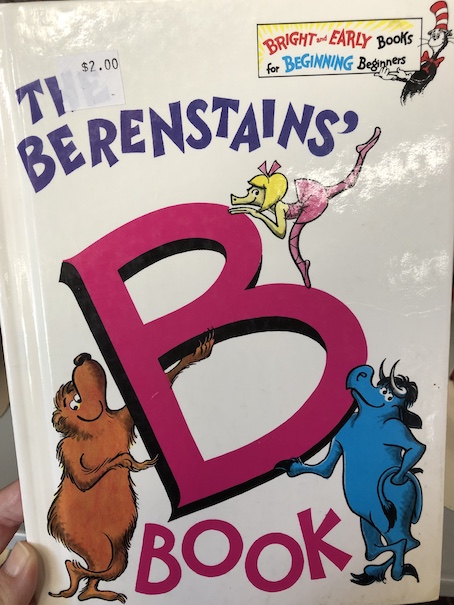
This book reminded me of the Berenstain Bears Halloween book The Berenstain Bears Trick or Treat. It’s another instance of an elderly woman who seems witch-like and scary, but the children enter her house on Halloween, discover that she’s really nice, and get some special treats. Entering a stranger’s house is never a good idea because, in real life, that could be very dangerous. I get the theme that appearances can be deceptive and things that seem scary aren’t so scary when you understand them, but I do quibble that this might not be the best way to demonstrate that to young children. All the same, I do have nostalgia for both the Berenstain Bears and the Arthur books.

I remember reading the Berenstain Bears Halloween book as a kid, but I don’t remember reading Arthur’s Halloween until I was an adult. Because of the similarity in the themes of the stories, I checked the copyright dates. They’re both from the 1980s, but Arthur’s Halloween is the older of the two books. I don’t know if the Berenstain Bears took inspiration from the Arthur story or if they were both inspired by something older or if the similar theme is just a coincidence.

One other odd thing about this story is that old Mrs. Tibble is human. Everyone in the Arthur books is some kind of animal, but not Mrs. Tibble. There is no explanation for this. In the cartoon version of Arthur, Mrs. Tibble is an animal, just like everyone else.

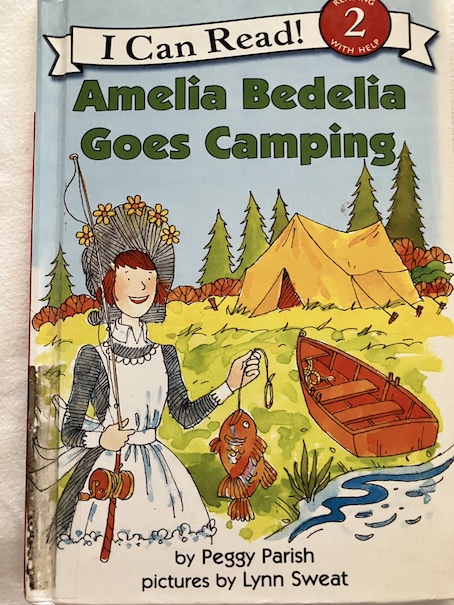
Happy Haunting, Amelia Bedelia

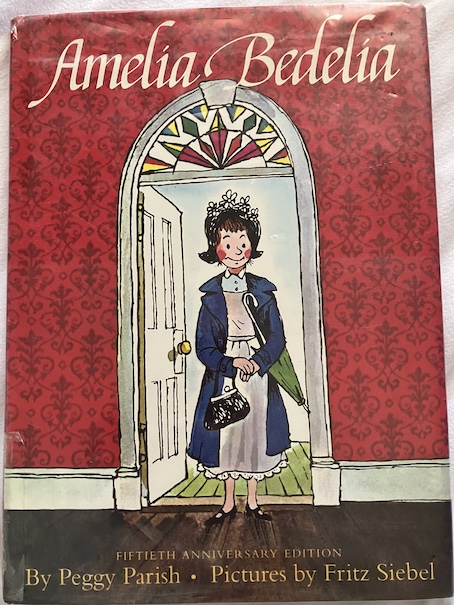
Amelia Bedelia

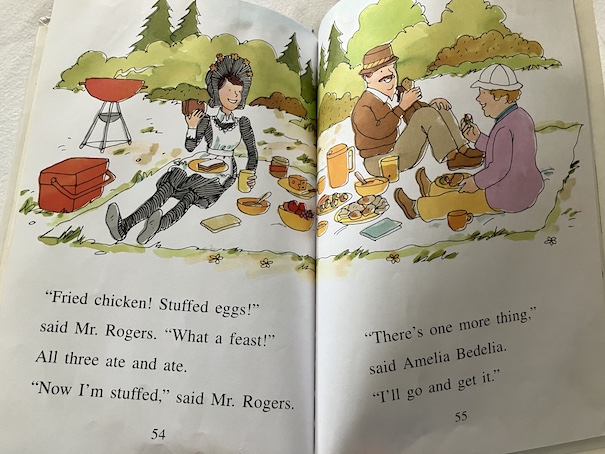
When Amelia Bedelia arrives at the Rogers’s house just before Halloween, she is appalled by all the cobwebs. The house looks like a run-down haunted house, and Amelia Bedelia thinks someone wrecked it. Mr. and Mrs. Rogers reassure her that the house is just decorated for the Halloween party they are having that night. Amelia Bedelia almost forgot what day it was because she’s been busy, helping the local children make their costumes.

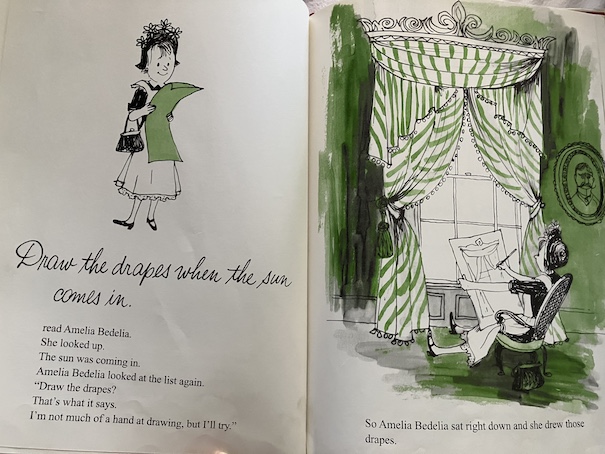
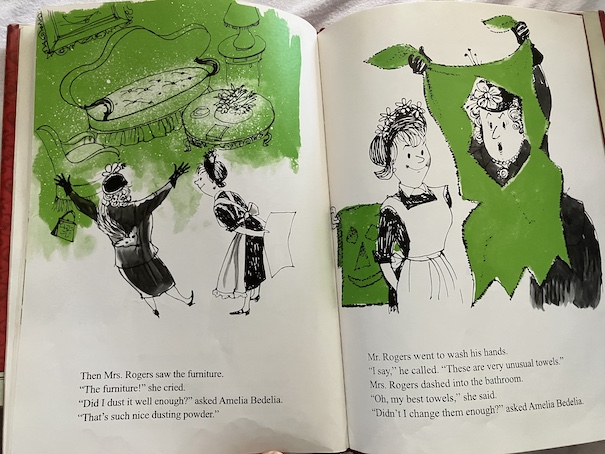
When Amelia Bedelia tries to help the Rogers get ready for the party, she demonstrates that she still takes everything way too literally. When Mr. Rogers asks her to both get the hammer and to crack a window, Amelia Bedelia assumes that he means her to use the hammer on the window and actually breaks it. When they ask Amelia to add an extra leaf to the table for the guests, she assumes they mean a tree leaf, and when Mr. Rogers asks her to hand him a witch, she asks him “Which what?”

Amelia Bedelia is enough to drive anyone batty, but she really does her best work in the kitchen. She is a good cook, and she and Mrs. Rogers have fun making a bunch of traditional Halloween goodies. Then Cousin Alcolu arrives with a bunch of pumpkins and a scarecrow for the party. They ask Amelia Bedelia what costume she will wear for the party that night, but she doesn’t have one. Mrs. Rogers says that she has an idea for her and for Cousin Alcolu.

The Rogers’s party that night is a success, and Amelia’s influence is obvious in the literal nature of some of the treats and the costumes she helped the children make. However, nobody can figure out where Amelia Bedelia is. At first, Mr. Rogers thinks that maybe Amelia is offended because he mistakenly called her normal outfit a costume, but then, he is sure that he recognizes Amelia Bedelia in her Halloween costume. Is he right? It certain seems something strange is going on! But, then again, Amelia Bedelia is there.

The book is available to borrow and read for free online through Internet Archive (multiple copies).

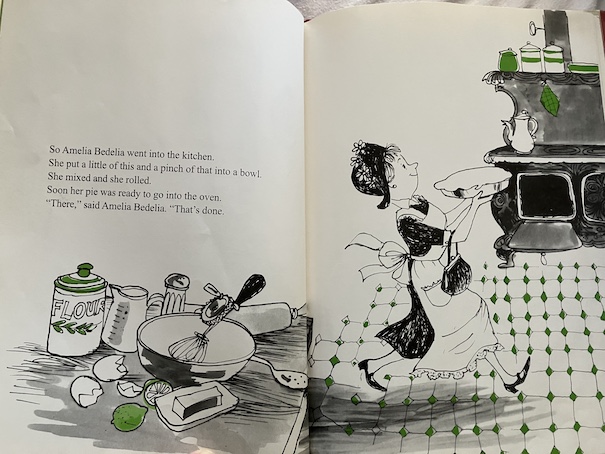
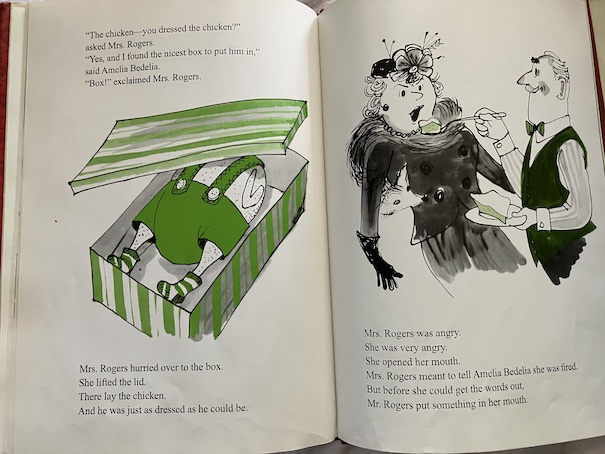
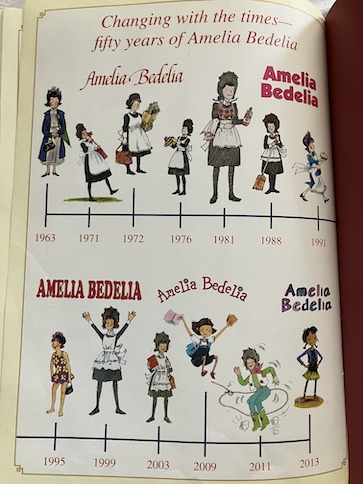
This is one of the newer Amelia Bedelia books, written after the death of the original author. Parts seemed a little cheesy to me, like Amelia Bedelia seeming confused about the Halloween decorations after helping the children make Halloween costumes. Amelia Bedelia is often a little mixed-up, but getting confused about the nature of the holiday just seemed to be overdoing it. Then again, even in the original books, she was confused about ordinary things associated with holidays, like what kind of “star” goes on top of a Christmas tree. It might be more in character than I thought at first, and it just seemed like overdoing it in this book because I read the original books when I was a kid wasn’t thinking that deeply about it back then.

I did like it that Amelia Bedelia’s tendency to be overly literal is going strong in this book. Besides the mistakes she makes while helping Mr. and Mrs. Rogers get ready for their party, I enjoyed seeing the costumes that Amelia helped the children make. They’re all puns and literal interpretations of common expressions. Amelia Bedelia’s own costume is a fun twist!

The Vanishing Pumpkin

An 800-year-old man and a 700-year-old woman live together in a little house. One day, they realize that it’s Halloween, and that means that it’s time to make pumpkin pie. However, when they go to get the pumpkin from their garden, it’s gone! Who could have taken it?

They set out in search of the pumpkin thief. The first person they meet is a ghoul, and they assume he’s the pumpkin thief. They demand to know where the pumpkin is. The ghoul looks all over the place, but doesn’t see any pumpkin. The old man threatens to do him a trick, and the ghoul says he wants to see him do one. The old man turns the ghoul so thin that he can look right though him, but the ghoul doesn’t have the pumpkin.

The old man and old woman set off again to look for the pumpkin thief, and the ghoul comes along to see more tricks. The next person they encounter is a rapscallion. When they ask him where the pumpkin is, the rapscallion looks around and can’t find any pumpkin, so he offers them a mushroom. The old man does another trick, turning the rapscallion upside down, but no pumpkin falls out.

The group, including the rapscallion, sets off in search of the pumpkin thief again. The next time, they encounter a varmint, and the old man turns him into a black cat with fleas. Yet again, the varmint doesn’t have the pumpkin, so they all set off again.

The pumpkin pursuit finally ends with the person who actually has the pumpkin. The wizard has turned the pumpkin into both a jack-o’-lantern and a pumpkin pie!

I remember someone reading this book to me when I was a little kid. I think it might have been the school librarian, but I’m not completely sure now. We don’t really know the story behind the 800-year-old man and 700-year-old woman, who is presumably his wife. They seem to be magical because of their ancient age and the fact that the old man seems capable of magic, but they aren’t described as being a witch and wizard or anything specific. It’s just left to readers’ imaginations. I think, when I was little kid, I assumed that they were witches or something similar.

The story is just for fun. It’s one of those repetition stories, where the characters encounter more people/creatures, similar things happen each time, and each new person/creature joins the group, until they finally figure out who has the pumpkin. Part of the fun of the story is the unusual people and creatures the meet. Most of them are not typical Halloween creatures, like a witch, a ghost, and a monster, although they are Halloween-ish. The words that describe them are real words – ghoul (which is a mythological creature), rapscallion, and varmint – but at the same time, it’s not entirely clear what type of creatures they are, and the book doesn’t explain. We can only go by what they look like in the pictures. The “varmint” looks like a large rat, the “ghoul” is a little green guy in a top hat, and the “rapscallion” is a little guy in a dark robe and hood.

Meg Mackintosh and The Stage Fright Secret

Meg Mackintosh Mysteries

The mystery club at Meg’s school is putting on a play, and Meg’s friend, Liddy, says that they should try out for parts. The play is a Halloween mystery called The Trick or Treat Mystery with a detective called Sureluck House. Meg is nervous during the try-outs and rushes through her lines, so she doesn’t get the part of the detective. However, the club’s advisor, Ms. Morse, gives her the role of announcer. The announcer is like a narrator, introducing scenes of the play. Meg still wishes that she had a regular part in the play, but being the announcer gives her a chance to be involved.

The kids begin assembling costumes and props. Meg creates signs for each scene, including signs to invite the audience to figure out clues during the performance. Once the play gets started, the story takes the form of the play itself. All of the dialogue is presented as part of the play and other information as stage directions, and Meg’s signs invite readers to figure out clues to the mystery.

In the play, Sureluck House gets a letter from Old Jane, a woman who lives in a spooky cottage near a cemetery, asking him to find who stole her stuffed raven. The raven has glowing red eyes, and Old Jane likes to put him on her porch on Halloween to scare away trick-or-treaters.

Sureluck and his friend Witson visit Old Jane, who tells them that three trick-or-treaters have visited her: a witch, a mummy, and a pirate. Then, Old Jane got distracted, chasing one of her kittens, and when she returned to her porch, the raven was gone. She thinks one of the trick-or-treaters stole it. Sureluck and Witson interview the three trick-or-treaters and point out evidence that each of them left at the scene, but they all deny taking the raven.

Then, there is a spooky part of the play where the actors are scared by lightning and thunder, and the lights go out. Readers and the audience can tell that the actors are also confused at this part of the play, and the Ms. Morse sticks her head out from behind the curtain to say that they’re experiencing technical difficulties.

When the lights come back on and the curtain opens again, Sureluck is lying on the ground, having apparently fainted from fright, and only Witson and Old Jane are on the scene. Witson says he thinks he can solve the mystery and invites the audience to guess which suspect stole the raven and where it is. When the audience says where they think the raven is. They guess the correct suspect, but the raven isn’t where it’s supposed to be. Also, Meg has suddenly disappeared, leaving her sign behind. Now, everybody, audience, actors, and Ms. Morse seem really confused.

Has an actual raven theft occurred in the middle of the play? Is Meg the culprit? Where is she?

The book is available to borrow and read for free online through Internet Archive.

I liked the unusual format to this book, having most of the mystery be in the form of a play within the story. Like other books in this series, readers are given the opportunity to spot the clues and solve the puzzle along with Meg. Because of the play format, we are also like part of the audience, watching the play and trying to figure out where the mystery in the play leaves off and where the mystery that Meg needs to solve begins. The ending is a little unusual because Meg seems to disappear briefly. I didn’t think it was too hard to figure out where Meg went, but I still enjoyed the story, and I though a spooky mystery play was a nice idea for a Halloween story!

The Pumpkin Head Mystery

The Boxcar Children

The Aldens are getting ready for Halloween, and they go to the Beckett farm to get some pumpkins. Mr. Beckett has been having trouble this year because he broke his leg. He’s been letting a hired assistant, Bessie, handle the pumpkin patch, but she is short-tempered and not very good with customers. Mr. Beckett fired her once before, but he had to take her back this year because he was desperate for help.

Mr. and Mrs. Beckett’s daughter, Sally, has been trying to persuade them to sell their farm and come live near her and her children in Florida. She thinks they’re getting too old to manage the farm by themselves and that this recent injury of Mr. Beckett’s proves it. The Becketts say that they don’t want to give up their farm and that they’re not ready to retire. Then, one of the farm hands, Jason, says that Mr. Beckett broke his leg while chasing a pumpkin-headed ghost, but Mr. Beckett denies that it exists.

Later, someone trashes the pumpkin patch and smashes a lot of pumpkins, and for some reason, Bessie faints. The real estate developer who is pressuring the Becketts to sell their farm, Dave Bolger, shows up again and tries to persuade the Becketts to sell. Sally thinks her parents should take the offer, but they still refuse. The Aldens help clean up the pumpkin patch in time for the next hayride, so the Becketts won’t have to cancel it, and Sally tells them that the farm is haunted and that the stories Jason has been telling about the pumpkin-headed ghost are true.

A glowing pumpkin has been seen floating through the fields at night, seemingly with no body underneath it. When it appears, they hear scary voices, telling them to leave the farm and leave the spirits in peace. Mr. Beckett did injure his leg while trying to chase after it on his horse. The Aldens think this sounds scary, and they ask Sally if the farm was always haunted. Sally admits it wasn’t, but she is serious that she thinks her parents should sell the place and move closer to her and her family.

The Aldens want to help the Becketts, and they start doing some seasonal work at the farm, making flyers for their hayrides and dressing up in costumes as part of the spooky attractions. Then, someone steals the scarecrow that Benny made from the Aldens’ house, and a new pumpkin-headed ghost appears on the farm!

Are there actually any ghosts, or is someone pulling a trick on the Becketts? Is it one of the people trying to pressure the Becketts to sell the farm or someone else, for a different reason?

I enjoyed this spooky mystery! The author did a good job of making multiple characters look like good suspects for playing ghost on the farm. Mr. Bolger and Sally both want the Becketts to sell the farm, and scaring farm workers and visitors away from the farm would add pressure to the Becketts. Bessie isn’t very good at her job, but the Aldens discover that she needs money because her husband is sick. Could she have been paid to commit some sabotage on the farm or could she be trying to get back at the Becketts for firing her last season? Jason has worked on the Becketts’ farm for years and seems to love the place, but he’s been arguing with Mr. Beckett about the way he runs the farm. Maybe Jason wants the farm for himself! There are some good possibilities for suspects.

There were some clues that I thought were obvious, like the connection between the disappearance of Benny’s pumpkin-headed scarecrow and the sudden appearance of a new pumpkin-headed ghost on the farm, but child readers may find the mystery more challenging. Even though I thought some parts were obvious, because there were several suspects, each of which seems to be doing something sneaky that they want to cover up, I wasn’t sure whether some of them might be working together or not.

The book has the right amount of spookiness for a Halloween story without being too scary for kids. In some ways, like with all Scooby-Doo style pseudo-ghost stories, I thought that it was a little silly for the plot to frighten people away from the farm to succeed. My reasoning is that, since this story is set in the Halloween season and some parts of the farm are deliberately set up as haunted attractions with people running around in costumes, I would think most farm workers and visitors would just attribute the pumpkin-headed ghost to either a Halloween prank or just part of the act at a spooky attraction.

One of the possible motives that they never discuss in the story is that the ghost act could be a publicity stunt to draw more visitors to the park. While the premise of the story is that people are being scared away, in reality, there are a lot of curiosity-seekers who would want to go to a supposedly haunted attraction to see what all the fuss is about. Publicity isn’t the real motive of the fake ghost, but I’m just saying that it could have been a real possibility that was overlooked. There are a lot of places, like hotels and restaurants in historic buildings, that capitalize on any potential ghost stories to attract curious thrill-seekers.

Something I appreciated is that the real estate developer is Dave Bolger, which is a homage to Ray Bolger, who played the role of The Scarecrow in the 1939 movie of The Wizard of Oz. Is that a hint? I’ve decided not to spoil the solution of the mystery!