The Ravenmaster’s Secret

The Ravenmaster’s Secret by Elvira Woodruff, 2003.

Forrest Harper is the son of the Ravenmaster of the Tower of London in 1735.  The story begins by explaining the tradition of keeping ravens at the Tower of London because of the superstition that the Tower would be conquered by its enemies if the ravens ever abandoned it.  This superstition led to the creation of the job of Ravenmaster, who looks after a flock of ravens that live at the Tower with wings clipped so that they can’t fly away.

Forrest Harper lives at the Tower with his parents and sisters, training to become a Ravenmaster, like his father.  He likes the ravens, and they like him.  He is pretty good at caring for ravens, but there is something that bothers him: he thinks that he isn’t brave enough and that others think that he is a coward, too.  He is smaller than the other boys and is often teased.  He has trouble cutting up the squirrels that the rat catcher’s boy (his only real friend, although his mother doesn’t approve of him) brings to him to feed to the ravens.  Even though it’s necessary, Forrest doesn’t like the sight of blood and feels kind of sorry for the squirrels.  Worse still, when Forrest’s family attends the public hangings (which were treated as a kind of festival day with music and entertainment in Forrest’s time), Forrest is unable to look at the criminals who are being hanged.  The one time he does try it, he throws up, and again, the other boys tease him mercilessly for it.  Forrest’s problem, as readers will see, isn’t so much that he’s a coward as he has more empathy than the other boys, both for animals and people, and that isn’t really as much of a problem as he believes.  His father tells him to ignore the bullies because they are foolish, and their foolishness will show in time.

Forrest sometimes dreams of going out into the wider world, beyond the Tower, where he could do something brave that would impress everyone.  The rat catcher’s boy, whose real name is Ned although most people just call him Rat, also dreams of running away because he is an orphan, treated harshly by his master and always in danger of being turned over to the chimney sweep to be used as a climbing boy.  He doesn’t think that Forrest has a real problem because his life at the Tower is pretty good, living comfortably at the Tower with his parents, whatever the local bullies say.  Still, the two boys often imagine what it would be like to go to sea together and have adventures.  When there is an announcement that a new prisoner will be arriving at the Tower, a Scottish Jacobite rebel, Forrest thinks that helping to guard a dangerous rebel will make the Tower bullies respect him.

To Forrest’s surprise and embarrassment, this rebel actually turns out to be a girl.  She is the daughter of the rebel Owen Stewart, who is being held in a different tower at the Tower of London (the Tower of London is actually a fortress with multiple towers – she is imprisoned in Bloody Tower and her father is in Bell Tower).  She has been charged with treason, along with her father and uncle.  Forrest isn’t happy about being given the task of taking food to a girl prisoner. 

However, Madeline McKay Stewart, the girl prisoner, is pretty tough in her own right.  Although Maddy’s been separated from her father and uncle and all three of them are likely to be executed, she is being pretty brave about it.  She talks to Rat and Forrest.  She is interested in Forrest’s pet raven, Tuck, and tells him about how she used to feed baby owls back home.  She talks about her life and family in Scotland, and Forrest realizes that he’s starting to think of her as a friend instead of an enemy to be guarded.

While Forrest is used to hearing English people criticize the Scots for being “savage,” he is astonished and a bit offended when Maddy talks about English people being “evil.”  For the first time, it makes him think of the situation from the other side.  He knows that not all English people are evil and realizes, having seen that Maddy actually has refined manners, that Scottish people aren’t “savage.”  One day, at Maddy’s request, he takes a message to her father in exchange for her ring, which he plans to sell in order to buy Ned back from the chimney sweep after the rat catcher loses his term of indenture to the chimney sweep in a game of cards, sparing him from the horrible life and health problems that the young climbing boys suffer.  Then, Owen Stewart gives Forrest a message to take back to Maddy.  Without really meaning to, Forrest realizes that he has suddenly become a go-between for the rebels and could be considered a conspirator under English law.

As Forrest considers the fate that lies ahead for Maddy and the nature of war between England and the Scottish rebels, it occurs to him that the adults in his life have often done the opposite of the things that they have always taught him were important.  His father always emphasized fairness, yet the war and Maddy’s possible execution are unfair.  Maddy shares Forrest’s feeling that the world might be a better place if people didn’t become adults and abandon their values.

Then, Maddy’s father and uncle are shot while attempting to escape, and Maddy is left completely alone.  Forrest feels badly for Maddy.  Soon after, he is unexpectedly approached by a carpenter who seems to know that he has become friends with Maddy.  The carpenter, who is a stranger to Forrest, tells him that Maddy will soon be executed by beheading but that he has a way to save her life.  Forrest has to decide if he is willing to trust the stranger and save Maddy, knowing that doing so would make him a traitor himself.

One of the parts of this story that interested me was how Forrest noted the hypocrisy in the adults around him as he was trying to decide what he should do.  Qualities that adults often praise and try to instill in their children are often ignored in the way that the adults live and even in how they treat other children, like Ned and Maddy.  Abandoning values, even the ones that they really want their children to have, isn’t something that adults have to do as they grow older, but it is something that some adults do if they think they must in order to live as they want to live or accomplish something that they want to accomplish.  The adults who think that Maddy should be beheaded would probably say that they were doing it for the greater good in promoting their cause against the rebels.  However, treating Ned as a piece of disposable property is something that they mostly do because they can and because they know that there is nothing that Ned can do to stop them.  Ned actually tries to repay his indenture legally with money that Forrest gives him, but although the sweep accepts the money, he refuses to let him go, saying that no one will take Ned’s word over his and that he could always use the money to make sure that Ned is hung as a thief if he tries to make trouble.  It is this type of attitude and situation that make the children realize that they are on their own to solve their problems and that working within the law is not going to be an option for them because the law is not just and it is not on their side.  It’s a frustrating situation, and I often feel frustrated when I encounter this type of thing in books, but fortunately, things do turn out well in the end.

This is one of those coming-of-age stories where a boy must decide what he stands for and where he really belongs.  Through Maddy and the inscription on her ring, which means “Face Your Destiny,” Forrest comes to understand the destiny that is right for him as he helps both Maddy and Ned escape to a better life elsewhere. 

The book also includes some interesting historical information. There’s a map of the Tower of London in the front of the book, and in the back, a short history of the Tower with information about famous prisoners and escapes. There is also a glossary of English and Scottish words that modern children (especially American children) might not know, such as breeches, wench, loch, and tattie-bogle (scarecrow).


The book is currently available online through Internet Archive.  (To borrow a book through Internet Archive, you have to sign up for an account, but it’s free, and then you read the book in your browser window.)

Spoiler: In the last chapter of the book, it explains what happened to the characters after the story ends.  Forrest does become the Ravenmaster after his father, realizing that it is the right kind of life for him and that he no longer desires to have adventures outside the Tower.  He has a wife and daughter, and years later, he receives a message from Ned, who says that he has become a captain in the Royal Navy and that Maddy has gone to live in the colonies with other Stewarts (something that my own Jacobite ancestors did, which is how I got to where I am now).
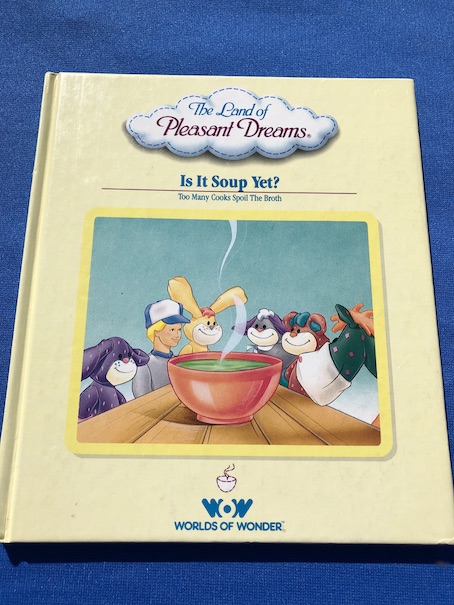
Is It Soup Yet?

The Land of Pleasant Dreams

Is It Soup Yet? By Ane Weber, Ron Krueger, and Tony Salerno, 1986.

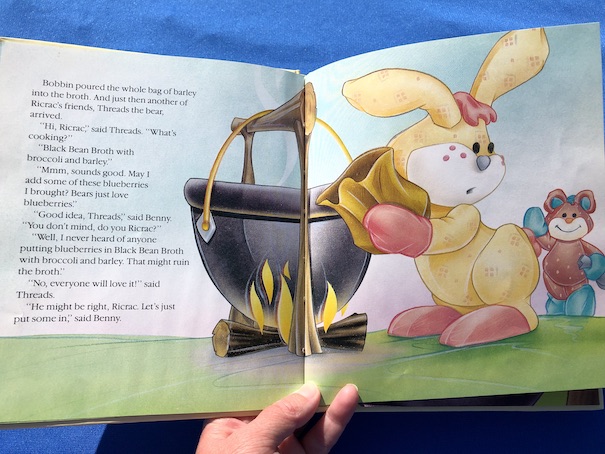
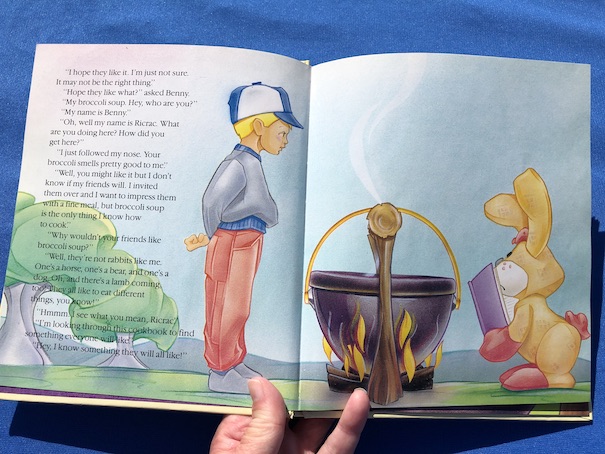
When Benny enters the Land of Pleasant Dreams, he meets Ricrac Rabbit.  Ricrac is trying to cook something for his friends, but he’s worried because the only thing he knows how to make is broccoli soup, and he doesn’t know if his friends will like it because they all have different tastes.

Because Benny’s father is a chef, he suggests that Ricrac try his recipe for black bean broth because everyone loves that when his father makes it.  Ricrac decides to give it a try, adding the black beans to his broccoli soup. 

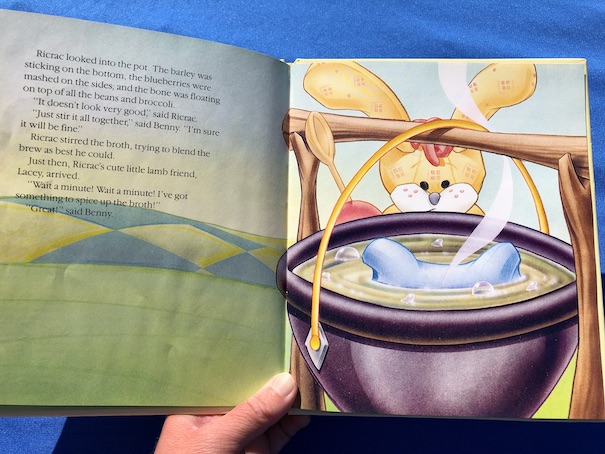
However, as each of Ricrac’s friends arrive, they also decide to bring their favorite ingredients with them.  Bobbin the Horse brings barley, and Threads the Bear brings blueberries.  Then, Snips the Dog brings a bone, and Lacey the Lamb brings buttercups.  In an effort to please everyone, Ricrac adds each ingredient to the soup.

When they finally try it, the soup is horrible.  At first, everyone argues about which ingredient ruined the soup, but Benny realizes that their real mistake wasn’t trying the soup according to Ricrac’s original recipe.  When they try the broccoli soup as it was supposed to be made, without the extra ingredients, it’s really good.

Moral: Too Many Cooks Spoil the Broth.

The point of the story is that trying to please everyone often means pleasing no one.  When planning a project, if you try to stretch it in too many different directions, it’s difficult to accomplish anything because you’re not focusing on anything in particular. In the end, you have to pick one way and stick with it, focusing on what you can do best.

The book is available to borrow and read for free online through Internet Archive. This book was made into an episode for the tv series with puppets. Sometimes, you can find it or clips of it on YouTube.

Johnny and the Birds

Johnny and the Birds by Ian Munn, illustrated by Elizabeth Webbe, 1950.

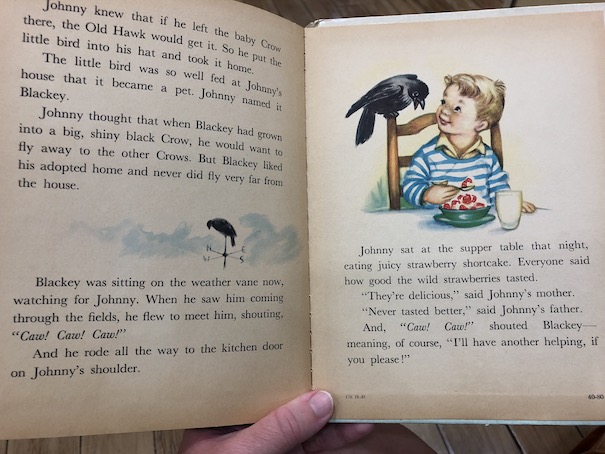
This cute little picture book is a collection of short stories about a little boy named Johnny and his adventures with wild birds. The stories are very short and are meant to teach children about wild birds.

Johnny and the Catbird – Johnny thinks that he hears a kitten while looking for strawberries, but it’s actually the sound made by a catbird.

The Blue Jays – Father Blue Jay scares a hawk away from his nest.

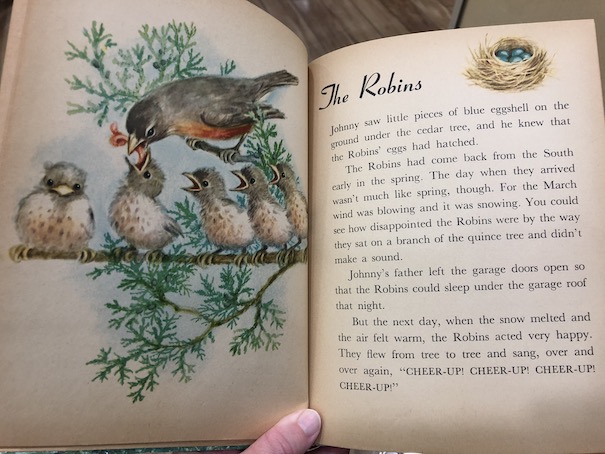
The Robins – Johnny knows that the Robin eggs have hatched when he sees the bits of blue eggshell under the tree where they live.

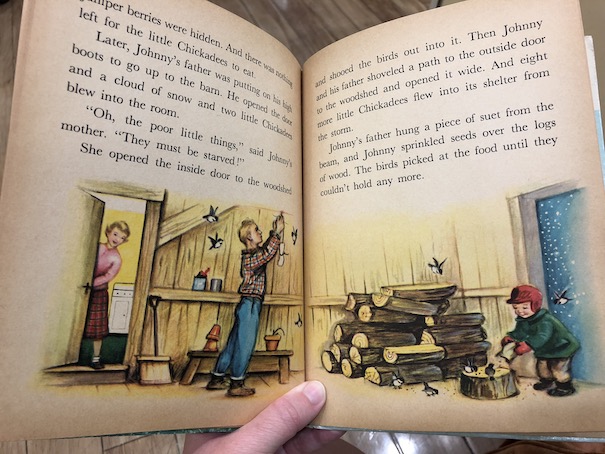
The Chickadees – The Chickadees don’t fly south during the winter like other birds, but Johnny’s family helps them when it’s snowing and they need something to eat.

The Crows – Johnny finds a baby Crow out of its nest. Apparently, it’s an orphan, and Johnny fears that it might get eaten by a hawk, so he takes it home and takes care of it. It becomes a pet, and he names it Blackey.

The book is available to borrow and read for free online through Internet Archive.

Toby Tyler

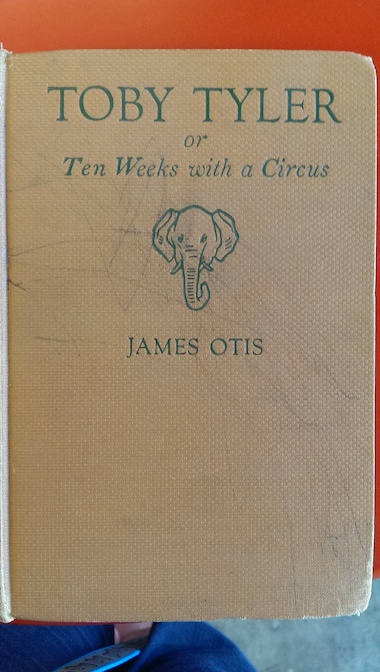
TobyTylerToby Tyler; Or, Ten Weeks with a Circus by James Otis, 1881.

Toby Tyler is an orphan who lives with a church deacon he calls “Uncle Daniel.” Uncle Daniel isn’t really his uncle, but he raised Toby after he was abandoned as a baby. Toby doesn’t know anything about his parents. Uncle Daniel is stern with him and says that Toby eats more than he earns, making it a hardship to care for him. Toby is cared for, but life with Uncle Daniel isn’t exactly happy.

Toby has a fascination for the circus, although Uncle Daniel says that the show isn’t any good, and it’s all a waste of time and money. The circus is certainly cheap, as Toby can see from the first. When he tries to buy some peanuts, he only gets six for the penny he gives, and all or most seem to be bad. The lemonade is basically water with lemon peel in it. But, to Toby’s surprise, the man who sells the snacks at the circus, Mr. Lord, offers him a job. He says that people who work for the circus get to see the show as often as they like, and he could use a boy to help him as an assistant.

TobyTylerPicToby think that it sounds like an exciting offer, and Mr. Lord persuades Toby that the best way would be for him to sneak away at night because his Uncle Daniel might disapprove and stop him from taking the job. Not taking that as a warning, Toby agrees. Toby feels a little guilty about running away and surprisingly homesick, but he decides to stand by the agreement he made with Mr. Lord and see what possibilities life with the circus might have for him.
Life with the circus turns out to be very different from what Toby is used to and what he expects. It’s noisy and dirty, and no one seems to particularly care about Toby or his welfare. Mr. Lord also turns out to be even sterner than Uncle Daniel, not even telling Toby what he expects him to do, just expecting him to do it. Toby works hard, and Mr. Lord acknowledges that he’s better than the other boys who have helped him, but he’s still a temperamental man and hard to please. Like Uncle Daniel, he fusses about how much Toby eats. Toby also has to sell snacks inside the big top under the watchful eyes of Mr. Jacobs, who threatens him with violence if he doesn’t make sales or if people try to cheat him.

However, Toby does succeed in making a few friends in the circus. The first friend he makes is a monkey that he calls Mr. Stubbs. Mr. Treat, who plays the part of the Living Skeleton in the circus sideshow, and his wife, who is the Fat Lady, have seen Mr. Lord mistreating other boys, and they intervene to make sure that Toby is all right, giving him food when Mr. Lord doesn’t. Unlike everyone else Toby has known, Mrs. Treat lets him eat as much as he wants without worrying, saying that some people just need more food than others. Like her husband, Toby seems to have the ability to eat a lot while still being small and skinny.  Mrs. Treat herself maintains an enormous size while hardly eating anything. She says that’s just how some people are.

When Mr. Castle teaches Toby to do trick riding, his status goes up in the circus, and he is no longer under Mr. Lord’s thumb. As far as the Treats are concerned, Toby could stay with them forever. However, life in the circus isn’t what Toby had once thought it was, and Toby can’t get rid of the thought that he’s made a terrible mistake by running away from Uncle Daniel. He wants to go home and make things right with him.

In the Disney movie, Toby stays with the circus, doing well with his trick riding act and having happy adventures with his monkey friend. Unfortunately, in the book, Mr. Stubbs is accidentally shot by a hunter and dies. The book was meant to teach moral lessons about responsibility, whereas the movie was just about fun and adventure.

In the end of the movie, Toby stays with the circus even while being reunited with the people who raised him and missed him when he ran away, giving an all-around happy ending. In the book, Toby feels terrible about the death of Mr. Stubbs (although it wasn’t really his fault), and the hunter who shot him is very sorry because he hadn’t realized that he had shot someone’s pet. To make up for it, he helps Toby to get back to Uncle Daniel. At first, Toby is unsure that Uncle Daniel will want him back, but he misses his old home so much that he says he doesn’t care if Uncle Daniel whips him for running away. However, Uncle Daniel has also missed Toby since he disappeared. As stern and harsh as he could be before, Uncle Daniel genuinely cares about Toby and welcomes him back with open arms.  The ending implies that Toby’s future with Uncle Daniel will be happier than the past because they have much greater appreciation for each other now.

The book is now in the public domain and is available on Project Gutenberg.

Peter’s Chair

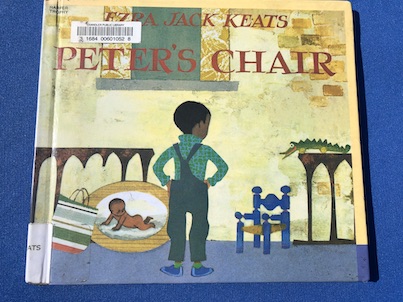
Peter’s Chair by Ezra Jack Keats, 1967.

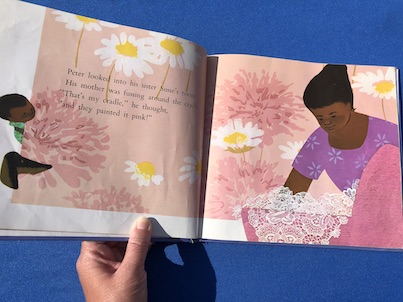
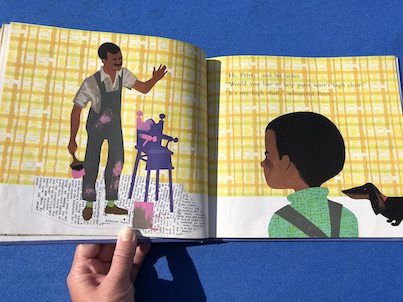
There is a new baby in Peter’s family, his little sister, Susie, and things are changing for Peter.  He is no longer the baby of the family.  He must play quietly to avoid disturbing the baby, and his father is painting all of his old, blue baby furniture pink for little Susie.

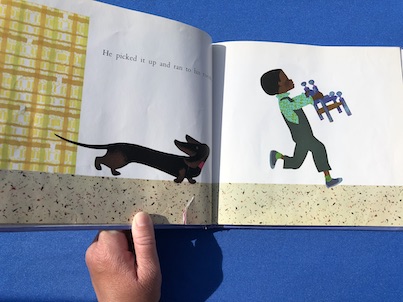
Peter feels badly, seeing the baby getting all of his old things.  Spotting his old baby chair, which hasn’t been painted yet, Peter runs off with it, taking along some of his other old things.

However, what Peter eventually realizes is that he has grown too big to fit into his old chair.  Nobody stays a baby forever, and Peter’s old baby things are of no use to him anymore.

Seeing that he is out-growing these old baby things helps Peter to be willing to let go of them and help his father repaint them for his little sister.

This is a cute story about change and growing up and the worries that children sometimes have about their siblings taking their place in the family. The art style of the book is also interesting because it includes pieces of patterned or textured paper for things like wallpaper, people’s clothing, the newspapers under the furniture being painted, and the baby’s lacy blanket. Other books by the same author also use this technique, such as Jennie’s Hat.

The Snowy Day

SnowyDay

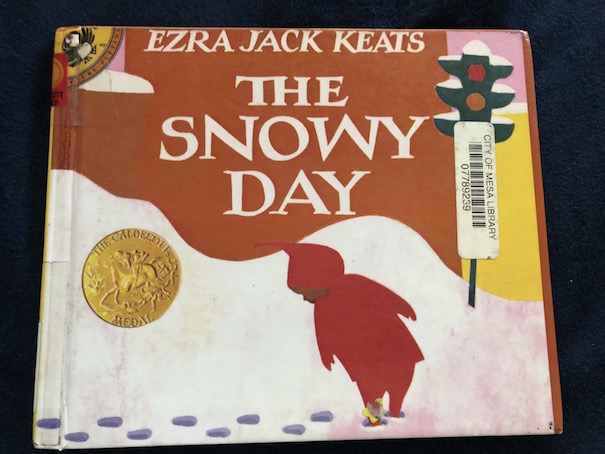
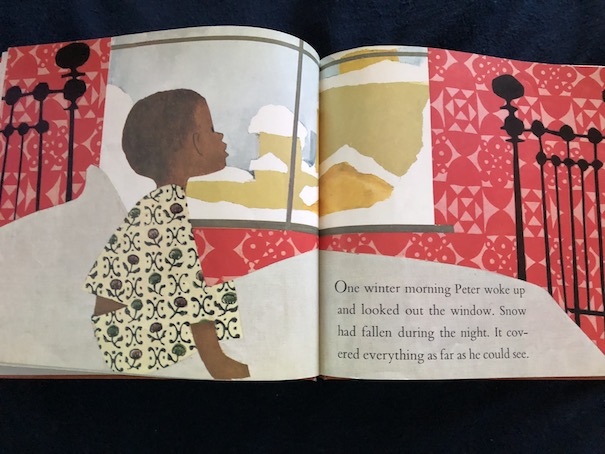
The Snowy Day by Ezra Jack Keats, 1962.

This is a pleasant, slice-of-life story about the fun and wonder of a snowy day for young children.

A young boy named Peter wakes up on a winter morning to discover that it snowed during the night.

SnowyDayMorning

Peter hurries out into the snow, experiencing all of the fun it has to offer.  He studies the footprints that he makes in the snow and uses a stick to make marks in the snow and knock snow off of tree branches.  He’s still too little to join in the snowball fight that the big boys have, but he has fun making a snowman and snow angels.

SnowyDayAngels

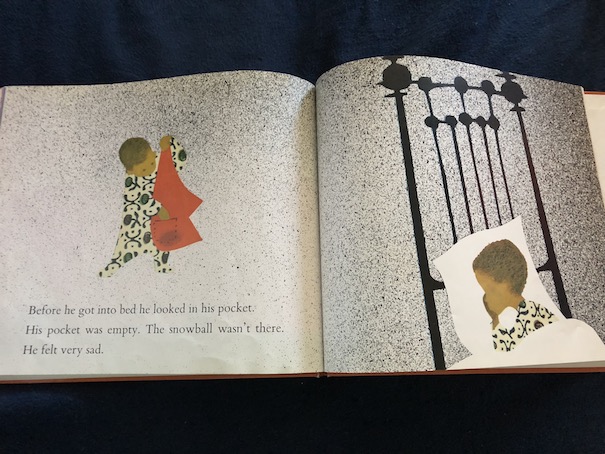
The snow is so much fun that Peter makes a snowball amd put it in his pocket to save for later.  Of course, the snowball in his pocket doesn’t last, and he worries that the snow outside will disappear as well, but there is even more snow the next day.  He gets a friend of his to come outside and join him in the fun.

SnowyDaySnowball

It’s a simple, sweet story about one of the simple pleasures in life and one boy’s discovery of the wonders of snow. It would make a nice, calm bedtime story for young children.

SnowyDayFriend

This book is also a Caldecott award winner, and it is noted for being one of the first children’s books to feature a black main character.  Peter’s race is never mentioned in the text and is not directly a part of the story, but it is shown in the pictures.  Really, I think that’s part of what makes the book so great; although the book was considered ground-breaking for representing minorities, it does so in a way that’s completely relatable because his story could really happen to just about any child.

The Story About Ping

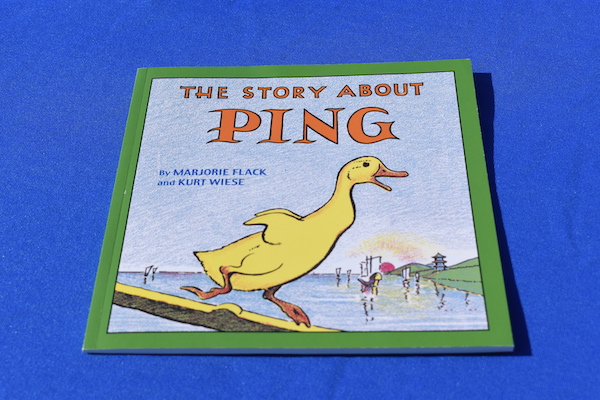
The Story About Ping by Marjorie Flack and Kurt Wiese, 1933.

Ping is a small duck who lives with his family on a boat on the Yangtze River in China.  Every morning, the master of the boat lets the ducks out to look for food on the river, and every evening, he calls them back. 

However, Ping hates it that the master gives the last duck to return at the end of the day a spank on the back, so when he realizes that he is late to return one day, he hides and is left behind.

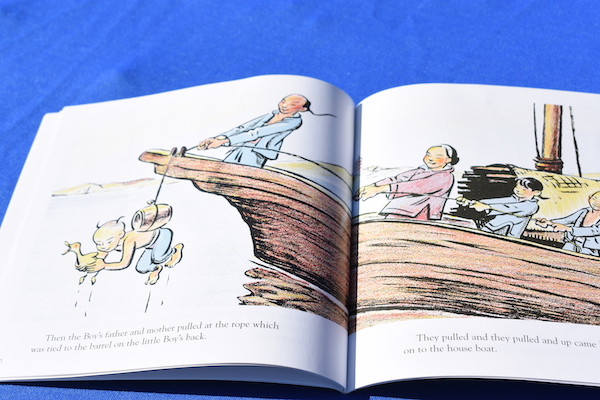
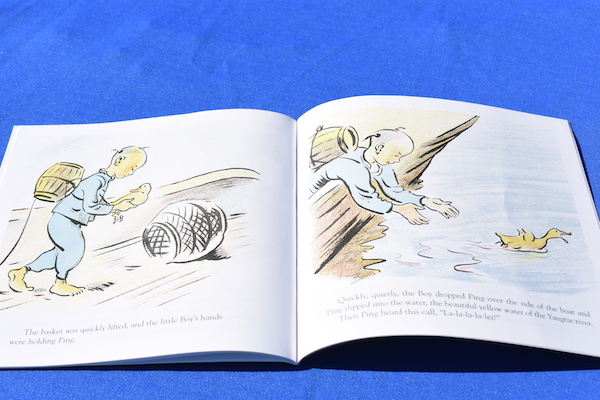
After sleeping on the river bank overnight, Ping sets out to find his family the next day.  However, there are many different boats on the river, and he has trouble finding the one where his family lives.  As he searches, he is captured by a boy who brings him onto his family’s boat.

To Ping’s horror, the family who captured him plans to eat him for dinner!  However, the boy who grabbed Ping out of the water thinks that he’s “too beautiful to eat.”  Without letting his family know, the boy frees Ping from the basket where he is being held captive.

As Ping swims away from the boy’s boat, he hears the master of his family’s boat, calling out for the ducks to return.  This time, Ping does return to his family’s boat, even being willing to take a spank for being late, glad just to be safe with his family.

In a way, this little story reminds me of one of the short humor stories in Wayside School is Falling Down.  In that story, a boy at a very strange school gets tired of following the school’s rules.  Some mysterious men explain to the boy that the rules are meant to keep the students safe and choosing whether or not to follow the rules means choosing between freedom and safety.  The story and the boy’s choice are meant to be humorous, but it is a good point about the purpose of rules.  Probably, the reason why the master on Ping’s boat spanks the last duck is to give all of the ducks a reason to hurry back to the safety of the boat.  Ping doesn’t really appreciate that until he sees the dangers that wait for a small duck, alone on the river.  In the end, he is willing to accept some discipline because he wants the safety it promises.  It’s not the usual message in a lot of modern children’s books, especially in the United States, where people and book characters tend to value freedom over safety (the choice made by the boy in the Wayside School book).  However, in this book, Ping and his family have something between total freedom and total captivity – they are allowed to swim pretty freely during the day as long as they return to the boat for safety at night. They get both some freedom and safety in exchange for following the master’s routine. Ping’s danger only comes when he breaks away from that entirely.

But, if you think that analysis is getting too deep, Ping’s adventures and his return to the safety of his family are endearing for lovers of animal stories. Kids who encounter this story will be reassured that Ping is still able to return to home and safety after his adventures!

The story has appeared in film and on television more than once. The book is available to borrow and read for free online through Internet Archive (multiple copies).

The White Marble

WhiteMarble

The White Marble by Charlotte Zolotow, 1963.

WhiteMarbleGoingToPark

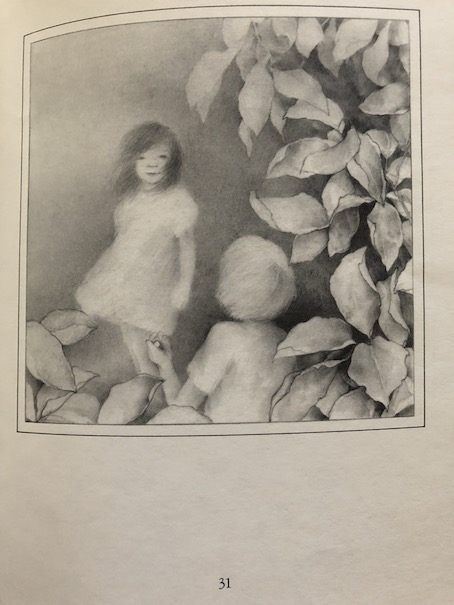
It’s a hot night in the city, and John Henry’s parents decide that they should go to the park to cool off.  John Henry is a little thrilled to be out with his parents at night, stopping to pick up a beautiful white marble he finds as they enter the park, but disappointed when he realizes that he is the only child there.

Then, a little girl he knows from school, Pamela, comes to the park with her mother.  John Henry is pleased to see her because only another child could understand how magical this night in the park really is.  He calls to her to come run with him, and the two children run off to play in the park together.

WhiteMarbleTwoKids

The children kick off their shoes and run barefoot in the cool grass.  They lie in the grass for awhile, drink water from a fountain, and have ice sticks (we always called them popsicles when we were kids) from the ice cream man.

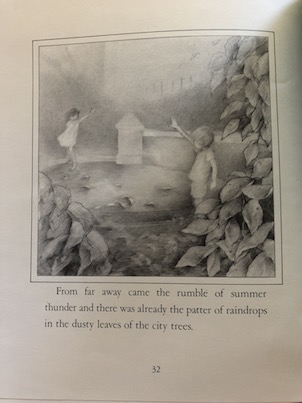
John Henry shows Pamela the little white marble he found.  Pamela thinks it’s as beautiful as he does, and John Henry realizes that no adult could understand how beautiful a small, simple thing like that could be, only another child.  That’s what binds John Henry and Pamela together.  As children, they can still appreciate the simple pleasures of life and the beauty and magic of small, ordinary things that adults take for granted, like a small white marble someone forgot in a park or how nice an evening can feel as rain moves in after a hot day.

WhiteMarbleGoodNight

When it’s time to go home, John Henry gives Pamela the white marble, a memento of this special night.

The pictures in this edition of the book are different from the ones that I remembered from the first time that I read it as a child.  This edition of the book, available through Internet Archive, shows the pictures that I remember.  The pictures in the later edition of the book are black and white, but the ones in the original edition are done in three colors: black, white, and blue.  Of the two, I really prefer the original drawings.  They capture the magic of a lovely night shared with a friend.

Four Dolls

FourDolls

Four Dolls by Rumer Godden, 1983.

This is a collection of four stories about different, special dolls.  Each of the stories is from the perspective of the dolls themselves, talking about their owners and their adventures.  A common thread through all four stories is the bond between the dolls and their owners and how they make a difference in each other’s lives.

Even though the collection of stories is from 1983, each of the individual stories in the book was written separately, in different years.  You can find each of these stories as their own individual books as well as part of other collections.  I give the original years of each story next to their titles.

The pictures in the book are wonderful, some of them in black and white and some in full color.

The book is currently available online through Internet Archive.

The four dolls and stories are:

Impunity Jane (1955)

FourDollsJane

The word “impunity” basically means freedom from harm, and it’s an apt nickname for the doll Jane.  She’s a very sturdy little doll, the kind that can stand up to the rough play of children and last for a long time.  From the time when she is first bought, she stays with her original owner’s family, passed down through the generations and enjoyed by various girls in the family.  However, they mostly keep her in the family doll house and play with her in different ways.  One girl likes to sew clothes for her and another, who wants to be a teacher, gives her lessons.

There is just one problem: Jane is frequently bored.  More than anything, she wants to be a pocket doll, carried around in her owner’s pocket, seeing the world and experiencing everything.  She doesn’t get much excitement in the doll house where the girls keep her, and her latest owner doesn’t seem interested in playing with her at all.  But, unexpectedly, a boy in the family comes to her rescue, the younger cousin of her current owner.  Although most boys aren’t interested in playing with dolls, Gideon likes to use Jane as his “model”, taking her outside, carrying her around in his pocket, and giving her rides in his toys, giving Jane the adventurous life she’s always dreamed of!

At first, Gideon borrows the doll without his cousin’s permission, and Jane dreads the day that he will give her back, even though she hates to see Gideon feel guilty.  Fortunately, when Gideon does take her back, it turns out that his older cousin is getting rid of a lot of her old toys because she’ll soon be heading off to boarding school. She tells Gideon that he can have anything he wants, so he keeps Jane, who continues being Gideon’s model and good luck charm.

The Fairy Doll (1956)

FourDollsFairy

Elizabeth is the youngest of her siblings and feels like she can’t do anything right.  She’s always making mistakes and can’t even ride a bicycle.  Everyone is used to telling her what to do, and she receives a lot of criticism from teachers and parents and teasing from other children, giving her poor self-confidence.  She is clumsy and break things, she forgets things, and she is frequently punished for every little thing she does.  The more they all scold her, the more mistakes she makes, and they can’t seem to figure out why.

(It’s painfully obvious while reading it – Elizabeth’s family makes her live in a constant state of nervousness, and she’s afraid of really trying many things because they keep telling her that she can’t do anything.  Her siblings seem more outright abusive rather than simply teasing, and her parents seem clueless, not punishing the older siblings for their terrible, bullying behavior.  I think that the family is meant to seem merely impatient with Elizabeth because they forgot how much younger she is than the other children and perhaps thoughtless to the effect that they’re having on her, but it seriously looks like they’re actually gaslighting the poor kid, purposely and systematically undermining her self-confidence for their own sick amusement, even the girl’s father.  Seriously, I hated all of them (except Elizabeth, whose only real problem is being a little kid) before I was very far into the story.)

However, the Fairy Doll that has been passed down in their family seems to have a kind of magic effect on Elizabeth.  No one knows quite where the doll came from because it’s been around for so long, although they use her as a Christmas decoration every year, at the top of the tree.  Only Elizabeth’s mother and great-grandmother seem concerned about Elizabeth at all, and it is at the great-grandmother’s insistence that Elizabeth be given the Fairy Doll to play with all year, after Elizabeth accidentally breaks a crystal bowl. (Which she only did because her bratty sister Josie shoved her from behind while she was holding it. Why did the parents never notice and properly punish the little brat Josie like they should?  I’m telling you, they’re clueless and useless, and possibly gaslighting her.  It really looks like that.  The father even makes a big deal about what use it is to give Elizabeth Christmas presents like the other children when she doesn’t ride the bike he gave her. Look, she’s just a little kid, and it takes some kids longer to learn to balance than others.  What a weird, oddly vindictive father.)

The Fairy Doll seems to suggest things to Elizabeth.  When Elizabeth doesn’t quite know how to do something, the Fairy Doll gives her hints.  When Elizabeth is in danger of forgetting something, the Fairy Doll reminds her.  In other words, the Fairy Doll does what a family is supposed to do and what her family could do if they weren’t so busy bullying her. The Fairy Doll offers Elizabeth help, support, and guidance.  Elizabeth is only seven years old at the oldest in the story, and Elizabeth’s family is too busy yelling at her for doing little things wrong or not knowing things to properly teach her anything.  They say that they tried to teach her to ride a bike, but I wonder how much “teaching” actually happened and how much it was really just yelling and mocking her for not already being able to do it.  I think they also get kind of a kick out of seeing Elizabeth look bad because they think it makes themselves look better. 

(The father in the story seriously disturbed me.  What kind of father is that hateful just because a very young child has some trouble riding a bike? Also, what’s the hurry in her riding it right away? Bikes don’t come with an expiration date, so it’s still going to be there when she grows a little more and learns to balance better.  Taking a little while to learn to ride a bike is hardly a sin, but Elizabeth’s father makes it clear that he does not care about Elizabeth’s feelings at all.  She has to buy his affection by . . . learning to ride a bike?  Because only bike riders are truly worthy of love?  Elizabeth’s family is really useless and weirdly vindictive.  I still hate them.  They are that horrible, just hearing about them.)

Little by little, Elizabeth’s small successes add up, and Elizabeth slowly crawls out of her shell, becoming more confident while her nasty, bratty, horrible siblings (yeah, I’m still angry, and I wonder if the father’s favorite little darling is the little psycho Josie) marvel at how she changes.

Little by little, Elizabeth comes to realize that she can do more than she thinks she can.

The Story of Holly and Ivy (1959)

FourDollsHollyIvy

Holly the doll doesn’t like being in the toy shop.  Abracadabra the owl frightens her, and she wishes that someone would buy her and give her to some girl as a Christmas present.

Meanwhile, Ivy is a troubled orphan who dreams of a new home with a grandmother who could take care of her.  When other children from the orphanage are taken to spend Christmas with families and Ivy is left behind, she tries to take matters into her own hands and find a family for herself.  Is there someone who could make wishes come true for both Holly and Ivy?

I worried about Ivy during this story, even though I knew that she and Holly would eventually end up together and okay.  She is lucky that she didn’t freeze to death.  Abracadabra the owl is also kind of a disturbing character, but they also get rid of him by the end of the story.  Apparently, the assistant in the toy stop doesn’t like him, either.

Candy Floss (1960)

FourDollsCandyFloss

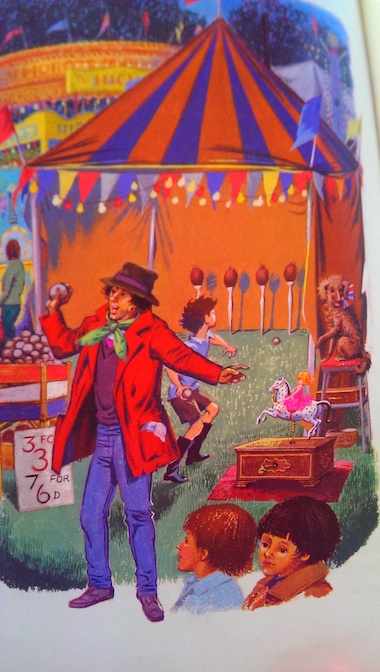
Candy Floss the doll belongs to Jack, who runs a carnival game, a “coconut shy,” where people try to throw balls at coconuts to knock them down and win a prize.  She enjoys living with Jack and his dog.  Jack has a special music box with a little horse on top, and Candy Floss sits on the horse while the music box plays and Jack’s dog begs nearby.  In this way, Candy Floss and the dog earn a little extra money.  When Jack is done working, he takes his dog, Cocoa, and Candy Floss the doll with him to see the rest of the carnival, and both of them enjoy it.

One day, a spoiled girl named Clementina attends their carnival.  Although Clementina is from a wealthy family, and her parents give her all sorts of things, she finds that she is frequently bored and unhappy.  When Clementina sees Candy Floss, she wants her, too, and is angry when Jack says that she can’t have her.  It’s the first time in her life that anyone has said “no” to Clementina about anything.  Clementina steals Candy Floss just to prove the point that when she wants something, she gets it.

However, Candy Floss wants to return to Jack.  She refuses to accept Clementina as her new “owner,” resists Clementina’s efforts to play with her (much to Clementina’s surprise), and finds a way to teach Clementina a lesson about greed.

In the end, Clementina not only returns Candy Floss but helps Jack to run his carnival game for awhile.  Part of Clementina’s unhappiness is caused by the fact that, even though she has many toys to play with, she doesn’t have much to do that is really meaningful to her.  She is surprised when she discovers how good it can feel to really earn something, like the coins that Jack gives her for helping him.

One of the cute things about this story is that it includes the music and words for the tune in the music box.

The book, which contains all four of these stories, is currently available online through Internet Archive.

The Polar Express

PolarExpress

The Polar Express by Chris Van Allsburg, 1985.

One Christmas Eve, a young boy is lying awake in bed when he hears strange sounds.  When he looks out of his window, he is astonished to see a train outside of his house, where there aren’t any train tracks.  He goes outside to investigate, and the train conductor tells him that the train is heading to the North Pole and asks the boy if he wants to come.

PolarExpressTrainRide

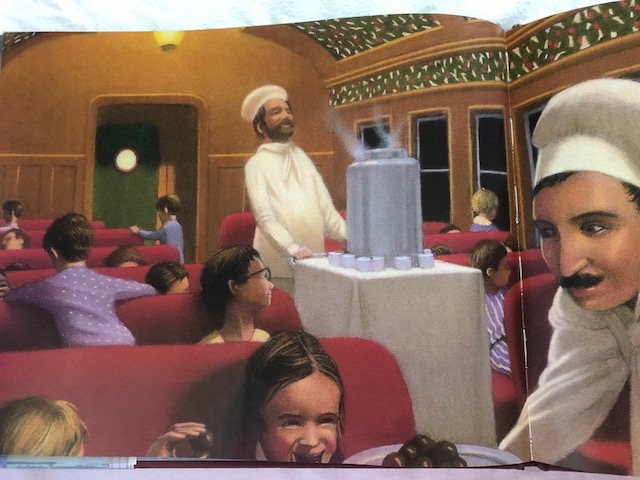
The boy (who is never named) believes in Santa Claus even though some of his friends no longer do, and he gets on board the train.  The train is filled with other children, singing Christmas songs, eating candy, and drinking hot cocoa.

PolarExpressSantasCity

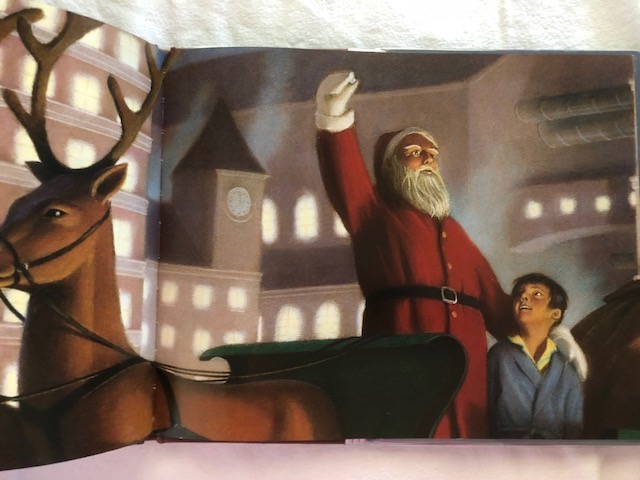
After a long trip over mountains and through forests, they arrive at Santa’s city at the North Pole, where they get to take part in a ceremony to give the first gift of Christmas.  Out of all the children from the train, the boy who narrates the story is chosen to receive the first gift.  He can ask for anything he wants for Christmas, but he asks for a bell from Santa’s sleigh as proof of his adventures and Santa’s existence.

PolarExpressGift

When the children get on the train to go back home, the boy seems to have lost the bell because of a hole in his pocket, and he is sad.  However, the bell reappears on Christmas morning as a mysterious extra present under the tree.  The boy’s parents can’t hear the bell ring, and they think it’s broken, but the boy and his sister, Sarah, can hear it.  The boy says when he and his sister grew up, Sarah eventually reached the point where she could no longer hear the bell, but he still can because only people who believe in Santa can hear the bells on his sleigh.

PolarExpressChristmasMorning

The book is a Caldecott Medal winner, and it has become a Christmas classic!  Some places that have trains hold special Polar Express train rides where they decorate the trains with Christmas decorations and try to re-create the ride from the book.  There is also a movie version of the book, although the story in the movie includes incidents which weren’t in the book to make the movie longer and more dramatic.  The original story was very calm and low-key, although still magical, the kind of thing that you could easily read to a child in bed on Christmas Eve.

Most of what Internet Archive has about The Polar Express is related to the movie, but there is also an audio version of the original book. For the benefit of teachers and homeschooling parents, there is also A Guide for Using The Polar Express in the Classroom on Internet Archive.