The Secret of the Haunted Mirror

The Three Investigators

TIHauntedMirror

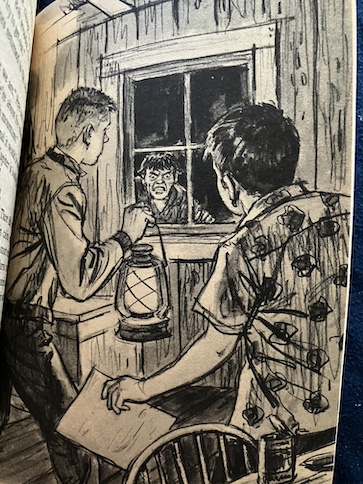
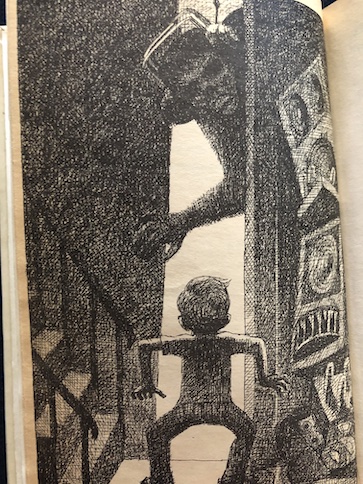
Mrs. Darnley has collected mirrors for years, and she has some pretty impressive ones in her collection. Her strangest mirror by far is the goblin mirror that her friend in another country, the Republic of Ruffino sent to her. There is a legend surrounding the mirror that says it was once owned by magician who used it to communicate with goblins under the earth. Supposedly, the magician went inside the mirror himself and now haunts it.

A man called Sr. Santora has been pestering Mrs. Darnley to sell the mirror to him, claiming he’s a descendant of the magician who created it. He insists that the legends about the mirror are true and that terrible things have happened to previous owners of the mirror. Mrs. Darnley didn’t believe these stories at first, but now, she and her grandchildren have seen this ghost in the mirror and heard unearthly laughter in the night. That isn’t the only strange phenomenon they’ve experienced. Someone tries to steal the mirror from Mrs. Darnley’s house, and Mrs. Darnley, not knowing what to do, asks the Three Investigators to find out what the mirror’s secret really is.

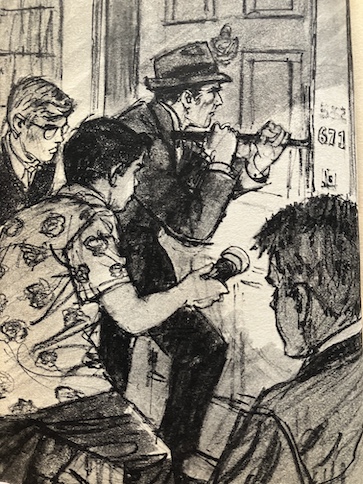
The Three Investigators are pretty sure from the beginning that someone is faking the ghost, although they don’t know exactly how. At first, they think that Sr. Santora hired the man who tried to steal the mirror, but when they follow the attempted thief, Pete sees him attack Sr. Santora!

Jupiter spends a stormy night at Mrs. Darnley’s house and has an encounter with the “ghost” that reveals how the haunting was accomplished and reveals connections to another magician who once owned Mrs. Darnley’s house and to the president of the Republic of Ruffino. It seems that the mirror contains secrets that aren’t entirely magical. There are two competing forces trying possess these secrets.

When Mrs. Darnley’s grandson is kidnapped, the kidnapper demands that she turn over the mirror in an abandoned warehouse. The Three Investigators must hurry to find the kidnapped grandson, discover which side in this power struggle is responsible for the kidnapping, and what the real secret of the mirror is before it’s too late!

The book is available to borrow and read for free online through Internet Archive (multiple copies).

The part I enjoyed the most about this mystery was the creepy legend and haunting of the mirror. One of the features of the Three Investigators books that I like is that they have some spooky mysteries in the pseudo-ghost story fashion of Scooby-Doo, and some of their supposed ghosts and supernatural creatures are much more original than in other series. The idea of a haunted goblin mirror and Jupiter’s encounter with it on a spooky, stormy night are delicious to a Scooby-Doo style mystery fan!

There are echoes of the first Three Investigators book in this one because there are secrets to Mrs. Darnley’s house that she doesn’t fully understand, and the haunting is based on magic tricks. There is some political intrigue to the story, too. The Republic of Ruffino isn’t a real place, so readers find out about its circumstances along with the Three Investigators. There is also a secret room and a clever hiding place for something in the solution to the mystery.

The Mystery of the Laughing Shadow

The Three Investigators

The mystery begins when Bob and Pete are bicycling by the old Sandow estate and they hear a call for help. Although it’s dark they can’t see who yelled for help, they can tell that the person threw something small that lands near them. They pick it up and discover that it is a small gold amulet. Then, Bob and Pete have to hide when a dark, shadowy figure comes looking for the amulet. The figure appears humpbacked and has a weird laugh that Bob and Pete have trouble describing.

They tell Jupiter what happened, and he joins them in searching for the person who called for help and figuring out the significance of the amulet. Someone steals the amulet from Jupiter, although Jupiter manages to save a message that was hidden inside the amulet. Then, they consult an expert in Native American languages and antiquities and learn that the amulet may be part of the Chumash treasure hoard, a treasure stolen from the Spanish settlers of the area many years ago by Chumash Indians (Native Americans) who once lived in the area. People have searched for the treasure for many years, but no one has found it. However, the message that was hidden inside the amulet is written in a language that belongs to the Yaquali Indians of Mexico (this is a fictional group, not the Yaqui), a remote tribe mostly living in isolation but known for their climbing skills. The expert is puzzled because he can’t figure out what the connection can be between the Chumash and the Yaqualis. The two group don’t live in the same area, their languages aren’t related, and the Yaqualis had nothing to do with the lost Chumash treasure hoard.

Jupiter says that their next move should be to investigate the Sandow estate. At first, they plan to make an excuse that they’re researching the Sandow estate for a school project, but to their surprise, Ted Sandow, grandnephew of Sarah Sandow, who owns the Sandow estate, shows up at Jupiter’s uncle salvage yard. Ted is just a few years older than the Three Investigators, and he explains that he came from England to visit his Great-Aunt Sarah after his father died. He says that his aunt wants to clean out a bunch of old things that have been in storage on the estate and that someone recommended the salvage yard to him. He invites the boys to the estate so he can show them some antiques that Jupiter’s uncle might want to buy. It seems like quite a coincidence that Ted Sandow would just come looking for them and give them an invitation to the Sandow estate just when they were planning to investigate the place, but the boys can’t pass up the invitation.

At the Sandow estate, the boys are amazed at the antiques that Sarah Sandow is offering to sell, and they’re sure that Jupiter’s uncle will be interested. They spend some time chatting with Ted, Great-Aunt Sarah, and Mr. Harris, a friend of the Sandows who has started a Vegetarian League with the help of Sarah Sandow. Sarah tells the boys that the reason she wants to clean out some of the clutter around the estate is that they recently had a burglary. They all explain to the boys that a small gold statue (the amulet) was stolen from the estate by an unknown boy. It was one of a pair that used to belong to Sarah’s brother, who was Ted’s grandfather. The boys explain that they are investigators and that they would be happy to help them recover the little statue, without telling them that they had it in their possession at one point or about the message they found with it. The Sandows hire boys to find it, promising them a reward if they’re successful, but some things about their offer don’t ring true.

For one thing, Ted Sandow asks the boys about the meaning of the question marks on their business card before he even looks at the card, indicating that he already knew about their investigation business and that he sought them out for that purpose rather than just to sell things to the salvage yard. It’s also strange that he stresses that they will reward the boys for the return of the amulet with “no questions asked” about how they found it. What are the Sandows hiding, and what is the meaning of the message that was with the amulet? Do they know the location of the Chumash hoard, or do they have it themselves? Who was the mysterious shadow with the weird laugh? Lives may hang in the balance as the boys struggle to learn the identity of the laughing shadow.

The book is available to borrow and read for free online through Internet Archive.

I like books that reference history, but this book bothers me a little because of the introduction of the Yaquali. The Chumash are real, but the Yaquali are a fictional group, and it just feels strange to have the book start with a real group of Native Americans and then incorporate a fictional group. It also makes the story feel a little contrived that the villain needs the Yaquali for their excellent climbing skills to reach the treasure when it doesn’t seem like the Yaquali had anything to do with placing the treasure where it’s hidden.

The explanation behind the laughing shadow also feels a little contrived. There’s a logical explanation but at the same time, it depends on the villain having a pet that makes a sound that sounds like a laugh, and this pet’s origins point to the villain’s origins.

The part of the story that I thought was most interesting was that, while the Three Investigators are suspicious of the Sandows, it’s implied that the suspicious is mutual. The Sandows offer the Three Investigators the job of finding the amulet with “no questions asked” about how they found it, and there is an implication that they suspect that the boys stole it. The implication that the “no questions asked” is actually an invitation to the boys to return what they took with a promised reward and no repercussions. However, at the same time as the boys accept the job from the Sandows, they have their own suspicions about what the Sandows are doing and what the meaning of the message in the amulet is. They see the investigation job as a way to learn more about what’s going on. The interesting part is that, while each of them has some reason to suspect each other, the real culprit in this situation isn’t either of them.

Although the boys suspect Ted at first, the real villain is Harris.  Years ago, Sarah Sandow’s brother, Ted’s grandfather, learned that the Chumash hoard was located on their property, but for reasons that no one seems to know, he killed the only person who could tell him where it was and had to leave the country.  Ted was born in England, and he has been visiting his Great-Aunt Sarah.  He met Mr. Harris on the way here, and Harris introduced himself to Sarah on the pretext of getting a donation to help set up a society for vegetarians in the area.  He had already figured out where the hoard was located on her property, and he had convinced some young Yaqualis from Mexico to come to the United States to help him get it. 

The treasure is hidden in a cave which can only be reached by experienced climbers, and the Yaqualis are known for their climbing skills.  One of the Yaqualis realized that what Harris wanted them to do was illegal and that he was planning to do away with them when it was all over.  He managed to get word to his family, and he put the message in the amulet in the hopes that someone would find it later and help him and the others. 

Jupiter figures out that Harris is the villain when he realizes that the mysterious laugh isn’t human; it was caused by a kookaburra, a pet of Harris’s from Australia.  His shadow only looked humpbacked because the bird was sitting on him at the time.  Jupiter gets the police to check with the Australian authorities, and they learn about Harris’s criminal past.  By then Harris has taken Bob and Pete hostage, and they must stage a daring rescue to save them.  For a while, Bob and the young Yaqualis are trapped in the cave with the treasure, but a couple of other Yaqualis who have been searching for them help to rescue them.  At the end of the book, the ownership of the treasure still has to be determined, but many museums are hoping to acquire pieces for their collections.

The Mystery of the Talking Skull

The Three Investigators

Jupiter reads in the newspaper about a public auction of luggage abandoned at hotels. He is curious about the auction and persuades Bob and Pete to come with him. On a whim, Jupiter bids on an old trunk at the auction and gets it for a dollar. Even the auctioneers don’t know what’s in the trunk because it’s locked. However, shortly after Jupiter buys the trunk, others show up offering to buy it from him.

It turns out that the trunk used to belong to a magician called the Great Gulliver, who disappeared about a year earlier. His signature trick was a talking skull called Socrates, which is still inside the trunk. The Three Investigators study the skull because Jupiter is curious to see how the trick works, but he can’t find anything about the skull that would explain how the trick was done. However, when the skull begins to speak to the boys, it suggests an even more puzzling mystery.

In the middle of the night, the skull tells Jupiter to go to a certain address and use the skull’s name, Socrates, as the password. When Jupiter goes there, he meets a gypsy fortune teller called Zelda, who tells him that Gulliver isn’t dead but he’s no longer among the living. She also tells him that there are people who want money, but the money they want is hidden. Zelda says that maybe Jupiter can help, and she tells him to protect the trunk and listen to anything else the skull might say.

When the Three Investigators look through the trunk again, they find a letter hidden inside, under the lining. The letter is from a man Gulliver once knew in prison, Spike Neely. The man was dying, and he wanted to tell Gulliver where he hid some money he stole years before. Because he knew the authorities would read any letter he sent, he could only hint at the location. The letter was short, and it doesn’t seem to say much, but The Three Investigators are sure that there’s a clue to where Spike hid the money somewhere in the letter.

However, The Three Investigators find themselves questioning how much they want to investigate this particular mystery. Jupiter was followed by a strange car on the way home from Zelda’s, probably the men Zelda spoke of who are looking for the money. Then, Jupiter’s Aunt Mathilda gets spooked by the skull when it says “boo” to her, and she tells Jupiter to get rid of it. The boys decide to sell the trunk to Maximilian, a magician who was interested in buying it for the sake of the talking skull and other tricks inside. When Maximilian takes the trunk, they think that’s going to be the end of the matter for them, but the next day, Police Chief Reynolds comes to see them because Maximilian was in a car accident. He says that another car forced him off the road and a couple of men stole the trunk!

Chief Reynolds tries to see Zelda, since she seemed to know something about the hidden money, but when he goes to the address where Jupiter met her, Zelda and the other gypsies are gone. Then, somebody mails the trunk back to Jupiter! When the boys open the trunk again, Socrates the skull says, “Hurry! Find–the clue.” It looks like they’re on a hunt for stolen money whether they like it or not!

The book is available to borrow and read for free online through Internet Archive (multiple copies).

The idea of a mysterious talking skull that used to belong to a vanished magician is exciting by itself, and I remember liking this story the first time I read it. As an adult, the parts about the gypsies seem a little cringey, the stereotypical stuff of vintage children’s books. A mysterious fortune teller is compelling and reminds me of similar type characters that appeared in the original Scooby-Doo cartoons, but The Three Investigators aren’t really big on accuracy when it comes to cultural representations. That sort of thing never occurred to me as a kid. All I cared about was an interesting story, and this book does have that. It’s just that, when you’re an adult and you know more about the world, you can tell when a character or culture is really just a cardboard cutout with no depth to it, more of a stock element pulled out of an old bag of tricks, and it hits you differently.

The talking skull element was cool, and I loved the idea of buying a mystery trunk cheaply and finding an amazing mystery in side. It’s the sort of thing I would have loved to do or envision doing as a kid, although in real life, the contents of the trunk would probably have turned out to be far less exciting, like a bunch of rusty hardware or somebody’s collection of water-damaged magazines. It’s that sense that, when you open it, there could be anything inside that’s compelling, and the best books have that sense of anticipation, too.

The solution to this mystery involves the Three Investigators examining the letter to figure out where Spike hid the clue to finding his loot. There is one part of his letter that seems to hint at something personal, a person who doesn’t really seem to exist, but that’s only half of the clue. The other part lies in the stamps he used and also in Spike’s distinctive trait of having trouble pronouncing words with the letter ‘L’ in them. It’s the sort of multi-layered clue that might appear in a Sherlock Holmes story. From there, the Three Investigators have to track down the house that Spike’s sister owned, where he was apprehended after the robbery, which proves more difficult than they anticipated because all of the houses from that neighborhood have been moved to a new location and were given new numbers. There were parts of the treasure hunt that were exciting and others that seemed to drag a little, but there are definitely some violent characters looking for the money, too.

Someone is obviously using the Three Investigators to try to find the money on their behalf, urging them on by using the talking skull, and that adds layers to the mystery. Who is trying to use them to solve the mystery, or is it more than one person or group of people? When people approach them with information or ask for their help, who can they trust? By the end of the story, we do learn where Gulliver is (if you haven’t guess it already) and the full story behind Spike hiding the money and what led to Gulliver’s disappearance.

Frankenstein Moved In on the Fourth Floor

Frankenstein Moved In on the Fourth Floor cover

Frankenstein Moved In on the Fourth Floor by Elizabeth Levy, illustrated by Mordicai Gerstein, 1979.

Frankenstein Moved In on the Fourth Floor new neighbor

Sam lives with his brother and mother on the 19th floor of a large apartment building. One day, when he and his mother are going to meet his brother at a friend’s house, they try to take the elevator down to the ground floor, but it doesn’t seem to be working. With no other choice, they take the stairs, and when they reach the fourth floor, they discover the reason why the elevator isn’t working.

A new neighbor, Mr. Frank, is moving into the apartment building, and he’s stopped the elevator at his floor to unload all of his stuff. He has boxes and boxes of wires and other electronic components, and he gets really upset when anybody else touches them. He has refused all offers of help to unload the boxes, he’s kept the elevator tied up, and he’s been rude to his new neighbors about these things.

Frankenstein Moved In on the Fourth Floor reading book

Sam thinks that Mr. Frank is frightening. He looks weird with those strange headphones with an antenna he keeps wearing. When he and his mother go to pick up his brother, Robert, Sam tells him about Mr. Frank and his theory that Mr. Frank is actually a monster. Sam thinks that Mr. Frank looks like Frankenstein. Both of the boys are into movie monsters, but Robert thinks at first that Sam is making it up. The boys have a debate about whether Mr. Frank would actually be Frankenstein the scientist or the monster that Frankenstein created in the book and movie because, although many people call the monster Frankenstein, that was actually the name of the monster’s creator. When the boys consult an abridged version of Frankenstein, Sam becomes convinced that the book’s description of Frankenstein the scientist sounds like Mr. Frank.

Frankenstein Moved In on the Fourth Floor walking up stairs with candle

The next day, the boys go down to the apartment house’s basement, where tenants have storage rooms. Sam wants to see what Mr. Frank is storing in his storage room, but when the boys start talking about the possibility that he might keep bodies in there, they chicken out. In the meantime, Mr. Frank gets on everyone’s nerves at the apartment house. He’s always bringing in new boxes of stuff and leaving empty ones around. Neighbors hear weird noises coming from his apartment that sound like moans and groans. Mr. Frank claims that the noises are his music. Then, he overloads the electrical circuits in his apartment and causes the entire building to black out. Nobody knows what he’s doing with all that electrical equipment of his. Mr. Frank’s weird electrical experiments make Robert think maybe Sam was right about Mr. Frank being Frankenstein.

Frankenstein Moved In on the Fourth Floor discovering the Dracula doll

The boys decide that it’s important for them to take a look in Mr. Frank’s storage room, but when Robert accidentally leaves his Dracula doll behind, they realize that Mr. Frank will find out that they’ve been snooping. They may have to face the wrath of Frankenstein!

The book is available to borrow and read for free online through Internet Archive (multiple copies). There is a sequel to this book called Dracula is a Pain in the Neck.

My Reaction and Spoilers

Frankenstein Moved In on the Fourth Floor confrontation

This story is a kind of mystery story because the boys are trying to figure out if Mr. Frank is actually Frankenstein and if he’s making monsters with his electrical experiments. However, it really reminds me of the The Adventures of the Bailey School Kids, a series about kids who suspect various people in their town of being different supernatural creators. This book is older than that series, and from the way the story goes, there are more logical explanations for Mr. Frank’s behavior. However, like with The Adventures of the Bailey School Kids, the kids don’t really get firm answers at the end. It looks like Mr. Frank is probably just some weird, temperamental musician who likes to experiment with electronics, but the story leaves it open to interpretation.

The Mystery of the Invisible Dog

The Three Investigators

Shortly after Christmas, a frightened man, Fenton Prentiss, calls the Three Investigators to his apartment to help him. Mr. Prentiss is an elderly art collector, and he says that he is being haunted. Things in his apartment get moved around when he’s not there, and he can tell that someone has been reading the mail in his desk. Sometimes, he even sees a shadowy figure when he is home, although he’s never gotten a good look at it before it disappears. He swears that it can’t be another person because he’s the only one who has a key to his apartment. He is also sure that there are no secret passages in his apartment building and that there’s no way for any living person to enter his apartment without being seen by someone. Mr. Prentiss could just be imagining the haunting, but Jupiter is intrigued, and if the boys don’t have a mystery to work on during the holidays, they know that Jupiter’s aunt will just assign them a bunch of chores.

They tell Mr. Prentiss that they need to talk over the assignment together before they accept his job, but Jupiter’s mind is made up when he also sees a shadowy figure that he initially mistakes for Pete just before they leave the apartment. However, Pete is not in the room where Jupiter saw the shadow. Did Jupiter just see Mr. Prentiss’s mysterious ghost?

When the boys get outside the apartment, they hear a loud bang and running feet and see a man in a ski mask running away. Pete tries to follow, and the police stop him, thinking that he might have something to do with a burglary that has just taken place. Fortunately, Mr. Prentiss speaks up for Pete, saying that the boys only just left his apartment and couldn’t have anything to do with what the police are talking about. The police think that the suspect who ran away could have gone into a nearby church, but he seems to have vanished. Mr. Earl, the janitor and caretaker of the church swears that he was in the church the whole time and no one came in, although the housekeeper at the rectory, Mrs. O’Riley, says that Mr. Earl is practically deaf and wouldn’t have heard anybody.

The place that was burgled turns out to belong to a deceased artist friend of Mr. Prentiss. His friend’s death is part of the reason why Mr. Prentiss is so on edge because it was very upsetting to him. The artist’s brother, Charles, hadn’t finished clearing out his brother’s house when it was robbed. He tells the boys that his brother was a sculptor, and his best piece was based on a legend of a ghostly, demonic hound from Eastern Europe. This is the sculpture that was stolen. It’s a bitter blow to Mr. Prentiss because the artist made this sculpture especially for him.

Jupiter believes Mr. Prentiss that someone has been sneaking into his apartment, so he sets a trap that will cause the intruder’s hands to be stained. Mr. Prentiss leaves for a while with the boys, and when they return, his nosy landlady’s hands are stained, indicating that she has been the intruder. Mr. Prentiss confronts her, and she admits that she had a spare key made for his door. The landlady has a long-term habit of spying on her tenants. Mr. Prentiss confiscates her spare key and thinks that his problem is over, but really, it’s just beginning.

Having seen the shadow in Mr. Prentiss’s apartment himself, Jupiter knows that the mysterious shadowy figure was not the landlady. For Jupiter to have mistaken the shadowy figure for Pete, he knows that the person is male and of similar size to Pete. Jupiter is not surprised when Mr. Prentiss calls them up to say that he’s seen the shadow again. The landlady was undoubtedly snooping, but there must also be a second intruder. At first, Jupiter thinks that he knows who the second intruder must be because there is another person in the apartment building who vaguely resembles Pete and who also seems to know about things that Mr. Prentiss owns when he’s supposedly never been in Mr. Prentiss’s apartment before. However, this person is accounted for when the intruder makes another appearance. Jupiter investigates the nearby church when he sees a light there, and he has a frightening encounter with a figure that Mrs. O’Reilly believes is the ghost of the former pastor.

Mr. Prentiss soon gets a ransom demand from the person who stole the sculpture. Then, strange misfortunes start to befall Mr. Prentiss’s neighbors. Some of these misfortunes look like accidents while others are direct attacks. Someone is apparently attacked by the thief, someone else is poisoned, someone’s apartment catches fire, and someone else’s car is sabotaged, and people are ending up in the hospital. It seems like someone who is close to these people is responsible for sneaking around Mr. Prentiss’s apartment, stealing the valuable sculpture, and harming the neighbors, but who is doing these things and why?

The book is available to borrow and read for free online through Internet Archive (multiple copies).

I enjoyed this mystery because it has many different facets. First, there is a wonderful cast of eccentric characters. All of Mr. Prentiss’s neighbors/suspects are eccentrics. There’s the nosy, sneaking landlady and a guy who takes care of stray cats. Mrs. O’Reilly at the church believes that the church is haunted by the ghost of a former pastor, adding another haunting figure to the mystery. Another resident of the apartment house works nights at the local market and is saving up money so he can go to India and find a guru to help teach him the secrets to life. His father wanted him to be a dentist, but instead, he wants to study meditation so he can see through life’s illusions and be truly awake, achieving the ultimate level of consciousness. It’s ironic because he’s so tired from working nights that he often falls asleep while meditating. The mystery somewhat resembles a classic old dark house mystery in the sense that it takes place in a contained area with a very definite set of suspects who are also either victims or potential victims.

Second, I enjoyed the layers of the mystery. We have a mysterious intruder (or intruders), the theft of a valuable sculpture, a possible haunted church, and a series of mysterious accidents or attacks on residents of the building. Are these things all connected or are some of them unconnected incidents that confuse the issue? Readers have the feeling that there are at least some connections, but it’s not clear for most of the story what the connections are and who’s responsible for what. On the one hand, books with several different mysterious happenings can feel a little cluttered and confusing to readers, but on the other, figuring out which of these incidents are connected to the main issues provide clues to the identity of the real villain.

There is a surprising supernatural element to the story that the Three Investigators discover when they consult a parapsychologist at a university. There was a strong interest in parapsychology during the 1970s and 1980s, which is why the subject of psychic abilities and people who study it appears in children’s books and tv shows around this time period. (Spoiler) It seems that the guy who is studying meditation has some psychic ability, and the things he experiences while meditating aren’t just him falling asleep and dreaming, although it seems like that at first. Because he really wants to get away from his boring life and dead end job when he meditates, he’s actually been using a kind of astral projection without being fully aware that’s what he’s doing. The characters realize this because he knows things that he shouldn’t really have any way of knowing from places where he shouldn’t have been and how he can sometimes appear in certain places when he’s actually somewhere else. Some of the strange things that people see around the apartment building at due to his astral projection, possibly including the ghost in the church, although part of that is left unclear at the end. However, there is a real thief and villain in the story who is unrelated to the psychic phenomena, and incidents that harm people in the building are related to the thief’s attempts to keep people away from the hiding place of the stolen sculpture. I thought both the psychic angle and the solution to the theft were clever, and I kept guessing all the way through the book who was responsible for what.

The Mystery of the Vanishing Treasure

The Three Investigators

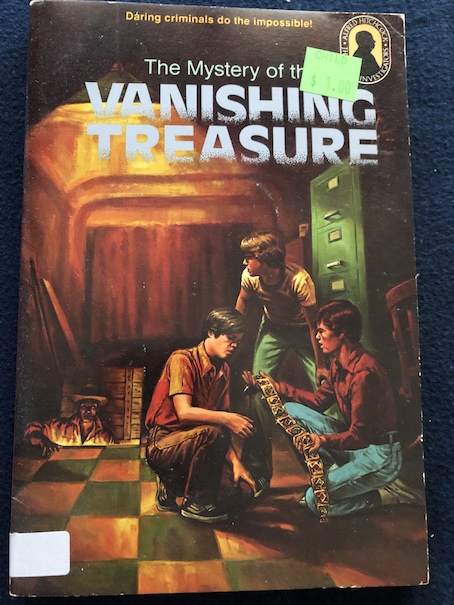
The Three Investigators don’t have a case at the moment, so Jupiter entertains himself and his friends with an intellectual exercise – figuring out how someone could steal the Rainbow Jewels from an exhibit at the Petersen Museum, an exhibit that has been promoted in the local papers. Pete and Bob object that they solve thefts, not commit them, but Jupiter says that figuring out how a theft could occur would be useful in helping them understand thefts that actually occur. The boys go to the museum to see the exhibit and study it for security weaknesses.

While they are at the museum, a theft actually occurs, but not in any of the ways that Jupiter predicted that a theft could occur. It happens in broad daylight, with a room full of people and security, and the object that was take, a golden belt, was actually the heaviest and least portable object in the exhibit. Jupiter and his friends witness the start of the crime when Jupiter runs into an old acquaintance from his childhood acting days. This actor gleefully tells Jupiter to watch the stunt that he’s going to pull. He pretends to feel faint and then drops a fake jewel that looks like one of the real ones. This is a distraction for the guards, who are all focused on him when the real theft happens. The actor is in trouble for providing the thieves with a distraction, but he tells the police that he was hired to do it both to prove himself for a role in a movie and as kind of a publicity stunt. Of course, the movie wasn’t real, and he was just duped into helping the thieves.

Jupiter is intrigued by the theft and offers the Three Investigators’ services to the man in charge of the exhibit, but he turns them away because they’re kids. However, they soon have another mystery to consider. An elderly children’s author thinks that she is being stalked by gnomes. She lives in the same old house where she grew up, and she is known for writing books about gnomes, inspired by stories that her old Bavarian nanny told her. Years ago, she used to invite neighborhood children to her house for parties, playfully calling them her “gnomes”, and she would read to them from her books. However, the old families have grown up and moved away, and many of the old houses around her have been torn down and replaced with shops and businesses. The author doesn’t want to sell her house, even though she’s been pressured to sell by a developer, but lately, strange things have been happening at the house. She keeps seeing little men dressed like gnomes, and they play mean tricks on her. She swears that she’s not dreaming or crazy, which is what her nephew seems to think. She does genuinely believe in gnomes, but what’s been happening could also be someone playing a trick on her.

The Three Investigators might think that she was imagining things, except that Bob sees one of these gnomes out the window while they’re talking to the author. The boys try to chase after it, but it disappears before Jupiter and Pete can even get a look at it. They consider the idea that Bob could have imagined the gnome, based on his reading about them and the author’s stories, but he swears he didn’t. They decide to approach the situation from the assumption that someone is playing tricks on the author, and Jupiter and Pete decide to spend the night at the author’s house to see what happens.

While the boys are exploring the area, they decide to check out the defunct movie studio next to the author’s house. There, they overhear the developer who wants to buy the author’s house talking to the security guard at the old studio. What they say makes Jupiter wonder if they could have something to do with the theft of the gold belt, but when they discover the boys listening, they insist that Jupiter misheard them.

The son of the man in charge of the exhibit at the museum comes to consult the Three Investigators about theft of the belt, having overheard them offering their services to his father. Jupiter gives him a suggestion to check on while the Three Investigators look into the matter of the gnomes. Jupiter’s first guess about the theft of the belt isn’t quite right, but it turns out that there is a connection between the gnomes and the theft. The gnome incidents could be part of an effort to pressure the author into selling her house to the developer, but the digging sounds that accompany the gnomes make Jupiter realize that the gnomes have other motives.

The book is available to borrow and read for free online through Internet Archive (multiple copies).

Many of the Three Investigators mysteries are a little like Scooby-Doo mysteries, with ghosts, monsters, or other supernatural phenomena that have logical or human explanations. I like this mystery because gnomes are an unusual mythological creature to find in that kind of story. There are plenty of mystery stories with faked ghosts but few with staged gnome appearances. It’s a little bit of a spoiler to say that the gnomes are fake, but not much of one because that is really the assumption from the beginning. The children’s author believes in gnomes, but nobody else does, and even the author isn’t convinced enough to stop her from hiring the investigators to look into the situation.

The introduction of the theft of the golden belt from the museum at the beginning of the story introduces the idea that the theft is somehow related to the gnome appearances, and that is the case. What complicates the situation is that there are different people involved with both the gnome appearances and the thefts, and not everyone who’s involved in one plot is necessarily involved in the other. One of the complications of the story is figuring out who is involved in what and who is the ultimate mastermind behind the main mystery.

The gnome appearances also put this mystery into the category of mysteries that I call Mysterious Happenings – where something strange is happening with no obvious explanation, and much of the mystery involves figuring out the motive behind the mysterious happenings, which is usually related to an actual crime that is initially unknown to the investigators. A classic example of a Mysterious Happenings mystery is the Sherlock Holmes story, The Red-Headed League, which involves a man who is invited to join a club that requires him to do some meaningless busy work for money but which he suddenly discovers is fake. In that case, the mystery is figuring out the purpose of the club and why someone would play such an elaborate prank on this particular man. This Three Investigators story has a similar premise to the Sherlock Holmes story in the sense that someone is playing an elaborate prank on the author with the gnome appearances, and the question is why anyone would do that. Part of the reason that I mention the Sherlock Holmes story is that the motive behind the prank in the Sherlock Holmes story is the same as the motive for playing the prank with the gnomes, making me think that the author was inspired by The Red-Headed League.

As for who/what the gnomes are, the presence of the old movie studio and the use of a hired actor to create a distraction in the museum are clues. It’s also important to the story that it was children’s day at the museum, so there were a lot of kids on the scene when the theft happened. I suspected who was playing the part of the gnomes from the beginning, but I didn’t guess the full motive for the crime, even though The Red-Headed League is one of my favorite Sherlock Holmes stories. There’s a dramatic scene at the end of the book where the “gnomes” storm the kids’ headquarters at the salvage yard to retrieve the golden belt from Jupiter after Jupiter figures out where they hid it.

Stories of Rainbow and Lucky: Rainbow’s Journey

Stories of Rainbow and Lucky

This is the second book in the Stories of Rainbow and Lucky series. I’ve covered the first book this series, and I have to do all five books in a row because the series is set up like a mini-series. That is, none of the books in the series can stand alone; they are all installments of one, longer story. It’s an unusual series from the mid-19th century, written on the eve of the American Civil War, by a white author with a young black hero. Rainbow is a teenage black boy who, in the previous installment of the story, is hired by a young carpenter who is just a few years older than he is to help him with a job in another town. The rest of the series follows the two young men, particularly Rainbow, through their adventures, learning life lessons, even dealing with difficult topics like racism. (Lucky is a horse, and Lucky enters the story later.) The story is unusual for this time period because it was uncommon for black people to be the heroes of books and for topics like racism to be discussed directly. It’s also important to point out that our black hero is not a slave, he is not enslaved at any point in the series, and the series has a happy ending for him. People don’t always treat him right, but he does have friends and allies, and he manages to deal with the adversity he faces and builds a future for himself. Keep in mind along the way that there are a lot of pun names in this series and that people’s names are often clues to their characters.

This book is easily available to read online in your browser through NINETEENTH-CENTURY AMERICAN CHILDREN & WHAT THEY READ, I’m going to do a detailed summary below. If you’d rather read it yourself before you read my review, you can go ahead, but some people might want to know what it’s like in more detail.

For most of the last story, the focus was on Handie, his family’s financial problems, the inheritance he receives from his uncle, and how the lawyer who is the executor of the estate arranges for Handie to use the estate to his best advantage. Because Handie is 19 years old, he is still considered a minor. (The legal age is 21 during this time period and would stay the legal age until about halfway through the 20th century.) His uncle’s will specifically stated that Handie cannot take full ownership of the farm that he left to him until he is 22 years old. Uncle that time, the lawyer, Mr. James, will manage the estate on his behalf, using the money provided with the estate to hire someone to fix up the farm to rent it out to a tenant until Handie is old enough to take it. The Level family’s money problems are because Handie’s father is not good at managing his money, and Handie’s uncle knew that if Handie’s father got his hands on his son’s estate, he would probably blow the money and end up having to sell the farm to cover his debts, leaving Handie with nothing.

In the previous book, Mr. James discusses the situation with Handie, and they work out another solution to the Levels’ debt problems. He helps Handie take steps to separate the money he earns from his father’s money, and he hires Handie as the carpenter to work on repairing the farm he inherited on behalf of his own estate. It’s a somewhat odd arrangement because Handie is effectively being hired to work for himself but will be paid by Mr. James on behalf of the estate. Under the circumstances, it’s the best system for solving the family’s money problems and setting Handie up for a better future. 

Because Handie will need a little help while he’s working on the farm, Mr. James also provides money from the estate so he can hire an assistant. Handie offers the job to 14-year-old Rainbow. Rainbow doesn’t have any carpentry experience, but he’s strong for his age and a good worker, and Handie would rather bring someone he knows with him rather than trying to find someone else when he arrives at this new town. At the end of the previous book, Handie offers Rainbow the job as a carpenter’s assistant and tells him that they will be living in the town of Southerton for about 2 or 3 months during the summer while they do the job. The job will involve hard, physical work, but Rainbow can handle it, and this job could give him some good work experience. Rainbow accepts the job offer, with his mother’s permission, and they begin preparing for the journey.

When this story begins, Handie and Rainbow are about to leave the village where they both live. It’s a summer evening with good weather, and they will be traveling by stage coach. When Handie offered Rainbow the job, he didn’t explain that the farm where they will be working actually belongs to him, but word of Handie’s inheritance has spread around town since. Rainbow is astonished at the idea of someone so young having a farm of his own, and he decides that he will ask Handie more about it later, although he knows he should be careful to be polite about asking because he doesn’t want to seem rude by prying. Although these boys are friendly with each other, having grown up in the same small town, they also have a professional relationship now, and Rainbow’s mother impressed on him that he needs to treat Handie respectfully as his employer. They are becoming young men and venturing out into the world for the first time, so they need to learn how to behave professionally with each other, as befits their new, professional relationship. Neither of the young men is experienced with traveling anywhere, and they’re both looking forward to this exciting journey.

Things seem to be going well at the start of the journey, but then, the stage coach driver, while chatting with Handie mentions that he doesn’t like the look of one of the passengers. At first, Rainbow worries that the driver is talking about him because he’s accustomed to people making comments about him, ridiculing him, or telling him that he isn’t welcome among them for being black. Even though they are from a small village, and many people there like Rainbow for his good nature and helpfulness, he’s already seen his share of discrimination. However, the driver is talking about someone else. He explains that there’s a man on the stage coach called Burkill, who is wearing a bright waistcoat. He’s met Burkill before, and he knows that the man is trouble. 

Right now, Handie and Rainbow are riding on the top of the stage with the driver, but when Burkill joined them, he made a fuss to the driver about whether or not Rainbow would be riding inside the coach, objecting to the idea of riding with a black person. The driver, Trigget, who knows Rainbow and doesn’t like Burkill anyway, told him that Rainbow has paid his fare and will ride wherever he wants to: “I don’t pay any attention to the different shades of complexion of my passengers … Rainbow is suitable company for any honest man. You can judge best whether he is suitable company for you or not, and act accordingly.” It’s a bit of a slam. He’s implying that, if Burkill can’t get along with Rainbow, he’s probably not an honest man, and the driver already has reason to think he’s not, so he’d better not make a big deal about it. The other passengers also know Burkill’s reputation, so they get the joke and laugh at Burkill. Embarrassed, Burkill just gets on the stage coach without saying anything else. All of this happens before Handie and Rainbow get on themselves, and they don’t hear any of it, so their choice to sit up with the driver was just by preference, not because they were required to sit there. Trigget just tells them about it later, as they ride along.

(Note: I’m using the term “black”, and so did Burkill when he was speaking, but the driver corrects him, using the word “colored” because “colored” is considered the more polite word at the time this story was written. I’ve explained before that “colored” and “Negro” used to be considered more polite terms prior to the Civil Rights Movement in the mid-20th century. At that point, “black” became the accepted generic word, where it had once been considered somewhat rude, and “African American” became the polite, formal term. I’ve been using “black” in the modern generic sense for the purpose of these reviews because I think the modern audience will find it easier to follow, but this series was meant to be educational for 19th century children, like the author’s other books, so there are points in the story where the characters actually discuss which racial terms are more polite. The general rule they establish is that the best thing to call someone is whatever they would like to be called, and I think it’s a pretty good, general rule. I’m just explaining because it’s a plot point, and the racial words that people use are clues to their characters. Characters who use the wrong racial words are either ignorant or antagonistic, and Burkill falls into the second category. We haven’t know him long, but we’ve already established that Burkill is disreputable and a trouble-maker, and he also uses the wrong racial words and has a racist attitude. Basically, he’s bad news all the way around, and this incident is establishing his character for readers and setting the scene for further misbehavior from him.)

The author of this series likes to include detailed information about daily life in his stories for educational purposes, which is a boon to modern people who like learning about the details of life in the past. Some of what he says might have once been common knowledge to 19th century people, but it’s really helpful for people studying history. In this case, we leave off the racial talk to talk about the trials and tribulations of travel in the mid-19th century. 

While they ride with Trigget, Trigget asks Handie about his journey to Southerton and the inheritance he’s heard about. Handie explains to him about the farm he’s inherited and his arrangements with the lawyer, so Rainbow gets the rest of that story without needing to ask. Trigget explains that the stagecoach needs to be in Southerton by 4 o’clock because there’s a train that leaves Southerton at that time. Some of his passengers will want to be on that train. However, he’s also carrying mail on the stagecoach, and it’s even more important for the mail to make it there on time than the human passengers. 

Handie asks if people shouldn’t be considered more important than letters, and Trigget explains, “the passengers go at their own risk. We get them through if we can, but if we can’t it is their misfortune. We don’t absolutely engage to get them through at such a time. But as to the mail, it is different. We contract with the government to deliver it, without fail, at four o’clock at the station, and if we don’t do it we have a heavy fine to pay.” In other words, there are laws and consequences to guarantee that the mail gets to its destination on time, but nobody’s imposing consequences for delivering people safely to their destination, so the people just have to look out for themselves. That sounds worrying, but Trigget further explains that he can’t wait for people who just have to finish the story they’re telling at a stagecoach stop. The coach has to leave each stop at a specific time to make it to its destination on time for the sake of the mail, so the passengers need to make sure that they’re ready to go, or they’ll be left behind. It’s not much different from missing a bus, a train, or a plane today.

When Trigget says that they will reach Southerton at four o’clock, he means four o’clock in the morning. They set out in the evening, and this stagecoach travels all night. As they pass through the countryside and towns along the way, they notice that lights in houses start going out around 10 o’clock, the usual time for people in the countryside to go to bed, although the author notes that lights in the towns stay on for longer because people stay up later there.

Along the way, they stop at the post offices in various small towns and villages to sort the mail. The post offices are sometimes in buildings by themselves, but in some places, they’re located inside another business, like a store or a tavern. At each stop, they have to leave behind the mail for that particular area. At one point, they change horses on the coach, and Rainbow says that he might want a job like that someday, caring for horses. Each stop only takes a few minutes, but Trigget tries to keep things moving quickly so they can be at the next stop on time. He plans for an extra hour on his journey in case anything goes wrong, and they are about to need that extra time.

After the coach is moving again, Trigget suddenly realizes that the boy who harnessed the horses has accidentally left the reins on the right sides of the horses’ mouths unbuckled on the lead horses. It’s serious mistake because, when Trigget pulls on the reins, he’s pulling the lead horses off to the left instead of evenly on both sides, causing the entire team and coach to turn. When he tries to stop the horses from moving, he loses control of them, and they’re coming to a place where a dangerous turn could wreck the coach!

In desperation, Rainbow decides to try a dangerous stunt. He climbs out over the backs of the moving horses to reach the lead horses to fix the problem with the reins. At first, the horses are nervous with Rainbow climbing on them, but Rainbow is good with horses and manages to calm them. Unfortunately, he doesn’t manage to get the reins completely fixed before disaster strikes. They hit the turn that Trigget feared, and the coach overturns!

Fortunately, Rainbow manages to escape injury. He swings down from the horse he’s riding and manages to calm the horses down. The horses are uninjured, but the coach is on its side, and the passengers are in a panic! Trigget and Handie are also unhurt, and they begin helping the other passengers out of the overturned coach and assessing them for injuries. One of the young women who was in the coach is unconscious. The other passengers fear that she may be hurt very badly and will need a doctor, but Trigget thinks that she has only fainted from the shock. The axle-tree of the coach is broken, so they can’t merely right the coach and continue traveling. Trigget asks Rainbow to take one of the horses and ride back to the last stop and get some help and a wagon to pick up the mail and baggage from the coach. Trigget’s first concern, as he said before, is to keep the mail moving. Once someone comes to take the mail bags on, he turns his attention back to his passengers.

The unconscious girl revives, and she is not badly injured. When Rainbow returns with another wagon, they load all the luggage on it, and the entire party returns to the last tavern they passed, where they stay for the rest of the night. The owner’s wife, Mrs. Norton, gives the young women a room upstairs, but she doesn’t have enough unoccupied rooms for everyone. She suggests that Rainbow stay in the barn with the man who manages the horses, and Handie says that he’ll stay there with Rainbow, too. Mrs. Norton is grateful that they’re willing to take this lesser accommodation, and she gives them both sheets and blankets to use. The man who manages the horses, Hitover, offers his bed to Handie, and he says that Rainbow can use his assistant’s bed because the assistant, Jex, is the one who is currently taking the mail to its next stop. However, the boys decide that they would prefer to sleep on the hay with their sheets and blankets. Handie shows Rainbow how to shape the hay into a more comfortable bed, rolling up some to make pillows. (I thought that part was interesting because I’ve read about people sleeping on hay in other books, but I think this is the first story I’ve read that explains how to make an improvised bed in hay.) Then, they say their prayers and go to sleep.

Rainbow has a more difficult time going to sleep than Handie does, thinking about everything that’s happened and how strange it feels to be away from home. Both of the boys are becoming young men and venturing out into the world without their families for the first time, but in some ways, Rainbow’s position feels more precarious than Handie’s because he never knows how the people he meets might react to him, just because of his race. The book says:

Besides, the going away from home of a colored boy like Rainbow is a much more momentous event for him than such a change is for a white boy. A white boy, if he is of an amiable disposition and behaves well, even if he goes among entire strangers, soon makes plenty of friends. The world is prepared every where to welcome him, and to receive him kindly. But a boy like Rainbow feels that his fate is to be every where disliked and shunned. In every strange town that he enters he expects that the boys, instead of welcoming him as a new companion and playmate, will be ready to deride him, and to point at him, and to call him opprobrious names; so that, when he goes out into the world, there is no bright side of the picture to relieve the regret which he feels at leaving his home. He expects, wherever he goes, and however bright and beautiful may be the outward aspects of the novel scenes through which he may pass, that every thing human will look dark and scowling upon him, and that all who have loved him, or will love him, or care any thing about him, are left behind.

The one point of reassurance for Rainbow is Handie. Handie is kind to him, and he’s also Rainbow’s link to what’s safe and familiar to him. When he falls asleep, Rainbow dreams that he’s riding a wild horse. 

At one point during the night, Rainbow wakes up and sees Burkill sneaking around. Burkill hides a carpet bag under some hay, not seeing that Rainbow is awake and watching. Rainbow tells himself that he’ll have to mention it to Handie, and he goes back to sleep.

The next day, Handie goes to see about breakfast, and Rainbow gives Hitover some help with the horses. While Rainbow is helping with the horses, Burkill comes to the barn again, and he starts hassling Hitover about getting him a horse and wagon so he can get to Southerton faster. Hitover says that Burkill has been giving him a lot of trouble about that since the coach party arrived after the accident, but he keeps telling Burkill that he can’t help him. They only have one wagon, and Trigget will probably need it for handling his passengers and their baggage. When Trigget returns after getting the broken stage coach to a blacksmith, he says the same thing. Burkill tries to persuade him to forget about the other passengers because he’s willing to pay more, but Trigget says that he has a duty to all the passengers. Out of curiosity, Rainbow looks under the hay and sees that the carpet bag is still hidden there.

When Rainbow next speaks to Handie, Handie tells him that everyone’s bags and trunks will have to be searched because some things have been stolen. Handie’s pretty sure that he knows who will be most reluctant to have his bags searched, but he doesn’t say so aloud. (I think we all know at this point who the thief probably is.) While the search is being conducted, Rainbow quietly tells Trigget about Burkill’s hidden carpet bag. Trigget tells him not to say anything to anyone else yet. 

Instead, while Burkill is pressing him again about getting the wagon and leaving, Trigget says that he needs to get John Easterly and Handie to come to the barn with him first to talk about some hay he wants to buy. Burkill, worried about the possible discovery of the bag, goes with them without being invited. Trigget asks Rainbow to move some of the hay with a pitchfork, and Burkill tries to distract them from looking in the spot where the bag is hidden. When Rainbow uncovers the bag, Burkill admits that the bag is his and claims that he put it there to keep it from being lost. He tries to keep everyone from examining the bag, but Trigget says that, if he doesn’t show them what he has in the bag, they’ll all assume that he has the stolen goods, and they’ll fetch an officer to search the bag. For a moment, Burkill pretends that he’s lost the key to the bag, but Trigget finds it and opens the bag. Burkill does have John Easterly’s stolen watch in his bag, and he tries to claim that he just happened to find it and didn’t know who it belonged to, but nobody believes him. They fetch an officer, and Burkill is arrested. They can’t find the money that was taken from the young women on the coach, but everyone assumes that Burkill took that, too. Since the girls lost their money, Handie offers to lend the girls some money so they can continue their journey, and they accept.

Trigget says that he’s having the coach repaired, and any of the men (except for the arrested Burkill) who wants to wait for it can go with him that night. He is arranging for the girls to continue on immediately in the wagon, but if the men don’t want to wait for the coach, he will refund part of their coach fare, and they can make their own travel arrangements. Trigget says that they can continue to Southerton on foot, if they wish, and he’ll bring their baggage later, so Handie decides that’s what he and Rainbow will do. They’re about 20 miles away from Southerton at this point, and Handie says they can walk the distance and get there by five o’clock, maybe around seven o’clock in the evening, if they stop for a couple of hours on the way. That means that they will still get there faster than if they waited for the coach to be fixed. They remove a few things from their bags that they will need until Trigget can bring them their luggage in Southerton. Then, they set off on their way.

While they walk, they pass the place where the coach was wrecked. They look around to see if maybe the girls’ wallet with their money fell out somewhere. They don’t find it, and they consider going by the blacksmith’s shop to see if it’s still in the coach. The problem is that, when they come to a crossroads, they realize that Southerton is one way, and the blacksmith’s shop is another. They have to decide if they’re willing to go out of their way to visit the blacksmith and see if the girls’ wallet is in the coach. Handie doesn’t want to delay their journey too much because he doesn’t have much money. He gave what he could spare to the girls, and a delay in the journey would cause them to have to spend more money for food or accommodation. However, he feels like they ought to try looking for the purse anyway because he wants to feel like he did all he could for the unfortunate girls.

At the blacksmith’s shop, the blacksmith gives them permission to search the coach for the wallet. It doesn’t take them long to find it. When they do, Rainbow says that they ought to check if the money is there and maybe take what they need to pay themselves back what Handie lent to the girls, but Handie doesn’t think it’s right to look in the wallet without the girls’ permission. He thinks that it would be only right to deliver it to the girls intact. In fact, after he thinks about it, he decides that he should show it to the blacksmith, since the coach was in his custody, and that he will also seal it up for security. (The narrator says at this point that he’s not sure himself whether Handie is being truly right in this level of scrupulousness or just being overly particular. Rainbow thought this was going too far, but he didn’t want to say so. The narrator invites child readers who are unsure about the right thing to do in such a circumstance to discuss it with their parents or a trustworthy adult, which sounds like the advice that teachers typically gave us in school when I was a kid and anything came up on which they didn’t want to render an opinion or didn’t think it was their place to discuss.)

Handie shows the wallet to the blacksmith, and they discuss the proper way to handle it. The blacksmith says, in a way, he wishes that Handie hadn’t found the wallet because it does create an ethical quandary about which of them is the best person to handle it, since it doesn’t really belong to any of them, and he doesn’t want there to be any question about whether he might have taken any money from it himself, since it was in his possession. Handie suggests that they wrap the wallet up in paper and seal it, and he’ll write on the outside that they found it but didn’t open it and that they all sealed it up together. Then, the blacksmith can give it to Trigget when Trigget comes for the coach, and Trigget can deliver it to the girls. The blacksmith is satisfied with this arrangement.

After they’ve resolved that matter, Handie and Rainbow talk about how Trigget was wrong that Burkill stole the money, and Handie says, “And it shows us that we ought to be pretty careful how we judge and condemn people, even when we know that their characters are bad.” (I also took the lesson from it that a person like Burkill has made the kind of reputation for himself where nobody believes him on those rare occasions when he is telling the truth, so it’s also his fault when people don’t believe him. I mean, it’s hard to convincingly argue that you haven’t stolen something when people have already caught you with a different thing you just stole, lied about, and tried to conceal in the same 24 hour period, but that’s not where the story puts its emphasis.)

They continue on with their journey, and when they come to the next tavern, Handie decides to see if they will give them dinner in exchange for work instead of money, so he can save the money they still have. The tavern owner, Mr. Dorling, is a little “slack”, as one of his neighbors puts it. He’s not very on top of things, but his daughter, Margery, minds the business, and she can think of some things for Handie to fix around the place. Margery is very pleased with their help and considers that they have paid for their dinner many times over. Handie thinks that they probably still owe some money for dinner, so he asks Margery’s father what he thinks is fair. At first, it seems like Margery’s father still insists on them paying for most of the cost of their meals, which doesn’t seem fair, but then, they realize that they’ve misunderstood what he said. Mr. Dorling means that he will give them not only the promised meals but almost enough to buy two more meals for themselves. In other words, he’s the one who owes them more money, not the other way around. In fact, they’ve done such good work that Margery proposes that Handie and Rainbow stay the rest of the afternoon. There is more work to do, they can have their evening meals at the tavern, and Margery will also arrange for a wagon to take them to Southerton so they will arrive there at about the time they had planned. Handie accepts the offer, and they continue their work.

The boy who will be taking them to Southerton in a wagon, Tolie, says that he can drive them when he’s done bringing the cows in from the pasture, and they can go sooner, if Rainbow will help him finish the task. Rainbow and Tolie go out to the pasture together, and while they’re out there, they decide that they both want some lilies from the pond. Rainbow often helped younger children from his village get pond lilies and a couple of them have asked him to send some lilies from his journey, so he’s happy to help Tolie. When they collect the lilies, Tolie says he doesn’t see how Rainbow can send lilies back to his town without them wilting on the way. Rainbow does his best to get lilies with their roots intact, and he asks Handie if he can think of a way to send them home undamaged. Handie thinks about it, and he remembers that there’s an empty paint keg in the shed that the Dorlings probably don’t want anymore. He says they can ask the Dorlings if they can have it, and then, Trigget can pick up the lilies and carry them home when he passes this way again. Margery says it’s fine for them to have the paint keg, and she’ll make sure that Trigget picks up the lilies. Trigget is happy to do Rainbow the favor of delivering the lilies because Rainbow was so helpful during and after the coach accident.

Tolie is a little later in leaving with Handie and Rainbow than they originally agreed, and Handie talks to him about the importance of punctuality, telling him a little story about some boys trying for a job and how the one who planned ahead against accidents making him late was the one who got the job. They discuss the story a little, and then, Handie asks Tolie some questions about Southerton and what he knows about the Three Pines farm. Tolie says that Southerton is a small town but pretty nice. He is familiar with the Three Pines farm because boys in the area like to go fishing in a stream nearby. The Three Pines farm used to be very nice, but it has become run down. It was originally established by a man name Captain Stanfield, an early settler in the area. There really are three pine trees on the farm. Tolie says that Captain Stanfield deliberately left the three pine trees there when he cleared the land for planting, and there’s supposed to be a story about why he did that, but Tolie doesn’t know what the full story is.

Handie’s plan, on arriving in Southerton, is to get a room for himself and Rainbow at the local tavern. He only plans to stay at the tavern for a day or two, while he and Rainbow check out the farm, see what condition the buildings are in, and arrange a place for them to sleep there while they’re repairing the farm. Handie doesn’t expect to find furniture at the farm, so they stop at a farm on the way and buy some straw that they can use to make beds at the farm, if they can’t find anything else.

This volume of the story ends at this point, mentioning that Handie and Rainbow had other adventures in Southerton before they finally settle at the farm house and make beds for themselves from the straw they bought. The story promises that it will explain what happened in the next volume. It also explains that, when Trigget comes to bring them their luggage, he also brings them the girls’ wallet they found and turns it over to Handie to return to the girls, telling him to write to them about it. When he does, the girls tell him to take the money from the purse to pay himself back what he loaned them (so he might as well have done that in the first place). They say that he can mail the wallet to them, but instead, he arranges to send them the remaining money and purchases the wallet from them, with their permission. He finds a piece of poetry in the wallet along with the money and tries to ask the girls which of them actually owned the wallet, but they refuse to say. Handie keeps the poem as a keepsake.

Meanwhile, Burkill goes to trial for his theft of the watch, and Rainbow is called as a witness in court. We do not get to see the trial in the story, but we are told that Burkill is found guilty and sent to prison, and the rest of the story has to wait for the next installment in the series.

I liked this installment of the series better than the last one because it had more action to it! The last installment established the reasons for this journey and how Handie came to hire Rainbow as his assistant, but much of it focused on the money problems in the Level family and Handie’s negotiations with the lawyer handling their affairs. In this part of the series, we see Handie and Rainbow setting off on their journey by stage coach! We get to see them riding on top of a stage coach, a daring stunt by Rainbow to try to prevent an accident, and the aftermath of the accident when he isn’t successful. Everyone gives Rainbow credit for risking his neck to try to save the situation, and nobody regards it as his fault when the accident happened anyway. He didn’t do anything to cause it, and he was brave to try to save everyone. Fortunately, there were no fatalities or serious injuries from the accident, so it’s exciting without anyone having to feel scared or too sad about the outcome. 

Then, we also have a theft among the stage coach travelers. It’s not much of a mystery who committed it because we have one very definite shady character in the group, and Rainbow sees that person doing something suspicious, which gives it all away. For a while, I was afraid that someone would blame Rainbow for the theft or that our suspicious character might try to claim that the bag he was hiding actually belonged to Rainbow. I half expected it because parts of this series focus on racial issues, so I could see why some characters might be tempted to try to use Rainbow as a scapegoat. Fortunately, that doesn’t happen. It might not have worked even if someone tried because everyone knows who owned which bags because they were loaded on the stage coach in front of everyone, and both Handie and the driver know Rainbow, but I was glad to avoid the stress of a false accusation. Instead, the other characters believe what Rainbow saw, and the real thief is caught with the stolen goods, and we are told that Rainbow is later called as a witness against him in court. There is a definite point where racism enters the story, specifically from the suspicious character, but I want to talk more about racial issues below.

Even the parts of the story that are more educational were pretty interesting. As I said, the author liked to describe parts of daily life and how things work for the education of his young readers, and this is very helpful to people in the 21st century as information about how people lived and worked in the 19th century. In this installment, we really get a look at Handie’s work skills for the first time when he does some work at a tavern to pay for their food. We see him mending a broken door, a window, and a leak in a roof, and before that, we also see him fixing the tavern owner’s tools because they haven’t been well-maintained and Handie’s tools are with the rest of his luggage, waiting to be taken to the next town. The details of Handie’s work are minor details in the narrative, but they’re interesting for people with a fascinating for DIY skills.

When you’re reading the parts about racism and the people who stand up for Rainbow or correct the way that other people talk about black people, I’d like to remind you again that this book was written in the late 1850s. This book is pre-Civil War, not just in its setting, but when it was actually created. It was written about 100 years before the Civil Rights Movement. The author of this book, Jacob Abbott, did not live to see the Civil Rights Movement and never heard the term “woke” in its 21st usage or about Black Lives Matter, with all the emotional baggage those carry.

However, like many 19th-century children’s authors, he was very concerned with children’s education. He specifically wrote children’s books for educational purposes, not just pure entertainment. In his books, he explains to children how the world works around from, from the details about travel and mail delivery to the notes about when people habitually go to bed in the countryside vs. the towns to the ways people look at black people, speak about them, and treat them. These things are all parts of the world his child audiences were growing up in, and he wrote about them both to explain what children were seeing around themselves and also to teach the children some lessons about how he and others wanted them to behave and respond to situations they might encounter. Along with the lessons about the importance of hard work, money management, and prudent living (the main focus of the first installment in this series), there are lessons about the polite ways to address black people, how to treat them, and how to respond to someone who isn’t speaking or behaving well. The language that the author uses as polite racial terms isn’t what we would expect in the 21st century, as I explained above, because he didn’t see some of the cultural shifts that inspired the change in the terms that people use. For his time, “colored” and “Negro” were among the more polite words, and the generic “black” we use today was discouraged. However, I think his attitude that it’s best to call people what they want to be called or what they call themselves is generally in keeping with modern principles.

One of the reasons why I want to emphasize that this story, and its author, are from the 1850s, pre-Civil War, is to make sure that readers keep historical events and attitudes in perspective and in their proper order. People like Jacob Abbott existed before the Civil War. He wasn’t the only one who believed in principles of treating other people, including people of different races, with politeness and consideration. There were always people like that. They may not have always said it or shown it in precisely the same way, but there were people with similar attitudes and similar principles in Abbott’s time and even before that. They were there every step of the way, and it matters that they were because none of what happened next would have happened without them, and we wouldn’t be where we are today without their influence behind us. 

When I said that his principles are generally in keeping with modern principles, I’m not saying that Abbott was a man ahead of his time. The point that I’m really trying to make was that he was very much a man of his time. The Civil War was looming, tensions about slavery and treatment of black people had been building for some time, the country was sharply fractured, it was discussed openly, hostilities had already taken place, and people could see the war coming. This was the atmosphere in which Abbott was writing for children, and that’s why I find it intriguing that he was writing about racial issues. He is writing not to prepare the children for the coming war but for the little, everyday battles of their lives, for the times when they will live and work alongside people of different races and must learn to get along together. It matters because the man who fusses about where the black boy will sit on the stage coach aren’t that much different from the 1950s/1960s issues about who would sit where on a bus. When the stage coach driver says that Rainbow has paid his fare and can sit where he wants, he’s not that much different from people who defied segregation in restaurants by saying that one paying customer’s money is just as green as another’s, and that’s the color that matters. Different day, but same issues. 

The people who stood up against segregation and racism were partly fueled by other people who came before them, people like Abbott and books and magazines with themes like the ones in this story. The children who read this story were children during the Civil War. Their children lived during the second half of the 19th century, through increasing westward expansion and industrialization. Their grandchildren lived through the Jim Crow eras and segregated schools, seeing the popularity of Birth of a Nation in 1915 and the resurgence of the Ku Klux Klan in the 1910s and 1920s. Their great-grandchildren and great-great grandchildren would have been alive around the time of the Civil Rights Movement and the end of segregation, but what may have helped determine how they felt about all of these issues and how they felt about them in their daily lives was how their families felt about these things for all the generations leading up to those points when situations came to a head and whether they passed on those principles, generation after generation. Those children who read stories like this, absorbed the lessons, and believed in the principles probably also passed on those attitudes, even if they didn’t give their kids the same books to read. 

The Rainbow and Lucky Series isn’t well-known today, but I think it’s just one of those little pieces of the bigger puzzle. It’s the little things that add up to bigger ones later on. Even if later generations of the family didn’t read the same books, they might have been told by parents and grandparents not to call people impolite names or things they don’t like to be called. They might have been taught that people who are behaving themselves and paying good money for services should receive good service in return, no matter what they look like. There were white people who were against slavery long before the Civil War, there were white people who were supportive of the Civil Rights Movement in the mid-20th century, and there are still people in the 21st century who are determined to do what they can to help people suffering from forms of discrimination. Stories come and go, but the lessons we learn along the way and see our families and friends acting out in small, daily ways can stay not just for one lifetime, but the ones that follow. Major changes don’t happen overnight, and it can take generations for them to build, but it’s all the steps and all the people along the way who get us there and keep us moving forward. What I’d like people to remember is that this children’s series is one of those steps. You may not remember every step on the staircase as you go up, but each one gets you a little further up than you were before.

Cold Chills

Fourteen-year-old twins Ryan and Chris Taylor are on a ski trip in Colorado with their parents, their eight-year old sister Lucy, and their friend, Billy Maguire. Although Billy is a friend of both of the twins, he’s really closer to Chris because the two of them are interested in sports. Ryan is more of an intellectual than either of them, and they tease him about not being as good at sports as they are. When the three of them get together, Ryan often feels left out, although he argues with them that he can do decently well at physical activities; he just cares more about other things.

The ski resort where they will be staying is called Moosehead Lodge. It used to be a very exclusive resort, but it’s fallen on hard times in recent years. The reason why they’re going there is that the current owner is an old friend of Mr. Taylor’s from college, and he’s asked Mr. Taylor to write a travel article about the lodge for a magazine to attract new customers.

It turns out that Dede and Wendy, two girls who attend the same school as the boys, will also be staying there over winter break. The twins have crushes on the girls, but they’re also at the age where they still think girls are weird or likely to spoil their fun, so they have mixed feelings about the girls joining them on the ski trip. The boys consider trying to avoid the girls for the entire trip and make them wonder what happened to them, but Ryan thinks that sounds like something a little kid would do. Billy says that, if the twins are going to hang around with girls, he wants a girl for himself, too.

When they arrive at the lodge, the girls greet them right away, so the hiding scheme definitely won’t work. The girls are enthusiastic that there will be a lot of fun things for them all to do. The lodge includes several stores for the guests to shop in, which the girls and Mr. and Mrs. Taylor find intriguing. However, the boys think that the lodge looks haunted. With all the old-fashioned furniture and paintings, it reminds them of something from a movie.

At their first ski lesson, Chris brags that he doesn’t really even need lessons because he’s such an athlete. However, skiing doesn’t come as naturally to him as soccer does. In spite of his bragging, he is clumsy at his first attempts. He apologizes to the instructor, saying that he’s just eager to get going because he knows that they’ll only be staying there a short time. The instructor says that he understands but that the instructions he’s giving them are important for keeping them safe while they have fun.

When the boys return to the lodge, Mrs. Taylor is very upset because a pearl necklace that’s a family heirloom is missing! When Mr. Taylor and the boys go to the manager to report the loss of the necklace, they find out that other pieces of jewelry have been stolen from other guests. The manager has hesitated to contact the police about it because he’s been hoping that the jewelry was merely misplaced and would turn up. The lodge is suffering financially, and if they have a bad season, they might have to close down. Mr. Taylor likes the lodge and wants to help his old friend, but the thefts have to be cleared up for the lodge to continue functioning. The twins decide that they’re going to be the ones to find their mother’s necklace, bring the thief to justice, and save the ski lodge!

The book is available to borrow and read for free online through Internet Archive.

I liked this book better than the last book I read in the series. It’s more of a mystery than the last one, although there’s still plenty of excitement and adventure. Unlike the other book I read, where the boys know right away who the villains are, in this story, the boys have no idea who the thief is for much of the book. They have to investigate different suspects, and their first suspects turn out to be completely wrong. The boys undertake a deliberate investigation into their suspects, moving from person to person. There are enough potential suspects with apparent odd behavior to keep readers guessing along with the amateur detectives. A skiing accident and a blizzard and avalanche add excitement and adventure to the story.

When the girls argue with the boys about one of their subjects, the boys say that girls would be more likely to fall in love with a jewel thief than to either be a jewel thief or catch one themselves. The kids turn their investigation into a contest, boys against girls, to see which of them can solve the mystery first. The competition between boys and girls gets carried over to the adults, and it even influenced some of my theories about the identity of the jewel thief. Part of what I suspected turned out to be true, but saying what it was would be a spoiler. 

The boys do solve the mystery before the girls, although the solution does disprove some of what the boys said earlier. Considering some of what they said, I would have liked to see more acknowledgement about that, but the book ends a little abruptly after the final solution is revealed. Overall, I liked the story, but I could see some room for improvement in the ending. Although I understand that part of the premise of this series is that the twins can sense each other’s thoughts, that doesn’t really enter into the story, either, which was also a disappointment.

The Mystery of the Blazing Cliffs

The Three Investigators

Jupiter Jones and his friends are helping out at his uncle’s salvage yard when they have a strange encounter with a disagreeable customer and his wife. Mr. Barron is a very demanding customer who throws a fit whenever something goes wrong, blaming other people when he’s at least somewhat at fault for what happens. He gets upset when one of the employees of the salvage yard tells him that they need to move his car because they’re expecting a delivery truck, and his car is in the way where he parked it. Mr. Barron gets angry because he parked his car “perfectly”, and he calls them incompetent for making him move.

The only reason why Mr. Jones puts up with Mr. Barron is that he’s buying a large amount of stuff, and it’s stuff that few other people would want, like a buckboard wagon, an old stove and stovepipes, and a broken butter churn. The weird thing is that Mr. Barron doesn’t seem interested in these things as antique collectibles or unique pieces of vintage decor, which would be what most people would use such things for. (I’m thinking of those restaurants where they have miscellaneous farm implements, wagon wheels, and antique/vintage items on the walls, and I think that’s what they’re thinking about, too.) Mr. Barron actually seems to want to fix them up and use them for their intended purposes.

Mrs. Barron glosses over her husband’s rudeness and talks about her belief in aliens as described by a popular book called They Walk Among Us. This book describes “the time for deliverance”, when our planet will be in danger from some kind of disaster, and aliens from the planet Omega will arrive to rescue people from the human race so our species won’t be lost. Mr. Jones thinks that the Barrons are crazy, but his own wife interrupts the conversation before Mr. Jones can say something that will ruin the sale.

Jupiter is intrigued by these weird people, and he persuades his uncle to let him and his friends go along on the trip to deliver all of the things they bought to their ranch up north. Jupiter’s friends are a little reluctant to see the Barrons again, but Jupiter points out that going on the delivery trip will allow them to also go on a buying trip at the same time, something that his uncle has promised them they can do. Jupiter has been wanting to take charge of a buying trip, but he also wants to learn more about the Barrons.

Before they leave, the boys do some research on Mr. Barron and learn that he came from a wealthy business family in the Midwest. However, he has been in and out of trouble with every business he’s ever run. He did pretty well at first after he inherited his family’s business, which made tractors, but then, workers went on strike for better pay and working conditions. Mr. Barron was forced to give them what they wanted, but he was so angry about the strike and being forced to make concessions that he sold that business and bought a different one. In his next business, he had problems complying with government anti-pollution regulations, so he sold that business and bought another one. In his third business, he was sued for discriminatory hiring processes, so he once again sold out and tried another business.

Since then, he has had a string of different businesses, and each and every time, he ran into some kind of problem with government regulations or labor disputes. Every time he has any kind of problem in business, he immediately quits that type of business entirely rather than sticking to it and working things out. He just can’t accept imperfection in any form, and he defines imperfection as anybody or anything that goes against what he, personally, wants to do, regardless of circumstances. He denies that he could be imperfect himself, that he needs to adjust to new or changing situations, or that he needs to improve in any way, blaming everyone else for all of his problems. Finally, unable to find any business where everything goes absolutely perfectly all the time, where there are no rules or standards to follow other than his own and nobody to check that he’s following them, and where he never gets any form of negative feedback, Mr. Barron decided to sell off his remaining business interests and buy a ranch in California, which is where he is now. He’s planning to use the ranch to experiment with new crops and self-sufficient living.

When the boys arrive at the ranch with one of Mr. Jones’s delivery drivers, Konrad, they realize that the ranch is a kind of commune. The people who work for Mr. Barron and live at the ranch show them around and explain how the ranch has its own power supply and water supply. Elsie, who is the cook at the ranch, tells them that Mr. Barron seems to be preparing for some kind of “revolution”, when there will be some kind of catastrophe and society falls apart. (Remember, for Mr. Barron, society and all other humans besides Mr. Barron are idiots and incompetents, so of course, everything is falling apart.) Most of the people at the ranch don’t really believe that’s going to happen. They’re there mainly because Mr. Barron hired them to work there. However, it seems like the Barrons are deep into this notion of a coming disaster.

Konrad thinks that this ranch is very weird, and he wants to leave, but the boys persuade him that they should accept Mrs. Barron’s invitation to stay for dinner. Konrad chooses to eat with the staff rather than face Mr. Barron again. During dinner, the boys are treated to Mr. Barron’s negative attitude about everything, from his disappointment in his adopted sons (and, by extension, in young people in general) to “the evils of plastic in almost any form”, from synthetic leather to polyester clothing. By contrast, Mrs. Barron is very fond of her adopted sons, one of whom is part of a rock band and the other of whom is a poet who supports himself by making wooden clogs. Mrs. Barron says that the rock drummer son will be coming to the ranch in August for the Blue Light Mission convention, a meeting of other people who also believe in aliens who will save humanity. The author of They Walk Among Us will also be there as a guest speaker. 

Although Mr. Barron seems to have at least some belief in the idea that society is falling apart because of “anarchists and criminals who want to take over”, his criticism of people in general also extends to his wife and the other people who attend these alien conventions and believe in They Walk Among Us. Even though he’s hosting this convention for his wife’s sake, he thinks that the convention attendees are a bunch of kooks and crazies who would victimize his wife if he didn’t keep an eye on her. Basically, both of the Barrons are conspiracy theorists, but they’re not following quite the same conspiracy theories. Mrs. Barron is the more positive and hopeful of the two of them, believing that things will somehow turn out okay when the aliens show up, cheerfully ignoring her husband’s negativity, and continuing to talk about how much she’s looking forward the convention and meeting other, like-minded people. By contrast, Mr. Barron thinks society is just going to fall apart, and it will be everyone for themselves, and that’s about it.

The Three Investigators’ involvement with the Barrons would have ended after their delivery errand and dinner, but when they try to leave the ranch, they are stopped by army officers. The officers tell them that the roads are closed because of orders from Washington. The boys and Konrad are forced to return to the ranch, and Mr. Barron is angry about the roads being closed. The army officers tell Mr. Barron that they are just following orders. They further say that something has happened in Texas, and because of that, there is no electrical power, and the telephones, televisions, and radios aren’t working. Elsie has a battery-operated radio, and she turns it on to find out what’s happening. They hear a speech, apparently from the US President, about unidentified aircraft being seen around Texas, New Mexico, and California and possible landings in those states.

Naturally, when confronted with this serious situation, Mr. Barron is ready to take charge and deal with it in his usual way – by immediately finding someone to blame, dishing out criticism, and calling other people stupid and incompetent. He complains that the President gave a stupid speech that doesn’t provide any useful information and that he can’t understand how this guy ever got elected in the first place. Then, he goes off on a rant against communists and anarchists. (Seriously, that’s how both this book and his thought processes go. In a way, he’s very 2020s, a man decades ahead of his time.) Elsie points out that the people at the ranch are safe, no matter what’s happening, because the ranch is designed to be self-sufficient. Mr. Barron may be an angry mess of paranoia and negativity, but he is thorough and has been planning ahead for disaster this entire time.

The military officers say that the roads are being blocked off to the public so they can be used for military vehicles. Mr. Barron becomes convinced that either some disaster has happened or that the politicians believe that one is imminent. He also thinks that the politicians blocked off the road to the ranch so they can come and shelter at his amazing, self-sufficient ranch themselves. (Once again, everyone else, from the government to the general public, is incompetent, and only Mr. Barron does things right. He further assumes that the rest of the world must somehow secretly know this, quietly envies him, and plots to take advantage of him.) There’s no sign of anyone else arriving, at least not yet, but Mr. Barron, who has a deep disdain for fools of all kinds, doesn’t like the idea of welcoming a bunch of political fools. However, he does show sympathy to the boys and Konrad because he can recognize that nothing that’s happening is their fault. He tells them that they’re welcome to stay at the ranch until this situation, whatever it is, is cleared up.

The Three Investigators decide that they need to find out what’s really happening in the cities outside of this ranch and verify what they’ve been told about the situation because everything was fine when they left home. Since they can’t leave by the road, they do a little scouting around the area to see if there’s a route they can use to walk to another town. Since it’s getting dark, they decide that it would be too dangerous to try hiking and climbing in the area at night. They plan to wait until morning to actually leave, but while they’re looking around, they witness something very strange. They see what looks like blue fire on the cliffs near the ranch and some kind of silver, oval-shaped object in the sky! Have they really witnessed a flying saucer? Is what Mrs. Barron believes about aliens coming to Earth true?

The book is available to borrow and read for free online through Internet Archive (multiple copies).

I love this Three Investigators mystery because the premise was so unusual! Three Investigators mysteries are often what I call Pseudo-Ghost Stories, like the mysteries in Scooby-Doo because any supernatural inevitably turns out to be faked in some way for some ulterior motive. This also applies to science-fiction other-worldly phenomena, like aliens. The great thing about this book is that the phenomena is so over-the-top that it’s difficult to think of a plausible way that it could be faked or a reasonable reason why someone would even do it. In this case, we know immediately that the boys see what looks like blue flames and a flying saucer, and there are either military personnel or people pretending to be military personnel blocking the roads out of the ranch. This is a plot that would seem to involve some impressive special effects and a significant cast of conspirators, and the purpose behind it doesn’t seem obvious.

Pretty early in the story, I had a couple of theories about who could profit from faking a UFO, but I had doubts about it because of the relatively small audience involved and because it seemed like there would be much easier methods of them accomplishing their goals. It is a pretty over-the-top plot, although it’s partially explained because Mr. Barron is a rather over-the-top figure to target. It is his paranoia and reluctance to call in authorities and outside help with anything that sets him up for this. Mr. Barron’s attitude that anything that contradicts him or his view of anything is inherently wrong cuts him off from the kind of reality checks he needs, even though he understands that his own wife can use some reality checks outside of her group of fellow alien enthusiasts. 

I knew that, for anybody to get the idea of doing this type of hoax and to plant the evidence to create the illusion of alien landings, one or more of the conspirators would have to be directly involved with the ranch. One of them is obvious, when you think about it, because it’s one of the people who directly supplies some of that evidence. Part of the mystery is about who else is involved. I could see multiple ways that could have gone, and I considered different possible masterminds for the scheme and different motives behind it. Most of what I considered turned out to be wrong, although my theory that Mrs. Barron could have engineered the whole thing with the help of her adopted sons and some friends from the alien conventions with the goal of demonstrating to Mr. Barron just how vulnerable his own paranoia and obsession with his personal conspiracy theories has made him would have been fun. Mrs. Barron may be gullible when it comes to her favorite alien conspiracy theory book, but I would have enjoyed a little role reversal, where she turns out to be more clued about human nature than Mr. Barron, who is so self-obsessed and ultra-skeptical about other people, refusing to receive information, advice, or criticism from anyone else, that he routinely fools himself without outside help. 

Alternatively, I though that the Barrons’ sons could have teamed up to pull this off to make both of the Barrons see the folly of their ways. In a way, I think that Mrs. Barron’s belief in the aliens is partly as a remedy to her husband’s relentless negativity. She believes him that disaster is impending because she actually thinks a lot of her husband and trusts his opinion on the way society is going, but being a more hopeful and trusting person, she has latched onto the idea of rescuing aliens because her husband doesn’t believe in fellow humans. Of course, Mr. Barron disdains that theory because he can tell that it comes from fellow human beings, who are all varying degrees of stupid, incompetent, and scheming, but Mrs. Barron clings to it as a hopeful thing that binds her to like-minded people because she needs that sense of hope and connection. At least, that’s how I read the situation. Mrs. Barron believes everything, even things she shouldn’t, and Mr. Barron refuses to believe anything, even things he should. There is a happy medium between believing everything other people say and allowing them to lead you around by the nose and being so paranoid that everyone is either wrong or out to trick you that you refuse to engage with the real world and turn aside legitimate sources of help and outside information. Neither of the Barrons represent that happy medium, and I would have liked the conspiracy to bring that to light. In a way, it does, but that’s not really the main focus. It’s more about taking advantage of the Barrons and their eccentricities.

I also considered the idea that the entire plot could have been a publicity stunt by the author of Mrs. Barron’s favorite book and the convention organizers. I even thought that Mrs. Barron might have been in on it as a true believer, trying to get her husband and others to believe. However, that’s not the case. The book and the convention just supply the inspiration for the conspiracy.

In a way, this story reminds me a little of the Sherlock Holmes story The Red-Headed League, where there’s a seemingly outlandish scheme to cover an ordinary theft. There is a twist to this one because nobody but Mr. Barron knows exactly where the thing they’re trying to steal is. In the end, only Jupiter reasons it out because he has really come to understand the way Mr. Barron’s mind works.

The mystery is intriguing because there are so many possibilities to consider. In a way, I preferred all the possibilities to the eventual resolution of the mystery, but the solution does make sense. It’s still an over-the-top plot that involves a significant number of people, equipment, and special effects, but it does appeal to my inner Scooby-Doo fan, who enjoys a good, complicated scheme and a villain behind the mask.

Go Jump in the Pool!

This is the second book in the Bruno and Boots series (also called the MacDonald Hall series), which is about a pair of boys at a Canadian boarding school for boys and their humorous adventures and pranks. 

Once again, Bruno and Boots are faced with a problem when Boots’s parents consider sending him to a different school.  MacDonald Hall, unlike its athletic rival York Academy, doesn’t have its own swimming pool. MacDonald Hall is superior to York Academy in academics, but they often lose to them at swim meets because the MacDonald Hall team can only train at the local YMCA once week.  Boots’s father is an athlete who once competed in the Olympics, and athletics are very important to him.  Because of York’s superior athletic facilities, he’s considering sending Boots there instead. Bruno and Boots ask their headmaster why the school doesn’t have a pool, and he says that they want to build one but haven’t been able to raise the necessary money. Of course, Bruno, the idea man, immediately starts getting ideas.

Boots loves MacDonald Hall and doesn’t want to leave his friends, especially his best friend and roommate, Bruno. Although Bruno’s schemes often cause chaos, they do produce results in the end, so he is able to convince his friends to go along with them.  While Boots writes letters home, talking about how great MacDonald Hall is and how much he loves it there, hoping to sway his parents’ minds, Bruno begins scheming for a way to raise the money so that MacDonald Hall can build a new pool.

First, Bruno gets the other students at the school to hold a rummage sale, selling things of their own and even some furnishings from their dorm rooms. The girls from Miss Scrimmage’s school across the road also join in their efforts, including donating some items that they liberated from their headmistress’s rooms. Mr. Sturgeon, the headmaster of MacDonald Hall is upset when he finds that the boys are holding a large public sale without his permission, and there are some complications because of the items that the girls stole from Miss Scrimmage, including the shotgun that she keeps for protection. While almost everyone would be relieved by someone else buying that gun and removing it from Miss Scrimmage’s dangerous hands, the purchaser turns out to be a robber, who uses the gun in a holdup. Chaos ensues when the police come to arrest Miss Scrimmage because the gun had her name and address engraved on it. However, Mr. Sturgeon manages to get the situation under control by explaining about the sale and giving Miss Scrimmage an alibi for the crime, and he is persuaded not to punish the boys by his wife, who is sympathetic to the boys, and a member of the school’s board of directors, who is impressed by the boys’ initiative and school spirit. However, Mr. Sturgeon tells the boys not to hold any more sales and that he needs to know about any future fundraising efforts.

Their next fundraising project is a talent show with students from both MacDonald Hall and Miss Scrimmage’s. It doesn’t go too badly, although there are complications. Mrs. Sturgeon’s attempts to take pictures of the performers startle the performers with bright flashes that cause a few accidents. Elmer’s bird calls accidentally attract an owl that flies away with Miss Scrimmage’s hat. Then, several of Miss Scrimmage’s girls modify their dancing costumes to make them skimpier, scandalizing Miss Scrimmage. In spite of the incidents of minor chaos, Mr. Sturgeon appreciates that the boys have managed to raise more money, and they’ve also managed to get some of the more shy students, including Elmer, to participate in school activities.

Mr. Sturgeon does put a stop to some of Bruno’s more inappropriate ideas. He refuses to let them hold a casino-themed fundraising event or bet on a race horse because he can’t condone gambling, and he won’t let them enter a fellow student in an eating contest out of concern for the student’s health. However, Bruno convinces his fellow students to enter any contest they can find with a cash prize. Unfortunately, some of the contests also have non-cash prizes, which is how they end up with a massive amount of jelly beans and a refrigerator. When Bruno asks Mr. Sturgeon for permission for them to hold a funny photo contest at the school, he agrees on the condition that the photos be tasteful enough for a school environment. Of course, the students’ attempts to deliberately produce humorous pictures also lead to some antics and bizarre pranks.

After that, the boys hold a kind of carnival that they call “Individual Effort Day” because each student gets to do their own kind of fundraising effort, making and selling things or producing some form of entertainment. While everyone, including the girls at Miss Scrimmage’s school, who are also participating, tries to come up with an original idea, some of the students try spying on each other and stealing ideas. Mr. Sturgeon particularly enjoys the game that Bruno and Boots are holding, where people pay to throw wet sponges at them. He accurately hits both of them and also hits Miss Scrimmage when she passes by. Cathy and Diane’s haunted house scares Miss Scrimmage, and Mr. Sturgeon gets hooked on an elaborate pinball game built by Elmer.

When Mr. Sturgeon points out that the boys have mostly been getting money from the students and parents of MacDonald Hall and Miss Scrimmage’s, Bruno takes his attempts to get money from the public too far by setting up a toll stop on the road that runs by the school. It’s illegal to get money under false pretenses, so Mr. Sturgeon calls a halt to all the fundraising efforts. However, he changes his mind when he finds out that some of the boys’ parents, including Boots’s parents, have been considering sending their boys to York Academy because of the pool issue. Realizing that the boys have been trying to save the school and continue going to school with their friends, Mr. Sturgeon lifts their punishment, although he still gives them a warning that if they do anything illegal again, it will jeopardize the rest of their lives.

The boys still have the problem that they are thousands of dollars short of their goal, even after Cathy wins a large cash prize in a recipe contest. There is still one student at the school who hasn’t contributed to all the fundraising efforts, though: Boots’s old roommate from the previous book in the series, the wealthy but stuffy and fussy hypochondriac, George. George has resisted getting involved in all the weird activities happening on campus because he considers them all “vulgar”, but when they finally explain to him that the point of it all is to raise funds for the school, he approves. If there’s one thing George knows how to do well, it’s manage money. George convinces them that they don’t need to raise more money from other people if they know how to put their money to work for them in the stock market. The other boys are a bit dubious about letting George invest their money, but George knows what he’s doing. Meanwhile, Boots’s parents have been taking all the letters he’s been writing them about how great MacDonald Hall is and how happy he is there to heart. In the end, they just want their son to be happy.

The book is available to borrow and read for free online through Internet Archive (multiple copies). It’s also one of the MacDonald Hall books that was made into a movie. You can sometimes see the trailer for the movie or clips of it on YouTube.

I always liked the Bruno and Boots series when I was a kid. The pranks aren’t quite as funny to me as when I was a kid, but I like it that the boys’ antics always have a purpose. I don’t like stories where people play pranks just to be mean, but the boys’ escapades in this series are always in support of their school and their friends.

There are also aren’t really any villains in the series, and there are no villainous characters in the story. Even when people are in opposition to the boys, they aren’t really evil. There is the rival school, which is snobby and rude to the boys, but other than giving the boys a motive for fundraising for the pool project, they don’t play much of a role in the story. The headmaster of MacDonald Hall is a good man who really cares for the boys, and even when he punishes them, he has their welfare at heart. The boys, especially Bruno, have a tendency to go too far with their schemes, and they do need someone to restrain them at times. George wasn’t a very likeable character in the previous the book, and even here, he’s kind of fussy and not too fond of Bruno and Boots. However, he also cares about the school, and this time, he has just the talents that they need. The other boys at the school also appreciate what George does for them, and they hail him as a hero.

I also appreciated that, in the end, Boots’s parents acknowledge that it’s more important for him to be happy with his school and his friends than for him to seriously train for the Olympics. Boots’s letters are overly enthusiastic about the things he’s been learning in class, and I’m sure his parents know that he’s not really that excited about his math lessons, but they can read between the lines and realize that the purpose of his letters is to indirectly ask them not to make him switch schools. Even if MacDonald Hall wasn’t able to get a swimming pool of their own, I think his parents would have agreed to let him stay there if he insisted that he just wouldn’t be happy anywhere else.