The Case of the Roving Rolls by George Wyatt (Charles Spain Verral), 1961.
Summer has been dull, with no mysteries to solve. Jimmy doesn’t mind too much because he has other things to do, but his friend and partner in their detective agency, “Brains” Benton, is going a little stir-crazy. When they started their detective agency, they named it the Benton and Carson International Detective Agency, but so far, they’ve only solved local cases. Brains wants to find an international case to solve to justify the name. The opportunity comes when Jimmy gets a letter from his Uncle Ed, who has been living overseas.
Uncle Ed is a pilot who has been living in a fictional Middle-Eastern country called Kassabeba. In his letter, he mentions that something strange has been happening there recently, although he finds it hard to explain exactly what’s been happening. He says that, soon, the answer may be coming to the boys’ town of Crestwood, if it’s not there already. The Emir who ruled the country died under somewhat suspicious circumstances, and his half brother took over from him, but the Emir also had a son who was attending Eton at the time his father died. Apparently, the Emir’s half brother has been doing everything he can to prevent this young prince from coming home to challenge his rule of their country. Uncle Ed and some others who were friendly with the former Emir and like his son, Prince Halam, have been trying to help him, although it’s not going very well. The half brother hasn’t been coronated as the new Emir yet, but the prince’s supporters doubt they can get the prince back home before that happens in another month. Instead, they’ve decided to send the prince to Crestwood College, where Brains’s parents are teachers, seeing it as a quieter, safer place for him to finish his education. The prince’s supporters are hoping that he’ll have another chance at ruling his country when his education is complete. Unfortunately, Uncle Ed has just received word that the half brother has sent a couple of his associates to the US. It’s possible that he’s discovered where the prince is going, and his associates may be heading to Crestwood to harm the prince. Uncle Ed describes these two associates – Jujab, who is short and round with a moon-shaped face, and “the Duke”, who is tall and lanky with a horse face and claims to be British.
The prospect of helping to protect a prince from another country is exciting, and Brains has a thought about the first thing they should do. He says that, if people are coming to Crestwood from another country, probably one of the first things they would do is try to connect with someone else from their own country who is already living in Crestwood because they could use some help and support. Crestwood isn’t a big city, and there is only one other person from Kassabeba already living there, a man named Khouri who works as a cook for a wealthy woman in town. Jimmy is afraid of the cook because he’s a temperamental man, and he had a bad run-in with him at Mrs. Willoughby’s mansion. Jimmy’s been doing a little work there because Mrs. Willoughby hired him to make some shelves for a gardening show, and the cook flew into a rage at him for coming into the kitchen. However, Brains thinks it’s important that they find out if Jujab and the Duke have been to see the cook.
When Jimmy is on his way to the Willoughby estate to meet Brains there after his paper route, he is almost hit by Mrs. Willoughby’s Rolls-Royce … but there’s nobody driving it! Yet, somebody must be controlling it somehow because the car deliberately swerved toward Jimmy and then made a turn in the road. Just after the Rolls-Royce almost hits Jimmy, Mrs. Willoughby’s British butler and chauffeur, Frothingham, comes along on a bicycle, in pursuit of the car. He falls off the bike, and Jimmy helps him. Frothingham explains that he’s got to catch up to the car. He says that it was parked in the Willoughby driveway and that the hand brake was set, and he can’t understand what happened. When Jimmy says that maybe the brake just failed, Frothingham says that he doesn’t think it’s likely because it’s a good quality car and well-maintained. When Brains comes along, Jimmy explains the situation to him, and the two of them follow Frothingham to where he has found the Rolls-Royce parked and apparently undamaged.
Frothingham says that he still can’t imagine who was driving the car and just abandoned it, and Jimmy is still sure that he didn’t see anyone behind the wheel. Brains says that he has an idea about it but that this strange occurrence is a sign that something more serious is about to happen. When Frothingham asks him what he means by that, Brains asks him if he’s seen any unusual strangers around the Willoughby estate recently. Frothingham says that he hasn’t, but Brains is still convinced that the people who are after the prince have been around the Willoughby estate already and that there may be something important hidden in the car.
When the boys later see the Rolls-Royce strike a pedestrian, Frothingham is blamed. The boys are sure that he’s innocent, but they didn’t see who was driving the car, so they can’t swear to it. The boys struggle to clear Frothingham’s name.
My Reaction and Spoilers
I liked this story in the series better than the last one that I read because I felt like there was more intrigue and uncertainty. We do have two specific villains that Brains and Jimmy are looking for from the beginning – the men known as Jujab and the Duke. The characters have descriptions of them, and they know that these men pose a threat to the young prince who will be arriving soon. That means that these people haven’t actually done anything yet, but Brains and Jimmy want to find them before they do.
The incidents with the car are odd and seem like they might be unrelated at first, but they are actually part of the villains’ plot. When Frothingham was first introduced, I was suspicious of him because he seems to be British, but the man known as the Duke is known for posing as a British person. Although the characters in the story seem to have known and liked Frothingham for some time, it occurred to me that he could have been planted in Crestwood for longer than Jimmy’s uncle thought. However, that’s not the case. (Spoiler!) Frothingham is just exactly what he seems to be, an innocent man working for a wealthy local woman. In order for Jujab and the Duke to accomplish their mission, they have to establish some kind of identity for themselves in Crestwood. By making it seem like Frothingham committed a hit-and-run, they get his drivers’ license temporarily revoked so that the man known as the Duke can get hired as a temporary chauffeur for Mrs. Willoughby. Mrs. Willoughby is the one who’s going to meet the young prince when he arrives, so her chauffeur is in a perfect position for some foul play.
The boys have all the information they need to figure this out about halfway through the book, but what makes this book intriguing is that there’s more going on than just the evil half-uncle’s associates trying to get to the prince. When the prince actually arrives, the boys ask him what happens at a coronation ceremony in his country. (This is part of why the prince comes from a fictional country. Not only does the author not have to account for real people and events in a real country, but he can also make up any customs he wants for this country.) The prince describes the ceremony, including a part where the new Emir drinks spring water called the “Water of Life” from a special Golden Vial that has been used for the purpose for generations. The ceremony cannot take place without this Golden Vial, and Brains realizes that, although the prince believes that the vial is back in his home country with his half-uncle, it has actually been transported to the US. It turns out that Mrs. Willoughby’s car was originally owned by the prince’s father and that he left it to her because she was a friend of his and had admired it … and maybe because he hoped that his son would also go to her and retrieve the Golden Vial from the car. The half-uncle’s associates are not just in the US to find the prince but to retrieve this Golden Vial because, without it, the half-uncle cannot be coronated at all.
One other point I thought I would mention is that, when Jimmy first saw the car and didn’t see a driver, I thought that, for some reason, the villains installed a remote control device in the car. This book was written a few years before remote controlled cars were first sold, but with Brains interested in new inventions, it wouldn’t be out of the realm of possibility. However, that’s not the case with this story. The car does have a driver; it’s just that he’s crouched down so he can’t be seen as well. Science and invention enter the story when they realize that they can find the Golden Vial with a Geiger counter because it contains a special stone that contains radioactive material.
The Case of the Counterfeit Coin by George Wyatt (Charles Spain Verral), 1960.
One Saturday, Jimmy Carson is going around, collecting fees from customers on his paper route, when he decides to stop for a soda. To his surprise, he discovers that one of the coins he has received from a customer turns out to be something very unusual. It appears to be from a foreign country, although Jimmy doesn’t recognize what country it’s from. When someone suggests that it could be a rare and valuable coin, Jimmy decides to call his friend and detective partner Brains Benton and ask him what he thinks about it. However, as Jimmy is talking to Brains at a public pay phone, someone tries to reach into the phone booth to grab the coin! Luckily, Jimmy notices in time and yells, and the person doesn’t succeed in getting the coin. Jimmy isn’t able to see the person’s face, but he gets a good look at their hand, the person’s hand has an odd, blackened thumbnail.
It seems that the coin has greater significance for someone than just an odd foreign coin that they accidentally spent instead of American money. When Brains looks at the coin, he identifies it as an ancient Athenian coin, but he also notices that someone has used modern implements on the coin and a varnish to make it look older than it really is. In other words, the coin might at first look like a collector’s coin, but it’s actually a fake. So, if the coin is fake, where did come from, and who wants it so badly?
The boys start going over Jimmy’s route to try to figure out where the coin came from and if any of Jimmy’s customers have a blackened thumbnail. It turns out that the coin came from Binky Barnes’s house. Binky is about their age, but the boys consider him to be a nuisance because he has a way of exaggerating things and is always telling tall tales. You can’t believe a lot of things that Binky says, but the coin apparently came from Binky’s coin collection. It was a new acquisition, and his mother was the one who accidentally gave it to Jimmy when paying him for their news delivery. That still doesn’t explain who was trying to steal it from Jimmy.
Binky is upset when the boys tell him that his coin is a fake, but they point out that he’s legally entitled to get his money back from the person who sold it to him. Binky says that he bought the coin at an old junk shop owned by a man named Silas Gorme. When the boys go to the shop with Binky, they discover that Silas Gorme is the man with the blackened thumbnail who tried to steal the coin from Jimmy!
Silas Gorme is quick to offer Binky a refund in exchange for getting the coin back, but Brains confronts him about how he tried to steal the coin from Jimmy earlier and demands to know where the coin came from. Gorme finally agrees to take the boys to the coin dealer he purchased the coin from, Jeremy Dexter. Gorme tells Dexter that he wants his money back because the coin is fake, but Dexter denies selling him a fake coin. When Dexter examines the coin, he confirms that it’s fake and that it looks like the coin he sold Gorme, but he insists that the coin he sold was authentic.
During the conversation with Dexter, it is revealed that Gorme sold the coin to Binky for less than he paid when it bought it from Dexter, which looks suspicious. Then, they find the tools used for creating the fake coin in Dexter’s shop, which also looks suspicious. Dexter denies that those tools belong to him, but the situation has now become a police matter. Brains is sure that Gorme planted the tools in Dexter’s shop to frame him, and Jimmy is concerned that Dexter is in trouble because of them. Can the boys figure out what Gorme’s game really is and prove it?
The book is available to borrow and read for free online through Internet Archive.
My Reaction and Spoilers
This story has the trope of a tomboy girl who is mistaken for a boy. Jeremy Dexter has a daughter called Terry. Terry is one of those neutral names that can be nicknames for other, longer names. In this case, Terry is short for Theresa. When the boys first meet her, she’s dressed in clothes that a boy might wear and a baseball cap, and when she gets mad at the boys for getting her father into trouble with the police, she tries to hit Brains and accidentally hits Jimmy. At first, Jimmy is ready to get into a fight with Terry, thinking that Terry is another boy, but Brains stops him and points out that Terry is actually a girl. Traditionally, it isn’t considered acceptable for a boy to hit or get into a fight with a girl, so Jimmy would look bad for hitting Terry back, even though she struck first. The whole situation is something of an old-fashioned trope that’s partly there to show how bright Brains is for noticing something that Jimmy didn’t.
Terry is also a Scrappy-Doo-like character, picking fights to prove she’s tough and charging in when she’s not supposed to, messing things up. Brains and Jimmy find her annoying because of that, and frankly, so did I. A tough and intelligent girl is good and could be a real help to the boys as well as being a client, but Terry’s a thoughtless, put-up-your-dukes kind of character and doesn’t really add anything to the plot besides comic relief. Really, it’s odd for her to be the kind of character who sees fist fighting as her first resort because her father is such a gentle, intellectual type. I just don’t see the point in it.
The mystery itself seems pretty obvious. Considering that only Dexter, the boys, and Gorme are present in Dexter shop when the counterfeiting tools are discovered, it seems pretty obvious who planted them. This is one of those books where there’s less emphasis on whodunit than how they’re going to prove it. I’m not that big on most howdunit style stories, but this one does have a bit of a twist because the boy discover that Gorme is really only the tip of the iceberg. He’s not just an unethical shopkeeper selling one duplicate coin so he can sell his antique coin and have it, too. I turns out that he’s just one member of a larger counterfeiting ring, and the others aren’t happy with him for drawing attention to their activities. Brains and Jimmy infiltrate the gang’s hideout to get the proof that they need to prove what’s really going on to the authorities.
The Rover Boys in the Jungle by Arthur M. Winfield (aka Edward Stratemeyer), 1899.
My Foreword
I wasn’t particularly eager for this book after the first one in the series. I didn’t think the Rover Boys was as much fun as later Stratemeyer Syndicate books and there are some instances of racial language that are uncomfortable to explain. However, this is the book where the boys actually go to Africa in search of their missing father, and it resolves one of the major problems that the first book in the series set up, and I wanted to see it end.
As the book says at the beginning, the boys’ father went to Africa before the beginning of the series to look for gold mines and hasn’t been heard from since. The boys don’t know if their father is alive or dead, and meanwhile, the boys’ enemies from the first book in the series are still hanging around. The Baxters were put in prison for attempting to kidnap Dora at the direction of Josiah Crabtree in the book immediately before this one, but Dan Baxter escapes early in this book, and Crabtree is still around somewhere. The introduction and first chapter to the book brings readers up to date on developments from the previous books, sort of like the introductions to episodes of movie serials that didn’t exist at the time these books were written. Books in this series really need to be read in order, and if you skip any, like I did, you really need the introduction to bring you up-to-date.
The Story
There is a new boy at school, Hans Mueller, who is from Germany. This book was written before World War I, so there is nothing critical or derogatory about Germans, but the boys decide to tease Hans a little by playing up myths of the Wild West to scare him. They tell him that the school will be teaching them how to fight Indians (Native Americans) and that he’ll have to learn how to scalp people. Hans doesn’t know what they’re talking about at first, and when they explain it to him, he’s alarmed. (Good, Hans. That’s a sign of sanity.) Hans says that the only time he’s seen American Indians was at a traveling Wild West show that came to Germany, and he thought they looked scary. The other boys have a laugh about spooking poor Hans and drop the matter.
I mentioned in my last Rover Boys review that early Stratemeyer Syndicate books had archaic racial language and sometimes questionable racial attitudes that was later rewritten when various series were reissued. This early series hasn’t been revised. This first scene with Hans isn’t really so much a slur against Native Americans as prank with the boys playing up Wild West stories, but the book is just starting out.
Hans becomes the boys’ friend, but they prank Hans again later, scaring him with Tom wearing a Native American costume as he threatens to scalp him to continue their earlier joke, and they use the term “red man.” (We haven’t even gotten to Africa yet, so I was cringing at this point at what might be in store.) When Hans realizes that it was all just a prank, he tries to get the better of Tom by taking away the gun that Tom was using as a prop to scare him, and Tom tells him that the gun is too old to fire and isn’t dangerous. He just found it in the barn, and it’s all rusty. Tom tells Hans to pull the trigger and see that it won’t fire, which is the dumbest thing that anybody can do with a random old gun they just found somewhere. The gun explodes in Hans’s hands, knocking both Hans and Tom unconscious and scraping them with shrapnel. The other boys are scared, but they finally manage to bring them both around. Tom is horrified when he realizes what happened, saying that he’s been playing with that gun for awhile and pulled the trigger a dozen times himself, which is why he thought that the gun was unloaded and harmless (meaning he did the dumbest thing that anybody can do with a random old gun they just found somewhere repeatedly because, up to this point, dumb luck was on his side). He is shocked to realize that he’s lucky that he hasn’t shot somebody before and that he and Hans weren’t killed by the exploding gun. He apologizes to Hans and promises that this is the end of the pranks. Tom was always the lead prankster in earlier books, but he grows up a little here, realizing that reckless pranks have consequences.
At school, the boys participate in a kite flying contest, and Sam is almost pulled over the edge of a cliff by his kite. (Seriously.) Dora tells Dick that her mother had a dream that Crabtree tried to shoot him in a forest. (Prophetic?) The boys also have a run-in with Dan Baxter, who is still lurking around and swearing revenge.
Then, the boys turn their attention to a thief at school. Sam witnesses someone, who is probably the thief, sneaking around at night. Unfortunately, he didn’t see the person’s face, only describing this person as tall. Captain Putnam comes to believe that Alexander “Aleck” Pop, a black man who works for the school, is the thief because he receives an anonymous note that says he’s guilty. Sam doesn’t trust the anonymous note and tells the Captain so, saying that he can’t believe anyone as good-hearted as Aleck is would be a thief. However, the Captain insists that Aleck’s belongings be searched, and some of the objects that have been stolen turn up among his stuff. It’s a pretty obvious frame, and Alexander protests that he’s innocent, but Captain Putnam doesn’t believe him. There’s some ugly racial language used during this part. The word “coon” is used twice, and when the students at the school discuss the situation, one says the n-word. Fortunately, our Rover boy heroes aren’t the ones using that language, and Tom even tells the boy who used the n-word that he’s just resentful against Aleck for catching him doing something he shouldn’t have done earlier. The boy who used the n-word, Jim Caven, is portrayed as mean and unreasonable, and he gets into a fight with Tom in which he almost hurts him very badly. I was uncomfortable with the language in this scene, although I was somewhat reassured to see that it was used to characterize the ones using the worst of it as being the bad characters. My reassurance wasn’t complete because that’s not the only questionable racial language in the book.
Captain Putnam sends someone to escort Aleck to the authorities. He says that he supposes that the boys think he’s being too harsh with him, but he’s also suspicious of Aleck because he knows that members of his family have been in trouble with the law, too. The boys say it isn’t fair to blame him for things his relatives did and that they still don’t think he’s guilty. However, Aleck escapes before they reach the authorities, and they hear rumors that he went to New York City and boarded a ship to go overseas somewhere. The boys are sad, thinking that maybe they’ll never see him again. (You know they will.)
It’s not much of a surprise when the Rover boys later learn that Jim Caven has sold some things that match the description of other objects that have been stolen. Apparently, he’s been the thief all along and deliberately framed Aleck to get revenge on him. (I partly expected that the thief might be Dan Baxter, considering that he’s escaped from jail and is hanging around somewhere, probably needing money.) When the other boys confront Jim Caven, he flees into the woods. The other boys explain the situation to Captain Putnam, and he searches Jim Caven’s belongings, finding the rest of the stolen items. (You know, they could have just conducted a general search of the school and everyone’s belongings before this. This is a military academy, so a surprise dorm inspection wouldn’t be out of character, and it would have settled the matter much earlier.) Aleck’s name is cleared, but since he’s fled, they don’t know how to find him and tell him. Captain Putnam is sorry that he didn’t believe Aleck before.
However, they don’t have much time to consider it because the boys are soon summoned home by their uncle because he’s had news of their father. A ship captain has written Uncle Randolph a letter saying that his crew rescued a man who was floating on a raft off the Congo River. The man died soon after they brought him aboard their ship. They don’t know who the man was, but he was carrying a letter from the Rover boys’ father saying that he found a gold mine in Africa but was taken captive by King Susko of the Bumwo tribe (not a real African tribe, I can’t find anything about it) in order to prevent him from telling the secret of the mine to outsiders. Specifically, the tribe is afraid that the English and French colonizers will come to loot the mine and kill them. (Actually, a depressingly reasonable fear.) Anderson Rover explains in the letter that they don’t understand Americans. (That wouldn’t help, Anderson. Your boys attend a school run by a man who served with General Custer, and if this tribe knew what happened to Native Americans when gold was discovered on their land, they wouldn’t be reassured at all.) Anderson Rover is in fear of his life and asks his brother Randolph to come and rescue him if he can, but the letter is dated a year ago, so his family still doesn’t know if he’s alive now or not.
Uncle Randolph tells the boys that he wants to go to Africa to find his brother and asks Dick to come with him, as the oldest of his nephews. Dick, of course, agrees to go, but Tom and Sam refuse to be left behind. They decide that all of them will go.
On the ship to Africa, they meet an English adventurer named Mortimer Blaze, who is going to Africa for big game hunting. Tom asks him what will happen if the big game decides to hunt him instead, and he just says that it will be a “pitched battle.” (Doesn’t sound appealing to me.) When they talk about the people in Africa, they use the word “native” a lot and not in a flattering way. The general attitude seems to be that the “native” Africans are not very civilized (I was expecting they would say that because of the time period of this book), and Mortimer Blaze tells stories about tribes of people who are either very tall or very short. (I think he’s really referring to people from folktales, which I covered in the Encyclopedia of Legendary Creatures.) At one point, the characters say that the warm climate is the reason why Africa hasn’t made more progress toward civilization, that the warmth makes people want to be lazy. The adults in the story shock the boys by saying that not only is there no Christianity but that people there don’t really believe anything in particular, putting them even behind people Christians would consider heathens. They also make a shocking comment at one point about unwanted children being fed to crocodiles. They conclude that “civilization” can’t come soon enough to Africa, even if it has to be forced in with weapons. (Wow. I knew there was bound to be a lot of generic “native” and “savage” talk when I started this book because of the time period, but these matter-of-fact slights and accusations sound like they came straight out of Mrs. Mortimer’s books about Countries of the World Described, which heaps criticism and accusations of violence and immorality on pretty much all of the people of the world. Mrs. Mortimer’s books are much older than any Stratemeyer Syndicate books, and I wonder if Edward Stratemeyer read them in his youth. It wouldn’t surprise me because the attitudes match, and here he is, passing it all on to the next generation of kids in the form of an exciting adventure story.)
In a stroke of good luck, they end up rescuing Aleck, who was stranded at sea from the ship he boarded during his earlier escape. Aleck is glad to see the boys again, and they tell him that his name has been cleared and the real thief was caught. Aleck is glad to hear that, but he’s worried when he finds out that the ship that picked him up is headed for Africa. Aleck reflects that he always heard that his ancestors came from the Congo region of Africa, but he doesn’t really want to go there because he’s used to life in America and wouldn’t know what to do in Africa. (The Rover boys and Aleck go on for awhile about how great the United States is, and I know they were trying to sound patriotic, but the way they said it felt oddly like a sales pitch to me. I felt like saying, “You don’t need to sell me on the place. I already live here.”) The boys explain how they’re going there in search of their father. Aleck decides that he’d rather join their expedition than stay on the ship, and he offers his services as a valet. Uncle Randolph and the boys are glad to accept his help, and Uncle Randolph says it might be useful to have a black man with them who they know and trust in case they need someone to blend in with the native population and spy for them.
In a surprising twist, the boys also run into Dan Baxter on their arrival in Africa. When they ask him what he’s doing there, he says that he got drunk and was Shanghaied onto a ship, forced to work as a sailor. He was treated cruelly on the ship and ran away as soon as he had the chance. Now, he’s alone and has no money and no way home. The Rover boys feel sorry for him and give him money for him to buy his passage back to the United States. Dan Baxter asks to join their expedition, too, and they consider it as a sign that Dan is starting to reform because of his expedition. However, Dan is still a bully and an opportunist, and when he gets a counter-offer from someone else who is willing to hire him to make trouble for the Rovers, he accepts that instead, still holding a grudge against the Rovers because his father always told him that Anderson Rover stole a mine from him years ago that would have made them rich.
When I reviewed the first book in this series, I complained about the various unresolved story lines and miscellaneous villains still running around at the end of the story, still left to work on their individual plots against the Rover boys and their friends. In this book, every unresolved story line and villain from the first book collides with each other in Africa. Not only is Dan Baxter in Africa coincidentally at the same time as the Rovers, but Josiah Crabtree is also in Africa, for completely unrelated reasons from either the Rovers or Dan Baxter. He does attempt to kill Dick, but Dick survives. He is even rescued from a lion by one of his brothers.
So, is there true resolution with the main villains of the story, Dan Baxter and Josiah Crabtree? Not really. I looked up summaries of other books in the series, and even after they get some comeuppance, they continue to come back in sequels.
What is resolved by the end of the story is that the Rovers find their father alive. They rescue him from the village where he was being held captive, taking some of the women and children from the village with them as hostages to keep the village warriors from attacking them. They say privately that they wouldn’t have really hurt the women and children, but they tell the men that they’ll kill them if they don’t let the rescue party go. (This was another shocking part for me because I wouldn’t have thought of any of the usual Stratemeyer Syndicate heroes doing this. Somehow, I can’t picture the Hardy boys going this far, taking women and children hostage and threatening to kill them.) Once the rescue party is sure that they’re safe, they release their hostages and head for home. Anderson Rover says that he did find a gold mine, and someday, he’ll come back and loot it, er, mine it, but right now, all he wants to do is go home with his boys. It would be heartwarming if I didn’t know that he’s going to come back someday for gold on land that belongs to someone else who would never willingly sell it to him, and his boys are talking revenge on the king of the tribe that held their father captive.
This book is in the public domain and is easily available online in various formats through Project Gutenberg and Internet Archive (which has an audiobook).
My Reaction
I already gave much of my reaction to this book during the description of the plot because much of my reaction had to do with the racial language of the book. I knew there were going to be problematic portions before I even started, but frankly, there were too many of them for me to go into detail on all of them. What I described gives the broad strokes. I won’t say the book is deliberately trying to be insulting to black people. Aleck is portrayed as a good character who was wronged by a white boy by being framed for theft. However, there is a kind of casual racism in the story, like the casual references to how “uncivilized” Africa is and the characters’ off-hand supposition that it’s probably due to the climate there. I wouldn’t say that the characters or author hate black people (except maybe the non-Christian ones who feed children to crocodiles, which sounds like things Mrs. Mortimer accused various people of doing in the worst parts of Countries of the World Described), but I would say that there is a kind of condescension and dismissiveness that everyone, characters and author, seems to take for granted.
I can’t recall any of the characters using the phrase, “you know how they are”, but that’s the vibe I was getting. I got the feeling like the characters were saying things to each other and the author was saying things to his child readers with that sort of knowing tone, like “we all know these things.” No. “We” don’t. I know that Stratemeyer probably got a lot of this from a combination of old minstrel shows and Mrs. Mortimer or something very similar because I’ve seen Mrs. Mortimer‘s books, and I know how she talks. I also know why she says the things she does, and I’m not putting up with her attitude, even when it’s coming from someone else. Maybe the Rovers boys as characters and their child audiences would have read her books or similar ones before and nodded along with what Stratemeyer says because it confirms “information” they’ve seen before, but I’ve had more than my fill of wild accusations and crazy conspiracy theories, and I have no more patience left for any of it.
Mrs. Mortimer portrayed her book series as a factual introduction to world geography and the habits of people in different countries, but the truth behind her criticism, condescension, outspoken rudeness, and many of the wild accusations she makes about badly-brought-up children, dead bodies floating in rivers or just left in the street (depending on nationality), or the “antics” of “savages” around the world is her religious agenda (and, I think, probably some personal emotional and self-esteem issues, but that’s just a guess). She used missionaries with their own agendas as references for anecdotes in her books and tried to make people of various religions around the world sound evil and crazy on purpose to emphasize why “the Protestant” is the best religion (her words – she was specifically Evangelical and downright pushy about it). I would say that she also never hated black people … except maybe non-Christian ones, who as I recall, she claimed didn’t know what religion they were and were given to “antics”, dancing around and yelling or something. She wasn’t too clear on that point, probably because she didn’t know what she was talking about herself. On the other hand, she seemed inclined to be sympathetic to black people in the US who were victims of ill treatment, probably because they were Christian and most likely Protestant, which would have made all the difference in the world to her. She probably would have been okay with Aleck because he’s a Christian who was born in the US and has definitely never fed a baby to a crocodile in his life. She did not approve of the the concept of slavery at all and wouldn’t have tolerated physical cruelty of anyone due to race, which is to her credit, but none of that stopped her from spreading stories and rumors of violent savagery and teaching children that anyone who believed anything other than Protestant Christianity was “ignorant”, “savage”, and “wicked”, all words she actually used in describing people from various countries around the world because that’s what she wanted young children to “know” about other people. Mrs. Mortimer’s religious prejudices probably would have gone over the heads of the children who were these books’ original readers, especially if it echoed the talk of the children’s parents, but that’s how we end up with generations of children who grow into adults with casually racist ideas, thinking nothing of it, throwing around racist language without a clue or a care for the consequences. It’s in the book because it’s what “we” all “know”, dear Mrs. Mortimer said as much before, and Stratemeyer is just saying what “we” were all thinking, right? I think that’s about how that goes.
Let me bring you into the real world. If readers want to know what was really happening in Africa during the 19th century, there are far better sources. Africa is an entire continent, and there were many complex events happening all over, particularly related to European colonization. Outside forces were claiming territory in Africa, not so much for benefiting the people there and bringing them “civilization” as accomplishing their own personal aggrandizement and enrichment. (You know, rather like a man who is already rich in his own country coming to find and claim a gold mine that’s on someone else’s land because he’s addicted to the thrill of the hunt and acquisition and uses that thrill to hide from his own personal problems that he doesn’t want to face at home, like dealing with the loss of his wife and the raising of his boisterous sons. Just saying.) There were wars, famine, and disease in various parts of Africa during this period, partly due to internal power struggles among different African groups and leaders. I don’t know if anybody ever fed anyone to a crocodile on purpose, but infanticide is part of the dark side of humanity that comes out when times are desperate and hopes of survival in general are low. It’s a symptom of a society that’s suffering, and societies have suffered in that way many times around the world. If someone is likely to die soon after birth anyway, the hopeless parents might say, why even try? I suppose some might be tempted to say that having a religion that forbids killing children would help, but it hasn’t always, and having food also helps. I don’t blame 19th century missionaries for attempting to help people, but those who came in with a sense of self-importance, deciding ahead of time what would help without understanding the situation they were walking into, often didn’t help. Missionaries sometimes ended up getting killed in the middle of the unrest and power struggles. Some were even actively deceptive, using trickery and their position to gain advantages for themselves or the governments they represented at the expense of the people they were supposedly trying to help. But, the 19th century wasn’t all war, famine, and exploitation in Africa. The missionaries who were serious about doing some good and set up practical schools did provide useful centers of learning that helped educate future leaders and professional people and gave them tools they could use to build the lives they wanted. African societies did continue to build their own nations and identities. Overall, the colonization of Africa was more of an intrusive, disruptive force, providing additional hardships and obstacles to success more than solutions to any problems that Africa had before, not the glorious “civilizing” force that prevents people from feeding children to crocodiles that the book described.
So, now that I’ve talked about the historical and cultural influences behind the more uncomfortable parts of this book, I think it’s pretty obvious why early Stratemeyer Syndicate books had to be rewritten and revised in the mid-20th century. I knew this book was going to be cringe-worthy in places, but I have to admit that I was surprised at just how bad certain parts got. I hadn’t even considered that the word “coon” might appear. I never heard that word growing up and didn’t even know what it meant until I was in college, so I was pretty taken aback that a just-for-fun book for kids would use it, even one from the late 19th century. I suppose having grown up with the tamer, revised versions of books from the Stratemeyer Syndicate, I underestimated what the older series were like. I can only hope that I’ve made it pretty clear for people reading this review what the problems with this series were.
I debated about whether or not to even post this review, but I’ve talked about some uncomfortable books before (and said many highly critical things in my earlier rant about Mrs. Mortimer, my favorite example of a very popular bad influence in children’s literature – if you only know about her from The Peep of Day, you haven’t seen anything yet, even though the first chapter of that book is one of the most disturbing things I’ve ever read that was intended for small children). I’ve been planning a page discussing Stratemeyer Syndicate series books because they have been an important force in American children’s literature for so long, and it seemed only right to talk about their first series. So, now I’ve talked about it, and nobody else has to suffer through this book if they don’t want to. I found the characters, language, and situation aggravating, and the rewards for perseverance were inconsequential. This is certainly not something to spring on suspecting people, especially modern children, who might try using certain words for the attention-getting shock value without really understanding what they mean. I would say that this series should be primarily for adults interested in the history of children’s literature and others who know what they’re reading, understand what’s behind it, and can draw the line between fictional book and real life.
I’m not sure if I want to read any further books in this series because the unresolved problems of the stories get on my nerves, and there will probably be further issues with racial language, and I’d just have to repeat all the same explanations I’ve already given. I’m not saying a firm “no” to the rest of this series because there are indications that some people would like to see more coverage of them, but if I do any more, it’s probably going to be awhile and will only be delivered in small doses.
I wasn’t quite expecting to have these Mrs. Mortimer flashbacks from this book, but in honor of that experience, I might as well say that even though I’m leaving the Rover boys behind for now, I’m planning to go read many other useless novels “about people who have never lived”, which Mrs. Mortimer despised, and because I have access to some of them in audio book format, I can listen to them while knitting something completely unnecessary just because I want to. (If you read my rant/review about Countries of the World Described, you know what I’m talking about.) I’m not going to do it just because it would annoy Mrs. Mortimer. It’s something that I enjoy and do routinely anyway. I would do it even if it was something I thought Mrs. Mortimer would actually like. It’s more that knowing that she would have disapproved and can’t do anything about it makes me feel like we’re even because that’s the way I feel about her books and others like them.
The Rover Boys at School by Arthur M. Winfield (aka Edward Stratemeyer), 1899.
The three Rover boys, Richard, Thomas, and Samuel (called Dick, Tom, and Sam), live with their aunt and uncle in the country, but they learn that they are going to be sent to boarding school. The boys have been restless on the farm because they used to live in the city.
The boys’ father, Anderson Rover, is a mineral expert and made his fortune in mining. The family had lived in New York, so the boys are accustomed to city life. The boys’ mother died of a fever when they were young. After his wife’s death, the boys’ father traveled restlessly because of his grief, leaving the boys at boarding school in New York. Then, he had the notion to go to Africa and left the boys with their Uncle Randolph. The boys and their uncle haven’t heard from him since, and they worry that something has happened to him.
When the boys first arrived at the farm, they enjoyed the outdoor life of the country, but there isn’t much variety to the activities, and the boys start getting to trouble when they get bored. Their Uncle Randolph spends all of his time in studying scientific farming, and he can’t understand why the boys can’t take an interest in the subject or at least give him some peace and quiet for his work. The boys aren’t too impressed because, so far, their uncle doesn’t seem too successful at it. Richard (Dick) is the oldest of the three boys and is often quiet and studious, so he gets along better with Uncle Randolph than the others. He is 16 at the beginning of the series. Thomas (Tom) is fun-loving, likes to play pranks, and is 15 years old. His pranks are part of the reason why the boys are driving their uncle and aunt and their cook crazy. Samuel (Sam) is 14 years old and athletic.
Uncle Randolph doesn’t know much about kids or young people, so boarding school seems like the ideal solution. The boys’ aunt and uncle think that the boys need some discipline. They do, but the boys are also looking forward to seeing something of the world and having some adventures, so the prospect of going to boarding school sounds exciting to them. They’ve been to boarding school before, but they think it would be exciting to go to a military academy.
Before the boys leave the farm, Dick is attacked by a tramp, who steals his watch and pocketbook (wallet). The boys chase him and get the wallet back, but Tom almost drowns and Sam is almost swept over a waterfall while they try to pursue the tramp, who escapes in a boat with the watch. The boys are sad about the loss of the watch, which belonged to their father.
Tom gets a letter from his friend, Larry Colby, to say that he’s going to be attending the Putnam Hall Military Academy soon, and Larry’s father has recommended the school to the boys’ uncle. Uncle Randolph says that he’s decided to take the suggestion. The boys think it sounds exciting, and they’re glad that they’ll be going to school with someone they know. Uncle Randolph says that the headmaster of the school, Captain Victor Putnam, is a former military man who has a reputation for being kind to his students but strict on discipline, so it sounds like what the boys need.
Later in the story, they explain that Captain Putnam is a graduate of West Point and that he used to serve under Major General Custer, helping to put down Indian uprisings (Native American) until he was injured in a fall from his horse. For this book’s original audience of boys living in the late 19th century, this probably would have sounded exciting and noble, but not to people from the early 21st century. However Captain Putnam would have looked at it, quelling Native American uprisings would be essentially admitting to being part of their oppression because they weren’t uprising for nothing, and that fall from his horse is probably the only reason why he would even still be alive at the time of this story, given what eventually happened to Major General Custer. Because Custer had been a Civil War hero, people were shocked and saddened by his sudden and violent death. As with many people who die young, they romanticized his past and exaggerated his story, turning him into a legend for young people to live up to. Eventually, the romanticism wore off, and the reality stayed (he was the bottom of his class at West Point, not a student parents would really want their kids to emulate, and there were darker sides to his life and personality than most people in the 1800s would have known and which wouldn’t be appropriate talk for children), which is why his modern legacy isn’t as great as people a hundred years or more ago would have thought. Captain Putnam doesn’t look as exciting and heroic as advertised by association, but it’s enough to know that the Rover boys would have thought that it sounded impressive because of what their elders would have told them and so would their earliest readers, for similar reasons.
Before the boys leave for school on the train, Tom plays one last trick on the unpleasant station master by throwing a firecracker into some trash that the station master was burning, setting the mood for the boys’ eventual arrival at school.
After the train ride, the boy have to continue part way by boat. On the boat, they meet three pretty girls (how fortuitous) and a bully who also goes to their new school, Dan Baxter. The bully is harassing the girls by continuing to try to talk to them when they want him to leave them alone. Dan doesn’t say anything shocking to the girls, it’s more that he’s off-putting because he’s rather pushy and full of himself and can’t read a room to see that he’s making the girls uncomfortable because of the way he talks. It’s awkward. The Rover boys step in and try to get Dan to leave the girls alone, making an enemy of Dan. The girls (Dora Stanhope and her two cousins, Grace and Nellie Laning, who belong to prosperous farming families in the area) are grateful for the intervention and think that the Rover boys are better behaved than Dan is. The boys talk to the girls about their new school and learn that they don’t live far from the school, although they don’t mix with the students there much because the students at Putnam Hall don’t leave the campus very often. The boys hope that they’ll have the chance to see the girls again while they’re at Putnam Hall. (You know they will.)
Tom’s Putnam Hall experience starts off with a bang … literally. As the boys arrive at the school, Tom decides to give the other students a “salute” by scaring them with another of his firecrackers. That’s when Tom gets his first taste of military discipline from the Head Assistant Josiah Crabtree, the second in command at the school and the strictest disciplinarian in the place. Most of the school would have given the prank a pass, especially from a new boy, but Josiah Crabtree takes exception to Tom’s attitude and doesn’t accept his excuse that he doesn’t need to answer to Crabtree because he has only just arrived at the school, isn’t an official student yet, and shouldn’t be subject to the school’s rules. (Tom may have thought that military school would be exciting, but it’s pretty clear that he doesn’t have the first clue what military discipline is about.) Crabtree marches Tom off and locks him in the guard room to wait for Captain Putnam to return to the school and administer his discipline. This is actually in Tom’s favor because Captain Putnam understands that his students are still boys, and therefore, he isn’t as strict with them as he would be full adult soldiers.
Josiah Crabtree’s ultra-strictness has caused him to be not well-liked by other students at the school. When he and Tom discuss Tom’s prank while waiting for Captain Putnam, Tom continues to argue the point that he is not yet a student at the school and that Crabtree has no right to lock him up like he has. Tom tells him that he wants to be released to stay at the hotel in town so he can contact his guardian because he may not wish to join this school after all, threatening to tell his uncle of his mistreatment. Crabtree is correct that setting off a fire cracker to scare people isn’t the best way to start off on the right foot with the faculty (I wouldn’t have liked it if someone did it to me, and this is a school where people learn to fire real guns, so you can’t have people who treat firearms and explosives like toys), but Tom’s point that immediate imprisonment before he’s even really joined the school and been notified of the school’s rules is a valid criticism, and he is not so committed to the school at this point that he can’t leave if he wants to. If Tom makes false imprisonment a public issue, it would damage the reputation of the school. That threat is worrying to Crabtree, who knows that he has already rubbed others the wrong way and made a few enemies of his own.
Tom runs away from Crabtree and hides in the forest outside the school. He plans to walk into town, but along the way, he spots a campfire. He listens in on the conversation of the men sitting by the campfire. He discovers that one of them is the tramp who stole their father’s watch before, and he listens to the men discussing some clandestine “mining deal.” When they catch Tom spying on them, Tom confronts the man called Buddy about stealing his father’s watch. Buddy and his friend deny it, and Tom fights with them before running away and getting help at the Laning farm, where he meets Grace and Nellie again and the family gives him a room for the night. When he explains his story to the family, he learns that Josiah Crabtree has been courting Dora Stanhope’s widowed mother because she owns a sizeable farm and has money from her first marriage.
In the morning, Tom returns to the school and makes his case to Captain Putnam, arguing as he did the night before that he had not yet officially joined the school before Josiah Crabtree imprisoned him and confiscated and searched his luggage. Captain Putnam makes it clear to Tom that certain things, like fire crackers, are forbidden at the school, and he will have to accept that if he’s serious about being a student there. Tom asks what the point is of him joining the school if he’s going to have marks against him before he’s even had a chance to properly start, and Captain Putnam says that if Tom still wants to join, he’s willing to let bygones be bygones and let him start school with a clean slate. Captain Putnam sees Tom as intelligent and spirited even though he’s undisciplined, and is willing to give him a chance. Tom accepts and joins the school, although Crabtree is still annoyed at Tom getting away with his prank and running away the previous night. When Tom rejoins his brothers, he tells them about seeing the thief who stole the watch, and they discuss how awful it would be for Dora if the martinet Crabtree became her stepfather.
Because The Rover Boys is an early Stratemeyer Syndicate series, there is more adventure and the general friendships and rivalries of life at a boarding school than there is mystery. The boys and their friends get used to the routines, rules, and drills of military school, getting into fights with the bullies, playing sports, and pulling stunts with their friends. However, there are villains in the story with secrets for the boys to learn. Josiah Crabtree hasn’t been honest with Dora Stanhope’s mother, trying to use pressure to get her to marry him so he can use her money and property for his purposes … including money and property entailed for Dora under her late father’s will. Crabtree claims to have money of his own, bur shows no evidence of it. Although, who has been giving the bully, Dan Baxter, large sums of money and for what purpose? What about the watch thief and his friend? Why do they keep hanging around?
By the end of the book … not too much is resolved, compelling readers to continue on to the next book in the series to find out what happens.
This book and others in the series are now public domain and are easily available online in various formats through Project Gutenberg and Internet Archive (including audiobook).
My Reaction
I never read any of this series of books when I was a kid, but having grown up with other Stratemeyer Syndicate books, like Nancy Drew, Hardy Boys, and the Bobbsey Twins, I was curious about this first series produced by the Syndicate. I picked several of the books to get a feel for the series, and I had several reactions. First, the Rover Boys, like other early Stratemeyer Syndicate series, is almost but not quite a mystery series. It has some elements of suspense, but the little mysteries and secrets of the villains in the story come secondary to physical adventures and the drama of boarding school life for much of the book. In fact, the action kind of breaks for stories about football and baseball games the boys play at school, which don’t really have anything to do with the villains’ plots and are just part of school life. Although, the bully Dan Baxter loses favor with other boys at school when they discover that he actually placed a bet against the school’s own football team before a game, which seems pretty disloyal. I also suspected at first that at least some of the villains’ threads would be connected, but really, they have very little to do with each other, which was disappointing.
Stratemeyer Syndicate books have a pattern of ending chapters on cliffhangers in order to keep kids reading to find out what happens, which begins to show in this book, and often, the mystery/suspense elements in early stories help to set up these cliffhangers while the plot is more about the characters’ lives. Personally, I prefer stories that are more definitely mysteries, where the characters are making active efforts to solve problems and discover the villains’ secrets instead of just randomly stumbling on information. This particular story kind of annoyed me because the entire book ends on a cliffhanger. In fact, the only problem/mystery that gets resolved in the story is that Dick eventually gets his watch back. The other villains are still hanging around. At the end of the book, Crabtree is still hanging around, in spite of multiple interventions, trying to get Dora’ mother to marry him and turn over Dora’s inheritance from her father. The bully, Dan Baxter, left the school, but is apparently hanging around with Crabtree. It also turns out that Baxter’s father is secretly an old enemy of the Rover boys’ father and thinks that Anderson Rover cheated him out a mine years ago and still has the paperwork to prove it, possibly carrying it with him to Africa, for some reason. The Rover boys’ father is also still presumably lost somewhere in Africa, doing who-knows-what there. All of these problems are left hanging, apparently to be resolved in later books with other problems probably being added along the way. The only thing that I felt really certain about at the end of the book is that Dick is probably going to marry Dora in the future because he is already trying to be her protector, and his brothers will probably marry her convenient cousins, Grace and Nellie, in some order.
Second, I was bracing myself throughout the story to watch for its use of racial language. One thing to watch with old Stratemeyer Syndicate books is racist language and attitudes. In the 1950s and 1960s, with the beginning of the Civil Rights Movement, the Syndicate revised and updated its different series. They changed and removed outdated language, including racial terms, and also updated references to culture and technology. The version of this particular book that I used for my review is the old public domain version. I already talked about Captain Putnam’s service with Major General Custer and how people at the time would have felt about that compared to modern people, but there is also a black man called Alexander who works at Putnam Hall. He doesn’t have a very big role in the story, but I wanted to talk about him because of the way the book describes him. The book describes him using the words “colored” and “Negro”, which are outdated now although acceptable for the time period (that’s why they’re part of the names of the National Association for the Advancement of Colored People (NAACP), which was founded in 1909, and the United Negro College Fund, founded in 1944). However, during the Civil Rights Movement, people wanted to distance themselves from terms that were used during periods of high discrimination, so they began shifting to the use of “African American” as the specific term and “black” as the generic. This is the sort of language update that the Stratemeyer Syndicate books received in later reprintings.
Later in the book, one of the boys’ friends jokingly imitates a “Negro minstrel” in an old minstrel show (an entertainment people of this time would have been familiar with which included caricatured characters of black people), saying “That’s the conundrum, Brudder Bones. I’se gib it up, sah!” (“Brudder Bones” was a stock character in one of those shows, although I don’t know much about it because I’ve never seen a real minstrel show. I think there was a similar reference to the name “Bones” as a minstrel show character in the book Cheaper by the Dozen as well.) This is another cultural element that would be removed from later Stratemeyer Syndicate books and that also appeared in other older children’s books that were written prior to the Civil Rights Movement, including at least one of the Little House on the Prairie books. These references get a bad reaction in modern times because this type of caricature is a mean style of humor that probably wouldn’t have lasted very long against anybody who had the authority to complain about it at the height of its popularity. To put it another way, it’s the kind of humor where someone is definitely being laughed “at”, not “with,” and some even included songs with descriptions of horrifically violent things happening to black people masked as comedy. If you’ve never seen this kind of reference to minstrel shows before, you are not missing anything for having grown up without it. There’s nothing inherently funny in the friend’s little joke, and it wouldn’t mean anything to anybody who didn’t know what the reference referred to. It seems to be one of those things that only becomes amusing when someone recognizes the source of the reference, and as I said, I’m not even sure exactly who “Bones” was supposed to be, other than some kind of stock character. I vaguely know what the reference is from, but not enough to connect with it in the way the original audience might have, and anyone younger than I am probably wouldn’t recognize even that much. I don’t want to put undue emphasis on this line in the book because it was only one line, and the Rover boys weren’t really into it either because they were worried about a problem they had at the time that wasn’t really funny, but I thought that I should explain the background of this comment and point it out as another reason why the Stratemeyer Syndicate books needed revising.
When referring to their father, who is still missing in Africa, the boys also worry that maybe he was killed or taken prisoner by “savage” tribes. “Tribes” in many children’s books of this period are described as “savage.” The exact location their father was trying to reach is not specified, just somewhere in Africa where there is a jungle, although a later book in the series has more about it.
Some general old slang in this book really dates it, like the use of the word “fellows” instead of “guys” and the word “peach” for “tattle” or “tell on” someone. Even later Stratemeyer Syndicate series, like the Hardy Boys, use language that would sound dated to modern people, like the word “chums” for “friends.” These old slang terms were also changed and removed from later reprintings.
There were also some features of this story that took me by surprise. Pranks and stunts are regular features of boarding school stories, but I was surprised at some of the roughness of the boys at the school as well as some of the punishments. At one point, the boys realize that Crabtree has pushed Dora’s mother to marry him, and they’re on their way to town to get married immediately. The Rover boys tell their friends and get them to swarm the carriage, pretending that it’s part of a game they’re playing, trying to delay or disrupt their trip to town and their wedding plans. The boys cause an accident with the carriage that causes Mrs. Stanhope to get a broken arm and a cracked rib. They’re lucky nobody broke their neck. It’s a pretty violent way to interfere, even though they’re trying to save Mrs. Stanhope and Dora from Crabtree’s machinations.
One thing I did enjoy was the description of the game of Hare and Hounds (also called Paper Chase) that came right before the carriage scene. I’d never heard of the game before, but apparently, it’s been a popular game in British schools for centuries. Probably, the reason I’ve never seen it played is because the playgrounds and yards of the schools I attended wouldn’t have been large enough to make a really good game. One person plays the role of the “hare” and is given a head start, leaving a trail of bits of paper behind him as he goes. The other players are the “hounds”, and they try to find the hare by following the trail of paper bits, like they were hounds following a scent. The object of the game is for them to catch the hare before he reaches a designated finishing point. At a school where you can see pretty much the entire playground and everyone on it at once, there wouldn’t be any point in following a trail or any real challenge to the game, but it sounds like an interesting game to play if you can find a large enough space for it.
The Puppy Who Wanted a Boy by Jane Thayer, illustrated by Lisa McCue, 1958, 1985.
A puppy named Petey tells his mother that he wants a boy for Christmas. His mother says that he might get one if he’s good, and when Petey is a good puppy, his mother tries to find one for him.
Unfortunately, Petey’s mother just can’t seem to find a boy for Petey anywhere. She suggests trying to see if any other dog is willing to part with his boy. However, no other dog wants to give up his boy.
Eventually Petey comes to an orphanage with a sign that says Home for Boys. Petey decides that if the boys have no parents, maybe they could also use a dog. It’s Christmas Eve, and most of the boys are inside are singing Christmas carols, except for one boy, sitting by himself outside.
Petey jumps into the lonely boy’s lap, and the boy loves him right away. When a lady comes to check on the boy, the boy asks if he can bring the puppy in, and she says yes.
All of the boys in the home love Petey and want to keep him. The lady says that Petey can stay if his mother lets him, and Petey knows that she will. Instead of getting just one boy for Christmas, Petey found fifty!
The story was first published in 1958, but my edition is from 1985 and has different illustrations. In the older book, the puppy looked like a beagle.
The book is available to borrow and read online through Internet Archive (multiple copies).
This book immediately picks up where the last book in the series left off, with Omri injured after witnessing the battle in Little Bear’s time and he and Patrick and their small army having just fended off the gang of local hoodlums who had tried to break into Omri’s house and rob it. Omri’s parents return home from the party they had attended and are appalled to see Omri hurt, although the story of the burglary covers up the real reason for Omri’s injuries, which the boys don’t think they can tell Omri’s parents. Omri still can’t adequately explain how part of his head got burned, but he makes up a story about him and Patrick trying to light a bonfire and accidentally getting burned. His parents are occupied, alternately angry with the babysitter who was supposed to come and didn’t and with themselves for leaving before they were sure that she had arrived. The police come to question the boys and inform the parents that the reason why the babysitter didn’t come was that she was mugged that night. Omri knows who the thieves are, but hesitates to turn them in.
First, Omri needs to deal with Little Bear and his band of warriors. Some of them were killed in the battle, and others are injured. Patrick and Omri bring the Matron who treated Little Bear before to life to help them, but although she does her best, she says that her skills aren’t adequate to help them all and that they need a real surgeon. The Matron is sharp and tells the boys that it’s useless to insist that this is all just a dream because she knows that, strange as this situation is, it’s all real and that the death and pain she’s witnessed around her are real. The boys explain to her about the key and cupboard that bring plastic figures to life, and she asks them if they can get a doctor. It’s Sunday, so the boys can’t just go buy one, but the Matron came from a set owned by Patrick’s cousin, Tamsin, and there were other medical professional figures in it. When Patrick’s other cousin, Tamsin’s twin, Emma, comes to Omri’s house to see Patrick, Omri is forced to let her in on the secret and recruit her to help him.
Meanwhile, Patrick has gone back in time with Boone the cowboy. In Boone’s time, Patrick is tiny, the size of the figures in his own time. Unfortunately, Patrick made a terrible mistake by going back to Boone’s time with Boone as a plastic figure. That meant that Boone became a real person in the chest, trapped under Patrick’s body and almost smothered to death and needs to be treated by the Matron in order to survive.
In Boone’s time, tiny Patrick ends up in the company of Ruby Lou, a woman who likes Boone. Patrick knows that Boone is unconscious in the desert and helps Ruby Lou to find him. The doctor in their time doesn’t know what’s wrong with Boone and can’t figure out why he’s unconscious, suggesting only that they let him rest for the present and recover. Ruby Lou presses Patrick for answers, and he explains everything to her about how they travel through time using the magic key and how Boone has just left his full-size body behind to go into the future in the form of a little figurine. It’s an incredible story, but Ruby Lou believes him and expresses concern about getting Boone back safely. But soon, they’re all in trouble when there’s cyclone threatening.
Also meanwhile, Mr. Johnson, the headmaster of Omri’s school, has learned about Omri’s story that won the contest. Back in the first book of this series, Mr. Johnson actually saw Little Bear. At the time, he thought that he was hallucinating, but Omri’s supposedly fictional story has now convinced him that he really saw what he saw. He demands that Omri tell him the truth about his “Red Indian.” (Omri corrects him, saying that it isn’t right to say “Red Indian” and that they prefer to be called “American Indian” or “native American”, but Mr. Johnson angrily insists that he’s always said “Red Indian” and will continue to do so, establishing him as an unsympathetic villain in the story.) Mr. Johnson is relieved to know that he wasn’t hallucinating before, but since Omri is reluctant to explain anything, he decides to call Omri’s mother. When she answers, she demands that Omri tell her where Patrick is because his mother is frantically looking for him.
Of course, Omri knows that Patrick is still in the trunk in his room, in a coma-like state because he’s still in the past and there are living miniature people in his room who will also be discovered if people start searching. Can Omri fix everything in time to rescue Patrick and his little friends and prevent their secret from being exposed?
The book is available to borrow and read for free online through Internet Archive (multiple copies).
My Reaction
Although the story takes place immediately after the previous one left off, the rules of the magic in this world have changed a little. Before, when a person from Omri and Patrick’s time went back to the past, they kind of became part of the scenery. This time, when Patrick visits the Old West, he is there as a tiny person, although no figurines of the boys exist in the past. What this book does emphasize is that the magic key does change real people from modern times into little people into people in another time and real people from other times into tiny people in modern times. At this point in the series, it’s all still mysterious why the key is magic and why the little cupboard in particular only seems to affect plastic items and people. Some of those explanations come in the next book.
I did like the parts where other people, including Patrick’s cousin Emma and Mr. Johnson in the present and Ruby Lou in the past, catch on what’s happening with Omri and Patrick and their plastic figures. In so many children’s books, the magic absolutely depends on secrecy. In this series, Patrick and Omri both know that they don’t want most people to know their secret because they don’t want people either interfering or thinking that they’re crazy. With Patrick disappearing mysteriously and other things happening because of their interactions with the little people from the past, it makes sense that people would start noticing that the boys have become involved in something really strange, even thought some of them don’t know what it is. However, the magic still works for them even when other people find out and the people who could pose a threat to their activities either never find out the truth or are distracted or apparently discredited.
At the end of this book, Omri becomes more serious about the risks of the cupboard and decides that he wants the key put away, to be give to his future children in the event of his death. However, there are other books in this series to come, so they do use the key again.
Omri’s family has moved to a new house, but Omri doesn’t like it. The new house is bigger than the old one, but the neighborhood around it is a bit run-down and shabby. Most of the kids in the area go to the state school (public school in the US), but Omri attends a private school, and his school uniform makes him stand out from the other kids. The other kids in the neighborhood view him as an outsider and like to push him around, especially the group of bigger boys who like to hang out near the arcade. Omri is a little afraid of the local bullies, but he doesn’t like to show it. Instead, he remembers how brave his small American Indian friend, the one who came to life from his plastic figurine, was with him, even though Omri was many times bigger than he was. Still, Little Bear was a real warrior, who knew how to fight. Ormi wishes that he could fight like an American Indian or maybe a cowboy, like Boone. If he could do that, he wouldn’t have any reason to fear the local bullies.
Patrick, Omri’s best friend, is also living in a new house in the country and is now going to a different school because his parents have divorced. (The story indicates that Patrick’s father was abusive, hitting his wife and children.) When the two of them meet again, Patrick denies remembering their plastic figures that came to life. That bothers Omri, although he thinks that Patrick really does remember but doesn’t want to admit it because talking about things like that would make him seem weird when he’s trying to fit in with his new home.
Then, Omri wins a writing contest for a story that he wrote about his plastic Indian. He’s thrilled, although he also feels a little guilty because the contest was supposed to be for fiction, and his magical adventures with Little Bear were real. Although, his story is his own work, even if he didn’t exactly make up Little Bear.
Ever since his adventures with Little Bear the previous year, Omri has asked his mother to keep the key to the cupboard “safe” for him. Really, he has wanted to remove the temptation to bring Little Bear to life again. After their previous adventures, they had all decided that it would be better for Little Bear and Boone to remain in their own lives in the past. Yet, having won this contest, Omri has the sudden desire to see Little Bear again and tell him all about it. His mother usually wears the key as a pendant around her neck, and one day, when she takes it off, Omri decides that he’s going to use it.
However, when he brings Little Bear and his wife, Bright Stars, back to life from plastic, he finds that time has moved forward for Little Bear, just has it has for him. Little Bear is badly injured, having been shot by a soldier. Bright Stars begs Omri for help. Since Omri once brought a WWI medic to life to help with a wound before, he tries it again. Unfortunately, this time, all Omri gets is an empty pile of the medic’s clothes. Shocked, Omri realizes that this is a sign that the medic was killed in action. Time moved forward for him since their last encounter, and the medic, Tommy, who was a real person in the past, was killed during the war.
Still desperate to help Little Bear, Omri rushes to see Patrick at his aunt’s house and explains the situation. At first Patrick tries to pretend that the figures coming to life was just their imaginations, but when Omri impresses on him that Little Bear is in trouble and needs help, Patrick takes him seriously and comes up with a solution. One of his cousins got a set of plastic figures for her birthday, and they all have different professions. Among them, there is a nurse and two doctors. If they borrow one of those figures, they will have medical help. The cousin finds them messing with her toys and fights with them, so they have to rush off in a hurry, taking the nurse figure instead of one of the doctors, but she’s better than nothing.
After the nurse, known only as Matron, gets over the shock of finding herself very small, Omri explains Little Bear’s condition to her. She’s reluctant to try to operate on him herself because she’s not a surgeon, but since there is no one else to help, she does so anyway. Omri gives her Tommy’s medical bag so she’ll have the implements she needs. She manages to help Little Bear, and Little Bear recovers.
Although Patrick says that his mother got rid of most of his plastic figures when he stopped playing with them, he still has the cowboy, Boone, because he was special. Patrick uses the cupboard to bring him back to life, and they explain to him about Little Bear. When Little Bear is well enough to talk, he explains that his village was attacked by French soldiers, and many of his people are dead. Boone spots Omri’s collection of plastic figures, with soldiers from different periods and suggests sending them back with Little Bear to fight the French. Patrick is all for it, but Omri points out that there are problems with that. All of those figures aren’t just toy soldiers; they represent real people from history. They all come from different periods of history, and they all have their own goals and personalities. They would all be shocked at finding themselves in an unexpected place and a completely different time period than their own, and there’s no telling how these armed people might react. What would a Medieval knight, who might be on his way to the Crusades, understand about American Indians from the 18th century, and why would he be willing to fight on their behalf? Which side would a member of the French Legion pick? They wouldn’t be able to even speak to all of Omri soldiers because they come from different countries and speak different languages, and even if they choose modern British soldiers using modern weaponry, what would that mean for history? They don’t belong in the 18th century, and because they’re real people, they would be killing other real people and might get killed themselves.
Patrick thinks that Omri thinks too much, but Ormi knows that Patrick is too impulsive. Patrick does impulsively bring some modern soldiers to life, and they almost shoot everyone because they’re in the middle of a battle. Patrick quickly turns them back to toys and apologizes. Then Omri has another idea: they can’t explain to people from other time periods that Little Bear needs their help to fight in the French and Indian Wars, but they could appeal to other American Indians. Finding allies for Little Bear is fine, as long as they’re the kind of allies who could reasonably appear in Little Bear’s time and understand and be willing to aid him.
There are complications in this plan when Little Bear says that he wants modern weapons his people can use and a modern soldier to teach them how to use them. Omri has misgivings about this but gives in to Little Bear’s request. While Little Bear goes back to his time with his new allies and weapons, the boys worry about what’s happening in the battle and Bright Stars, who is still in their care, gives birth to Little Bear’s son. Boone suggests to Omri that, if he’s concerned about how the battle is going, there might be a way to go back in time and see it.
Ormi has an old wooden chest in his room, and Boone suggests that he could see if the key fits the box and use it to send himself back to Little Bear’s time. Not only does Omri help Little Bear and the others, but this odd army also helps Omri when the local bullies try to rob his house in the middle of the night.
The book is available to borrow and read for free online through Internet Archive (multiple copies).
My Reaction:
I read the first book in this series when I was in elementary school as part of a class assignment. There are parts of this series I like, but parts I don’t.
I like the way Omri thinks about the little people from his cupboard. He remembers that all of the plastic figures are only plastic when they’re toys, but as soon as they come to life, they are real people, pulled out of their own lives and into his, and they have a responsibility to them. He feels terrible when he realizes that his old friend, the WWI medic called Tommy, died during the war because he wasn’t just a toy, he was a real person who helped them when they needed him, and Omri realizes that he probably died not long after they returned him to his own time. Patrick is less thoughtful, but he does wonder if their interaction with him played a part in his death, and Omri thinks it probably didn’t because his full-sized body must have remained in the past and would have died anyway. When they last talked to him, Tommy said that he’d heard the sounds of an attack, and that could have been the attack that killed him. When Omri sends Little Bear back with his new allies and weapons, Omri feels guilty because he realizes that he’s basically playing God, sending real people to kill other real people in past, but he goes through with it because he feels committed to it at that point, having assembled and armed this fighting force and promised it to Little Bear.
I didn’t like some of the stereotypical stuff about cowboys and American Indians. This is one of those books where they try to write characters speaking with an accent, and that always feels awkward to read, and I’m not sure that everything Omri says about American Indians is true. At first, Omri says that American Indians gave birth alone, so he’s not too worried about Bright Stars. When I read that, I wasn’t sure if any American Indian tribes had that as a custom, so I looked it up. Apparently, there is some basis for that happening, although sometimes women would also help each other, and since most of the white people who said that Native Americans gave birth alone were men and wouldn’t have been involved in assisting the birth anyway, they may not have been fully aware of who else would have been involved. When Bright Stars starts giving birth, Omri remembers hearing that, when women give birth for the first time, it can take a long time for the baby to arrive, and he wonders if that’s true of American Indians as well as white women. That question made me cringe a little. As an adult white woman, I would assume it probably is because there many aspects of the human condition that are just universal, but again, Omri’s a boy who doesn’t have any relevant life experience experience, and even I can’t swear what Native American births are like, so I suppose I can’t fault him for wondering.
This is the book that establishes that the key used with the cupboard is magic by itself. It seems to fit in any lock and can send people back in time. When they’re sent back from the present day, Omri observes that the person sent to the past is cold and motionless in the chest, which scares him. Also, the boys observe that when they go to the past, they seem to be part of the scenery, part of the paintings on the side of Little Bear’s teepee, unable to speech or move by themselves, just watching what happens. It’s odd, but in stories where there’s magic, there are still rules, and as the boys experiment more with the key, part of the rules start becoming more clear to the readers.
This is the first book of the Kipper and Larry mystery series. Kipper (real name Christopher) and Larry are 13-year-old cousins. The two boys meet each other for the first time in this book, when Kipper comes to visit Larry and his family in Michigan. The boys had written letters to each other before, but they were both excited to finally meet in person.
Larry and his father live in Ludington, on the shores of Lake Michigan, and Larry takes Kipper fishing soon after he arrives, which is when Kipper first encounters the mysterious figure known only as The Fog Man. This strange old man starts Kipper, and Kipper finds him eerie. Larry explains to Kipper that The Fog Man is kind of a local eccentric. He is apparently both deaf and mute. No one knows his real name. He apparently lives in the nearby forest, but during the summer, he comes to the beach to collect driftwood, which he sells to tourists, who are fascinated by this eccentric old man, and to the lady who runs the nearby gift shop, Miss Norton.
Shortly after this encounter, the boys learn that someone has stolen thousands of dollars from the safe on one of the car ferries that travel back and forth across Lake Michigan and Wisconsin. (Another book by the same author but in a different series takes place on one of these car ferries, The Case of the Vanishing Villain.) Kipper and Larry are able to see the scene of the robbery because of Larry’s father’s position as the local chief of police. However, the boys’ adventures are just beginning.
The most likely suspect in the robbery seems to be a man called Karminsky, who worked on the ferry. He disappeared around the time of the robbery, and Larry’s father thinks that he’s hiding out somewhere in the area, waiting for the police to stop looking for him so he can make his getaway. Larry is intrigued by the idea that the robber might be hiding out in the woods nearby. Although his father forbids the boys to go looking for the robber, they can’t resist checking out the woods anyway.
Larry confides in Kipper that he really wants to help his father catch this robber so that his father will be a big success and get public recognition. Larry sometimes feels bad that he and his father have been alone since his mother died when he was young. He thinks that, if his mother was still alive to help his father take care of him, his father would be able to do much more in his life and career, so Larry wants to be the help that he thinks his father really needs.
Soon, the boys think that they’ve found Karminsky’s hideout in the woods, but even though they lie in wait for him all night, they don’t manage to catch him there. The only person they see in the area is the Fog Man, and to Kipper’s shock, he sees the Fog Man walking without his characteristic limp!
When the boys later find the Fog Man’s coat and a fake white beard, they reach different conclusions about what happened. Kipper thinks that the Fog Man was involved in the robbery all along and that he was always in disguise from the beginning. However, Larry is accustomed to thinking of the Fog Man as a harmless old eccentric who has hung around town for the last few years, selling driftwood to tourists. Larry thinks that the Fog Man might be an innocent victim of Karminsky’s, that Karminsky may have killed him so he could take his place and blend in with the usual beach scene until he could make his escape.
Then, Larry’s father tells them that Karminsky has been found in another town, apparently having missed being on the ferry in the first place. So, if Karminsky was never on the ferry and never in Ludington, who stole the money and masqueraded as the Fog Man?
The book is available to borrow and read for free online through Internet Archive.
My Reaction
I bought this book because I always liked the Flee Jay and Clarice mystery story that I mentioned before and wanted to see more by the same author. I liked it because, while I thought that I understood things pretty quickly in the story, there are some surprising twists to the mystery. I thought that I had it figured out twice, but I was surprised both times, and the true identity of the Fog Man remains a mystery until the very end.
The Son of the Slime Who Ate Cleveland by Marjorie Weinman Sharmat, 1985.
Frank is the first to admit that he’s a bit eccentric and that his mind doesn’t quite work like other kids’. He’s a bit more imaginative, more daring. When he thinks of something, he can’t resist doing it, even pulling pranks on his best friends, Jack and Lee. He sees it as a way of expressing himself, and he wants to go into show business someday.
One day, the boys spot a jelly bean counting contest at the mall. The prize is two tickets to a move called Monster Mayhem and all the jelly beans they can eat in two hours. Frank isn’t really interested in counting contests. Jack and Lee, who have ambitions to go into law and banking, are more interested in counting things and competing with each other. Jack and Lee both come up with the exact same number of jelly beans that they think are in the jar, and they start arguing about which of them came up with the estimate first. Frank can’t decide which of them was first, so he just tells them that they’re both wrong and guesses his own random number without even trying to count the jelly beans. All three of them enter the contest.
That could have been the end of it, but Frank can’t resist telling other people about the contest. Not only does he tell them that he and his friends have entered the contest, but he tells them the exact number that Jack and Lee both guessed.
A classmate, Bianca, invites everyone to a party at her house where everyone has to come dressed as their favorite monster. Her parents are also there, dressed as Mr. and Mrs. Slime Who Ate Cleveland. Bianca’s parents are both psychologists, and they think it’s emotionally healthy for kids to expend their energies and go wild at parties, so they’re very permissive with Bianca and her friends. At the party, Bianca’s father takes an interest in Frank, calling him “son” (hence the name of the book) and telling him that he should mingle more with the other kids and be less of a loner. He offers to help Frank with vocational counseling for his future, which Frank is not eager to accept from a guy who is currently dressed as a Slime Who Ate Cleveland and who actively encourages the kids to have a potato sack race in the living room. Frank thinks an indoor potato sack race sounds crazy, Jack thinks it sounds dumb, but Lee is all for it. When Jack and Lee argue about the potato sack race, Bianca brings up the story that Frank told her earlier about the jelly bean counting contest and the boys’ argument over which of them guessed the answer first, putting it to a vote among the party guests. Lee wins the vote (which doesn’t mean much since the other party guests weren’t even there when they made their guesses), and Bianca switches her attentions from her current crush, Jack, to Lee (who doesn’t want Bianca’s attentions and becomes afraid to answer the phone when she keeps calling him).
Jack and Lee both get irritated with Frank for turning the jelly bean counting contest into a big deal and ask him to stop telling people about it because neither of them really even expects to win. However, the incident doesn’t even stop there, because it turns out that both Jack and Lee are declared the winners of the contest because their identical guesses are the closest to the real answer. The contest judges decide to award the prize jointly to the two of them – a movie ticket each and all the jelly beans that each of them could eat in an hour.
Sharing the prize could have resolved the incident, but Jack and Lee still have a competitive streak. Even though Frank congratulates them both as winners, Jack and Lee still argue about which of them is the “real” winner for coming up with the answer first. Frank tries to point out that each of them really only needs one movie ticket anyway, so what difference does it make if the other friend gets the other one? That doesn’t do any good, though. Jack and Lee both want to be acknowledged as the “real” winner, and thanks to the vote at Bianca’s party, other kids at school are taking sides to support their votes.
The entire jelly bean counting situation has gotten completely out of control! Jack and Lee won’t stop arguing with each other about who really won the contest, and both of them are mad at Frank for spreading the word about it and turning it into a bigger deal than it had to be. Frank needs to find a way to solve the argument and reconcile with his two best friends. Meanwhile, Bianca’s father, Mr. Wasserman, keeps calling Frank “son” and trying to talk to him about his vocational future, which makes Frank feel as green as the Son of the Slime Who Ate Cleveland.
Just when Frank thinks he’s got everything solved, a new contest threatens to set Jack and Lee against each other again. Frank tries one more outlandish scheme that exposes Jack and Lee’s arguments to an even wider audience than before. It takes some sincere friendship from Bianca, some words that actually make sense from her mother, and some “perfectly frank” talk from Jack and Lee to help Frank to recognize how his own behavior has contributed to the problems and how his friends really feel about some of the things he’s said and done.
The book is humorous, but Frank does develop some empathy through the course of the story, coming to a better understanding of how the people in his life really think and feel and the effects that his various pranks and stunts have had on people around him. Frank learns not just what it means to be “Perfectly Frank”, as he puts it, but what it really takes to be a sincere and honest friend. One of the best parts of the book is the banter between the various eccentric characters, from Frank’s straight-forward responses to the strange offers of advice from Bianca’s well-meaning slime monster father to the school principal’s attempts to convince Frank to take up paper clip collecting as a hobby to keep him out of trouble to the frank discussion of friendship Frank and Bianca have when Bianca asks Frank to kiss her.
The book is available to borrow and read online through Internet Archive.
The Hidden Treasure of Glaston by Eleanore M. Jewett, 1946.
The
year is 1171. Twelve-year-old Hugh, a
somewhat frail boy with a lame leg, arrives at the abbey of Glastonbury with
his father on a stormy night. Hugh’s
father is a knight, and in his conversation with Abbot Robert on their arrival,
he makes it known that, although he loves his son, he is disappointed in the
boy’s frail condition because he can never be a fighter, like a knight’s son
should be. The abbot rebukes him, saying
that there is more to life than war and that he, himself, is also of noble
blood. The knight apologizes, and says
that, although it is not really the life that he would wish for his son, he asks
that the abbey take him in and educate him.
Although the knight (who refuses to give his name, only his son’s first
name) says that he cannot explain his circumstances, the abbot senses that the
knight is in trouble and is fleeing the area, perhaps the country of England
entirely.
It is
true that the knight is in trouble, and he is fleeing. Since Hugh’s health is delicate, his father
cannot take him along in his flight.
Realizing that the abbey will provide him with a safer life, Hugh’s
father wants to see him settled there before he leaves and gives the abbey a
handsome gift of expensive, well-crafted books as payment for his son’s
education. The abbot is thrilled by the
gift, although he says that they would have accepted Hugh even without it. Then, the knight leaves, and the monks begin
helping Hugh to get settled in the abbey.
Hugh is upset at his father’s leaving and the upheaval to the life he has always known, although he knows that it is for the best because of his family’s circumstances. Although the story doesn’t explicitly say it at first, Hugh’s father is one of the knights who killed Thomas Becket, believing that by doing so, they were following the king’s wishes. Hugh’s father did not actually kill Beckett himself, but he did help to hold back the crowd that tried to save Beckett while others struck the blows, so he shares in the guilt of the group. Although Hugh loves his father, he knows that his father is an impulsive hothead. Now, because of the murder, Hugh’s father is a hunted man. By extension, every member of his household is also considered a criminal. Their family home was burned by an angry mob, their supporters have fled, and there is no way that Hugh’s father can stay in England. However, the prospect of life at the abbey, even under these bleak circumstances, has some appeal for Hugh.
Hugh has felt his father’s disappointment in him for a long time because his leg has been bad since he was small, and he was never able to participate in the rough training in the martial arts that a knight should have. Even though part of Hugh wishes that he could be tough and strong and become the prestigious and admired knight that his father wishes he could be, deep down, Hugh knows that it isn’t really his nature and that his damaged leg would make it impossible. Hugh really prefers the reading lessons he had with his mother’s clerk before his mother died. His father always scorned book learning because he thought that it was unmanly, something only for weak people, and Hugh’s weakness troubles him. Hugh’s father thinks that the real business of men is war, fighting, and being tough. However, at the abbey, there are plenty of men who spend their lives loving books, reading, art, music, and peace, and no one looks on them scornfully. For the first time in Hugh’s life, he has the chance to live as he really wants to, doing something that he loves where the weakness of his bad leg won’t interfere.
The abbot is pleased that Hugh has been taught to read and arranges for him to be trained as a scribe under the supervision of Brother John. Hugh enjoys his training, although parts are a little dull and repetitive. Hugh confides something of his troubles in Brother John, who listens to the boy with patience and understanding. Although he does not initially know what Hugh’s father has done, Hugh tells his about the burning of his family’s home, how they struggled to save the books that they have now gifted to the abbey, and how there were more in their library that they were unable to save. Hugh tells Brother John how much he hates the people who burned their home and how much he hates the king, who caused the whole problem in the first place. His father would never have done what he did if the king hadn’t said what he said about Thomas Becket, leading his knights to believe that they were obeying an order from their king. Brother John warns Hugh not to say too much about hating the king because that is too close to treason and tells him that, even though he has justification for hating those who destroyed his home, he will not find comfort in harboring hate in his heart. He also says that not all that Hugh has lost is gone forever. People who have left Hugh’s life, like his father, may return, and there are also many other people and things to love in the world that will fill Hugh’s life. Brother John urges Hugh to forget the past and enjoy what he has now. When Hugh says how he loves books but also wishes that he was able to go adventuring, Brother John says that adventures have a way of finding people, even when they do not go looking for them.
One
day, when Brother John sends Hugh out to fish for eels, Hugh meets another boy
who also belongs to the abbey, Dickon.
Dickon is an oblate. He is the
son of a poor man who gave him to the abbey when he was still an infant because
he was spared from the plague and wanted to give thanks to God for it. Dickon really wishes that he could go
adventuring, like Hugh sometimes wishes, although he doesn’t really mind life
at the abbey. Because Dickon is not good
at reading or singing, he helps with the animals on the abbey’s farm. Although he is sometimes treated strictly and
punished physically, he also has a fair amount of freedom on the farm,
sometimes sneaking off to go hunting or fishing. He also goes hunting for holy relics. Dickon tells Hugh about the saints who have
lived or stayed at the abbey and how the place is now known for miracles. He is sure that the miracles of Glaston will
help heal Hugh’s leg, and he offers to take him hunting for holy relics. Hugh wants to be friends with Dickon, but at
first, Dickon is offended that Hugh will not tell him what his last name
is. Dickon soon realizes the reason for
Hugh’s secrecy when a servant from Hugh’s home, Jacques, comes to the abbey to
seek sanctuary from an angry mob that knows of his association with Hugh’s
father.
The abbot
grants Jacques temporary sanctuary but tells him that he should leave the country
soon. When Dickon witnesses Jacques’s
explanation of why the mob was after him, comes to understand his connection to
Hugh. Although the mob does not know
that Hugh is actually connected to Jacques, Dickon spots the connection and
tells Hugh that he forgives his earlier secrecy. Dickon even helps Jacques to leave the abbey
the next day, in secret.
Now
that Dickon knows Hugh’s secret, he lets Hugh in on his secrets and the secrets
of the abbey itself. He shows Hugh a
secret tunnel that he has discovered.
There is an underground chamber between the abbey and the sea where more
parchments and some other precious objects are hidden. Dickon doesn’t know the significance of all
of the objects, although there appear to be holy relics among them. Dickon’s theory was that monks in the past
created this room and tunnel to store their most precious treasures and get
them away to safety in case the abbey was attacked and raided. At some point, part of the tunnel must have
collapsed, blocking the part of the tunnel leading to the abbey. The boys are frightened away when they hear
the ringing of a bell and can’t tell where it’s coming from. Could there have been someone in a part of
the tunnel that is now blocked off from the part where they entered?
Since Hugh is sworn to secrecy concerning Dickon’s discovery, he can’t ask Brother John about it directly, but he gets the chance to learn a little more when Brother John asks him to help clean some old parchments so they can reuse them. Most of them are just old accounting sheets for the abbey that they no longer need. Brother John said that they were stored in an old room under the abbey. Hugh asks Brother John about the room and whether there are other such storage rooms underground. Brother John says that there are rumors about a hidden chamber somewhere between the abbey and the sea where they used to store important objects for safety, but as far as he knows, no living person knows where it is or even if it still exists. Hugh asks Brother John about treasures, but as far as Brother John is concerned, the real treasures of the abbey are spiritual. However, when Hugh notices some strange writing on one of the parchment pieces that doesn’t look like accounting reports and calls it to Brother John’s attention, Brother John becomes very excited and orders him to stop cleaning the parchments so that he can check for more of the same writing. Among the other scrap parchments, they have found pieces that refer to Joseph of Arimathea, who provided the tomb for Jesus after his crucifixion. According to legend, Joseph of Arimathea also took possession of the Holy Grail, the cup that Jesus used at the Last Supper, which was supposed to have special powers, and that he left the Middle East and brought the Holy Grail to Glaston, where it still remains hidden. This story is connected to the legends of King Arthur, who also supposedly sought the Holy Grail. The parchments may contain clues to the truth of the story and where the Holy Grail may be hidden.
This story combines history and legend as Hugh and Dickon unravel the mysteries of Glastonbury and change their lives and destinies forever. Although Hugh and Dickon both talk about how exciting it would be to travel and go on adventures, between them, Hugh is the one whose father would most want and expect his son to follow him on adventures and Dickon is the one who is promised to the abbey. However, Hugh loves the life of the abbey and serious study, and Dickon is a healthy boy who is often restless. Their friendship and shared adventures at the abbey help both Dickon and Hugh to realize more about who they are, the kind of men they want to be, and where they belong. Wherever their lives lead them from this point, they will always be brothers.
There are notes in the back of the book about the historical basis for the story. In the book, the monks find the tomb of King Arthur and Guinevere. Although the story in the book is fictional, the real life monks of Glastonbury also claimed to find the tomb of King Arthur. The bones they claimed to find were lost when the abbey was destroyed later on the orders of Henry VIII, but this documentary (link repaired 2-27-23) explains more about the legends and history of King Arthur. The part about Glastonbury is near the end.

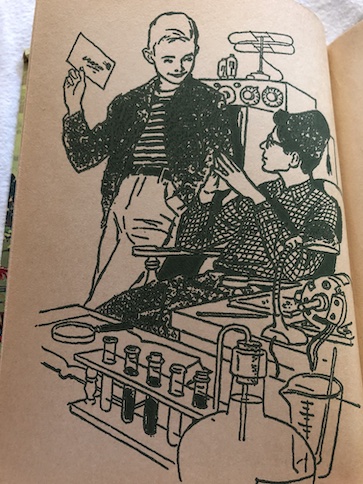
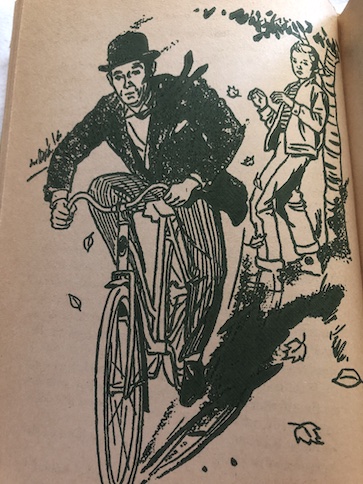


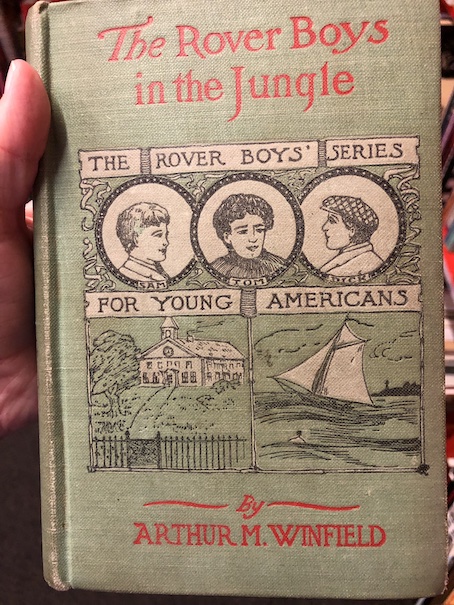


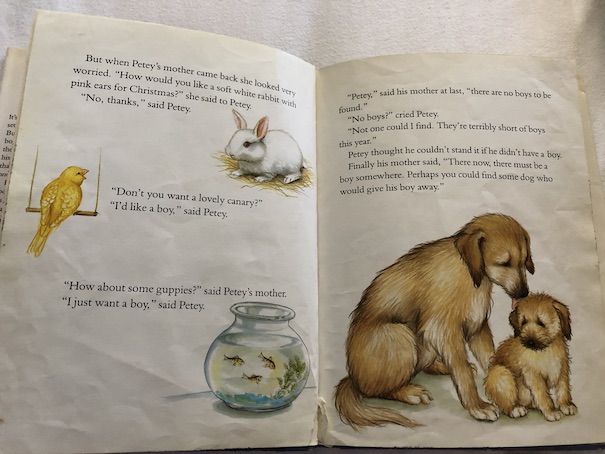
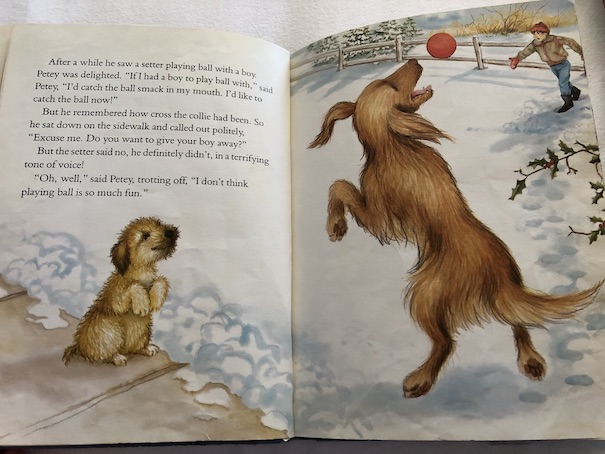


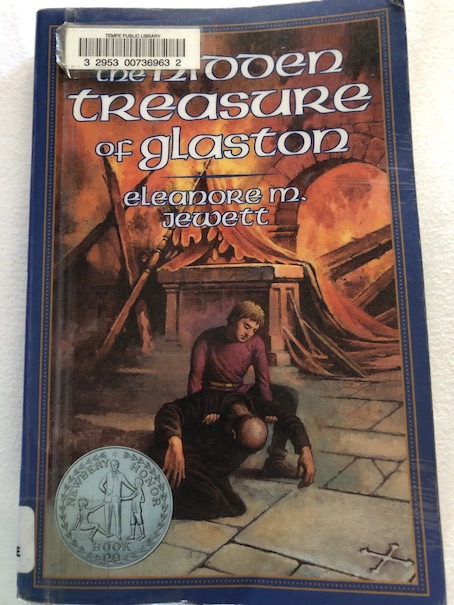
 Jestress's Forgotten Books and Stories