The Usborne Time Traveller Book of Knights and Castles by Judy Hindley, illustrated by Toni Goffe, 1976, 1993.
This nonfiction picture book for kids is part of the Usborne Time Traveller Books series, originally published in Britain.
The contents are framed as a time back in time to the Middle Ages, specifically 1240 AD, to see how people would have lived in Medieval times and what castles were like when people actually lived in them. Readers follow a specific set of Medieval characters as they go about their lives.
Our trip back in time begins with a road journey to a castle. Readers see how people in the Middle Ages traveled. The journey page also explains how the Romans built the roads Medieval people used centuries earlier, which is a good historical segue because the period that we call the “Middle Ages” begins with the fall of the Roman Empire and the withdrawal of Roman forces from the furthest parts of its empire. On some pages of the book, there are extra panels at the bottom of the page with additional information, and the first set explains how we know what people would find if they were able to travel back in time to the Middle Ages, explaining how historians have gleaned information from Medieval writings and pictures and from studying physical objects, like buildings and tools.
When readers arrive at the castle, the book explains different parts of the castle and how they were used for defense.
I particular like the cutaway pictures of the interior of the keep because I enjoy the details of people’s living quarters and daily life in the past. There is a page that shows the morning routine of the castle and how people would get dressed for the day. There are also pages about hunts, feasts, a visit to a building site, and a trip to town.
There are a couple pages about knights and how a boy would train to be a knight. There are also pages about jousts, the Crusades, and attacking and defending a castle.
The pictures are cartoon-like, but they are busy and full of details for readers to study, accompanied by notes that offer more information and historical background.
At the end of the book, there is a map showing locations of famous European castles.
The book is available to borrow and read for free online through Internet Archive (multiple copies).
The Mystery of the Disappearing Cat by Enid Blyton, 1944, 1966.
Bets is happy that her brother, Pip, is coming home from boarding school, and he’s bringing his friends to visit. Now that the children are reunited, Bets and the others hope that they will find another mystery to solve! The others ask Bets if anything interesting has happened since they were home last, and she says not very much, although someone has moved into the empty house next door. The new neighbor is Lady Candling, who keeps Siamese cats.
The boy who helps the gardener, Luke, is nice and allows the children to visit and see the cats. Lady Candling says that the Siamese cats are valuable prize-winning cats. She keeps them in a large cage most of the time for safety, but Miss Harmer, the housekeeper, takes one out to show the children. Unfortunately, one boy, Fatty, owns a Scottie dog named Buster, and Buster comes into the garden looking for him. Buster frightens the cat and chases her! The cat claws Buster after he chases her into the bushes, and they manage to get Buster under control, but they have trouble finding the cat. Miss Harmer is upset that her cat is lost, and Bets goes to search for the cat.
While Bets is looking for the cat, the gardener, Mr. Tupping comes to find out what the fuss is about. Mr. Tupping is a violent and short-tempered man. (They also emphasize that he has a hooked nose, which I think is probably a stereotype. Enid Blyton’s books often contain derogatory racial stereotypes, although later printings have been revised to remove them.) Mr. Tupping hates children and animals, and he grabs Buster and locks him up, threatening to beat him later. The children try to help Buster, but he chases them out of the garden. Bets is left behind, but she locates the missing cat, and Luke helps to free Buster and get Bets out of the garden without Mr. Tupping seeing her. However, Mr. Tupping threatens Luke with dire consequences if he ever lets the children into the garden again.
This is just the beginning of their troubles with Mr. Tupping. When Mr. Tupping finds out that Bets has visited Luke again, he storms into Bets’s own little garden, rips her strawberry plants out of the ground, burns them, and yells at her. Bets is afraid to report him to the adults because she’s afraid that Luke will get in more trouble with Mr. Tupping. Luke is a poor orphan who lives with his stepfather, and he desperately needs the job, which is the only reason why he continues to work with the nasty Mr. Tupping. Mr. Tupping is also friends with the local policeman, and the children know that the local policeman resents them for solving a mystery before he did, so they’re sure that he will side with Mr. Tupping, no matter what they say about him.
Then, Lady Candling’s prize cat, Dark Queen, disappears, and Luke is blamed for stealing her! The children are sure that Luke is being framed for the cat-napping, but the evidence is against him. Pip and Bets’s own mother saw the cat in its cage when she went to tea with Lady Candling, and Luke was working in a garden bed nearby. Even Luke says that no one else went near the cage between then and the time when the cat disappeared. When a wooden whistle Luke made is found in the cats’ cage, the children are sure that it was planted to frame Luke, but how can they prove it? Then, the cat reappears, and later disappears again! What is going on?
The book is available to borrow and read for free online through Internet Archive (multiple copies).
My Reaction and Spoilers
I found this story frustrating because all of the adults in the story are so oblivious to Mr. Tupping’s violence and aggression. He is actively abusive to the children and animals, but nobody seems to notice or even inquire about signs of trouble. Bets’s mother never seems to notice that all of her daughter’s strawberry plants have suddenly disappeared from her garden and never asks her daughter what happened. Mr. Tupping is able to just march onto the family’s property and abuse an 8-year-old girl with complete impunity, and her mother never notices a thing. (Of course, if I were the girl in question, I would have done what I used to do when I was picked on as a kid – take a deep breath, throw back my head, and scream continuously until help arrives. I figured out at a young age that if you scream from your diaphragm, you can get extra volume and keep the scream going for longer without straining your throat, and it’s difficult for the adults to ignore. You can’t scream like that at every inconvenience or people will start to ignore it, but it’s definitely an attention-getter if you use it when it really counts! Just let Mr. Tupping explain his presence and actions when the adults come to find out why their daughter is screaming like she’s being murdered!)
Mr. Tupping is a very obvious villain. He’s also the first person on the scene each time the cat disappears, the one who strategically assigns Luke to work near the cats’ cages just before the prize cat disappears each time, and the keeper of the key to the cats’ cages when Miss Harmer is away, which she is each time the prize cat disappears. Yet, even though he has means (the key), motive (he hates the kids and animals and wants to get rid of Luke), and opportunity (always the first person in the cats’ cages whenever the cat disappears and the one person who controls where Luke is working), all of the adults immediately look at Luke as the thief, never even questioning Mr. Tupping. An adult would be more likely than a kid to know where to sell a prize-winning cat (heck, as a an adult, I wouldn’t even know where to deal in black market animals), but nope, all of the adults first think a kid did it, like kids have those kinds of criminal connections to the prize cat black market. It drove me completely crazy!
It’s worse because Mr. Tupping is friends with the local policeman and gets favoritism because of it. When the kids consult their friend who is a police inspector, he finds out that Mr. Tupping has a police record for being involved in a dog-napping case (surprise, surprise), which establishes his criminal history and connections to people who deal in stolen animals. I was disgusted that the local policeman never looked into his background himself, but I felt a little better when the inspector reprimands him for making friends with a criminal and overlooking evidence that implicated him and trying to prevent the children from bringing evidence and concerns to light. The local policeman is embarrassed, but at that point, I felt like he deserved to be.
The villain was obvious, but what saved this mystery was that he actually used a clever trick to confuse the time when he actually took the cat. I knew from the beginning who the cat thief was, so the real mystery for me was how he got the cat out of its cage without people seeing him. It turns out that Mr. Tupping takes the cat earlier in the day than everyone thought the cat was stolen. The Siamese cats look very much alike, but the one that was stolen had a marking that was different from the others. With a bit of paint, Mr. Tupping makes a different cat look like the missing one for most of the afternoon, quickly using a bit of turpentine to remove the paint at a strategic moment to make it seem like the cat disappeared at a time when Luke was near the cats’ cages.
Five Go to Mystery Moor by Enid Blyton, 1954, 1974.
The girls, George and Anne are attending a riding school, and the boys, Julian and Dick, are camping when George receives a letter that her father is ill, and her mother wants the girls to stay on at the riding school for a while longer. The girls are disappointed and think that the boys will probably stay on at their camp, but they soon get a letter that the boys will be coming to the riding school to join the girls. The children are hoping that they will find another adventure when they’re all together again.
At the riding school, George has developed a rivalry with another girl called Henry. Henry’s real name is Henrietta, like George’s real name is Georgina, and like George, Henry likes to dress and act like a boy. However, rather than bonding over their shared interests and styles, George and Henry resent each other. (George makes a big deal of not liking to be a girl and wanting other people to look at her and refer to her as a boy. I’ve wondered whether the implication is that she’s actually transgender, without using that word to describe her, or if she’s merely a tomboy who things girl things are sissy stuff. Enid Blyton’s books are often full of the implication that boys are tougher and braver than girls, and it seems to be a mark of praise for a girl to be like a boy. In this particular book, it seems like both George and Henry are trying hard to be “not like other girls“, and the reason why they resent each other is that they’re both disgruntled to realize that at least one other girl is like them, making each of them seem less exceptional. They each seem to feel like the other is horning in on their shtick.) In spite of the rivalry between George and Henry, the other children like Henry. Eventually, George and Henry settle their differences. Henry joins the other children on some of their rides and explorations.
While the children are still at the riding school, a gypsy boy comes to the stables with an injured horse, asking for help. (They’re referred to as “gypsies” all throughout the book, although that’s considered a kind of insult. The proper name is really Romani, and they’re also sometimes called “Travelers.” The name “Gypsy” comes from an earlier misunderstanding that their ancestors were originally from Egypt, kind of like how Native Americans were mistakenly referred to as “Indians”, and the name stuck. I only use the word “gypsy” here because the author does, and I want to make sure that fans of the original book understand what I’m talking about. This note is here to clarify the difference. Gypsies are stock characters in Enid Blyton books, and they’re all pretty stereotypical.) The boy is told that it will take a few days before the horse is able to walk, let alone pull a caravan wagon. The boy is very upset because his father has a nasty temper, and he’s not willing to wait. The other children soon see how abusive the boy’s father is, and they’re sympathetic to him. Julian and Dick catch the father trying to steal a horse or reclaim his in spite of its injury during the night. When they ask him why he needs a horse so badly and can’t wait until his is properly healed, and he tells them that his group needs to go to Mystery Moor. Seeing that he’s not going to get another horse, the father decides to move on with other members of their party, leaving his son behind to tend to their horse and catch up to them when he can.
Julian, Dick, George, and Anne are intrigued by Mystery Moor, although they can’t imagine what could be there that would make someone so desperate to go there. The name of the place intrigues them, and they are told that it used to be called Misty Moor until some strange things happened there years ago. A wealthy family established a sand quarry there and built a small railroad line that crossed the moor, but they had a dispute with the gypsies who lived on the moor. The gypsies sabotaged the railroad, and when the sons of the family went to deal with the situation, they all vanished and were never seen again. The local rumor is that the gypsies probably murdered the sons, but nothing was ever proven, and to be honest, nobody really misses the sons because they weren’t nice to anybody else, either.
The children think that this is the adventure that they’ve been looking for, and when the riding school becomes crowded because of the arrival of new students, they decide that they want to go camping on Mystery Moor. They look forward to heading out onto the moor to see if they can find any traces of what happened to the missing family. However, there’s a modern mystery on the moor as well. The children spot a plane that flies low and circles the area, seemingly guided by a mysterious light. The children discover that the plane dropped a package, and that package is stuffed with packets of US money! Who would drop that much money from an airplane, and who was supposed to come pick it up?
The book is available to borrow and read for free online through Internet Archive (multiple copies). There is also an audiobook on YouTube. As the cover of the book notes, the Famous Five series was made into a television series, and you can sometimes find clips or episodes on YouTube.
My Reaction and Spoilers
Old and New Versions
I find that many of Enid Blyton’s mystery/adventure stories, no matter which series, are very much on par with Stratemeyer Syndicate books (Bobbsey Twins, Hardy Boys, Nancy Drew, etc.), especially the earlier ones. On the one hand, they contain many of the elements that children love in stories – mystery and adventure, independence from parents and other adults, spooky and mysterious happenings, kids who save the day, and a lovable dog. On the other, both Enid Blyton’s books and the Stratemeyer Syndicate books were revised in later reprintings to update the language and to remove or alter racially-insensitive and offensive terms.
I didn’t know how much some of the Stratemeyer books I read as a kid had changed from their original versions because I was born in the late 20th century, after many of these revisions had already taken place and didn’t read some of the original editions until I was an adult. I was surprised. Since I grew up in the US, I didn’t read any Enid Blyton books as a child at all. They’re available here, but not nearly as popular as the various Stratemeyer Syndicate series, and many American children don’t know about them at all. I’d heard of Enid Blyton books because they were referred in other books and movies I saw, but I didn’t read any until I was an adult. By that time, I wasn’t too shocked at some of the more problematic parts of the books.
“Gypsy” isn’t really a shocking word for me because there’s less emotional baggage attached to that word from the time and place where I grew up than there is attached to certain other racial words that I’d rather not mention. When I was a kid, I thought it was a more neutral, generic word than it really is, although someone did explain to me at some point what the name comes from and that it’s not really the proper name. However, when you find out that something really bothers people or that they don’t want to be called certain things, it’s better to just call them whatever they like to call themselves. I think the later reprintings of this book use the word Traveller (British spelling) instead, like this audiobook on YouTube.
As with Stratemeyer Syndicate books, I think the revised reprintings are fine for modern children, and the earlier versions are best kept for adults with an interest in vintage and nostalgic children’s literature. I find these books interesting particularly because they have the classic setup of a mystery-solving group of children and their dog, just like the Scooby-Doo mysteries, which is something that I grew up loving! The Scooby-Doo mysteries have a similar format to the Famous Five, and the working title for the original concept of the cartoon series was Mysteries Five, which might be an indication that the writers had Enid Blyton’s books in mind.
Interesting Information
One interesting piece of trivia is that the book discusses patrins, signs that the Travellers leave for each other to indicate which way they’re going. During the course of the story, the Traveller boy leaves patrins to help the other children.
The Mystery and spoilers
Like many vintage children’s mysteries, the story leans a little more toward adventure than mystery. The Travellers are definitely the ones who are there to get the dropped packets of money, and that’s why they were so worried about getting out on the moor in time. The real mystery is why they’re doing this and where the money comes from.
Toward the end of the book, the police reveal that the money is counterfeit, and that’s why it had to be smuggled into the country. Henry is helpful to the others at a point when they’re in danger, and that helps George to reconcile with her. Because the Traveller boy’s father is abusive and is about to be arrested for smuggling counterfeit money, he is likely to be sent to a foster home, which is actually good news for him because he was unhappy with his father and afraid of him. He says he would like to live a settled life in a house where he can ride his bike to school, and George promises to give him a bicycle as a reward for helping them when they needed it.
Since the children’s last adventures, Philip and Dinah’s mother has used the children’s reward money to buy a home for them, so the children won’t have to continue staying with their aunt and uncle on school holidays. They’ve also invited their friends, Jack and Lucy-Ann, to live with them, so they don’t have to return to their uncle’s house. Now, the girls go to the same boarding school, and the boys go to their boarding school, and they’re all together on holidays.
When the children are out of school for the summer again, they and their mother go to stay in a cottage near an old castle on a hill. The children are fascinated by the castle, but their mother doesn’t want them going near it because local people tell sinister stories about it. She doesn’t explain about their stories, but she seems to think that it might be dangerous. However, she does agree that the children can go have a look at an eagle’s nest near the castle, knowing how Jack feels about birds. The children realize that they can use that to get a look at the castle anyway.
They make friends with a local girl named Tassie. They call Tassie a “wild girl” because she’s a gypsy, has a pet fox, and runs around in old, dirty clothes and without shoes (she carries shoes with her but doesn’t wear them) and seems uneducated. She doesn’t seem to know what an eagle is or what a bath is (although the children’s mother insists that she get one). (No, I don’t believe that she’s ignorant for being a gypsy. I think it’s both a stereotype and a plot device.) However, Tassie knows the area very well and helps the children find their way around. Tassie is also afraid of the castle. When the children ask her what stories people tell about the castle, she says that an evil man used to live there, and people would come to see him and never be seen again. Still, the children want to explore the castle.
When they explore the castle, they find a water pump with a puddle beneath it, indicating that someone has been there recently to prime and use the pump. Jack also realizes that the eagles in the next have a young eaglet who looks like it’s about ready to fly. He persuades the children’s mother to let him build a hide (camouflaged shelter) so he can camp out and watch the birds.
While camping out, he realizes that there’s someone else in the castle besides himself. At night, he hears someone moving around and using the pump, and he thinks he sees a flashing light, like someone signaling to someone else. In the morning, he thinks maybe he dreamed it, but Lucy-Ann mentions seeing the flashing light. Lucy-Ann thought that Jack was signaling to her, but Jack realizes that it was someone else and that he wasn’t dreaming.
Exploring the castle further, he finds a hidden room with old furniture and armor and realizes that someone has been hiding there. Later, he sees some strange men in the castle and hears them speaking a language that he doesn’t recognize. Who are they and what are they doing there? Could they have something to do with the assignment that their friend Bill, an undercover investigator, is doing in a town nearby?
The book is available to borrow and read for free online through Internet Archive (multiple copies). It was also made into a tv movie serial. You can see it on YouTube.
My Reaction
Like other Enid Blyton books, there are racial issues in this book that were changed in reprintings. Enid Blyton books often feature stereotypical gypsies (more politely called Romany or Travelers these days) as characters and plot devices. Tassie is a pleasant and helpful character but still stereotypical.
I like the setting for the story. A supposedly abandoned castle makes an exciting place for our young heroes to explore. Even with the references to spooky stories about the place, the kids never really believe that the castle might be haunted. They very quickly realize that there are living people who have been hanging around the place. The sort of sinister characters using the place as a hideout are the same sort of villain characters as in the first book, which brings the kids’ friend Bill back into the story.
I enjoyed the movie serialization of the book, and I thought that it followed the story of the book well.
Philip Mannering is spending part of his summer holidays at the home of one of his teachers, doing some extra studying, which is a bit depressing. He has fallen behind in school because he recently suffered from Scarlet Fever and Measles, and he is trying to catch up. He’s not the only boy studying at the teacher’s home, but he isn’t really friends with the others.
One day, he’s doing some studying on the hillside and hears a strange voice telling him to shut the door and not whistle. There is no door on the hillside, and he wasn’t whistling. Philip is very confused until he realizes that the voice is coming from a big, white parrot sitting in a tree. Then, he hears a child’s voice calling the parrot from the garden of the teacher’s house. Philip is happy, thinking that another boy has joined the study group, but it turns out that he’s only half right.
The voice in the garden belongs to Lucy-Ann Trent, who isn’t a student and isn’t there to study. Her brother, Jack, is the one who needs to catch up in school because he never focuses on his studies. Jack has only one interest in life, and that’s birds. Jack owns the parrot, Kiki, and wants to be an ornithologist when he grows up. He is bright but disinterested in anything that isn’t related to his chosen field. Lucy-Ann is only there to spend time with him and keep him company while he gets extra tutoring. The two of them are orphans. They don’t remember their parents because they died in a plane crash when the children were very small. Most of the time, they live at boarding school, which is why they don’t spend as much time together as they like. Usually, during their holidays, they live with a fussy uncle, which is why the parrot is always barking orders at the children.
Philip also usually lives with an aunt and uncle when he’s not at school. His father is dead. His mother is still alive, but she spends most of the time working at her art agency. He also has a sister named Dinah, but they don’t usually get along. Philip is surprised at how well Jack and Lucy-Ann get along with each other because he’s always fighting with his sister, who has a temper. (Although, admittedly, he does push Dinah to lose her temper.) Strangely, Philip finds himself wishing that Dinah were also there because, when he becomes friends with Jack and Lucy-Ann, it occurs to him that she would nicely round out the group.
Philip, Jack, and Lucy-Ann become friends by bonding over their shared love of animals. Philip likes the parrot and tells Jack and Lucy-Ann that they would probably like his aunt and uncle’s house because they live by the sea, and there are many sea birds in the area. Philip doesn’t know much about birds in general, but he likes collecting various small pets, including mice and caterpillars. The teacher isn’t too happy about these animals because they disrupt study sessions.
Then, Jack and Lucy-Ann get a letter saying that they’re going to have to continue staying with the teacher through the rest of the summer because their uncle has broken his leg and can’t take them back. The children aren’t happy about that and neither is the teacher because he had other plans after the summer tutoring session ended, even though the uncle has provided a generous check for the children’s care.
Then, Philip has a wonderful idea: maybe Jack and Lucy-Ann can come visit him and his sister at his aunt and uncle’s house. Dinah has written to him that she’s bored and lonely and misses him, even though they usually fight. She would like the company, and Philip knows that his aunt and uncle could use the money the children’s uncle is willing to offer for their boarding. Jack and Lucy-Ann like that idea, but they’re not sure that their uncle and teacher would agree to let them go because they don’t know Philip’s aunt and uncle, and they think maybe Philip’s aunt and uncle wouldn’t want two strange children staying with them. The children know their plan would be best for everyone, but since they’re not sure that they can persuade the adults, they take the attitude that it’s easier to ask for forgiveness than permission and plot for Jack and Lucy-Ann to run away and join Philip on the train home. Jack and Lucy-Ann secretly send their trunks to the train station along with Philip’s and tell the teacher that they’re just going down to the station to say goodbye to Philip when he goes. Then, they quietly buy their train tickets and leave.
When the children arrive at Philip’s home, Aunt Polly is irritated because she isn’t prepared for unexpected guests. There are no rooms or beds for them, and she says that they can’t stay. However, she is surprisingly won over by Kiki, who says, “Poor Polly!” over and over in a sad tone. Not knowing that Kiki is also sometimes called Polly, Aunt Polly thinks that the bird knows her name. She often feels overworked and rarely gets any sympathy, so she appreciates this gesture from Kiki, who repeats the phrase more often, seeing that it pleases Aunt Polly. Aunt Polly is also charmed that Polly tells people to get a handkerchief when they sniffle or sneeze because she’s always saying that to Dinah. When she telephones the children’s teacher to discuss the situation and learns about the fee the children’s uncle is willing to pay for caring for the children, she decides that maybe the children can stay after all. The relieved teacher promises to endorse the check over to her.
Aunt Polly is relieved to get the extra money, and she reveals to the children that she’s been very worried about expenses because Philip and Dinah’s mother has been ill and hasn’t been able to send the money she usually sends from her job. Her doctor says that she’s run-down and needs a rest, but her job is an important source of money to the whole family. Everyone is relying on her, but since she hasn’t been able to send her usual support money for the children, Aunt Polly is worried about how she will afford the children’s school fees. Philip bravely says that he’s willing to quit school and get a job instead to help out the family, but Aunt Polly says he’s still too young. Philip has wished before that he was old enough to be the man of the family and provide for his mother. His uncle isn’t much help with money and doesn’t pay attention to family expenses, too absorbed in his academic work. Aunt Polly says that the money she’ll get from boarding the Trent children will help out.
Philip says that part of the trouble is that the house where they live is really too large. About half the house is crumbling into ruins from neglect, and the other half is really too big for Aunt Polly to maintain. Aunt Polly agrees but says that moving would be difficult because few people would want a house like this one, crumbling and located in a rather lonely spot along the coast. Besides, the children’s uncle loves it because he knows all the history of the area, and he wouldn’t want to leave. Philip thinks the only thing that will really help is when he and Dinah are old enough to get jobs. Then, the two of them will be able to help their mother afford a place for three of them.
Philip’s aunt and uncle have a gloomy man named Joe working for them, and he tells the children that the tower room where the boys will sleep on an old mattress (a prospect that seems adventurous to them instead of an inconvenience) isn’t a good room because it’s the only room where they can see the Isle of Gloom. He says that bad things are associated with the Isle of Gloom because bad people who did terrible things lived there. Jack asks Philip about the Isle of Gloom. Philip says that it’s difficult to see, even from the tower room, and it’s always covered in mist. Nobody lives there now. Jack thinks it sounds great because the birds on the island have probably never seen people before and won’t be afraid of them, so he could get some amazing pictures. He thinks maybe he’ll even find some rare birds. Philip says that he and Dinah have never been there before themselves, and he’s not sure whether there are birds there or not.
Staying at the house by the sea isn’t easy. All of the children are expected to help with the chores. There is no electricity, and they use oil lamps that need to be cleaned. The water has to be pumped from a well. Still, Jack and Lucy-Ann think that it’s just part of the adventure. They enjoy going swimming and fishing with Philip and Dinah, and Jack has fun bird-watching, but Joe the handyman is always spying on them and acting creepy. He keeps telling the children spooky stories about things lurking in the dark. For some reason, Joe tries to discourage the children from exploring the area or going out in a boat, but they soon make an interesting discovery.
While the children are exploring a cave, Philip teases Dinah, and she hits him. He stumbles back and ends up in a hidden tunnel. Philip and Jack explore the tunnel and discover that it leads to some carved stone steps and trapdoor that leads up to a storeroom that’s part of the cellars at the house. Philip says that he never knew this part of the cellar existed. The boys discover that the door to the storeroom is usually hidden by boxes, but Joe has the key and comes in. Kiki, who is with Jack as usual, makes some sounds that terrify Joe, who thinks that there are strange and spooky things in the cellar. The boys think that it’s hilarious that Joe got scared when he’s always trying to scare them. They steal the key that Joe left in the door so they can come and go whenever they like, but they wonder why Joe even hides the door to the storeroom in the first place. Philip is sure that even his aunt doesn’t know about that storeroom, or she would have mentioned it before.
Joe is definitely doing something suspicious, going out at night in a boat, fearful that the children will find out what he’s doing. The children make friends with a nice man named Bill, who is staying in an old shack nearby. Bill says that he’s there for bird-watching, but he doesn’t seem to know that much about birds or talk about them as much as Jack does. Bill has a boat and takes the children out sailing, but he doesn’t want to take them to the island and warns them to be careful of Joe. Does Bill know something the children don’t, or does he have some dangerous secrets of his own?
The book is available to borrow and read for free online through Internet Archive (multiple copies). It was first published in Britain, and some US copies use the title Mystery Island instead. The book was made into a movie in the 1980s, and you can see it on YouTube. The movie has John Rhys-Davies as one of the villains.
My Reaction
First, I’d like to get it off my chest that I didn’t like many of the family relationships throughout the book. Aunt Polly’s marriage is a little disturbing because she doesn’t have enough money to run the household, but her husband not only says that he has none to give her and wouldn’t give her any even if he did have money. He doesn’t seem to care about the welfare of either Polly, who is eventually revealed to have a heart condition, or the children in his care. He buries himself in his study most of the time and has almost no idea of what’s going on in the rest of the house or even who’s there. He’s not just obsessed with his studies, but at times, it seems like he’s deliberately hostile toward everyone else, including his wife, like their existence in the house is a terrible inconvenience to him.
I didn’t like the way Philip and Dinah were portrayed as always fighting physically in the book. Admittedly, my brother and I got into physical fights when we were little, but Dinah is twelve years old, and Philip is older than she is. Both of them seem to be too old to be acting the way they do in the story. Dinah is very emotional and has a hair-trigger temper, and Philip, knowing this, intentionally baits her into losing his temper. He likes to put creepy-crawly creatures on her or act like he’s going to, knowing she doesn’t like it and that she’ll react, and then he’s not happy when she lashes out and hits him. While Dinah shouldn’t react by hurting people physically, I could sort of understand it if she constantly has to put up with this from Philip. Living with someone who is always baiting you and escalating his behavior until you break would probably leave anyone broken in the end, and I can’t help but think that Dinah’s emotions would stabilize more if she didn’t have to deal with someone always trying to throw her off balance. Maybe she’d still be an emotional person, but I notice that it’s particularly Philip who gets her to fight physically while nobody else does because they don’t bait her into it. I found that sibling relationship kind of disturbing because Philip seems to know exactly what he’s doing, and as I said, he’s too old to be doing this stuff innocently.
Jack and Lucy-Ann seem to have a more fond sibling relationship. Lucy-Ann sometimes seems a little clingy with Jack, but I think that might be because the children are orphans and are not fond of their stern uncle, so they don’t really have anybody else to be close to except each other.
My copy of the book is one of the later editions that had some of the names and language changed to remove racially-problematic aspects of the story. In the original version of the book, the sinister handyman was a black man called Jo-Jo, and his race was unduly emphasized. I prefer the version where he’s just a weird guy named Joe.
The mystery isn’t bad. I knew right away that Joe was suspicious because he kept acting suspiciously, but the mystery is one of those type where it’s not so much about “whodunnit” as about “What is this person doing?” Readers know that Joe is up to something, but it isn’t clear for much of the book what it is. I had a couple of ideas early in the story, but neither was right.
Bill is also an interesting addition to the story. For part of the book, he looks a little suspicious because readers can tell that he’s not the bird-watcher he pretends to be, but he doesn’t seem to be allied with Joe. Bill is actually a good character, although he’s not what he appears to be, and he becomes one of the important characters in other books in the series.
Marianne has been looking forward to her birthday because her parents have promised her that when she is ten years old, she will be old enough to have riding lessons. She and her family live in town, so she doesn’t have easy access to horses, like children in the country do. Her special birthday present is going to have her first lesson at the local riding stable. Her birthday is wonderful, and the riding lesson goes very well, even if some of the more spectacular things that she had imagined before didn’t happen. Marianne would be perfectly happy except, at the end of the lesson, she is more tired than usual and feels achy. By lunchtime, she is feeling definitely ill, and she has a fever.
Marianne’s birthday illness quickly turns into the worst illness she’s ever had. Because of her illness, Marianne has to be confined to her bed for weeks, and she loses track of time. About three weeks after her illness began, she begins to feel a little more like herself and has more awareness of time and what’s happening around her. When she was at her worst, it was hard for her to be interested in anything or focus on anything, but now, she can think clearly enough to be bored and look for something to entertain herself. Marianne’s mother allows her to look through her grandmother’s old workbox, which mostly contains old needlework tools and an array of buttons, ribbons, beads, and other odds and ends that are interesting to look through and sort.
Among the things in the workbox, Marianne finds an old pencil. She immediately likes the look of the stubby old pencil and has the sense that it would be fun to use for drawing, so she picks up her drawing book and begins to draw a picture of a house with a fence around it and some flowers. Marianne’s drawing isn’t particularly great, not as good as what she pictured in her mind’s eye when she started it, but it is the start of something very special.
Although she is starting to feel better, Marianne’s doctor tells her that she is going to miss the whole rest of this term at school. He prescribes strict bed rest for her for the next six weeks. The doctor doesn’t actually say what’s wrong with Marianne, but he tells her that if she doesn’t rest, she could harm herself in a way that would last for the whole rest of her life. Even though she’s bored and says she’d rather be harmed or permanently ill than have to spend more weeks in bed, her doctor is firm with her that this is the way things are. He’ll see that she follows his instructions and recovers whether she likes it or not. Her condition is not contagious, so she can have visitors, but she must remain in bed and rest.
Marianne is sure that these weeks of bed rest are going to be horrible and boring, but soon, something strange begins to happen. She starts having dreams about the house that she drew with that special pencil. When she finds herself in the country with the house, the house is a little misshapen, and it unnerves her. The house is located on an empty, windy prairie, and Marianne can’t even get into the house because she didn’t draw a door handle on the door or put anyone inside the house who could let her inside.
Marianne realizes that she could easily remedy these things by adding more to her drawing, so when she wakes up, she adds a knocker and handle to the door. She also draws a boy looking out one of the windows of the house. The boy seems a little sad when she draws him, but she isn’t sure how to fix his expression, so she just leaves it. Although Marianne isn’t sure whether she’ll ever dream of the house again, she does. In her next dream, the door has the knocker and handle, just like she drew, and there is a sad-looking boy at one of the windows of the house. Marianne waves to the boy and asks him to let her into the house, but he can’t. The boy is upstairs in the house, and there aren’t any stairs down to the ground floor. Marianne asks the boy how he got up there without any stairs, but he says he doesn’t know. Marianne insists that she needs to get into the house, and the boy says that he needs to get out. Marianne gets angry at the boy and the situation, which seems impossible. However, this is not the end of the dreams, and the boy isn’t just a figment of her imagination.
Marianne’s mother hires a temporary governess to tutor Marianne at home so she doesn’t fall too far behind in school. Marianne doesn’t like the idea of the governess at first, but Miss Chesterfield turns out to be friendly, and her visits and lessons add variety to Marianne’s days. When Marianne asks Miss Chesterfield about her career as a governess, she learns that, unlike governesses in books, Miss Chesterfield doesn’t live with her clients. Instead, she tutors different children in their homes, visiting each for a couple hours at a time. All of the children she tutors are children who are behind in their studies or who are studying special subjects that aren’t covered at their school or whose circumstances prevent them for going to school for a time, like Marianne. One of the other children being tutored by Miss Chesterfield is a boy named Mark, who has been left partially paralyzed from a severe illness and can’t walk. Marianne asks Miss Chesterfield if Mark will be able to walk again someday, and she says that it’s likely he will if he takes care of himself in the next couple of months and does what his doctor says.
However, as with Marianne, obeying the doctor’s orders isn’t easy for Mark. While Marianne wishes that she could just be up and about instead of resting like she should, Mark is just the opposite. He loves being at home with his books, and he has trouble pushing himself to start getting up and moving again, which is what his condition really requires. Mark needs to do physical therapy to strengthen his body and retrain his muscles, but it’s difficult and painful. Marianne is sympathetic to Mark because she knows what it’s like to be ordered to do something she doesn’t want to do even though it’s for her own good. She wishes that the two of them could switch places for a time so he could do at least some of her bed resting for her, and she could have the chance to get up and move around. Miss Chesterfield says that she thinks the two of them are better off being themselves and doing what each of them needs to do.
Marianne continues to feel the urge to draw in her spare time. She discovers that she’s unable to erase anything that she’s drawn, but she can continue to add to the picture. She adds more to the background so the house won’t seem to be in such an empty void, and on the opposite page in her drawing book, she draws the interior of the house, adding the stairs that the boy said were missing. This time, when Marianne dreams of the house, she finds herself in the interior, which is mostly empty because she hasn’t drawn furniture yet. She explores the house and finds the boy sitting on a window seat, looking outside, like he did before. The boy has noticed that the world outside the house has changed since Marianne drew hills and a tree. The two of them talk about their situation, trying to understand how they came to be in the house, and Marianne tells the boy that, now that there are stairs, he can go outside. The boy tells her that he still can’t because he can’t walk. He explains to Marianne about how he’s been ill for a long time, and he has special exercises he’s supposed to do to help his muscles, but it still isn’t definite whether he’ll be able to walk again or not. That’s when Marianne realizes that she’s talking to Mark, the same Mark that Miss Chesterfield told her about.
The two children could be dream companions for each other, but Marianne becomes more temperamental the longer she’s cooped up. One day, in a fit of anger because Mark made Miss Chesterfield late to see her and ruined her special surprise present for Miss Chesterfield’s birthday, Marianne turns the house in her drawing into a prison and the rocks outside into monsters that watch the house. Marianne thinks it would be a fitting punishment for Mark to be a prisoner in their dream house, but the problem with that is that Marianne still goes to the house when she’s asleep, too. Whenever she’s there, she’s also in a scary prison, surrounded by rock monsters.
It takes Marianne an embarrassingly long time to realize that everything she adds to her drawing changes the environment of the dreams that both she and Mark share, and even when she realizes that’s the case, Mark has a difficult time accepting it. It seems like, when the kids are in the dream world, they have some trouble remembering the waking world and making connections between the two, although Marianne has more memory of her waking life than Mark does, probably because Mark is more seriously ill. While Marianne has control of the special pencil and more ability to alter the world of their dreams, she can’t change everything, and the two children will have to work together to overcome their obstacles and escape the house. The house is useful for them during their recovery, but they quickly realize that it’s also a dangerous place, and they can’t stay there forever. Although Marianne didn’t draw a way for the rocks with the eyes to move, they are moving, and they’re getting closer all the time.
The book is available to borrow and read for free online through Internet Archive (multiple copies). In 1988, the story was made into a movie called Paperhouse. Paperhouse is a much darker version of the original story, though. There was a much earlier television mini-series from 1972 based on the book called Escape Into Night, which was much more faithful to the original story, although in that version, Marianne had a broken leg from a riding accident instead of being ill. All six episodes of Escape Into Night are currently on YouTube. I don’t know of any other way to watch it if you live in the US. There are dvds available on Amazon, but they’re region coded. For sci-fi fans, I swear that the rock monsters in Escape Into Night also sound like Daleks from the original Doctor Who. The book was originally published in Britain, and the movie versions are also British. There is also a sequel to this book called Marianne and Mark, where the two children from this book meet as teenagers in real life instead of in the dream world.
My Reaction and Spoilers
To begin with, I’d like to explain that, while the concept of a drawing coming to life somewhat reminds me of Harold and the Purple Crayon, this is definitely a more serious book with greater depth. The children in the story are dealing with some serious and frightening problems, both in the real world and the dream world.
I love the way that the pictures in the book alternate between Marianne’s drawings and the children’s “real” experiences. First, we get to see what Marianne draws, and then, we get to see how her drawing comes to life in the children’s dreams. Marianne’s drawings are child-like, with crooked houses, misplaced windows, and stick figures. The dream drawings are as misshapen as Marianne’s drawings, but at the same time, they are more three-dimensional, as the children perceive them when they’re inside them in their dreams.
The book never explains exactly why Marianne is sick or what might happen to her if she doesn’t rest, although I have a couple of ideas. There are illnesses which can leave people severely weakened for long periods of time, and they have to rest or suffer lasting organ damage. When my aunt was young, she was extremely ill with valley fever. That’s probably not the illness Marianne has because valley fever comes from a fungus found in the soil in certain parts of the Americas, but I don’t think it’s found where Marianne lives in Britain. I mention it because I think that it’s similar in severity to Marianne’s illness. Most people who get valley fever don’t have it severely. In fact, most long-term residents of the area where I live have had it at some point in their lives, and it’s often mistaken for a mild flu. However, once in a while, someone has a much more serious case, like my aunt did. My aunt had to spend weeks at home, resting, and a tutor came to the house to help her with her schoolwork until she recovered enough to return to school. Even then, she had certain restrictions. Valley fever is hard on the lungs, so she couldn’t over-exert herself. For a period after she returned to school, she still tired quickly from ordinary activities, she could not take physical education classes, and she even had to use the elevator at her school (which was reserved only for those who needed it) instead of taking the stairs to classes like most of the other students. If my aunt had pushed herself too hard before she had fully built back her strength and stamina, she might have damaged her lungs permanently. I think that the doctor in this book is warning Marianne that her condition is similar, that she might cause herself some form of lasting organ damage if she doesn’t rest and let herself fully recover.
In Marianne’s case, I suspect that Marianne’s illness could potentially damage her heart because her doctor is concerned that she not get angry or over-excited, but that’s just a guess. Illnesses like that are relatively uncommon, but they do happen in real life. Depending on the condition she has, it’s possible that Marianne’s extended bed rest might also be shortened by more modern treatments, if this story happened during the 21st century. It’s difficult to say without knowing what her ailment is, but I think it’s worth pointing out that this story was written during the 1950s, which is also coincidentally the time period when my aunt had her illness in her youth.
In the movie version of the story, Paperhouse, they say that Marianne had glandular fever, but since the book never specifies, some readers have speculated that she might have had rheumatic fever, since the symptoms fit the description of her illness. I tend to think rheumatic fever is more likely because it can potentially cause a risk to the heart, and that seems to be the concern in the book, the reason why Marianne has to rest and be careful to avoid long-term damage to herself until she is fully healed. In Paperhouse, Mark is described as having muscular dystrophy, but the book actually says that Mark has polio. The first polio vaccine was developed by Jonas Salk in the early 1950s, although it took a few years for it to come into widespread use, so it’s plausible that Mark could have caught the disease before he had a chance to be vaccinated.
My parents were both in elementary school during the 1950s, and they remember getting their polio vaccinations and the boosters that they gave to kids in an edible form on sugar cubes. Other people who were young around that time period may have similar memories. Although I never saw a child or young person with polio when I was a kid, probably because all the kids I knew were vaccinated, my parents say that it was a real menace when they were young, and the serious consequences of the disease were a real fear. While my mother was still young, her aunt contracted polio as an adult. Her aunt survived having polio, but there were lasting effects. Even people who recover their strength after having polio while young or relatively young can have it come back on them when they’re older as post-polio syndrome. My mother remembers her aunt before she became ill, but by the time I met my great-aunt, she was an elderly lady in a wheelchair because of the condition. That’s part of the reason why my family believes in the benefit of vaccines in general. We’ve noticed definite improvements between generations because of them.
The characters in the story experience some personal growth from their ordeals. I liked it that, in the beginning of the story, Marianne considers some of the old-fashioned stories she’s read where girls suffer from severe illnesses or ailments that keep them in bed for long period of time. It is a common trope of 19th century and early 20th century books that characters’ lives and personalities are changed by illness because dealing with the illness and the restrictions imposed on them because of it teaches them patience and understanding. (See What Katy Did in the Carr Family series from the late 19th century for an example.) Marianne wonders if she’ll experience the same type of transformation or if she’ll still be the same Marianne she always was after her ordeal is over. Both Marianne and Mark have things they need to learn in order to overcome their respective problems. Miss Chesterfield’s belief that it’s best for them both to learn to manage their problems rather than envying each other is the correct one.
Marianne has to learn about emotional control. During her period of forced rest, Marianne’s temper gets worse because she’s frustrated with her situation, and her doctor warns her that she’s going to have to learn to keep calm because fits of temper are as bad for her health as physical over-exertion. Marianne needs to learn to relax, to not try to push herself or situations to move faster than they need to go, and to keep her temper even when she’s frustrated. When she realizes that the things she draws on paper with the special pencil have real consequences for Mark, who is also struggling through his illness, Marianne also becomes more compassionate and considerate, trying to find creative ways to help Mark through her drawings. It takes some trial and error, but Marianne does become a more thoughtful person. When it’s finally time for Marianne to get out of bed and start to strengthen herself again, she experiences some of what Mark has been struggling with, and it increases her understanding of his situation.
Meanwhile, Mark has to learn to push himself a little harder and to persevere even in the face of hardship. Miss Chesterfield has noticed that, while Mark will work and study hard at things he likes or things that are easy for him, he has a tendency to give up too soon or only make half-hearted efforts at things that are difficult or don’t come naturally to him. While his body is getting the the medical attention it needs, his spirit needs some stirring so he can find the inner strength to keep going with his efforts to restore and improve his physical health. He explains to Marianne how he feels, being physically weak and dealing with the uncertainty of whether or not the exercises he’s been given to do are even going to make a real difference or not. Because his condition is serious, even things that his doctor says are likely to help aren’t completely guaranteed to help. These feelings of uncertainty are a heavy burden for Mark to bear and another obstacle that he has to overcome. He finds it hard to continue making an effort when he knows that it might not make a difference in the long run. He needs to remind himself that, while trying his best may not be enough to help him walk again, doing nothing at all guarantees that he will lose that ability. A chance at improvement is better than no chance at all. Marianne provides support and encouragement for Mark, and seeing the results they experience from their efforts in the dream world encourages the children to do what they need to do in the waking world.
Although the book has fantasy themes, I thought that the descriptions of the children’s struggles in the real world and Marianne’s feelings about her illness were very realistic. Mark and Marianne have to use some different tactics when battling their illnesses because they have different problems. I think the book makes a good point that what’s necessary for one person’s situation isn’t always the same for another’s. Some people need to push themselves a little harder and tackle problems head-on while others need to develop a little more creativity and patience to work around their problems. In the end, Marianne and Mark do both. The children are an inspiration to each other, helping each other every step of the way.
Children’s Quick and Easy Cook Book by Angela Wilkes, 1997.
When I was expanding my cooking skills as an adult, I started doing it using children’s cookbooks instead of cookbooks for adults because of the simplified instructions. When I bought this one, I hadn’t realized that it was originally a British book. I have the American edition, but the reason why I discovered that it was a British book is that the types of recipes the book offers includes some that are more common in the UK than in the US. A friend of my family, who was originally from England, spotted it and was happy to hear that I’d be learning to make some of these recipes. The recipes provide both metric and imperial measurements for the ingredients (another clue that this is an international book). There is a section in the beginning of the book that explains how to use the book and some general cooking safety tips. In the back of the book, there is a helpful Picture Glossary that demonstrates various cooking techniques and concepts used in the book, like how to use a marinade, how to core an apple, how to separate eggs, and how to roll out pastry. It’s all useful information for beginning-level cooks.
The recipes are divided into helpful sections, including snacks, meals, desserts, and sweets. The book is heavy on desserts, candy, and sweets, but many of the recipes under the snacks section are what Americans (and possibly British people, too, although I’m less sure there) might consider as breakfasts, lunches, and general light meals. In particular, the snack section includes sandwiches of various kinds. Some of the ingredients for the sandwiches sound uncommon for the US, although that might also vary by region. I can’t recall seeing salami and cream cheese together before, but I wouldn’t mind trying it sometime. Some sandwiches also call for ingredients like cherry compote and mango chutney. I think that serving grated chocolate on croissants or other bread items is also a European thing. I’ve seen it packaged just for that purpose at international grocery stores and import stores. Some of the snacks are more like snack items in American cook books, like flavored popcorn and smoothies.
The section of Speedy Meals include omelets, two kinds of soup, tacos, and pasta. Some recipes are common ones in the US, too, like chicken nuggets, chicken burgers, and fish sticks. The Turkish Meatballs with lamb, Falafel, Tabbouleh, and Chicken Curry and Rice are less common, but are still eaten here, especially if you live in areas with international restaurants and grocery stores.
Of course, the desserts and sweets are particularly fun recipes. I particularly enjoyed making the cream puffs! There are different types of cookies included and candies like chocolate truffles and peppermint creams.
Many of the desserts would be familiar to Americans, like the chocolate cake, carrot cake, lemon cheesecake, and Baked Alaska. However, there were also a few desserts that were new to me. I had never heard of Clafouti before, and this was the first place I had heard of Knickerbocker Glories, a kind of parfait or sundae with layers of ice cream and fruit. (If you remember Harry Potter referring to a Knickerbocker Glory in one of the books, here is what it is!)
The book is available to borrow and read for free online through Internet Archive.
This is the final book in the Indian in the Cupboard series. At the end of the previous book, Omri’s father learned the secret of Omri’s special cupboard and key, that it brings small plastic figures to life.
At the beginning of this book, Omri’s father suddenly announces to his family that he wants to take them on a camping trip. It seems like an impulsive decision because this isn’t something that the family usually does, and Omri figures that it must have something to do with the secret that the father and son now share concerning their small friends from the past.
After Omri’s father discovered his secret, the two of them had a serious talk, and Omri explained to him all about his past adventures and the very real consequences that they’ve had, both in the present and in the past. They need to consider carefully what they’re going to do because Little Bear has asked them for help with some trouble that his tribe in the past is having with the British. Knowing the history of the interactions between Europeans and Native Americans, both Omri and his father know that something serious is about to happen to Little Bear and his people, but how can they help? Omri explains to his father that they have the ability to go back into the past themselves, but in order to do that, they need to find something big enough to hold both of them, and someone else would have to turn the key for them to send them and bring them back.
Omri’s father later admits to him privately that he thought up the camping trip as a way for the two of them to disappear for a couple of days without anyone asking questions. Although he proposed the camping trip, he plans to arrange for him and Omri to have a private trip by themselves, discouraging the others from going along. Omri’s father also thinks that he’s figured out what they can use to send themselves back in time – the family car. It’s big enough to hold both of them, it locks with a key, and there’s even an LB in the license plate number, which they take as a hopeful sign. But then, Omri realizes that there’s a problem with that scheme. Even though the car locks with a key, it’s not the kind of lock that an old-fashioned skeleton key could open. They need a key with a different shape, something flatter. They decide that they need the help of Jessica Charlotte, who made the last key. Fortunately, Omri has a way to talk to her because he has the plastic figure of Jessica Charlotte.
When Omri brings Jessica Charlotte back, he finds that she has attempted to drown herself in a river (an event hinted at in the last book) because of her guilt at accidentally causing her sister’s husband’s death. Omri brings back a WWII Matron who has helped them before to treat Jessica Charlotte. When Jessica Charlotte recovers, she thinks at first that she must have died and that Omri is part of her afterlife. Omri assures her that it’s not the case, that she’s still alive. She is still lamenting over having caused Matt’s death and ruined her sister and niece’s lives, but Omri explains to her that he’s Lottie’s grandson. Jessica Charlotte feels better, hearing that Lottie grew up, married, and had children, so her life wasn’t completely ruined. Omri can’t bring himself to explain how Lottie was killed in a bombing during WWII, but he asks for her help to create a new key. Aunt Jessie, as she asks to be called, agrees to help Omri, and he and his father give her their car key to duplicate.
However, when Aunt Jessie returns with the key, they realize that they’ve miscalculated. When a person comes from the past with anything they make or bring with them, it’s always small, like the miniature people themselves. Aunt Jessie’s key is a duplicate of the key they gave her, but it’s small, too small to use in the car. Omri and his father aren’t sure how to get around this problem, so they decide to go on the camping trip with Omri’s brother Gillon, just camping like normal, while they think it over.
It turns out that something magic happened to the car key while it was in the past with Aunt Jessie. When Omri’s father turns the key in the car, Omri suddenly finds himself in the past, but not the past he was hoping to visit. Because they brought some things that belonged to his Great-Grandfather Matt with them on the camping trip, Omri suddenly finds himself in India, during the time that Matt was living there. Omri is inside a puppet in a marketplace, and his great-grandfather buys him. Also, to Omri’s shock, Gillon is also inside a puppet that his grandfather has.
Their mother eventually rescues them by opening the car and turning the key. She was alarmed because it seemed like her husband and sons all passed out in the car. Omri and his father don’t have a real explanation for her, not wanting to explain that the car key is now magic. (She decides that there must have been an exhaust leak, and they were all overcome by fumes.) Gillon was knocked unconscious when his puppet was dropped on its head, and his mother takes him to the hospital, using her spare car key. (When Gillon recovers, he thinks it was just a weird dream he had because of the car fumes.) Meanwhile, Omri and his father talk about the situation, and Omri’s father reveals that, while the boys were taken to India, he ended up in Little Bear’s time because he was carrying some wampum belonging to Little Bear.
So, know they know that it’s possible for them to use their car key to go back in time, but if they try it a second time, who will turn the key for them to bring them back at the appropriate time? The only other person who can come with them on their “camping trip” who knows their secret and can be trusted to help them is Omri’s friend, Patrick. However, Patrick isn’t happy that he’s only there to help Omri and his father go back in time and that he won’t be going himself. He does agree to help them, but unfortunately, he has plans of his own while Omri and his father are occupied elsewhere.
The book is available to borrow and read for free online through Internet Archive (multiple copies).
My Reaction:
Although Omri’s father wonders at first whether it’s a good idea to try to help Little Bear because of the risk of changing the past and affecting the future, Omri has learned that it’s not quite as simple as that. During his previous adventures, he has felt an irresistible pull to use the cupboard and the key, even when he wasn’t always sure it was a good idea, and there are indications that Omri’s interactions with people in other time periods seem fated to happen. He did save Jessica Charlotte’s life when she tried to drown herself, and other things Omri has done seem to fit with wider events.
When Omri and his father are figuring out how to help Little Bear with his problems with the British in his time, they do some research about Little Bear’s time and talk about the ways that 18th century British people treated Native Americans. Knowing what Little Bear is likely to face, they feel like they have a responsibility to help him as best they can. When Little Bear explains in more detail what his people have been suffering at the hands of the British and other settlers, Omri feels guilty, knowing that he’s also British, while at the same time knowing that he was not responsible for things that happened before he was born. This is something that people still struggle with today, hearing about difficult periods of history and knowing that their ancestors (or at least other members of their society, if not literally their direct ancestors) played a role in making life difficult for others, setting up situations where real people suffered or were killed. The best Omri can do is to help Little Bear make the best possible decisions to ensure the survival of his people. Of course, being able to help with that much is part of the time traveling fantasy of this story. Real people can’t actually go back in time and intervene to influence others and change the course of history.
The books in this series aren’t for young children, and as the series progresses, they get more serious in subject matter. There is discussion of suicide, not just with Jessica Charlotte’s attempt to drown herself but when Little Bear explains that his first wife killed herself after being raped by white men. There is violence in the story when the Native American village is attacked and people are shot. Overall, the story is pretty straight-forward in the way in confronts the dark sides of history. Omri and his father advise Little Bear to take his clan to a place where they know that they will be relatively safe and among other Iroquois, but they know and admit to Little Bear that even that won’t solve all of their problems and that there will be other hardships in the future. It’s an imperfect solution to a massive problem, but Omri senses that it is best choice that they could make and that Little Bear and his family will live the safest possible life because of the decision they made, and their descendants will survive.
Omri and his father struggle with knowing that things are going to be hard for Little Bear’s people no matter what choices they make. There is no magical solution to everyone’s problems in the story, and the book doesn’t offer a firm moral or solution to Omri’s guilty feelings when he sees firsthand how badly Native Americans were treated (a form of “white guilt“, although the book doesn’t use that term). Overall, I would say that the book confronts the dark parts of history and human guilt on a very individual level. Omri and his father can’t solve the large issues completely because they can’t control them. They can’t control the past, and they can’t control other people, not even the people who come through the cupboard as miniature ones, like living toys. Everyone is an individual with their own choices to make, and every choice, even the wrong ones, changes the course of history.
After Omri saves Jessica Charlotte’s life, she realizes that what she thought was a dream before she stole her sister’s earrings was real, that she saw and spoke to Omri, and that he could have warned her about what would happen if she went through with her theft, how Matt would have died and how everyone’s lives would be changed for the worse. However, Omri did choose not to warn her because not everything was changed for the worse. After Lottie’s father died and her family lost their money, Lottie still grew up, fell in love, got married, and had a daughter. It’s true that she did die young in World War II, while her daughter was still an infant, and changing the theft of the earrings might have changed that in some way, but not without changing other things. Omri has discovered that changing things about the past, even seemingly small things, can change larger parts of history, and his psychic gift seems to guide him toward making only choices that help the flow of history instead of working against it. If he had prevented the theft of the earrings, his great-grandfather might have lived longer and so might Lottie, but if that happened, would Lottie have ever met the man she eventually married and had Omri’s mother? Omri’s father wouldn’t be happy without his wife and sons, and if Omri never existed, would some of the other things he did that impacted history have happened? Also, if Lottie hadn’t died in the bombing during WWII, would someone else have been where she happened to be and died in her place? The bomb that killed her would have fallen anyway because that was part of someone else’s choices, a person who never enters this story and whose decisions can’t be controlled. Time and history and the ripple effects caused by individual choices are complex. Omri has his psychic gift to guide him, and even his father, who admits that he never used to believe anything he couldn’t see for himself, comes to trust it.
People without this sort of magical gift have only themselves to rely on to make the best choices they can to make the world as good as possible, even in the face of others’ bad decisions. I think that a large part of the choices that Omri makes in the story and dealing with “white guilt” in real life come down to the combination of frustration and the acceptance of choices made by other people who can’t be controlled. Modern people might hate what happened in the past and feel badly if people related to them were part of it, but we don’t have the option to change things that have already happened. There comes a point where you have to accept the knowledge that you can’t control others, no matter how much you might want to make better choices on their behalf. The only person you can control is yourself.
I’m a white person, descended from colonial settlers in America, and I don’t actually see “white guilt” as a negative thing. I see it as a human thing. If you can feel real emotion at someone else’s plight, a wish that bad things didn’t really happen, or a feeling that what happened shouldn’t have happened and an honest desire to change even the unchangeable past for the better, it means that you’re a real, thinking, feeling human being with a sense of right and wrong, and there’s nothing bad about that at all. Feelings are just tools, to give us hints of what we need to do or how we need to behave in our lives. Feelings aren’t always completely accurate, but sometimes, they give us hints of things that need to be fixed or clues that whatever we did before didn’t really work, that we made the wrong choice or did the wrong thing. I think what upsets and confuses other white people about “white guilt” is the conflict between loving ancestors and wanting to be proud of them and admitting that some of them had a real dark side and did some pretty awful things. Some people have trouble dealing with that, thinking that it’s impossible to feel two things at once, loving someone and being angry with them for things that they’ve done, but it really is possible. Two things can be true at once, and you can have mixed feelings about many things.
Feelings are complex, as complex as people are, and I think it’s as possible for a person to both like and hate another person for the things they’ve done as it is to both like a sweater for the way it looks but not want to wear it because it’s itchy and uncomfortable. I think that’s about the best advice that I can actually offer to other white people trying to make sense of that feeling. Sure, that sweater looks pretty impressive. It has a nice color and a cheerful pattern, and you might think it would look impressive on you if you wore it, but honestly, it’s better if you just leave it on the mannequin. It’s overpriced, out of style, and won’t look at all impressive when it makes you constantly want to scratch all of the places where it itches. Let it go.
“God, grant me the serenity to accept the things I cannot change, courage to change the things I can, and wisdom to know the difference.”
The frustrating thing about feelings about the past and about other people’s lives is that we can’t fix those particular things. In real life, we can’t go back in time, and we can’t even “fix” other people in our own time because that’s something they have to do themselves, if they’re going to do it. You can suggest things to other people, but there’s always a point where they have to make the decisions themselves. But, the good news is that, if you can’t control other people, nobody can completely control you! The way I see it, the most useful thing about this “white guilt” is remembering that this is something we don’t want. Maybe there’s something charming about the rosy, nostalgic view of the past, but honestly, you wouldn’t be happy living there, and if you actually had to live with your ancestors, you’d probably discover that you wouldn’t see eye-to-eye on a lot of things and maybe wouldn’t even get along at all. So, why would you want to try to carry their old baggage with you into your life and spend your life and your precious time constantly trying to explain or excuse their bad choices? You’ve got your own to life.
Give credit where credit is due for both the good and the bad things, and let our ancestors’ records speak for themselves. You won’t accomplish anything for twisting your feelings into knots for trying to protect the feelings of the dead and justify their actions. They don’t even feel anything anymore. They are dead. Let them rest. We don’t want to add to bad things that have been done in the past and to keep having things in our lives to feel guilty about, and that’s okay because there are new choices to be made every single day. Put your focus there. You have a present to live and a future to plan. Knowing about the past is interesting and informative, but the past isn’t where we really live. Admire it like a nice sweater on a mannequin, take note of the price tag, and move on. We don’t have to make the same old choices that have made people, including ourselves, unhappy just because that’s the way things have been before or because we feel like we have something to prove about our ancestors. They had their chance to make the choices in their time, for good or bad (and frequently, some of each, but you can’t help that), and now, it’s our turn to make the choices because this is our time.
Speaking of bad decisions, Patrick almost gets Boone and Ruby killed because of his recklessness when he brings them back while Omri and his father were with Little Bear, which he did just because he was bored and felt left out of their magical adventure, which wasn’t really pleasant and fun for them anyway. Boone and Ruby both make it clear how they feel about that, and Omri also makes it clear that this is the end of the magic for him and Patrick. Boone and Little Bear have their own lives to live, and Omri’s gift tells him that it’s time to let them get on with living their lives without interference. Omri still has the cupboard and the key, but he no longer feels the pull he felt before to use them because he has played his part in history and in the lives of his little friends, and there is nothing more he needs to do. He doesn’t feel the need to lock these things away as he did before because he already knows that he will never feel the urge to use them again. When something’s over and the moment has passed, you just know.
Before the end of the story, Omri’s mother admits to him that she knows all about the little figures and that the cupboard brought them to life, although she never actually saw any of them herself. She has also inherited the family gift and is aware of what the cupboard does, even though she has not used it herself. All along, she’s been pretending that she didn’t know what was going on, although she really did. She’s a little sorry that she didn’t see the little people herself, but she knew that not interfering was the right thing to do. She thinks that letting the magic go and not using the cupboard again are the right decisions, and she doesn’t want Omri or his father to tell Omri’s bothers about the magic because, if they do, it will never end, and it’s really time for it to all end. This really is the final book in the series.
Ghosts, Witches, and Things Like That by Roderick Hunt, 1984.
This is a collection of information about the history of Halloween and other things related to Halloween, like folklore, games, recipes, crafts, and poems. There are sections about specific topics, starting with the section about Halloween itself (spelled Hallowe’en, this is a British book). The section about Halloween talks about the origins of the holiday and has tips for holding a Halloween party, including how to make costumes and decorations, the rules for games to play (including some old traditional games), and recipes for various Halloween treats.
Other sections of the book focus on various monsters and mythical creatures associated with Halloween, such as witches, ghosts, fairies werewolves, and vampires. There is a section of ghost stories and some fascinating historical information about spiritualists and how people have faked ghosts in the past, including the Pepper’s Ghost illusion that is still used in the haunted house in Disneyland. The sections about witches, fairies, and monsters also include a mixture of history and folklore along with some jokes and poems about the various creatures.
This is a fun book to read around Halloween. It’s a mixture of historical background, folklore, party-planning tips, games, and recipes. I think that the information about traditional games is still my favorite part.
The Curse of the Egyptian Mummy by Pat Hutchins, 1983.
The 15th Hampstead Cub Scouts are looking forward to their camping trip. Miss. Hylyard, who runs a guesthouse for retired people, lets the scouts camp on her land and enjoys having them visit her house and entertain her guests. Mr. and Mrs. Webb are coming along to do the cooking, and their daughter, Victoria, will be there, too. She’s one of their friends from school.
Things start to get interesting pretty quickly when they hear that a man died from a poisonous snake bite not far from where they are camping. The boys are eager to show off their tracking skills by helping the police find the missing snake. But, strangely, no one can figure out where the snake came from because none of the zoos in the area have reported one missing. That’s only the beginning of what becomes a very strange trip for the scouts.
Sam finds a strange bird statue in a public wastebasket and decides to use it as the scouts’ new mascot. Then, someone trashes the campsite, and strange figures are seen running around the woods at night. When Albert makes copies of the bird statue to earn his art badge, the first one is broken, and the second is stolen after some adult shoves Albert into the river near the camp. Some of the guests at Miss Hylyard’s look suspicious, and when Victoria unexpectedly stumbles into an evening’s entertainment there still wrapped in bandages from the scouts’ first aid practice, a guest who was supposedly unable to speak suddenly blurts out, “The Curse of the Mummy’s Tomb!” in Arabic (which Miss Hylyard knows from her travels with her father).
Who are these mysterious people? What is the importance of the statue? And, is there really a curse?
The book is currently available online through Internet Archive.

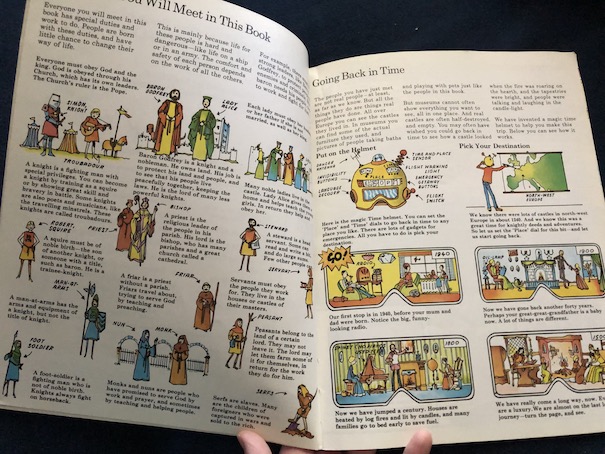
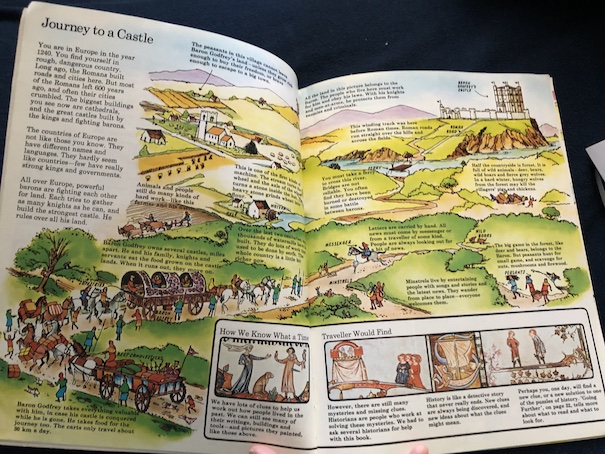
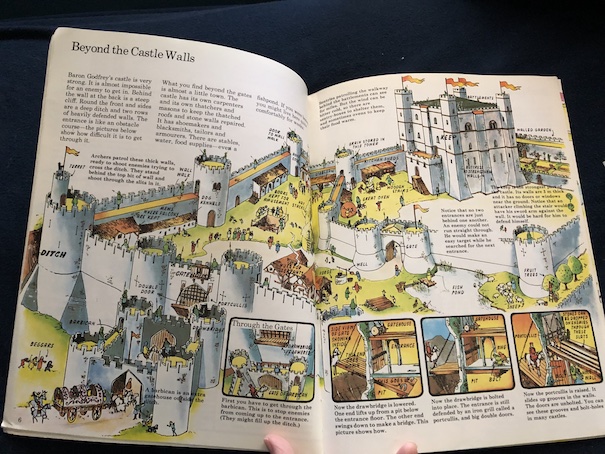


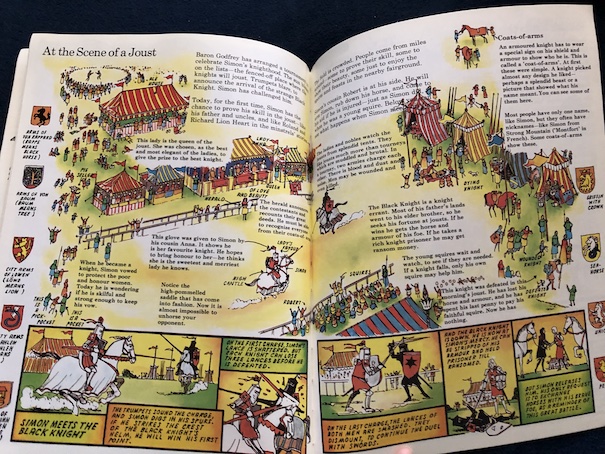


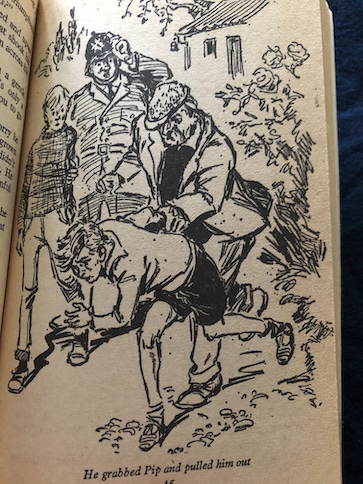

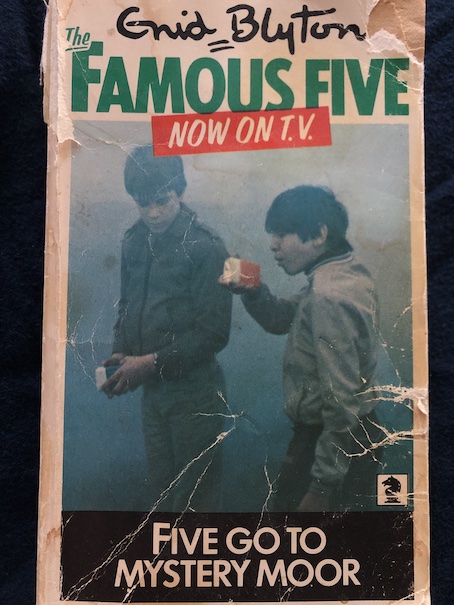

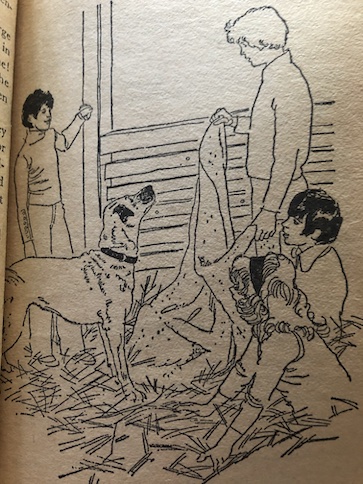


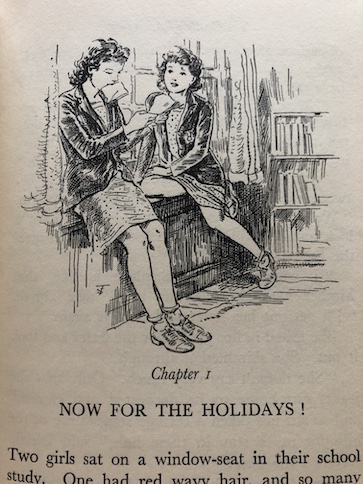
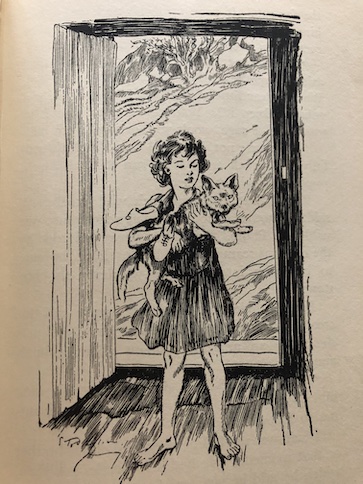
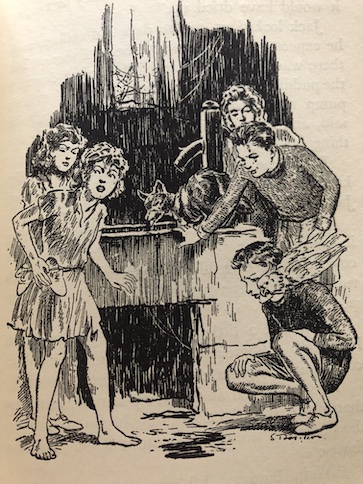


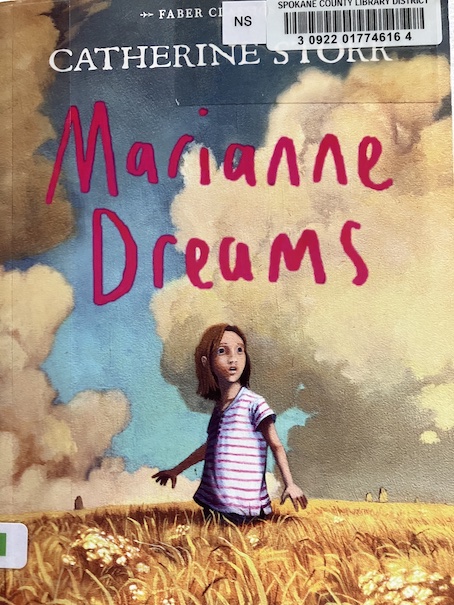


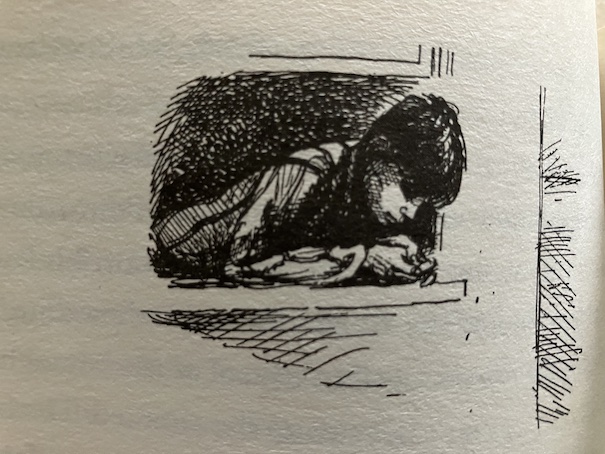
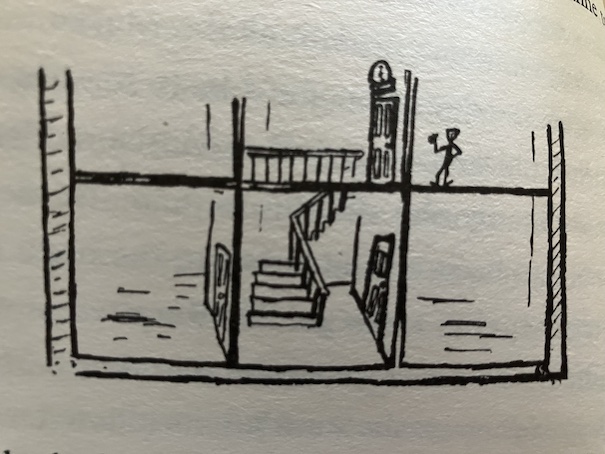

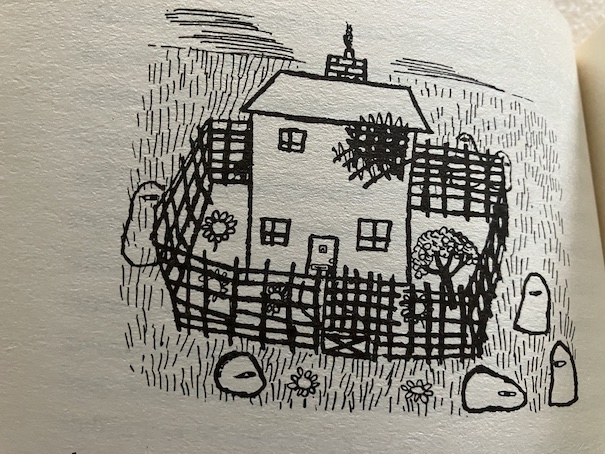
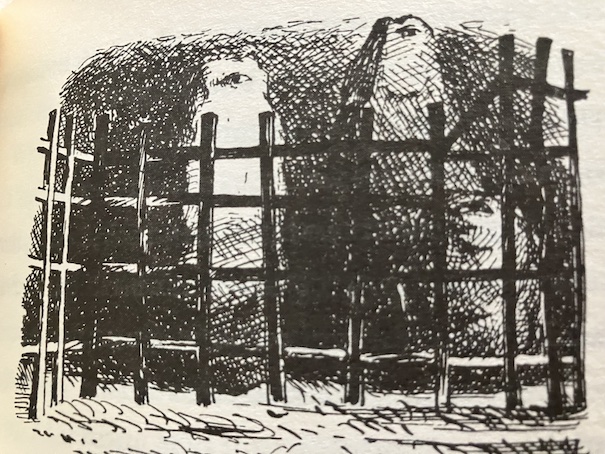



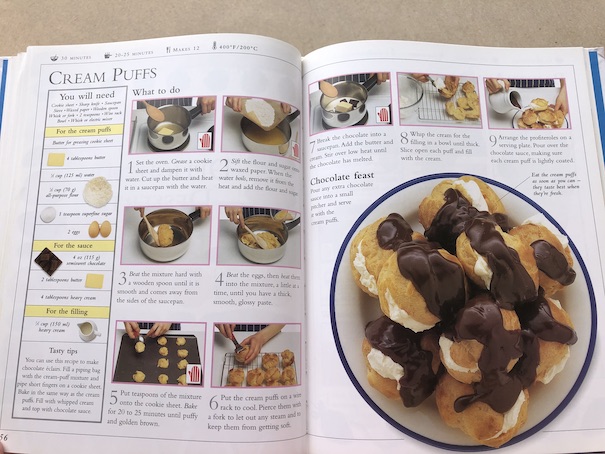
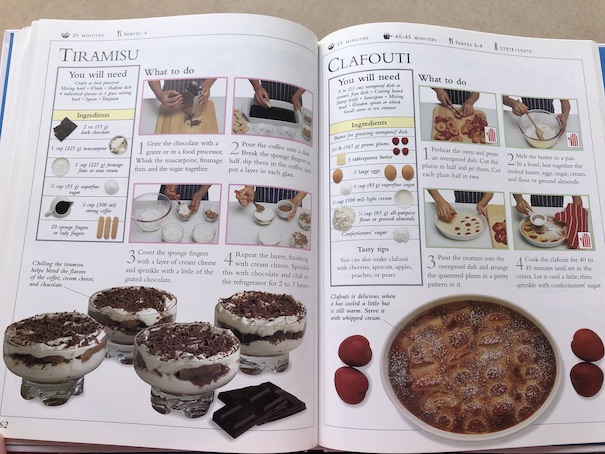
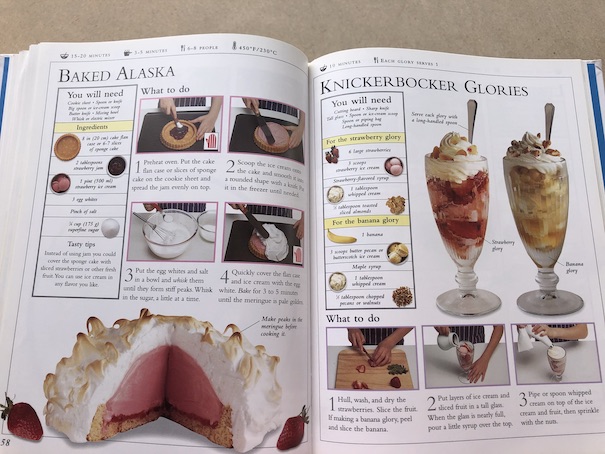


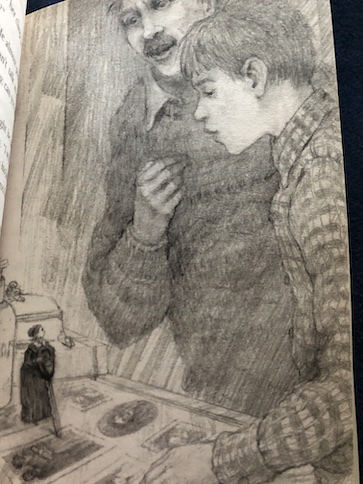

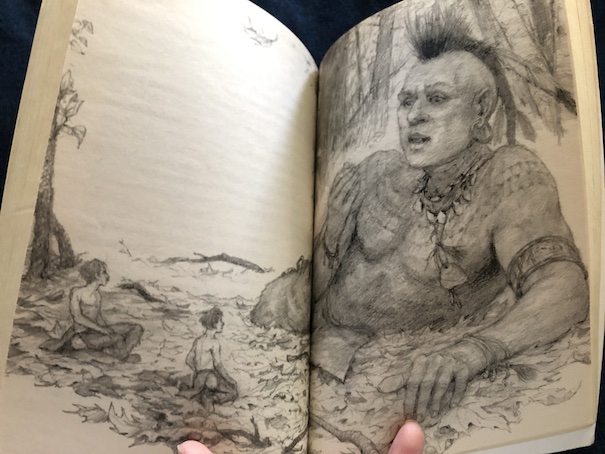

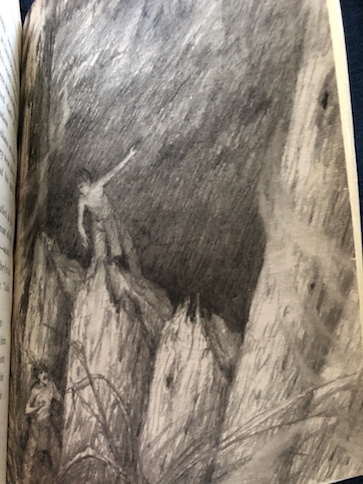
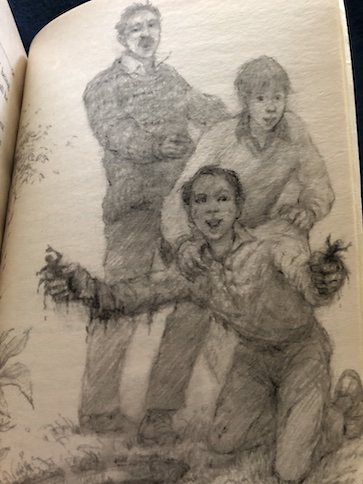


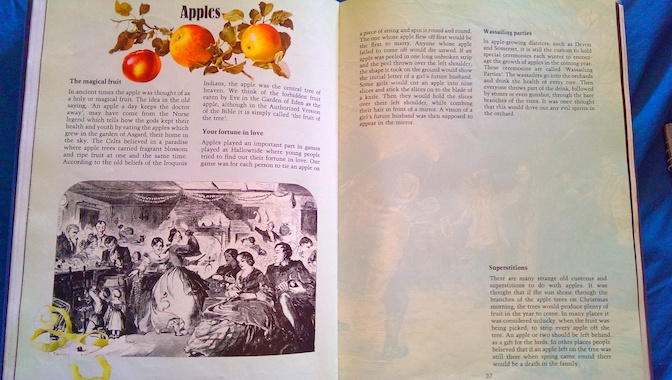
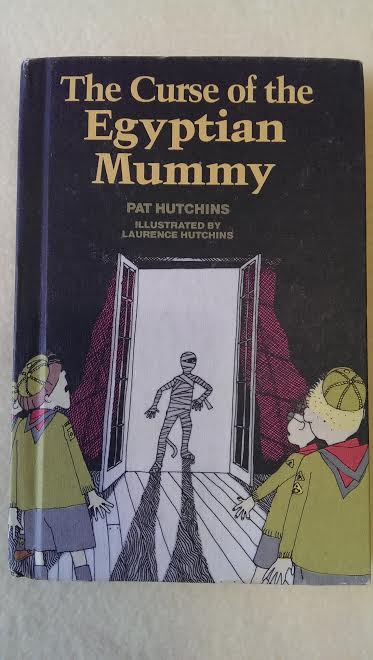 The Curse of the Egyptian Mummy by Pat Hutchins, 1983.

 Jestress's Forgotten Books and Stories