Meet Molly

Molly, An American Girl

MeetMolly

Meet Molly by Valerie Tripp, 1986.

MeetMollyThreatMolly McIntire misses her father, who is a doctor stationed in England during World War II.  Things haven’t been the same in her family since he left.  Treats are more rare because of the sugar rationing, and she now has to eat yucky vegetables from her family’s victory garden all the time, under the watchful eyes of the family’s housekeeper.  Her mother, while generally understanding, is frequently occupied with her work with the Red Cross.  Molly’s older sister, Jill, tries to act grown-up, and Molly thinks that her brothers are pests, especially Ricky, who is fond of teasing.  However, when Molly and her friends tease Ricky about his crush on a friend of Jill’s, it touches off a war of practical jokes in their house.

MeetMollyHalloweenTrickHalloween is coming, and she wants to come up with great costume ideas for herself and her two best friends, Linda and Susan.  Her first thought is that she’d like to be Cinderella, but her friends are understandably reluctant to be the “ugly” stepsisters, and Molly has to admit that she wouldn’t really like that role, either.  Also, Molly doesn’t have a fancy dress, and her mother is too busy to make one and also doesn’t think that they should waste rationed cloth on costumes.  Instead, she suggests that the girls make grass skirts out of paper and go as hula dancers.  The girls like the idea, but Halloween doesn’t go as planned.

Everyone loves the girls’ costumes, and they collect a good number of treats in spite of the war rationing, but Ricky takes his revenge for their earlier teasing by spraying them with water and ruining their costumes and all of their treats.  When the girls get home, and Mrs. McIntire finds out what happened, she punishes Ricky by making him give the girls the treats that he’s collected, except for one, which she allows him to keep.  However, to the girls, this seems like light punishment, and they’re offended that he got off so lightly.

MeetMollyRevengeBecause he laughed at the girls, saying that he could see their underwear after he sprayed them with water and ruined their skirts, the girls decide to play a trick that will give Ricky his just desserts.  The next time that Jill’s friend comes to visit, the girls arrange to have Jill and her friend standing underneath Ricky’s bedroom window when they start throwing all of his underwear out the window, right in front of Ricky.  Ricky screams at the girls that “this is war!” just as their mother arrives home.

Their mother makes it clear that war is a serious thing, not a joke.  There is a real war on, and their childish pranks are wasting time and resources (like the food that Ricky ruined on Halloween – sugar is rationed, and some of their neighbors had gone to a lot of trouble to save their rations to give the kids a few treats).  She also points out that this is how real wars start, with “meanness, anger, and revenge.”  Faced with the reality of what they were doing, Molly and Ricky apologize to each other and clean up the messes that they each made under their mother’s direction.

In the back of the book, there is a section of historical information about what life was like for civilians in America during World War II.  People with relatives overseas worried about them, but people in service had to be careful about what they said in letters home, in case those letters were intercepted by enemy forces.  Some of the luxury goods that people were accustomed to having became more scarce, although the rationing wasn’t as bad in the United States as it was in Europe (this is covered more in a later book in the series) because certain types of materials had to be saved for the war effort (like the metals used to make cans for food, which is why victory gardens were important) and because factories that ordinarily made civilian goods were converted to make equipment for the armed forces.  For example, they mention that car factories were making things like tanks and airplanes and clothing factories were making tents and uniforms.  People referred to the efforts that civilians were making to save needed materials for the war as “fighting on the home front,” reminding themselves and others that the small sacrifices that they made each day, like driving their cars less to save gas or raising food for their families, helped to make a big difference for a larger cause.

The book is currently available online through Internet Archive.

Lyddie

Lyddie

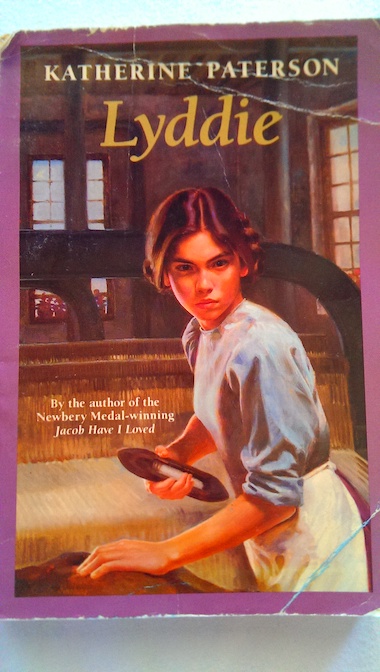
Lyddie by Katherine Paterson, 1991.

The year is 1843. Thirteen-year-old Lyddie’s father left home to go West and seek his fortune, and he hasn’t been heard of since. Lyddie helps her mother to take care of their farm in Vermont and the younger children, but they are very poor, and her mother has given up hope of their father returning home. The children’s aunt and uncle, Clarissa and Judah live nearby, but they are of little help, full of fire-and-brimstone talk. Lyddie and her brother Charlie, who is ten, more often turn to their Quaker neighbors, the Stevenses, for help. They are kinder than their aunt and uncle, although their mother disapproves of them for being abolitionists and, in her mind, heathens. Lyddie and Charlie are just grateful for their help. Because of their mother’s depression at the loss of their father, she pays little attention to the things that her children do to keep the farm going and the family together.

However, when a bear enters their house and eats the oatmeal that Lyddie was preparing, their mother, primed by Clarissa’s and Judah’s talk of signs of the end times and such, goes into a panic and sure that the world is going to end. Lyddie and Charlie let her go with their younger sisters to stay with Aunt Clarissa and Uncle Judah while they continue managing the farm as best they can. However, even though their mother sees that the world doesn’t end, she decides that she’s going to hire Lyddie out as a maid at the Cutlers’ tavern and Charlie to work at the mill because the family has too many debts and they will have to rent out their fields and animals.

Luke Stevens, the youngest of the Stevens sons, although much older than Lyddie and Charlie, gives them a ride to their new homes and employment at the mill and the tavern and promises to keep an eye on their house while they’re away. Lyddie is lonely and unhappy working at the tavern, badly missing the family farm and her siblings, especially Charlie. Then, one day, a woman visiting the tavern mentions that she’s one of the factory girls from Lowell, Massachusetts. The woman tells Lyddie that she seems like a good worker and that she could earn a good wage in the factories herself. At first, Lyddie doesn’t believe what the woman says that girls can earn there.

When Lyddie is allowed a brief visit home to her family’s farm, she discovers that Luke Stevens has been allowing a runaway slave to hide there. Lyddie isn’t sure what she thinks of it at first. Ezekial, the fugitive, frightens her because she has never met a black man before, and she knows that if she were to turn him in, there would be a handsome reward that could solve her family’s money problems. However, Ezekial seems to understand the situation that her family is in without her father. Although Lyddie and Charlie are not technically slaves, they have become a kind of indentured servant because of their family’s debts. Ezekial is a father himself, hoping to send for his family when he has found a safe place for them. Lyddie still wonders if her own father is alive, perhaps hoping to send for his family when he can. Having come to a better understanding of Ezekial, she knows that she can’t turn him in, even for the reward money.

Her talks with Ezekial make Lyddie understand that working in the tavern won’t solve her problems, though. As a maid there, she basically works all day for her room and board and has nothing else to show for it. Mrs. Cutler just sends a little money to her mother now and then and even then, she doesn’t always bother, and her mother is in little position to insist on proper wages, making Lyddie little better than a slave. Mrs. Cutler cares nothing about Lyddie or her family’s welfare, just trying to get as much labor out of her for as little as she can. Lyddie finally makes up her mind to seek factory employment in Lowell, Massachusetts, seeing it as her only chance to earn some real wages.

Life in Lowell turns out not to be as glamorous as the woman she met at the tavern made it sound, although the wages are definitely better. The company that owns the fiber mill where Lyddie gets a job has all sorts of rules and regulations for the girls who work there, even ones that intrude on their personal lives outside of work. Anxious to give the impression that all of their workers are of good moral disposition, they insist that the girls attend church on Sundays. Lyddie never had the money to pay pew fees back home, so she is unaccustomed to going to church, but finds that other girls in her position tend to go to Methodist churches, where there are no pew fees, saving their precious wages. Lyddie, who never had much time for schooling when she and her brother were trying to keep the farm going, has trouble understanding all of the terms of the employment contract that she signs but signs it anyway. Her employment turns out to be an education that changes Lyddie’s life, although not in all the ways that she had hoped.

Like Mrs. Cutler, the bosses at the factory have little real care for their workers, trying to get as much work out of them as they can for the least amount of pay they have to give them. The work is hard and the hours are long, but Lyddie keeps at it because the pay is the best she’s ever had and she is starting to save up for her family’s future. The poor working conditions contribute to health problems among the girls, and some of them petition for better working hours, but Lyddie is reluctant to do so because girls who are dismissed “dishonorably” from the factory are blacklisted all over town, and she fears not only risking the loss of her job but the potential to find a new one.

Through her interactions with the other girls and young women at the factory, Lyddie also develops into a young woman. She had previously wished that she’d been born a boy instead because a boy would have a better chance of running her family’s farm, but she comes to realize that there are opportunities out in the world for young women who are willing and able to go out and seek them. In Lowell, Lyddie gets a taste for literature through the books that her friend Betsy reads to her and acquires more lady-like behavior by watching the lady-like Amelia. Neither of them plan on working at the factory forever, and their ambitions, to get married or continue their education, cause Lyddie to consider what she really wants for her own future. Through the difficulties she encounters and everything she learns while facing them, Lyddie really becomes her own woman.

In the end, Lyddie is unable to save her family’s farm and reunite their family there. Her mother dies, and her father’s whereabouts are still unknown, so her uncle sells the farm to pay the debts. However, Charlie and her younger sister Rachel are provided for, the Stevenses decide that they will purchase the farm themselves, and Lyddie becomes reconciled to the loss of the farm through her new vision of the future. She is unfairly discharged from the factory after she catches an overseer molesting another girl and stops him because he blackens her name in retaliation. But, by then, Lyddie has acquired some money and new confidence in herself, and she begins making other plans for her future, which may include both further education and the possibility of marriage. One thing that she knows for certain is that, whatever she does with her life, she wants to move forward as her own, independent person.

The book is currently available online through Internet Archive (multiple copies).

Escape to Witch Mountain

EscapeWitchMountain

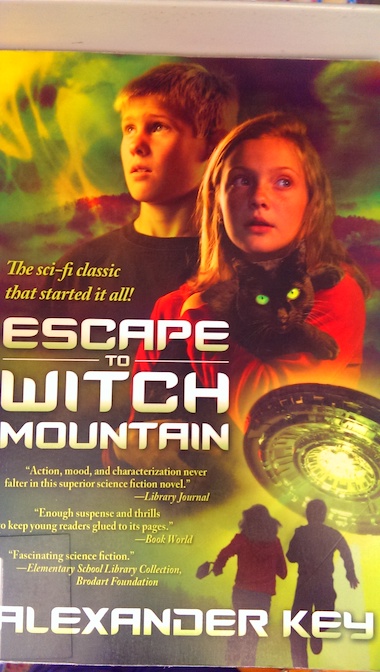
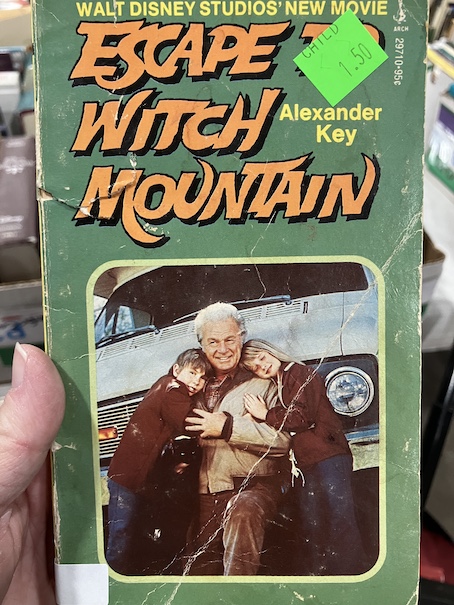
Escape to Witch Mountain by Alexander Key, 1968.

This is the book that the Disney movie of the same name was based on.  In fact, there have been three movie renditions of this book, although the 1975 Disney version is the one I know the best, and it’s the only film version to call the children by their original book names, Tia and Tony (other versions use the names Danny and Anna or Seth and Sara).  There are some major differences between the book and each of the the movies.  For one thing, most people in the book think that Tia is mute because she speaks at a frequency that ordinary humans can’t hear.  Only her brother, Tony, can hear what she’s saying.  She uses the little case with the double star emblem that she’s had ever since she can remember to carry paper and pencils so that she can write messages in order to make herself understood by other people.  In the 1975 movie, Tia can speak to Tony telepathically, but both children can speak aloud normally and be understood by everyone.

When the book begins, Tia and Tony know that they’ve always been different from other children.  They look different: they have olive skin, pale hair, and very dark blue eyes, which is a somewhat unusual combination. They can do things that others can’t: Tony can make things move with his mind, Tia can open locks without using a key or any other device, and only Tony can understand the strange way that Tia talks that others can’t even hear. They can’t remember any other home than the one they had with Granny Malone, the woman who adopted them, but now that she’s dead, they find themselves wondering who they really are and where they came from.  Tia has shadowy memories of a time before they came to Granny Malone, when they were on a boat and something bad happened to them, but she can’t quite remember what.

With no known relatives to go to, the children are taken to an orphanage, Hackett House, after Granny Malone’s death.  It’s a tough, inner-city environment, where no one has any patience with Tia and Tony’s strangeness.  However, when the children from the orphanage are sent to Heron Lake Camp in the mountains during the summer, a nun recognizes the double star symbol on Tia’s case as one that she had seen before on a letterhead, giving the children their first clue to finding their origins.

Then, a figure from one of Tia’s memories, Mr. Deranian, comes to the orphanage to claim them, saying that he’s their uncle. The children can tell that he’s no relative of theirs. They run away to see a kind priest, Father O’Day, an associate of the nun they met earlier. Father O’Day is the only one who believes the children when they talk about what they remember of their past and isn’t frightened by their strange mental powers. When the children show him a map that they found in a hidden compartment in Tia’s case, he offers to help them find the place marked on it and, hopefully, someone who knows who the children are and where they belong.

The book is currently available online through Internet Archive.  There is a sequel to this book which was also made into a movie, Return from Witch Mountain.

My Reaction and Spoilers

As the children and Father O’Day try to elude Deranian and the others who are chasing them, more of Tia’s memory returns. The children are from another planet. Years ago, their planet was destroyed when it crashed into one of their twin suns. Their people, who call themselves the Castaways, knowing that their planet would not be habitable for much longer, had already begun looking for a new home. Earth was the nearest habitable planet, so some scouts arrived early and began to create a home for them in the mountains of North America, which was the closest environment to their former home.

Unfortunately, when the rest of the children’s people came to Earth, the group that Tia and Tony were with crashed in Eastern Europe. The book was written during the Cold War, so the place where they crashed was controlled by Communists. When the Communists realized the powers these people possessed, they planned to make use of them themselves. One of Tia and Tony’s people escaped with the children and managed to get them aboard a ship heading for America. Before he died of a gunshot wound, he placed some money and a map in Tia’s case so that the children would know where to find the rest of their people. However, the children were traumatized by the experience, and Tia blocked the memory out of her mind. The ship’s captain, upon reaching the United States, gave the children to Deranian, a friend of his. Deranian, not knowing who the children were or what powers they possessed, gave them to Granny Malone to raise. Later, he found out about the children’s abilities from his contacts in Eastern Europe and tried to get the children back.

In the end, Father O’Day manages to reunite the children with the rest of their people, who take them to the community they have built on Witch Mountain, a place where locals are too superstitious to go, named for the odd things they’d seen there when the Castaways first arrived. Father O’Day plans to go there and join the community along with the children someday.

In spite of the Communists being enemies during the Cold War, Tia and Tony say that one of the reasons why their people had trouble establishing themselves in America at first was that they were unaccustomed to the idea of having to buy land to live on.  On their world, no one owned land; land was just there for people to live on and care for.  Their people’s early scouting expedition included selling pieces of their ships in order to raise enough money to buy some land in order to build their community.  Father O’Day is impressed with the Castaways’ commitment to the common good of all people and unselfish sharing.  So, although the oppressive Communist regimes of the Cold War are enemies in the book, some of the ideals of sharing and supporting the common welfare of everyone are still attractive ideals in the book.  The implication in the book is that Tia and Tony’s people are socially as well as technologically advanced and have created the best of all possible systems, a blending of ideals to create the ideal balance.

I can understand why the movies did not include Tia speaking at a frequency no one else can hear and appearing mute.  That would be difficult to show in a movie that relies on characters being able to communicate with each other, and it makes sense to replace it with an ability to communicate telepathically by choice instead.  None of the movies include the Cold War references that were present in the book, and the character of O’Day or the person who helps the children to reach Witch Mountain changes from movie to movie, but the plot of the 1975 Disney movie is still the closest to the original book.

Knight’s Castle

Knight's Castle

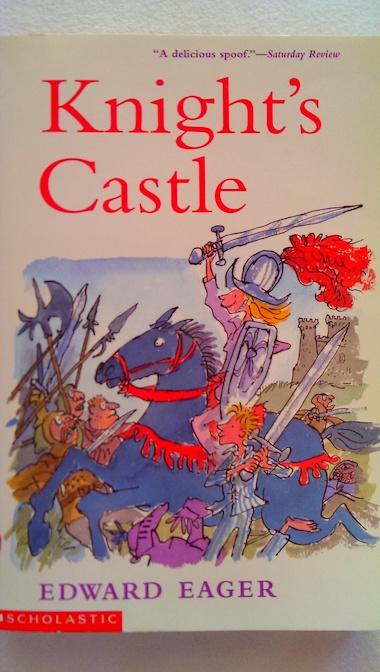
Knight’s Castle by Edward Eager, 1956.

Roger and Ann are the children of Martha from the previous two books in the series. Like their mother’s family when they were growing up, they live in Toledo, Ohio. Their Aunt Katharine (one of Martha’s older sisters) used to live close to them in the Midwest but now lives in Baltimore, Maryland. Roger and Ann don’t particularly get along with Aunt Katharine’s children, Eliza and Jack, because Eliza is bossy and Jack is only interested in photography. However, the four children end up spending the summer together when Roger and Ann’s father needs to have an operation at a hospital in Baltimore.

Like their mother and her siblings when they were young, Roger and Ann also like fantasy stories, which their father likes to read to them. Roger starts to believe in real magic when it seems like one of his toy soldiers comes to life at night. Roger collects toy soldiers, and he has over 200 of them, but this one is special because his father says that its been handed down in their family for generations. Roger calls it the Old One. It’s rather worn, so it isn’t obvious at first, but the Old One is actually a knight. Worried about his father’s illness, Roger takes the Old One to bed with him (which he thinks is more manly than taking a teddy bear to bed), and then feels it wriggling in his hand.

Knight's Castle Roger

Realizing that the Old One is magic and is coming to life when he holds him, Roger asks him if it’s part of his magic to grant wishes. If it is, then he wishes for his father to get well, and if possible, for him and his sister to have an adventure in Baltimore over the summer. The Old One doesn’t answer him immediately, but over time, he makes it clear to Roger that wishes have to be earned, and that will be the source of his summer adventure.

When the children arrive in Baltimore to stay with wealthy Aunt Katharine while their father is in the hospital, Aunt Katharine gives them presents. Ann gets a new dollhouse, and there is a toy castle for Roger. Since Aunt Katharine has also just taken all the children to the movies to see Ivanhoe, all of them become immediately interested in playing with the castle.

That night, Roger has a strange dream that he finds himself within the story of Ivanhoe, which is being acted out in his toy castle. The Old One is there as well, although he is mainly watching the action as Roger begins to take part in the story. When Roger comes face-to-face with the villain, he accidentally lets Ivanhoe’s plans slip to him. Things are looking pretty bleak when Roger suddenly realizes that the castle is still a toy and everyone around him is just a lead soldier. This revelation ends the magical adventure and brings him back to reality. However, Roger is disappointed that he ended the adventure so early when perhaps he could have done something really heroic.

Seeing the toy soldiers scattered around instead of poised for the battle they were planning the night before, Eliza and Ann think that Roger was just playing with the castle without them, but he explains to them what happened. The girls were just reading The Magic City by E. Nesbit, and they start building their own “magic city” out of random things from around the house, surrounding the toy castle. Roger is upset about the city because he says that it doesn’t fit in with the Ivanhoe story, and he’s sure that it will ruin everything, maybe from preventing the magic from working again at all. The Old One tells Roger that magic works by threes, so the next opportunity for magic will be in three days.

Knight's Castle Magic City

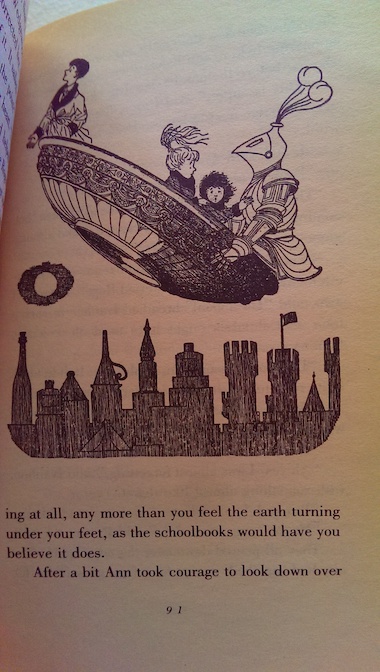
As it turns out, the city does end up becoming part of the story when the magic brings it all to life on the third night. Roger, Ann, and Eliza find themselves in the middle of the city, surrounded by knights attempting to drive modern cars. Ivanhoe has become a fan of science fiction books, via the public library in the city that the girls built. Although Ivanhoe has turned into something of a geek, the children persuade him to come on a mission to rescue the captive Rebecca, and they end up traveling in a flying saucer (made from a real saucer) to the Dolorous Tower, where the adventure ends as soon as Eliza remembers that the villain threatening them is still just a lead soldier.

Knight's Castle Flying Saucer

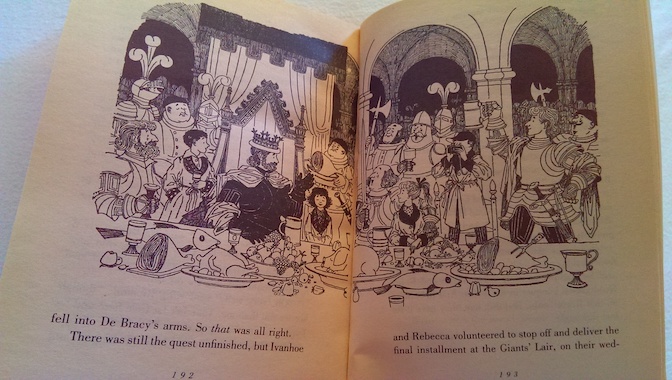
It was an even weirder adventure than Roger’s first one, but by now, the children are starting to understand the rules that go along with the magic. Jack, who says he doesn’t really believe in magic, accompanies the other children on the next adventure, as they try to prove to him that it’s real. They end up having to rescue some of the others from the “giant’s lair”, which turns out to be Ann’s new dollhouse. The dolls are angry that Ann has been neglecting them, only paying attention to the dollhouse when she and Eliza needed to borrow things for their magic city. They manage to escape again by remembering that the dolls are just dolls.

However, Roger is still worried about their father, who is about to undergo his operation. The Old One had told him that wishes needed to be earned, and he doesn’t think that they’ve managed to accomplish much in their adventures. Roger thinks that they need to do something really heroic so that his wish for his father to get better will come true. The Old One gives Roger a rhyme, hinting at what the children need to do on their next adventure, but Roger doesn’t understand what it means, and he doesn’t know if he can figure it out in time.

Actually, it is Ann who eventually realizes what the rhyme means and provides Roger with the “wisdom” that he needs to earn his wish. All throughout the story, Roger was criticizing his little sister for things she did wrong, saying that she was too little and only a girl. Because Roger thinks of her as being just his little sister, he overlooks what she has to contribute to the adventure. Roger’s acquired wisdom is to value the contributions of others and not underestimate their ability to contribute. Ann, being young and shy, frequently doubts herself, but she also learns confidence when she realizes that she has the answer to the riddle. Jack and Eliza learn lessons as well. Doubting Jack learns to believe in magic, and Eliza learns that she can’t always be the boss, that sometimes it is better to let someone else take the lead when they’re the right person for the job. (Although, she does say at the end of story, “If that wouldn’t be just like that magic’s impudence! Trying to teach me moral lessons!”)

Like other books in this series, there are a lot of references to popular pieces of children’s literature and jokes about things that happen in children’s stories.

The book is currently available online through Internet Archive.

Knight's Castle Feast

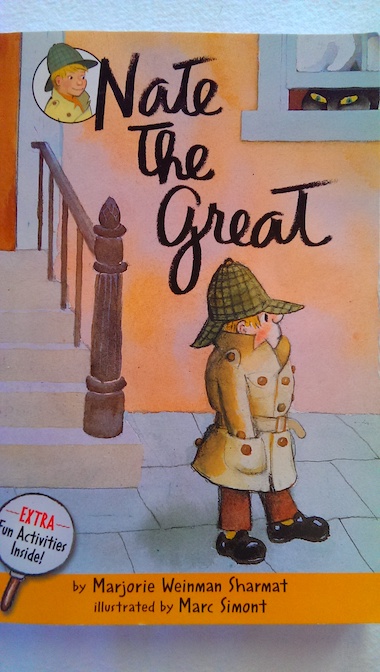
Nate the Great

NateGreat

Nate the Great by Marjorie Weinman Sharmat, 1972.

Nate is eating his favorite breakfast, pancakes, when his friend Annie calls him from her house down the street, asking for his help in finding a lost picture. When Nate arrives at Annie’s house, she says that she painted a picture of her dog, Fang, and then left it on her desk to dry, but it disappeared.

NateGreatBreakfast

After establishing that Annie’s house has no trapdoors or secret passages, Nate declares that this will be a very dull case. But, of course, he investigates anyway.

NateGreatAnnie

Nate searches Annie’s room, and not finding the picture, asks Annie who else knew about it. Annie says that she showed it to Fang, her little brother Harry, and her friend Rosamond.

NateGreatYellow

Determining that Fang didn’t bury the picture of himself and that Rosamond is only interested in cats, that just leaves Harry. But, if Harry took Annie’s picture, why did he take it and what did he do with it?

NateGreatHarry

My Reaction

This is a fun mystery for young children, one of the first mysteries that I read as a kid. The pictures in the book have clues, and it helps if kids know how to combine colors to create new ones (hint).

Later editions of the book also have a section of activities in the back. Most of them have to do with art and color, and there is also a recipe for pancakes.

Mystery Behind Dark Windows

MysteryDarkWindowsMystery Behind Dark Windows by Mary C. Jane, 1962.

Recent years have brought misfortune to the formerly wealthy Pride family.  First, Tony and Ellie’s father was killed while on a business trip on behalf of the family’s mill.  Then, the workers in the mill went on strike, and the children’s grandfather died.  Their Aunt Rachel blames the strikers for putting stress on her father while he was still grieving for his son, thereby causing his death.  Because of that and because she doesn’t believe that she can handle the running of the mill herself, she has closed down the mill, putting all of the workers out of a job.

The townspeople of Darkwater Falls struggle to get by without the mill and are angry with the remaining members of the Pride family for the lay-offs, but Aunt Rachel thinks that their suffering is earned and so does nothing to help.  If Aunt Rachel would be willing to sell the mill to someone who would put it back into good use and employ people, the community’s problems would be solved, but Aunt Rachel can’t bring herself to do that, in spite of the offers she’s received and the urging of the family lawyer, Mr. Ralph Joslin.  She has high hopes that Tony might revive the mill one day when he’s grown up, and in the meantime, she wants to punish the strikers with unemployment and underemployment.  However, Aunt Rachel, absorbed in her personal pride and bad feelings, is ignoring some serious issues.  The taxes on the disused mill are costing the family dearly, the equipment is rusting, and Tony isn’t even sure that he wants to go into the family business.  Tony and Ellie are unhappy with their family’s situation, their aunt’s bitterness, and the way many of the townspeople now look at them, but they’re not sure what to do about it.
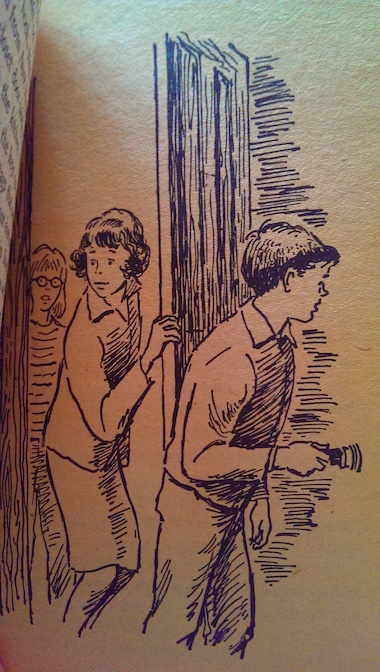
MysteryDarkWindowsMillSearchThen, one night, Ellie goes out to look for her aunt’s missing cat and hears someone in the old, supposedly empty mill.  When she tries to tell Tony, he doesn’t take her seriously, but Ellie knows what she heard.  Ellie later goes back to the mill to take another look at the place, and she sees Jeff, a boy from Tony’s high school, hanging around.  Later, she confides what she’s heard and seen in Hank, an old friend who lives on the other side of the river, and Violet, another girl from her class whose family has suffered since the closure of the mill.  The two of them start helping Ellie to investigate.

Some people in town have become concerned about children in the area getting into trouble, and they think that maybe some of the local youths have formed a gang.  Ellie worries about Tony, who has started sneaking out of the house at night to hang out with friends.  Is he now part of a gang?  Are he and his friends the ones who were sneaking around the old mill? Or could it be some of the disgruntled townsfolk, bitter about the mill remaining empty and not providing much-needed jobs?

While the kids have a look inside the mill, they discover that someone has been using the place as a hideout.  A fire at the mill reveals a number of secrets and sheds light on a town and a family caught in a cycle of bitter feelings and revenge.  Aunt Rachel is stunned when some of the townspeople accuse her of setting the fire herself in order to get insurance money for the mill.  The fire was clearly arson, and since Aunt Rachel has gone out of her way to make life difficult for people in town, many of them would be ready to believe just about anything of her.  It’s up to the young people to put the pieces together and reveal the true arsonist before the mill, the town, and the Pride family are completely destroyed.

Many of Aunt Rachel’s decisions are guided by a mixture of grief and anger, but she is also stubborn and prideful.  The Pride family was aptly named.  Although they have suffered misfortune, their privileged position as the (former) main employer of the community has given Aunt Rachel the sense that she and others in her family could do no wrong.  Aunt Rachel is absorbed in herself, her own feelings (which she places above others), and the past to the point where she feels justified in deliberately causing harm to her community and the people in it, failing to see the consequences of her actions, even the effects that her attitude has on the orphaned young niece and nephew in her charge.  Ellie feels like they don’t have a real family because her aunt’s bitter feelings prevent her and her brother from getting close to their aunt.  Her aunt’s actions have also made it difficult for her and Tony to get along well with other members of the community, further isolating them from comfort in their own grief.

In a way, the fire brings Aunt Rachel back to reality, forcing her to see the consequences of her actions (and inaction).  It comes as something of a shock to her that, while she felt fully justified in her bad feelings for the town, they are also fully justified in feeling badly about her.  Somehow, it never occurred to her how someone, doing the things she’s been doing and saying the things she’s been saying, would look to the people she deliberately set out to hurt.  For most of the story, the only feelings that were real to Aunt Rachel were her own.  Even when she thought about how people hated her, she didn’t think that what they thought would matter until she began to see how it was affecting Ellie and Tony as well as the other children in town.  Ellie can see that many things would have been resolved sooner if both her aunt and her brother could open up and discuss things honestly, both within the family and with other people.  Although neither of them set the fire, their secretiveness and self-absorption at first create the impression that they did.  Ellie’s eventual outburst at her aunt and the real guilty person force both of them to acknowledge the reality of their actions and motives.

I was somewhat fascinated by the motives of the arsonist, who understands the effects that Aunt Rachel’s bitterness and revenge have been having on the young people in town, even her own nephew, better than she does.  This person was wrong in the path he tried to take to fix the situation, but he does correctly see that unemployed men not only lack the money they need to properly take care of their families but may also set a bad example for boys and young men, either through the habits and attitudes that they let themselves fall into or by becoming too absorbed in their difficulties to see what’s happening to their own children.  I also agree with his assertion that those responsible for putting people out of their jobs bear some responsibility for the results of their actions, something which resonates in today’s economy, where many people are still unemployed or underemployed.  The Pride family’s previous high standing in the community was directly because of their ability to employ people and improve the lives of others.  When they began making life hard for others and refused to use their ability to help people, they lost that standing.  Aunt Rachel was just the last to realize it, which was part of the reason why she was surprised to discover just how badly the town thought of her.  She didn’t have a good reputation because she had done nothing to earn one, no matter what her family used to do.  She was no longer using their powers for good, so she turned herself into a villain.  However, it’s important to point out that the arsonist isn’t really in the right himself because, as Ellie points out, the spirit behind his actions isn’t much different from her aunt’s.

Ellie is correct in pointing out that both her aunt and the arsonist were wrong, not just because of what they did, but because of the feelings and motives behind it.  In their own way, each of them set out to deliberately hurt others because they had each been hurt.  Which of them was hurt first or hurt worse ultimately doesn’t matter.  Their mutual desire for vengeance against each other not only hurt the people around them but kept each of them from doing what they needed to do in order to heal their own wounds.  That is also a message that resonates today, in these times of political division, with two large parts of society trying to one-up each other and even actively harm one another, largely because they can’t stand the idea of someone wanting something or believing something that they don’t.  Whatever the circumstances, when people focus on winning on their own terms, no matter what the cost, everyone loses in the end.

Toward the end of the story, as Aunt Rachel and the arsonist begin making grudging apologies to one another and reluctant steps to fix things, Ellie decides that grudging and reluctant aren’t good enough and finally gets up the nerve to tell them what she really thinks, what they most need to hear:

“Just selling the mill won’t make things better . . . It’s the way [they] feel about it that’s wrong. That’s what made them act the way they did in the first place. They just wanted to get even with people, and hurt people, because they’d been hurt themselves. And they feel the same way still. You can see they do.”

How much can people help what they feel? It partly depends on what people choose to do about their feelings.  Actions guide feelings, and feelings guide actions.  Aunt Rachel and the arsonist indulged their bad feelings, nursing them, amplifying them, and making them their first priorities, the guiding force of their actions.  As long as they keep doing that, Ellie knows that the problems aren’t really over, and everyone will remain trapped in this bad cycle.  Ellie’s honest outburst finally breaks through to both of them, showing them what they really look like to others and making them reconsider their feelings and priorities.

One of my favorite characters in this story was Mr. Joslin, the lawyer.  Although he looks a little suspicious himself for a time, he is actually a good man, who looks after the family’s interests and genuinely cares about them as well as about the town.  He is the one who convinces Tony to be honest with his aunt about the friends he hangs out with and helps persuade Aunt Rachel to see things from others’ point of view.  He loves Aunt Rachel, in spite of her faults, and is honest with her about those faults, telling her what she needs to hear.  Of all the characters, with the exception of Ellie, he seems to have the most insight into other people’s feelings and situations.  He supports what Ellie says, quoting Lord Bacon, “A man who studieth revenge keeps his own wounds green, which otherwise would heal and do well.”

Addy Saves the Day

American Girls

AddySummer

Addy Saves the Day by Connie Porter, 1994.

Now that the Civil War is over, families are looking forward to the soldiers returning home and reuniting with loved ones.  Some families have been split forever because loved ones died in the war.  Addy‘s family still doesn’t know what happened to her brother Sam or her little sister Esther.  She and her parents have been making inquiries at various aid societies that have been helping people who were sick, injured, or displaced by the war, but so far, they haven’t received any word about Sam or Esther.  To help raise more money for their search, they’ve started growing vegetables in a community garden that they can sell.

The Walkers aren’t the only family in this position, and their church has decided to hold a public fair to raise money for victims of the war and families in need.  Addy and Sarah are looking forward to taking part in the fair, but they are annoyed because they’ll have to work with bossy Harriet, a snobby girl from their school.  Harriet’s family is wealthier than most black families, and Harriet loves to brag about the things they have that others don’t.  Although many families, like Addy’s, are worried about not knowing where their relatives are or whether they are alive or dead, Harriet brags about knowing exactly which army unit her uncle is in and what a distinguished career he has had.  Harriet is eager to take part in the fair and tell the other children what to do, but her family doesn’t need any charity themselves.

Harriet tries to tell the children’s group at the church what they should do for their act at the fair, and it mainly involves her being the star of the show.  However, the group decides to take Addy’s suggestion instead.  They are going to make puppets out of old thread spools and put on a puppet show.  They can also sell some of the puppets they make.  Addy is proud that her idea was the one that the group chose because she thinks of it as a victory over snobby Harriet, but her parents remind her that the fair isn’t supposed to be a contest.

The purpose of the fair is to raise money to help people, and no one is supposed to compete with anyone.  If the act for the fair is going to be a success, Addy and Harriet will have to find a way of working together to make it happen.  When Harriet picks a fight with Addy while the children are making their puppets, the minister’s wife tells them that she’s going to make them work with each other at the puppet show, forcing them to sort out their differences.

It isn’t until Harriet receives some bad news that she comes to understand the pain that other families, like Addy’s, have been feeling, and Addy comes to see that, in the end, Harriet is just an ordinary person, a little girl with feelings that can be hurt.  With a new understanding of each other, the girls find the motivation that they need to work together and make the fair a success.  Then, when someone tries to steal their group’s hard-earned money, the two of them find a way to stop the thief and get the money back!

This is the book where Addy’s brother rejoins the family.  When he was freed from slavery, he joined the Union army and lost his arm to a battle wound.  He shows up at the fair and recognizes the jokes and riddles Addy tells at the puppet show as ones that he used to tell her.

In the back of the book, there is a section with historical information about the changes taking place in American society around the time of the Civil War with increased immigration and urbanization.  It describes public parks and monuments built after the war.  Since this book took place in summer, it also talks about what people would do in order to cool off from the summer heat.  Wealthier people would travel to resorts, but poorer people would make do with enjoying the relatively cool public parks, swimming (less so for women and girls than men and boys), and taking part in outdoor activities.  In all cases, the various summer activities were still segregated by race with separate areas in public parks and sports teams for black people.

AddySummerHistorical

Jumanji

Jumanji

Jumanji by Chris Van Allsburg, 1981.

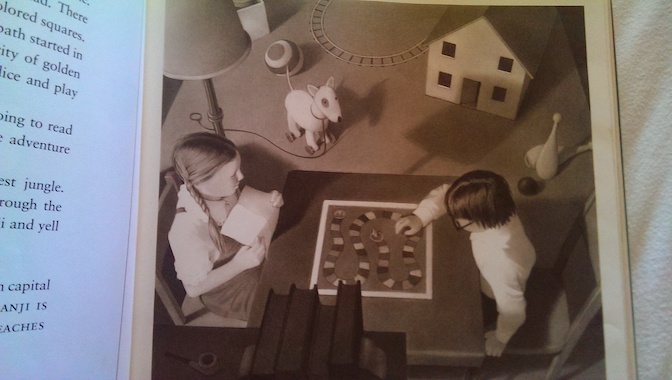
Judy and Peter, a brother and sister, are left home alone while their parents go to an opera. In spite of their parents’ warning not to make a mess because they’ll be bringing guests by later, the kids scatter all of their toys around while playing. Then, the kids go to the park to play for awhile, and they find a board game labeled Jumanji with a note that the game is free to anyone who wants to play it. Judy and Peter decide to give the game a try and take it home.

JumanjiPark

Jumanji turns out to be a kind of race game. Players are supposed to make their way down a path through a jungle, facing all kinds of dangers, until someone reaches the golden city of Jumanji. The instructions warn them that once a game has begun, it will not be over until one of the players reaches Jumanji.

JumanjiGameStart

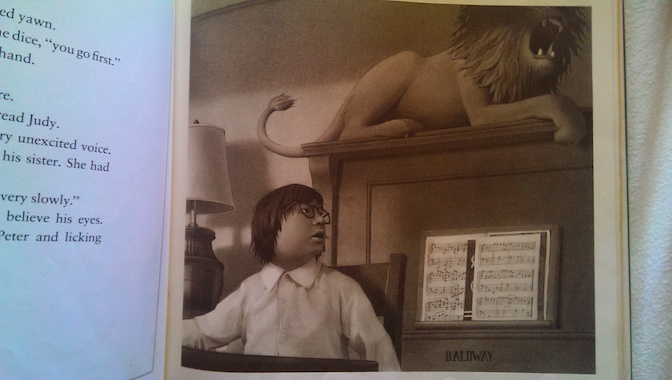
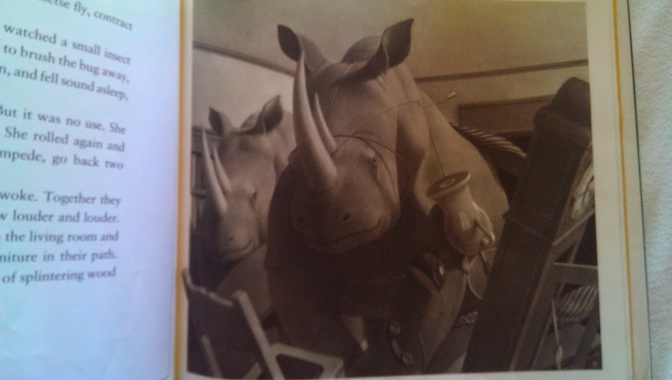
At first, Peter thinks that the game is boring and easy, but it soon becomes apparent that things that happen in the board game are starting to happen in real life when a live lion suddenly appears after an encounter with one on the game board.  Peter is scared and wants to stop playing, but Judy reminds him that they can’t stop because the game won’t end until one of them reaches the end of the path on the game board. Until the game ends, they’re stuck with the lion and anything else that happens to appear because of the game. They have no choice but to keep playing, facing each danger as wild animals rampage through their house.

JumanjiLion

Chris Van Allsburg books always have amazing illustrations, and the pictures in this book are especially good!  At the end of the book, the children see two other children find the game, which leads to the sequel, Zathura.

JumanjiRhino

There is a movie version of this book, but the movie differs greatly from the original story. In the movie, the two kids were friends, not brother and sister, and the boy ends up trapped in the game for a period of years until, finally, a new set of kids starts playing and helps the original players to finish their game.  When their game ends, the original children are returned to their own time, and no one but them knows that they were ever gone.  Things turn out better for the future children as well because the older players make things better for everyone in their own time.  There were no players stuck in the game in the original book, and everything takes place during a single day.

The book is currently available online through Internet Archive.

JumanjiParents

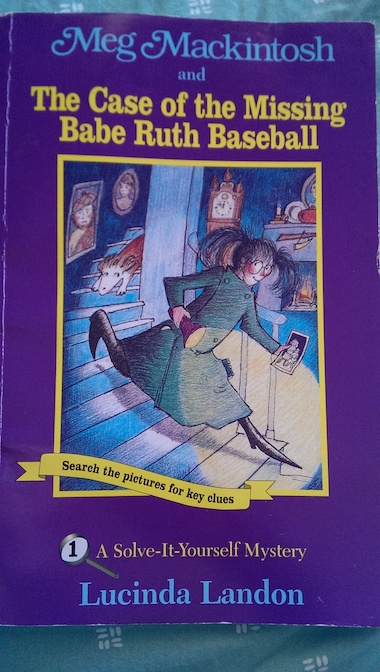
Meg Mackintosh and The Case of the Missing Babe Ruth Baseball

Meg Mackintosh Mysteries

MMBaseball

Meg Mackintosh and The Case of the Missing Babe Ruth Baseball by Lucinda Landon, 1986.

MMBaseballAlbumThis is the first book in the Meg Mackintosh series, and it was the first mystery story that I ever read, when I was about seven years old.  It started a life-long love of mysteries!

Meg’s grandfather shows Meg and her friend Liddy some old family photographs and tells them about the time when his cousin Alice took his prize possession: a baseball autographed by Babe Ruth.  Alice was a bossy girl who always liked to tease him, and so she created a kind of treasure hunt, challenging him to solve it in order to get the baseball back.  Unfortunately, he could never figure out the clues and still doesn’t know what happened to the baseball.

Meg’s brother, Peter, has a Detective Club, but he refuses to allow Meg to join, saying that she needs to prove that she can solve a mystery.  Seeing this as her chance, Meg decides that she’s going to solve this old puzzle and find the Babe Ruth baseball!  However, she also has competition from Peter, who thinks that he’s the better detective and tries to send Meg off in the wrong direction.

The book is currently available online through Internet Archive.

My Reaction

All of the books in the Meg Mackintosh series allow readers to try to solve the mysteries along with Meg, stopping periodically to ask them if they’ve noticed a clue that Meg has noticed or if they know what the significance of a clue is.  There are pictures to help, and readers are invited to stop and study the details before moving on. I think this is a good way to introduce children to puzzle-solving and help them develop critical thinking skills and an ability to notice details. I would recommend adults reading these books, or at least the first one or two along with children, so they can discuss the stories and clues with them, helping them spot clues as they begin to get used to the format of the books.

This is an excellent series for introducing children to the mystery genre for the first time! When I was young and just learning what mysteries were, I was fascinated to discover that I already had all of the knowledge I needed to solve this mystery along with Meg because all of the clues to Alice’s treasure hunt had to do with nursery rhymes. If you can recognize the rhymes in the book, you’re well on your way to solving the mystery!

The Ghost of Windy Hill

GhostWindyHill.jpg

The Ghost of Windy Hill by Clyde Robert Bulla, 1968.

GhostWindyHillFamilyIt’s 1851, and Professor Carver of Boston is living in an apartment above a candle shop with his wife and two children, his son Jamie and daughter Lorna.  One day, a man named Mr. Giddings comes to see Professor Carver to request his help.  For years, he has wanted to buy a particular farm with a beautiful house called Windy Hill.  However, when he finally succeeded in buying the house and he and his wife went to live there, his wife became very upset.  She said that she felt strange in the house and that she had seen a ghost.  Now, she is too upset to return to Windy Hill.  Mr. Giddings has heard that Professor Carver once helped a friend get rid of a ghost haunting his house, and he asks the professor if he would be willing to do the same for him.

At first, Professor Carver is reluctant to agree to help.  He doesn’t believe in ghosts, and when he helped his other friend, he didn’t get rid of any ghosts.  His friend had only believed that his house was haunted, and after the professor and his family had stayed there for awhile without experiencing anything unusual, his friend relaxed and was reassured that the house was alright.  Mr. Giddings asks if the professor and his family would be willing to stay at Windy Hill for the rest of summer and see if they see anything unusual.  If they don’t, perhaps Mrs. Giddings will feel better about the house and be willing to return there.  Although the professor is still not that interested in the house, his family is, so he agrees to spend the rest of the summer there, about a month.  His family can escape the summer heat in the city, and he can work on his painting while someone else teaches his class.

GhostWindyHillLadyJamie and Lorna are thrilled by the house, which is much bigger than their apartment in town.  They can each have their own room, and there is an old tower in the house that was built by a former owner, who was always paranoid about Indian (Native American) attacks (something which had never actually happened).  However, their new neighbors are kind of strange.  Stover, the handyman, warns them that the house is haunted and also tells them about another neighbor, Miss Miggie.  Miss Miggie is an old woman who wanders around, all dressed in white, and likes to spy on people.  There is also a boy named Bruno, who apparently can’t walk and often begs at the side of the road with his pet goat, and his father, Tench, who is often drunk and doesn’t want people to make friends with Bruno.

The kids make friends with both Bruno and Miss Miggie.  Bruno is unfriendly at first, but Lorna brings him cookies, and she and her brother tell him about life in the city.  Miss Miggie brings Lorna a bag of scrap cloth so that she can make a quilt.  Nothing strange has been happening in the house, so the family knows that they will be returning to the city soon, reassuring Mr. Giddings that the house isn’t haunted.

GhostWindyHillBoyThen, strange things do start happening in the house.  The quilt that Lorna has been making disappears and reappears in another room in the middle of the night.  At first, the family thinks maybe she was walking in her sleep because she had done it before, when she was younger.  However, there is someone who has been entering the house without the Carvers’ knowledge, and Jamie and Lorna set a trap that catches the mysterious “ghost.”

As Professor Carver suspected, there is no real ghost at Windy Hill, but this story has a double mystery.  First, there is the matter of the mysterious ghost, who is not there to scare the Carvers away but actually to make them stay.  Then, there is the question of what Mrs. Giddings saw that upset her so much, if anything.

The book is easy to read for younger readers and accompanied by black-and-white pictures.  My only complaint is that some of the pictures are a little dark, and the artistic style makes them a little difficult to interpret.

The book is available to borrow and read for free online through Internet Archive.