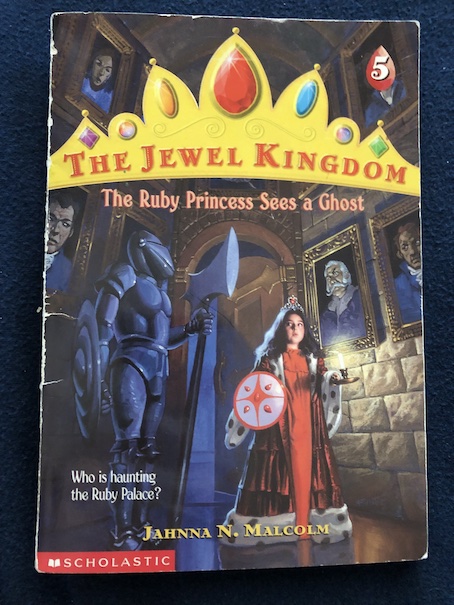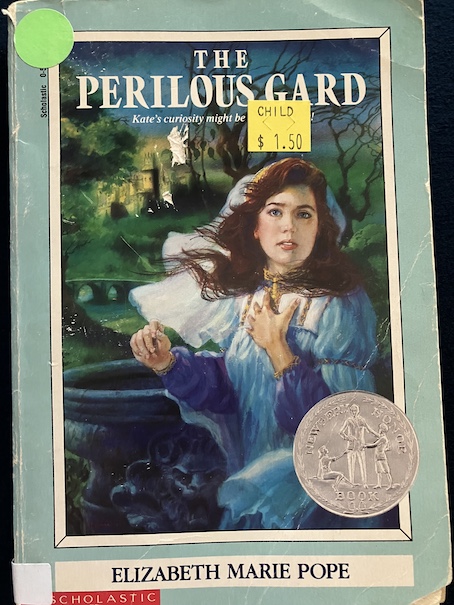
The Mystery of Castle Croome

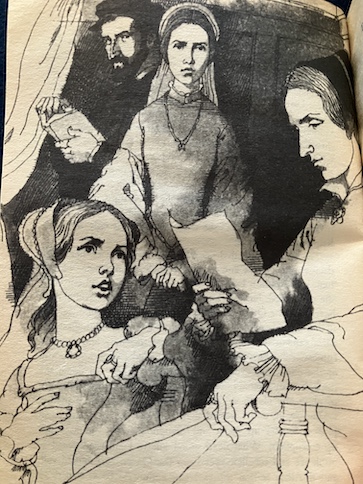
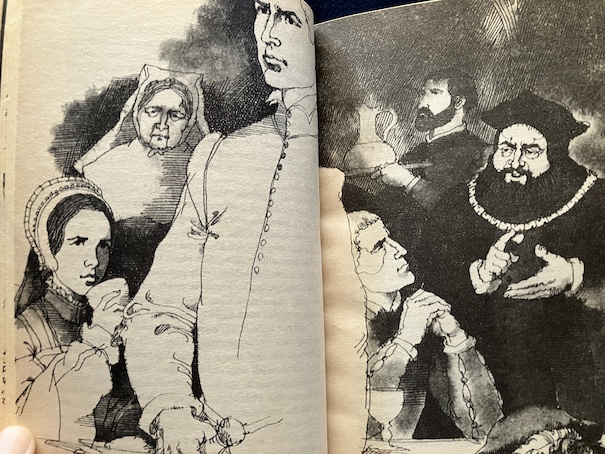
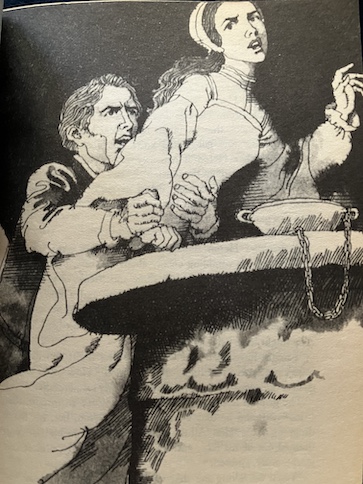
Molly Stewart, an American college student attending Oxford, is an orphan who is barely scraping by when she suddenly receives word that she has inherited an ancient castle in Scotland from her great-uncle, who has recently died. Molly’s friends, a pair of twins called Pat and Penny Roderick (short for Patricia and Penelope), go with her to have a look at the place, but right from the beginning, it seems like nobody wants her there.

Although the lawyer, Mr. Harding, is aware that Molly has been attending Oxford, he also knows that she is planning to return to the United States when she finishes her degree. He also knows that her great-uncle, Sir Malcolm, disapproved when her father married an American and moved to the United States himself, so he was surprised when Sir Malcolm’s will left his estate to his nephew or his nephew’s heirs. Mr. Harding had expected that Sir Malcolm would leave the estate to Jamie Campbell instead because Jamie has been the caretaker for years. The estate doesn’t come with much of an income, and the farms attached to it don’t have tenants, so they’re not bringing in rent money. It would take a lot of work to restore the estate. Since Mr. Harding would rather deal with Jamie Campbell anyway, he thinks that Molly would find it a better deal to just sell the castle to Jamie and use the money to finish her degree and go back to the United States. Molly asks why Jamie Campbell would want to buy the castle if it’s not worth much and needs so much work to restore. Mr. Harding says he might buy it out of sentiment, but Molly wants to have a look at the castle before agreeing to sell it. After seeing it, she might decide that it isn’t the kind of place where she could live, but she won’t know for sure until she sees it herself. Mr. Harding agrees and says that he will tell Jamie Campbell that she’s coming.

When Molly arrives with Pat and Penny, they see that the castle is isolated and rather eerie. Inside, it is run down, and living conditions are primitive. Jamie Campbell, an elderly man, isn’t happy that they’re there. There is no other staff, and while Jamie was happy to serve the old laird and nurse him through his final years, he has no intention of serving this young American grand-niece. Although there is an electrical generator at the castle, Jamie says that it hasn’t worked in years, and he and the old laird used oil lamps and candles. If Molly and her friends think he’s going to go to special efforts for their comfort, they can think again. Molly refuses to be intimidated by his disrespect, and she tells him that, because this castle has been his home for years, he is welcome to continue staying there, although Jamie Campbell thinks that she’s only extending that invitation to get a free caretaker.

Molly is studying engineering at college, and her friends think that she could probably fix the generator, but Molly tells them that she would like to wait to look at it. She hasn’t had much practical experience yet, so she wants to take time to study the situation before she does anything. She also tells her friends not to mention to Jamie Campbell that she has any engineering knowledge. She doesn’t trust Jamie, and she thinks it might be better for him to think that they’re more helpless than they actually are.

Molly sees definite signs that Jamie Campbell hasn’t been honest with them about the real condition of the castle and about even the contents of the castle at the time that her uncle died, and she can tell that he’s deliberately trying to make life harder for them to drive them away from the castle. After Jamie Campbell tells them that there is no running water at the castle, the girls notice that soap next to a sink is still wet, indicating that Jamie has very recently washed his hands there. The girls think that he probably shut off the water right before they got there, and they also think there is probably nothing wrong with the generator, that Jamie probably just turned it off. He tries to keep them from even looking at it, and he’s reluctant to hand over the keys to the castle to Molly. Many pictures are missing from the walls of the castle, and Jamie says Molly’s uncle sold them for money, but another painting disappears during their stay, showing the girls that Jamie is the one looting artwork from the castle. Molly realizes that nobody seems to know exactly what was in the castle at the time her uncle died, making it difficult to prove that Jamie is stealing things. When Molly tries to search her uncle’s desk, she finds that it’s been completely cleared of even routine papers, and Jamie admits in a cagey way that he may have tidied up a little.

Things improve for Molly and her friends when they set out to buy some food and make contact with other people outside the castle. Jamie refuses to even feed them, saying that he barely has enough for himself. He says that he might have been able to provide something for Molly if she was alone, but he can’t be expected to feed her friends, too. Fortunately, the girls have some provisions with them that get them through their first night at the castle. When they set out in the morning to buy more food, they can’t take their care because there’s a large nail in one of the tires. They can’t prove that Jamie sabotaged the car, but they all suspect he did. They decide to set out on foot to find somewhere with a telephone or somewhere they can buy some food. They meet up with a scout troop camping nearby, and they save the girls from stumbling into a bog. They share a meal with the girls, and the girls tell them what’s been happening at the castle.

The scout leaders don’t like the sound of Jamie and the things happening at the castle, and they tell the girls that they will send a mobile shop to the castle to sell them food. There’s a van that travels among the farms in the area, selling groceries, sort of like a food truck, and it carries a surprising variety of goods. The scouts also tell the girls how they forage for wild foods, and they offer their services for changing the car’s tire and other things they might need.

That night, Molly has a frightening encounter with a ghostly white figure, although she believes that it’s just Jamie, trying to frighten her away from the castle. The next day, Molly and her friends confront Jamie about the missing painting, and he tells Molly that her great-uncle sold that painting years ago. He tries to convince her that the only reason why she thought she saw it is that she has “second sight.” He says that it was a favorite painting of her great-uncle’s and that she only saw it because she’s a member of his family and has psychically sensed the memory of the picture. Molly knows that can’t be true because her friends also saw the picture. Molly also asks Jamie about a strange roaring noise that she heard at night that sounded like machinery of some kind, and Jamie tells her that it’s the “Roar of the Stewarts.” He says it’s a bad omen, and that Stewarts hear it before something bad happens. Although none of the girls admits to having seen a “ghost” the night before, Jamie also tells them about the “Specter of the Castle”, and he insists that all of these bad omens are signs that Molly and her friends should leave the castle because it’s dangerous for them.

Molly and her friends know that Jamie badly wants to frighten them away from the castle, and part of that might be that he’s been looting objects from it since Molly’s great-uncle died, but what is the real cause of the machine noises in the night? Then, suddenly, Jamie welcomes a pair of unexpected guests into the castle as paying guests. Mr. and Mrs. Smith claim that they’re traveling tourists who think it would be exciting to stay in a real castle. Molly tries to discourage them from staying by charging them more than anyone might expect from staying in a run-down castle with primitive living conditions, but the Smiths insist that they would enjoy an authentic experience. Molly and her friends are immediately suspicious, especially when they realize that the Smiths don’t seem to have a car, and there’s no obvious way they could have even reached this out-of-the-way castle. Who are they really? Are they confederates of Jamie’s? What has Jamie really been doing at the castle, and what is he so afraid that Molly and her friends will discover if they stay?

The book is available to borrow and read for free online through Internet Archive (multiple copies).

I found this book recently at a used book sale, but I recognized the title because I tried to find this book when I was a kid. I wanted it because it was on a list of suggested books in the back of another mystery book I read and liked as a kid. Actually, I think I enjoyed it more as an adult than I would have has as a kid. As a kid, I would have liked the notion of a girl inheriting a spooky old castle that might be haunted, but in this story, it’s pretty obvious right away that Jamie is behind all the mysterious things happening.

This story is not like other mysteries where you have to wonder who among the suspects could be responsible for the mysterious happenings because Jamie is the only suspect from the beginning. The real mystery, for both the characters and the readers is why he’s doing it. It’s a “whydunnit” more than a “whodunnit.” Although it would have been fun and atmospheric if Molly and her friends believed that the castle was haunted and were scared, I have to admit that I loved how unimpressed the girls were when Jamie awkwardly makes up his spooky stories and excuses about “second sight”, the “Roar of the Stewarts”, and the “Specter of the Castle.” They know that he’s just making it all up. They just don’t kick him out of the castle immediately because he’s an old man who’s been there for years, and they also want to know that he’s up to.

It turns out that part of what he’s up to is obvious and part actually resembles the mystery book that had this listed as a recommended book. Readers can figure out the more obvious part themselves, but there’s a revelation later that Jamie is also involved in another crime that he can’t explain away as any misunderstanding. There’s a suspenseful part of the story where the girls are trapped in the castle with Jamie and his confederates and need to figure out how to escape or summon help. I thought that the ending part wrapped up a little quickly, but overall, I liked the story. I think I enjoyed the book more now than I would have if I’d found it when I was a kid.

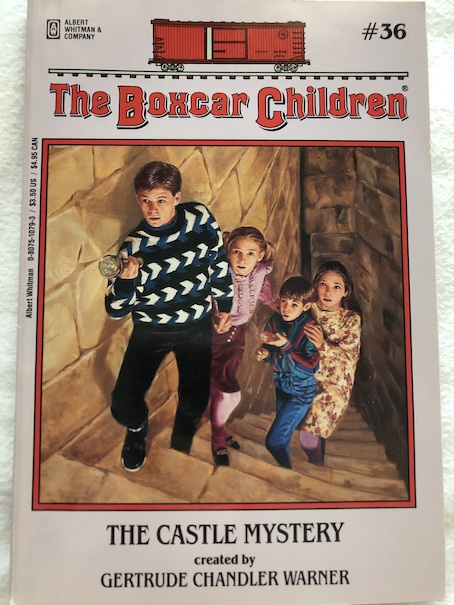
The Castle Mystery

The Boxcar Children

Mr. Alden takes his children to Drummond Castle because an old friend of his is helping to clean and organize the place before it becomes a museum. The Drummond family used to live there, and they had the castle built to look like a castle in Germany. However, the last of the Drummond family has died, so turning the mansion into a museum will give the place new life. When the Aldens first arrive, they think the castle looks more like something from a scary story than a fairy tale, but Mr. Alden’s friend, Carrie, shows them some of the more whimsical elements of the place.

However, Carrie’s assistants aren’t happy about the Aldens helping. None of them really seem like team players, even with each other, and they’re not sure how much help the Alden children can be. There are a lot of things that the assistants won’t let the Aldens do when they try to help. They also seem a little suspicious of each other because a valuable Stradivarius violin that once belonged to the Drummond family has disappeared. Carrie insists that they don’t know that the violin has been stolen. The last of the Drummonds may have just hidden it somewhere, and they will find it when they’ve finished cleaning and organizing the place.

Then, the Alden children begin to notice strange things happening in the castle. They see lights in parts of the castle where no one is supposed to be and hear violin music coming from somewhere. Sometimes, the furniture covered in dust sheets gives them the feeling that someone is hiding under the sheets. When it seems like the kids are poking around the castle too much, the assistants all suddenly find tasks for them to do.

The kids catch one of the assistants, Mr. Tooner, looking for something under the floorboards in their grandfather’s room. He claims that he was fixing the floor, but Mr. Alden says that nothing was wrong with the floor. Sandy, another assistant, seems to know her way around the castle better than the others, but she’s oddly defensive about why she knows the place so well. She also makes an odd comment about how it would be nice to hear the Stradivarius “again”, but she dodges questions about when she heard it the first time. Tom is the antiques expert, and he insists that his work is highly specialized and that he wants to work alone.

The Aldens explore the spooky castle, the girls get trapped in the cave under the castle, and they find a secret, hidden room that brings them closer to the solution of the mystery. Each of these assistants has a previous connection to Drummond Castle that they don’t want to discuss, but only one of them is a thief.

I remember liking this book as a kid, although I’d forgotten what the solution of the mystery was until I reread it. It holds up pretty well, and I enjoyed how everyone associated with the castle has their own secrets and past connections to the place. It makes them all really great suspects and also gives readers some subplots to figure out along with deciding who the violin thief is!

The castle setting is also great! Technically, I suppose that it’s really more of a castle-like mansion, but it has all the trappings of a castle, some fanciful, some whimsical, and some spooky. There is also a cave under the castle, which features in a part of the story where Jessie and Violet get locked inside the cave because there is a gate that closes it off. One of the best parts of the book is the discovery of a hidden room because what castle would be complete without one!

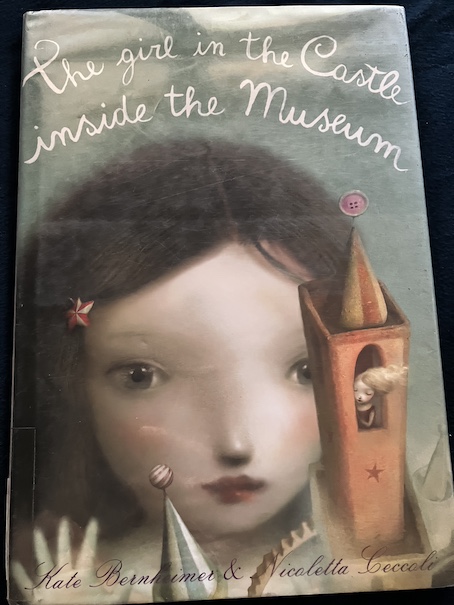
The Girl in the Castle Inside the Museum

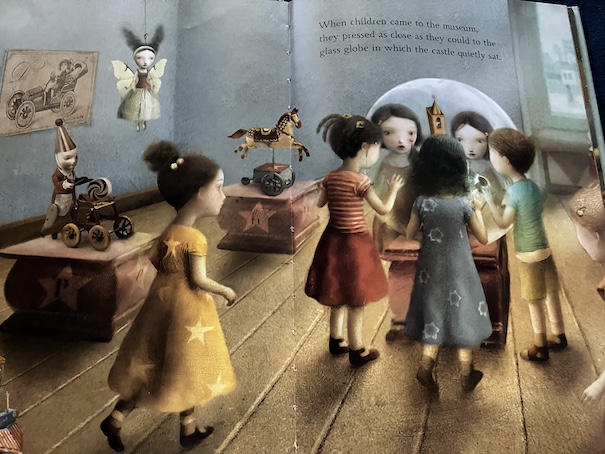
In this story, there is a little girl who lives in a castle in a museum, inside a big, glass globe.

Children love to come to the museum and look at her in her castle. The girl also likes it when the children come to see her.

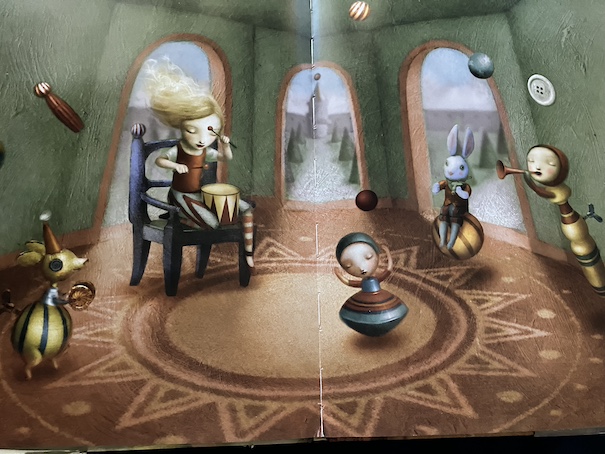
Although the girl in the castle has other creatures to play with and things she likes to do, like making music, she sometimes gets lonely when the museum closes, and all the children go home.

When the girl in the castle dreams, she dreams of the children who come to visit her at the museum, imagining their journeys to come see her.

When the children are visiting or when she’s dreaming about them, the girl isn’t lonely, but when she wakes up from a dream and there aren’t any children, she gets lonely again.

However, the girl gets an idea. If you, the reader, want to be her friend, you can give her your picture. When she looks at your picture, she won’t be lonely anymore!

The book is available to borrow and read for free online through Internet Archive (multiple copies).

I love the surreal, fantasy pictures in this book! We don’t know exactly what the girl is or why this tiny girl lives in a miniature castle in a museum. The book says that people claim “she’s lived there forever.” She is alive and has feelings, but she seems to be surrounded by fantasy creatures as companions in her castle rather than other people. She doesn’t seem to have parents or family. My theory is that she is a magical, living toy because the museum seems to be filled with other toys, the fantasy creatures in her castle seem to be toys with little wind-up keys in their backs, and the castle itself incorporates little toys and odd-and-ends, like buttons and marbles. However, the girl’s backstory is left up to the imagination of the readers.

This book breaks the fourth wall of the book, with the girl inviting readers to put their own pictures into the book and saying that the girl can see them through the book when they read it. Readers looking at the book keep the tiny girl company when she doesn’t have visitors to her museum. It’s not the first book that I’ve seen that uses the concept of readers keeping a book character company through their books. There is a book from the 1930s called The Tale of Corally Crothers, where a lonely girl with no brothers and sisters goes in search of a friend and finds you, the reader. (I haven’t found a copy of it myself, but you can see some pictures of this book on this site.) Books that involve the reader and invite the reader into their world are charming, and I found the fantasy elements of this particular book delightful!

Stonestruck

It’s WWII and Jessica knows that she will be evacuated from London soon, along with other children from her school. She doesn’t want to leave London and her mother, even though the bombings have gotten increasingly worse and frightening. Her father has already gone away to the front, and she has no idea if he will ever return. Then, one night, the unthinkable happens: their house is destroyed in a bombing. Jessica and her mother survive the bombing by sheltering in their basement, but Jessica’s pet cat is nowhere to be found. She doesn’t know if he survived the bombing and ran away somewhere or if he is buried somewhere in the rubble of their house. Jessica is traumatized, but with their home gone, her mother makes the decision to send Jessica away from London early. Jessica’s mother has decided that she will volunteer for service as an ambulance driver.

Jessica is terribly upset and worried about what will happen to her when her mother sends her away to Wales alone, but her mother assures her that she will be fine and that she will soon be joined by the other children from her school. They are being sent to a Welsh castle, where they will have classes together. Jessica’s mother tries to tell her that it will be fun and exciting, going to school in an old castle, but Jessica is too frightened and traumatized to think that this will be a fun adventure.

When Jessica’s train arrives at the station in Wales, she is met by Mr. and Mrs. Lockett, the gardener and housekeeper at the castle. They are friendly and welcoming to her, but on their arrival at the castle, Jessica hears a frightening scream. The Locketts don’t explain to her what the sound is and act like they haven’t heard a thing. When Jessica wakes up early the next day, she is relieved to see a peacock on the castle grounds, who gives the same strange cry that she heard the night before.

She is satisfied that the weird scream she heard has a logical explanation, but then, something else frightening happens. Although the morning is clear, there is one, strange, dense patch of mist on the castle grounds. Jessica thinks that it’s strange to see such a dense patch of mist in only one spot when there’s no mist anywhere else. Then, she hears a voice calling her name from the mist and the sound of children’s laughter. Jessica is confused because she’s only just arrived and hasn’t met anyone else there except the Locketts, and the rest of her classmates from her school in London aren’t there yet. It gives her an uneasy feeling, and when she sees a hand reach out of the mist and beckon to her, she becomes terrified and runs away.

At breakfast, Mrs. Lockett is cheerful and behaves in a perfectly ordinary manner. She expresses sympathy to Jessica over her ordeals during the bombings in London and the loss of her house and asks her what she plans to do before the other children arrive. She confides that she and her husband are not accustomed to children because they have none of their own, confirming that Jessica should be the only child in the castle right now. Jessica assures her that she can entertain herself. She asks Mrs. Lockett about the peacock that made the screaming sound, but Mrs. Lockett says that there are no peacocks on the ground and that she didn’t hear any scream. Mrs. Lockett is very disturbed by Jessica’s mention of a peacock. She says that the family that owns the castle won’t have peacocks on the grounds because they’re bad luck, and she sternly tells Jessica not to imagine things. Then, Mrs. Lockett gets a call that a train with 30 evacuees will be arriving, and she needs to help arrange accommodations for them. She leaves Jessica to entertain herself, but she warns her to stay out trouble and to stay away from the pond.

Jessica explores the grounds of the castle and meets Mr. Lockett again. Mr. Lockett, who prefers to be simply called Lockett, is kind to her, and she asks him about the peacock. Lockett seems to believe Jessica that she saw a peacock and finds it worrying. He says the same thing that Mrs. Lockett said, that peacocks are bad luck. He says that, for most people, a peacock’s cry means coming rain but that it means tears at the castle. He says that he knows that Jessica is sad right now, but he says that she should remember that she won’t always be sad. Some day, she will be happy again. He also cautions her to be careful what she wishes for.

When Mrs. Lockett returns, she says that she’s made arrangements for the evacuated children who are coming. She is sympathetic to the evacuees. Arranging housing for them is a hassle, although she says it’s for their own good to be evacuated. Lockett says that it’s good up to a point. He doesn’t speak much, but he observes that, while it’s necessary for the children to be sent away from the bombings, it isn’t so good that they’re being separated from their parents. He says that he’s sure that Jessica would rather be with her mother. Jessica is surprised that he understands how she feels. She says that, while the castle is nice and definitely safer than London right now, she really misses her her mother. Mrs. Lockett doesn’t want to dwell on that. Instead, she encourages Jessica to come with her to meet the evacuees’ train. She says that these new children from London will be friends and company for her. Jessica isn’t so sure because these children are strangers to her, not friends from her school, but she does go to meet the train with Mrs. Lockett.

People from the village have gathered to meet the other evacuated children. Some of the women have prepared food for children’s arrival, and some are talking about how many children they’ve been told to accept into their homes and their fears that some of them will have lice. When the children get off the train, Jessica can see that they are all hesitant and scared. Among the crowd, Jessica sees a boy she recognizes from the night of the bombing, standing outside of a burning house. She doesn’t know his name, but she feels a kinship with him because he also lost his home. Unlike the other children, he has no bags with him. Then, suddenly, the boy vanishes in the steam from the train. No one else seems to notice that he was there or that he’s now missing. Jessica wonders if she just imagined him.

The children’s teacher is checking the children’s names off a list as they are assigned homes, but Mrs. Lockett stops her, saying that she’ll see to it herself. However, Jessica notices that Mrs. Lockett puts it off. Jessica asks Mrs. Lockett how many evacuees there are, and she vaguely says about 20 or so, when she had said 30 before. When Jessica asks her again exactly how many there are, Mrs. Lockett says that it’s an old superstition in their town, that no one should ever count children twice. Jessica asks her why that is, but she brushes off the question. Later, Jessica sees Mrs. Lockett burning the list of evacuees. With the list gone, no one will be able to count how many evacuees there are.

After her mother calls the castle to check on her and tries to pretend that things are fine when Jessica knows they’re not, Jessica feels the need to go for a walk by herself. Mrs. Lockett lets her go, warning her to be back before dark. As Jessica explores the castle grounds, she experiences more strange phenomena. She sees the peacock and the mist again and hears a voice calling her name. She sees a boy on a horse vanish into the mist. Then, a troop of phantom children charge past her, laughing and calling her name, and Jessica is shocked to see that one of them looks like her!

Jessica knows that she’s not just imagining the things that she’s been seeing, and she struggles to understand what’s happening and what it means. She realizes that, every time something strange happens, she either sees the peacock or hears its cry. She also remembers that, the first time she heard its cry, she had the strange feeling that, while she went into the castle, a part of herself stayed outside. Is that other part of her the phantom girl that she saw, being chased by the other phantom children? It looked like her, but it also felt alien, like it isn’t really her.

Jessica discovers that the boy who vanished at the train station ran away and has been hiding out on the castle grounds. He was afraid to let himself be sent to a strange home with the other evacuees because he’s heard that evacuees are treated horribly. Jessica tells him that she’s been treated kindly at the castle. Before she can learn the boy’s name, he runs away again, frightened by a strange old woman.

The old woman is frightening and seems to know who Jessica is. She says that she’s going about her rounds, leaving food out for the children. She knows about the phantom children, who run around in the mist with their hands linked. She refuses to tell Jessica her real name, just telling her to call her Priscilla, and she warns Jessica to keep repeating to herself that things aren’t always what they seem.

Jessica asks Mrs. Lockett if she ever played chain tag, the type of tag game where children join hands whenever they’re caught and then continue chasing other children. Mrs. Lockett says that the children around here call that game Fishes in a Net. When there are four or more children in a chain, they surround other children to trap them. She says that she played it in another place as a child, but not here because their mothers would never allow them to. Jessica asks why, and Mrs. Lockett hesitates to answer, but she makes a reference to a boy she knew when she was young, who apparently played the game too many times and disappeared. Before he disappeared, he talked about the peacocks, which was why they decided to get rid of the peacocks on the grounds. Mrs. Lockett says that the Green Lady wanted him for her own. When Jessica asks her about the Green Lady, Mrs. Lockett suddenly brushes it off as an old legend that doesn’t mean anything. Lockett the gardener says that some stories build power with the telling, and that’s why people don’t want to tell them.

However, Jessica realizes that there is truth to the legend that Mrs. Lockett doesn’t want to explain. Mrs. Lockett knows that there’s enough truth to it to destroy the list of evacuated children so it will be harder to keep track of who’s there and who isn’t. The people of this town don’t count children twice because something that lurks in the mist vanishes children away, and no one wants to notice it or admit it’s happening, that it’s been happening for generations. As long as they don’t count children twice, they can tell themselves that no one is missing and nothing is wrong, even when it is. Jessica begins writing about all of her strange experiences in the journal that her mother gave her, trying to solve the mysteries of the castle and the mist. Something in the mist is after her, beckoning her to come to it, and like the others before her, if she goes to it, she will never come back.

At Jessica’s urging, Lockett tells Jessica what he knows about the story of the Green Lady. The Green Lady isn’t human. She’s a shapeshifter with a heart of stone. Years ago, she kidnapped the young lord of the castle, Harry, because he was a beautiful boy, and she wanted him for her own son. However, Harry was desperately lonely, living only with someone who had a heart of stone. He refused to speak aloud again until he had a human playmate. So, the Green Lady began stealing playmates for him, but it was never enough. There is one playmate in particular that Harry is waiting for, the one whose name he calls in the mist. That’s Jessica. Because only Jessica, frightened and lonely in a strange land, has the ability to break the spell.

The book is available to borrow and read for free online through Internet Archive (multiple copies).

Some reviewers on Goodreads have pointed out that this book is very similar in plot to an earlier book by the same author, Moondial. In Moondial, as in this book, there is a young girl who is sent away from home and encounters mysterious phenomena that involves children in past times who are suffering and need her help to free them. However, the two stories are not identical, and I like the way this particular book is framed around WWII child evacuees from London.

It is important to the plot that the child evacuees from London are scared because of the war and have been wishing that they can go home, but that they haven’t been raised in the atmosphere of fear and superstition that the children in Wales have been. They have worries, but they’re not the same worries as the Welsh people have. Jessica learns from Lockett that it is the wishing themselves away that splits the children’s spirits and leaves them vulnerable to being captured by the trapped spirit children. Lockett understands what is happening better than anyone and how the unhappy children from London feel because he was also once an unhappy child. He was abused at home when he was young, and he also wanted to get away. However, when confronted by the spectral children whose hearts have also turned to stone, he changed his mind and escaped their clutches. He explains to Jessica what she has to do to reclaim that part of her that split off from her when she wished that she could go home, and from there, Jessica realizes what she needs to do to end this ghostly game of tag and free the other trapped children. The first step is reconciling herself to her situation as it exists and no longer wishing herself away. In doing so, she is doing what all of the adults around her have been failing to do, both about the supernatural phenomena and about the current war – facing up to the situation and not trying to pretend like it is less serious than it really while no longer wishing it away. Then, she realizes that the only way to end the spectral children’s game is to beat them at it, and for that, she needs help from other children.

When one of the other child evacuees from London has been captured and spirited away, Jessica and the boy who has been hiding out convince the other child evacuees to help them get him back and free the other children who have been taken across the generations. They have some work convincing the other evacuees of what is happening, but when they do, they form their own team for chain tag or Fishes in a Net and face off against the team of spectral children. It has to be the evacuee children who end this curse because the Welsh children are too afraid to do it, and the Welsh children’s parents would never risk them in the attempt. The Welsh people aren’t as careful about the evacuee children, and some of them have been bullying and abusing some of the evacuees. There is some concern when they realize what the evacuee children are going to do, but no one stops them.

It isn’t entirely clear what happens when the evacuee children free children who were taken from previous generations because these older children simply vanish. Even Jessica isn’t entirely sure whether the children returned to their own times or if they’ve simply passed on. However, the people of the Welsh town realize that the children have finally been freed and that the spell is broken, and they are grateful.

Parts of the story were stressful to read. First, I found the loss of Jessica’s cat upsetting. They never learn exactly what happened to the cat during the story. Then, Jessica finds out that the other boy who lost his home also lost his mother and siblings in the bombing, showing her that her own losses, while serious, aren’t the worst ones. There are also instances where the local children bully the London children, and the Welsh parents blame the London children for it. Some of the Welsh people are kind to the evacuees, but some also bully and abuse them, seeing them as only rough, poor children who are troublemakers and an inconvenience to them.

Even Mrs. Lockett says that she feels lucky that she got Jessica as an evacuee because she is gentle and well-behaved, not like the other London children. Jessica realizes that this is an unfair prejudice. Although she does not consider herself a brave person, she finds her courage when she begins to confront some of the adults around her about the way they look at the London children and how they treat them. She asks the adults directly if they realize that the London children also don’t want to be there and that no one asked them if they wanted to be sent away from their parents. The adults, confronted with the reality of the the children’s feelings and the reasons for their being there, entrusted to their care, are embarrassed. They don’t have real reasons for their prejudices against the evacuees, only their unfair feelings and bad behavior, and they realize that when they are confronted directly with the realities of the situation and their own behavior. Really, I think that facing up to realities, even ones that are strange and scary, is one of the major themes of the book. It is Jessica’s realization that she can do that, when even the adults around her can’t or won’t, that gives her the courage to do what she needs to do to end the spell and save herself and other children.

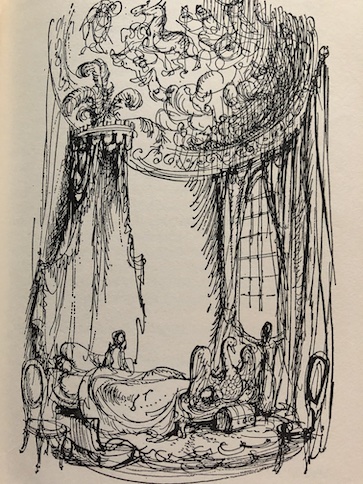
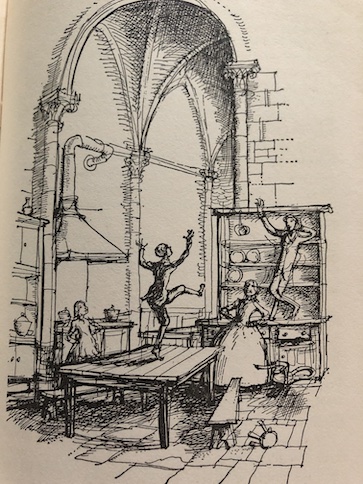
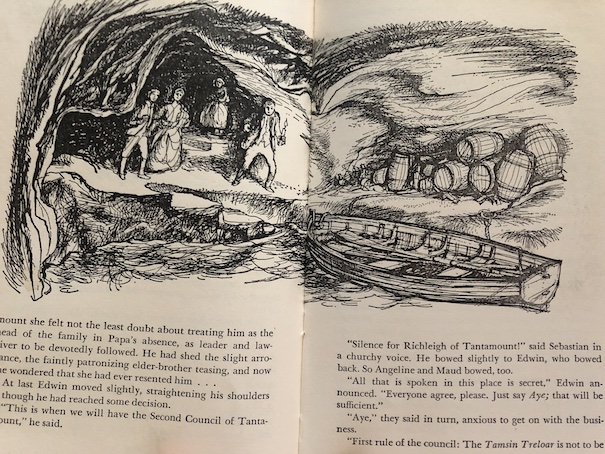
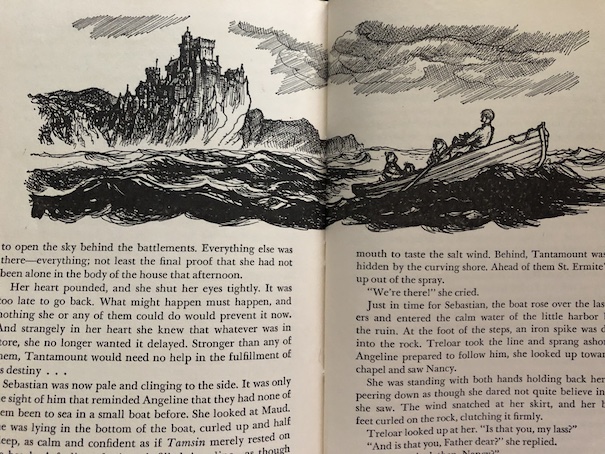
The Richleighs of Tantamount

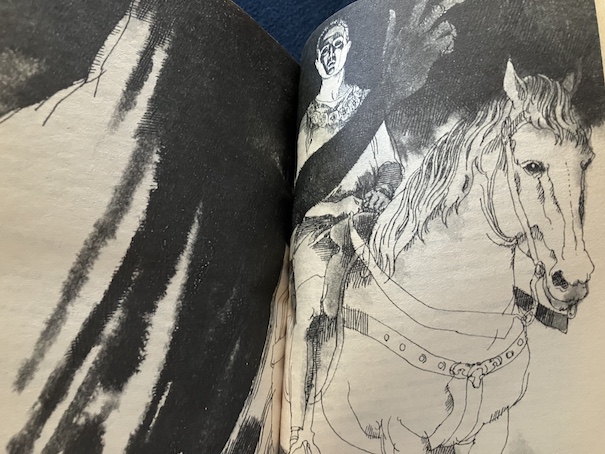
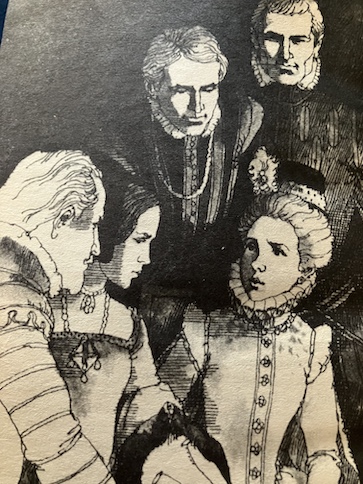
The Richleighs of Tantamount by Barbara Willard, illustrated by C. Walter Hodges, 1966.

The Richleighs are a wealthy Victorian family in England, their enormous wealth the product of generations of marriages between wealthy families. There are four children in the family (from oldest to youngest): Edwin, Angeline, Sebastian, and Maud. The four Richleigh children are accustomed to their family’s wealthy and luxurious lifestyle, brought up by their fond parents and the governesses and tutors they hire to oversee the children’s education. Overall, the children are happy and appreciate their privileged lifestyle, but there is one thing that bothers all of them. It has bothered them for a long time. They don’t understand why their parents won’t take them to see their family’s ancestral home, Tantamount.

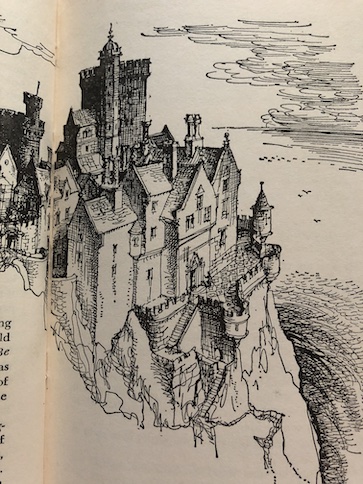
The wealthy Richleigh family owns several grand houses (including one in Scotland and one in Italy), but Tantamount is a mystery to the children. They know it exists because their family has a painting of it, and their grandfather talked about it once. A distant ancestor built this castle-like mansion in Cornwall, on a cliff overlooking the ocean and in a mixture of styles from around the world, and it’s supposed to contain some amazing things. Yet, the children’s father says he has never been there himself. The children’s parents don’t even like to talk about the place, and they’ve never taken the children there. The children know that something mysterious must have happened there at some point, but they have no idea what it is. They just know that they would love to see the place and find out what all the mystery is about! They often speculate about what the place is like, what once happened there, and why they’ve never been allowed to see it.

One day, Sebastian, who is the one who usually asks the most questions, decides to press their mother for answers about Tantamount. She tells him that his great-great-great grandfather, who built the place, was an eccentric and that the mansion is just too big, too inconvenient, and too remote to be of any comfort or use. This inconvenience is one of the reasons why most of the Richleigh family just cannot be bothered to go there. Also, his mother admits that the Richleighs are actually a little ashamed of the house because it is so hideously, overly elaborate and vulgar, even by the luxurious standards of the Richleighs. Sebastian says that he would still like to go there for an adventure, but his mother sees no point to it. She tells him that he can’t always have everything he wants, that he’s already a very indulged boy, and that he should just be happy with what he has. However, the children’s burning desire to see Tantamount and experience what they imagine as its mysteries isn’t really about the physical ownership of the house or the fantastic things that are supposedly kept there but about the spirit of mystery and adventure. As wonderful as everything the Richleigh family has, the children are chasing something else: excitement!

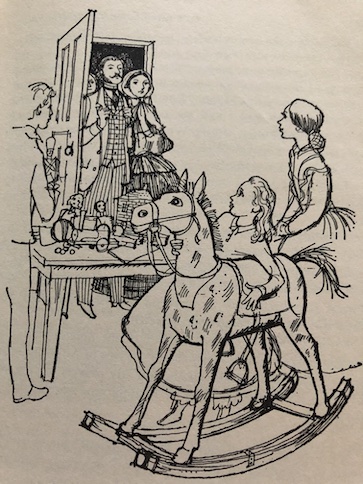
The children’s parents are actually the ones who don’t seem to understand the emotional attachment that people can have to physical belongings. Twice a year, they have their children donated old toys of theirs to the poor, which is a good thing, but poor Maud is traumatized when her parents tell her that she must give up her old rocking horse, Peggy, and that they will replace it with a brand new one. It’s not because Maud has outgrown rocking horses, but Peggy is looking a little shabby from use, and they want the children’s toys to all be in the best condition. They don’t consider the emotional attachment that Maud has to Peggy from her hours of playing with her or that Peggy’s shabbiness is a sign of Maud’s love for her. When they tell Maud that old toys are dangerous for children to play with, Maud asks why they aren’t dangerous for poor children to play with, her mother just tells her not to answer back. (Meaning that she doesn’t have a good answer, and she knows it.) Sebastian says maybe it would be better to just buy the poor children a new rocking horse instead of sending them Peggy, but his father tells him not to be impertinent, showing that this ritual about giving toys to the poor isn’t really about doing something nice for the poor so much as updating the children’s toys for the newest and “best” when that isn’t really what the children themselves want.

Soon after the children’s father gives away Peggy, he falls seriously ill, apparently from something he caught from the family he gave Peggy to. The children worry about what his illness will mean for their family, especially if he dies. Their first thoughts seem fairly petty. They first think that maybe this wouldn’t have happened if he hadn’t decided to give away Peggy. Then, they realize that, with their father ill, they won’t be able to travel to Italy this summer, as the family planned. Then, they think that, if their father dies, they will all have to wear gloomy black, and either Edwin will become head of the family at age 16 or that their uncle will look after the family. Their uncle is a more dour man than their father, so that’s also a gloomy prospect.

Fortunately, the children’s father recovers, and the children are relieved. His doctors advise him to take a sea voyage to recover. The parents will be traveling without the children, and they won’t be going to Italy, but the children say that they understand that this is important to their father’s health. However, this does leave the question of what the children will do while their parents are traveling. The parents ask the children for their opinions about what they would like to do this summer because they want the children to have a pleasant time together while they are gone. There is only one thing that all of the children want, and this time, the children’s parents agree: the children will spend the summer at Tantamount.

The parents make arrangements with Mr. Devine, the agent who manages the property on behalf of the family, for the children to go there for the summer. The children will be chaperoned by their governess, Miss Venus, and Edwin’s tutor, Mr. Gaunt. Before they leave, the children’s father tells Edwin that, since he is 16, he’s no longer just a child, and if any situation should arise which requires him to take charge, he should, as the heir to Tantamount. If anything serious happens, and they need help, they can also send word to Mr. Devine. The children’s mother tells them that there will also be a housekeeper at Tantamount who has a daughter of her own, who will also be helping out.

From the moment their parents leave for their voyage and the children make their final preparations to leave on their trip, they feel like everything is changing. Although they were always aware that they were privileged, they never really noticed much about the details of their lives or home or thought very much about the people who served them. Alone for the first time with Miss Venus and Mr. Gaunt, Angeline is struck with the thought that she never really noticed much about Miss Venus as a person, even what she truly looked like. Before, she was always just the governess, just another part of the steady routine of the children’s lives, but now, dressed for travel and just as excited as the children, she really seems to be a real person. Even Mr. Gaunt is excited and not so much his usual somber self. The children quickly realize that, without their parents there to insist on proper behavior, stiff manners, and a certain appearance, the governess and tutor are relaxing and become more themselves. Mr. Gaunt tells the children stories about his past travels across Europe, and they’re much more fun to hear about than his usual dull lessons. As they step outside of their usual rigid routine, it seems like everything has magically come to life for the children.

When they first arrive at Tantamount, it’s dark, and the place seems sinister. However, they receive an enthusiastic welcome from the housekeeper, Mrs. Pengelly. In the morning, the children see how grand the place truly is. The rooms are big and elaborately decorated, and there are amazing views of the sea.

Even more exciting than that, the children also quickly realize that life at Tantamount offers them the opportunity for more freedom than they’ve ever had in their lives. Without their usual nurses to pick up after them or fuss over what they’re wearing, they are free to make these simple choices for themselves. The idea of looking after themselves for a change and doing things as they want to do them is exciting by itself. Some parts of looking after themselves seem a little daunting at first, but Angeline realizes that it’s also good for them. Young Maud worries about what “they” will say about things the children are doing, but the older children point out that there is no “they” to worry about. Their parents and nurses aren’t there, and everyone who is there technically works for them.

Eagerly, the children begin to explore Tantamount. It is filled with strange and wonderful things, but most of it is in shabby and neglected condition. There are magnificent statues that are crumbling and a beautiful chandelier lies smashed where it fell on the floor of the ballroom. Angeline first thinks that their father will blame Mr. Devine and Mrs. Pengelly for the condition of the house, but Edwin points out that the house has been neglected for generations by the Richleighs themselves. Who knows how many years ago the chandelier fell when nobody in their family even cared whether it was still hanging or not? Edwin himself says that if their ancestral home was neglected to the point where it started falling apart, their own family was to blame. The children discuss which is more of a “folly”, as Mr. Gaunt put it, to build such a grand place in such a remote location or to forget forget about it and let it fall apart. The word “folly” can refer to an unnecessary building like this, and Edwin says that Tantamount is a “folly” in the sense that the family has done well enough without it for years. Edwin says that their ancestor probably had fun building it and that men like that build grand things for travelers to marvel at, but apart from that, they have little use. Since then, most family members have barely even thought about Tantamount. The children begin to feel sorry for the mansion, almost like it’s a neglected animal with a personality of its own. The place starts to feel sad to them.

Edwin also points out that Tantamount is actually dangerous in its crumbling condition. He even saves Maud from stepping onto a section of floor that would have crumbled underneath her. The children realize that they will have to be very careful of everything they do in Tantamount.

Tantamount is a sad and scary place, but still exciting because the children’s adventure is only just beginning. When Miss Venus and Mr. Gaunt see the condition of Tantamount, they decide that they and the children cannot possibly stay there for the summer. However, the children have only just had their first look at the place and have only just begun to delve into its secrets and consider what might be done with the crumbling old mansion. Even more importantly, they have had their first real taste of the freedom and responsibility that Tantamount has offered them, and they won’t give it up so soon. Edwin asserts himself as the de facto head of the Richleigh family and tells the governess and tutor that they may leave if they find it too uncomfortable, but he and his siblings will be staying because they are family and this is their home.

At first, the children are nervous at sending the adults away, but Edwin has thought it out. He has noticed that Miss Venus and Mr. Gaunt are fond of each other, and he suspects that they might take this opportunity to run away and get married. The other children wonder if they will tell their parents that they are at Tantamount alone, but Edwin doubts it. It would take awhile for any message to reach their parents, and the tutor and governess also wouldn’t be too quick to admit that they had abandoned the children, even if the children did request it themselves. The children have also begun to suspect that Tantamount might not be all that it seems. Although their family neglected the place badly themselves, what exactly has Mr. Devine been doing as the steward?

The Richleigh children befriend Nancy and Dick, two sailor’s children who live by themselves nearby. Nancy and Dick are a little afraid of the Richleigh children at first, partly because Edwin attacks them when they first meet, thinking that they’re trespassers, and partly because they know more about the dark history of the Richleighs and Tantamount than the Richleigh children do. However, the children all become friends, and Nancy and Dick teach the Richleighs many things that they need to know to survive on their own at Tantamount. The Richleigh children are happy to get help from Nancy and Dick, and they’re especially happy that, for one in their lives, they’ve made friends on their own instead of just associating with the people their parents have picked out for them to meet. Nancy and Dick are far less fortunate than the Richleighs, and they open the children’s eyes to what poverty really means. Nancy and Dick are also on their own because their mother is dead and their father hasn’t yet returned from the sea.

The Richleighs are impressed with the things that Nancy and Dick know and can teach them, and they also enjoy the carefree summer that they spend with Nancy and Dick. While they’re happy to accept help from them, the last thing the Richleighs want is any adult finding out that they’re living alone at Tantamount. There are still mysteries there for the children to solve, and the last thing they want is to give up the first real freedom that they’ve ever experienced!

The book is available to borrow and read for free online through Internet Archive.

My Reaction and Spoilers

The Richleighs are practically the personification of a privileged Victorian family. Readers are told that the Richleigh children are accustomed to luxury, although the book is also quick to say that they aren’t spoiled because readers might find them insufferable if they were. However, in the first few chapters, readers might also realize that the Richleigh children are living a rather repressed and highly controlled life. They have all kinds of toys to play with but no control over whether or not they get to keep their favorite old toys. Their parents get rid of anything that they personally think is getting too shabby without regard for sentimentality. Peggy wasn’t just a toy to Maud; she was like an old friend, and she and her siblings are sure that her new owner won’t appreciate her as much or might do something horrible, like sell her for drinking money or turn her into firewood. The parents are unconcerned about Maud’s feelings. They and the children’s nurses are always telling children not only what they should do but how they should feel. When Angeline expresses an opinion, her nurses tell her that “Ladies don’t have opinions – they’re nasty things to have.” When Sebastian tries to make his mother understand how much it would mean to him and his siblings to see Tantamount, he talks about “adventure”, but the book hints that he may have also been thinking of “escape” – escape from the luxurious monotony of their lives, from the constant supervision and control of the adults, and from constantly being told who they are, what they should do, and how they should think and feel. The two oldest children, Edwin and Angeline, realize that their parents are prepared to give them anything they want, but only provided that the children want the things their parents think they should want, like the new rocking horse.

When the children are left to the own devices at Tantamount, they have to take responsibility for themselves and manage everything by themselves for the very first time in their lives. Rather than finding it frightening, however, the Richleigh children find it exciting. Young Maud is the one who’s the most worried because there has never been a time in their lives when the children haven’t had someone taking care of them and telling them what to do. Angeline thinks that learning to do things for themselves will be good for them, and she delights in making simple choices, even deciding what to wear without someone to tell them. However, Maud doesn’t even know how to dress herself without help, and she worries about what “they” would say. Sebastian points out that there is no “they” to say anything. The children themselves are in charge, and Sebastian is looking forward to them doing what they want to do. Maud doesn’t know how they’ll even begin to know what to do without someone telling them, but Edwin reassures her that they’ll figure it out.

Since Edwin is the oldest boy and he already has their father’s permission to act as the heir to Tantamount, the children immediately decide that he’s in charge. It fits the general pattern of Victorian society that they’re all accustomed to, and it makes Maud feel a little better that someone’s in charge. However, because Edwin now gets to run things the way he wants, he doesn’t just want to give his siblings orders. He establishes the group as a family council so they can discuss things and make decisions together. Although he maintains his position as the head of the family council, he cares about how the others feel, and over the course of the summer, he particularly comes to value the thoughts and advice of Angeline, who proves herself to be a sensible and practical young lady.

It isn’t long before the children discover the dark secret of Tantamount that they always suspected was there: it is being used as a hideout for smugglers and has been for some time. The reason why Mr. Devine hasn’t tried to maintain the house or a staff there is that he doesn’t want anybody snooping around and learning the truth about what he’s been doing there. When the children figure it out, they also realize that no one else is aware of their discovery yet. The locals might have their suspicions, but so far, nobody knows that the Richleigh children have made this discovery and that the children are staying at Tantamount all by themselves. However, this situation can’t last. Eventually, the smugglers will come back or Mr. Devine is bound to check on them, and the children will have to decide what they will do when that happens.

The children also must confront the knowledge that their own ancestors must have been the ones who started the smuggling and wrecking business and were responsible for the deaths of many sailors. There was a hint to the dark history of Tantamount in the painting the children have admired for years, but the children just didn’t understand the meaning of it before. The children’s parents don’t seem to be aware of any of this, or they would never have allowed the children to go to Tantamount at all. The children realize that the reason why Tantamount was abandoned by the family was that, at some point, some of the Richleighs decided that they didn’t want any part of this nefarious business anymore, so they got as far away from Tantamount as they could, created new lives and homes for themselves, and tried to prevent the younger generations of the family from finding out what happened there. This is the dark side of privileged families. Although much of the Richleighs’ wealth has come from wealthy marriages, not all of it has, and some has come from some dark sources.

The children still love Tantamount, even for its darkness, and they wish they could do something to cleanse it of all the bad things that happened there. Tantamount has changed them and allowed them their first tastes of freedom, independence, and self-discovery. The oldest children realize that their time there can’t last because their parents will come for them at the end of the summer, and there is still the matter of the smugglers. They try to think of a way to preserve some of the feelings of this transformative summer even when it’s time for them to go home.

In the end, the real villain eventually brings about his own end while trying to destroy Tantamount and hide its secrets forever, and the children pledge to themselves that they will rebuild it someday, but in their own way and for much better purposes. This is a secret that they keep from their own parents, just between the four of them, because this is something that they want and will pursue independently at some point in the future.

There are sad parts to the story as the children reflect on the abandoned and neglected nature of Tantamount and the evil that has happened there. However, there is also adventure and mystery and the kind of magic that comes from a carefree summer spent in a fantastic place!

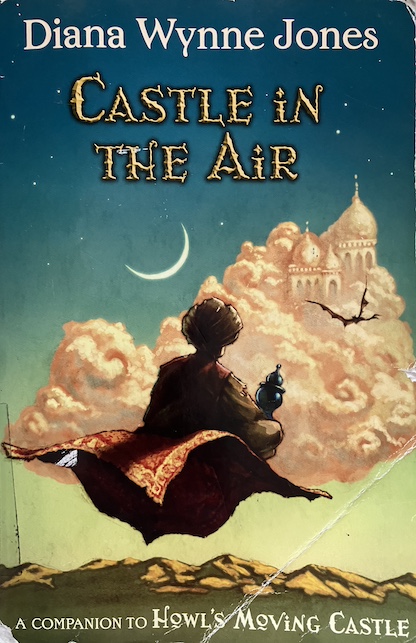
Castle in the Air

This is the sequel to Howl’s Moving Castle, the second book in the Howl Trilogy, although the characters from the first book only appear in secondary roles in this one. The series is somewhat loose, sort of like the Chrestomanci series by the same author. Characters from earlier books appear in later ones, but the main characters change in each book. This story is set in a country to the south of Ingary, where the first book took place, in a sort of Arabian Nights type setting.

Abdullah is a carpet merchant, operating a modest booth in the bazaar. He did not receive much inheritance from his father, having disappointed him in some way before he died. Apparently, there had been some sort of prophecy about Abdullah when he was born, and Abdullah has not lived up to it. He doesn’t know what the prophecy was, and mostly, it doesn’t bother him much, although he sometimes likes to imagine what it could have been, building “castles in the air” in his daydreams, where he is the kidnapped son of a king. Abdullah is mostly content with his life, doing enough business to get by, slowly building his business to have better stock, and using his free time for his daydreams. The only part of his life that he doesn’t like is when his father’s first wife’s relatives stop by his booth and nitpick him, telling him what a disappointment he is, how he should be more prosperous, how his business should be better than it is, how he should already be married, everything they can think of to make him feel bad about himself.

Then, one day, a stranger comes by Abdullah’s booth to sell him a carpet. The stranger is rude and disparaging of Abdullah’s shop, and Abdullah is dubious about the quality of the carpet he is trying to sell. The carpet seems rather old and worn. The stranger tells him that it’s a magic carpet and can fly. At first, Abdullah thinks that’s just a story to make him pay more for the carpet than it’s worth, but the stranger shows him that the carpet can fly by making it hover in Abdullah’s shop. Abdullah checks the carpet over and tries it out himself to assure himself that it’s not some kind of trick, but the carpet can really fly! Abdullah wonders why someone would be selling a perfectly useful and valuable flying carpet, even if it is a bit worn, but he decides to buy it anyway. Since he doesn’t like the stranger and suspects that there is some kind of trick involved, he drives a hard bargain, but eventually purchases the carpet. That night, Abdullah decides to sleep on top of the carpet, just in case the stranger’s trick is to call the carpet back to him in the middle of the night after having made the sale.

When Abdullah wakes up in a beautiful garden, like the one he imagines in his daydreams where he is secretly a prince, he assumes that he is dreaming. When a beautiful princess comes to him in the garden, he is sure that this must be a dream, although she doesn’t look exactly like the princess he always imagined himself in his daydreams. He decides to alter his daydreams to suit the girl. Since he thinks this is just a dream, he introduces himself to the girl as his imaginary alter-ego, the long-lost prince of a distant kingdom.

To Abdullah’s astonishment, the princess is astonished when he says that he is a man. For one thing, Abdullah is still wearing his nightgown, which the princess thinks resembles a dress, and for another, Abdullah doesn’t resemble any man she’s ever seen before. The truth is that the princess has not seen many men before. In fact, the only man she’s ever seen in her life is her father, who is a much older man than Abdullah. She thinks that all men are older men, like her father. Abdullah has heard that royal girls are kept practically prisoners, hidden away from other people. The princess, who is called Flower-in-the-Night, says that her father has kept her away from other men because he has already chosen her husband for her and doesn’t want any other man to fall in love with her and carry her off first, ruining his plans. Even though she knows that she has lived a relatively sheltered life, she still suspects that maybe Abdullah is still not a man, although she admits that it could just be because he is from a different country. She says that she wants to know all about him and his country. Abdullah, still thinking this is a dream, tells her about his daydreams of being a prince as if they were true. Then, in spite of thinking that this encounter is all a dream, he offers to come again and bring the princess as many pictures of other men as he can find, both to prove that he really is a man and also so that the princess will have a more realistic idea of what men are, so she will know whether or not she really loves the man he father has chosen for her.

After he lays back down on his carpet again, he wakes up in his own booth in the bazaar, and the carpet is still there, underneath him. The only thing he can’t find is his nightcap. After his dream, which is the most realistic dream he’s ever had, Abdullah’s ordinary life suddenly seems incredibly drab. The more he thinks about his dream, the more Abdullah remembers that he took off his nightcap in his dream. It makes him realize that the dream was actually real, and he left the nightcap behind in a real garden he visited during the night!

Abdullah comes to the conclusion that, thinking about his daydreams while he went to sleep, he must have said something in his sleep that caused the carpet to take him to the garden of a real princess. Now that he knows that the princess is real, he goes to a local artist and asks him to draw portraits of all different types of men, young and old. It’s a strange request, so he explains that it’s for a friend who is an invalid and cannot go out and see people. The artist is intrigued (and also thinks that Abdullah may be crazy), so he agrees to do it for a low price. When other people learn that Abdullah is collecting portraits now, many people try to sell him their portraits, too. It just sounds that much crazier when Abdullah refuses to buy any female portraits. Abdullah tells people that he’s think of expanding his business to selling art as well as rugs.

Abdullah realizes that the magic carpet seems to require a kind of code word to work, something that the man who sold it to him didn’t tell him but which he’s been saying in his sleep. He tries all kinds of words when he’s awake, but he can’t figure it out. Fortunately, the carpet works again when he’s asleep. He once again finds himself in the garden with Flower-in-the-Night. After he shows her all of the pictures of different men he’s collected, Flower-in-the-Night admits that she was wrong and that he’s definitely a man. She now realizes that her father is not a typical example of what all men are like, and to Abdullah’s delight, she says that she likes him better than any of the other men in the pictures. She says that she wants to marry him! Although that’s what he wants, too, it’s awkward because, when he saw her before, he was acting out his daydream with her, and he’s not really a prince. Breaking it to her gently, Abdullah says that, even if he was once a prince, he is now a carpet merchant and not a wealthy man, like her father would want to marry. Flower-in-the-Night insists that she doesn’t care.

Abdullah explains to her how he comes to her on the magic carpet but that he can apparently only use it to travel when he says the right word when he’s asleep. Flower-in-the-Night is an educated and intelligent young woman, something that Abdullah admires in her besides her beauty, and she deduces from what’s she’s read about magic carpets that the secret word is some common word that is pronounced in an old-fashioned way. Unfortunately, Abdullah accidentally sends himself back home too quickly, without Flower-in-the-Night!

He consoles himself by thinking that he will just have to make some arrangements that day and visit her again the next night to elope with her. However, his father’s first wife’s relatives have also been making arrangements for him. Although Abdullah has not known what kind of prophecy was made about him when he was a baby, they have known for years. That day, they reveal to him that the prophecy was that he would not follow his father in his business (the thing that had always disappointed his father) but that he would be raised above everyone else in the land two years after his father’s death. They’re not exactly sure what being raised above others in the land means, but they think it must mean that he is destined for some kind of honor or high social rank or wealth. Now, two years after his father’s death, the news that Abdullah has started dealing in art and not just carpets, like his father did, signals to them that Abdullah’s fortunes are changing and that his destiny for some kind of greatness must be close at hand.

His father’s first wife’s relatives try to force him to marry a couple of nieces of theirs to keep that greatness or whatever wealth might be coming to Abdullah in their family. Abdullah is appalled, and to get out of the marriages they are trying to arrange, he lies and tells them that his father made him take a solemn vow not to marry until he has achieved the goal of the prophecy and been raised above all others in the land. This gets him a temporary reprieve, but he knows that the relatives will check all of the officially recognized vows to verify whether he’s telling the truth.

His only hope is to return to Flower-in-the-Night and elope with her, taking her as far away as they can go to start over beyond her father’s reach. Unfortunately, when he returns to her garden, he is just in time to see her abducted by a djinn! Horrified, he tries to chase after the djinn on his magic carpet to rescue Flower-in-the-Night, but he isn’t able to follow the djinn. Not knowing where the djinn has taken Flower-in-the-Night, Abdullah returns home without her. The next morning, he is arrested by the Sultan’s men for kidnapping the princess! The Sultan knows that he has been visiting Flower-in-the-Night because he left behind his nightcap, with his name on it.

Under the Sultan’s questioning, Abdullah admits to visiting the princess and bringing her all the portraits of men that the Sultan has found among the princess’s belongings, although really, the Sultan has found less than half of the pictures that Abdullah brought. Abdullah points out that the Sultan has a strange way of caring for his daughter, by raising her to be so isolated that she can’t even recognize a man when she sees one. The Sultan admits that he had to raise her that way because a prophecy when she was a baby said that she would marry the first man she saw, apart from her own father. He planned to introduce her to the man he picked for her before she could see anyone else, and Abdullah’s sudden appearance has ruined his plans. Abdullah is sure that the Sultan will execute him for what he’s done. To Abdullah’s relief, the Sultan knows that he can’t cheat the prophecy, so the Sultan plans to find his daughter and make her marry Abdullah. Unfortunately, that doesn’t rule out executing Abdullah after the wedding. The Sultan also doesn’t believe Abdullah’s story about the djinn kidnapping the princess. He’s convinced that Abdullah is hiding the princess somewhere, so he has Abdullah locked in the dungeon until he can find her.

Abdullah despairs in the dungeon, knowing that the Sultan and his men won’t find Flower-in-the-Night and that he can’t tell them where she is. Then, his friend Jamal’s dog accidentally brings him the magic carpet. From there, Abdullah sets off on a wild journey, fleeing from the Sultan’s men, becoming the captive of bandits, and finding a bottle with a genie in it who must grant his wishes. With the help of a genie, finding Flower-in-the-Night seems like it should be easier, but that doesn’t mean that’s going to be easy. Even if the prophecy guarantees that Abdullah will somehow be successful in finding and marrying Flower-in-the-Night, there are no guarantees for what will happen to him afterward. Even the djinn is a pawn in someone else’s game.
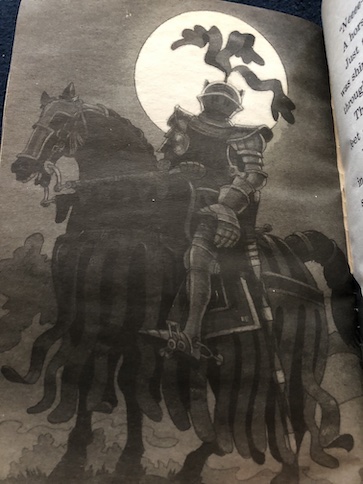
The book is available to borrow and read for free online through Internet Archive (multiple copies).

I first read this book not long after I read Howl’s Moving Castle in high school. At the time, I knew it was a sequel to Howl’s Moving Castle, and I was confused by the change in location and because it took a long time before Howl and Sophie appeared in the story. At first, it seems like this is a completely unrelated story to the first book, but actually, Howl and Sophie are very involved in Abdullah’s situation. It just isn’t obvious because neither of them are recognizable when they first appear in the story. About halfway through the book, Abdullah learns what has happened to Howl’s moving castle, but what has happened to Howl and Sophie isn’t clear until later. Howl’s moving castle has been commandeered by the true villain of the story, and the people of Ingary think that Howl is missing. By the end of the book, it is established that Howl is a royal wizard as well as Suliman, and he and Sophie are not only married, but they have a child of their own. Their son’s name is Morgan. Since the last book, Sophie’s sister Lettie has married Suliman and also has a baby.

Prophecies play important roles in the story, and I like how the characters realize that prophecies can be literal or figurative, and there are situation that the prophecies don’t cover. The Sultan accepts that his daughter must marry the first man she sees other than himself because of the prophecy about her, and while he’s disappointed that this man turns out to be Abdullah the carpet merchant, there’s nothing in the prophecy that says that he can’t execute Abdullah immediately after the wedding and marry his daughter to someone else. The prophecy that Abdullah will be “raised above” everyone else can also have many possible meanings. It could mean that Abdullah will come to some high status in life, or it could mean that the Sultan will follow through on his threat to have Abdullah impaled in the air on a 40-foot pole.

Of course, the story has a happy ending. I was concerned that Flower-in-the-Night would be upset that Abdullah wasn’t telling her the truth about being a kidnapped prince, but she actually realizes the truth before Abdullah admits it to her. She understands how Abdullah feels because she used to have a daydream of her own about being an ordinary girl with a father who sold carpets in the marketplace.

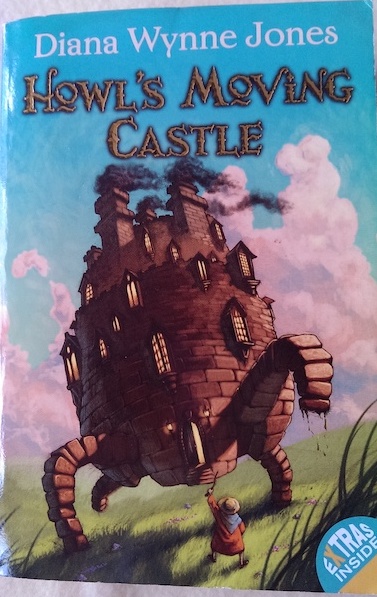
Howl’s Moving Castle

Howl’s Moving Castle by Diana Wynne Jones, 1986.

The kingdom of Ingary is the land of fairy tales. There is magic, and in a family of three children, it’s always expected that the youngest of the three will be most successful. Sophie Hatter, as the oldest of three, is disappointed when she first realizes that, but she reconciles herself to her rather dull fate. She is devoted to her younger sister and half-sister, and she does her best to look after them and help prepare them for their futures.

When Sophie Hatter’s father dies, her stepmother Fanny has to decide what arrangements to make for the family’s hat shop and the three girls in the family: Sophie, her younger sister Lettie, and her half-sister Martha.  Because Martha is very bright and expected to one day seek her fortune in the world, as third children generally do, Fanny arranges for her to become an apprentice to a respected witch.  Lettie becomes an apprentice in a pastry shop, where she will learn a good trade and possibly meet a nice young man to marry.  Sophie, as she had always expected, continues to work in the hat shop.  None of the three girls are particularly excited about the arrangements, but they make the most of it.  Sophie does have a talent for hat-making.  In fact, she has a very unusual talent because, as she talks to the hats while she makes them, the things she predicts for the buyers come true. People become increasingly attracted to the hat shop because it seems like good things happen to people who buy hats there.

Sophie is good at working in the hat shop, but she has to admit that her life there is dull. She doesn’t really know what else she would want instead, but she feels isolated, hearing gossip from other people but not really talking to anybody herself. A visit to her sister Lettie on May Day puts Sophie’s life in perspective and calls the things that are expected of older and younger siblings into question. Sophie learns that her sisters, dissatisfied with the arrangements Fanny made for them and having ambitions other than the ones that are expected of them, have secretly switched places with each other. Lettie craves learning and adventure, so she has taken Martha’s place as the witch’s apprentice to learn magic. Martha doesn’t actually care about going out to seek her fortune at all. She doesn’t want adventure or riches. What she really wants, although she’s never admitted it before, is to marry, settle down, and have ten children. Working in the pastry shop, she has already attracted quite a following of young men, and she’s sure that she’ll find one who will love her and make her happy. Neither of them cares about fitting the tradition mold of three siblings, and they’re both concerned about Sophie’s future. Sophie has never had any particular ambitions of her own, but her sisters know that being shut up in the hat shop all the time isn’t good for her. They think Fanny is taking advantage of her because it’s Sophie’s work that’s attracting all the customers these days, and Fanny isn’t even paying her an apprentice’s wage! Apprentices like Lettie and Martha get wages at other businesses, but Sophie’s been working for free while Fanny takes all the profits. It gives Sophie a lot to think about, and she becomes convinced that she’s being exploited when she asks Fanny about wages, and Fanny puts her off. Sophie is so angry that she thinks maybe she should run away to seek her fortune, but she can’t shake the idea that eldest children can’t do that. Soon, circumstances intervene to force Sophie to be the one to go out and seek her fortune anyway.

Dangerous and mysterious things are happening in the kingdom. Rumor has it that the evil Witch of the Waste has threatened the king’s daughter and that the king’s personal wizard, Suliman, has vanished after going to deal with her. People think that the Witch of the Waste probably killed him. The king’ brother, Prince Justin, also went in search of Suliman and disappeared.

One day, the Witch of the Waste pays a visit to Sophie’s hat shop.  Mistaking Sophie for one of her sisters, the witch curses Sophie, turning her into an old woman.  Unable to explain to anyone what has happened (which is part of the curse), Sophie makes the decision to leave the hat shop, finding a new job as housekeeper to the mysterious wizard Howl, a sinister figure himself.  Little is known about Howl, although he is known to live in a strange castle that moves from place to place, apparently of its own accord, and he has a reputation for breaking women’s hearts.

Howl is even stranger although somewhat less sinister when Sophie gets to know him.  He allows Sophie to stay in his castle, not so much by requesting her to stay but by not telling her to leave, much like he did with his apprentice Michael, an orphan who came to live with him and gradually became his apprentice when Howl decided not to send him away.  Howl is vain (using makeup and hair dye to make himself more handsome), immature, and somewhat cowardly, but he is still a powerful wizard and can accomplish great things when he makes up his mind that he wants to (or finds himself unable to refuse).  He doesn’t real steal girl’s souls, as some of the rumors about him say, but he is definitely a flirt and a womanizer, who drops girls as soon as they fall in love with him because he likes pursuing them but is afraid of commitment. In fact, he even has Michael spread scandalous rumors about him in the towns where they do business so people will be more reluctant to try to get him to commit to anything or anybody.

Howl has other problems aside from his immaturity and fear of commitment.  Calcifer, the mysterious fire demon that powers the moving castle, hints as much to Sophie.  He hopes that Sophie will be able to help, although he, too, is unable to explain the reason why for magical reasons.  Howl is not an ordinary person, but a traveler from another dimension, from a strange country called Wales, the same place where the king’s wizard, Suliman, was from. In Suliman’s absence and against Howl’s will, the king recruits Howl to be the new royal wizard, to find the missing Suliman and Prince Justin, and to deal with the Witch of the Waste.

Sophie struggles to convince/cajole/force/help Howl to save the kingdom and to learn the secret curse that Howl himself is living under even while suffering from her own curse.  Surprisingly, it seems that Sophie is the key to breaking not only Howl’s curse but her own.

The book is available to borrow and read for free online through Internet Archive (multiple copies). It’s the first book in a loose series. Many people these days are familiar with the story because it was made into a Miyazaki movie, although the movie was very different from the book in a number of ways.

My Reaction and Spoilers

I first read this book when I was in high school, years before the movie version was made. In a way, the book is party mystery or puzzle as well as fantasy. Calcifer and Howl have a problem that they can’t talk about because of the magic around it. Only one rumor about Howl is true: Howl is literally heartless. But, Calcifer has a heart. It takes a long time for Sophie to make the connection and to realize what Calcifer actually is and what Howl did. Howl made a sacrifice years before that has left both Howl and Calcifer in a precarious position. The clues to Howl’s past and the arrangement between him and Calcifer are in a poem by John Donne that turns out to be part of Howl’s nephew’s school assignment. The Witch of the Waste, who turns out to be one of Howl’s former, discarded conquests, knows Howl’s secret and is trying to use it to get revenge on Howl.
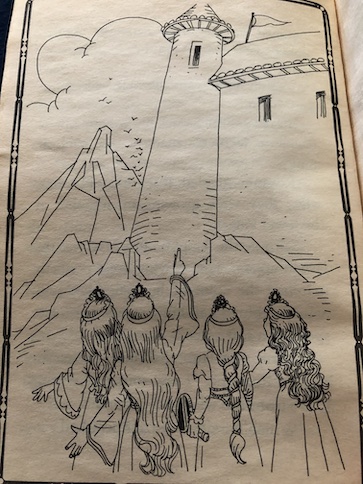
Although the movie version is very good, and I enjoyed watching it, it is very different from the original book. The beginning part of the movie, where Sophie is working in the hat shop and cursed by the Witch of the Waste before going to work for Howl is very similar to the original book. However, the major problem of the war in the movie never happened in the book. War is a common theme in Miyazaki movies, but there’s nothing in the book about wizards making themselves into weapons of war. Instead, the main problems of the book are about lifting Sophie’s curse, figuring out what the secret contract between Howl and Calcifer is, evading the wrath of the Witch of the Waste, and finding the missing Suliman and Price Justin. The movie addresses the arrangement between Howl and Calicifer, but it doesn’t fully cover any of the rest of it. There are some characters and plot lines from the book which were combined or reduced in the movie in favor of the war plot, which I found less interesting because it has less intrigue. In the movie, the Witch of the Waste is tamed and redeemed as a character, but in the book, she really is evil and is never redeemed.

There’s also nothing in the movie about Howl being from Wales in our world and the land where he lives being a different dimension, but that’s a major part of Howl’s character in the book. In the book, Sophie even visits Wales with Howl and meets his family. His sister thinks that Howl, known as Howell Jenkins in his native Wales, is a wastrel, who hasn’t made anything of himself in spite of his college education. She’s only partly right. What she doesn’t know is that Howl started learning about magic at university, which is how he found out how to travel to other dimensions and make himself into a wizard. In spite of his immaturity and attempts to avoid certain types of service, he is actually very skilled and powerful. Howl can’t tell his sister the truth, so he just lets her think that he’s a wastrel.
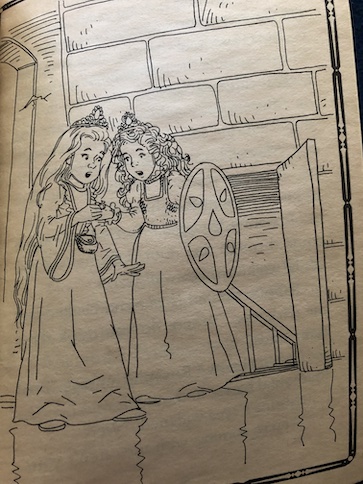
Sophie finds Wales strange and mysterious. She is terrified when Howl takes her and Michael for a ride in his car. One of my favorite parts is when Howl needs to talk to his nephew about the poem he was assigned at school, but he doesn’t want to talk to Howl because he’s playing a computer game with a friend. Sophie and Michael don’t understand computers or that the boys are playing a game, so when the friend says that he can’t stop to talk or he’ll lose his life, they think that the boy’s life is really in danger. They almost panic when Howl pulls the plug on the computer to get his nephew’s attention, totally unworried about his nephew possibly dying. That’s one of the reasons why I prefer the book to the movie. Many of the humorous little moments like this are lost in the movie, although the movie did keep the episode where Howl has a temper tantrum and fills the house with green slime.

There are also intricacies of the plot that aren’t explained in the movie. The one I mind the most is that the movie doesn’t fully explain how the curse on Sophie works or how it gets broken, either. The book provided more information, which helps Sophie fully appreciate who she really is. As Calcifer realized soon after meeting Sophie, removing the curse on Sophie is complicated because it has two layers. Howl even admits later that he’s been quietly trying to remove Sophie’s curse himself, but he was never successful because Sophie was actually maintaining the curse herself. The first layer was what the Witch of the Waste did to her, but Sophie herself has magical powers that she has been unconsciously using throughout the book. The reason why good things kept happening to the people who bought her hats was that she was unconsciously casting spells on the hats when she talked to them while making them. The second layer of the spell on Sophie herself was her unconsciously reinforcing her sense of being old through all of the negative things she’d been telling herself about being the eldest child in her family. Sophie’s power typically manifests in the things she tells to people and things, and she’s been telling herself all the wrong things.

Because of all of the tales about how the youngest children are the ones who successfully go out to seek their fortune, Sophie has felt relegated to just being the eldest, helping other people, and not really thinking about what she wants for herself. Even as a young woman, she acted and felt old before her time because she didn’t have any confidence in herself or anything to look forward to in her future. Her sisters even worried about her for not having enough self-respect, no ambitions or dreams of her own, or ability to stand up for herself. Because she never expected to do much of anything with her life or any belief that she might have talents of her own, she and everyone else completely overlooked all of the magic that she’s been instinctively doing. When Sophie discovers that her sisters have switched places and learns about their real life ambitions, she is stunned to realize that she has badly misunderstood both of them for most of their lives, also making assumptions about them based on their birth order. She has also misjudged or underestimated other people, but the person she’s misjudged and underestimated is herself. Howl is the one who tells her that there’s nothing wrong with her being the eldest sister; the times when she gets things wrong have been when she acts without fully thinking things through. Part of the key to breaking her curse is to get rid of the negative feelings she’s had about herself and her ability and to see herself for who she really is: a person with powerful talents and a right to want things and achieve things for herself and her future. Once she sheds her doubts about herself and her abilities and stops thinking of herself as just the eldest and doomed to fail, she realizes how she can use her powers to save Calcifer and Howl, and Calcifer lifts the rest of her curse.

The Knight at Dawn

The Magic Tree House

The Knight at Dawn by Mary Pope Osborne, 1993.

After the previous adventure that Jack and his sister Annie had in the Magic Tree House, Jack is still puzzled about how the tree house travels though time and who owns it and the books inside. He also wonders about the gold medallion with the letter ‘M’ on it. Both Jack and Annie are having trouble sleeping because they’re wondering about these things, so Annie suggests that they go to the tree house early in the morning to see if they can catch the owner there.

However, when the kids get there, nobody is there, and the books are still where they left them. Annie points out a book about knights and castles that she likes. Although Jack tries to warn her to be careful, Annie wishes that they could see the knight, and the tree house takes them back in time to the Middle Ages. They see a large castle outside the tree house and a knight on a black horse.

Jack thinks that they should use the book about their home town to go home immediately and make some plans before they do anything else in the past, but Annie wants to stay and look around before they leave. She climbs out of the tree house, and Jack has no choice but to follow her.

They discover that there is a feast at the castle, and Annie wants to see the feast for herself. As the children spy on the feast, a servant spots them and demands to know who they are. Jack and Annie run away and hide in the armory, but they are found by guards, who take them to the dungeon. Annie startles the guards with her flashlight, and they are able to escape.

They find their way out of the castle through a secret passage and encounter the knight on the black horse. But, is he a friend or an enemy?

My Reaction

The Magic Tree House series is meant to be educational as well as fun fantasy stories, and I enjoyed the pieces of Medieval trivia throughout the story. As the kids explore this new time period, Jack reads the book about knights and castles to learn more about where they are and what’s happening there.

However, not all the facts in the book are true. The part where Jack was reading about how heavy a knight’s armor was isn’t right. His book says that a knight’s helmet could weigh forty pounds by itself. Jack remembers that he weighed forty pounds when he was five years old, so he thinks wearing a knight’s helmet could be like having a five-year-old on someone’s head. However, according to The Metropolitan Museum of Art, entire suits of armor weighed roughly 45 to 55 pounds, with the helmet weighing about 4 to 8 pounds. That’s still a heavy amount for someone to carry on their head, but far more reasonable than 40 pounds.

The Ruby Princess Sees a Ghost

Jewel Kingdom Series

The Ruby Princess Sees a Ghost by Jahnna N. Malcolm, 1997.

Princess Roxanne lives in the Ruby Palace in the Red Mountains, and each of her sisters live in and rule over a different part of the Jewel Kingdom. The sisters visit each other from time to time, but Princess Roxanne has noticed that her sisters seem reluctant to visit the Ruby Palace. She finds out why the first time her sisters come to visit her.

Princess Sabrina tells her that she saw someone in white waving from a tower as she approached the Ruby Palace, but Roxanne knows it wasn’t her and there shouldn’t have been anyone in the tower. That’s when her sisters tell her that there are rumors that the Ruby Palace is haunted.

Roxanne says that she’s never noticed anything strange about the Ruby Palace that would make her think it was haunted. But, almost immediately, strange things begin to happen. The cook sees a ghost in the kitchen. A picture falls off the wall, and the princesses hear mysterious laughter.

To Roxanne’s dismay, her sisters are all too scared to continue their visit. After the other princesses leave, Roxanne hears the ghost threatening to come get her, but as she tries to get away, she picks up a ring dropped by the ghost.

Roxanne knows that she has to get to the bottom of this mysterious haunting or she’ll never feel comfortable in the Ruby Palace again. Fortunately, Sabrina decides to return to the Ruby Palace to help her, and she recognizes the crest on the ghosts’ ring as the crest of Lord Bleak, their arch-enemy. Roxanne and Sabrina also discover a hidden door and secret passage in the Ruby Palace. Is Lord Bleak responsible for this haunting? Did he somehow send the ghost, or is this ghost more than just a ghost?

The book is available to borrow and read for free online through Internet Archive.

My Reaction and Spoilers

I thought this was a cute story. I didn’t read this series when I was a kid, although I saw books for sale. This is the first book in the series I read, and fortunately, it provides enough backstory to explain who Lord Bleak is and why he might be staging a haunting in the Ruby Palace. It’s a pretty easy read, just a short chapter book, and I think the mystery is probably not too difficult to figure out if you already know the backstory of the series and who Lord Bleak is. Still, I think a young child would still enjoy the suspense and atmosphere of the story and how the princesses turn the tables on the fake “ghost.” There is also a twist at the end of the story where there is actually a ghost who haunts the Ruby Palace, but it’s not the one they think, and she’s on Roxanne’s side.

I think the setting is the most fun part of the Jewel Kingdom stories. The Jewel Kingdom is divided up into different regions, each with its own terrain and magical creatures. Each princess rules over a region that fits her personality. The Ruby Palace is described as being made of stone and rather drafty and mysterious compared to the other princesses’ palaces, but Roxanne loves it.

The Princess and the Goblin

“But, Mr. Author, why do you always write about princesses?”
“Because every little girl is a princess.”
“You will make them vain if you tell them that.”
“Not if they understand what I mean.”

The Princess and the Goblin, Chapter 1: Why the Princess Has a Story About Her

This is an enchanting fairy tale-type story about a princess. One of the best parts comes at the beginning of the book, when the reader supposedly interrupts the author as he starts to tell the story, asking him why he likes to tell stories about princesses. The author explains that princess stories remind every little girl that she is a princess, that they are all the daughters of kings (apparently in the sense that any man can be the king of his family with all the dignity and wisdom that implies, and it reflects well on them when their daughters behave well, as if they were raised with the manners of royalty), even if they sometimes forget that and behave in very un-princesslike ways. He wants to remind them that they are all princesses and can behave with the grace and dignity of princesses, and he can also pamper them a little because, in the course of the story, he can give them every beautiful thing he wants all the little princesses of the world to have. There’s kind of a behavioral caution in that explanation, but also a sweet sentiment. Even if you’re just an ordinary girl, you can still act with royal dignity and grace, and through the story, you can vicariously enjoy all the riches and adventure that a fairy tale princess can have.

The princess in the story, Princess Irene, is about eight years old, being brought up in a castle or manor house in the countryside because her mother was not physically strong when she was born and is now dead. She is largely raised by her nurse and only sees her father, the king, occasionally. Her father spends his time traveling between his castles and manors, visiting various parts of his country to make sure that everything is in order. Princess Irene cannot go with him because she is still too young to travel that much.

There are caverns under and around the castle-like manor house where Princess Irene lives. There are mines in the area, and the caverns are inhabited by creatures like kobolds or goblins. The story says that there are legends that these creatures once lived above ground, but having some quarrel with requirements imposed on them by the king or human society, they retreated underground to live there in secret. From generations of living underground, they have become physically altered into deformed creatures, but they have also acquired arcane knowledge and delight in playing mischievous tricks. Because of fears of the goblins coming out at night, Princess Irene is kept safely indoors before the sun goes down and has never seen the night sky by the age of eight.

One rainy day, Princess Irene is sitting in her nursery, bored. She has many fabulous toys (so amazing that the author of the book declines to describe them and cautions the illustrator against attempting to draw them, so readers can imagine any fabulous toys they like), but Irene in not in any mood to be amused by anything. Princess Irene is restless and doesn’t even quite know what she wants. When her nurse leaves the room, Irene takes the opportunity to run off and explore parts of the castle she has never before explored. She runs up some stairs into a passageway full of doors. She continues running through the passageways with doors leading to rooms with nobody in them until she becomes lost and confused. The corridors are empty, and there is no sound but the rain. One of my favorite quotes from this book says, “It doesn’t follow that she was lost, because she had lost herself though.” Just because Princess Irene doesn’t know where she is or where she’s going doesn’t mean that she isn’t heading in the right direction, where she needs to be.

Frightened, Princess Irene tries to find her way back to the nursery. Eventually, she finds her way to a room where she hears a humming sound. When Irene enters the room, she finds a beautiful old lady with silver hair sitting at the spinning wheel. Irene isn’t sure how old the lady is because she seems almost ageless. The lady notices that she’s been crying and asks her why, and Irene explains that she is lost. The lady is kind to her, washing her face and hands, and she introduces herself as Irene, too. She says that she is the princess’s great-great-grandmother and that Princess Irene was named after her. Princess Irene wonders why she’s never seen her before, and the elderly Queen Irene says that no one else knows that she is here. She shows Princess Irene the pigeons she keeps and promises that Princess Irene will see her again. Then, she guides the little girl to the stairs back to the nursery.

When Princess Irene is back in her nursery, her nurse is relieved because she’s been looking for her. The princess explains that she was with her great-great grandmother, but her nurse doesn’t believe her. Princess Irene is offended that her nurse thinks she made up the whole story. The next day, Princess Irene tries to find the old lady’s room again, but she can’t. She almost starts to wonder if she did just dream about her.

After the rain is over, the princess and her nurse spend some time outside. They wander farther than they should, and the nurse realizes in a panic that they cannot get back to the castle before the sun sets. The nurse grabs the princess’s hand and begins running for home. She becomes even more panicked when the princess thinks she sees little men and hears a sound like laughing. In their haste and panic, they get lost. The princess doesn’t understand why her nurse is so panicked because no one is supposed to scare her by telling her about the goblins.

Fortunately, they meet up with Curdie, a young miner boy. It scares the nurse that Curdie is singing about goblins, but Curdie says that goblins can’t stand singing. Goblins don’t bother Curdie because he’s used to them and doesn’t let them frighten him. This is the first time Princess Irene learns about the goblins. When the nurse tells him who the princess is, Curdie says that they wouldn’t have gotten lost if they weren’t frightened and that it was a bad idea to say the princess’s name because the goblins might have heard and will recognize her if they see her again. Curdie guides them back to the castle before anyone realizes that they are missing. Irene likes Curdie and wants to give him a kiss for helping them, but the nurse stops her. Curdie tells her that there will be another time, and she can keep her promise of a kiss later.

Curdie can tell that the goblins are angry with him for interfering with their pursuit of the princess by their behavior toward him the next day. It doesn’t bother him much because he knows exactly how to deal with them. Goblins are intimidated by songs and rhymes, probably because they can’t make any themselves. Miners who are good at remembering songs and rhymes or making new ones for themselves don’t need to worry about the goblins, and Curdie has a talent for this sort of thing.

While Curdie is in the mine after the other miners have left, he overhears a goblin family talking, and he learns some useful things. First, he finds out that goblins’ feet are a vulnerable point on their body. Their heads are very hard, but their feet are very soft, and they have no toes. The only one who wears shoes is the goblin queen, and the goblins say that’s because the goblin king’s first wife wore shoes, and the second queen doesn’t want to seem inferior to the first. The goblin king’s first wife was a human woman, who died giving birth to their son. Second, the goblins are building new homes further away from where the miners have been mining. Third, the goblins are planning some kind of disaster against the miners. Curdie secretly follows the goblins to find out where the goblin palace is and learn more of their plans. At the goblin palace, he hears them discussing their plans. They don’t offer many new details, but it is clear that they are planning some sort of revenge against humans.

Princess Irene finds her way to her great-great-grandmother’s room again one night. This time, the old Queen Irene shows Princess Irene what she is spinning. She is spinning spiderwebs to make something for Princess Irene. She heals a wound on the princess’s hand and invites her to spend the night with her. When Princess Irene wakes up, she is back in the nursery, but she now believes that it wasn’t just a dream.

Later, the princess is frightened by a horrible goblin creature that enters her nursery through a window that the nurse left open when it was getting dark. Terrified, Princess Irene runs out of the castle into the darkness (somehow missing the extra guards that her father left at the castle for her protection). Fortunately, her great-great-grandmother sends her a magical lamp that guides her back to the castle. There, she gives the princess the present that she has finished making: a ball of finely-spun spider silk. She also gives Princess Irene a ring with a fire opal. She tells the princess that these things will guide her to safety any time that she is frightened.

The magical spider silk thread helps Princess Irene to find Curdie when he is captured by the goblins. Curdie has been trying to learn more about the goblins’ plans. Curdie discovers that the goblins are planning to kidnap Princess Irene as both a hostage and a bride for their half-human, half-goblin prince. Worse still, if their plot to abduct the princess doesn’t work, they plan to flood the mines and drown the miners!

This book is in the public domain. It’s available to read online through Project Gutenberg (multiple formats) and Internet Archive (multiple copies). You can also hear a LibriVox audio reading of this book online through YouTube and other audio recordings at Internet Archive. The story was made into an animated movie in 1991, and you can see it online through Internet Archive. There is only one sequel to this book, The Princess and Curdie. Personally, I think the original is better than the sequel.

This is a classic children’s fantasy story! The princess is sweet, the villains pose a real threat, and the story doesn’t shy away from the goblins’ evil. When they’re describing what to do with the princess when they get her, they talk about how they’re going to make her toes grow together so she’ll be like them. As princess stories go, this one isn’t as sparkly and pink as many modern princess books. Still, as the author notes in the beginning, this story allows all little girls to think of themselves as princesses and imagine themselves going through the adventure with Princess Irene.

As with many other Victorian era children’s stories, there are moral lessons in this one. The author periodically reminds readers about how princesses should behave with bravery and should keep their promises. There are also various other morals in the story, like the value of hard work and duty to others, learning to understand other people and give them the benefit of the doubt, and having the courage to admit mistakes and make them right. All of these values are described as being noble, and it’s implied that Curdie might have princely blood for exhibiting these values. The book uses royalty or the behavior of princesses and princes as a sort of metaphor for moral behavior.

Princess Irene’s great-great-grandmother is never fully explained. At one point, Princess Irene brings Curdie to see her, but he can’t see her, even when the princess is sitting on her lap. However, the king himself goes to see her without the princess. The princess knows that’s where he’s going because he’s heading in that direction. He is aware that the old Queen Irene is there, but he doesn’t share that knowledge with anyone else. When Curdie tells his mother that the princess tried to show him her great-great-grandmother but nobody was there and he thought that she just made it all up, his mother tells him that there is something very odd about the royal family. She says that they’re not sinister, but there are rumors and implications that there is something magical about them or that they are not quite normal humans. At the end of the story, we never get a firm answer about what Queen Irene really is. When I first read this book, I thought that she might be a ghost because, as an ordinary human, she shouldn’t be alive anymore, and I figured that she only shows herself to members of her own family. However, that doesn’t fully explain her magic, and from what Curdie’s mother says, maybe she’s some kind of fairy or elf or maybe a powerful sorceress, who can either live forever or for a long period beyond the normal human lifespan.

One of the parts that I always liked best about this book is the illustrations. They’re charming and magical! These particular illustrations were made by Jessie Willcox Smith, a famous illustrator of children’s books in the early 20th century, in 1920.