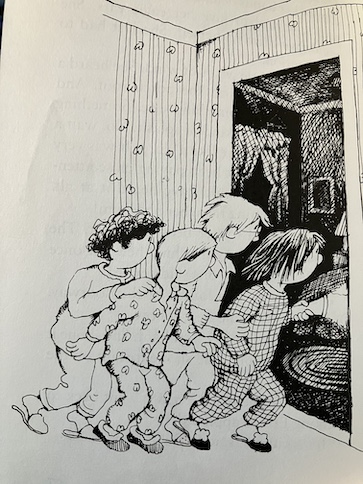
A couple of weeks before Halloween, Ernie decides to have a sleepover party for her friends. The kids enjoy scaring each other with ghost stories, and a thunderstorm adds to the spooky atmosphere.
Michael, in particular, keeps insisting that an old witch called Mrs. Maloney used to live in Ernie’s house with a bunch of cats. When spooky things happen during the course of the evening, Michael says that Mrs. Maloney and her cats have returned to haunt Ernie’s house. The kids try to stay up until midnight because ghosts are supposed to appear at midnight, but there’s no telling what they might actually see.
The kids fall asleep, but they wake up around midnight when they hear a crashing sound from the basement. Although they are afraid, they take their flashlights and go down to see what it is. Will they find a ghost?
The book is available to borrow and read for free online through Internet Archive.
My Reaction
This is one of those stories that has a pretty simple explanation, but the adventure seems bigger to the kids because their imaginations run away with them. I remember liking this series when I was a kid, and I think this is one of the books I read back then. I liked the creepy-cozy atmosphere of the story. Even though the kids have been scaring each other with ghost stories, they’re still just at a sleepover in an ordinary, safe house, and there’s nothing there that is harmful. It’s that kind of safe scariness that Halloween represents to young kids. They can enjoy the spookiness, knowing that there’s a logical explanation for everything. Adults and older kids will figure out pretty quickly what’s really going on.
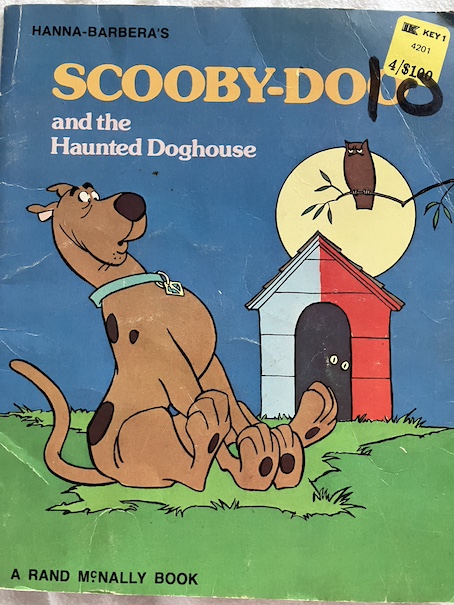
Scooby-Doo and the Haunted Doghouse by Jean Lewis, illustrated by Richard Lowe, 1975, 1983.
Scooby-Doo’s friends are building a new doghouse for him! They can’t decide what color to paint it, so they make half of it red and half of it blue. Scooby loves his new doghouse, at first, but then, something spooky happens!
One night, Scooby comes running into the house, scared. While Scooby cringes under the covers of Shaggy’s bed, Shaggy gets a flashlight and goes outside to see what scared Scooby.
When Shaggy looks in the doghouse, he sees a glowing pair of eyes, and then, something white runs past him with a shriek! Scooby and Shaggy both stay inside for the rest of the night, and in the morning, they tell their friends that they think the doghouse is haunted.
Their friends are sure that there must be some other explanation for what happened, but who or what was in Scooby’s doghouse?
The book is available to borrow and read for free online through Internet Archive.
My Reaction
Scooby-Doo was my favorite cartoon when I was a kid, especially Scooby-Doo, Where Are You!, and I’m still nostalgic about it! The mystery in the story is very simple, but suitable for young children with nothing truly scary about it. Even kids might guess what the solution is before the characters realize what’s in the doghouse.
Now that I think about it, it seems out of character for Scooby-Doo to have a doghouse because I don’t think he had one in the original cartoon series. I remember that he had a fancy one in one of the later spin-off series, but in the original series, he just always slept inside with his human friends. Of course, one of the hallmarks of the Scooby-Doo series is that there isn’t really a strict canon. Details about the characters and the Mystery Machine can change from episode to episode to suit the story without any real explanation because it’s a just-for-fun series.
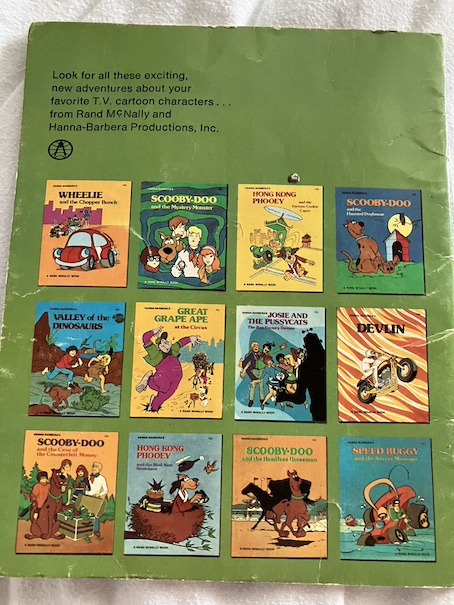
One of the things that I liked about this book was that it reminded me of all the other books I read as a kid that were based on popular cartoon characters. I think most of the cartoon series from my childhood in the 1980s and 1990s also had related books. On the back of this book, there are pictures of other books in this series, based on other Hanna-Barbera cartoon series, including other Scooby-Doo picture book mysteries.
The Mystery of the Disappearing Cat by Enid Blyton, 1944, 1966.
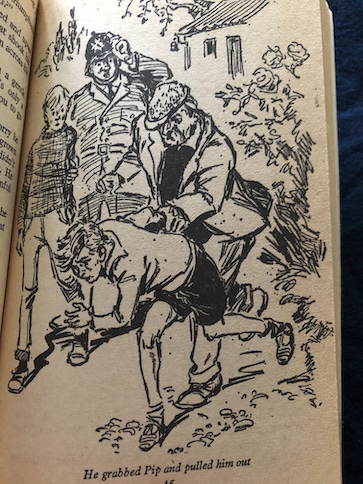
Bets is happy that her brother, Pip, is coming home from boarding school, and he’s bringing his friends to visit. Now that the children are reunited, Bets and the others hope that they will find another mystery to solve! The others ask Bets if anything interesting has happened since they were home last, and she says not very much, although someone has moved into the empty house next door. The new neighbor is Lady Candling, who keeps Siamese cats.
The boy who helps the gardener, Luke, is nice and allows the children to visit and see the cats. Lady Candling says that the Siamese cats are valuable prize-winning cats. She keeps them in a large cage most of the time for safety, but Miss Harmer, the housekeeper, takes one out to show the children. Unfortunately, one boy, Fatty, owns a Scottie dog named Buster, and Buster comes into the garden looking for him. Buster frightens the cat and chases her! The cat claws Buster after he chases her into the bushes, and they manage to get Buster under control, but they have trouble finding the cat. Miss Harmer is upset that her cat is lost, and Bets goes to search for the cat.
While Bets is looking for the cat, the gardener, Mr. Tupping comes to find out what the fuss is about. Mr. Tupping is a violent and short-tempered man. (They also emphasize that he has a hooked nose, which I think is probably a stereotype. Enid Blyton’s books often contain derogatory racial stereotypes, although later printings have been revised to remove them.) Mr. Tupping hates children and animals, and he grabs Buster and locks him up, threatening to beat him later. The children try to help Buster, but he chases them out of the garden. Bets is left behind, but she locates the missing cat, and Luke helps to free Buster and get Bets out of the garden without Mr. Tupping seeing her. However, Mr. Tupping threatens Luke with dire consequences if he ever lets the children into the garden again.
This is just the beginning of their troubles with Mr. Tupping. When Mr. Tupping finds out that Bets has visited Luke again, he storms into Bets’s own little garden, rips her strawberry plants out of the ground, burns them, and yells at her. Bets is afraid to report him to the adults because she’s afraid that Luke will get in more trouble with Mr. Tupping. Luke is a poor orphan who lives with his stepfather, and he desperately needs the job, which is the only reason why he continues to work with the nasty Mr. Tupping. Mr. Tupping is also friends with the local policeman, and the children know that the local policeman resents them for solving a mystery before he did, so they’re sure that he will side with Mr. Tupping, no matter what they say about him.
Then, Lady Candling’s prize cat, Dark Queen, disappears, and Luke is blamed for stealing her! The children are sure that Luke is being framed for the cat-napping, but the evidence is against him. Pip and Bets’s own mother saw the cat in its cage when she went to tea with Lady Candling, and Luke was working in a garden bed nearby. Even Luke says that no one else went near the cage between then and the time when the cat disappeared. When a wooden whistle Luke made is found in the cats’ cage, the children are sure that it was planted to frame Luke, but how can they prove it? Then, the cat reappears, and later disappears again! What is going on?
The book is available to borrow and read for free online through Internet Archive (multiple copies).
My Reaction and Spoilers
I found this story frustrating because all of the adults in the story are so oblivious to Mr. Tupping’s violence and aggression. He is actively abusive to the children and animals, but nobody seems to notice or even inquire about signs of trouble. Bets’s mother never seems to notice that all of her daughter’s strawberry plants have suddenly disappeared from her garden and never asks her daughter what happened. Mr. Tupping is able to just march onto the family’s property and abuse an 8-year-old girl with complete impunity, and her mother never notices a thing. (Of course, if I were the girl in question, I would have done what I used to do when I was picked on as a kid – take a deep breath, throw back my head, and scream continuously until help arrives. I figured out at a young age that if you scream from your diaphragm, you can get extra volume and keep the scream going for longer without straining your throat, and it’s difficult for the adults to ignore. You can’t scream like that at every inconvenience or people will start to ignore it, but it’s definitely an attention-getter if you use it when it really counts! Just let Mr. Tupping explain his presence and actions when the adults come to find out why their daughter is screaming like she’s being murdered!)
Mr. Tupping is a very obvious villain. He’s also the first person on the scene each time the cat disappears, the one who strategically assigns Luke to work near the cats’ cages just before the prize cat disappears each time, and the keeper of the key to the cats’ cages when Miss Harmer is away, which she is each time the prize cat disappears. Yet, even though he has means (the key), motive (he hates the kids and animals and wants to get rid of Luke), and opportunity (always the first person in the cats’ cages whenever the cat disappears and the one person who controls where Luke is working), all of the adults immediately look at Luke as the thief, never even questioning Mr. Tupping. An adult would be more likely than a kid to know where to sell a prize-winning cat (heck, as a an adult, I wouldn’t even know where to deal in black market animals), but nope, all of the adults first think a kid did it, like kids have those kinds of criminal connections to the prize cat black market. It drove me completely crazy!
It’s worse because Mr. Tupping is friends with the local policeman and gets favoritism because of it. When the kids consult their friend who is a police inspector, he finds out that Mr. Tupping has a police record for being involved in a dog-napping case (surprise, surprise), which establishes his criminal history and connections to people who deal in stolen animals. I was disgusted that the local policeman never looked into his background himself, but I felt a little better when the inspector reprimands him for making friends with a criminal and overlooking evidence that implicated him and trying to prevent the children from bringing evidence and concerns to light. The local policeman is embarrassed, but at that point, I felt like he deserved to be.
The villain was obvious, but what saved this mystery was that he actually used a clever trick to confuse the time when he actually took the cat. I knew from the beginning who the cat thief was, so the real mystery for me was how he got the cat out of its cage without people seeing him. It turns out that Mr. Tupping takes the cat earlier in the day than everyone thought the cat was stolen. The Siamese cats look very much alike, but the one that was stolen had a marking that was different from the others. With a bit of paint, Mr. Tupping makes a different cat look like the missing one for most of the afternoon, quickly using a bit of turpentine to remove the paint at a strategic moment to make it seem like the cat disappeared at a time when Luke was near the cats’ cages.
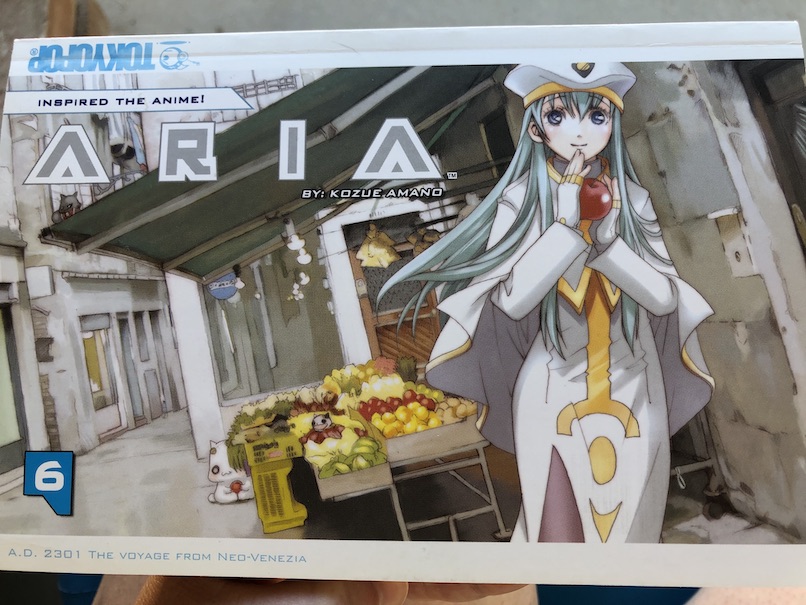
Aria Volume 6 by Kozue Amano, 2005, English Translation 2011.
This is the sixth volume of the second part of a fascinating manga series that combines sci-fi, fantasy, and slice of life. The series takes place about 300 years in the future, when Mars has been terraformed and renamed Aqua (because of all the water on its surface). The human colonies on Aqua are designed to resemble old-fashioned cities on Earth (called Manhome here). The people of Aqua prefer a much slower pace of life than people on Manhome, and aspects of life on Aqua more closely resemble Earth’s past.
The series is divided into two parts. The first two books are the Aqua volumes and introduce Akari Mizunashi, the main character, a young girl who came to Aqua to learn to become a gondolier in the city of Neo Venezia (which resembles Venice). Female gondoliers, called Undines, give tours of the city, giving Akari plenty of time to admire the beauty of her new home and meet interesting people. The two Aqua books are the prequel to the main series, Aria. Aqua covers Akari’s arrival on the planet, her introduction to life on Aqua, and the beginning of her training. The main Aria series show Akari’s continuing training, her progression to becoming a full Undine, her evolving relationships with her friends, and as always, her delight in learning more about her new home and admiring its beauty.
The series has received some criticism for being slow and lacking danger and adventure, but that is not really the point of the series. The main purpose is to show people how to appreciate the small pleasures of life. The sci-fi and fantasy elements (the spaceships, advanced environmental controls, intelligent Martian cats, and even the occasional appearances of the legendary Cait Sith) are mainly background to the stories about the magic of friendship and simple pleasures. Each volume contains a few short stories about Akari and her friends and the little adventures they have on a daily basis and the life lessons they learn. It’s a great series for relaxing when you’re stressed out.
Unfortunately, although this book is only about halfway through the series, this is the last book of the series that I actually own because the others haven’t been printed in English yet, although I think that additional volumes will be published in English.
The stories included in this volume are:
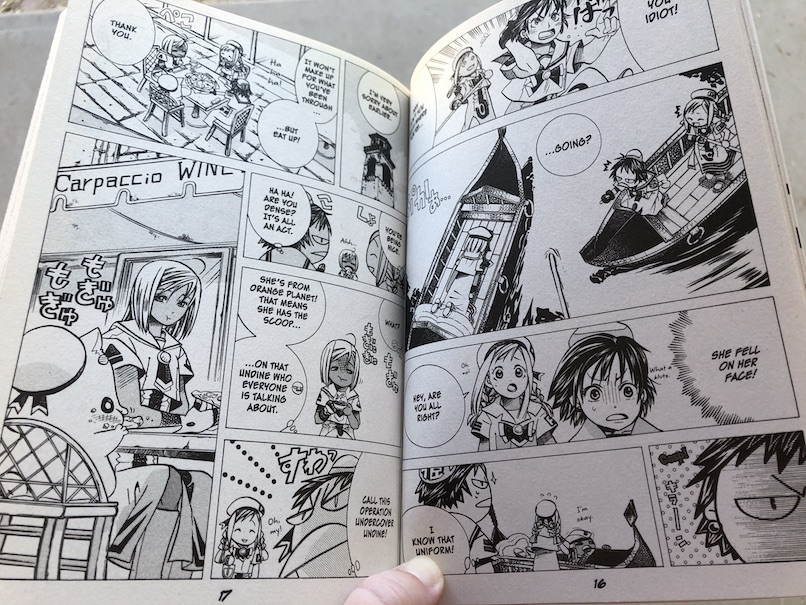
Orange Days
Athena comes to visit Alicia at Aria Company, and the trainees’ mentors reminisce about how they first met when they were trainees.
Akira was just as prickly and competitive when she was young as she is as an adult. Although trainee Akira said that she was just observing the “losers” at Aria Company, she kept coming around and became friends with Alicia. When she heard about a new trainee at Orange Company with an amazing singing voice, Akira wanted to seek her out, worried about the competition.
While she was telling Alicia about it, the two of them accidentally had a collision with young Athena’s gondola, which is the first time either of them had seen her. Athena was knocked over by the collision, so the other two girls treated her to lunch, partly to make it up to her and partly because Akira wanted to pump her for information about the new trainee at Orange Company, not knowing that Athena herself was the new trainee.
However, Athena didn’t answer their questions about the new trainee. Even back then, she was a person of few words, and she just made a drinking straw crawly snake to amuse President Aria. Still, Athena became friends with Alicia and Akira, joining them in their practice sessions, like Akari, Aika, and Alice share their practices together. Alicia and Akira only discovered that Athena was the trainee with the amazing voice when they decided to practice singing canzones one day.
The mentors end their reminiscences by saying that it seems hard to believe that, now that their training is over, they are so busy that they hardly have time to see each other. When they were trainees, it felt like they would always practice together every day, but now, their lives are different. These comments make the present trainees uncomfortable because they realize that the same thing is likely to happen to them when their training is complete. Alice, Aika, and Akari have come to value each other’s friendship and companionship, and they find it difficult to imagine being without each other.
However, Alicia and Athena tell the girls to not worry too much about it. Time is always moving forward, and it’s true that things will change for them, but that’s not entirely a bad thing. Even though they sometimes miss their training days when they spent so much of their time together, they are also happy with their current lives. They enjoy their careers, and they like helping to train new Undines. In fact, helping to train the next generation of Undines helps them to connect to their own pasts because the young Undines remind them of their own training days. Alicia’s advice is to enjoy where you are and what’s currently happening around you as much as you can. Life will eventually move on, and things will change, so you might as well make the most of where you are now and enjoy it to the fullest, so you will be ready to move on to the next stage of your life and enjoy that as well. Athena says, “Fun times really aren’t meant to be compared. Just enjoyed.”
The young trainees are still affected by the story of their mentors’ friendships and the changes in their lives. Aika points out to Akari that their lives aren’t changing just yet, but the girls have come to a greater realization that their lives will eventually change.
It’s just like how, when people are young and in school, surrounded by the same other students every day, it can be hard to imagine that there will come a day after you graduate when you won’t all be working at the same place and you won’t all be eating lunch together every day. As you get busy building careers and families, it will be harder to see each other and keep in touch. However, that’s not entirely a bad thing. As some people like to say, “You can’t begin the next chapter of your life if you keep rereading the last one.” There are many things in life to enjoy and accomplishments to be made, and like Alicia and Athena explain, you might as well enjoy where you are right now and make the most of it so you won’t look back with regret when it’s time to move on.
Venetian Glass
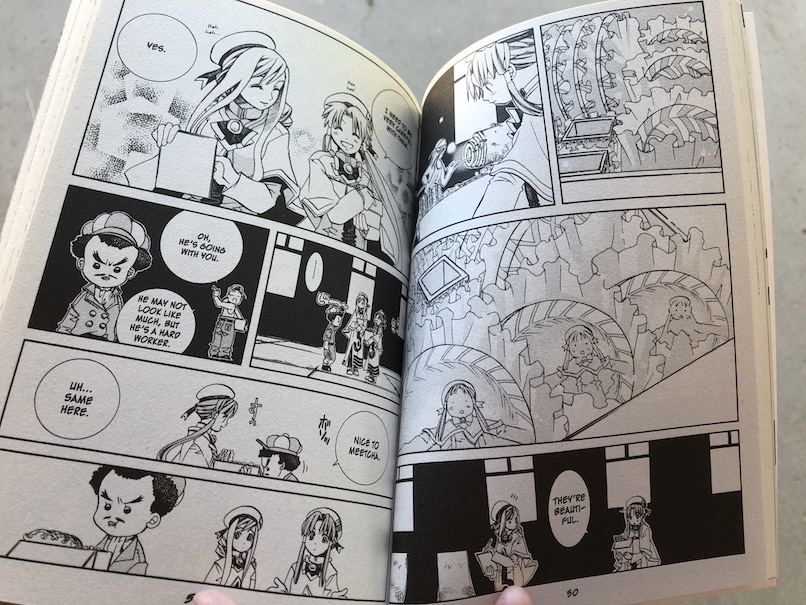
Akatsuki’s elder brother comes to Aria Company to hire Akari to transport some delicate Venetian glass. Akari is excited because this is the first time that anyone has specifically hired her, although, because she isn’t a full Undine yet, Alicia will have to accompany her on her errand.
When they go to pick up the glass, Akari sees glass-blowing and Venetian glass for the first time.
One of the workers from the glass factory seems kind of surly, but he accompanies them while they transport the glass and explains the history of Venetian glass and what makes it so special.
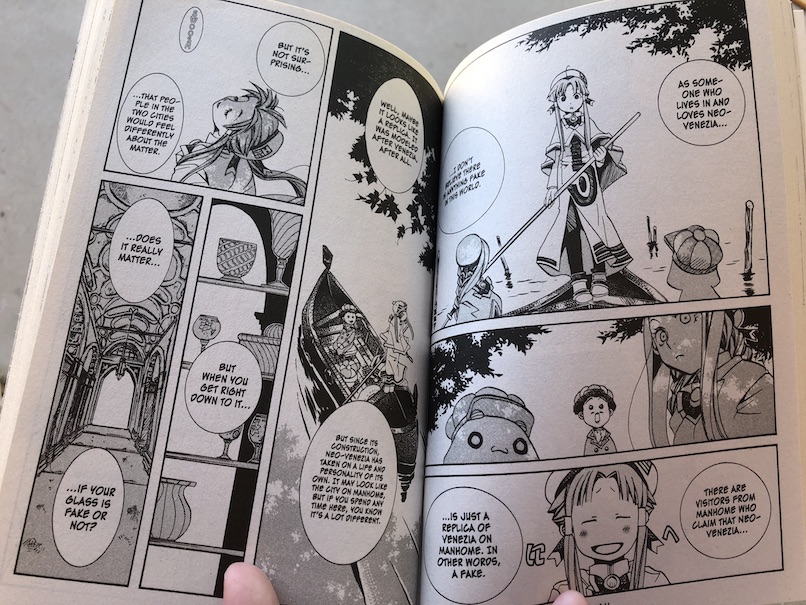
The reason why the glass worker is so surly is that he feels like a lot of people don’t appreciate his craft. He and his master put their heart and soul into their work, but people say that their “Venentian glass” is fake because it’s made in Neo-Venezia, not in the real Venice, which sank beneath the ocean years ago. The worker laments that the craftsmen who left the sinking city were scattered across Earth before making their way to Neo-Venezia and that details of their craft have been lost over time. Neo-Venezian glass will never be quite the same as the original Venetian glass, and people will never look at it the same way, which the worker finds depressing.
However, one of Akari’s great strengths is finding the beauty in everything and bringing it out for other people to see. She tells the worker that the glass is kind of like Neo-Venezia itself. It’s true, it’s not the original Venice, only re-created in its image. Some aspects of it are the same, but it’s also a different place, on another planet. To some people, that might make it seem like a fake city, just an imitation of the original, but Akari doesn’t think that the real vs. fake concept matters because she loves the city for the beautiful treasure it is. Similarly, Akari thinks that Neo-Venezian glass is a treasure by itself and likes it for what it is, regardless of what the original was or what others say about it.
The worker finds Akari’s viewpoint inspirational and is enchanted by Akari herself, remarking that she’s also a unique treasure. Akatsuki’s brother jokes that Akatsuki might have a rival now for his affection for Akari. Akari knows that Akatsuki has had an unrequited crush on Alicia, so she doesn’t think too much about it. Although it’s true that Akatsuki has a crush on Alicia, Akatsuki’s brother is also correct that Akari inspires greater feelings in others than she realizes and Akatsuki values Akari more than he lets on, maybe more than even he realizes himself. Akari is unique because of her unusual way of looking at things, and her optimistic point of view influences others.
Snow White
One day, while they’re practicing together, Akari asks Aika what kind of adult she wanted to be when she was a kid. Aika, who has admired and even hero-worshipped Alicia ever since Alicia was kind to her when she was a young child, says that she’s always wanted to be an elegant woman like Alicia. Akari says that she wants to be like Alicia, too, but Aika criticizes her for wanting to copy her ambition and says that it’s not likely that Akari would ever be as elegant as Alicia because she still does kid-like things, like collecting stuffed animals.
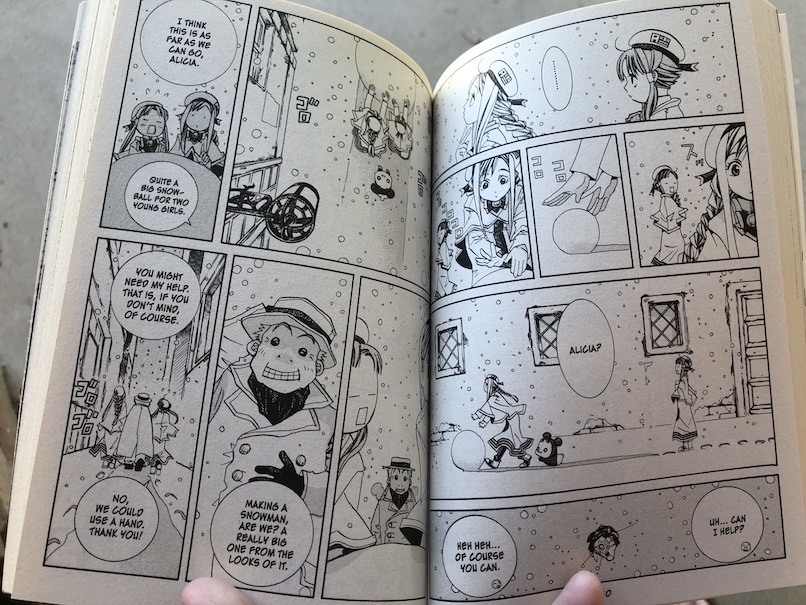
Their discussion causes Akari to wonder what sort of adult Alicia wanted to be when she was a little kid, and she asks Alicia about it while they’re out walking one day. Instead of answering her directly at first, Alicia demonstrates by starting to build a snowman and pointing out how the people around them react to it.
Each time Alicia and Akari start to make a large snowball for the base of the snowman, different adults stop and help them to make it a bit bigger.
Alicia says that she noticed people like this when she was a child. There are always adults who, when seeing a young girl making a snowman, feel compelled to help her because she can make a much bigger snowball with their help. That’s the type of adult Alicia always wanted to be.
Alicia genuinely enjoys not only her career as an Undine but her role as a teacher and mentor in Akari’s life and in the lives of her friends, helping them to develop in their trade and to become better Undines because of her influence.
Stray Cat
Alice finds a tiny stray Martian cat one day while waiting for Akari and Aika to meet her for practice. The cat’s mother doesn’t seem to be around, and Alice doesn’t know whether the little cat is lost, orphaned, or abandoned. When Aika arrives for practice, she finds both Alice and Akari lying on the ground next to the cat because it looks so happy lying in the sun that Alice thinks they should also try it.
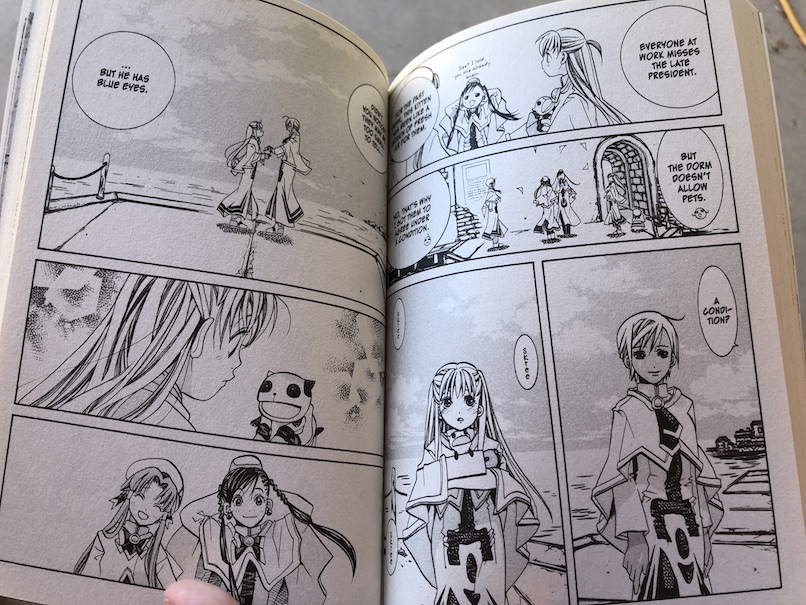
Although Aika warns Alice that she won’t be able to keep the cat because she lives in a dorm at Orange Company and isn’t allowed to keep pets, Alice becomes attached to the cat, names it Maa, and hides it in her room.
At first, she is afraid that her mentor, Athena, will be angry with her, and Aika scares her by saying that Athena will probably kill the cat because she doesn’t like cats. However, Alice loves Maa because she misses the previous president cat of Orange Company, who recently passed away, and Maa reminds her a little of him.
When the secret gets out, and Alice is confronted by Athena about the cat, Alice is scared because Athena is holding a knife for slicing fruit and runs away to leave the tiny Maa where she found him, thinking that it might be the only way to save his life. However, she finds herself unable to abandon Maa and returns to get him, only to find him missing from the box where she left him. In a panic, she spends all night searching the city with her friends to try to find Maa.
However, when they finally give up the search, they discover that Athena has Maa. When she had tried to talk to Alice before, she wasn’t angry. She followed Alice to the place where she left Maa and retrieved him and has been waiting for Alice to return to Orange Company. In Alice’s absence, Athena has persuaded Orange Company to keep Maa as their new company president. Like the other cats used as the presidents/mascots of gondola companies, Maa also has blue eyes.
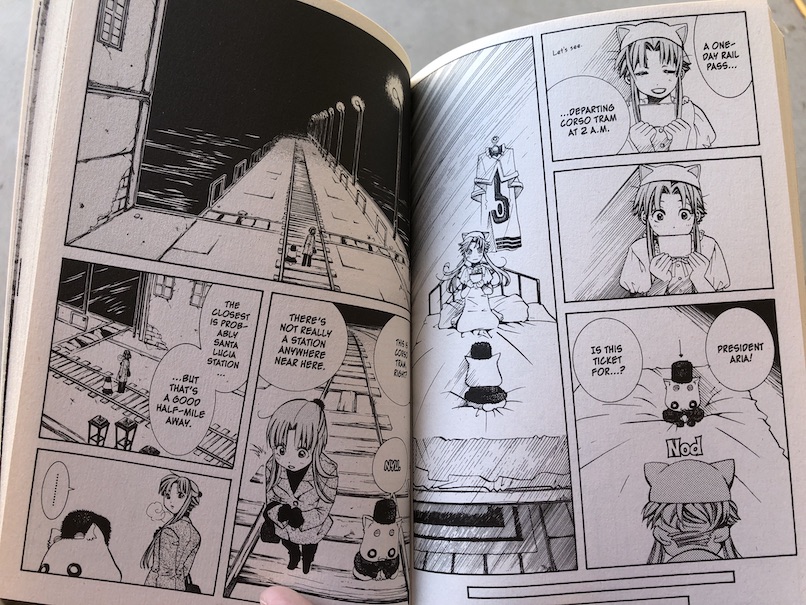
Aika has a more practical explanation for what it is, that the sounds of freight trains are more noticeable at night, when everything is quiet, but Akari discovers the truth when President Aria gives her a special train ticket.
It turns out that the mysterious train is a train of cats. (Guess who the conductor is?) Akari could use the ticket from President Aria to ride the train, but instead, she gives it to a sad little kitten who lost his ticket.
Because Akari doesn’t board the train, she never finds out where the train was going. The next morning, it all seems like a strange dream, except both Akari and President Aria have the stamps on their foreheads that Cait Sith gave them.
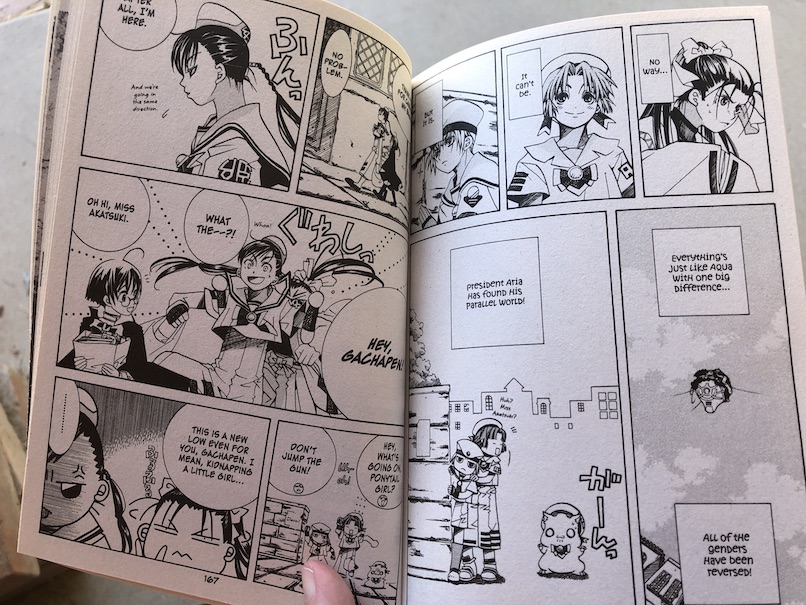
A Parallel World
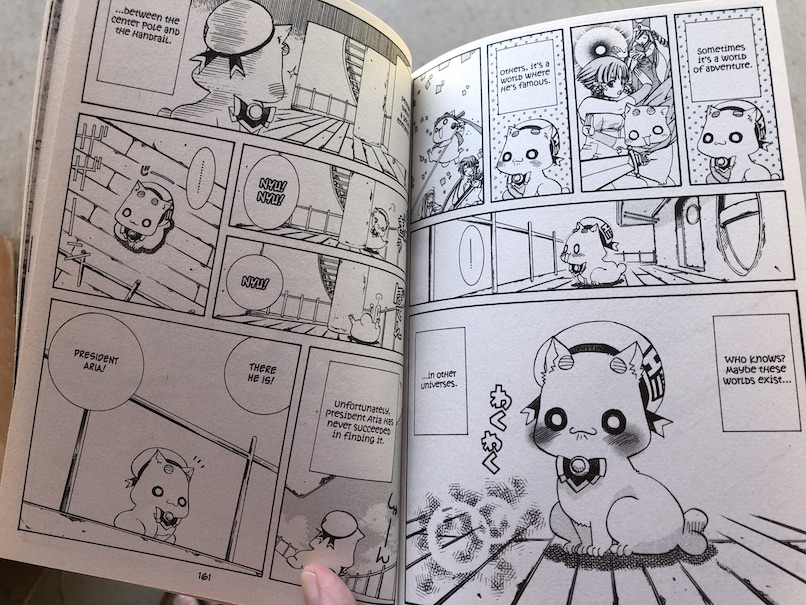
President Aria accidentally finds a parallel world in which all the people he knows who are girls are boys and vice versa. Frightening!
President Aria has always wanted to find a gateway to another world, but everything seems so strange that all he wants to do is get back to his world.
He ends up returning to the world he knows when someone tosses him too high in the air while playing with him. Did any of it really happen, or was he just dazed from when he fell?
This one isn’t one of my favorite stories in this series because I think that the premise is kind of goofy. The characters don’t really look all that different when their genders are switched. Most of the difference is in hair styles, and the uniforms of the Undines have pants when they’re normally just long dresses.
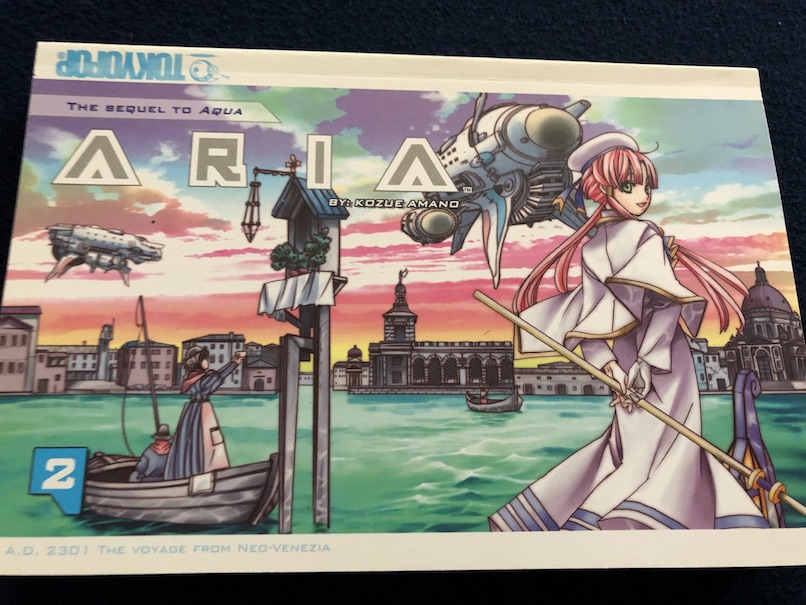
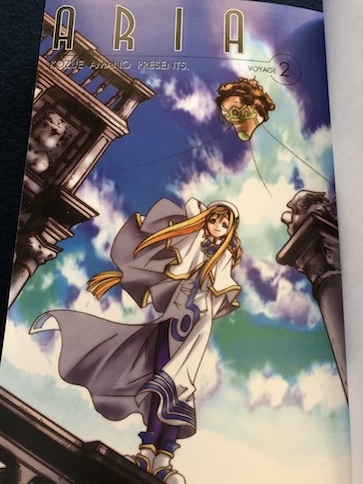
Aria Volume 2 by Kozue Amano, 2003, English Translation 2008.
The is the second volume of the second part of a fascinating manga series that combines sci-fi, fantasy, and slice of life. The series takes place about 300 years in the future, when Mars has been terraformed and renamed Aqua (because of all the water on its surface). The human colonies on Aqua are designed to resemble old-fashioned cities on Earth (called Manhome here). The people of Aqua prefer a much slower pace of life than people on Manhome, and aspects of life on Aqua more closely resemble Earth’s past.
The series is divided into two parts. The first two books are the Aqua volumes and introduce Akari Mizunashi, the main character, a young girl who came to Aqua to learn to become a gondolier in the city of Neo Venezia (which resembles Venice). Female gondoliers, called Undines, give tours of the city, giving Akari plenty of time to admire the beauty of her new home and meet interesting people. The two Aqua books are the prequel to the main series, Aria. Aqua covers Akari’s arrival on the planet, her introduction to life on Aqua, and the beginning of her training. The main Aria series show Akari’s continuing training, her progression to becoming a full Undine, her evolving relationships with her friends, and as always, her delight in learning more about her new home and admiring its beauty.
In the second volume of the Aria series, winter comes to Neo Venezia, and Akari experiences the delights of the changing season and the celebration of a New Year as well as continuing to learn more about her new home.
The series has received some criticism for being slow and lacking danger and adventure, but that is not really the point of the series. The main purpose is to show people how to appreciate the small pleasures of life. The sci-fi and fantasy elements (the spaceships, advanced environmental controls, intelligent Martian cats, and even the occasional appearances of the legendary Cait Sith) are mainly background to the stories about the magic of friendship and simple pleasures. Each volume contains a few short stories about Akari and her friends and the little adventures they have on a daily basis and the life lessons they learn. It’s a great series for relaxing when you’re stressed out.
The stories included in this volume are:
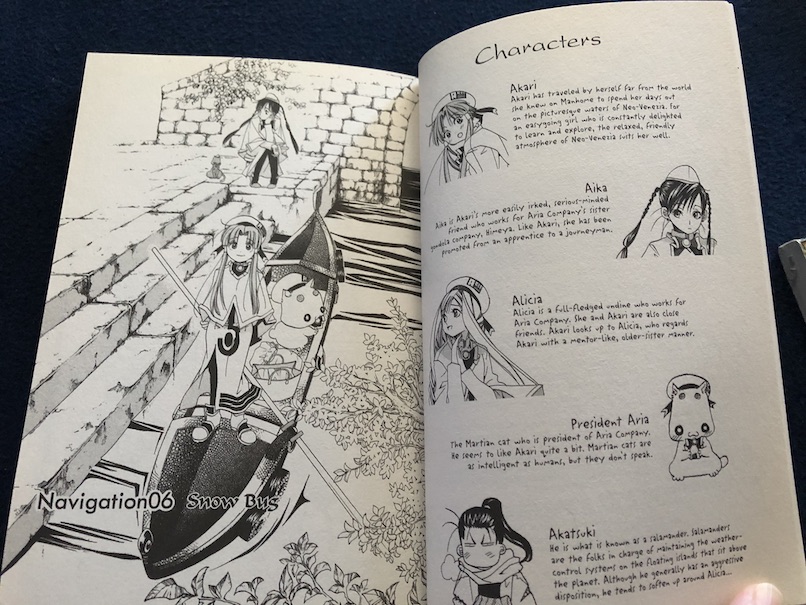
Snow Bug
Snow Bugs (a kind of fluffy aphid) appear on Aqua at the onset of winter. They are larger than Earth aphids, and they look like cute little puff balls with eyes.
Akari makes friends with one of them when she and Alicia go out to gather some firewood, and she brings her Snow Bug friend home with her for awhile.
However, the Snow Bugs appear at this time of year because they are migrating to their winter home, and as snow comes to Neo Venezia, Akari has to accept that her little friend must move on with the other Snow Bugs as it gets colder. Fortunately, Snow Bugs have long life spans, so Akari can count on seeing her little friend again next winter.
Utopia
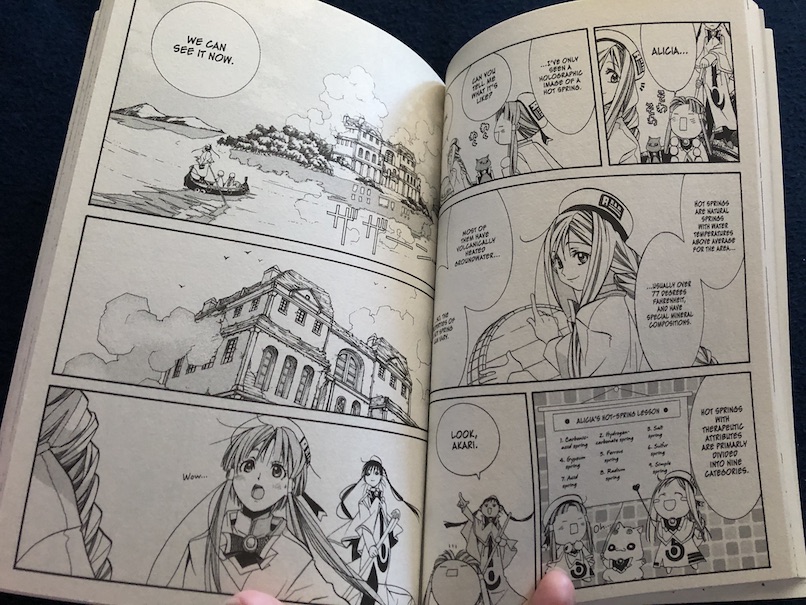
Akari has trouble adjusting to the winter in Neo Venezia because it’s much colder than the winters she is accustomed to on Earth. Aika suggests visiting a hot spring, which Akari has never done before because people on Earth are more technological and not so much into the beauties of nature. Alicia takes Akari and Aika to visit a very special hot spring where the baths are built into a magnificent old mansion.
The mansion has been there for years, and parts of it are now crumbling with disuse, but the hot water from the spring beneath it is now allowed to flow through the lower floors of the old mansion, giving it a mysterious atmosphere, yet it’s still a very relaxing hot bath.
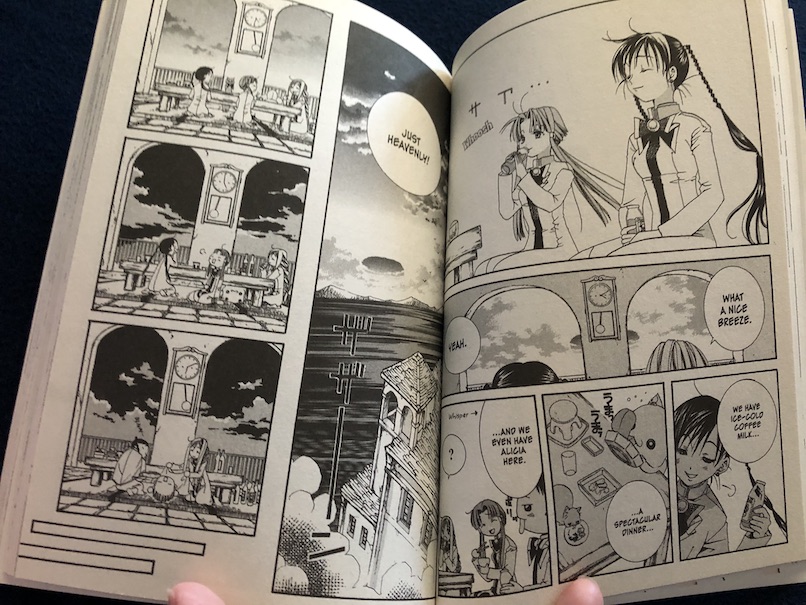
The girls indulge themselves in the baths and have dinner on one of the upper floors with a grand view of the ocean. (Alicia is older than the other girls and a legal adult, so she drinks alcohol. She lets the teenage trainees try a small amount to see what it’s like, but mostly, the younger girls have iced coffee milk.)
After the younger girls have a nap, they go back in the baths, and Alicia shows them a special part of the hot springs. Akari feels a little guilty for taking the day off and indulging themselves, but Alicia says that a break now and then is good.
This is one of my favorite stories in the Aria books because I just like the idea of a mansion being turned into a giant hot spring bath, with water flowing through it. The crumbling bits look a little dangerous to me, but it’s fun to imagine what the rest of the house might be like.
A Day in the Life of the President
President Aria may be an intelligent Martian cat, but he is still a cute kitty. He does cute kitty things, like climbing into bags and boxes, worrying about Akari’s hair dryer, and fighting with a hair brush. It even says that he doesn’t like baths, although he didn’t mind going to the hot spring in the previous story.
Martian cats are supposed to be as intelligent as humans, and it’s established in the series that President Aria and other cats have their own community with Cait Sith, the king of the cats, sneaking off sometimes to meet with each other, but President Aria also does things that people would expect from ordinary pet cats, and it’s not clear why. Then again, it might not matter. The Aria stories are mostly atmospheric and about emotions, so not everything has to be completely explained.
Voices of the Stars
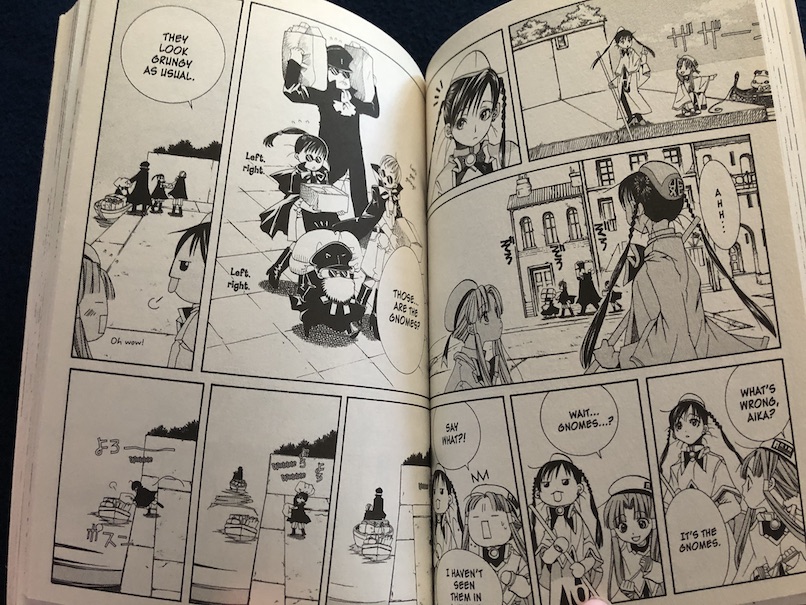
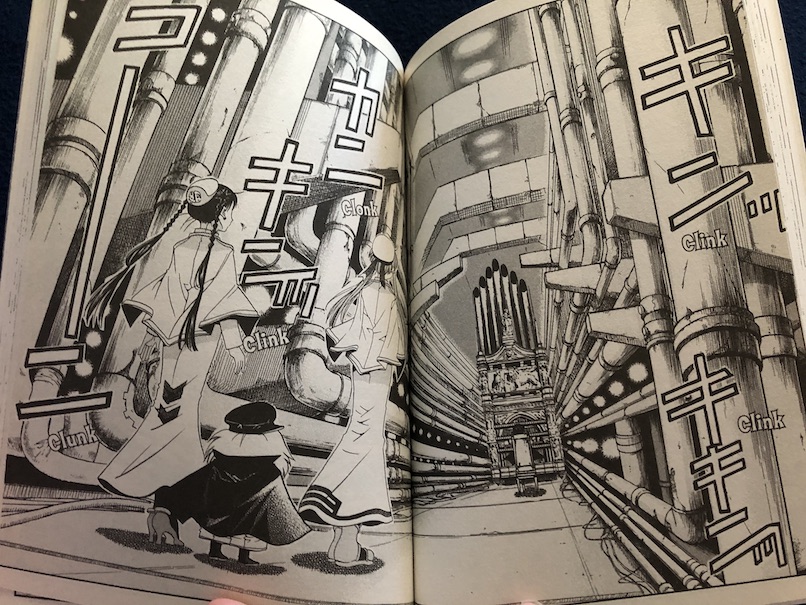
Akari learns about the Gnomes, a group of people who control the gravity on Aqua. Alicia tells her about the gnomes one day when she explains why the gravity on Aqua seems to be the same as on Earth even though its natural gravity would be much less strong. The Gnomes live in their own community underground and only come up to the surface from time to time to go shopping.
One day, Akari and Aika see a group of Gnomes shopping. They help one of them, who is having trouble loading his supplies into his boat. Akari offers to take him home in her gondola, and he accepts, taking her and Aika to see where the Gnomes live underground.
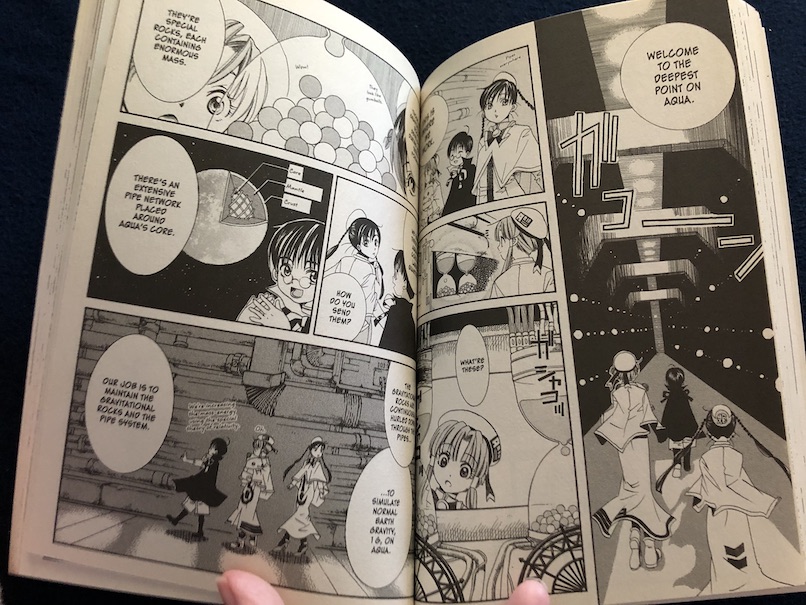
The Gnome, Al, is a trainee Gnome, just a few years older than Akari and Aika, although he is short and looks younger and, oddly, speaks like an older, old-fashioned man. He explains to the girls how the Gnomes control the gravity on Aqua by conducting special high-mass gravitational rocks through a network of pipes surrounding Aqua’s core. As always, the science and technology on Aqua are borderline magical.
Al shows them where he works, and the machinery that controls the sending of rocks through the pipes is like a large pipe organ, making beautiful musical sounds as it works. Al becomes a recurring character in the Aria stories.
Auguri Di Buon Anno
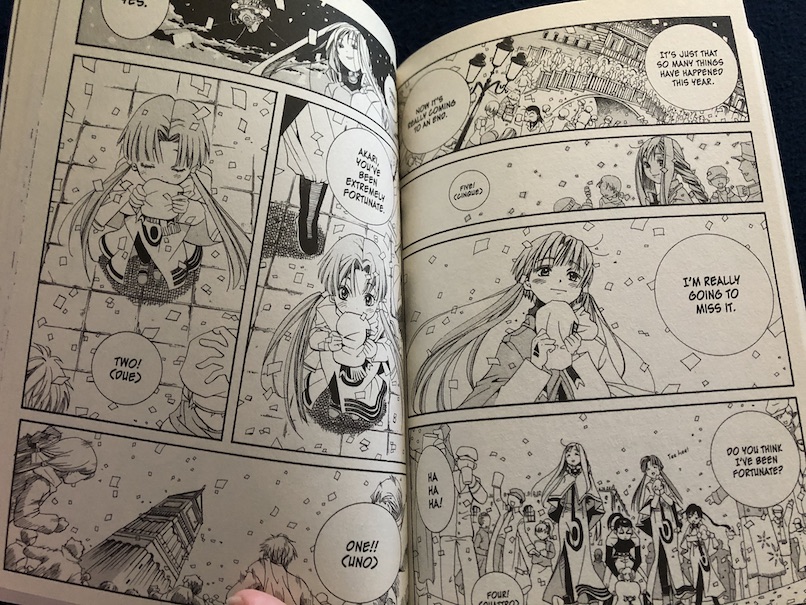
Akari celebrates New Year’s Eve with her friends. It’s interesting how they compare Japanese New Year’s traditions with ones from Venice, from the types of food eaten during the holiday to the way that Japanese people traditionally consider New Year’s Eve a family holiday, while Akari’s friends consider it a holiday to spend with friends in public. Alicia explains to Akari that one of the traditions of Neo Venezia is similar to a traditional Italian custom of throwing out old things on New Year’s Eve as a way of throwing off bad memories from the previous year.
Akari and Alicia join their other friends in the public square on New Year’s Eve, and Akari reflects on how much her life has changed during the last year, since she came to Aqua. During that time, she’s had many new experiences and made many new friends, and she’s grateful for everything that’s happened and all of the good memories she’s had.
Akari and her friends stay out all night and see the sun rise on the first day of the new year.
Carnival
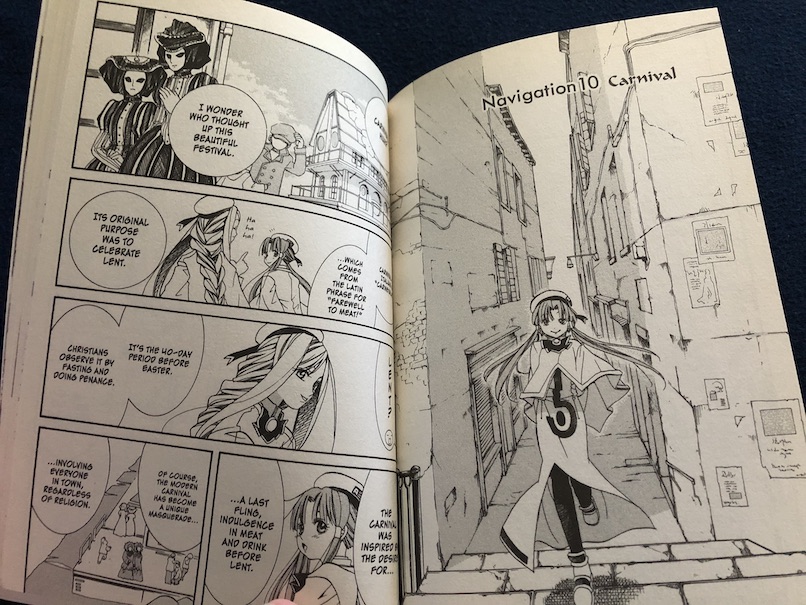
Akari is introduced to the traditions and wonders of a Venice Carnival! Alicia explains the origins of the tradition to her.
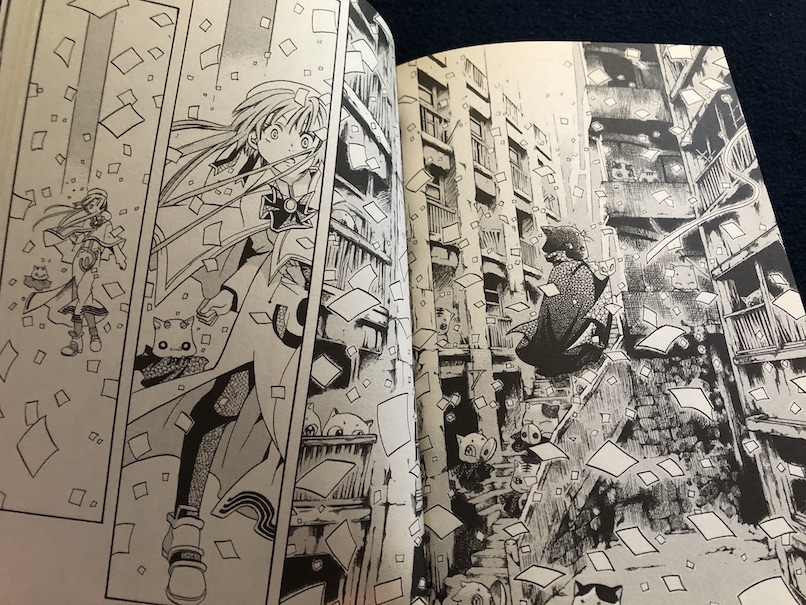
However, Akari becomes intrigued by mysterious figure dressed as Casanova. Rumor has it that the same person has played the role of Casanova for 100 years, but no one knows who it is.
Aika and Akari try to follow a member of Casanova’s entourage to see if they can find out who Casanova really is. The two girls get separated, but Akari meets up with Casanova, and he invites her to join his entourage to parade through the crowd.
In the end, Akari does get a look at Casanova without his mask, and it’s a magical end to Carnival!
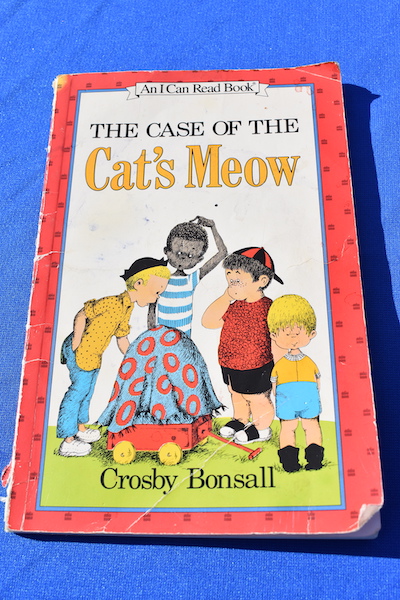
The Case of the Cat’s Meow by Crosby Bonsall, 1965.
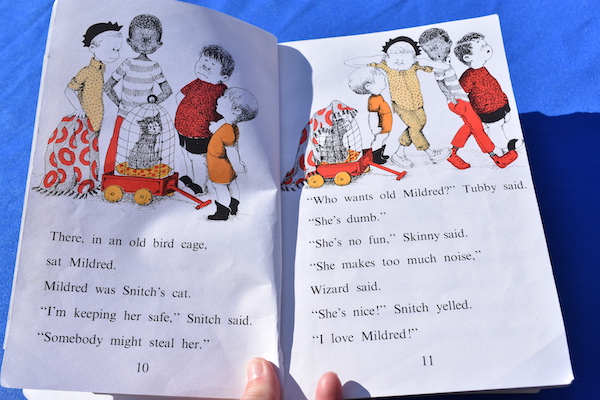
Four neighborhood friends, who call themselves by the nicknames Wizard, Skinny, Tubby, and Snitch, have their own private detective club. Their club meets in a backyard clubhouse. One day, Snitch gives them a case when he becomes worried that someone might try to steal his cat, Mildred. The other boys think that’s unlikely because Mildred is noisy, and the other boys don’t think that she’s that great, but Snitch loves her and is worried. The boys decide to keep her in their clubhouse with a special booby trap rigged up in case anyone tries to abduct her.
However,
the next day, Mildred disappears. Snitch
is convinced that someone stole her, although the others don’t believe it. The boys start asking around the neighborhood
to find out if anyone has seen her. When
that doesn’t work, they try putting food out for Mildred, but they end up with
every cat in the neighborhood except Mildred.
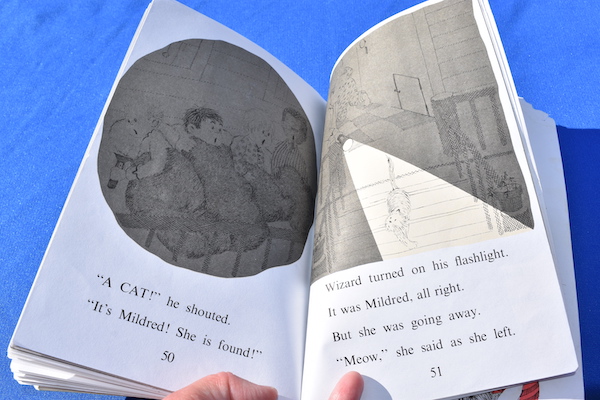
Eventually, they realize that Mildred has been coming back at night to visit her food bowl. When they keep a watch for her, they discover where Mildred has been hiding and the reason why.
Seeing Mildred’s adorable new kittens makes the other boys discover a new love of cats and take back all the disparaging things they said about Mildred earlier.
The book is currently available online through Internet Archive.
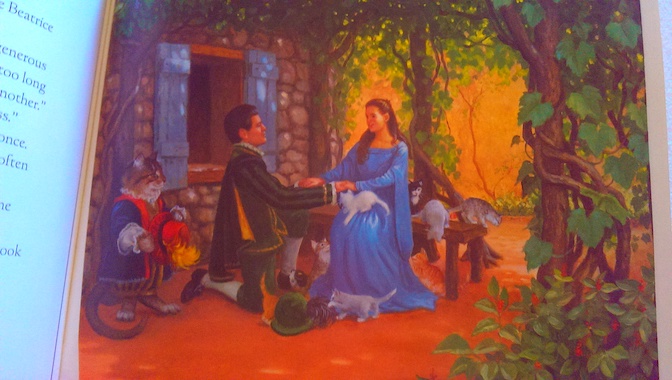
This beautiful picture book, set in a fairy-tale Italy, is based on several folk tales, as the author explains on the page with the publishing information. Among the tales that served as inspiration for this story is The Colony of Cats, which is from Andrew Lang’s The Crimson Fairy Book. In some ways, this story is similar to Cinderella and Mother Holle, with its wicked stepmother and stepsister.
In the distant past, so the story says, it was common for animals to talk, and one of the wisest cats was Papa Gatto, who served as an adviser to the prince. Papa Gatto had a lovely wife and a beautiful mansion, but soon after the birth of their eight kittens, his wife died. Needing someone to help care for the motherless kittens, Papa Gatto decides to advertise for someone to help.
In the town, there is a widow who has a daughter named Sophia and a stepdaughter named Beatrice. As in many fairy tales, the widow favors her own daughter, who is lazy and spoiled, while giving all of the hard work to her stepdaughter, who is much nicer. When they hear about Papa Gatto’s advertisement, Beatrice feels sorry for the young kittens and wants to help. However, the widow, thinking of the generous fee that the wealthy Papa Gatto is offering, decides that she wants it for Sophia. Sophia doesn’t want the job, but at her mother’s urging, she goes to see Papa Gatto anyway.
Papa Gatto gives Sophia the job tending his house and family while he’s away on a trip, but Sophia doesn’t know how to work hard and has no real intention of doing a good job. She simply makes herself at home in Papa Gatto’s lovely mansion, trying on his dead wife’s jeweled collars as bracelets and neglecting the housework and kittens. When Papa Gatto returns home and sees what she’s done, he sends her away in anger.
When Beatrice hears that Papa Gatto is once again looking for help, she goes to see him without telling her stepmother about it. Papa Gatto sees how interested she is in the kittens and how gently she treats them, he gives her the job, reassured that she will do it well.
Sure enough, when he returns from his next journey, he sees that Beatrice has taken good care of the house and kittens and rewards her with the jeweled necklace/bracelet that Sophia had admired. Needless to say, Beatrice’s stepmother and stepsister are angry with Beatrice when she returns home, and Sophia takes the bracelet for herself.
Meanwhile, Papa Gatto has told the prince about Beatrice. The prince has been thinking about marrying, and he says that he would like to meet Beatrice. Papa Gatto tells him that she will probably be at the coming fair in town, and the prince should attend and look for the girl with the bracelet.
At first, the prince mistakes Sophia for Beatrice, a deception that she and her mother encourage. However, when the prince speaks to Papa Gatto again, Papa Gatto realizes the deception and sets things right.
The pictures in this book are beautiful! And, of course, there’s a happy ending.
I liked it that Beatrice didn’t accept the prince’s offer of marriage immediately, saying that she’d like to get to know him first. It’s more sensible than the fairy tales where they get married right away.
Young Sally’s parents are away on a business trip, so she’s been staying with Mrs. Chipley, but now Mrs. Chipley has a family emergency to tend to. Mrs. Chipley’s daughter is ill, and Mrs. Chipley needs to go and help her with her children. While Mrs. Chipley is gone, there is only one other person for Sally to stay with: her Aunt Sarah, an elderly woman who Sally doesn’t really know. Aunt Sarah moved to California when Sally was just a baby, and the only reason why she has returned is that she has decided to sell her old house.
Sally is a rather shy girl. She’s uneasy around Aunt Sarah, who is obviously unaccustomed to spending time with children, and Aunt Sarah’s creepy cat, Shadow. The house is old, chilly, and filled with strange things. However, Sally is enchanted with the bedroom that Aunt Sarah gives her and the portrait of a girl and her doll that hangs on the wall. The girl looks very much like Sally herself, and Aunt Sarah tells her that the girl was also called Sally and lived in that bedroom as a child, many years ago.
Fascinated by this earlier Sally and her beautiful doll, modern Sally decides to try to find the doll. Although her aunt tells her that she shouldn’t go poking around in the attic, Sally can’t help herself. She finds a trunk with Sally’s name on it full of girls’ clothes, just the right size for modern Sally to wear. There is a doll in the trunk also, but it’s not the same doll as the one in the portrait. When Sally reads the diary in the old trunk she learns the reason why. The doll in the picture, Elizabeth, was lost many years ago, when the earlier Sally was still young. As modern Sally plays dress up with the earlier Sally’s old clothes and studies herself in the mirror, she finds herself taken back in time, seeing the house through earlier Sally’s eyes. In the past, it was a busy and happy household with parents, an elderly aunt, earlier Sally, Sally’s little brother, and Sally’s pet cats.
A short time later, Aunt Sarah wakes modern Sally on the floor of the attic, and they assume that it was all a dream, but this look into the past changes Sally’s feelings about the house and her aunt’s cat, who suddenly seems friendlier and reminds her of the mother cat she saw in the past. Aunt Sarah also seems a little less stern as they discuss earlier Sally and her lost doll. Aunt Sarah says that no one ever saw the doll again after it disappeared on Christmas Eve all those years ago. Earlier Sally had put the doll on top of the Christmas tree, like an angel, and after the family finished singing Christmas carols, the doll was gone. They could never figure out what happened to her. Modern Sally thinks that sounds very sad and wants to investigate the mystery of the missing doll, although Aunt Sarah isn’t very enthusiastic. She says that if the doll could be found, it would have been found long ago, and the earlier Sally has long since grown up and no longer needs it. Although, oddly, Aunt Sarah remarks that the earlier Sally had always thought that Elizabeth was “a little bit magic.”
Modern Sally continues to look for the doll anyway and also continues having moments when she sees the past as the earlier Sally did many years ago, especially when she looks into the mirror in the attic. One day, she invites a neighbor girl named Emily over, and while the two of them are looking around the attic, Emily finds Elizabeth’s old doll bonnet. The girls are excited because they now know for certain that Elizabeth is still in the house, waiting to be found. The girls are running out of time to find her. If Aunt Sarah agrees to sell the house, it will be torn down to build apartments. But, Sally falls ill with the flu, and it isn’t until Shadow gives her an important clue that Sally realizes where Elizabeth must be.
This book is currently out of print, but it’s one that I’d dearly love to see in print once more! It is available to borrow and read for free online through Internet Archive.
My Reaction and Spoilers
Adults reading this story will probably realize before the children do (spoiler) that Aunt Sarah herself was the earlier Sally, the one who lost her favorite doll many years ago. “Sally” is a nickname for Sarah, like “Molly” can be for Mary and “Peggy” can be for Margaret, although any of those names can also be used by itself. (In the Middle Ages, it was common for popular names to get different variations of nicknames by changing one sound in the original name and then changing one more sound in the first nickname to get another one, and sometimes even moving on to change one more sound to get yet another nickname that was very changed from the first. Those nicknames that look significantly different from their original names are a holdover from that practice, having lasted even into modern times. John/Jack works on the same principle. Fun fact!) When Aunt Sarah grew up, she stopped using her childhood nickname, but the name was passed on to modern Sally.
At first, modern Sally sees her stern aunt as being witch-like, all dressed in black and fussy, but gradually, the memories of the past, her new relationship with young Sally, and the finding of her slightly-magical doll soften her. There are hints of Aunt Sarah’s youth in the attic, although Sally at first dismisses thoughts that some of the lovely things there could have belonged to her cranky old aunt because she has trouble thinking of her aunt as once having been young, pretty, and sweet. However, part of the theme of the story is that everyone was young once. Aunt Sarah is is bent and achy from arthritis, giving her the witch-like appearance and making her short-tempered at times. She also hasn’t been around children much for years, and part of her fussiness comes from forgetting what it was like to be young herself. Modern Sally, with her resemblance to her elderly aunt, and Elizabeth the doll both work their magic on her, reminding her what it was like to be a young girl and helping to revive a more youthful spirit in her.
I was happy that (further spoiler) Aunt Sarah decides not to sell the house after all, not just because she and Sally will get to spend more time together, but because old houses like that are rare these days. I like the idea that the old family heirlooms in the house will now be preserved, like the sleigh out in the old barn and the melodeon, a type of small organ. I liked the way the book described the melodeon making musical sounds as people walk past it because of the way the floor boards move. I also loved the description of the gas plant that Sally sees in earlier Sally’s memories. If you’d like to see what a gas plant looks like when it’s lit, have a look at this video on YouTube.
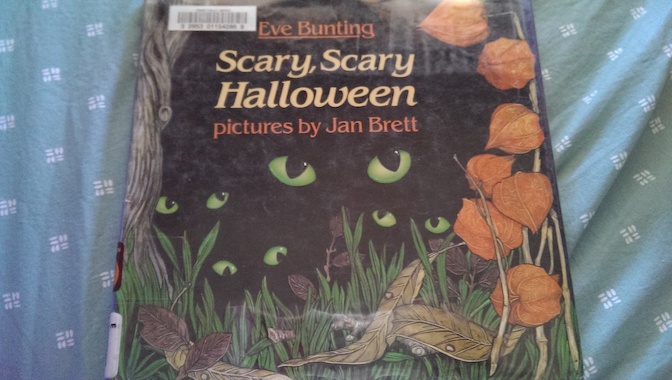
Scary, Scary Halloween by Eve Bunting, pictures by Jan Brett, 1986.
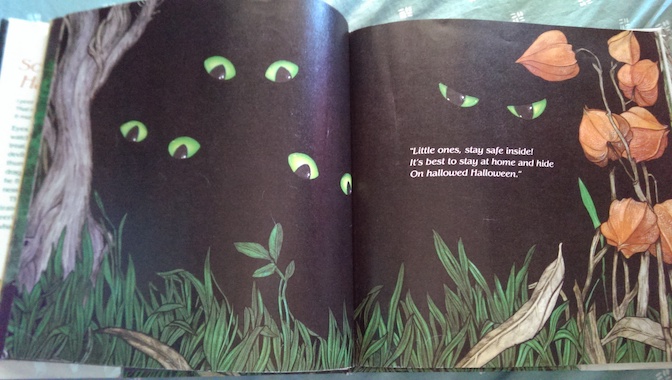
I love the pictures in this book and enjoy the rhyming text of the story. It’s a cute concept for Halloween, and young children will enjoy the repetition in the story.
One Halloween night, unseen watchers observe children in costume trick-or-treating. The mother cautions her children to remain hidden because of all the strange creatures that are out and about on Halloween.
Readers will know that the monsters are simply children in costume, but the watchers do not because they are cats, which is only revealed at the end of the story. Throughout most of the book, they only appear as green eyes as they hide under the porch of a house.
When all the trick-or-treaters are gone, the mother cat and her kittens are free to roam the night themselves.
I thought that it was cute how the mysterious tone of the book was due to the cats’ understanding of Halloween. At first, it may seem very mysterious to young children as well, but completely understandable as it becomes more and more obvious that all the monsters are only trick-or-treaters and the little family hiding from them are cats, who think of themselves as being pretty fierce in their own right.
The book is available to borrow and read for free online through Internet Archive.
Mouse detective Basil’s arch enemy, Professor Ratigan, has taken over the Asian country of Bengistan, near India. Basil discovers that he is holding the real ruler of the country captive so that he and his gang can loot the country for everything they can get, keeping the populace in subjugation. Basil is determined to go there and free the rightful ruler so they can vanquish Professor Ratigan!
When Dr. Edward Hagerup of the British Mousmopolitan Museum hears that Basil is heading to Asia, he asks him to investigate an historical mystery for him. There have been tales of a race of pygmy cats, no bigger than mice, but new evidence has been found that suggests there is more truth behind the stories than anyone has realized. Basil has an interest in archaeology and eagerly accepts this extra task as part of their mission. Along the way, other mice who have heard of the expedition join up to help Basil.
At first, Basil’s original mission, stopping Ratigan, seems easy. Basil and his friend Dawson allow themselves to be captured so that they can get into the palace and find the real Maharaja of Bengistan. After solving a secret code in the dungeon, they find the Maharaja, who tells them that another acquaintance of theirs, the opera singer, Relda, is also a prisoner in the palace. She was giving a performance there when Ratigan and his thugs took over, and Ratigan has forced her to stay, giving private performances for him. During one of these performances, Basil and his friends manage to take Ratigan by surprise and capture him.
Now, Basil thinks that he and his associates are free to continue their other mission, finding the lost civilization of pygmy cats. However, that mission is fraught with danger and surprises, and they haven’t quite heard the last of Ratigan.
The story isn’t really much of a mystery. It’s really more an adventure story.
Basil and his friends manage to locate the island of pygmy cats with the help of Jeannie (a sea serpent related to the Loch Ness Monster who lost her way back to Scotland after a family trip — I kid you not) and the Sacred Catfish (which they bribe with catnip — I also kid you not, and his nip trip is a little disturbing).
This is my least favorite of the Basil series, partly because of the lack of mystery and also because of “primitive” nature of the pygmy cats when they find them. Basil makes it clear that the pygmy cats are inherently less intelligent than mice and that their greatest achievements were because of the influence of royal mice who washed up on the shores of their island years ago, only to be wiped out by a volcano. (Really? Really. Basil, if these mice were so superior and the pygmy cats so inferior, why were the cats able to get away from the volcano when the mice didn’t, hmm? Why didn’t the mice just go to the part of the island where the cats were until the volcano stopped erupting? Just what kind of bill of goods are you trying to sell us, Basil?) Basil comes off sounding like a 19th century imperialist, and the fawning adoration he gets for his discovery is really annoying.
In general, I don’t like the Basil stories that turn out to be more adventure than mystery, and Basil’s smug superiority at various points in the story are off-putting. It’s true that that Sherlock Holmes (which this series parodies) had an ego as well, but these sort of imperialist attitudes in a children’s story are distasteful. Although I like recommending nostalgic books for future generations, this is one that I really can’t recommend. The brightest spot in this book was the secret code in the dungeon, which is more in keeping with the mystery theme. If the book had made the plot to capture Ratigan and end his reign of terror in another country without all this stuff about an “inferior” species of small cats, it would have been a much better story.
Like other books in this series, this book contains a number of jokes on the original Sherlock Holmes stories. Read a number of the names backwards, and you’ll see some familiar names from Sherlock Holmes as well as a reference to another series by Eve Titus.
This book is available to borrow and read for free online through Internet Archive.






































 Basil and the Pygmy Cats by Eve Titus, 1971.
 Now, Basil thinks that he and his associates are free to continue their other mission, finding the lost civilization of pygmy cats. However, that mission is fraught with danger and surprises, and they haven’t quite heard the last of Ratigan.
 Jestress's Forgotten Books and Stories