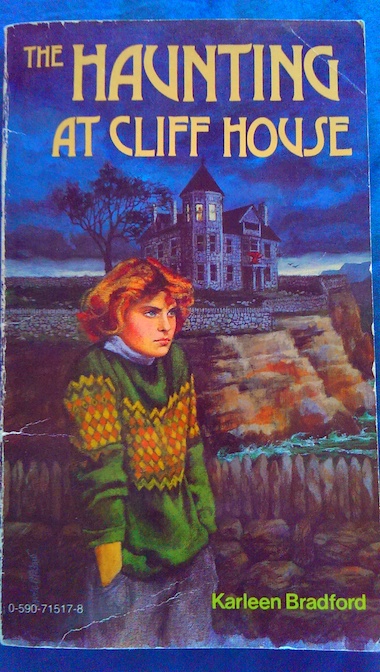
Changes for Felicity

American Girls

FelicityChanges

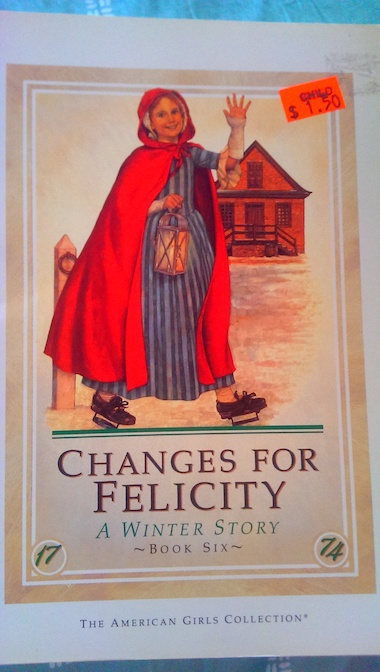
Changes for Felicity by Valerie Tripp, 1992.

FelicityChangesPennyThis is part of the Felicity, An American Girl series.

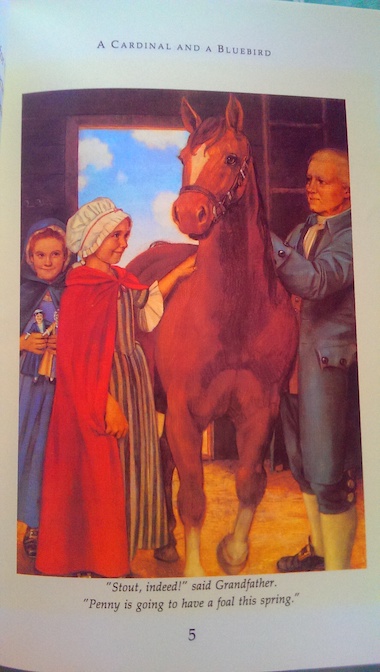
Everything is changing for Felicity. To begin with, her horse, Penny, is expecting a foal. Penny has been happy and healthy since she came to live with the Merrimans, but Felicity worries about what will happen when Jiggy Nye, her abusive former owner, gets out of prison. He has been in jail for not paying his debts. Felicity learns that he was once a respected member of the community and an expert with animals, but he became an alcoholic after his wife’s death. However, Felicity can’t bring herself to feel sorry for Nye after the way he’s behaved, even when she learns that he is sick. Felicity’s friend, Elizabeth, convinces her that they should send him some medicine and other supplies in prison, partly to have pity on him and partly so that he will feel grateful to Felicity when he gets out and not make trouble for her.

FelicityChangesGrandfatherSickUnfortunately, Elizabeth’s father also soon ends up in prison. Tensions between Patriots and Loyalists are high. The former governor has fled Williamsburg, and Patriots are arresting Loyalists. That Mr. Cole is a Loyalist has been well-known for some time. Felicity fears for Elizabeth and wonders what will happen to their friendship.
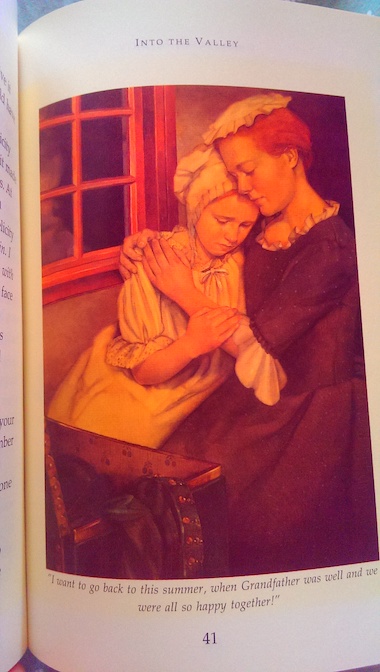
Then, Felicity’s grandfather also becomes ill. He soon dies of his illness, devastating her family, but before his death, he takes steps to make things better for Elizabeth’s family, Jiggy Nye, and his own family, especially Felicity. In return for Felicity’s charitable gift and her grandfather’s honorable payment for the horse, Jiggy Nye also helps Felicity and Penny when they need him the most, redeeming himself in everyone’s eyes.

FelicityChangesMotherWith the war everyone has dreaded finally becoming reality, there are still more changes yet to come. Elizabeth’s father must leave Williamsburg, Felicity’s father decides how he will support the war effort, and Felicity begins to play more of a role in the running of her father’s shop, as she had wished to do before.

In the midst of Felicity’s grief over her grandfather’s death and worries about the coming changes in all of their lives, her mother has some poignant thoughts about the nature of death and change. While Felicity wishes that it were summer again, back when her grandfather was alive and they were all happy, her mother says that not all changes are bad ones. As she points out to Felicity, even though it might be tempting for her to wish that she were a child again herself, when both of her parents were still alive, to go back to that time would mean giving up her life with her husband and her children. She loves her children and enjoys seeing them grow up and change.  The ability to witness those happy changes is worth dealing with the less happy changes in life as well.  Death, like change, is just another part of life, and Felicity’s mother points out that love still connects us to those we’ve lost.  Like everyone else, the only way Felicity can move in her life is forward, and that’s a good thing. Felicity still has growing up to do and happier changes yet to come.

In the back of the book, there is a section of historical information about the Revolutionary War.

The book is currently available online through Internet Archive.

Mary Geddy’s Day

MaryGeddyMary Geddy’s Day: A Colonial Girl in Williamsburg by Kate Waters, 1999.

This book is part of a series of historical picture books about Colonial America.

Mary Geddy was a real girl living in Williamsburg in 1776. In this book, she is reenacted by Emily Smith, a young interpreter at the Colonial Williamsburg living history museum. The story follows her through a single day in her life as it would have been typically experienced by girls around the beginning of the American Revolution (lessons, chores, shopping, and visiting with her friend) up until the moment when the vote for independence at the Fifth Virginia Convention was announced.

Mary Geddy’s father was a silversmith, which put them in the middle class for the times.  They had a comfortable house with a shop next door where Mr. Geddy sold his silver work.  The Geddy family also had slaves to take care of household chores.

At the beginning of the story, Mary knows that the Fifth Virginia Convention is voting on the subject of independence from Great Britain.  Mary is concerned about the prospect of war, and she knows that if the vote is for independence, she will probably lose her best friend, Anne.  Anne’s family are loyalists, and her family plans to return to England if the colonies decide to break away.

All through the day, people are speculating and worrying about what is going to happen as they go through the typical routines of their day.  Mary explains the clothing that colonial girls would wear as she gets dressed in the morning.  Then, her mother sends her out to buy eggs at the market.  Although she can see Anne there and hear some of the talk about what’s happening, Mary is kept at home for most of the rest of the day, practicing her sewing, learning to bake a pie with her mother, helping in the garden, and having her music lessons. She is learning to play the spinet.  She envies her brothers, who are allowed to help their father in his shop and therefore able to hear more of the talk than she is.

I particularly liked how they showed the coins that Mary uses when she goes shopping.  Even though Mary’s family lives in an English colony, she’s using pieces of eight, which is Spanish money.  The book doesn’t explain what currency she’s using or why, but that’s why the coins are those little triangular shapes, like little pieces of pie. Let me explain.

First, the American colonies had a currency problem.  They actually had a shortage of English currency because England didn’t want wealth to leave the English economy and go out to the colonies.  One of the measures they took to prevent wealth from leaving England was to make it illegal to export higher-value pieces of currency to the colonies.  People in the colonies needed something to replace the pieces of currency that they didn’t have or had in too short supply, so they resorted to other methods of exchange such as barter, IOUs recorded in ledgers, and currency from other countries.  They had some standard units of exchange for converting different currencies into British money because that was the way people in British colonies thought about money.  One of the most popular coins in use was the old Spanish dollar or piece of eight, which was worth eight reales (unit of Spanish currency).  However, sometimes, people wanted to use a smaller piece of currency for small purchases and transactions (like buying eggs), so they physically cut one coin into eight pie-shaped pieces (hence, “pieces of eight”), each worth only one real.  They had to do the coin cutting very carefully because the value of this type of money was based on the amount of silver in the coins themselves, and if they cut a coin unevenly, it would impact the value of the sections.  Each section of a piece of eight was called a “bit“, and two bits would be worth one-quarter of the value of the original coin, which is why some people in the US refer to a US quarter as “two bits.”  That’s what Mary is holding in her hand in the picture.  For more information, see the YouTube video from Townsends about The History of Money in America.

When they discover that the Convention voted for independence, there is celebrating in the streets, and Mary goes with her parents and brothers to see everything.  Her little sister is afraid of the noise and stays at home with the slaves.  Everyone is excited, but Mary is worried because she knows that her friend will leave and nothing will be the same again.

Throughout the book, you can see that the slaves are always a part of the family’s activities.  They do chores together, and when the family is not doing housework, the slaves are still working in the background.  Having slaves didn’t mean that the family never had to do any chores themselves, but they had to do less of them, giving them more time for other things, like music lessons and visiting with friends.  When the celebrating starts, the boy slave, Christopher, who is about the age of the Geddy children, wants to go and see what is happening himself, but he has to stay and help look after the younger girl in the family.  Although the slaves live as part of the household and seem to be on friendly terms with the Geddys (Mary speaks of them fondly, wishing that Christopher could join in the celebration and is happy that Grace, the slave who mainly works in the kitchen as the cook, seems proud of her for learning to make a pie), they have no say in making decisions and are expected to follow the orders they are given, even when they don’t want to or larger events are taking place.

In the back, there is more historical information about the period and the Geddy family.  There are also instructions for making a lavender sachet like the kind Mary and her friend Anne make and a recipe for apple pie that was used in Colonial Williamsburg, like the one that Mary learns to make in the story.

The book is currently available online through Internet Archive.

Susan’s Magic

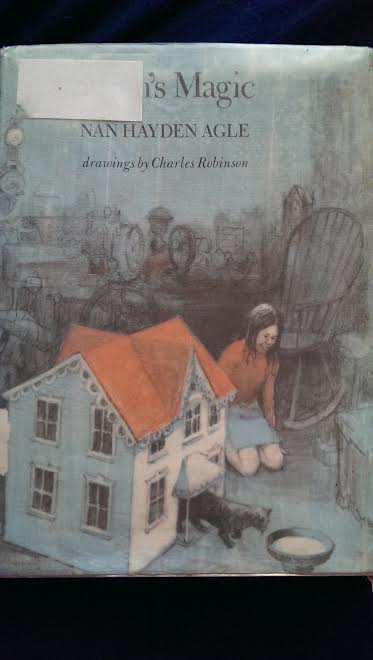
SusansMagicSusan’s Magic by Nan Hayden Agle, 1973.

Susan Prescott believes in magic, although her mother tries to tell her that it’s all imagination.  Susan gets feelings about things and sometimes seems to have the ability to make things work the way she wants them to.  That’s part of the reason why she can believe that old Mrs. Gaffney is really a witch.  People say that Mrs. Gaffney used to be a fortune teller but had to stop when one of her predictions became frightening true and people got scared of her.  Now, Mrs. Gaffney runs an antique shop, living in a small apartment above it.  But, whether Mrs. Gaffney is really a witch or not, Susan’s life soon becomes entangled with hers through a series of unforeseen events.

Susan lives with her mother, who is a practical, down-to-earth woman, and her older brother Mike, who likes to play football.  Her parents are divorced, and her father lives in another state, only visiting occasionally, often at unpredictable times.  Susan’s father is known for not being very dependable, and he apparently left the family to be with another woman, although the story doesn’t provide many details.  Susan misses her father and is hurt by his absence, lack of dependability, and that he is more interested in being with someone else, somewhere else, instead of with her, her mother, and her brother.

The story begins when Susan sets out one day to buy a present for her mother’s birthday, and another girl she knows from school tells her to have a look at the flea market being held that day at a church.  Susan doesn’t have much money, and even most of the used items at the flea market are beyond her small savings.  Then, she foolishly spends what little money she has on cupcakes and lemonade.  Susan is angry with herself for her  foolishness, but her mistake leads her to greater adventures.

SusansMagicPic1One of the things at the sale which especially captures Susan’s attention is a small stuffed toy elephant.  The elephant is very worn, and Susan feels sorry for him, wanting to take him home and take care of him.  However, her money is gone, and she still has no present for her mother.  Then Mrs. Gaffney spots her looking sad and offers to lend her the 25 cents she would need to buy the elephant.  Although Susan has reservations about accepting such a loan, she does anyway, telling Mrs. Gaffney that she’ll pay her back.
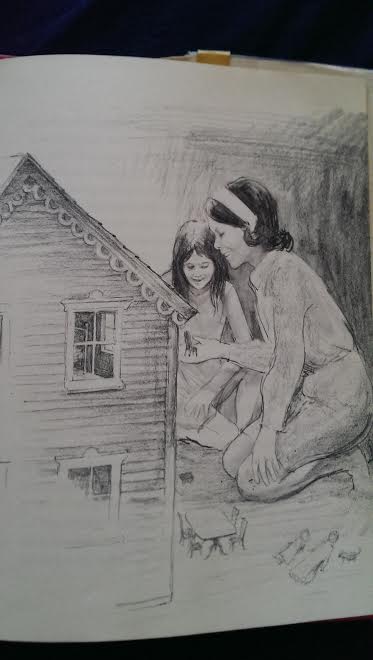
Susan brings the elephant, which she names Trunko, home, and when her mother thinks that Susan meant to give it to her for her birthday, she doesn’t correct her although she has become very attached to him herself.  Her mother, sensing Susan’s attachment to the toy, says that they can share it and that Susan can sleep with it.  Susan thinks this is a good arrangement until someone calls the house to say that the toy elephant was donated by mistake and that the original owner is sad and wants it back.

At first, Susan can’t bear the thought of giving up Trunko. But when she learns that the real owner is Hugo, a member of her brother’s football team, that he has had the toy ever since he was small, and that he really misses it, she realizes that she has to let him have it back.  To thank Susan for giving him back Trunko (originally named Stanley), Hugo gives Susan a stray cat that had been living under his porch.  Susan loves the cat immediately and names her Sereena.

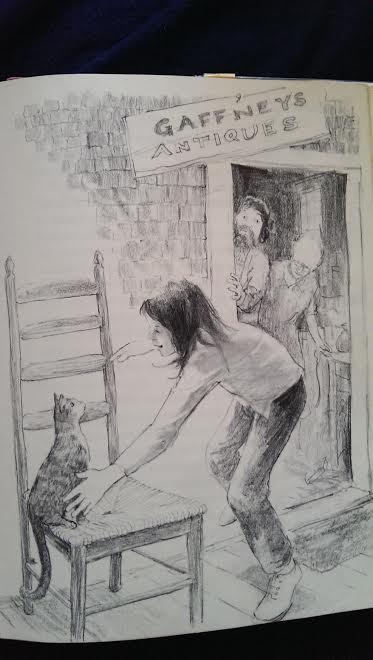
However, Susan’s mother says that they can’t keep the cat because the hill nearby is a bird sanctuary.  Susan tries to persuade her mother otherwise, but she says that they’ll just have to find another home for Sereena.  Susan tries to get an older girl from school to look after the cat for awhile while she tries to persuade her mother to let her keep her, but the other girl refuses.  Then, unexpectedly, the cat runs into Mrs. Gaffney’s shop as Susan is walking past it.

In Mrs. Gaffney’s shop, Susan accidentally breaks a teapot, increasing her debt to Mrs. Gaffney.  However, Mrs. Gaffney turns out to be a cat lover and agrees to look after Sereena for Susan.  This is the beginning of a new relationship between Susan and Mrs. Gaffney as Susan offers to work for her in order to pay off her debt.  Mrs. Gaffney could use some help in her shop because sales haven’t been good, and she’s worried about losing it.

Sereena herself turns out to be good for Mrs. Gaffney’s shop, attracting customers’ attention to the items for sale.  Susan feels jealous about how much Sereena likes Mrs. Gaffney and her shop, as if Sereena has abandoned her like her father and Trunko have.  But, when a beautiful dollhouse in Mrs. Gaffney’s shop catches her eye and it turns out to be even more valuable than Mrs. Gaffney believed it was at first, Susan has to decide whether she is willing to give it up to help Mrs. Gaffney earn enough money to fix up her shop or if she will hold Mrs. Gaffney to her earlier promise to sell it to her for much less.

SusansMagicPic2In spite of the talk about magic and witches, this is not a fantasy story at all.  Susan’s concept of magic has more to do with a way of living, dealing with change, and solving life’s problems.  For the first part of the book, Susan’s “magic” focuses on getting what she wants for herself and getting things to work out the way she wants them to.  But, as the book goes on, Susan matures in the way she deals with the complications in her life.

Toward the end of the book, Susan thinks about reality and fantasy: “The magic part of living was how you fit yourself around real things, she guessed.  A magician was extra good at fitting. That’s why being one was important.”  What Susan really wants and the kind of person she wants to be change.  She comes to realize that, while she can’t get and keep everything she wants in life in the sense that it’s always with her all the time, caring about people and things is also a kind of ownership.  Giving up the toy elephant and sharing the cat with Mrs. Gaffney do not mean losing them completely because she still cares about them and the people connected with them.

Susan also realizes that, even if she doesn’t get exactly what she wants in the beginning, as long as things work out for the people she cares about, she can still be happy.  Although she has to make sacrifices at times for the people she cares about, she earns the love and respect of the people who mean the most to her.  Susan says, “Anyway, magicians don’t lose. They win. Dad, Trunko, and Sereena are mine still in a way.”  She will always be close to her mother and brother, even without her father’s presence, and Hugo, Mrs. Gaffney, and Sereena are all her friends.  Susan is a winner not because she gets what she wants for herself but because she knows how to make things work out in the best possible way for everyone she cares about, and that’s a kind of magic.

The book is currently available online through Internet Archive.

In some ways, this story reminds me a little of the Miyazki movie Whisper of the Heart, which also features a young girl who likes making up stories and who is led to an antique store by a friendly cat and meets an older person who helps her to learn about the person she wants to be and the kind of life she wants to live.  The two stories are not the same, though, and Whisper of the Heart was based on Japanese manga, not this book.  In some ways, however, both this book and Whisper of the Heart are the kind of stories that take on a new life when you read them as an adult because, at that point, you understand some of the feelings behind them better.

Mystery of the Golden Horn

goldenhornMystery of the Golden Horn by Phyllis A. Whitney, 1962.

Vicki Stewart doesn’t mean to get into trouble. However, with her mother in the hospital with a back injury and Vicki in the care of her unsympathetic aunts, she has allowed her schoolwork to slide to the point where she cannot go on to the next grade. Faced with the prospect of admitting her failure to her friends, Vicki decides that she would rather leave school early and skip summer camp. Instead, she will join her father in Turkey, where he has been teaching at a girls’ college. The prospect of going to a new country and facing her father after her humiliating failure isn’t pleasant, either, but Vicki sees it as her only path to a fresh start. Indeed, her life will never be the same.

Vicki’s father rents his rooms from Mrs. Byrne, an American living in a palace that once belonged to a pasha along with her son, Ken, and her distant cousin and ward, Adria. Adria is about the same age as Vicki, and she has problems of her own. Adria’s parents are dead, and she has not been happy living with the Byrnes. Adria is something of a mystery to Vicki. She’s a dreamy, unpredictable girl who believes in magic spells and fortune-telling. A gypsy friend of Adria’s has told her that her fortune is to be found with a mysterious “golden horn,” and Adria’s single-minded pursuit of it has a tendency to get her into scrapes.

Unfortunately, Adria also tends to drag Vicki into trouble, partly because she is convinced that Vicki’s fortune is intertwined with hers. Vicki resents these complications in her life that add to her “problem child” reputation. However, she sincerely wants to help troubled Adria. Strange things are happening in the house, particularly in the spooky, disused haremlik, but not all of the strange things are Adria’s fault. As Vicki puzzles over these strange things and Adria continues her search for the golden horn, the girls gain new perspectives on their lives and their problems. The solutions aren’t as far-away and mystical as they think, but the girls will have to rely on themselves and each other to see them.

Phyllis Whitney’s books are wonderful for their colorful settings and insights on human nature. Vicki’s disappointment and embarrassment over her failure are true-to-life, and her struggle to change and redeem herself is something that everyone has experienced at some point. It’s a touching and reassuring story about how to deal with failure and life’s problems. The mystery is subtle (up until the end, you’re not quite sure how much of the trouble in the house is Adria’s doing and what her motivations are), and the setting is vivid and engaging. Whitney has also included interesting historical details about Turkey and comparisons between the past and present (by 1960s standards) culture.

The book is currently available online through Internet Archive.