
Stepping on the Cracks by Mary Downing Hahn, 1991.
This is the first book in the Gordy Smith series, although the book really focuses on a girl named Margaret. Gordy Smith is the neighborhood bully and her nemesis. The series shifts to focus more on Gordy after the full story behind his awful behavior is revealed. This story begins in August 1944 because, although they don’t mention the year, the characters talk about seeing the story about the Liberation of Paris in Life Magazine.
Eleven-year-old Margaret and her best friend, Elizabeth, both have brothers who are fighting in World War II. Margaret’s brother is in the army in Europe, and Elizabeth’s brother is in the navy in the Pacific. The two girls have their own special ritual of stepping on the cracks in the sidewalk to “break Hitler’s back”, in a twist on the old stepping on a crack childhood superstition. Margaret knows that the war is Hitler’s fault, and she blames him personally for her brother, Jimmy, having to go away and fight and for the changes in her household since then. Since the war started and her brother went away, Margaret’s father has been very grim, and she knows that her mother sometimes cries when she thinks that Margaret can’t hear her. Her parents are happiest when they imagine what life will be like when the war finally ends. Margaret keeps a scrapbook of letters Jimmy has written to her and war-related news clippings and cartoons that she’s saved that remind her of things her brother has told her about his time in the army. Margaret hates Hitler and the Nazis with a vengeance.
At the same time, Margaret thinks about how odd it is that the war doesn’t seem entirely real. She knows that people in her community have already been killed in the war overseas, and her parents are worried about Jimmy. However, apart from the missing people in the community, like Jimmy, and the stars in people’s windows to signify people who are in the armed forces or who have been killed in battle, there are few outward signs that there is a war happening. They hear about battles, but their own town of College Hill, Maryland, is peaceful. There are some shortages of things because of war rationing, but otherwise, Margaret’s life has been continuing very much as before. She’s seen pictures of starving children in war zones, and she sometimes wonders why they suffer so much, and she doesn’t.
A neighborhood bully, Gordy Smith, gives the girls trouble, and Margaret thinks of him has being like a Nazi because he’s so mean. He calls Margaret and Elizabeth “Baby Magpie” and “Lizard”, pulls their hair, and gets his friends to gang up on them. At one point, he tries to force Elizabeth to kiss him. (One of those weirdos who are clearly interested in girls but have no idea how to be charming to girls.) Gordy brags about his brother in the army, saying that his brother has killed more Nazis than the girls’ brothers and that he’s going to join the army and kill Hitler when he’s older.
Margaret tells her mother about Gordy and says that she hates his guts. However, her mother tells her that young ladies shouldn’t say words like “guts” and that she should have some sympathy for Gordy because of the kind of family he lives in and what his father is like. (Personally, I don’t think sympathy alone is what’s called for to fix Gordy’s problems, but more about that later.) Elizabeth’s father is a policeman and has arrested Gordy’s father more than once for being drunk and disorderly. People in the community think of the Smith family as being “poor white trash” and wish they would move away. The other kids in the family are as nasty and troublesome as Gordy. Margaret doesn’t think Gordy’s family circumstances should excuse his awful behavior and still hates him.
One day in late summer, before school starts, Gordy and his two friends chase the girls out of the treehouse they built. They steal the comic books they like from the girls and rip up the ones they don’t like, tossing them from the top on the tree on top of the girls. Then, they start ripping up the boards from the platform in the tree so they can use them themselves, saying that girls can’t build anything well. It takes much less time and effort for them to destroy what the girls built than it did for the girls to build it. (This is always true of any kind of destruction, so that doesn’t mean anything complimentary about the destroyers, especially if they aren’t smart enough to realize that and think they’ve got some kind of special talent that’s better than building abilities – just saying because it’s true. All this stuff from the boys is just bluster and gaslighting to intimidate the girls into letting them have what they want by implying that they never deserved the things they actually owned and built themselves.) Margaret yells for help from her mother, but her mother doesn’t hear her. Elizabeth tells the boys that their act of sabotage makes them traitors and worse than Nazis, but they laugh it off.
Elizabeth tells Margaret that they’ll get even with Gordy and the other boys for this, but Margaret can’t imagine what they could do. She would rather stay away from Gordy. That’s easier said than done because Gordy steals the next set of boards the girls try to use to rebuild their tree house, too. One day, the girls see the boys going into the woods. They know that the boys have built a hut to use as a clubhouse with the boards they’ve stolen from the girls, and Elizabeth suggests that they follow the boys to find out where their hut is. Elizabeth thinks that it would be great revenge to find their hut, take it apart, and reclaim the stolen boards. After all, they have a right to their own boards. Margaret is more hesitant because they’re not supposed to cross the train tracks into the woods, and the woods are lonely. The boys have air rifles, and if the boys caught the girls trying to take back the boards, they could do all sorts of horrible things to them with no one around to save them. However, Elizabeth impulsively dashes off into the woods, and Margaret feels like she has no choice but to go with her.
The boys catch the girls spying on them at their hideout when Margaret accidentally sneezes. At first, Margaret is sure that the boys are going to kill them when they catch them. Instead, Gordy tries to scare the girls with a story about how he and his friends have actually saved the girls from the crazy man who lives in the woods. There’s an experimental farm near the woods used by the agricultural department at the local university, and Gordy spins a story about how the army was using the farm for an experiment on soldiers, using chemicals to try to make them stronger and braver. Gordy insists that the man they used in the experiment went crazy and broke out of the farm and has been hiding in the woods ever since, ready to attack anybody who finds him. Elizabeth says the story is a fake because she never heard anyone else say that, but Gordy insists that he saw the crazy man standing behind the girls with a knife. Gordy tells the girls that they better stay out of the woods or the crazy man might get them next time.
Elizabeth knows that Gordy must be lying, but Margaret is sure that the story must be true when she sees a wild-looking man with shaggy hair behind the boys in the woods. Margaret screams and runs for home with Elizabeth behind her. Unfortunately, Elizabeth didn’t see the wild-looking man herself. She thinks that Margaret was just being a chicken, falling for Gordy’s story and imagining that she saw something, and she teases Margaret about it. Margaret asks her mother about the experimental farm and Gordy’s story, without admitting that she was in the woods, and her mother says that it’s nonsense, that the farm is only used for agriculture. Her mother thinks that, if there is a strange man in the woods, it’s probably just some old tramp.
It does seem like a logical explanation, that maybe there was just some old tramp hanging around the woods who didn’t know that Gordy was going to tell some wild story about a murderous crazy man and just happened to wander by at the right moment to look scary. However, Margaret just can’t convince herself that’s all there is to it.
When the girls finally get up the nerve to go back to the boys’ hut, there are unmistakable signs that someone has been living there. There is also a knife, like the one Gordy said the crazy man had. Who is staying in the boys’ hut, and what are the boys really hiding?
My Reaction and Spoilers
I mostly think of Mary Downing Hahn for her ghost stories, like Wait Till Helen Comes and The Doll in the Garden, but this was actually the first book that I ever read by this author. I think I read it when I was in elementary or middle school. Because of some of the serious subjects of the book and some of the language used, this isn’t a book for young kids. It’s probably best for middle school.
America in the 1940s
This book is a realistic portrayal of life on the American home front during the war. I enjoyed the mentions of little things that were common in 1940s America, like the popular radio programs that people liked to listen to (like the Lone Ranger, the mystery horror show Inner Sanctum, and the children’s program Let’s Pretend), comic books and newspaper cartoons, magazines like Life and The Saturday Evening Post, and “Kilroy was here” graffiti. Sometimes, characters mention 1940s celebrities. After Gordy tries to make Elizabeth kiss him, she tells Margaret that a star like Joan Crawford would slap any guy who got “fresh” with her. Later, the girls overhear the boys talking about which pin-up girls they think are the most sexy, mentioning Betty Grable and Rita Hayworth.
Note: The boys’ “sexy” talk is at a realistically juvenile level, laughing over pictures of pin-up girls with big breasts and using the word “hubba-hubba.” An adult hearing a conversation like this knows that the boys probably feel grown-up for secretly smoking cigarettes at their hideout while talking about sexy women, but at the same time, they plainly sound like little boys who use words like “hubba-hubba” because that’s as sophisticated as they know how to be. They have nothing else to say on this subject. As Elizabeth and Margaret could attest, these boys have never successfully kissed a girl at this point in their lives because they’ve been making themselves unappealing to the girls in their vicinity by the mean and obnoxious ways they act. When the girls later go inside the boys’ hut, they see that the boys have defaced their pin-up pictures by giving all the girls beards and blackened teeth. They are definitely not young Casanovas.
This was the first book that introduced me to the concept of putting banners with stars in the window as a sign that someone in the family is in the armed forces. A blue star indicated (and still indicates) a living service member or veteran. A gold star means that the service member died in action. That’s important to the story because, even at the beginning of the book, Margaret knows what the blue stars and gold stars mean, and she already knows people in her community who were killed in the war. One of the people in the community who has died in the war was a young man called Butch who was killed only months after he got married. His widow, Barbara, gave birth to their son after his death, so Butch never saw him. Margaret is sad when she thinks about Butch and his family because she can remember when Butch was a local hero as quarterback on the high school football team. Later, Margaret’s brother, Jimmy, is also killed in the war, and the family replaces his blue star with a gold one, while Elizabeth’s family still has a blue star because Elizabeth’s brother, Joe, is still alive.
Danger and Safety
There are a lot of themes about safety and danger in the story, both real and perceived. When Margaret thinks about the crazy man Gordy says is living in the woods, she thinks that she would feel safer if Jimmy was home because Jimmy would protect her. Yet, when she thinks about Butch getting killed, Margaret realizes that, when big, strong, young men can be suddenly killed, nobody is ever really safe. Even the strongest men she knows are not completely invulnerable, and there are big, frightening, unpredictable things happening in the world.
At one point in the story, the girls talk about what they would do if girls were sent away to war like their brothers. Elizabeth brags about how brave she would be, but Margaret freely admits that she’s a coward and everyone knows it. Margaret imagines that, if she were out on a battlefield, she would probably drop to the ground and play dead until it was all over.
Later, when the girls learn the truth about Gordy, it brings the full realities of the war home to them and challenges everything that Elizabeth thinks about bravery and cowardice. The truth is that Gordy built the hut to hide his brother, Stuart. While one of Gordy’s brothers really did become a soldier and Gordy brags about him, Stuart became an army deserter. When Elizabeth finds out, she’s furious because her brother and Margaret’s are risking their lives, and she thinks that Stuart is a coward, letting others die for him and their country because he’s too afraid to fight. However, when the girls confront Stuart, Gordy, and the other boys about the situation, they learn that it’s more complicated than that. It takes Elizabeth longer to see how complicated the situation really is, but Margaret understands when Stuart describes his feelings.
Stuart is a pacifist. He’s not a coward or a Nazi sympathizer, as Elizabeth first accuses him. His logic is that two wrongs don’t make a right. While Hitler might want to take over the world and send people out to kill others, Stuart knows that the men who get sent away to be soldiers mostly don’t want to be soldiers at all and have no real desire to kill anyone else. If they had their choice, they would just be living their own lives and minding their own business at home. His speech makes Margaret really think for the first time about the war from the point of view of the soldiers on the ground. When her brother was drafted, Margaret never asked him how he felt about going away to war, just assuming that he’d want to defend his country and beat the Nazis. Now, she regrets not asking him about his feelings and wonders if he was scared or if he went reluctantly. For the first time, she also has to confront the reality that her brother has been actively killing or helping to kill other people. Stuart deserted because he simply couldn’t face the prospect of killing someone. He shows the girls a letter he got from their other brother, Donald, the one who became a soldier, telling him how horrible the war is and how they’ve sometimes killed civilians and even allies because of mistakes they’ve made. Stuart also introduces the girls to the poem The Man He Killed by Thomas Hardy. Margaret wonders how Jimmy felt about the idea of killing other people and if it’s really sane to be okay with the idea of killing. Margaret has always looked up to her older brother, seeing him as a protector, never thinking of him as a killer, but yet, he is actively engaging in killing. He doesn’t tell Margaret that part of things in his letters to her, but she realizes that’s what actually happening in Europe.
Finding out about Stuart creates a real problem for the girls. Because army desertion is illegal, the girls know they should tell someone about Stuart, but Gordy tells them that the hard reality is that deserters either get arrested or shot. If they report Stuart, they could be sending him to his death. Elizabeth, being the more brash and hard-hearted one, says that she doesn’t care because it would be no more than what he deserves (although she later takes that back). Instead, she settles for blackmailing Gordy and his friends into stopping their bullying of the girls and helping them rebuild their tree house.
However, the kids soon realize that Stuart can’t stay their secret forever. Stuart has gotten sick, and if he doesn’t get help, he could just die in the woods. Stuart was hoping that the war might just end, and people would stop caring about whether he’d joined the army or deserted, but nobody in 1944 knows when that’s going to happen. From their perspective, it could be months (close to the reality) or years. The war has been going on for years already. Stuart won’t survive in the woods for that long.
The kids also confront the reality that, while two wrongs don’t make a right when it comes to fighting, just standing back and doing nothing while other people are doing wrong is also wrong. Elizabeth is the first of the children to point out that the entire reason why desertion is illegal is that, if everyone just decided to opt out of fighting, people like Hitler would run overrun everyone because no one would put up a resistance. Leaving aside what the characters decide to do about Stuart for the moment, that brings me to the problems with Gordy and the people who should be responsible for him and aren’t.
Gordy’s Problems
I’m frequently the first to say, as Margaret does in the story, that just coming from a bad background shouldn’t allow a person to get a free pass on being a bully themselves. Two wrongs really don’t make a right, and to my way of thinking, people who bully others because they’ve been bullied themselves are bad because they’re doing to completely innocent people what they already know they hate being done to themselves. However, unlike what Margaret’s mother said earlier about how she wishes Margaret would have more sympathy for Gordy, I quickly realized that, first, sympathy is insufficient in situations like this, and second, Margaret’s mother is not really motivated by sympathy for Gordy. She has other, less admirable reasons for looking the other way, even when she knows exactly what’s going on in Gordy’s family and that he is actively abusing her own daughter.
Gordy frequently gets away with his bullying because people are afraid of both him and his father. On the way to school, when Gordy rips up Elizabeth’s homework and stomps on her school supplies to break them, and the crossing guards see it happen. However, even though it’s part of their duty to report things like this, they don’t want to do it. When Elizabeth asks them if they’re going to report it to their teacher, they make excuses about how that might be tattling and make their teacher mad and how it would be just their word against Gordy’s (ignoring the evidence of the ripped papers and broken school supplies). The reality is that they’re afraid of Gordy doing something to them in revenge. Elizabeth asks them if that means that she’s just going to have to suffer what Gordy does to her while Gordy gets away with it because they’re too afraid to said anything. The crossing guards are further afraid to give her a straight answer because everyone involved knows that the answer is, yes, that’s exactly what’s going to happen, and that’s exactly the reason why it’s going to happen. The crossing guards know that Gordy is going to continue being an abusive bully, and they know they’re going to let him do it without saying a word, and they know the reason why they’re going to do that is because they are scared. They’re not willing to put themselves on the line to protect Elizabeth even though that is a part of their job. Elizabeth, knowing all of this, tells them they’re cowards, and it’s the truth. Unfortunately, there are times when apparent cowardice can also be necessary self-preservation from a greater insanity, and much as I hate to admit it, this might be one of those situations.
There is the underlying problem in this community, and that’s the behavior of the adults. Part of the reason why the young crossing guards are so cowardly about the class bully is that they know darn well that no adult in their community is likely to act on anything they tell them about Gordy. Even if their teacher punishes Gordy temporarily by suspending him from school, Gordy will come back, mean and horrible as ever, with revenge on his mind. No adult is going to get to the real root of Gordy’s problems and solve them, so Gordy will continue to be a problem. It appears to be common knowledge in the community that Gordy’s father is an abusive drunk. Elizabeth and Margaret know it, and I think his teacher probably knows it, too. Gordy comes to school with a black eye. Barbara talks about it with the girls, saying that Stuart used to help protect Gordy from the worst of his father’s abuse and that Gordy needs someone to take care of him. Nobody can avoid knowing that the Smiths are an extremely troubled family. After Margaret and Elizabeth go to Gordy’s house to find him and witness Gordy’s father’s behavior for themselves, Margaret tries to talk to her mother about it, and her mother just says that what people do in their own houses is their business and they can’t interfere. That, right there, is part of the root of Gordy’s problems. The first root is his father’s drunken abuse, the second root is knowing that the adults in his community are aware of the situation and are deliberately looking the other way, and the third root are his own choices that prevent other people from getting close enough to help.
For the moment, I’d like to focus on Margaret’s mother and her non-interference policy when it comes to child abuse. A major part of the reason why Gordy continues to be abused by his father and why Gordy is able continue bullying and abusing other kids is exactly this policy of looking the other way. I think all of the adults in this community feel similarly, and I think a major part of the reason they do it is because the adults are scared of Gordy’s father and what he might do to them. Letting him beat his wife and children probably doesn’t feel great, but these adults excuse themselves for allowing that to repeatedly happen with their full knowledge by saying out loud that it’s none of their business while quietly thinking that letting a kid be beaten is better than being beaten or killed by this crazy man themselves. Apart from occasionally arresting Mr. Smith for getting publicly drunk and disorderly, after which he is released when he sobers up, nobody in the community, not even Elizabeth’s police officer father, does anything. The kids are the most active characters in the story, and the adults, like Margaret’s mother, want to shut them down from talking about it so they won’t have to feel like they should be doing something when they’re not. It doesn’t make the problem go away, but it does allow the adults to lie to themselves and pretend like it’s not a problem that they will have to deal with eventually, which is almost the same in the adults’ minds.
It is fitting that this is a World War II story because the situation with Gordy has parallels within the war itself. The United States initially didn’t want to become involved with the war because they saw what Hitler was doing as a European matter. People in the US didn’t want to become involved in the war because they knew it would mean risking their lives, and it wasn’t something they wanted to do if it wasn’t their problem and if it could be resolved without them. Self-preservation is a sign of sanity, but the problem with that mindset is that it doesn’t take into account the larger picture and the full, hard realities of the situations. Sometimes, even when you don’t go looking for trouble, trouble can come looking for you. The US wasn’t officially involved in the war effort except as a supplier until Pearl Harbor. That attack on the US naval fleet brought it home to the American public that it didn’t matter whether they wanted to be involved or not if another country decided to actively involve them.
It’s a similar situation with Gordy. Nobody wants Gordy to bully them, but he does it anyway. It doesn’t matter if the girls are in their own tree house in Margaret’s front yard, minding their own business; Gordy comes after them to destroy the tree house and steal the boards. Margaret’s parents know what happened, but they do nothing. All through the book, Margaret has times when she feels unsafe, but her parents don’t protect her from the closest and most obvious dangers, even when she tells her mother about them. Margaret’s parents don’t protect her because they are scared themselves and don’t want to get involved, even though they are already involved because it’s their daughter being abused … not unlike a deserter who flees the army to avoid fighting when his country is attacked.
Margaret would be the first to admit that she’s not the bravest person around, but yet, she is braver than many others around her because she can and will take action even when she’s scared. For most of the book, Margaret only gets into scrapes when she’s goaded into them by Elizabeth, but even Elizabeth observes that Margaret follows through once she starts something or sees that something needs to be done. The adults in the community can’t say the same. The abuse going on in the Smith household hasn’t stayed privately in the Smith household at all. It’s gone out into the community through Gordy and the other Smith children. It’s a public matter because Mr. Smith is repeatedly drunk and disorderly and intimidating to every adult in the community. It’s everyone’s business because everyone is suffering the results. However, the adults find it easier to keep telling themselves that they don’t need to do anything about it because they can’t deal with the discomfort that would come from a professional community intervention (or tell themselves they can’t deal with it, which isn’t quite the same thing), which is the one and only thing that could probably save the Smith family at this point, and by extension, everyone who’s been suffering from the second-hand bullying and abuse delivered by Gordy. While one person alone would genuinely be in danger from standing up to Gordy’s father, a concerted community effort including the police, local medical professionals, and the principal and teachers from the school showing a united front would be a safer and saner option. There is safety in numbers, provided that the “numbers” can get up the nerve to join the numbers.
I think Gordy should be held accountable for the things he’s done, and I think some reasonable adult should also point out to him that he’s been a fool to cultivate enemies instead of allies. Although Margaret and Elizabeth eventually become his allies for this adventure, sympathetic to the abuse that Gordy has suffered and to Stuart’s situation, if he had been nicer to them from the beginning, he would have gotten help for himself and his brother much sooner. Gordy is bitter toward other people in the community because he’s fully aware that they all refer to him and his family as “white trash”, although I think he should also be aware that it’s their behavior that causes people to look at them that way. Gordy himself has partly caused and perpetuated that image because of everything he does on a daily basis. While Gordy can’t help that his father is an abusive drunk, he can help being a bully himself, and as long as he acts like that, people will treat him as the bully he is and try to avoid him rather than give him the help he really needs. His father is his worst enemy, the adults in this town are largely useless, and Gordy is not only hurting others but sabotaging himself. Even when the girls try to help Gordy, they find it hard because he’s still mean to them and fights them every step of the way.
One final note I have is to point out that, while I’ve heard many kinds of insults and racial slurs in my life, the term “white trash” is possibly the only term I know that’s both an insulting slur to the people it’s used against and to an entire group of people who aren’t explicitly mention in the slur at the exact same time. That didn’t occur to me when I was a kid, but as an adult, I realize now the reason why the modifier “white” is added to the insult. The modifier implies a comparison. The implication is that the person using the term thinks that non-white people are “trash”, and they’re telling another white person that they’re also a kind of “trash” like that, as bad or maybe worse because, as a white person, they should be able to help their situation but aren’t helping themselves because they’re somehow inferior. It’s true that Gordy and others in his family haven’t been helping matters because they make it difficult for other people to help them, but it’s still a very weird dual insult.




 The Lottery Rose by Irene Hunt, 1976.
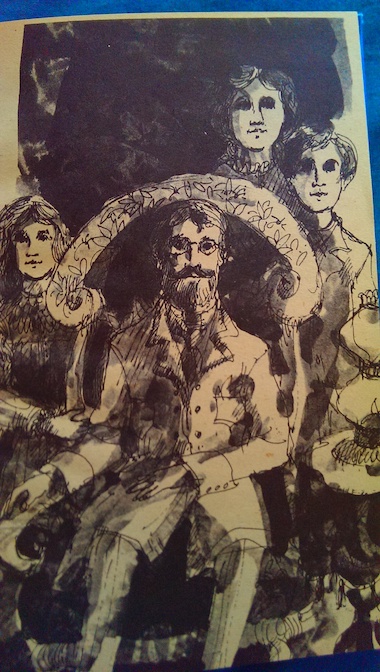 It’s 1851, and Professor Carver of Boston is living in an apartment above a candle shop with his wife and two children, his son Jamie and daughter Lorna. One day, a man named Mr. Giddings comes to see Professor Carver to request his help. For years, he has wanted to buy a particular farm with a beautiful house called Windy Hill. However, when he finally succeeded in buying the house and he and his wife went to live there, his wife became very upset. She said that she felt strange in the house and that she had seen a ghost. Now, she is too upset to return to Windy Hill. Mr. Giddings has heard that Professor Carver once helped a friend get rid of a ghost haunting his house, and he asks the professor if he would be willing to do the same for him.
 Jamie and Lorna are thrilled by the house, which is much bigger than their apartment in town. They can each have their own room, and there is an old tower in the house that was built by a former owner, who was always paranoid about Indian (Native American) attacks (something which had never actually happened). However, their new neighbors are kind of strange. Stover, the handyman, warns them that the house is haunted and also tells them about another neighbor, Miss Miggie. Miss Miggie is an old woman who wanders around, all dressed in white, and likes to spy on people. There is also a boy named Bruno, who apparently can’t walk and often begs at the side of the road with his pet goat, and his father, Tench, who is often drunk and doesn’t want people to make friends with Bruno.
 Then, strange things do start happening in the house. The quilt that Lorna has been making disappears and reappears in another room in the middle of the night. At first, the family thinks maybe she was walking in her sleep because she had done it before, when she was younger. However, there is someone who has been entering the house without the Carvers’ knowledge, and Jamie and Lorna set a trap that catches the mysterious “ghost.”
 Jestress's Forgotten Books and Stories