Matilda by Roald Dahl, 1988.
Matilda is an exceptional child, a young genius with amazing talents, but her parents are dull and self-centered, and they never notice. They can’t understand why she wants books when everybody else just watches television, her father prefers her brother Michael to her, and she is often neglected by her mother, who just wants to go out and play bingo. At a young age, she takes herself to the library to get her own books. She reads her way through all the children’s books in the library at age four, and she starts reading adult classics.
Her father hates it that Matilda likes books so much because he’s never been able to like or understand them. He prides himself on being clever, but he only uses his brain to come up with new ways to cheat the customers at his used car lot. Matilda maintains her sanity in this awful family by outsmarting them and playing pranks on them whenever they’ve been particularly nasty. Once, she uses superglue to stick her father’s hat to his head, and another time, she manages to convince her family that their house is haunted.
When Matilda is old enough to begin school, her teacher is the kind Miss Honey. Miss Honey’s is greatly impressed by Matilda’s abilities, realizing immediately that she is more advanced than other students her age. She is even more impressed when Matilda explains that she taught herself. The school’s headmistress is the mean and formidable Miss Trunchbull. Miss Trunchbull intimidates everyone, from the students to the teachers. When Miss Honey tries to tell Miss Trunchbull about Matilda’s unique abilities, Miss Trunchbull doesn’t want to hear about it. She knows Matilda’s father, and he’s always talking badly about Matilda, so Miss Trunchbull is prepared to believe the worst about her. She refuses to believe anything positive about her. Miss Honey thinks that Matilda should be put in a higher grade at school because she needs something mentally challenging, but Miss Trunchbull refuses to consider it.
Since Miss Honey can’t move Matilda up to a higher grade, she gives her higher level textbooks to study in class. She tries to talk to Matilda’s parents about her abilities, but they don’t want to heard about it, either. Matilda’s father only values skills that immediately produce money, and he doesn’t think Matilda’s abilities are likely to do that. Matilda’s mother thinks that the only thing that’s important for girls to do is look pretty so they can get good husbands who will provide them with money. Neither of Matilda’s parents think that a college education is important, and her father says that people learn bad habits at universities. Miss Honey points out that, if they were really in trouble, like if they were sick or needed legal help, they would turn to people with university educations, but it does no good. Miss Honey finds Matilda’s parents offensive and realizes that they are never going to do anything to help Matilda and that they don’t care about her future.
Meanwhile, Matilda and her new friend, Lavender, have discovered just how mean Miss Trunchbull is. She locks up misbehaving students and makes girls with pigtails cut their pigtails off for no other reason than she just hates pigtails. When Lavender plays a trick on Miss Trunchbull by putting a newt in her water, Miss Trunchbull, already expecting trouble from Matilda, decides that Matilda was the culprit. Matilda angrily protests that she didn’t do it, and suddenly, she makes Miss Trunchbull spill water on herself just by thinking about it and looking at her glass. Miss Trunchbull angrily accuses Matilda of having done that, too, but nobody can see how she could have when she was nowhere near Miss Trunchbull when that happened.
Later, Matilda confides in Miss Honey that she made it happen. Matilda’s intelligence has gotten beyond her, and she is starting to develop powers of telekinesis. She also realizes that it gets easier for her to use these abilities with practice. Miss Honey invites Matilda to the little cottage where she lives so they can talk more about it. They discuss trying some tests of Matilda’s abilities, but while they’re at the cottage, Matilda realizes that Miss Honey is actually very poor. Miss Honey reveals that Miss Trunchbull is actually her aunt, and not only has she been withholding her wages but she’s defrauded her of her inheritance. Matilda hatches a plan to use her powers to get justice for Miss Honey.
The book is available to borrow and read for free online through Internet Archive (multiple copies).
My Reaction
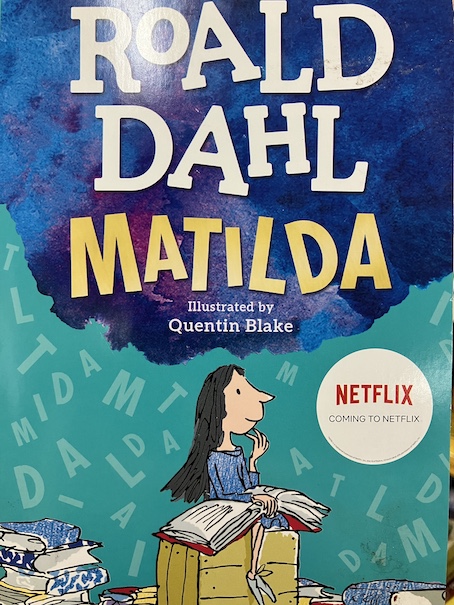
I saw the movie version of Matilda before I read the book, and I think the book is definitely better! It’s a favorite of many fans of cottagecore and light academia because it has elements of both. Matilda is a highly intelligent little girl whose incredible brain and love of books change her life forever. She loves to read books while drinking hot chocolate, and her Miss Honey, lives in a charming little cottage that reminds Matilda of fairy tales.
I love books that mention other books, and Matilda likes to talk about the books she likes. Her favorite children’s book is The Secret Garden, and she also likes adult classics, like books by Charles Dickens. She says that she’s also read books by C. S. Lewis and Tolkien, but she doesn’t like them as well as some others because they don’t have much humor in them. Matilda thinks it’s important that books for children have humor in them.
Humor is what makes Matilda such a fun book to read! Matilda is badly neglected by her parents, and Miss Trunchbull does some horrible things to the children at her school. In a story with a more serious tone, these things could be truly tragic or make readers angry at the injustice, but the horrible people in this story are played for humor. Their misdeeds are portrayed with whimsy. Matilda doesn’t waste time crying and only rarely gets angry, instead using her powerful mind to devise amusing punishments for the perpetrator and to change things for the better. Readers can relax and enjoy Matilda’s adventures, confident that, no matter what the antagonists dish out, she will always get the upper hand in the end.
In some ways, Matilda reminds me of an earlier children’s book called The Girl with the Silver Eyes because both books involve misunderstood girls with unusual abilities. However, they are not the same story. Matilda is more whimsical fantasy, and The Girl with the Silver Eyes is science fiction. Matilda’s unusual mental abilities come from her need to be intellectually challenged, while Katie, the girl in The Girl with the Silver Eyes, gets her abilities as a side effect of a medicine that her mother took while she was pregnant with her. Both girls frighten and intimidate people and sometimes use their abilities to get back at people who are mean to them, but in different ways. Both of them also begin to thrive when they find people who understand them, especially teachers who help them cultivate their abilities. In The Girl with the Silver Eyes, Katie also learns that there are other children like herself, but Matilda remains unique in her story.
Roald Dahl was opposed to any of his books being altered in any way, but in 2023, the publishers had some of the language in this book changed, particularly words related to appearance, such as skin color or people being fat. It was a controversial decision because of the author’s specific wishes against having his work changed, but the publishers insisted that it was necessary to “ensure that it can continue to be enjoyed by all today.” I can understand the purpose of some of the changes, although I don’t see why some others were changed. For people who want to compare the two versions, there are still plenty of copies of the original version available today. Check the printing date of the copy of your book to see which version it is. Updated books will be printed 2023 or later. The changes were also not implemented in all countries where this book was published. As of 2026, the United States, France, and the Netherlands have not implemented the changes.