American Girls

Samantha Learns a Lesson by Susan S. Adler, 1986.
This is part of the Samantha, An American Girl series.

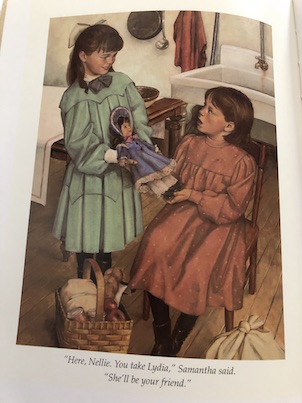
Samantha attends Miss Crampton’s Academy for Girls in Mount Bedford. She is doing well and has some friends at school, but she misses her friend Nellie. She knows how poor Nellie’s family is and worries about how they are doing.
One day, Samantha comes home from school to a surprise: Nellie has returned to town with her family. Samantha’s grandmother recommended Nellie’s family to a friend, Mrs. Van Sicklen, who has hired Nellie’s father as a driver and Nellie’s mother as a maid. Nellie and her sisters will also be helping with household chores. They will also get the chance to go to school, although they will be attending public school and not the private school that Samantha attends.
When they begin attending school, Nellie’s younger sisters do fine in the first grade, where they are expected to be beginners, but Nellie herself has trouble in the second grade. Nellie is a little old for second grade, so the other children make fun of her for being there, and she is so nervous that she makes embarrassing mistakes in front of her teacher and the other students. Nellie thinks that perhaps she’s too old to start going to school, but Samantha realizes that what she needs is a little extra help.
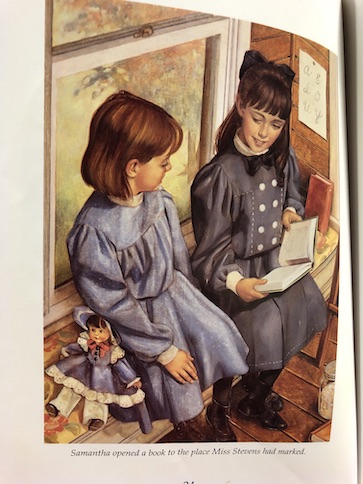
Samantha talks to her own teacher and explains the situation. She says that she would like to help teach Nellie what she needs to know, but she is not sure what Nellie needs to know in order to pass the second grade. Samantha’s teacher, Miss Stevens, thinks that it is nice that Samantha wants to help Nellie and gives her a set of second grade readers to study with pages marked for assignments. Samantha tells her grandmother what she is planning to do, and she says that it is fine, as long as the extra tutoring doesn’t interfere with Nellie’s house work too much.
Nellie accepts Samantha’s help at their secret, private “school” that Samantha calls “Mount Better School.” During their lessons, Samantha discovers that Nellie is very good at math because she used to have to help her mother with shopping and had to keep track of her money. Nellie cannot always come for lessons because of her work, but Samantha’s tutoring helps her to improve.
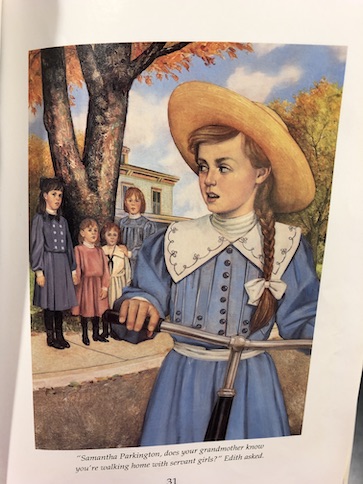
One day, when Samantha is walking home from school with Nellie and her sisters, a mean girl from Samantha’s school, Edith, sees them and criticizes Samantha for spending time with servants. She says that her mother would never allow her to play with servants. Samantha asks her grandmother what Edith means, and her grandmother says that Edith is a young lady. When Samantha asks why she is allowed to play with Nellie, her grandmother says that they are not really playing, that Samantha is helping Nellie, which makes it different. That explanation doesn’t entirely satisfy Samantha.
However, her grandmother is both understanding of the help that Samantha has been giving to Nellie and serious about the need to help others. When Edith’s mother and other ladies of the neighborhood come to visit and complain about Nellie’s family and how Samantha is spending time with them, Samantha’s grandmother defends them and says that Samantha is doing good.

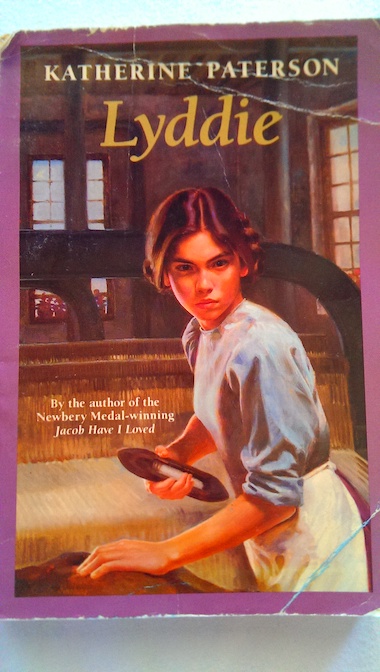
Meanwhile, Samantha’s school is preparing for a public speaking contest with the theme “Progress in America.” To prepare for her speech, Samantha asks her grandmother, her Uncle Gard, and other people what they think about progress and what the best inventions are. They mention inventions like the telephone, electric lights, automobiles, and factories. Samantha is fascinated by the idea of factories and the variety of products that they can make. However, when Samantha reads her speech to Nellie, Nellie is not nearly so enthusiastic about factories as a sign of progress. Nellie used to work in a factory herself, and she knows that they are not pleasant places. She tells Samantha how factories are noisy and how dangerous the machines are for the workers. The factory workers are also very poorly paid, which is why the products they make are so cheap.
Nellie’s stories about factories bother Samantha. When it is time for the public speaking contest, Samantha delivers a changed version of her speech in which she discusses the dangers of child labor and how some form of progress, particularly ones that endanger children, are not good forms of progress. Samantha’s thoughtful speech wins the contest, and her grandmother understands that Samantha has been learning things from Nellie even while teaching her.
In the back of the book, there is a section with historical information about education and child labor during the early 1900s.

The book is currently available to borrow for free online through Internet Archive.








 Jestress's Forgotten Books and Stories