Saint George and the Dragon

The story of Saint George and the Dragon is an old folktale. The story as told in this children’s picture book was adapted from Edmund Spenser’s Faerie Queene.

The Red Cross Knight, who carries a shield decorated with a red cross, does not know his own name or even where he came from. He only knows that the Queen of the Fairies has sent him to face a terrible dragon. He is accompanied on his journey by a princess with a little white lamb and a dwarf. The Princess’s name is Una, and her kingdom is being attacked by the dragon.
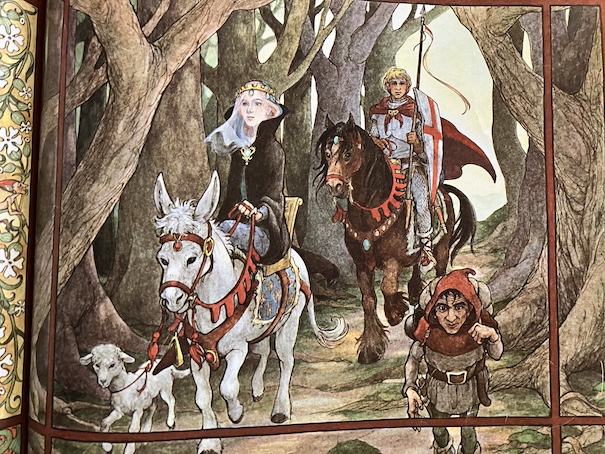
On their journey, they meet a hermit, who shows the knight a distant palace on a mountaintop, where angels travel between the palace and heaven. It’s so beautiful that the knight wants to go there immediately, but the hermit says that this palace is in another world and that he cannot go there until he faces the dragon. The hermit also reveals the knight’s past to him. He is not one of the fairy folk, although the fairy folk are the ones who sent him. The hermit knows that he was kidnapped by the fairies as a baby and hidden in a farm field, where he was discovered by a plowman who named him George. His true destiny is to become Saint George, the patron saint of England.

Una takes George to her parents’ fortress. As they approach, they see the dragon for the first time. George sends Una away from danger, and he and the dragon battle for the first time. The dragon picks up George, horse and all, and throws them to the ground. George manages to drive the dragon away, but he is also injured. At first, he and his friends think he is going to die, but he lies down in an ancient spring that cools and heals him. By morning, he is able to rise and fight again.
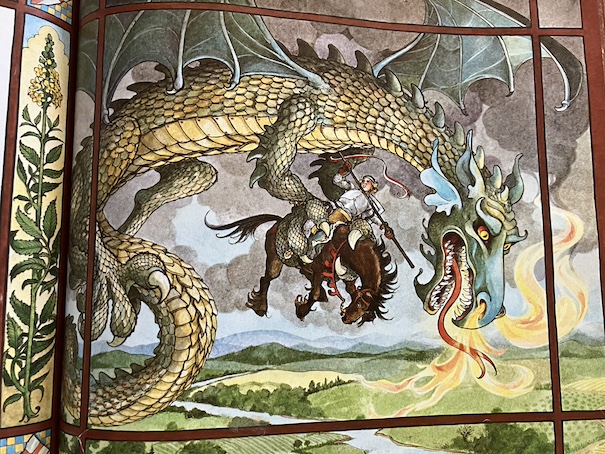
The second time George fights the dragon, he is able to cut off part of the dragon’s tail and one of its paws. The dragon’s fire finally drives George away, and once again, George seems too wounded to survive. However, he rests under an apple tree that drops healing dew, and George survives.
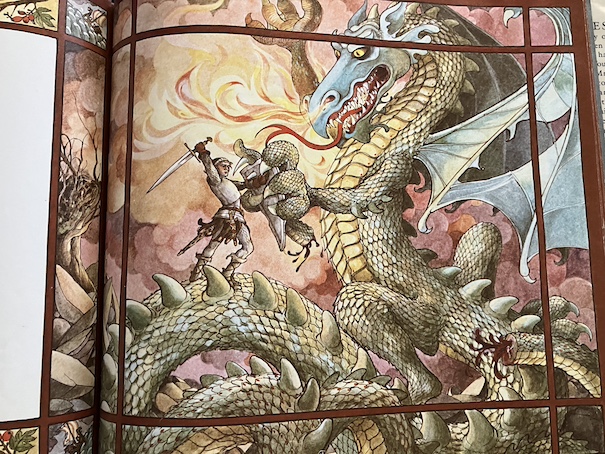
The third time George and the dragon fight, George manages to kill the dragon. Everyone celebrates, and Una’s parents thank George. The king gives George rich rewards, but George passes them on to the poor people. George is bound to the service of the Fairy Queen for six years, but the king allows George to marry Una and promises him that he will become the next king when his service is finished.

The book is available to borrow and read for free online through Internet Archive.
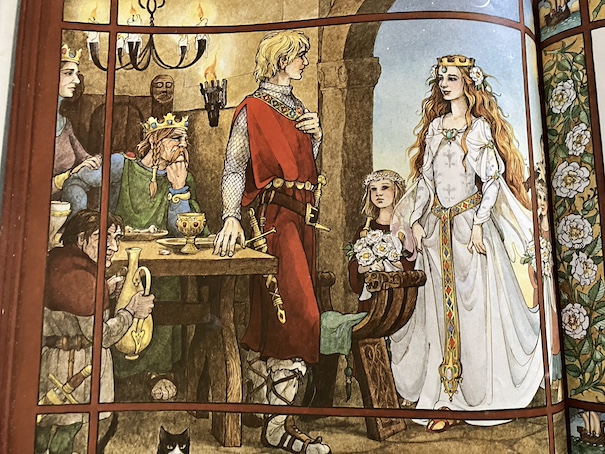
I love the colorful illustrations in this story, although some of them seemed a bit brutal for an audience of young children, showing George badly injured and the dragon spurting blood. Because I love folklore, I know that the legend of St. George and the Dragon is a Christian allegory, although it has some basis in earlier folktales and historical figures. I’ve heard different interpretations of what the dragon is supposed to represent. It can be a symbol of evil, the devil, or sin, and I think I’ve heard that it could represent paganism, which was replaced by Christianity (represented by St. George in the story), although I can’t remember where. In a way, I think this is one of those picture book that might mean more to adults because they would understand more of the symbolism, history, and folklore references in the story. On the other hand, who doesn’t love a story that ends with a gallant knight marrying a beautiful princess?

In case you’re wondering, the red cross on St. George’s shield isn’t the red cross used by the International Red Cross. However, Saint George’s Cross is on the national flag of England and is also part of the Union Jack flag of the United Kingdom.

As another odd piece of literary trivia, the legend of St. George has a connection to another story that I’ve on this blog, Phoebe the Spy. The connection isn’t an obvious one because Phoebe the Spy was set in New York during the American Revolution, which seems far removed from Medieval England. However, on April 23, 1770 (St. George’s Day), the St. George Society (originally called the Sons of St. George) was founded at the Fraunces Tavern in New York, just six years before the story of Phoebe the Spy begins at the same tavern. The St. George Society was and still is a charitable organization that helps immigrants from Britain, using the patron saint of England as its namesake.

The Diamond in the Window

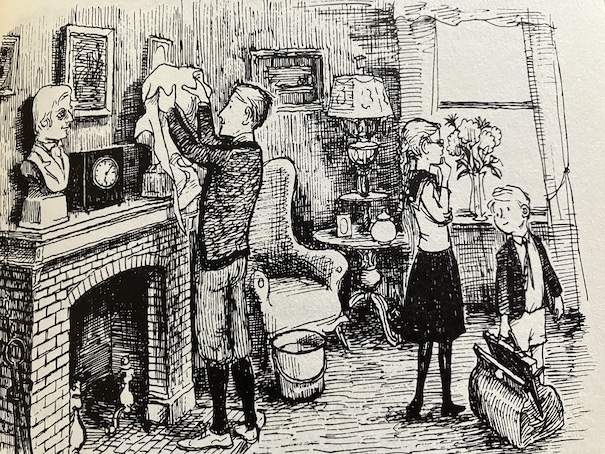
Eleanor and Edward Hall are orphans who live with their Aunt Lily and Uncle Frederick in their family’s big but somewhat shabby old house in Concord, Massachusetts. The family has lived there for generations, and they are intellectuals with a particular interest in the literary history of Concord. Uncle Freddy is obsessed with Ralph Waldo Emerson and Henry Thoreau, although he doesn’t share Eleanor’s love of Louisa May Alcott. When a couple of the town leaders threaten to take the family’s house because of unpaid back taxes and to destroy it because they think it’s an eyesore, the children come to learn that their house holds more secrets and history than anyone knows.

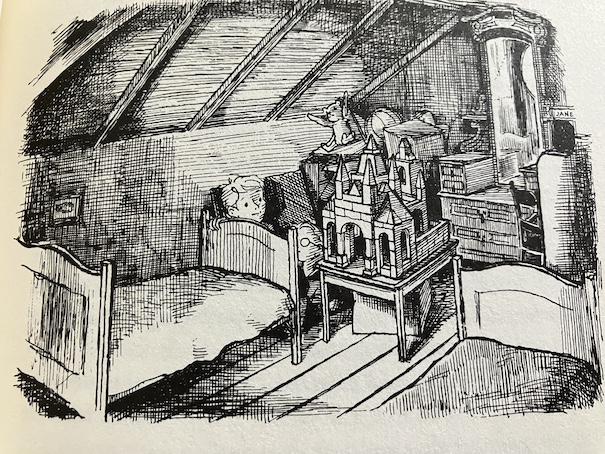
As Eleanor and Edward look at the house from the outside, they suddenly realize that there’s an window at the top of the house that’s shaped like a key and made of colored glass. They’ve never seen that window from the inside of the house, so there must be a secret room! The children search the attic and find a trap door that they never realized was there before. When they look into the hidden room, they find a pair of children’s beds and toys.

The children ask Aunt Lily about the room, and she sadly admits that she hadn’t wanted to tell them about it. Then, she begins to explain more about the family’s history and the aunt and uncle the children never knew. Aunt Lily is their father’s sister, and Uncle Freddy is their brother, but there were once two more children in the family, called Ned and Nora. Eleanor and Edward were named after them, but Ned and Nora mysteriously disappeared years ago. Aunt Lily still believes and hopes that, somehow, they will return someday, so she has always kept their room ready for them.

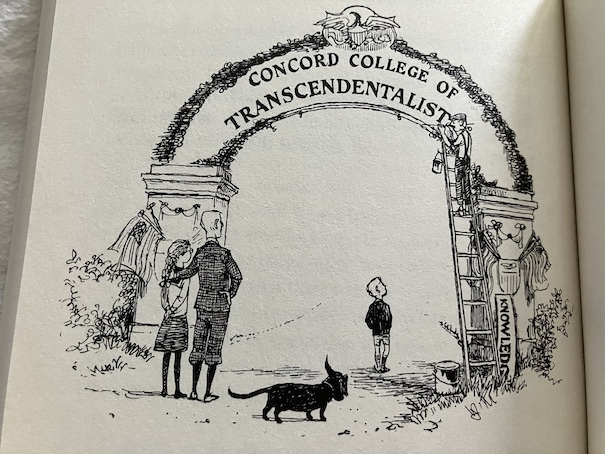
When she shows the children pictures of Ned and Nora in the family’s album, they also see a picture of a young man in a turban and ask about him. Aunt Lily says that the man is Prince Krishna, son of the Maharajah of Mandracore. Their Uncle Freddy has written books about Emerson and Thoreau and was once considered an expert on the Transcendentalists. People who were interested in Transcendentalism, like Prince Krishna, used to come and study with him. Aunt Lily wasn’t really interested in Transcendentalism, but she explains, “I think he said that the Transcendentalists believed that men’s minds were very wonderful, and that they could know all kinds of important things without being taught about them through their eyes and ears –because they were part of something called an Over-Soul.” Eddy approves of this concept because it sounds like it’s about learning without school, and he approves of anything that involves no school.

Everyone was fond of Prince Krishna while he lived and studied with the family, and Aunt Lily said that he used to make up fun games for Ned and Nora, like treasure hunts with real jewels as prizes because the prince was very rich. The children get the sense that Aunt Lily was in love with Prince Krishna, but he also vanished shortly after Ned and Nora did. When they discovered that Ned and Nora were missing from their beds one morning, Prince Krishna dashed around, looking for them, but suddenly, he was also gone, and no one knew where or how.

Eleanor and Eddy return to Ned and Nora’s room upstairs to have another look at it, and they find a mysterious poem called “Transcendentalist Treasure.” From the handwriting, which matches a note that Prince Krishna wrote to Ned and Nora with a present he gave them, Eleanor and Eddy realize that Prince Krishna also wrote the poem. Since the poem seems to be some kind of treasure hunt, the children think that it was probably part of the treasure hunts that Prince Krishna used to make for Ned and Nora. They try to figure out what the clues in the poem mean and what it might lead to, hoping that it might be the jewels that Aunt Lily told them about and which haven’t been seen in the house since Ned, Nora, and Prince Krishna vanished. If they could find those jewels, they could pay the back taxes and save their house!

However, they don’t really begin to grasp the full importance of the poem until they ask Aunt Lily if they can spend the night in Ned and Nora’s room. During the night, they have a bizarre dream, in which they’re climbing an elm tree with Ned and Nora and find a harp, which is something that was mentioned in the poem. A dangerous wind blows them out of the tree, and they wake up. They could have believed that it was only a dream except that they realize that they both dreamed the same thing, Eleanor has bruises and a scratch on her leg that she got from falling out of the dream tree, and Eddy has located the harp in Ned and Nora’s bedroom.

They show the harp to Aunt Lily, and she says that Prince Krishna had given it to Ned and Nora years ago, hanging it in a tree so that they would hear the wind blowing across it. The poem and the dreams that Eleanor and Eddy have seem to be hinting at the treasure hunts that Prince Krishna had with Ned and Nora. Eleanor and Eddy begin to think that solving the riddles in the poem may not only lead them to the jewels but to the truth about what happened to Ned, Nora, and Prince Krishna.

The book is available to borrow and read for free online through Internet Archive.

The book introduces the concept of Transcendentalism. I remember my English and history teachers discussing the Transcendentalists when I was in high school, but for some reason, they didn’t appeal to me back then, even though I went through a kind of phase where I was interested in metaphysical topics. I think my teachers put a lot of emphasize on their interest in nature, and I wasn’t an outdoorsy person. The background information in this story revived old memories of my high school classes and actually clarified a couple of points for me. The kids visit real places in Concord, Massachusetts, including the house where Louisa May Alcott once lived, and the book is full of discussions of literary figures and their lives and quotations from their works.

The children’s surrealist dreams connect to real objects in their lives and in the history of the family and their house. The dreams follow the poem that Prince Krishna left behind, and in each of their dreams, they see Ned and Nora up ahead of them, so the Eleanor and Edward realize that they’re following their path. The poem and the dream reference pieces of Transcendental literature and thought, and the children’s uncle explains the references throughout the story.

Many of the dreams also show the children’s personal and mental growth. In one dream, the children examine different images of their future selves, seeing how different choices they make can lead their lives in different directions, and they make up their minds which version of themselves they want to aim to be. In another dream, the children are trapped in a nautilus shell, and they discover that they have to think their way out of it. The thoughts they have help them work their way through each chamber of the nautilus, but they have to use thoughts with increasing depth and complexity to make progress. At first, remembering nursery rhymes is enough to help them move forward, but as they go further, they have to concentrate on more complex poems and higher-level moral and philosophical thoughts.

Although the dreams the children have are very surreal, and readers have no idea where they might be leading, the children do find Prince Krishna and their missing aunt and uncle. When the three of them return, Prince Krishna does explain where they were the entire time they were missing. He doesn’t offer a detailed explanation because they were trapped in a sort of magical/metaphysical prison, but he does explain who trapped them and why. There is a villain in the story, but it takes a while to grasp who and what the villain is because readers don’t really see it/him in his true form and don’t understand who he is and what his motives are until Prince Krishna explains. Eleanor and Eddy end up understanding more than Aunt Lily and Uncle Freddy do in the end, but finding Ned and Nora, Prince Krishna, and Prince Krishna’s treasure changes everyone’s lives for the better. Throughout the book, Uncle Freddy is mentally unbalanced, eccentric at the best of times and outright crazy at others. Local people want to see him committed to an asylum, but his mind was unbalanced by Ned and Nora’s disappearance. Once they’re back, he regains his senses.

The author wanted to write realistic children as her protagonists to appeal to real children. Eleanor and Eddy have their own insecurities and dreams which play into their characters all through the book and appear in the visions of the futures and choices they have to make in their dreams.

Somewhere in the World Right Now

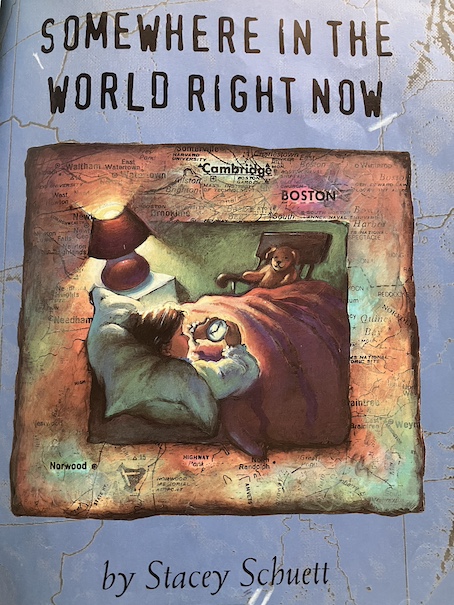
This picture book explains time zones by showing what people and animals all over the world are doing at the same time, reminding children that, somewhere in the world right now, it’s a different time of day.

The book begins with A Note to the Reader, explaining that it takes 24 hours for the Earth to make one full rotation on its axis and that the Earth is constantly turning. This rotation is what makes the sun seem to move across the sky and creates our periods of day and night. Then, it explains how, in 1884, our formal system of time zones was established to standardize how times of day are expressed around the world. There are 24 time zones, roughly equal in size, with a few adjustments for geographical boundaries. Within each time zone, it is the same time, and it is one hour different from the time zones on either side of it. It also explains that the international date line is an imaginary boundary drawn through the middle of the Pacific Ocean that marks the point at which new days begin. There is a map in the book that illustrates all the time zones we will be traveling through and the International Date Line. The places we see in the rest of the book are also labeled on the map.

The main part of the book shows what people and animals around the world are doing “right now”, compared to a child in the United States. We don’t see the child in the United States until the very end of the book, but everything else is based around her “right now.” The text doesn’t specify where each of the places are, but each picture has a map in the background with labels that indicate the location to readers.

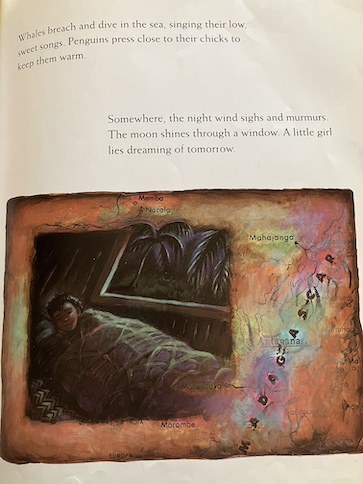
The first place we see is London, England. It’s the middle of the night (or possibly very early in the morning, after midnight but the sun isn’t up – according to the map at the beginning of the book, it’s 1 am), but a baker is preparing fresh bread to sell in the morning. Meanwhile, there are elephants sleeping in Uganda, whales swimming in the sea, penguins protecting their chicks in Antarctica, and a little girl sleeping in Madagascar.

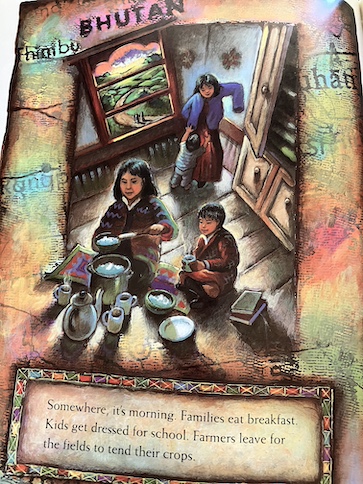
It’s dawn in India, and people there are waking up. People are eating breakfast in Bhutan, and people are on their way to work in the morning in China. At the same time, it’s lunch time in Siberia, and there are kangaroos and koalas eating their own lunch in Australia.

Meanwhile, it’s afternoon on the western coast of the United States. There’s a fishing boat returning to port in Alaska, and a girl on a farm in California. As we move further east, it gets later and later. When we reach Chicago, it’s evening, and people are heading home. In Guatemala and Honduras, children who have been playing outside head for home, and families are having supper.

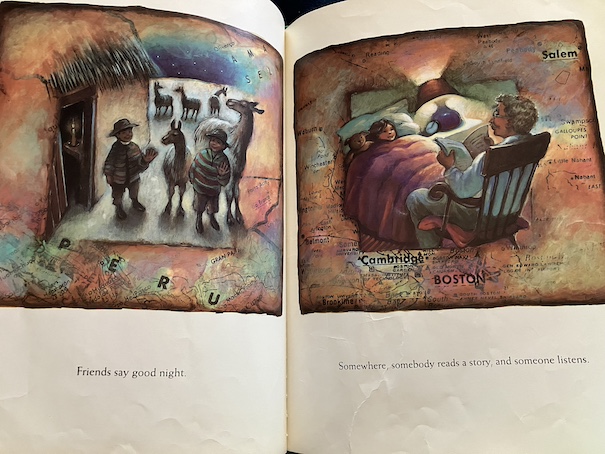
Eventually, we reach Boston, Massachusetts, where someone is reading a story book to a little girl before bed. It’s 8 pm, according to the time on the map at the beginning and the clock next to the little girl’s bed. All the things that we’ve seen in the book are happening, somewhere in the world, right now, as she is going to bed.

The book is available to borrow and read for free online through Internet Archive (multiple copies).

This book is educational, showing children how time and time zones work around the world, but it’s also a good, gentle bedtime story. Although we don’t really know it until the very end, it’s framed around a girl who is going to bed and is hearing a bedtime story. It is relaxing to think about how different things are happening in different places, to people and animals around the world, almost counting them off like counting sheep. No matter when it is or where you are, there’s someone, somewhere in the world, going through a different point in their day.

I found the human parts of the story more interesting than the animal portions, but I think children would enjoy hearing about the animals and seeing the animal pictures. It’s also relaxing to think about animals just going about their routines, like people go about theirs. There’s nothing stressful happening to any of the people or animals in the story.

I remember, when I was younger, I sometimes pictured things happening around the world when I had trouble sleeping. I can’t remember why I started doing this, if it was because I read this book or one like it. Somehow, though, I found it reassuring to think that, somewhere, it was daytime for someone else and that there were always people awake somewhere. It might be just me, but somehow, I found that idea reassuring because it meant that there were other people taking care of things, and it was their turn to be awake and do things, so I could have my turn to relax and rest.

All in a Day is a picture book on a similar theme, but instead of just showing what’s happening around the world at one particular moment, All in a Day follows children in various countries through the course of an entire day.

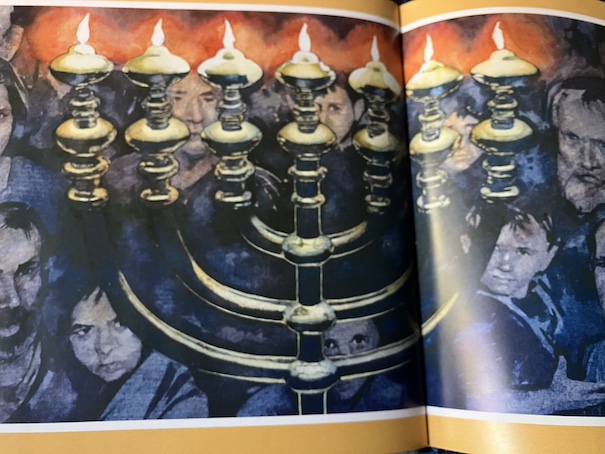
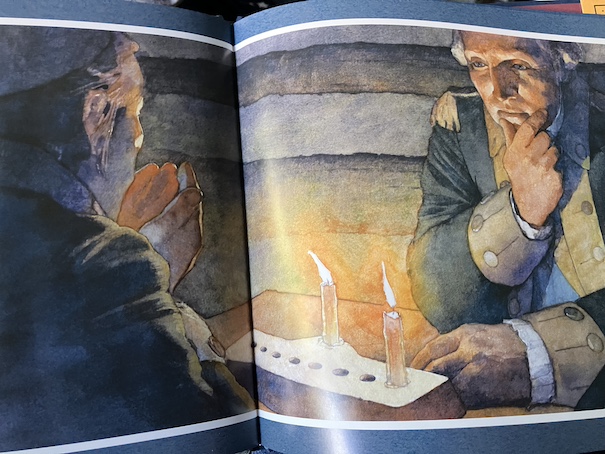
Hanukkah at Valley Forge

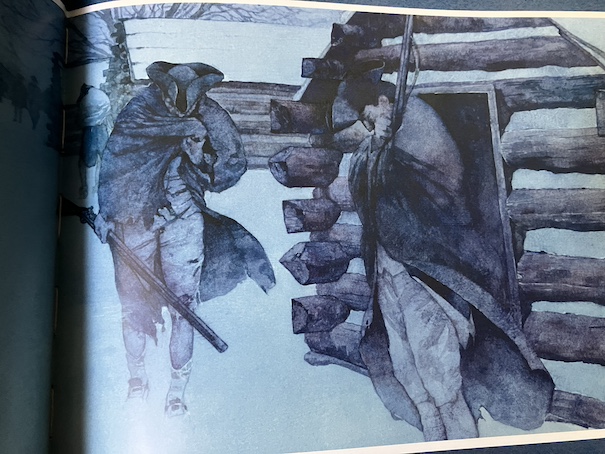
It’s a cruel winter at Valley Forge, during the American Revolution, and George Washington is worried about the welfare and morale of his soldiers.

As Washington walks through the camp, he sees a young soldier lighting a candle and reciting something softly to himself.

Curious about what he’s doing, Washington stops to talk to him, casually remarking on how cold the night is. The young soldier says that he saw colder nights when he was young in Poland, and he is lighting candles for Hanukkah. Washington asks him what that means, and the soldier explains the meaning of the holiday.

The soldier recounts the story of how Israel was conquered by the Ancient Greeks, who forced Jewish people to worship Greek gods and tried to replace Jewish customs with Greek ones. Washington also says that he understands what it’s like to feel like you’re under the thumb of a king who lives far away and the desire for liberty. The Jewish soldier says his family left Poland for similar reasons, because they were not being allowed to practice their beliefs there.

Returning to the story of the ancient Israelites, the soldier explains that a priest named Mattathias refused the Greeks’ orders to bow to idols, and he fought back against the Greeks. Mattathias and his five sons, who were called the Maccabees, led a rebellion against the Greeks. They were a small group, and the odds were against them, but they were determined to continue the fight against their oppressors. Washington says that he understands the feeling because his army is in a similar position.

Continuing the story, the soldier recounts how Mattathias’s son, Judah, inspired their troops by reminding them that God was on their side, leading them to victory. When they finally managed to overthrow their Greek rulers, they took back their Temple and lit the Temple menorah. The menorah was supposed to be kept lit constantly, and they were worried because there was very little oil left. They only had enough to keep it burning for one day, and they weren’t sure when they could get more oil. However, they lit the menorah anyway, trusting that God would somehow provide them with more soon. It took them eight days to find more oil for the menorah, but to their surprise, the menorah continued to stay lit all the time they were searching, lasting eight times longer than they thought it would with the amount of oil they had. Hanukkah became the commemoration of this miracle.

George Washington contemplates the story that the soldier told him, and he finds it inspiring. It reminds him that, even though their current situation in Valley Forge may seem bleak, there have been others before them who have also faced steep odds in their struggles and who still managed to succeed. He begins to think that, if they persevere, they may also be gifted with a miracle of their own.

There is an author’s note at the end of the book that explains the inspiration behind the story. As the characters in the story do, the author draws parallels between the American Revolutionary War and the historical battle that began the tradition of Hanukkah. The author learned that George Washington may have learn about Hanukkah during the Revolutionary War, although there are no entries in his diary to confirm it, so he used excerpts from George Washington’s other writings to explain his sentiments. The author also offers commentary on bullies and the importance of standing up to oppressors, both in the context of war and in daily life.

This book won the Sydney Taylor award from the Association of Jewish Libraries.

I love books that include little-known or lesser-known events. Whether this one happened or happened in the way the author tells it is difficult to verify, and it seems likely that it’s more of a folk tale than an historical account. George Washington was a real, historical person, but so many legends have grown up around his life that it’s sometimes difficult to tell whether certain stories about him actually happened. As the author says, Washington’s own diary doesn’t offer any verification about this particular incident. Other reviewers of this book, including J. L. Bell, who specializes in Revolutionary War history in the Boston area, have attempted to trace the origins of this particular story about Washington learning about Hanukkah during the Revolutionary War. In his blog, J. L. Bell explains the known sources for this story, which vary in their description of exactly when the encounter between Washington and the Jewish soldier took place and what the soldier’s name was. The soldiers who have been credited with having this encounter with George Washington were real people, but there’s nothing that definitively proves that the discussion about Hanukkah actually happened with any of them. The story is probably more folklore than history, and Bell believes that it started to circulate during the 20th century, when there were more immigrants arriving from Poland with stories and experiences like the one the Polish soldier in the story tells about not being allowed to practice their religion openly. Even so, the parallels the story draws between the ancient rebellion of the Maccabees and the American Revolution are fascinating.

There are certain feelings that are universal among humans, and the author’s point that nobody likes being oppressed by a bully, whether that bully is another person or a government or an army, is true. No matter what you’re up against in life, perseverance in the face of hardship is important, and miracles can come to those who continue to stand up for themselves and what they believe in. It is also true that people who come from different sets of circumstances can help to inspire each other by sharing common feelings about their struggles.

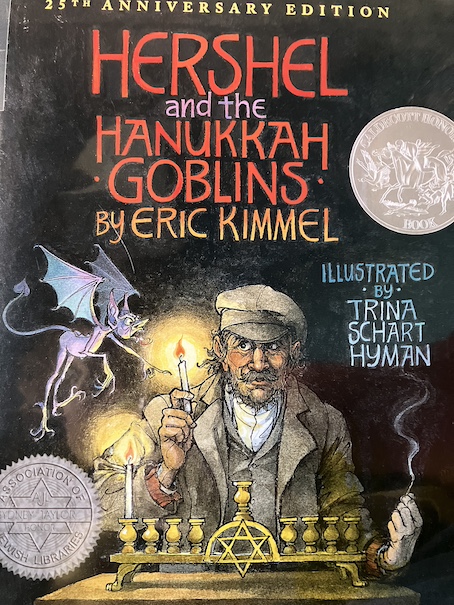
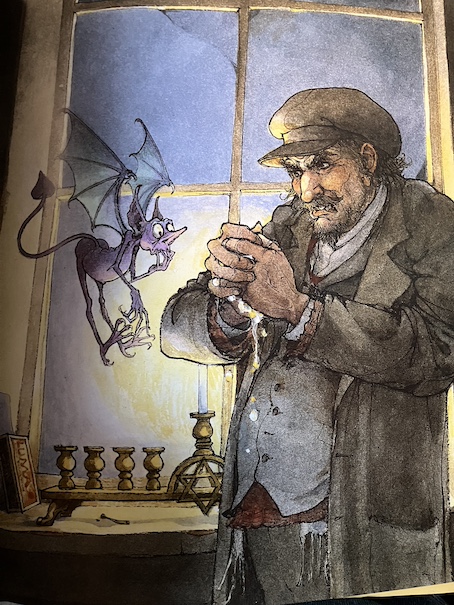
Hershel and the Hanukkah Goblins

On the first night of Hanukkah, a tired travel, Hershel, trudges through the snow on his way to the next village. There, he hopes to get something to eat and celebrate the holiday with the local villagers. However, when he reaches the village, nobody is celebrating.

When he asks the villagers why they’re not celebrating, they tell him that they can’t because there are goblins haunting the old synagogue on the hill. Every time they try to celebrate Hanukkah, the goblins come after them, blow out the candles on their menorahs, breaks their dreidels, and throw all the potato latkes on the floor.

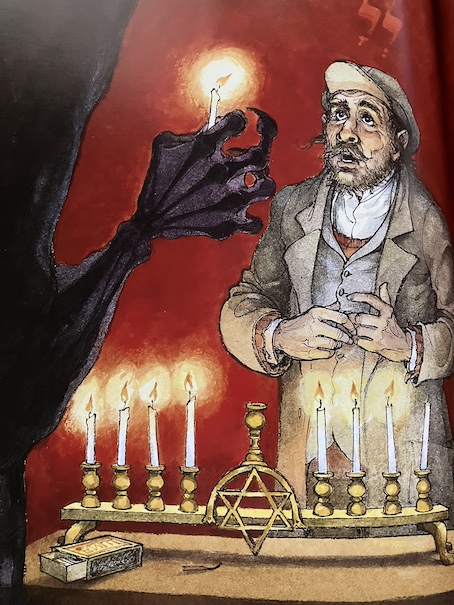
Hershel decides that he isn’t scared of the goblins, and he’s going to put an end to their mischief. The village rabbi says that the only way to get rid of the goblins is to spend all eight nights of Hanukkah in the synagogue, lighting Hanukkah candles every night. Then, on the final night of Hanukkah, the goblin king must light the candles himself. Although this sounds difficult, Hershel is confident that he can do it. Although the villagers aren’t really expecting Hershel to succeed, they support Hershel in his mission, and they give him some food, a menorah, candles, and matches.

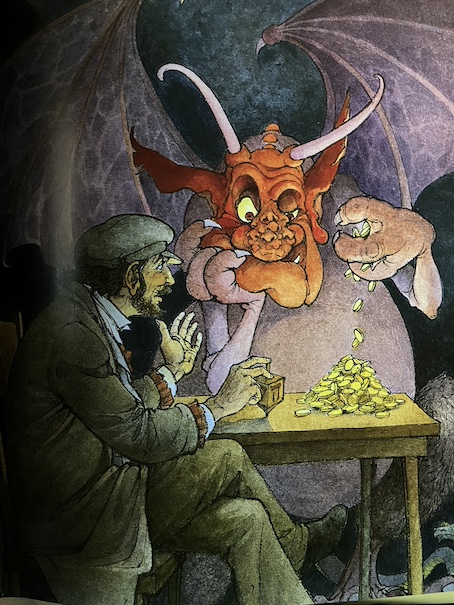
The old synagogue is creepy, and when Hershel lights his first candle, a small goblin appears to ask him what he’s doing. Herself isn’t intimidated by the little goblin, and he tricks the goblin into thinking that he’s strong enough to crush rocks in his hands by squeezing a hard-boiled egg in his hands until it breaks. The little goblins is scared away but warns him that bigger goblins than him will come later. The next night, a bigger goblin comes, but he isn’t very bright and gets his hand stuck in a jar of picks when he tries to take too many. The night after that, tricks the third goblin into playing dreidel with him and giving him all his gold.

It continues like this, night after night, with Hershel tricking the goblins in various ways so that they’ll let him light the candles on his menorah. Finally, Hershel comes face-to-face with the most sinister goblin of all – the king of the goblins. Can Hershel find a way to trick him and get him to light the candles of the menorah himself?

The book is a Caldecott Honor Book and named a Sydney Taylor Honor Book by the Association of Jewish Libraries. It is available to borrow and read for free online through Internet Archive (multiple copies). It was originally published as a short story in Cricket magazine and later as a book, which is why the story has two copyright dates.

I’m not Jewish, and I admit that this isn’t a book I read as a kid, although I do remember that it was one that was often recommended when I was young. As an adult, I decided to try it, since I just never got around to it before. I really do like this story. I enjoyed the folklore elements, and I also appreciated that the main character saves Hanukkah, in much the same way that various characters had to “save” Christmas when I was a kid.

It makes me laugh to think about it now, but Christmas always seemed to be an extremely endangered holiday in Christmas television specials from my childhood. Some evil person or being was always out to destroy Christmas, for various reasons, with varying degrees of logic, and popular television characters always had to “save” it from being destroyed or canceled or whatever. It was fun and entertaining, but when you consider the entire canon of endangered Christmas holiday specials all together, it does seem like there isn’t a single year when Christmas isn’t in danger from somebody or something, making it weirdly routine for Christmas to almost not happen. At some point, I think my brother pointed out that Christmas was always in danger, but it seemed like Hanukkah was relatively safe. (At least, in the land of holiday-themed winter television specials starring well-known cartoon characters.) I figured that Christmas was likely a bigger target for the forces of evil due to its wide mass appeal because there were just more people who celebrated Christmas where I lived than Hanukkah (and also because of the all the related Christmas toy tie-in commercials and advertising sponsors for those shows).

So, I was delighted to see Hanukkah get saved from a band of comically nefarious goblins in this book. The goblin king is a sinister figure in the pictures, but fortunately, he’s not too much brighter than his cohorts. The book has been adapted as a stage play (you can sometimes find clips or trailers from performances on YouTube), and there is also an animated short film of the story. I think it would be fun to see a longer version, though, in video or movie form. The book skims over the details of what Hershel does to trick some of the other goblins after the third one, so there’s room to elaborate and make the story longer. I think I would have been a little scared by the final goblin when I was a little kid, but the goblins not being particularly bright and easy to trick does help remove some of the scare factor.

At first, I though that the story of Hershel might have been a folktale because it reads like one. In the back of the book, the author explains that he wanted to write a story that was somewhat like A Christmas Carol by Charles Dickens but about Hanukkah, and he took his inspiration from the folktale Invanko, the Bear’s Son (also known as Jean de l’Ours or John the Bear), which is includes the hero tricking a goblin, and he added in a Jewish folk hero, Hershel of Ostropol. The resulting story is sort of like a new folktale, remixed from old ones, which is fitting because that’s what happens with folk stories Overall, I thought it was a fun story.

Noel

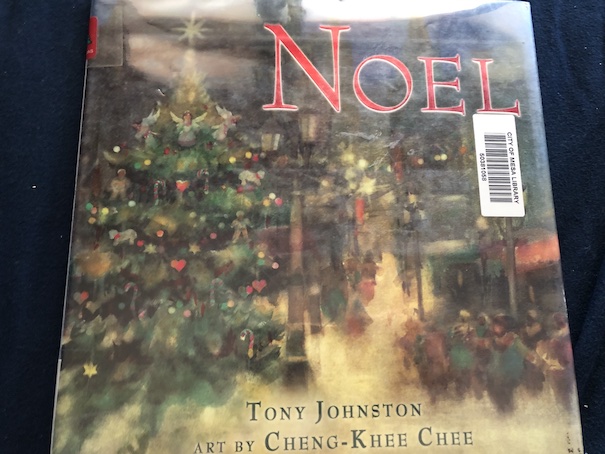
Noel by Tony Johnston, art by Cheng-Khee Chee, 2005.

This lovely Christmas picture book reads like a Christmas carol!

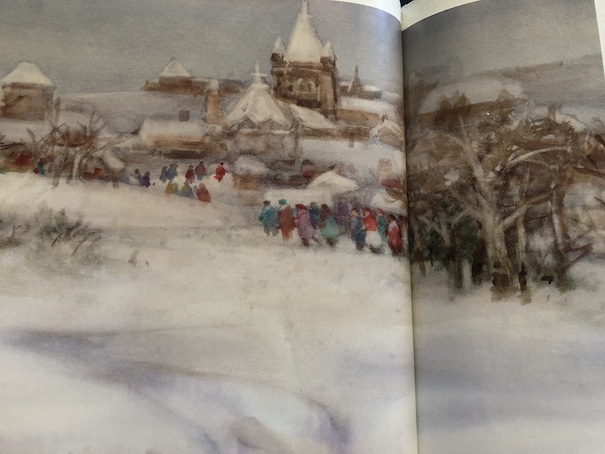
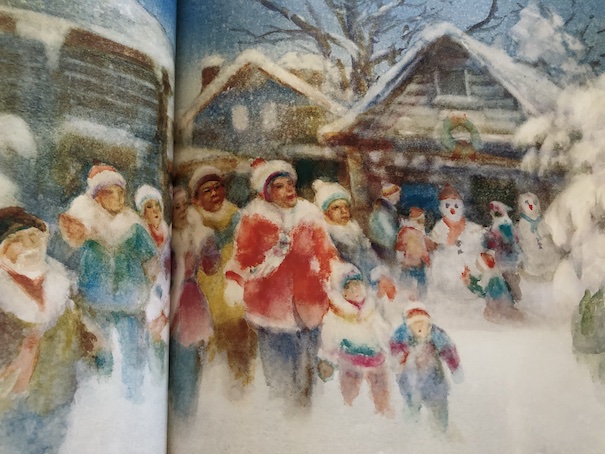
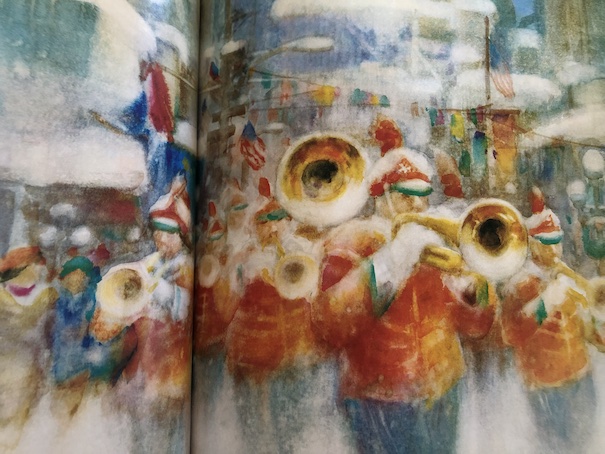
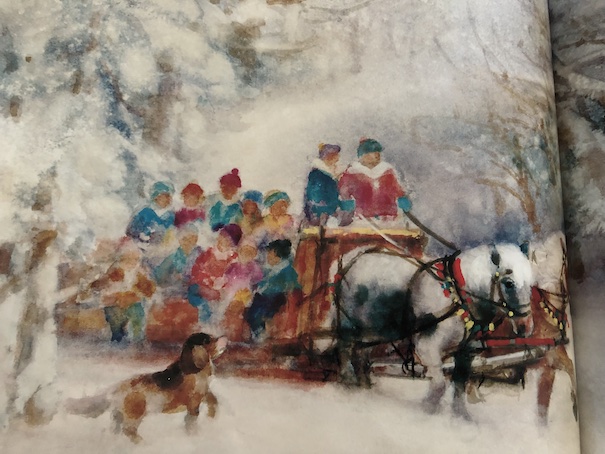
There is no story in the book. The text is poetry that celebrates the atmosphere of Christmas, the feelings in nature as anticipation builds and in cities as people gather to celebrate.

“Noel” is described as the sound of Christmas, like a bell, that people and animals all listen to hear.

The artwork is beautiful, and there are scenes of people participating in classic Christmas celebrations, with a Christmas parade, snowmen, a public Christmas tree, and a sleigh ride.

The pictures really make the book beautiful and dreamlike. In the back of the book, there is a section that explains the art style. The artist used watercolors and a technique called “saturated wet-paper technique.” This technique is what gives the illustrations their fuzzy, dreamlike quality
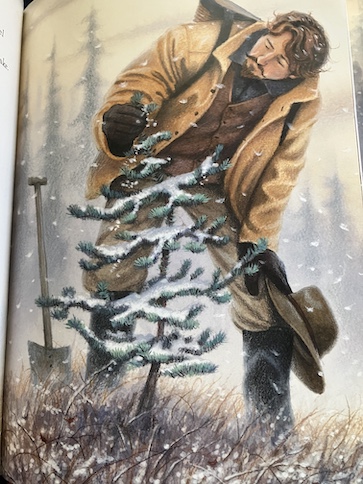
The book is available to borrow and read for free online through Internet Archive.
The Little Fir Tree

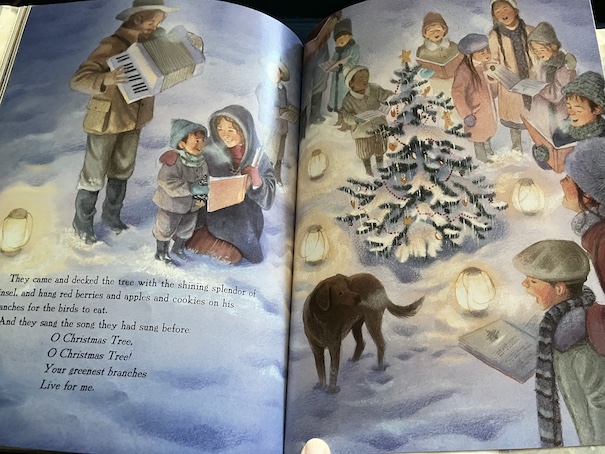
A little fir tree feels lonely among the large trees in the forest, but something happens that changes his life forever – he is chosen to be a living Christmas tree for a little boy!

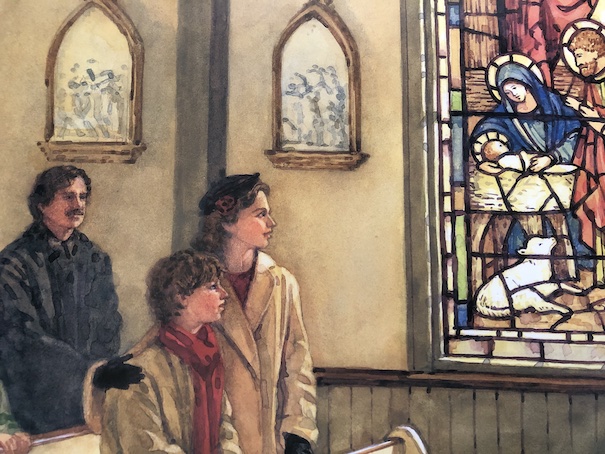
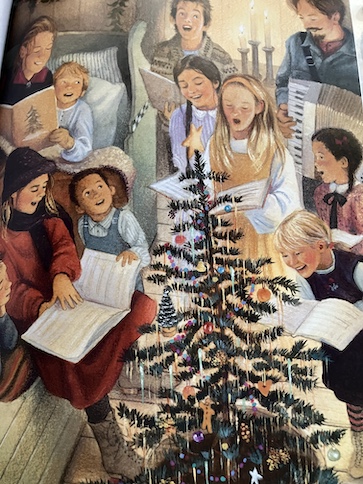
One winter, the boy’s father carefully digs up the tree and brings it home to his young son, who cannot walk because of a lame leg. The boy has been wanting to see the trees in the forest, but since he can’t go to the forest himself, his father has brought a free to him. The little fir tree loves being decorated, and the next evening, guests come and gather around him, singing Christmas carols.

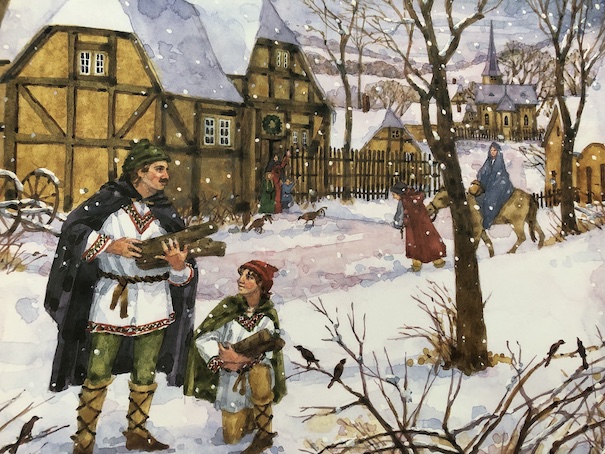
In the springtime, the boy’s father takes the tree back to the forest, where he found it, and he plants the tree again so it will continue to grow. However, the following winter, the boy’s father returns to dig up the tree again and take it back to the boy for Christmas.

The little fir tree loves this ritual of visiting the boy and his family and being their Christmas tree every winter, but the next winter after that, the man doesn’t come to dig him up. The little tree is disappointed and lonely, but he is in for a surprise. This winter, the boy and his family come to see him in the forest!

The book is available to borrow and read for free online through Internet Archive, although that copy has different illustrations.

I mainly know Margaret Wise Brown for Goodnight Moon and The Runaway Bunny, but I found this Christmas story charming. I don’t like Christmas stories from the point of view of trees that are cut down, like the Hans Christian Andersen story, The Fir-Tree, which has a really depressing ending. I like it that this family in this book keeps the tree alive, returning it to the forest every year to continue growing. Things change for both the boy and the tree over the years, as they both continue to grow, but they change for the better, and they continue to be fond of each other and a source of inspiration for each other.

When I was a kid, our elementary school had a large tree on a hill on the kindergarten playground, and the story behind it was that it was once a living Christmas tree from the very first kindergarten class at the school. That tree is still there and alive today, about 50 years after it was first planted there and more than 30 years after I used to play under it. I like to imagine that it will be true of the little fir tree, too, that it will continue growing over the years.

Earlier versions of this book had different illustrations, but personally, I love the illustrations in this printing because they’re detailed and realistic. The version on Internet Archive has illustrations by Barbara Cooney, who is known for Roxaboxen and Miss Rumphius. Cooney’s illustrations are also good, but not as realistic as Larmarche’s, and they’re in a limited color range.

One other difference between versions of the book is that the earlier version also included the musical notes for the carols that the children sing and additional songs that aren’t included in the later version of the book. I enjoy books that include actual music and lyrics, like books that include recipes, because they are fun extras and add an extra dimension to the story by providing an accompanying activity. Although I like the more detailed and realistic illustrations of newer edition of this book, I do prefer the actual music and wider range of songs from the older version.

Mr. Willowby’s Christmas Tree

Mr. Willowby’s Christmas Tree by Robert Barry, 1963, 2000.

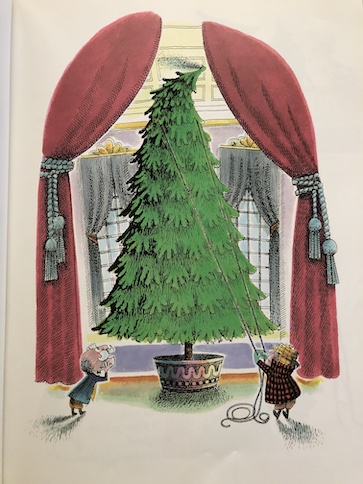
Mr. Willowby lives in a large house, and he orders a large Christmas tree by special delivery. It’s large and wonderful, but it’s just slightly too tall for the room where Mr. Willowby wants to put it.

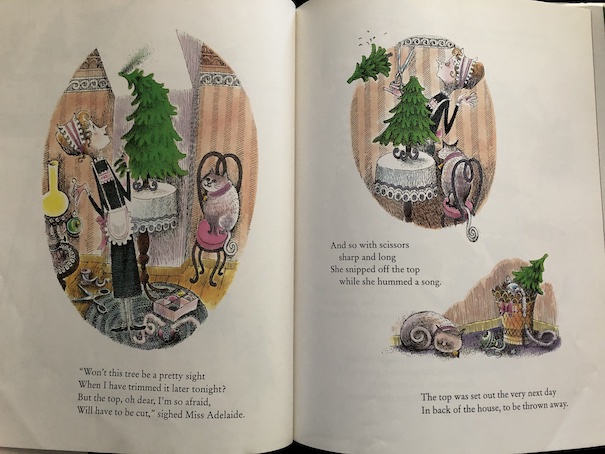
Mr. Willowby’s butler solves the problem by chopping the top off the tree, and because he doesn’t want the top to go to waste, he gives it to Mr. Willowby’s maid.

The top of the tree is about the right size to make a small Christmas tree for the maid’s room, but it turns out that it’s just slightly too tall again. The maid also clips the top off her tree.

From there on, the tree top moves on to other people and animals. The gardener spots the top that the maid throws out and decides it would make a nice, small Christmas tree. Like everyone else, though, he finds that the tree needs a little clipping for it to go where he and his wife want it to go.

As the top of the tree gets smaller, it starts drawing the interest of animals. Even animals enjoy having a Christmas tree as grand as Mr. Willowby’s!

The story is cute and told in rhyme! The book is available to borrow and read for free online through Internet Archive (multiple copies).

My Reaction

I remember this book from when I was a kid! I remember liking how several people and animals get Christmas trees out of just the top of one large Christmas tree. It’s a fun story about how one person’s trash is someone else’s treasure and nothing needs to go to waste. Mr. Willowby’s Christmas tree ends up helping everyone. In the end, everyone is happy because they all get a nice Christmas tree.

The illustrations in this book are full-color, but some older version of the book are in limited color – black, white, and green.

The Gift of the Christmas Cookie

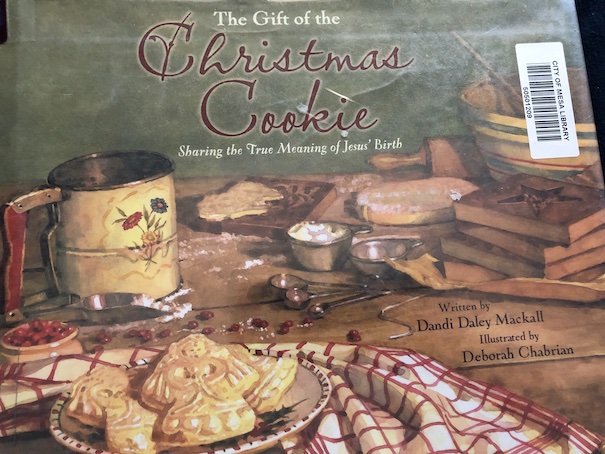
The Gift of the Christmas Cookie by Dandi Daley Mackall, illustrated by Deborah Chabrian, 2008.

This is a sweet Christmas story that discusses the meaning of Christmas along with the history of Christmas cookies.

The story doesn’t provide a year, but it seems to be implied that it takes place during the Great Depression because Jack’s father is described as hopping a freight train to find work and send money home. Since then, Jack and his mother have lived alone, saving every penny that Jack’s father sends to them.

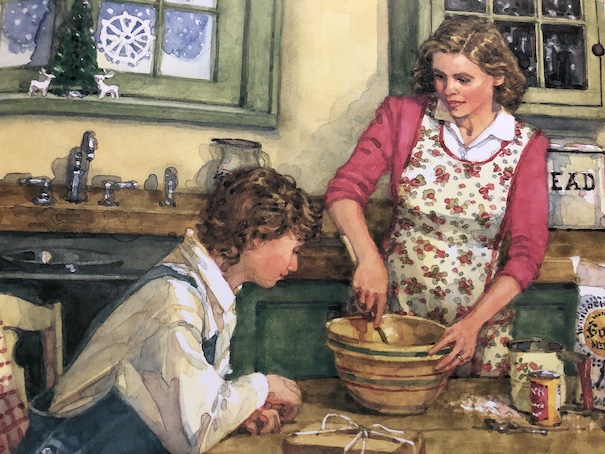
Then, before Christmas, Jack arrives home to find his mother making cookies. Jack is thrilled at the idea of having a rare treat, but his mother says that the cookies are for the needy at church. It’s disappointing because Jack has been feeling rather needy himself.

Then, his mother shows him the wooden cookie board molds that they will use. They are big with elaborate carvings of Christmas symbols. Making the cookies is labor-intensive, and Jack wonders why they’re working so hard to make such elaborate cookies that people will just eat anyway.

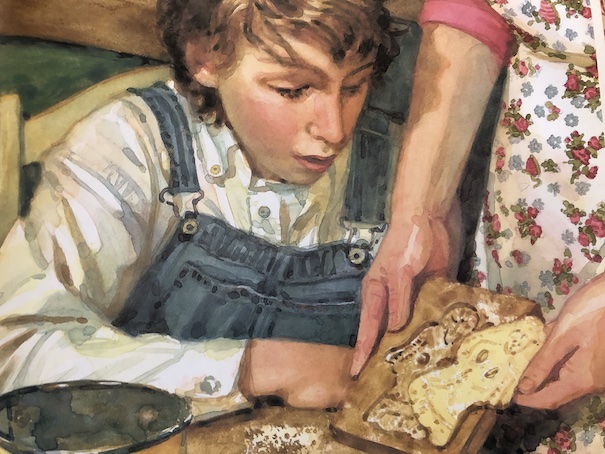
Jack’s mother tells him a story that takes place in the “Old Country” of their ancestors during the Middle Ages. (It’s in Germany, although Germany didn’t exist as the single country it is today back then.) Times were very hard, and people couldn’t afford much, but one family wanted to do something special for their neighbors for Christmas. The father of the family was a woodcarver, so he considered carving Nativity figures, but his wife said that many people were hungry, so it would be better to bake something they could eat. The woodcarver made wooden molds in the shapes of figures associated with Jesus’s birth, and his wife made the sweet dough to put in them, and they made cookies to share with their neighbors.

Jack’s mother saves one cookie from their batch in the shape of an angel for Jack so he can have a treat, but when a hungry man comes beginning for something to eat, Jack considers his own father, who might be traveling and hungry.

Jack is inspired to share his special Christmas cookie with someone who might need it more than he does and to pass on the story that goes with it.

My Reaction

I like stories that include some history, and I enjoyed this story about the origins of Christmas cookies and a lesson in generosity, giving to someone else as he hopes other people will be generous with his father. The invention of Christmas cookies can’t be traced back to any particular family, like the story in the book tells it, and Christmas cookies might have actually originated in Medieval monasteries because the monks would have had greater access to the sugar and spices needed than most people. However, the general concept of Christmas cookies made with molds is accurate. There is a brief note in the back of the book about the cookie boards or springerle molds that come from the Schwabian region of Germany, Switzerland, and Austria and how these molded cookies have had religious shapes since the Middle Ages. The book also notes that some cookie molds take the form of specially-carved rolling pins rather than the flat boards shown in the book, and this was the type of cookie mold that my grandmother used to use. When she made molded cookies, they were anise-flavored, which is traditional and tastes like licorice, although I prefer to make ginger cookies with my cookie mold rolling pin. The book includes a simple recipe for cookies that you can use with cookie molds or cookie cutters, and it uses the traditional anise flavoring.

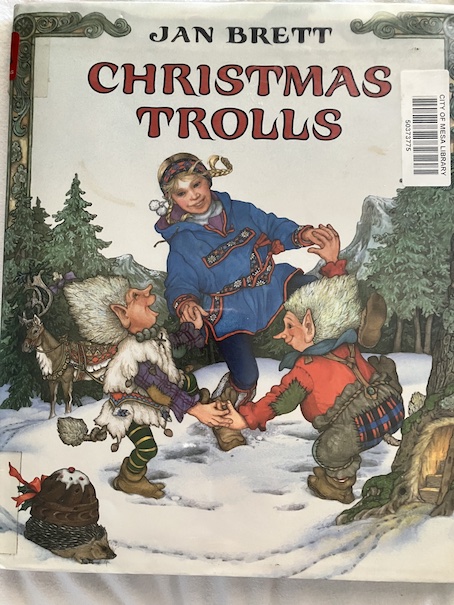
Christmas Trolls

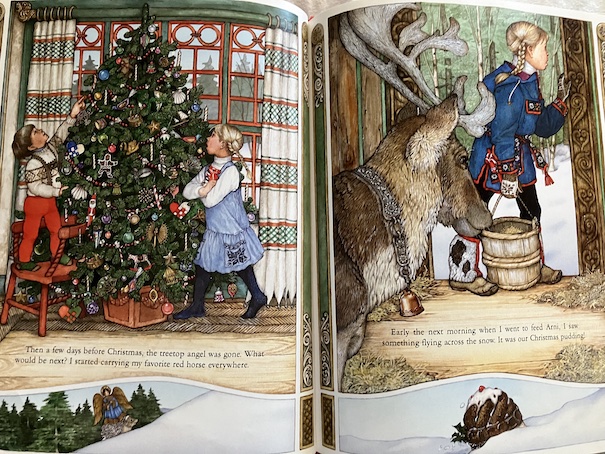
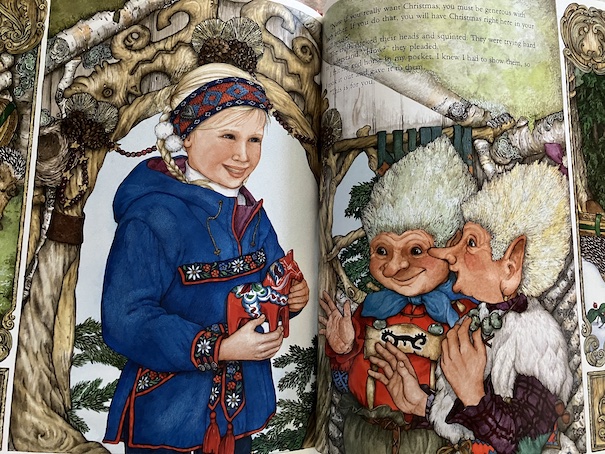
In this Scandinavian Christmas story, young Treva and her brother Sami are getting ready for Christmas when strange things start to happen.

First, Treva feels like someone is watching them when they go to pick out a Christmas tree in the forest. Then, after they start decorating for Christmas, some of their decorations start to disappear. They had already wrapped Christmas presents and hidden them away, but they discover that those are gone, too!

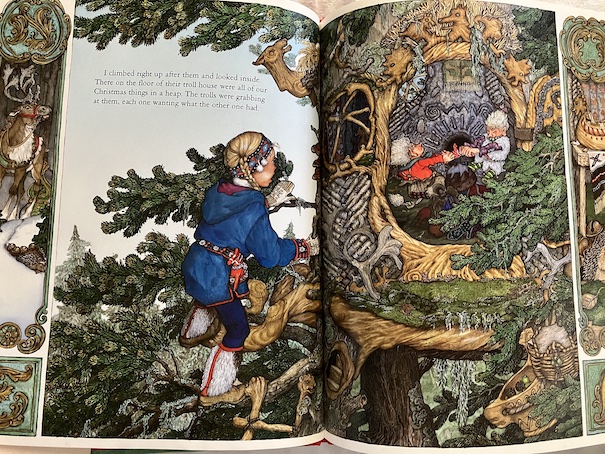
Treva begins to realize what is causing these disappearances when she spots their Christmas pudding, apparently moving quickly across the snow, stuck to the back of a hedgehog! Treva follows the hedgehog and pudding into the forest, where she finds two trolls, pulling the pudding up into their tree house.

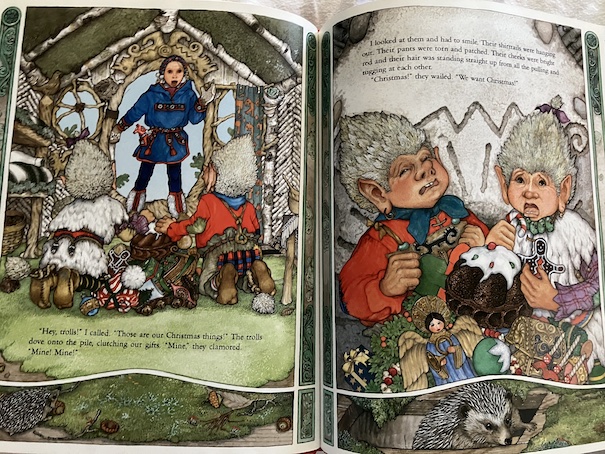
In the tree house, Treva finds the trolls arguing over all of the Christmas things they’ve taken from Treva’s family. Treva confronts them about stealing their Christmas things. The trolls say that they just want Christmas. They’re like small children who want something but don’t know how to get it or make it for themselves, so they just started trying to take it from other people.

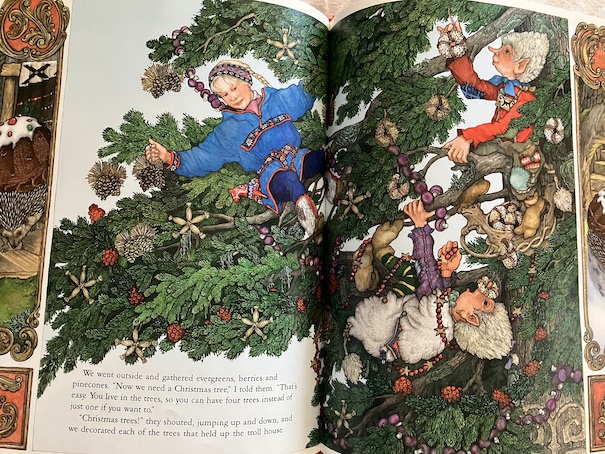
Treva tells them that she will show them what to do for Christmas. She helps them clean up their little house, make decorations, and decorate their tree for Christmas.

She also explains to them that arguing and being greedy isn’t the proper Christmas spirit, and it’s been ruining their mood. She tells them to try cooperating with each other and playing nicely together while they decorate. Finally, she teaches them that Christmas is about being generous and giving something to each other, not just taking things. To demonstrate what she means, she gives them their first Christmas present, her favorite Christmas decoration.

With the trolls now able to have Christmas on their own, Treva is able to reclaim the rest of her family’s Christmas presents and decorations. However, the trolls and their hedgehog friend have one more special Christmas present to give now that they understand what giving is.

The book is available to borrow and read for free online through Internet Archive (multiple copies).

This is a fun Christmas story with beautiful, colorful illustrations! I really loved the pictures in the book, with all the colorful Christmas decorations. The designs of the family’s Christmas decorations are traditional Scandinavian decorations. The side and bottom panels of the illustrations also explain some of what’s happening even before the main character understands.

I also loved the designs of the troll and their fun hedgehog friend. Around the time this story was published, troll dolls, which have existed since the late 1950s, were having a rise in popularity. The trolls in this story somewhat resemble troll dolls, with their fluffy hair rising to a point, although the troll dolls have more colorful hair options. I enjoy stories that use fantasy creatures, especially ones that aren’t especially common. The trolls in this story are troublesome, but in a little kid manner, not overly threatening. They’re more about mild magical mischief and lessons they have to learn.