The Most Beautiful Place in the World

The Most Beautiful Place in the World by Ann Cameron, drawings by Thomas B. Allen, 1988.

Juan is a little boy living in the town of San Pablo in Guatemala. It’s not a very big town, but it is very busy. The town is on a lake with several other towns around it, but Juan has spent his whole life in San Pablo.

Juan is from a poor family, although he doesn’t consider his grandmother poor because she owns her own house and is able to take in other relatives whenever they fall on hard times. He knows that his father was the caretaker of a big house in the town, but he abandoned him and his mother when Juan was still a baby. His mother says that his father wanted to continue partying with his friends like he did when he was a single man, spending more than they could afford. After they argued about it, he left his family and went to a bigger city and never tried to see them again. Juan’s mother moved back in with her mother, so Juan grew up in a crowded little house filled with other relatives who needed help because they had gotten sick, lost their jobs, had marital problems, or various other things going wrong in their lives.

Juan’s grandmother supports herself by making arroz con leche and selling it in the marketplace. When Juan is still a small boy, his mother remarries to a man who doesn’t want anything to do with Juan, so his mother abandons him, leaving him with his grandmother. Juan is distressed by his mother’s abandonment, but his grandmother continues to look after him and begins preparing him to live an independent life from a young age. She has him help her sell arroz con leche in the marketplace, and later, she teaches him how to shine shoes so he can earn his own money. Juan is still very young, but his grandmother knows that life will tough for him without his parents.

Juan knows that his mother has had another child, and he feels jealous of his younger half-brother because he gets to live with his mother, and he doesn’t. (I question whether the younger half-brother is really going to be better off in the long run, but I’ll explain why below.) However, he is really jealous of the other children in town who get to go to school. Not all children in town go to school because many are from poor families, who need them to work and earn money, but Juan wishes that he could go to school, too.

He quietly teaches himself to read the signs in town and a newspaper, but he’s afraid to ask his grandmother about letting him to go school at first. He’s worried that, if he asks for that, his grandmother may tell him that she only cares for him because of the money he earns. If his grandmother abandoned him or withdrew her affection for him because he asked for too much, Juan doesn’t know what he would do. However, when he finally brings up the subject of school with his grandmother, he learns how much she really does care for him, how much she plans for his future, and how proud she is of him.

The book is available to borrow and read for free online through Internet Archive (multiple copies).

My Reaction

Juan’s family is poor, and at first, Juan doesn’t understand fully how poor they are. His grandmother’s life is more secure than others because she owns her own house, while others don’t, but even she has limited resources. The house has running water, but it doesn’t have electricity because she can’t afford it. She takes in other relatives when they are in trouble because she cares about her family, but she also has to make sure that everyone does whatever they can to support themselves because she can’t do it alone.

At first, Juan thinks that maybe she just keeps him because he earns money shining shoes, and she keeps most of his wages. However, when he talks to her about school, he learns that she has not spent any of his wages on herself or on other relatives. Instead, she has secretly saved them up because she knew that he would need money for his education, and she uses it to buy school supplies for him. At first, his teacher doesn’t want to accept him in class because the school year has already started, but when he demonstrates that he has already learned math from working in the marketplace and has taught himself to read, she accepts him. He exceeds everyone’s expectations for him, and his teachers even say that they will contribute to his education, if necessary, to keep him in school.

Juan’s grandmother cannot read, and she reveals that her parents wouldn’t let her go to school when she was young, even though she wanted to go. Her parents were afraid that she wouldn’t learn to do any practical work in school, so they didn’t want her to get an education, but she’s always felt disadvantaged because of it. She’s managed to get by in life, but she realizes that she could have done better with an education. She says that if Juan continues to work after school and does well in school, she’ll support his education, as far as he wants to go, even to the university. She says maybe he’ll even be able to figure out some of the big questions in life, like “why some people were rich, and some were poor, and some countries were rich, and some were poor, because she had thought about it a lot, but she could never figure it out.” Juan worries that he won’t be able to live up to his grandmother’s expectations for him, but she tells him not to worry about that. She just hopes for the best for him and wants to see him do the best he can because she loves him, and that’s what Juan really needs to hear.

The title of the story comes from a tourist poster that Juan reads to his grandmother, calling their town, “The Most Beautiful Place in the World.” Juan’s grandmother thinks that the most beautiful place in the can be anywhere where a person can be proud of who they are, but Juan privately thinks that the most beautiful place in the world is somewhere with someone you love and who loves you back. Juan has been deprived of love because of his parents’ abandonment of him, but he has found the love and support he needs from his grandmother, who wants him to succeed in life because she loves him and not just for what he can do for her.

Parts of the story are sad because Juan’s parents callously abandon him, and even his mother tries to act like it’s nothing because she knows his grandmother is taking care of him. I tried to decide how selfish Juan’s mother is in the story. On the one hand, I can see that she is poor and desperate and may have felt compelled to accept the first marriage proposal she was offered just to get out of her mother’s house, but she is very callous to her little son and his feelings and needs.

At first, he doesn’t even quite understand why his mother has left him, not even leaving him the bed they shared, so he has to sleep on some empty rice bags. He goes to his mother’s new house and tries to spend the night there. His mother lets him stay the night but hides him because she says his stepfather will beat him if he catches him in the house, which is why Juan never goes there again. I don’t know whether the stepfather ever beats Juan’s mother or the child they later have together, but the mother’s comment makes me think that it’s likely. Yes, Juan’s mother succeeded in getting remarried and out of her mother’s house, but I don’t think she’s really headed for a better life, and I have doubts about the future her younger child will have. It looks like the stepfather is selfish and temperamental, probably every bit as immature as Juan’s father was, and the children’s mother will always place her own needs first. As hurtful as it was for Juan to be abandoned by his mother, his mother is not going to nurture him and his future in the way his grandmother does. His grandmother has to be tough sometimes because of the family’s poverty, but she still does her best to look after everyone, even at her own expense, because she does love her family and wants the best for them and their futures, not just to get what she wants from other people and get ahead by herself. I would say that’s the quality that makes her different from Juan’s mother. At one point, she even marches Juan to her daughter’s new house and demands that she and her new husband at least provide a real bed for her son, reminding them of their responsibilities.

The book doesn’t go into the details of Guatemalan society and events in the 1980s, when this book was written, which was something I wanted to see. It’s pretty simple story for elementary school level children, but there is more going on behind the scenes that Juan would be aware of as a young boy living in a small town. The time period when this story was taking place was during the Guatemalan Civil War, which lasted from 1960 to 1996. The war and sharp differences in social class are partly responsible for the economic and societal inequities that Juan’s grandmother describes, although the economic and social disparities in Guatemalan society were part of the reason for the war in the first place. There was also general dissatisfaction with government incompetence and interference in Guatemalan affairs on the part of the United States, which sought to use Guatemala as part of its Cold War strategy, including using it as a training ground for Bay of Pigs Invasion against Cuba. These are complicated and long-term situations that would require more explanation than a children’s book of this level can provide, and because the characters in the story live in a small town, they may not be seeing many of these events directly. As he gets older, Juan will probably become more aware of the wider world and the circumstances that have shaped his family’s lives, as his grandmother hopes and expects, especially if he does end up going to the university in the capital city.

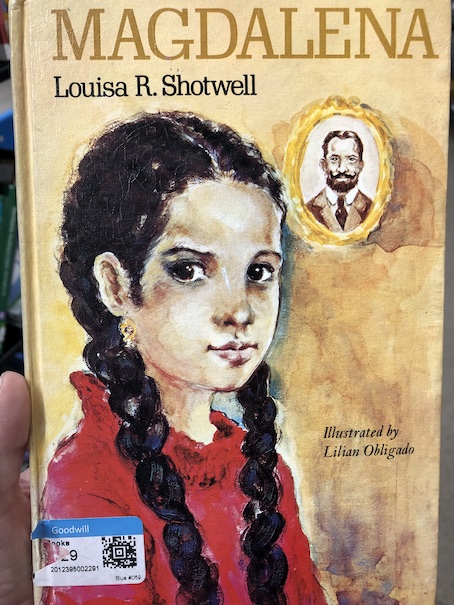
Magdalena

Magdalena is switching classes at school. She’s happy about it because she found her old class too chaotic. She thinks she will be happier in her new class. Her friend in her current class at school, a boy named Saul, tells her that she must be an IGC, an Intellectually Gifted Child, in order to get transferred to that class because that class only takes gifted children. However, she is told that she will also have to wait a little for them to give her a desk in the room. When months go by without her being told that there is a spot ready for her and she can make the switch, Saul thinks that they were probably lying to her about her being able to switch classes.

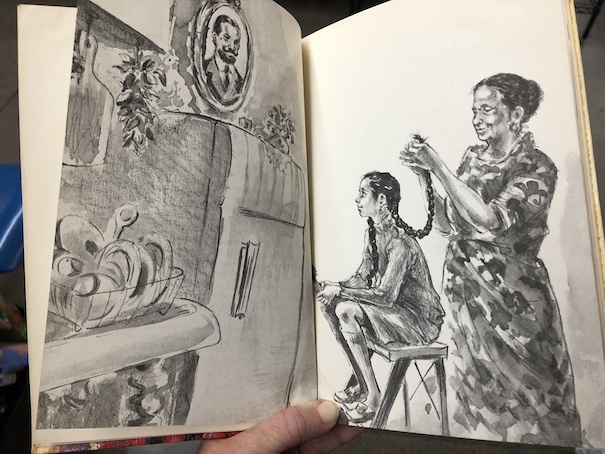
Finally, in January, she is able to switch to the new class, but right away, she runs into trouble with the class bullies. A boy named Andy and his friend start calling her “Miss Two-Ropes” because of her long braids, and the name sticks. Magdalena wishes that she didn’t have to wear her hair in braids, but her grandmother, Nani, insists on it. She loves Nani, who is from Puerto Rico and has looked after her for last two years, ever since her mother died when she was nine years old, but Nani has some old-fashioned ideas about how girls ought to be raised.

Magdalena’s father is a sailor, and he spends much of his time away at sea, so Magdalena and her grandmother are alone most of the time. Nani speaks Spanish to Magdalena at home because she thinks that’s proper for a Puerto Rican family like theirs, although Magdalena speaks English at school. She thinks that her grandmother probably knows more English than she pretends. Nani also keeps a portrait of Great-Grandfather Mendez, which she brought from Puerto Rico. Although he has been dead for years, the portrait always feels like a living person to Magdalena.

After some further teasing from the boys in her class, Magdalena decides to tell her grandmother that she doesn’t like her braids. Nani says that not unusual, that many children don’t like their braids, but they get over it. Magdalena doesn’t think she’s going to just get over it. Like a lot of kids, she would rather just look like everyone else so she won’t get teased, but Nani doesn’t approve of the short hairstyles that are popular among American girls at Magdalena’s school. She says that Magdalena’s braids are a mark of pride and a caring grandmother who brushes and braids her hair. She thinks the American girls wear their hair short because their mothers can’t be bothered to spend time on caring for long hair, and they don’t have grandmothers to nurture them. When Magdalena tells her that the boys at school are calling her names because of her braids, her grandmother decides that she should talk to the teacher about it. Magdalena thinks that having her grandmother talk to the teacher might be more embarrassing than having the boys call her names, so she persuades her grandmother to forget about it for now and let her handle it.

Then, Magdalena is called to the principal’s office at school. At first, Magdalena is upset because it sounds like she’s in trouble, and she can’t understand what she could have done to cause that. She is calmed a little when a black boy in the office, who is also waiting to talk to the principal, is nice to her. It turns out that Magdalena isn’t really in trouble. Instead, the principal wants to talk to her about one of her classmates, a girl named Daisy Gonzales, who is also transferring into her new class.

Madgalena is surprised because Daisy hasn’t struck her as a gifted child. Most of the other students call her “Spook” because she tends to lurk around the school and suddenly jump out at people to scare them, and she is known to frequently skip classes. The principal says that Daisy might be gifted, but it’s difficult to tell. The teachers think that she’s at least bright, but she’s an “under-achiever.” The principal explains that means that Daisy could do better at school than she does, but for some reason, she doesn’t seem motivated to do better. That’s why they’ve decided to transfer her to the class with the gifted students. They think that she isn’t being challenged enough in the class where she is. The teachers are also concerned that Daisy has no friends at school. They’ve noticed that the other girls at school seem to be afraid of Daisy, although they don’t seem to understand about Daisy’s “Spook” act. They do know that Daisy has behavioral problems and an unhappy home life. The reason why the principal is telling Magdalena about this is that she wants Magdalena to try to be Daisy’s friend when she transfers into her new class. The reason why she selected Magdalena to be Daisy’s new friend is because Daisy’s family is also Puerto Rican, like Magdalena’s family, so she thinks that the girls might understand each other better than their other classmates. The principal thinks that Daisy might settle down at school if she had a friend to help her feel more comfortable there. Magdalena isn’t comfortable with the idea of trying to be Spook’s friend because she also finds Daisy spooky, but the principal persuades her to try but not to let on that the principal asked her to do this.

Magdalena has no idea how to approach Daisy/Spook to be friends, since she’s not the easiest person to approach about anything. Then, Sue Ellen, the most popular girl in class tells Magdalena that she wants to be friends with her. She says that she’s been feeling empathy for her since the first day that she came to class and the boys started teasing her, and she felt it again when she got called to see the principal. She asks her what the principal wanted, and Magdalena explains that she asked her to do something, but it’s something really hard, and she isn’t supposed to talk about it. Sue Ellen offers to help her with whatever the principal’s task is. Magdalena thinks maybe making friends with Spook won’t be so bad if Sue Ellen helps, so she takes Sue Ellen into her confidence. Sue Ellen agrees with Magdalena that making friends with Spook would be hard because she’s so weird and spooky. Both girls admit that they’re a little afraid of her, but Sue Ellen agrees to try to be basically nice to Spook along with Magdalena and see what happens. Sue Ellen says that the principal ought to have more empathy for the students and see just how hard it would be to get along with someone like Spook.

Their first attempts at making friends with Spook are clumsy. Sue Ellen tries offering her advice, pointing out that she wore the wrong thing to the school assembly, but criticism and advice aren’t the best ice-breakers. Then, to Magdalena’s surprise, Spook approaches her in the school library, when she is trying to find a specific book for her grandmother. The school library doesn’t have the book she wants, but Spook says that she knows where to find it. However, she will only help Magdalena if she plays hooky and goes with her right now. Magdalena hesitates because she doesn’t really want to skip class and get in trouble, but Spook says that Magdalena will have to come with her because she’s “emotionally disturbed” and might do crazy things if she doesn’t get her way. Magdalena points out that school will end in only 20 minutes, and she asks Spook to wait for her. Spook makes her promise that she won’t change her mind and let her down in that time.

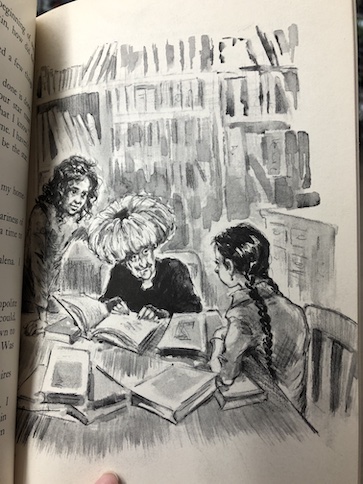
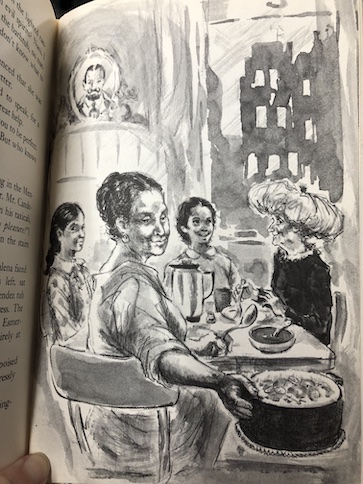
When Magdalena waits for Spook, she doesn’t show up at first, but Spook jumps out at her just when she’s giving up waiting. Spook says that she just wanted to see if Magdalena was serious about wanting to come with her. The place where Spook knows they can find the book turns out to be the Brooklyn Public Library. Along the way, Magdalena begins to learn more about Spook. The reason why she wasn’t dressed right this morning was that the sweater she was wearing was the only thing she had to wear that was clean. She skipped out during the school assembly to go home and see if her mother was back from the laundromat so she could put on something else. Also, Spook isn’t completely friendless. She is friends with a strange woman named Miss Lilley, who wears an unusual, large hat. When Daisy tells Miss Lilley that she got put into the class at school with the smart kids, Miss Lilley congratulates her and tells her that she knew she was smart. Daisy admits that she’s been trying not to let her teachers know that she’s smart because she knows that they will expect more of her and insist that she do all her homework. People don’t expect so much of kids who aren’t bright. There is method to Daisy’s madness. All of her weird and spooky acts are tools that she uses to get her, get out of things that she doesn’t want to do, cover up for problems that she has, and keep people she doesn’t like or doesn’t think would understand her at a distance.

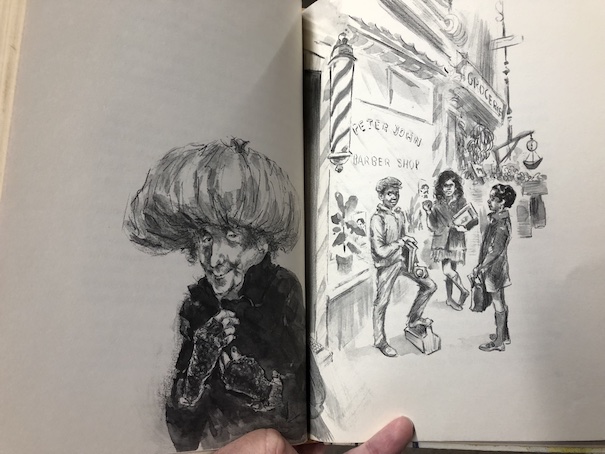
Daisy introduces Magdalena as one of the smart kids from her class, but Miss Lilley thinks that Magdalena’s manners aren’t very polite because she keeps staring. Magdalena has trouble getting over the large hat, which looks like a large pumpkin. Miss Lilley begins evaluating Magdalena’s appearance, and Magdalena comments about how she hates her braids, but her grandmother makes her wear them. Miss Lilley says that she understands that her grandmother likes the quaintness of the braids, but she knows how to deal with that. She also knows where to find a good barber. The black boy who was nice to Magdalena earlier, Samson Shivers, makes money after school by shining shoes outside the library, and when Miss Lilley asks him if he would be willing to lend them money for the haircut, he joins the others at the barber shop. Miss Lilley takes the kids to the barber shop, and Magdalena gets a haircut. Magdalena feels wonderfully free after he haircut, although she saves the braids as a souvenir and worries about what her grandmother will say when she gets home.

Nani is very upset when she sees Magdalena’s short hair and worries that Magdalena is rejecting her care for her and her Puerto Rican heritage. Magdalena says that’s not the case and explains about going to the library and meeting Miss Lilley. Magdalena’s grandmother thinks that she’s bewitched and says that she knows how to deal with that. She uses herbs on Magdalena to break the bewitchment.

Getting the haircut changes things for Magdalena. The boys stop teasing her, which is a relief. However, Sue Ellen is annoyed that Magdalena didn’t tell her that she was going to get her hair cut. Magdalena explains that it was a sudden decision and a possible bewitchment by Miss Lilley. Sue Ellen thinks that Spook is probably the one who bewitched Magdalena because she’s so spooky and that maybe Magdalena would rather be best friends with her. Magdalena says that’s not the case and that she doesn’t see why she can’t be friends with both girls. Sue Ellen still expects that Spook is going to do something to ruin the class, but Magdalena notices that Spook is becoming less spooky in their class. She stops skipping classes, does more of her homework, and cuts out some of her previous spooky behavior.

Samson, often called Sam, is a practical boy, and when Magdalena tells him how her grandmother thinks Miss Lilley is a witch and bewitched her, he says that she can’t be a witch. Sam sees her often because he shines shoes by the library, and he realizes that Miss Lilley is actually just a poor, old woman. She goes to the library all the time because she can’t afford proper heating for her apartment. She often has little to eat, and she partly survives off of candy that he gives her. Like Spook, she seems spooky because she looks odd and behaves oddly, but there are explanations for what she does that show that she’s actually unfortunate.

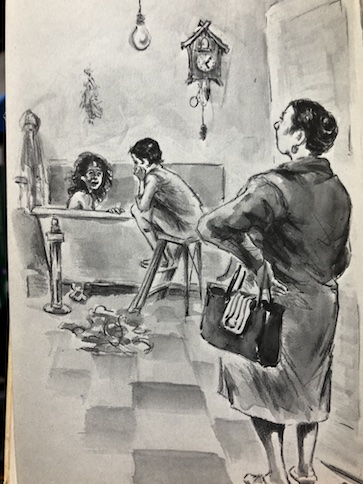
Magdalena’s grandmother meets Spook for the first time when Spook hangs out with Magdalena at her apartment after school. Nani isn’t home at the time, but the girls talk to each other about their lives and families. Magdalena gets to know more about Spook, and Spook admires the place where Magdalena lives. Spook’s family lives in a much poorer apartment, and it’s crowded with Spook’s younger siblings. Spook admires the nice bathtub that Magdalena and her grandmother have and says that she wishes they had one at her apartment. Part of the reason why she looks so strange is that she doesn’t get the opportunity to take baths often. Magdalena tells her that if she wants a bath, she can go ahead and take one. Nani arrives home before Spook is finished with her bath, but Nani stops her when she tries to get out and get her clothes. Nani can see how badly Spook needs some care, so she insists that she finish the bath, clean the tub, and let her shampoo her hair. When she’s done, Nani has Magdalena loan her some clean clothes, and the girls are amazed at the transformation.

After the bath incident, Spook avoids Magdalena for a while, and she can’t understand why, but it’s about Spook realizing what’s been lacking in her life and envying what Magdalena has: someone who really cares for her. She was so emotional when she looked at herself in the mirror that she spit at the image and then was embarrassed that she had done that. Nani surprisingly understands Spook’s behavior. She can see that Spook lacks impulse control and the ability to understand and manage her feelings. Nani comments that she’s angry with Spook’s mother because she can tell that the girl has been badly neglected. Having been a mother and grandmother herself, she knows exactly how to deal with this.

Meanwhile, Sam is correct about Miss Lilley. Miss Lilley is poor and not in very good health, but she also knows what Magdalena and Spook/Daisy need. She is eager to help the girls, but she also needs some help and attention herself. When Miss Lilley decides that it’s time to have a word with Nani about the needs of modern girls and her fears about her granddaughter becoming too American, a number of things get better.

The book is available to borrow and read for free online through Internet Archive.

The heart of this story is understanding and empathy. By the time it’s over, many of the characters come to a better understanding of each other and maybe themselves. Although Spook’s transformation is the most dramatic, the other characters are also changed after their experiences in the story.

Magdalena’s changes come with her admission to her grandmother that she really doesn’t like her braids and then with her decision to have her hair cut against her grandmothers wishes. She knew that her grandmother wouldn’t like it when she said that she didn’t want braids because her grandmother is a traditionalist, and she knew that Nani wouldn’t react well to the haircut. At first, it was easier for Magdalena to buy into the idea that Miss Lilley was a witch who bewitched her into doing it, but that’s not really the truth. It wasn’t even that Magdalena was getting her hair cut just because of the teasing. When Magdalena and Spook are talking about whether or not they truly understand the reasons why they do things, Magdalena acknowledges that she has reasons for the things she does, and the truth is that she got the haircut because she herself really hated wearing braids. If she had really loved her braids, she could have kept them in spite of the teasing, and she could have turned down the offer of a haircut, but she really wanted to change her hairstyle, and she just took advantage of the opportunity to do it.

Nani understands from the first time she meets Spook that she has not had nearly the level of care and attention that she has needed in life. Spook doesn’t even really understand all of the motivations she has for the things she does. Her behavior is odd partly because she acts on impulse, not fully thinking about the consequences or the affect her behavior has on others. She initially doesn’t have much self-awareness because she has not had caring adults in her life to teach her how to behave, how to understand her feelings, and how to control herself. Because she hasn’t really had any friends before, she hasn’t really had anyone to talk to about these things and help give her some perspective. When Spook and Magdalena talk about why she spit on the mirror, Spook says at first that she isn’t sure why she did it. As they continue to talk about reasons for doing things, though, Spook admits that she did it because, while she was stunned at how nice she looked, she quickly became upset because she didn’t think that nice look could last.

Nani is the nurturing type of person, and she quickly sees that Spook is in dire need of some nurturing and guidance. She also recognizes that Spook doesn’t have much confidence in herself. She is bright, but she has grown used to hiding it. She also thinks, because she doesn’t really understand her feelings or behavior, that is can never really control herself. She thinks that she will always be a “stinker” who does things that she shouldn’t and acts weird. Nani has a frank talk with her and tells her that she can be herself without being a “stinker”, and the first step is believing that she can. Even if she’s not in the habit of understanding and controlling herself, she can learn. People have different sides to their personalities and different ways of expressing themselves, and Spook can learn how to show the best sides of herself in the best possible ways.

Magdalena appreciates that Nani is understanding and helping Spook, but she also has a frank talk with her grandmother about why she doesn’t understand her own granddaughter as well. When Magdalena tries to tell her what she wants or doesn’t want, Nani contradicts her or ignores her feelings. Nani is understanding with Spook because she can tell that Spook is a disadvantaged child, but she doesn’t see her granddaughter the same way, so she doesn’t try to understand why Magdalena sometimes does things she doesn’t like. Nani admits that she wanted her granddaughter to be “perfect”, but maybe she doesn’t really know what “perfect” actually is. She wants the traditional ways for her granddaughter because she really thinks that’s what’s best, but even grandmother doesn’t always know what’s best.

Miss Lilley is concerned about the girls and offers them attention and support. When she goes to see Nani and open her eyes to her grandmother’s needs and the ways of modern girls, she collapses because of her bad health. Fortunately, Nani is a nurturing person, and she nurtures Miss Lilley, making sure that she gets the treatment she needs and even looking after her when she gets out of the hospital. Miss Lilley’s health improves, and the two of them become friends. Although they are both older ladies, they each admit that they have things to learn in their lives, and they can learn from each other. Nani helps her to make changes to her living arrangements so she will be healthier and more comfortable, and Miss Lilley helps her understand what modern American life has to offer for girls like Magdalena.

Samson is always a very understanding character because he is genuinely interested in people, and he meets many different types of people through his shoe-shining business. Although Sue Ellen is the first person who brings up the topic of empathy, she is really the one who understands it the least. I think her relatively narrow view of empathy is because of her relatively narrow life experiences. She feels some empathy for Magdalena because she sees Magdalena experiencing something she understands, but she doesn’t seem to know what to do when she encounters something she doesn’t understand. Admittedly, Spook’s spooky act is off-putting, partly by design and partly because Spook has issues she herself doesn’t know how to handle. However, because Sue Ellen only wants to stick to the familiar and understandable, she doesn’t notice when Spook begins to change and doesn’t see how some support from her could influence her for the better. Sue Ellen’s attempts at friendliness and helpfulness often involve offering some kind of criticism, like pointing out that Spook isn’t dressed right. Magdalena can tell that Sue Ellen is trying to be helpful, but she’s also kind of snippy and smug in the way she does it, and that gets on Magdalena’s nerves, too. Sue Ellen kind of fades out of the story toward the end, so we don’t know if she continues being friendly with Magdalena or not or if she ever recognizes Spook’s transformation.

There is also a subplot that I haven’t mentioned about the literary magazine that the girls’ class starts. Their teacher has some thought-provoking descriptions about what good writing is and does, and the girls’ choices of what to write about are based on their experiences and the changes in their lives.

The book doesn’t shy away from the harsh realities of life. Magdalena’s mother is dead, and her father is away most of the time, so she is being raised by her grandmother. Her father never even makes an appearance in the story. Miss Lilley is a poor and lonely old woman who needs help and friends. It is acknowledged that Spook is a neglected child, and she even tells Magdalena that her favorite brother died at age three because he was asthmatic, and they were living in bad conditions. We don’t know exactly how her family came to be living in such bad conditions, but Spook says that, if she wrote a story about her family, the teacher would think she had a filthy mind.

Since the story is about understanding other people, one could consider whether we might view Spook’s neglectful mother more sympathetically if we knew her past and what led her to the situation they’re now in, but we do not see Spook’s mother at any point in the story. I think it’s also important to note that understanding does not equal approval. You can know a person’s history and reasons for doing things and still not agree with them. Maybe Spook’s mother is another unfortunate soul who needs some help, but if she is, she doesn’t seem to be looking for that help. Her vulnerable children are suffering for it, and one has died. Empathy doesn’t mean saying that things are okay when they really aren’t, and this mother’s neglect of her children is not okay.

Grandma’s Records

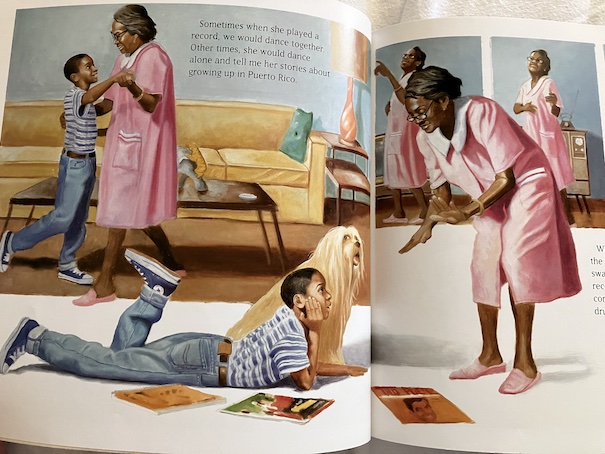
Every summer, a boy goes to visit his grandmother. He loves summers with his grandmother because she plays records from her record collection, teaches him to dance, and tells him stories about life in Puerto Rico, where she grew up.

She instills a love of music in her grandson and uses it to share memories with him about his grandfather and their home town. Sometimes, she lets him choose records from her collection to play, complimenting him on his choices. The boy likes art, and he makes sketches based on the album covers.

Then, his grandmother’s nephew comes to visit from Puerto Rico, along with his band. The boy is thrilled to meet them, and they give the boy and his grandmother tickets to see them perform in New York.

It’s a special occasion! They love the performance, and afterward, they visit with the band backstage. The boy and his grandmother continue sharing music with each other as the boy grows up, and as an adult, he continues to play it in his art studio.

At the end of the book, there are lyrics to one of the songs, In My Old San Juan (En Mi Viejo San Juan – YouTube video), both in English and Spanish. It’s a popular sentimental and nostalgic song for Puerto Ricans living abroad, as this YouTube video explains. The book is available to borrow and read for free online through Internet Archive (multiple copies, including one in Spanish).

The story is really about the author/artist of the book and his own grandmother. At the end of the story, the picture he’s drawing in his studio is the cover of this book. It’s a touching tribute to his grandmother and the special memories he shared with her as they bonded over music! Parts of the story reflect on their Puerto Rican heritage, which is something they share and discuss with the grandmother’s nephew and the members of his band. I like how the author emphasizes that what makes the music so special are the memories associated with it. At first, the memories are his grandmother memories, but through his experiences with his grandmother, he builds memories of his own associated with the music they’ve shared. It is these memories as well as the music that helps to fuel his art.

When Aunt Lena Did the Rhumba

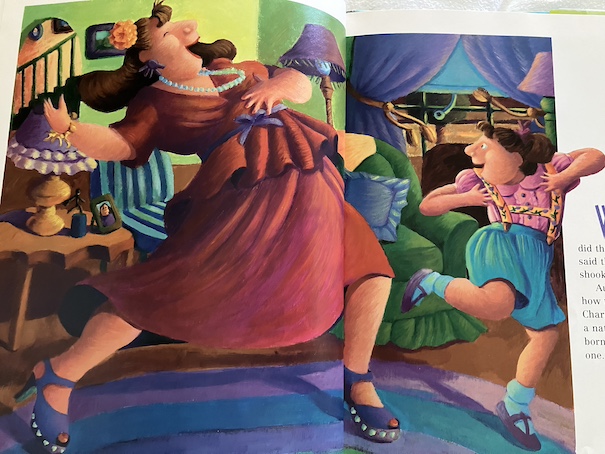
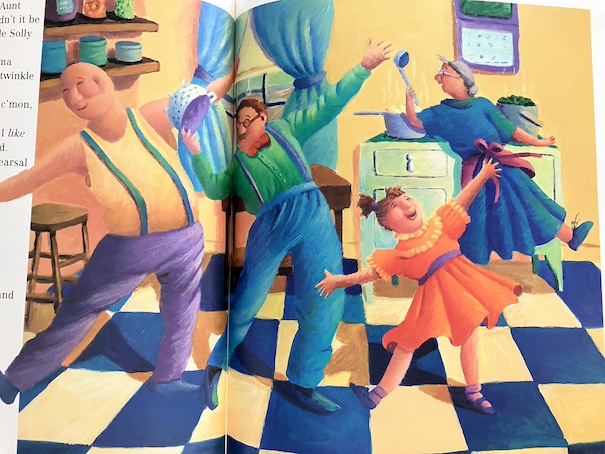
Sophie’s Aunt Lena loves music, dancing, movies, and theater, and she especially loves Broadway musicals. She goes to a musical matinee every Wednesday. After seeing a musical, she comes home, singing and dancing and acting out parts from the play she’s just seen.

One particular Wednesday, when she’s acting out a particularly dramatic dance in the kitchen, she accidentally slips and sprains her ankle. She has to stay home and rest until her ankle gets better, which means that she won’t be able to go to next Wednesday’s matinee.

Aunt Lena is so sad about missing the musicals she loves that Sophie gets an idea to cheer her up. Sophie recruits other members of her family to put on their own musical to entertain Aunt Lena.

Not everyone is enthusiastic about the idea at first, but when Sophie gets her grandmother to help her put together a costume fit for a Broadway musical and choose some music, they begin drawing other family members in.

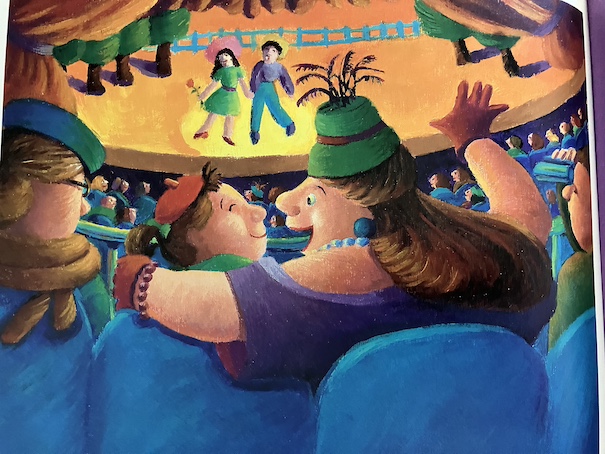
Aunt Lena loves their performance, and when she’s better, she takes Sophie to a matinee so she can see a real Broadway performance, too!

This book is available to borrow and read for free online through Internet Archive (multiple copies). It was also a Reading Rainbow book, and the episode of Reading Rainbow is also available to watch online through Internet Archive.

I didn’t see the original episode of Reading Rainbow that included this book when I was a kid because this book was published after I was too old for that. However, I always liked Reading Rainbow when I was a kid, and later, after I started this blog, I decided to go back and check out some of the books covered by Reading Rainbow after I stopped watching it. If you’re not familiar with Reading Rainbow, it was a children’s television program on public television in the US that encouraged children to read by discussing books and showing children things that were related to the books they were reading. For example, if they were reading books related to animals in an episode, the host, Levar Burton, might take a trip to a zoo and talk to zookeepers about animals in the zoo.

The themes of this particular story and the Reading Rainbow episode are music, dancing, and theater. In the episode, they show a boys’ choir and dancing class and talk about how performing helps the boys and young men develop confidence and maturity. There’s also a comedian who specializes in physical comedy, who talks about how he does his stunts, and an actress who plays one of the cats in the famous Broadway musical Cats.

I love how the aunt in the book shares her love of dancing and theater with her niece. The two of them have similar personalities and interests, so when her aunt is injured, her niece knows how to cheer her up. The ending of the story implies that the niece will now be going to performances with her aunt, or at least, will sometimes go with her. I also liked how the rest of the family participated in the girl’s plans when they saw what she wanted to do, even if they weren’t as enthusiastic about the idea themselves at first. Enthusiasm can be contagious, and I do think that adults sharing their interests with kids can spark lifelong interests in the next generation.

I also noticed that this seems to be an unconventional family, although the family’s living arrangements aren’t the focus of the story. The girl’s parents are never mentioned. She seems to live with just her grandmother, her aunt, and a couple of uncles, and there is no explanation why because it’s not directly important to the story. In any case, it seems to be a happy, close-knit family, with family members caring for each other and supporting each other’s interests.

The pictures in the book are bright and colorful, fitting with the energy, enthusiasm, and theatricality of the story.

The Runaway Bunny

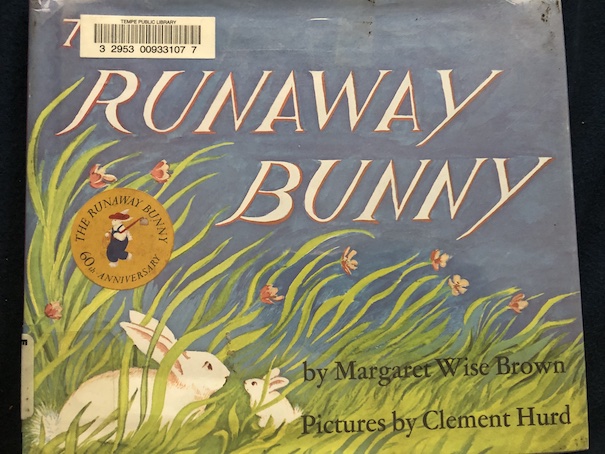
The Runaway Bunny by Margaret Wise Brown, pictures by Clement Hurd, 1942.

A little bunny tells his mother that he’s thinking about running away, but his mother assures him that, no matter where he goes or what he does, she would always come after him because he’s her little bunny, and she loves him.

The pictures where the little bunny talks about all of his ideas for running away and evading his mother and where his mother explains what she would do to follow him are in black-and-white.

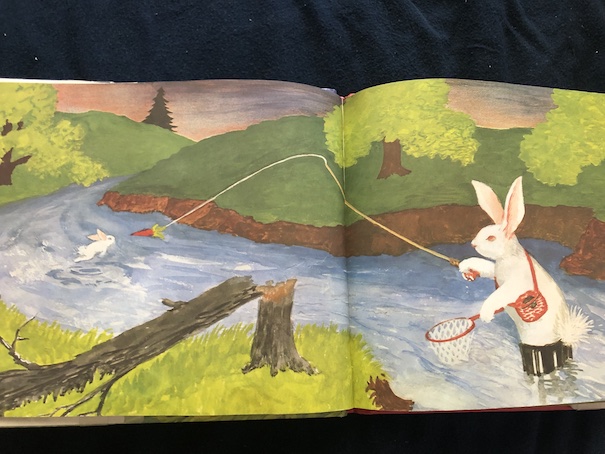
However, there are large, full color pictures after each of these sections showing what would happen as the mother follows her little bunny.

The little bunny’s plans for running away become increasingly imaginative and outlandish, from going up a mountain and joining the circus to transforming himself into a fish, a bird, or a sailboat.

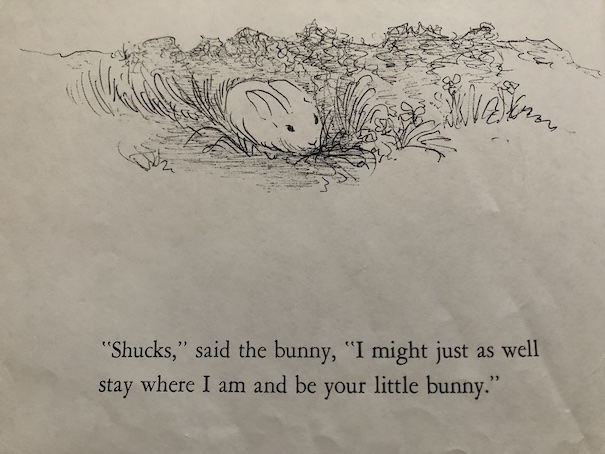
No matter what the little bunny thinks of for running away and changing himself into something else, his mother assures him that she would find a way to come after him and be there for him. In the end, the little bunny decides that he might as well stay with his mother, just as they are.

The book is available to borrow and read for free online through Internet Archive (multiple copies).

My Reaction

This is a very well-known and much-loved book about parental love and the lengths that parents will go for their children. The mother bunny is determined to be there for her child, even when the child wants to run away. We don’t know why the little bunny was talking about running away from his mother, and without that, it seems just like the little bunny was just trying to provoke his mother to find out how much his mother loves him. When she tells him all the things she would do to reach him if he ran away, he seems reassured and content to remain her little bunny.

This book was originally published during WWII and is a calm and reassuring story that probably comforted many children living through unsettling times. It has never been out of print since its original publication.

The author and illustrator of this book also later wrote and illustrated Goodnight Moon. The scene where the little bunny imagines himself as a boy in a house and his mother says that she would still be his mother reminds me of the illustrations in that book, and I wonder if the mother and child rabbits in that book came from this one.

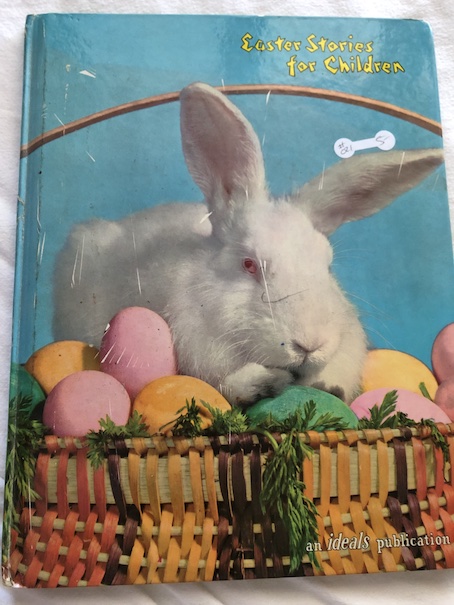
Easter Stories for Children

This book was published by Ideals, and if I remember right, is part of a series of holiday/seasonal books for children. (I don’t have a list of other books in the series, though.) It has short stories and poems about Easter. Largely, they’re not very religious in tone, tending to focus on fairies and the Easter bunny. I actually found all the references to fairies confusing because I never heard anybody talk about fairies being associated with Easter when I was a kid. On the religious side, there is one poem about prayer and a story about how the dogwood plant represents the crucifixion. There is also some information about how Easter is celebrated around the world.

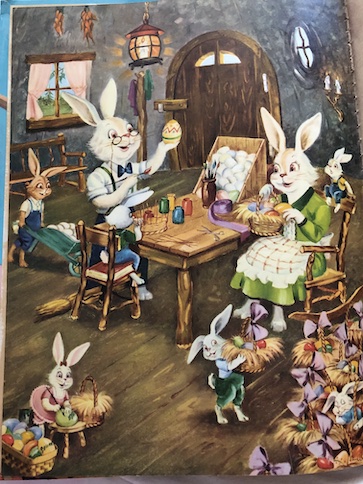
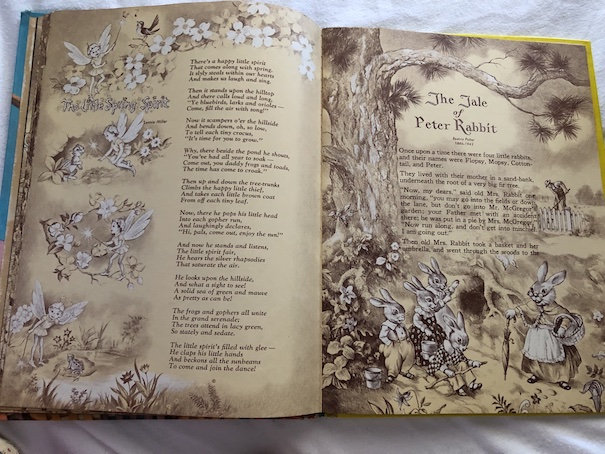
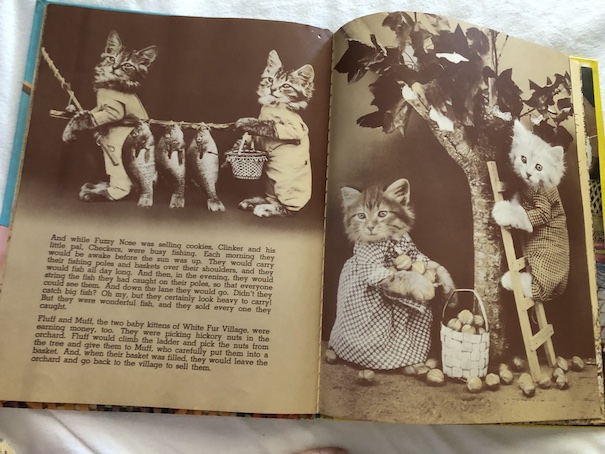
The pictures are in sepia tones. Mostly, they’re drawings, but there are also some photographs of cute bunnies and kittens wearing human clothes. The only full color pictures are on the inside of the front and back covers, and they’re scenes of rabbits painting Easter eggs. All in all, it’s a very cute book for Easter.

How the Forest Fairies Get Ready for Spring – “Written especially for you by SPARKIE” – All of the forest fairies have special tasks for getting ready for spring.

The Tale of Peter Rabbit by Beatrix Potter (1886-1943) – A classic children’s story about a bunny who disobeys his mother.

Just After Easter by Maryjane McCarthy – Mr. Bunny Rabbit is worried about next Easter because the farmer is having trouble affording grain to feed his chickens. If he can’t keep the chickens, where will they get their Easter eggs? This is the story that has pictures of bunnies and kittens in costumes with props. The kittens try various ways to raise money for the chickens.

The Legend of the Dogwood – author unknown – The legend is that the cross of Jesus’s Crucifixion was made from dogwood, but the plant felt badly about it, so Jesus made the plant too small to be used for such a purpose again and gave it a cross-shaped flower.

Easter in Many Lands – About Easter customs in different countries, and the origins of the word “Easter” and how symbols like bunnies and eggs came to be associated with Easter. This is my favorite section in the book!

The Story of the Colored Easter Egg by “Maryjane” – A fairytale about a kind queen and the origins of Easter eggs.

The Magic Pool by Dorothy Weiner – Bunnies color eggs in a magical pond fed by a rainbow.

Easter Bunny’s Secret by Mrs. Roy L. Peifer – The Easter bunny collects drops of paint that Jack Frost uses to paint leaves in autumn and saves them for Easter eggs, but when the paint gets spilled, he needs to get colors from other sources.

The Little Spring Spirit by Leonie Miller – The spirit of spring calls to plants and animals with the change of the season.

If Easter Eggs Would Hatch by Douglas Malloch – What would come out of an Easter egg? Brightly-colored chickens or maybe a little silver bunny?

In Cottontail Town by Marguerite Gode – A famly in Cottontail Town takes in an elderly rabbit and nurses him back to health. He starts a school there to teach the other rabbits how to paint Easter eggs.

The Gray Bunny’s Night“As told by The big black Bumblebee” – A little gray bunny wants to be brightly colored for Easter, and his wish is granted by the queen of the fairies.

Hippety-Hop to the Barbershop by Claribel Ream – The Easter Bunny is going to the barbershop to deliver eggs and candy for the barber’s children.

Helping One Another by Mrs. Roy L. Peifer – The Little Red Hen helps the Easter Bunny to fill his basket for Easter.

His Bunny by Marilyn Jean Fais – About a little boy’s stuffed bunny. It can be hard on a toy to be a child’s favorite, worn and dragged everywhere, but it’s worth it!

Prayer by Ethel Romig Fuller – If we can hear songs from radio waves that travel through the air, God can also hear prayers.

Seed Thoughts by W. M. Walker – Good and kind thoughts produce good deeds, like plants sprouting from seeds, but selfish thoughts are like weeds that get in the way. Be careful what seed thoughts you grow in the garden of your mind!

Jack in the Pulpit by Mrs. Jessie S. Manifold – Spring plants and animals celebrate the Sabbath Day.

And He Hippety-Hopped Away by Rowena Bastin Bennett – The Easter Bunny delivers eggs and candy to children before sunrise.

Lowly Worm Sniffy Book

Sniffy books or scratch-and-sniff books were a new development during the 1970s, and they remained popular through the mid-1980s, along with scratch-and-sniff stickers. This particular book features characters from Richard Scarry‘s Busytown series, especially Lowly Worm. The first part of the book has Lowly and his friend Huckle Cat looking at a sniffy book and teaching readers how to use the scratch-and-sniff parts of the picture.

The rest of the book takes readers through the four seasons: spring, summer, fall, and winter. In each season, there are different objects and foods associated with the season for readers to scratch and sniff. In the spring, the characters smell violets and bananas that they eat at the circus.

During the summer, there are lemons for making lemonade and chocolate ice cream sticks that they eat at the beach.

During the fall, there are apples and pumpkin pie at Thanksgiving.

The winter parts focus on Christmas, with pine-scented Christmas trees and gingerbread pigs.

Sniffy books and stickers were common features of my early childhood in the 1980s. I think they still exist, although I don’t know if they’re as popular in the 21st century as they were back when they were relatively new developments. This particular sniffy book was a favorite of mine and my brother when we were little kids.

One of the interesting things about finding some of these older sniffy books decades later is seeing which of the scratch-and-sniff patches have held up over the years. They do wear out over the time, especially the ones that have been scratched more than others, meaning that favorite scent patches will wear out faster. Milder scents are also harder to detect years later than the ones that were always strong. In our old copy of this book, I can’t smell the lemon, chocolate ice cream, pumpkin pie, or gingerbread any more, but the violet, banana, apple, and pine are still fine. I think those scents were always the strongest.

The Very Hungry Caterpillar

A small caterpillar hatches out of an egg and is very hungry. Each day, the caterpillar goes out looking for food, finding different things to eat.

Part of the book is a counting story, as the caterpillar eats different numbers of different types of fruit in different numbers. The format of this part of the book is really interesting because each of those pages isn’t a whole page but sections of pages that are different sizes, showing how the amount that the caterpillar eats increases each day.

Also, there are real holes in the pages to show where the caterpillar ate through different types of food. Kids like books with interesting physical features that encourage them to interact with the book as a toy as well as a story. I think that’s part of what has caused this book to have lasting appeal.

The book does also have a story to it about the growth and development of the caterpillar along with the counting part. At the end of the part that counts the number of pieces of fruit the caterpillar eats, the caterpillar eats a bunch of random junk foods and gives himself a stomachache. Eating a green leaf makes him feel better. By this point, the caterpillar is a fat caterpillar who is no longer hungry. At the end of the book, the caterpillar makes a cocoon and turns into a butterfly.

This is a cute picture book that is fun to show to very young children. The counting element is good both for teaching young children and for the children who have already learned to count because they can predict what the caterpillar is going to do next. The unusual format of those pages with the holes also makes the book distinctive.

On the 50th anniversary of the book in 2019, the BBC produced an article about the book’s history and its appeal to generations of young readers.

The book is available to borrow for free online through Internet Archive.

Stories of Rainbow and Lucky: Up the River

This is the fifth and final book in the Stories of Rainbow and Lucky series. I’ve already covering the rest of the books this series, and I have to do all five books in a row because the series is set up like a mini-series. That is, none of the books in the series can stand alone; they are all installments of one, longer story. They only make sense together.

It’s an unusual series from the mid-19th century, written on the eve of the American Civil War, by a white author with a young black hero. Rainbow is a teenage black boy who, in the previous installments of the story, is hired by a young carpenter, Handie, who is just a few years older than he is, to help him with a job in another town, working on renovating a farm house that Handie has inherited. The rest of the series follows the two young men, particularly Rainbow, through their adventures leaving their small town for the first time, learning life lessons, getting new jobs, and even dealing with difficult topics like racism. Lucky is a horse who used to belong to a neighbor of Handie’s new farm. Rainbow befriended him, and in the previous book in the series, he managed to buy Lucky on credit. Because he now owns a horse, he is able to take a new job, delivering mail. This final story in the series follows Rainbow as he begins his new job.

The story is unusual for this time period because it was uncommon for black people to be the heroes of books and for topics like racism to be discussed directly. I wouldn’t say that racism is the main focus of the series. It’s mainly a slice of life and coming of age story for Rainbow as he and Handie both set out in life and begin building careers for themselves, and it’s meant to be educational for young readers. However, racism and racist comments are sprinkled throughout the story, with the author calling attention to the fact that these are not good ways to behave or polite ways of speaking, for the benefit of its original audience of 19th century children. It’s also important to point out that our black hero is not a slave, he is not enslaved at any point in the series, and the series has a happy ending for him. People don’t always treat him right, but he does have friends and allies, and he manages to deal with the adversity he faces and builds a future for himself. 

This particular installment in the series focuses on Rainbow’s new job. It has its hardships and adventures, but it sets up a bright future for Rainbow. Keep in mind along the way that there are a lot of pun names in this series and that people’s names are often clues to their characters.

This book is easily available to read online in your browser through NINETEENTH-CENTURY AMERICAN CHILDREN & WHAT THEY READ, I’m going to do a detailed summary below. If you’d rather read it yourself before you read my review, you can go ahead, but some people might want to know what it’s like in more detail.

This story picks up where the previous book in the series left off, with Rainbow back in his home town with his horse, Lucky. He has just accepted the job of delivering mail. The first characters we see are Thomas and Jerry, two teenage boys working in the stable that belongs to the local tavern. Jerry is younger than Thomas and has only just started working there. He is disgruntled because Thomas won’t let him handle some tasks without supervising him closely. Thomas says that he needs to see how Jerry works before he will trust him to work unsupervised. Jerry thinks that Thomas is implying that he’s incapable of doing the work, which is insulting. Thomas says that his own job depends on his ability to make sure that everything is done correctly in the stables, and as a new employee, Jerry is his responsibility, so Thomas needs to make sure that he knows what he’s doing and does a good job.

Rainbow is boarding Lucky at the stable, and the boys talk about the horse and about Rainbow’s new job. Thomas is a little envious of Rainbow for getting the job of delivering mail, but he couldn’t apply for it himself because he doesn’t have a horse of his own, like Rainbow does. Jerry asks how Rainbow was able to afford a horse, and Thomas explains that he bought it on credit. Making a major purchase on credit involves finding someone who is willing to supply the loan, and Thomas is also a little envious that Rainbow managed to do that because he can’t think of anyone who would trust him enough to loan him that amount of money. Jerry says that he’s surprised that a black boy got the job because the black boys he’s known are so “saucy” (meaning flippant or impudent). However, Thomas says that Rainbow isn’t like that and that he’s smart and a good worker. In spite of the fact that Thomas wishes he was in Rainbow’s position, he admits that Rainbow got to this position because he’s a good worker, and employers trust him because he has demonstrated that he is scrupulous in fulfilling his duties to them. That’s how Rainbow finds people willing to hire him and loan him money.

Rainbow comes to the stable to give Lucky a brushing and take him out for a run. He tells Lucky that he’s been able to have fun up to this point, but soon, they will have to seriously begin their work of carrying the mail. They will have to follow a 24-mile route up the river, traveling in all kinds of weather with a heavy mail sack, and there will be a fine to pay if they don’t stick to the route and arrive on time. However, the work will pay off, and Rainbow says that he will see to it that Lucky has a nice, warm stable and good food. Lucky, being a horse, is unconcerned and is mainly interested in neighing at another horse he sees nearby.

When Rainbow and Lucky return to the stable, Jerry tells Rainbow that Trigget is waiting in the tavern to talk to him. Rainbow goes to see Trigget, and Trigget says that he is there to draw up the contract for Rainbow’s new job. They discuss the job requirements and the pay, and Trigget offers Rainbow advice about how fast his horse can travel and how he can make his mail run on time. Because Lucky is still a young horse, Trigget cautions Rainbow not to run him too hard and risk injury. Traveling the full length of his route at a good pace will take about 8 or 9 hours, so Rainbow should plan accordingly. During periods when the weather is bad and traveling will be slower, Rainbow will have to leave earlier in the morning to make sure that he finishes the route at the proper time.

Trigget also tells him that, even though he’s sure that Rainbow will do his best to be on time with his deliveries, there will be times when he will be late despite his best efforts. Sometimes, the weather will be bad, and there’s always the risk of accidents. Because there are government fines for being late with the mail, Rainbow’s pay includes the option to accept extra money that he can use to pay up to four fines per year, if Rainbow chooses to pay his fines himself rather than having the company pay on his behalf. It’s a bit of a gamble to accept this option because, if Rainbow is late more than four times during the year, he will have to cover the additional late fines himself and will lose money. However, if Rainbow is late less than three times during the year, he can keep whatever is left over from that extra money. Rainbow decides to accept this option because he is confident that he won’t be late very often. With the terms settled, Rainbow signs his contract with Trigget and begins his job.

Rainbow and Lucky set off on their route on the morning of November 1. The book explains that the post office in their town is in a small building next to the tavern, and Rainbow enters from the tavern, using a special key kept on a hook. The postmaster prepared mail bag the night before, so it is ready to go. Rainbow just needs to pick it up.

Rainbow and Lucky ride about 5 miles before they reach the first post office on their route. The postmaster there takes the mail bag from Rainbow, removes the mail meant for his office, and returns the bag to Rainbow. Everything goes according to routine at the first stop, and Rainbow and Lucky continue on their way.

Rainbow begins to consider his new schedule as they travel. They will be traveling for most of the week with a stop at post office No. 5 for a couple of days. The stop at No. 5 would be a good time for Lucky to rest, but Rainbow wonders what he’s going to do there for a couple of days himself. He considers whether he could find any side jobs to do there, like carpenter work or hauling wood.

As they continue on their way, Rainbow talks to Lucky about the countryside, the river, and the bridges, noting how high the water under them can get. About every four or five miles, they stop at another post office. As they keep going up river, the post offices become more primitive. One of them is just in a log cabin with a sign written in chalk to designate it as the post office.

At a place called Mix’s Corner, a man named Mix has a farm and a saw mill. His house also serves as the post office and tavern for the few travelers who come that way. Mrs. Mix handles the mail and gives Rainbow some food while her young son, Ephraim, puts Lucky in the barn, where Rainbow can give him some oats. Rainbow offers to make a whistle for Ephraim, but then, he remembers that it’s better to make whistles in the spring, when the barn is easier to separate from a willow or poplar stem. (There is a detailed explanation here about how that works because the new layer of wood formed in the spring, the alburnum, is softer then. After it has matured, it becomes harder, and it’s more difficult to remove. The author/narrator says that Rainbow doesn’t fully understand the scientific principles behind this process, but he knows from hands-on experience that these wooden stems are easier to work with in the spring. “So much for the philosophy of whistle-making.”) Ephraim is disappointed, so Rainbow offers to make him a windmill toy instead and to bring him a whistle from the store the next time he passes. Stores sell whistles for a penny each, so it wouldn’t be too expensive for Rainbow to buy one for the boy. Ephraim accepts the offer, so Rainbow makes him a windmill out of a wooden shingle (we called this toy a pinwheel when I was a kid, and we made them out of paper), and Ephraim runs around in the yard outside with it to make it spin.

As Rainbow continues on his way, he makes it a point to get to know the people along his route and to make friends with them. At the next house he passes, a woman named Mrs. Captain Myers greets him. The narrator says that she even gives him a “courtesy” (what we would call a curtsy). Normally, she probably wouldn’t make such a formal, deferential gesture for an ordinary black boy, but she knows that he’s the new mail-carrier, and this is an important position in this area as mail is the main form of communication. She values the position Rainbow holds, so he gets special consideration.

She asks Rainbow if he is carrying any letters for her, but he says that he doesn’t know. There is a lock on the mail bag he carries, and he can’t open it because only the postmasters at the post offices along his route have copies of the key. This is how they keep the mail secure. Since he can’t open the bag himself, there’s no way that Rainbow can check for letters for specific people. Mrs. Captain Myers lives a couple of miles from the nearest post office, and she says that it’s often difficult for her to get there to pick up her letters. Rainbow says that, if she likes, he can pick up her mail for her and bring it to her on his return trip, and she say that would be very helpful.

As he rides on, Rainbow confides to Lucky that his desire to make friends and help people he meets along the way isn’t entirely out of kindness for its own sake but also cunning. Rainbow knows that this route will become more difficult to travel during the winter, and there will probably be some times when he will need help from people who live in the area. If he has made friends with them and done them a few good deeds, they will probably be more likely to help him later, when he needs a good deed himself. The narrator/author weighs in at this point with some thoughts about how Rainbow needn’t think this form of “cunning” isn’t also kindness:

Rainbow was very much mistaken in supposing that his disposition to be obliging to the people who lived along the road was to be attributed to cunning and not to kindness. If we really entertain feelings of good-will o those around us, and desire to promote their happiness by every means in our power, and take pleasure in doing it, then we are truly and sincerely kind. The fact that we are aware that, by so doing, we make other people ready to show kindness to us in return, and that we are even influenced in what we do by a desire to secure such requitals, is nothing in any sense derogatory. “Cast thy bread upon the waters: thou shalt find it after many days,” is an injunction of the Scriptures, and it implies that it is right for us to be influenced in our efforts to do good by the hope and expectation of receiving at some day or other a beneficial return.

(I can see the point, that a kind act isn’t diminished by the other person’s gratitude or willingness to return the favor. The author might have also considered that there are also less kind ways for people to try to get people’s cooperation than building up goodwill in advance. Some people might simply expect deferential treatment as their due without showing care or consideration to the other people involved, or worse, they might use the threat of bad behavior to make other people do things for them. Rainbow is taking a better path by showing others that he does care about them and is willing to help them when he can, even if they haven’t done anything for him yet.)

The final stop on Rainbow’s route is post office No. 5, which is in Squire Holden’s house. (The book sometimes calls Mr. Holden by the title “squire,” which can have several meanings. Besides the British gentry title, it can refer to the primary land owner in a village, which may be the meaning here, or to someone who holds a legal position, like the lawyer in the first book in the series, who was also called “Squire.” The legal title is still in use sometimes as a courtesy title for lawyers in the form of “esquire“, after a lawyer’s name, frequently abbreviated as Esq.) The village is very small, with only a blacksmith shop, a mill, and a general store. Squire Holden’s house is only one story with an addition built on that doesn’t look completely finished. Since Rainbow has had some carpentry training from Handie (in the earlier books in the series), he thinks that he might be able to get some work helping the Holden family finish it. Squire Holden isn’t at home when Rainbow arrives, but his wife greets him and tells him where to put the mail bag.

According to the arrangement of his route, Rainbow will be staying with the Holdens for a couple of days before beginning the journey back. Trigget discussed with the Holdens before Rainbow began his job, telling them that the new mail carrier would be a black boy. As mentioned in the first book in the series, some people in this time and area might object to having a black person stay with them, so Trigget wanted to make sure that Rainbow would be welcome with them and would have a place to stay. The Holdens have no objection to hosting Rainbow, with Mrs. Holden saying, “that she never cared at all what color a cow was so long as she gave plenty of good milk.” (Meaning that she isn’t concerned about Rainbow’s race as much as his behavior, and Trigget has given him a good character reference, so it’s all fine with her.) The narrator says that Trigget thought that would probably be the case with the Holdens, but he thought that they would appreciate him discussing the situation with them first anyway, since Rainbow would be staying in their home as a guest. The Holdens’ small daughter, Toolie, is very shy of Rainbow when he first arrives, but she warms up to him gradually during his stay. Rainbow helps to win her over by making a little doll for her.

Mr. Holden is out in the woods, cutting down some trees. Rainbow offers to go and help him, if there is an extra axe, but Mrs. Holden says that the only other axe they have is an old, dull one. Rainbow goes to the village store to see if he can buy an axe, but the store is closed. The nearby blacksmith tells him that the store doesn’t sell axes anyway. All they have is axe handles. Rainbow watches the blacksmith making horse-shoe nails for a while, and the narrator describes the process. The blacksmith comments about the horse Rainbow rode there and asks who owns it. Rainbow says that’s a difficult question to answer because he has bought the horse but hasn’t yet paid for him. Since Rainbow doesn’t explain further about buying the horse by obtaining a loan for the purchase and that it’s the loan that he hasn’t repaid, the blacksmith is surprised and doesn’t really believe him.

Rainbow spots an old axe in the blacksmith shop and studies it. He knows more about evaluating the condition of tools than the blacksmith thinks because of his time working with Handie. Rainbow realizes that the axe is old and has been worn down and resharpened many time before. To put it in good repair again, the axe head would have to be removed from the hand and reshaped through a process they call “setting” (which the author describes as one of his detailed explanations of 19th century life). Rainbow negotiates with the blacksmith to purchase the axe and have it set. (The blacksmith quotes him the price of a “shilling.” It surprised me that he called it a shilling because that’s usually a British monetary description, and this is the mid-19th century, well after the Revolutionary War. I didn’t realize that expression was used in the United States that late. The amount of money in the “shilling” the blacksmith expects is also different from the British shilling. The British shilling would be worth 12 pence or pennies or 1/20 of a pound, but the book explains that the blacksmith wants 26 cents.) The blacksmith asks when Rainbow can pay for it because he said that he didn’t pay for the horse he bought, and the blacksmith doesn’t think he really has any money. To his surprise, Rainbow produces the money and pays right away, which makes the blacksmith hold him in higher regard. The blacksmith says that he can have the axe ready for him that evening.

When Rainbow returns to the Holdens’ house, he uses their old axe to split some wood in the yard. When Mr. Holden returns home for supper, he says that Rainbow can help him to clear a piece of land. He offers Rainbow two shillings a day for his help, which Rainbow considers a good wage. Rainbow tells him about the axe he is buying from the blacksmith, which he can use for clearing some bushes while Mr. Holden cuts down trees. However, Rainbow says that he would also like to explore the neighborhood the next day because he has never been in this area before.

After supper, Rainbow returns to the blacksmith, whose name is Mr. Whackhammer. He helps by operating the bellows while the blacksmith works on the axe. Mr. Whackhammer comments that Rainbow seems to have some understanding of tools, and Rainbow explains a little about his work with Handie over the summer. The blacksmith thinks that he’s bright to have picked up some knowledge of tools in such a short time. After the blacksmith finishes setting the head, Rainbow buys a new handle for it and fits the head to the handle. (The author also describes the process for that.)

Rainbow spends the rest of evening talking and telling stories with the Holdens by the fire. When it’s time to go to bed, Mr. and Mrs. Holden talk to each other a little about Rainbow. Mr. Holden says that Rainbow seems like a smart boy, and Mrs. Holden says that he is also pleasant company, noting that, “I’m more and more confirmed in my opinion, that it is of no consequence what the color of a cow is, provided she is not cross, and gives plenty of good milk.”

The next morning, Rainbow goes out to the woods with Mr. Holden and helps him clear the underbrush on the land he is trying to clear. When he does a good job with that, Mr. Holden says that he can try his hand at cutting down trees, which is trickier. A person cutting down a tree needs to cut it in a particular way so that it will fall in the direction he wants it to fall. The narrator explains how this works, and Rainbow follows Mr. Holden’s example. They make good progress before they go home for dinner. (“Dinner” is frequently what they call lunch in the countryside, and that is the case here. They go home for lunch.)

After dinner, Rainbow says that he would like to take a walk and explore the area that afternoon. The Holdens tell him a little about the people who live nearby, including a man named Mr. Dyker, who is building a house. Rainbow says that he might go see him and offer his help. This, unfortunately, leads us to the second use of the n-word in this series. As Rainbow approaches the house, he hears Mr. Dyker say to the man who is with him, “Who is this (n-word) coming, Dan?” When Rainbow hears that, he almost turns around and leaves, wishing that he hadn’t bothered to come. What stops him is that Dan replies, “Don’t call him a (n-word), Joe, till you find out whether he deserves it.” Rainbow decides that he might take a chance on these men since at least one of the two seems willing to give him a chance. (Personally, I might not be so charitable. Rainbow considers Dan a “fair man” for his comment about reserving judgement to see “whether he deserves it”, but to my way of thinking, calling that comment “fair” would imply that there might be people who do deserve that kind of slur, and I’m not convinced. Granted, it’s not as bad as immediately calling a total stranger something bad for no reason, but it’s still not great.) Rainbow still feels indignant about the insult, but he decides to follow his mother’s advice about “overcoming evil with good.”

Rainbow explains that he heard they would be raising a house frame this afternoon, so he came to see if he could help. Mr. Dyker says that perhaps he can. Mr. Dyker doesn’t think too much of Rainbow’s abilities at first, and he also hesitates to let him do too much because he thinks Rainbow might expect payment. He asks Rainbow what kind of wages he expects, but Rainbow says that he doesn’t need any money. He’s just looking for things to do because he is the new mail carrier and will be staying here for a short time before following the route back down the river. Hearing that Rainbow is the new mail carrier catches Mr. Dyker’s attention. Rainbow explains what he can do to help them, and Mr. Dyker and Dan realize that Rainbow has some carpentry experience. Dan suggests that they let Rainbow show them what he can do. When they see that Rainbow knows what he’s doing, they’re happy to let him work with them. As they work, they chat pleasantly with each other, and they begin feeling better about each other.

When Mrs. Dyker begins to lay out supper, Rainbow gets ready to leave, thinking that they might not way to eat with a black person, considering the way Mr. Dyker talked before, but they insist that they would like him to stay and have supper with them, so he does. While they’re getting the supper ready, Rainbow even picks some flowers for Mrs. Dyker, as “the lady of the new house.” The author/narrator says that this gesture pleases Mrs. Dyker, even coming from a black boy (which seems a little back-handed to me). The author/narrator also says that Mr. Dyker adds a prayer of blessing for Rainbow to their prayer before the meal. He says, “Mr. Dyker was perfectly honest and sincere in these invocations, for he was really a good man, although he had been so heartless, or rather so thoughtless, as to call Rainbow at first by an opprobrious name.”

Mr. Dyker compliments Rainbow on his carpentry skills, and Rainbow thanks him, but he says that he doesn’t plan on becoming a real carpenter. Mr. Dyker asks him why, and Rainbow says that he has trouble with the mathematical skills that professional carpenters need to plan what they build. Handie tried to teach him a little geometry, but he found it difficult to understand. The author/narrator praises Rainbow for this honest and accurate assessment of his own skills and limits. Rainbow knows his tools and can carry out some basic carpentry tasks and assist others, but he knows that he can’t plan out the full construction of a building or more complicated projects by himself. Still, Mr. Dyker thinks enough of Rainbow’s skills that he says anytime he has free time, he will pay him to help further with his building project. Rainbow says that he will be free on Friday, and he can work for Mr. Dyker that day, but he can’t make promises beyond that point. He’s still getting a feel for his new job as mail carrier, and he can’t say what other jobs might come up for him on the side.

On Rainbow’s way back down the river from his first trip, he remembers to pick up Mrs. Myers’s letters for her, as he promised before. He also remember to buy a penny whistle for young Ephraim to take with him when he begins his next route up the river. He knows it’s important to keep his promises while building relationships with the people he meets.

As Rainbow continues making trips up and down the river, he starts to become better friends with little Toolie. In particular, Toolie likes the way he answers the questions she asks. The narrator explains that Rainbow is very good at answering the questions of young children because he knows a little more than they do, but not a lot more. Rainbow is still young himself, in his teenage years, and he is just starting to get out in the world and experience more of life, but he isn’t that much more experienced than a kid yet, which the author says is the ideal mindset for explaining things to kids. Often, adults with a lot of knowledge and experience will try to tell kids too much or make their explanations too detailed when talking to young kids, confusing them. Rainbow is one step ahead of them in his knowledge, and one step further is the most a young kid can take at once.

At this point, the author delivers a reprimand to adults who assume that, just because they cannot give a young child a complete, detailed answer to their questions that the child should not have asked the question in the first place. He says that asking questions and trying to understand the world is part of the natural business of childhood and is important for helping the child to prepare for later life, so a child should never be criticized or shut down for doing that. He says that it is unreasonable for an adult to try to stop children from asking questions or reprimand them for their growing young minds simply because the adult finds it difficult to handle and formulate answers. (I have some thoughts about this, but I’ll save them for my reactions section.)

One day, little Toolie asks Rainbow questions about his appearance, trying to figure out why he looks different from everyone else she knows. (Her questions sound awkward and would be insulting, if they didn’t come from a little child who is just struggling to understand something that she has noticed.) She starts by asking him why his face is black. Rainbow simply says that he’s always been like that. Toolie thinks about it a little and then asks if the black would wash off if he washes his face. Rainbow explains that it won’t because his color is something inside himself that just grows there, and it’s not something on the outside of his skin that would wash off. (Rainbow might not know the word melanin, but this basic description is accurate. The scientific explanation is that all humans have melanin in their bodies, but we have it to different degrees. People with a lot of melanin have darker skin, hair, and eyes, and people with less have lighter features. This is an example of how Rainbow, with little formal education, can’t supply some of the more complex, scientific explanations, but he can deliver simple explanations that are accurate and easy enough for a young child to understand.) Toolie further asks Rainbow about his curly hair, and Rainbow says his hair curls like that naturally, although some people use curling tongs to curl their hair. Toolie understands this because her mother also has curling tongs.

Satisfied with this basic explanation, Toolie tells Rainbow about the schoolhouse up the road. Toolie sometimes goes to school there, when her father has the time to take her there, and she asks Rainbow if he will take her there sometimes. Rainbow says that he could take her on Lucky when he carries the mail, making a pun on male/female: “Then Lucky would have a mail and a female on his back.” Toolie is confused because she doesn’t understand the terms male and female yet. Rainbow asks her what she learns at school, and Toolie says she is learning to count, but she can only count up to nine so far. Rainbow jokes about his own ability to count, saying that he counts, “One couple three several, many more enough, plenty, and ever so many.” Toolie doesn’t believe him that this is the right way to count, and they move on to talking about why the sun is so bright and warm before it’s time for dinner.

Toolie’s parents arrange with Rainbow for him to take her to school one day before he leaves with the mail. Rainbow takes Lucky for a brief run before picking up the mail and Toolie because Lucky is very energetic, and he doesn’t want Lucky to act up and scare little Toolie while she’s riding with him. Toolie is very nervous when she gets up on Lucky, and Rainbow tells her that’s fine and normal:

“Yes,” said Rainbow, “every body’s afraid the first time they ride upon a horse. I expected that you would be afraid. But that’s no matter. It does not hurt any body to be afraid, so don’t you mind it.”

(I like that advice better than “All we have to fear is fear itself.” Learning not to be afraid of your own fear sounds like a more positive move.)

The other children and their teacher are surprised to see Rainbow arrive at the school, carrying Toolie on horseback. He introduces himself and explains that he’s the one who carries the mail. Some of them say that they would love it if Rainbow would bring them letters, and Rainbow laughs before he rides off again.

There is a brief interlude at this point that explains that Toolie is one of the youngest children at the school and describes what the youngest children do. It’s a small, one-room schoolhouse, so the teacher divides her attention between the different levels of students. Mostly, the youngest children just practice reciting their letters for the teacher at various points throughout the day, and the rest of the time, they are allowed to play outside, as long as they stay within sight of the school and come inside when the teacher rings the bell.

As Rainbow continues to travel his route, he meets more people and becomes better acquainted with the terrain and how it changes with the weather and changing season. There is one point when he has to ask a strange for directions for an alternate route because he realizes that the water in a stream he crosses is rising too high and that his usual road may become impassable. Later, he befriends some children he meets while watering his house and makes toy boats for them. He calls the children he meets along his route “my children” because he has a soft spot for young children and likes looking after them and making them little toys.

There are times when the route is harsh due to bad weather, which Rainbow knew would happen before he began the job. He still has to get the mail through as best he can, no matter the weather. There is one time when he has to walk the mail across and then his horse across a flooded crossing. The only time when he misses one of his stops is when he gets lost in a snow storm because the roads are covered in snow, and he fails to reach No. 5. When Rainbow realizes that they’re lost, he and Lucky have to camp out in the woods. Rainbow makes them a couple of huts for shelter, and they are able to find their way in the morning.

Rainbow’s most serious problem comes when Lucky is stolen from Trigget’s stable one night by a couple of thieves. At first, Trigget assumes that Lucky simply got out of the stable himself somehow and is lost, so he loans Rainbow another horse that he can ride to make the mail run. Rainbow is very upset, but he has no choice but to start on his route with the borrowed horse. At every stop on his route, he asks if anyone has seen Lucky, but nobody has.

Meanwhile, the thieves are hiding in a house in the countryside, planning to wait until Rainbow has stopped looking for his horse. Eventually, they plan to take the horse to Boston to sell him. To make Lucky less recognizable, they paint white markings on him. However, Lucky doesn’t like the rough shed where the thieves are keeping him. He gnaws throught he rope securing him. Unable to get out of the shed, he lies down behind some barrels, so when the thieves come to feed him the next day, they don’t see him. When they find him behind the barrels, they lead him out of the shed and have a look at his rope. Seeing that he chewed through his rope, they decide that they need to put a sturdier harness on him. While they’re trying to harness him, Lucky breaks free and runs away.

Lucky wanders around and hides in the woods. Getting hungry, he looks for food and eats some hay from a traveler’s sled. He runs away from most of the people he sees. He really wants to find Rainbow, and Lucky recognizes that Rainbow is black, so he runs away from any white person he sees. When he finally sees a black man coming along the road, he follows him, thinking at first the it might be Rainbow. It isn’t, but Lucky continues to follow him anyway because he reminds him of Rainbow.

The black man, whose name is Augustus, lives in a log cabin. Lucky explores around the cabin and finds a supply of hay, so he starts eating it and then goes to sleep. The next morning, Augustus comes to get some hay for his cows and finds Lucky eating it. Augustus calls to his teenage daughter, Rosalinda, to come and see the horse. He asks Rosalinda if she knows who owns this horse, but Rosalinda says that she doesn’t recognize him and doesn’t think he belongs to anybody nearby.

Augustus puts Lucky in his shed and gives him more hay to eat while he decides what to do. Since they don’t know who really owns him, Augustus decides that they should make some advertisements about the horse they found. Rosalinda knows how to read and write, so Augustus tells her what to write on the advertisements, having her make four copies. Augustus’s plan is to take their advertisements to Mix’s Corner and give them to the mail carrier to post in the tavern. Of course, Rainbow is the mail carrier.

When Augustus meets Rainbow and tells him about the horse he found, Rainbow recognizes Lucky from his description, except for the white markings the thieves painted on him. Rainbow goes with Augustus to have a look at the horse, and he realizes that the white markings are only paint. He knows that someone must have taken Lucky and painted him deliberately, although he still doesn’t know the full story behind Lucky’s disappearance. He is grateful to Augustus for finding Lucky and taking care of him, and he takes Lucky home and cleans him up.

Rainbow runs into trouble as winter begins turning into spring. The snow is still high, but it is just starting to melt, which makes it too soft and too deep for Lucky to walk on. People who live along Rainbow’s route help by trying to clear the roads where they can, so Rainbow can get through, but there are still times and places where Lucky has trouble sinking into the snow.

One day in early April, it rains, and this makes the going even more difficult. Rainbow and Lucky make it to Mix’s Corner, but the people tell him there that he shouldn’t try going further because the conditions are bad. Rainbow feels obligated to try to get the mail through anyway, so he decides that he will walk the rest of the way while leading Lucky. However, when he comes to a bridge, a stranger who lives nearby warns him not to try to cross because the bridge is unsafe. Rainbow could try to cross the stream on the ice, but with the thawing, the ice isn’t safe, either. Since there is a saw mill nearby, Rainbow decides that he can get some boards that can help him cross the ice by himself with the mail bag, but he will have to leave Lucky behind.

Rainbow arranges for the stranger to board Lucky in his barn and to help him lay the boards over the ice so he can cross. (The book explains that laying boards over thin ice can reinforce it so it can support the weight of a person when it otherwise wouldn’t. The idea is that the board will distribute the person’s weight more over the surface of the ice. It states this as a fact that young readers may already know, probably from living in areas where people do this. I’ve never lived in a place where it snows, so I’ve never had a reason to try to cross ice, but I understand the principle of weight distribution.) Rainbow says that he could also use a hand-sled to carry the mail further. The stranger doesn’t have one, but Rainbow asks to borrow his tools and makes one for himself. The man watches while Rainbow crosses the ice, and fortunately, Rainbow reaches the other side safely. Rainbow is able to successfully get the mail through, barely on time, which causes Trigget to lose a bet he made with Jerry because he didn’t think Rainbow would succeed in that weather.

This is the end of the five-book series, and the final chapter explains how our characters are doing and what is likely in store for them in the future. We are told that, “Rainbow went on very prosperously after this in all his affairs.” There are difficulties and dangers in his job, but he is successful because he is prudent and plans ahead for the difficulties he may encounter. The people along his route also help him when he needs it because he’s been so kind to them and their children. Before the end of the year, he is able to repay the loan he used to buy Lucky, so Lucky now belongs to him outright.

Because the loan worked so well for buying Lucky, some people suggest to him that he could buy some farmland in the same way. Handie recommends that he wait until he’s a little older before he does that, and if he wants to buy some land, it would be better for him to do it an area with other black people. While Rainbow gets along well enough with white people because he is so helpful, good-natured, and hard-working, Handie knows that white people don’t always treat Rainbow as well as they should, and he thinks that Rainbow would be happier with people who are like him.

Rainbow says that what he would really like to do eventually is to move to Boston and work for Colonel Hammond, the man who loaned him money to buy Lucky. Rainbow thinks he would enjoy taking care of Colonel Hammond’s horses and driving his carriage, and maybe he could buy a little house for himself so he can go to his own home in the evening. He also thinks that he would like to marry Rosalinda some day, although he hesitates to say that part out loud.

Like the other books in this series, and the series itself in general, this story is mostly slice-of-life, giving readers a look at life in the past. Originally, the places and situations in the book would have been familiar parts of daily life for its intended audience of children in the mid-19th century. Its descriptions of daily things like how blacksmiths make nails or the finer points of making wooden whistles would have just added detail to what would have been familiar to 19th century children. To people reading it in the 21st century, it adds color and dimension to the lives of people in the past, allowing us to picture the ordinary things they would do every day and to get a sense of the things they would have known.

There are adventurous aspects of the story, where Rainbow almost meets with disaster, but no matter what the situation, things always turn out well for him in the end. Sometimes, it seemed to me like the author/narrator built up excitement over Rainbow’s predicament, only for the problems to be solved more easily than expected, which can feel a little deflating. However, it is also reassuring that nothing truly disastrous happens to Rainbow and Lucky in the end, making a gentler read.

Although most of the emphasis of these stories is on daily life, and they’re pretty gentle to read, racial issues are always in the background. Rainbow is always aware that white people look at him differently because of his race, and that this can be a source of potential problems. It’s one of the reasons why he goes out of his way to build up good will with other people, so people come to like him and treat him better. For the most part, this strategy works. The author intended the stories to be educational for children, and there is a lot in the series about how to understand and get along with other people.

Sometimes, people say rude things to Rainbow about his race and appearance. There are three instances where the n-word is used in the entire series, once in the third book, Three Pines, and two times in one scene in this final book, although there are also other, lesser derogatory comments. In vintage children’s books, the way people speak can be clues to their character, and the author of this series particularly likes to examine people’s character and motives. In the second book in the series, Rainbow’s Journey, we had the example of a disreputable man who turns out to be a thief. He is the first person who makes derogatory comments about Rainbow and insists that he doesn’t want to sit near him on the stage coach. Trigget, who is driving the stage coach, tells him off for doing that, and other people laugh at him because they know that he is a disreputable and ill-mannered person in general. I’ve seen other vintage children’s books that use derogatory racial language and attitudes as signs that a character is ill-bred or generally ignorant.

What interested me about this particular series is that the people who use the n-word, characterized as the worst possible language to use, are not the worst characters, just as people. I found that interesting because the characters’ badness wasn’t directly proportionate to the bad language they used. The first person to use the n-word, in the third book, does it during a tirade against Rainbow because he has come to deliver Handie’s refusal to loan her his saw. Basically, she throws a temper tantrum, and she uses the worst possible language she can against the messenger while she’s having her fit just because she’s angry and wants to make him feel as bad as she feels. It’s simply childishness. During their interactions with her and descriptions of how well she doesn’t get along with her other neighbors, the author makes it clear that she is a highly emotional person with little or no sense of self-control, what we might call “no filter” today. For whatever reason, she has little or no ability to regulate her emotions or control the way she expresses them, like she’s permanently stuck in her terrible twos as an adult. Other people besides Rainbow also find her difficult to deal with because of the way she acts, and even she sometimes feels embarrassed about the things she says and does. However, she gradually becomes a more helpful and sympathetic character because the kind, controlled way that Handie and Rainbow respond to her inspires her to improve herself and to put forth a better image.

The two men who use the n-word in this story are different from all of the above. The author characterizes them as being merely thoughtless, especially the first man to do it. I partly believe that because, even after getting to know Rainbow better and appreciating his help, they don’t seem to experience any regret or even realize just how aggravating and offensive Rainbow found their language. The first man in particular, who just casually calls Rainbow the n-word when he’s idly wondering who he is the first time he approaches, is totally clueless. The author characterizes him as being a good man who says his prayers and later even adds a prayer for Rainbow because he’s grateful for Rainbow’s help, never even seems to have an inkling of the bad impression he made on Rainbow with just that comment. In the end, he focuses on how pleased he himself is with Rainbow’s help and totally misses that he’s not completely satisfactory in his own behavior. Rainbow is reconciled to that and appreciates when the man behaves better, accepting him for what he is, but it rankles with me because this man is, in fact, a grown man, and grown people without a clue are just plain aggravating. It just never even dawns on him that he’s done anything that anybody even might object to, and that level of obliviousness drives me crazy. Now, some modern readers might just brush this off as “just the way people talked bad then” and that he didn’t put enough thought into it to really mean anything by it, but I’m not buying it in this instance, for two reasons. In the first place, not everybody is talking like this. Some people realize that this is an ill-mannered and inappropriate way to talk, and they say so. Second, the second man’s comment adds a qualifier on this word that implies that there was more thought behind this comment that even the author of the book isn’t going into.

After the first man makes that off-handed slur, the second man uses the n-word himself, but he does it in the context of telling the first man not to say that until he finds out “whether he deserves it,” meaning whether Rainbow deserves it. It’s this qualifying statement, which is never explained, that makes me uneasy about the assertion that these guys are just “thoughtless.” In order for there to be an evaluation of who “deserves” this language and who doesn’t, there has to be a certain amount of thought into what the term implies and some kind of standard to judge who fits this term and who doesn’t. Rainbow takes the second man’s comment as reassuring, that the man is giving him a chance to prove himself without judging him immediately, but it doesn’t reassure me because I can tell that there is some standard being applied here, it’s a standard that both of the men seem to understand and believe in, I think it’s a negative standard, and I don’t have confidence in their ability to accurately assess other people.

There are reasons why Rainbow and others feel especially insulted by this word and why it’s considered even worse than other words that are also considered rude. To put it mildly, the n-word implies highly unfavorable things about the person being described, and it implies them to a greater degree even that other insulting words. In general, it carries connotations of worthlessness and a sub-human, animal-like state. I know that the men in the story are definitely thinking about some of the unfavorable implications and evaluating them seriously because the second man says that they will see if Rainbow “deserves” the term in a way that says he realizes that the first man may be insulting Rainbow needlessly. I guess it’s nicer to give Rainbow a chance to show his true character before they render judgement, but it’s still troubling because this conversation reveals that these characters do believe that some of the implications of the n-word are accurate about some people and that they think themselves accurate judges of that. It bothers me because I don’t believe either of those things. While I don’t like some people, I don’t think that calling someone sub-human or worthless, particularly just based on race. Also, I have no confidence in the standards or abilities of these people to accurately assess the relative worth of their fellow human beings in general. To be blunt, I believe that self-awareness is a prerequisite for understanding other people, and I don’t think either of these men have much self-awareness. The fact that both men have totally missed the affect that their attitudes have on Rainbow and the effort he has to make to work with them for free just to help them that day makes me think that neither one of them has the capacity to be accurate in their general understanding of other people or to read any individual in particular, even though they have appointed themselves as the judges of the situation. Even after spending all afternoon with him and seeming to get along with him, even noting his initial hesitation to accept the offer to stay for dinner, they still don’t get it. They just never give it a second thought.

You might wonder why does that bothers me so much, if they all managed to get along well enough anyway. I’ll tell you why. How many other people do you suppose they’ve labeled n-words before because those people reacted negatively to them, specifically because they’re clueless and provoked them, and they’ve just never had the self-awareness to realize that they caused it all themselves? I don’t know the overall number, but I could guess that the percentage is likely 100%. Because they have no self-awareness or situational awareness, they casually create bad impressions with the first words out of their mouths. The casual nature of their behavior indicates that this is habitual with them. They are completely comfortable with doing something that makes everyone else uncomfortable because they do it often and think nothing of it.

The author somewhat implies that these men are likely to provoke negative reactions from black people they just casually meet by pointing out that Rainbow could have turned around and walked away at the first mention of the n-word. The only reason why he didn’t do that and leave them there, probably saying that he must have been an n-word, is that he decided to give them a second chance when they didn’t even know that they’d blown the first impression. Rainbow didn’t really have to give them that chance since he was planning to volunteer his services to them, and he didn’t owe them his time or work. Many other people, including me, probably would have walked away with maybe a dirty look and not a single word, and these guys wouldn’t have had a clue why. These guys would probably mutter “What’s their problem?” to that reaction, never realizing that the only problem is their behavior. It bothers me that, even after getting to know Rainbow better, they still don’t know that they almost drove him away or why, and they don’t seem to have any regrets about what they said or realize that Rainbow ever had a problem with it. Because they don’t realize that their behavior is a problem, they’re probably going to do it again with someone else because no real lessons have been learned here. While they have apparently labeled Rainbow as “not an n-word” kind of black person in their minds, nothing has changed the notion that they still have that other people are, so they will probably repeat this process with other black people they meet, cluelessly provoking others and probably blaming them for being provoked. Until someone lays it out for them, they’re just not going to get it, and even then, they might still not because they feel justified and don’t see themselves as others see them.

I’ve said it before that some of the world’s most judgemental people often forget that other people can also look back at them and make their own evaluations of their behavior and character. The author of the story may consider these men as basically good but thoughtless, but bringing up the subject of who “deserves” to be called certain things also raises the question of who really deserves the label of “good.” “Good” is a relative term that comes with levels and gradations. I’d like to to make it plain that, while these men may be good in some ways, I don’t see them as being as good as other characters who also do good things but without talking the way they do. While I’m sure that they’re more law-abiding than the thief from the second book in general character, they rank behind many other characters in my evaluation. Handie, Trigget, and the Holdens all come before them in my estimation, for several reasons. Not only are these characters demonstrably ethical in their dealings with other people, but they give Rainbow a chance to demonstrate his good side to them without making it clear that they were factoring his race/appearance into their assessment of his character. In fact, they explicitly make it clear that they will not do that. More than that, each of them also stands up for Rainbow and/or shows consideration for his well-being. The take his feelings and situation into account, where the men we’re discussing are mostly concerned with what Rainbow can do for them. Even though they later pray for him, the prayer is based around what Rainbow did for them. While I like the fact that they’re showing gratitude for what they’ve received, which is a positive trait, that sense that they’re approaching it from the angle that Rainbow turned out to be a pretty good guy for someone who might have been just an n-word takes the shine off the apple.

It occurs to me that, in pointing out that these men are “good” in spite of their bad/thoughtless behavior, in a way, the author is almost repeating the sentiment of the man who said that they shouldn’t use derogatory language against Rainbow until they see whether or not he deserves to be regarded in a derogatory way. The author seems to be trying to look on the positive side and to encourage readers to find the positive side of other people, even ones who behave badly, but at the same time, there does seem to be an acknowledgement that they did behave badly and that it would take extra effort to get past that bad behavior to their better sides and to see that they might not be totally bad. Yes, these men are acting like rude and clueless racists. However, there is apparently more to their personalities than that. The author would like us to reserve judgement on these men long enough for them to show their true natures and demonstrate that, in fact, they are thoughtlessly rude and clueless and also seem to have some racist attitudes, but they can make exceptions to their racist preconceptions to accept good deeds from particular individuals whom they might otherwise have disdained for their race and remember to be thankful for what they have received and say their prayers.

The second part of that is good, but the first part of that hasn’t gone away. Maybe that’s less bad than if the sum total of their personalities was to swagger around and dish out the slurs and crude language, but less bad isn’t quite the same as “good.” They show gratitude after receiving something but not graciousness on meeting. To me, their up sides just doesn’t make me feel that much better about them, especially since these guys don’t seem to have learned anything from the experience and seem likely to repeat it. At least, Mrs. Blooman learned something and improved. These guys just managed to get through an afternoon and make a business deal for continued services for their project. I can see that the author is trying to demonstrate how issues like this can be smoothed over with good behavior on the part of other people so that people can get along, but I just find it difficult to buy the assertion that these men are that much better than they first seem to be when their good sides don’t seem to have an affect on their bad ones, and they don’t demonstrate a change in thinking or behavior.

After all my analyzing and ranting, what do I think of this book’s potential to teach us more about racial attitudes and interactions during the mid-19th century?

First, I like the fact that the author examines different types of characters who have different motives for their behavior. Human beings have wide-ranging personality types, and I can believe that each of the characters in the story represents the behavior and personality type of people who really existed. I can believe that a genuinely shady person, like the thief, would also have crude manners or racist beliefs due to a bad upbringing or general anti-social attitudes. (I’m guessing that someone who makes their living by taking advantage of their fellow humans and their belongings generally doesn’t hold other people in high regard and might have disdain for particular groups of people.) I have seen people with temperamental natures and poor impulse control, like Mrs. Blooman, and I can believe that someone like her could say some pretty awful things without necessarily meaning them seriously just because she’s lashing out at others during a tantrum. I could believe that the author might have based her on someone he’d seen in real life. I do also believe that the descriptions of the men using the n-word in this book could be realistic, even though I’ve already explained (ranted) about how I don’t look at them quite the way the author does. I believe that they are thoughtless and that they don’t realize the real problems with their behavior or the effect they have on others because they don’t examine their own motives or look at their behavior from someone else’s perspective. They probably also think that they are basically okay because they’re religious, even while provoking people and testing their patience (including mine). All of these types of people seem realistic enough, and some even remind me of people I’ve seen.

However, the second point to keep in mind that the author’s main goal is to write educational stories for children. He’s always in the role of teacher, whether he’s explaining the fine details behind daily things, examining people’s characters, or offering advice on how to behave or deal with someone else’s behavior. Because he is trying to demonstrate the ways that people should act and how people can be influenced to improve their behavior, even the problem people Rainbow meets can generally be managed, and some of them really do improve, at least to some degree. The author is trying to encourage positive behavior and positive outlooks in his young readers.

While I think that his attempts to set good examples are excellent, part of me knows that, in real life, not everybody really does change for the better from the kind behavior of people they disdain. In fact, some people can become increasingly resentful when someone they don’t like seems to be behaving better than they are because they feel like the other person is just acting that way to show them up, so they act contrary to good behavior the other person is showing just to make it clear that the other person can’t influence them. (In modern terms, “vice-signalling” as a response to “virtue-signalling.” ex. “Oh, you don’t like the Confederate flag? Well, I’ve got it waving outside my house, and I’m gonna get it painted on my truck and wear a shirt with it every day! I’ll show you!”) Mrs. Blooman changes her behavior because she feels ashamed of her lack of control and inspired to improve by seeing how well Handie and Rainbow behave. However, in real life, other people might double down on their bad behavior because they feel like they’ve got something to prove, like they’re “strong” for not being influenced by anybody, not even for the better, or because they want to show that they’ve got contempt for other people, no matter what they do. The examples of people and behavior that the author shows throughout this series tend to lean toward the milder side, although there are small implications that Rainbow has seen worse before and that worse and less manageable people are out there.

There are some instances where the author references more difficult and more racist people without directly showing them in the story. For example, we know from the first book in the series that Rainbow wasn’t allowed to go to the small school in his small town because people made it clear that he wasn’t welcome there. Yet, we don’t really see the people in his town abusing him, and people generally seem to like him for being good-natured. Even though we don’t see the people in his town being bad to him or disliking him, we know that they don’t fully accept him and that some have particularly excluded him. When the lawyer managing Handie’s inheritance tells him that he might run into trouble while traveling with Rainbow because some people might not be willing to rent a room to a black person or have a black person dine with them, I expected that this would happen at some point in the story, but it never does. There’s never an instance where they have to try more than one inn, tavern, or boarding house because they are refused service at the first one they tried. There is just that acknowledgement that some people are like that and that it causes problems, but the author doesn’t provide examples of some of the people with the worst behavior.

Overall, my feeling is that the books demonstrate not how everyone behaved during the mid-19th century but how the author would like young readers to behave and how they should respond to examples of poor behavior from other people without becoming angry and overly negative. I think these are useful lessons, and I’d like to think that at least some of the author’s young readers benefited from them. Some pieces of advice that the author provides make sense to me, like maintaining your own good behavior and kindness even in the face of provocation and leaving other people with the echoes of their own bad words rather than returning a flippant comment that might turn negative attention on yourself. The author does provide some insight on how people thought and behaved during the 19th century and how they wanted to inspire the next generation to behave for the better. However, I do know that, in real life, there are even more variations of people that the author doesn’t delve into, particularly some of the more harmful kinds, who do more than just use a bad word, and the kinds that are less likely to change. I think that a modern version of the same story would probably feature some of these darker elements of human behavior, although I also think it would do a disservice to the nature of the story to go too far in the negative direction and forget the positive side that the author wanted to promote. In general, I prefer a balanced approach that includes both the more negative aspects of humanity and the positive ones because I think reality does combine both.

There is one final issue that I’d like to discuss, and that’s the author’s thoughts aobut adults who don’t want to answer children’s questions or try to prevent children from asking questions about difficult topics. The author points out that some adults feel like the children aren’t ready to hear the answers for the questions they’re asking, but the truth is that the questions themselves are the children’s attempts to gain knowledge and make themselves ready for growing up and living in the world. Often, the adults’ insecurity with their ability to handle difficult questions from children that are the problem. It does matter how you answer children’s questions at their level of understanding, and I think the author is correct that it’s best to take things in steps. My own thought is that if kids are ready to ask a question, they are ready to hear an answer, although as the author points out, it doesn’t have to be the most detailed or complete answer. Partial ones can do for a beginning with more details provided later. You can figure out the steps to take by talking to the children and figuring out where they are in their current understanding, but if you shut down their discussion and questions, you’ve closed off that insight into what the children know and really need to understand.

I think that this issue of what children are ready to ask or to learn relates to children’s literature in modern censorship issues. Some adults want more control over what their children read because they think that they aren’t ready for certain things or that certain things will never be appropriate for their kids. Yet, if the kids didn’t have enough understanding about particular topics to be curious about them and want more information or have the reading level necessary for books on these topics, maybe the case is more that the kids are more ready to tackle the tough issues of life than the parents are to see their kids starting to understand these things.

I really don’t have any personal experience of adults censoring my reading when I was a child. My own parents never restricted the books I read or told me that I couldn’t read certain things. They weren’t hanging over my shoulder all the time while I was looking up books at the library or looking through what I selected before I checked it out, although they did talk to me about what I was reading. That wasn’t just because they were playing the Knowledge Police; it was more because my parents just generally liked to talk to me and to know what I was thinking about and what was going on in my life. As an adult looking back, I think that my parents just being interested in my thoughts and approaching issues as part of a conversation instead of a lecture probably did more for me in terms of increasing my range of understanding and methods of expressing myself than if they had tried to be authoritarian and controlling.

My parents also liked to read, and they would tell me about books they were reading, so I would tell them about what I was reading. We could and did talk about things that bothered me or questions I had. The way I evaluate books on this blog or rant about issues and characters I don’t like are pretty much the way I’ve always talked about these things with my parents and friends and, really, anybody who would sit still long enough. Generally, my family is full of people with strong opinions, and we are not usually the type to keep things to ourselves when there are things that bother us. We also do not tend to let go of things we don’t understand, at least not easily. Because my parents and I talked to each other, they generally knew what was going on with me, when there was a complicated issue bothering me, and if I had questions about things. Because they liked to explain things as much as I do, I typically would get an answer to whatever I asked. If I brought up a topic that they didn’t approve of, they would just tell me why they didn’t like it, just like I now explain the parts of books I don’t like. The more I think about it, the more I think that my wide-ranging interesting and the way I express myself in writing are really reflections of what I was allowed to read and talk about when I was young. At this point, I could well imagine that people who don’t like some of the things that I have to say or how wordy I am when I say them taking this as evidence that shutting down children’s conversation and limiting their range of knowledge and self-expression may have some benefits, but that’s the risk we all take.
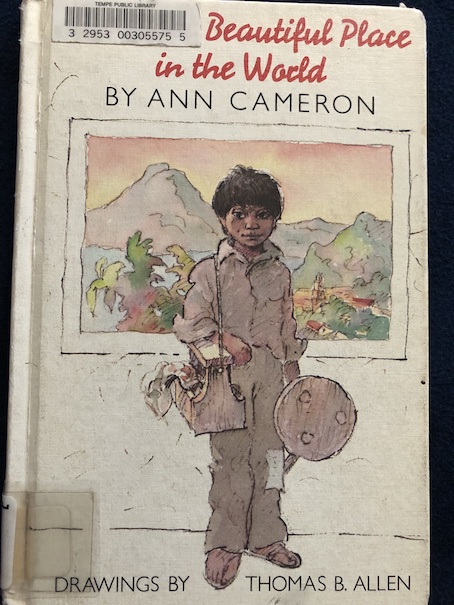
Stories of Rainbow and Lucky: Selling Lucky

This is the fourth book in the Stories of Rainbow and Lucky series. I’ve already started covering this series, and I have to do all five books in a row because the series is set up like a mini-series. That is, none of the books in the series can stand alone; they are all installments of one, longer story. They only make sense together.

It’s an unusual series from the mid-19th century, written on the eve of the American Civil War, by a white author with a young black hero. Rainbow is a teenage black boy who, in the previous installments of the story, is hired by a young carpenter, Handie, who is just a few years older than he is to help him with a job in another town, working on renovating a farm house that Handie has inherited. The rest of the series follows the two young men, particularly Rainbow, through their adventures leaving their small town for the first time, learning life lessons, and even dealing with difficult topics like racism. Lucky is a horse who belongs to a neighbor of Handie’s new farm, and Rainbow has befriended him.

The story is unusual for this time period because it was uncommon for black people to be the heroes of books and for topics like racism to be discussed directly. It’s also important to point out that our black hero is not a slave, he is not enslaved at any point in the series, and the series has a happy ending for him. People don’t always treat him right, but he does have friends and allies, and he manages to deal with the adversity he faces and builds a future for himself. Keep in mind along the way that there are a lot of pun names in this series and that people’s names are often clues to their characters.

This particular installment in the series focuses on the horse, Lucky. Lucky’s owner has decided to sell him, and she asks Handie and Rainbow to take Lucky from the town of Southerton to Boston to sell him. Along the way, they have encounters with thieves and further trouble with racism. However, the story ends happily for both Rainbow and Lucky.

This book is easily available to read online in your browser through NINETEENTH-CENTURY AMERICAN CHILDREN & WHAT THEY READ, I’m going to do a detailed summary below. If you’d rather read it yourself before you read my review, you can go ahead, but some people might want to know what it’s like in more detail.

The first three books in the series focused on Handie’s inheritance of the Three Pines farm, how he hired Rainbow to help him fix it up, their travels to the farm, and their adventures with their new neighbors there. Now, the summer is over, and they have returned to their own small town, but the adventures aren’t over yet.
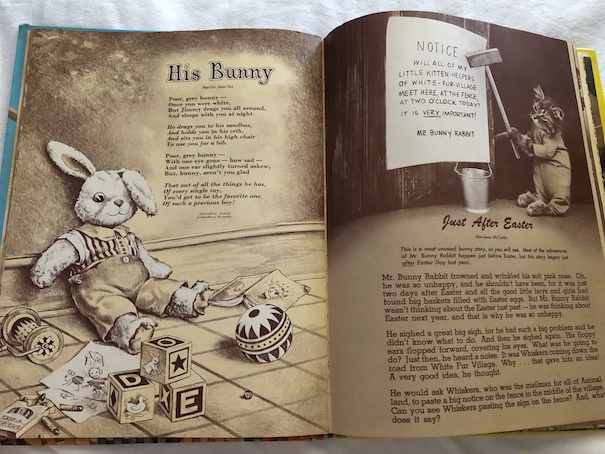
It’s October, and since his time working for Handie over the summer as a carpenter’s apprentice, 14-year-old Rainbow’s own carpentry skills have improved, and he has bought himself a set of his own tools. Although Rainbow has faced his share of racism, even from people in his own small town, he is generally well-liked by most people because he is kind, friendly, and a good worker. He is still friends with a little white boy named Solomon, who lives nearby. Solomon looks up to Rainbow like an older brother because Rainbow spends time with him, especially since young Solomon’s father died. Solomon has started helping Rainbow with some of his work projects, as a kind of junior assistant. That’s what they are doing when Handie comes with a letter that he has just received from Southerton, the town where the Three Pines farm is.

During the course of the previous book, they befriended a difficult neighbor named Mrs. Blooman, who is the owner of the spirited colt called Lucky. Rainbow, who loves horses and has a talent for handling animals, made friends with Lucky, and he is still the person who is best able to handle him. Mrs. Blooman has had difficulty handling Lucky herself (which is partly her own fault, as the previous book explains), and she has now decided that she wants to sell Lucky. Since nobody handles Lucky as well as Rainbow does, she wants to hire Rainbow to take Lucky to Boston, find a buyer for him, and arrange the sale.

Rainbow is amazed at the job offer. The trip to Southerton was pretty momentous for him, and Boston is farther than he’s ever been, and he has never handled a horse sale before. Still, the money is good, and Rainbow really does like Lucky. Handie suggests that Rainbow think it over and talk to his mother about it. Rainbow is still a minor under the law, but his mother consents for him to take the job, and Handie accompanies Rainbow to Southerton again to pick up Lucky.

In the second book in the series, Handie and Rainbow traveled to Southerton by stage coach, and now, they’re making the same trip again with the same driver, Trigget. Since Trigget is a friend of theirs, they once again ride on top of the stage coach with him, so they can talk along the way, instead of riding inside. Trigget says that they have to stop to pick up another passenger, a young man who is bound for college. Trigget is disparaging of college-educated young men because he thinks that college makes them conceited. However, when college-boy William joins them, he turns out to be more friendly and personable than Trigget thought. Instead of sitting inside the coach, he decides that he would also like to ride on top and chat with them. The author/narrator uses this opportunity to point out that pre-conceived notions about what people are like are often wrong, and you can’t entirely depend on another person’s assessment of what someone else is like:

“Indeed, I think it may be laid down as a general rule, that if you hear a specially unfavorable account of any person whom you do not know, you will find, when you come to get acquainted with him, that he does not more than half deserve the ill account which was given of him. On the other hand, when you hear any one who is a stranger to you very extravagantly commended for certain excellent qualities which he is supposed to possess, you will find, if you come to know him intimately, that he is, after all, not so remarkable as you had been led to expect. People are very prone to exaggerate both the faults and the excellencies of those of whom they speak, by way of making what they say more striking and interesting to those who hear it.”

As they start their journey, Handie and Rainbow catch up with the changes in Trigget’s life since they last saw him. Trigget has gotten married and bought a house. He tells them about the house he bought, which used to belong to another person they also knew. The house needs some fixing up, but Trigget considers it a good deal that was beneficial to both himself and the selling. 

William protests that no deal can be beneficial to both the buyer and seller at the same time because, to his way of thinking, what defines a beneficial deal is the price of what is being sold. If the price is lower than the value of the product, the deal is beneficial to the buyer, and if the price is higher than the value of the product, the deal is beneficial to the seller. Since the price can’t be both higher and lower than the value of the product at the same time, William can’t see how the deal could benefit both the buyer and seller at the same time. (My first thought was, what if the price is neither higher nor lower but simply is the value of the product? However, there are other logical fallacies in William’s argument, as the narrator and the character point out.) The other characters debate the general idea of what makes a deal beneficial, putting forth the idea that the value of anything for sale can be difficult to pinpoint because value may be based on non-tangible aspects of the deal. For example, the same house may be worth more to one person than to another because, aside from the value of the physical aspects of the house, the house may be better suited to the circumstances of the buyer than to the seller, making the buyer view the house as being worth more than the seller might think of it. Rainbow listens to this discussion with interest because he will soon be arranging the sale of Lucky, and he wants the deal he makes to be beneficial to everyone involved.

After they get to Southerton, Rainbow receives instructions for how he can find a buyer and arrange a sale. It will take about four days of travel to reach Boston from Southerton, and Mrs. Blooman is providing money for his traveling expenses. Rainbow will go there on horseback, riding Lucky, and after he sells Lucky, he will return by train. (Unless he fails to sell Lucky, in which case, he is to ride Lucky back to Southerton.) When he gets to Boston, Rainbow is to present Lucky to the owner of a particular stable, Mr. Miles, and this stable-owner will help him to find a buyer for Lucky, if he doesn’t want Lucky himself. Rainbow also has the option to sell Lucky before reaching Boston, provided that he can find a suitable buyer who is willing to pay an acceptable price. 

Handie also gives Rainbow a letter of introduction to present to Mr. Miles, verifying his identity and that he is working for Mrs. Blooman and arranging the sale of Lucky on her behalf. Handie also presents Rainbow with a “certificate”, which he obtained on Rainbow’s behalf from the selectmen of their town before they left home. The “certificate”, as Handie describes it, is a “sort of universal letter of introduction.” This story is set long before drivers’ licenses and other, modern forms of identification, so from a modern standpoint, it performs the functions of an ID card with an added statement on the nature of the subject’s character. The certificate verifies Rainbow’s identity, the fact that is a citizen of his town, that he is known to his town’s leaders, and that he has a good character and can be considered trustworthy, for the benefit of everyone who needs to know any of that. It is signed by the selectmen (the town’s leaders) and says:

“This may certify that the bearer of this, commonly called Rainbow, colored boy, is well known to us, and to all the people of this town, and that he is a boy of excellent character. He is honest, truthful, and trustworthy. He speaks the truth and keeps his promises, and he needs no watching. He is accordingly hereby recommended, as a safe and reliable boy, to all who may have any dealings with him.”

Rainbow puts these important papers in his wallet. Then, he and Handie further discuss the arrangements with Mrs. Blooman. Rainbow wants to know if he needs to arrange a contract or memorandum in writing about their arrangements, but Handie says that this is unnecessary for this type of job. He says that women acting on their own don’t like to arrange contracts in writing like that, but he will act as a witness of the agreement between them, in case there is any dispute later. Handie is a good witness because, while he does care about Rainbow’s welfare and success as a friend, he has no legal or financial claims on the business between him and Mrs. Blooman. Neither of them thinks that there will be any difficult over the arrangement, but it’s important to consider these things, just in case.

Before they leave on the trip to Boston, Rainbow talks to Lucky about how he is going to be sold. Rainbow is sad about that because he likes Lucky and doesn’t expect to see him again after the sale. He thinks these few days that they’ll have together while they’re traveling will be their last time together.

Rainbow says that he wishes Handie would buy Lucky and let Rainbow train him and rent him. Trigget has told Rainbow that, if he can get a horse, he will hire Rainbow to carry mail, so if Handie bought Lucky, Rainbow could pay to rent him out of the wages he would earn as a mail carrier. Handie says that he wishes he could buy Lucky, so they could have that arrangement, but the problem is that Handie doesn’t have enough money to buy him and can’t borrow any more right now. He’s already working off a loan from the first book in the series, and he doesn’t think he can take on such a large expense right now. If Handie and Rainbow can’t buy Lucky themselves, they’re just going to have to let someone else buy him.

Rainbow sets out with Lucky the next day. Because he is riding Lucky to Boston, Handie is not going with him, and he is traveling completely alone for the first time. When they first start out, Lucky assumes that they are just going on one of the routine errands around the town, and as they keep going further and further, he starts getting more uneasy. He keeps wanting to turn back and looks for an opportunity to run away and go home. He almost gets away from Rainbow when they stop to eat, but Rainbow stops him and manages to calm him enough that he can get control of Lucky again.

As Rainbow continues his travels, he gets some questions about his horse from curious people he meets. A couple of them make offers to buy him or suggestions about where he might find a buyer, but none of them leads to anything. Some people make jokes or call him names, but Rainbow ignores them. At one point, he helps a boy with an injured foot, and the boy’s grateful mother gives him supper. She offers to let him spend the night, but he says that he wants to get further before the day ends.

Eventually, he stops at a cheap tavern and asks for a room. They say that he can stay the night, and he puts Lucky in their barn for the night. A black woman working in the kitchen gives Rainbow dinner and says that she will make up a bed for him, but Rainbow says that he would rather sleep in the barn to be near Lucky. It’s a good thing that he does because he overhears a couple of suspicious men he saw earlier talking about stealing his horse (and using some derogatory language about him while they do it). At first, they consider taking Lucky out of the barn that night, but then, they think about how people at the tavern have seen them and might identify them. Instead, they talk about waylaying Rainbow and Lucky further down the road, in the woods. After the men leave, Rainbow talks to Lucky, reassuring him. He also makes a pun about their use of the word “black” to describe him, saying to Lucky that these men seem like the real “black fellows.” (I think he’s referring to “black” in the old-fashioned, literary sense of “evil or sinister”, in this case. These sinister men are “black” in different way than Rainbow is, and it’s a much worse way.) Forewarned of their plans, Rainbow takes steps to make sure that the men can’t get into the barn again that night, and he foils their plans to steal Lucky the next day.

After this experience, Rainbow decides that traveling through smaller towns and country roads is too risky. He thinks that he might be safer from thieves if he sticks to better-traveled roads and bigger towns. When he comes to a larger town, he rents a room at a tavern for the night, and he is approached by a man who calls himself Mr. Truman. Mr. Truman is interested in buying Lucky, and he invites Rainbow to come to his room later to discuss it. The author/narrator informs readers immediately that Mr. Truman is a criminal, so there is no suspense about that, but there is some suspense about how or whether Rainbow will realize it in time to avoid being cheated by him or turning Lucky over to him.

When Rainbow meets with Mr. Truman later about Lucky, Mr. Truman agrees to the price that Mrs. Blooman wants for Lucky. Rainbow is pleased about finding a potential buyer who is willing to pay the right price, and he shows Mr. Truman the papers he has to prove that he is authorized to sell the horse. Mr. Truman asks Rainbow if he will return to Southerton immediately after selling Lucky, and Rainbow says that his plan is to take the train back. Mr. Truman suggests that they meet the next morning at the local train station, shortly before the train to Southerton will leave, to carry out the sale of Lucky, and Rainbow agrees.

However, after leaving Mr. Truman’s room, Rainbow begins to have some doubts about the deal and Mr. Truman himself. On the one hand, he was pleased to get an agreement to buy Lucky so easily, but on the other hand, he realizes that he doesn’t really know anything about Mr. Truman. Maybe Mr. Truman won’t show up to the train station at all to buy Lucky, or if he does, maybe he won’t bring the amount of money he agreed to pay or the money could be counterfeit. Because they agreed to meet shortly before the train will leave, Rainbow realizes that he won’t have much time to count the money or verify that money is real before the train leaves. Maybe that’s part of Mr. Truman’s plan.

Rainbow decides to ask the staff at the tavern what they know about Mr. Truman, but nobody there is able to tell them much. He’s just a man who arrived at the tavern recently and rented a room. Nobody there knows much about him, his background, or his business. Rainbow feels a little more uneasy, and he decides that, when they meet at the train station, he will ask the man who runs the ticket office to help him count the money and verify that the money is good because he figures that the person who sells the train tickets is accustomed to handling money and will know if there’s anything wrong with Mr. Truman’s payment.

When Rainbow arrives at the train station the next day, he finds the ticket seller, shows him his identification papers, and explains to him about the sale of Lucky and that he would like him to observe the sale and verify Mr. Truman’s payment to him. The ticket seller, Mr. Jones, seems intrigued by his request. He and some other men in the station’s freight office discuss Mr. Truman, and none of them know of anyone by that name in this town. Mr. Jones asks Rainbow some further questions about where he met Mr. Truman and what he knows about him. Although Rainbow doesn’t know it, there has been talk in this town about counterfeiters, and there has been some bad money found in the town. What Rainbow says about Mr. Truman awakens some suspicions that Mr. Jones and the other men have had about the origins of the bad money. Mr. Jones and the other men explain to Rainbow what they know about counterfeit money being spread in the town. They agree to witness the sale of Lucky, but they give Rainbow specific instructions about what to do and say so that Mr. Truman won’t sense their suspicions about him too soon and run away before they have evidence against him.

When Mr. Truman comes to buy Lucky, he seems unsettled when Rainbow calls Mr. Jones over to count and verify the money. Mr. Truman tries to make an excuse about wanting to talk to someone so he can leave, but the other men stop him, and he is arrested by an officer. Rainbow is astonished that his vague suspicions about Mr. Truman were correct and that Mr. Truman is an even worse criminal that he thought. He is also relieved that he didn’t go through with selling Lucky to this man. Rainbow offers to pay Mr. Jones for his help in observing the sale and stopping him from making a bad deal, but Mr. Jones says that isn’t necessary. After all, Rainbow has also provided a service by helping to expose the counterfeiter who has been spreading bad money all over town. As a reward for helping to catch the counterfeiter, Mr. Jones provides Rainbow with a pass for himself and a place for Lucky in the horse-box on the next train to Boston, saving them time and money on their journey. He even makes Rainbow’s ticket a round-trip ticket so that he can return to Southerton by train when his business in Boston is concluded.

Lucky, being a horse, finds the train ride upsetting and disorienting. At first, Rainbow isn’t sure which car he should enter or where he should sit on the train, but the brakeman tells him he can sit wherever he likes because “they don’t pay any attention to color on this road, except it be the color of their money.” In other words, this train isn’t racially segregated; all they care about is whether or not the passengers have bought tickets. The brakeman explains more about how hard his work is as a brakeman, which is very hard for the money is paid. Nobody pays him enough to care about passengers’ race as well. Rainbow asks him why he stays in the job, since it sounds pretty demanding, and the brakeman says that it was hard enough to just get this job; getting another, different job would be even harder.

Since the train is about to leave, Rainbow gets on and looks around for an open seat. There are some ladies on board who have filled up some vacant seats with their parcels. Rainbow doesn’t want to disturb them, but a well-dressed young man, looking for a seat himself and seeing Rainbow’s difficulty in finding a place to sit, says that he will find a place for them both. Because the young man is handsome and charming, he is able to convince a young lady to allow him to put her parcels in the upper rack so that he and Rainbow can have the seats she was using for them. When the young man tells a story about how it is wrong to take more than a person has paid for, such as taking up multiple seats when she has only paid for just one, he tells it so charmingly and not in a directly accusing way, that the lady isn’t offended by it. The young man indicates that he thinks that men do this less often on trains than ladies because they are more acquainted with the transactional nature of train travel.

When Rainbow says that this is his first time traveling by train, the man lets Rainbow have the window seat so he can enjoy the view. Rainbow finds the view whizzing past the window as disorienting as Lucky does, although he enjoys it much more. As he watches the scenery moving past, he wonders why it seems like objects that are closer to the train move by faster than ones that are further away. He is tempted to ask the young man about it, but before he can think how to ask the question, the young man gets up from his seat.

When the train reaches Boston, Rainbow reclaims Lucky from the horse-box, and they set out to find Mr. Miles’s stables. Rainbow tries to ask a newsboy for directions, but the newsboy makes fun of him instead, teasing him about his race, “Say, Pompey, how came you both to be so black, you and your horse? Did he catch it of you, or did you catch it of him?” Rainbow ignores him and finds someone else to ask.

Getting around in Boston is tricky, especially for a person who has never been to the city before. A butcher tells Rainbow that the full instructions would be too complicated for him to understand and remember all at once, so he advises Rainbow to take it in steps. He gives Rainbow a part of the directions to his destination, the first street he needs to go down and the first turn he needs to make, and then advises him to ask the next person he sees when he has gone that far. Rainbow continues to ask directions of people in this way, and through a series of questions and answers and getting lost a couple of times, he gradually makes progress and finds his destination.

When Rainbow finds Mr. Miles’s stable, he shows Mr. Miles his papers and explains why he has brought Lucky there. Mr. Miles has one of his workers put Lucky in the stables, and he talks to Rainbow about his journey. He is impressed by the story about how he helped catch the counterfeiter, and he shows Rainbow to a restaurant where he can buy some dinner before they take a look at Lucky and discuss finding a buyer for him. When Rainbow returns, Mr. Miles examines Lucky carefully, and he is pleased with Lucky’s condition. He thinks that he won’t have any trouble finding a buyer for Lucky who will be willing to pay the price that Mrs. Blooman requests.

Soon, a man and a young boy come to the stables, and the boy is immediately fascinated with Lucky. The boy, called Johnny, says that he would like to ride Lucky, and Rainbow offers to take him for a ride because he has taken other boys for rides on Lucky before. The man, who is called Colonel Hammond (often simply called “the colonel”), agrees that Johnny can have a ride with Rainbow. While they have their ride, the colonel talks to Mr. Miles about Rainbow and Lucky. 

The colonel agrees that Lucky seems like a fine young horse, and he would consider buying him, but he already owns many other horses and doesn’t need another one. He is impressed with how well Rainbow handles Lucky and how well he works with young Johnny and asks Mr. Miles what he knows about him. Mr. Miles shows the colonel the identification papers that Rainbow provided to him, and the colonel is pleased with the statement about Rainbow’s character. He asks Mr. Miles about Rainbow’s plans while he is in the city. Mr. Miles doesn’t quite know about Rainbow’s plans, although he knows that he will probably be there for another day or two while they’re looking for a buyer for Lucky. Mr. Miles is planning to offer Rainbow a place to stay among the hostlers in the stable. The colonel says that he would like to invite Rainbow to stay at his house.

The colonel asks Rainbow if he would be willing to drive young Johnny home in the chaise and tells him that, if he would be willing to stay at his house while he’s in Boston, he would be welcome. Rainbow is happy to take Johnny home, and the colonel says that he if goes to the side door of the house and asks for Phebe, she will take care of him. Rainbow takes Johnny home and then drives the chaise back to the stable. He asks Mr. Miles if he should accept the colonel’s offer to stay with him, and Mr. Miles says that would be a good idea. The colonel is a wealthy man with a good reputation.

Rainbow returns to the colonel’s house again and asks for Phebe. Phebe is a black woman who works for the colonel, and she is expecting him. The two of them talk about Rainbow’s journey to Boston, and Rainbow also tells her about his home town. Then, Phebe suggests that he visit the colonel’s stable to see his horses. The colonel’s private stable is relatively small, much smaller than Mr. Miles’s stable, and there are two horses there. The colonel owns more horses than these two, but he boards the others with Mr. Miles. Rainbow is pleased with the stable and horses, and he helps the man who works in the stable until it’s time for supper.

Rainbow has supper with Phebe, and Colonel Hammond has another servant deliver the message that he would like to see Phebe in the library after supper. Phebe goes to talk to Colonel Hammond, and then, she tells Rainbow that Colonel Hammond would like to talk to him about Lucky.

When Colonel Hammond speaks to Rainbow, he says that he has an idea about buying Lucky on speculation. He thinks that Lucky is worth the price Mrs. Blooman is currently asking but that he might worth more in the future. Earlier, Rainbow had confided in Phebe that, if he had the money, Rainbow would buy Lucky himself so he could get the job carrying mail. Phebe told Colonel Hammond about Rainbow’s wish, so Colonel Hammond proposes that he buy Lucky on Rainbow’s behalf, with the idea that Rainbow will pay him back later, with interest. That way, Rainbow can have the horse and get the job he wants right now, and the colonel will gain a profit on his investment later. Rainbow is concerned about his ability to repay the debt, and the colonel tells him that he can pay in installments after he has started earning money from his new job. Colonel Hammond believes that it’s a safe investment because he thinks that Rainbow is trustworthy and will repay the debt in time, and if he can’t, for some reason, Colonel Hammond would have the horse, which is a good horse. To further secure the deal, Colonel Hammond says that they should buy insurance for the horse, in case Lucky gets sick or killed in an accident.

Rainbow is thrilled with Colonel Hammond’s proposal, although he is so overwhelmed that he isn’t sure how to respond at first. Colonel Hammond says that he can take some time to think it over, and Rainbow decides to write a letter to Handie Level about the deal, to see if he thinks this is a good arrangement. Colonel Hammond says that’s fine, and since it will take a couple of days to get a reply to the letter, he would be willing to have Rainbow stay in his house until the reply comes. Colonel Hammond provides Rainbow with a written proposal of the agreement between them to study and to describe to Handie.

When Handie’s reply arrives, Handie advises Rainbow to accept the deal with Colonel Hammond. Handie has spoken to Trigget, and Trigget is still willing to offer Rainbow the job of carrying the mail. Rainbow tells Colonel Hammond that he has decided to accept his offer, and they complete the transaction. Since Rainbow still has a return pass to Southerton for the train, he decides to use it for himself and to use some of his remaining money to pay for Lucky to travel by train, which shortens their journey considerably and saves them money finding places to stay on the way.

The return trip to Southerton takes only hours by rail rather than days by the road. In Southerton, he gives Mrs. Blooman the money for Lucky, and the next day, he and Lucky leave for Rainbow’s home town. Once he gets there, he accepts the job from Trigget. The author/narrator tells us that Rainbow performs the job well, although there are difficulties along the way, which we get to hear about in the final installment of the series.

Overall, I liked the story. I was a little concerned for Lucky’s welfare along the way, even though I already knew that Rainbow was going to end up as his owner eventually because I already knew the general course of the series. I just wasn’t sure exactly how that would happen. I was relieved that nothing really bad happened to the horse along the way because I always get upset with stories where bad things happen to animals.

There is a theme in 19th century and early 20th century books that I call “Rich People to the Rescue.” Although themes of hard work and having a good character are prevalent during that period, and the Stories of Rainbow and Lucky have those themes as well, I’ve noticed that the reward that hard-working people often receive in these stories is that some rich person will recognize and reward their hard work and good character. This story follows that same pattern. I liked the part where Rainbow helps to expose the counterfeiter and the kind ticket seller at the train station rewards him with a free train ticket, but I did feel like Colonel Hammond arranging everything for Rainbow at the end was kind of sudden. Colonel Hammond is a wealthy man, and Mr. Miles says that he often makes speculative investments of that kind to promote people or causes he thinks might be worth it. Because Colonel Hammond has plenty of money, it’s a small risk for him to do this, although he is reasonably careful about securing his investment with well-defined terms and insurance. Framing Colonel Hammond’s generosity as a business arrangement rather than pure charity does make it seem a little more realistic to me than those stories where a rich person just automatically buys things for the deserving main characters unconditionally, and I think that’s what the author means when he has Mr. Miles say that what Colonel Hammond does to help people is better than simply giving people money. Colonel Hammond enables people to proceed with useful projects and ventures in a practical and realistic way.

Racism is a constant theme throughout this series because Rainbow is black. It’s a bold choice for a children’s series written on the eve of the American Civil War. However, I was somewhat surprised that there was less racism in this particular installment of the series than I expected. 

This is the first story in the series where Rainbow is traveling alone instead of under the protection of a white employer. I could see that would make him more vulnerable, and the story does say that young black men who leave home feel more uncertain and vulnerable because they don’t know what kind of reception they might receive from people they meet and they’re aware that it can be nasty. In the first book in the series, the lawyer from their home town even says that there are some places that won’t offer food or accommodation to a black person during their time, which is a difficulty when traveling. At first, I expected to see an example of this with Rainbow traveling alone. However, he is never turned away from taverns or inns where he rents rooms for the night, and he doesn’t seem to have any difficulty finding places to eat. He does meet with thieves and con men along the way, but they’re more general criminals, not targeting him specifically because of his race. There are some random people Rainbow meets on his journey who say rude or derogatory things to him, but that’s about it. Also, nobody has used the n-word since Mrs. Blooman did it in the previous book in the series. I’m just surprised that Rainbow didn’t encounter more problems of that kind or that he wasn’t refused service anywhere.

I’m trying to decide whether Rainbow’s difficulties with racism in the story are more low-key than I expected because that’s more in keeping with the usual daily experienced of the times or if it’s because the author decided to put more emphasis on Rainbow’s adventures with the criminals he encounters. I’m leaning toward the idea that the author wants to put the emphasis on the adventure part of the story and on how Rainbow’s hard work and good character are rewarded in the end. If nobody in his time and location refused service to a black person, the concept of that happening wouldn’t have been mentioned earlier in the series. 

The author, Jacob Abbott, likes showing the details of daily life in his time in his stories, and it’s interesting to read about Rainbow’s travels. In this story, we get to see Rainbow take his first train ride, during which we have an interesting observation about the way scenery appears to move thought the train window, and we also get a complaint about ladies with the habit of taking up extra train seats with their parcels and a lesson on why this is a form of theft. I get the feeling that the author has encountered this situation before, and it really annoys him, although he delivers his rebuke as diplomatically as he can.

We also get to see Rainbow eating in a city restaurant rather than the small town or countryside taverns where he has been before. I found the description of the restaurant interesting. It was one of the places where I though that Rainbow might be refused service at first, but he encounters no difficulties there. What particularly fascinated me about the restaurant is that all the food is pre-made and on display for people walking in to select what they want to eat. Foods that don’t need to be kept hot, like pies and sandwiches, are simply laid out on the counter, and hot dishes are kept behind the counter, warmed by “spirit lamps.” It seems almost like modern fast food, being kept warm under heating lamps. Rainbow just tells the restaurant staff what he wants from the foods he sees, and they give it to him. I see the benefits of this system because, especially in an era without microwaves to quickly warm up food, people can’t wait for dishes they just ordered to be cooked from scratch. Things need to be prepared when they come in. I just didn’t expect it to be so similar to the methods we use for modern fast food. I am a little concerned that the foods that are simply laid out on the counter, like sandwiches with cold meat in them are not being kept at a proper temperature, but it may not matter if they are not there for long because customers claim them pretty quickly.