Emma

Emma has had a full life, and she has many grandchildren and great-grandchildren. However, she is often lonely when they aren’t visiting her. Most of the time, it’s just her and her pet cat, Pumpkinseed. It’s not a bad life because Emma loves the many simple things in her quiet life, but she unexpectedly discovers a new interest in life when she turns 72.

Her family comes to visit for her birthday, and one of the presents they give her is a painting of the small village where she was born. Although her family doesn’t entirely understand her attachment to her memories of her home village, they know that she is very fond of remembering it. 

However, the painting bothers Emma because it doesn’t look the way she remembers she remembers her village. The village has probably changed since she was last there, but the way the artist has painted it isn’t the way she remembers it. Emma realizes that she wants to capture those memories. Because no one else can paint her village the way it looks in her memories, Emma decides that she will do it herself. She buys an easel and paints and makes her own painting of her village. 
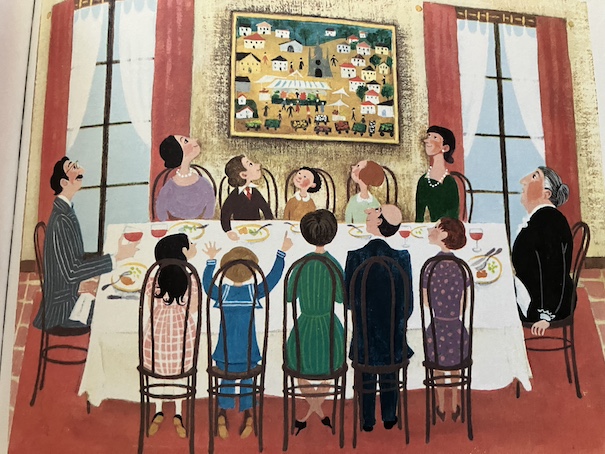
It makes Emma happy when she hangs her painting up in place of the painting that her family gave her because it looks like her memories. However, she doesn’t want her family to think that she didn’t appreciate their gift, so she is careful to replace her painting with the one they gave her whenever her family comes to visit. Everything changes one day when she forgets to makes the switch before her family visits her.

Everyone notices that the painting on the wall is different from the one they gave her, and they ask her where it came from. Emma is embarrassed and admits that she painted it. At first, she wants to put it away, but her family tells her not to do that because it’s a wonderful painting, and they encourage her to paint more.

Emma admits that she already has painted more, and she brings out her other paintings for everyone to see. From then on, she paints more paintings of her village and all of the little things around her that she loves to notice, and she openly displays them. Aside from her family’s visits, she also starts receiving other visitors who come to see her paintings. There are still times when she is alone, but she is no longer lonely when she is alone because she has her art to keep her busy and her memories of all the places and things she loves hanging on her walls.

The book is available to borrow and read for free online through Internet Archive.

I’ve been trying to figure out what this book is for years! I vaguely remember my mother telling me about this book when I was little. I can’t remember if she read it to me or just told me that she had seen the book somewhere, but the vague concept of the story about a grandmother who started painting because her relatives gave her a painting of her home town that didn’t look the say she remembered it stayed with me.

What I didn’t know or didn’t remember was that the grandmotherly painter in the story is based on a real person. In the back of the book, the American author explains that she met Emma Stern when she was living in Paris. Emma Stern was German, and she was born in 1878 and died in 1970. She is known for painting countryside scenes and village life. I’m not sure exactly where the village or small town where she was born was, although this website, which shows a selection of her paintings, has labeled most of them as being St. Wendel.

The story is inspirational because it’s an example of someone who found a new interest in life and a new talent when they were elderly. There are other examples in life of people who were “late bloomers” and found new careers or achieved something amazing in life at a time when many other people are just retired or taking it easy. It’s never too late to do something you really love!

When Aunt Lena Did the Rhumba

Sophie’s Aunt Lena loves music, dancing, movies, and theater, and she especially loves Broadway musicals. She goes to a musical matinee every Wednesday. After seeing a musical, she comes home, singing and dancing and acting out parts from the play she’s just seen.

One particular Wednesday, when she’s acting out a particularly dramatic dance in the kitchen, she accidentally slips and sprains her ankle. She has to stay home and rest until her ankle gets better, which means that she won’t be able to go to next Wednesday’s matinee.

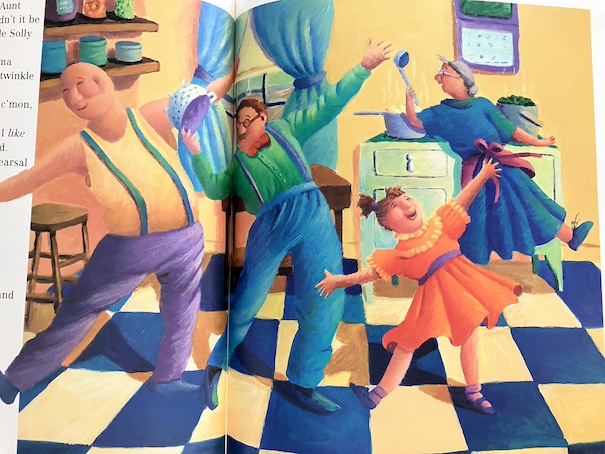
Aunt Lena is so sad about missing the musicals she loves that Sophie gets an idea to cheer her up. Sophie recruits other members of her family to put on their own musical to entertain Aunt Lena.

Not everyone is enthusiastic about the idea at first, but when Sophie gets her grandmother to help her put together a costume fit for a Broadway musical and choose some music, they begin drawing other family members in.

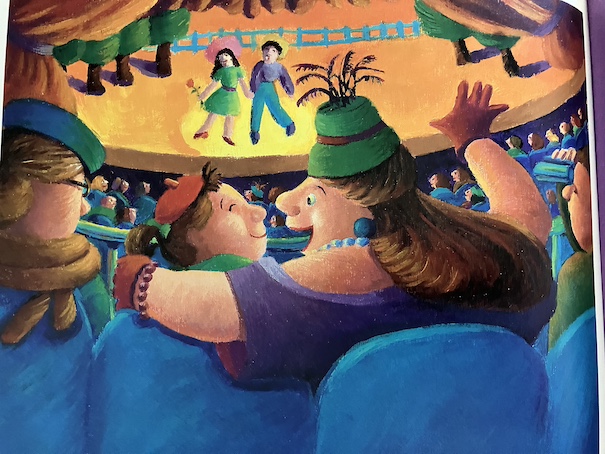
Aunt Lena loves their performance, and when she’s better, she takes Sophie to a matinee so she can see a real Broadway performance, too!

This book is available to borrow and read for free online through Internet Archive (multiple copies). It was also a Reading Rainbow book, and the episode of Reading Rainbow is also available to watch online through Internet Archive.

I didn’t see the original episode of Reading Rainbow that included this book when I was a kid because this book was published after I was too old for that. However, I always liked Reading Rainbow when I was a kid, and later, after I started this blog, I decided to go back and check out some of the books covered by Reading Rainbow after I stopped watching it. If you’re not familiar with Reading Rainbow, it was a children’s television program on public television in the US that encouraged children to read by discussing books and showing children things that were related to the books they were reading. For example, if they were reading books related to animals in an episode, the host, Levar Burton, might take a trip to a zoo and talk to zookeepers about animals in the zoo.

The themes of this particular story and the Reading Rainbow episode are music, dancing, and theater. In the episode, they show a boys’ choir and dancing class and talk about how performing helps the boys and young men develop confidence and maturity. There’s also a comedian who specializes in physical comedy, who talks about how he does his stunts, and an actress who plays one of the cats in the famous Broadway musical Cats.

I love how the aunt in the book shares her love of dancing and theater with her niece. The two of them have similar personalities and interests, so when her aunt is injured, her niece knows how to cheer her up. The ending of the story implies that the niece will now be going to performances with her aunt, or at least, will sometimes go with her. I also liked how the rest of the family participated in the girl’s plans when they saw what she wanted to do, even if they weren’t as enthusiastic about the idea themselves at first. Enthusiasm can be contagious, and I do think that adults sharing their interests with kids can spark lifelong interests in the next generation.

I also noticed that this seems to be an unconventional family, although the family’s living arrangements aren’t the focus of the story. The girl’s parents are never mentioned. She seems to live with just her grandmother, her aunt, and a couple of uncles, and there is no explanation why because it’s not directly important to the story. In any case, it seems to be a happy, close-knit family, with family members caring for each other and supporting each other’s interests.

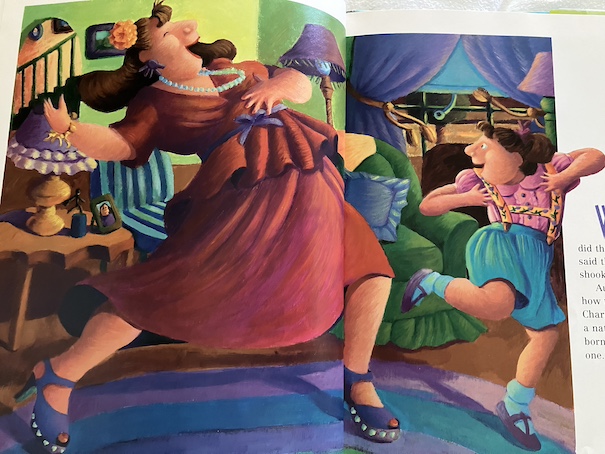
The pictures in the book are bright and colorful, fitting with the energy, enthusiasm, and theatricality of the story.

Scooby-Doo and the Haunted Doghouse

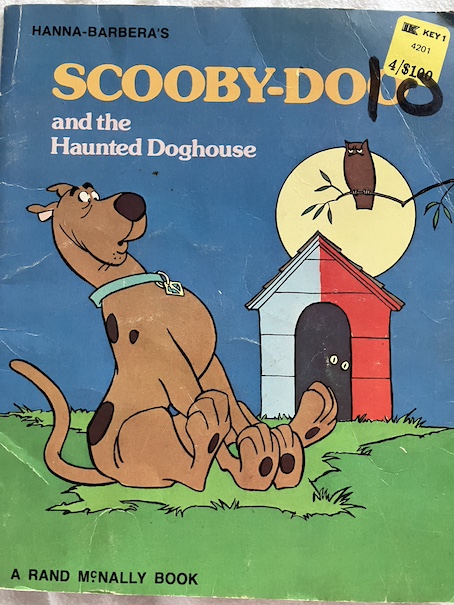
Scooby-Doo’s friends are building a new doghouse for him! They can’t decide what color to paint it, so they make half of it red and half of it blue. Scooby loves his new doghouse, at first, but then, something spooky happens!

One night, Scooby comes running into the house, scared. While Scooby cringes under the covers of Shaggy’s bed, Shaggy gets a flashlight and goes outside to see what scared Scooby.

When Shaggy looks in the doghouse, he sees a glowing pair of eyes, and then, something white runs past him with a shriek! Scooby and Shaggy both stay inside for the rest of the night, and in the morning, they tell their friends that they think the doghouse is haunted.

Their friends are sure that there must be some other explanation for what happened, but who or what was in Scooby’s doghouse?

The book is available to borrow and read for free online through Internet Archive.

Scooby-Doo was my favorite cartoon when I was a kid, especially Scooby-Doo, Where Are You!, and I’m still nostalgic about it! The mystery in the story is very simple, but suitable for young children with nothing truly scary about it. Even kids might guess what the solution is before the characters realize what’s in the doghouse.

Now that I think about it, it seems out of character for Scooby-Doo to have a doghouse because I don’t think he had one in the original cartoon series. I remember that he had a fancy one in one of the later spin-off series, but in the original series, he just always slept inside with his human friends. Of course, one of the hallmarks of the Scooby-Doo series is that there isn’t really a strict canon. Details about the characters and the Mystery Machine can change from episode to episode to suit the story without any real explanation because it’s a just-for-fun series.

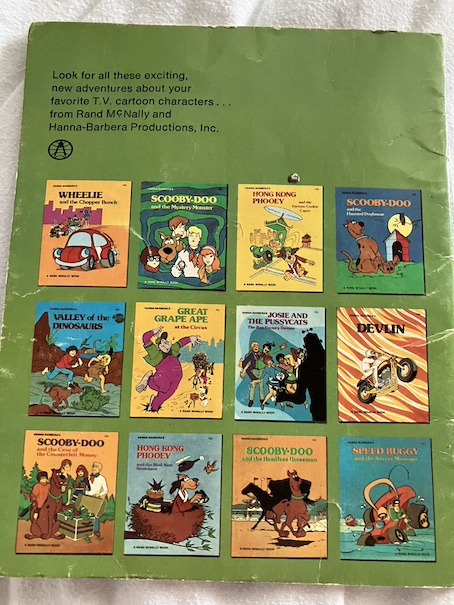
One of the things that I liked about this book was that it reminded me of all the other books I read as a kid that were based on popular cartoon characters. I think most of the cartoon series from my childhood in the 1980s and 1990s also had related books. On the back of this book, there are pictures of other books in this series, based on other Hanna-Barbera cartoon series, including other Scooby-Doo picture book mysteries.

Harry the Dirty Dog

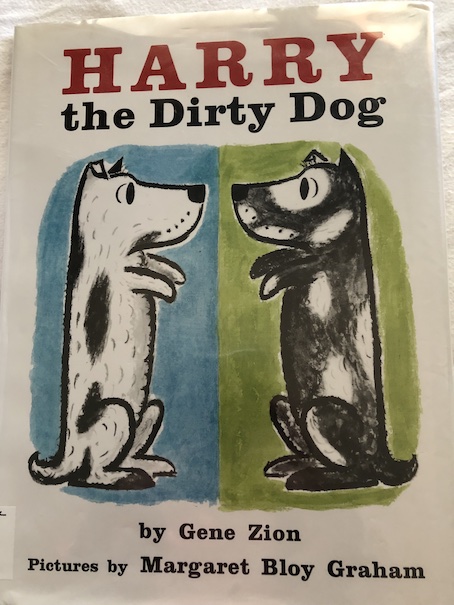
Harry the Dirty Dog by Gene Zion, pictures by Margaret Bloy Graham, 1956.

Harry, like other dogs, hates baths! One day, when he finds out that his family is about to give him a bath, he decides to steal the scrub brush! He buries the scrubbing brush in the yard and runs off into the city to have some fun and get good and dirty!

Normally, Harry is a white dog with black spots, but after a day playing with other dogs and running through construction areas in town, he’s so dirty that he looks like a black dog with white spots.

Eventually, he gets tired and hungry and misses his family, so he goes home. However, he has trouble getting his family to recognize him because he’s so dirty. Even when he does his usual tricks for them, they still don’t think he looks like their Harry.

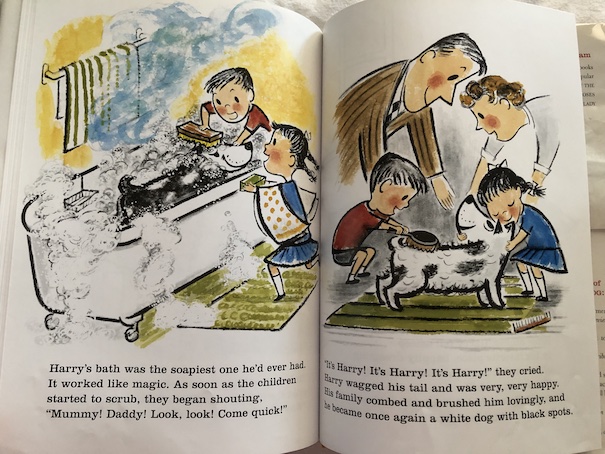
At first, Harry fears that he’s lost his family because they don’t know who he is. Then, he realizes that what he really needs is the scrub brush and a good bath! He digs up the scrub brush again and manages to persuade his family to give him a bath.

Once he’s clean, his family recognizes him. Harry sees the benefits of getting a bath, but he still doesn’t really like them, and he still enjoys the thought of getting nice and dirty again.

The book is available to borrow and read for free online through Internet Archive (multiple copies).

Dogs in real life often don’t like baths, and this whimsical picture book is about a dog discovering the benefits of a bath. When I was a little kid and I first saw this book, I was really worried that Harry would lose his family because they didn’t recognize him, but really, the family would have to be pretty dense for thinking that this dog, which looks like the same breed/mix as theirs and acts like theirs and does all the tricks their dog does but is just covered in dirt, must be a completely different dog. The story is just meant to be humorous, and it’s questionable in the end whether any lessons are learned. Yes, Harry now sees that getting a bath and being clean help his family to recognize him, but he still dreams about getting dirty, and he’s hiding the scrub brush under his bed. My dog also hates baths and fears the groomer, but I have assured her that I would still know her anywhere!