The Legend of the Christmas Rose

The Legend of the Christmas Rose by William H. Hooks, paintings by Richard A. Williams, 1999.

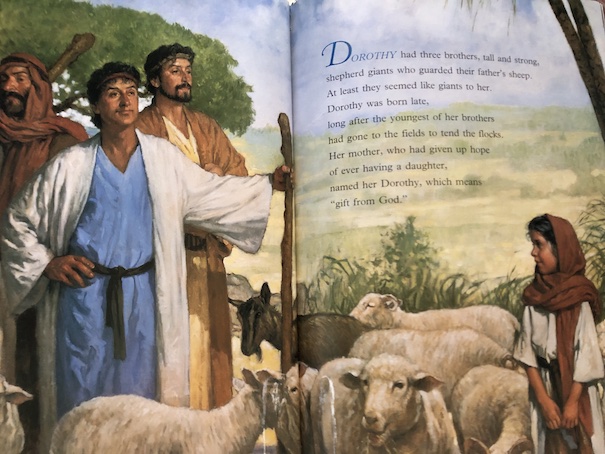
Dorothy is a 9-year-old girl with three brothers, who are all much older than she is. Her three brothers are all shepherds, and her daily chore is to take water to them when they’re out in the fields with the sheep. Her brothers love her, but they always treat her like a small child because they’re so much older.

One day, she spots some strange travelers on the road. She worries that they might be robbers, but her brothers tell her not to worry. There are more travelers on the road these days because the Roman Emperor has ordered everyone to return to their home towns to be taxed. However, because there are so many strangers traveling through the area, Dorothy’s brothers plan to spend the night in the fields with their sheep to keep an eye on them.

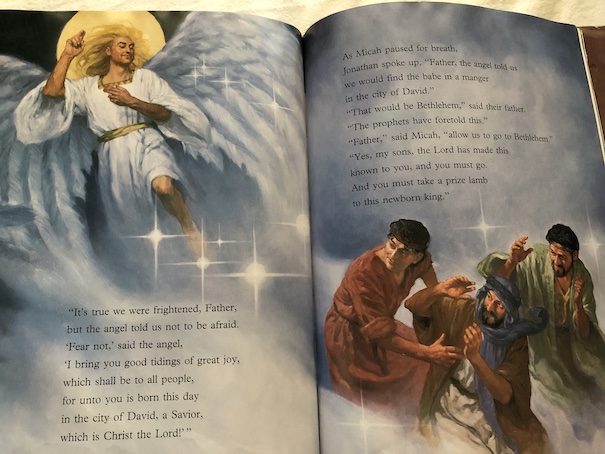
Early the next morning, the brothers return to the family home, excited. They tell their father that they saw angels in the field during the night. An angel appeared to them and told them that they would find a newborn Savior in a manager in the City of David, which is Bethlehem. Their father says that there is a prophecy about this. Because God has sent His messengers to announce the birth of the Savior to them, the brothers should go to the city and take a lamb with them as a present to the Savior.

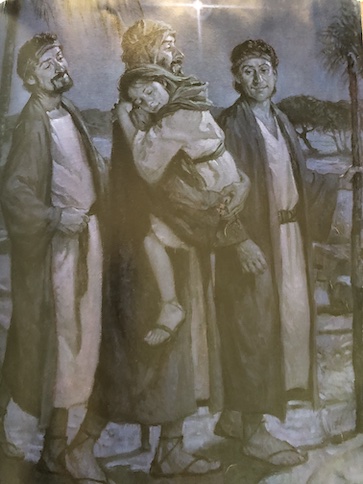
Dorothy helps her brothers to pack their supplies for the journey to Bethlehem, but she knows that she will not be allowed to go with them because she is too little. In spite of that, Dorothy makes the sudden decision to follow her brothers secretly. However, as they travel, Dorothy suddenly realizes that she doesn’t have a present of her own to offer when she arrives.

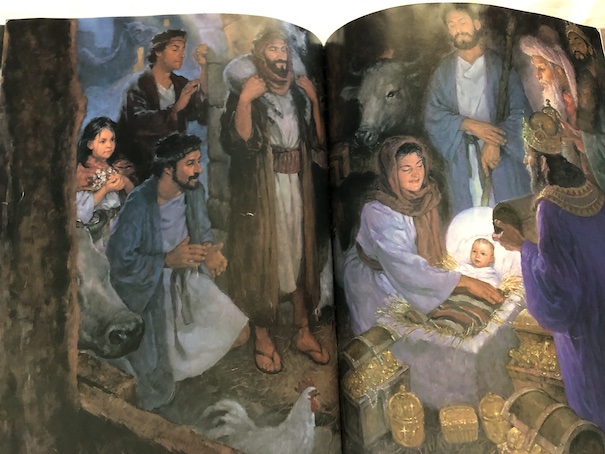
When Dorothy begins to cry about her lack of a present to give, an angel appears to her and produces snowy white flowers. Dorothy is happy because she can bring the flowers with her as a present.

The book is available to borrow and read for free online through Internet Archive (multiple copies).

My Reaction

There is an Author’s Note at the back of the book that explains about the Christmas Rose plant and its associated legends. The Christmas Rose is a real plant, but technically, it’s not a rose, and it doesn’t always bloom at Christmas. It’s native to southern and central Europe, where winters are relatively mild, and the flower can bloom in Christmas, but in colder climates, it tends to bloom in spring. It’s actually a member of the hellebore family, which is toxic to humans, although it has been used medicinally as a purgative, and it does contain a chemical that can be used to treat heart conditions. The story in the book also references the plants’ medicinal uses.

There are multiple legends about the origins of the plant. The version presented here, the legend about an angel giving the flower to a young shepherd girl to offer as a present to baby Jesus, comes from Medieval nativity plays. There is an older Greek legend where the plant was discovered by a shepherd around 900 BC. In that version of the story, the shepherd used the plant to cure three princesses who were afflicted with delusions that they were cows. After he cured them, the princesses’ father, the King of Argos, allowed the shepherd to marry his youngest daughter.

Overall, I liked this picture book version of the legend. I like books about folklore, especially ones that use lesser-known stories. The pictures in this book are also realistic and beautiful, taking up full pages.

Last Battle

The Chronicles of Narnia

Last Battle by C.S. Lewis, 1956.

This is the last book in The Chronicles of Narnia series, and this is the book that shows the final days of the land of Narnia.

In Narnia, a wily old ape called Shift lives with a donkey called Puzzle. Shift is more clever than Puzzle and often tricks Puzzle into doing all his work for him. One day, they find an old lion skin in a pool. They think that it probably belonged to a non-talking lion that a hunter killed, but talking animals still show respect to lions because of Aslan. Puzzle thinks they should give the old lion skin a decent burial, but Shift says that he will use the lion skin to make a winter coat for Puzzle. Puzzle doesn’t think that sounds like a good idea because he wouldn’t like to have people thinking that he was trying to look like Aslan. Shift says that sounds like nonsense and makes the lion skin into a coat for Puzzle. Of course, sly Shift has a more diabolical plan in mind.

When Puzzle tries the coat on, he does look like a lion. Shift says that Puzzle looks like Aslan, and if people saw him, he could tell them what to do, and everyone would do it. Puzzle is alarmed at the idea, but Shift insists that Puzzle pretend to be Alsan with him advising him about what to say. Puzzle worries that Aslan would be angry, but Shift isn’t concerned because Aslan hasn’t appeared for a long time. At that moment, there is a thunder clap and a small earthquake. Puzzle is convinced that’s a warning sign from Aslan, but Shift tries to convince Puzzle that it’s actually a sign of approval.

The last king of Narnia is King Tirian. He is a young man, and he has a unicorn friend named Jewel. Word has reached him that Aslan has reappeared in the land, and he is very excited. A centaur wants him that this story much be false because the centaurs study the stars and have not seen the signs that should precede Aslan’s arrival. He is sure that the story about Aslan appearing is an evil lie. Jewel says that it’s difficult to say because Aslan is known to not be a tame lion, and that would make him unpredictable.

Before they reach any conclusions, a dryad stumbles toward them, wailing because the talking trees are being cut down, and her kind are dying. She falls dead at their feet because her own tree is cut down in the forest. The king is appalled and horrified! He insists that he and Jewel immediately go to the forest and find out what is happening and put a stop to it. The centaur urges caution, but the king doesn’t want to wait, telling the centaur to return to Cair Paravel to assemble his troops and follow him to the forest.

When King Tirian and Jewel come to a river, they are horrified to see a river rat with a newly-built raft, floating logs down the river. The king demands to know what he’s doing and by whose authority. The river rat says that he’s taking the logs to sell in another kingdom and that he’s doing it because Aslan the lion commanded it. King Tirian and Jewel find that alarming and difficult to believe, so they continue on to the forest. There, they see men from another country, known to be cruel, chopping down trees. They have also enslaved talking horses to help them. When the king and Jewel witness a couple of men abusing a horse, they kill them on the spot. They ask the horse how he was taken captive, and the horse says that it was at the command of Aslan.

The other men and talking animals realize that the king and Jewel have killed two of their people and turn on them. The king jumps on Jewel, and they run away, but they feel guilty about the men they killed. King Tirian realizes that this impulsive killing was murder because they had not needed to defend themselves. They also worry about whether they have violated Aslan’s command. They are not sure whether the Aslan who commanded these terrible deeds is the real Aslan. None of what has happened sounds like anything Aslan would want to happen, but Aslan is known to be wild and unpredictable, so they can’t be sure. What if they have become sinners for interfering with some grand plan of Aslan’s? Although they are afraid and feel guilty, they decide that the only thing they can do is surrender themselves to the horrible band and ask to be taken before Aslan, both to see if this Aslan is the real Aslan, and if necessary, submit themselves for punishment for killing the men, even if it means their lives.

When they are captured by the men, they are taken before Shift the ape. Shift has dressed himself as a king with a paper crown, and he tells everyone that he’s a human, just that he looks like an ape because he’s very old. He refuses to let anyone see Aslan up close, saying that he will deliver any messages Aslan has for them. He threatens the other animals with dire consequences if they don’t obey all of “Alsan’s” commands. He says that Aslan will turn the country into something amazing with lots of oranges and bananas (the things Shift wants more than anything) and roads and whips and kennels. The other animals try to say that they don’t want all those things, but Shift says that they should want what Aslan wants. A small lamb wants to know why they have to work with the men of the other nation when they know that they worship a different god, one who requires human sacrifices, instead of Aslan. Shift tells the lamb he’s stupid and these other people worship Aslan as well, just under a different name. Some of the animals are fooled by this logic, but others protest. Shift has a cat who protests taken away.

The mice are nice to the captive King Tirian, bringing him food and water. They want to help him, but they are afraid to help him too much because they are afraid of opposing Aslan. King Tirian asks them if it is the real Aslan, and the mice think it is. They say that “Aslan” is in the stable. As King Tirian watches “Alsan” appear by a bonfire on the hill, he notices that the “lion” doesn’t move like a lion should, and when he thinks about what the ape said about Alsan being the same as the cruel god who wants sacrifices, he sees through the fraud. He thinks about the past king and queens of Narnia and calls out to the Pevensies to return to Narnia and help him. To his surprise, he has a vision of the Pevensies at a dinner table, and he realizes that they can see him. The High King Peter calls out to him to speak, but then, the vision fades. Still, he has managed to let the Pevensies know that Narnia is in danger and needs them one more time.

The next morning, a strange boy and girl appear before him, and he recognizes them from his vision because they were at dinner with the Pevensies. The boy is the Pevensies’ cousin, Eustace, and his friend, Jill. Eustace and Jill untie King Tirian and help him escape. When they are safe, Eustace and Jill explain some things about their past adventures. King Tirian recognizes them as the children who rescued an ancestor of his. They also explain to him about the magic rings (which were introduced in The Magician’s Nephew and which they retrieved in his book). They were going to use the rings to reach King Tirian in Narnia, but they were on a train on their way to reach them when they felt a terrible jerk and suddenly found themselves in Narnia anyway.

With the past saviors of Narnia on his side, King Tirian recruits them to help him save Jewel. Jill finds Puzzle in the stable with the lion skin tied to him. She thinks that’s hilarious, but she convinces Puzzle to come with her. At first, King Tirian wants to kill Puzzle for his deception, but Jill persuades him not to because this situation isn’t Puzzle’s fault. Puzzle explains how Shift convinced him that Aslan wanted him to do this, and he says that he doesn’t know much about what’s been happening lately because Shift doesn’t let him out of the stable much. King Tirian agrees to spare Puzzle, and he is sure that many people will change their minds about Shift and what he’s been doing once they see Puzzle in his lion disguise.

King Tirian and the others begin showing Puzzle to everyone and explaining how Shift lied to them and tricked them. Some of the dwarfs find Puzzle as laughable as Jill did, but the humans from the cruel country are angry and fight them. They end up having to kill one of them. Some of the dwarfs disbelieve King Tirian and the children. The dwarfs explain that, yes, they see that the ape’s story about Aslan was a lie, but since they’ve been fooled once already, they’re not prepared to believe anybody else about anything. They don’t want to believe that King Tirian serves the real Aslan or that the real Aslan sent the children to Narnia to help. They don’t want to hear anything more about Aslan being real from anyone, and after the ape king, they don’t want anymore kings of any kind. They know that they were used by the ape, but what’s to say that King Tirian didn’t rescue them from the ape just to use them for some selfish purpose of his own. Having been fools once, they don’t want to risk being fools again by believing in anyone or anything else again. King Tirian and his allies realize that one fake Aslan, even one that was such an obvious fake, has damaged everyone’s faith in the real one because the fraud damaged everyone’s trust. The dwarfs say that they will now be entirely for themselves first and won’t listen to anyone else.

King Tirian thought that once people saw the truth, they would go back to being the way they were before, but he had underestimated the ways people can react when they find out they’ve been tricked. Not everyone will agree that they’ve been tricked, even when presented evidence, and even those who agree that they’ve been tricked may not have faith in the people telling them the truth. Also, now that the ape’s ruse has been exposed, others have seen how trickery can help them gain power and influence over others. Before King Tirian and his friends can tell others about the fake Aslan, Shift’s cronies start spreading their own fake stories about King Tirian and Aslan. Shift accuses Puzzle of being the deceiver because he’s the one who is wearing the lion skin, and it’s difficult to prove that Shift was the one who started all this in the first place. (What’s the best way to survive a witch hunt? Be the one who starts it. Bonus points if you can accuse other people of starting it later and blame them for victimizing you.) When King Tirian and the children try to tell people the truth, they’ve already heard so many lies and conflicting stories, many either aren’t convinced of the truth or are just so confused that they don’t know what to think. Some people realize that Shift has been playing them with the entire time and turn against him, while others still listen to Shift’s explanations and try to follow the convoluted logic and the scary things he promises them if they refuse to listen to them. Some people ally with King Tirian, while others stay loyal to Shift and his cronies, and others don’t want to trust either side and prefer to just try to look out for themselves.

When news reaches them that their enemies have already taken Cair Paravel and killed everyone there, they realize that the end of Narnia is close at hand. There is only one thing left to do: face down the enemy in a final battle for truth and the very souls of Narnia.

The book is available to borrow and read for free online through Internet Archive (multiple copies).

My Reaction

I was not looking forward to this book because I don’t like apocalyptic stories, and it was difficult for me to get through. I knew that this story would be about the end of Narnia, and in the Biblical tradition, the end of Narnia’s days are full of horrible things. It’s depressing to go into a story knowing that horrible things are going to happen, followed by the end of the world, at least a world that we’ve come to like through the other books in the series. I also knew that most of the characters we’ve come to know and love get killed in this story. Still, I decided to suffer through the story just to finish off the series and discuss my feelings about it.

It is also important to realize that the last battle of Narnia isn’t really about armies facing each other so much as the battle for truth against falseness, a subject of much debate in real life. Readers of this story are in on the objective truth of the situation along with our main characters, and they see how their enemies play tricks with lies and half-truths to manipulate other people. Their aim is to confuse people so they don’t know what to think, and then, everyone will follow them because they act like they are certain they are on the side of right. People who are insecure and uncertain in themselves will follow people who act confident, regardless of whether that confidence is real or deserved or not. That is the major theme that runs through the entire book. I think it’s an important lesson, but one that also makes me angry because I have seen people doing these things in real life, especially in recent years. I don’t really think that the end of our world is immediately at hand, although I’ve seen some people speculating about that because of things that have been happening.

Life is Unpredictable, and So Is History When You Live It

I was truck by the scene with Tirian remembering past glories of Narnia and its rulers, when there were bad times, but things went right in the end. He thinks how things like that don’t happen anymore, and it seems like there is no happy ending to this story. It reminds me of people who feel nostalgic and patriotic about things like World War II, when the Allied nations united and defeated a great evil and how it seemed like all of society agreed on the vision of victory and achieved it. Some people now, in the 21st century, almost seem like they wish they could return to those days. The only reason why those times provide any comfort now is because we are looking at them in hindsight.

We know what eventually happened and that the world wasn’t destroyed, but the people who actually lived during those times didn’t know that. They had no guarantees that they were going to survive, many of them didn’t. Many people died during WWII, in combat, in bombings, in concentration camps, etc. I’m sure that none of it seemed glorious at the time. At times, it must have seemed like the end of world to the survivors. Knowing the resolution of that conflict gives the false impression that people back then knew what outcome they wanted and were united behind that vision. They weren’t. There were some people who felt like the Nazis were in the right or at least couldn’t be opposed. Even in the United States, there was a pro-Nazi rally at Madison Square Garden. (Video footage on YouTube, courtesy of PBS.) If someone had told the people at that rally on the day the rally was held what was going to eventually happen, they probably would have felt that the defeat of the Nazis would be the end of the world because they were convinced that they were the ones in the right and everyone else was in the wrong. Whether they still felt that way by the time the war actually ended is debatable, but from where they stood at that moment, what was best for the rest of the world would have seemed terrible to them.

Even in Britain, there was sympathy and support for the Nazis among the aristocracy, like the Mitfords and even members of the royal family. C. S. Lewis would have been aware of people like that during his time, and the Mitfords are a good example because they were well-known for their scandalous political views. (P. G. Wodehouse’s character, Roderick Spode, was a parody on the husband of one of the Mitford sisters, who was the leader of the British Union of Fascists during the 1930s.) Their support for Nazis changed some of their lives for the worst, and some of them probably wouldn’t have wanted everyone to remember their earlier stances after the war was over, but while the entire situation was unfolding, they were certainly very sure of themselves. They may have thought that they knew what they wanted and what was going to happen, but outcomes were never guaranteed for anyone.

Life is unpredictable, like an untamed lion. While many of us have a sense of when things are going wrong or seem unreasonable, we’re not always right, and even when we are, it can be difficult convince others of that if they think they have reason to believe otherwise. The truth is that we have never had any guarantees at any point in our history. While we like to think that God will carry us through any situation, bad things do happen along the way, often to good or normal people. Outcomes are not completely assured for anybody. Every disaster, while not bringing about the total end of the world just yet, have been the end of days for some individual people, who didn’t live through them.

The only moral I can think of from that is not to envy people from the past too much. Their problems don’t seem as bad now because we know that the survivors survived, and the world went on. But, the world didn’t go on for everyone caught up in those situations, and survival wasn’t guaranteed for everyone in the middle of the crisis. Even those who did survive in the end couldn’t know for sure whether they would or not while they were struggling along. They didn’t even always have the comfort of knowing absolutely, for certain that they were on the side of right or not not or if they were carrying out their missions in the right way. While I’m sure that they tried to do what they thought was right in spite of everything, there were voices in their ears trying to tell them that they were in the wrong and it was time to give up at every step and stage. Of course, I would argue that Nazi supporters were the ones who really needed to be told that and that they should have taken it to heart, but while the situation was in motion, everyone just had to keep playing out their chosen parts to the end. You can’t rewrite people or situations while they’re in the middle of writing their own histories themselves.

The same is also true of the rest of us. I’ve said before that history is not written by “winners” but by writers, and actions are a form of writing history. We all do it, all the time. Nothing is guaranteed for us. Whatever you stand for and whatever sides you pick to follow are the parts you’ve written for yourself by your choices. Our outcomes will all be determined by the parts we’ve chosen to play and the way we’ve written them for ourselves to act out, and unfortunately, what others choose to act out upon us. We can’t control everyone’s decisions, only our own, and that’s part of what makes life and history unpredictable.

“Fake News!”

When C. S. Lewis wrote the Narnia books, he had already lived through WWII and knew the power of propaganda. From the beginning of the story, propaganda, or more simply, lies, play a major role. It starts with Shift’s plan to put his donkey stooge into a lion costume and use him to get bananas and oranges (or, more generally, wealth that can be used to buy these things). However, along the way, Shift himself becomes a stooge for other people who see the power of his lies and want to use lies for their own purposes. As the situation spirals out of control, the concept of truth itself loses meaning for people, and many people struggle with what to believe. Oh, gee, where have I heard that before about a million times over the last several years? They think they’ve gamed the system, but their own system of lies have gamed them, and none of them are bright enough to notice until it’s far too late. From there, it’s just a slow, excruciating train wreck to watch. (By the end of that book, the metaphor is disturbingly real.)

Yeah, I know that’s a political statement these days, but if you recognize what I’m criticizing without being told directly, you must know what I’m complaining about and why. (I’m sure I’ve complained about this before somewhere on this site because I never suffer anything in silence, and I’m my only editor.) In the story, when King Tirion tries to reveal the truth about the Aslan donkey hoax to everyone, it proves harder than he expected because everyone has been so inundated with lies that they either don’t know what to think or just don’t want to think anything about anything anymore. The villains in the story start spreading their lies faster than our heroes can explain the truth to everyone, and all the villains have to do is to accuse our heroes of being the liars or let others think that they’re just as bad as everyone else telling tales. (“Fake news!”, “Election fraud!”, “All politicians lie” and “Who cares if our favorite ones lie when it benefits us and makes us feel good?” – I could go on and on, but what would be the point? People who have seen the problems with all of this already understand, and those who say they don’t have already made a decision.) Everyone is left to make up their own mind, which wouldn’t be so bad except what some of them decide to do is to let the villains make up their minds for them. When they don’t know who or what to trust, they trust in what they’re accustomed to, and some of them have become accustomed to listening to Shift and his pals because they were the ones who started the whole situation and have been yelling the loudest since.

Puzzle the donkey keeps saying that the reason why he keeps letting Shift talk him into doing things is that he knows he’s not as clever as Shift, so he thinks that he’d better let Shift make the decisions. It’s not unlike those people who assume that someone with a lot of money or a high position must have gotten there through brains. It’s not always true. Sometimes, they don’t have to be bright or talented if they just convince other people that they’re not. Puzzle is sure that Shift is smarter than he is, but actually, Shift is just more manipulative. Yes, he knows how to sew, but it’s the only talent he uses other than lying and manipulation. He wouldn’t have even half of what he’s got if he didn’t routinely talk Puzzle and others into doing things for him or giving him things. Ultimately, he’s a conman. Of course, most of the reason why Puzzle thinks he can’t be clever or competent by himself is that Shift has been telling him that and insisting on making the decisions. Puzzle doesn’t have the confidence to stand up to him, even when he knows that Shift is asking him to so something wrong. Eustace gets frustrated with Puzzle’s attitude and tells him that he wouldn’t have to worry so much about how clever he is if he just focused on being as clever as he knows how to be. If you know better, do better! It’s a Christian concept, and the Narnia stories have Christian themes. Eustace is trying to get Puzzle to listen to those doubts that he has about Shift and what Shift wants, to take them seriously, and recognize that he can say “no” to Shift when he’s asking for something unreasonable.

So, what can you actually do in a situation where you’re not sure who’s telling the truth or what the best thing to do is? There are no hard and fast answers to that, but my answer is … don’t depend on hard and fast answers at all. Never be so married to any particular stance that it would be like ripping out a part of your soul to simply change your mind and change course. Again, “Do the best you can until you know better. Then when you know better, do better.” Be open to incoming information and feedback that lets you know how you’re doing and if you’re really understanding the situation correctly. The way I look at it, all humans are capable of being fooled, but those who aren’t afraid to back up or change their minds and are open to updating the information and understanding in their own minds are likely to spend less time continuing down a wrong course, even if they were wrong before.

Also, make sure that you have personal limits. Know when someone is pushing you to your limits or over them, and know when it’s time to back off. Puzzle the donkey has no boundaries whatsoever. Shift can talk him into anything, even things that are personally risky or harmful to him or downright immoral because, while there are things that Puzzle thinks are morally wrong, there is nothing in Puzzle’s moral view that is so far wrong that it would cause Puzzle to stop listening to the person telling him what to do. The only thing Puzzle is sure of is that Shift is smarter than he is, and he clings to that in spite of all evidence to the contrary. In the end, Puzzle is a major part of what brings down all of Narnia because he was the one person who could have stopped its destruction before it started, if he had only said no when he had misgivings. He didn’t invent the scheme, but he’s the one who chose to carry it out, even when he really knew he shouldn’t.

Trains Crash, Everyone Dies

This whole book was like a slow train wreck. It’s well-written, but it’s a well-written slow train wreck. There is the figurative train wreck, where everything spirals out of control in Narnia, and the world ends. Then, there is the literal train wreck that kills most of the characters we’ve come to know and love.

Eustace and Jill die in England at the moment they enter Narnia to help Tirian. Since time in Narnia works differently from time in our world, they don’t find out that they are dead or in the middle of being killed in a train accident until they reunite with the rest of their friends in the “true” Narnia, which is part of Aslan’s Country, which represents heaven. Although the Narnia they all knew before is gone, all the best parts of it and the friends that they knew from past eras of Narnia in their previous adventures are all alive again in True Narnia. The True Narnia is also one of all the “true” versions of all of the other worlds, including ours. The Pevensie children’s parents were also on the train when it crashed, so they appear in the True England that is also part of Aslan’s Country.

The only young Pevensie who isn’t killed in the railway accident on Earth is Susan, who was more worldly than the others and wasn’t on the train. We don’t see her reaction to the deaths of her parents and siblings or learn what the rest of her life on Earth is like. Her siblings say that she has stopped believing in Narnia, remembering it only as a game that the siblings used to play. Her main interests now are parties and fashion, much like other young women. The other characters think that she has become “silly” and has lost sight of what’s important. She may have, but this part of the book gets a lot of criticism because, from the description we have of her, she is just going through a normal phase of life where she wants to have fun, make friends, and date. She might be kind of silly in the way she’s going about it, but by itself, it’s not something abnormal or deserving of scorn. As I said, we also don’t know what the rest of Susan’s life will be like. I think there is an implication that she will someday come to True Narnia, too, because she was also once a Queen of Narnia, and once someone is a King or Queen in Narnia, they will always be a King or Queen there.

The rest of the characters who died in the train accident and are now in True Narnia spend the rest of eternity exploring Aslan’s Country and having endless adventures. It’s framed as a positive because it means that they get to be young forever in the True Narnia, having amazing adventures with the people they love, but it’s still upsetting to me. It bothers me because it occurs to me that they were destined for True Narnia eventually in any case, and I would have liked for them to have lived their full lives on Earth to old age first. Yes, True Narnia is wonderful, and they will get to enjoy eternity there, but it just seems to me kind of sad that they couldn’t have put it off for a few more decades anyway. Polly and Digory are elderly when they are killed, and Mr. and Mrs. Pevensie had the chance to enjoy their marriage and children before the accident, and it just seems like a shame that the young Pevensies didn’t have those opportunities. It’s also sad to think of Susan, mourning the loss of her entire family.

Another Problem

One other thing that bothered me about this book is that the Calormenes are described as being darker physically than the human Narnians. During the final battle of the book, Narnians jeer at them and call them “Darkies.” I don’t like the idea that that the light-colored people are described as being the good ones and the dark ones as the bad ones, especially not when paired with a known racial slur. These people are set in another world, but it just echoes the racism of this world too much for me.

The Lion, the Witch, and the Wardrobe

The Chronicles of Narnia

The Lion, the Witch, and the Wardrobe by C. S. Lewis, 1950.

During WWII, the four Pevensie children are sent away from London to the countryside as child evacuees. They end up staying in a strange old house with an unmarried professor. The children are fascinated by the professor’s big, old house, and on their first rainy day there, they decide to go exploring. In a spare room, the children see a big, old wardrobe. While her older siblings move on to look in other rooms, Lucy can’t resist looking inside the wardrobe. The wardrobe is full of old coats, but Lucy enters the wardrobe and pushes past the coats to see how far back the wardrobe goes.

As Lucy continues trying to find her way to the back of the wardrobe, she feels like the old coats are starting to feel like tree branches. When she emerges from the wardrobe, she is in a snowy forest. She sees a faun hurrying by with some parcels, and she talks to him. The faun, Mr. Tumnus, is surprised to see her and asks her if she’s a “daughter of Eve”, meaning a human girl. Lucy finds that question confusing at first, but she confirms that she is a human girl. Mr. Tumnus convinces Lucy to join him at his house for tea. While she’s there, Mr. Tumnus plays music for her. Lucy is enchanted, and she almost falls asleep, but then, she suddenly realizes that she should return to her siblings. To her surprise, Mr. Tumnus is upset and guilty. He explains that he has been forced into the service of the White Witch, who has commanded him to charm any human children he finds until she can come and collect them from him. Lucy is shocked and disbelieving because Mr. Tumnus has been so nice to her. Mr. Tumnus hates having to work for the evil White Witch, but she does horrible things to anyone who defies her, often turning her enemies into stone statues. The White Witch controls the land of Narnia, where they currently are, and she’s the one who has made it eternally winter but never Christmas. However, Mr. Tumnus just can’t bring himself to turn Lucy over to her, so he agrees to help her get back to the wardrobe without telling the witch about her.

Lucy returns to her own world through the wardrobe and eagerly rushes to her siblings to tell them where she’s been. When she sees her siblings, she learns that almost no time has passed since she first went into the wardrobe, and nobody has missed her. Her siblings can’t believe that she’s been to a magical land and that no time has passed while she was having this adventure. They go to the wardrobe themselves and look at it, but when they look, it’s just an ordinary wardrobe with a back. They think that Lucy was just playing a prank, but Lucy is very upset because she knows that it wasn’t a joke or a dream. Her oldest siblings, Peter and Susan, would be ready to forget the entire matter, but Edmund can’t resist teasing Lucy about it.

During a game of hide-and-seek later, Lucy goes through the wardrobe again, and this time, Edmund follows her. Edmund is shocked to find himself in the same snowy woods and to realize that Lucy was telling the truth. At first, he looks for Lucy, having lost track of her, but then, he encounters a strange white lady in a sleigh. This is the White Witch. Not knowing who she is, Edmund accepts the witch’s offer of a hot drink and his favorite treat, Turkish Delights. The treats that the witch gives him are enchanted to give him a terrible craving for more. The witch is careful about how many she gives him, but that craving and her promise of more keeps Edmund wanting to please her and to tell her everything she wants to know. He tells the witch about Lucy and her earlier trip to Narnia. The witch asks him if he has any other siblings, and she is strangely interested when he says that he is one of four. The witch tells Edmund that she is the queen of Narnia, but she has no children. She says that if Edmund will bring all of his siblings to meet her, she will make him the prince of Narnia, and he can live in her palace and eat Turkish Delights all day. Edmund is reluctant to bring her his siblings because he craves her treats so much he would rather just go to her palace at once, but the witch insists that he must bring her his siblings.

Lucy and Edmund meet back at the wardrobe entrance to Narnia, and Lucy is pleased at first that Edmund has now seen that Narnia is real. However, when they return to their own world and see Peter and Susan, Edmund spitefully tells them that Narnia isn’t real and that they were just playing pretend. After all of his earlier teasing, he can’t bring himself to admit that he was in the wrong for saying that Lucy was just making it all up before. Lucy is deeply hurt that Edmund is denying something they both know is true and becomes very upset.

Peter and Susan know that Edmund is being mean to Lucy, but they are also concerned about why Lucy seems to suddenly be making up these strange fantasies, when she’s never done anything like that before. Thinking that maybe the stress of being sent away from home is making Lucy crazy, they talk to the professor about what’s been happening. The professor listens to their story and their concerns very seriously, and they are surprised when the professor asks them how they can be sure that Lucy isn’t telling the truth. He admits that this old house is very strange, and he hasn’t even lived there very long himself, so he can’t say for certain what might be happening there. There have been some strange stories about this house before, and sometimes, they even get tourists stopping to see the house. Peter and Susan say that they doubt Lucy’s story because Edmund says it wasn’t true and because they saw nothing in the wardrobe when they looked themselves. They think if the wardrobe was really a portal to a magical world, surely it would be there all the time, for anyone who looked. The professor says that might not be true, that there might be thinks that are real that aren’t necessarily there or visible all the time. Part of his reasoning is that, if Lucy was playing a prank of some kind, she would have hidden for longer before coming to tell them of her adventures so that her story would seem more plausible. Lucy’s story is so implausible that the professor is inclined to believe it. The professor says that time might work differently in Narnia and that’s why it seemed like no time has passed. As for Edmund’s word, the professor asks Peter and Susan whether they would have thought Lucy or Edmund more reliable before. They say that Lucy is usually more reliable than Edmund, so the professor dismisses Edmund’s story in favor of Lucy’s. Peter and Susan still aren’t sure what to do about the situation, even if Lucy really has visited a magical land. The professor’s suggestion is that they mind their own business for now. Not knowing what else to do, Peter and Susan decide to wait and see what happens.

The truth is revealed when the children find themselves in the room with the wardrobe again while trying to avoid a group of tourists the housekeeper is leading on a tour of the house. Hearing the housekeeper approaching they all decide to hide in the wardrobe, and this time, they all find their way to Narnia. Peter and Susan are amazed and apologize to Lucy for not believing her before. It’s cold in the snow, so Susan sensibly suggests that they borrow some of the coats in the wardrobe to wear. Edmund gives away his earlier lie about not having been to Narnia by mentioning the position of a street lamp that is oddly in the forest. Peter is angry with Edmund for lying to them and trying to make Lucy look like either a liar of crazy person. Like a lot of people caught doing something bad, Edmund becomes sullen and resentful that the others are rightfully angry with him for what he’s done.

Lucy wants to introduce her siblings to Mr. Tumnus, but when they reach his house, they learn that he has been arrested. Lucy knows that he was arrested for defying the White Witch, and she explains about the witch to her siblings. Edmund doesn’t tell the others that he has met the White Witch himself, although he tries to introduce the idea that none of them really know what’s going on in this land, asking how they know if the witch is really evil or not. The others don’t listen to him and agree with Lucy that they should try to help Mr. Tumnus, if they can.

At first, they don’t know where to go or what to do, but a friendly robin guides them to meet a beaver. Animals talk in Narnia, and the beaver takes the children to his house, where he explains to them what happened to Mr. Tumnus and the truth about the White Witch. Although the White Witch calls herself the queen of Narnia, the actual ruler of Narnia is Aslan, the emperor. The beaver is vague about exactly what Aslan is, but he says that Aslan is not human, and neither is the White Witch, although she looks sort of human and would like people to think she is human. The truth is that, while humans are “sons of Adam” or “daughters of Eve” (referring to the Biblical Adam and Eve), the White Witch is actually a descendant of Lilith, Adam’s first wife. (According to folklore/mythology, as this video explains, Lilith was created by God at the same time as Adam, but she was not faithful to him. She left him and mothered a race of demons with other creatures. Therefore, in Lewis is following folklore, the White Witch is actually a demonic enchantress. The book doesn’t go into all this backstory. The beaver describes the White Witch as being the product of a djinn and a giant, but based on folklore, that’s the implication that she’s demonic. The White Witch is not just a human who practices evil magic; she’s a non-human demon. Being half-djinn and half-giant sounds less scary for kids, but it’s really more sinister, if you know the folklore and think more deeply about it. That’s what the beaver means when he refers to being careful about things that look human but actually aren’t. In folklore, demons and other evil creatures can sometimes make themselves look human to get people to trust them.) The reason why the White Witch is so concerned about human children is that there is a prophecy that four human children will take the thrones in the castle of Cair Paravel, and that will bring her evil reign to an end. Any time human children come to Narnia, the White Witch tries to get her hands on them to prevent the prophecy from coming true. (She has no intention of adopting Edmund as a prince. If she gets her hands on all four Pevensie children at once, she’ll turn them all into stone statues, as she does with all of her enemies, to prevent them from taking the thrones.) However, the word is that Aslan is returning, and the presence of the four children is a sign that the prophecy will soon be fulfilled.

During the course of this explanation, Edmund slips away from the others, wanting to seek out the White Witch because of her promises to him and his irresistible craving for what she has offered him. When the others realize that he is gone, Peter thinks that they should search for him, but the beaver has accurately realized that Edmund is under the influence of the witch. There is no point in going after him because he is not in a state where he will listen to them and is in the process of betraying them all. Their only hope is to leave before the White Witch comes and to seek out Aslan!

This book is the first book in the Chronicles of Narnia, although the books in the series jump around in time. The book is available to borrow and read for free online through Internet Archive (multiple copies). It has been made into movies multiple times.

My Reaction

When I was in high school, my history teacher brought up this book, saying that it was more than just a fantasy book, asking the class if we knew what it was supposed to be an allegory for. I said that it was religious allegory, and she told me that I was wrong and that it was an allegory for World War II. The story takes place during World War II, but it is definitely religious allegory. All the talk about “sons of Adam” and “daughters of Eve” and the references to Lilith are not coincidence. C. S. Lewis was a lay theologian and also wrote nonfiction books on the subject of religion. This book was written for his goddaughter, Lucy Barfield. Aslan is a lion in the story, but he also represents God, and toward the end of the story, he performs a Christ-like sacrifice of himself for the sake of Edmund’s sins (Edmund’s betrayal of his siblings has made him the property of the White Witch and a sacrifice for her until Aslan voluntarily takes his place to free him from the witch) before rising to life again and restoring life to all the people who had been turned to stone.

The Chronicles of Narnia is a popular Christian series, and some Sunday schools even use the series to teach Christian lessons. However, because of the fantasy themes and the style of the stories, not all Christians approve of them. Reception among atheists and people of other religions has been mixed, although the series is generally famous and has become a classic among children’s literature. One of the chief problems people have with the stories occurs toward the end of the series, where children who grow up and become interested in dating are at least temporarily lost to godliness or Heaven or the magic of Narnia, and the children who die young are the ones who live in Narnia eternally. It does creep me out a little that dying young instead of growing up is depicted as a virtue. It probably would have creeped me out even more if I had read the last book in the series as a child instead of an adult. As an adult, I see it more as a result of the author’s possible disillusionment with the habits adults develop when they lose their youthful sense of innocence and, even more likely, that problem that fantasy authors often seem to struggle with, explaining how these magical lands and adventures can exist without grown adults knowing about them. Many fantasy authors include an element in their stories that only children can experience certain magical things and that those children will forget about them as they age, allowing young readers to indulge in a belief in magic they can experience that adults living in the real world don’t experience. But, as I’ll discuss more later, the end of this series does bother me because the author kills off most of the characters that we have come to know and love, which I don’t think should be necessary. The girls in the story are also not allowed to take an active part in the battle at the end of the story, fulfilling more support roles, and the story itself admits that it’s because they’re girls. The roles that the girls in the story play are important, and they have their share of excitement, but few modern stories would make this type of distinction between boys’ and girls’ roles like this.

Time functions differently in Narnia, and there are odd jumps in time, both within this book and the rest of the series. Whenever characters are in Narnia, no time passes in our world. The four Pevensie children become kings and queens in Narnia and live full lives there for decades (which helps me feel a little less sad that they don’t live as long in the real world, but still not great). They are adults in Narnia when they find the way back to our world, and suddenly, they find themselves children again in the professor’s house during WWII. Returning to their old lives is a shock, but the professor tells them that they will return to Narnia again someday. The professor knows about Narnia because he was there as a child himself. His backstory is covered in a later book, which also includes an explanation about why there is a street lamp in the forest in Narnia. During later books, when the children and their friends return to Narnia, centuries have passed there, and their adventures from this book have become legends for the people of Narnia.

As a side note, I also liked how the book repeatedly warns readers that smart people realize that, if you ever explore a wardrobe, you should always leave the door open behind you because you don’t want to get shut in. It’s a practical point and one worth making to kids who might want to try exploring a wardrobe or two to see if they can find magic doors.

The Clown of God

The Clown of God by Tomie dePaola, 1978.

The book begins with a note that the story is based on an old French legend, although the story actually takes place in Italy.

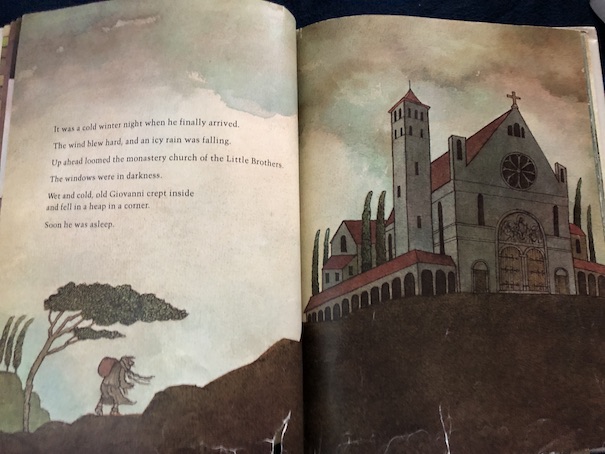
A young boy named Giovanni has no parents and must live as a beggar, but he knows how to juggle. He juggles fruit and vegetables in the marketplace, and the produce sellers give him food in exchange for drawing people’s attention to their wares.

One day, Giovanni sees some actors putting on a play, and he asks for a job with the troupe. After he demonstrates his juggling ability, they agree to take him on in exchange for food and a place to sleep.

Over time, Giovanni’s juggling act becomes more elaborate. Eventually, he becomes famous in his own right and leaves the troupe to become an entertainer for many important people.

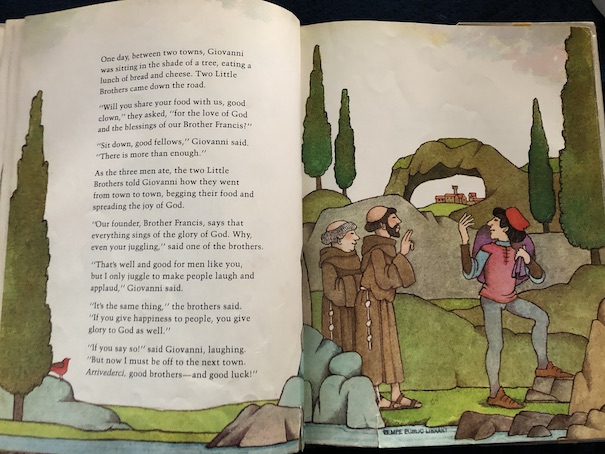
During his travels, he meets two monks, who ask him if he is willing to share his food with them. He agrees, and they tell him about Brother Francis, the founder of their order. (St. Francis of Assissi. They are Franciscan monks.) They say that everything in the world is a sign of God’s glory, even Giovanni’s juggling. Giovanni says that he never thought of it like that before. He just likes making people happy with his performance. The monks say that making people happy is a way of glorifying God.

Giovanni continues his performances, but as he gets older, people get tired of his act, and one day, he actually drops one of his juggling balls. For a time, he has to live as a beggar again. However, he eventually finds his way to the monastery where the Franciscan monks live.

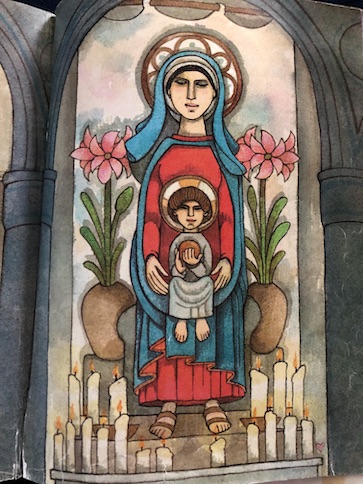
He arrives at the monastery at Christmas, and there is a special procession where people are offering gifts to the Christ Child, placing them in front of a statue of Jesus and Mary. Giovanni is struck by how serious the Christ Child looks in the statue, and so he decides to perform the act that used to make everyone smile.

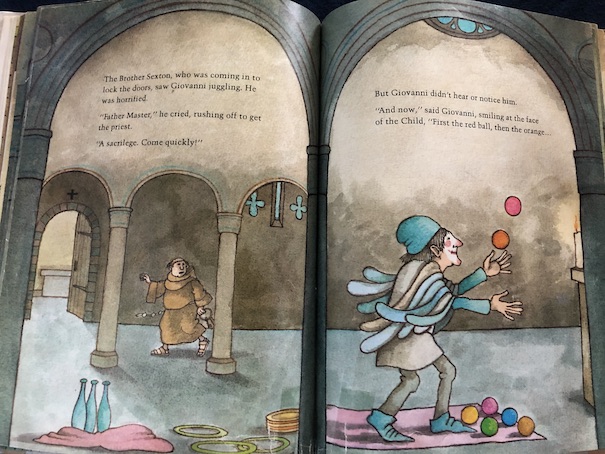
When one of the monks sees him juggling in front of the statue, he thinks that it’s a sacrilege and calls the priest to come see what Giovanni is doing.

The story is sad because Giovanni’s exertion in giving the best performance of his life causes him to have a heart attack and die. However, the priest and the monk notice that, suddenly, the statue is smiling and holding Giovanni’s special golden ball.

The story is about using talents to the fullest. The juggler’s talent, as the monks said, was a gift from God. For as long as he could, he used it to make people happy, and when he was too old to do so anymore, he gave his last, finest performance for Jesus.

The book is available to borrow and read for free online through Internet Archive.

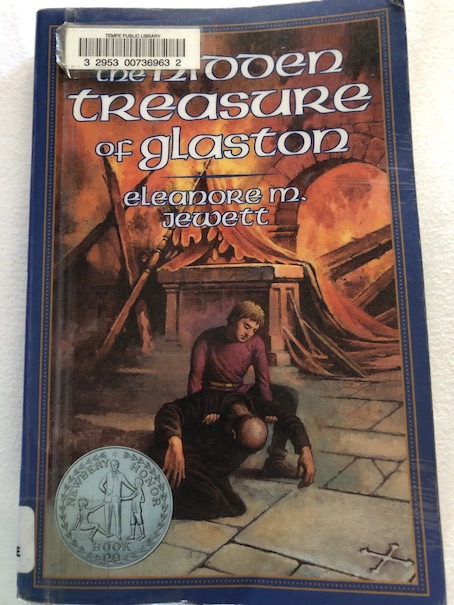
The Hidden Treasure of Glaston

The Hidden Treasure of Glaston by Eleanore M. Jewett, 1946.

The year is 1171.  Twelve-year-old Hugh, a somewhat frail boy with a lame leg, arrives at the abbey of Glastonbury with his father on a stormy night.  Hugh’s father is a knight, and in his conversation with Abbot Robert on their arrival, he makes it known that, although he loves his son, he is disappointed in the boy’s frail condition because he can never be a fighter, like a knight’s son should be.  The abbot rebukes him, saying that there is more to life than war and that he, himself, is also of noble blood.  The knight apologizes, and says that, although it is not really the life that he would wish for his son, he asks that the abbey take him in and educate him.  Although the knight (who refuses to give his name, only his son’s first name) says that he cannot explain his circumstances, the abbot senses that the knight is in trouble and is fleeing the area, perhaps the country of England entirely. 

It is true that the knight is in trouble, and he is fleeing.  Since Hugh’s health is delicate, his father cannot take him along in his flight.  Realizing that the abbey will provide him with a safer life, Hugh’s father wants to see him settled there before he leaves and gives the abbey a handsome gift of expensive, well-crafted books as payment for his son’s education.  The abbot is thrilled by the gift, although he says that they would have accepted Hugh even without it.  Then, the knight leaves, and the monks begin helping Hugh to get settled in the abbey.

Hugh is upset at his father’s leaving and the upheaval to the life he has always known, although he knows that it is for the best because of his family’s circumstances.  Although the story doesn’t explicitly say it at first, Hugh’s father is one of the knights who killed Thomas Becket, believing that by doing so, they were following the king’s wishes. Hugh’s father did not actually kill Beckett himself, but he did help to hold back the crowd that tried to save Beckett while others struck the blows, so he shares in the guilt of the group.  Although Hugh loves his father, he knows that his father is an impulsive hothead.  Now, because of the murder, Hugh’s father is a hunted man. By extension, every member of his household is also considered a criminal.  Their family home was burned by an angry mob, their supporters have fled, and there is no way that Hugh’s father can stay in England.  However, the prospect of life at the abbey, even under these bleak circumstances, has some appeal for Hugh.

Hugh has felt his father’s disappointment in him for a long time because his leg has been bad since he was small, and he was never able to participate in the rough training in the martial arts that a knight should have.  Even though part of Hugh wishes that he could be tough and strong and become the prestigious and admired knight that his father wishes he could be, deep down, Hugh knows that it isn’t really his nature and that his damaged leg would make it impossible.  Hugh really prefers the reading lessons he had with his mother’s clerk before his mother died.  His father always scorned book learning because he thought that it was unmanly, something only for weak people, and Hugh’s weakness troubles him.  Hugh’s father thinks that the real business of men is war, fighting, and being tough.  However, at the abbey, there are plenty of men who spend their lives loving books, reading, art, music, and peace, and no one looks on them scornfully.  For the first time in Hugh’s life, he has the chance to live as he really wants to, doing something that he loves where the weakness of his bad leg won’t interfere. 

The abbot is pleased that Hugh has been taught to read and arranges for him to be trained as a scribe under the supervision of Brother John.  Hugh enjoys his training, although parts are a little dull and repetitive.  Hugh confides something of his troubles in Brother John, who listens to the boy with patience and understanding.  Although he does not initially know what Hugh’s father has done, Hugh tells his about the burning of his family’s home, how they struggled to save the books that they have now gifted to the abbey, and how there were more in their library that they were unable to save.  Hugh tells Brother John how much he hates the people who burned their home and how much he hates the king, who caused the whole problem in the first place. His father would never have done what he did if the king hadn’t said what he said about Thomas Becket, leading his knights to believe that they were obeying an order from their king.  Brother John warns Hugh not to say too much about hating the king because that is too close to treason and tells him that, even though he has justification for hating those who destroyed his home, he will not find comfort in harboring hate in his heart.  He also says that not all that Hugh has lost is gone forever.  People who have left Hugh’s life, like his father, may return, and there are also many other people and things to love in the world that will fill Hugh’s life.  Brother John urges Hugh to forget the past and enjoy what he has now.  When Hugh says how he loves books but also wishes that he was able to go adventuring, Brother John says that adventures have a way of finding people, even when they do not go looking for them.

One day, when Brother John sends Hugh out to fish for eels, Hugh meets another boy who also belongs to the abbey, Dickon.  Dickon is an oblate.  He is the son of a poor man who gave him to the abbey when he was still an infant because he was spared from the plague and wanted to give thanks to God for it.  Dickon really wishes that he could go adventuring, like Hugh sometimes wishes, although he doesn’t really mind life at the abbey.  Because Dickon is not good at reading or singing, he helps with the animals on the abbey’s farm.  Although he is sometimes treated strictly and punished physically, he also has a fair amount of freedom on the farm, sometimes sneaking off to go hunting or fishing.  He also goes hunting for holy relics.  Dickon tells Hugh about the saints who have lived or stayed at the abbey and how the place is now known for miracles.  He is sure that the miracles of Glaston will help heal Hugh’s leg, and he offers to take him hunting for holy relics.  Hugh wants to be friends with Dickon, but at first, Dickon is offended that Hugh will not tell him what his last name is.  Dickon soon realizes the reason for Hugh’s secrecy when a servant from Hugh’s home, Jacques, comes to the abbey to seek sanctuary from an angry mob that knows of his association with Hugh’s father.

The abbot grants Jacques temporary sanctuary but tells him that he should leave the country soon.  When Dickon witnesses Jacques’s explanation of why the mob was after him, comes to understand his connection to Hugh.  Although the mob does not know that Hugh is actually connected to Jacques, Dickon spots the connection and tells Hugh that he forgives his earlier secrecy.  Dickon even helps Jacques to leave the abbey the next day, in secret.

Now that Dickon knows Hugh’s secret, he lets Hugh in on his secrets and the secrets of the abbey itself.  He shows Hugh a secret tunnel that he has discovered.  There is an underground chamber between the abbey and the sea where more parchments and some other precious objects are hidden.  Dickon doesn’t know the significance of all of the objects, although there appear to be holy relics among them.  Dickon’s theory was that monks in the past created this room and tunnel to store their most precious treasures and get them away to safety in case the abbey was attacked and raided.  At some point, part of the tunnel must have collapsed, blocking the part of the tunnel leading to the abbey.  The boys are frightened away when they hear the ringing of a bell and can’t tell where it’s coming from.  Could there have been someone in a part of the tunnel that is now blocked off from the part where they entered?

Since Hugh is sworn to secrecy concerning Dickon’s discovery, he can’t ask Brother John about it directly, but he gets the chance to learn a little more when Brother John asks him to help clean some old parchments so they can reuse them.  Most of them are just old accounting sheets for the abbey that they no longer need.  Brother John said that they were stored in an old room under the abbey.  Hugh asks Brother John about the room and whether there are other such storage rooms underground.  Brother John says that there are rumors about a hidden chamber somewhere between the abbey and the sea where they used to store important objects for safety, but as far as he knows, no living person knows where it is or even if it still exists.  Hugh asks Brother John about treasures, but as far as Brother John is concerned, the real treasures of the abbey are spiritual.  However, when Hugh notices some strange writing on one of the parchment pieces that doesn’t look like accounting reports and calls it to Brother John’s attention, Brother John becomes very excited and orders him to stop cleaning the parchments so that he can check for more of the same writing.  Among the other scrap parchments, they have found pieces that refer to Joseph of Arimathea, who provided the tomb for Jesus after his crucifixion.  According to legend, Joseph of Arimathea also took possession of the Holy Grail, the cup that Jesus used at the Last Supper, which was supposed to have special powers, and that he left the Middle East and brought the Holy Grail to Glaston, where it still remains hidden. This story is connected to the legends of King Arthur, who also supposedly sought the Holy Grail. The parchments may contain clues to the truth of the story and where the Holy Grail may be hidden.

This story combines history and legend as Hugh and Dickon unravel the mysteries of Glastonbury and change their lives and destinies forever.  Although Hugh and Dickon both talk about how exciting it would be to travel and go on adventures, between them, Hugh is the one whose father would most want and expect his son to follow him on adventures and Dickon is the one who is promised to the abbey.  However, Hugh loves the life of the abbey and serious study, and Dickon is a healthy boy who is often restless.  Their friendship and shared adventures at the abbey help both Dickon and Hugh to realize more about who they are, the kind of men they want to be, and where they belong. Wherever their lives lead them from this point, they will always be brothers. 

There are notes in the back of the book about the historical basis for the story. In the book, the monks find the tomb of King Arthur and Guinevere. Although the story in the book is fictional, the real life monks of Glastonbury also claimed to find the tomb of King Arthur. The bones they claimed to find were lost when the abbey was destroyed later on the orders of Henry VIII, but this documentary (link repaired 2-27-23) explains more about the legends and history of King Arthur. The part about Glastonbury is near the end.

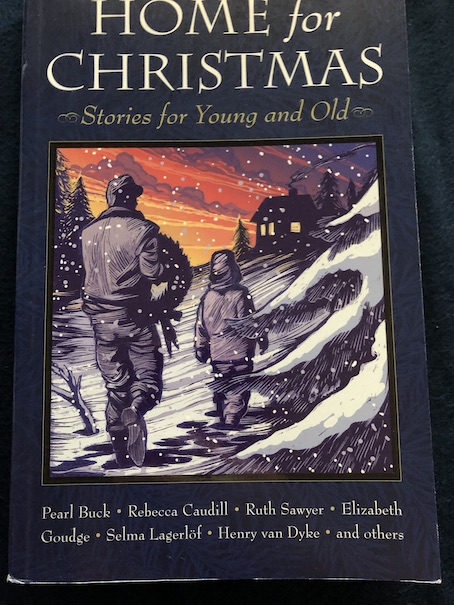
Home for Christmas

Home for Christmas: Stories for Young and Old compiled by Miriam LeBlanc, 2002.

Disclosure: Plough Publishing House sent a copy of this book to me for review purposes, but the opinions in the review are my own.

This is a collection of short Christmas stories written by famous authors from around the world. One of the things that I found interesting about the selection of authors in the book is that many of them are better known for writing on very different themes. Among the authors in this book are Madeleine L’Engle, who is known for writing science fiction, such as A Wrinkle in Time; Elizabeth Goudge, who wrote the mid-20th century classic children’s fantasy story The Little White Horse (later made into the film called The Secret of Moonacre); Katherine Paterson, known for her children’s novels, including Bridge to Terabithia, Jacob Have I Loved, and historical novels set in Asia, such as The Master Puppeteer; and Pearl S. Buck, author of The Good Earth.

Although the book is intended for children and families and many of the authors are known for writing for children and young adults, I think that many of the stories wouldn’t particularly appeal to children, especially younger children, because children wouldn’t be likely to understand them or they have darker themes, like bitterness that must be overcome and grief at the death of a child. The stories generally end well, but for young children, something simpler and lighter in subject matter, like the short stories in Merry Christmas from Eddie, would be more appealing. Really, I think this book would be best for adults, although I noted some of the more child-friendly stories.

One thing that I wished the book included is sections of information that explain a little more about the stories behind the stories. I recognized the historical references behind some of the stories, but other readers, particular children, might require a little more explanation to fully appreciate them. I think that’s another good reason why the stories might appeal more to adults.

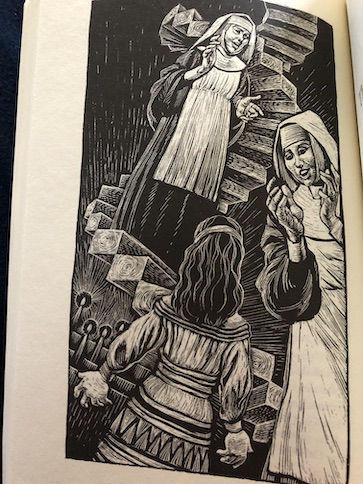
There are 20 stories contained in the book. Each of the stories in the book has one black-and-white picture in an old-fashioned woodcut style.

I don’t think that there are any copies of this book available to read for free online, but this book is available for purchase through Plough Publishing House.

The stories contained in this book are:

Brother Robber by Helene Christaller

A young monk sends three robbers away without food before Christmas because they are violent criminals, but an older monk convinces him to have compassion and to find them and give them the food they have asked for.

The compassionate brother, Brother Francis, is St. Francis of Assisi, although it is not explicitly explained in the story, and the younger brother, Brother Angelo, is the main character. The story of St. Francis, Brother Angelo, and the robbers is an old one that has been told before in other forms, but this is a good rendition.

Three Young Kings by George Summer Albee

Three boys at a school in Cuba are given the role of playing the Three Kings in their school play as well as delivering presents to the rest of the children in their community, giving them presents that their parents have already bought for them. However, their task proves harder than they thought when they see how upset the poor children are that they pass their houses and leave nothing because their parents couldn’t afford presents. What can they do?

This is a good book for talking about making choices. In the end, the community is satisfied with the boys’ choice, but a good topic for discussion after this story would be what the community will choose to do next year, when new boys become the Three Kings.

Transfiguration by Madeleine L’Engle

A nun in New York City struggles to answer a poor man’s questions about why Christmas should be so “merry” when there are so many poor people and bad things happening in the world. The real answer comes to her after the man tries to rob her.

The Cribmaker’s Trip to Heaven by Reimmichl

Willibald Krautmann spends his life making manger scenes for Christmas, and he is sure that his work will earn him a place in Heaven. Unfortunately, when he dies, he is not received in Heaven as he thought and, confronted with the history of his faults that prevents him from entering, he must seek an advocate to help him plead his case. However, it’s not too late for him to mend his ways, and the reader is left to imagine how much was real and how much was dream.

The Guest by Nikolai S. Lesskov

Timofai was a bitter young man, an orphan defrauded of his inheritance by his uncle. After a violent fight with his uncle, he is sent into exile in Siberia. Even after his life improves and he marries and has a family of his own, he still finds himself bitter about the injustice that was done to him. Is there anything that his friend and brother-in-law can say that will help him? When he finally meets his uncle again, after many years, will they both get the closure they really need?

Christmas Day in the Morning by Pearl S. Buck

An older man and his wife decide how to spend Christmas now that their children are grown and living their own lives, separately. As the man reflects on Christmases past, he realizes that love is what makes Christmas special and what you do to show other people how much you love them.

This is one of those stories that I think adults would understand more than children, although it’s a good thought to explain to older children.

The Other Wise Man by Henry van Dyke

The story of a wise man who set out to follow the star at Christmas, like the others, but didn’t arrive at Bethlehem with them because he stopped to help someone. Although he arrives too late to see the Christ Child, he is in the right places to help people because he set out on the journey. At the end of his life, this wise man does actually see Jesus at his crucifixion.

This is a famous 19th century story.

The Miraculous Staircase by Arthur Gordon

In Santa Fe, New Mexico, in 1878, an unusual carpenter promises that he can build a staircase to a church choir loft, even though the original architect didn’t leave space for stairs. Even though other carpenters had failed to find a solution to the problem, the mysterious stranger solves it. But, who was that mysterious carpenter, and how did he do it?

This is actually based on a true story! I’ve been to the church in Santa Fe, the Loretto Chapel, and I’ve seen this staircase myself! The short story ends with a few details about the history of the event.

No Room in the Inn by Katherine Paterson

When an eighteen-year-old boy’s parents leave him alone at the family’s inn, which is closed for Christmas while they visit his sister’s family, he’s a little sad at spending Christmas alone but also looking forward to some freedom to relax. However, a mysterious stranger who needs a place for the night changes his plans.

The Chess Player by Ger Koopman

The Christ Child must help an old man to forgive his estranged daughter on Christmas. Can the Christ Child soften a hardened heart over a game of chess?

The Christmas Lie by Dorothy Thomas

A poor young girl from a large family invents a story that some friends have invited the whole family to join them for Christmas dinner when, in fact, no invitation has been made. It had really been more of an impulsive wish that they had been invited, but when her family believes her and begins preparing for the event, can the girl find the courage to admit the truth? What will happen when everyone realizes that she lied?

This is one of the better child-centered stories in the book.

The Riders of St. Nicholas by Jack Schaefer

A group of cowboys have to decide which of them are going into town to celebrate Christmas and which of them will be staying on the ranch. The ones who get left behind plan a small feast for themselves as consolation for being left out of the fun. However, their plans change when they rescue a neighbor who got drunk and almost froze in a snowstorm.

Grandfather’s Stories by Ernst Wiechert

An old coachman tells stories that his grandfather told him. One Christmas Eve, his grandfather’s grandfather was driving a coach and saw a strange, smiling boy who seemed to be asking for something. Although his employer wanted him to drive on, the coachman gave the boy a ride, and it turns out to be the beginning of a miracle. In another story, a cruel master is changed for the better when he sees that the victim of his cruelty is Christ.

The Vexation of Barney Hatch by B.J. Chute

A panhandler gets recruited as a store Santa and helps a poor boy who only wants a harmonica.

The Empty Cup by Opal Menius

King Herod, knowing of a prophecy that a new king would be born, attempted to kill the new king to preserve his own power. Unable to tell which baby would be the prophesied king, Jesus, he ordered all of the boy babies in the area to be killed.

This story focuses on a man whose only child was killed. His wife seems unable to get over the shock and grief of their son’s death until another little boy teaches her how to get over a loss.

The Well of the Star by Elizabeth Goudge

The Well of the Star is a well where legend has it that the Wise Men stopped on their way to see Jesus. David is a poor shepherd boy who is left behind when the other shepherds go to see the baby Jesus. He is visited by the archangel Michael, who sends him to join the others, meeting the Wise Men on the way.

This is one of the better child-centered stories in the book.

A Certain Small Shepherd by Rebecca Caudill

Jamie’s mother died shortly after his birth, and for much of his young life, Jamie is unable to talk. When he begins going to school, he does well, except that he can’t answer questions out loud in class and not at all if he doesn’t know how to spell the word that he wants. It’s frustrating. However, when his teacher makes him a shepherd in the school Christmas play and his family has some unexpected visitors in a snowstorm, things change.

This is one of the better child-centered stories in the book.

The Carpenter’s Christmas by Peter K. Rosegger

The carpenter’s wife thinks that he isn’t be pious enough on Christmas, but he has an important job to do for someone less fortunate.

What the Kings Brought by Ruth Sawyer

In Spain, the tradition is that the Three Kings bring presents to children on Twelfth Night. A traveler in Spain shortly before Twelfth Night meets a poor young boy who is desperately trying to raise money to buy a new burro to help his father on his farm. The traveler and his friend come up with an idea to help the boy without it seeming like charity.

This is one of the better child-centered stories in the book.

The Christmas Rose by Selma Lagerlof

A Robber Mother trespasses on monastery ground and angers the monks when she tells them that their beautiful herb garden cannot compare to the way the forest looks on Christmas Eve. Abbot Hans decides to pay the Robber family a visit on Christmas, although it ends up being his last.

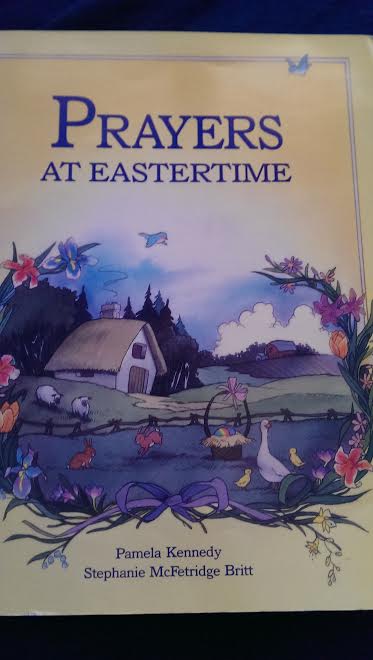
Prayers at Eastertime

PrayersEastertime

Prayers at Eastertime by Pamela Kennedy and Stephanie McFetridge Britt, 1989.

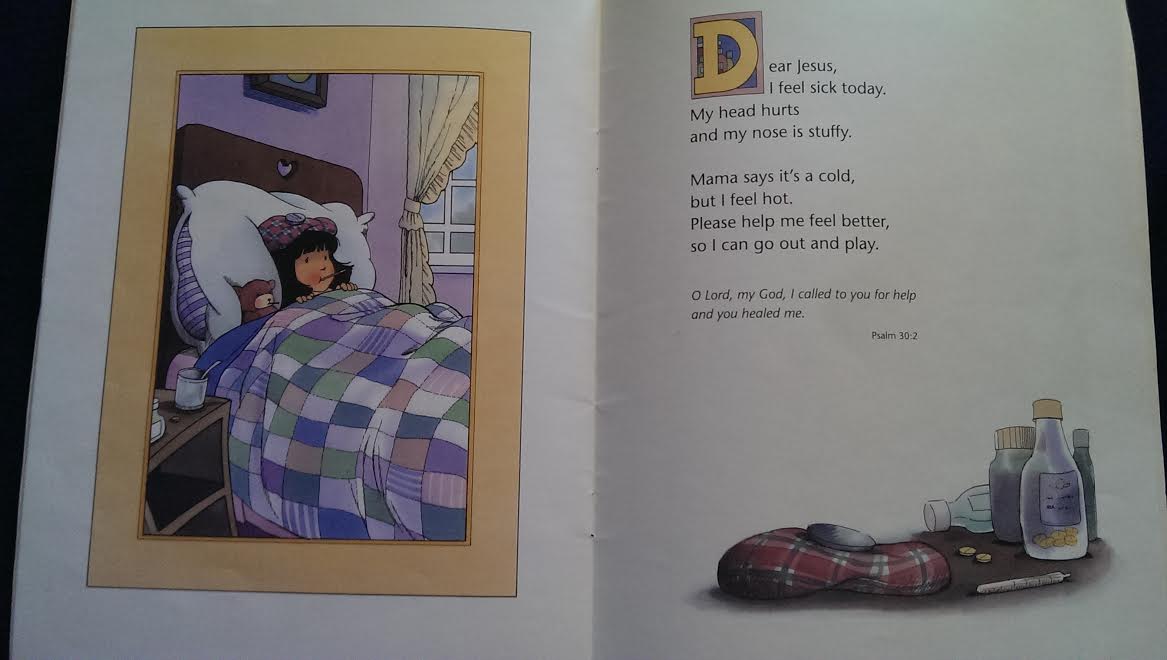
This was a present given to me one Easter many years ago, and I always liked it, especially because of the nice pictures.  Some of the prayers and accompanying Bible quotes are specifically for Easter and springtime, but others are just more general.

There are multiple copies of this book available online through Internet Archive.

Happy Easter!

PrayersEastertimePic1

PrayersEastertimePic2

PrayersEastertimePic3