An Ellis Island Christmas

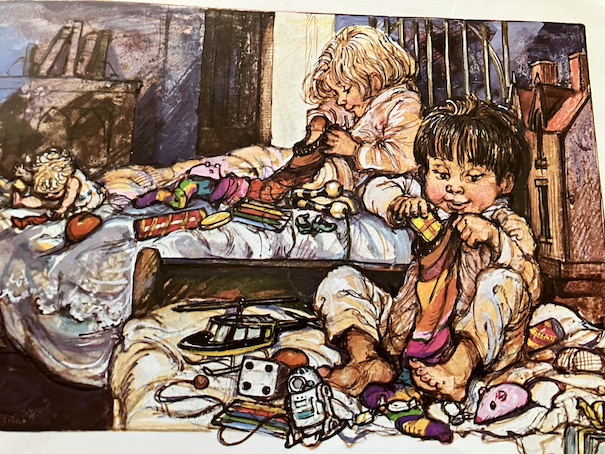
A six-year-old girl, Krysia Petrowski, knows that her family is preparing to leave Poland for the United States. Her father went ahead to America to establish a home for the rest of the family, and she knows that she, her mother, and her brothers will soon follow him. She doesn’t want to leave her home and her best friend, but her mother explains that life will be better in America because there is more food and there are no soldiers in the streets.

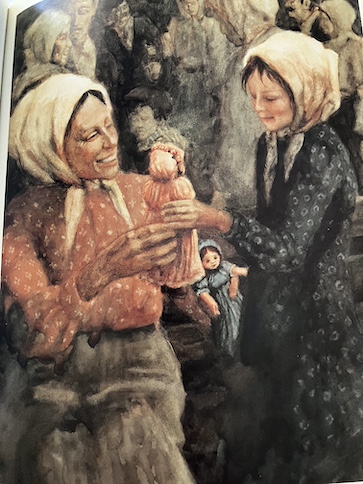
When the family begins packing to leave for America, they cannot bring everything with them because they have a long walk to get to the ship that will take them to America, and they can only bring what they can carry with them. The girl can only bring one of her two dolls with her, and she is sad at having to leave one behind.

When they board the ship, the conditions are cramped and cold. The food isn’t good, either. The voyage is rough and stormy, and many people are seasick. The one bright point is that Krysia meets another girl she knows from school, Zanya, so she knows that she won’t be going to America alone and friendless. Krysia and Zanya play together on the ship when the weather is better.

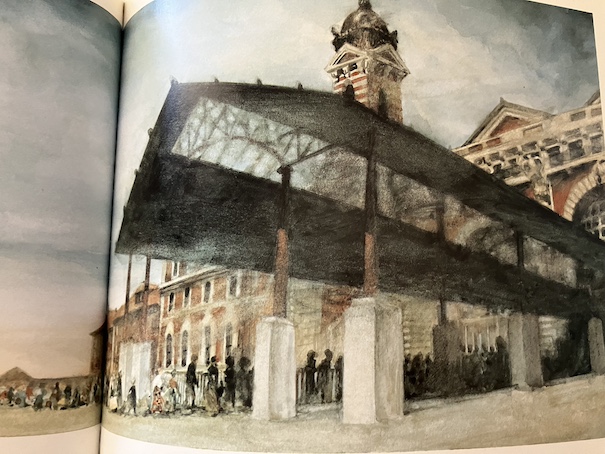
Finally, they reach Ellis Island on the day before Christmas. Everyone lines up, and the family has to show their papers to the immigration officials. Doctors look at them to make sure they are healthy enough to go ashore and into the city. Fortunately, they pass the health tests, although Krysia sees another woman who is told that she will have to go into the hospital or back to Poland because she is ill. The family converts their money to American money and buys some food. A man has to explain to them how to eat a banana because they’ve never seen one before.

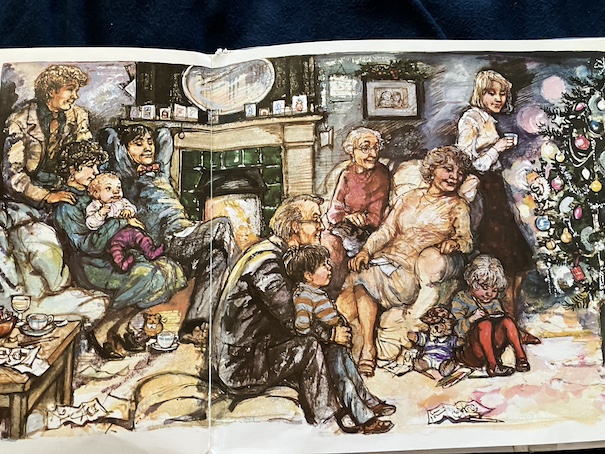
Because it’s Christmas Eve, there is a big Christmas tree, covered with lights and toys. There is also a man dressed like Santa Claus, although Krysia thinks of him by the Polish name, Saint Mikolaj. They don’t receive any new presents, but Krysia’s mother does have a surprise for her. The best part is when Krysia’s father comes for them and takes them to their new home.

The book ends with a section explaining the history behind the story.

The book is available to borrow and read for free online through Internet Archive (multiple copies).

The focus of this story is all on the feelings and experiences of the immigrant family, especially little Krysia. Krysia’s impressions of the journey and the arrival at Ellis Island are all a child’s impressions, and she often needs explanations of what’s happening and what’s going to happen next, which is helpful to child readers.

The historical context for the story is provided in the section of historical information at the end and in some hints during the course of the story. The section of historical information in the back of the book discusses the peak years of US immigration, from 1892 to 1924. They don’t say exactly what year this story takes place, but it mentions 48 stars on the American flag. That means that this is the early 20th century, after Arizona and New Mexico were admitted as states in 1912. During that time, 70% of US immigrants came through the immigration center on Ellis Island, just off the coast of New York City. Of those who arrived at Ellis Island, about a third stayed in New York, and the others spread out across the US. The family in the story seems to be going to stay in New York, but because the focus of the story is mainly on the journey, there are still few details provided about this family’s background and circumstances. The section of historical information also explains a little more about the traveling conditions of immigrants around that time and what typically happened at Ellis Island, so readers can understand how the experiences of the characters in the story fit into the experiences of other, real-life immigrants. (For more details, I recommend reading If Your Name Was Changed at Ellis Island and Immigrant Kids, nonfiction books which echo many of the details included in this book.)

There is some discussion in the section of historical information about the reasons why immigrants left their homes, and we told in the beginning of the story that there are shortages of food in Poland and soldiers everywhere, but there is more that I’d like to say about this. Because I like to add context to historical stories, I’d like to talk what was happening in early 20th century Poland and what’s behind the circumstances the characters describe. During the 19th century, parts of Poland were under the control of three different European empires: Russia, Prussia (a German state), and the Austro-Hungarian Empire (while later dissolved into Austria and Hungary). The oppressive control of these imperial powers accounts for the soldiers the family describes on the streets. There were Poles who resisted the control of these forces and wanted to reunify their country, so the soldiers were to keep the population under control and put down resistance. Around the turn of the 20th century, Polish territories were also suffering from unemployment and land shortages, which explains the food shortages the family experiences. Because of these conditions, there was massive immigration from Poland to the United States during the late 19th century and early 20th century. The Petrowski family in the story would have been on the tail end of this wave of immigration because circumstances changed for Poland after World War I (1914 to 1918), when Poland became an independent country again. Some Polish immigrants to the United States intended to stay only for a relatively short time, hoping to save up money and return to their homeland with the money to purchase land or improve their family’s circumstances, but many of these people remained in the United States anyway.

Because the main character, Krysia, is only six years old, she likely wouldn’t understand the full background of her family’s circumstances and the political causes of the hardships in her country, but I like to explain these things for the benefit of readers. I think it’s also interesting that this story is a Christmas story. We are never told what the religion of the characters is, although it seems that they are Christian because they care that it’s Christmas. Many people from Poland were Catholic, so it’s possible that this family was Catholic, too, but it’s never clarified.

If you read the short biographies of the author and illustrator of the story, the author reveals that the inspiration for the story was the story of her own family’s journey from Poland. The illustrator says that he went on a tour of Ellis Island to prepare for producing the illustrations, and he tried to capture the “awe and anticipation” of the immigrants and the high vaulted ceilings and views of the New York skyline through the windows. I’ve also been to Ellis Island, and the illustrations in the book brought back memories of my trip there. I thought that the illustrator did a good job of capturing how big, impressive, and bewildering the Ellis Island compound would be to a young child.

The Christmas Doll

Young Lucy and Glory Wolcott are orphans in London during the Victorian era, 1848. Their parents died during a disease epidemic, and the penniless girls now live in a work house for orphans. They’ve been living there for 5 years, doing sewing for their support, although they are kept in terrible conditions there, with bad food. Then, another girl who lives in the work house dies of an illness, and people worry about the disease infecting others, as it did during the epidemic. Soon, other girls in the work house get sick. Lucy worries about her little sister, who is only 6 years old and already too thin from the bad food, will get sick and die, too. People begin saying that it may be safer living on the streets than being cooped up with the sickness.

The only comfort that Lucy and Glory have in their lives is each other and the story that Lucy tells Glory of her memories of Christmas with their parents. Glory was too young when their parents died to remember their parents or what life was like when their parents were alive, when they had someone to take care of them and actually had proper food. Glory loves the story that Lucy tells about the doll named Morning Glory that their mother gave her for Christmas but which was left behind when the girls were sent to the alms house and then to the work house when their parents died. Glory dreams that, someday, they’ll find that doll again. Lucy tells Glory that, when she finds her doll again, she’ll recognize her.

As more children at the work house die, Lucy increasingly fears that her sister will get sick and die. She thinks about running away from the work house with her sister, but she’s afraid of what they would do on their own. They don’t receive much food or care in the work house, and they’re subject to beatings and abuse, but what would they do on the streets, and how would they survive?

When Glory develops a cough, Lucy is sent to the sick ward at the work house, and Lucy is terrified that she will never come back. Both Lucy and Glory know that none of the girls who are sent to the sick ward with this cough have come back. Terrified, Lucy thinks that the only way to save Glory is to rescue her from the sick ward and get her out of the work house.

The two girls successfully run away, but once they’re on the streets, they have nowhere to go and don’t know what to do. They have nowhere to stay, and they have to sleep in the cold. Without food or money, Lucy trades a small pair of scissors that she brought from the work house for a couple of crumpets from a muffin seller, although a boy later tells her that the scissors were worth much more than that and that the seller took advantage of her. Lucy worries that they have no way to survive on their own because they don’t know what to do and have nothing else that they can sell or trade.

A kind washerwoman suggests to the girls that they go down to the river to join the mudlarks, who spend their days hunting for things to scavenge and sell in the mud at the river’s edge. Sometimes, she say, they find truly amazing things. With nothing else to do, the girls try it. The mud is smelly and disgusting, and at first, all they find are some old bones and bent nails. They’re about to give up when they find something that is truly amazing – a doll!

The doll is worn out, but its head is still good, and immediately, Glory declares that this is Morning Glory, the lost doll that has come back to them, just like the stories that Lucy has told her. With a heavy heart, Lucy realizes that they’re not going to be able to keep the doll. They have nothing else they can sell for money, and if they don’t sell the doll, they will have nothing to buy food and shelter.

At the suggestion of a rag and bone dealer, who is kind enough to let little Glory sleep by her fire for a time, Lucy takes the doll to a dollmaker. She hates having to do it and knows that it will break little Glory’s heart, but they are starving, and their lives are at stake. The doll is in such bad condition that only the head is worth something, and the dollmaker is prepared to offer Lucy a penny for it. That’s not much, but it’s more than Lucy was expecting. Then, something happens that changes everything for the better for Lucy and Glory.

The dollmaker notices the little morning glory flower embroidered on the apron Lucy is wearing. It’s actually Glory’s apron, and Lucy embroidered the flower for her because Glory was named after the morning glory flowers, just like her doll. The dollmaker asks Lucy who did the embroidery, and Lucy timidly admits that she did. At first, she worries that she shouldn’t confess that because she used thread from the work house to do it, and she would surely be punished for stealing if anybody knew. However, the dollmaker is impressed with Lucy’s sewing skills.

Then, before Lucy can leave the shop, the dollmaker gets word that Mary, the girl who sews the hearts on the dolls has been taken seriously ill and isn’t expected to survive. The disease that afflicted the girls in the work house is everywhere. The dollmaker worries because this particular doll shop is known for the signature hearts that are sewn onto their dolls, and the tradition is that only a girl can sew them, not an adult. Losing the girl who sews the hearts isn’t just sad but also serious for the doll shop because it’s only two weeks to Christmas, and they have a lot of orders to fill. If they can’t find another girl who can sew or break the tradition of the doll hearts, they won’t be able to complete their orders and will lose their shop’s reputation. Of course, it doesn’t take the the dollmaker long to realize that the solution to the problem is literally standing right in front of them.

Lucy is stunned when the dollmaker, Miss Thimbleby offers her the job of sewing the hearts on the dolls. It would only be through Christmas, but it would be regular work, something Lucy definitely needs. However, Lucy worries about what she will do with Glory. There doesn’t seem to be a place for her in the shop. Miss Thimbleby will let Lucy stay overnight in the shop to tend the fire, but Lucy isn’t supposed to let anyone else in after the shop is closed. Could she persuade Miss Thimbleby to let Glory in with her, or could Lucy find a place for Glory to be?

When Lucy returns to the rag and bone shop to talk to Glory, she discovers that the husband of the kind lady is much less charitable and has turned Glory out into the streets. In a panic, Lucy searches for her, losing their only penny out of her pocket. Eventually, she finds Glory with the boy who had told her that she was cheated over the matter of the scissors, Nick. Glory has told him about their escape from the work house, and Lucy sadly confesses her sale of the doll to Glory. Fortunately, Nick sees how Lucy’s new job at the doll shop can help them all.

Since the job requires Lucy to spend every night in the doll shop, tending the fire and keeping warm, Nick points out that Lucy can sneak him and Glory in after hours. In return for being allowed to sleep in the warm doll shop with the girls, Nick says that he will look after Glory during the day and that she can help him to make a little money that will help support them all. Nick is also a homeless orphan, and he get money catching rats and doing acrobatics on the streets. Glory doesn’t like the idea of the rats much, but Nick has her passing the hat while he performs on the streets. Her pitiful cough will help them get more charity.

It’s not an ideal situation, but Lucy agrees that this is the best way to manage things. Lucy continues to worry about her little sister, running around in the cold with Nick during the day, although they do have a warm place to sleep now. At night, Lucy lets Glory hold the doll Morning Glory, although she reminds Glory that the doll now belongs to the shop.

While working at the shop, Lucy notices that Miss Thimbleby also has a favorite doll, one that is never for sale. She calls this doll Charlotte and talks to it when she thinks nobody can hear here. The other women who work in the doll shop explain to Lucy that Charlotte, the real Charlotte, was Miss Thimbleby’s little sister. The sisters were orphans, like Lucy and Glory. Charlotte was much younger than Miss Thimbleby, and Miss Thimbleby raised her. Charlotte was the original hearts girl of the shop, the one who always sewed the signature hearts on the dolls and started the tradition. Sadly, Charlotte died young of an illness. The doll Charlotte was the very last one that the girl Charlotte gave a heart to before she died, and that’s why Miss Thimbleby refuses to sell it and sometimes talks to it, like she’s talking to her sister.

As Christmas approaches and Glory’s illness becomes worse, Lucy increasingly fears for her life. Glory’s illness is particularly bad on Christmas Eve. Miss Thimbleby has promised Lucy that, as part of the tradition of the hearts girl, Lucy may choose any unsold doll in the shop for herself on Christmas Eve. Lucy has her sights set on Morning Glory so she can return her to Glory, but a series of unexpected events and a generous, good-hearted decision from Glory lead to marvelous changes for the girls.

The book is available to borrow and read for free online through Internet Archive (multiple copies).

This story, set in a Dickensian London in the mid-19th century is touching and sometimes a bit tear-jerky, but it’s full of old-fashioned Christmas spirit! The book doesn’t minimize the risks to the children’s lives. The lives of poor people in this period were harsh, and children were vulnerable to being orphaned or even dying young of disease. The story even talks about children being taken advantage of by unscrupulous and uncaring adults, whether it’s being cheated out in a trade for food or the talk of children on the streets being kidnapped and forced into servitude as chimney sweeps. Parentless children on the streets wouldn’t know which adults to trust, and those realities are shown in the story. The children’s worries and hardships make the happy ending of the story touching.

Some readers might guess at the likely, most happy ending for the girls because there is one adult in the story who would have sympathy for a pair of orphaned sisters. The eventual fate of Morning Glory and whether her loss or gain would help Glory hangs in the balance for most of the story. The role Morning Glory plays in the ending of the story is important, and it’s Glory’s decision about Morning Glory that helps determine the girls’ fate and also touches two other lives. Don’t worry about the doll, though. The story works out well for the doll, being with someone who truly needs and appreciates her. The lives of all three children are changed for the better in the end, too.
The All-I’ll-Ever-Want Christmas Doll

The All-I’ll-Ever-Want Christmas Doll By Patricia C. McKissack, illustrated by Jerry Pinkney, 2007.

Nella lives with her parents and her two sisters, Eddy Bernice and Dessa, during the Great Depression. The three sisters usually get along well and share everything with each other. Shortly before Christmas, Nella tells her sisters how badly she wants a Baby Betty doll as a present, but they tell her it’s useless to wish for that because they’ll never be able to get one during the Depression.

Nella decides to write a letter to Santy Claus anyway, asking for Baby Betty. On Christmas morning, the girls’ mother gives each of them a little bag of treats with peppermint sticks, nuts, oranges, and raisins. Then, their father gives them one special present: a Baby Betty doll.

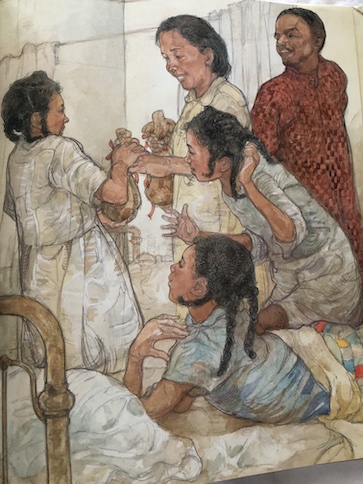
The girls are overjoyed by this special present of a doll because store-bought presents are rare in this time when so many people struggle with money and families like theirs can’t afford much. The girls are all so eager to play with the doll that they start to fight over who gets to have her first until their father breaks up the fight and their mother confiscates the doll until the girls resolve the argument

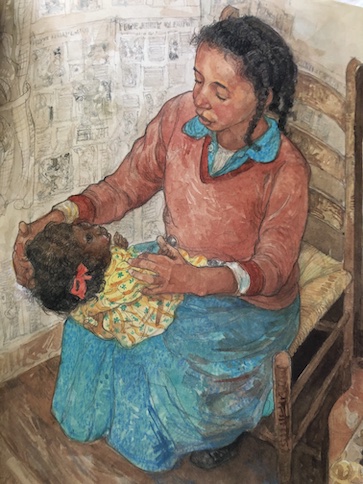
Nella persuades her sisters that the only reason they got the doll was because she wrote the letter asking for one, while they didn’t think it would even work. Nella was the one who wanted the doll the most from the beginning. Because of that, her sisters agree that the doll belongs to her and leave her to play with the doll all by herself.

At first, Nella enjoys having her dream doll all to herself, but dolls can’t sing along with songs or clap or laugh at stories, like sisters can. Nella thought that Baby Betty was all that she wanted for Christmas, but she comes to realize that, even better than having the best doll in the world, is having someone to share in the fun.

My Reaction

This is a sweet Christmas story about how people are more important than presents. At first, Nella thinks that all she wants is that special doll, but having the doll all to herself isn’t as much fun as sharing her with her sisters. The doll is pretty, but she can’t do much more than sit there and blink her eyes. Nella needs her sisters to talk to and laugh with.

I like how the author set this story during the Great Depression. A story about siblings learning that it’s more fun to share rather than keep toys to themselves could take place at any time, but the fact that this is set during the Great Depression and the girls know that presents this nice are rare. This family is poor during a time when many people are out of work and money is tight for almost everyone. At the beginning of the story, the girls help their mother to line the walls of their house with newspapers to keep out the drafts, so the readers know they are very poor. The newspaper wallpapers are seen in the backgrounds of the pictures throughout the book, reminding readers how poor the family is. They consider themselves lucky just for betting the simple treats to eat, which we’re told are better than they’ve had other years. The girls know that they are incredibly lucky to get even the one doll for Christmas, and there was no way they could expect their parents to buy one for each of them. The girls fight over the doll because they are all so thrilled to get their hands on her, and they all can’t wait to play with her. We are told that the girls are usually pretty good about sharing with each other, but this sudden appearance of an unusually good present during a time of deprivation is just overwhelming for them.

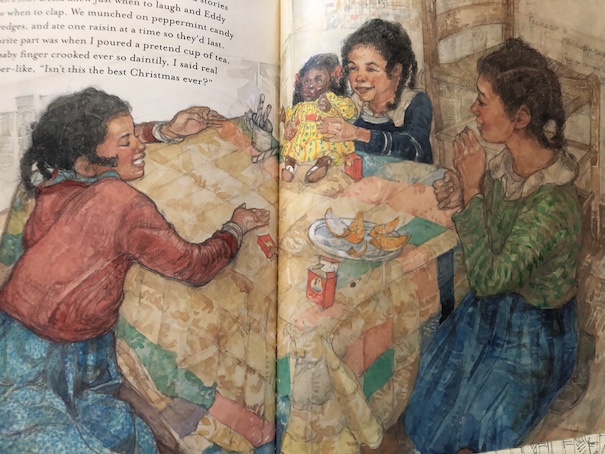
Nella seems a little selfish at first for wanting the doll for herself, but her sisters agree that it was her particular wish. It was her idea from the beginning to ask for the doll, and it seems unfair to her that her sisters each try to claim it. Fortunately, it doesn’t take Nella long to realize that it’s more fun to have other people to play with and decides to share the doll with her sisters. The girls work out their differences, and they have a much better time when they all join the pretend tea party with the doll.

The book shows the family as being very close-knit. The parents were paying attention to the girls’ wishes when they chose their special Christmas surprise. The father is involved with the girls’ lives, telling them bedtime stories and dealing with their fights, and the mother helps the girls to realize what’s important and work out their differences. Their family doesn’t have much, but I liked the way the parents helped the girls learn how to think of each other, appreciate each other, and share with each other.

Christmas Farm

Wilma has grown flowers for years, but now, she’s decided that she wants a change. She thinks about what she would like to do with her garden next spring while she’s getting ready for Christmas. Going out to cut a Christmas tree makes her think that maybe she would like to grow Christmas trees instead of flowers.

She starts by ordering 62 dozen small balsam trees (744 trees, for those who are counting), and she gets the boy from next door, Parker, to help her prepare the site for them. They use string to lay out rows for planting the trees.

Wilma knows that it will take longer than a year for the trees to grow big enough to be Christmas trees. As the trees grow, Wilma has to mow around them and take care of them, with young Parker helping her more as he also grows bigger. Wilma loses some trees to pests and weather conditions every year, but by the time the trees are big enough to sell, she has 597 left.

In the months leading up to Christmas that year, people reserve trees, and they also get a buyer who owns a Christmas tree lot in the city. Most of the trees are sold, but there are still some left. They know that the trees that were cut down will sprout again, but they’re also going to order some new ones.

In the back of the book, there is a section that explains more about growing Christmas trees with a chart showing how long it takes the trees to grow.

I thought this book was a sweet and fun look at Christmas tree farms. It takes years to grow trees big enough for Christmas trees, so there is a considerable time investment, and farmers know that they will lose some of their trees to pests or bad weather condition during that time. It’s a project that requires long-term planning and investment.

I always feel a little sorry for the trees when they’re cut down, but I liked how this book explains that, because the stumps of the cut trees are still there with their roots, even cut trees will regrow. The end of this book touches on the cycle of replanting and regrowth, with Wilma and Parker planning for their next phase of planting and cultivating new trees.

I also thought the addition of Parker to the story helps to show the passing of time and the growth of the trees because the boy grows a few years older during the time when they’re letting the trees grow bigger. By the time they’ve sold their first crop of Christmas trees, Parker is getting old enough to take more of an active role in planning the next crop.

Hanukkah at Valley Forge

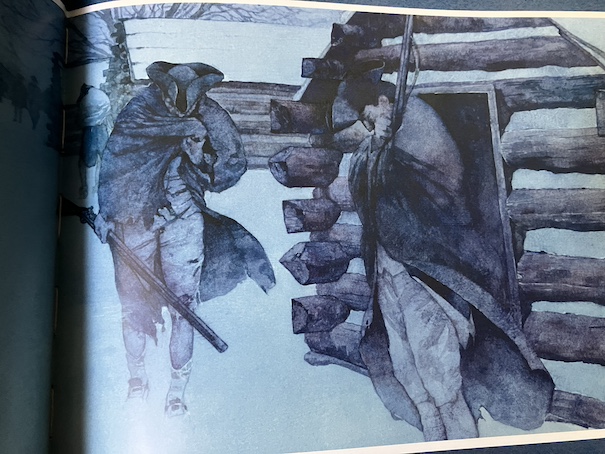
It’s a cruel winter at Valley Forge, during the American Revolution, and George Washington is worried about the welfare and morale of his soldiers.

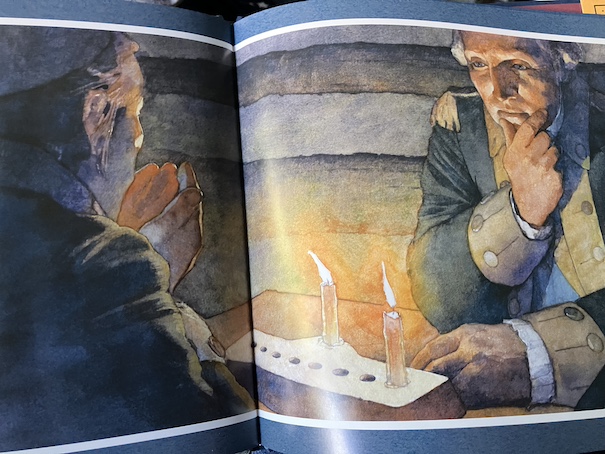
As Washington walks through the camp, he sees a young soldier lighting a candle and reciting something softly to himself.

Curious about what he’s doing, Washington stops to talk to him, casually remarking on how cold the night is. The young soldier says that he saw colder nights when he was young in Poland, and he is lighting candles for Hanukkah. Washington asks him what that means, and the soldier explains the meaning of the holiday.

The soldier recounts the story of how Israel was conquered by the Ancient Greeks, who forced Jewish people to worship Greek gods and tried to replace Jewish customs with Greek ones. Washington also says that he understands what it’s like to feel like you’re under the thumb of a king who lives far away and the desire for liberty. The Jewish soldier says his family left Poland for similar reasons, because they were not being allowed to practice their beliefs there.

Returning to the story of the ancient Israelites, the soldier explains that a priest named Mattathias refused the Greeks’ orders to bow to idols, and he fought back against the Greeks. Mattathias and his five sons, who were called the Maccabees, led a rebellion against the Greeks. They were a small group, and the odds were against them, but they were determined to continue the fight against their oppressors. Washington says that he understands the feeling because his army is in a similar position.

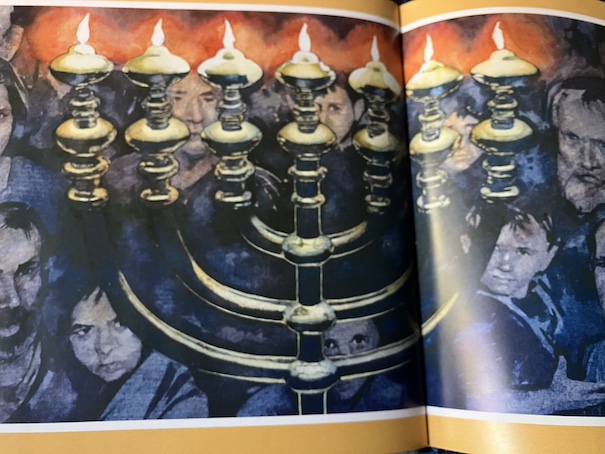
Continuing the story, the soldier recounts how Mattathias’s son, Judah, inspired their troops by reminding them that God was on their side, leading them to victory. When they finally managed to overthrow their Greek rulers, they took back their Temple and lit the Temple menorah. The menorah was supposed to be kept lit constantly, and they were worried because there was very little oil left. They only had enough to keep it burning for one day, and they weren’t sure when they could get more oil. However, they lit the menorah anyway, trusting that God would somehow provide them with more soon. It took them eight days to find more oil for the menorah, but to their surprise, the menorah continued to stay lit all the time they were searching, lasting eight times longer than they thought it would with the amount of oil they had. Hanukkah became the commemoration of this miracle.

George Washington contemplates the story that the soldier told him, and he finds it inspiring. It reminds him that, even though their current situation in Valley Forge may seem bleak, there have been others before them who have also faced steep odds in their struggles and who still managed to succeed. He begins to think that, if they persevere, they may also be gifted with a miracle of their own.

There is an author’s note at the end of the book that explains the inspiration behind the story. As the characters in the story do, the author draws parallels between the American Revolutionary War and the historical battle that began the tradition of Hanukkah. The author learned that George Washington may have learn about Hanukkah during the Revolutionary War, although there are no entries in his diary to confirm it, so he used excerpts from George Washington’s other writings to explain his sentiments. The author also offers commentary on bullies and the importance of standing up to oppressors, both in the context of war and in daily life.

This book won the Sydney Taylor award from the Association of Jewish Libraries.

I love books that include little-known or lesser-known events. Whether this one happened or happened in the way the author tells it is difficult to verify, and it seems likely that it’s more of a folk tale than an historical account. George Washington was a real, historical person, but so many legends have grown up around his life that it’s sometimes difficult to tell whether certain stories about him actually happened. As the author says, Washington’s own diary doesn’t offer any verification about this particular incident. Other reviewers of this book, including J. L. Bell, who specializes in Revolutionary War history in the Boston area, have attempted to trace the origins of this particular story about Washington learning about Hanukkah during the Revolutionary War. In his blog, J. L. Bell explains the known sources for this story, which vary in their description of exactly when the encounter between Washington and the Jewish soldier took place and what the soldier’s name was. The soldiers who have been credited with having this encounter with George Washington were real people, but there’s nothing that definitively proves that the discussion about Hanukkah actually happened with any of them. The story is probably more folklore than history, and Bell believes that it started to circulate during the 20th century, when there were more immigrants arriving from Poland with stories and experiences like the one the Polish soldier in the story tells about not being allowed to practice their religion openly. Even so, the parallels the story draws between the ancient rebellion of the Maccabees and the American Revolution are fascinating.

There are certain feelings that are universal among humans, and the author’s point that nobody likes being oppressed by a bully, whether that bully is another person or a government or an army, is true. No matter what you’re up against in life, perseverance in the face of hardship is important, and miracles can come to those who continue to stand up for themselves and what they believe in. It is also true that people who come from different sets of circumstances can help to inspire each other by sharing common feelings about their struggles.

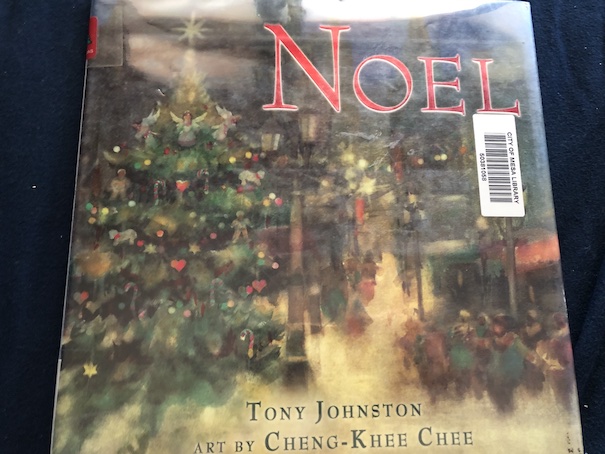
Noel

Noel by Tony Johnston, art by Cheng-Khee Chee, 2005.

This lovely Christmas picture book reads like a Christmas carol!

There is no story in the book. The text is poetry that celebrates the atmosphere of Christmas, the feelings in nature as anticipation builds and in cities as people gather to celebrate.

“Noel” is described as the sound of Christmas, like a bell, that people and animals all listen to hear.

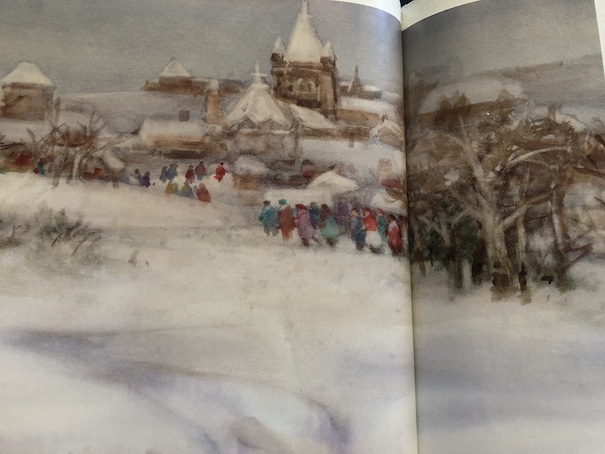
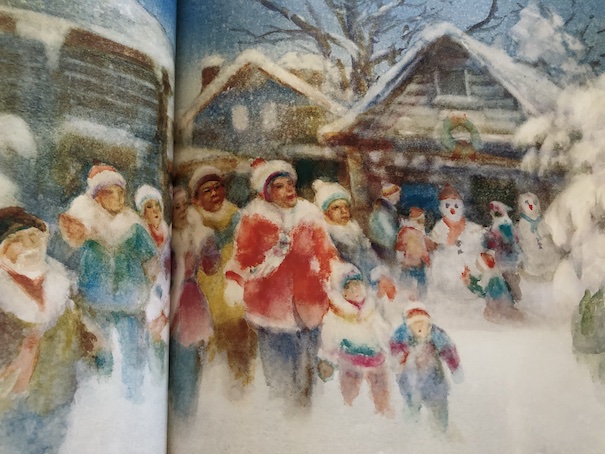
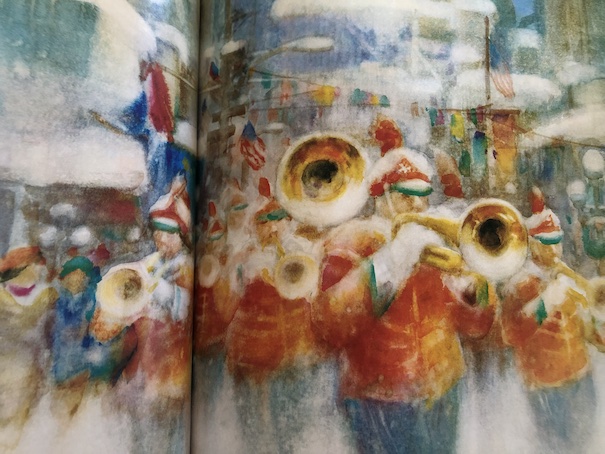
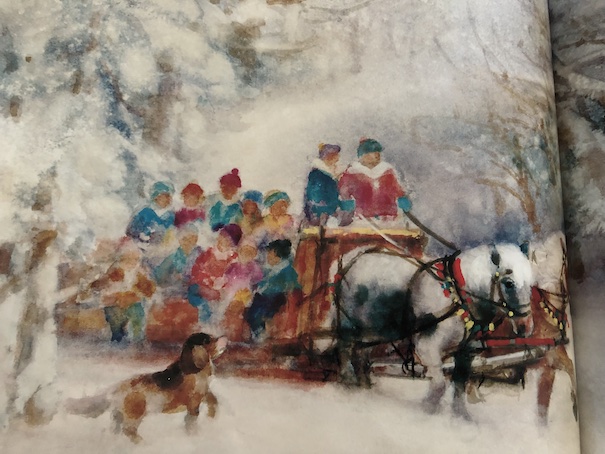
The artwork is beautiful, and there are scenes of people participating in classic Christmas celebrations, with a Christmas parade, snowmen, a public Christmas tree, and a sleigh ride.

The pictures really make the book beautiful and dreamlike. In the back of the book, there is a section that explains the art style. The artist used watercolors and a technique called “saturated wet-paper technique.” This technique is what gives the illustrations their fuzzy, dreamlike quality

The book is available to borrow and read for free online through Internet Archive.

The Legend of the Christmas Rose

The Legend of the Christmas Rose by William H. Hooks, paintings by Richard A. Williams, 1999.

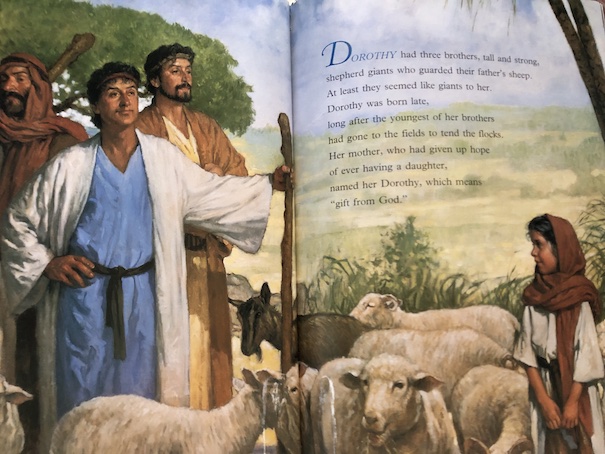
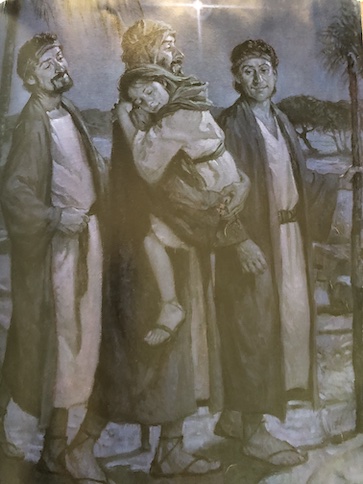
Dorothy is a 9-year-old girl with three brothers, who are all much older than she is. Her three brothers are all shepherds, and her daily chore is to take water to them when they’re out in the fields with the sheep. Her brothers love her, but they always treat her like a small child because they’re so much older.

One day, she spots some strange travelers on the road. She worries that they might be robbers, but her brothers tell her not to worry. There are more travelers on the road these days because the Roman Emperor has ordered everyone to return to their home towns to be taxed. However, because there are so many strangers traveling through the area, Dorothy’s brothers plan to spend the night in the fields with their sheep to keep an eye on them.

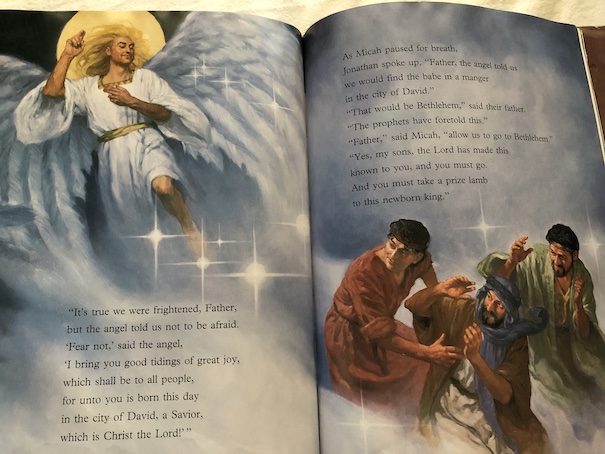
Early the next morning, the brothers return to the family home, excited. They tell their father that they saw angels in the field during the night. An angel appeared to them and told them that they would find a newborn Savior in a manager in the City of David, which is Bethlehem. Their father says that there is a prophecy about this. Because God has sent His messengers to announce the birth of the Savior to them, the brothers should go to the city and take a lamb with them as a present to the Savior.

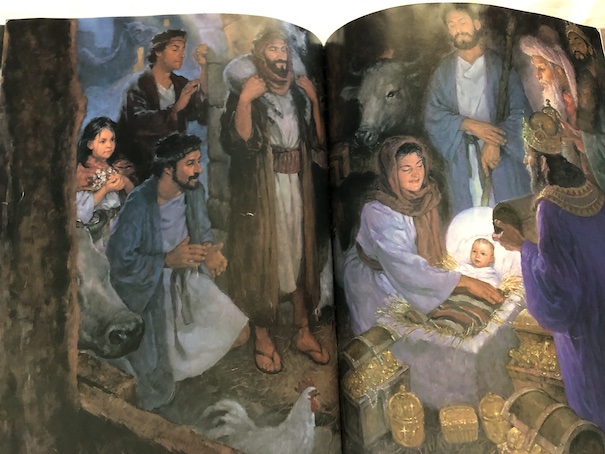
Dorothy helps her brothers to pack their supplies for the journey to Bethlehem, but she knows that she will not be allowed to go with them because she is too little. In spite of that, Dorothy makes the sudden decision to follow her brothers secretly. However, as they travel, Dorothy suddenly realizes that she doesn’t have a present of her own to offer when she arrives.

When Dorothy begins to cry about her lack of a present to give, an angel appears to her and produces snowy white flowers. Dorothy is happy because she can bring the flowers with her as a present.

The book is available to borrow and read for free online through Internet Archive (multiple copies).

My Reaction

There is an Author’s Note at the back of the book that explains about the Christmas Rose plant and its associated legends. The Christmas Rose is a real plant, but technically, it’s not a rose, and it doesn’t always bloom at Christmas. It’s native to southern and central Europe, where winters are relatively mild, and the flower can bloom in Christmas, but in colder climates, it tends to bloom in spring. It’s actually a member of the hellebore family, which is toxic to humans, although it has been used medicinally as a purgative, and it does contain a chemical that can be used to treat heart conditions. The story in the book also references the plants’ medicinal uses.

There are multiple legends about the origins of the plant. The version presented here, the legend about an angel giving the flower to a young shepherd girl to offer as a present to baby Jesus, comes from Medieval nativity plays. There is an older Greek legend where the plant was discovered by a shepherd around 900 BC. In that version of the story, the shepherd used the plant to cure three princesses who were afflicted with delusions that they were cows. After he cured them, the princesses’ father, the King of Argos, allowed the shepherd to marry his youngest daughter.

Overall, I liked this picture book version of the legend. I like books about folklore, especially ones that use lesser-known stories. The pictures in this book are also realistic and beautiful, taking up full pages.

The Little Fir Tree

A little fir tree feels lonely among the large trees in the forest, but something happens that changes his life forever – he is chosen to be a living Christmas tree for a little boy!

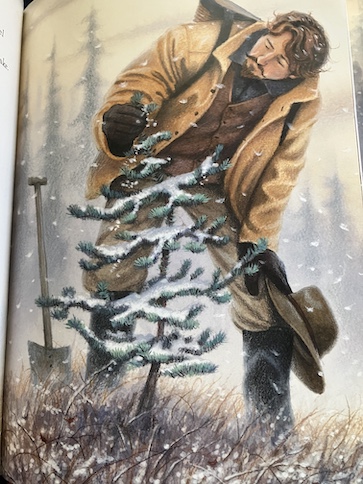
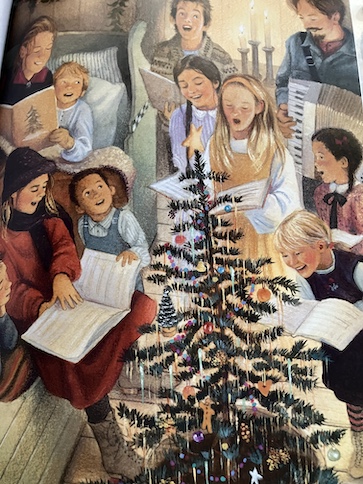
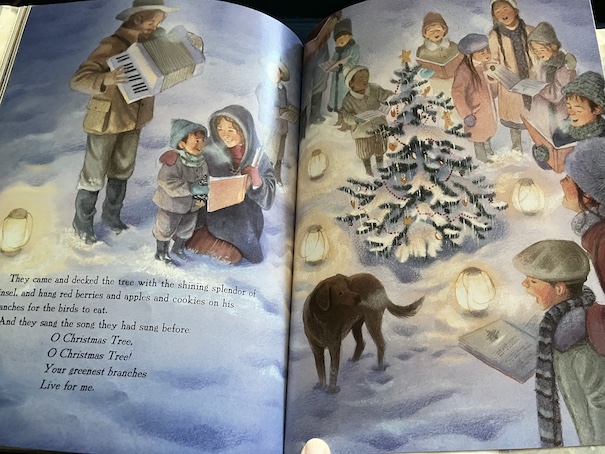
One winter, the boy’s father carefully digs up the tree and brings it home to his young son, who cannot walk because of a lame leg. The boy has been wanting to see the trees in the forest, but since he can’t go to the forest himself, his father has brought a free to him. The little fir tree loves being decorated, and the next evening, guests come and gather around him, singing Christmas carols.

In the springtime, the boy’s father takes the tree back to the forest, where he found it, and he plants the tree again so it will continue to grow. However, the following winter, the boy’s father returns to dig up the tree again and take it back to the boy for Christmas.

The little fir tree loves this ritual of visiting the boy and his family and being their Christmas tree every winter, but the next winter after that, the man doesn’t come to dig him up. The little tree is disappointed and lonely, but he is in for a surprise. This winter, the boy and his family come to see him in the forest!

The book is available to borrow and read for free online through Internet Archive, although that copy has different illustrations.

I mainly know Margaret Wise Brown for Goodnight Moon and The Runaway Bunny, but I found this Christmas story charming. I don’t like Christmas stories from the point of view of trees that are cut down, like the Hans Christian Andersen story, The Fir-Tree, which has a really depressing ending. I like it that this family in this book keeps the tree alive, returning it to the forest every year to continue growing. Things change for both the boy and the tree over the years, as they both continue to grow, but they change for the better, and they continue to be fond of each other and a source of inspiration for each other.

When I was a kid, our elementary school had a large tree on a hill on the kindergarten playground, and the story behind it was that it was once a living Christmas tree from the very first kindergarten class at the school. That tree is still there and alive today, about 50 years after it was first planted there and more than 30 years after I used to play under it. I like to imagine that it will be true of the little fir tree, too, that it will continue growing over the years.

Earlier versions of this book had different illustrations, but personally, I love the illustrations in this printing because they’re detailed and realistic. The version on Internet Archive has illustrations by Barbara Cooney, who is known for Roxaboxen and Miss Rumphius. Cooney’s illustrations are also good, but not as realistic as Larmarche’s, and they’re in a limited color range.

One other difference between versions of the book is that the earlier version also included the musical notes for the carols that the children sing and additional songs that aren’t included in the later version of the book. I enjoy books that include actual music and lyrics, like books that include recipes, because they are fun extras and add an extra dimension to the story by providing an accompanying activity. Although I like the more detailed and realistic illustrations of newer edition of this book, I do prefer the actual music and wider range of songs from the older version.

Mr. Willowby’s Christmas Tree

Mr. Willowby’s Christmas Tree by Robert Barry, 1963, 2000.

Mr. Willowby lives in a large house, and he orders a large Christmas tree by special delivery. It’s large and wonderful, but it’s just slightly too tall for the room where Mr. Willowby wants to put it.

Mr. Willowby’s butler solves the problem by chopping the top off the tree, and because he doesn’t want the top to go to waste, he gives it to Mr. Willowby’s maid.

The top of the tree is about the right size to make a small Christmas tree for the maid’s room, but it turns out that it’s just slightly too tall again. The maid also clips the top off her tree.

From there on, the tree top moves on to other people and animals. The gardener spots the top that the maid throws out and decides it would make a nice, small Christmas tree. Like everyone else, though, he finds that the tree needs a little clipping for it to go where he and his wife want it to go.

As the top of the tree gets smaller, it starts drawing the interest of animals. Even animals enjoy having a Christmas tree as grand as Mr. Willowby’s!

The story is cute and told in rhyme! The book is available to borrow and read for free online through Internet Archive (multiple copies).

My Reaction

I remember this book from when I was a kid! I remember liking how several people and animals get Christmas trees out of just the top of one large Christmas tree. It’s a fun story about how one person’s trash is someone else’s treasure and nothing needs to go to waste. Mr. Willowby’s Christmas tree ends up helping everyone. In the end, everyone is happy because they all get a nice Christmas tree.

The illustrations in this book are full-color, but some older version of the book are in limited color – black, white, and green.

The Gift of the Christmas Cookie

The Gift of the Christmas Cookie by Dandi Daley Mackall, illustrated by Deborah Chabrian, 2008.

This is a sweet Christmas story that discusses the meaning of Christmas along with the history of Christmas cookies.

The story doesn’t provide a year, but it seems to be implied that it takes place during the Great Depression because Jack’s father is described as hopping a freight train to find work and send money home. Since then, Jack and his mother have lived alone, saving every penny that Jack’s father sends to them.

Then, before Christmas, Jack arrives home to find his mother making cookies. Jack is thrilled at the idea of having a rare treat, but his mother says that the cookies are for the needy at church. It’s disappointing because Jack has been feeling rather needy himself.

Then, his mother shows him the wooden cookie board molds that they will use. They are big with elaborate carvings of Christmas symbols. Making the cookies is labor-intensive, and Jack wonders why they’re working so hard to make such elaborate cookies that people will just eat anyway.

Jack’s mother tells him a story that takes place in the “Old Country” of their ancestors during the Middle Ages. (It’s in Germany, although Germany didn’t exist as the single country it is today back then.) Times were very hard, and people couldn’t afford much, but one family wanted to do something special for their neighbors for Christmas. The father of the family was a woodcarver, so he considered carving Nativity figures, but his wife said that many people were hungry, so it would be better to bake something they could eat. The woodcarver made wooden molds in the shapes of figures associated with Jesus’s birth, and his wife made the sweet dough to put in them, and they made cookies to share with their neighbors.

Jack’s mother saves one cookie from their batch in the shape of an angel for Jack so he can have a treat, but when a hungry man comes beginning for something to eat, Jack considers his own father, who might be traveling and hungry.

Jack is inspired to share his special Christmas cookie with someone who might need it more than he does and to pass on the story that goes with it.

My Reaction

I like stories that include some history, and I enjoyed this story about the origins of Christmas cookies and a lesson in generosity, giving to someone else as he hopes other people will be generous with his father. The invention of Christmas cookies can’t be traced back to any particular family, like the story in the book tells it, and Christmas cookies might have actually originated in Medieval monasteries because the monks would have had greater access to the sugar and spices needed than most people. However, the general concept of Christmas cookies made with molds is accurate. There is a brief note in the back of the book about the cookie boards or springerle molds that come from the Schwabian region of Germany, Switzerland, and Austria and how these molded cookies have had religious shapes since the Middle Ages. The book also notes that some cookie molds take the form of specially-carved rolling pins rather than the flat boards shown in the book, and this was the type of cookie mold that my grandmother used to use. When she made molded cookies, they were anise-flavored, which is traditional and tastes like licorice, although I prefer to make ginger cookies with my cookie mold rolling pin. The book includes a simple recipe for cookies that you can use with cookie molds or cookie cutters, and it uses the traditional anise flavoring.