Angels Don’t Know Karate

The Adventures of the Bailey School Kids

Angels Don't Know Karate Cover

#23 Angels Don’t Know Karate by Debbie Dadey and Marcia Thornton Jones, 1996.

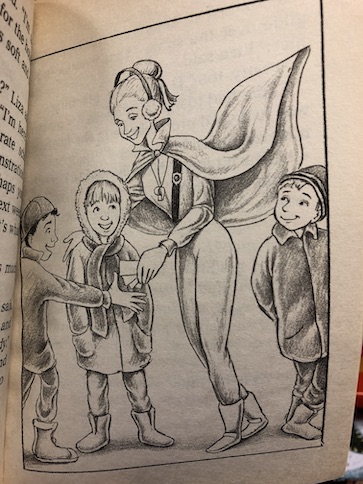
Before Christmas, the kids at Bailey School are making snow angels, and they start talking about whether or not real angels exist. Melody and Liza say that they do and that everyone has a guardian angel. Eddie jokes that the new school crossing guard should have one as she repaints the crosswalk lines in the road. The kids say that she should also be careful not to get paint on the sidewalk in front of Mr. Mason’s house Mr. Mason is the meanest man in the neighborhood.

As the kids stand around talking, Ben, the school bully, hits Eddie in the mouth with a snowball. Eddie wishes that he knew karate so that he could take care of Ben, and Ben tells him that he’s a just a chicken, daring him to climb a tree on the playground. The other kids tell Eddie not to do it because the tree branches are snowy and icy and he’d probably fall, but Eddie feels like he has to do it to prove that he isn’t chicken. (Yeah, kid, the best way to prove you’re not scared of things is to do a stupidly dangerous thing because you don’t mind demonstrating that you’re desperately scared of what someone you don’t even like thinks about you.) Of course, Eddie does fall, but the others have the impression that the tree branches seem to be helping to hand him down to the ground, where the new crossing guard catches him. Melody thinks that, for a moment, it looked like the crossing guard had angel wings, but no one else saw it because they were all looking at Eddie.

The crossing guard says that her name is Angela Michaels and that she has just come to town for the opening of a new karate school. She invites the children to come to a karate demonstration at the mall. Eddie thinks that the karate demonstration would be great, and Howie says that karate isn’t about attacking people so much as protecting. More and more, Melody becomes convinced that Angela’s rescue of Eddie was a miracle, that she’s Eddie’s guardian angel, and that she’s come to Bailey City on a mission.

Angela turns out to be a karate expert, and the kids are impressed. Mr. Mason yells at the kids as they walk by his house on the way home, and they wish that Angela would teach him a lesson. Eddie says that if they want to spy on Angela and find out if she’s a real angel, Mr. Mason’s yard is the best place to do it because it’s near the crosswalk and no one would expect kids to be hiding in his yard. The others say that he’s crazy to want to go in mean Mr. Mason’s yard, but Eddie says that if Angela is a real guardian angel, they should be safe.

Mr. Mason catches the children in his yard, and Angela does intervene when Mr. Mason yells at them. She convinces Mr. Mason to let her make him a cup of Heavenly Tea. Melody decides that Angela’s mission is probably to help Mr. Mason be nicer and make some friends. Melody says that they should help Angela by being friends with Mr. Mason and doing nice things for him. The others think that she’s crazy, but she’s convinced that it’s safe to do nice things for Mr. Mason because Angela will make sure that they’ll be safe and that Mr. Mason won’t get mad.

Mr. Mason yells at the kids when they come to help him, but Melody convinces him to accept the cookies they’ve brought him and let them shovel some snow for him and decorate his yard for Christmas. He doesn’t seem particularly grateful at first, but he does accept their kindness. Then, to the children’s surprise, Mr. Mason becomes their new school crossing guard, replacing Angela. He says that Angela had to leave on some important business and that she convinced him that he would like the job, and he admits that he does like it. Melody remains convinced that Angela was an angel. Eddie says that she never proved it, but she says that some things don’t need proof, just belief.

Eddie never does use karate on Ben, but Angela deals with Ben for him. Angela catches Ben bullying another younger boy and teaches him that strong people are supposed to protect weaker people, not bully them. The children take karate lessons from Angela, and she’s tough. Eddie compares her to a drill sergeant. But, being tough isn’t the same as being mean. Angela is serious when she says that strong people have a duty to protect others, and that’s what she teaches other people to do. She uses her strength and toughness to help people, not hurt them. It’s a good philosophy!

The book is available to borrow for free online through Internet Archive.

Elves Don’t Wear Hard Hats

The Adventures of the Bailey School Kids

#17 Elves Don’t Wear Hard Hats by Debbie Dadey and Marcia Thornton Jones, 1995.

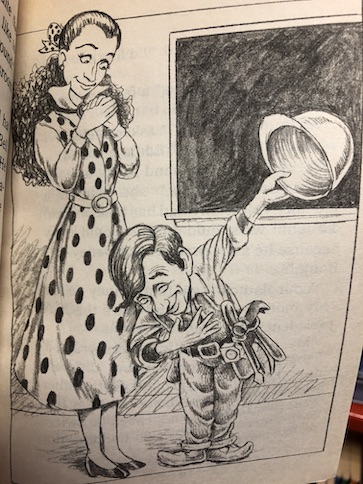
The playground equipment at Bailey School is old and breaking, so the PTA has decided to fund a new playground for the children. The playground is going to be built by the Bell Construction Company, and when the children meet the owner, Hollis Bell, he is an odd little man with curly-toed work boots. In fact, all of his men are unusually short. However, Mr. Bell promises to build the children the best playground they can imagine.

However, the parents at the school are arguing about the playground, how much it’s going to cost, and whether it really needed to be replaced at all. There’s not a lot of Christmas cheer going around, but Mr. Bell puts up Christmas trees and tells the children that they have their own kind of magic that can help fix their parents’ arguing.

One day, Mr. Bell comes to the third grade class to interview them about what they would like to have on their playground. All of the kids have different ideas, and they end up arguing about the things they’ve heard their parents say about what the playground should be like. However, Mr. Bell urges them to calm down and work together. He tells the children that they should make a list of what they all want and “check it twice.” One of the kids in the class says that it’s impossible to give everyone what they want, but Mr. Bell says that he’s in the business of making wishes come true. Liza asks what happens if someone puts down a really bad idea, and Mr. Bell says that he’ll know if an idea is a bad idea. Because Mr. Bell is short, his tools jingle like jingle bells, and he acts like he can grant their Christmas wishes, the kids start thinking that he might be an elf.

The kids are allowed to watch the workmen work, but Mr. Bell makes it clear that they’re not allowed in the trailer that’s attached to his truck. Naturally, the kids get curious about the trailer. They can’t help but sneak a look inside, and when they do, they find out that it’s a workshop full of toys!

As the children try to figure out if the construction crew might really be elves, they decide to ask the department store Santa more about elves. The kids debate about the department store Santa really being Santa, and the Santa makes a comment about how he’s been meaning to pay a visit to their school, seemingly ignoring a previous book in the series, when Santa apparently became their school’s janitor. However, later in the book, Howie refers to the “new janitor who keeps turning down the heat,” referring to what happened in the previous book, which is confusing. The department store Santa explains that his elves like to fix things, and they are particularly concerned with fixing people who can’t get along, hinting that the arguments over the school’s playground are what brought the elves to the school. Santa’s advice is for the children not to worry because the elves will disappear on their own “when the time is right.”

The deadline for submitting the plan for the new playground is approaching, and the kids realize that if the adults can’t agree on something, they might end up with no playground at all! When the “elves” leave to take care of a job “up north,” and the playground issue still isn’t resolved, the kids think that they probably weren’t magical elves and that they didn’t fix anything, but the kids aren’t ready to give up yet.

When Eddie suggests that they all just build their own playground out of wood and begins drawing his vision of it, it attracts the attention of the adults. At first, the kids think that they’ll have to do all the work on their playground themselves, but the more the adults hear them talk and study the picture Eddie drew, the more involved they become. When the adults were in charge, they each wanted to be considered the leader and authority on the project, with their ideas overshadowing everyone else’s, but with Eddie in charge, the project moves forward. Even though Eddie is a child, he’s the one with the vision to carry the project through, and he neutralizes the adults’ competing egos. The project ends up being finished unexpectedly fast, and in the end, no one knows who actually completed it, hinting that the Mr. Bell might really have been an elf and that he and the other elves secretly returned once everyone came to an agreement about what they really wanted. As always with this series of books, readers are left to draw their own conclusions.

The book is available to borrow for free online through Internet Archive.

Santa Claus Doesn’t Mop Floors

The Adventures of the Bailey School Kids

#3 Santa Claus Doesn’t Mop Floors by Debbie Dadey and Marcia Thornton Jones, 1991.

The school’s janitor, Mr. Dobson, quits one day after some kid spreads peanut butter from the food drive box all over the staircase banister. He’s had enough of their pranks! The third grade class’s substitute teacher, Mrs. Ewing, who is teaching the class while Mrs. Jeepers is visiting her family in Romania for Christmas, says that she’d hate to think that someone in their class actually stole food meant for some poor person and used it for an awful prank. The principal confirms that it was someone in their class when he pulls a couple of empty peanut butter jars from their trash can. The culprits turn out to be Eddie and Howie. So, the principal declares that, until they can get a replacement janitor, the third grade class will clean the entire building.

The other kids are angry with Eddie that they now have to give up their recesses to empty trashes and mop floors all over the school, and Melody says that it’s Eddie’s fault that Mr. Dobson is unemployed at Christmas. Eddie complains that “it was only peanut butter” and that it was Mr. Dobson’s choice to quit his job. The other kids know that part of Eddie’s problem is that he has an issue with Christmas, and that’s why he’s trying to spoil things. Eddie’s mother is dead, and ever since her death, his father hasn’t wanted to celebrate Christmas.

Fortunately, the principal soon tells the children that he has hired a new janitor, Mr. Jolly. Mr. Jolly is a cheerful older man with a thick white beard, and he likes to smoke a pipe. Mr. Jolly seems very nice, and he works very fast, but he has an odd way of watching the children and writing things down in a notebook.

Then, one day, the kids see Mr. Jolly talking to an odd little man, and they hear the man call him “S.C.” The little man seems very worried about something and wants Mr. Jolly to come and straighten out some kind of mess before Christmas. However, Mr. Jolly says that the work he is doing at the school is very important. They notice the kids watching them, so they don’t say any more, but the kids soon begin noticing other peculiar things about Mr. Jolly. He keeps the school’s temperature rather cold, but yet he likes to wear shorts. He doesn’t like it when Eddie turns up the thermostat because he likes the cold.

The temperature issue becomes serious because the kids have trouble working when it’s so cold. They have to wear their coats and sweaters all the time, and it gets to the point where it’s actually warmer outside than it is inside the building. Rather than freeze, Eddie decides that he’d rather get rid of Mr. Jolly. However, the other kids don’t want to help him after what happened with Mr. Dobson. Eddie takes it on himself to decorate the teachers’ lounge with toilet paper and turn up the heat again. However, Mr. Jolly solves both problems impossibly fast, and suddenly, the food drive box is overflowing with jars of peanut butter.

Liza is the one who suggests that Mr. Jolly could be Santa Claus. He looks like Santa Claus, and his short friend, who called him “S.C.” looks kind of like an elf. It would also explain why he likes cold so much and how he seems to do things magically fast. The others don’t believe her, and after Eddie pulls another trick that goes wrong, Mr. Jolly actually talks to him about Christmas and Santa Claus. Eddie says that those things are for little kids and even if there was a Santa Claus, he wouldn’t bring him what he really wants for Christmas.

Although Eddie doesn’t actually say it, what he really wants is attention from his dad. His dad is away a lot, working, and Eddie’s grandmother, who takes care of him, is often busy. However, Eddie becomes convinced that miracles can happen when his dad finally comes home for Christmas and actually wants to celebrate the holiday.

The book is available to borrow for free online through Internet Archive.

Samantha’s Surprise

American Girls

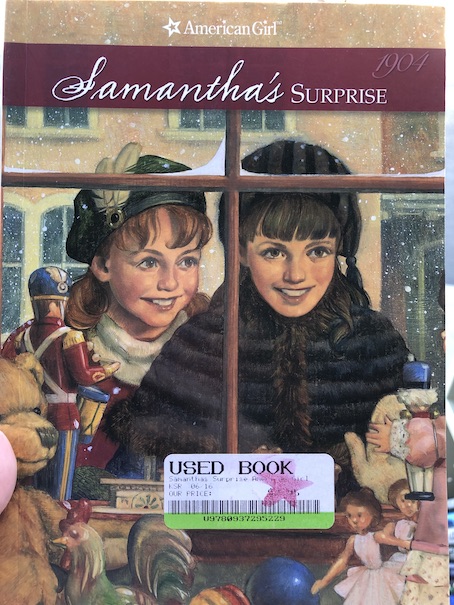
Samantha’s Surprise by Maxine Rose Schur, 1986.

This is part of the Samantha, An American Girl series.

Christmas is going to be different this year for Samantha and her family. Uncle Gard is bringing his girlfriend, Cornelia, to spend the holidays with them. Christmas had started out so hopeful for Samantha, with an invitation to a friend’s Christmas party, elaborate plans for building a gingerbread house, and the secret presents that Samantha has been making for everyone. Cornelia’s visit changes Samantha’s plans.

For Samantha, Cornelia’s visit makes Christmas more difficult. At first, she says that she will help make Cornelia feel welcome and thinks to herself that she will have to get a present for Cornelia that is as elegant as she is. However, when Samantha tries to put up the usual homemade decorations that she made herself, the maid angrily takes them down, calling them “dustcatchers.” The house must be perfect for Cornelia’s visit, and Samantha is insulted that people see her decorations as an eyesore or inconvenience. The cook, who was going to help Samantha with her gingerbread house, says that there probably won’t be time for it now because her grandmother has asked her to make extra, special foods for Cornelia’s visit. Grandmary even tells Samantha that it would be better for Samantha to “stay out of the way” of their Christmas preparations.

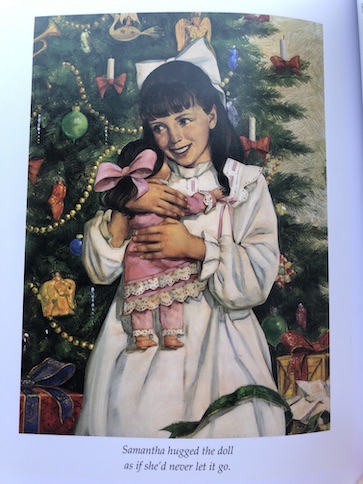
With Cornelia coming, no one seems to notice or care about Samantha. Samantha finds out that she won’t be able to attend her friend’s party because it is the night that Cornelia is arriving. It doesn’t seem likely that her grandmother will care about her secret Christmas wish for the beautiful Nutcracker doll in the toy store window. Samantha has been without a doll since she gave her own beloved doll, Lydia, to Nellie, who had never owned a doll before. Cornelia is an extra person Samantha needs to supply a present for, but she can’t summon up any enthusiasm for giving a present for someone who is making things so difficult for her.

Throughout the book, Samantha considers different presents that she could give to Cornelia, beginning with the most basic, convenient token gifts that she could give and then forget about, unlike her homemade, heart-felt gifts for everyone else. However, Samantha’s attitudes toward Cornelia change as she gets to know her better during the holidays and comes to see her as a source of fun and support.

When Cornelia actually arrives and begins participating in the usual Christmas activities, Samantha sees that she is far less fussy than the people who were preparing for her arrival. Unlike most other grown-ups, Cornelia is not too dignified to have fun while sledding or get messy while making gingerbread houses. Cornelia even suggests sledding, to Grandmary’s surprise. Cornelia always mentions how nice it would be to decorate a gingerbread house, like she did when she was a girl, Samantha says that she would like that too, but the cook is too busy to help this year. Cornelia says that is no problem because she and Samantha can make the gingerbread house themselves. Cornelia even makes sure that some of the decorations that Samantha made are prominently displayed on the Christmas tree.

By the end of the book, Samantha changes her mind about Cornelia completely. While everyone else seemed to be ignoring Samantha and going out of their way to make Cornelia feel welcome, Cornelia was paying more attention to Samantha and really thinking about what would make Samantha happy at Christmas. Cornelia is the one who correctly guesses what Samantha would really like for Christmas, and in return, Samantha decides to give her best present to Cornelia.

The story ends with Uncle Gard officially engaged to Cornelia.

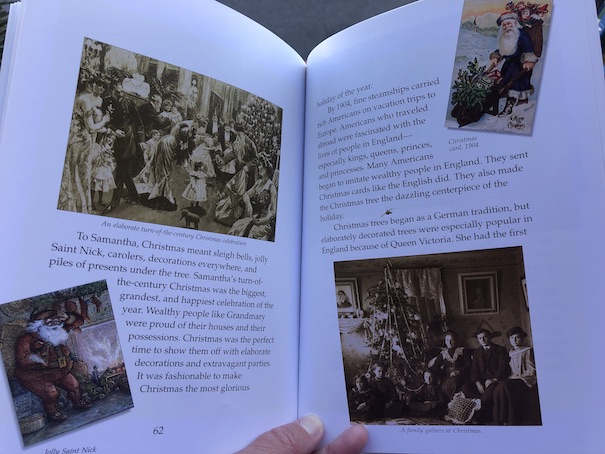
In the back of the book, there is a section with historical information about how people would celebrate Christmas during the early 1900s.

The book is currently available to borrow for free online through Internet Archive.

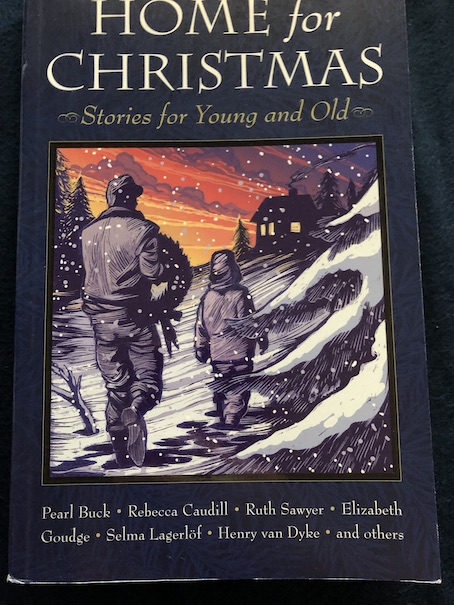
Home for Christmas

Home for Christmas: Stories for Young and Old compiled by Miriam LeBlanc, 2002.

Disclosure: Plough Publishing House sent a copy of this book to me for review purposes, but the opinions in the review are my own.

This is a collection of short Christmas stories written by famous authors from around the world. One of the things that I found interesting about the selection of authors in the book is that many of them are better known for writing on very different themes. Among the authors in this book are Madeleine L’Engle, who is known for writing science fiction, such as A Wrinkle in Time; Elizabeth Goudge, who wrote the mid-20th century classic children’s fantasy story The Little White Horse (later made into the film called The Secret of Moonacre); Katherine Paterson, known for her children’s novels, including Bridge to Terabithia, Jacob Have I Loved, and historical novels set in Asia, such as The Master Puppeteer; and Pearl S. Buck, author of The Good Earth.

Although the book is intended for children and families and many of the authors are known for writing for children and young adults, I think that many of the stories wouldn’t particularly appeal to children, especially younger children, because children wouldn’t be likely to understand them or they have darker themes, like bitterness that must be overcome and grief at the death of a child. The stories generally end well, but for young children, something simpler and lighter in subject matter, like the short stories in Merry Christmas from Eddie, would be more appealing. Really, I think this book would be best for adults, although I noted some of the more child-friendly stories.

One thing that I wished the book included is sections of information that explain a little more about the stories behind the stories. I recognized the historical references behind some of the stories, but other readers, particular children, might require a little more explanation to fully appreciate them. I think that’s another good reason why the stories might appeal more to adults.

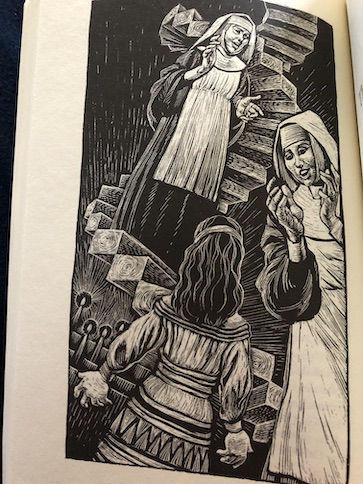
There are 20 stories contained in the book. Each of the stories in the book has one black-and-white picture in an old-fashioned woodcut style.

I don’t think that there are any copies of this book available to read for free online, but this book is available for purchase through Plough Publishing House.

The stories contained in this book are:

Brother Robber by Helene Christaller

A young monk sends three robbers away without food before Christmas because they are violent criminals, but an older monk convinces him to have compassion and to find them and give them the food they have asked for.

The compassionate brother, Brother Francis, is St. Francis of Assisi, although it is not explicitly explained in the story, and the younger brother, Brother Angelo, is the main character. The story of St. Francis, Brother Angelo, and the robbers is an old one that has been told before in other forms, but this is a good rendition.

Three Young Kings by George Summer Albee

Three boys at a school in Cuba are given the role of playing the Three Kings in their school play as well as delivering presents to the rest of the children in their community, giving them presents that their parents have already bought for them. However, their task proves harder than they thought when they see how upset the poor children are that they pass their houses and leave nothing because their parents couldn’t afford presents. What can they do?

This is a good book for talking about making choices. In the end, the community is satisfied with the boys’ choice, but a good topic for discussion after this story would be what the community will choose to do next year, when new boys become the Three Kings.

Transfiguration by Madeleine L’Engle

A nun in New York City struggles to answer a poor man’s questions about why Christmas should be so “merry” when there are so many poor people and bad things happening in the world. The real answer comes to her after the man tries to rob her.

The Cribmaker’s Trip to Heaven by Reimmichl

Willibald Krautmann spends his life making manger scenes for Christmas, and he is sure that his work will earn him a place in Heaven. Unfortunately, when he dies, he is not received in Heaven as he thought and, confronted with the history of his faults that prevents him from entering, he must seek an advocate to help him plead his case. However, it’s not too late for him to mend his ways, and the reader is left to imagine how much was real and how much was dream.

The Guest by Nikolai S. Lesskov

Timofai was a bitter young man, an orphan defrauded of his inheritance by his uncle. After a violent fight with his uncle, he is sent into exile in Siberia. Even after his life improves and he marries and has a family of his own, he still finds himself bitter about the injustice that was done to him. Is there anything that his friend and brother-in-law can say that will help him? When he finally meets his uncle again, after many years, will they both get the closure they really need?

Christmas Day in the Morning by Pearl S. Buck

An older man and his wife decide how to spend Christmas now that their children are grown and living their own lives, separately. As the man reflects on Christmases past, he realizes that love is what makes Christmas special and what you do to show other people how much you love them.

This is one of those stories that I think adults would understand more than children, although it’s a good thought to explain to older children.

The Other Wise Man by Henry van Dyke

The story of a wise man who set out to follow the star at Christmas, like the others, but didn’t arrive at Bethlehem with them because he stopped to help someone. Although he arrives too late to see the Christ Child, he is in the right places to help people because he set out on the journey. At the end of his life, this wise man does actually see Jesus at his crucifixion.

This is a famous 19th century story.

The Miraculous Staircase by Arthur Gordon

In Santa Fe, New Mexico, in 1878, an unusual carpenter promises that he can build a staircase to a church choir loft, even though the original architect didn’t leave space for stairs. Even though other carpenters had failed to find a solution to the problem, the mysterious stranger solves it. But, who was that mysterious carpenter, and how did he do it?

This is actually based on a true story! I’ve been to the church in Santa Fe, the Loretto Chapel, and I’ve seen this staircase myself! The short story ends with a few details about the history of the event.

No Room in the Inn by Katherine Paterson

When an eighteen-year-old boy’s parents leave him alone at the family’s inn, which is closed for Christmas while they visit his sister’s family, he’s a little sad at spending Christmas alone but also looking forward to some freedom to relax. However, a mysterious stranger who needs a place for the night changes his plans.

The Chess Player by Ger Koopman

The Christ Child must help an old man to forgive his estranged daughter on Christmas. Can the Christ Child soften a hardened heart over a game of chess?

The Christmas Lie by Dorothy Thomas

A poor young girl from a large family invents a story that some friends have invited the whole family to join them for Christmas dinner when, in fact, no invitation has been made. It had really been more of an impulsive wish that they had been invited, but when her family believes her and begins preparing for the event, can the girl find the courage to admit the truth? What will happen when everyone realizes that she lied?

This is one of the better child-centered stories in the book.

The Riders of St. Nicholas by Jack Schaefer

A group of cowboys have to decide which of them are going into town to celebrate Christmas and which of them will be staying on the ranch. The ones who get left behind plan a small feast for themselves as consolation for being left out of the fun. However, their plans change when they rescue a neighbor who got drunk and almost froze in a snowstorm.

Grandfather’s Stories by Ernst Wiechert

An old coachman tells stories that his grandfather told him. One Christmas Eve, his grandfather’s grandfather was driving a coach and saw a strange, smiling boy who seemed to be asking for something. Although his employer wanted him to drive on, the coachman gave the boy a ride, and it turns out to be the beginning of a miracle. In another story, a cruel master is changed for the better when he sees that the victim of his cruelty is Christ.

The Vexation of Barney Hatch by B.J. Chute

A panhandler gets recruited as a store Santa and helps a poor boy who only wants a harmonica.

The Empty Cup by Opal Menius

King Herod, knowing of a prophecy that a new king would be born, attempted to kill the new king to preserve his own power. Unable to tell which baby would be the prophesied king, Jesus, he ordered all of the boy babies in the area to be killed.

This story focuses on a man whose only child was killed. His wife seems unable to get over the shock and grief of their son’s death until another little boy teaches her how to get over a loss.

The Well of the Star by Elizabeth Goudge

The Well of the Star is a well where legend has it that the Wise Men stopped on their way to see Jesus. David is a poor shepherd boy who is left behind when the other shepherds go to see the baby Jesus. He is visited by the archangel Michael, who sends him to join the others, meeting the Wise Men on the way.

This is one of the better child-centered stories in the book.

A Certain Small Shepherd by Rebecca Caudill

Jamie’s mother died shortly after his birth, and for much of his young life, Jamie is unable to talk. When he begins going to school, he does well, except that he can’t answer questions out loud in class and not at all if he doesn’t know how to spell the word that he wants. It’s frustrating. However, when his teacher makes him a shepherd in the school Christmas play and his family has some unexpected visitors in a snowstorm, things change.

This is one of the better child-centered stories in the book.

The Carpenter’s Christmas by Peter K. Rosegger

The carpenter’s wife thinks that he isn’t be pious enough on Christmas, but he has an important job to do for someone less fortunate.

What the Kings Brought by Ruth Sawyer

In Spain, the tradition is that the Three Kings bring presents to children on Twelfth Night. A traveler in Spain shortly before Twelfth Night meets a poor young boy who is desperately trying to raise money to buy a new burro to help his father on his farm. The traveler and his friend come up with an idea to help the boy without it seeming like charity.

This is one of the better child-centered stories in the book.

The Christmas Rose by Selma Lagerlof

A Robber Mother trespasses on monastery ground and angers the monks when she tells them that their beautiful herb garden cannot compare to the way the forest looks on Christmas Eve. Abbot Hans decides to pay the Robber family a visit on Christmas, although it ends up being his last.

The Polar Express

PolarExpress

The Polar Express by Chris Van Allsburg, 1985.

One Christmas Eve, a young boy is lying awake in bed when he hears strange sounds.  When he looks out of his window, he is astonished to see a train outside of his house, where there aren’t any train tracks.  He goes outside to investigate, and the train conductor tells him that the train is heading to the North Pole and asks the boy if he wants to come.

PolarExpressTrainRide

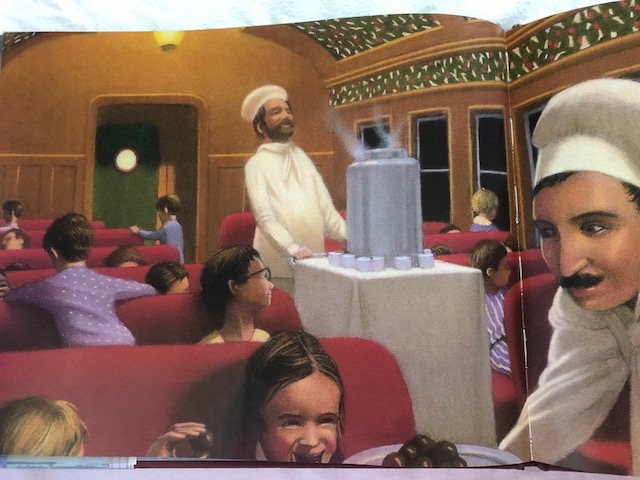
The boy (who is never named) believes in Santa Claus even though some of his friends no longer do, and he gets on board the train.  The train is filled with other children, singing Christmas songs, eating candy, and drinking hot cocoa.

PolarExpressSantasCity

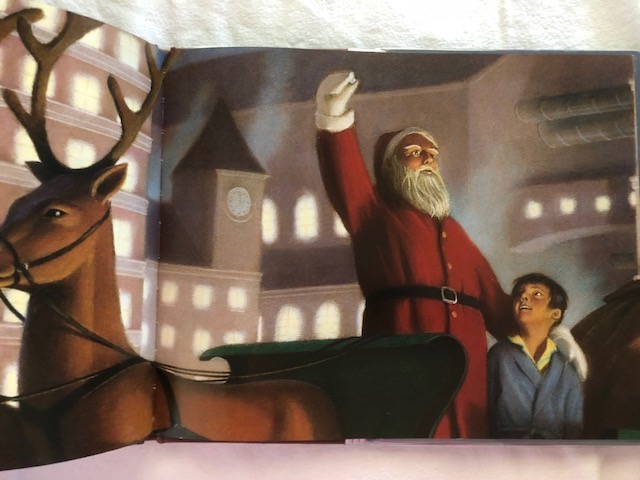
After a long trip over mountains and through forests, they arrive at Santa’s city at the North Pole, where they get to take part in a ceremony to give the first gift of Christmas.  Out of all the children from the train, the boy who narrates the story is chosen to receive the first gift.  He can ask for anything he wants for Christmas, but he asks for a bell from Santa’s sleigh as proof of his adventures and Santa’s existence.

PolarExpressGift

When the children get on the train to go back home, the boy seems to have lost the bell because of a hole in his pocket, and he is sad.  However, the bell reappears on Christmas morning as a mysterious extra present under the tree.  The boy’s parents can’t hear the bell ring, and they think it’s broken, but the boy and his sister, Sarah, can hear it.  The boy says when he and his sister grew up, Sarah eventually reached the point where she could no longer hear the bell, but he still can because only people who believe in Santa can hear the bells on his sleigh.

PolarExpressChristmasMorning

The book is a Caldecott Medal winner, and it has become a Christmas classic!  Some places that have trains hold special Polar Express train rides where they decorate the trains with Christmas decorations and try to re-create the ride from the book.  There is also a movie version of the book, although the story in the movie includes incidents which weren’t in the book to make the movie longer and more dramatic.  The original story was very calm and low-key, although still magical, the kind of thing that you could easily read to a child in bed on Christmas Eve.

Most of what Internet Archive has about The Polar Express is related to the movie, but there is also an audio version of the original book. For the benefit of teachers and homeschooling parents, there is also A Guide for Using The Polar Express in the Classroom on Internet Archive.

The House Without a Christmas Tree

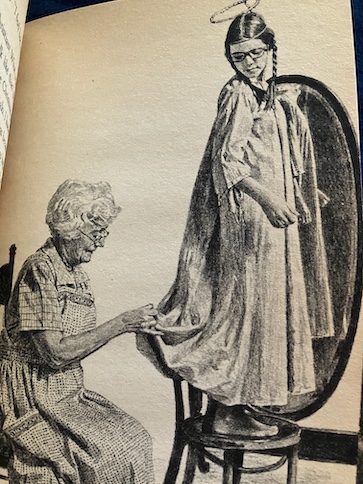
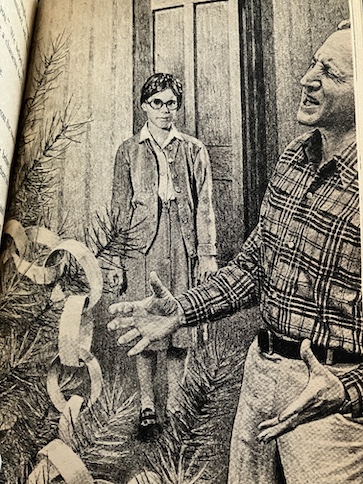
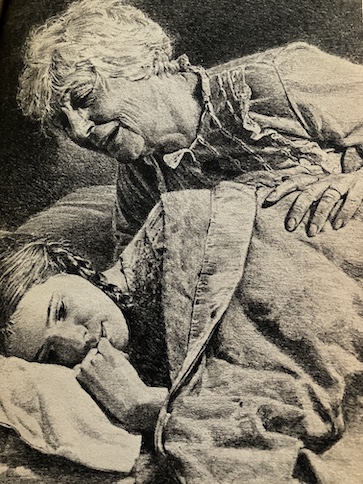
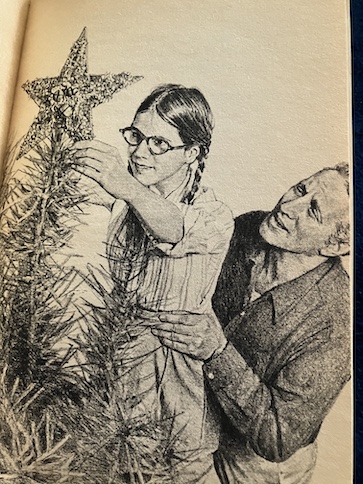
Addie Mills starts the story reminiscing about a special Christmas that she had when she was young and living in a small town in Nebraska with her father and grandmother in the year 1946. The story talks about the things that she did with her friends while they were getting ready for Christmas and buying presents for each other and such, but it mostly centers on how badly Addie wants a Christmas tree.

Addie is ten years old, and she can’t remember ever having a Christmas tree in the house. Apparently, the last time there was a tree in the house was when Addie’s mother was still alive, when Addie was a baby. Addie tries to talk to her father about it, but he just gets angry. Addie’s father doesn’t want a Christmas tree because it reminds him of Addie’s mother, and he still misses her.

Addie feels self-conscious because other families have Christmas trees, and she schemes to find a way to get one. When Addie wins a tree in a guessing contest at school, beating a girl from a needier family, Addie’s father gets angry and makes a scene, which makes Addie feel terrible. She gives the tree to the other family, and worries that her father doesn’t really love her. 

Seeing Addie’s desperation, Addie’s grandmother lectures Addie’s father, saying that his grief over his dead wife is keeping him from being happy and is making his daughter miserable too.  In the end, Addie’s father sees the importance of the tree to Addie and decides that it’s time the family had one again.

This book is a little unusual in that the movie version came first, and then the book was written.  Sometimes, you can find the movie or clips of it on YouTube.  The book is currently available online through Internet Archive.  There are also other books in the Addie Mills series.

Some people in real life also struggle with Christmas because Christmas can sometimes bring out sad memories or highlight losses. Christmas is often a time of reflection, the last major holiday before the end of the year and a very sentimental and idealized time, but life isn’t always idea. People who have suffered a loss or are unhappy with their lives in some way tend to reflect on what they don’t have, whatever or whoever is missing from their lives. This is how Christmas is for Addie’s father at the beginning of the story, and Addie’s grandmother is correct that either wallowing in sad memories or trying to hard to avoid them is holding Addie’s father and Addie herself back. It’s time for them to move on and build new memories with each other.

I like the story because the characters are very realistic. Addie and her father, like real people, often find it difficult to communicate and understand each other, but in the end, family love wins over the situation. Addie does get the tree she’s been longing for, and for the first time, her father talks to her about her mother. The Christmas tree and coming to terms with the memories of Addie’s deceased mother help the family to heal old wounds and establish better relationships with each other.

Molly’s Surprise

American Girls

MollySuprise

Molly’s Surprise by Valerie Tripp, 1986.

MollySurpriseFamily

Christmas hasn’t been the same in the McIntire house since Molly’s father went overseas as a doctor during World War II.  As Molly writes her father a letter before Christmas, she and her mother and siblings talk about whether or not he might send them presents.  Molly is sure that he’ll send something and adds a “thank you” to the letter she’s writing, but her older sister, Jill, is less sure and worries that he’ll feel bad if Molly thanks him for presents that he was unable to send.  The boys talk about whether or not any presents that he might send could be shot down before reaching them, and Brad, the youngest child in the family worries about whether Santa might get shot down, too.  The children’s mother reassures them, but it’s just another sign of how the war has changed the feeling of Christmas.

MollySurpriseTreeBuying

Jill tries to be realistic and tells Molly that she should be, too.  Jill thinks that there probably won’t be many presents this year, and what they get will be mostly practical things, handmade gifts, or hand-me-downs because of war rationing and the family’s need to be frugal.  Everyone is determined to be practical and patriotic, but Molly finds all this “realistic” talk depressing.  When her father was home, Christmas was always a time of surprises, and she likes to believe that, somehow, he will still find a way to surprise them.

When the children’s grandparents call and say that they won’t be able to come after all because of car trouble, and they won’t be able to bring them a Christmas tree as promised.  The kids are depressed, but Molly says that they’ll just have to do as their mother told her earlier and rely on themselves to make their own Christmas surprises this year.  Jill, Ricky, and Molly pool their money and go out to buy a tree.  As in the Charlie Brown Christmas special, the only tree they can afford is small and scrawny, but it’s better than no tree at all.

MollySurprisePackage

Once they get the tree decorated, it looks much better.  As they decorate the tree, Jill admits that some of her attitudes about how this Christmas should be different and more simple from others is because she really misses their father, and when everything looks the same as it did before he left, it just reminds her of how much she misses him.  Molly also admits that she doesn’t really care what presents their father sends; she’s only worried that, if a package doesn’t arrive, it might mean that something bad had happened to him.  All of the kids want the reassurance that their father is still okay.

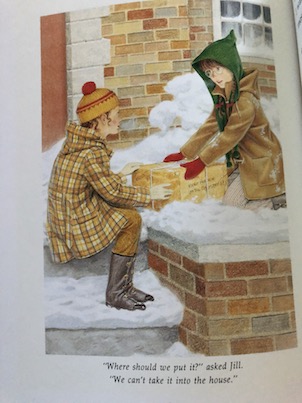
The next day, when the children go out to play in the snow, they find the package from their father that they’ve been waiting for!  However, there is a note on the package that says, “KEEP HIDDEN UNTIL CHRISTMAS DAY!”  Probably, their father wanted their mother to hide the package from the children, but since Molly and Jill are the first to find it, they decide to do the hiding themselves, putting the box in the storage room above the garage.  Jill thinks they should tell their mother about it, but Molly persuades her to wait because she doesn’t want to ruin their father’s surprise.

MollySurpriseRadio

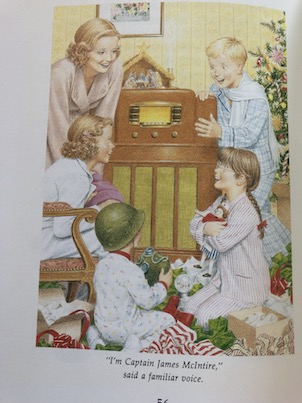
On Christmas Eve, the girls retrieve the box and put it under the tree after everyone else is asleep.  However, that’s not the end of the Christmas surprises.  Their father has one more special surprise for them . . .

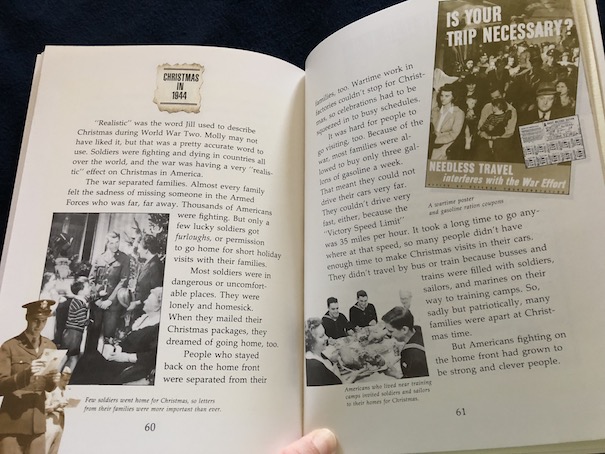
There is a section in the back of the book with historical information about Christmas during World War II.  Many families couldn’t be together during the war because families members were overseas and because many civilians limited their traveling during the war in order to save gasoline.  In fact, speed limits were greatly reduced in order to save gas – the “Victory Speed Limit” restricted people to driving no faster than 35 mph.  Public transit, like trains and buses, was often needed to transport soldiers, so civilians avoided traveling as much as possible.

MollySurpriseHistorical

People also had to get creative about Christmas treats because some essential ingredients, like butter and sugar, were rationed.  People also made their own decorations.  The selection of toys was somewhat limited because factories had been converted to making war materials, and many families gave their children practical gifts. However, there were still toys available, and people managed to give their children a few special surprises.

The book is currently available online through Internet Archive.

Who’s Afraid of Haggerty House?

HaggertyHouse

Who’s Afraid of Haggerty House? By Linda Gondosch, 1987.

Kelly McCoy is eager to begin selling greeting cards for the Bismarck Greeting Card company because she wants to earn extra money for Christmas shopping.  Her best friends, Jennifer and Adelaide are selling cards, too, and Kelly is looking forward to teaming up with them.  However, she soon finds out that Jennifer and Adelaide have already finished their selling.  While Kelly was visiting her grandparents for a couple of days, the other girls hurried right out and started selling their cards.  They were worried about other kids beating them to the neighborhood houses.  By the time Kelly is ready to begin, the others are done and tired of going door-to-door, and many of the houses in the area have already bought all the Christmas cards they want.

Angry and hurt, Kelly has a fight with the other girls, and they mention that one house they didn’t visit was Haggerty House, which is supposed to be haunted.  Although the house spooks Kelly, she decides to go there and try to sell her cards.  When her brother, Ben, followers her and hits her with snowballs, further angering her, she dares him to come to Haggerty House, too.  Ben might be annoying company, but he’s still company.

Usually, the only time that kids in the neighborhood go to Haggerty House is on Halloween, and old Mr. and Mrs. Haggerty give good treats for the kids who are daring enough to visit, usually candied apples and nickels.  When Kelly and Ben approach the house to sell Christmas cards, Mrs. Haggerty invites them in for hot chocolate.  Mrs. Haggerty buys one of Kelly’s cards, and Kelly and Ben learn that Mrs. Haggerty is very lonely.  Her husband is ill and in the hospital.  She invites the garbage men in for hot chocolate, too, but is disappointed that they can’t stay very long because they have to finish their rounds.

Kelly and Ben can’t stay very long, either, much to Mrs. Haggerty’s disappointment.  However, Kelly later accepts an invitation from Mrs. Haggerty to visit again.  Mrs. Haggerty shows her some Christmas cards that people have given her previous years and tells her about her son, Tyler, who is a filmmaker in Los Angeles.  Tyler doesn’t visit very often because his work keeps him busy.  Mrs. Haggerty plays the piano, and she’s writing a song for Tyler for Christmas.  Mrs. Haggerty enjoys Kelly’s visit and wishes she could stay even longer.

Mrs. Haggerty becomes closer to Kelly’s family.  Ben helps Kelly to take Mrs. Haggerty’s picture and record the song she’s writing for Tyler so she can send it to him for Christmas.  Mrs. Haggerty also comes with the McCoys when they go shopping for a Christmas tree, and she comes to see Kelly as the Ghost of Christmas Past in her school’s A Christmas Carol play.

Then, while the kids are helping Mrs. Haggerty decorate at her house, an eccentric woman from the neighborhood, Malvina Krebs, comes to the house to ask if Mrs. Haggerty would like to participate in one of the seances that she holds regularly with friends.  Actually, they are hoping that she will let them hold a séance at her house because her house has such wonderful atmosphere and “vibrations.”  Mrs. Haggerty agrees because she’s never seen a séance before, and the séance group will be additional company.  Kelly asks if she could come because she’s curious to see what a séance looks like as well, and the ladies agree.

The séance is a very strange experience, although Kelly later discovers that some of what happened was a prank by her brother and his friend.  It occurs to Kelly that what she likes about visiting Mrs. Haggerty is that, unlike her friends right now, Mrs. Haggerty is always glad to see her and the interesting things that they do take her mind off of her fight with her friends.  However, she has come to miss talking to people who really understand her.  She can imagine what Jennifer would say about the séance and how she would find it interesting and how she would understand how Kelly felt about it.  Kelly’s earlier anger at her friends wasn’t really about how they made money with their cards and left no customers for her so much as they were having a good time without her and how they no longer seem interested in spending time with her.  She confides a little in Mrs. Haggerty how she feels about her friends, and she says that friends don’t always act like friends should.  Mrs. Haggerty herself doesn’t have as many friends as she used to because many of them have passed away.

Kelly does make up with Jennifer and Adelaide, inviting them to a Christmas party at Mrs. Haggerty’s.  There, she learns that some of their stand-offishness and secretiveness was because they’ve been planning a special Christmas present for Kelly.  The Christmas party is fun with a lot of old-fashioned games, but the best part is when Tyler finally comes home for Christmas!

The book is available to borrow and read for free online through Internet Archive.

My Reaction

Friendship is a large part of the theme of this story.  Kelly comes to understand Mrs. Haggerty’s loneliness partly through her quarrels with her friends.  At this point in their lives, each of them needs the other because they don’t really have anyone else.  Kelly’s time with Mrs. Haggerty gives her a new perspective on her relationship with her friends, and she also comes to understand some of the difficulties that Mrs. Haggerty faces because she is elderly.  Mrs. Haggerty’s song for her son is what makes him realize that he needs to spend more time with his aging parents, and Kelly and her friends decide that they will continue to visit with Mrs. Haggerty regularly.

The Mystery in Arizona

Trixie Belden

TBMysteryArizona

#6 The Mystery in Arizona by Julie Campbell, 1958.

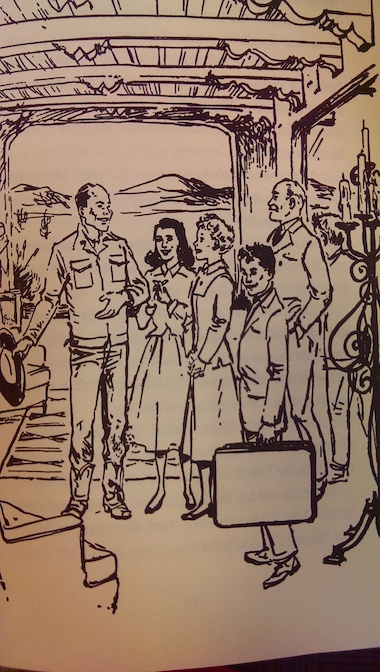
TBMysteryArizonaRanchDi’s Uncle Monty (the real one, not the fake from previously in the series) has invited her and the other Bob-Whites to spend Christmas at his dude ranch near Tucson, Arizona. At first, Trixie is worried that she won’t be allowed to go with the others because her grades in school are bad and she needs to study. However, her parents finally agree to allow her to go when the boys offer to tutor her over the holidays, and Trixie can get information that she needs on Navajo Indians for her theme. It won’t be easy, though.

From the very start of their visit, problems plague the ranch, and it seems as though everyone has a secret. Most of the members of the Orlando family, who usually take care of cooking, cleaning, and other tasks on the ranch, have mysteriously disappeared, except for Maria and her young son. Maria refuses to say where the others are, but the little boy is unhappy that he couldn’t go with the rest of his family and makes strange comments about skeletons and other frightening things. Also, Rosita, a Navajo girl working as a maid at the ranch, is deeply unhappy and in need of money for reasons that she doesn’t want to explain.

Meanwhile, there is a trio of lonely and unhappy guests in need of cheering up. In an effort to help, the Bob-Whites volunteer to take over the Orlandos’ chores to keep the ranch running during the holidays. As Trixie gets drawn further into the mysteries plaguing the ranch, she finds it difficult to balance her work and her studies. Trixie worries that this might turn out to be a terrible way to spend Christmas, but with some help from the Bob-Whites, things might work out even better than anyone hoped.

One of the things that they discover is that the Orlando family is celebrating a family tradition similar to Dia de Los Muertos (Day of the Dead, similar to All Souls Day and Halloween) but their family celebrates it at a different time of year than is customary because they want their celebration to coincide with the birthday of one of their ancestors.  They left without explaining because they were worried that no one would understand their traditions or approve of them.  Maria Orlando did not go right away because she was worried about leaving her job, but when her son tries to run away and join the rest of the family, she decides that it isn’t fair to keep him away from the family celebration.  After making sure that the Bob-Whites can handle the chores on the ranch, she takes her son to join the others in Mexico.

The three unhappy guests, Jane Brown, Mr. Wellington, and Mrs. Sherman, also have their problems solved.  Jane learns to get over her shyness and enjoy herself.  Mr. Wellington’s children, who had decided at the last minute to spend the holidays with friends, change their minds and come to spend Christmas with their father instead, cheering him up.  After Maria leaves, Mrs. Sherman cooks Christmas dinner for everyone, allowing her to once again do the work she loved when she and her late husband ran a restaurant.  Rosita’s secret is that she feels responsible for an accident that her father suffered when he was working with some  more modern tools that she gave him for his silversmithing work.  She took a job at the ranch to get some money for his medical treatment, but she is worried that she cannot earn all the money she needs during the holidays so that she can return to school.  She sold some of her silver jewelry to Mrs. Sherman, but she refused to take more than $100 dollars for it, although Mrs. Sherman would gladly have given her all the money that she needed.  Rosita is too proud to ask for or accept help from others.  The Bob-Whites solve her problem by giving her the money that they earned working at the ranch as a Christmas present.  In spite of all these distractions, Trixie manages to improve her math and get enough information for her theme on Navajos from Rosita.

This is the last Trixie Belden book written by Julie Campbell, the original author of the series.  From this point on, the series continues with other authors.

The book is currently available online through Internet Archive.