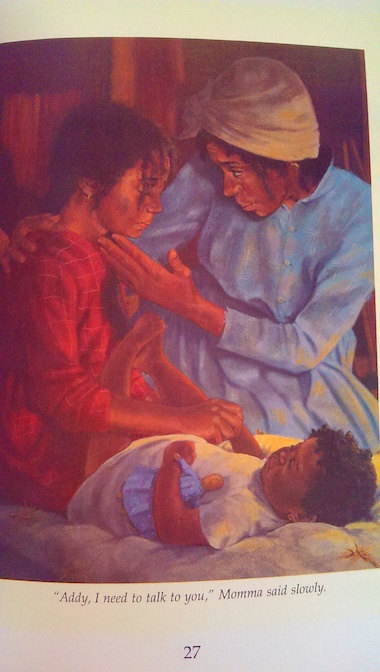
Alvin’s Secret Code

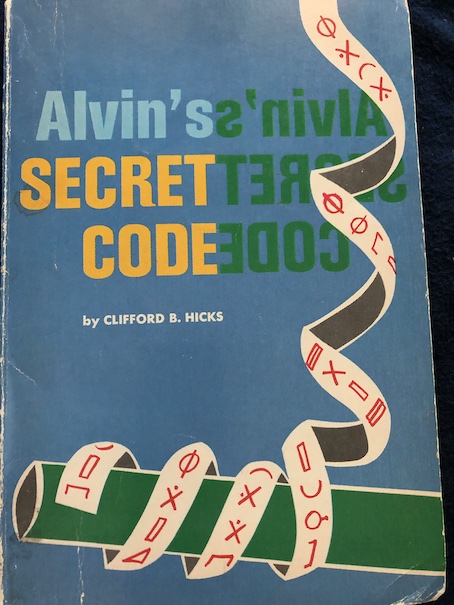
Alvin’s Secret Code by Clifford B. Hicks, 1963.

This book is part of the Alvin Fernald series.

Alvin has been reading a book about spies, and now, he and his best friend, Shoie (a nickname, his real name is Wilfred Shoemaker), are playing at being spies. One day, as the boys are walking home from school, Shoie stops to pick up another bottle top for his collection, and he finds a scrap of paper with a strange message on it. The words in the message don’t make any sense, and it looks like it’s some kind of secret code.

When Alvin gets home, his mother insists that he clean his room before he does anything else. Shoie helps him, and Alvin’s little sister, Daphne, insists that she wants to help, too, because she wants to see what the boys are doing. Daphne is fascinated by the things her older brother does and always wants to be included. When Daphne finds out that they’re being spies and have found a secret message, she also insists that she wants to be a spy and look at the message with them. They let her see the message, but they insist that she can’t be a spy because it’s dangerous and “work for men.” (That attitude comes up in mid-20th century kids’ books, especially ones for boys. I’d just like to point out here that, while dealing with spies would actually be dangerous, too dangerous for a young kid like Daphne, the fact is that both Alvin and Shoie are only twelve years old, so technically, they don’t count as “men”, either.) At first, the kids think maybe the message is meant for a secret Russian spy ring targeting the nearby defense plant. (This book was written during the Cold War, so that would be one of the first possibilities they would consider.)

Alvin comes to the conclusion that they need to investigate Mr. Pinkney, a relative newcomer to their town, because they found the message near his house, the message mentions an oak, and there’s one growing nearby. Alvin also thinks that they might need some help to break the code in the message, so he suggests that they visit Mr. Link, a WWII veteran who was also a spy during the war. He’s now an invalid who has a housekeeper who takes care of him, but he could still advise them about what to do with the mysterious message. Although the boys tell her that she can’t be involved with what they’re doing, Daphne still tags along with them when they go to see Mr. Link.

When the kids ask Mr. Link about his time as a secret agent during the war, he calls spying a “dirty, dirty business” but “something that must be done”, saying that he’s glad that it’s all over now. However, he’s perfectly willing to talk about secret codes and ciphers. Mr. Link has even written a couple of books on the subject. This story is a nice introduction to codes and ciphers for kids because it explains some of the terms and how codes and ciphers work. As Mr. Link points out, much of what people think of as secret codes are actually ciphers. The difference is that ciphers are actually secret alphabets that can be used to compose messages. When Mr. Link asks them if they’re trying to compose a cipher themselves, the kids tell him about the secret message and their suspicions that there could be a spy in their town.

Mr. Link doesn’t reject the possibility that there could be a spy in the area, but he tells them that they’re wrong to suspect Mr. Pinkney of being a spy because Mr. Pinkney is a friend of his, and he knows him very well. For a moment, Alvin wonders if they should suspect Mr. Link too, but Mr. Link anticipates the thought and says that he can prove that he’s trustworthy by telling them more about Mr. Pinkney and breaking the code for them. Mr. Link explains that Mr. Pinkney was lonely when he first came to town, and that’s how the two men started playing chess together regularly. Mr. Pinkney owns a factory that makes electronic devices, like transistor radios and intercoms, and one day, he told Mr. Link that he had a problem with his business. He suspected a business spy of trying to intercept his messages to his product distributors in Europe, and he needed a way to make his messages more secure. Naturally, Mr. Link suggested using a code, and he recognizes the coded message the kids found as one that Herman Pinkney sent to his distributors. Mr. Link shows the kids how each word in the strange message stands for another word or concept. Only someone who knew what the code words were supposed to mean would be able to read it.

Alvin is a bit embarrassed about jumping to the wrong conclusion, and Mr. Link says that he’s learned a couple of important lessons from this experience. First, you shouldn’t jump to conclusions about people if you don’t know them very well, and second, people who are full of tricks and deception are easily confused when they encounter straightforward honesty. In other words, while Alvin was spinning imaginative spy tales in his head, he overlooked the possibility that there could be a more innocent explanation. Alvin is still embarrassed, but he takes the lessons to heart, and Mr. Link tells them more about codes, how they have been used in history, and how codes are around them all the time, every day.

I liked Mr. Link’s explanations about how codes aren’t just for spies. He says that codes are used for all kinds of communications where only certain people are meant to read and understand messages. He explains about the product codes on things that the kids buy and wear everyday, showing them how to read the size codes on their shoes. Codes can indicate where and when products were made, and we still use product codes for that purpose in the 21st century. I used to work in a textbook store, and we used the codes on textbooks to tell which edition of a book students needed or whether a student needed just the textbook or if they needed books that came bundled with other, supplemental materials. Mr. Link says that ordinary people can sometimes figure out what product codes mean by studying them and looking for patterns that they recognize, like dates or sizes.

Since this book was written in the 1960s, they don’t talk about computers or the Internet, but that’s a major use of codes in the 21st century, and anybody can study and learn computer coding. Computer programming involves “coding” because, like with the other codes that Mr. Link describes, programming languages are also codes, using certain words and symbols to represent concepts that not everybody needs to read in order to use a computer, but which the computer can interpret so it knows what the programmer and user want it to do. Communications and transactions over the Internet also involve cryptography to protect the users’ information, using algorithms to convert a sender’s plaintext message to ciphertext to conceal its true meaning from any third party who might try to read the message and then back into plaintext so the intended recipient can read it. Codes really are around us all the time, even when we’re not fully aware of them or paying close attention to them.

The kids are fascinated by Mr. Link’s stories about how codes were used in history and the unusual methods people used to send secret messages, like writing them on someone’s head and then letting their hair grow out and cover it. He also shows them scytales, round pieces of wood that can be used for reading secret messages. The message would be written on a long strip in what appears to be jumbled letters. The message only makes sense when the strip is wrapped around the scytale so that the letters will align in the proper order to be read. That’s what’s shown on the cover of this book, although the picture also shows a message written with code symbols.

It’s all fun and games until a woman named Alicia Fenwick shows up in town with a puzzle that puts the kids’ abilities to the test. She comes to see Alvin’s father in his professional capacity with the police, looking for a man named J. A. Smith. Miss Fenwick explains an incident that happened to her family during the Civil War. The Fenwicks used to own a Southern plantation with slaves. (Daphne says that she doesn’t like the part of the story about the slaves, and Miss Fenwick says she doesn’t either although her great-great grandfather was apparently kind to his … which is what they all say, isn’t it? More about that in my reaction section below.) During the Civil War, her great-great grandfather was an old man. All the young men went away to fight in the war, but he stayed at home. When there were rumors of marauding bandits, he got worried that the plantation with would be a prime target for them with all the young men gone. He enlisted the help of a former slave he had freed before but who was still a friend to help him hide the Fenwick family’s valuables. They put everything they could into a chest and buried it. Unfortunately, when the bandits came, they forced the former slave, Adam Moses, to reveal the location of the chest by threatening to kill his young son. After they dug up the chest, they took Mr. Moses prisoner and forced him to help them take the chest with them further north. Eventually, Mr. Moses escaped from the bandits after they tried to kill him, and he wrote a letter to the Fenwicks saying that he was now in Indiana and that the bandits had forced him to help them rebury the chest. He said that he would try to retrieve the chest and return home with it, but sadly, he was later found murdered close to Riverton, the town where the children now live, probably killed by the same bandits who took the chest. However, the leader of the bandits was also killed shortly after that, so they never enjoyed their ill-gotten gains. The treasure chest was never recovered. The story was passed down in the Fenwick family for generations as an unsolved mystery until recently, when Miss Fenwick received a letter from J. A. Smith asking her for any information she might have about about the treasure. She told this person about the letter from Mr. Moses but didn’t hear from him again, so she’s trying to trace J. A. Smith and find out what he knows about the treasure.

Sergeant Fernald, Alvin’s father, says that there are people in town with the last name of Smith but nobody who has the initials “J. A.”. However, the kids say that Miss Fenwick’s story might explain some of the stories told by local kids about an area outside of town called Treasure Bluffs. Rumor has it that there was a treasure buried there years ago, although nobody knows exactly why or where. The kids start to think that the story really points to the location of the Fenwick treasure, but the bluffs cover a lot of territory, and before they can really search for the treasure, they have to find a way to narrow down the search area.

The kids’ new lessons in code-breaking pay off when they spot a man at the local library using the code books that Mr. Link donated. The strange man is trying to break a message that will reveal the secret hiding place of the Fenwick treasure. Can Alvin and his friends figure out who the man is and break the code themselves before he does?

The book ends with a section explaining more about codes and ciphers. One of the codes they explain is the pigpen cipher, which is a popular one for children and appears in other children’s books. This book says that it was used in the Civil War, which is true, but it’s actually older than that.

The book is available to borrow and read for free online through Internet Archive.

My Reaction and Spoilers

There are some elements in this story about boys thinking that they’re more capable than girls, like in the way that Alvin and Shoie talk to Alvin’s little sister, but Alvin also acknowledge, to his irritation, that sometimes Daphne thinks even faster than he does. When Mr. Link is explaining the size codes on the children’s shoes, 8-year-old Daphne actually catches on a little faster than 12-year-old Alvin and comes up with the answer to a problem Mr. Link poses before Alvin’s “Magnificent Brain” does. I liked that touch of imperfection on Alvin’s part and the acknowledgement of Daphne’s abilities, which help thwart any overconfidence or arrogance that Alvin might have about his “Magnificent Brain.”

I appreciated that, although Alvin is clever, he’s not a complete genius, and he is noticeably fallible. He’s not good at everything, like some heroes of children’s books. He is terrible at spelling, and when he tries to write that he’s a cryptographer, he spells it “criptogruffer,” which doesn’t inspire professional confidence. Daphne knows the correct spelling and spells it aloud for him, much to Alvin’s embarrassment and annoyance. Alvin is still pretty clever, and he breaks the final code that reveals the hiding place of the treasure, but it is nice that he’s not unbelievably perfect.

The final code in the book is easy enough that anybody could actually break it with minimal effort. I spotted it pretty quickly because there’s something that I always do with secret messages in books, and it often pays off. (There are one or two things in the Harry Potter books that this works on as well.) I’m not going to spoil it here, although I’ll give you a hint: When I was a kid, I read and liked a book about Leonardo Da Vinci.

I genuinely enjoyed the parts of the story about codes, which run through most of the book. Mr. Link is full of helpful information, and the section at the back of the book with more information about codes is a nice introduction to some basic types of codes. As I said above, I like the practical applications of the lessons, showing kids how they can read parts of product codes, if they understand what to look for. That’s a useful skill, and you can use similar techniques to interpret the expiration dates on food products when they’re only stamped with a code instead of an explicit date.

Like Daphne, I also didn’t like the part of the story about slaves. This book was written during the Civil Rights Movement, which makes its takes on the Civil War, slaves, and race interesting. The author wants to tell a story that bears on the Civil War, so he has to address this is some fashion, and he tries to get pass the uncomfortable issue of families owning slaves as quickly as he can to get to the adventure part of the story.

The Civil War and its associated legends of battles, ghosts, secret passages, hiding places, hidden treasures, and secret messages are staples of American children’s literature. It’s completely understandable because the Civil War was a major event that shaped life and history in the US, it was a traumatic event whose impact is still felt even into the 21st century, and it gave rise to many stories and legends that have further helped shape our culture. The idea of treasures hidden during the war and later forgotten is a popular trope and so are coded messages that point to secrets from the past. I’ve seen these tropes used in other children’s stories, like The Secret of the Strawbridge Place, The House of Dies Drear, and Mystery of the Secret Dolls, and they’re always fun. However, stories with a Civil War backstory can sometimes feel a little uncomfortable because they’re almost impossible to tell without involving slavery in some way because slavery was at the heart of the war.

When Daphne says that she doesn’t like hearing about slavery and owning slaves, they deal with the issue quickly, with Miss Fenwick saying she doesn’t like it, either, and adding that her great-great grandfather was apparently nice about it, and then continuing with the story. As I said above, yeah, right, that’s what they all say. In stories (and sometimes real life), when there are characters whose families owned slaves and plantations, they almost always add the idea that, while slavery was bad and horrible and slaves were mistreated elsewhere, this particular family was special and treated their slaves with kindness, and it was almost like they were one big, happy family. Yeah, right. To be honest, I probably would have accepted that as a kid and let it pass. As an adult, I’m not letting it pass without at least a few pokes in the side as it goes.

The idea of the grateful slave or ex-slave who loves the family he served has been a trope since the anti-Tom literature of the 1850s. I can’t swear that no slave never felt any kind of affection for members of the family that owned them because human nature is varied and unpredictable, surprising relationships can spring up, and if all else fails, Stockholm Syndrome also exists, so I suppose it could happen, but at the same time, I just don’t buy that whole “slavery is bad, but my family is kind, and our slaves loved us” type of narrative. Even if a given slave-owning family was “above average” in treatment of slaves, that doesn’t mean that they were “good” so much as “less bad” among a group of people perpetrating something bad. The “average” in this situation is so bad that there’s quite a lot above that level that still wouldn’t qualify as good, whether the descendants of slave owners believe those old school textbooks promoted by the United Daughters of the Confederacy (some of which were still in use during the Civil Rights Movement – children are shaped by the things they read and the people who gave them those books, and history is not written by the “winners” but by the people who write) or have really thought this through all the way or not. (You don’t have to take my word for it. You can hear about it from people who actually were slaves.) I suppose I can suspend my disbelief about this fictional family for the sake of this kids’ story, which is mostly about secret codes and a treasure hunt and spends little time on racial issues, but I’d just like to point out that I definitely do have a sense of disbelief about this that requires suspension.

Of course, I can see why the author had to include it. In order for us to be invested in the treasure hunt and care about the Fenwick family getting their fortune back, we have to believe that they’re great people, sort of removed or distanced from the responsibility for choosing to own slaves (“in those days, it was accepted throughout the South” is the only explanation we’re given), who were as kind to their slaves as possible, so kind that at least one loved them so much that he gave his life attempting to recover the family fortune, and that they will now use the treasure for some beneficial purpose. (We are told that the family now operates an orphanage, which badly needs money, although we’re also told that one of their former charges has since become a US Senator, so you’d think he could help raise some.) If we didn’t like this family at all, we might see the fortune that came from their plantation as the ill-gotten goods of exploiting someone else’s labor, its loss as poetic justice, and the profit from its recovery as probably something that should either go toward the slaves who did the work on the plantation or maybe some public cause, like a museum or something.

We are told that Adam Moses’s son survived the experience with the bandits, escaped from them when his father was captured, and was adopted by another family, but we are not told anything further about his descendants. While I was reading the book, I halfway wondered if a descendant of the Moses family would surface with some important clue to the situation and get some acknowledgement, but that doesn’t happen. Instead, there’s a person who’s related to one of the bandits, who thinks that he has a right to the treasure because his ancestor stole it from someone else. The characters in the story scoff at that logic, but when I consider the full context of the situation, it makes me think.

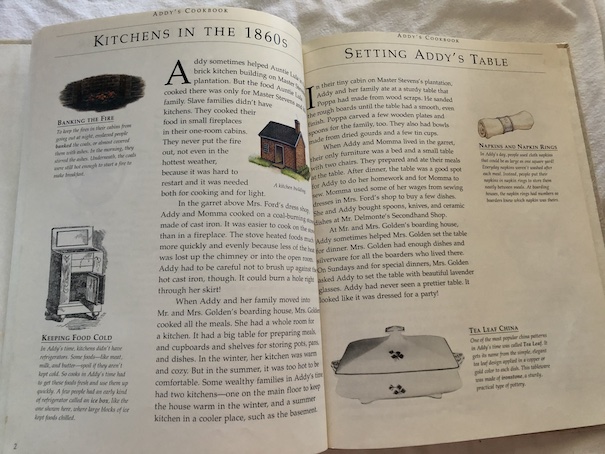
Addy’s Cook Book

Addy, An American Girl

Addy’s Cook Book by Rebecca Sample Bernstein, Terri Braun, Tamara England, and Jodi Evert, 1994.

This cook book is one of the activity books that was written to accompany the Addy series that is part of the American Girls franchise. The American Girls books were written to help teach American history (as well as sell the accompanying dolls and accessories), so this book has recipes of the type that people would have eaten during the American Civil War, when the character of Addy lived, and some historical information.

The book begins with sections of historical information about African Americans, kitchens, and table settings in the 1860s. It describes the lives of slaves and explains how they were given basic rations of food which they could supplement and extend by producing or gathering some food of their own, such as vegetables they grew or fish they caught themselves. When they managed to escape from slavery, they had to depend on help from others, such as churches or abolitionists, until they became established in their new lives. When they were able, many of them provided help to others who were in the same position. (This was a topic covered in the Addy books.)

The types of kitchens they used depended on where they were living. As slaves, Civil War era African Americans would do their cooking in small fireplaces attached to the small cabins where they lived. Because they needed the fire for cooking, they kept it burning all the time, even in hot weather. Free African Americans had more options. Depending on their living arrangements, they might have a stove for their cooking, or if they lived in a boarding house, they might be provided with meals as part of their boarding, paid for along with the rent on their rooms.

The recipes in the book are divided into three sections: breakfast, dinner, and favorite foods. There is a section with some general cooking tips, but there are other cooking tips and pieces of historical information included along with the recipes. Some information that I found particularly useful explains why some historical recipes can be confusing to read. Because some people were using cooking fires and some were using stoves, 19th century recipes can have vague-sounding instructions like “fry until golden brown” instead of specific cooking times and temperatures. It was also common for people to cook favorite dishes from memory instead of following written recipes. People learned to cook from their elders, and they just continued doing what parents and grandparents always did when they cooked. The book doesn’t mention it, but this style of cooking also continued into the 20th century, so even when people wrote down recipes, they might seem vague or incomplete to modern readers. It was like that with recipes that my grandmother and great-grandmother wrote down, too. They were accustomed to making certain recipes mostly from memory, and they didn’t feel obligated to write down every little step, assuming that anyone who read it would already know how to make that kind of dish and would just need a few reminders about amounts. Fortunately, the recipes in this book are all written with detailed, modern instructions and include cooking times and oven temperatures.

The book explains that poor people during the Civil War didn’t usually have much for breakfast because they had to rise early and get to work. Most mornings, they might have some leftovers from the previous night or some simple hot foods, like buttermilk biscuits and hominy grits, a traditional Southern breakfast food made from corn (my grandmother said that she had it when she was growing up on a farm in Indiana, too). As a special treat, they might have scrambled eggs or sausage and gravy.

The dinner section includes main dishes, like fried fish, and side dishes, like hush puppies. A particular recipe that gets extra attention is Hoppin’ John, a rice dish with black-eyed peas and bacon. Hoppin’ John is special because it’s a dish traditionally served at New Year’s Day.

The section of favorite foods include chicken shortcake, a few other side dishes, and a few special treats, including peach cobbler and shortbread. I’ve tried the shortbread recipe, and I like it. It’s easy to make and includes only a few ingredients, and it’s really good. It does contain a lot of butter, so it’s just an occasional treat.

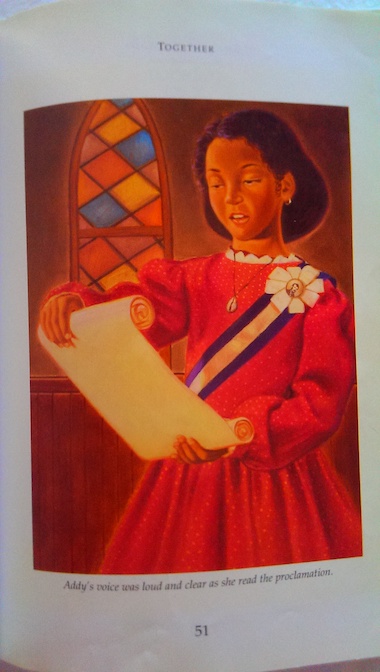
The book ends with a section of advice for planning an Emancipation party. It explains how people celebrated when the Emancipation Proclamation was read publicly on December 31, 1862, having been transmitted to communities by telegraph. Children played games like Novel Writers (which is a story-writing game similar to Consequences) and Blindman’s Buff. The book also describes the origins of Juneteenth – slaves in Texas were freed on June 19th, 1865, about two and half years after the Emancipation Proclamation.

The book is available to borrow and read for free online through Internet Archive.

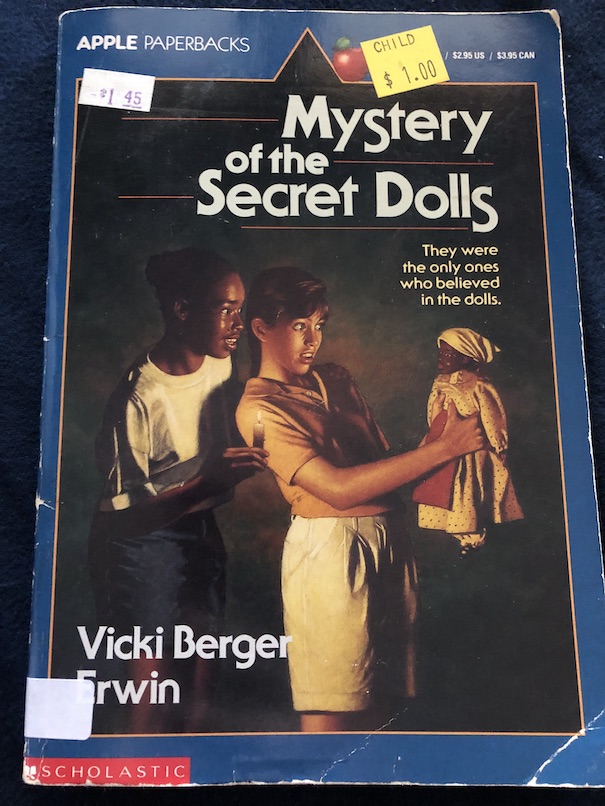
Mystery of the Secret Dolls

Mystery of the Secret Dolls Cover

Mystery of the Secret Dolls by Vicki Berger Erwin, 1993.

Bonnie Scott is visiting her great-aunts, Nell and Mollie, in Callaway County over the summer. Aunt Nell invited her to come and help set up her new doll museum, but Bonnie also wants to take advantage of the trip to work on a project about family history. Aunt Mollie has a restaurant, and Bonnie wants to talk to her about old family recipes that she uses and make a book about them. Unfortunately, when Bonnie arrives in her aunts’ town, she learns that Aunt Mollie has closed her restaurant and is helping Aunt Nell with her doll museum. From Bonnie’s awkward arrival, when no one comes to meet her at the bus stop and Marc, the grandson of the local doctor, Dr. Allen, has to help her find her way to her aunts’ house, she begins to see that things aren’t quite what she thought they were in her family and in her aunts’ town.

The reason why no one came to meet Bonnie is that Aunt Nell accidentally injured herself when she fell off a table she was standing on in order to change a light bulb. She broke her leg and had to go to the doctor. Now that Aunt Nell is in a wheelchair, she says that she will especially need Bonnie’s help, although Aunt Nell and Aunt Mollie also have a young black girl, Lynette Key, staying with them and helping out. Lynette is the daughter of an old family friend, and her family’s history is intertwined with Bonnie’s family. Through her aunts and Lynette, Bonnie comes to understand a little more about her family’s history with dolls and the relationship between Aunt Nell and Aunt Mollie.

Aunt Nell is the older of the two sisters, and she’s been bossing Aunt Mollie around for years, and she’s apparently the one who convinced Mollie to close her restaurant and help her with the doll museum project. The old family home belongs to both of them, although Mollie lived in another house while her husband was still alive. Now that both women are childless widows and Mollie has moved back into the family home, Nell has gone back to her old ways of bossing Mollie around. Bonnie is alarmed when Mollie reveals that there has been a break-in, vandalism, and a fire, apparently deliberate, at the museum, and she thinks that Nell should put off the opening, but Nell is trying to ignore the situation and charge ahead with the project, dragging Mollie and Bonnie with her. The aunts are going to have a security system installed at the museum.

Aunt Nell says their family, the Scotts, have made dolls for about 150 years. She shows Bonnie her doll collection, including the portrait dolls, startlingly realistic dolls made of every member of their family, including Bonnie’s ancestors, like her great-great-great-grandfather who fought for the Confederacy during the Civil War. Aunt Nell apparently strongly identifies with the South and Confederacy because she keeps trying to blame the troubles at the museum on “some Yankee.” Not in a specific sense and not necessarily with any particular person in mind (although there is one person who is also labeled as a Yankee who is a suspect for awhile), it’s more that she just generally associates Yankees with bad stuff, and she says that she hopes that Bonnie hasn’t turned into a Yankee from living in a big city like St. Louis. Although the dolls belong to both of the sisters, Aunt Nell really thinks of the dolls as being hers, and she’s determined to make Bonnie’s family history project about the dolls, whether Bonnie wants it to be or not. Aunt Nell says that Lynette’s grandmother used to work for her, making dolls, and she’s pleased that Lynette shares her interest in dolls, but Lynette privately tells Bonnie that the situation goes deeper than that.

As you might have guessed, Aunt Nell’s mental version of history, including the history of her own family, isn’t entirely accurate. Marc lends Bonnie a history book about the area written by his grandfather, but Lynette tells Bonnie not to let Aunt Nell see it because she and Dr. Allen have very different views about history, and Dr. Allen is a “Yankee.” Bonnie asks her what she means by that, and Lynette says that the Scotts have never gotten over being on the losing side of the Civil War. Dr. Allen, by contrast, believes that the Civil War turned out just fine with the South losing, which makes him a Yankee. It matters because Aunt Nell’s interpretation and attitude toward the past is affecting life in the present.

Although Aunt Nell is mentally on the side of the Confederacy, she doesn’t say anything in support of the idea of slavery and doesn’t seem to have bad feelings about Lynette being black. Nell is actually very fond of Lynette, treating her almost like a young niece, and I suspect that Nell probably mentally replaces the word “slave” with “servant” in her head, as some of the other characters in the book do until Lynette reminds them that there’s a difference and it matters. Nell’s attachment to her family’s grand history (which may not be quite what she makes it out to be) and her feeling that the doll-making business must pass to a blood relative keep her from fully seeing the potential that Lynette has to continue the doll-making traditions that their families both share, something that Lynette really wants to do.

Lynette says that women in her family have worked for the Scott women for generations, making dolls. They were originally slaves belonging to the Scott family, and they even shared the same last name because slaves were sometimes given the surnames of their masters. (In my home town, I’ve met black people with the surname White, which might seem a little odd and contradictory, but this is the probable reason why they have that last name.) Some slaves changed their last names after Emancipation, but not all. Lynette says that even after her ancestors were freed from slavery, one of her ancestors, Rosa, chose to keep the last name Scott because of her connection to the doll-making business.

Lynette points out a section in Dr. Allen’s history book about the Scott dolls having a connection to the Underground Railroad because some of them seemed to have been used as signals for escaping slaves. Margaret Scott, an ancestor of Bonnie’s, used to make black dolls, each with a distinctive little red heart sewn on the chest, and after she made one, a slave would mysteriously disappear. She eventually had to stop doing it because people in the area were getting suspicious of her and put pressure on her to stop. In fact, Lynette says Margaret’s own father, the Confederate colonel, tried forced her to stop, saying that he’d close down her doll-making business if she didn’t, but that Margaret and Rosa actually continued making the black dolls in secret, something that Aunt Nell doesn’t believe. The history book notes that the dolls are rare and valuable collectors’ items. Lynette says that Aunt Nell only has one of these black dolls, and she keeps it locked up for safe-keeping, denying that there even are others, but Lynette is sure that there are more, possibly hidden somewhere. Lynette wants to find these dolls, not only because they are valuable but because they can help prove her family’s connection to the Scott doll-making business. Lynette says that her ancestors never got the credit for the beautiful dolls they made because they were only ever slaves or employees of the Scotts, and the entire doll business was in the Scott family name.

Lynette wants to become a doll maker herself, but Aunt Nell really wants Bonnie to take over the family tradition, even though Bonnie has never really been interested in dolls and would prefer to talk cooking and recipes with Aunt Mollie. The realistic dolls portrait dolls actually kind of give Bonnie the creeps, but Lynette has a sentimental attachment to them because she’s been around them all her life, since her grandmother was a doll maker. Once Bonnie understands the history between her family and Lynette’s and Lynette’s doll-making ambitions, she sees why Lynette seemed a little cold to her at their first meeting, but she isn’t interested in learning the doll business or competing with Lynette to be Aunt Nell’s successor. Even though Aunt Nell is bossy and doesn’t understand Lynette’s deep desire to be a doll maker and continue the Scott doll-making business, Lynette kind of likes her and wants to show her that she is just as attached to the doll-making traditions as she is. Lynette and Bonnie make a deal that Lynette will help Bonnie get the recipes she wants from Aunt Mollie if Bonnie will talk to Aunt Nell about the black dolls and try to get more information about them.

Bonnie thinks that hunting for the long-lost dolls sounds exciting. It occurs to her that the valuable dolls might be the reason why someone broke into the doll museum. The aunts’ old house is spooky, right next to a graveyard, and on Bonnie’s first night there, someone leaves Margaret’s portrait doll (which looks a great deal like Bonnie) in Bonnie’s room with a note that says, “Don’t believe everything you hear.” What does the note mean? Who left the doll, and is it connected to the other strange things happening around the doll museum? Is someone trying to scare Bonnie? Are the missing black dolls still somewhere nearby, and can Bonnie and Lynette find them? What is the real truth about the dolls and what happened in Callaway years ago?

The book is available to borrow and read for free online through Internet Archive.

My Reaction and Spoilers

Although this story doesn’t quite deal with racism in the sense of people hating other people because of race, there is a lot in here about the nature of prejudice, on several levels. Aunt Nell has many preconceived notions about her family and how things in her family ought to be. She assumes from the beginning, when Bonnie contacts her aunts to talk about family history, that Bonnie will do her project about the dolls and the family’s doll-making history and that Bonnie will help her with her doll museum and eventually take over the dolls from her. Aunt Nell started out their relationship with a lot of assumptions, and her assumptions about Bonnie have blinded her to the possibility that Lynette could be the successor to the doll-making business and doll museum that she really wants because they share a common love of dolls and skill in making them. Lynette has already started learning the doll-making business, first from her grandmother and then from Nell, because she loves it, and she is willing to work at developing her skills. She has a similar vision to Nell about the doll business and museum, and the two of them get along well, in spite of Aunt Nell’s bossy personality. It’s only Aunt Nell’s narrow vision of family and sense that the doll-making business should pass to family that keep her from considering the possibility at first. Meanwhile, Bonnie and Mollie are both being forced to go along with Nell’s plans because of what Nell thinks they should do as family, while they both have very different interests and would like the freedom to pursue them. Aunt Nell also has been assuming many things about her sister Mollie for years.

Over 100 years earlier, Margaret Scott also belonged to a family that did not share her interests and her vision of the future. Although she used slave labor in building her doll-making business, she and Rosa found a way to use their craft to help escaping slaves. The Scott family took pride in the doll-making business for generations, but there were sides to Margaret and the dolls that they didn’t understand and appreciate. Before the end of the book, Aunt Nell comes to understand that their family has more variety than she had ever considered and that her goals might not be everyone’s goals.

The ending of the story makes sense and is realistic, but I’ll admit that there were a couple of points that I might have clarified or done differently if I had written the ending. Sometimes, when I’m not entirely satisfied by the ending of a book, I like to say what I would have changed about it, but it’s difficult to do that here without giving too much away. Part that I can say is that I wished that Nell and Mollie had thought of more creative ways to combine their separate interests, like how Bonnie’s final family history project ends up being a combination of both – a cookbook of family recipes, illustrated with pictures of the portrait dolls that represent the people who invented or enjoyed the different recipes. In fact, a cookbook of historical recipes with pictures of historical dolls sounds like a book that many people would actually be interested in buying if they published it professionally and even sold copies through the doll museum, and I found myself wishing that one of the characters would mention that before the end of the book.

The story ends with the impression that Lynette will keep working with Nell and the dolls because, while Bonnie says that she’ll come back and visit, she doesn’t have the interest in doll-making that Lynette does, but I also kind of wished that they would clarify more definitely that Lynette would be continuing the doll-making business. The girls are young yet, so maybe they didn’t feel the need to decide their futures definitely, and it’s enough just to show that’s how things are looking at the end of the book. I had half expected that it would turn out that Lynette and Bonnie are actually related because sometimes slave owners did have children with their slaves, and I suspected that one of the Scott family secrets might have been that Rosa was actually a blood relative and that was part of the reason why she was so close to Margaret and why she kept the Scott family name. The story doesn’t bring up that possibility, focusing on a different secret relationship instead, but I’m still keeping it in mind as a private theory. I like the idea because, if it was true, then it would strengthen Lynette’s ties to the doll-making business she loves, and I think that Nell would appreciate the idea of bringing her more fully into the business as a relative. But, perhaps it’s enough that they just both share the same interest in life

Changes for Addy

American Girls

AddyChanges

Changes for Addy by Connie Porter, 1994.

Since the Civil War ended, most of Addy‘s family has managed to reunite in Philadelphia. The one person who is missing is Addy’s little sister, Esther.  When Addy and her mother escaped from the plantation where they had been living as slaves, they were forced to leave Esther behind with family friends because she was too little to travel.  Since the end of the war, slaves have been released from plantations, but the Walkers haven’t received any word from their friends, Auntie Lula and Uncle Solomon Morgan and don’t know where they or Esther are.

Over the past months, the Walker family has sent inquiries to various aid societies helping war victims and displaced people, asking if the Morgans or Esther have sought help from them.  Finally, they get a response from the Quaker Aid Society, saying that the Morgans and Esther were at one of their camps in North Carolina.  They stayed for awhile because Esther was ill, but as soon as she was well enough to travel, they were eager to move on to Philadelphia.

Addy is happy because the news means that the Morgans and Esther might already be in Philadelphia, looking for them.  However, Addy’s parents are still worried because the Morgans are elderly, and from what the letter said, they were not in good health.  The family makes further inquiries to see if they could be at any of the local hospitals.

Eventually, the search for the Morgans and Esther pays off when Addy finds them at a church.  Uncle Solomon passed away on the journey to Philadelphia, and Esther seems unsure of who the people in her family are because she was so little the last time she saw them.  Auntie Lula pressed on for Philadelphia because she wanted to make sure that Esther made it safely back to her family.  Auntie Lula is in bad health herself, and she knows that she isn’t likely to live much longer, making the reunion bittersweet.

AddyChangesProclamationHowever, Auntie Lula does get to spend a little time with the family before her death, and she tells Addy not to be sad.  People don’t always get everything they want in life, but they can take some pride in what they do accomplish.  Lula and Solomon may not have gotten everything they wanted in life, not having had much time to enjoy being freed from slavery, but they did get to accomplish what was most important to them.  Solomon died knowing that he was a free man, far from the plantation where he’d been a slave.  Lula managed to reunite Esther with her family.  From there, Lula says, she is depending on the young people, like Addy and her family, to make the most they can of their lives, hopes, and dreams.

The theme of this story is hope and the need to persevere with determination.  Life has its difficulties, and not every problem can be solved.  However, things can get better.  After the reunion with Esther, Addy points out to her mother that Esther wasn’t walking or talking when they last saw her, and they never got to experience seeing her learn.  Addy is sad at the time they’ve lost with Esther, which they can never recover.  However, because of Lula and Solomon’s determination to bring Esther to them, they will have many more years to come with Esther.  Addy’s mother also reminds Addy that those who love us never leave us.  Auntie Lula and Uncle Solomon changed the family’s lives for the better because of the good people they were, and their memory will stay with them forever.

In the back, there is a section of historical information about the end of the Civil War, the emancipation of the slaves, and it further explains how racial issues continued into the 20th century, leading to the Civil Rights Movement in the 1960s.

AddyChangesHistorical

Addy Saves the Day

American Girls

AddySummer

Addy Saves the Day by Connie Porter, 1994.

Now that the Civil War is over, families are looking forward to the soldiers returning home and reuniting with loved ones.  Some families have been split forever because loved ones died in the war.  Addy‘s family still doesn’t know what happened to her brother Sam or her little sister Esther.  She and her parents have been making inquiries at various aid societies that have been helping people who were sick, injured, or displaced by the war, but so far, they haven’t received any word about Sam or Esther.  To help raise more money for their search, they’ve started growing vegetables in a community garden that they can sell.

The Walkers aren’t the only family in this position, and their church has decided to hold a public fair to raise money for victims of the war and families in need.  Addy and Sarah are looking forward to taking part in the fair, but they are annoyed because they’ll have to work with bossy Harriet, a snobby girl from their school.  Harriet’s family is wealthier than most black families, and Harriet loves to brag about the things they have that others don’t.  Although many families, like Addy’s, are worried about not knowing where their relatives are or whether they are alive or dead, Harriet brags about knowing exactly which army unit her uncle is in and what a distinguished career he has had.  Harriet is eager to take part in the fair and tell the other children what to do, but her family doesn’t need any charity themselves.

Harriet tries to tell the children’s group at the church what they should do for their act at the fair, and it mainly involves her being the star of the show.  However, the group decides to take Addy’s suggestion instead.  They are going to make puppets out of old thread spools and put on a puppet show.  They can also sell some of the puppets they make.  Addy is proud that her idea was the one that the group chose because she thinks of it as a victory over snobby Harriet, but her parents remind her that the fair isn’t supposed to be a contest.

The purpose of the fair is to raise money to help people, and no one is supposed to compete with anyone.  If the act for the fair is going to be a success, Addy and Harriet will have to find a way of working together to make it happen.  When Harriet picks a fight with Addy while the children are making their puppets, the minister’s wife tells them that she’s going to make them work with each other at the puppet show, forcing them to sort out their differences.

It isn’t until Harriet receives some bad news that she comes to understand the pain that other families, like Addy’s, have been feeling, and Addy comes to see that, in the end, Harriet is just an ordinary person, a little girl with feelings that can be hurt.  With a new understanding of each other, the girls find the motivation that they need to work together and make the fair a success.  Then, when someone tries to steal their group’s hard-earned money, the two of them find a way to stop the thief and get the money back!

This is the book where Addy’s brother rejoins the family.  When he was freed from slavery, he joined the Union army and lost his arm to a battle wound.  He shows up at the fair and recognizes the jokes and riddles Addy tells at the puppet show as ones that he used to tell her.

In the back of the book, there is a section with historical information about the changes taking place in American society around the time of the Civil War with increased immigration and urbanization.  It describes public parks and monuments built after the war.  Since this book took place in summer, it also talks about what people would do in order to cool off from the summer heat.  Wealthier people would travel to resorts, but poorer people would make do with enjoying the relatively cool public parks, swimming (less so for women and girls than men and boys), and taking part in outdoor activities.  In all cases, the various summer activities were still segregated by race with separate areas in public parks and sports teams for black people.

AddySummerHistorical

Happy Birthday, Addy!

American Girls

AddyBirthday

Happy Birthday, Addy! by Connie Porter, 1994.

Things are improving for Addy and her mother now that her father has finally joined them in Philadelphia.  Addy’s father has found work delivering ice, so the family has been able to move to bigger rooms in a boarding house.  However, making a new life for themselves in freedom still isn’t easy.  Addy’s father worked as a carpenter on the plantation where they used to live, and he’d like to find steady work in carpentry, but he’s having trouble finding an employer who is willing to hire a black man.

Addy’s family might be free from slavery, but they are still not treated as equals to white people.  There are places where black people can’t go and things they aren’t supposed to do, like riding on most of the city streetcars.  It angers and upsets Addy, but she doesn’t know what she can do about it.  She isn’t the only one who feels that way, and there’s been talk of violence in the city over it.

The boarding house where Addy’s family now lives is owned by Mr. and Mrs. Golden.  Then, Mr. Golden’s elderly, blind mother moves in with them.  Affectionately called M’dear, she’s a pleasant lady and tells Addy interesting stories, jokingly saying that she’s so old that she “was there the day God invented dirt.”  When she asks Addy how old she is, Addy says that she’s nine but doesn’t know when her birthday is exactly.  It was common for slaves not to know their birthdays because their parents couldn’t read or write and no one else thought it was important to record the dates of their births.  M’dear tells her that she should claim a birthday for herself.


Addy’s parents think that choosing a birthday for herself is a good idea, and her father says that he will make ice cream for her new birthday.  He has found a broken ice cream freezer that someone threw out, and he’s fixing it up for the family to use.  However, Addy isn’t sure at first what day she wants to choose.

One day, M’dear is feeling poorly, and she’s out of headache medicine.  Addy and Sarah offer to go get more for her.  To get to the drug store, they get on board one of the streetcars that black people are allowed to ride, which can be dangerous because they have to ride on the outside.  Then, the man at the drug store makes them wait until he’s served the white customers, speaking rudely to them.  When they try to take the streetcar back home, there is an argument that ends with all of the black people being thrown off the streetcar.  When M’dear hears about what the girls went through, she offers some wise thoughts about how people have to continue living their lives and being themselves, no matter what difficulties life throws their way.


In the end, circumstances continue to improve for Addy’s family when her father finally finds the kind of work he’s been looking for and Addy finds a special day to claim as her birthday when the end of the Civil War is finally announced.

I liked M’Dear’s message that the way people are treated doesn’t really change who they are.  The black people in the story are treated badly not because of what they did so much as what other people think they are or want them to be.  However, what other people think doesn’t change the nature of reality.  No amount of bullying or thinking that someone else is inferior or telling them that they are inferior can actually make them be inferior.  It can make things hard and unpleasant for the other person, but it will never actually change the reality of who they are, and people who think it does delude themselves.  M’Dear may be blind, but she sees much more clearly that most because she understands the reality of the situation better than they do.  Addy’s father has trouble finding work because he is black, but the fact that potential employers don’t like his appearance doesn’t make him any less the craftsman he is.  He has all the skills he needs; he just needs someone who has the ability to notice them.

In the back of the book, there is a section with historical information about how children were raised during the Civil War with some special information about the lives of slave children.  It also talks about children helped to support the war effort.


Addy’s Surprise

American Girls

AddySuprise

Addy’s Surprise by Connie Porter, 1993.

Christmas is coming, and although Addy and her mother have started to establish a new life for themselves in Philadelphia, they miss the rest of their family, whose whereabouts are still unknown.  Money is tight, and Addy’s mother is trying to save up for a new lamp for their room at Mrs. Ford’s.  Addy wants to buy her mother a pretty red scarf at the second-hand shop for Christmas, but saving up the tips she earns delivering packages for Mrs. Ford is slow.  Addy still wishes that they could afford beautiful dresses, like the rich women who visit the dress shop.One thing that Addy is looking forward to is the Christmas celebration at their church.  Her new friend, Sarah, has told her all about it.  She describes the potluck dinner, the beautiful decorations, and the shadow play they have to entertain the children.


Then, at church, the Reverend Drake tells everyone that more “freedmen,” people who have just come out of slavery, will be arriving in the city soon.  Reverend Drake asks the congregation to help, just as many of them received help when they first arrived.  Like Addy and her mother, these new people will be arriving with almost nothing, not knowing where to go and what to do, and will need money for food and clothes and places to live.  Addy and her mother decide that they want to help, although it means stretching their already-tight finances even tighter.

Addy is reluctant to part with the little money she’s been saving to buy the scarf for her mother, so she offers to help out in greeting the new arrivals and taking them to the church instead.  When Addy and Sarah go to the pier to meet them and guide them to the church, Addy feels badly at seeing the condition they are in.  This particular group is made up of slaves who were freed because the owner of their plantation was under pressure from the war.  He simply turned them loose with only the clothes on their backs and little idea of where to go or how to get help in establishing a new life.  Some of them are sick or injured, some have no shoes in the winter cold, and none of them have had enough to eat.  Addy reassures them that the church will help them.  The baby in the group particularly makes Addy think of her little sister, Esther, who is still in slavery in the South.  Addy begins to feel like the things she was worried about before, like dresses, a new lamp, and the scarf aren’t as important as she once thought they were.  When Addy has finally collected enough money for the scarf for her mother, she decides to donate the money to help the others instead.

It looks like Addy and her mother won’t be getting the special things that they had hoped for at Christmas, but Christmas is a time of surprises.  Through their own hard work, they’ve made some special friends in Philadelphia who care about them, and other, unexpected circumstances allow Addy to not only get the special Christmas dress she’s been dreaming of  (a customer returns a dress to the shop because her daughter can’t fit into it anymore) but to make a scarf of her own to replace the one that she was going to buy for her mother.  The Christmas party at the church is as wonderful as Addy expected, but there’s an even more wonderful surprise to come: Addy’s father has finally made it to Philadelphia!


I like the way Addy and her mother showed generosity and consideration to others in the story, even though they are also somewhat struggling themselves.  Through their own hard work and ingenuity, they manage to make their own Christmas presents with scraps from the dress shop, and Mrs. Ford shows her appreciation for their hard work by buying them the lamp they need.  Good things come to those who work for them!

AddySurpriseHistorical

There is a section in the back with historical information about Christmas celebrations around the time of the Civil War.  Because of the war, families weren’t always able to get or afford things they could before.  People sometimes raised money for soldiers or send them special care packages.  Slaves were allowed small celebrations, being released from work for a new days and given small gifts from the plantation owners.

Addy Learns a Lesson

American Girls

AddyLesson

Addy Learns a Lesson by Connie Porter, 1993.

AddyLessonArrivalAfter escaping from slavery, Addy and her mother finally arrive in Philadelphia, Pennsylvania, where they will start a new life.  Philadelphia is a big city, and at first, Addy feels lost, not knowing where to go and what to do.  They have no family or friends to turn to, and neither she or her mother can even read the street signs, never having been taught to read.  They are dependent on help from other free black people, former slaves who have already established themselves in the community.

The first people they meet in Philadelphia are Mrs. Moore and her daughter, Sarah.  They are part of the Freedom Society of Trinity A.M.E. Church, which helps new arrivals escaping from slavery, like Addy and her mother.  The Moores take them to the church, where they attend a church supper, along with some other new arrivals.  Mrs. Moore asks Addy’s mother what work skills she has, and when she says that she can sew, Mrs. Moore says that she might be able to get a job in a dress shop.  Mrs. Ford, the white woman who owns the shop, is strict and fussy, but she hires Addy’s mother and gives them a room to live in.

Life in freedom isn’t as glamorous as Addy thought it would be at first.  Her mother works hard for little pay, and the attic room where they live is small and uncomfortable. She misses the rest of their family and still doesn’t know where her father and brother are.  There are also things that black people in Philadelphia can’t do, even though they aren’t slaves, like riding on the streetcar.

However, there is one thing that Addy is looking forward to: going to school for the first time.  Sarah Moore is Addy’s age, and she tells Addy about her family escaped from slavery in Virginia.  Like Addy, she couldn’t read when she first arrived, but now, Sarah attends school.  Addy is excited about attending the same school as Sarah and happy that she has made a new friend.  Addy’s new teacher, Miss Dunn, was also a former slave from North Carolina, and she reassures Addy that, although she hasn’t been to school before or learned to read yet, it won’t be long before she learns.


All of the other children at school are black, many of them former slaves.  However, Addy can’t help but notice that some of their families are more prosperous than others.  In particular, a girl named Harriet wears beautiful dresses, the kind that Addy has dreamed of having herself.  Sarah and Harriet don’t get along because Harriet is snobbish, but Addy is fascinated by her, wishing that she could have things like Harriet has.  Harriet says that her family were never slaves, and as bossy as Harriet is, Addy can’t help but admire her.  Harriet is nice to Addy at first, bragging about how smart she is and how much she can help Addy, but she isn’t as patient or as helpful to Addy as Sarah is.

When there is a spelling match at school, Addy accepts Harriet’s invitation to go to her house to study.  Harriet always seems to do well in class, and Addy is curious to see what her house is like.  However, Harriet and her friends force Addy to be their “flunky,” carrying all of their books, and they say insulting things about Sarah.  Then, Harriet retracts the invitation to study.

As Addy sees the way Harriet takes advantage of her, she comes to realize some important things about the way people act and about herself and the type of friends she really wants in her new life.  Unlike Harriet, Sarah is Addy’s real friend.  Addy realizes that she doesn’t need to admire people like Harriet because she is smart and works hard and can do just fine without Harriet’s false friendship.


In the back of the book, there is a section of historical information about education during the American Civil War, especially for black children.  It was actually against the law to teach slaves to read during Addy’s time, although some were able to learn in secret.  Even for free blacks in the North, there were few educational opportunities.  Black children couldn’t go to school with white children, and the schools for black children were poor, unable to afford many supplies.  Over time, more and more black people were able to get an education, in spite of the difficulties involved, and education helped to improve their lives.  However, segregated schools remained the norm until the 20th century.

I liked the way they showed the medal that Addy wins in the spelling bee.  Students who particularly excelled at a subject in class were sometimes given a small medal on a pin to wear as a badge of honor, something that people don’t do in modern times.


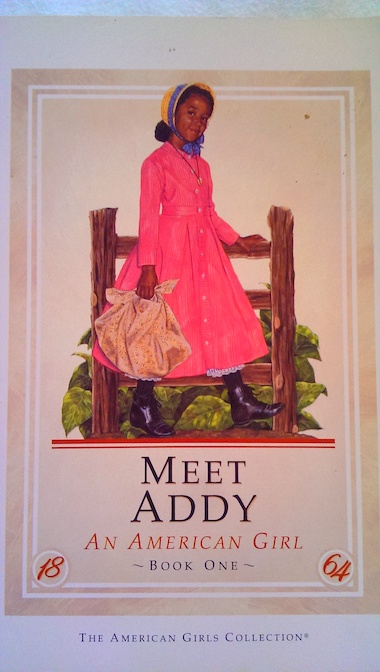
Meet Addy

American Girls

MeetAddy

Meet Addy by Connie Porter, 1993.

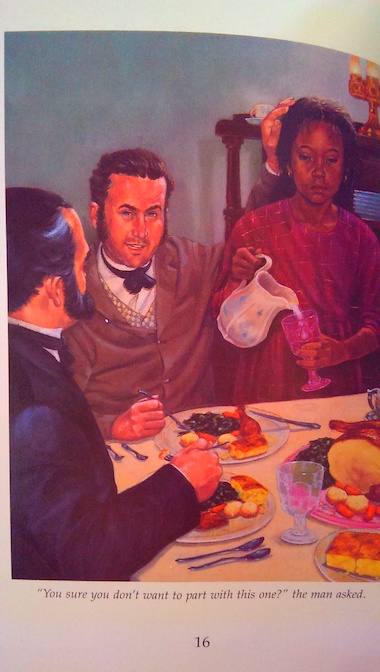
MeetAddySlaveBuyerAddy is nine years old, and she has lived her entire life so far as a slave on a plantation in North Carolina.  It is the time of the American Civil War, and Addy’s parents are worried about the future of their children.

One night, she hears her father saying to her mother that they ought to take the whole family and run away.  Her mother is worried that it’s too dangerous.  She hopes that soon the war will end, and they will be freed.  However, Addy’s father is worried that the family might be split up before that can happen because there is talk that the plantation owner, Master Stevens, might sell some of his slaves, and families wouldn’t necessarily be sold together.

His fears turn out to be justified because, soon after, while Addy is helping to serve dinner to a guest at the plantation house, she finds out that Master Stevens is planning to sell her father and brother to someone else.  She tries to get to them and tell them to run away before they can be taken away, but the overseer stops her.  Addy sees her father and brother taken away in chains.

With Addy’s father and brother gone, her mother has a serious talk with Addy about their future.  The two of them can follow the plan and run away to the North, establishing a new life for themselves and hopefully arranging for their family to be reunited later.  If they don’t take this opportunity to leave, there is the possibility that the family will be fractured further.  The man Master Stevens sold Addy’s father and brother to has already said that he might like to buy Addy as well.

MeetAddyMotherSisterAlthough Addy and her mother are frightened at the idea of running away, they decide that this is their only chance to escape together.  Addy is upset when her mother tells her that they can’t bring her baby sister with them.  She is too young for the journey, and if she cries, it might give them away.  Instead, they will leave little Esther with their close friends, Auntie Lula and Uncle Solomon Morgan.  They plan to find a way to send for them when the war is over.

Addy and her mother have to seek out the woman that Addy’s father had talked about, Miss Caroline.  She’s a member of the Underground Railroad and can help them get out of North Carolina and go to Philadelphia, where Addy’s father had planned to take the family.

They leave in the middle of the night and travel by night.  The journey is hazardous, and there are times when they are almost caught.  At one point, Addy’s mother nearly drowns crossing a river.  But, together, they face the dangers, knowing that a better life awaits them at the end of their journey.  Even when they reach Miss Caroline, Addy’s story is really just beginning.

In the back, there is a section with historical information about the origins of slavery in North America and what the lives of slaves were like.  One thing that I kind of wish they had mentioned was about how widely indentured servitude was used in early American history and how it helped to make the idea of slavery more appealing in early America, which was something one of my old college professors once talked about.


Indentured servitude is when someone works off a debt by working for someone else for free for certain period of time.  Often, this was how poor people could pay for passage to America during Colonial times.  In exchange for someone paying the price of their passage on a ship, they would work for them for awhile.  When that time was over, the indentured servant could move on to new employment or had to be paid for his work.  When plantation owners started buying slaves, what they were really saying was that they wanted permanent indentured servants, ones that could never leave them, that wouldn’t have any end to their servitude because it wasn’t based on any debt.  It couldn’t be based on any debt because the slaves owed them nothing.  The issue for the plantation owners was that they couldn’t build plantations the size they wanted and pay the labor to support them at the same time, so their solution to the problem was free labor — or at least, labor that cost no more than an indentured servant would: one initial outlay for the purchase and then some basic food and clothing to keep the workers going.

The practice of slavery is disgusting, but for me, it’s the attitude behind it that’s the real problem.  The plantation owners didn’t have any right to anyone’s free labor, and they knew there was no debt involved.  They just didn’t want to pay people, and just not wanting to pay people was a good enough reason for them.  In the end, whatever they said about race and their own superiority, it was all really about the money all along.  They would have said anything, done anything, to turn more profit for themselves, and because no one stopped them for a long time, that’s exactly what they did.  The rest was basically excuses piled upon justifications piled on more self-entitled excuses and more self-centered justifications.  They did what they did mainly because they could get away with it, and the fact that they could get away with it made them feel like it was all right.  It wasn’t.


The Root Cellar

RootCellarThe Root Cellar by Janet Lunn, 1981.

Rose Larkin is an orphan, living with her grandmother, a stern businesswoman.  Her grandmother travels frequently on business, so from the time Rose came to her when she was three years old, she just took Rose with her wherever she traveled, tutoring her in school subjects in the evening after work.  Rose’s early life is largely one of travel to strange places and isolation.  When her grandmother is working, Rose is pretty much left to her own devices, often either reading alone in their hotel rooms or exploring strange cities by herself.  Not going to school, she has no friends her own age and doesn’t really know how to behave around other children or live as part of a normal family.

When her grandmother dies suddenly of a heart attack in Paris when Rose is twelve years old, her remaining relatives have to decide what to do with her.  She temporarily stays with aunts who are into fashion and high living before goes to live with another aunt and uncle and their boys on an old farm.  Aunt Nan (Rose’s father’s sister) and her husband are better suited to caring for Rose and can give her a more settled family life, but Rose’s other relatives don’t seem to think much of Aunt Nan, who is an author of children’s books.  Rose has heard that Aunt Nan has no sense and that the family has just moved to a shabby little farm house in Canada.  Rose is prepared not to be happy there, on a dumpy little farm, miles from anywhere, with a bunch of strange people.

Her new life gets off to a bad start when there is no one to meet her at the house when she arrives.  As she waits for her aunt and uncle to return, a strange old woman appears who seems to know her.  She calls herself Mrs. Morrisay and acts like she belongs to the house.  But, when Rose’s relatives arrive home, Mrs. Morrisay suddenly disappears, and none of them seem to know anything about her.  Later, Rose sees a girl making a bed upstairs, but her relatives just laugh when Rose asks them about the maid, which is who Rose thought the girl was.  There is no maid in this house, and Rose is the only girl.  To Rose’s annoyance, her relatives think she imagined the whole thing.

Actually, life in her aunt and uncle’s house in the country isn’t as bad as her other aunt has lead her to believe, but becoming part of their household isn’t easy because Rose is used to a very different kind of life.  The house is definitely old and in bad need of repair, and her relatives are noisy and disorganized, at least more so than Rose is accustomed to.  Rose isn’t used to the chaotic life of a family with a lot of children, and Aunt Nan has another on the way.  Also, tourists who are fans of Aunt Nan’s books sometimes stop by the house, and Rose doesn’t like dealing with their scrutiny and questions.  Sam, one of the older boys in the family, seems to resent Rose’s presence in the house, and Rose overhears him saying a lot of bad things about her to her aunt, calling her snobby and criticizing her appearance.  Rose takes his attitude as further evidence that she doesn’t really belong in their house and that she’ll never fit in.  If they think badly of her, why should she think any better of them?

Rose also becomes increasingly aware that there is something not quite normal about her relatives’ house, especially the old root cellar, and the people she saw on her first day in the house are part of it.  Sam thought that he might have seen a ghost in the house one day, an old woman, and Rose recognizes his description as that of the Mrs. Morrisay she saw on her first day there.  She sees Mrs. Morrisay in her bedroom later, suddenly walking through a wall.  Rose thinks Mrs. Morrisay is a ghost, but Mrs. Morrisay tells her that she’s not dead, just “shifting” through time and that she wants Rose to stay in the house and help restore it to its former glory.  Rose doesn’t know why or how she can possibly help Mrs. Morrisay.

Rose learns that her aunt’s house was once an old farm house that belonged to the Morrisay family, and there is still an old root cellar on the property, a relic from the time when people had to store certain kinds of food underground to keep them cool and prevent them from spoiling.  One day, Rose goes down into the root cellar and meets a mysterious girl dressed in old-fashioned clothes, the same girl she saw earlier, making beds.  Although Rose and the other girl don’t realize it immediately, Rose has gone back in time.  The girl was someone who lived on the farm in the past, during the 1800s.

Rose and the girl in the past, Susan Anderson, become friends, and Rose is grateful for another girl to talk to.  Susan is an orphan herself, living with the Morrisay family as a servant girl.  She and Will Morrisay, old Mrs. Morrisay’s son, are friends, and both of them are sympathetic to Rose when she tells them about her new life with her relatives and the problems she has. Rose finds herself wishing that she could stay in the past with them forever.  However, once they realize that Rose is traveling through time when she goes in the root cellar, they also discover that it isn’t reliable about exactly when Rose will reappear in the past.  Although at first there are only days between Rose’s visits from her perspective, months or years pass in her friends’ lives between her visits.  They eventually manage to solve this problem through a friendship pact where they exchange favorite objects.  It’s at a good time, too, because soon Rose’s friends need her help as much as Rose needs them.

After a terrible fight with her relatives in which her aunt slips and falls and Rose worries that her aunt and the baby might die, Rose runs away to the root cellar and goes to see her friends, discovering that in their time, Will has gone away to fight in the American Civil War alongside his favorite cousin and has not returned.  It’s been awhile since Susan has heard from him, and she fears the worst.  Rose suggests that they go to look for Will at his last known location, but it’s a difficult, perilous journey. At first, they’re not sure whether they’ll find Will alive or not.

When they finally find Will, he is a changed man from the war, and Rose and Susan have to help him to remember who he really is and where he really belongs.  In helping Will to remember where he comes from, his life before the war, and how much Susan needs him, Rose comes to realize some important things about herself and where she really belongs.

The book is available to borrow and read for free online through Internet Archive.

My Reaction and Spoilers

As difficult as the choice is, Rose realizes that she must return to her own time, face the consequences of her earlier actions, and do what she can to become a real member of her new family.  After she returns home and the root cellar is destroyed in a storm, it seems as though she might never see her friends from the past again, but friendship can transcend many boundaries, including time.

I didn’t realize this the first time I read the book, but it’s actually part of a loose trilogy.  I say loose because none of the main characters from each story appear in the others (except, perhaps, for one who is in both the second and third books), which also take place in different time periods.  What binds the stories together is the location where the stories take place and also some distant family relations, particularly focusing on the Anderson and Morrisay families.

It is something of a spoiler, but it seems that the time travel in this story may not be so much a matter of the house being special or magical, but because Susan is special.  It is revealed in one of the other books, Shadow in Hawthorn Bay, that her grandmother was psychic.  Will and Susan briefly refer to Susan’s grandmother and her stories about ghosts when talking to Rose.  Susan seems to have little control, especially later in life, over her ability to shift through time, but it may be her special attachment to the Morrisay house and her need for Rose’s friendship and help that makes Rose’s time travel possible.  It’s never explicitly stated that Susan inherited her abilities from her grandmother, but I think that it is implied during the course of the books.