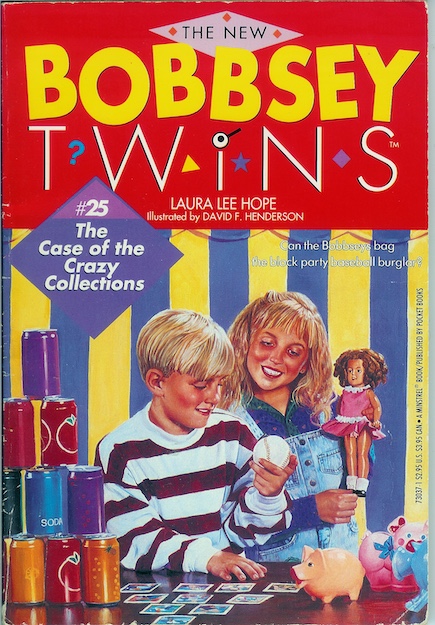
The Case of the Crazy Collections

The Bobbsey Twins

Before I begin, I’d like to acknowledge Sean Hagins, for supplying me with photos of this book! Usually, I take pictures of books myself, but I just couldn’t find a physical copy of this one. Sean is a big fan of the Bobbsey Twins, particularly the New Bobbsey Twins mysteries, and you can see some of his video reviews as well as videos about his photography work on his YouTube channel, SJHFoto. Thanks, Sean!

The Bobbsey twins’ neighborhood is having their annual block party, and the Bobbsey twins and their parents are helping to set up for it. As part of the party, the neighborhood has rented a tent, where kids from the neighborhood are displaying their collections. The neighborhood kids collect all kinds of things, like baseball cards, comic books, soda cans, autographs, and coins. One boy, Kevin, has an autographed baseball that his grandfather gave to him. The neighbors are charging people money to see the exhibit of collections, and the money will be used for a pizza party later.

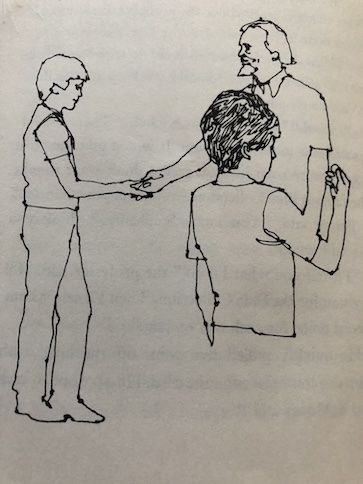
Later, Kevin’s autographed baseball disappears. Could the baseball thief be Mr. Sher, a visitor staying with their neighbor, Mr. Andersen? Mr. Sher tried to buy the baseball from Kevin earlier, but Kevin turned him down. Then again, Kevin’s cousin, Steve, was jealous that Kevin has the baseball. Steve turned down the offer of some of his grandfather’s old collectible items in favor of a savings bond, which he has already cashed in and spend on video games. Steve tried to borrow more money from Kevin earlier, but Kevin turned him down because Steve hasn’t yet repaid him for money Kevin loaned to him before. Danny, the neighborhood bully, was also mad at Kevin earlier. He’s a friend of Steve’s and didn’t want to have to pay to see the collections. Then again, another local girl, Jennifer, collects autographs, and they see her at a collectors’ shop. Would she know the value of an autographed baseball, and was she trying to sell it? With so many people coming and going from the tent where the collections were on display, it’s hard to say who might have taken something. The thief may have even been the Bobbseys’ own dog, Chief, who has developed a habit of collecting and hoarding baseballs.
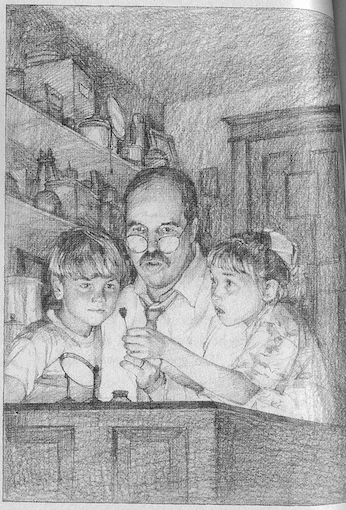
Then, another boy realizes that his prized hologram sticker is missing. Could the thief have taken that, too? Their clues are an unexplained slit in the back of the tent, some footprints, and a pin with Greek letters on it. Can the Bobbsey Twins find the valuable baseball and return it to Kevin?

The book is available to borrow and read for free online through Internet Archive.

Something I thought was interesting about this story was that it brings up the concept of collecting things for fun or sentimental value vs. collecting things because of their monetary value. Most of the kids in the neighborhood collect things just for fun. At first, Kevin doesn’t seem to fully realize the value of the autographed baseball. His attachment to the baseball is because he got it from his grandfather. When he had the offer to sell it to Mr. Sher, he refused because the baseball reminds him of his grandfather.

I had a strong suspicion about the identity of the baseball thief early in the story, and my guess turned out to be right, but I liked it that there were plenty of other suspects to consider. There are child suspects, adult suspects, and even the Bobbseys’ own dog. Any of these could be plausible. When they realize that the hologram sticker is missing, it raises the question of whether the person who took the baseball also took the sticker, if the sticker was taken by someone else, or if the missing sticker is just a red herring. Overall, I enjoyed the mystery, and I liked the abundance of suspects.

Mystery Behind the Wall

The Boxcar Children

Mystery Behind the Wall by Gertrude Chandler Warner, 1973.

It’s summer vacation, and Benny doesn’t know what to do with himself because his friends have gone away for the summer. Mrs. MacGregor, the housekeeper, suggests that they invite a guest to the house to cure Benny’s loneliness. Her sister in Canada knows a boy who lives on a farm and is often lonely because they live a long way away from other people. The boy, called Rory (short for Roderick), is very lively and full of ideas, and he could use some company as much as Benny does. The kids are all eager to meet Rory and have him visit, so their grandfather calls Rory’s family and arranges for the visit.

The Alden kids are excited about Rory’s visit and start preparing the spare bedroom. They wonder if Rory will like it or not because the room seems old-fashioned and a little sad to them. The walls are covered with a wallpaper with roses, so the kids think that it must have been a girl’s room at one time. They notice an old photograph on the wall of a girl with her parents in front of the house, but the house looked different and smaller when the photograph was taken. There’s also a poster that says “Coolidge for President” in the window, dating the photograph to the 1920s, meaning that the picture is decades old. (The Aldens refer to that as being about 40 years yearly, dating the story to the 1960s.) Mrs. MacGregor puts a bright red bedspread on the bed to brighten the room up a bit, and the Aldens hope that Rory won’t mind that it still seems a bit old-fashioned.

Rory doesn’t mind the room at all. In fact, he is a bright and curious boy, who is interested in everything and notices little details. He notices the photograph in the room when he arrives, and he asks Grandfather Alden about it. Grandfather Alden explains that the people in the photograph are the Shaw family and that they owned the house before he bought it. The girl is named Stephanie, and she was the Shaws’ daughter. The Shaw family sold the house to Grandfather Alden when they moved to France, and Grandfather Alden built an addition onto the house, which is why it looks different now. The children wonder what happened to the Shaw family and to Stephanie, but Grandfather Alden says that he doesn’t know. They never wrote to him after they moved to France.

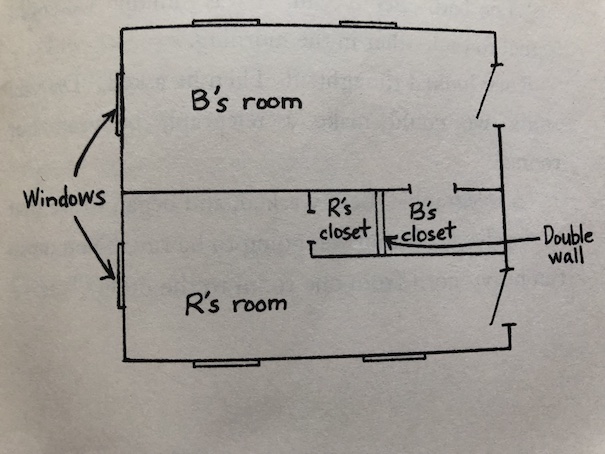
Another thing that Rory notices about the guest room is that it looks like the closet should be bigger than it actually is. Benny has the room next to Rory’s, and he has the idea making a hole in the backs of their closets so they can have a secret communication system between their rooms. Grandfather Alden doesn’t mind the project, so they cut holes in the backs of their closets. That’s when they discover that there is a secret, hidden space between the closets, and there’s something hidden in the space. They pull it out, and it’s a piece of cloth. They wonder what it’s for and why someone would hide it.

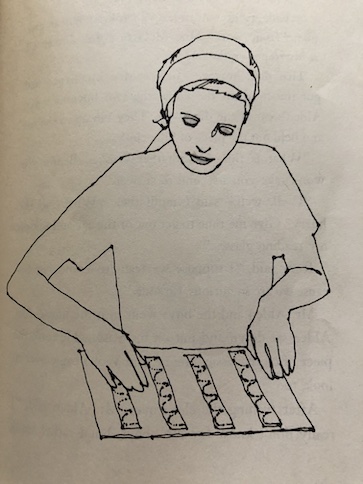
Grandfather Alden identifies the cloth as a coin case. He tells the kids a little more about Stephanie Shaw. He knows that Stephanie’s father was a very strict man. Her mother went to France ahead of the rest of the family, and her father was in charge of her in her mother’s absence. He had her tutored at home and didn’t let her play with other children, so she was often lonely. However, he allowed her to indulge in their shared hobby, which was coin collecting. The kids wonder what happened to the coins when Stephanie left for France. There are no coins in the coin case now. Professor Nichols, a coin collector who specialized in rare nickels, also helped Stephanie with her collection. He thought that Stephanie might have left her coin collection behind when she went to France, thinking that she might return one day, but Stephanie never did return. Professor Nichols would have asked Stephanie about it, but he didn’t have their address in France.

When the kids explore the hiding place in the closet further, they find an old notebook that turns out to be Stephanie’s journal from when she was 10 years old. Stephanie explains about her loneliness, and her coin collection. She talks about a puzzle that she created that will fool even her father, but the journal ends, so they don’t know what sort of puzzle Stephanie was talking about.

As the children explore Stephanie’s old room further, they find a clue that shows that Stephanie created a treasure hunt before she left for France, a treasure hunt that nobody has ever solved. The Boxcar Children and their new friend, Rory, begin playing along with Stephanie’s old treasure hunt, hoping that it will eventually lead to her missing coin collection.

The book is available to borrow and read for free online through Internet Archive (multiple copies).

My Reaction

This is one of the early Boxcar Children books, written by the original author. Because the book was written decades ago, a child who was 10 years old in the 1920s would have been about 50 years old at the time the story is set, but the children are sad to learn that Shaw family, including young Stephanie, was killed in a railway accident in Europe, which is why none of them ever returned to solve the treasure hunt and reclaim the coin collection.

The Boxcar Children run into multiple dead-ends in the treasure hunt because things have changed in the decades since Stephanie created her treasure hunt, and clues have been lost. They almost give up, but Benny and Rory realize something that helps them solve the final riddle.

When they finally find the coin collection, they call Professor Nichols to come and look at it, and he tells them about some of the rare coins in the collection, like a 20 cent piece and an Indian head penny. He explains some general principles of coin collecting to the kids, like the fact that the oldest coins aren’t always the most valuable pieces in a collection. There are some very old and even ancient coins that are not quite as rare as some newer coins, and the rarity is what makes them valuable. He helps the children to start their own coin collections. This book could be a fun mystery to help get kids interested in a new hobby!

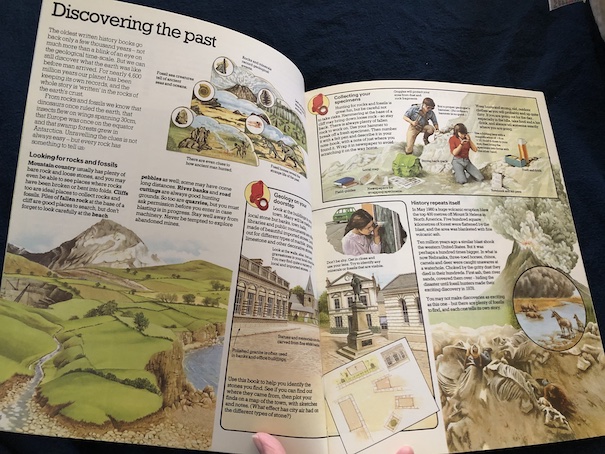
Understanding and Collecting Rocks and Fossils

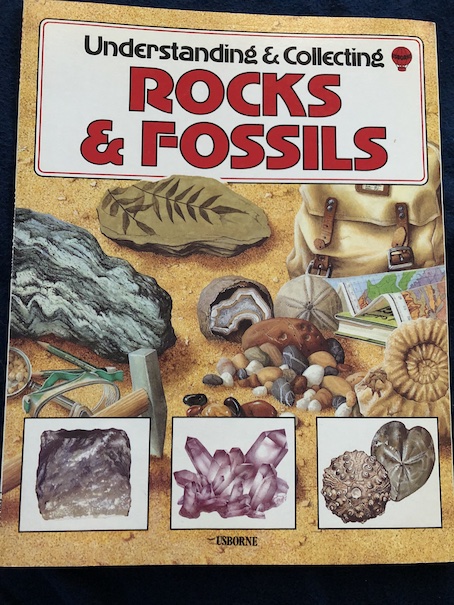
Understanding and Collecting Rocks and Fossils by Martyn Bramwell, 1983.

This book is part of a series of beginning hobby guides for kids. It explains how to collect and study rocks and fossils and some of the deeper aspects of geology. The book emphasizes that studying geology helps us to understand the story of the Earth and the forces that have shaped our landscapes and formed the rocks and minerals we use. All through the book, there are suggested activities and experiments for readers, marked with the symbol of a red magnifying hand-lens.

The book explains some the large geological forces, like how the continents move and the plates that make up the Earth’s crust shift. Then, it explains the different types of rocks, igneous, sedimentary, and metamorphic, with examples of each type.

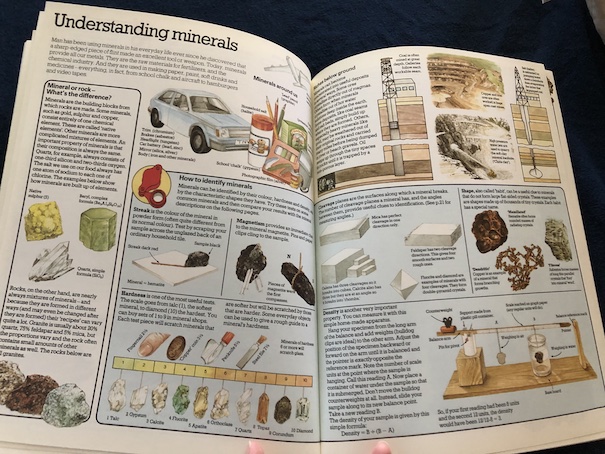
One of the sections I found particularly interesting is the one that explains about how to identify different minerals and what they’re used for. The activity on that page explains how to identify a mineral based on a series of factors, like whether or not it’s magnetic, the color of a streak it might leave when scraped against tile, and its hardness, which you can test by seeing what implement will scratch it.

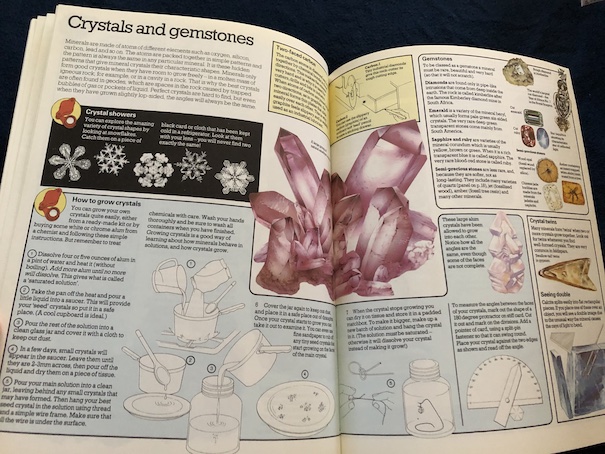
I also liked the section about crystals and gemstones. There are instructions for growing your own crystals.

The section about fossils explains how to collect fossils, clean them, make plaster molds of them, and identify what organisms made the fossils. The book explains how fossils are made and had a timeline of past eras on Earth and the creatures that existed in each era.

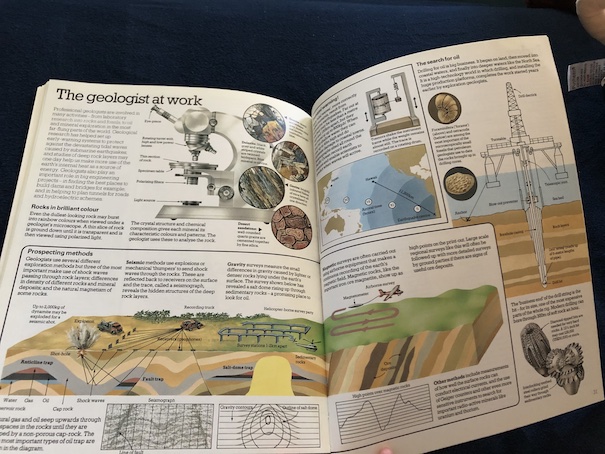
The last section of the book explains the types of work that geologists do and the types of geological surveys they carry out to predict earthquakes and tsunamis and finding useful deposits of ore, minerals, oil, and natural gas.

There’s quite a lot of information to take in. Even though this is a pretty beginner guide to rock collecting and geology, I would say that the book would be better suited to older children than younger ones.

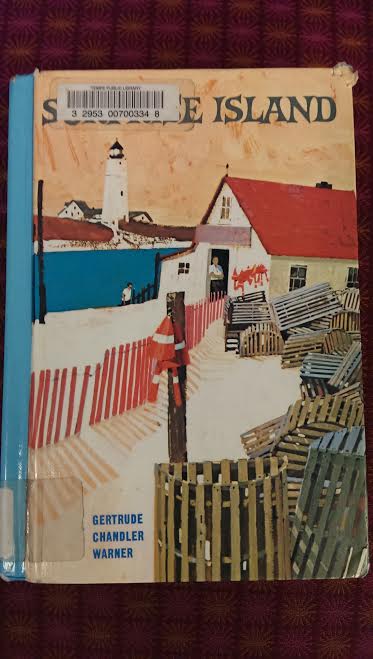
Surprise Island

The Boxcar Children

Surprise Island by Gertrude Chandler Warner, 1949.

Mr. Alden has promised his grandchildren a special surprise for their summer vacation. He tells them that, years ago, his father bought a small island because he kept horses and wanted a quiet place for them.  The island has only one little yellow house, a barn, and a fisherman’s hut where Captain Daniel lives.  Captain Daniel operates the motorboat that can take people to the island.  Mr. Alden plans to take his grandchildren to the island to look over the house, and if they like, they can spend the summer there.  The children think that it sounds like fun.

When they get to the island, the children decide that they want to stay in the barn instead of the house.  Captain Daniel also tells them that he has a young man staying with him, a friend who hasn’t been feeling well.  The Aldens’ old friend, Dr. Moore, has come to see the island with them, so he looks in on the young man.  It turns out that the young man was in an accident and had lost his memory for a time, although he has been gaining it back.  He says that he used to live with an uncle but that he didn’t want to go home again until he was sure that he was completely well.  He is going by the name of “Joe”, which is short for his middle name, Joseph.  Captain Daniel says that he’s known the young man all his life, and Dr. Moore also seems to know him, but Joe doesn’t seem to want to talk about himself to Mr. Alden.

The kids enjoy setting up housekeeping in the barn.  It reminds them of when they used to live in an old boxcar.  They use old boxes for furniture, dig for clams, and eat vegetables from the garden that Joe and Captain Daniel have tended for them.  Their grandfather allows the children to stay on the island in Captain Daniel’s charge, but they are mostly allowed to take care of themselves.  Joe sometimes brings them supplies that they ask for from the mainland.  (One of the themes of the Boxcar Children Series is self-sufficiency.  At one point, Jessie comments about how much better things seem “when we have to work to get it.”)  For fun, they go swimming, and Joe spends time with them, telling them about different types of seaweed.  They are surprised at how knowledgeable Joe is.

Henry gets the idea that they can set up a kind of museum of interesting things that they find on the island, like samples of different types of seaweed, shells, flowers, pictures of birds that they’ve seen, etc.  The other children think that it sounds like fun, and they begin thinking about the different types of things that they can collect.While they’re searching for things to collect and add to their museum, the children find a cave and an old arrowhead and ax-head.  They are authentic Indian (Native American) relics!  When they show Joe what they’ve found, he gets very excited, especially when they tell him that they saw a pile of clam shells, too.  Joe explains to the children how Native Americans used to use shells as money called wampum.  He thinks that what they saw was wampum, which the people who used to live there might have made after drying the clams to eat later.  Joe explains to the kids some of the process they would have used to turn the shells into wampum.  He’s eager to go to the cave and look for more Native American artifacts with them, but he urges them not to say anything to anyone else about it because other treasure hunters will probably show up if they do.  The children agree to keep their find a secret until their grandfather returns.

When they return to the cave with Joe, they make an even more incredible find: a human skeleton with an arrowhead inside.  It looks like they’ve found the bones of someone killed by an arrow!

The book is available to borrow and read for free online through Internet Archive.

My Reaction
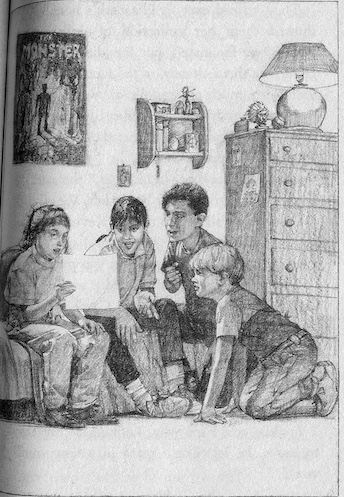
As with some other vintage children’s mystery series, the early books in the series were more adventure than mystery.  The most mysterious part of this book concerns the real identity of the young man they call “Joe.”  The truth begins to come out when a strange man who calls himself Browning comes to the island in search of a young man who disappeared the year before while doing some exploring for him.  The young man he’s looking for worked for a museum.

This is the book where Violet first learns to play the violin.  This is a character trait that stays with her for the rest of the series.

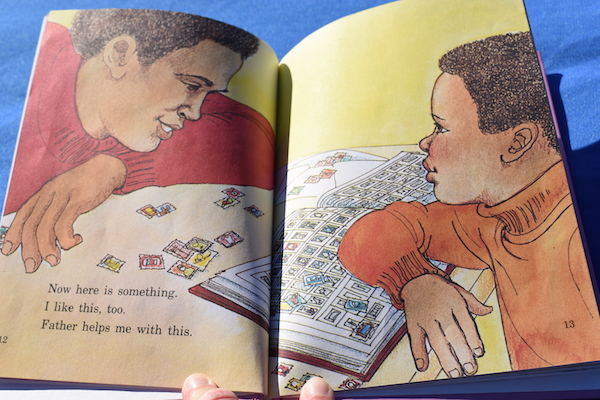
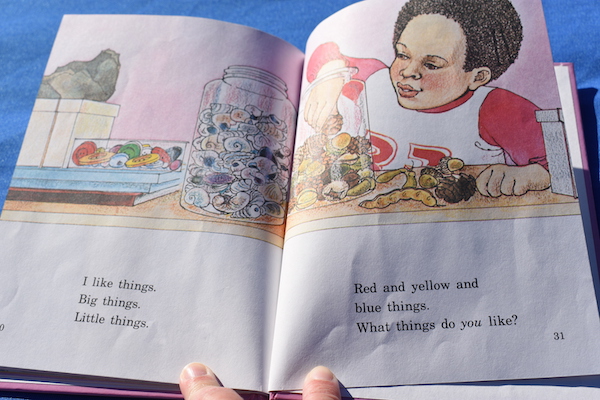
I Like Things

I Like Things by Margaret Hillert, illustrated by Lois Axeman, 1982.

This is a cute little picture book about the fun of collecting things.  A young girl talks about the things that she collects and why she likes them.

She enjoys collecting all kinds of things with different shapes, sizes, and colors.  Sometimes, she likes to sort the things in her collections, like buttons, by color or size.

Sometimes, her father helps her with her stamp collection.  She also likes to find seashells and rocks at the beach.  Sometimes, she and her friend trade sports cards from their collections.

At the end of the story, the girl asks readers what kinds of things they like, so adults can use the story to get kids to talk about what they like to collect.

I thought it was interesting how the girl put one of the bigger rocks in her collection into a jar that was partly full of water so that the water would act as a magnifier, making the rock look bigger.

One thing I noticed is that the girl never refers to the objects in her collections by name.  Mostly, she just talks about what she does with them using very simple words.  I think that’s to make the book easier for younger children.  There is a word list in the back of the book of all of the words used in the story, and there are only 64 different words.

Molly Learns a Lesson

MollyLesson

Molly Learns a Lesson by Valerie Tripp, 1986.

MollyLessonHideoutIn 1944, everyone is concerned with finding ways to help the war effort.  In Molly’s third grade class at school, her teacher announces that their class is invited to participate in the Lend-a-Hand contest.  The class will be divided in half, and each half will compete against the other to find the best way to help the war effort.  The class decides to make the contest boys against girls, and Molly immediately starts trying to figure out a spectacular idea that will impress everyone.  Unfortunately, one of the other girls says that the girls in class should knit socks for soldiers, and the teacher accepts that as the goal for the girls’ team, before Molly can say anything.

MollyLessonCollectingMolly is appalled at the idea of knitting socks.  It’s partly that she had wanted to be the one to come up with the best idea, and it’s also partly because she has tried knitting before, and she knows that socks are difficult, time-consuming projects, especially for beginning knitters.  Molly is sure that the other girls are going to find it too difficult and that, in the end, they’ll have nothing to show for their project.  Her friend Susan doesn’t think that the project sounds so bad, but Linda also dreads the idea of knitting because she’s not very good at it.  Talking it over in their secret hideout in the storage area of Molly’s garage, the three girls decide that they’ll work on a secret project by themselves, something that will save the day when the other girls’ project falls through.

At first, the idea of doing something in secret sounds exciting.  However, coming up with a good secret project and seeing it through turn out to be more difficult than they expected.  All they can think of to do is to collect bottle tops for scrap metal, and as they go door to door in the rain, asking for them, they learn that most people have already given theirs to the Boy Scouts who were collecting scrap metal.  Tired, wet, and discouraged, the Molly and her friends decide to look in on the other girls and see what progress they’re making.

MollyLessonBlanketThe other girls are certainly a lot more comfortable, knitting inside.  However, as Molly predicted, they are finding their project harder than they thought it would be.  None of them has completed an entire sock yet; all they really have are the square shapes at the top of the sock, and they’re getting discouraged.  That’s when Molly gets a better idea: why not take the squares they’ve made and turn them into a blanket?  Simple squares are much easier to make than socks, they can make a lot of them quickly with everyone helping, and the girls who can’t knit well can sew the squares together.  A blanket is still a good war effort project because Molly’s father has told her that the hospital where he works is always in need of blankets for the wounded soldiers.  With this new idea, the other girls become much more excited, and they make more progress.
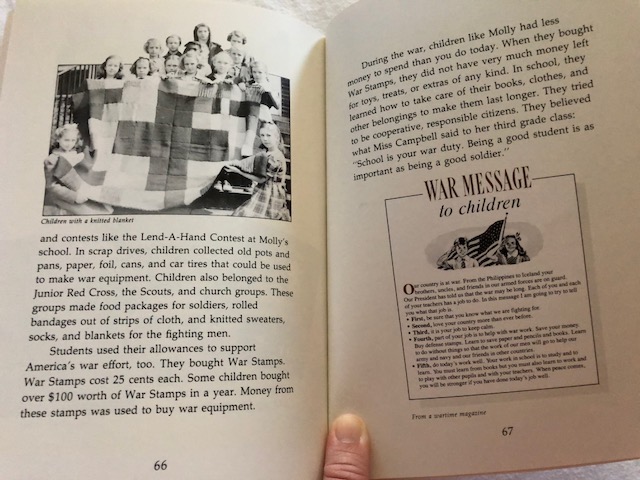
The theme of this story is that working together and sharing ideas benefits everyone more than working alone or trying to be too competitive.  Molly’s first ideas weren’t very good by themselves, and neither was the sock-knitting idea.  However, when Molly and her friends join the other girls, Molly finds a way to help them build on the idea that they already had (knitting) and take it in a better direction.  Molly and her friends also explain to the other girls about the bottle tops they were trying to collect, and some of them think of other places where Molly and her friends didn’t go for their collecting.  All of the girls working together manage to finish the blanket and collect 100 bottle tops in a single day, surprising and pleasing their teacher.

In the back of the book, there is a section with historical information about what it was like to go to school in America during World War II.  Discipline was more strict than it was in schools during the late 20th century, and there was also more separation between boys and girls.  Sometimes, boys and girls going to the same school and attending the same classes played on completely separate playgrounds, and sometimes, they even had to enter and exit the school through different doors (this is something that was also mentioned in the book Cheaper By the Dozen, which takes place during the late 1910s/early 1920s).  Teachers emphasized patriotism and taught the children about the war, why soldiers were fighting, and what life was like in other countries that were involved in the war.  It was common for schools to have drives to collect scrap metal or other materials to help the war effort.  Special projects like knitting clothing or blankets for soldiers were also popular.

The book is currently available online through Internet Archive.

MollyLessonHistory