The Little Witch’s Black Magic Cookbook

The Little Witch’s Black Magic Cookbook by Linda Glovach, 1972.

This book is part of the Little Witch series of craft and hobby books. This one is a cookbook with recipes that are simple enough for children to make (with some adult assistance). A note in the introduction says that this cookbook is good for boys as well as “little witches.” The Little Witch’s Code in the beginning has tips for understanding recipes, preparing to cook, and cleaning up after cooking.

At first, I thought that all of the recipes would be the types of food served at Halloween parties, but they aren’t. There is a special section about Halloween recipes, but there are also recipes for other occasions and some simple snacks and lunches.

Most of the recipes are really simple, like Pickled Peanut Butter Burgers, which are basically peanut butter sandwiches on hamburger buns with pickles. When I was a kid, I used to roll my eyes at people who thought things like that would be exciting or challenging for children. It probably depends on the age of the child, but I also wouldn’t have been impressed by the recipe for Cinnamon Toast. I used to make that by myself when I was little before turning on Saturday morning cartoons. My feeling is that kids who are old enough to read this book by themselves are probably old enough to know how to make these particular recipes by themselves. I guess everyone has to start somewhere, though.
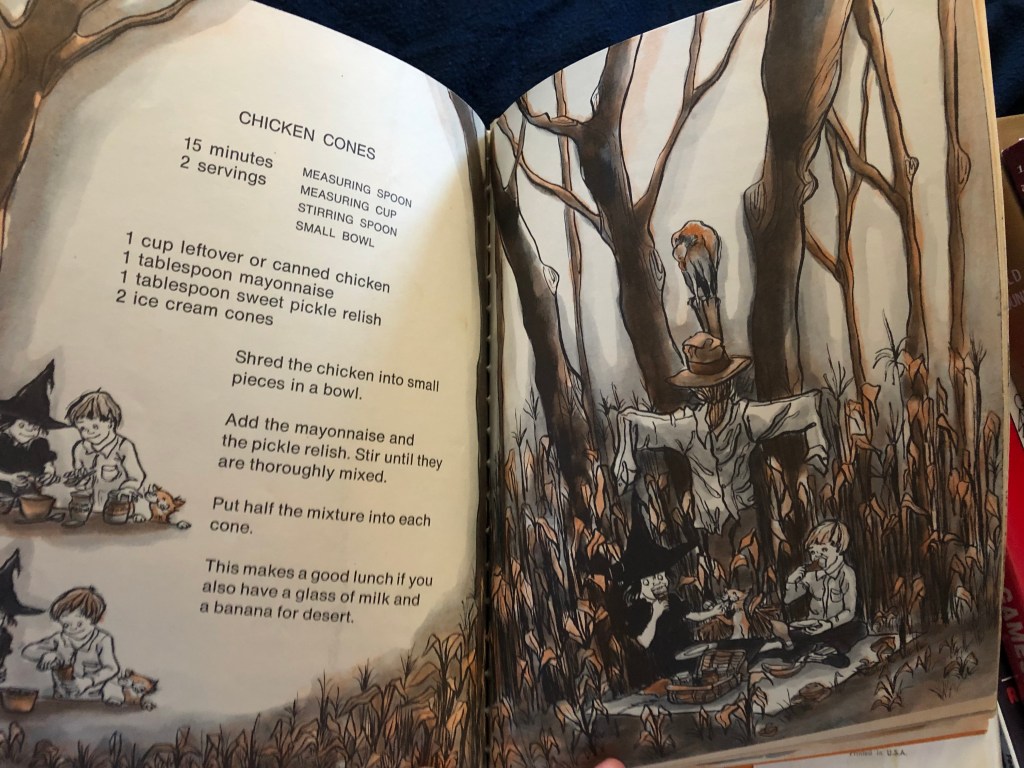
I was more interested by the Halloween recipes and the Chicken Cones, which are listed in the lunch section. The Chicken Cones reminded me of the Tuna Cones recipe that I saw in a Klutz cookbook for children. The only difference is that this recipe uses a simple chicken salad in an ice cream cone instead of tuna salad.
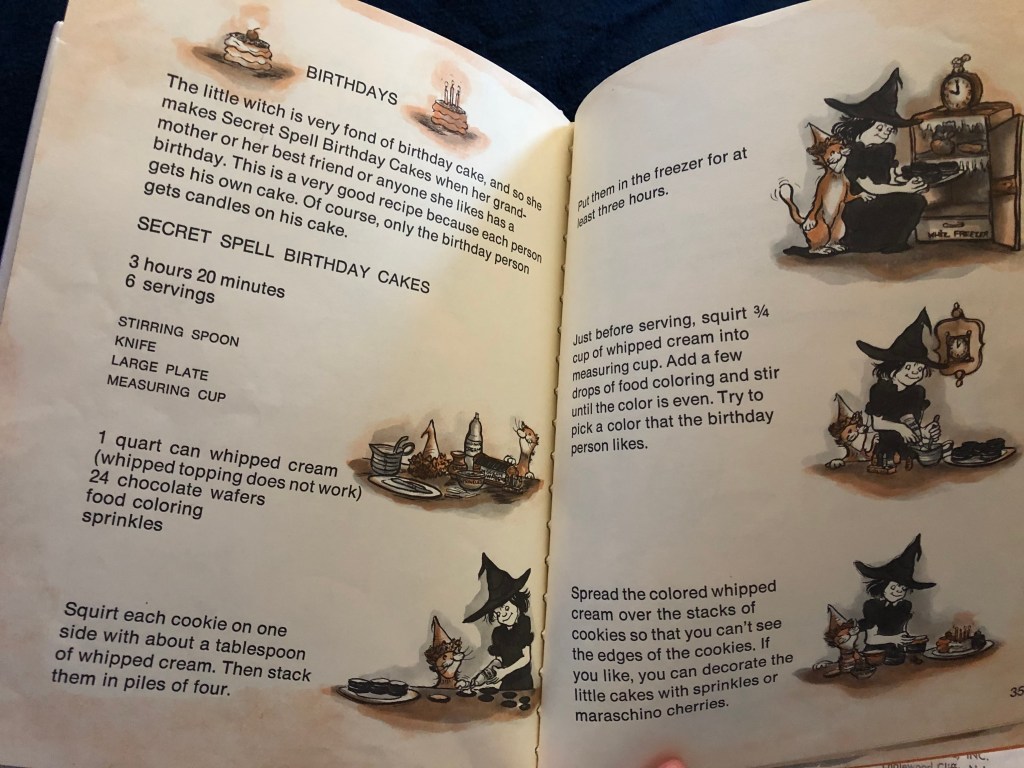
In the section about birthdays, there is only one recipe for little birthday “cakes.” The “cakes” are actually chocolate wafer cookies, stacked with whipped cream, put in the freezer, and covered with more whipped cream. This is basically an old-fashioned icebox cake, a popular dessert from decades past. It’s not really a cake, but it does sound like a fun birthday treat!
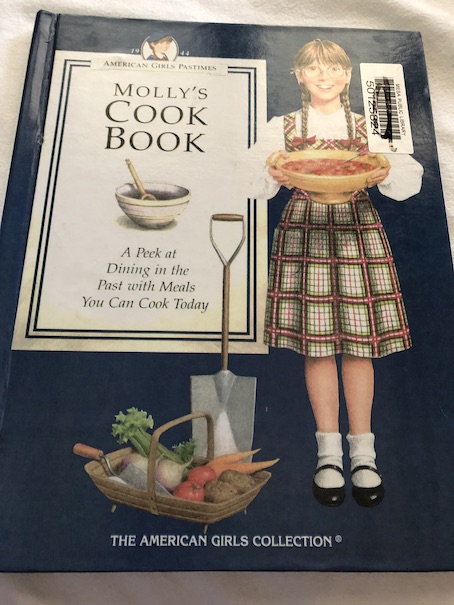
Molly’s Cook Book

American Girls

Molly’s Cook Book by Polly Athan, Rebecca Sample Bernstein, Terri Braun, Jodi Evert, and Jeanne Thieme, 1994.

This is a companion book to the Molly, An American Girl series.  It has recipes from the 1940s that people would have made during World War II.  A section at the beginning of the book explains how shortages and rationing during the war changed the way that people shopped for food and cooked.  For example, people on the homefront didn’t have many canned foods because many canned foods were shipped overseas to soldiers and much of the metal that would have been used to make more cans for food was being used to make other war supplies.  Because certain types of food were in short supply, individuals and families would receive ration books, which contained stamps that represented which types of foods they would be able to buy and how much.  Cookbooks printed during the war focused on creating meals that used little or no rationed products.  People also planted Victory gardens and grew their own vegetables to fill out their meals.

The cookbook is divided into sections for different meals:

Breakfast – Fried Potatoes, Toad-in-a-Hole (not the British dish – this is eggs cooked in a frame of bread, what I first learned to make as Eggs-in-a-Frame), Fried Bacon, Quick Coffee Cake, and Frozen Fruit Cups.

Dinner – Vitamin A Salad (made with carrots and lemon gelatin), Deviled Eggs, Carrot Curls and Celery Fans, Vitality Meat Loaf, Parsley Biscuits, Volcano Potatoes, and Applesauce Cupcakes.

Favorite Foods – French toast, Waldorf salad, PBJ Roll-ups, Jelly Flags, Victory Garden Soup, Nut-and-Raisin Bread, and Fruit Bars.

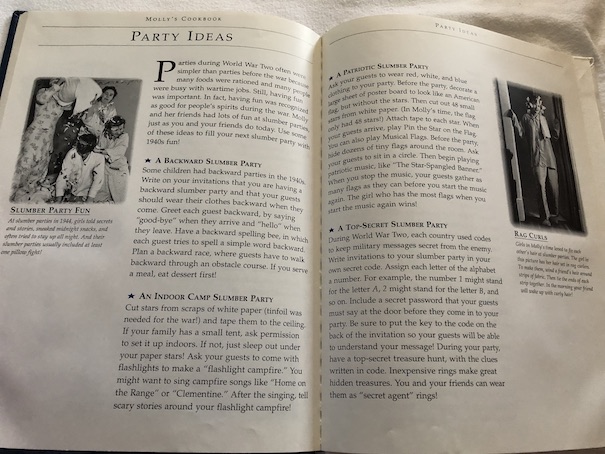
In each section of recipes, there is more historical information about food in World War II.  There is also a section in the back with party ideas from the 1940s.

For more World War II recipes, I recommend The 1940’s Experiment, which is a blog with recipes from World War II and an explanation of how they can be used to both save money and lose weight because they were intentionally designed to make maximum use of limited resources, both economically and nutritionally. In Molly’s Cook Book, there is a chart that government experts during World War II used to give people guidance on how to budget their food money among seven food groups. The diet that they recommended, both nutritionally and to limit certain rationed foods, was heavy on vegetables and fruits and lighter on meats, grains, and dairy products. This type of diet is basically in keeping with modern nutritional advice, which also emphasizes the importance of vegetables and fruit.

The book is currently available online through Internet Archive.