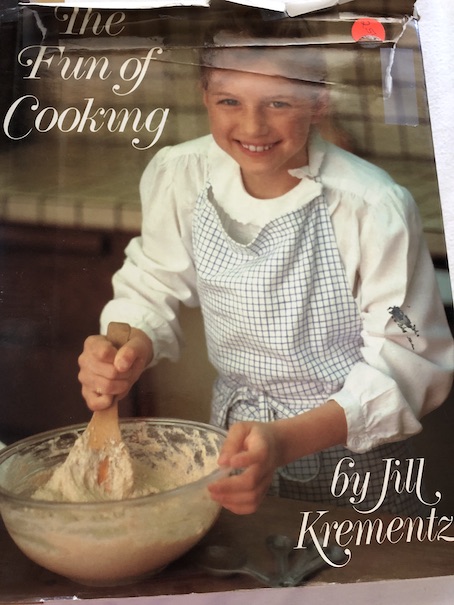
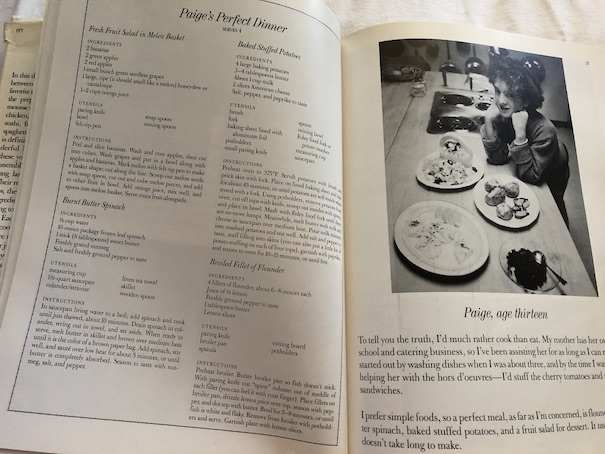
This cookbook was designed not only for children but includes real children making their favorite recipes, sometimes by themselves and sometimes with the help of their parents. The author, Jill Krementz, was also a photographer, and she photographed the children as they cooked. (Another interesting fact is that Jill Krementz was also married to Kurt Vonnegut, until his death. It’s not directly related to this book at all, just a fun fact.)
The recipes in the book aren’t arranged in any particular order, going back and forth between main dishes and desserts of various kinds. Some of the children included recipes for entire meals that included both main dishes and a dessert.
The children themselves are a range of ages from six to sixteen. The older children tend to make more complex dishes or meals, and the younger ones tend to make simpler ones, although even the younger children can make complex dishes with the help of their parents or grandparents. One girl, Michele, has a father who is a professional chef, and she says that it’s her ambition to be a chef, too. She and her father are shown making spaghetti together in the kitchen of his restaurant.
The children all seem to live in or around New York City, where the author lived, and they are from a variety of backgrounds. There are two girls who mention that they are Jewish, including the girl who makes matzo ball soup with her grandmother. There are also two black girls, and one boy with Greek ancestry. Not all of the children have obvious backgrounds like this, but I thought it was interesting where it was noticeable. I think that having a variety of children with different ages and backgrounds was a good idea because it could help many young readers to identify with different types of children.
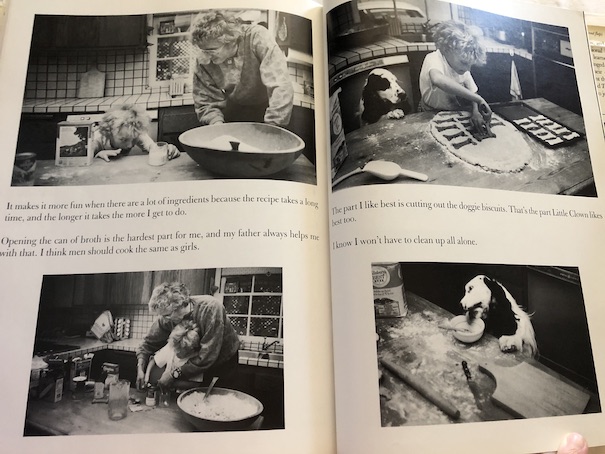
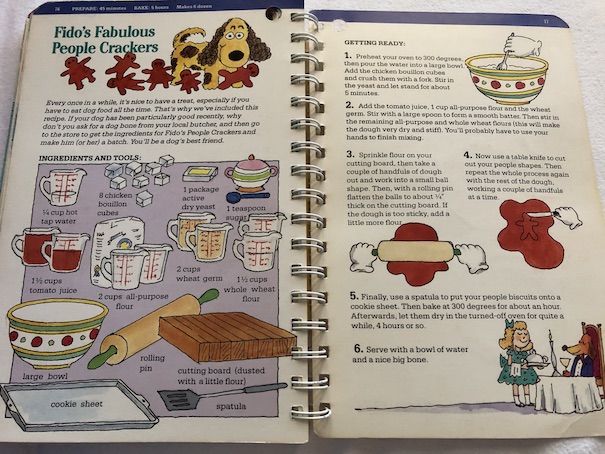
I also liked the fact that there were both boys and girls cooking their favorite recipes. Not only did Michele cook a recipe with her father, but there are other fathers in the book, helping with the cooking, too. One of the boys makes dog biscuits for his dog with his father, and he comments, “I think men should cook the same as girls.” It’s nice to see cooking characterized as something that anyone can enjoy doing, both men and women, as well as children of different ages.
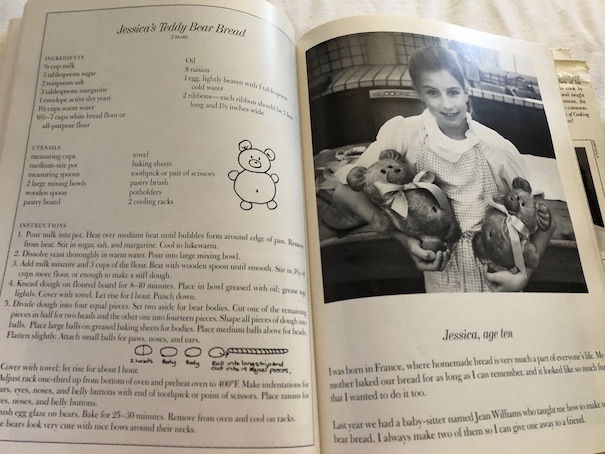
One of the cutest recipes is one for making loaves of bread shaped like teddy bears.
One of my favorite recipes was the one for pumpkin pie. I’ve made pumpkin pie from a whole pumpkin like this before, and it’s a lot of work, but it’s fun! The girl making the pie also roasts the pumpkin seeds.
The book is available to borrow and read for free online through Internet Archive.
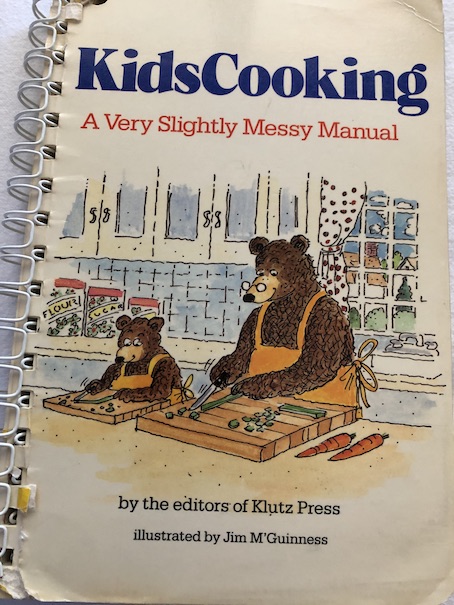
Kids Cooking: A Very Slightly Messy Manual by the editors of Klutz Press, 1987.
This book is part of the classic children’s hobby and activity series from Klutz Press. Originally, this book came with a set of plastic measuring spoons, which was attached to the book at the hole in the upper left corner.
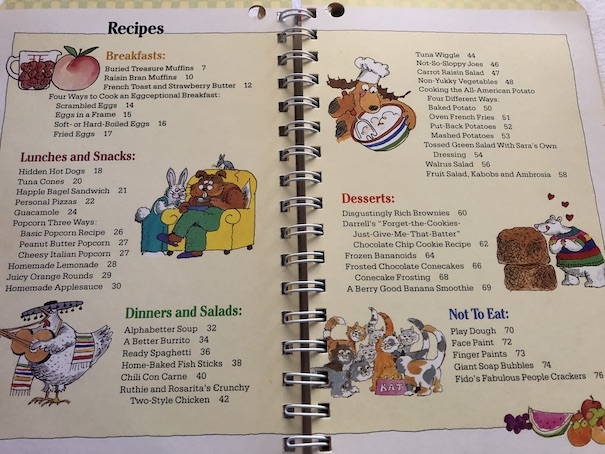
The recipes in the cookbook are listed in categories by the type of meal: breakfasts, lunches and snacks, dinners and salads, and desserts. There is also a section of recipes for non-edible things, like play dough and finger paint.
The food recipes are fairly simple, but not the overly-simple, boring recipes that I’ve seen in some children’s books, like how to make a peanut butter sandwich.
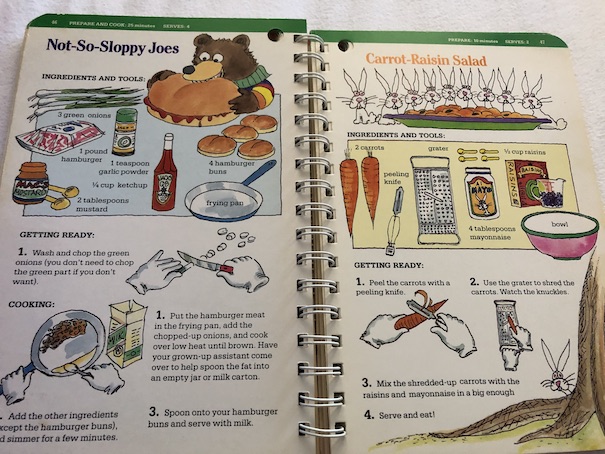
Kids can make these recipes, but they’re not for little kids who are still at the level of learning to make their own basic sandwiches. They do involve things like using stoves and ovens and chopping ingredients with a sharp knife. It’s common in the book to include “grown-up assistant with knife” under the list of ingredients and tools needed for recipes.
Some of the recipes in the book include multiple ways to cook something, variations on popular foods or different ways of seasoning a dish. For example, the breakfast section explains different ways to cook eggs, including scrambled eggs, fried eggs, soft or hard boiled eggs, and eggs in a frame.
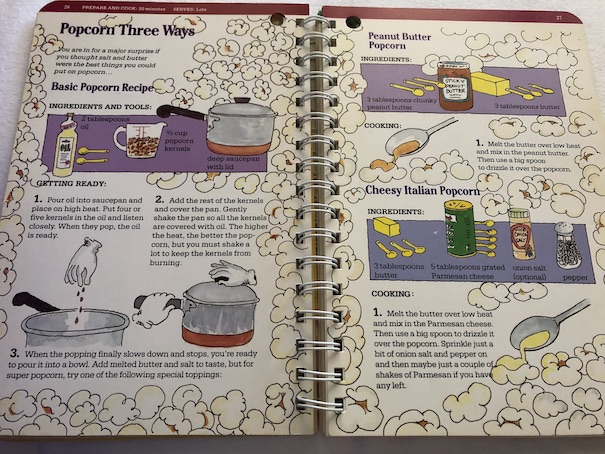
There are different ways of cooking potatoes in the dinner section, and I also like the popcorn variations in the snack section, which include different ways to flavor popcorn with cheese or peanut butter.
The dessert section includes brownies (“Disgustingly Rich”), chocolate chip cookies, and some more unusual desserts, like frozen bananoids, which are pieces of banana covered in chocolate and frozen.
The section of non-edible recipes also includes a recipe for dog biscuits, Fido’s Fabulous People Crackers. They’re edible for dogs, just not something people would enjoy.
The book is available to borrow and read for free online through Internet Archive.
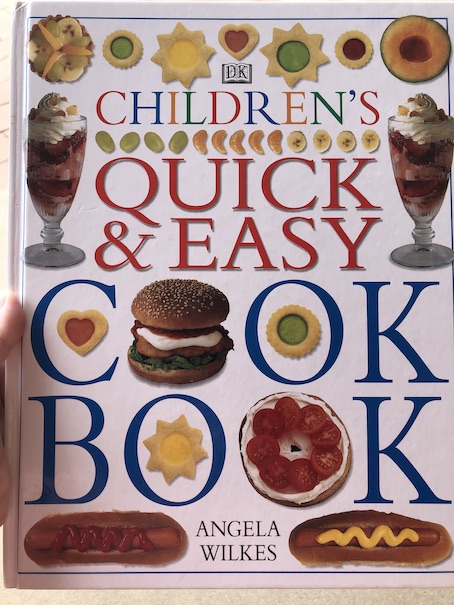
Children’s Quick and Easy Cook Book by Angela Wilkes, 1997.
When I was expanding my cooking skills as an adult, I started doing it using children’s cookbooks instead of cookbooks for adults because of the simplified instructions. When I bought this one, I hadn’t realized that it was originally a British book. I have the American edition, but the reason why I discovered that it was a British book is that the types of recipes the book offers includes some that are more common in the UK than in the US. A friend of my family, who was originally from England, spotted it and was happy to hear that I’d be learning to make some of these recipes. The recipes provide both metric and imperial measurements for the ingredients (another clue that this is an international book). There is a section in the beginning of the book that explains how to use the book and some general cooking safety tips. In the back of the book, there is a helpful Picture Glossary that demonstrates various cooking techniques and concepts used in the book, like how to use a marinade, how to core an apple, how to separate eggs, and how to roll out pastry. It’s all useful information for beginning-level cooks.
The recipes are divided into helpful sections, including snacks, meals, desserts, and sweets. The book is heavy on desserts, candy, and sweets, but many of the recipes under the snacks section are what Americans (and possibly British people, too, although I’m less sure there) might consider as breakfasts, lunches, and general light meals. In particular, the snack section includes sandwiches of various kinds. Some of the ingredients for the sandwiches sound uncommon for the US, although that might also vary by region. I can’t recall seeing salami and cream cheese together before, but I wouldn’t mind trying it sometime. Some sandwiches also call for ingredients like cherry compote and mango chutney. I think that serving grated chocolate on croissants or other bread items is also a European thing. I’ve seen it packaged just for that purpose at international grocery stores and import stores. Some of the snacks are more like snack items in American cook books, like flavored popcorn and smoothies.
The section of Speedy Meals include omelets, two kinds of soup, tacos, and pasta. Some recipes are common ones in the US, too, like chicken nuggets, chicken burgers, and fish sticks. The Turkish Meatballs with lamb, Falafel, Tabbouleh, and Chicken Curry and Rice are less common, but are still eaten here, especially if you live in areas with international restaurants and grocery stores.
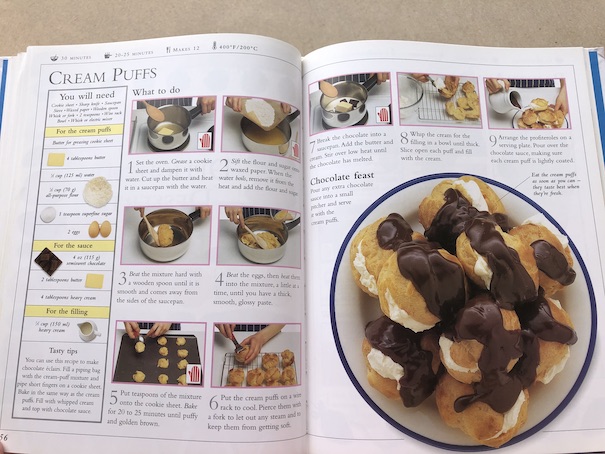
Of course, the desserts and sweets are particularly fun recipes. I particularly enjoyed making the cream puffs! There are different types of cookies included and candies like chocolate truffles and peppermint creams.
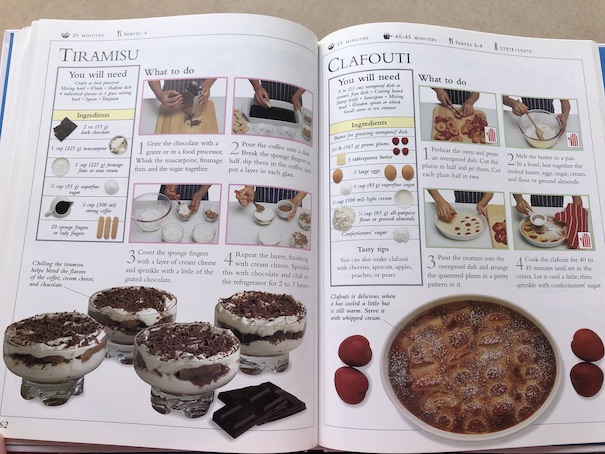
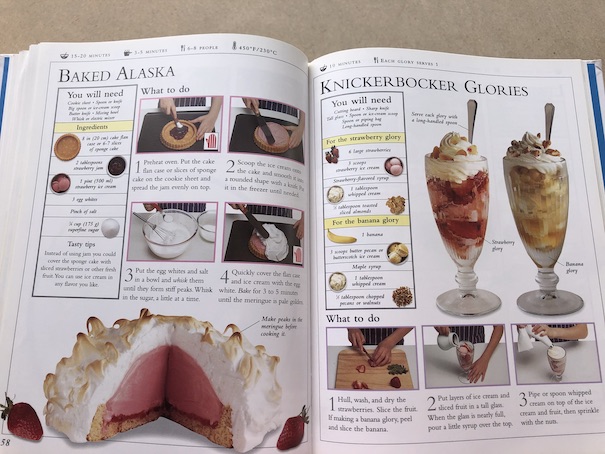
Many of the desserts would be familiar to Americans, like the chocolate cake, carrot cake, lemon cheesecake, and Baked Alaska. However, there were also a few desserts that were new to me. I had never heard of Clafouti before, and this was the first place I had heard of Knickerbocker Glories, a kind of parfait or sundae with layers of ice cream and fruit. (If you remember Harry Potter referring to a Knickerbocker Glory in one of the books, here is what it is!)
The book is available to borrow and read for free online through Internet Archive.
This cookbook has easy recipes that kids can make with their friends at sleepovers, parties, or anytime they want to eat together and include cooking as an activity. Some of the recipes are made from scratch, and some include shortcuts, like using pre-packaged pie dough and crescent roll dough.
The recipes are divided into sections with two sections devoted to snacks, Starter Snacks and Sacktime Snacks (bedtime snacks). There are other sections for meals – dinners, breakfasts, and brunch or lunch. There is also one extra section for birthday treats. The introduction to the book says that it isn’t really important when readers use the recipes – if you want to use a starter snack as a bedtime snack or eat a dinner recipe for breakfast, it’s all up to you. The sections are just to make it easier to find certain types of recipes.
As expected in a book of sleepover recipes, there are plenty of sugary treats, but there is one specifically “healthy” recipe for each section in the book, marked by a heart in the table of contents. The snacks include traditional kid favorites like cookies, popcorn balls, and s’mores. However, even some of the recipes that aren’t specifically labeled “healthy” are still non-sugary, like guacamole and hot taco dip.
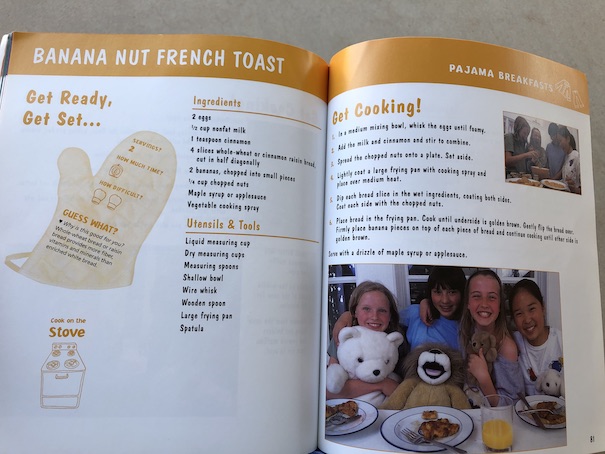
The meal recipes also include many popular favorites. Dinner recipes include chicken pot pie, taco salad, spaghetti and meatballs, and homemade pizza. Breakfast recipes include cream cheese and ham omelettes, chocolate chip muffins, and banana nut French toast. Lunch recipes include tuna melts (called Tuna Meltdowns), bow-tie pasta salad, chicken veggie sticks (kebabs), and turkey burgers.
The section of birthday treats has recipes for different types of cakes and a few non-cake treats like brownie sundaes and Fundue (chocolate dessert fondue).
Each of the recipes in the book comes with ratings, indicating the difficulty of the recipes, although none of them were are really very difficult in general, and the amount of time it takes to make them. One of the things that I liked about this book, besides the ease of the recipes is that the book, is that the pictures show boys cooking as well as girls. I think it’s good that the book portrays cooking as something that both boys and girls can do because it’s a useful life skill for everyone and something that anybody can do for fun.
The book is available to borrow and read for free online through Internet Archive (multiple copies).
I remember getting this book from my school library when I was a kid. I never actually made anything from it because it was a little beyond my cooking skills. Still, I was fascinated by the recipes in the book, especially the stew inside the pumpkin.
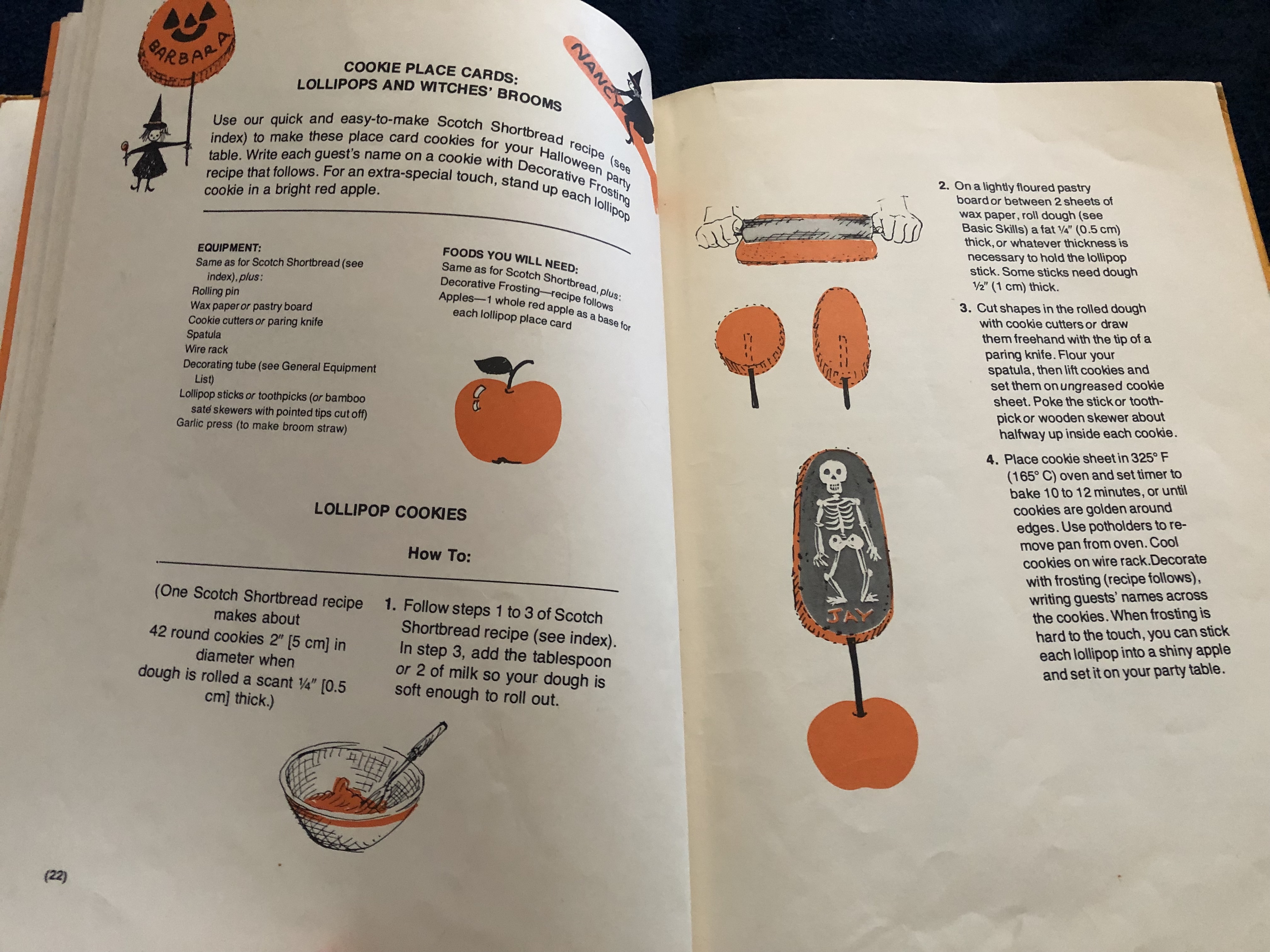
Some recipes in the book use specifically Halloween shapes and colors, while others are more general fall and harvest-themed recipes. The recipes are organized by category with section for food that can also be used as Halloween decorations and other sections for brunch and lunch, vegetable dishes, meat dishes/main courses, and snacks and desserts.
Some of the recipes are old, traditional ones from around the world, such as the ones for Fried Pumpkin Blossoms (an Italian recipe) and the Indonesian Corn Fritters. A brief section at the beginning of each recipe explains a little about the recipe’s background.
In the beginning of the book, there are notes about converting between units of measurement, including converting between imperial and metric units. There is also a guide for converting between Celsius and Fahrenheit temperatures. There are other cooking tips for beginners, such as how to separate eggs (I’ve never done it with my hands, like in the book, but it’s useful to know) and how to chop onions and press garlic.
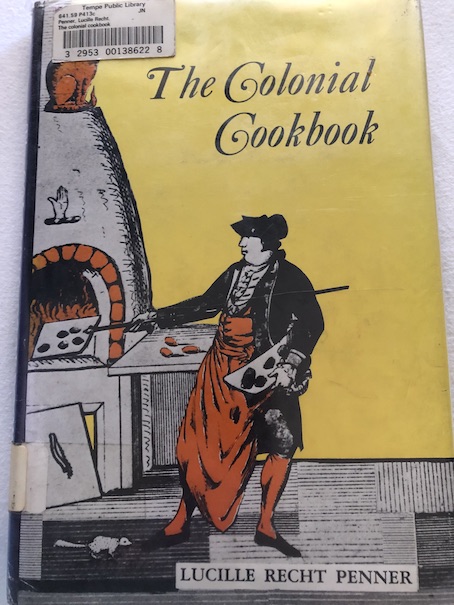
The Colonial Cookbook by Lucille Recht Penner, 1976.
This cookbook explains the history of food, cooking, and dining habits in Colonial America and provides recipes that readers can make themselves.
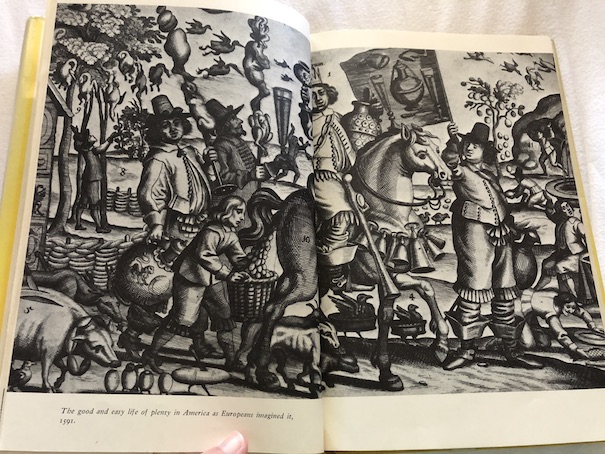
The first part of the book provides most of the historical background, although each section of recipes also has some additional information. The earliest European colonists in North America had to struggle to feed themselves. In many ways, they were unprepared for their lives as colonists, and not all of them had planned to stay as long as they did. The ones who hadn’t planned to stay long had heard stories about gold and silver in the New World, and they had hoped to stay only long enough to seek their fortunes and return home rich. The realities of life in North America did not meet their expectations and survival turned out to be harder than they thought.
The colonists ended up relying on Native Americans (called “Indians” in this book) to help them survive. As they used up the stores of salted beef and hard biscuits that they had brought with them, they began trading for food with the Native American tribes. From the Native Americans, they also learned farming, finishing, hunting, and foraging techniques that they used to help themselves survive. There were many edible plants and animals at hand, but the early colonists were unaccustomed to which plants in the Americas were edible and how to find them and where to find and trap animals. One of the chores colonial children were given was to gather wild plants for the family to eat, like nuts, mushrooms, dandelion greens, wild leeks and onions, and wild fruit, like plums, cherries, melons, and berries.
Gradually, as the colonies grew, the colonists established farms and farm fields. They needed more land for farming to support their population than modern farms would use to support the same number of people because farming has become more efficient since the colonial era. Later, new colonists came and brought livestock with them. Men and boys usually took responsibility for the livestock on family farms. After animals were butchered, the women and girls would clean and prepare them for eating. Food required much more work to prepare because the colonists had to do all the preparation themselves. Families would not only butcher their own animals but make their own cheese. The book provided details about the processes and tools that colonists used for making their food.
The more specific eating habits of colonists changed over time and varied depending on where the colonists lived in North America and where they had originally come from. For early colonists, meals were eaten off of trenchers made from pieces of stale bread, and the day began with a breakfast of mush or pudding with cider or beer to drink. Later, foods became more varied. People in New England often ate fruit pies for breakfast, and people in the Middle Colonies liked scrapple (a cornmeal mush with pork scraps) and oly koeks (a kind of holeless donut containing bits of fruit). (Neither scrapple nor oly koeks appear as recipes in this book, but there are recipes online.) Southern plantation owners had elaborate breakfasts with many different kinds of food, including ham, eggs, pastries, and more, but poor people typically had mush and scraps of leftovers.
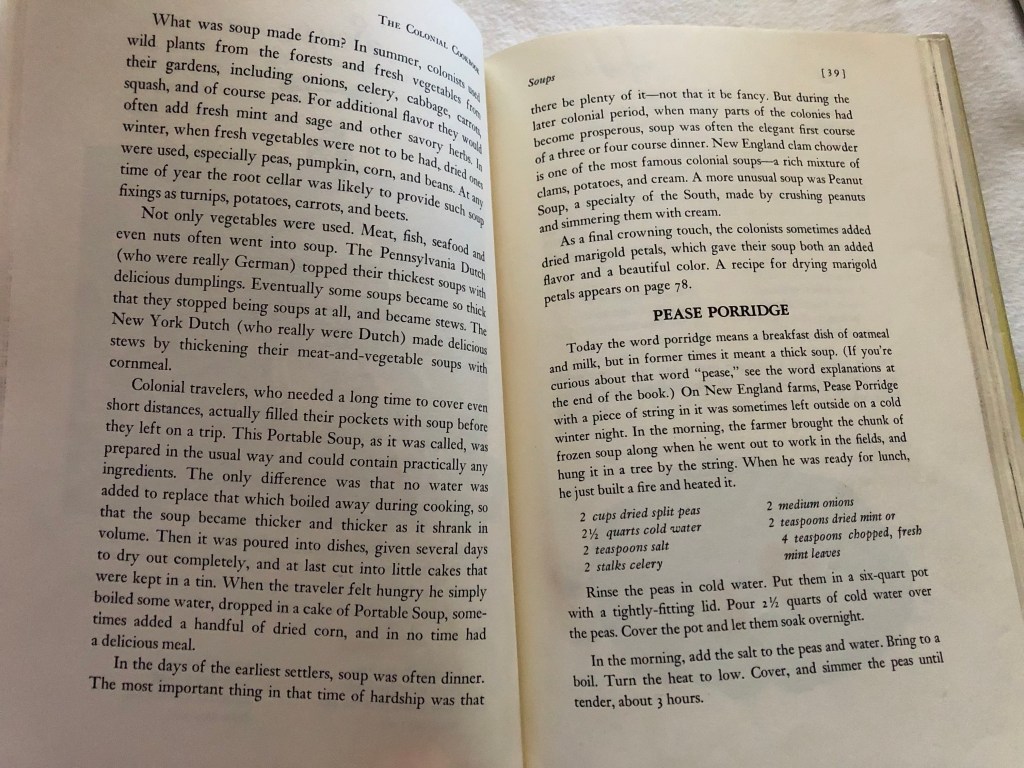
The book provides a variety of recipes, organized by type. Most of the recipes in the book do not look too difficult, although some call for more unusual ingredients, like rosewater. You can still find it, although I’ve usually seen it at specialty cooking stores or import stores. The categories are soups, meat, poultry, seafood, vegetables, puddings, breads, sweets, drinks, and sauces and relishes. Not all of the recipes look like things that would interest modern children. I don’t imagine that many children would be excited at the idea of making Scalloped Oysters, for example. (Seafood was an important food source for early colonists.) Even though children might recognize Pease Porridge from the rhyme, I’m not sure that a thick pea soup would be something that they would be excited to eat, either. Hasty pudding is mentioned in the song Yankee Doodle, but the recipe itself is a little bland. The book does mention that you can flavor it with maple syrup, and there are other cornbread pudding recipes that contain spices and sweeteners in the book.
However, there are some recipes that I think would be interesting to try. The book explains that pumpkins were a staple food for the early colonists, as shown by the old rhyme from the Plymouth:
We have pumpkin at morning And pumpkin at noon If it was not for pumpkin We would be undoon.
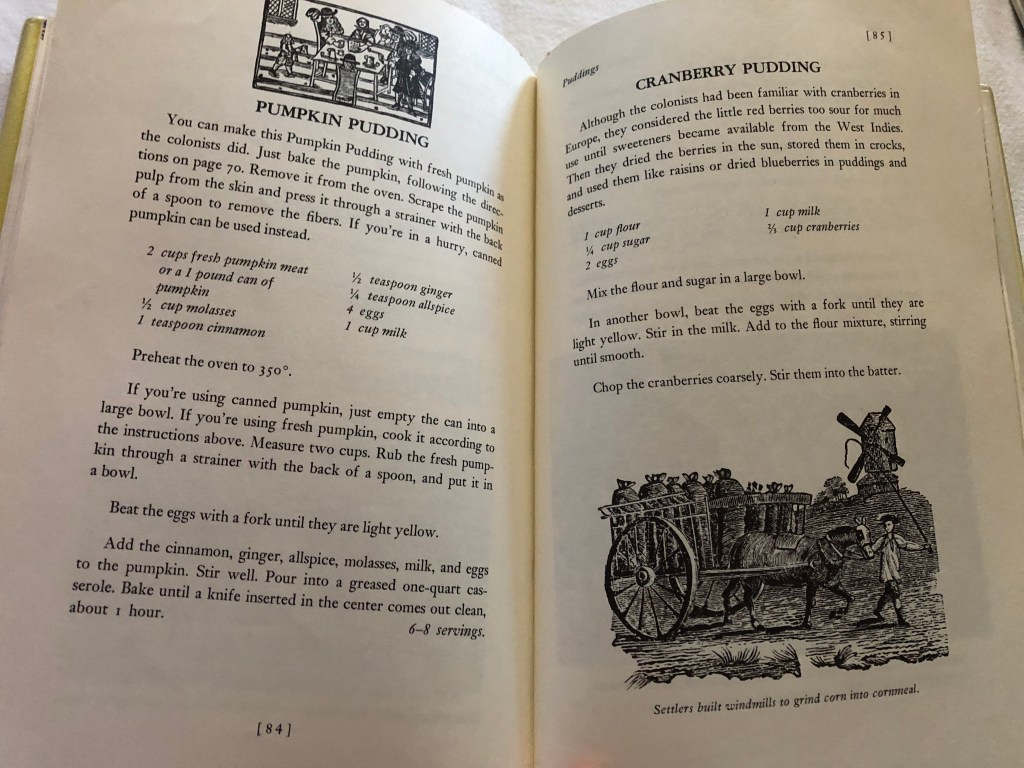
The book explains the different ways that colonists would prepare pumpkin. You can bake it and eat it in pieces with syrup, molasses, honey, or cream. The book explains how to cook it, and it also provides a recipe for Pumpkin Pudding, which can be made with either fresh pumpkin or canned pumpkin. I haven’t made it yet myself, but from the recipe, it reminds me of a pumpkin pie without the crust:
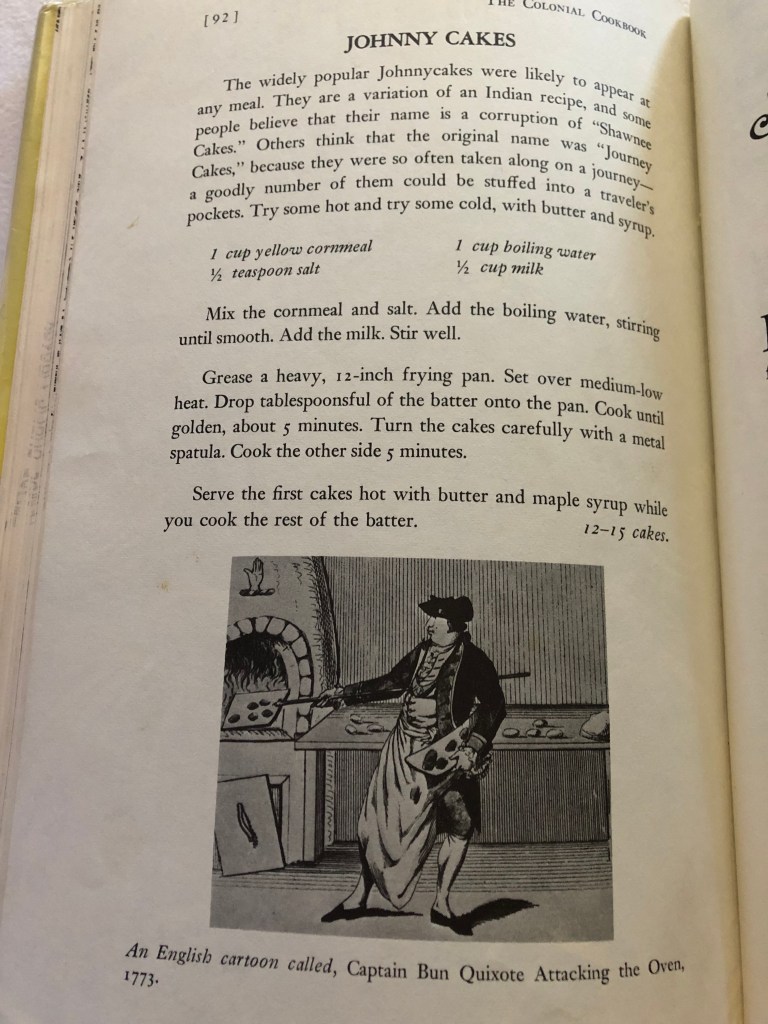
Johnny Cakes are a little like pancakes but made with cornmeal. The basic recipe is a little plain, but they can be served with butter and maple syrup.
This book was published in 1976, which was the United States’ Bicentennial celebration. Unfortunately, I haven’t been able to find an online edition yet.
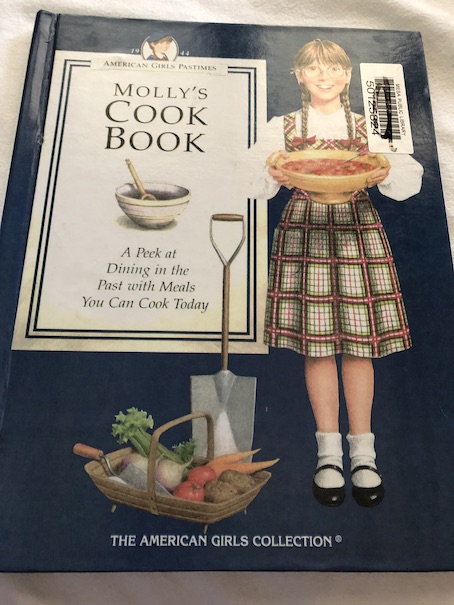
Molly’s Cook Book by Polly Athan, Rebecca Sample Bernstein, Terri Braun, Jodi Evert, and Jeanne Thieme, 1994.
This is a companion book to the Molly, An American Girl series. It has recipes from the 1940s that people would have made during World War II. A section at the beginning of the book explains how shortages and rationing during the war changed the way that people shopped for food and cooked. For example, people on the homefront didn’t have many canned foods because many canned foods were shipped overseas to soldiers and much of the metal that would have been used to make more cans for food was being used to make other war supplies. Because certain types of food were in short supply, individuals and families would receive ration books, which contained stamps that represented which types of foods they would be able to buy and how much. Cookbooks printed during the war focused on creating meals that used little or no rationed products. People also planted Victory gardens and grew their own vegetables to fill out their meals.
The cookbook
is divided into sections for different meals:
Breakfast – Fried Potatoes, Toad-in-a-Hole (not the British dish – this is eggs cooked in a frame of bread, what I first learned to make as Eggs-in-a-Frame), Fried Bacon, Quick Coffee Cake, and Frozen Fruit Cups.
Dinner – Vitamin A Salad (made with carrots and lemon gelatin), Deviled Eggs, Carrot Curls and Celery Fans, Vitality Meat Loaf, Parsley Biscuits, Volcano Potatoes, and Applesauce Cupcakes.
Favorite Foods – French toast, Waldorf salad, PBJ Roll-ups, Jelly Flags, Victory Garden Soup, Nut-and-Raisin Bread, and Fruit Bars.
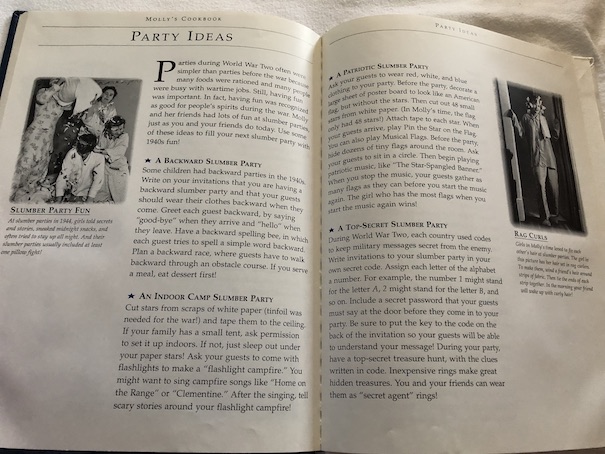
In each section of recipes, there is more historical information about food in World War II. There is also a section in the back with party ideas from the 1940s.
For more World War II recipes, I recommend The 1940’s Experiment, which is a blog with recipes from World War II and an explanation of how they can be used to both save money and lose weight because they were intentionally designed to make maximum use of limited resources, both economically and nutritionally. In Molly’s Cook Book, there is a chart that government experts during World War II used to give people guidance on how to budget their food money among seven food groups. The diet that they recommended, both nutritionally and to limit certain rationed foods, was heavy on vegetables and fruits and lighter on meats, grains, and dairy products. This type of diet is basically in keeping with modern nutritional advice, which also emphasizes the importance of vegetables and fruit.
The book is currently available online through Internet Archive.