Addy’s Cook Book

Addy, An American Girl

Addy’s Cook Book by Rebecca Sample Bernstein, Terri Braun, Tamara England, and Jodi Evert, 1994.

This cook book is one of the activity books that was written to accompany the Addy series that is part of the American Girls franchise. The American Girls books were written to help teach American history (as well as sell the accompanying dolls and accessories), so this book has recipes of the type that people would have eaten during the American Civil War, when the character of Addy lived, and some historical information.

The book begins with sections of historical information about African Americans, kitchens, and table settings in the 1860s. It describes the lives of slaves and explains how they were given basic rations of food which they could supplement and extend by producing or gathering some food of their own, such as vegetables they grew or fish they caught themselves. When they managed to escape from slavery, they had to depend on help from others, such as churches or abolitionists, until they became established in their new lives. When they were able, many of them provided help to others who were in the same position. (This was a topic covered in the Addy books.)
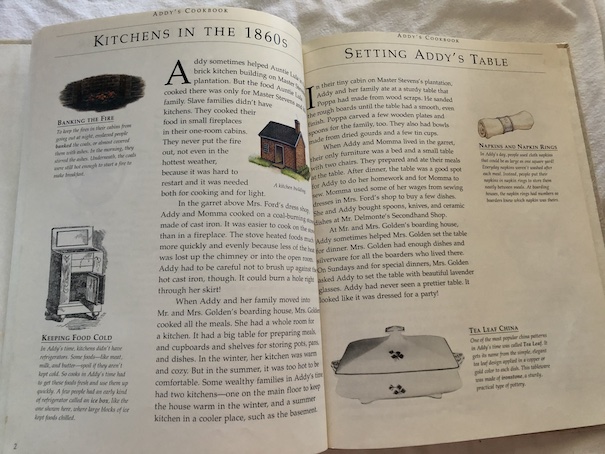
The types of kitchens they used depended on where they were living. As slaves, Civil War era African Americans would do their cooking in small fireplaces attached to the small cabins where they lived. Because they needed the fire for cooking, they kept it burning all the time, even in hot weather. Free African Americans had more options. Depending on their living arrangements, they might have a stove for their cooking, or if they lived in a boarding house, they might be provided with meals as part of their boarding, paid for along with the rent on their rooms.

The recipes in the book are divided into three sections: breakfast, dinner, and favorite foods. There is a section with some general cooking tips, but there are other cooking tips and pieces of historical information included along with the recipes. Some information that I found particularly useful explains why some historical recipes can be confusing to read. Because some people were using cooking fires and some were using stoves, 19th century recipes can have vague-sounding instructions like “fry until golden brown” instead of specific cooking times and temperatures. It was also common for people to cook favorite dishes from memory instead of following written recipes. People learned to cook from their elders, and they just continued doing what parents and grandparents always did when they cooked. The book doesn’t mention it, but this style of cooking also continued into the 20th century, so even when people wrote down recipes, they might seem vague or incomplete to modern readers. It was like that with recipes that my grandmother and great-grandmother wrote down, too. They were accustomed to making certain recipes mostly from memory, and they didn’t feel obligated to write down every little step, assuming that anyone who read it would already know how to make that kind of dish and would just need a few reminders about amounts. Fortunately, the recipes in this book are all written with detailed, modern instructions and include cooking times and oven temperatures.

The book explains that poor people during the Civil War didn’t usually have much for breakfast because they had to rise early and get to work. Most mornings, they might have some leftovers from the previous night or some simple hot foods, like buttermilk biscuits and hominy grits, a traditional Southern breakfast food made from corn (my grandmother said that she had it when she was growing up on a farm in Indiana, too). As a special treat, they might have scrambled eggs or sausage and gravy.

The dinner section includes main dishes, like fried fish, and side dishes, like hush puppies. A particular recipe that gets extra attention is Hoppin’ John, a rice dish with black-eyed peas and bacon. Hoppin’ John is special because it’s a dish traditionally served at New Year’s Day.

The section of favorite foods include chicken shortcake, a few other side dishes, and a few special treats, including peach cobbler and shortbread. I’ve tried the shortbread recipe, and I like it. It’s easy to make and includes only a few ingredients, and it’s really good. It does contain a lot of butter, so it’s just an occasional treat.

The book ends with a section of advice for planning an Emancipation party. It explains how people celebrated when the Emancipation Proclamation was read publicly on December 31, 1862, having been transmitted to communities by telegraph. Children played games like Novel Writers (which is a story-writing game similar to Consequences) and Blindman’s Buff. The book also describes the origins of Juneteenth – slaves in Texas were freed on June 19th, 1865, about two and half years after the Emancipation Proclamation.

The book is available to borrow and read for free online through Internet Archive.
The Fun of Cooking

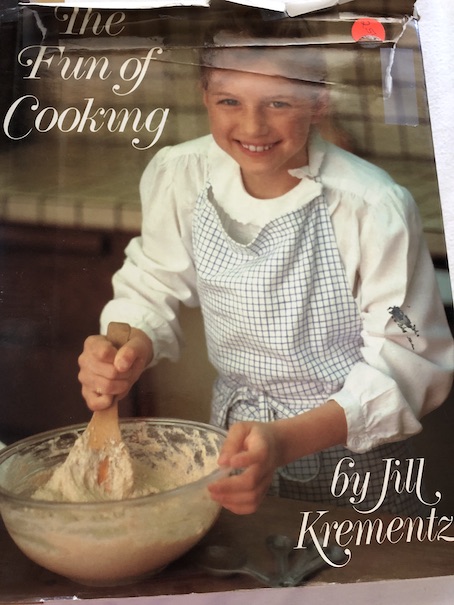
The Fun of Cooking by Jill Krementz, 1985.

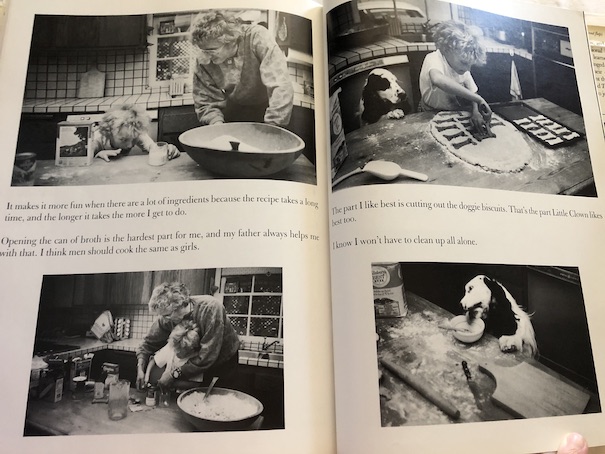
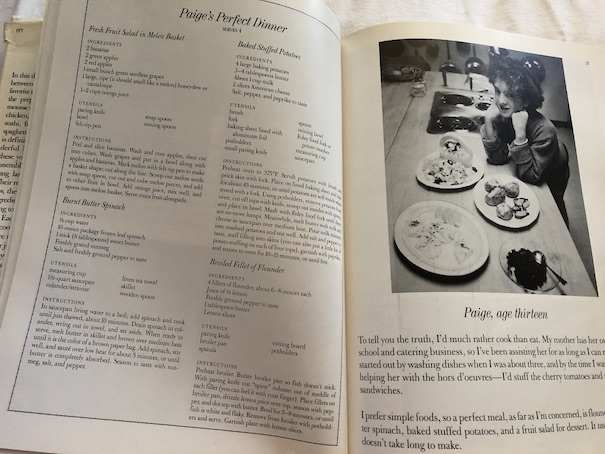
This cookbook was designed not only for children but includes real children making their favorite recipes, sometimes by themselves and sometimes with the help of their parents. The author, Jill Krementz, was also a photographer, and she photographed the children as they cooked. (Another interesting fact is that Jill Krementz was also married to Kurt Vonnegut, until his death. It’s not directly related to this book at all, just a fun fact.)

The recipes in the book aren’t arranged in any particular order, going back and forth between main dishes and desserts of various kinds. Some of the children included recipes for entire meals that included both main dishes and a dessert.

The children themselves are a range of ages from six to sixteen. The older children tend to make more complex dishes or meals, and the younger ones tend to make simpler ones, although even the younger children can make complex dishes with the help of their parents or grandparents. One girl, Michele, has a father who is a professional chef, and she says that it’s her ambition to be a chef, too. She and her father are shown making spaghetti together in the kitchen of his restaurant.

The children all seem to live in or around New York City, where the author lived, and they are from a variety of backgrounds. There are two girls who mention that they are Jewish, including the girl who makes matzo ball soup with her grandmother. There are also two black girls, and one boy with Greek ancestry. Not all of the children have obvious backgrounds like this, but I thought it was interesting where it was noticeable. I think that having a variety of children with different ages and backgrounds was a good idea because it could help many young readers to identify with different types of children.

I also liked the fact that there were both boys and girls cooking their favorite recipes. Not only did Michele cook a recipe with her father, but there are other fathers in the book, helping with the cooking, too. One of the boys makes dog biscuits for his dog with his father, and he comments, “I think men should cook the same as girls.” It’s nice to see cooking characterized as something that anyone can enjoy doing, both men and women, as well as children of different ages.

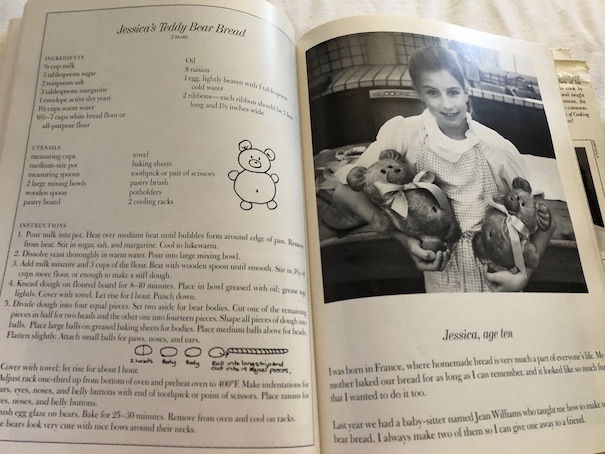
One of the cutest recipes is one for making loaves of bread shaped like teddy bears.

One of my favorite recipes was the one for pumpkin pie. I’ve made pumpkin pie from a whole pumpkin like this before, and it’s a lot of work, but it’s fun! The girl making the pie also roasts the pumpkin seeds.

The book is available to borrow and read for free online through Internet Archive.

Kids Cooking

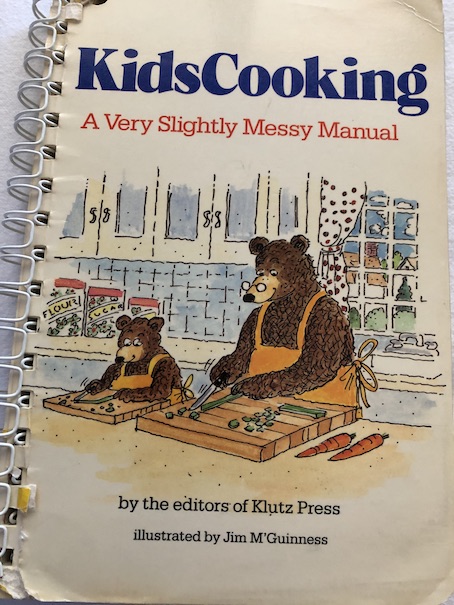
Kids Cooking: A Very Slightly Messy Manual by the editors of Klutz Press, 1987.

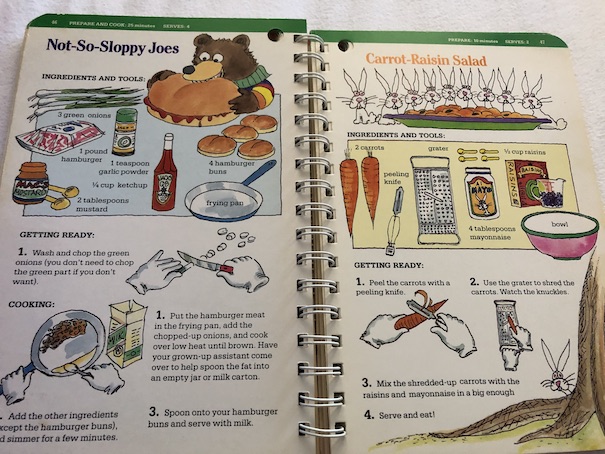
This book is part of the classic children’s hobby and activity series from Klutz Press. Originally, this book came with a set of plastic measuring spoons, which was attached to the book at the hole in the upper left corner.

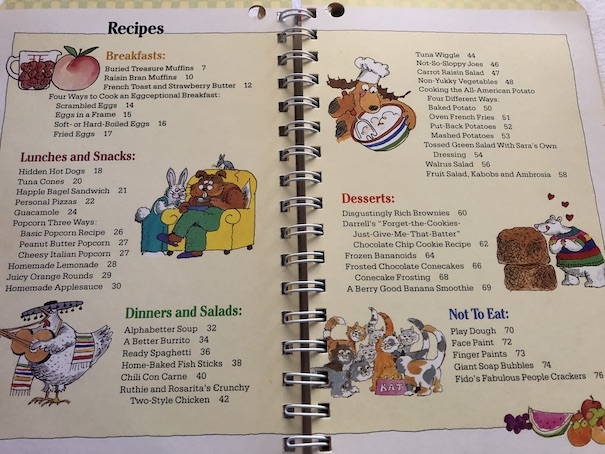
The recipes in the cookbook are listed in categories by the type of meal: breakfasts, lunches and snacks, dinners and salads, and desserts. There is also a section of recipes for non-edible things, like play dough and finger paint.

The food recipes are fairly simple, but not the overly-simple, boring recipes that I’ve seen in some children’s books, like how to make a peanut butter sandwich.

Kids can make these recipes, but they’re not for little kids who are still at the level of learning to make their own basic sandwiches. They do involve things like using stoves and ovens and chopping ingredients with a sharp knife. It’s common in the book to include “grown-up assistant with knife” under the list of ingredients and tools needed for recipes.

Some of the recipes in the book include multiple ways to cook something, variations on popular foods or different ways of seasoning a dish. For example, the breakfast section explains different ways to cook eggs, including scrambled eggs, fried eggs, soft or hard boiled eggs, and eggs in a frame.

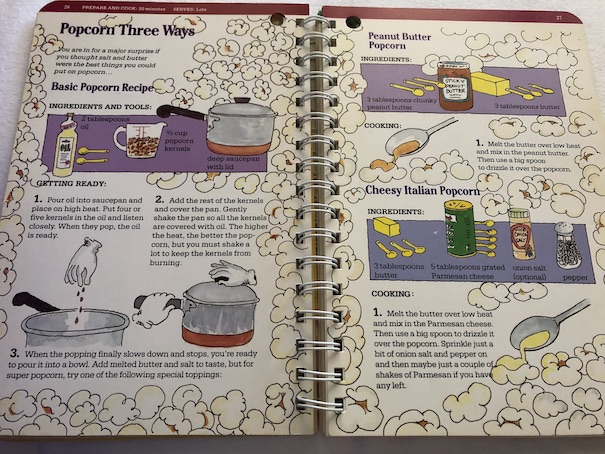
There are different ways of cooking potatoes in the dinner section, and I also like the popcorn variations in the snack section, which include different ways to flavor popcorn with cheese or peanut butter.

The dessert section includes brownies (“Disgustingly Rich”), chocolate chip cookies, and some more unusual desserts, like frozen bananoids, which are pieces of banana covered in chocolate and frozen.

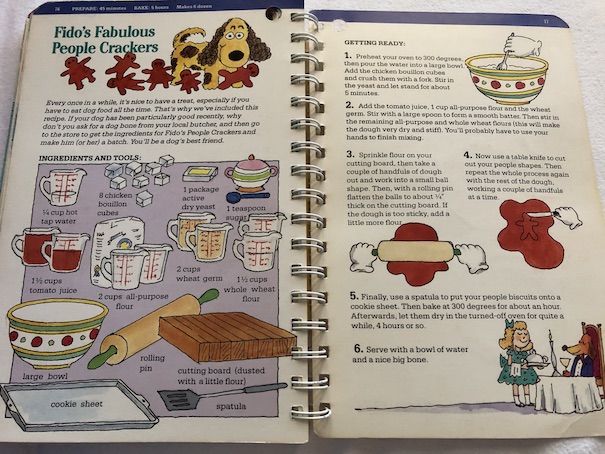
The section of non-edible recipes also includes a recipe for dog biscuits, Fido’s Fabulous People Crackers. They’re edible for dogs, just not something people would enjoy.

The book is available to borrow and read for free online through Internet Archive.
Children’s Quick and Easy Cook Book

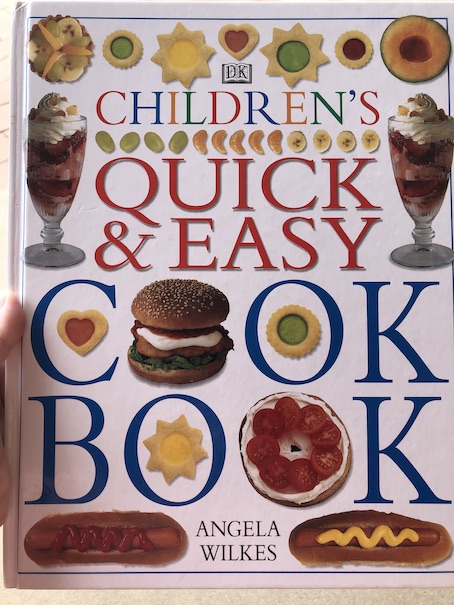
Children’s Quick and Easy Cook Book by Angela Wilkes, 1997.

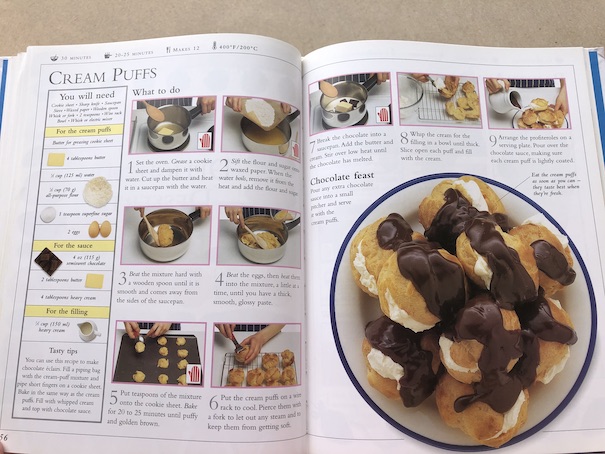
When I was expanding my cooking skills as an adult, I started doing it using children’s cookbooks instead of cookbooks for adults because of the simplified instructions. When I bought this one, I hadn’t realized that it was originally a British book. I have the American edition, but the reason why I discovered that it was a British book is that the types of recipes the book offers includes some that are more common in the UK than in the US. A friend of my family, who was originally from England, spotted it and was happy to hear that I’d be learning to make some of these recipes. The recipes provide both metric and imperial measurements for the ingredients (another clue that this is an international book). There is a section in the beginning of the book that explains how to use the book and some general cooking safety tips. In the back of the book, there is a helpful Picture Glossary that demonstrates various cooking techniques and concepts used in the book, like how to use a marinade, how to core an apple, how to separate eggs, and how to roll out pastry. It’s all useful information for beginning-level cooks.

The recipes are divided into helpful sections, including snacks, meals, desserts, and sweets. The book is heavy on desserts, candy, and sweets, but many of the recipes under the snacks section are what Americans (and possibly British people, too, although I’m less sure there) might consider as breakfasts, lunches, and general light meals. In particular, the snack section includes sandwiches of various kinds. Some of the ingredients for the sandwiches sound uncommon for the US, although that might also vary by region. I can’t recall seeing salami and cream cheese together before, but I wouldn’t mind trying it sometime. Some sandwiches also call for ingredients like cherry compote and mango chutney. I think that serving grated chocolate on croissants or other bread items is also a European thing. I’ve seen it packaged just for that purpose at international grocery stores and import stores. Some of the snacks are more like snack items in American cook books, like flavored popcorn and smoothies.

The section of Speedy Meals include omelets, two kinds of soup, tacos, and pasta. Some recipes are common ones in the US, too, like chicken nuggets, chicken burgers, and fish sticks. The Turkish Meatballs with lamb, Falafel, Tabbouleh, and Chicken Curry and Rice are less common, but are still eaten here, especially if you live in areas with international restaurants and grocery stores.

Of course, the desserts and sweets are particularly fun recipes. I particularly enjoyed making the cream puffs! There are different types of cookies included and candies like chocolate truffles and peppermint creams.

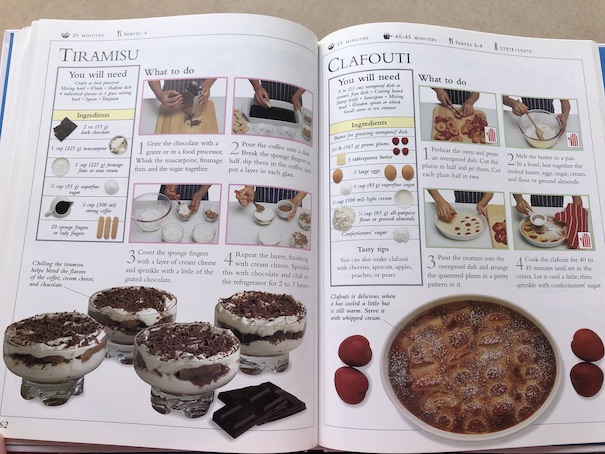
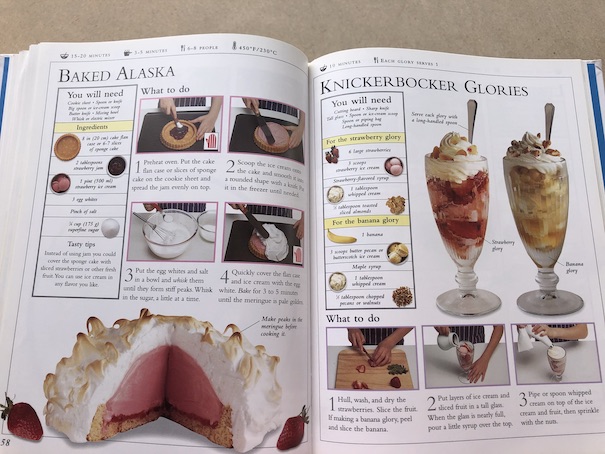
Many of the desserts would be familiar to Americans, like the chocolate cake, carrot cake, lemon cheesecake, and Baked Alaska. However, there were also a few desserts that were new to me. I had never heard of Clafouti before, and this was the first place I had heard of Knickerbocker Glories, a kind of parfait or sundae with layers of ice cream and fruit. (If you remember Harry Potter referring to a Knickerbocker Glory in one of the books, here is what it is!)

The book is available to borrow and read for free online through Internet Archive.

Halloween Cookbook

Halloween Cookbook by Susan Purdy, 1977.

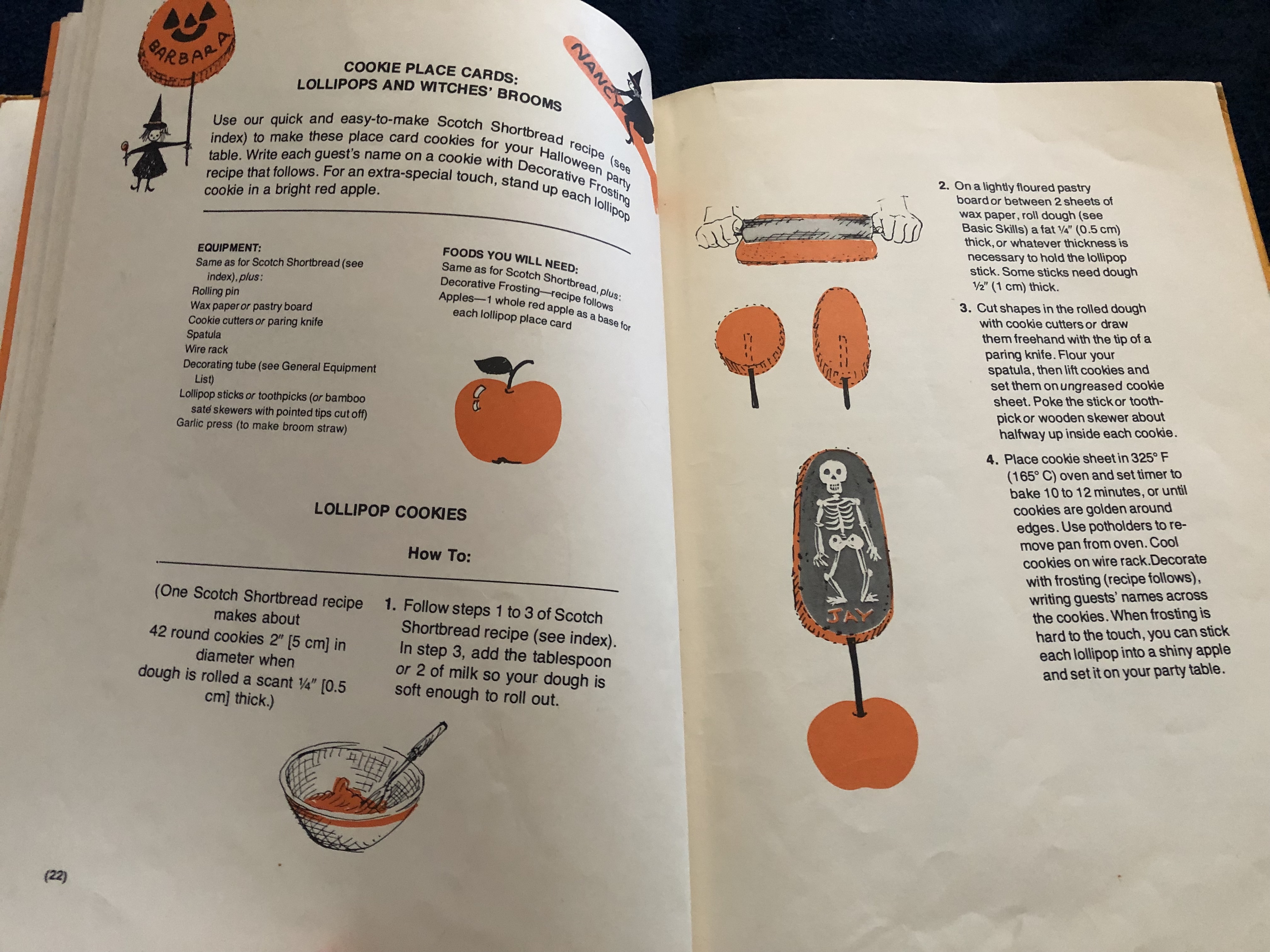
I remember getting this book from my school library when I was a kid. I never actually made anything from it because it was a little beyond my cooking skills. Still, I was fascinated by the recipes in the book, especially the stew inside the pumpkin.

Some recipes in the book use specifically Halloween shapes and colors, while others are more general fall and harvest-themed recipes. The recipes are organized by category with section for food that can also be used as Halloween decorations and other sections for brunch and lunch, vegetable dishes, meat dishes/main courses, and snacks and desserts.

Some of the recipes are old, traditional ones from around the world, such as the ones for Fried Pumpkin Blossoms (an Italian recipe) and the Indonesian Corn Fritters. A brief section at the beginning of each recipe explains a little about the recipe’s background.

In the beginning of the book, there are notes about converting between units of measurement, including converting between imperial and metric units. There is also a guide for converting between Celsius and Fahrenheit temperatures. There are other cooking tips for beginners, such as how to separate eggs (I’ve never done it with my hands, like in the book, but it’s useful to know) and how to chop onions and press garlic.

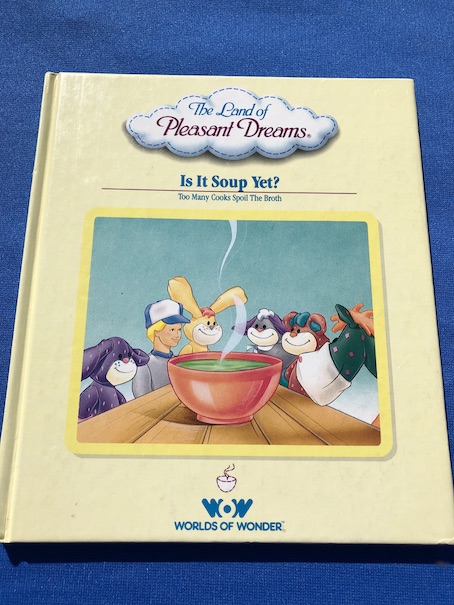
Is It Soup Yet?

The Land of Pleasant Dreams

Is It Soup Yet? By Ane Weber, Ron Krueger, and Tony Salerno, 1986.

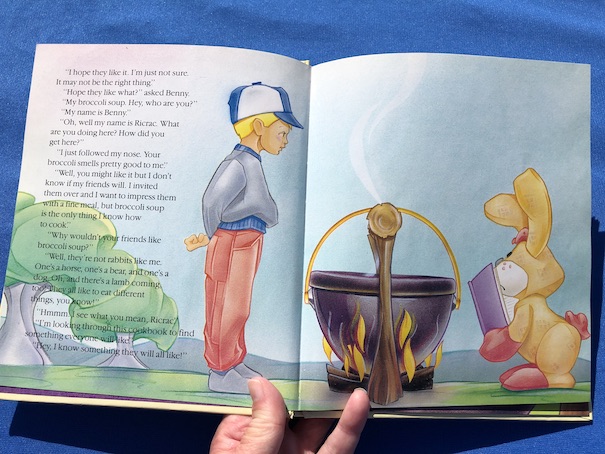
When Benny enters the Land of Pleasant Dreams, he meets Ricrac Rabbit.  Ricrac is trying to cook something for his friends, but he’s worried because the only thing he knows how to make is broccoli soup, and he doesn’t know if his friends will like it because they all have different tastes.

Because Benny’s father is a chef, he suggests that Ricrac try his recipe for black bean broth because everyone loves that when his father makes it.  Ricrac decides to give it a try, adding the black beans to his broccoli soup. 

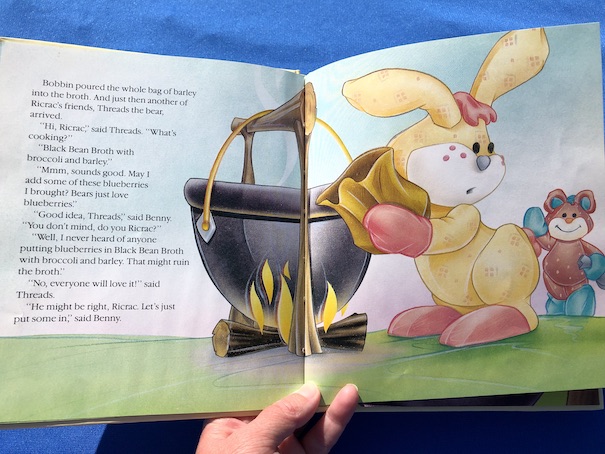
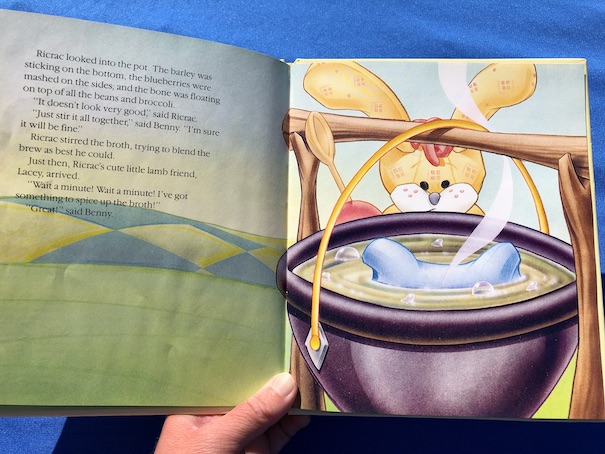
However, as each of Ricrac’s friends arrive, they also decide to bring their favorite ingredients with them.  Bobbin the Horse brings barley, and Threads the Bear brings blueberries.  Then, Snips the Dog brings a bone, and Lacey the Lamb brings buttercups.  In an effort to please everyone, Ricrac adds each ingredient to the soup.

When they finally try it, the soup is horrible.  At first, everyone argues about which ingredient ruined the soup, but Benny realizes that their real mistake wasn’t trying the soup according to Ricrac’s original recipe.  When they try the broccoli soup as it was supposed to be made, without the extra ingredients, it’s really good.

Moral: Too Many Cooks Spoil the Broth.

The point of the story is that trying to please everyone often means pleasing no one.  When planning a project, if you try to stretch it in too many different directions, it’s difficult to accomplish anything because you’re not focusing on anything in particular. In the end, you have to pick one way and stick with it, focusing on what you can do best.

The book is available to borrow and read for free online through Internet Archive. This book was made into an episode for the tv series with puppets. Sometimes, you can find it or clips of it on YouTube.